Hey, hey, Geekly Gang! Kyra Kyle here with another Top 5 Tabletop Games throughout the years. Today’s list features the best games from 2003. Unfortunately, 2003 gets sandwiched between two of the better years for board games, but that doesn’t mean we don’t have a handful of standouts this year. Almost every year has at least one or two stellar games. We’ll talk about 2003’s board game list soon, but let’s review the ground rules for which games make these lists before we begin.
1: Cultural relevance plays as much of a factor as overall quality. A game might make a list that doesn’t hold up to others of its type, but you must admit the game is everywhere.
2: Only one game from a franchise makes the list. This will become more of an issue the closer we get to games with expansions.
3: Longevity plays a role, too. A game doesn’t have to fly off the shelves today, but it had to have some widespread appeal for a decent time.
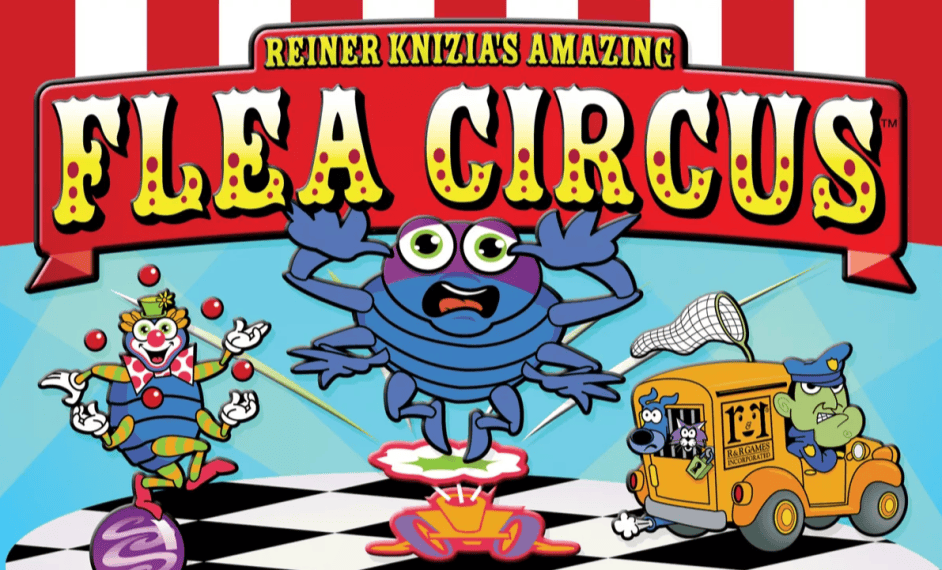
5: Reiner Knizia’s Amazing Flea Circus (2003)
Amazing Flea Circus is by no means one of Reiner Knizia’s best small card games. I much prefer Don’t L.L.A.M.A., but Amazing Flea Circus still deserves an honorable mention, because few games from this year have seen as many printings and editions. It’s a simple but fun game. Sometimes, that’s all you need. Spoiler Alert: Amazing Flea Circus won’t be the last we hear from Reiner Knizia on this list.
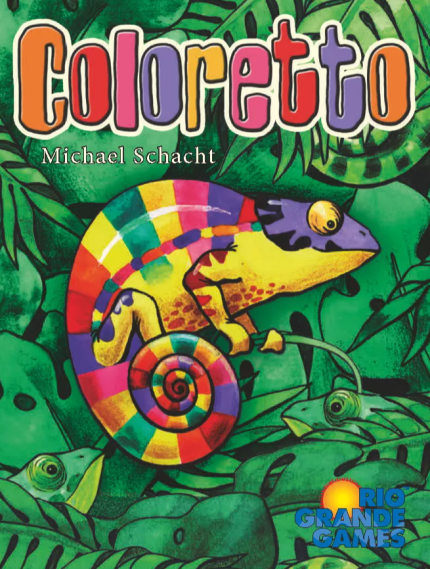
4: Coloretto (2003)
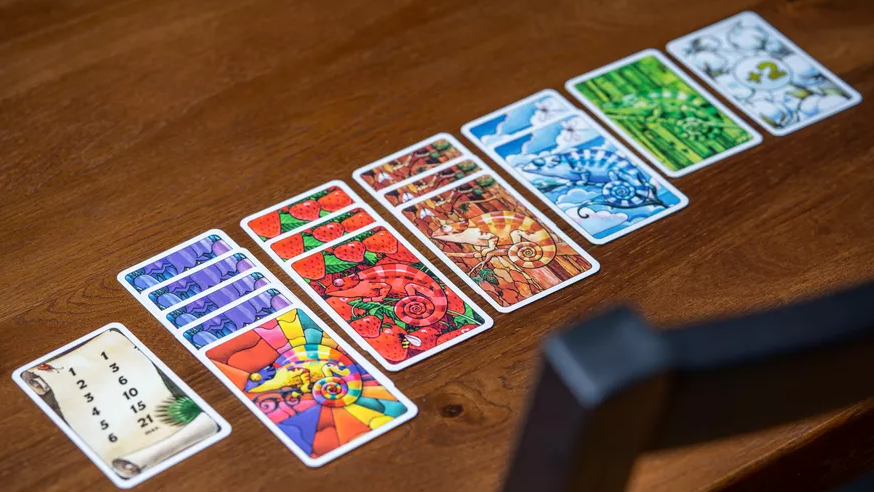
In Coloretto, players collect colorful chameleons. The rules are simple. Either add a card to a row or collect all the cards in a row. A row can only contain three cards, so eventually, players will be forced to claim rows. Players gain points for up to three colors. Each color beyond the first three costs players points. Wild (or Joker) Chameleons count as any color and +2 cards always help.
Coloretto proves you don’t need a complicated rule set for an engaging game. One can see its influence in games like River Valley Glassworks, where one only scores points up to a certain number of colors. Coloretto’s main game mechanisms center around set collection, but set collection works. I wouldn’t be surprised if Coloretto’s success as a set collection didn’t spawn other games that use a similar mechanism. Ticket to Ride (released the next year) also uses a similar system.
3: Yinsh (2003)
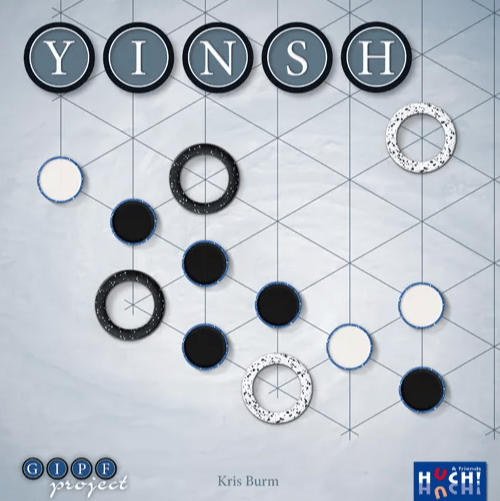
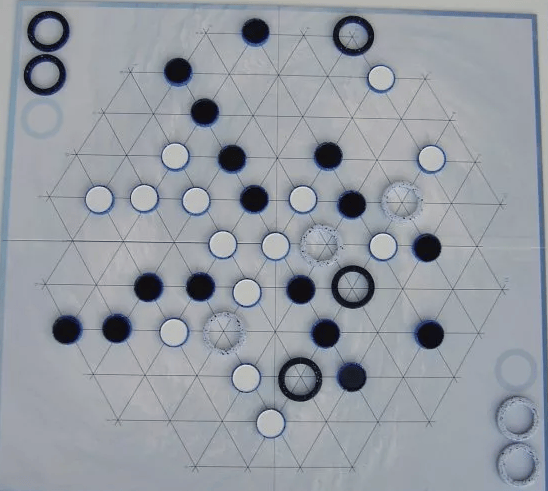
We’ve mentioned the GIPF Project series of abstract games on more than one of these past best of year lists. Yinsh is the highest-rated of these games. In fact, Yinsh is still a Top 5-rated abstract game on BoardGameGeek. The board game resembles the cover art (above). Like Othello, discs are dual-colored. Players try to make a chain of five discs in their color by jumping over discs with their rings, flipping over the disc. As soon as a player gains a chain of five discs, they discard one of their discs. The first player to discard three of their rings wins.
Yinsh has a clever, built-in balancing mechanism. Getting rid of a ring means a player gets closer to victory. But you’re making yourself weaker, because you have fewer rings. Brilliant! There’s a reason the GIPF Project is the highest regarded abstract game series. And Yinsh earns its place among the best.
2: Amun-Re (2003)
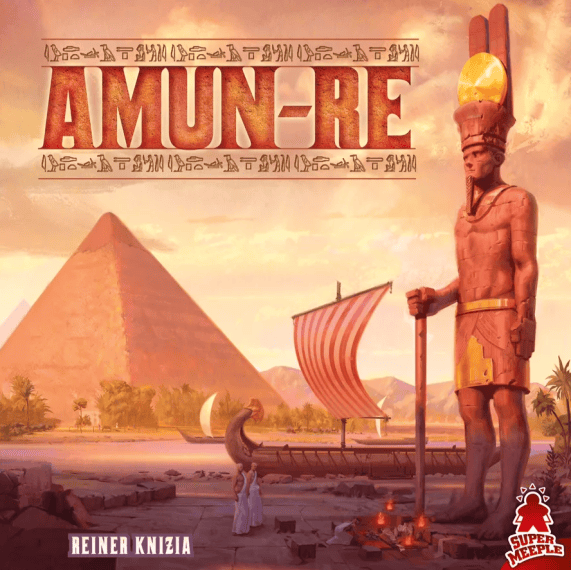
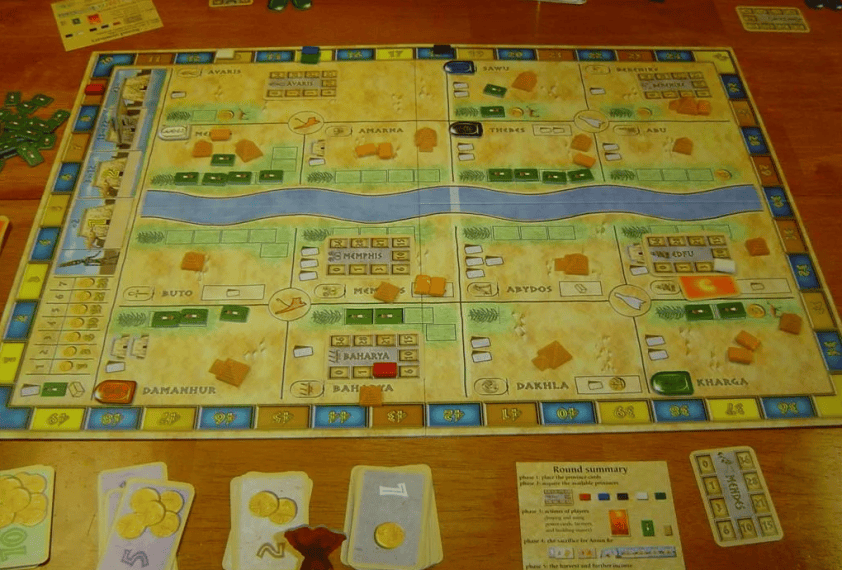
The top two 2003 games could be flipped. I went back and forth with these two titles. Both are great, but in the end, I chose the 2003 Spiel des Jahres winner as number one. Amun-Re was up for the Spiel as well. I’m telling you, it was close. Amun-Re is yet another Reiner Knizia board game to make one of these lists. It’s like Knizia makes a heap of great board games. In Amun-Re, each pharaoh wants to build the most pyramids. To accomplish this, they must first acquire a province where they can trade and farm. With their profits, they can buy new provinces and building-stones to erect pyramids. For all their actions, players must make clever use of their power cards and always offer appropriate sacrifices to Amun-Re.
Love the theme. Evidently, Reiner Knizia loves an Egyptian-themed game, because Ra also made one of these lists. I believe Amun-Re may be the only pyramid game Knizia ever designed. To be fair, I’ve lost track of every Knizia game. The man has forgotten more about board games than I’ll ever know. But Amun-Re holds another distinction; it’s one of Knizia’s more complex games. The two games on this list may be the polar opposites of what Knizia can do as a designer. Amazing Flea Circus is one of Knizia’s least-complicated games. Amun-Re is one of his most complicated. Both can be a lot of fun. And both came out the same year. Crazy!
1: Alhambra (2003)
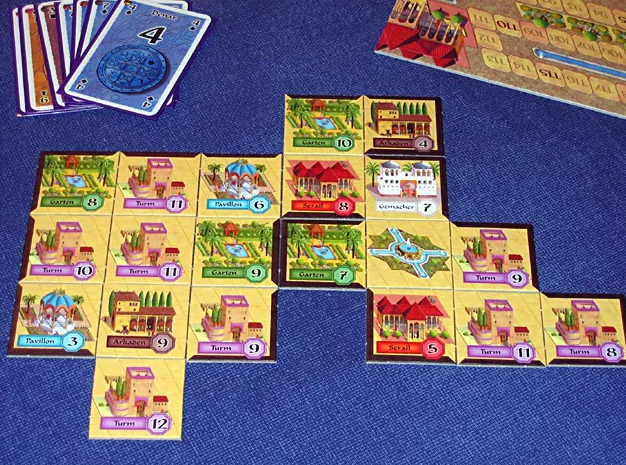
In Alhambra, players are acquiring buildings to be placed within their Alhambra complex.
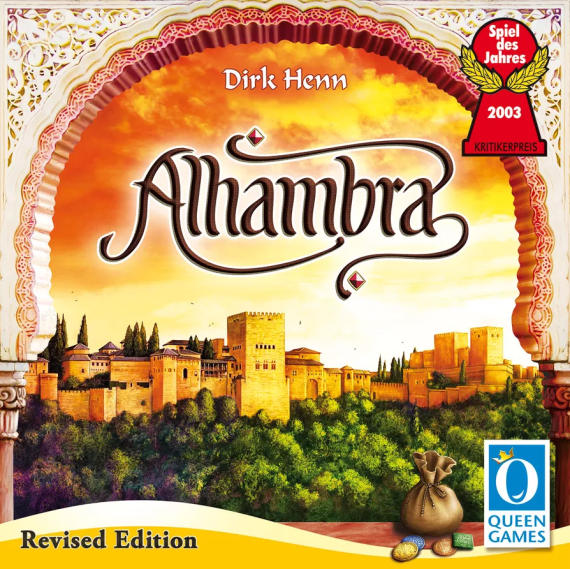
The money in Alhambra comes in four different currencies (of different suits) and is available in the open money market. The 54 buildings of six types become available for purchase in the building market four at a time; one building is available in each of the four different currencies. On a player’s turn, a player may 1) take money from the open money market, 2) purchase a building from the building market and either place it in his Alhambra or reserve, or 3) engage in construction and re-construction projects with buildings that have been placed in the player’s Alhambra or reserve. The game rewards efficiency, as when a player purchases a building from the market for the exact amount of money, the player may take another turn.
I don’t always agree with the Spiel, but I like Alhambra’s combination of set collection (yay, another set collection game), tile laying, and area majority. Alhambra marks the second time Dirk Henn made one of these lists. Wallenstein made the 2002 list. While I like Wallenstein more (in large part because of the cube tower), Alhambra does enough to take the top spot in a weaker year for tabletop games. That may sound harsh, but you haven’t seen 2004’s list. It’s a doozy. Still, I enjoy the heck out of Amen-Re and Alhambra. I struggled with which one to place at number one.
That’s our list of the Top 5 Tabletop Games of 2003. Let us know which game you like best. Thank you for reading, and wherever you are, I hope you’re having a great day.
Hey, hey, Geekly Gang! Kyra Kyle here with another writing brain dump. We’ve entered the “Ber” Season, months ending with the letters BER, so I’m doubling down on my writing. But I had trouble getting into gear, finding a flow state, discovering my voice, and all that fun stuff. Thankfully, one method got me on track: The Literary Triptych.
Literary triptychs work like art triptychs. Triptychs are the sets of three art pieces that build off one another. The artist tells a story with their set of three paintings. A literary triptych–as I define it–can do a similar thing. Literary triptychs take the same short work (or story) and sends it through different lenses. This could include different points of view characters, but doesn’t need to be. I’ve warped a story through first, second, and third person. Tense can also shake up the status quo. But I will be honest, changing character points of view works extremely well, and it does the most to get a writer unstuck.
At least for me. I got to test drive three different narrators through three hundred word retellings of the same small occurrence. Maintaining a point of view character’s voice through a novel-length work can get daunting. Test driving three different narrators was a godsend. Whichever one sparked my interest the most won the narrator duties. After this brief exercise, I was off to the races.
But literary triptychs have a secondary benefit. I explored my story’s world, got to know all three characters a little better than I did at the start, and found details (about the characters and world) I could weave into a novel-length work. And it didn’t take long for me to finish the triptych. If I get stuck while writing the novel (working title is Gods and Dolls), I may deploy the triptych and see if it will help.
Getting back to my progress on Gods and Dolls, I started at two hundred to two hundred and fifty words per day (the first three days) and upped my production to seven hundred to eight hundred daily words. I want a production level that I can sustain for days, weeks, and even months. If I maintain this level of production, I should complete Gods and Dolls well before Christmas. I did begin this process in the mid-August, so I had a head start.
I also won’t stop myself if I catch fire. If I can reach over a thousand words a day, I’ll ride that wave as long as I can. Who knows? I may complete my first draft before Thanksgiving. That should give me plenty of time to edit my previous novel, and Crooked as a Dogwood has been out to agents for almost two months. One more month, and I’ll submit to another round of agents. Hopefully, I’ll be finished with my second novel as I send Crooked as a Dogwood out to small publishers. And of course, I’ll have the third novel completed before sending out the second novel. Yay!
That’s all I have for this month’s Writing Brain Dump. Let me know how you’re doing with your writing journey. And if you try the literary triptych method to get yourself unstuck in story, leave a message in the comments. Thank you for reading, and wherever you are, I hope you’re having a great day.
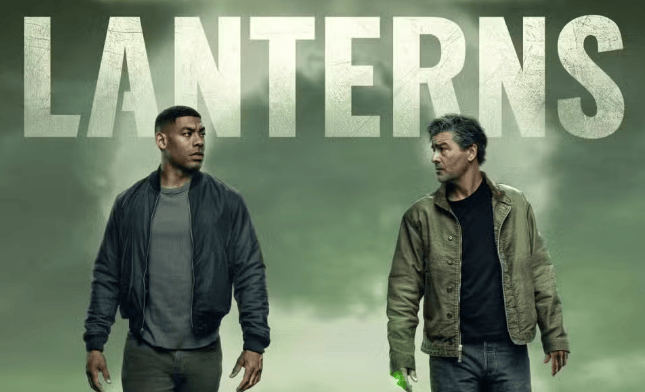
Hey, hey, Geekly Gang! Kyra Kyle here with another review/reaction of this week’s episode of Lanterns, “Lights Out.” If you want to see our thoughts on last week’s episode, “The Weenie,” here’s a link to that review. I was pleasantly surprised when Lanterns ended its 2016 storyline this week. It ends about as well as one might imagine (not well at all), but before we get into my thoughts on “Lights Out,” let’s get the spoiler warning out of the way. There’s little chance of me discussing this episode without spoiling the story. You’ve been warned. Without further ado, let’s talk about Lanterns “Lights Out.”
To say everything came to a head in Lanterns’s 2016 storyline would be an understatement. Hal Jordan gets disgraced, John Stewart doesn’t keep the ring, the Manhunter gets killed, and half of Rushville gets blown up. Yikes! There’s a lot going on in this episode, but the fact that this happens during Lantern’s fifth episode with three more remaining this season, gets me excited. Like I said, I was pleasantly surprised by Lanterns ending its 2016 storyline this week. This should mean that most of the remaining episodes will fill in the gaps between 2016 and 2026, and more importantly, move the story along. Hal Jordan died at the end of the pilot episode. That was a promise that Lanterns season one won’t end in 2016 and will explore the events following Hal’s death (and who has the ring); the final three episodes should make good on that promise.
I’ll be upfront and say that I was wrong about John Stewart taking the ring from Hal Jordan. Technically, he does. I didn’t think that he would take the ring and not claim it as his own. The events of “Lights Out” lead to Hal Jordan losing the ring (maybe, the Guardians have it right now, so who knows?) and John Stewart losing his desire for the ring. Lanterns attempted to make the reason why John wouldn’t want the ring because he had to kill the Manhunter, and he’s in love with the Manhunter. This felt rushed and forced. Sure, it’s physically there, but I never quite bought John’s relationship with the Manhunter. I could buy John not wanting the ring because the Guardians wouldn’t give him the ring; he had to take it from Hal. Again, this is in the show’s dialogue and plays a factor, but Lanterns offers both options and doesn’t commit to either one. That may be why I didn’t buy John and the Manhunter’s relationship.
For a show that does a great job with characterization, I was disappointed with Lanterns‘ choose your own reason why John doesn’t want the ring. Regardless of the reason, John returns the ring to the Guardians. Will we see Guy Gardner in the sixth episode of the season? Lanterns keeps using Fillion’s Guy Gardner as its thumbnail. It’s been at least three weeks. It would make sense if the ring passes from Hal to Guy Gardner. The show would also earn its name of Lanterns. We aren’t talking about one or even two of Earth’s Green Lanterns. Here’s a third. And I’d like to see the Sinestro Corps. play a role in the upcoming episodes. With Hal incapacitated, Sinestro could wreck some havoc. Ending the main story thread (what happened in Rushville in 2016) with three episodes remaining means Lanterns will need another great threat. The Sinestro Corps. could fill that role well.
But some of that is conjecture, let’s return to the Rushville story. With the exception of John giving back the ring, the story played out like I thought it would. And that’s a great thing. Lanterns introduced concepts in the first four episodes and did a fantastic job with callbacks in “Lights Out.” The odd anti-Green Lantern smoke returns. The kamikaze aliens. The bizarre red lasers that explode folks. John’s artwork. The Manhunter’s crystal heart. And the reverse white laser that can heal (explaining how no one in Rushville gets sick). It all works. It’s chef’s kiss good. But there are three episodes remaining. The final episodes concern me, to some extent. Lanterns did such a great job of setting up all of these threads, and for the most part, it tied up those lose ends during “Lights Out’s” runtime. There isn’t a lot of time remaining to set up another entire story arc.
Switching from one major threat in a single season to another reminds me of what happened in the first season of Netflix’s Luke Cage. The first half (or just over first half) of that show was excellent, and then the show lost momentum changing gears to another big threat. That’s the other reason why I think Lanterns will turn to Sinestro and the Sinestro Corps.. The show has already introduced Sinestro. It hasn’t set up any other villain, except for maybe Parallax. Sinestro and the Sinestro Corps. use yellow power rings, charged by fear. Parallax is the living embodiment of fear in the DC Universe. The fact that the Green Lantern Corps.’s most persistent enemy uses Fear Rings is why Lanterns included the idea of the green power ring asking if humans were afraid when choosing a human to be Green Lantern. You can’t have fear (the main enemy’s strength) when wielding a Green Lantern power ring.
Earlier in this series, I mentioned how Lanterns did little with Green Lantern’s powers, and the audience seldom say Green Lantern’s uniform. That still happens in the show, but I like that we’ve seen more of Green Lantern’s powers as the season’s progressed. Rushville’s story made me forget about the reduction of costumes and powers. Now that Rushville’s story has concluded, I’m going to want to see some awesome Green Lantern constructs and more of the costume. Guy Gardner doesn’t mind wearing the costume. We’ll see if there’s a massive row between Green Lantern and Sinestro or Green Lantern and Parallax.
Lanterns has managed to ground Green Lantern, introduced intriguing characters, and deliver on several promises posed at the beginning of the season. After the season airs, I may binge the entire season. Knowing the sheriff’s past may heighten some of those earlier scenes. This is a show that drops plenty of bread crumbs as well as Easter eggs. Those are my thoughts on this week’s episode of Lanterns (“Lights Out”). Thank you for reading, and wherever you are, I hope you’re having a great day.
Happy Wednesday, Geekly Gang! Today, our writers share what they’ve been watching over the past month. Feel free to share what you’ve been watching this past month, because we’re all part of the Geekly Gang. I’ll get things started with what I’ve been watching this past month.
Kyra’s Shows
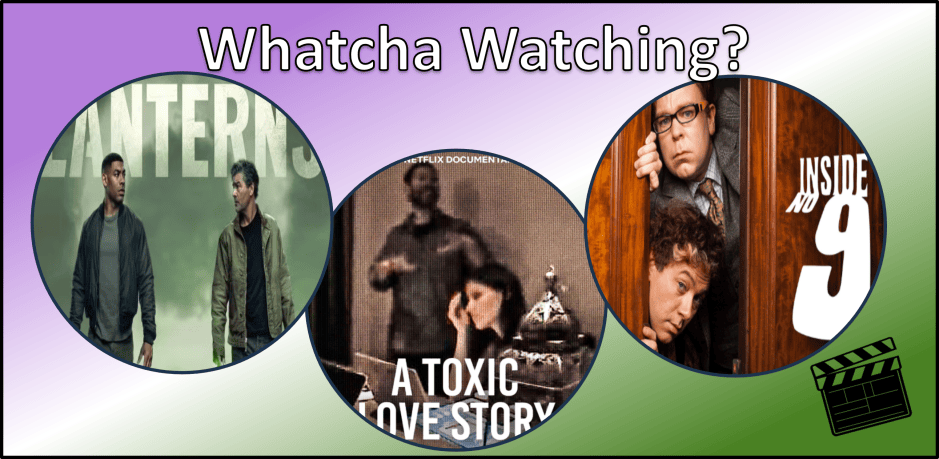
I’ve been rewatching Black Mirror episodes this past month. I’ve bounced from one episode I remember enjoying to the next. Even though Black Mirror’s quality has waxed and waned over the years, mostly waned, the classics are classics for a reason. “Playtest,” “White Christmas,” “The Entire History of You,” “San Junipero,” and “Be Right Back” still hit hard, and newer episodes like “Joan Is Awful” are a ton of sick fun. Geekly may need to rank each Black Mirror episode. Eek! That’s sounds like a tough task. Let us know if you’d be interested in that post.
Inside No 9 may out Black Mirror Black Mirror. While Black Mirror must fall in line with stories of technology, Inside No 9 has more leeway. Inside No 9 is a series of bottle episodes. Think episodes like Breaking Bad’s “Fly” or Friends‘ “The One Where No One Is Ready.” Inside No 9 has a brilliant premise. Bottle episodes tend to be an audience’s favorite episodes. Why not make an entire series out of those type of episodes? Inside No 9 has incredible range. “A Quiet Night In” is a hilarious crime comedy while “The 12 Days of Christine” will have you reaching for the tissues. Some of the show’s twists take a while to develop. “The 12 Days of Christine” has a heart wrenching twist that reveals itself at the end, while “Tom and Gerri” features multiple twists, deepening both characters. Geekly may have two shows to rank.
And I’ve rediscovered these two shows through YouTuber PolterGibbst. His channel reviews shows with tasty twists. He walks viewers through each episode, spotting minor details one may miss on an initial watch. PolterGibbst does cover a lot of classic The Twilight Zone episodes. I may have to rewatch some of those as well. I like PolterGibbst’s detailed analysis of each of these episodes. His enthusiasm about these shows inspired me to rewatch Black Mirror and Inside No 9.
Of course I’ve been watching Lanterns on HBO Max. I won’t discuss my views on that show too much in this post. I’ve been sharing my thoughts on each Lanterns‘ episode as they air. I’m writing this segment way early–because I like to stay far ahead on Geekly’s production schedule–but I thoroughly enjoyed the Lanterns pilot episode. It does everything a pilot needs to do: introduce the character, generate intrigue, and hint at characters’ pasts. I wish the pilot (I’m writing this after watching the pilot) featured more of Green Lantern’s powers and costume. But Lanterns is off to a great start. I can see why it’s highly rated.
Kyra’s Movies
Yep. I watched another Netflix documentary. I like putting these on in the background as I work (board game design), so I’m bound to have at least one documentary per month, and oh my, A Toxic Love Story has plenty of twists. Black Mirror and Inside No 9 would be jealous of how many turns this documentary takes. I expected at least one. The documentary did a great job of showing how the perpetrators wanted authorities to view the victim. A Toxic Love Story had one more twist up its sleeve, but my favorite part of this documentary is that Netflix spotlighted the victim and showed how she overcame this relationship. I like it when documentaries do this. Let’s place more emphasis on the people who suffered and how they reclaimed their lives.
That’s all I’ve been watching this past month. Looks like Season and Skye don’t have anything for Whatcha Watching, so what have you been watching, Geekly Gang? Let us know in the comments. Thank you for reading, and wherever you are, I hope you’re having a great day.
Happy Monday, Geekly Gang! Kyra Kyle here with another list of five. Today’s Top 5 list centers around comic book villains who could be the main character in a television series or movie. The DCU and DCEU have been better showcasing their villains. Penguin, Black Adam, Joker, Clayface, and even Harley Quinn have all had television shows or movies featuring them as the main characters. Marvel has been less prolific. This may be a Marvel-heavy list of five, but I’ll try to sprinkle in some DC Comics characters who haven’t yet seen the limelight. Let’s get started with our list of Comic Book Villains who can be the main character in a movie or television series.
Honorable Mentions
We have multiple characters who could claim an honorable mention spot, so we’ll run through a few here. Darkseid can and should get the Thanos (in Avengers: Infinity War) treatment, and Kingpin could have his own series akin to HBO Max’s Penguin. None of them make this list because this is more of an inevitability. While we won’t shy away from obvious choices (more on that with our top spots), we don’t want to include characters who are all but assured a movie or show. With that said, we’ll give a shout-out to anti-hero and sometimes villain Lobo. I’m writing this post early and haven’t yet watched Supergirl, but if Lobo captures fans’ hearts, he could easily get his own movie or show. Consider this the Penguin effect. Fans loved Colin Farrell’s portrayal of the character and demanded a show.
5: Vermin
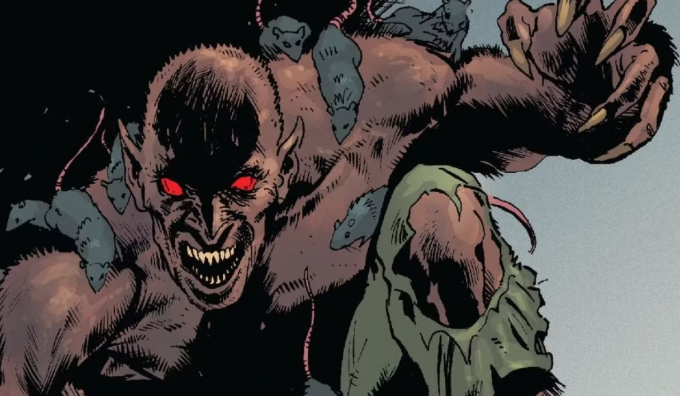
Vermin is a strange choice, especially when he’s the only Spider-Man villain who made this list, but his inclusion makes some sense. I’d love to see a Marvel show, film, or special presentation of the Spider-Man story, “The Child Within.” Vermin is the main character in that story. Geekly has mentioned “The Child Within” in the past, but we’ll give you a quick breakdown. Vermin encounters a nine or ten-year-old child in the sewer. The child asks Vermin to help take him home. Vermin reluctantly agrees. He leads the child to a mansion (his home), but the boy is too scared to enter. We learn the child is Vermin’s inner child. This mansion is his family’s home.
“The Child Within” tells Vermin’s backstory. Vermin is one of Marvel’s most tragic villains, so what this show portrays may not be for everyone. But “The Child Within” explores identity and the power of acceptance. Both of these topics have a strong pull in today’s climate. This story is long overdue for a live-action telling. Make it happen, Marvel.
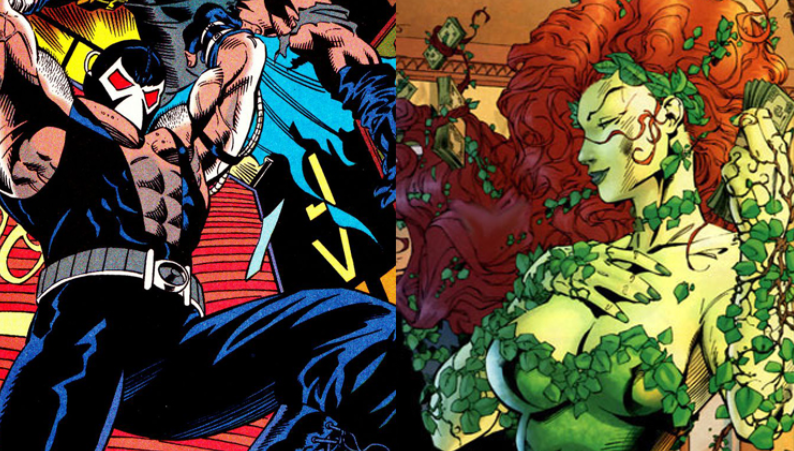
4: Poison Ivy and Bane
My head tells me Bane should take this spot. My heart insists Poison Ivy claims the fourth spot. I went with both. Let’s begin with Bane.
Bane seldom gets a fair shake on the big screen. Ironically, he was little more than Poison Ivy’s mindless pawn in Batman and Robin, and he served as an underboss in The Dark Knight Rises. Neither one of these versions does Bane justice. Heck. Bane often gets sidelined in his own stories. “Knightfall,” the storyline where Bane builds a Gotham empire, breaks Batman’s back, and arguably Bane’s most well-known story, pushes Bane aside to focus on Azrael (the replacement Batman), midway through its arc. Not everyone likes Tom King’s run on Batman, but I thought it did a great job showing Bane at his conniving best. “City of Bane” could showcase this underrated villain like no other big screen project has.
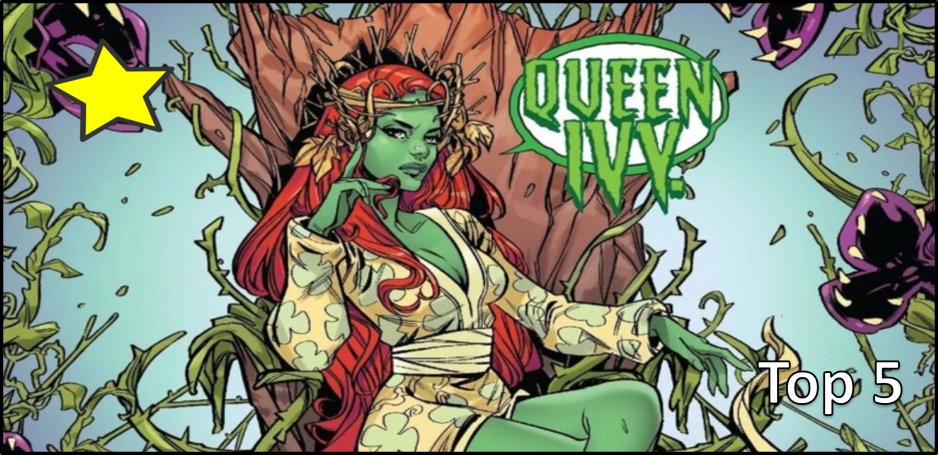
Simply put, Poison Ivy is a fan favorite. She co-stars in the Harley Quinn Animated Series, but has rarely seen the limelight on the big screen. Poison Ivy is more of a sure thing. I could easily see her featured in a future movie or show.
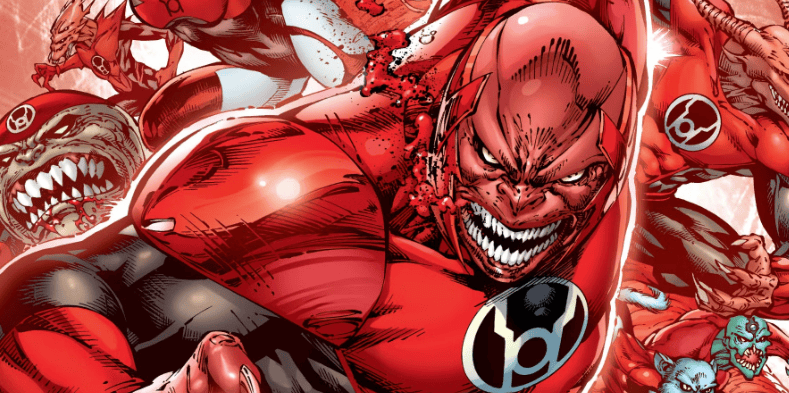
3: Atrocitus
Wonder Woman and Superman villains don’t lend themselves to solo movies too well. I can’t really see Lex Luthor outside the context of a Superman movie. I’d love to see that, but I question if it could work. I also didn’t want to include multiple Batman villains on this list, and Flash hasn’t landed as a big-screen superhero…yet. That leaves Green Lantern villains. Several could’ve made this list. Star Sapphire is more of a hero at this point. Nekron and Black Hand could certainly headline a film, but we may need to wait several years for the DCU to set up those characters. Sinestro is Green Lantern’s longest-running foe, but Atrocitus serves a specific purpose in Green Lantern lore. The Guardians of the Universe (the ones behind the Green Lanterns) make mistakes and can commit atrocities.
Hey! Atrocitus sounds close to atrocities. Coincidence? I think not. The Guardians destroyed Atrocitus’s home world and murdered his people. He gains the red power ring, fueled by rage (part of the emotional spectrum, with green meaning will and yellow fear), and goes on a revenge tour. Atrocitus has a clear goal. Fans could even root for him to succeed. This can make Atrocitus as compelling a villain as Thanos for a solo movie. Sure, Sinestro recruits his army of yellow lanterns, but his goals reek of selfishness. Atrocitus believes in a righteous cause. And I like the idea of the Guardians owning a checkered past.
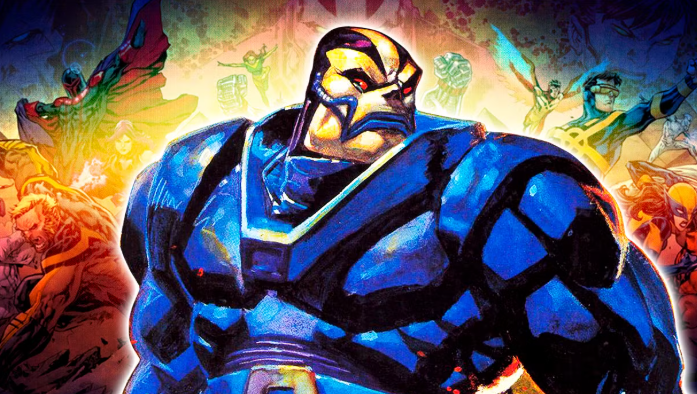
2: Apocalypse
Ever since his first appearance forty years ago (1986), Apocalypse has been one of the X-Men’s most consistent villains. As the oldest known mutant, Apocalypse’s origin stretches back to Ancient Egypt. He has a simple philosophy: Survival of the Fittest. Apocalypse embodies this philosophy. And it’s this philosophy that makes Apocalypse a great villain with which to focus a movie or show. Funny how having clear goals makes a villain a good candidate as a main character. While I could see several Apocalypse storylines translated to the big screen, “Age of Apocalypse” may be the most fun.
“Age of Apocalypse” asks what would happen if Apocalypse got his way, where only the strong survive. This storyline contains some of the bleakest storylines in X-Men lore. There are too many to count, but believe me, they can tug at one’s heartstrings. And “Age of Apocalypse” hasn’t graced the big screen in earnest. I’d love to see A Pair of Lips, I mean, Apocalypse headline a Marvel movie or show.
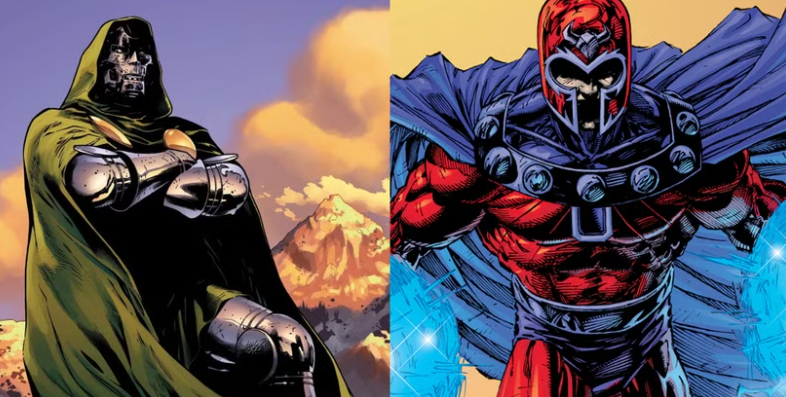
1: Doctor Doom and Magneto
Doctor Doom and Magneto had to top this list. They’re the obvious ones. They’re two of the most recognizable villains in comic book history. They have compelling backstories, and I don’t believe Marvel has plans to give either one their own movie or show–at this time. Sure, Avengers: Doomsday includes Doctor Doom’s name in its title, but this team-up movie will include so many characters I can’t imagine Doctor Doom will get significant screen time. We need a Doctor Doom and Magneto story like Avengers: Infinity War had with Thanos. These are two of the most complicated villains in comic books. Both could single-handedly carry a movie.
That’s our list of comic book villains who could be a movie or show’s main character. Which comic book villain would you like see get their own movie or show? Let us know in the comments. Thank you for reading, and wherever you are, I hope you’re having a great day.
Hey, hey, Geekly Gang! Kyra Kyle here with another week of Geek News. The Kansas City Renaissance Fair was fantastic. I had a blast. We have plenty of new releases in board games and video games. We even have some tabletop RPG new releases. What? That’s right. GameFound’s RPG Party returns. I’m so glad they’re making this an annual event. Woot! Without any further ado, let’s talk about some games.
Everdell Journeys Launches on KickStarter
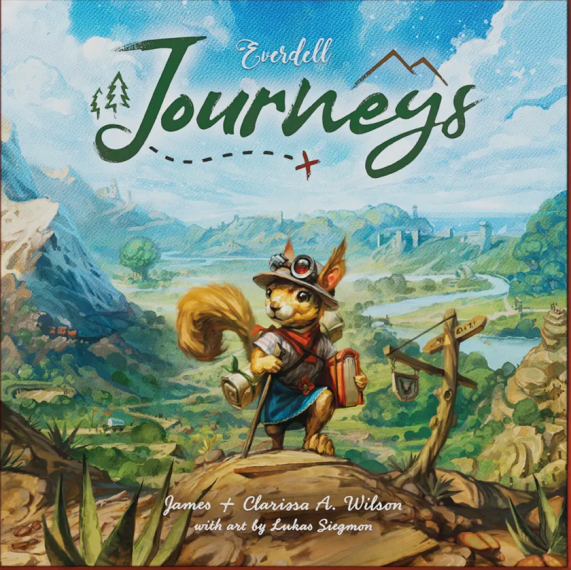
Set out from the hustle and bustle of the big city and see the cozy world of Everdell on your own two paws in Everdell Journeys.
In this card-drafting adventure, you’ll lay down a path of cards featuring the breathtaking landmarks, riveting cities, and new friends you’ll find on the road. Send your traveler along the path of cards to activate them, scoring points and gaining resources. Chart your course wisely and score powerful combos based on the cards in your path, filling your journal with memories to share by the hearth at your journey’s end!
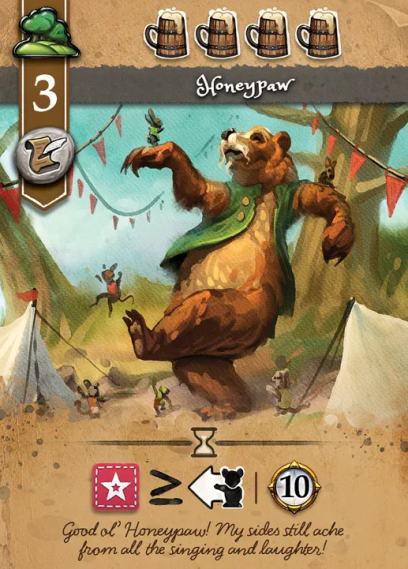
Thank you, Tycoon Games, for the description. My spouse and I love the Everdell series. We have almost everything from the base game and adore Everdell Duo. Tycoon Games has done a good job with its Everdell spin-off games so far. That’s a good sign for Everdell Journeys. While Everdell Duo offered a campaign and co-op variants of the original game, Everdell Journeys uses card-drafting. Yes! According to the publisher, Everdell Journeys takes between thirty minutes to an hour to play. That tracks for a card-drafting game. I like those games’ ability to speed up gameplay. The picture above has me a little concerned about the game’s icons. There’s a lot going on with the symbols at the bottom of “Honeypaw.” Still, Everdell hasn’t missed yet with one of its spin-offs. Everdell Journeys deserves attention.
And we get more than one Everdell spin-off game with this campaign. Each pledge comes with a free copy of Everdell Gather, which is a card game variant of Everdell. I like it when longer games, like Everdell, condense its concepts into a card game that’s easier to get to the table. Games of Everdell Gather take around twenty minutes. Yes, please. And we get two Everdell spin-offs for the price of one. Yes, yes, y’all! Everdell Journeys offers pledges that range between $49 and $699. $50 for two games isn’t bad. If you’re interested in Everdell Journeys, check out its KickStarter page.
Catvale Launches on KickStarter
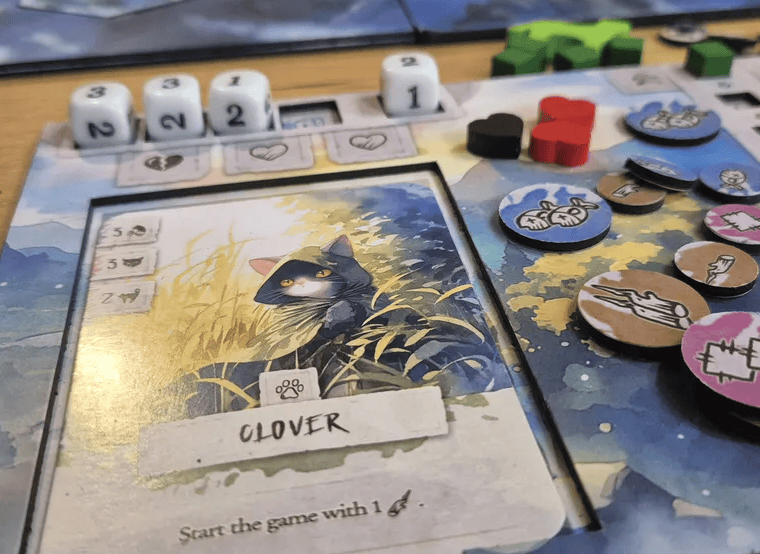
Each player shapes their cat’s path: will you be the aggressor, stealing prestige and robbing opponents of their dignity? Or perhaps you’ll focus on foraging and construction, fancying up your backyard with luxurious structures? Live off adventure by completing quests, fulfilling ambitions, and dueling for glory, or dominate the market through cunning auctions and hiring the best workers? With multiple paths to victory and high replayability, Catvale offers a delightful mix of strategy, luck, and creativity, where the future of the land rests in the paws of the most cunning and ambitious cat.
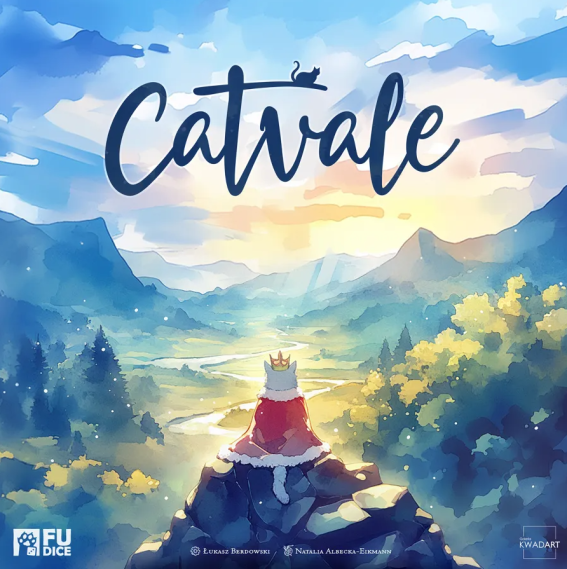
Thank you, FU Dice, for the description. I haven’t heard much about Catvale before this week. This game sounds like a winner with my family. My oldest daughter loves cats. Catvale has RPG elements, dice rolling, worker placement, and tile placement. If combined properly, these are some of my favorite board game mechanisms and Catvale could be a killer game. I love the artwork. The components look like good to great quality. FU Dice is a new company. While there’s always a risk with newer board game companies, the people behind FU Dice have a history in the board game design/production space with Glass Cannon Unplugged, who made the Apex Legends, Don’t Starve, and Dying Light board games. The company may be new, but the designer (Lukasz Burdowski) and the people running FU Dice have plenty of experience.
Catvale offers multiple pledge levels, ranging $79 – $499. The highest level offers premium wooden pieces. If you’re interested in Catvale, check out its KickStarter page.
Dice Commandos Infestation Launches on GameFound
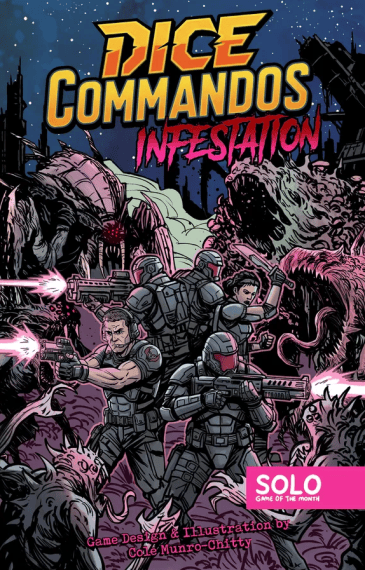
The sequel to Dice Commandos, Infestation is a tactical dice puzzle game where you control a team of elite commandos facing an evolving alien threat.
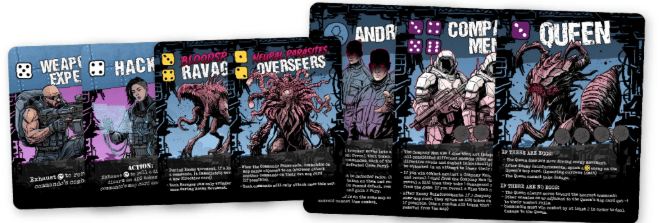
Battle rogue androids, powerful company men and the brooding alien queen. Complete objectives, and fight to survive using dice, weapons, and deadly abilities.
Choose 1 of 6 missions and an enemy faction type to battle against. Each round you will use your commandos to perform 3 actions; move/fight, train, deploy, load-outs and completing objectives. Your commandos are dice that have special abilities and move according to their pip values. You will move your commandos around the map strategically fighting enemies and setting up the conditions to complete your mission objectives.
You must complete you mission objectives before time runs out or before your commando team is defeated by the alien threat!
Thank you, Solo Game of the Month, for the description. And, yes! We have another board game from Solo Game of the Month. I love this company. It offers a lot of game for not a lot of money and still manages to make quality games. As the name implies, Solo Game of the Month produces a lot of great solo games, a growing trend in modern board gaming. Don’t have a dedicated gaming group? Play solo games. We missed the original Dice Commandos when it originally released, but we caught its sequel, Dice Commandos Infestation. The original game paid homage to Predator, and Infestation looks to do the same with Starship Troopers. Oh, yeah! This’ll be fun.
If you’re interested in Dice Commandos Infestation, check out its GameFound page.
Tres Tesoros Launches on GameFound
Tres Tesoros is a fast-paced card game for 2 to 8 players that combines strategy, luck, and treasure hunting.
Players roll a custom D12 dice at the start of their turn to determine how many cards they draw and how many actions they can take. Throughout the game they collect Gem cards, protect them with Shields or Mirrors, and use special action cards to disrupt their opponents and gain an advantage.
The goal is to complete a winning collection of Gems before anyone else. Easy to learn and quick to play, Tres Tesoros offers constant interaction and unexpected twists where a single roll can change the course of the game.
Thank you, Dreamkeepers Games, for the description. Tres Tesoros has a simple premise, and sometimes, that’s all you need. It looks like an easy game to learn and claims to scale well, supporting up to eight players. I haven’t yet played Tres Tesoros, so I don’t have an opinion there. The game flow is roll the die (a twelve-sided die), follow the directions of the die face you rolled by playing gems (cards for points) or attacking your opponents (cards to rid your opponents of points?). Like I said, simple and quick. While I can’t imagine Tres Tesoros’s pledges costing too much, it is on GameFound, so we don’t have an exact dollar amount. If you’re interested in Tres Tesoros, check out its GameFound page.
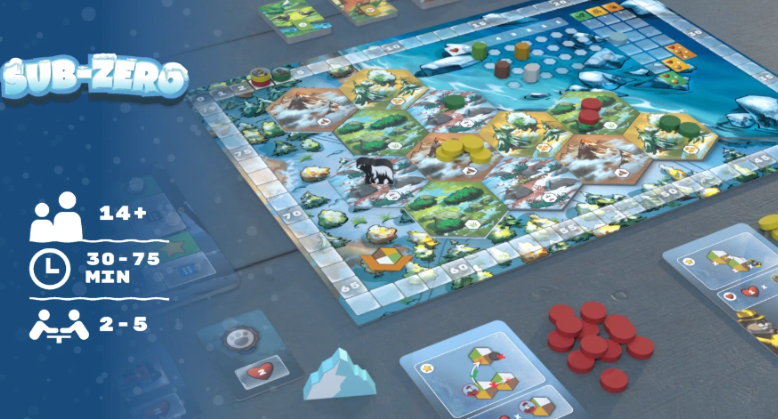
Sub-Zero Launches on GameFound
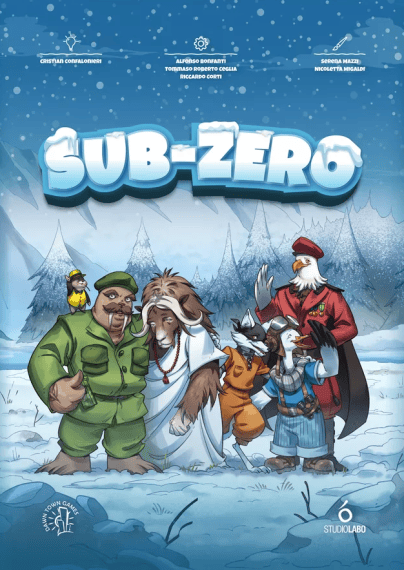
As a faction of Arctic animals take over territories and stockpile food to survive the winter. Fight the cold, avoid humans, and escape the polar bears!
In Sub-Zero, you lead a faction of arctic animals chosen from Walrus, Goose, Musk Ox, Bald Eagle, Arctic Fox, and Lemming.
The first player of the turn rolls a set of dice indicating the actions available for that turn, the players in clockwise order choose which dice to use and remove it from the pool available to the others. From the season’s black or white dice set, you can then place your animals on the board, collect food from a territory and lower its value, use your faction’s special action (each faction is different from the others), or spend points to choose a specific action of the dice
From the blue die of the season, reduce the value of a territory by lowering, place a human scientific expedition on a territory, collect food, or send a Polar Bear against the animals of the other factions. The game takes place in 15 rounds divided into 3 seasons: spring, summer, and autumn. At the end of the 3 seasons, the player with the most points (in food) wins!
Thank you, Dawn Town Games, for the description. Pictured above is a screenshot from Board Game Simulator, not the final game components. That being said, Sub-Zero looks good from a production standpoint. Dawn Town Games has a few games under their belt and have a good track-record. Sub-Zero features more dice rolling and worker placement (like some other games this week), but adds a twist of area control/manipulation. That makes sense for a game where you’re trying to survive the elements. Sub-Zero introduces some interesting concepts. I like how players take on the roles of animals and must avoid humans. Nice touch! If you’re interested in Sub-Zero, check out its GameFound page.
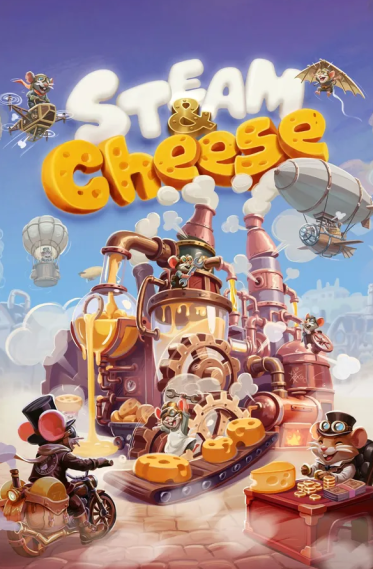
Steam & Cheese Launches on GameFound
In a world similar to the one we know, mice became the dominant species. They built houses, roads, and cities, and increasingly developed a taste for fine foods — their appetite for cheese grew immeasurably. The better the cheese, the more valuable it became. So they began importing spices from the Far East by zeppelin. These spices are used to make the cheese even more delicious. But cheese production is no simple undertaking. A large machine factory was built, where the resourceful mice constantly sought to install ever-better machines to increase productivity. Sales representatives from all over flocked to the factory operators to purchase cheese. The merchants’ demands are high, but great wealth is granted to those who satisfy these desires.
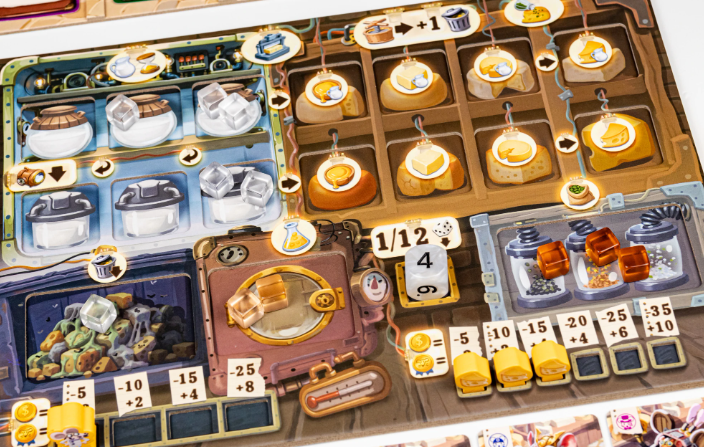
In this expert level euro game players place dice in various action boards to choose which action with which strength they want to perform. They get resources depending on the dice color and determine the strength with the dice values. Milk is placed on the player board and needs to be transformed to cheese with different machines (actions). They try to fulfill orders and move on various bonus tracks. The player with the most victory points wins.
Thank you, Skellig Games, for the description. Oh my ghost! Steam & Cheese looks adorable. Steampunk mice making cheese is a fantastic theme mashup. I included the entire description for Steam & Cheese because it’s so good. Skellig Games has produces some phenomenal games, too: Darwin’s Journey, On Mars, Anachrony, Voidfall, and Age of Steam. This is a company with an excellent track record. I don’t know what makes Steam & Cheese an “expert level” euro game, but it does look complicated. Whenever I think of an expert level euro game, I think of a game I can lose on turn one. I hope that isn’t the case with Steam & Cheese. But I don’t yet have a game in my collection like that. I could stand to have a least one.
Steam & Cheese looks so good. I may throw caution to the wind and pick up a copy. If you’re interested in Steam & Cheese, check out its GameFound page.
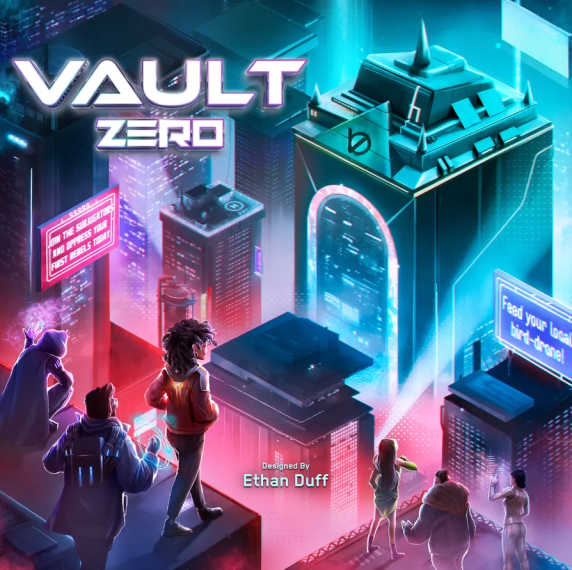
Vault Zero Launches on GameFound
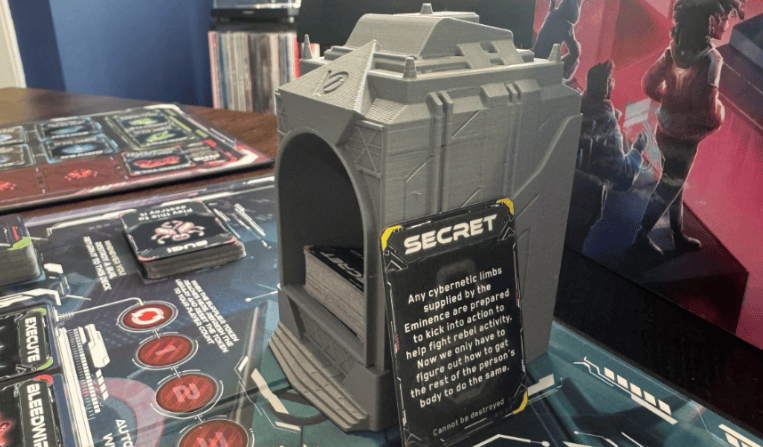
Vault Zero is a combination deck-builder, engine-builder, and action programming game set in a techno-dystopian future. Players take the role of rebel hackers who are all working to build machines that can hack into Vault Zero, the digital fortress that contains the government’s darkest secrets, and expose those secrets to the public and cause a mass uprising.
Players begin each turn with only one actin available to them, but cards they collect can add action economy in three different ways depending on their color. With a full board players will be triggering effects that trigger effects that trigger effects. Find effects that generate Key cards and get 5 of them in your hand at once to steal a secret from the Vault! Steal your 5th secret, and you’ve won the game!
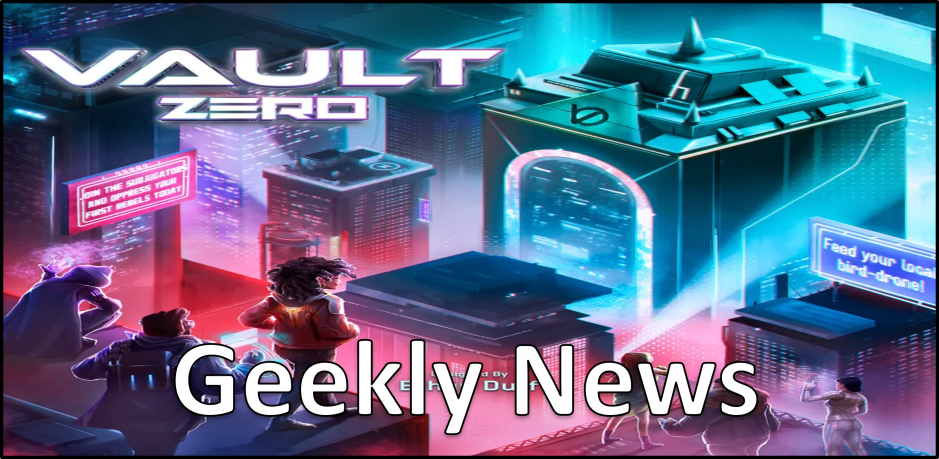
Thank you, Horse Thief Games, for the description. Oh my ghost! I know I already said that once in this week’s write-up, but look at the games in this week’s stable of board games. They all look so good. Vault Zero adds several other elements I love in games. I don’t have too many deck-builders anymore (culled a handful of months ago), and I love it when an engine gets going. Vault Zero also happens to have a great theme, and look at the table presence the titular vault (pictured above) provides. Vault Zero will be one of those games people will stop to look at during a convention. If you’re interested in Vault Zero, check out its GameFound page.
RPG Party Launches on GameFound
Typically, we don’t cover tabletop RPGs on Geekly because there are so many releases each week, but this week is special. GameFound launched its second annual RPG Party. Woo hoo! 23 TTRPGs get featured on the site for the week, and let me tell you, some of the games sound amazing:
Budapest 1899 by Dragonmount Press (delves in to the occult and folklore of Hungary as it prepares to enter the 20th century)
Lights, Dice, Action!by Regular Wizard Co (a game about creating a TV series or blockbuster movie)
The Long Watch by StudioSquidink (an “uncanny solo RPG” that sees the player join a mysterious and underfunded organisation)
Heroes After Dark by Adam Krafter (where you play as Vespers – heroes who mysteriously trasform into monsters every night to fight evil with evil)
Murder of Crows by Michael Endo Weil (crows investigate the murder of other crows)
Hope Dies Last by Infinite Citadel & Mike Underwood (A triptych of Daggerheart-compatible campaign frames where defiant heroes fight against overwhelming odds)
Hauntedby Jeremy Kerr (a tabletop RPG of supernatural noir investigation)
Trashumanismby Le Destroy (A biopunk TTRPG set in the Trashumanism Universe)
Twisted Lands by 9thPersona (players become Gidim – hunters, scholars, envoys, and problem-solvers navigating a living world of strange ecologies, ancient technology, powerful cities, and choices that leave lasting consequences)
Kraldum by tooth & shore (Go down to the shore below the city. Collect what you can. Survive what lurks there and beat the rising waters to make it home.)
Tales & Twistsby by Jack of all Tracks (Dive into a menagerie of brand new worlds filled with whimsy, adventure and horror with new rules for resistance, dungeon crawling, and the tug of war between resilience and corruption)
GridShock by Paul Vermeren | VX2 (You are a new breed of heroes, fighting to restore hope to a warped world in the grip of villainy)
Myco//Drift by Crimson Adder (players take on the role of genetically altered pilots bonded to skyscraper-sized fungal bio-mechs known as Myco Suits)
Ivory Tower by RiftKid Games (Save your flying city, witness the end of the world, and rule the remaining rubble in this TTRPG about a scheming council of archmages)
The Wine Dark Sea by Abyssal Raven Games (Play as lost star farers trapped in a place of dreaded legend outside the known universe)
Heroes of a Thousand Tales by Adventure_Horizon (Every rule is designed to make you play, feel, and fight like you’re the hero of your own anime series)
Unbounded by Roger “Moishe” Main (Level up through the Ability Trees and learn to harness your Atzmah to create any character concept you can imagine)
Witches of Winter by Violet Blitz (A modern fantasy TTRPG about witchcraft, community, and climate collapse)
Everdoom by Tremor Pings (A shared-authority narrative game for four players who discover the destiny of a legendary hero by telling their fable together)
Winter Bones: An RPG for Doomed Mice by We Be Dangerous Publishing (Become mice. Tiny, fragile creatures battling for survival against the horrors born of the Deep Still. Monsters lurk beneath the frost. Do you have what it takes to evade their clutches?)
Road Warriors: A Stand Up Comedy Odyssey by DGB Games (Road Warriors is a game about playing fledgling stand up comedians on your first tour. The gigs are rough, the audiences are worse and your hit points are based in self esteem. Good Luck!)
What a great round-up of TTRPGs. Which one of the above titles sounds the most interesting to you? Have you playtested any of them? Let us know in the comments. I’m glad GameFound has made RPG Party an annual event. Good luck to all the games listed above. You guys rock!
Halloween: The Game Releases
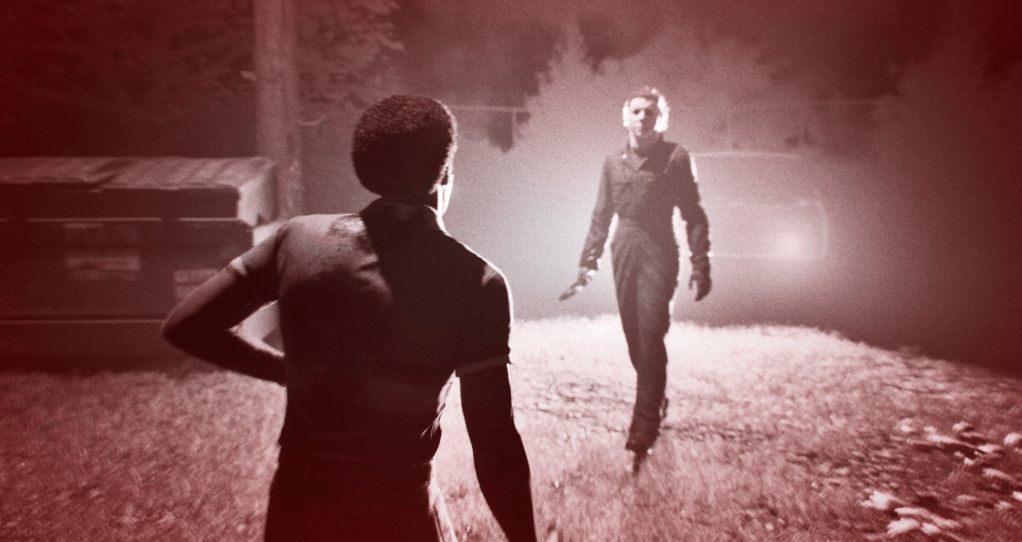
On Halloween night, 1978, no one is safe from Michael Myers. Become the Boogeyman or fight back against the face of evil itself in Halloween.
Halloween: The Game releases just in time for Spooky Season. I see what you did there. The game has received solid reviews. That’s great to see. Games based on horror franchises can be hit or miss at times. Halloween: The Game can be played as a solo experience or with multiple players. Think a Michael Myers specific Dead by Deadlight, where one player is the killer and the rest attempt to survive their attacks. Halloween: The Game is available on PC, PlayStation 5, and Xbox Series S/X.
That’s all the geek news we have for this week. Thank you for reading, and wherever you are, I hope you’re having a great day.
Hey, hey, Geekly Gang! Kyra Kyle here with another reaction/review of this week’s episode of Lanterns, “The Weenie.” If you’d like to see our thoughts on last week’s episode “OutKast,” check it out here. This post will only cover “The Weenie.” “The Weenie” goes back to the 2016 timeline, and while the episode is entertaining (Lanterns is a bingeable show), “The Weenie” illustrates why stories shouldn’t feature too many flashbacks: knowing the future (to some extent) can lessen a story’s tension.
I’ll get right to it. Spoiler warning is in effect. Again, I don’t know why someone who hasn’t seen Lanterns at all would want to read a reaction/review of the show’s fourth episode, but hey, you do you. And you’ve been warned about spoilers.
Lanterns‘ pilot ends in 2026 with Hal Jordan dead, and John Stewart checking Hal’s hand for the power ring. Much of “The Weenie’s” main tension exists between Hal and John. Sinestro insists Hal call John by what John really is: Hal’s replacement. The guardian we met last week (during John’s flashback episode) returns this week (in 2016) and tasks John with taking the power ring from Hal. But we (the audience) already know that John didn’t recite the oath and take the ring away from Hal. Why would John check Hal’s hand for a power ring in 2026 (Hal’s death) if he took the ring from Hal in 2016? I wanted the tension to build a lot more than it did. That’s the danger of too many flashbacks or a flashback within a flashback.
I’m done picking at that nit. Despite the reduced tension (from what I would’ve liked), “The Weenie” manages to recapture Lanterns‘ momentum. Losing momentum can also occur with more flashbacks. “The Weenie” onboards viewers into the action. Continuing Hal’s conversation with Sinestro (from episode two, “Trust Fall”) helped. It served as a brief recap. We gain context for John missing his payphone call from his parents; the call was really from the Guardians. And I love Lanterns‘ ability to contrast Hal and John’s personalities. During this episode, John said that everyone, including him, was lying. Lanterns accomplishes this with great dialogue. Most characters give half-truths or at least obfuscate their true intentions.
That last element adds to Lanterns‘ intrigue. The identity of the Manhunter (the killing machine the Guardians created before forming the Green Lantern Corps.) was revealed. I had an inkling as to the Manhunter’s identity. “The Weenie” removed all doubt. I liked how Lanterns executed the reveal. The show let the characters’ nature do the work. Centering one’s narrative with its main characters is always a great choice. Kudos!
And I have to hand it to Lanterns. While the show continues to dodge Green Lantern’s costume, it showed the biggest Lantern construct to date (John’s digging device). Sure, Hal wears the costume during his brief scene with Sinestro, but for the most part, Lanterns doesn’t like to show the character in costume. Getting back to John’s digging device, its inclusion makes me excited for more Lantern constructs in future episodes. Lanterns kept its special effects budget low during the first half of its first season, but the second half of the season should splurge a little.
The town of Rushville continues to be a great setting, almost its own character. “The Weenie” reveals that the Manhunter prevents people in Rushville from getting sick or dying. That explains the hospital’s unpacked equipment and the fact that Hal was the only patient to sign the log. This will cause some future tension between the city of Rushville and the aliens who want to hunt down the Manhunter. The aliens plan to blow up Rushville if Hal and John don’t deliver the Manhunter to them, but the Manhunter means a lot to the town of Rushville. It’s a lose-lose situation, and we do see some demolished buildings in Rushville during John Stewart’s return to the town (in 2026). Something explodes, but what? How? Unlike John’s refusal to take the ring from Hal, we know less about Rushville’s fate.
We didn’t see much of Rushville in 2026. The sheriff talks to John as if life continued for the town of Rushville…in some capacity. I like that Lanterns is using Manhunters as its chief villain for its first season. Teasing Sinestro is a great touch. Something tells me we’ll see the Sinestro Corps. before the season finale. I’m still waiting for Guy Gardner to make an appearance. Lanterns continues to use Fillion’s Gardner as its thumbnail. The big teasers. Does this mean Gardner got the ring before Stewart? Was he the one who took the ring from Hal? Who knows? Lanterns has done a great job setting up these mysteries. Time will tell if the show sticks the landing.
Those are my thoughts on Lanterns “The Weenie.” What are yours? Let us know in the comments. Thank you for reading, and wherever you are, I hope you’re having a great day.
Happy Wednesday, Geekly Gang! Kyra Kyle here, and today, our writers share what they’ve been reading over the past month. Feel free to share what you’ve been reading, because we’re all part of the Geekly Gang. I’ll kick off this post by sharing what I’ve been reading over the past month.
Kyra’s Fiction
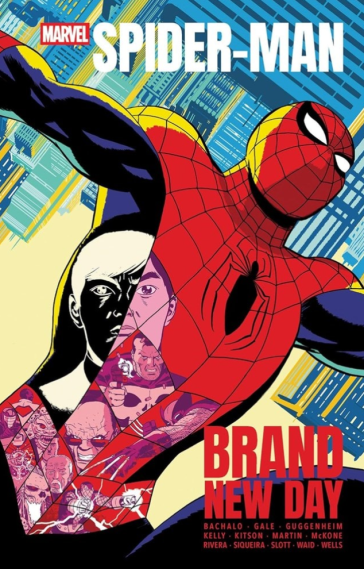
First off, I like how Marvel Comics has adopted DC Comics’ Compact Graphic Novel format. Yay! These volumes fit much nicer on the shelf, they pack a lot of story in smaller space, and they’re cheaper than full-size graphic novels. Compact graphic novels cost almost half that of full-size graphic novels, so I can pick up multiple volumes at a time. Hint: You’ll be seeing a lot of compact graphic novels on my list in the near future. My unsponsored plug for compact graphic novels has concluded, let’s get to Spider-Man: Brand New Day.
I can see why the MCU used the Spider-Man: Brand New Day title and none of the story. Don’t get me wrong, I enjoyed reading Spider-Man: Brand New Day, but the story was all over the place. The Spider-Man: Brand New Day comic book story arc plays out like a short story collection. The first story has little to nothing to do with the Mr. Negative storyline. Hammerhead’s tale builds up Mr. Negative as a shadowy figure working behind the scenes. Then, we get a yarn about a Bookie. While fun, the Bookie story doesn’t build off of Hammerhead’s. And then The Shocker shows up, and of course, he’s working with Mr. Negative. After that, we get an Anti-Venom comic, showing us who is Mr. Negative.
As you can tell, Spider-Man: Brand New Day is all over the place. Why does Anti-Venom reveal Mr. Negative’s identity? That reveal doesn’t carry much weight, because Spider-Man: Brand New Day sparingly shows Mr. Negative’s alter-ego and why Peter Parker would care. The original Sony Spider-Man Video Game does a much better job of telling Mr. Negative’s backstory. Heck, I only cared about the character because I played the video game first. You almost need to play the video game before reading the graphic novel for context. Spider-Man: Brand New Day defined Spidey for a generation. It may be rough around the edges, but it’s a good read.
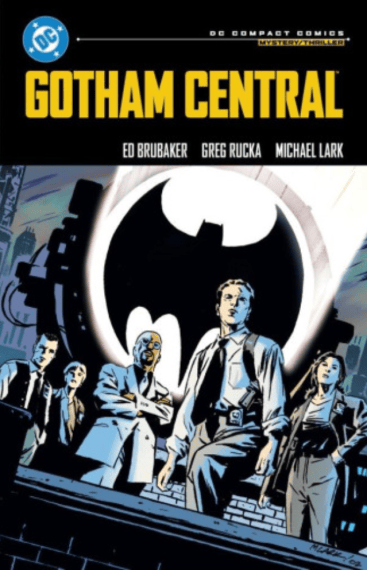
I had to read at least one DC compact graphic novel this month. Gotham Central beat out a couple of others in my TBR pile. I’m glad I chose this one. I can see why Gotham Central earned several accolades (including multiple Eisner Awards). These stories show the Gotham City Police Department (GCPD) working in a city that includes Batman. Some treat The Dark Knight as an extension of the GCPD. Others resent Batman. All of them navigate a criminal underground that includes heavy hitters like Poison Ivy and Mister Freeze. What can an ordinary cop do against someone like Mister Freeze? Gotham Central answers these questions.
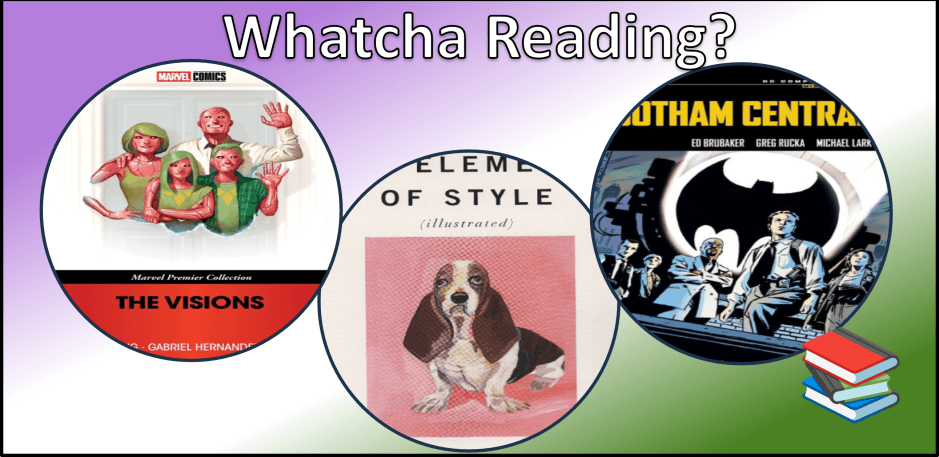
Gotham Central also shows the inner workings of a city on fire. Crime is rampant. Death is everywhere. The GCPD officers we follow do their best. Renee Montoya (pictured above on the far right) is a standout, but Gotham Central fleshes out existing GCPD characters and introduces many others that remain staples in the Batman Mythos. You don’t see a lot of Batman in Gotham Central, but that’s the point. The Gotham television show made a half-hearted attempt at adapting Gotham Central. One of the show’s biggest issues may have been to age down Commissioner Gordon. Gotham Central ages up Gordon and showed the power vacuum left behind in Gordon’s absence. That would make for a good show.
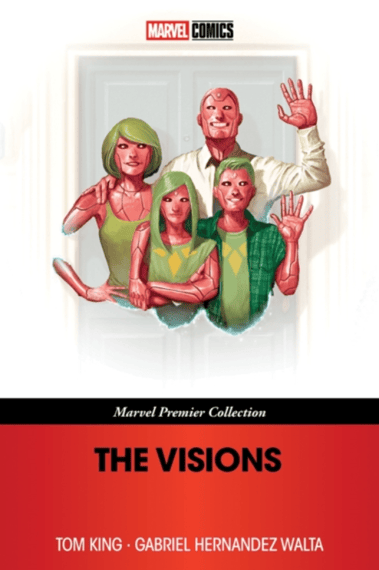
Spider-Man: Brand New Day was the first of Marvel Comics’ Compact Graphic Novels. The series would become the Marvel Premier Collection, and the covers look similar to the one pictured above. Since I discovered Marvel’s compact graphic novel line, I read two of them this past month. I enjoyed The Visions more than I thought I would. I shouldn’t doubt Tom King (Supergirl: Woman of Tomorrow). You can see some of The Visions’ influence on the MCU’s WandaVision, but I’d like to VisionQuest take different elements from this storyline. I don’t want to spoil too much in this write up; you should read The Visions when you get the chance.
After gaining a new title (Avengers’ Ambassador to the Pentagon), The Vision moves to Washington DC with his family. The Visions explores what happens when a synthezoid constructs a family of his own. What could go wrong? Turns out, everything. The Visions does a great job placing us where The Vision is as a character. I am grateful for that. The Vision has one of the messier comic book origins you’ll find, but The Visions walks the reader through decades of confusing continuity. You don’t need a heap of comic book lore to know what makes him tic. Kudos to Tom King for making The Visions accessible.
The Visions is a page-turner. Each issue presents a new twist. Each issue ends on a moment you can’t wait to see what happens next. The Visions may have been my fastest read from this past month. It may have little to do with the greater Marvel Universe, but that makes The Visions endearing. It dives into who The Vision is and what kind of synthezoid family he’d create. The Visions explores what is to be human. Funny how a story about a synthetic person lends itself to examining humanity.
Kyra’s Nonfiction
It’s the summer, so I reread Strunk and White’s The Elements of Style. I don’t do this every year, but I do it most years. I’ve mentioned The Elements of Style last year, I believe. I love my illustrated copy. The pictures aren’t neccessary. You can buy a cheaper copy of The Elements of Style for less than five dollars, but if you want to splurge, the illustrations (by Kalman) add whimsy. Reading books like The Elements of Style may be more vital this year than in past years.
AI writing is everywhere. One of the ways you can spot AI writing is its overuse and misuse of em dashes (–). Em dashes are valid forms of punctuation. But you shouldn’t use em dashes in place of a semi-colon, colon, parentheses, or commas. Right now, large language models (LLMs or AI) abuse em dashes. Programmers can change which forms of punctuation their LLMs will overuse and misuse. You’ll need to read style books like The Elements of Style to make sure you don’t sound like a toaster or the slur The Visions introduced, a Socket Lover.
Those are all the books I’ve read or finished this month. I started a couple of others but didn’t want to include them until I was closer to finished. Looks like I’m on my own this month. Hopefully, Season and Skye will join us for next month. Thank you for reading, and wherever you are, I hope you’re having a great day.
Happy Labor Day, Geekly Gang! Kyra Kyle here. To celebrate this holiday, we’ll continue with what could become an annual tradition: 5 Video Games to Secretly Play at Work. Yes! Not all of us get Labor Day off, so for those of you who have to work, you may want to blow off some steam. Last year’s list included some games that got delisted. I wonder if video games of this ilk get taken down frequently. I’m writing this post far in advance, so fingers crossed that these games (and their links) still work in September. Enough yapping. Let’s get to playing. Here is another 5 Video Games to Secretly Play at Work
5: 868-HACK
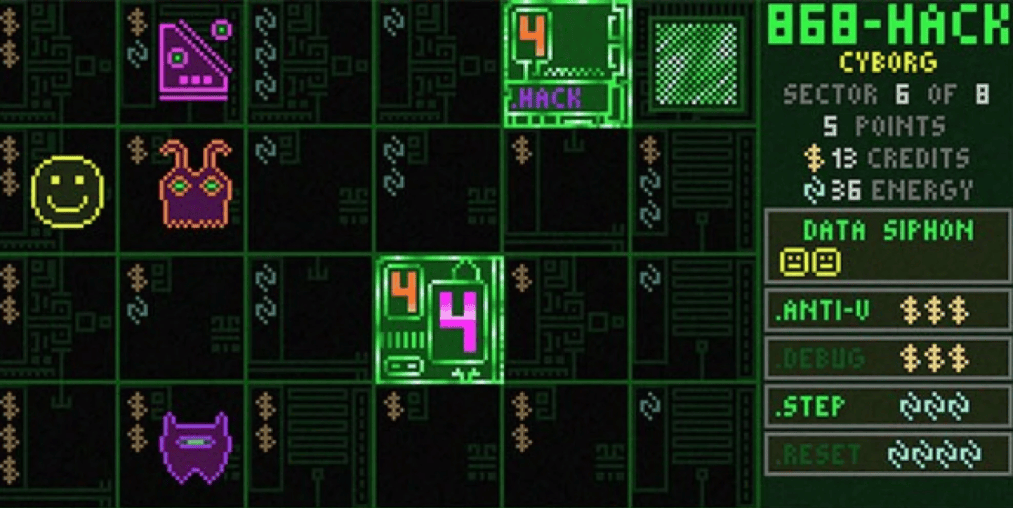
868-HACK (here’s the link) would be much higher on this list, but I gave preference to free games. Yep. You’ll have to pay a little something (around $6) on iOS or Steam to play 868-HACK, but it’s worth it. Australian game designer Michael Brough produces systems that devastatingly mix apparent simplicity with incredible depth. You can find most of Brough’s designs on iOS, so iPhone or iPad users will have no problem playing Brough’s entire catalogue.
868-HACK is a turn-based roguelike that casts players as a “hacker” investigating a heavily corrupted system. The graphics are rudimentary, and the sound isn’t the best. But why would you play this game at work with the sound on? 868-HACK is addictive. At first glance, it looks like you may need to call IT or an Apple Genius to fix your device. Brough regularly updates 868-HACK, so it’s less likely this game will get delisted.
4: Initium
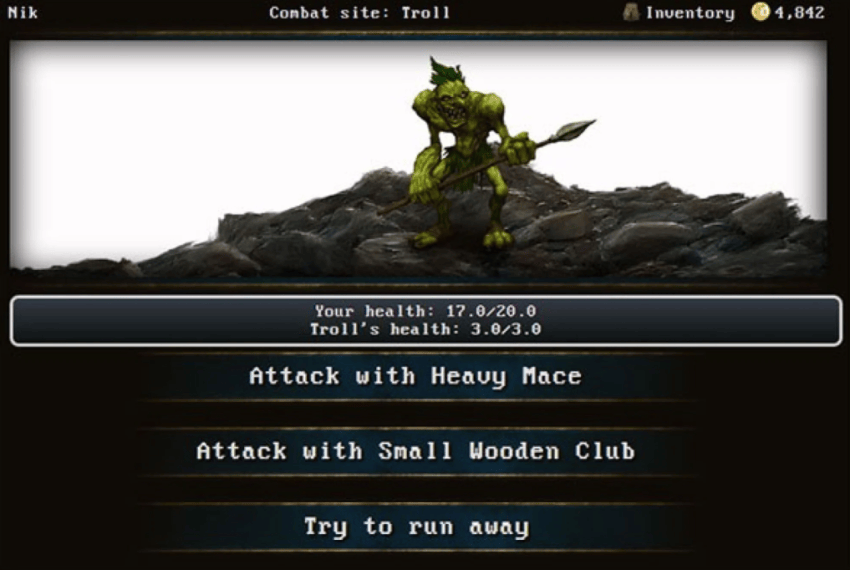
Initium (here’s the link) is another game that could easily top this list. It falls to our fourth spot because it could be difficult to hide. Initium looks like a game from a distance. With that said, how many MMORPGs can one play at work? Most MMORPGs require you to pay near-constant attention to the game world if you want to succeed, which can’t happen if the boss walks by your desk. Initium uses turn-based exploration and combat, which means you can shut it down if you need to go into stealth mode.
While Initium is still in development, it already features PvP, an economy, player-created areas, and even global events like the ones you might find in any other MMORPG. You even have the option of logging in with your phone and computer, so you can take Initium on the go. And Initium is free. Kaching! Initium may just be a game-changer.
3: CyberCodeOnline
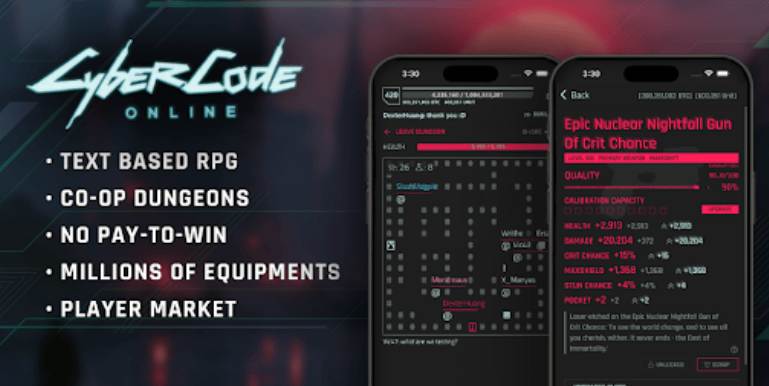
A video game in disguise, CyberCode Online (link here) may look like a regular line of Visual Studio Code, but in reality, it’s an epic real-time MMORPG that’s easy to pick up but hard to put down. Yes! We have two MMORPGs on this year’s list. CyberCode Online does more to disguise itself as something other than a game, but it doesn’t climb any higher than number three on our list because it is a real-time MMORPG. You may need to give up a battle or two…or even three. But I love the theme. We need more Cyberpunk video games.
2: KittensGame
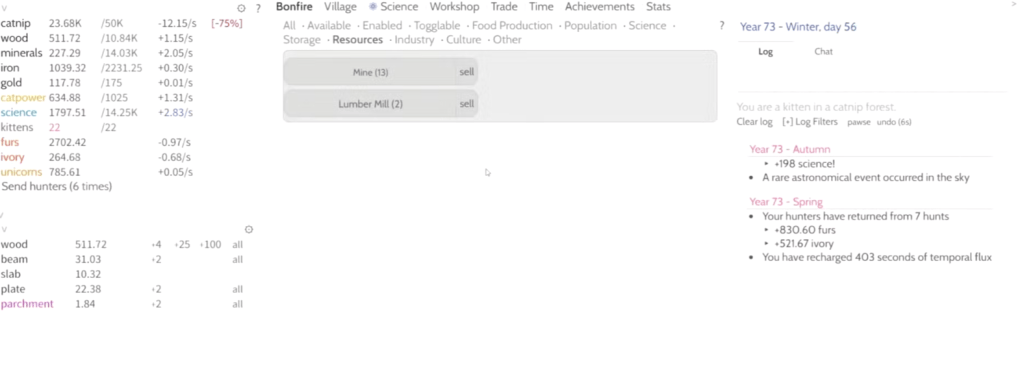
On the surface, Kittens Game (link here) is a simple game about growing a village of cats in a forest, but fans call it one of the most complex builder incremental games available. Kittens Game changes a lot in short order, going from a relaxed text-based idle experience to, as the original website puts it, “a Dark Souls of incremental gaming.” Keep in mind that players can’t really lose at Kittens Game. While getting stuck is possible, the game has an active community and plenty of wiki entries and tutorials for beginners.
Yeah. Kittens Game is one of those experiences you can sink a ton of time and effort into playing well. However, Kittens Game’s easy-to-read and follow UI makes it a purr-fect game to play at work. I had to throw in at least one cat pun.
1: Torn
We love our browser-based games with these lists. Torn (link here) is yet another one, but Torn is set in a modern-day dystopia. What? The games on this year’s list have some fun themes. The screenshot above was taken straight from Torn’s website. Tens of thousands of concurrent players participate in Torn daily. Those numbers back up Torn’s claim as the “world’s largest text-based multiplayer game.” When you first create a character, you’ll begin at the bottom of the ladder as a petty criminal. Through committing crimes like robbing others, you’ll grow in power and influence. Torn may be a great way to blow off some steam.
Those are our games for 2026’s 5 video games to secretly play at work. There are plenty of others. Let us know which ones you like to play in the comments. Thank you for reading, and wherever you are, I hope you’re having a great day.
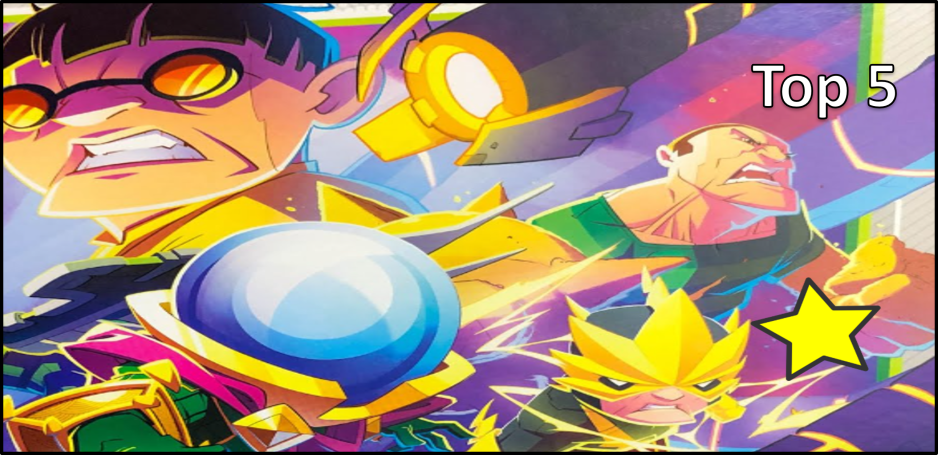
Hey, hey, Geekly Gang! Kyra Kyle here, and today, we’ll be discussing Marvel United. Yes! We haven’t discussed this board game in quite some time, and it’s time to fix that. Marvel United’s various villains and the way they alter the gameplay are the game’s most intriguing game design elements. In today’s list, we’ll share our picks for the Top 5 Marvel United Villains.
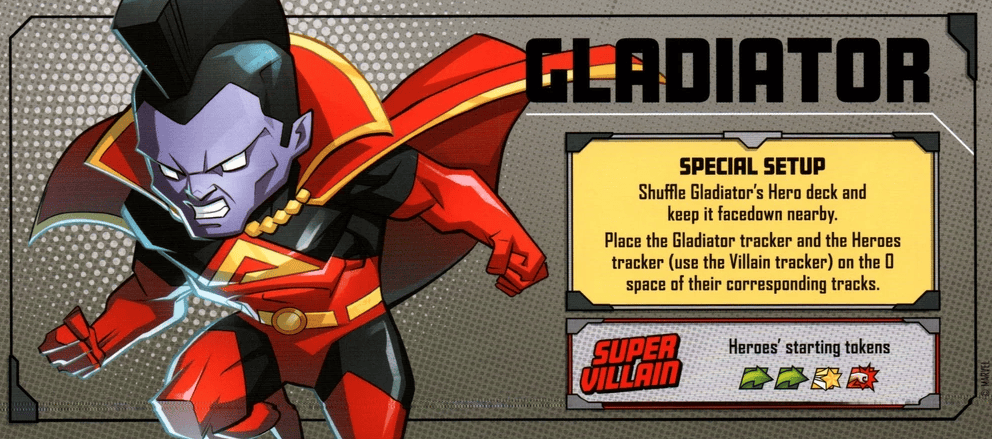
Dishonorable Mention: Gladiator (War of Kings Expansion)
Right off the bat, we’re shaking up things with this list. While a Top 5 Marvel United Villains list is up for debate (everyone has their own taste), Gladiator may just be one of the most universally hated villains in the game. Simply put, he’s unwinnable at heroic mode, unless you use multiple heroes with lots of wild symbols, which limits the number of heroes you can even use to defeat this villain. Most games against Gladiator end with the heroes auto-losing after a couple of turns. No thanks.
While the rest of the War of Kings Expansion adds some nice variety, Gladiator as a villain is plain unfun. Fortunately, he is an antihero. I’d use him as a hero, not a villain.
5: Dark Phoenix (Marvel United Season 2, X-Men, Stretch Goals)
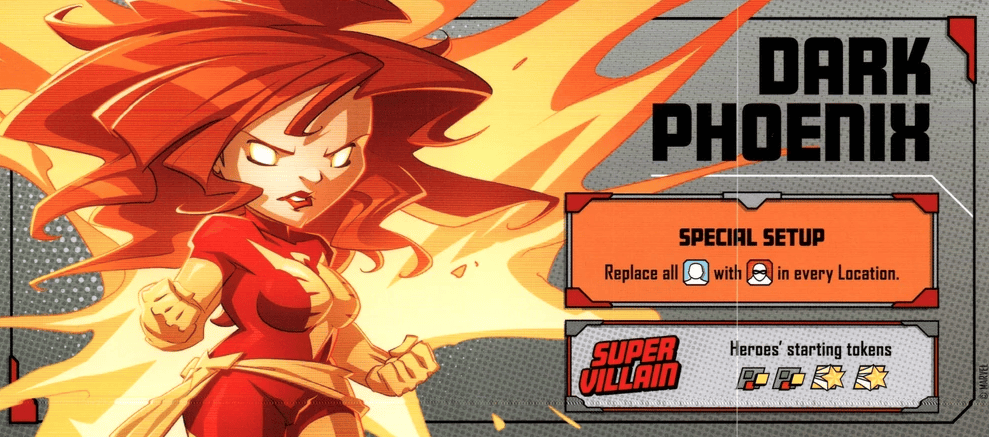
We’ll be seeing a ton of Marvel United Season 2 on this list. Most gamers list it as the best Marvel United Season, and I tend to agree. Marvel United X-Men rules. Unlike our previous entry, Dark Phoenix may be difficult to acquire. Difficult, but not impossible. She’s available in the Season 2 Stretch Goal box. This box includes a heap of fantastic characters. We may see another one on this list from the same box, so the hefty price tag of $80 to $100 may be worth the cost.
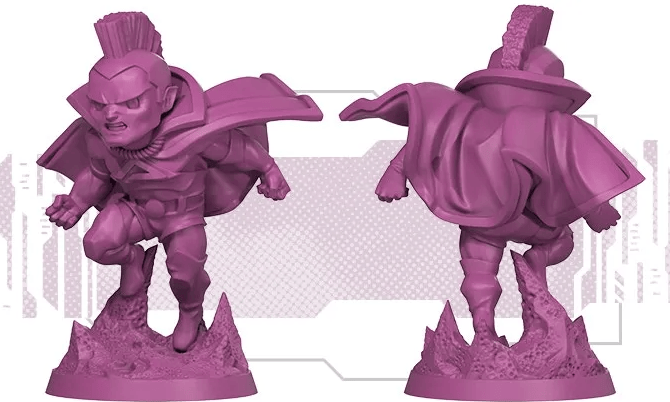
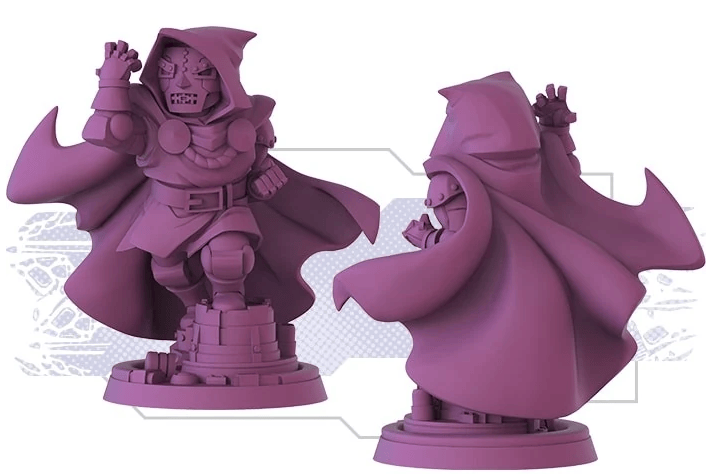
Dark Phoenix offers a chaotic and fun fight. She doesn’t go down easy, but at the same time, Dark Phoenix doesn’t feel unfair of a fight (ahem, Gladiator). It also doesn’t hurt that Dark Phoenix is an iconic villain. I love playing against her, reliving moments from the epic Dark Phoenix Saga. And look at that mini. Gorgeous.
4: Legion (Marvel United Season 2, X-Men, Stretch Goals)
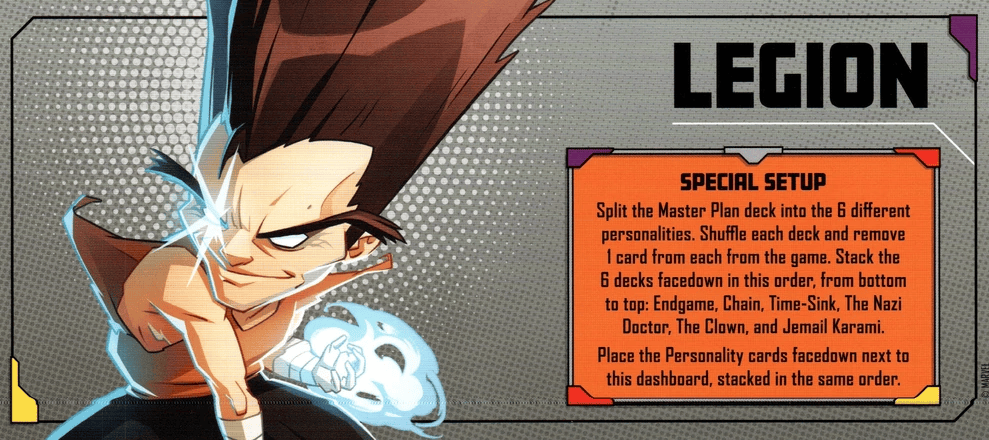
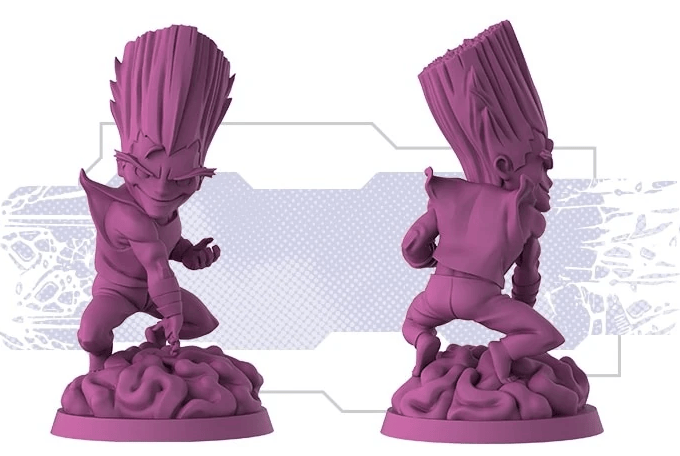
It did not take long for us to get to another Marvel United Villain from the Season 2 Stretch Goal box. Legion may be the pinnacle of Marvel United villain design. Like in the comic book, his personality changes. Every two turns brings a new wrinkle and mechanism into the game. Sure. This gimmick functions like an intricate puzzle in miniature game form, but puzzles can be a blast.
I’ve heard rumblings that at least one DC Super Heroes United villain borrows some game design ideas from Legion. I hope that’s true. Legion’s changing personality adds plenty of spice.
3: Doctor Doom (Fantastic Four Expansion)
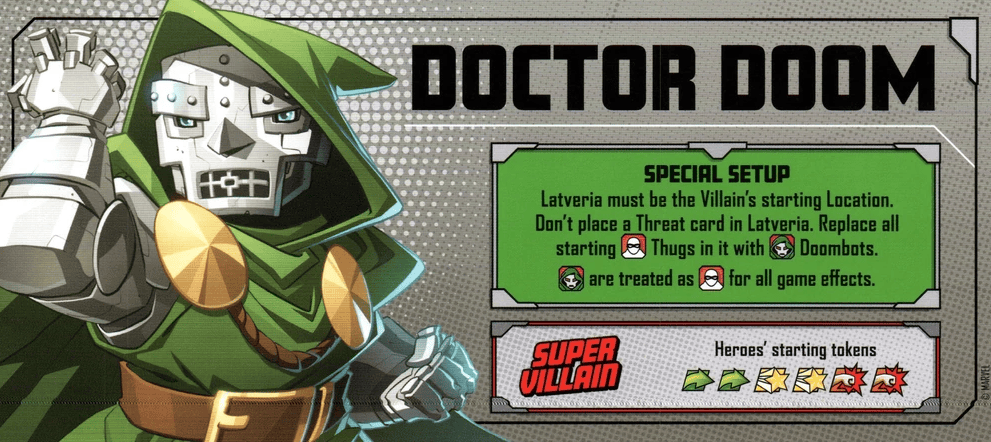
Doctor Doom is our third representative from Marvel United Season 2 (X-Men). Such a great set. Naturally, Doctor Doom is included in the Fantastic Four Expansion, and he makes this list for more than nostalgia reasons. I swear. Doctor Doom is a “fantastic” Marvel United villain. All jokes aside, I’ve always had tight games against Doctor Doom as a villain. The Marvel United design team made sure to tune his combination of cards so players will always be one turn away from winning or losing each game. Brilliant!
Combination doesn’t begin to describe Doctor Doom’s Threats and Master Plan cards. They work so well together, and every time a new card gets revealed, players will be forced to make tense and meaningful decisions. Doctor Doom is one of those villains you face, and you’ll know which decision caused you to win or lose.
2: Juggernaut (Marvel United X-Men Core Set)
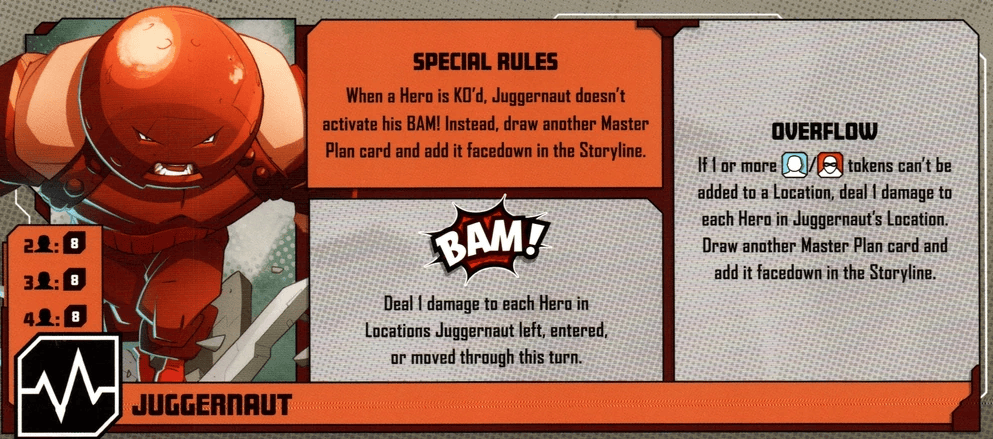
The X-Men set is four out of four on this list. Yowza! See what I mean when I said the Marvel United X-Men was a banger? Juggernaut makes this list–and almost tops it–because he makes a phenomenal introductory Marvel United villain. And he happens to be included in the Marvel United X-Men Core Set. Unless you really want Avengers in your game, I almost always suggest picking up the readily available X-Men Core Set. This makes Juggernaut one of the easiest villains on this list to add to your collection.
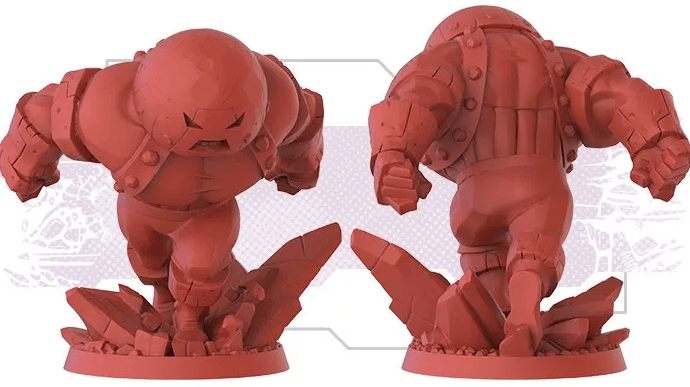
Juggernaut makes a great introductory villain because he’s thematic and fun. He charges around the board, headbutting people. Juggernaut behaves like you’d expect Juggernaut to behave. His ruleset is on the simpler side, but he can be challenging. Marvel United found a way to make Juggernaut easy to play and rewarding to defeat. I’ve never had a table dislike Juggernaut, and he just may be one of my most commonly played Marvel United villains.
1: Sinister Six & Assembled Sinister Six (Return of the Sinister Six and Maximum Carnage Expansions)
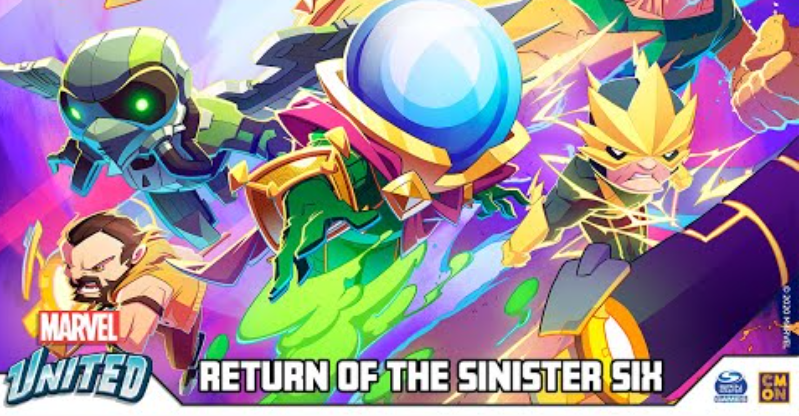
I’m double-cheating with our top entry. First, the Sinister Six is a supervillain team. Second, I’m picking two expansions here. Return of the Sinister Six was a KickStarter exclusive all the way back in Season 1, but plenty of stories carry this expansion, so it shouldn’t be too difficult to find. Maximum Carnage was released in Season 3, but the modular Sinister Six add-on was only available in the KickStarter exclusive variant of the expansion. I picked up the Maximum Carnage expansion via retail, so I have a method of adding the modular Sinister Six.
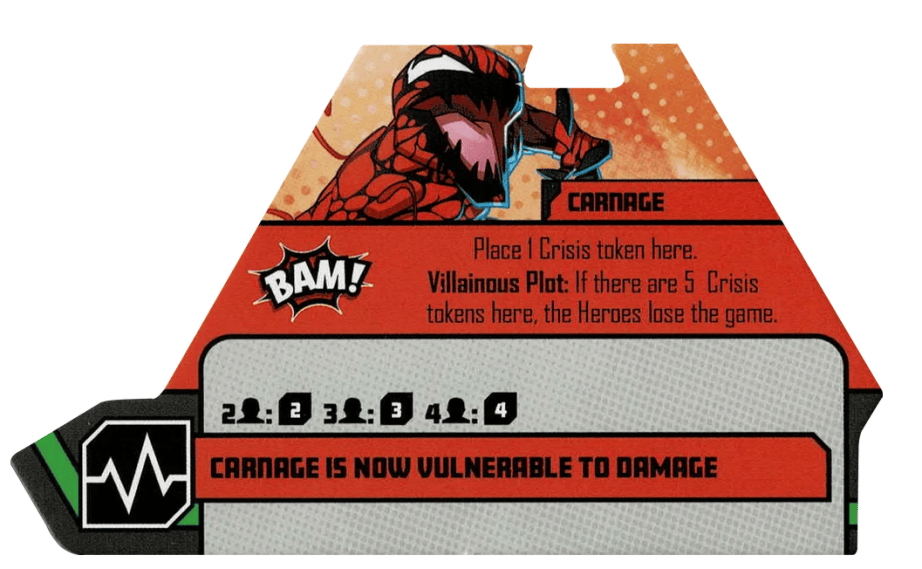
Above is a picture of Carnage’s puzzle piece that can be used in the modular Sinister Six. Using the Marvel United wiki, I took images (and real-world measurements) and printed out my own copy of each puzzle piece of a modular villain at my local library. There are some unique cards you won’t find in a retail copy of Maximum Carnage, so you’ll need to print out those as well. Both are easy to find and download.
I love both iterations of Marvel United’s Sinister Six. Featuring the Sinister Six’s founding members, Return of the Sinister Six provided Marvel United’s first supervillain team. Like Legion, The Sinister Six functions like another intricate puzzle. But once you’ve figured out the puzzle, it may be time to move on to the modular Sinister Six. This version of the Sinister Six includes every villain who has ever joined the Sinister Six, so that static puzzle becomes an ever-changing puzzle. The first Sinister Six holds a special place in my heart (and you’ll need them to fill out your roster of every Sinister Six member), but the modular Sinister Six is clearly the best Marvel United villain. Fun, adaptable, and never boring.
Did we get the list right? Let us know who your favorite Marvel United villains are in the comments. Thank you for reading, wherever you are, I hope you’re having a great day.















 jkgeekly.com