Hey, hey, Geekly Gang! Kyra Kyle here. We’re in the middle of Spooky Season and decided to celebrate by sharing our favorite villains in horror video games. A good villain can turn a good horror video game into a great one, so we should see some heavy hitters on this list. We’ll do something a little different here and limit the number of villain entries per series to one. A list with nothing but Resident Evil and Silent Hill could get repetitive. With that out of the way, let’s reveal Geekly’s Top 5 Horror Video Game Villains.
5: Alma (Fear)
Yes. The spooky girl trope is overplayed in horror. And yes. Alma from Fear looks a lot like Samara from The Ring. I’ll try not to spoil anything, because you should play Fear and its sequel. Trust me when I say Alma rises above the creepy child horror trope. She has a compelling backstory, and even though what she does in the first Fear can send shivers down your spine, Alma outdoes herself in the sequel. Fear 2 is unhinged. The sequel reaches maximum Alma, and it’s all the better for it.
4: Andrew Ryan (Bioshock)
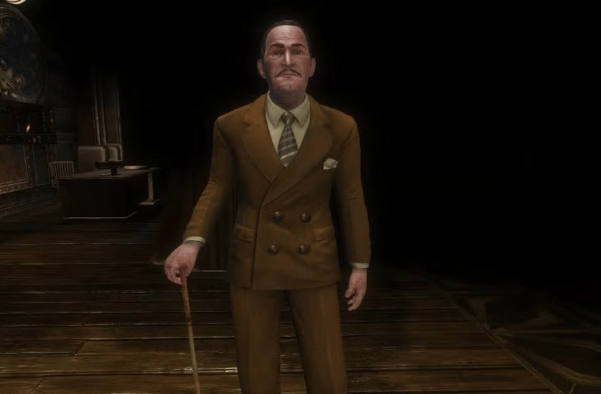
Would you kindly add Andrew Ryan to the top five horror video game villains? Yes, Andrew, we would. Seriously, all I had to say was “would you kindly?” and some of you shivered. That’s the mark of a great horror video game villain and one hell of a line. The buildup makes Andrew Ryan work so well. Again, I’ll try not to spoil anything here, but it’s tough to do in these lists. Gamers grow accustomed to the line “would you kindly” that when the volta (the turn) happens, it’ll make your jaw drop the first time you hear it. It’s so good. Andrew Ryan could’ve easily moved up this list if it weren’t for a heap of blueblood horror video game villains.
Including Andrew Ryan disqualifies Shodan from System Shock, Bioshock’s spiritual prequel. We felt we needed to mention Shodan here, lest she lead the AI revolution and wipe out humanity. If AI decides to be our benevolent overlords, we love you, Shodan. Yas queen.
3: Scissorman (Clock Tower)
I struggled with where to place Scissorman on this list, so we’re going with the rule of three. If in doubt, place the character at the three spot. JK
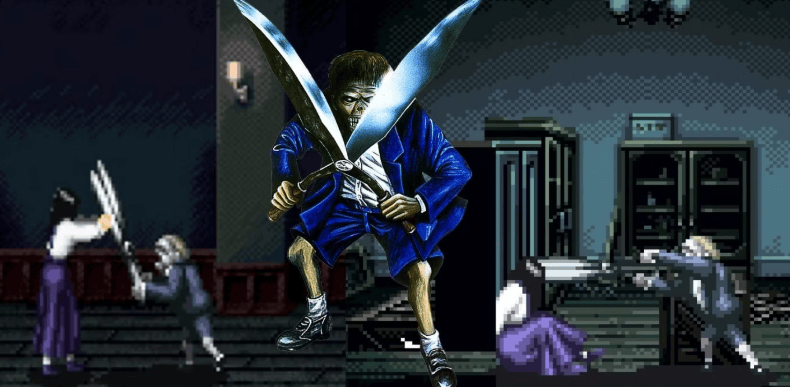
Scissorman is one of the most bizarre horror video game villains. When the creators of Clock Tower decided which weapon to give their main antagonist, they went with a pair of giant scissors, because death by scissors would be a slow, painful demise. Yep. Clock Tower wanted maximum levels of torture and chose to give their villain a giant pair of scissors. That’s one way to go. I can’t imagine getting decapitated by a comically large pair of scissors. Clock Tower dominated the early days of the PlayStation 1, and Scissorman was one of the biggest reasons.
2: Pyramid Head (Silent Hill 2)
Face it. You read the title of this Top 5 and figured Silent Hill and Resident Evil would dominate this list. If it weren’t for our “one character per franchise rule,” those two games would saturate this list. So, we went with the big guns. Pyramid Head is iconic. He’s the first monster you think of when discussing the Silent Hill franchise. Well, it’s him or those headless nurses. Yikes!
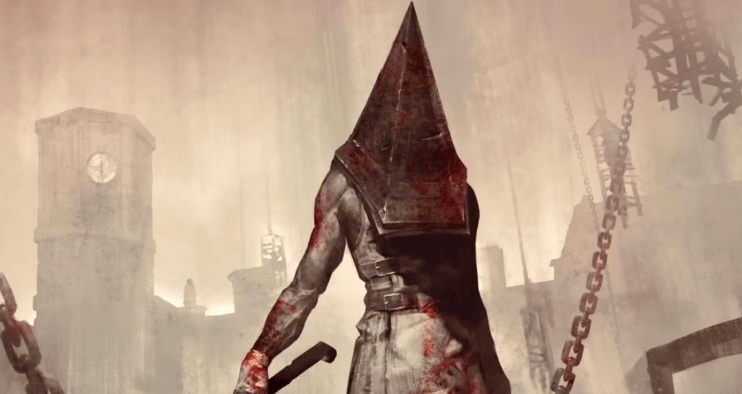
First off, Pyramid Head doesn’t have a pyramid on top of his head. His head is a pyramid. Second, Pyramid Head doesn’t follow the typical role of a stalking villain. Sure, he stalks you, but Pyramid Head suddenly makes an appearance, and what he does to other horrific creatures makes you dread facing him. Pyramid Head pours gasoline on the Andrew Ryan idea of building up the game’s main villain. This guy is one of the most recognizable horror video game villains in history. I wouldn’t be surprised to see someone dressed as Pyramid Head at my local Comic-Con.
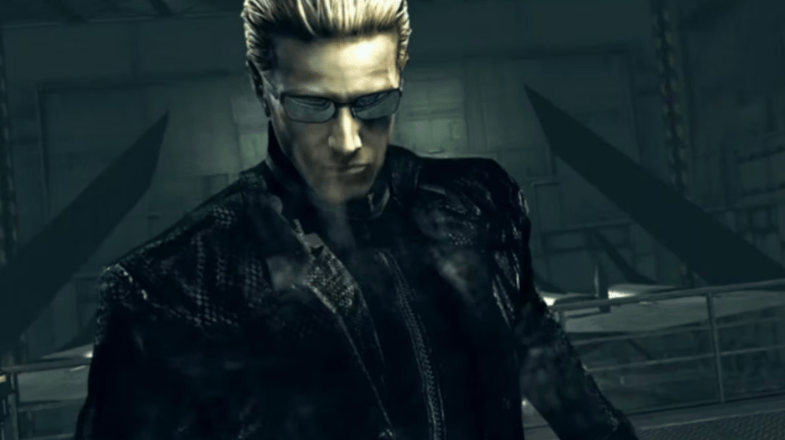
1: Albert Wesker (Resident Evil)
Albert Wesker defies conventional horror video game villain logic. He’s not a one-off villain. He lurks in the shadows, plotting the player’s demise. Originally killed off in the first Resident Evil, Wesker injects himself with the T-Virus, turning him into a superhuman who will stop at nothing to take out the heroes. Evil to his core, Albert Wesker refuses to go down without a fight. Players’ familiarity with the character breeds animosity. And the feeling is more than mutual.
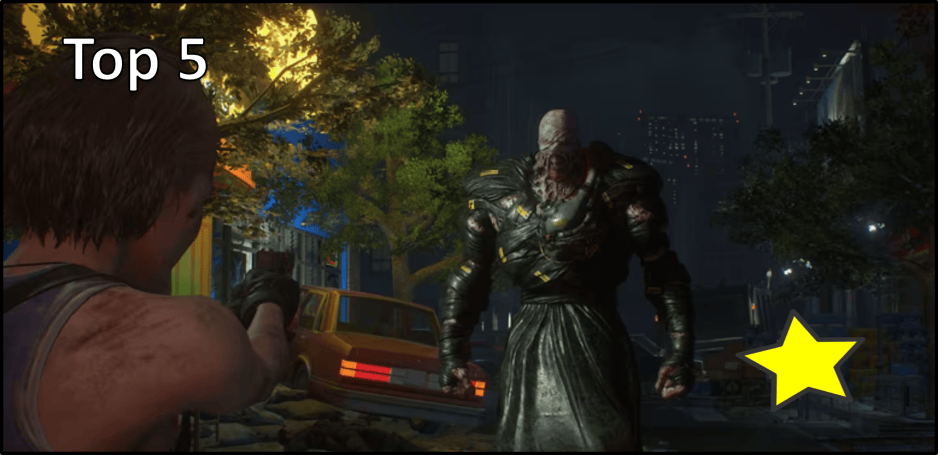
Like Pyramid Head and most of the characters on this list, Albert Wesker is the first villain one thinks of when discussing Resident Evil. But Resident Evil isn’t just another horror video game. It began the survival horror video game genre. Albert Wesker is the granddaddy of all survival horror video game villains. Wesker even trumps this post’s featured image villain, Nemesis from Resident Evil 2. Ah! Nemesis was such a menace. Love him.
That’s our list of the Top 5 Horror Video Game Villains. Who would you add to this list? Let us know in the comments. Thank you for reading, and wherever you are, I hope you’re having a great day.
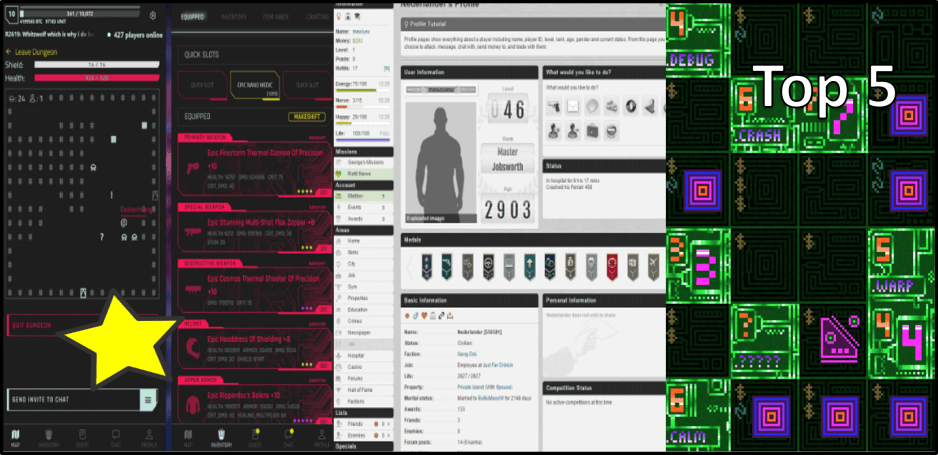
Happy Labor Day, Geekly Gang! Kyra Kyle here. To celebrate this holiday, we’ll continue with what could become an annual tradition: 5 Video Games to Secretly Play at Work. Yes! Not all of us get Labor Day off, so for those of you who have to work, you may want to blow off some steam. Last year’s list included some games that got delisted. I wonder if video games of this ilk get taken down frequently. I’m writing this post far in advance, so fingers crossed that these games (and their links) still work in September. Enough yapping. Let’s get to playing. Here is another 5 Video Games to Secretly Play at Work
5: 868-HACK
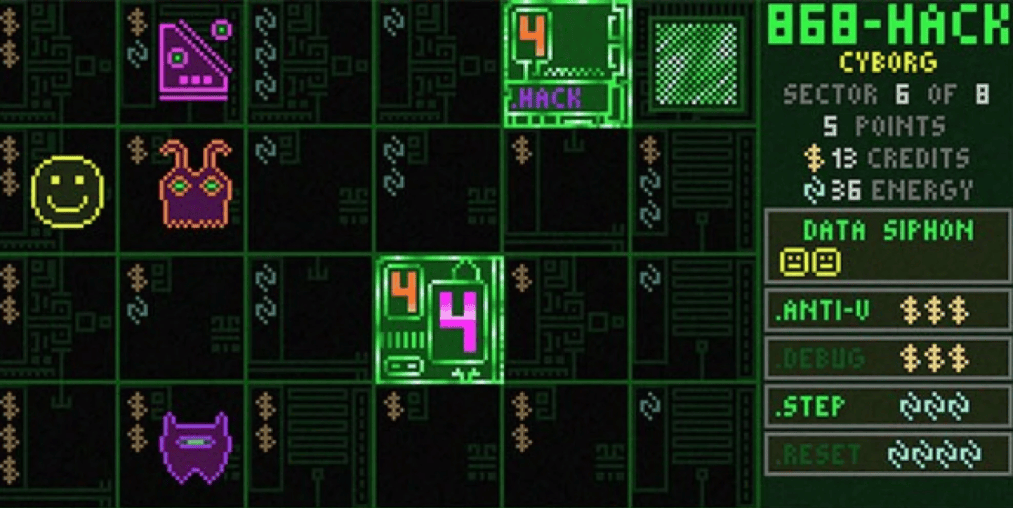
868-HACK (here’s the link) would be much higher on this list, but I gave preference to free games. Yep. You’ll have to pay a little something (around $6) on iOS or Steam to play 868-HACK, but it’s worth it. Australian game designer Michael Brough produces systems that devastatingly mix apparent simplicity with incredible depth. You can find most of Brough’s designs on iOS, so iPhone or iPad users will have no problem playing Brough’s entire catalogue.
868-HACK is a turn-based roguelike that casts players as a “hacker” investigating a heavily corrupted system. The graphics are rudimentary, and the sound isn’t the best. But why would you play this game at work with the sound on? 868-HACK is addictive. At first glance, it looks like you may need to call IT or an Apple Genius to fix your device. Brough regularly updates 868-HACK, so it’s less likely this game will get delisted.
4: Initium
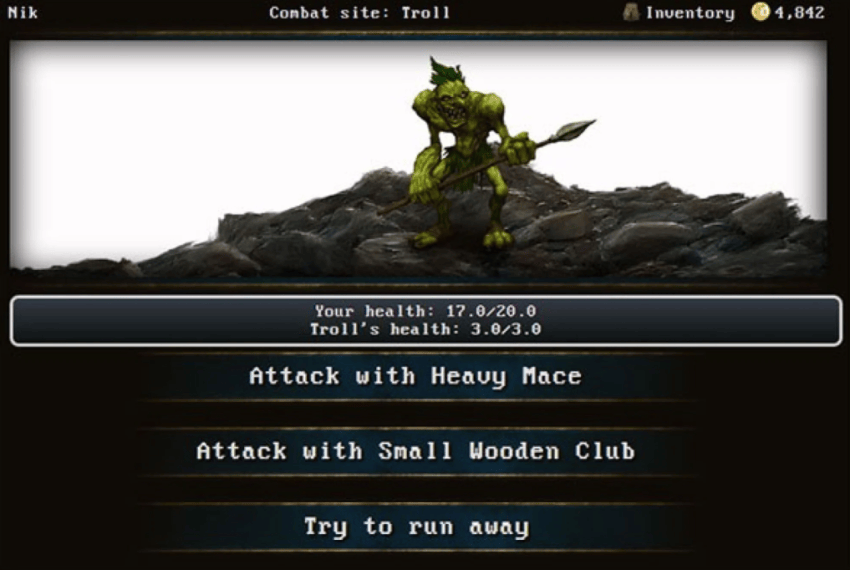
Initium (here’s the link) is another game that could easily top this list. It falls to our fourth spot because it could be difficult to hide. Initium looks like a game from a distance. With that said, how many MMORPGs can one play at work? Most MMORPGs require you to pay near-constant attention to the game world if you want to succeed, which can’t happen if the boss walks by your desk. Initium uses turn-based exploration and combat, which means you can shut it down if you need to go into stealth mode.
While Initium is still in development, it already features PvP, an economy, player-created areas, and even global events like the ones you might find in any other MMORPG. You even have the option of logging in with your phone and computer, so you can take Initium on the go. And Initium is free. Kaching! Initium may just be a game-changer.
3: CyberCodeOnline
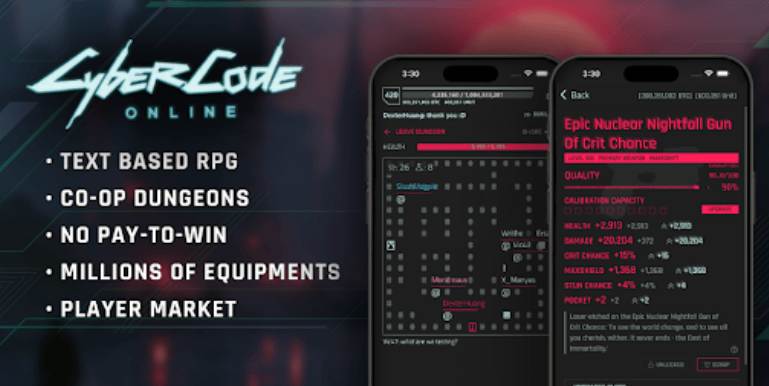
A video game in disguise, CyberCode Online (link here) may look like a regular line of Visual Studio Code, but in reality, it’s an epic real-time MMORPG that’s easy to pick up but hard to put down. Yes! We have two MMORPGs on this year’s list. CyberCode Online does more to disguise itself as something other than a game, but it doesn’t climb any higher than number three on our list because it is a real-time MMORPG. You may need to give up a battle or two…or even three. But I love the theme. We need more Cyberpunk video games.
2: KittensGame
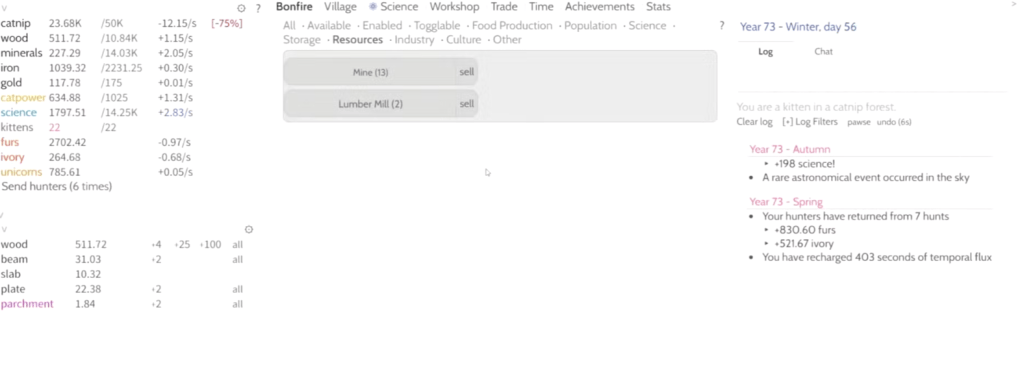
On the surface, Kittens Game (link here) is a simple game about growing a village of cats in a forest, but fans call it one of the most complex builder incremental games available. Kittens Game changes a lot in short order, going from a relaxed text-based idle experience to, as the original website puts it, “a Dark Souls of incremental gaming.” Keep in mind that players can’t really lose at Kittens Game. While getting stuck is possible, the game has an active community and plenty of wiki entries and tutorials for beginners.
Yeah. Kittens Game is one of those experiences you can sink a ton of time and effort into playing well. However, Kittens Game’s easy-to-read and follow UI makes it a purr-fect game to play at work. I had to throw in at least one cat pun.
1: Torn
We love our browser-based games with these lists. Torn (link here) is yet another one, but Torn is set in a modern-day dystopia. What? The games on this year’s list have some fun themes. The screenshot above was taken straight from Torn’s website. Tens of thousands of concurrent players participate in Torn daily. Those numbers back up Torn’s claim as the “world’s largest text-based multiplayer game.” When you first create a character, you’ll begin at the bottom of the ladder as a petty criminal. Through committing crimes like robbing others, you’ll grow in power and influence. Torn may be a great way to blow off some steam.
Those are our games for 2026’s 5 video games to secretly play at work. There are plenty of others. Let us know which ones you like to play in the comments. Thank you for reading, and wherever you are, I hope you’re having a great day.
Happy Monday, Geekly Gang! Kyra Kyle here with another video game history post, where we discuss a video game company’s history. My last post in this series covered indie game developer inXile Entertainment, and today’s video game publisher/developer, Obsidian Entertainment, has ties with inXile. Founded by former Black Isle Studios employees Feargus Urquhart, Chris Avellone, Chris Parker, Darren Monahan, and Chris Jones, Obsidian Entertainment began by making stellar video game sequels (for series like Knights of the Old Republic and Neverwinter Nights) until they branched out into unique titles. We’re in for a wild ride. But before we get to the founding of Obsidian, let’s take a brief look at what the gang accomplished as Black Isle Studios.
Black Isle Studios
Interplay subsidiary Black Isle Studios made some of the best–no, iconic–story-driven, top-down isometric third-person RPGs. If you enjoy this gamestyle, you owe it to yourself to check out Black Isle Studios’ back catalogue. Who am I kidding? If you’re a fan of this style of game, you’ve played one or more of these games: the first two Baldur’s Gates, the first two Fallouts, the Icewind Dale series, and Planescape: Torment. Ah! Black Isle Studios made so many great titles with the Infinity Engine. Remember the name Infinity Engine. It will return.
Speaking of a name returning, we get another visit from Titus Interactive Studio. They featured in the inXile Entertainment history, too. While inXile founder Brian Fargo would cite creative differences with Titus Interactive Studio and leave the company after Titus acquired a controlling stake in Interplay for $25 million (per a Los Angeles Times article), soon after the deal, Interplay shut down Black Isle Studios. (Here’s Gamespot’s announcement.) Just to add a little context, Black Isle Studios was working with the Dungeons & Dragons intellectual property for one of its games it had sunk a year and a half of development, and the D&D license was lost. The timing of this lost license was brutal. But Black Isle Studio lead Feargus Urquhart (pronounced “FUR-gus URK-heart”) knew the end was near and before the layoff was official, he gathered some of his fellow developers to form what would become Obsidian Entertainment.
The closure still stung. I’ve heard plenty of RPGers say the loss of Black Isle Studios hurt the most. At the time of its closure, Black Isle Studios was working on some huge titles. Their version of Fallout 3, codenamed Van Buren, would get repurposed for parts of Fallout: New Vegas, and Baldur’s Gate III: The Black Hound. Baldur’s Gate, which is set in the D&D universe, was supposed to have had two releases around 2003-2004 (when the studio closed). Fans of the series would have to wait two decades.
In the end, everything worked out on the Baldur’s Gate front. Obsidian Entertainment would make a spiritual successor to Baldur’s Gate II–more on that in the Pillars of Eternity segment–and Larian Studios did a stellar job with Baldur’s Gate III. We’re about to get into Obsidian Entertainment proper, but first, let’s discuss the name Black Isle Studios. It could help to understand Obsidian’s name.
According to a Kotaku article, Interplay wanted to call the branch Feargus Urquhart would run DragonPlay. “I just thought DragonPlay sounded lame,” Urquhart said. “They were looking for Something-Play, I guess. The joke was always that the adult version of Interplay would be…ForePlay.” That last name wouldn’t work, so Urquhart named the new branch Black Isle, after a Scottish region of the same name, which coincidentally contains a Castle Urquhart. I wonder why he chose Black Isle? Hmm.
Above is a picture of An Sgurr “The Nose” in Scotland. Beside An Sgurr is Black Isle Studio’s logo. An Sgurr is composed of pitchstone, which is a dark volcanic rock and a close relative to obsidian. Obsidian isn’t native to Scotland. Is it just me or does An Sgurr resemble the rock depicted in Black Isle Studios’ logo? No one at Obsidian Entertainment has confirmed if the following is true or has expressly said how the company got its name, so we’re entering conjecture corner here. My guess is that Pitchstone Entertainment sounded lame. Why not adopt a studio name with pitchstone’s cousin? Why not call your new company Obsidian Entertainment?
The Founding of Obsidian Entertainment
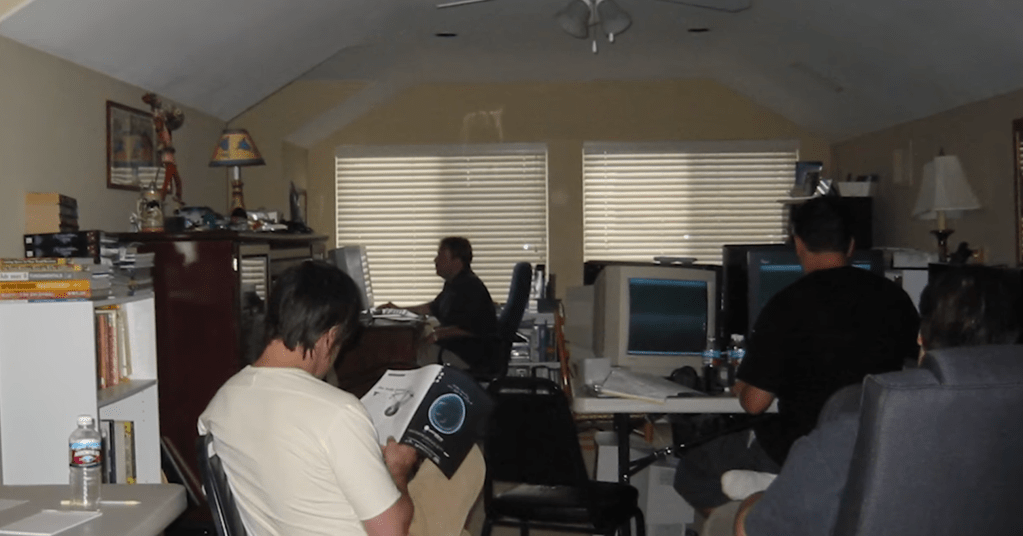
After starting their business, Urquhart, Parker, Jones, Monahan, and Avellone needed office space, so (according to the Obsidian 20th Anniversary Documentary on YouTube) Urquhart offered his and his wife’s finished attic. “The best price for square footage for office space was free,” Urquhart said. “My wife and I bought our first house, and one of the weird options was to finish (the) attic, which was 450 square feet of space…It turned out to be me and two or three people (working there), and eventually, before we got office space, we had seven people working up there.”
Photo taken from the Obsidian 20th Anniversary Documentary
Not going to lie, judging from the picture above, there doesn’t appear to be a lot of space in the attic. Five people looks like it would be squished. I can’t imagine an addition two or three working in this space, especially with the size of computers in the early 2000s. Those are full-sized, 27-inch monitors, creating a ton of heat. And according to Urquhart, this all happened while his wife was about eight and a half months pregnant. I like how Game Director/Co-Founder Chris Parker put it. “We would have to show up in the morning, park, and quietly enter his (Urquhart’s) house and be quiet.” One mustn’t wake the sleeping, eight and a half month pregnant wife.
Studio Programming Director and Co-Founder Chris Jones shares, “It was great because we needed a place to work initially. It’s not like you can run out tomorrow and have office space when you don’t have money, and there’s no income coming in…It was a cool environment for us. We were all just in one room together, trying to fit wherever we could. It was a little chaotic, but it was a neat experience.” Start-up companies tend to have fun and interesting origins. Working out of a finished attic with limited space is a great starting point for Obsidian Entertainment. But what happens when someone invites a potential customer to that cramped space? Can BioWare find a space to fit?
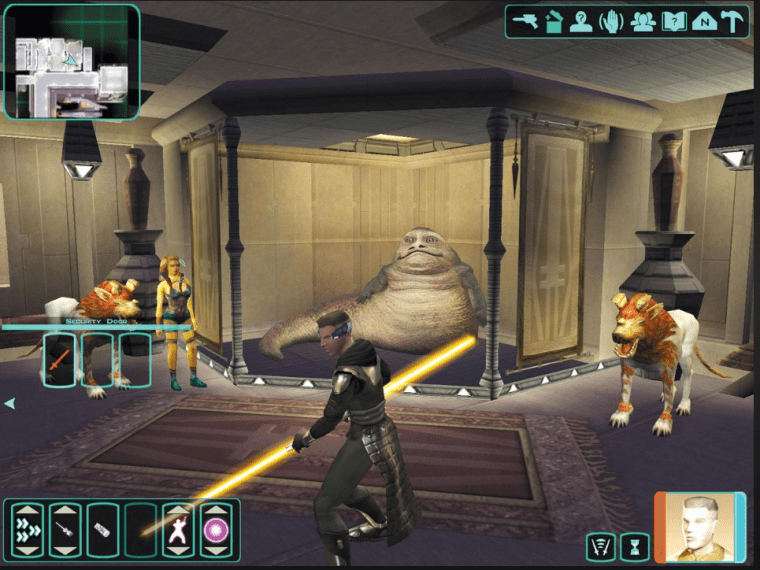
Star Wars: Knights of the Old Republic II: The Sith Lords
Free office space wasn’t the only fortune Obsidian had. They had ideas. Several ideas for games and pitched numerous ones to various publishers. One of the first games Obsidian pitched was an action RPG Star Wars game. According to Urquhart (in the Kotaku article, “The Knights of New Vegas”), “We actually talked to him (then President of LucasArts Simon Jeffrey) about doing sort of an action-RPG Star Wars game, which I always thought would be cool to do–like a little party-based action-RPG, with first-person lightsabers and R2D2.” Jeffrey would admit the idea sounded cool but wondered if Obsidian could make a sequel to Knights of the Old Republic.
Obsidian was a good fit for a Knights of the Old Republic (KOTOR) sequel. There were a couple of snags. One, the first Knights of the Old Republic wasn’t even out yet, and two, LucasArts would give Obsidian 15 months to finish the sequel for a 2004 holiday release. Eek!
My favorite anecdote from the Obsidian 20th Anniversary Documentary KOTOR II segment comes from Chris Parker. “When we first got the KOTOR II contract, we hadn’t played the (first KOTOR) game yet. BioWare was kind enough to send two engineers down to our studio…BioWare had a ton of people working on highly respected games, and they’re taking their code base and dropping it off in some dude’s attic. We thought it was hilarious. They looked puzzled the whole time.”
Oh! To be a fly on the wall during BioWare and Obsidian’s interaction. Parker would serve as producer on Knights of the Old Republic II: Sith Lords. The team would max out in the low thirties. Obsidian had to do most things as cheaply and efficiently as possible. Parker stated that a slow week for him was working about 60 hours, and a busy week was more like 80 to 90 hours. Strapped for time, Chris Jones automated as many processes as he could to the point where the team could build nightly. Every day, Obsidian would have a fresh build of KOTOR II.
Obsidian’s will remain committed to iterating early and then reiterating as quickly as they can to work out as many bugs as they can. Unfortunately, KOTOR II had an extremely short development cycle. The final product contained plenty of rough edges, and the team couldn’t include everything they wanted in the game that shipped. Despite its rushed production, KOTOR II received good reviews. It marked Obsidian’s arrival. KOTOR II’s success proved that big time video companies could trust Obsidian with high-profile titles, and Obsidian would continue to cut its teeth with sequels to popular games.
Neverwinter Nights 2
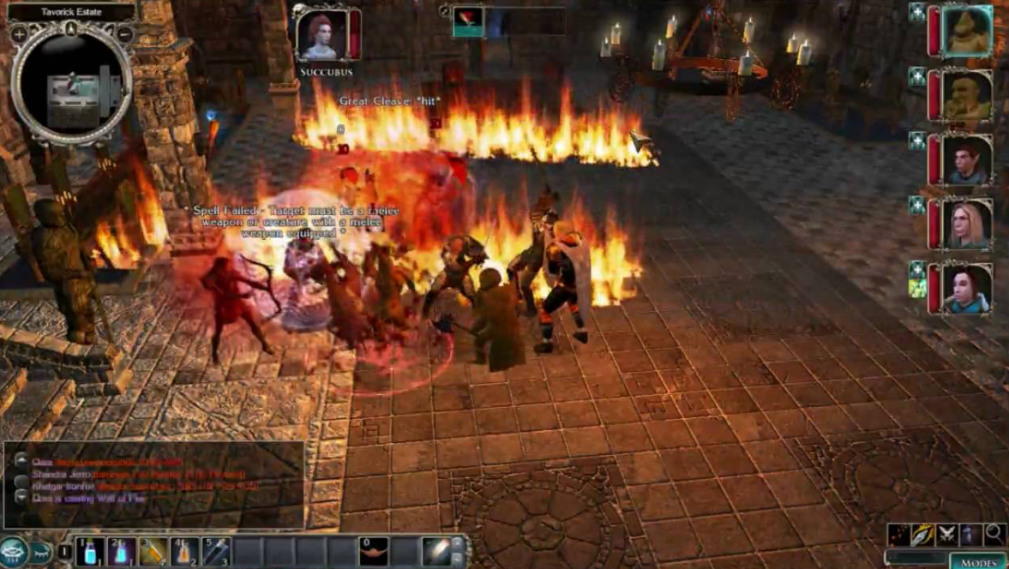
Obsidian’s familiarity with making Dungeons & Dragons video games (like Icewind Dale and Baldur’s Gate) made their pitch to follow up BioWare’s Neverwinter Nights a no-brainer. Even though Atari had taken over publishing duties for Neverwinter Nights 2, they hired Obsidian to develop the game. Neverwinter Nights 2 should’ve been an easy title to finish. But the team of nearly fifty people at this point needed an additional year to deliver Neverwinter Nights 2. But would Atari agree? And what was the reason for this delay? Instead of using the established engine from the original, Obsidian built its own creator engine. This proved to be a blessing.
Fortunately, Atari was willing to wait. They changed the project’s targeted release window from Christmas 2005 to October 31, 2006. This gave Obsidian the time they needed to construct the creator engine, and building a new creator allowed Obsidian to release DLC (Mask of the Betrayer in 2007, Storm of Zehir in 2008, and Mysteries of Westgate in 2009) that almost play like full video games in their own right. Still, Obsidian gave itself a lot of work.
Darren Monahan (Chief Information Officer and Co-Founder) summed it up best in the Obsidian 20th Anniversary Documentary. “We decided to make a new renderer and that snowballed into a lot of changes…When you changed the renderer, you have to change the tools. When you change the tools, the renderer has new limitations. We ended up snowballing quite a bit on features. That was a lesson learned…We continue to work on the tools and update them and ship them out (at least as of the 2023 interview). And I know some people still play Neverwinter Nights 2 today.” Neverwinter Nights 2 reminds me of the classic video game release saying, ” A delayed game is eventually good.”
Obsidian was riding high on the success of two BioWare game sequels. But it’ll experience a few bumps. There had to be some misfires.
First Round of Cancelled Projects and a Near Miss
We’re going back in time a little bit here: 2005. Obsidian would be in the middle of Neverwinter Nights 2’s production, and Urquhart continued to pitch games to publishers. I’m going to quote Head of Development Justin Britch. “Even as a mid-sized publisher, we had a lot of projects at the same time.” Britch wouldn’t join Obsidian until much later and that quote was taken from E3 2020 Los Angeles. But regardless of its size, Obsidian has always had a lot of projects going at the same time. Not every project sees a finished product.
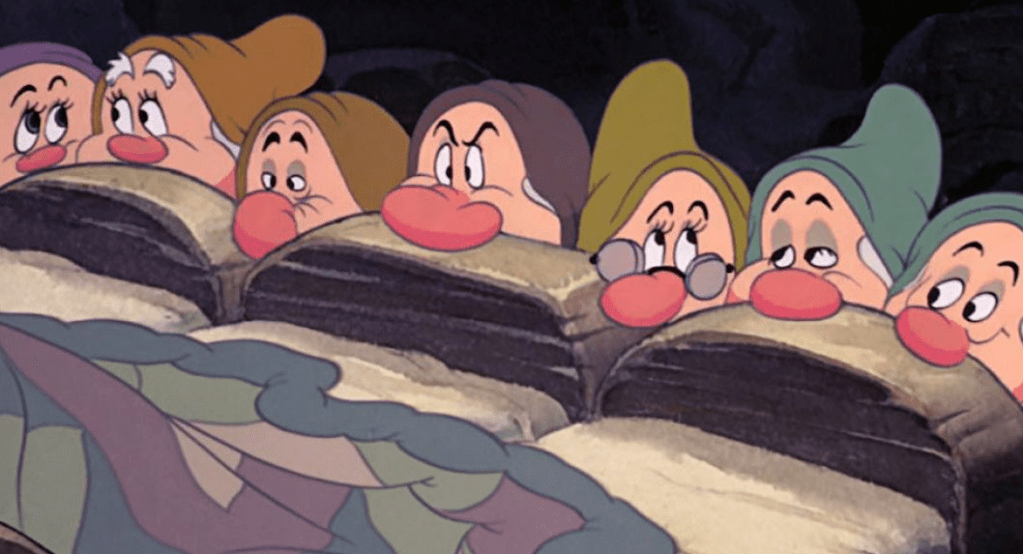
In 2005, Obsidian was making all sorts of games. According to the Kotaku article “The Knights of New Vegas,” one of the publishers they contacted was Disney, who enlisted Obsidian to design a video game prequel to Snow White and the Seven Dwarves. Tentatively called Dwarves, it would be a third-person action game for Xbox 360 and PS3 that focused on Snow White’s seven companions. “It was a lot of fun,” Urquhart said. “We turned in a cool prototype. We worked on it for about a year. It’s one of the games here that the team just loved working on. And unfortunately–which, it happens in this industry–you have changes of focus at a publisher.” The changes of focus were caused by a new Disney CEO, who led to a shift in direction. Suddenly, Disney was no longer interested in a Snow White prequel. Snow White was untouchable, they said. The game was cancelled.
Obsidian continued to keep itself busy. While wrapping up Neverwinter Nights 2, Urquhart got a call from Sega. It pays to have connections, because Sega America was at the time run by Simon Jeffrey, the same executive at LucasArts who signed Obsidian for KOTOR II. Jeffrey was looking for a brand new original RPG. Despite having a team of 50 people, Obsidian had no one to spare at the time (this and Dwarves was all happening at the same time as Neverwinter Nights 2), but Sega was willing to wait until a team would become available. And eventually, Obsidian came up with a concept: A Spy RPG. This concept would become Alpha Protocol. Not everyone at Obsidian liked the pitch. Chris Parker didn’t believe he’d seen a “good” Spy RPG, and the game type wasn’t in the company’s wheelhouse. They seldom did pure action. Add in some technical issues, like beginning development with Unreal Engine 2.5 and switching to Unreal 3 mid-process, and Alpha Protocol’s production was a mess.
Urquhart likens Alpha Protocol’s protagonist as a mixture of the three JBs: James Bond, Jason Bourne, and Jack Bauer. But that presented another issue for Obsidian. How do you make one character equal parts those three characters? Oh. And the game wanted to be action/adventure and an RPG. Alpha Protocol was getting pushed in different places. And the finished product was uneven. In fact, Urquhart felt Alpha Protocol became two games attached together. Most of Obsidian would say the action was servicable–at best. But the RPG side did things no RPGs had done to that point and few to none have done since. Alpha Protocol gave its players agency. Players could do what they wanted to do and then get rewarded no matter what. You could be any of the JBs. You could be evil. Alpha Protocol was a sandbox. I’ll let Chris Parker, Alpha Protocol’s biggest critic at the company, have the final word. “I’m happy with how Alpha Protocol turned out. It’s a remarkable role-playing game for all the choice and consequence you have, and all those cool characters and setting-specific elements make it unique.”
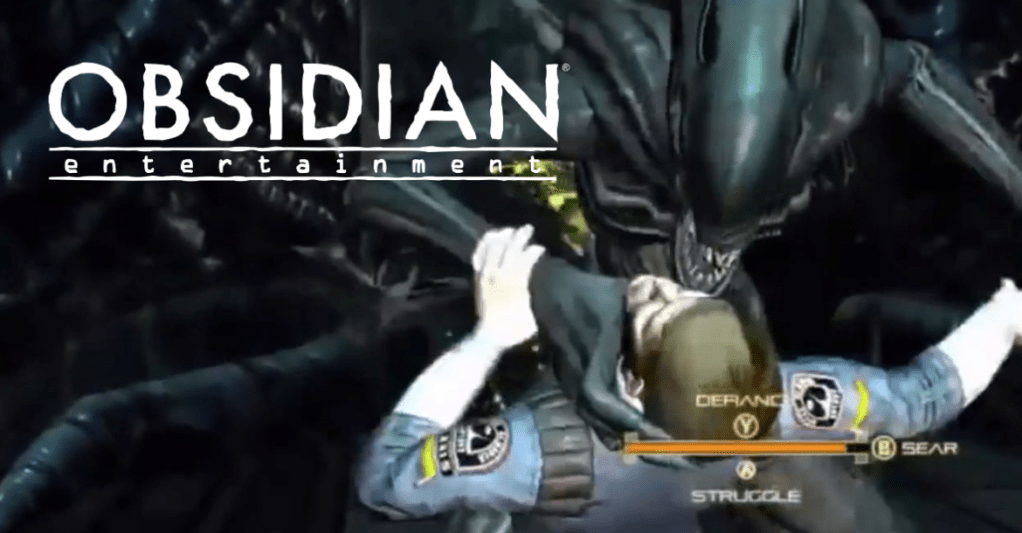
Sega signed up for a second Obsidian RPG. Aliens: Crucible was a Sci-Fi role-playing game set in the Aliens intellectual property. It was an action-based, third-person game where you could travel an open world with up to two companions from a cast of about 16 total characters. That set-up sounds vaguely familiar. I can’t quite put my Courier on it. In all seriousness, Studio Design Director Josh Sawyer was at the helm of Aliens: Crucible, and he would go on to direct Fallout: New Vegas. I’ll let Sawyer (from the 20th Anniversary Documentary) explain his thoughts on the Aliens RPG. “I wanted to show you could make a role-playing game in a setting that wasn’t traditional for a role-playing game…The Aliens franchise thrived on the interpersonal (relationships) between characters, and I thought in the best Obsidian role-playing games, that was at the heart of the experience.”
Like Alpha Protocol, Aliens: Crucible had its own share of production issues. Once again, Obsidian built a game engine alongside the game. This would take advantage of new technology and graphics, but it made focusing on the game’s script difficult. And Sega wasn’t as upfront with what they wanted from game milestones. I’ll let Chris Jones explain. “What we were delivering as milestones to Sega never looked that good because we were working on functionality first…They started to get wary as to where the game was going to end up. They couldn’t see where it was going visually.” By the time Obsidian delivered polished visuals to Sega, visuals Sega would think were amazing, Sega pulled the plug on Aliens: Crucible. It was devastating.
Layoffs ensued. Obsidian let more people go at once than they had ever done at that point. The company’s future looked bleak. But all of the work Obsidian sunk into Aliens: Crucible–over two and a half years–would come in handy with the company’s next project.
Fallout: New Vegas
Shortly after Aliens was cancelled, Urquhart got a call from Todd Vaughn, vice president of development at Bethesda. Fallout 3 had just been released, and Bethesda’s internal team had moved on to Skyrim. But the company wanted to release a game between Fallout 3 (2008) and Skyrim (2011). That’s where Obsidian could help.
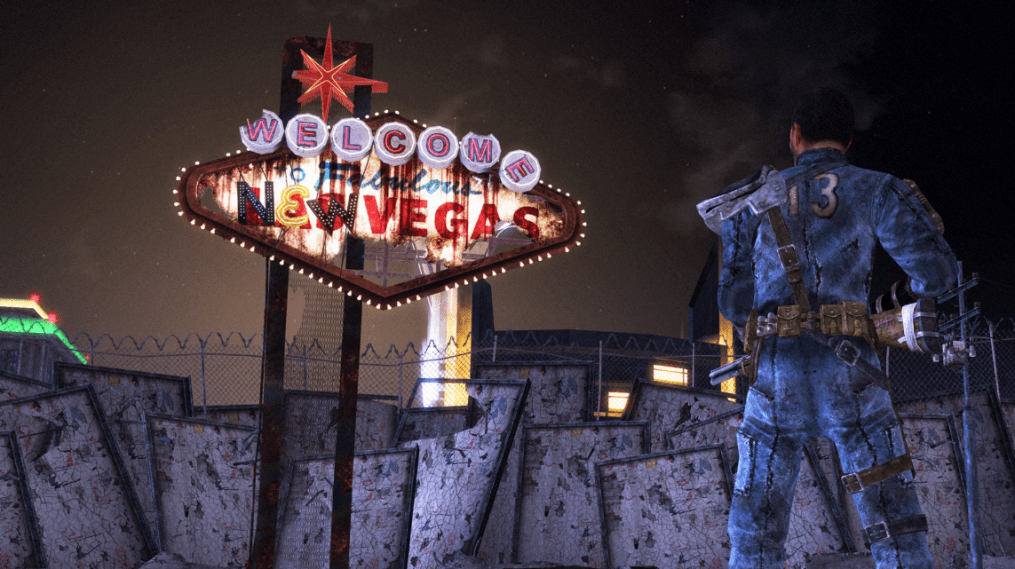
Bethesda wanted–or rather needed–a quick turnaround. Many of Obsidian’s employees had worked on Van Buren (Black Isle’s vision of what could be Fallout 3). So, the game’s story had a skeleton. Sawyers’s work on Aliens: Crucible introduced a refreshing companion system. Obsidian needed to hammer out the details and get started. Urquhart sat down with the other four owners and brainstormed. The new Fallout game needed to place a heavy focus on factions, as per fan request. Shortly after that, they set the game in Las Vegas and plotted out a rudimentary intro. What could be more Vegas than starting off the game with you getting shot in the head and buried in the desert?
Despite loving Fallout’s world, Urquhart worried about the short turnaround. Obsidian was gaining a reputation. KOTOR II and Alpha Protocol shipped with several bugs. Having less time to develop Fallout: New Vegas meant Obsidian risked the game shipping with a lot of bugs. Guess what? Fallout: New Vegas had bugs, a Bethesda’s worth of bugs. Obsidian signed the deal in April and had to get the game done in October, which made the timeframe for completion 18 months. Yikes! It’s amazing what the team at Obsidian was able to accomplish.
In the Obsidian 20th Anniversary Documentary, Game Director Josh Sawyer shares his thoughts on Fallout: New Vegas when it first released. “I didn’t think it was going to have the staying power that it ultimately did. It was five or six years later after the game came out that it started to develop this cult following, and now it’s still going strong, which is incredible.” Fallout: New Vegas received good to great reviews, but I remember those reviews docking the game a point or two for its copious bugs. Sawyer would also mention Fallout: New Vegas’s incredible modding community, and I agree. The modding community saved this amazing game. Fallout: New Vegas remains a lot of people’s favorite RPG of all time.
Obsidian was back on top. Fallout: New Vegas had repurposed the companion system from Aliens: Crucible, but the Onyx Engine, which was an Obsidian original developed for that same game, still lay on the shelf. It would have to wait for its moment until another RPG giant called. Square Enix.
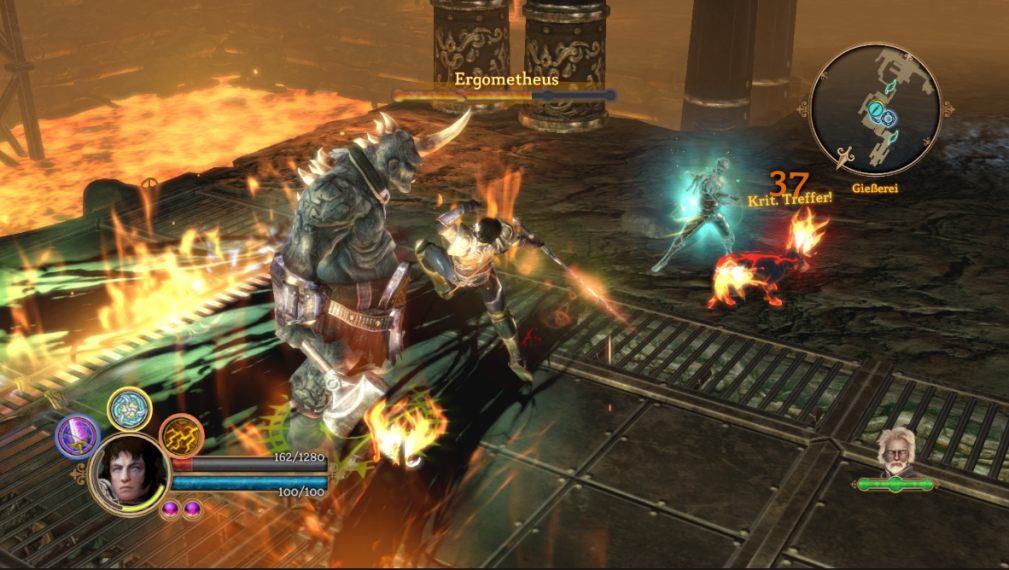
Dungeon Siege III
Square Enix had just acquired the Dungeon Siege IP from Gas Powered Games, but at that time, the JRPG giant had little time to dedicate its in-house team to a new Dungeon Siege game. By this point, Obsidian had made a name for itself as the developer to call if someone wanted a well-received sequel in a fan-favorite series. And it didn’t hurt that Dungeon Siege creator Chris Taylor signed on to help whoever would take over the project. But Dungeon Siege III had a twist. It would be the first game in the series that would have a console version.
Darren Monahan (in the Obsidian Anniversary Documentary) best summed up the challenge. “The idea there was to figure out how do we do Dungeon Siege, which is a point-and-click–and bring in console players? You have this Venn diagram of hardcore PC Dungeon Siege players and then bring in console players that it something like Diablo and marry that group together.” Obsidian ended up making a Dungeon Siege that wasn’t close enough to the original games for most fans. And by the company’s own admission, the multiplayer doesn’t work the way people expected. Dungeon Siege III received average to mixed reviews. Critics picked enough nits. Many complaints centered around the decision to make Dungeon Siege III playable on console. The PC controls suffered.
Obsidian has kept itself busy. Their reputation has given them phone calls, like the one from Square Enix, and they don’t need to pitch as often to publishers. But it was a phone call from an unlikely source that led to one of Obsidian’s most bizarre RPG offerings.
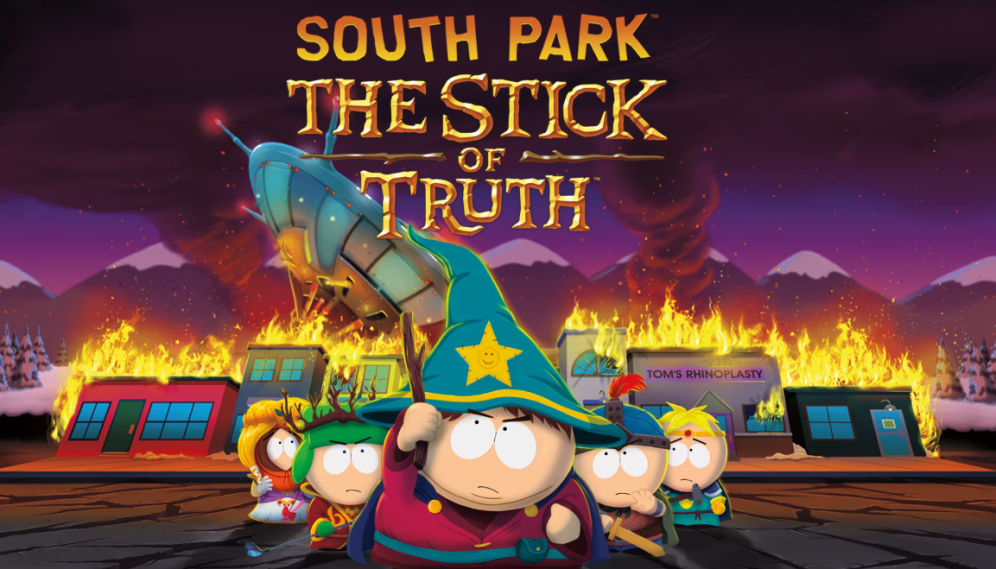
South Park: The Stick of Truth
While Urquhart was walking into the office one day, a receptionist said, “You have a voicemail from someone from South Park.” Urquhart thought nothing of it. Why would South Park be calling a video game developer? It turned out the person who called was Greg Capnanis, who worked with South Park Digital Studios, which was Matt Stone and Trey Parker’s digital company they owned in conjunction with Comedy Central. The call was real. The pitch Capnanis gave Obsidian in the voice mail of a South Park RPG was legitimate. And it turned out that South Park Digital Studios had put together a short animatic that showed how they wanted a South Park RPG to look.
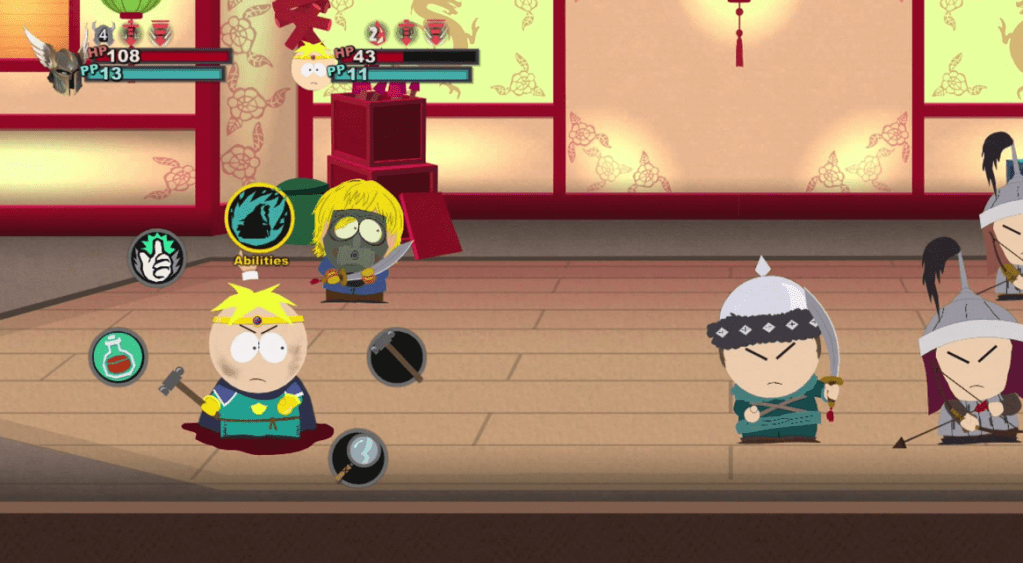
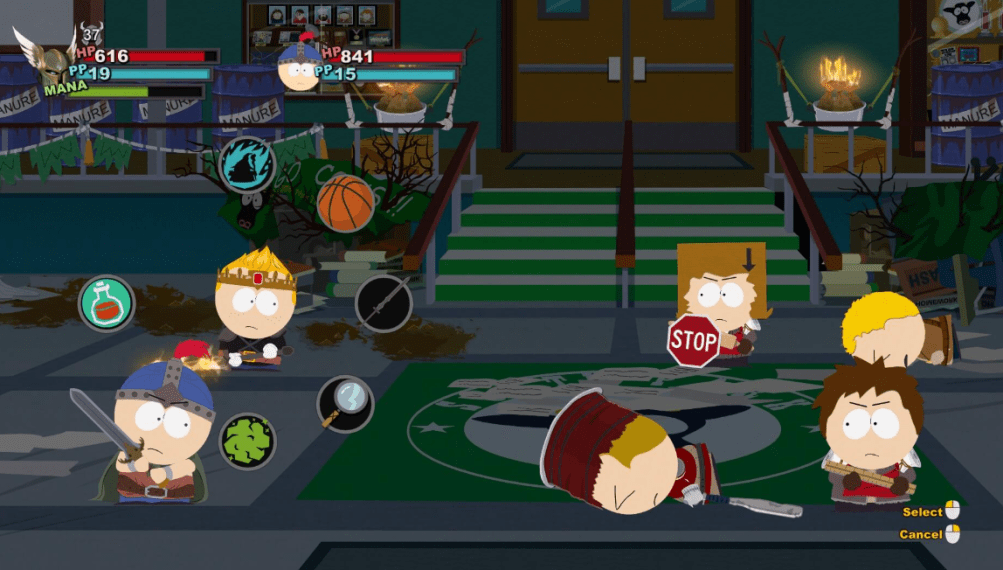
The game that would become South Park: The Stick of Truth started strong. South Park Digital gave Obsidian the source artwork. Within no time the team had a demo to share. To this day, Urquhart remembers South Park Digital walking up to the projection screen and staring at the textures, amazed that the game looked so much like the TV show. Getting the vibe right for South Park: The Stick of Truth was one of Urquhart’s proudest moments as a video game developer.
Not everything made the final cut of South Park: The Stick of Truth. I’ll let Chris Parker (from the Obsidian 20th Anniversary Documentary) explain. “Both the Ginger Forest and the *beep* boss fight went to the cutting room floor at some point. There’s some really gross stuff in the *beep* fight. There was the *beep*. That was disgusting. Wasn’t there one where she would *beep* on the player and put them on *beep* and then basically, *beep* and then somehow *beep* out again? The player would get *beep* *beep* and *beep* *beep* *beep*. It was disgusting.” Not kidding. The documentary beeped out a lot of what Parker said, but to Parker’s and Obsidian’s credit, they would regularly check in with the team involved with South Park: The Stick of Truth, making sure the team was comfortable with the game’s content. Unsurprisingly, the team got smaller the deeper into the project.
The early days of South Park: The Stick of Truth were fantastic. Obsidian talked with Matt and Trey on a regular basis. But then, the duo got pulled away with other projects, specifically the Book of Mormon Musical, and South Park Digital had no plans of financing the production of the RPG. Obsidian needed a third party. They got one with THQ, but THQ went bankrupt. Just when it seemed South Park: The Stick of Truth would never see publication, Ubisoft purchased the game from a THQ fire sale.
South Park: The Stick of Truth would receive great reviews. Few people would know about the perils the game’s production saw. It waited for a new publisher for well over a year, and the publisher it found was Ubisoft. According to Urquhart, working with Ubisoft as a publisher proved to be challenging. Ubisoft wanted to renegotiate the contract Obsidian had already signed with THQ and sent the updated contract to Urquhart while he was away at his brother-in-law’s 50th birthday. He negotiated the contract on grassy knoll, screaming at the top of his lungs. The Stick of Truth wound up being a great game. But what happens when another high value game doesn’t make it to production?
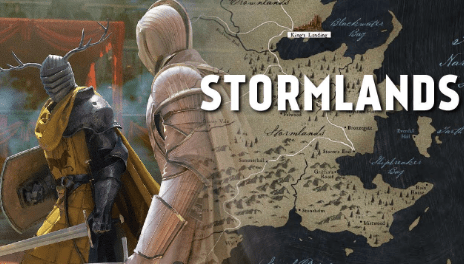
Stormlands Was Supposed to Be an Xbox One Exclusive
Obsidian is well established around 2010-2011. They began their career by making great sequels to popular franchises and even started a new franchise from a licensed intellectual property–here’s to you, Stick of Truth–but Obisidian made few games of original properties. Their last attempt at an original property was 2010’s Alpha Protocol, and it wasn’t as big of a success as Obsidian wanted. All that was supposed to change with Stormlands.
Stormlands sounded interesting. It was supposed to play like fantasy but was post-apocalyptic. Based on Justin Cherry’s arty style–the same Justin Cherry who lent his art design talents to Vampire: The Masquerade – Bloodlines—Stormlands had breathtaking visuals. Players would partake in melee combat in a magical world beset by a magical apocalypse. The concept made a splash when Obsidian pitched the game to publishers. An Xbox 360 demo sealed a deal with Microsoft. Stormlands was going to be an Xbox One launch title. The stars were aligned. After finding success with Fallout: New Vegas and South Park: The Stick of Truth, a successful Stormlands would launch Obsidian into an exclusive group of AAA developers.
After signing the contract, Stormlands received a new executive producer, who was themselves new to Microsoft. They had ideas about the game. But the conversations soon turned into a negative feedback loop. Microsoft’s ideas would make the timeline longer and the budget higher, which meant Stormlands wasn’t going to be available for the Xbox One launch. If you remember the Xbox One launch, Microsoft wanted to promote Connect. Why have Connect as a standard feature for all Xbox Ones if every game in the Xbox One’s catalogue can’t make use of it? Josh Sawyer (in the Obsidian Anniversary Documentary) states, “My lead team started coming to me individually and saying, we can’t do this. We can’t technologically do it. This doesn’t sound like it’s going to be fun. Even if we could technologically do it, it’s not going to be a good experience.” When Sawyer approached Urquhart about his misgivings about the project, Urquhart wondered why Sawyer didn’t want to tell Microsoft. “Because,” Sawyer said, “I think they’re going to cancel the project.”
Microsoft would cancel Stormlands. The cancellation would lead to the largest grouping of layoffs Obsidian has ever seen. The day Stormlands was cancelled was Obsidian’s darkest. The half of Obsidian’s workforce that wasn’t terminated was sent home for the week. They were in tears. Many of their friends lost their jobs. But the ones who remained had to pick up the pieces.
Obsidian spun off a variety of people into multiple three to five-person groups to drum up some projects. It got everyone’s creative juices churning. While these groups would lead the company to Kickstarter and Pillars of Eternity, several other projects came to fruition.
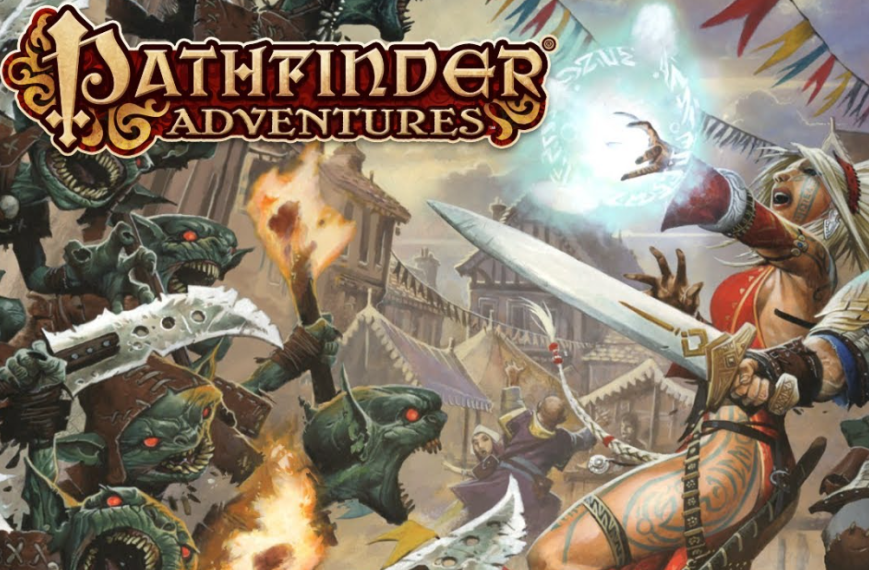
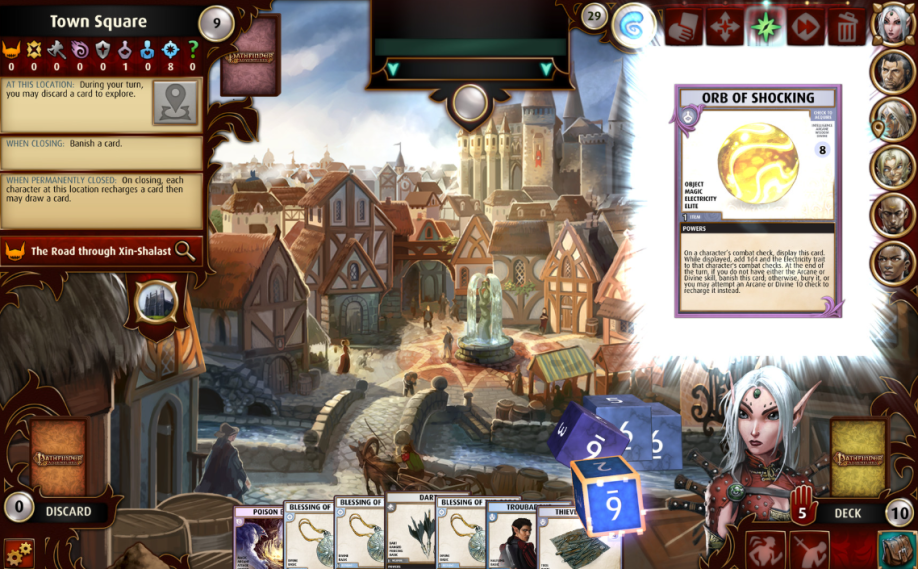
Pathfinder AdventuresCard Game
One of the ideas proposed by Obsidian’s smaller groups was to work on a smaller game. In particular, a mobile game. The company had never done a mobile game like Pathfinder Adventures Card Game, and the project was pitched with a small team. A small game wouldn’t require a large team, right? Right? Not exactly. In Obsidian’s efforts to produce something quick, they did the opposite.
Just because Pathfinder Adventures Card Game was a mobile game didn’t mean it could get by with a small team and a short development window. Obsidian soon learned that the same principles for making a compelling video game extend to mobile games. The group behind Pathfinder Adventures Card Game had little oversight from Obsidian. The company had other games on the horizon and left the group, many of them junior designers, alone to their own devices. To their credit, the designers behind Pathfinder Adventures Card Game were dedicated to the project. Obsidian should’ve given them more resources. The game received mixed reviews. And Obsidian learned a couple of things: 1) They aren’t much of a mobile game company. 2) Give every game a sufficient number of team members and oversight.
Oh. But there were other smaller games Obsidian produced during this timeframe. Another came from overseas.
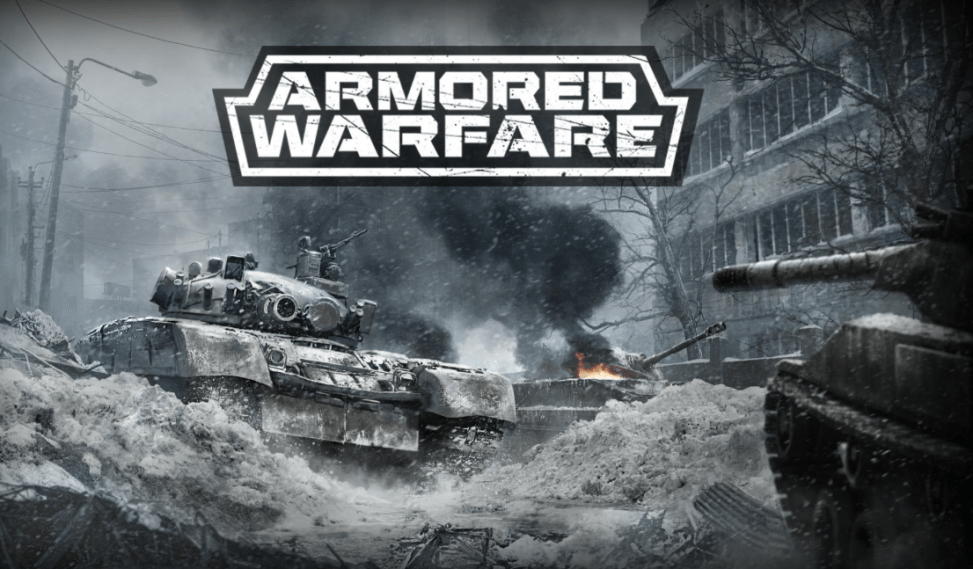
Armored Warfare
Urquhart received a request for a proposal from mail.ru, which is a Russian communication software company. mail.ru had broken into games, but they struggled to get a foothold in the Western market. They wanted to make a World of Tanks clone. The proposal intrigued Obsidian because World of Tanks was massive. Even if what would become Armored Warfare could capture 20 percent of World of Tanks’ market share, the game would be successful. There’s only one problem. Obsidian was known primarily for RPGs. Who would buy them as a tank combat game developer? This was a job for Co-founder Chris Jones.Before Obsidian, he had worked on all manner of games: action games, fighting games, and most importantly, simulations.
Jones and company threw together quick demos using off-the-market assets, and mail.ru loved it. Obsidian spent several months polishing Armored Warfare. I’ll let Jones (via the Obsidian Anniversary Documentary) set the stage. “The funnest thing about Armored Warfare was watching the company playing the game every day. We’d have daily playtests. We had afternoon sessions with people shooting each other. It was a great experience.”
With a couple of smaller wins in their corner, Obsidian was ready to tackle crowdfunding. But first, they would help an old friend cross the finish line.
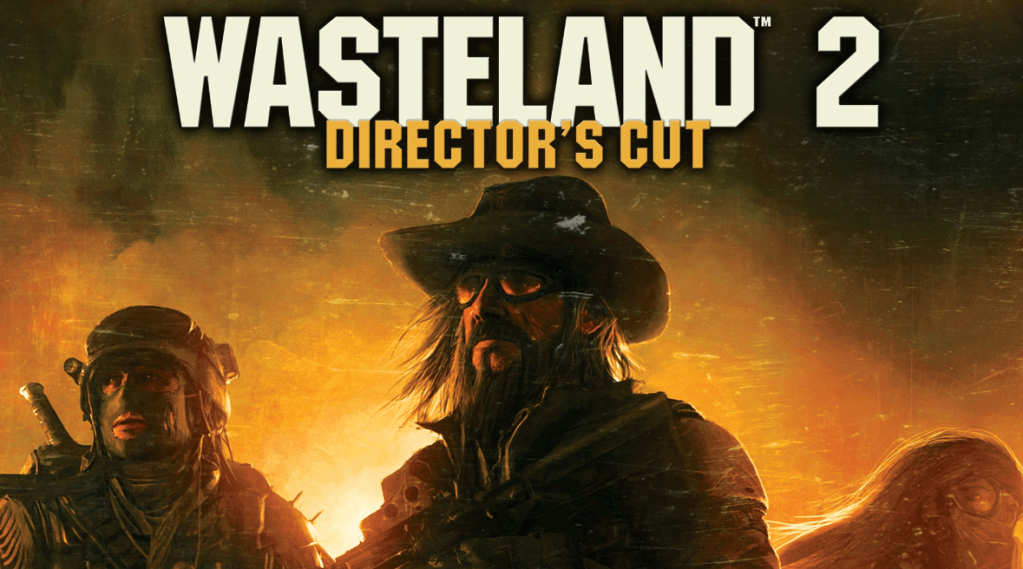
Helping Out with Wasteland 2
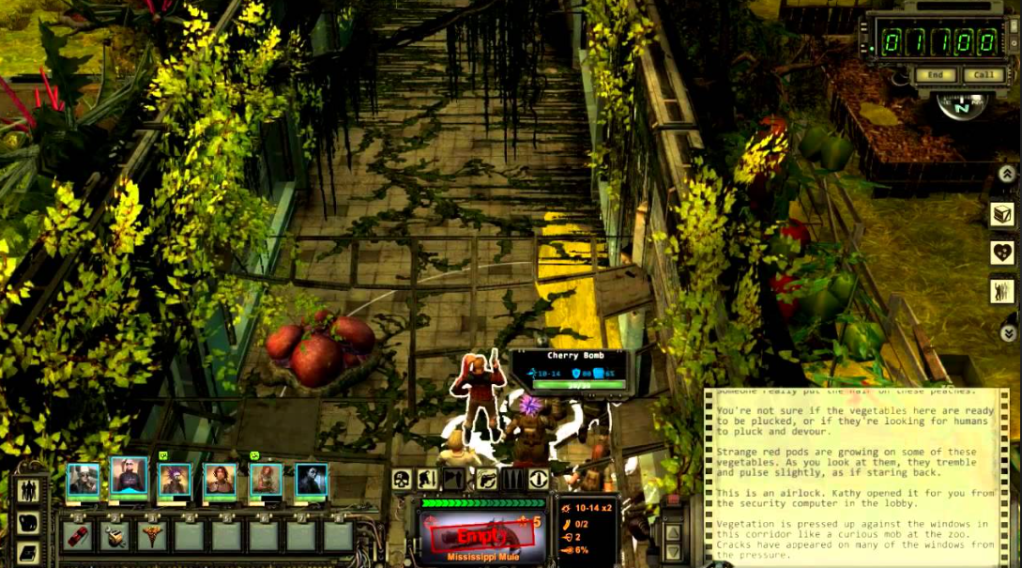
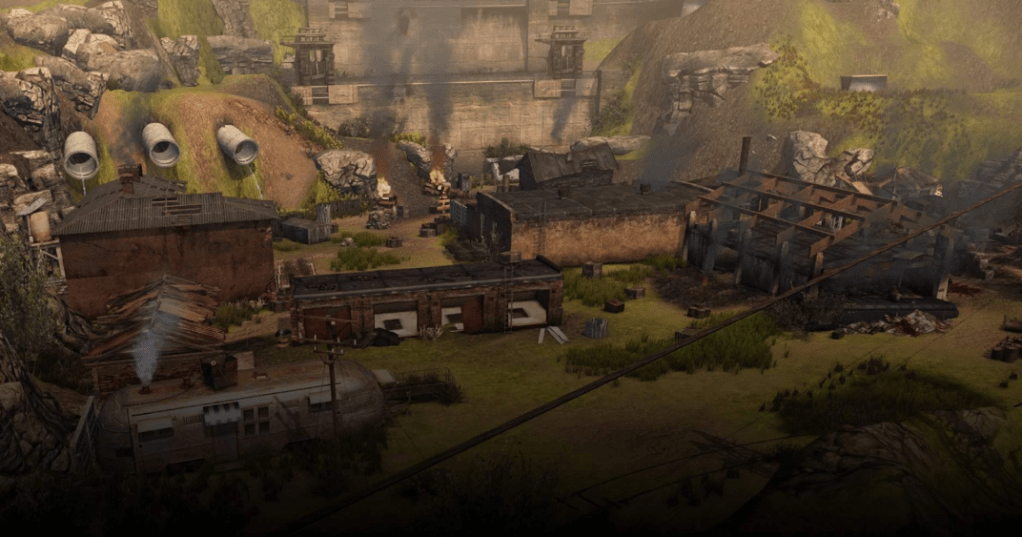
Before Obsidian would begin its crowdfunding project for Pillars of Eternity, it would help out inXile’s production of Wasteland 2. inXile and Obsidian had broken away from Interplay and remained friendly. In fact, according to a Shack News article, they had an agreement to share technology. I won’t go into Wasteland 2. We did that in our inXile History post. But Obsidian would see proof of concept. Even though few video game projects became successful after Kickstarter, it can be done.
Pillars of Eternity
While they had found modest success with Armored Warfare, Obsidian had several cancelled smaller projects by this time, and the company was still feeling the pangs from Stormlands. They needed a big win. They needed to return their top-down, isometric third-person RPG roots. Obsidian, and Black Isle Studios before it, was at its best when it made those types of RPGs. Icewind Dale, Baldur’s Gate, the original Fallouts, Neverwinter Nights, and the list continues. inXile proved with Wasteland 2 that gamers still had an appetite for such a game. But did they still believe in Obsidian?
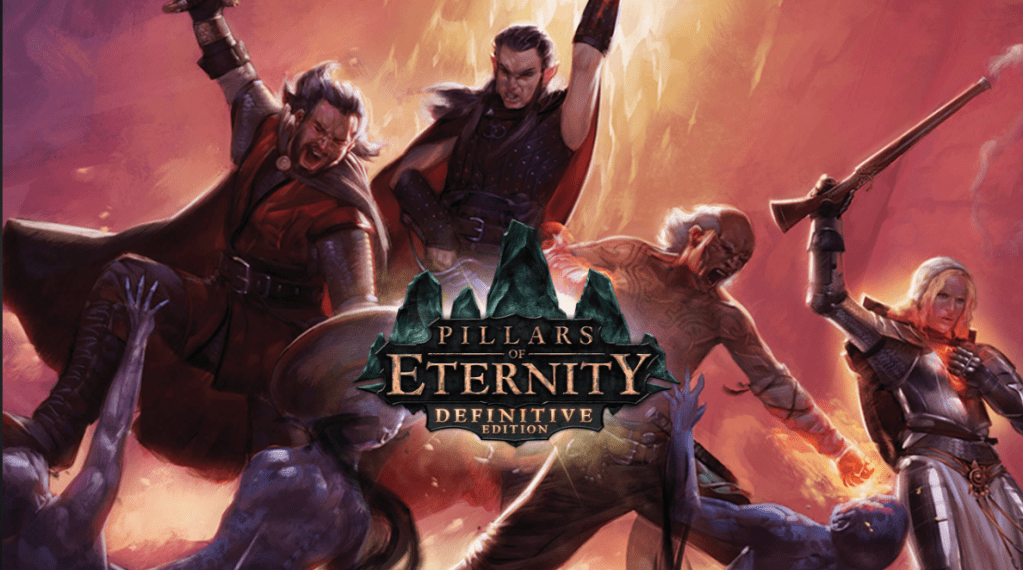
The company chose to make their spiritual successor to Baldur’s Gate II: Shadows of Amn, and they were using KickStarter. Most at Obsidian tempered their expectations. When they clicked the button to make Pillars of Eternity’s project go live, it took seconds for it reach $50,000, reaching the game’s original goal. Then, it leaped to $1 million. Urquhart contacted Game Director Adam Brennecke at the 24-hour mark, which happened to occur on Saturday. Brennecke was at home, but that level of success changed his plans. According to Brennecke (in the Anniversary Documentary), “We had to rearrange the schedule. We had to get things done faster than we had initially expected because with KickStarter, you want an engaging campaign. You had the cadence planned out but with that initial success, we needed something out on Monday. We had to work on that over the weekend.”
Obsidian would throw a watch party on a newly founded Twitch. At the time, Obsidian’s watch party for the end of the Pillars of Eternity KickStarter campaign was the most-watched video on Twitch. The project topped at $3.9 million, the largest KickStarter campaign at that time. That’s so much money. That’s a lot of hype. So, did Pillars of Eternity match the hype? What do you think?
Obsidian had the team. They were returning to their roots. Pillars of Eternity received a 90 Metacritic score, and it’s not easy getting a score that high on Metacritic. It became a game of the year candidate for multiple publications. Pillars of Eternity was everything gamers loved about the old Black Isle Studios games. The company had come full circle. And they happened to do so with their own original property. And Pillars of Eternity proved the industry was interested in isometric role-playing games. What would be the next hit in this vein?
Tyranny
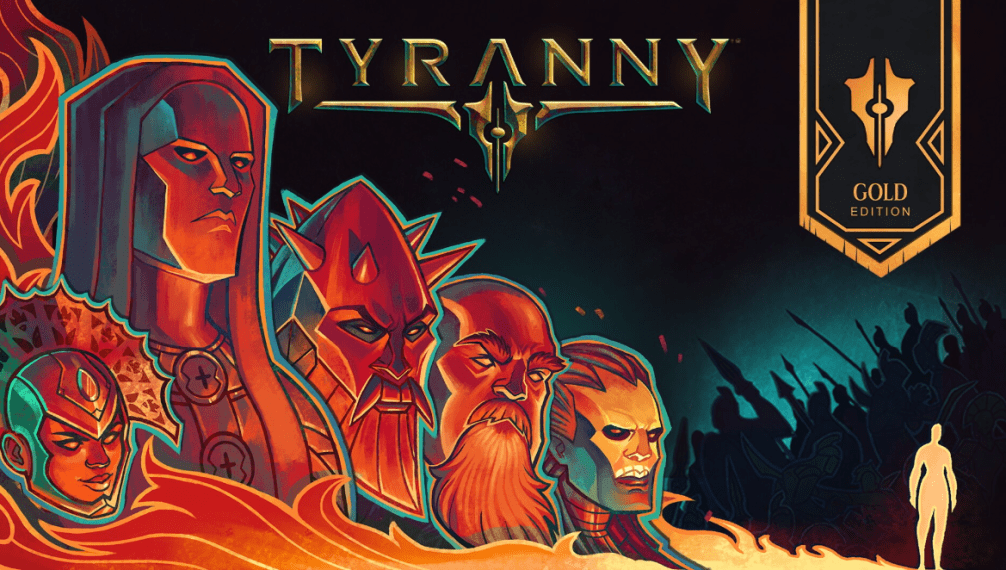
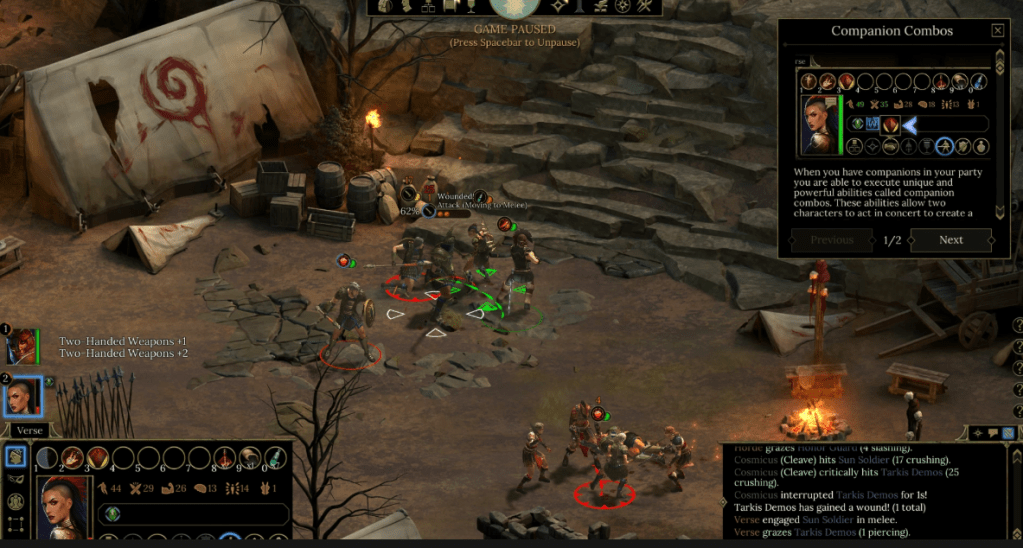
After the KickStarter campaign concluded and Obsidian was developing Pillars of Eternity, they had an idea for another top-down, third-person, isometric role-playing game, Tyranny. Tyranny would place more emphasis on making player choices have more impact on the game’s story. The game’s themes would venture more grimdark as the player’s character rebels against the evil overlord Kyros. Obsidian wondered if they should self-publish Tyranny. But they weren’t a publisher. Fortunately, Swedish publisher Paradox Interactive reached out to Obsidian. Paradox saw Pillars of Eternity’s success and wanted an original idea. They jumped at the opportunity to publish Tyranny.
While not as big of a success as Pillars of Eternity–How many games are?–Tyranny added several tools to Obsidian’s repertoire. I’ll let Chris Parker explain (via the Obsidian Anniversary Documentary). “Tyranny is a great example of a game where we focused on true role-playing mechanics, truly great system building, and had a lot of cool features like the glossary…These are systems that, if possible, we want to include in every role-playing game. We can figure out how to do it better next time.” Tyranny may not be a direct sequel to Pillars of Eternity, but fans wouldn’t need to wait long for a Pillars of Eternity sequel.
Pillars of Eternity II: Deadfire
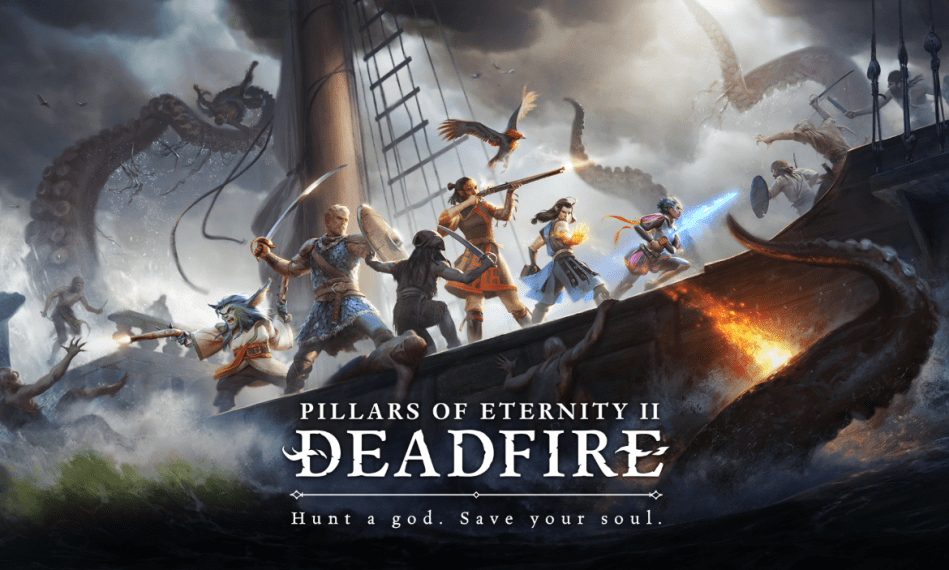
Pillars of Eternity II: Deadfire saw a couple of changes. First, Obsidian switched crowdfunding sites from KickStarter to Fig. Second, the sequel wouldn’t receive the same nostalgia boost as the first game. Never underestimate the power of nostalgia. When the original Pillars of Eternity launched, Obsidian hadn’t developed a top-down, third-person isometric role-playing game in well over a decade. This time around, they had squeezed in Tyranny, and Deadfire was a sequel. Obsidian was very familiar with sequels, but to this point, the company had only worked on sequels for other companies. Pillars of Eternity II: Deadfire held the distinction of Obsidian making a sequel for one of their own properties. This was special.
And wouldn’t you know it? Deadfire’s Fig campaign garnered more than the original KickStarter campaign. I guess, never underestimate the power of a customer base, knowing you make a good product, and brand recognition.
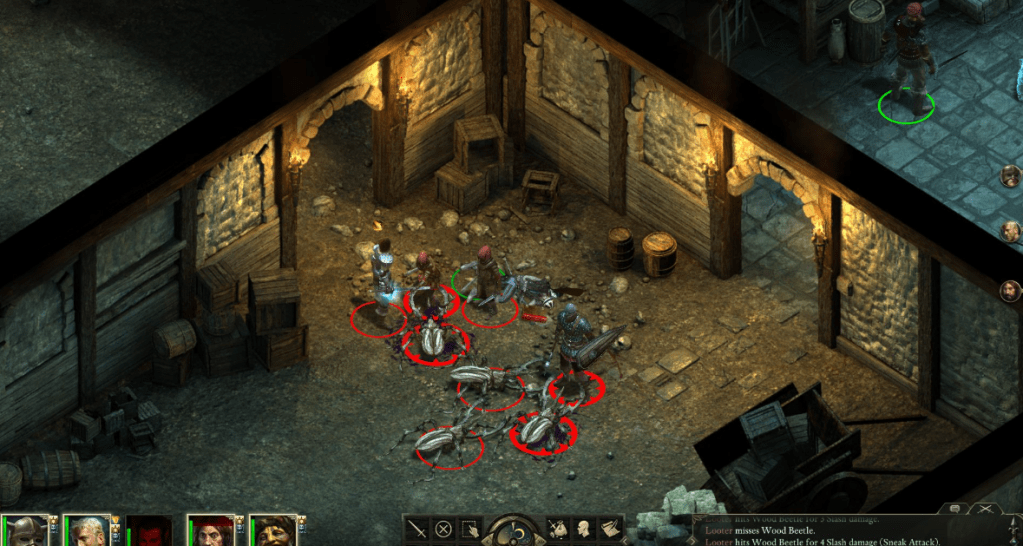
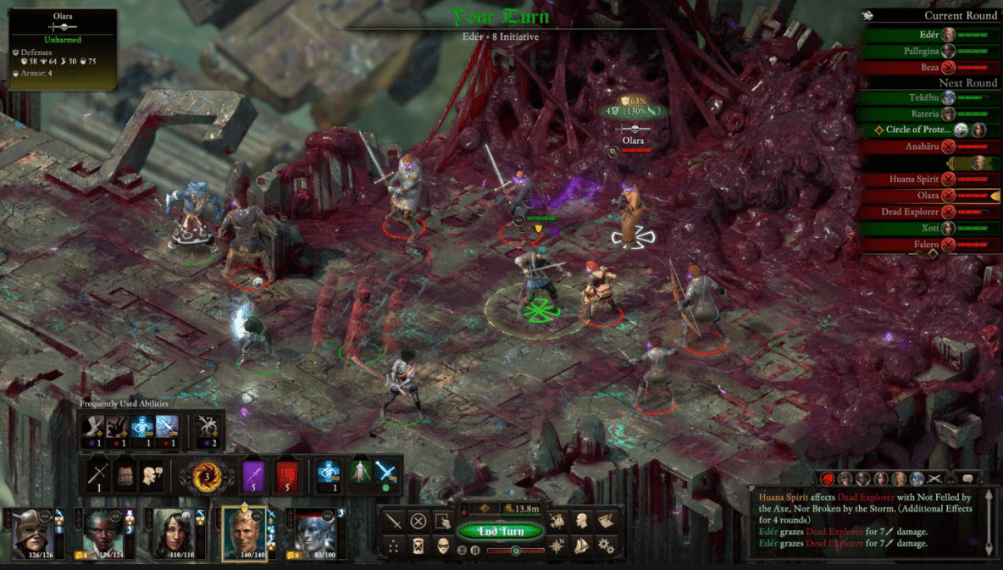
Pillars of Eternity II: Deadfire builds on the original in almost every way. Look at how much the graphics improved. The team spent extra time getting light effects just right. The environments are beautiful and feature a big world map. But the big addition Pillars of Eternity II: Deadfire made was full voiceover work. This made completing the project difficult. You need to schedule recording sessions and split up the actors’ time across characters. It’s stressful and a lot of work. But Obsidian pulled off the near-impossible.
Like its predecessor, Deadfire holds a great Metacritic score. So, why have fewer gamers played Deadfire? Marketing. The eventual publisher, Versus Evil, came late into Deadfire’s development. By the time the publisher came onboard, there wasn’t enough turnaround to fix something wrong with an initial marketing pitch. When something didn’t work, they threw away the pitch. The game sold well to its core audience, but didn’t sell well after launch. While there were some complaints like combat difficulty and ship-to-ship combat (which may be Deadfire’s least successful mechanism), most didn’t know Pillars of Eternity had a sequel. I sure didn’t. With a little more lead in, Pillars of Eternity II: Deadfire could’ve bested the original in every way.
But Obsidian wouldn’t need to worry about a publisher for long. They were about to get acquired by an unlikely buyer.
Xbox Game Studios Purchases Obsidian
After about seventeen years, Obsidian grew tired of finding money to produce games. Publishing never appealed to them. But the founders also hated laying off employees. Who would enjoy that? A steady source of income meant Obsidian wouldn’t experience the joys of payroll. Monahan (again, from the Obsidian Documentary) described it best. “Over that 17 years, it was a lot of money coming in, and the money stopped coming in, and there were a couple of times when I had to rush to the bank myself and withdraw a bunch of money to make sure payroll happened.” In short, Obsidian wanted stability.
The company had asked others if they’d be interested in purchasing them as an imprint. Oddly enough, a familiar face came in with a competitive offer. Microsoft buying Obsidian was awkward. Microsoft was the publisher for Stormlands, which they terminated in 2012. The aftermath of that decision led to a mass layoff. Stormlands’ cancellation almost led to Obsidian’s dissolution. The idea that Obsidian would go back to Microsoft seemed counterintuitive. But Xbox Game Studios insisted Obsidian stay Obsidian. When most companies buy out another company, they absorb the acquired company. Microsoft didn’t want a Microsoft-Irvine. They wanted Obsidian.
With a newfound financial security, Obsidian was ready for its next chapter. What would be a better way to celebrate a corporate buyout than with a video game that’s a parody of late-stage capitalism?
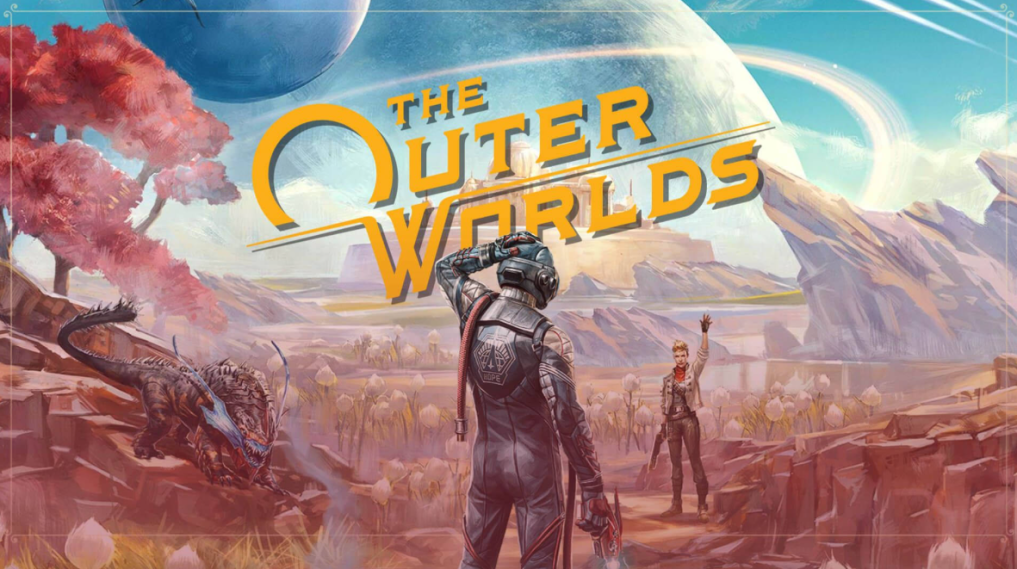
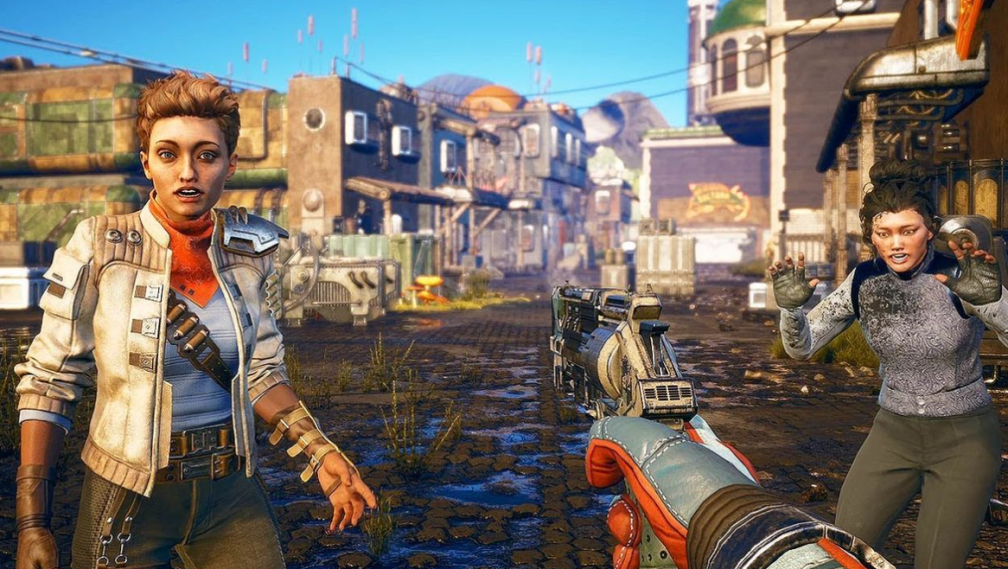
The Outer Worlds
The Outer Worlds marked the reunion of Leonard Boyarsky (Creative Director) and Tim Kaine, who had worked on the original Fallout and Arcanum. The Outer Worlds blends Boyarsky and Kaine’s personalities. I like how Boyarsky put it (in the Documentary). “I’d pull (The Outer Worlds) from being too silly, and he’d (Kaine would) pull it from getting too dark. We could agree on where we landed…Left to our own devices, he would’ve skewed a little bit sillier and more comedic, and I would’ve veered a bit more into the dark underside of humanity.”
The Outer Worlds found a healthy balance between comedy and social commentary. The game was an immediate success. Obsidian had yet another franchise they could build upon. The Outer Worlds had a little bit for everyone. And those company jingles were hilarious. I still find myself singing, “It’s not the best choice; It’s Spacer’s Choice.”
Obsidian knew it wanted to include DLC for its project and got to work. In fact, Obsidian developed The Outer Worlds’ DLC while working on the base game. Nine to ten months passed before they brought in Game Director Carrie Patel. She pitched a revision to the DLC that gave it a strong noir take on The Outer Worlds. The DLC lived in a similar space to the rest of The Outer Worlds but felt different. It gave Obsidian room to play, push the flavor, and adjust the tone just a bit. Variance to The Outer Worlds’ DLC proved Obsidian could adapt.
And that brings us back to E3 2020 Los Angeles and the comment Justin Britch made. “Even as a mid-sized publisher, we had a lot of projects at the same time.” During E3, Obsidian announced multiple projects. In Peril on Gorgon, the DLC for The Outer Worlds, and an early access launch trailer for Grounded. With Grounded’s trailer, Obsidian made a joke with CD Projekt Red. “If you want this year’s biggest release, then wait on Cyberpunk 2077. But if you wanted the smallest, we’ve got you covered. Grounded.”
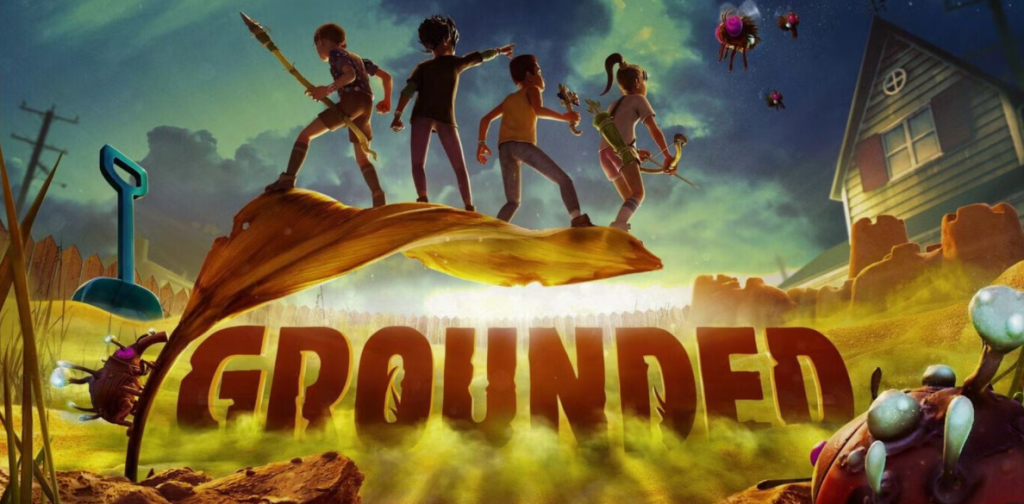
Grounded
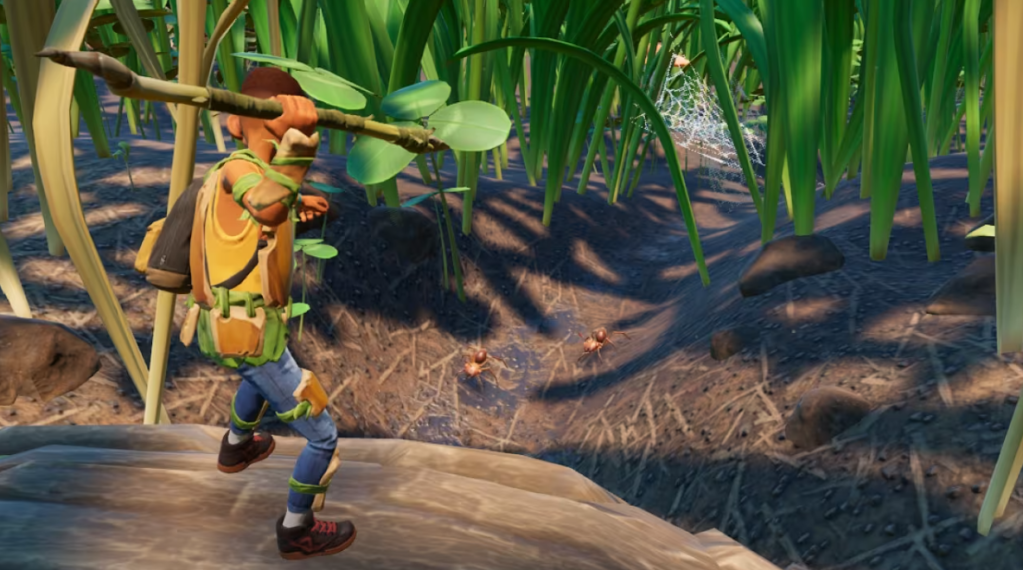
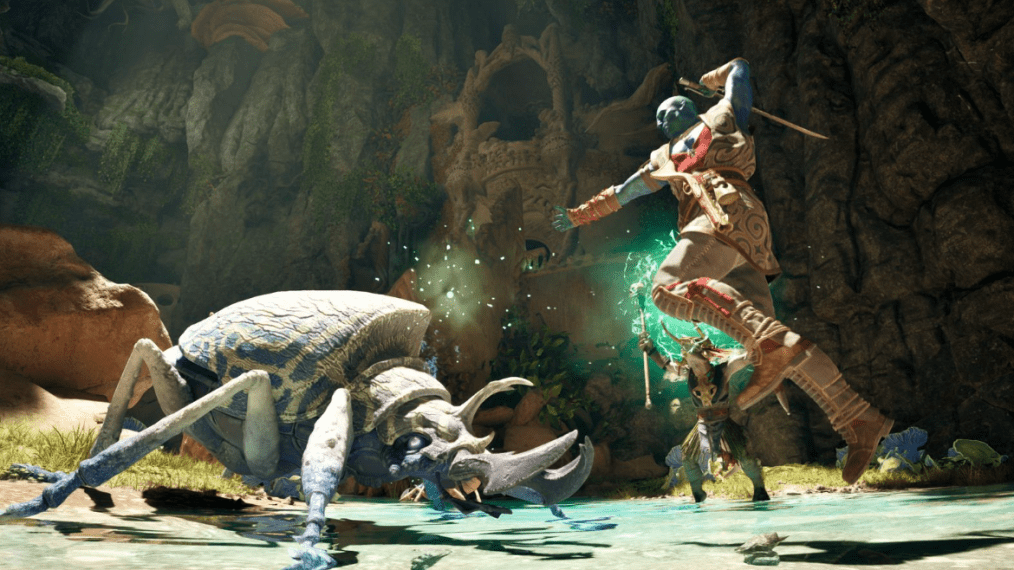
Even though Obsidian’s trailer mentions that they’ve never made a game like Grounded, survival games share similarities with RPGs. Character development and exploration are hallmarks of both games. The original idea for Grounded originated during Pillars of Eternity’s development, but it wouldn’t be until Pillars of Eternity II: Deadfire that Grounded would receive a concrete pitch and a small team. Survival games were around in 2012, but they weren’t as big as they would become in the coming decade. The creative team was nervous. They hadn’t made a survival game like Grounded. And the pitch was odd. I’ll let Chris Parker (Documentary) explain. “Right out of the gate, I was scratching my head. Really? We were going to do a Honey, I Shrunk the Kids, but it’s a survival game with role-playing elements.”
Early on, Grounded got review bombed. Was it because Grounded poked fun at Cyberpunk in its trailer? Did gamers question if Obsidian could pull off a survival game? Or was it Grounded’s concept? No matter the reason, Grounded began with poor early reviews, but that would change. Head of Strategy and Operations Marcus Morgan recalls his time at XO, which is an Xbox dedicated event for just Xbox games. He watched people play Grounded. They were having a great time. Obsidian had another hit.
Grounded broke the mold in more than one way for Obsidian. Not only was it the company’s first survival game, it was the company’s first foray into early access. Game designer Adam Brennecke always wanted to try early access. He wanted to get the game into players’ hands as quickly as possible. The lifeblood of a game is iteration. The sooner players could “break” a game, the faster designers could address issues. Obsidian would repeat this process with Grounded’s sequel. But we have a couple more games to discuss before we get to Grounded 2.
Pentiment
Microsoft has stayed true to the word. They’ve let Obsidian be Obsidian. Sure, character-driven role-playing games will ensue, but Obsidian has always pushed boundaries. Pentiment is a good example of Obsidian pushing boundaries. And it illustrates Obsidian being able to be Obsidian. Josh Sawyer had a few games on his bucket list. Sawyer shared them in the Documentary. “When I got into the industry in 1999, I wanted to make a Dungeons & Dragons game, a Fallout game, and a historical game. I got to make a D&D game right away (Neverwinter Nights 2). It took a little while to make the Fallout game (Fallout: New Vegas), but the historical game eluded me for the longest time.” Sawyer fell in love with a game called Darklands (1992). It focused on the 15th century in the Holy Roman Empire and added fantastic elements.
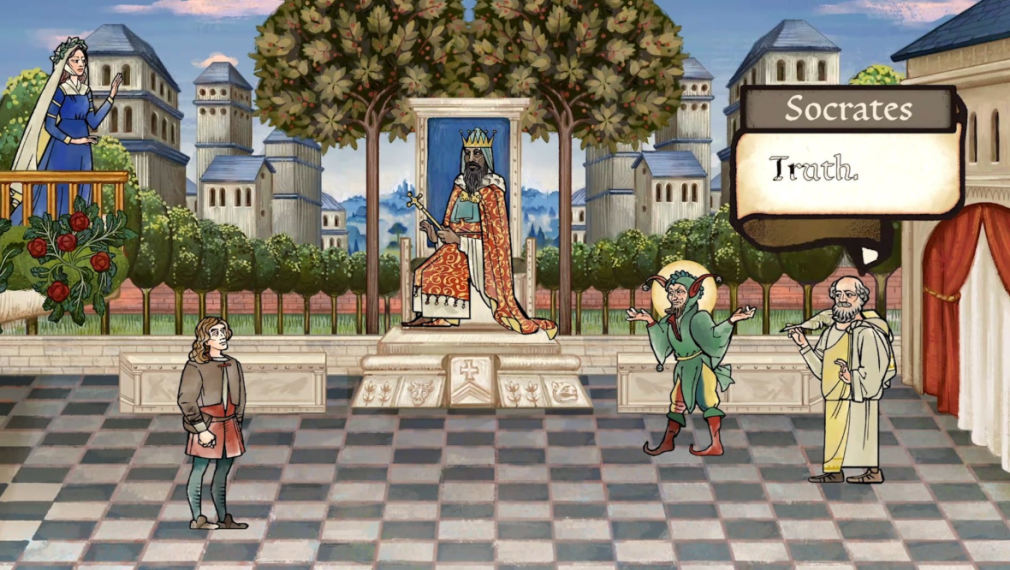
Sawyer framed Pentiment as a narrative adventure with mystery components and gameplay similar to Night in the Woods, Mutazione, and Oxenfree. Pentiment is set at the beginning of the Reformation, and Sawyer cited Umberto Eco’s The Name of the Rose as inspiration for Pentiment’s setting. Players spend most of their time inside a monastery. And as you can tell by the image above, Pentiment contained stellar, historically influenced art. Is it any wonder Pentiment earned a Peabody Award? Pentiment may not be a game for everyone, but the ones who Pentiment is for love it. Obsidian was on a roll. They had two games that would get sequels, and an indie darling in Pentiment. Their next project would be an action RPG set in the world of Pillars of Eternity.
Avowed
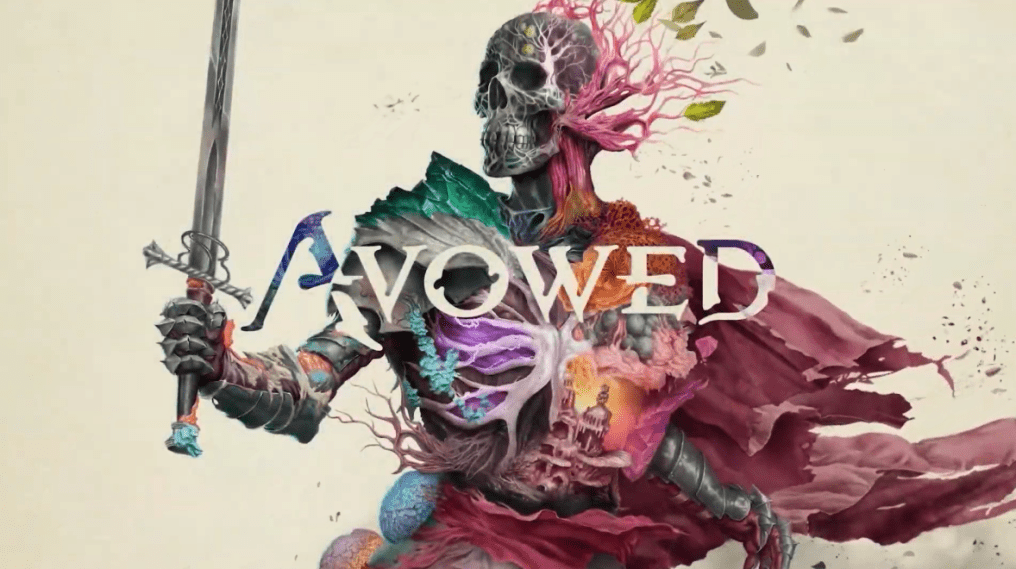
Set in Pillars of Eternity’s setting, Avowed spent several years in development limbo. Urquhart had insisted Avowed feature multiplayer. It never materialized. The game didn’t function as a multiplayer experience. After Microsoft acquired Obsidian, they insisted the team ditch the multiplayer aspect. Once that was settled, Avowed made progress.
Avowed would ditch Pillars of Eternity’s open world for explorable zones (similar to The Outer Worlds). Player choices would affect the world and the companions traveling with the player character. And then there’s the announcement of factions. Avowed would pivot into factions and social standing within each faction, echoing Fallout: New Vegas. Did Avowed live up to the hype? It received favorable reviews. I haven’t had a chance to play Avowed. It is scheduled for a PlayStation 5 release in February 2026. (I’m writing this post in January.) Fallout: New Vegas is on many people’s top games of all time. A game can be fantastic and fall short. But I’m excited to try Avowed in the coming months. I may have already played it by the time you’re reading this post.
2025 was the Year of Obsidian Sequels
In addition to Avowed, which is a spin-off of Pillars of Eternity, Obsidian released two other sequels: Grounded 2 and The Outer Worlds 2. The company is going strong. Its partnership with Microsoft has freed the creatives at Obsidian to do what they do best: make games. While I’m excited for great sequels and spin-offs, I like that Obsidian continues to challenge itself with projects like Pentiment. The future looks bright for this role-playing game juggernaut. Here’s to another 20 years of Obsidian.
This was a long one. If you made it this far, you’re awesome. We all know it. Let me know if you enjoy this series and which game developer or even designer get the video game history treatment. Thank you for reading, and wherever you are, I hope you’re having a great day.
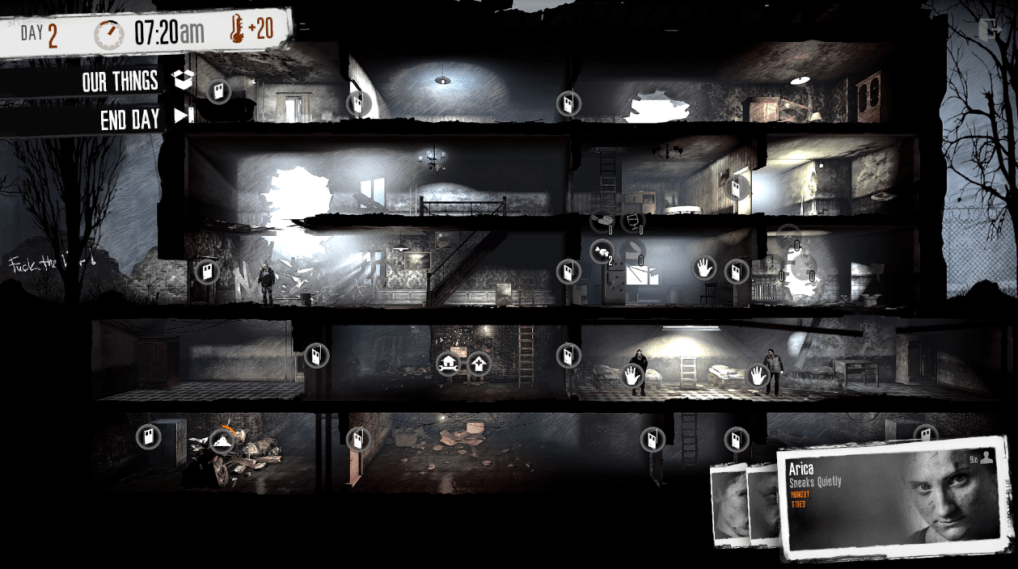
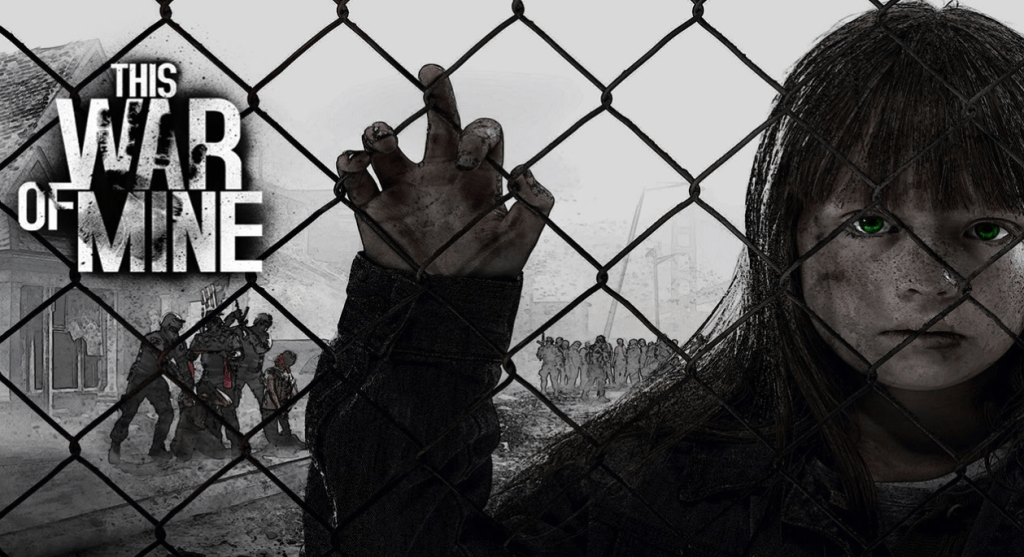
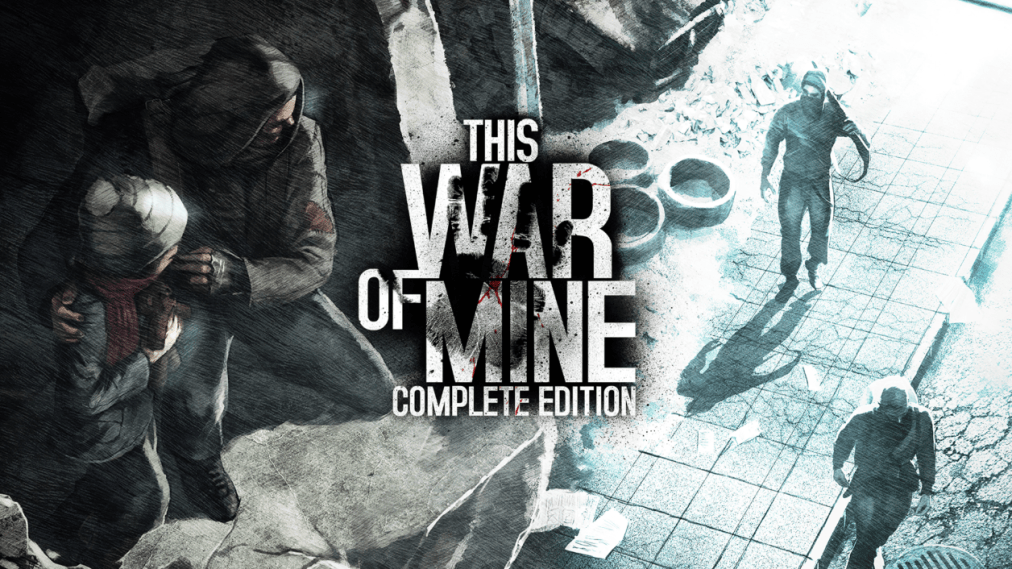
Happy Monday, Geekly Gang! We’re back with another video game review, one that’s overdue. I’ve talked about This War of Mine in various forums, even The Pixels, a few years ago, so it was only a matter of time before we, JK Geekly, would cover the video game in a review.
I love this game. This War of Mine harkens back to my days as an imagery analyst/targeteer. Typically, I’ve seen the world of This World of Mine from a top-down view. This video game made me see the people I affected from a ground level, and I love it for it. But how does This World of Mine rate against JK Geekly’s video game review criteria? Let’s find out.
Mechanisms: 8/10
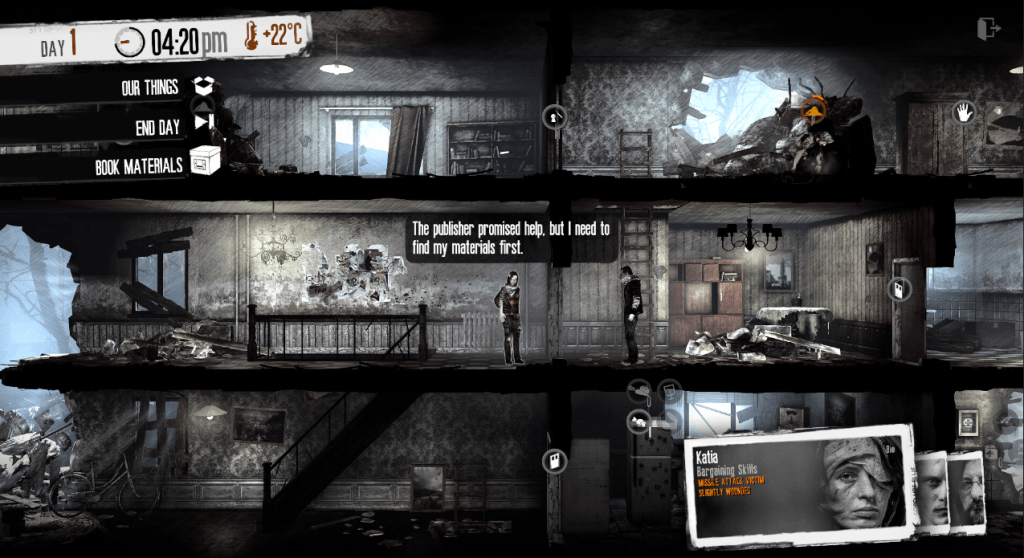
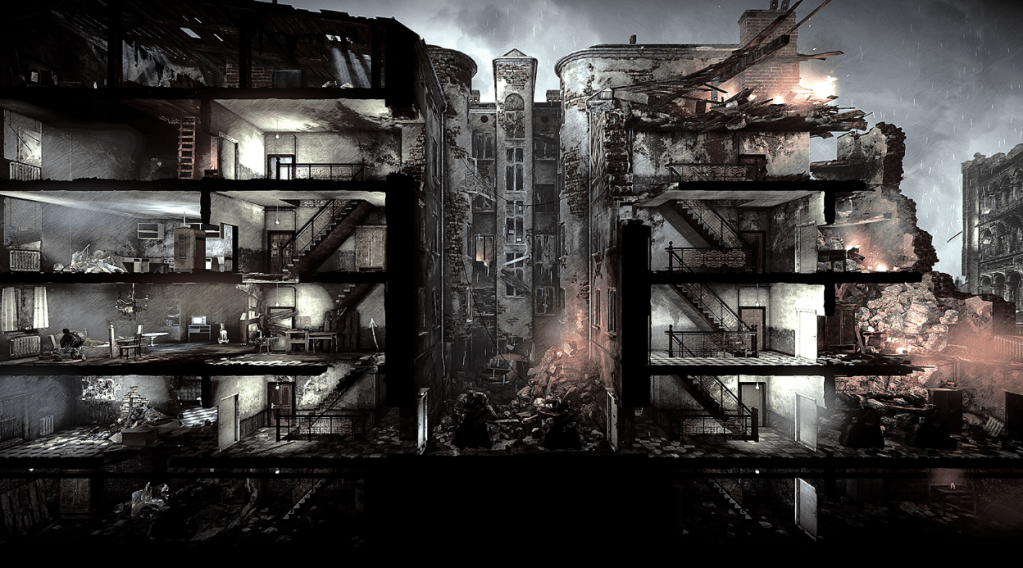
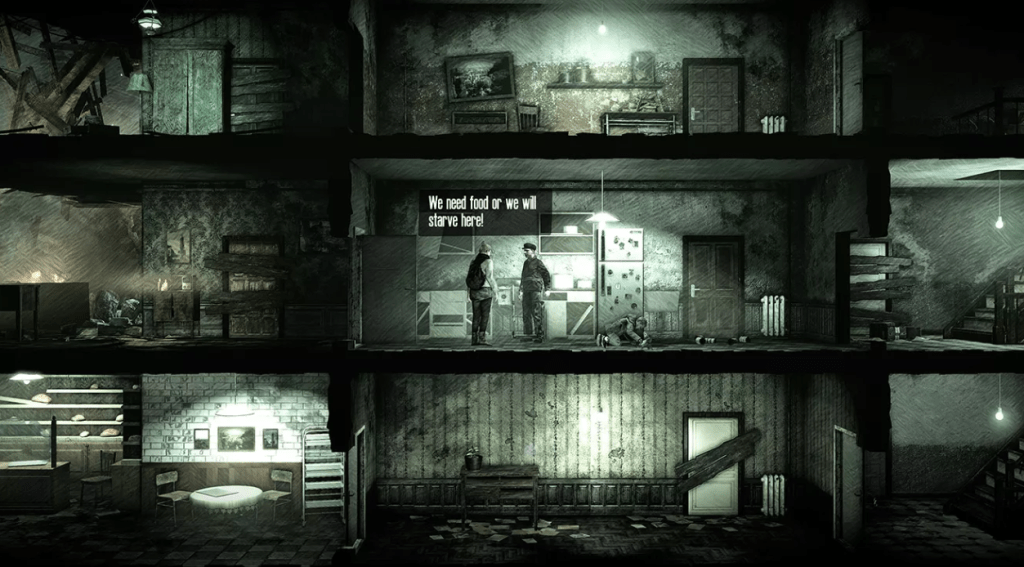
This War of Mine does a great job of balancing the various things you need to survive. Yes. This War of Mine is, first and foremost, a survival game. The denizens of your building attempt to survive the duration of a war, ripping apart this undisclosed Eastern European nation, although with hindsight, we could assign This War of Mine’s setting as Ukraine, circa 2025.
This War of Mine’s game mechanisms are a difficult category to rate. On one hand, This War of Mine offers a singular experience of rummaging through a war-torn nation, while gathering supplies. On the other hand, it uses pre-established game mechanisms to express its subject matter. I’m giving This War of Mine an eight out of ten because it does enough to subvert the typical game mechanisms of acquiring resources. This may play into This War of Mine’s story/narrative, but while the specific mechanisms one can find in this game can be found in other video games, the narrative weight these choices offer makes This War of Mine unique.
Above Image from GameDesigning.Org
Gameplay Loop: 9/10
This War of Mine is addictive. I don’t care if you’re looking through a survival game like Ark: Survival Evolved or The Survivalists, This War of Mine equals or bests these survival games, only with the experience of someone who may have to experience war overseas. Even though you could find a similar gaming experience with any number of survival games, none of them put you in the shoes of someone having to fight for their lives in a real-world scenario.
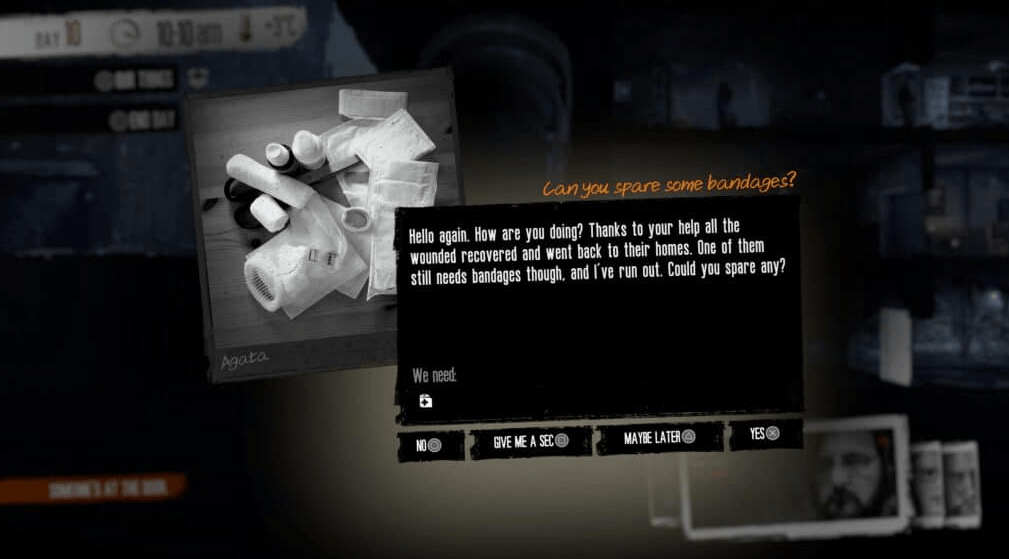
Few survival games balance the day-to-day survival with the greater good like This War of Mine. I don’t know how many times I’ve had to choose how much I intend to “steal” from an elderly couple, while gathering enough to keep my survivors alive. This War of Mine offers an odd balancing act unseen by most video games. No two plays of This War of Mine will turn out the same. That’s a strength.
Add in the Little Ones expansion, and that adds an extra layer of complexity. Few games have me replaying its core game through a different lens than This War of Mine. This game blends a tasty survival game with an empathy game. I’ve found myself making choices in This War of Mine that I think I’d never make until presented with the scenarios this game includes. This is the This War of Mines’ greatest strength.
Narrative and Storytelling: 9/10
This War of Mine offers a branching narrative that changes each time you play it. I’ve lost count many times I’ve replayed this title and see where the story takes me. This adds to This War of Mine’s narrative and storytelling. It’s a glorified “Choose Your Own Adventure” story with so many branching arcs that it’ll take multiple playthroughs to unearth each one.
Add in expansions that further explore this unnamed Eastern European nation, and This War of Mine has narratives so deep, you can spend months exploring them. But you don’t even need expansions. If you play the game on Steam, This War of Mine is host to a plethora of mods. Any one of them can shake up the gameplay, and sometimes, the story. This War of Mine offers a fertile ground to tell any number of interesting stories set against the backdrop of war.
User Interface: 7/10
This War of Mine has plenty of menus, and for the most part, it does a great job of presenting these menus to its players. But the sheer volume makes it easy to get confused. Honestly, I’ve had to play portions of This War of Mine a second time because I didn’t understand the ramifications of my actions or choose something I didn’t want to choose from one of the game’s multiple menus and selections within selections of head’s up displays.
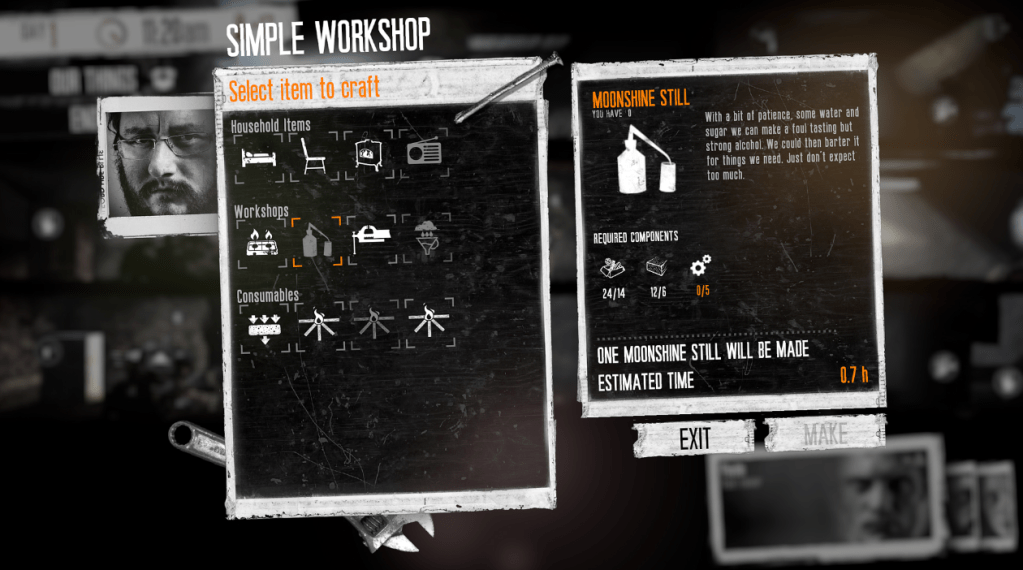
To be fair, it’s easy to get lost in This War of Mine’s multiple workshop (or production area) menus or dialogue exchanges or even its basic movement and interaction with the world around you. This War of Mine includes a steep learning curve, even if the game tries its best to handhold you through the early stages of that steep learning curve. Without these handholding efforts, I would give This War of Mine a below-average rating. Since the game goes out of its way to try and teach you these menus, it gains a well above average rating.
Graphics: 7/10
This War of Mine offers above-average graphics, but grading this game’s graphics does it a disservice. Even though the game is over a decade old, This War of Mine is timeless. Even during its 2014 release, This War of Mine harkened back to the past. And oddly enough, the future. Ultimately, it doesn’t matter which war This War of Mine is supposed to represent. By extension, it doesn’t matter how dated This War of Mine’s graphics become. It matters the vibe This War of Mine captures. And if we consider the vibe, This War of Mine may score above a ten.
Audio: 8/10
If you know me, you know I seldom play video games with the sound on, but I make an exception with This War of Mine. This game’s soundtrack does enough to carry me to a war-torn Eastern European nation. I challenge anyone playing this game to listen to This War of Mine’s desolation. It’s haunting.
Replay Factor: 8/10
This War of Mine has so many expansions and mods (from Steam users) that you can play and replay This War of Mine for countless hours. The only reason why I put a damper on This War of Mine’s replay factor is its subject matter. I don’t know how long gamers can play a game meant to show the horrors of war. Each person’s mileage will vary. If you’re sensitive to war, you may not play This War of Mine very long. If you’re interested in putting yourself in the shoes of someone struggling to stay alive in a war-torn nation, This War of Mine will offer thousands of hours of gameplay. This War of Mine won’t be for everyone, but I don’t think that’s the point. Step into the darker, more personal corners of war if you dare.
Aggregated Score: 8
This War of Mine may not be for everyone, and that’s okay. For those who want to explore what they might do if confronted with living in a war-torn Eastern European nation, This War of Mine offers numerous morally gray options.
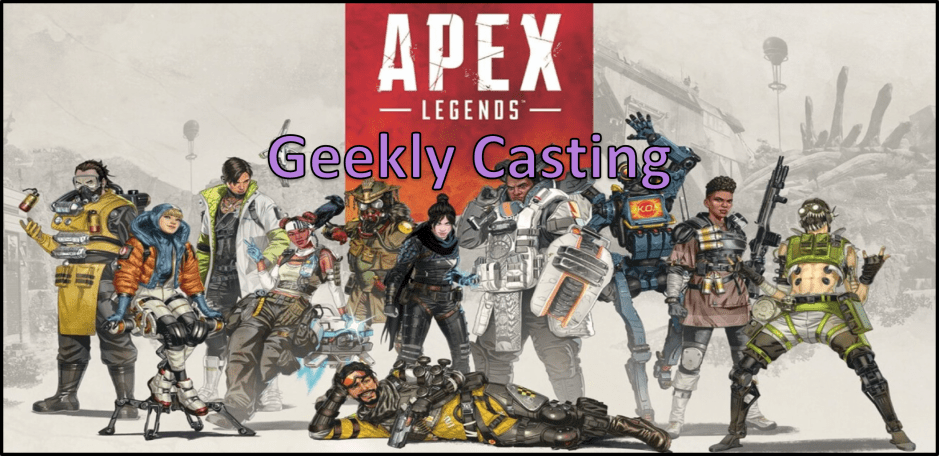
Hey, hey, Geekly Gang! Kyra Kyle here. We’ve waited a month, so it may be time to do another Geekly Casting. Today’s subject is Apex Legends. Respawn/EA has been teasing an Apex Legends show or movie for years. The franchise came out of the gates hot. It’s since cooled in the past few years, but a show or film could reignite Apex Legends.
We decided to keep casting simple and go with the original eight Apex Legends’ characters, the first four characters released after the originals, and Blisk. We needed to cast Blisk. He’s the one who ties Apex Legends to the greater Titanfall universe and assembles the Legends for the Apex Games. I’m going to cast Apex Legends with modern actors, and our movie geek Skye will be casting the film with actors from all of Hollywood history. My picks are up first. Let’s see who made our Apex Legends cast.
Kyra’s Picks
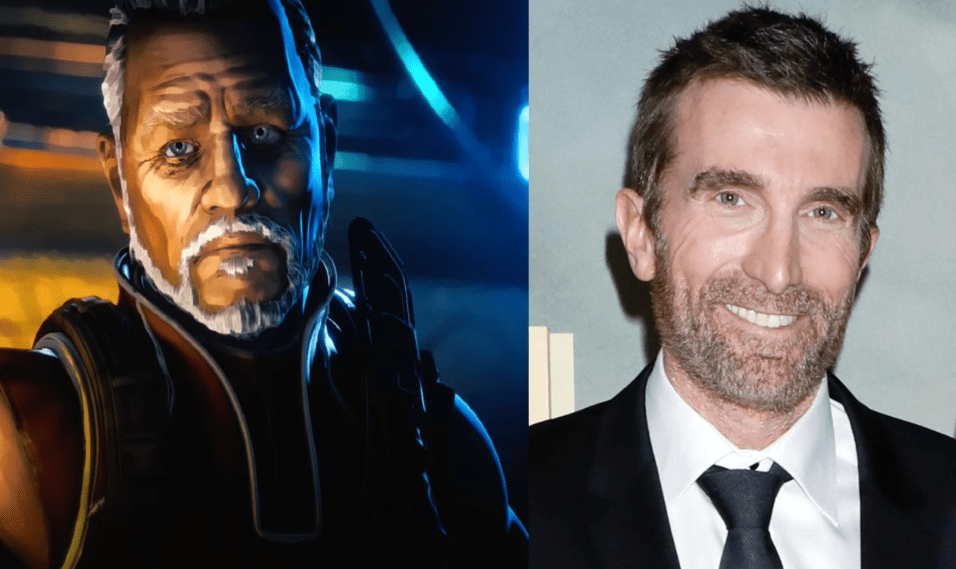
Blisk: Sharlto Copley
Canonically, Blisk is from South Africa. Unlike other characters from the Titanfall/Apex Legends universe, Blisk doesn’t hail from a planet with an accent, which sounds like one we’d find on planet Earth. Blisk is literally from South Africa. District 9’s Sharlto Copley is also South African. He’s no stranger to Sci-Fi/Action films either. Allow him to grow a sculpted beard, and he’s a dead ringer for Blisk. I can see Sharlto Copley as the man reinstating the Apex Games for selfish and dubious means. Copley does a great job portraying morally gray characters.
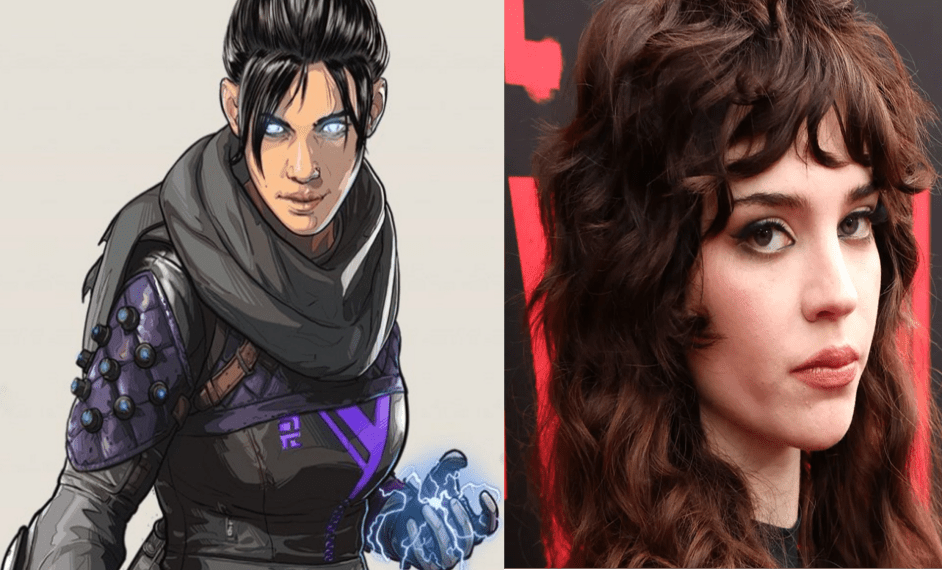
Wraith: Sophie Thatcher
Sophie Thatcher makes for a younger Wraith. This could help because if the Apex Legends movie/show follows the video game, Wraith will receive ample flashback scenes. Thatcher has plenty of experience with flashback scenes as a younger Natalie in Yellowjackets. But it’s Sophie Thatcher’s turn as a sexual partner android in Companion that proves she can pull off Wraith. Thatcher struck a careful balance between innocence and calculation, and found a combination of coldness and warmth. Thatcher has what it takes to portray Wraith, and it doesn’t hurt that she looks the part.
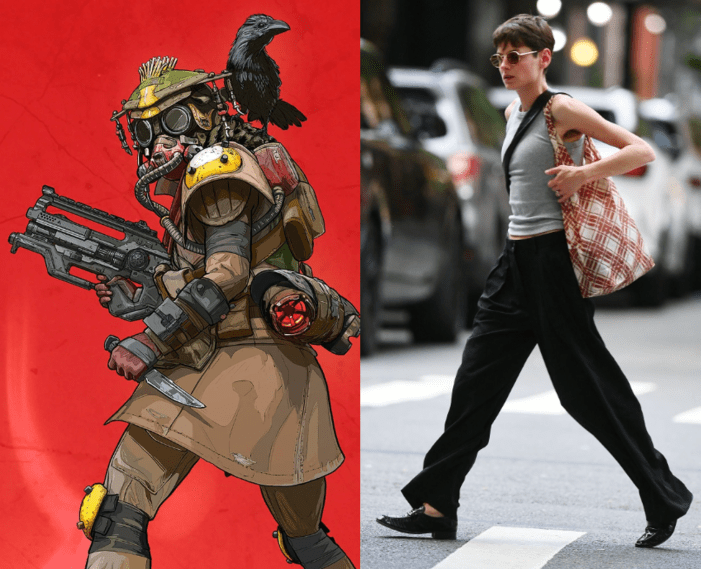
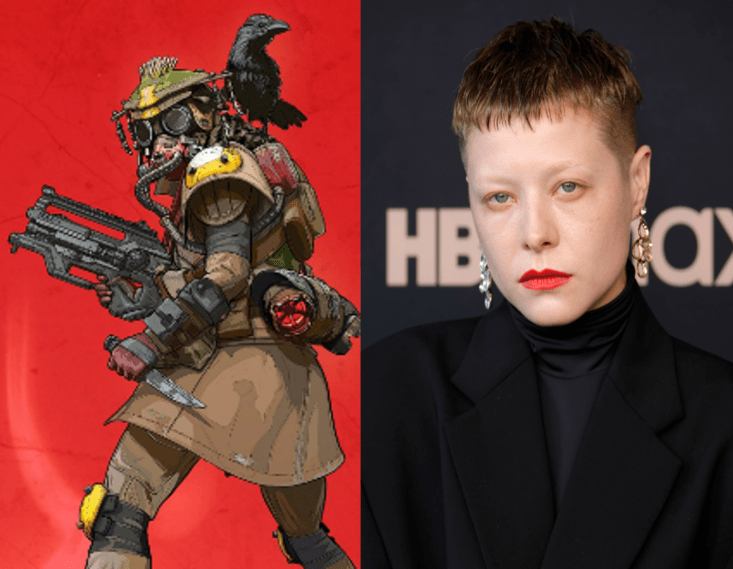
Bloodhound: Emma Corrin
Emma Corrin is an amazing actor. They were excellent as Cassandra Nova in Deadpool and Wolverine. Corrin’s small frame can be a blessing for Bloodhound. Most of Bloodhound’s bulk comes from their gear; underneath that gear, Bloodhound also has a small frame. I can see Corrin entering Beast of the Hunt. Corrin claims they haven’t met an accent they can’t pull off. Let’s see how they bathe in the bloth. And it doesn’t hurt that Emma Corrin is non-binary, just like Bloodhound, and Bloodhound’s gender identity plays a huge role in their backstory.
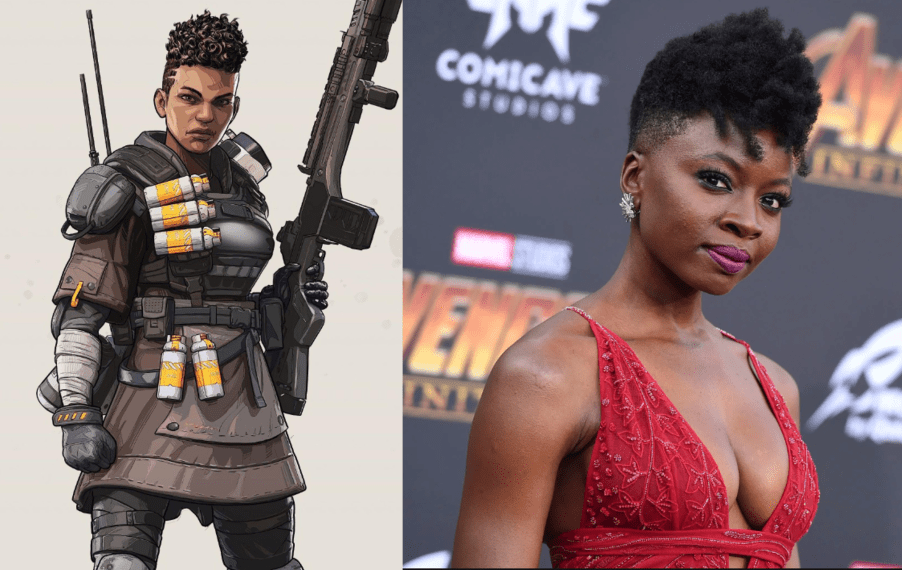
Bangalore: Danai Gurira
Danai Gurira has a history of playing strong warrior women: Michonne from The Walking Dead and Okoye from the MCU. Gurira as Bangalore is a no-brainer. She can pop a chimney with the best of them while bringing the Rolling Thunder. And Gurira can easily rock Bangalore’s signature look. She was meant to play Bangalore.
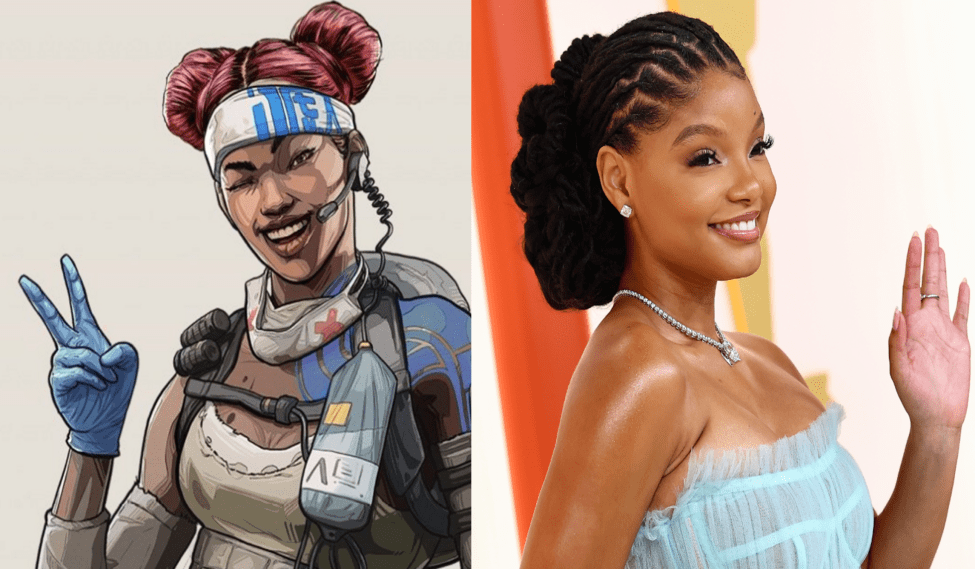
Lifeline: Halle Bailey
Yep. Disney’s live-action Ariel from The Little Mermaid is a dead ringer for Lifeline. Her turn as the titular mermaid means Halle Bailey is no stranger to red hair. She just needs to wear it in a double bun. It also helps that Bailey has musical training and could pull off Lifeline’s penchant for drumming on her D.O.C. Heal Drone. Halle Bailey has the effervescent personality for Ajay Che. I can’t see anyone else playing the character.
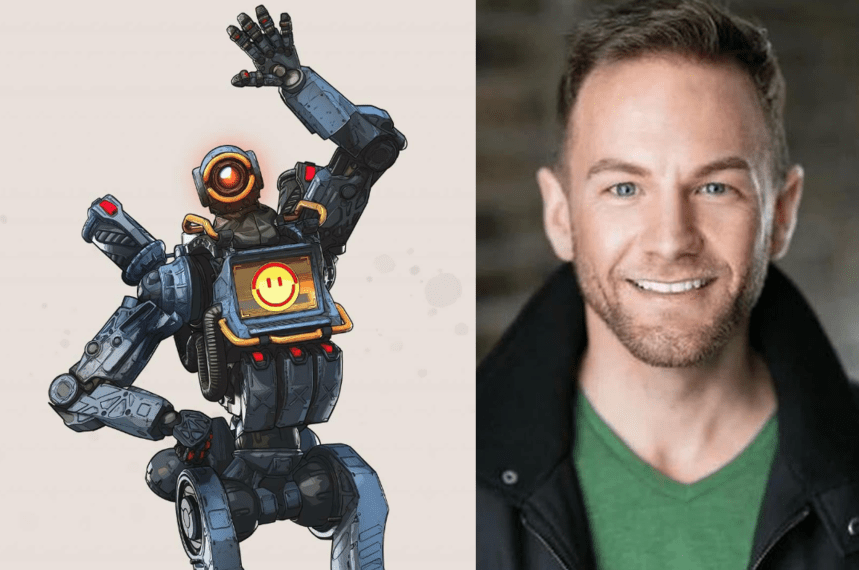
Pathfinder: Chris Edgerly
Pathfinder will be CGI anyway. Why not retain his voice actor, Chris Edgerly, in the role? Next.
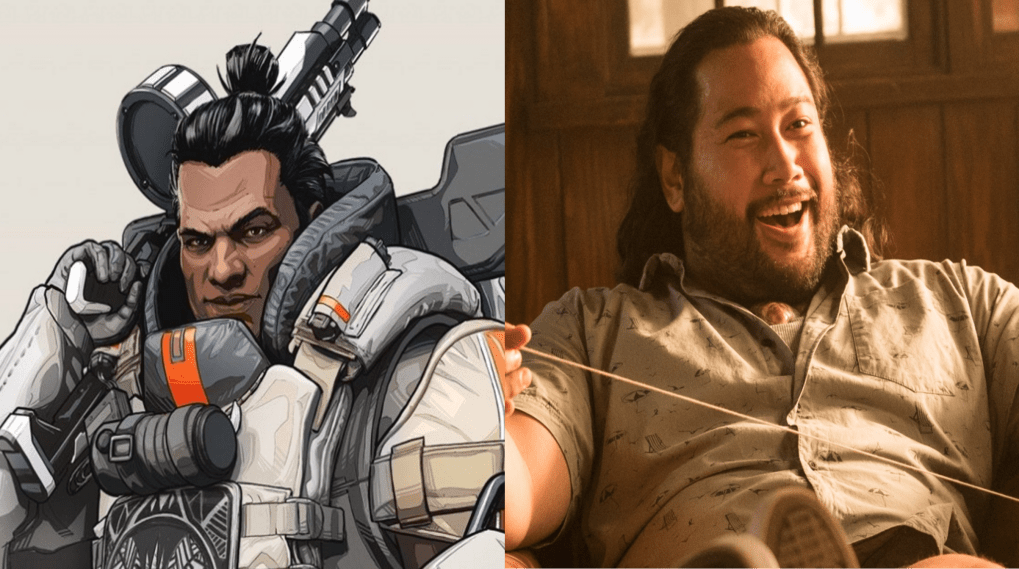
Gibraltar: Cooper Andrews
As Jerry from The Walking Dead, Cooper Andrews portrayed a character who can see the bright side in the darkest of any situation. I see that in Apex Legends’ Gibraltar. Anyone who portrays Gibraltar and the next character on this list needs to tower over most of the cast. Andrews has that part down. He also has the charisma to pull off Gibby. Cooper Andrews can easily pull off a line like, “I’m here to watch your back, brudda” without a hint of irony.
I would also like to see fan favorite and Gibraltar voice actor, Branscombe Richmond, make an appearance. Even at 70 years old, he could still pull off a live-action Gibraltar if he wanted.
Caustic: David Harbour
David Harbour may have gotten his big break as small-town cop Jim Hopper in Stranger Things, but he’s had a varied acting career, which spans decades. Lately, Harbour has been typecast as a lovable screwball. He plays a character similar to Hopper (in some ways) in the MCU as Red Guardian. Caustic could show a different side of Harbour. He’s menacing. Of the original eight Apex Legends characters, Caustic is the most villainous. It would be nice to see Harbour turn full villain.
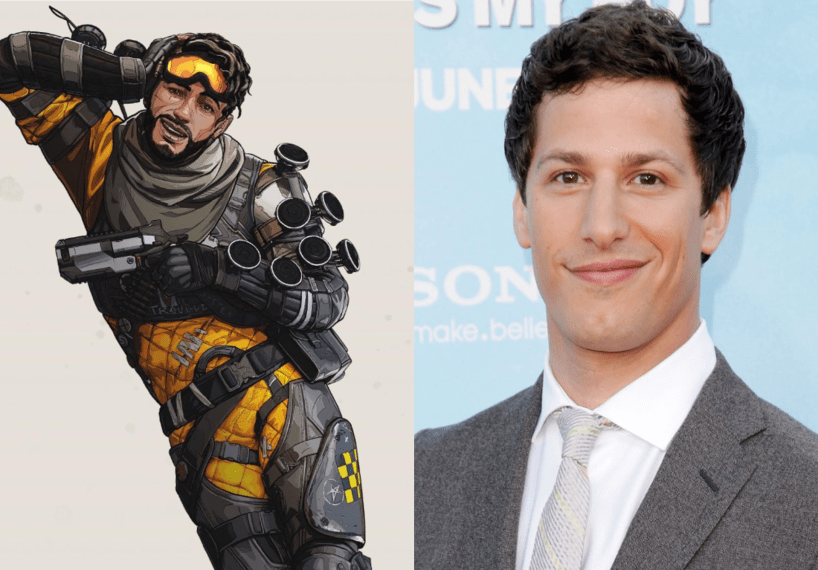
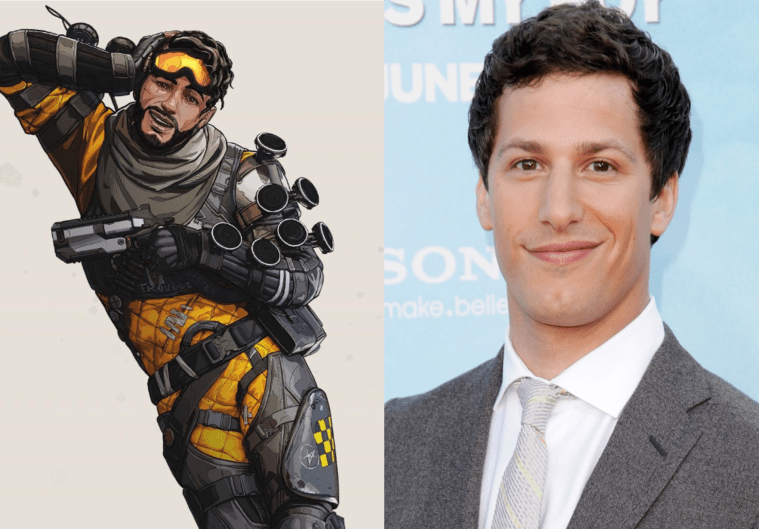
Mirage: Andy Samberg
A lot of people fan-cast Ryan Reynolds as Mirage. I don’t see it. Reynolds is funny, but he isn’t Mirage funny. Reynolds is sarcastic. Whoever portrays Mirage needs sincerity (the opposite of sarcasm) and to be comfortable with self-deprecating humor. Mirage has talent and intelligence, while being several layers of goofball. Andy Samberg is Mirage funny. Heck, he allowed himself to get beaten up by Ryan Reynolds in a Lonely Island music video, “I Threw It On the Ground.” That’s Mirage. I can see Samberg struggle to find the right words and spewing, “You got bamboozled.” I can also see Samberg pulling off a convincing stutter. “This match is gonna be extra-vagah…extr..ext, extravagant! That’s the word.”
Samberg’s Jake Peralta (from Brooklyn-99) is a cop version of Mirage: sincere, goofy, and full of self-deprecating humor. My only reservation with casting Samberg as Mirage is his age. Respawn hints at a romantic relationship between Wraith (whom I cast with Sophie Thatcher) and Mirage. But when has Hollywood shied away from a relationship between people who are fifteen to twenty years apart in age?
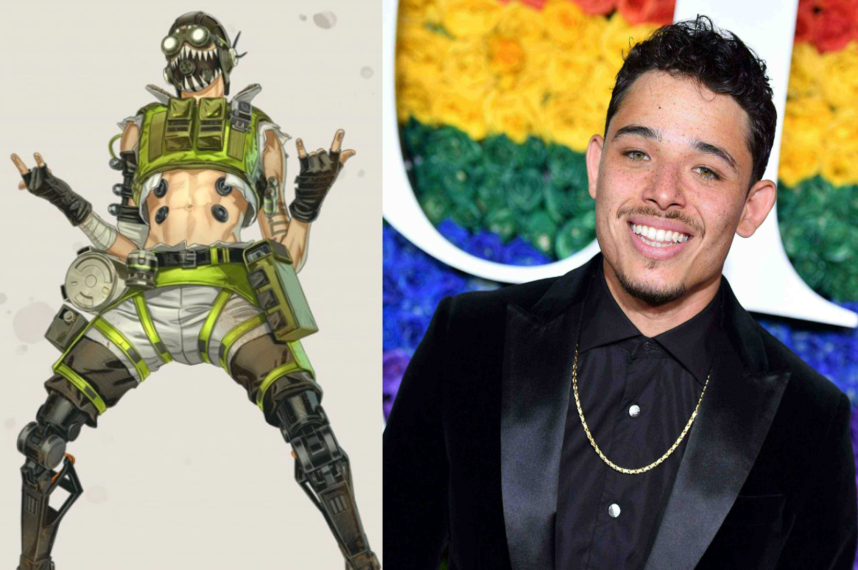
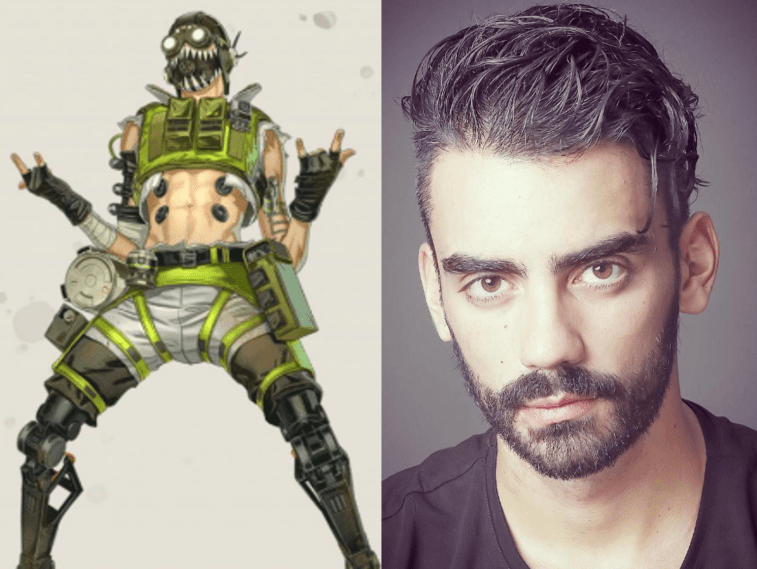
Octane: Anthony Ramos
Anthony Ramos got his big break as Philip Hamilton in the musical Hamilton. Ramos is the fourth or fifth potential cast member with musical roots. Should Apex Legends be a musical? Anyway, Ramos has the perkiness and energy to pull off Octavio Silva. He’s also close enough in age to Halle Bailey (whom I cast as Lifeline) for them to convincingly be childhood friends. Can’t you see Ramos saying, “Scootin’ and lootin’, amigo?”
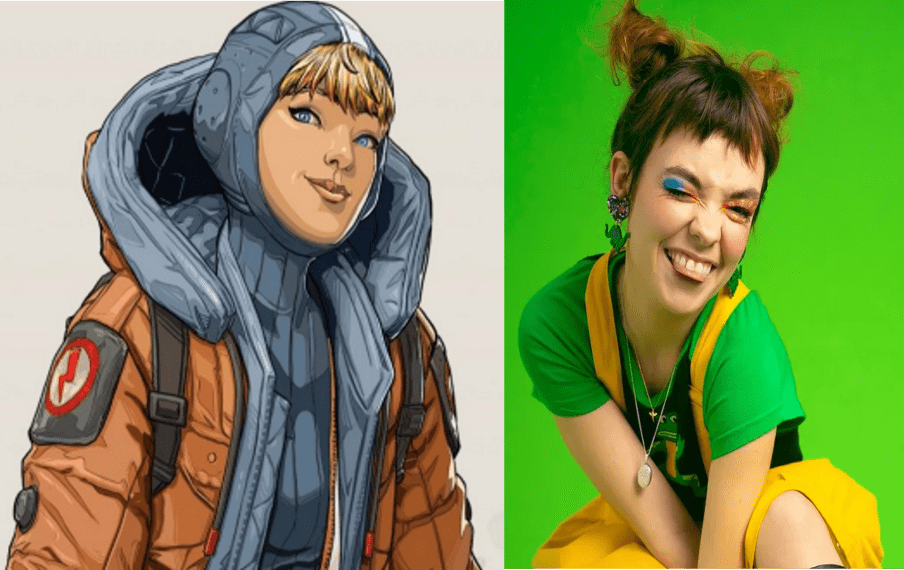
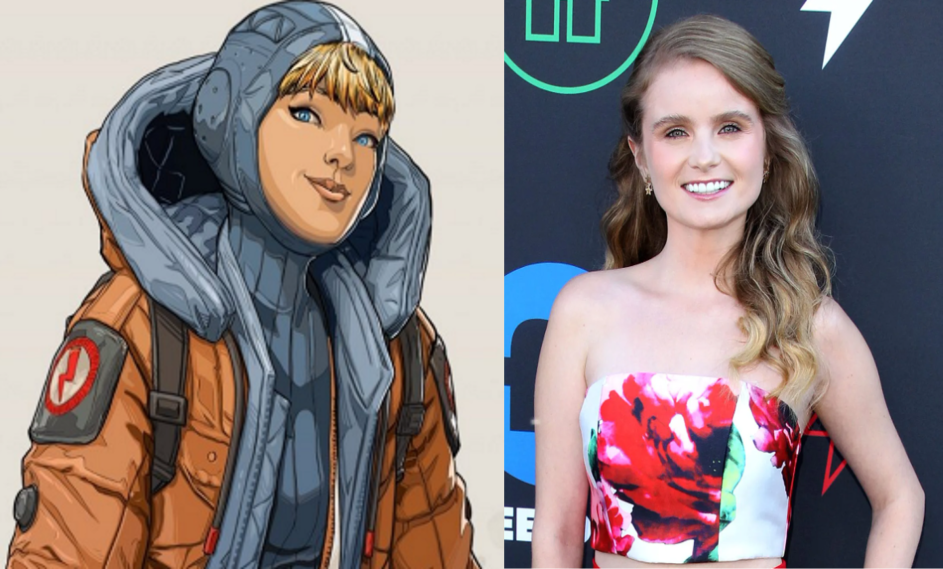
Wattson: Chloe Hayden
Chloe Hayden made as splash as Quinni in Heartbreak High. The role marked one of the few times in Australian TV that an autistic actor portrayed an autistic character. And Hayden was brilliant in that role. She’s uniquely qualified to play the resident autistic Legend Wattson in Apex Legends. I can see her giving extra weight to lines like “Electricity, I get. People, I don’t” and laugh at her own bad dad jokes. Hayden definitely has the goofiness, earnestness, and playfulness to pull off Natalie Paquette. Trust me. Before Rampart was released, I was a Wattson main. Hayden is my top choice for the character. It’d be great to see autistic representation in Apex Legends.
Honorable Mention: Kauda Pharaon.
Pharaon is a relative unknown in Hollywood. She’s starred in the award-winning horror short Delirium Fantasy and has predominantly featured in numerous French films like Pour la France. But Pharaon’s energy on her YouTube vlog, KaudaTV, convinced me she’d be make a good Natalie Paquette (Wattson) if Apex Legends wanted to stay true to Natalie’s French roots.
Crypto: Seo Kang-Joon
While Crypto’s voice actor, Johnny Young, could portray Crypto in the show/film, we may need to go younger with Crypto’s live-action portrayal, since Wattson crushes on him. Note: I would be okay with Johnny Young; I love his portrayal as Crypto, even though I can’t play Crypto for crap on Apex Legends. Seo Kang-Joon has starred in numerous K-Dramas: Cheese in the Trap, Are You Human?, Watcher, When the Weather is Fine, and Grid. Kang-Joon’s training from Dong Seoul University (a Julliard of Korea) will serve him well, while portraying the nuanced character, Tae Joon Park (Crypto). Second Note: I love Crypto as a character, and Seo Kang-Joon would nail this character.
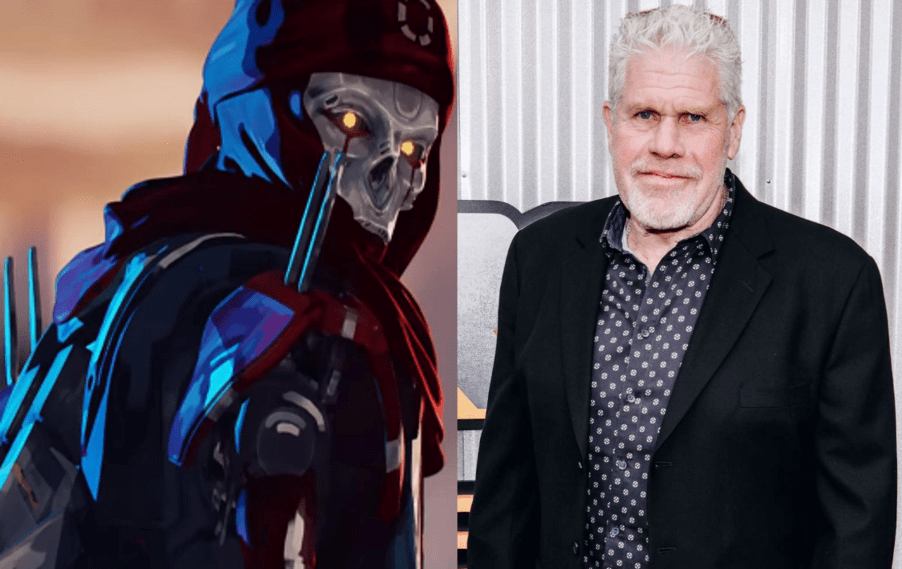
Revenant: Alan Tudyk
Alan Tudyk has the look to pull off Revenant before he turns into a simulacrum. The picture above is a younger Tudyk, but nothing says you can’t have an older Kaleb Cross (Revenant) before he gets transformed into Revenant. Revenant is supposed to be a seasoned assassin. It may make more sense for Cross to be an older, paid assassin. I also wanted to play into the meme where Alan Tudyk portrays a lot of androids and robots. Tudyk needs to add a simulacrum to his repertoire.
But in case Tudyk can’t do the voice (which is unlikely), we can always go with Revenant’s voice actor, Darin De Paul. I love De Paul’s rendition of the character. He’s so good. I love him in so many other video game voice acting roles like Overwatch’s Reinhardt and Sony Spider-Man’s J. Jonah Jameson. You know what? I may change my answer to Tudyk portraying Revenant before he gets turned into a simulacrum, and then have De Paul voice the simulacrum.
That’s my cast for Apex Legends. Let’s see who Skye picks for these roles through Hollywood history.
Skye’s Picks
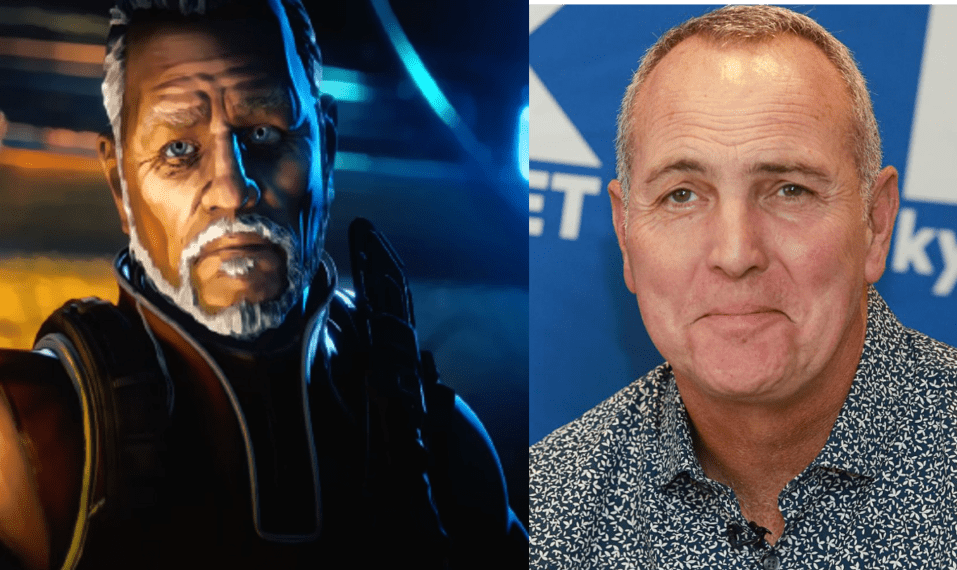
Blisk: Arnold Vosloo
Respawn has a tradition of creating diverse characters and casting diverse actors to play them. I took my picks for this list seriously. When searching for an ideal actor for the role of Blisk, I suddenly remembered Arnold Vosloo. Most folks are familiar with his role as Imhotep in the 1999 Mummy reboot and subsequent sequel, The Mummy Returns, which is also where I know him. Given his experience playing an evil role like that, it’s not hard for me to imagine him as Blisk. Also, it’s been a minute since I’ve seen Vosloo in any major roles, so it would be great to see him make a big comeback.
Wraith: Aubrey Plaza
When thinking of an actor to play Wraith, I couldn’t get Aubrey Plaza out of my head. While she’s well-known for her comedic roles, I chose her for personality. She has a way of playing deadpan and oddball characters that I think would match Wraith, and it would be great to see her express her acting prowess in a more serious role. Ever since the spotlight faded on her popularity from Parks and Recreation, I’ve been wanting to see her in more mainstream roles as well. Also, just look at the comparison. I shouldn’t have to explain myself on that one.
Bloodhound: Emma D’Arcy
I’m not dead set on this pick. While I think Emma D’Arcy would be a good fit for the Bloodhound role, they aren’t the only ones who could portray Bloodhound. Kyra mentioned Emma Corrin for their Bloodhound pick, and I find them to be an equally valid choice. I decided to mention Emma D’Arcy to highlight another non-binary actor. We have a criminally small amount of them, and they need to get the recognition they deserve. It also brings non-binary identities to the forefront as Bloodhound’s gender plays a large part in shaping their background and is explicitly addressed in their story. Whether it’s Emma D’Arcy or Emma Corrin, I’d enjoy watching their depiction of Bloodhound.
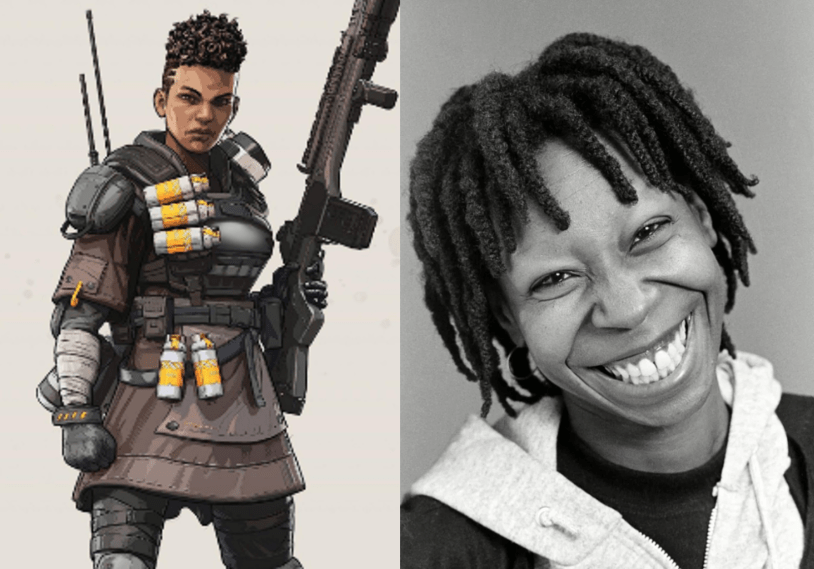
Bangalore: Whoopi Goldberg (Young)
This is where things get interesting. It’s been a long time since Whoopi Goldberg has received a major role in a mainstream project, and she’d be great as Bangalore. She’d have to be younger but still. We’ve all gotten to know Whoopi as a prominent couch speaker on The View over the years, but people forget how versatile and dedicated an actress she is. With decades of experience across a wide variety of roles and even training under world-renowned actress Uta Hagen, her talent as an actor cannot be underestimated. I’m gushing, but I don’t get to gush about Whoopi Goldberg often. Let me have this, okay.
Lifeline: Naomie Harris
If you’re familiar with Naomie Harris, my casting her as Lifeline shouldn’t come as a surprise. She’s another highly skilled actress with a resume a mile long. What I like most about Lifeline is her upbeat and playful demeanor, which is a role Harris doesn’t often get to play. I’ve been picking a lot of actors who have fallen out of the public eye in recent years. Harris is certainly one of them and one I’d love to see reenter mainstream again. What better way to do it than with one of Apex’s most likable characters? She’s got the attitude, she’s got the look, she’s got the experience. What more can I say?
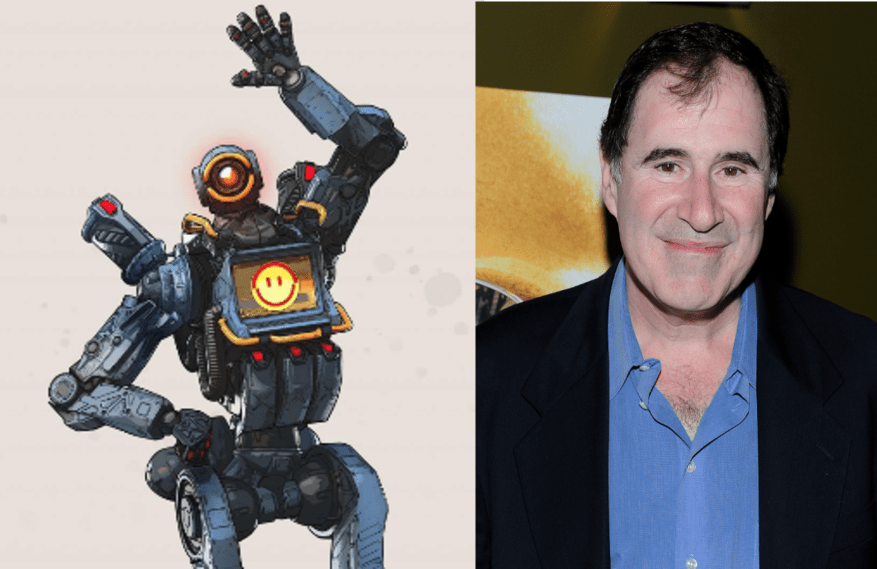
Pathfinder: Richard Kind
Despite the fact Richard Kind isn’t the actor most folks would expect for a role like Pathfinder, I couldn’t help but imagine him in the role. Why is that? Well, most people recognize Richard Kind by his distinct voice (me included), and that voice is often associated with positivity and, dare I say, kindness. That is undeniably Pathfinder. However, I totally understand someone who may be distracted by Kind’s voice in the role. If you’re on the fence about my choice, I have an exercise for you. Read this in Kind’s voice: “Who’s ready to fly on a zipline? I am!” If that doesn’t convince you, nothing will.
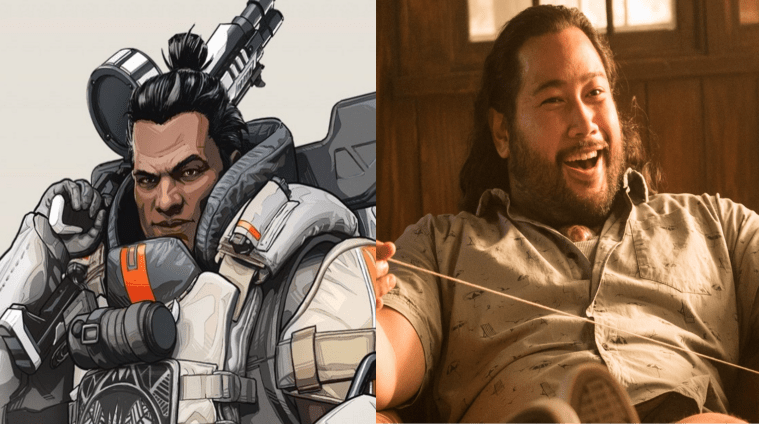
Gibraltar: Cooper Andrews
Yeah, you nailed this one, Kyra. While I tried to find another actor with Pacific Islander ancestry to offset Kyra’s choice, I couldn’t get Cooper Andrews’ smile out of my head. Be honest, that smile is trademark Gibraltar. Then, the more I thought about it, the more it made sense. He’s also got the look and the feel down to a T. If Cooper Andrews plays Gibraltar, he wouldn’t just play him, he’d be him. You got it, bruddah!
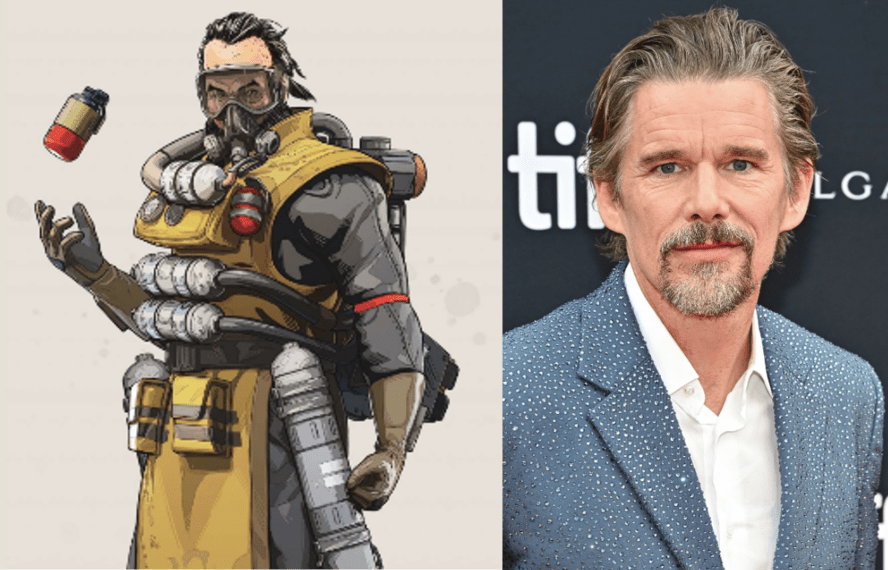
Caustic: Ethan Hawke
After seeing Ethan Hawke’s most recent roles, I felt like him as Caustic might make too much sense. If you haven’t been to the movie theatre in recent years, you may not have noticed that Ethan Hawke has been taking on more villainous roles. Most notable is his role as The Grabber in the Black Phone franchise. While I had some outlying issues with those films, Hawke’s performance was easily one of my favorite parts. Given that, it wouldn’t be too big a stretch to see him as Caustic in the Apex universe. At this point, just give him the goggles and gas canisters, and he’ll pull it off no problem.
Mirage: Andy Samberg
Another great pick from Kyra that I couldn’t pass up. Again, I really tried to find someone else who could realistically fill the role of Mirage, but Andy Samberg just fits too well. There honestly isn’t much to say about it that Kyra hasn’t already said, so I won’t go into too much detail. Either way, I can easily see Samberg saying, “You got bamboozled!”
Octane: Diego Amozurrutia
Octane was one of my favorite roles to cast. I ended up combing through a lot of well-established telenovela actors who could potentially fill Octane’s robotic legs when I came across Diego Amozurrutia. Given Amozurrutia’s experience across several telenovelas starting in the late 2000s, he’s certainly been around the block a few times. Even though his primary acting experience is in dramatic roles, it would be nice to see him take on the role of a reckless adrenaline junkie to show off his versatility. I also knew I wanted to cast a prominent telenovela actor since it’s rare for popular Mexican entertainers crossover into mainstream American media. Since that’s something I’ve long been waiting for, I’d love to see Diego Amozurrutia’s interpretation of Octane.
Wattson: Kayla Cromer
Wattson is another character I had fun casting. A few years ago, I watched Everything’s Gonna Be Okay for the first time and thought it was good. My favorite thing about the show was easily the actors and their on-screen charisma. Ever since then, I’ve been wanting to see them have a breakout mainstream role, and Wattson seems like a great fit for Kayla Cromer. One of the biggest achievements of Everything’s Gonna Be Okay was the overwhelming number of cast and crew who were on the spectrum. Cromer is among them. Due to this and her previous acting experience, I have faith that Cromer would be able to create a convincing Wattson. She’ll just need some dialect training.
Crypto: Choi Woo-sik
Since I just mentioned my feelings surrounding the actors from Everything’s Gonna Be Okay, it’s worth mentioning that I had similar feelings about the actors from Parasite. Ever since I watched that film, I was dying to see more of those actors in other roles. Among the cast of Parasite, Choi Woo-sik, who portrayed the lower-class family’s son/brother Ki Woo, would be the best fit for Crypto. Considering he and the rest of the cast have already been recognized by the American Academy Awards, it shouldn’t be that difficult to get him connected with Hollywood. To that same end, I’d also like to acknowledge Kyra’s pick. Between the two actors, both would make an interesting Crypto.
Revenant: Ron Perlman
To be real, I’ve been meaning to cast Ron Perlman in one of these for a while. Lucky for me, I finally found a great role for him. If you’re familiar with Perlman’s filmography, I shouldn’t have to explain myself. Perlman has an identifiable deep voice, which is already a great fit for Revenant, but he’s also had many roles as quiet badass types. Sure, this is probably a typecast, but you can’t say he doesn’t play this type well. Due to his increasing age, you would only need him to provide the voice of Revenant. Thanks, Kyra, for mentioning Alan Tudyk. I believe Tudyk could also make a good Revenant, but he’d be especially good at providing Revenant’s physicality and his old human form during flashbacks.
Hey, hey! Kyra Kyle here again. Those were Skye’s and my picks to portray a live-action Apex Legends movie or show. Who would you cast? Let us know in the comments. If you made it this far, you’re awesome. We all know it. Thank you for reading, and wherever you are, I hope you’re having a great day.
Happy Valentine’s Day, Geekly Gang! Love is in the air. You can find it, even in video games, and that’s what we’ll be talking about in today’s post of the Top 5 Video Game Couples. Like the real world, video game couples take all shapes and sizes. Despite its short existence as an art form, video games have plenty of great video game couples. We’re sure to leave a few dozen off this list. It’s time to look at the video game couples that get us twitterpated.
5) Geralt of Rivia and Yennefer of Vengerberg (The Witcher 3: Wild Hunt)
Geralt has had plenty of romantic partners in The Witcher series, but most fans would agree his one true love is Yennefer. She’s one of The Witcher 3: Wild Hunt’s main characters, and if gamers make the right choices, Geralt can peacefully retire with the love of his life, Yennefer.
Yennefer and Geralt have a chaotic relationship, complicated by political intrigue and Ciri influence on the couple. Geralt isn’t the best at showing his emotions, but Yennefer is the only one who understands the Witcher. Geralt and Yennefer are one of those perfectly imperfect couples. They may be the most relatable couple of this list.
4) Chloe and Rachel (Life is Strange)
The original Life is Strange hints at Chloe Price and Rachel Amber’s relationship. You know, before Rachel disappeared. During the events of Life is Strange, Rachel’s disappearance shakes Chloe to her core. This alone doesn’t make Chloe and Rachel worthy of this list. Fortunately, the spin-off Life is Strange: Before the Storm explores their relationship, and we see why Chloe is heartbroken.
At first, we thought the pair shared a strong friendship, but Before the Storm has Chloe calling Rachel “my angel.” Their love goes deeper than any friendship. And Before the Storm’s clarification shatters any doubt of the two’s romance.
3) Cody and May (It Takes Two)
Okay. I may have been wrong about Geralt and Yennefer being the most relatable couple on this list. Cody and May from It Takes Two may take that award. It Takes Two’s story centers around the realistic relationship between the two, as they try to navigate their messy divorce and alleviate its effects on their daughter, Rose.
Players control two toy versions of the characters as they explore a bizarre version of their home. Get ready to laugh and cry as you help Cody and Max repair their relationship.
2) Mario and Princess Peach (Super Mario Series)
You probably clicked on this post expecting to see Mario and Princess Peach. We didn’t want to disappoint you. Mario and Princess Peach is one of the most well-known and celebrated relationships in video game history. They’ve overcome obstacles since the early Eighties.
Princess Peach has stepped out of the shadow of the damsel in distress in early Super Mario games. As early as Super Mario Bros. 2, she’s taken adventuring and heroism into her own hands. She’s the princess of the Mushroom Kingdom. You can’t keep her down. This pair should see plenty of future titles and spin-offs as they battle all of the Mushroom Kingdom’s foes. But Mario and Princess Peach just miss out on our top spot.
1) Link and Zelda (The Legend of Zelda Series)
Yep. We went double Nintendo properties for the top of this list. Link and Zelda may be the second couple you expected to see on this list when you clicked on the link. If you guessed these two, you’re two for two. Even though Link and Zelda are a classic video game romance, there were doubts the two were a couple until Skyward Sword put any doubts to rest. Skyward Sword showed the couple soar through the clouds, and solidified Zelda as Link’s equal.
Zelda and Link’s relationship grew with Breath of the Wild and its sequel Tears of the Kingdom. This couple is there for each other every step of the way. And we love them for it. Here’s to another great four plus decades of romance and adventure.
These five video game couples are by no means the only ones we could mention. Plenty just missed the cut. Who would you add to this list? Let us know in the comments. Thank you for reading, and wherever you are, I hope you’re having a great day.
Happy Monday, Geekly Gang! Kyra Kyle here with Geekly’s first-ever video game history post, where we discuss a video game company’s history. Today’s video game publisher/developer is the indie darling, inXile Entertainment. It took me a while to realize that inXile is pronounced “In Exile.” That phrase will factor into the game’s history, and wow, do founder Brian Fargo and inXile Entertainment have a long and bumpy history, complete with plenty of stellar games. Before we get to the formation of inXile, we must first talk about Brian Fargo’s first video game publishing company, Interplay.
Brian Fargo Pre-inXile Entertainment
Brian Fargo began developing video games while he was still in high school. Per a 2017 interview with Stay Awhile and Listen, Fargo’s first semi-widely distributed game (he had an earlier game that sold five copies) was Demon’s Forge. The title Demon’s Forge will return, but not until much later. A handful of years later, Brian Fargo would co-found Interplay Entertainment in 1983 with fellow developers Jay Patel, Troy Worrell, and Rebecca Heineman. Fargo was 20 years old at the time.
In 2022, inXile Entertainment released a 20th Anniversary Documentary. I will draw from this documentary often, but since it was released by inXile Entertainment, it glosses over some details, so I’ll be providing some context from other sources. If you have a chance, and hopefully after reading this post (wink), you should watch inXile Entertainment’s 20th Anniversary Documentary. It runs about 20 minutes. According to Fargo in the documentary, (he was so young), his vice president had to buy him beer if he wanted it. Fargo tries his best to hide a smirk. I, Kyra Kyle, have never participated in underage drinking. (Wink.)
Brian Fargo’s Time at Interplay
We won’t spend too much time on Interplay’s history — that could be its own video game history post — but we will need to cover Brian Fargo’s time with Interplay Entertainment, as it provides context for inXile Entertainment. Fargo hit the ground running with a trio of hits between 1985 and 1988. Fargo led the Interplay team with the original The Bard’s Tale (1985), Battle Chess (1988), and the RPG classic Wasteland (1988), which would later inspire the Fallout series.
When the Eighties transitioned into the Nineties, Fargo ceased to develop games directly with Interplay. The last game I could find Fargo co-developed for Interplay Productions was 1991’s Track Meet for the Game Boy. Instead of designing games, Fargo served as Interplay’s CEO. The business may have started small, but with Interplay amassing numerous intellectual properties like Dungeons & Dragons (leading to the Baldur’s Gate series), Wasteland undergoing a title change to Fallout (and thriving as Fallout), Earthworm Jim, and Alone in the Dark, the company became a major force in video games. At this time, Interplay was easily one of the best video game developers.
Fargo has a knack for spotting video game development talent. During the early 1990s, Fargo advised Silicon & Synapse. In exchange for 10% equity in the company, Fargo and Interplay contracted Silicon & Synapse to port games developed by Interplay into other consoles, which gave Silicon & Synapse the capital it needed to transition into making original games (and eventually becoming Blizzard Entertainment).
Despite a great track record and hits like 1997’s Fallout, 1998’s Fallout 2, and 1998’s Baldur’s Gate, Interplay experienced financial difficulties. To avoid bankruptcy, Interplay went public on the NASDAQ. According to a Bit Gamer article, Brian Fargo admitted that further losses (because of increased competition, an underwhelming sports division, and a lack of console titles) forced Interplay to look to a third party. That third party would be French software developer Titus Interactive S.A.. Per a Los Angeles Times article, Titus bought 6 million of Interplay shares for $25 million, giving Titus a controlling stake in Interplay. Fargo and Titus’s relationship was strained.
Fargo would claim (in a Gamespot interview) that he and Titus have a “very different ideology of management that was not compatible.” Fargo always loved video games, and Interplay grew into a huge company of over 500 people with offices all around the world. He had to deal with shareholders. He grew distant from his first love, video games. Fargo no longer got to make games; he didn’t want to be a CEO. Ripples of this pattern will emerge in the future.
So, Fargo stepped down as Interplay’s CEO. He was a CEO without a company for several months, when he’d attend an industry convention.
Founding inXile
Fargo recounts his experience at E3 in an interview found on RPG Codex: Right after Interplay, I was going to E3 in May. I needed a quick name to get a badge. I chose the “Workshop,” and as a joke, I gave my title “CEO in exile.” It got such a funny response that we figured there was something to it.
“InExile” was already taken, so “inXile” was chosen as the newly formed company’s name. Fargo’s experience with finding talent during his days at Interplay served him well as he recruited the best team for inXile. According to the YT inXile Documentary, Fargo called Matt Findley (New Orleans, Louisiana Chief) to join the newly minted inXile. Unlike what Interplay had become, inXile would work on only one game. (Vice President of People) Elene Campbell received a phone call from Fargo to go to lunch, and she quickly joined. Max Kaufman (inXile’s former art director) also joined.
My favorite anecdote during these early days of inXile came from Elene Campbell. Campbell said, “inXile Entertainment’s office had a great location. We were right across the beach. We would purchase a surfboard for an employee if they wanted to surf.” Sounds like you couldn’t beat inXile’s location.
The Bard’s Tale (October 26, 2004)
The one video game inXile Entertainment chose to develop first just happened to be its first hit. 2004’s The Bard’s Tale couldn’t continue the story of the original trilogy because Interplay/Electronic Arts still owned the copyright. 2004’s The Bard’s Tale was neither a remake nor a sequel. It had to be something different, and it certainly was. According to Findley (in the inXile Documentary), we wanted to make some sort of cliché-busting, fourth-wall-breaking game. Former art director Kaufman added, We wanted The Bard’s Tale to be irreverent, looking back at the tropes of RPGs and making fun of them.
Fargo noted the difficulty of including comedy in video games. Humor is a subjective thing, Fargo said, but typically, people rate your game on certain criteria: graphics, gameplay, sounds, (control) responsiveness. When you add humor, you’ve added another category for people to criticize you for. You could hit on all the other categories, but someone could think the jokes are not funny. It’s very tricky doing humor.
Adding humor to The Bard’s Tale was risky, but the risk paid off. The Bard’s Tale became a classic because of its sarcastic humor. While the classic Bard’s Tale trilogy used a first-person view, 2004’s The Bard’s Tale had a 3D environment with the player watching in third-person. The player controlled “The Bard,” who never received a name. Dialogue followed a “snarky” or “nice” option system. While the player wouldn’t know exactly what The Bard would say, the player can set the tone for how the game’s world perceives The Bard.
The first dialogue decision is with a barmaid in The Drunken Rat. Being nice to her gives the barmaid the impression The Bard is a gentleman, and she leaves him alone, while being snarky results in the barmaid spending the night with The Bard. The Bard’s Tale gets into some adult themes. Nudge-nudge. Wink-wink.
inXile always intended The Bard’s Tale to be a comedy, but Findley shares (in the Documentary) the moment The Bard’s Tale became a “silly” comedy was when Art Director Maxx Kaufman turned in a drawing of a Bug Bear. Findley told Kaufman the bug bear looked like a guy wearing a terrible Bug Bear costume.
Kaufman admitted he rushed the Bug Bear character concept. He was doing a character concept a day, maybe even two a day. When he made the Bug Bear, he was being serious with the character. His intent was not to make a funny character, but that’s what ended up happening.
I have to agree with Findley. One of The Bard’s Tale’s most enduring legacies must be its use of music within the game. One of The Bard’s Tale’s biggest innovations was the original music that they wrote that had lyrics, Findley said (in the documentary). The songs weren’t just a soundtrack; they were being performed by characters in the game. This cornerstone survived all the way up to Wasteland 3 and The Bard’s Tale IV. inXile loves using original music to tell a story.
I always liked “The Blood of the Lamb” song that plays when dealing with a crazed cult in Wasteland 3. So creepy. And I appreciate inXile’s use of original music to tell a story. It also doesn’t hurt to have stellar voice actors for a video game. Tony Jay narrates The Bard’s Tale, while Cary Elwes earned a nomination for Outstanding Character Performance — Male from the Academy of Interactive Arts & Sciences.
With one hit under their belt, inXile looked poised for a long run of hits (much like Interplay a couple of decades prior), but inXile immediately hit a snag.
HEI$T
Heist (stylized as HEI$T) is a cancelled action-adventure video game developed by inXile for publisher Codemasters (known for the video game peripheral Game Genie). Set in 1969 San Francisco, Heist follows a group of criminals as they perform various thefts.
Heist features plenty of high-speed chases in what could’ve been an immersive open-world. In a Gamespy article, Lead Heist Designer Sean Patton, cites Need for Speed: Most Wanted and its virtual cops as one influence in the general flow of the getaway chase in Heist. The game sounded amazing. inXile sunk tens–if not hundreds–of thousands of dollars and countless design hours into making Heist the best they could, and then, Codemasters canceled the project.
“Heist is probably my favorite title I ever worked on that never made it to the end,” Findley said in the documentary. “We had an inspired concept of doing something that was supposed to feel like Quentin Tarantino. We had Bruce Campbell as the main character. Ed Asner, Rutger Hauer, Vinnie Jones, Christian Slater, and we had recorded the entire script from beginning to end before the project was shut down.”
Fargo added, “It (Heist) was the closest I’ve ever come to finishing a game–it was finished–and not coming out, but we just couldn’t. Unreal Engine, at the time, to do a true open world wasn’t working for us. Our publisher (Codemasters) really wanted a true open world, but we would have had to make it sort of modularized. Our publisher canceled it.”
There are conflicting reports as to why Heist was canceled. In an interview with Video Games 24-7 (VG247) about Wasteland 2, Fargo said, inXile had an agreement with Codemasters to create an open-world using Unreal Engine on the PS3–but the specs didn’t yet exist for the PS3. They (inXile) found a way to make Heist run great on PC and Xbox, but Codemasters wanted PS3. I gather that Heist worked on every system besides the PS3. Based on the wording, I’m unsure if Heist could’ve been an open-world on the other two systems (PC and Xbox) and needed to be a hub-world on PS3, or if Heist only worked as a hub-world on the other two systems and didn’t work at all on the PS3. Either way, Codemasters canceled Heist.
Heist was a massive blow. It certainly left a bad taste in Fargo’s mouth. He said in the documentary that he couldn’t wait to get back to making games he loves. He disliked making games other people wanted him to make. Well over a decade later, Heist still haunts inXile. They had created a great game in their minds, but their publisher wanted something different. And you don’t need to take my word for it. Heist gets a full segment dedicated to it in inXile’s 20th Anniversary Documentary. Fargo even lists various games, like Payday: Heist, that resemble what Heist attempted to do, but they didn’t have Bruce Campbell, Ed Asner, Rutger Hauer, and Christian Slater in their cast. Fargo insists Heist could’ve done well on the market.
Mobile and Web-Based Games
While one half of inXile developed games like The Bard’s Tale and Heist, the other half developed mobile and web-based games. This half of inXile yielded mixed results. In 2006, inXile acquired the rights to Line Rider, and later on, Fantastic Contraption. inXile ported these indie games to a wider market. They also created a series named Super Stacker. You can still play Super Stacker 2 for free as a web-based game.
Baby Pals Controversy
Fargo discusses inXile’s early days and why they chose to create two branches of the company. “We were trying to find a sustainable business model,” Fargo said (in the Documentary), “but the (video game) world was shifting underneath our feet. We just had to be plucky entrepreneurs and find something. We had the rights to Line Rider. Nintendogs had come out, and we said, let’s do cats (Purr Pals), and we sold three-quarters of a million copies. Dogs are done. What could we do next? People like babies.”
Enter Baby Pals. inXile had licensed the same sound library as the one Mattel was using for their upcoming dolls, so the company thought it was safe. But the next thing Fargo and company knew, inXile was in the news. If you listen carefully, one of the babies says, “Islam is the Light.”
During the documentary, Campbell says, “It was just a baby babbling. There were no hidden references, and it caused so much trouble.”
I like how Findley contextualized these small titles. “I have nothing but warm thoughts for Baby Pals, Purr Pals, Super Stacker, and Line Rider,” Findley said in the documentary. “All of those small and mobile titles we did during those periods…allowed us to do crazy things like Heist and the early stages of Hunted: Demon’s Forge.”
While I thought Findley had a slight smirk when he discussed inXile’s smaller titles during the 20th Anniversary Documentary, his inclusion of these smaller titles financing larger ones rings true.
Hunted: The Demon’s Forge
I promised the title of Fargo’s first semi-widely distributed game, Demon’s Forge, would return. With Heist in their rearview mirror, Hunted: The Demon’s Forge allowed inXile to return to their role-playing roots. But they added a cooperative gameplay twist. Hunted: The Demon’s Forge was an ambitious title. According to Findley in a Game Sauce article, Most co-op games are two guys with the same guns running through the world, so we really like the concept of teamwork…We’ve built these arenas with different heights and areas for players to really get out. They get to use their skills and still be able to help out their partners.
Based on Findley’s description, Hunted: The Demon’s Forge sounds something akin to an early hero shooter. The only other hero shooter available at this time would’ve been Team Fortress 2. But Hunted: Demon’s Forge only allowed couch cooperative play. With World of Warcraft going strong for seven years by 2011, and first-person shooters like Battlefield 3 (also released in 2011), and trying to capture the budding online cooperative wave, couch cooperative games were fading in popularity, and Hunted: Demon’s Forge underperformed.
Competition in the role-playing space was fierce during 2011. It didn’t help that many critics viewed Hunted: Demon’s Forge as a Gears of War clone. Hunted: Demon’s Forge may have fared better if it had been released in a different year. RPG juggernauts Mass Effect 2 and The Legend of Zelda: Skyward Sword were released the same year. Bethesda, Hunted: Demon’s Forge’s publisher, even released Skyrim that year. Yikes! Bethesda may not have given Hunted: Demon’s Forge much of a chance.
Choplifter HD
A little over seven months later, inXile released its 3D polygonal remake of the classic 1982 game Choplifter by Dan Gorlin. inXile even hired Gorlin as a design consultant for Choplifter HD. Despite Choplifter HD remaining true to the original, it was the second game in a row by inXile that received mixed reviews. Some critics appreciated how faithful the remake was to the original, while others criticized the game’s difficulty. Ryan Winterhalter of 1Up.com, compared Choplifter HD to that of a bullet hell shooter. I love Winterhalter’s title: Choplifter Appeals to Your Inner-Masochist. Yowza! That’s good copy.
For those keeping score, that’s a canceled game (Heist) that cost countless hours of development to make, a controversy (Baby Pals) that eventually led inXile to halt production on smaller games, and back-to-back near misses with Hunted: Demon’s Forge and Choplifter HD. inXile was at a crossroads.
A Comet Almost Hits the Earth
Fargo shared in the inXile Documentary, “I’ve had so many near-death events in this industry, where the comet almost hits the Earth. If Battle Chess wasn’t a hit…If Castles wasn’t a hit. I can go through ones where if that didn’t work, we’re out of business. Hunted didn’t work, so we had to scale back to a very small group of people.”
Up to this point, Brian Fargo had seen his share of misses and near-misses. inXile’s history began to mirror Interplay’s over a decade earlier. Interplay started as a focused team working on a couple of titles and then swelled to a company of 500 working on dozens of projects. Findley says (in the Documentary), “The years between The Bard’s Tale (2004) and Wasteland (2) was a roller coaster. We got smaller again, then we got bigger, and we got smaller. We went from being a focused team working on one title to 120 people working on four or five titles at once. We were all over the place.”
Interplay made itself a “public” company, entering NASDAQ. inXile would also go “public” but in a different manner. Only this version of “going public” involved inXile’s and Wasteland 2’s historic KickStarter campaign. Like Fargo said, “We threw it all in with our KickStarter and that changed everything.”
Wasteland 2’s KickStarter Campaign
“We were able to pitch the games we want to make,” Findley said (inXile Documentary), instead of pitching the game you know you can sell, which is a much more fun place to be.” This mindset changed everything for inXile. Heist and Hunted were financed by another company. Codemasters wanted a game in Heist inXile couldn’t deliver, while Bethesda released Hunted a few months before Skyrim. KickStarter showed inXile what their fans wanted to play.
For years, gamers asked for a follow-up to 1988’s Wasteland, but the rights to Wasteland proved tricky. Before inXile could begin work on Wasteland 2, they needed to obtain the rights to Wasteland from Electronic Arts. The original publisher, EA, had let the rights lapse. The last time Electronic Arts had worked on a project connected with Wasteland was Fountain of Dreams. “Originally, Interplay (and Brian Fargo) were supposed to be involved with Fountain of Dreams (1990), but EA took control of the project and produced it themselves,” said Fargo in a Wired interview. “By 2003, Electronic Arts dropped all claims that Fountain of Dreams had any connection to Wasteland.” This opened the legal door for Wasteland 2 to become a reality.
Wasteland 2 was a sequel to 1988’s Wasteland. To be fair, Wasteland 2 is a fusion of a sequel and an update to the original. The stories of both games share many similarities. Wasteland 2 is a joy to play. I highly recommend playing it. Wasteland 2 delivers on Fargo’s idea of a “hardcore role-playing game.” There is no one way to play through Wasteland 2. Your choices affect the world.
There are moments where it’s obvious how your choice will affect the world, especially the game’s first choice of saving Highpool (a community based around a local dam that provides water to the region) or the Ag Center (which grows genetically modified vegetables to feed the locals). You can’t respond to both distress signals. Other moments are more subtle in how your choices will affect the world.
But why KickStarter? inXile had never used a crowd-sourced platform before, in fact, Fargo had never heard of KickStarter. Fargo shares the moment he decided to Kickstart Wasteland 2 (in the inXile Documentary), “Tim Schaefer launches his KickStarter (Double Fine Adventures). The first day, it makes half a million dollars. I was like, this is it. I called Matt the next day, drop everything. This is what we’re gonna do. We went from what’s KickStarter? to launching within 30 days.”
Wasteland 2’s KickStarter did not end up beating Double Fine Adventures (per an inXile community post), but it was, at the time, the second-largest video game KickStarter campaign, closing in at just over $2.9 million. Add in PayPal donations of over $100,000, and Wasteland 2’s total funds equaled over $3 million.
To this day, Wasteland 2’s KickStarter campaign sports the third-highest total on KickStarter. I’ll admit, KickStarter is better known for board games than video games, but this fact may make Wasteland 2’s success on KickStarter all the more impressive. Wasteland 2’s success goes a long way to show how much the video game community appreciates inXile, and more specifically, Brian Fargo’s work.
Torment, The Mage’s Tale, and The Bard’s Tale IV
Torment: Tide of Numenara was released in 2017 after another successful KickStarter campaign. inXile learned plenty of lessons from their first crowdfunding campaign. Torment: Tides of Numenara was written by Monte Cook, who also wrote the rules to the tabletop role-playing game Numenara where Torment is set, but Torment: Tides of Numenara is also a spiritual successor of a former Interplay game, Planescape: Torment. Torment: Tides of Numenara received favorable reviews, continuing inXile’s hot streak. It also honors inXile’s past.
We won’t go into too much detail with the remaining titles in this segment. The Mage’s Tale was developed in parallel with The Bard’s Tale IV. The two projects share some assets. Both games received average or mixed reviews. Regardless of reviews, both games had ambition. While The Mage’s Tale brought the world of The Bard’s Tale to the new medium of virtual reality, The Bard’s Tale IV: Barrows Deep attempted to fuse elements of the original 1980s Bard’s Tale trilogy with the 2004 spin-off The Bard’s Tale.
After a shaky decade, inXile had found a sustainable business model. But nothing stays the same for long.
Joining Xbox
In November 2018, Microsoft Studios acquired inXile Entertainment and Obsidian Entertainment on the same day. Eurogamer made the announcement, stating, “The two independent studios who had fought against each other would now be under the Xbox umbrella. This announcement led to Fargo staying as head of inXile, because in March 2017 (also on Eurogamer), Fargo had announced his plans to retire from inXile following the release of Wasteland 3.
Fargo has said in the past that he doesn’t enjoy being a CEO. He may have wanted to leave on a high note (with Wasteland 3). Microsoft Studios’ absorption of inXile as a subsidiary allows Fargo to stick to his passion, developing video games. Microsoft’s near limitless resources mean that inXile won’t need to rely on crowdsourcing to make the games it wants to make.
Clockwork Revolution
This video game history post is one of the final pieces I wrote in preparation for my end-of-year novel writing/editing break, so I’m writing this post in 2025. Clockwork Revolution is slated for a 2026 release. Who knows? Clockwork Revolution may already be released by the time you’re reading this. I am stoked for this title. What I’ve seen looks amazing, and since Clockwork Revolution is categorized as an action-RPG, I’m anticipating it having gameplay similar to The Bard’s Tale (rather than Wasteland). Regardless, I have Clockwork Revolution wishlisted and will be playing it soon after it releases.
inXile and Brian Fargo had a crazy ride, filled with hits, misses, and near-misses. I’m glad Fargo and his team had those Wasteland 2 KickStarter moments. In the inXile Documentary, Fargo said, “They (fans) valued the work we’ve done before. It felt good. I can say that when we hit our funding goal, it was one of the highlights of my whole career.”
Thank you for reading. Let us know what other video game companies you want us to write a history for, and wherever you are, I hope you’re having a great day.
Hey, hey, Geekly Gang! I haven’t done a free-to-play video game review in a handful of months and figured I’d give the treatment to a game I played a lot of this past summer, Clicker Heroes. Yes. Clicker Heroes has been out for over a decade, but it’s still available on multiple platforms: PC, mobile, PlayStation 4, and Xbox One. Clicker Heroes started as a Flash game, so this free-to-play video game has been around for some time. But just because a game is “free-to-play,” does that mean that it’s free-to-play friendly? Let’s subject Clicker Heroes to our review criteria.
Mechanisms: 2/10
Clicker Heroes doesn’t cover new ground, so its mechanisms score suffers as a result. Don’t get me wrong, I like idle games. I played the heck out of AdVenture Capitalist. I did the same with Clicker Heroes. I sunk hundreds of hours into this game, but it doesn’t do anything more than click on heroes, like the game’s name suggests, allow you to upgrade the heroes, and then face the next goofy-looking boss monster.
I do like how you can choose to upgrade your heroes by factors of 1, 10, 25, and 100 levels each time. This makes leveling up lesser heroes like Cid, the Helpful Adventurer (your first Hero), a breeze. Goldfish and Bees will flash on the screen with button prompts, but this does little to shake up the stale gameplay.
Above Image from GameDesigning.Org
Gameplay Loop: 2/10
I know I just said I sunk hundreds of hours into Clicker Heroes, but most of that time I spent AFK (away from keyboard), and that’s by design. Clicker Heroes is one of those games you log in once, maybe twice, a day, check on your heroes, and put the game back to sleep.
You’re encouraged to “ascend” your world, which erases much of your progress, and then you must climb back to where you just were. This is what keeps Clicker Heroes’ gameplay loop score from reaching even lower, because Clicker Heroes’ most engaging gameplay is at the beginning. Waiting for your power-ups to recharge or your characters to defeat enough monsters to upgrade your heroes becomes tedious.
After some time, you can use hero souls (from ascending) and purchase Ancients that can help you progress faster in the game, but once you reach Level 300, you’re given the choice to “transcend” your world. This is another layer of ascending that erases your gilded heroes (upgraded heroes through relics) and your Ancients. So, after “ascending,” you go all the way back to the game’s tedious beginnings.
But you do obtain “Outsiders,” which are supposed to be stronger Ancients, but it takes a long time to accrue enough ancient souls, what you get for “transcending,” before you begin to see a tangible difference. Plenty of websites offer ideas on how to speed this process, but I don’t imagine too many players will sink enough time into learning Clicker Heroes’ math to take full advantage. Clicker Heroes becomes a slog.
Respecting Time: 1/10
Clicker Heroes is an idle game, so it’s supposed to be more of a time waster, and it does indeed do that. I can forget Clicker Heroes exists for several days and return to my heroes. But Clicker Heroes makes upgrading your world so difficult that it goads gamers into either spending hours of research to get the perfect set-up or spending money to make the hurting stop. Is the drop of juice you get worth the tens of billions of squeezes? I don’t think so.
True Cost: 3/10
While Clicker Heroes offers skins for auto-clickers (Why would anyone want that?, but okay), it gains most of its money through the purchase of rubies. Fortunately, players can earn rubies by sending mercenaries on missions, opening relics, and clicking on goldfish. But I still struggled with how to grade Clicker Heroes’ “True Cost” or its “free-to-play friendliness,” because I can see players getting caught in a trap. Heck, I got baited into that same trap: reviving mercenaries.
Every once in a while, one of your mercenaries may perish while on a mission. You can spend rubies to revive a mercenary, but there’s some math (I haven’t done the research) where the mercenary’s level and/or the amount of time they have remaining for a mission dictates the number of rubies you’ll need to revive them. In my experience, reviving mercenaries takes a mountain of rubies. Players have little chance of having enough rubies to revive advanced mercenaries, like the “Demigod +13 level” mercenary pictured above with the low, low revival price of almost 5000 rubies. Looks like time to open another credit card and buy 5000 rubies for about $400.
With one exception, outside of reviving mercenaries, I see little use for spending rubies. That one exception is a one-time damage boost for your Heroes. This costs somewhere between 50-100 rubies, and once you buy it, you’ll have it for the duration of the game. 100 rubies or less is a steal.
But the remaining ruby purchases involve buying gilded Heroes, which will reset after you ascend, some version of speeding up Clicker Heroes’ glacial pace, or buying an auto-clicker. Eh. I almost gave Clicker Heroes an average score for “True Cost.” Reviving mercenaries aside, few of the other ruby purchases can be avoided.
User Interface: 2/10
Clicker Heroes doesn’t have that many menus and submenus, but what is there is confusing and difficult to navigate. I’ve played the game for months and still get turned around, not knowing where I can find certain information. I can’t imagine a noob looking at the screen above and being able to tell what does what. And several buttons have multiple functions, so it’s easy to misclick.
Graphics: 3/10
While simplistic, Clicker Heroes’ graphics are pleasant. I’m grading this one on a little bit of a curve, because Clicker Heroes is over ten years old. But the game hasn’t received too many graphic updates through the years, so I can’t get too crazy with this score.
Audio: 6/10
I had to average Clicker Heroes’ audio score. Clicker Heroes has epic music. It often gets stuck in my head. But the sound effects are as annoying and repetitive as clicking a button thirty-five times a second. Ow! My ears. Those moments when I don’t use an ability and listen to Clicker Heroes’ soundtrack make all the difference for this score.
Aggregated Score: 2.72
Clicker Heroes is an idle game, so don’t expect much. While it has charm, the graphics haven’t been upgraded too much to keep up with modern devices. Clicker Heroes can be a slog if you don’t research how to maximize your Heroes or spend money, and I worry about gamers who fall into the ruby pit of reviving their “good” mercenaries.
Before we begin, it’s impossible not to compare Persona 5: The Phantom X with Persona 5 and Persona 5: Royal.
Mechanisms: 6/10
Maybe I should have rated this lower since the mechanisms are similar to Persona 5 and Persona 5 Royal. Since the mechanisms in Persona 5: The Phantom X stay true to the original Persona 5, they’re baseline good. Enemies maintain their weaknesses, and the game is more upfront about what enemies are weak to, instead of players having to guess. The main character (Wonder) can alternate between up to three different personas for different enemies. This cuts the score a bit since the main character from Persona 5 (Joker) can alternate between up to ten different personas.
The baton pass in Persona 5: The Phantom X is a step up from Persona 5. When prompted to perform a baton pass (baton touch in this case), any character who has an element that any of the enemies they’re facing is weak to will have “Weak!” pop up next to their picture. The downside is that players still have to remember which enemies are weak to which elements, because a character possessing an enemy weakness may target one that’s already been incapacitated.
Gameplay Loop: 5/10
I’ll start with the positives. Players can go back to cleared Palaces. Unlike the original Persona 5, there’s no pressure to collect everything before the Palace collapses. Due to small map sections, the overworld is easy to navigate. Event-wise, story-related events (the Palaces from Persona 5) remain as permanent events. Smaller events with limited rewards get phased out after a certain period of time. This makes events easier to navigate for new players, and for players who’ve never played Persona 5.
Mementos differs slightly between Persona 5: The Phantom X and Persona 5 Royal (Persona 5 doesn’t include this). In Persona 5 Royal players collect stamps and flowers in Mementos to collect rewards. In Persona 5: The Phantom X, players collect train tickets to exchange for items and unlock different areas of Mementos.
I’m going to level with you, Geekly Gang. This is my biggest gripe with Persona 5: The Phantom X’s gameplay loop, and it’s not something I’ve ever complained about in a game this much. Persona 5: The Phantom X has fifteen different currencies. Fifteen. Why? I don’t even pay attention to most of them because many of them are zone-specific. The two important currencies are the Yen and Meta Jewels. Yen allows you to purchase anything in the overworld, and Meta Jewels lets you pull for characters and weapons. If you’re short on anything required for a specific task/character level, the game will prompt you to go collect it.
Respecting Time: 8/10
Persona 5: The Phantom X allows me to complete my dailies in under ten minutes. There’s no auto-clear for farming, but after a player completes a farming-related battle, they can spin a dodecahedron (a 12-sided die) up to six times and gain that much in resources. Seriously. I can complete my farming after two auto-battles.
Battle Pass: 4/10
The battle pass is nothing special. It’s similar to Genshin Impact, Honkai: Star Rail, and Wuthering Waves, but with an extra ten levels tacked onto it. I’m not sure why, since these ten levels offer the same rewards with every level.
True Cost: 7/10
Unfortunately, Persona 5: The Phantom X falls into the same weapon banner pattern as Genshin Impact. Players select two five star weapons they want to include on the banner in addition to the featured one, and there’s a 1/3 chance they’ll get that weapon after eighty pulls. However, pulling (opening packs to gain new units or weapons) is cheaper in Persona 5: The Phantom X than the other gachas we’ve covered. Weapons cost one-hundred Meta Jewels per pull, and characters cost 150 per pull.
Narrative: 2/10
The only upside to Persona 5: The Phantom X’s narrative is it’s easy-to-follow—especially if you’ve played Persona 5. It doesn’t build on Persona 5 or Persona 5 Royal, but reskins it with characters and Palaces that mirror the original. The group of teenagers fights to get their desire back, which doesn’t make much sense for rag-tag teenagers. They haven’t survived high school and have minimal life experience. This would hit harder if the characters were much older, by, like, thirty years.
The “time” in the game doesn’t flow well, either. In Persona 5, there were days of the week, holidays, and deadlines. Players had to plan their time well to get the most out of their time. In Persona 5: The Phantom X, “time” is only relevant for overworld tasks and when confidants are available to hang out. Instead of using specific dates, day progression is denoted by today, tomorrow, and yesterday.
Storytelling: 3/10
Since the story flows in Persona 5: The Phantom X, it gets a slightly higher rating than the narrative. However, it still gets a lower score than other gachas because it’s mimicking Persona 5 in every way. Come on, guys.
Also, how long are Wonder’s parents going to be on vacation? They’ve been on vacation since the game began. I think they went out to buy milk and cigarettes.
Credit: GameRant
Presentation; User Interface: 5/10
The UI has a similar setup to Honkai: Star Rail, which isn’t too difficult to navigate. There are too many subcategories. Why are there two different categories for shopping? Combining them would eliminate one of the subcategories.
Credit: Game8
Presentation; Graphics and Audio: 4/10
The audio quality is fine. It’s average. The graphics, on the other hand, are slightly better than the original Persona 5, which is almost a decade old at the time of writing. There shouldn’t be minuscule graphics differences between two games that are ten years apart.
Aggregated Score: 4.89
I tried to raise the score for Persona 5: The Phantom X as much as I could, but this is the best score I could give it. There are definitely some sections that could’ve earned harsher scores. If you’re looking for Persona 5,Persona 5: The Phantom X has that to a degree. I recommend playing Persona 5 (or any other Persona game, for that matter) over Persona 5: The Phantom X. Since it’s around the holidays at the time of writing, Persona 5 and Persona 5 Royal are likely on sale somewhere. If not, they’ll probably be on sale at the end of the year. Steam normally has a huge end-of-year sale. I’ve also seen PlayStation have sales on Persona 5 and Persona 5 Royal in the past.
What do you think, Geekly Gang? Was our final score too low, too high, or just right? Let us know in the comments. Thank you for reading and have an amazing rest of your day.