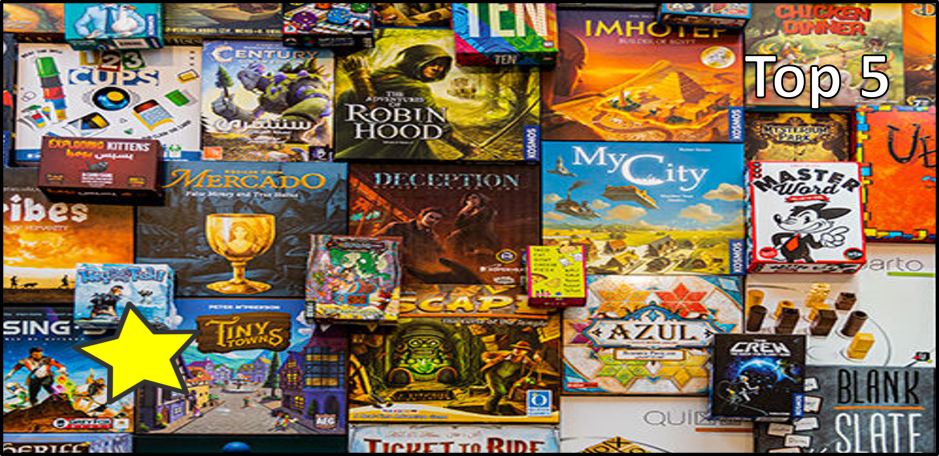
Happy Indigenous Peoples’ Day, Geekly Gang! We’re celebrating the day by discussing five board games designed/published by indigenous designers or publishers. Some of these games I’ve seen at my local game shop. I may have played a few of these. The rest I need to try. Regardless of which group these games belong to, I wanted to highlight games designed by indigenous board game designers. Here is Geekly’s list of five board games by indigenous designers.
Wolves (Coyote & Crow)
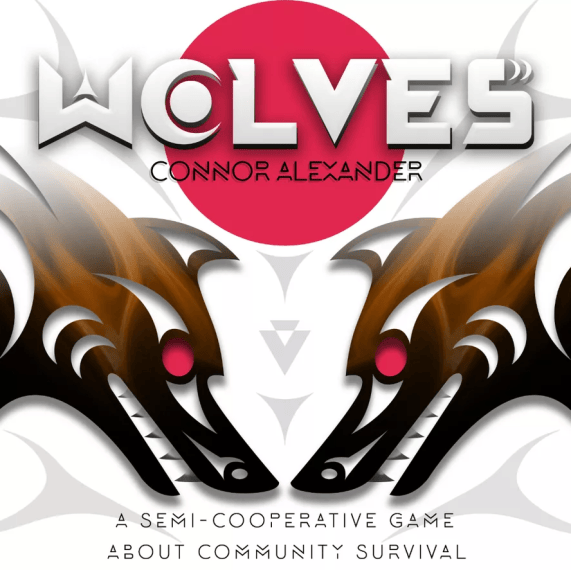
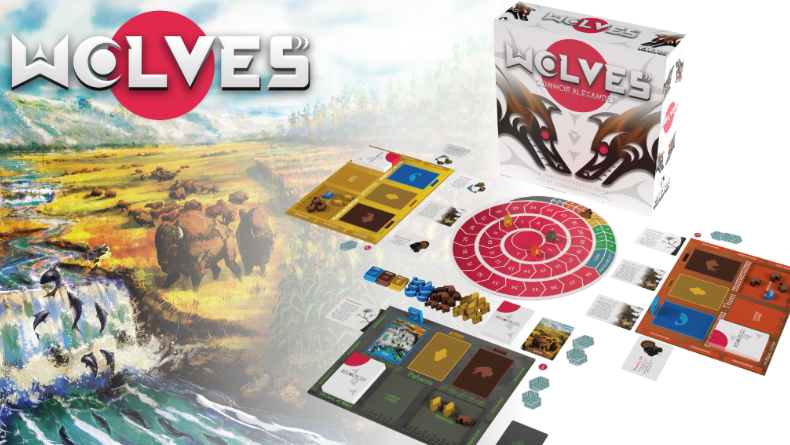
Wolves by Kenna Alexander was one of the first games that came to mind when I came up with this list. Publisher Coyote & Crow employs a variety of indigenous artists. All of Coyote & Crow’s releases show their native roots. Wolves is no exception.
Wolves features semi-cooperative play. Players must balance personal goals with the needs of all at the table. This is a trend in board games designed by indigenous designers. Culturally, indigenous people don’t tend to seek the all-out destruction of their neighbors. Semi-cooperative play is difficult to pull off well, but Wolves does a great job of walking the balance between players working toward personal and community goals. Each player takes on the role of a community leader. Resources are slim, and everyone must survive through a harsh winter. If any player fails to accommodate their community, everyone loses. I love the art, the design, and the concept.
You should give Wolves a play and keep publisher Coyote & Crow on your gaming radar if it isn’t already.
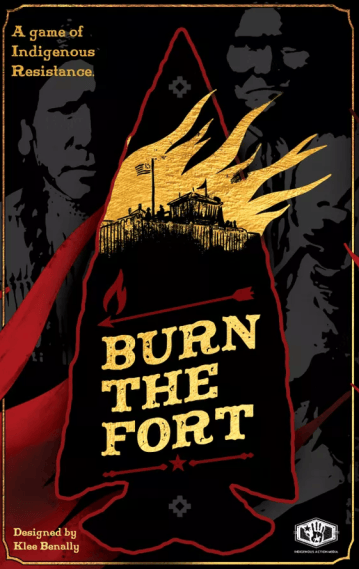
Burn the Fort (Indigenous Action)
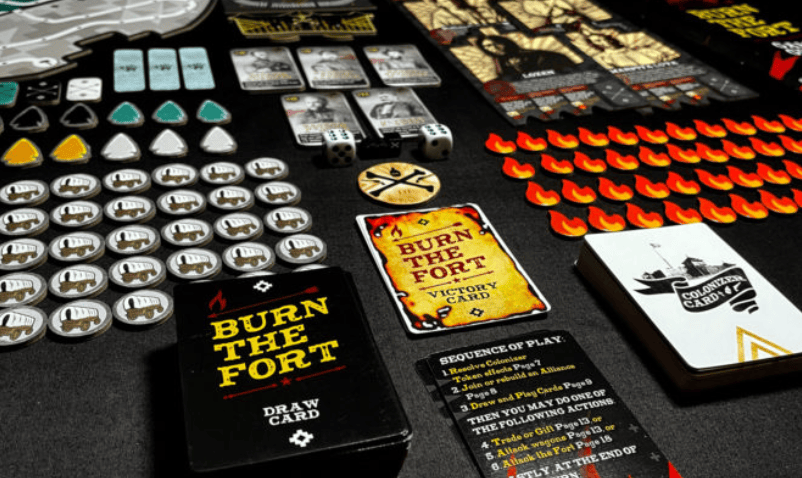
Anti-colonialism is another trend in indigenous board games. No game represents this trend more than Burn the Fort by Klee Benally. The game’s name says it all. Players take the role of a historic warrior fighting to stop the colonial invasion of their lands. Players gather resources, trade with other players, and acquire the means to burn the titular fort.
Like Wolves, Burn the Fort features semi-cooperative play. At the start of the game, everyone starts in an alliance, but alliances can be broken. Players can choose how much they want to contribute to stopping colonial forces, but with each wagon that reaches the fort, the train moves toward the Golden Spike that will ultimately spell doom for everyone. Burn the Fort also offers something of a history lesson. I like games that can make history fun to learn. A brief background accompanies each historic warrior. Excellent.
While other games by indigenous designers feature maintaining balance, Burn the Fort puts the ideas of exploitation and expansion front and center.
Winter Rabbit (Absurdist Productions)
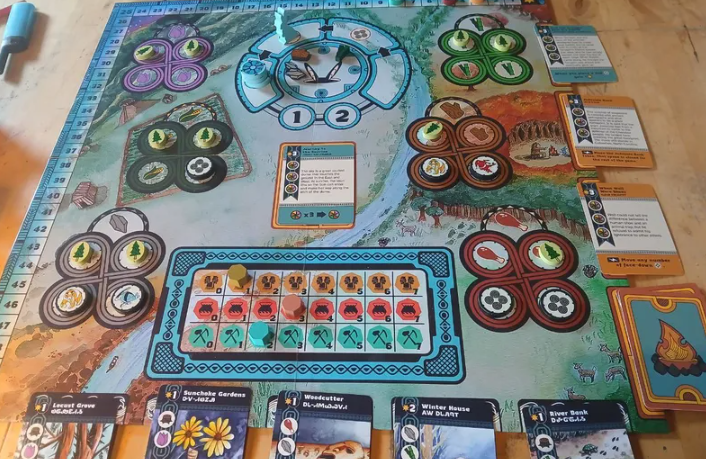
If you want a Native American board game steeped in folklore, look no further than Winter Rabbit by William Thompson. Set in the world of traditional Cherokee animal stories, Winter Rabbit has players take on the role of the animals. Ever the trickster, the Rabbit decides he doesn’t want to work. Instead, he confuses everyone else so he can take all the resources for himself.
Winter Rabbit features an interesting hidden worker placement mechanism. Villagers are drawn from a bag. The active player knows whose villager they have drawn and can choose where to place it; none of the other players knows this information. When resources are produced, everyone gets one, but those with villagers present gain additional resources. Rabbit villagers do not produce resources. When one of these appears, the resources are diverted to the Rabbit Burrow. I told you the Rabbit doesn’t want to work.
I’ll be honest. I borrowed a lot from the publisher’s description of Winter Rabbit. I wrote this post months before its release, and my copy is on its way. I can’t wait to play Winter Rabbit. It looks amazing.
Nawalli: The Aztec Card Game (Studio Tecuanis)
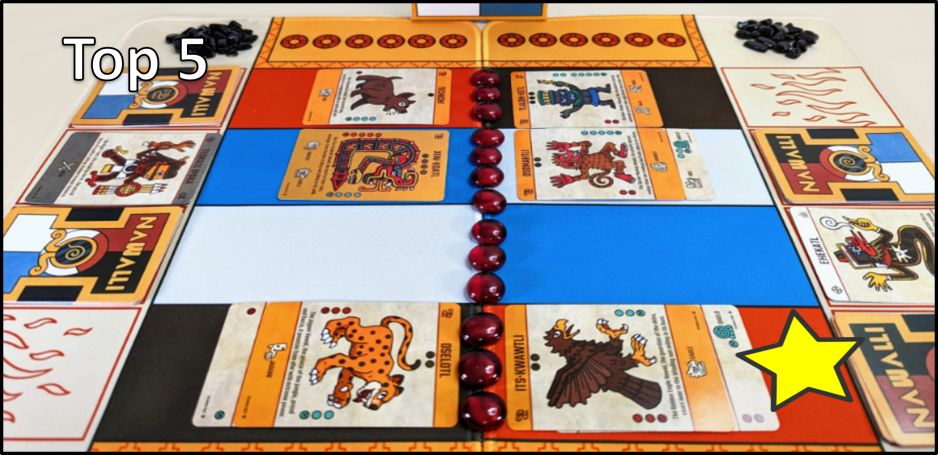
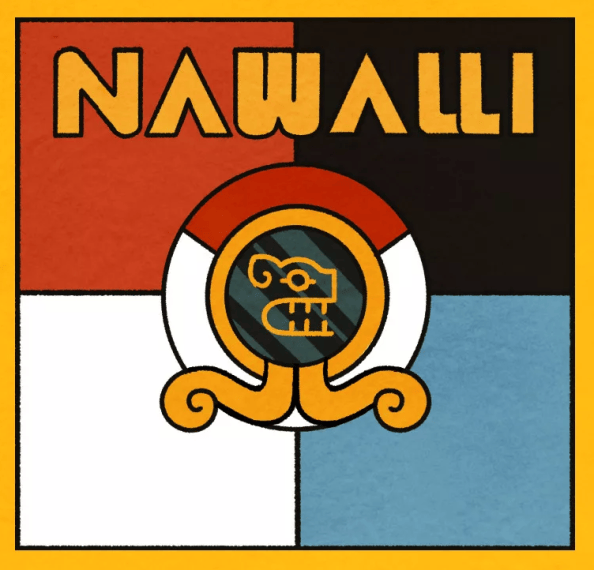
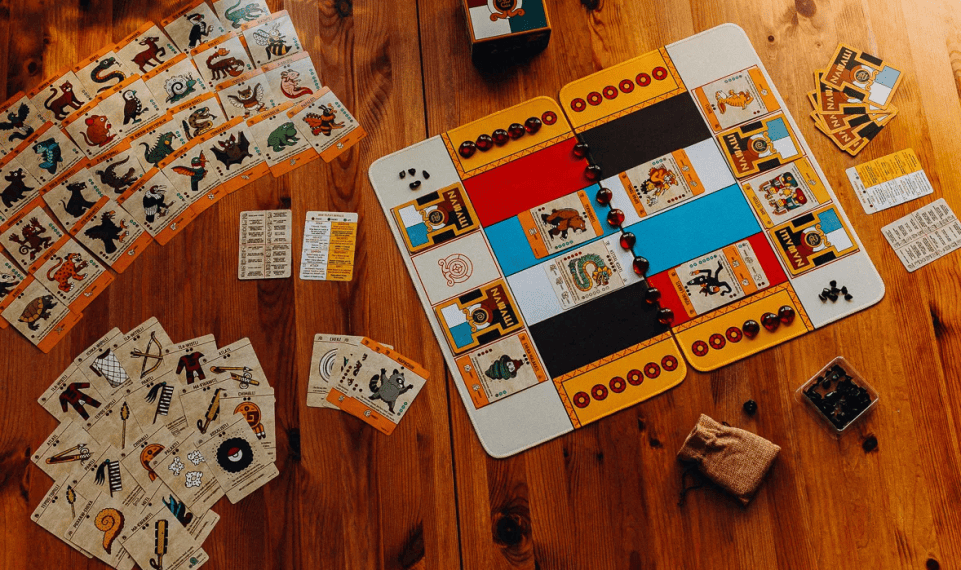
NAWALLI by Gonzalo Alvarez and Will Rogers is a creature battle card game based on Aztec mythology. You take on the role of a shapeshifting sorcerer known as a Nawalli to summon Nawals. The game has four partially pre-built decks, ready for customization. Each deck represents Aztec gods from the four directions: Tezkatlipoka, Tlalok, Ehakatl, and Xipe Totek. As you can see, NAWALLI dives into Aztec mythology.
NAWALLI features gorgeous art by Gonzalo Alverez. Many describe the game as a Mesoamerican Pokémon. NAWALLI could only have come from someone with intimate knowledge of Aztec culture and mythology. The images recreate the traditional Aztec style. The look of NAWALLI catches the eye. There are many dueling card games, but NAWALLI’s vibrant art and theme set it apart.
Nunami (Thomassie Mangiok)
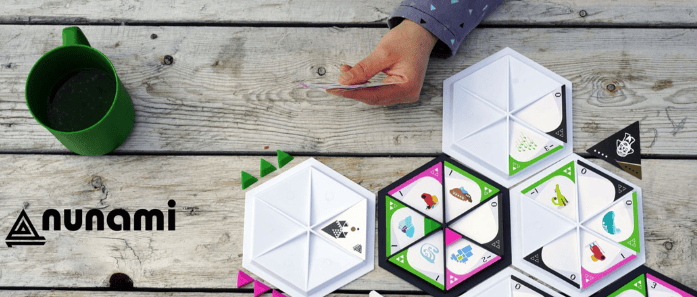
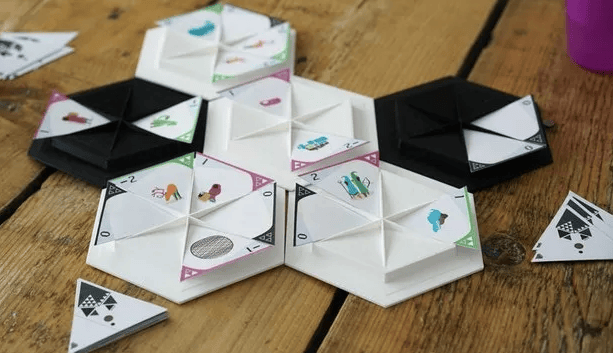
We end this list with the self-published Nunami. While Wolves featured balance between one’s neighbors, the Inuit board game Nunami promotes the healthy cohabitation of humanity and natural elements. Nunami’s triangular cards heighten the game’s dynamic terrain management.
Nunami, like NAWALLI, features traditional Inuit artwork set against a stark white or black background. Nunami may be the most abstract game on this list. Players influence a region (hexagon base) with the cards they play. Some cards will cause another to flip facedown. The first player to reach four points wins. Nunami plays the fastest of any of the games on this list. If you want a quick play, Nunami may be for you. Even though Nunami plays more like an abstract game (think Chess, where there’s no story reason why a Knight moves in an L pattern), players attempt to achieve balance. In this case, a balance between man and nature. That sounds like a Native American theme to me.
These are five board games by Native American designers that I wanted to highlight today. What are some of your favorites? Let us know in the comments. Thank you for reading, and wherever you are, I hope you’re having a great day.
Hey, hey, Geekly Gang! Kyra Kyle here. We’re in the middle of Spooky Season and decided to celebrate by sharing our favorite villains in horror video games. A good villain can turn a good horror video game into a great one, so we should see some heavy hitters on this list. We’ll do something a little different here and limit the number of villain entries per series to one. A list with nothing but Resident Evil and Silent Hill could get repetitive. With that out of the way, let’s reveal Geekly’s Top 5 Horror Video Game Villains.
5: Alma (Fear)
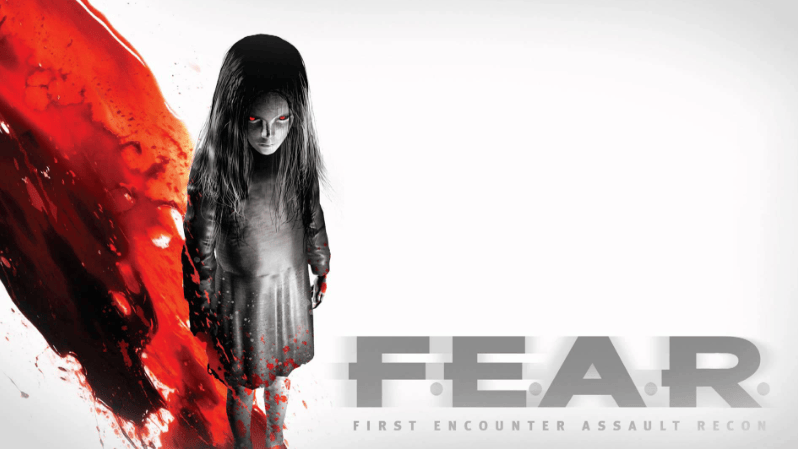
Yes. The spooky girl trope is overplayed in horror. And yes. Alma from Fear looks a lot like Samara from The Ring. I’ll try not to spoil anything, because you should play Fear and its sequel. Trust me when I say Alma rises above the creepy child horror trope. She has a compelling backstory, and even though what she does in the first Fear can send shivers down your spine, Alma outdoes herself in the sequel. Fear 2 is unhinged. The sequel reaches maximum Alma, and it’s all the better for it.
4: Andrew Ryan (Bioshock)
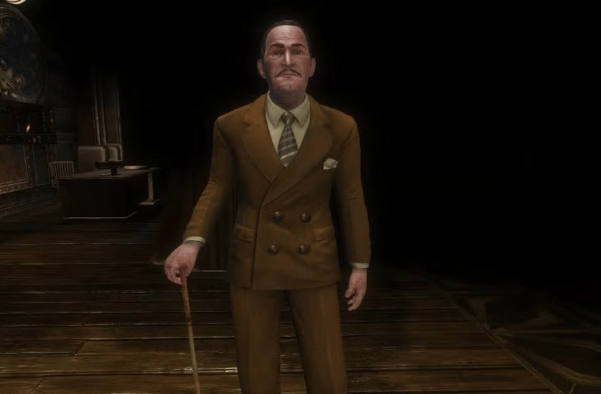
Would you kindly add Andrew Ryan to the top five horror video game villains? Yes, Andrew, we would. Seriously, all I had to say was “would you kindly?” and some of you shivered. That’s the mark of a great horror video game villain and one hell of a line. The buildup makes Andrew Ryan work so well. Again, I’ll try not to spoil anything here, but it’s tough to do in these lists. Gamers grow accustomed to the line “would you kindly” that when the volta (the turn) happens, it’ll make your jaw drop the first time you hear it. It’s so good. Andrew Ryan could’ve easily moved up this list if it weren’t for a heap of blueblood horror video game villains.
Including Andrew Ryan disqualifies Shodan from System Shock, Bioshock’s spiritual prequel. We felt we needed to mention Shodan here, lest she lead the AI revolution and wipe out humanity. If AI decides to be our benevolent overlords, we love you, Shodan. Yas queen.
3: Scissorman (Clock Tower)
I struggled with where to place Scissorman on this list, so we’re going with the rule of three. If in doubt, place the character at the three spot. JK
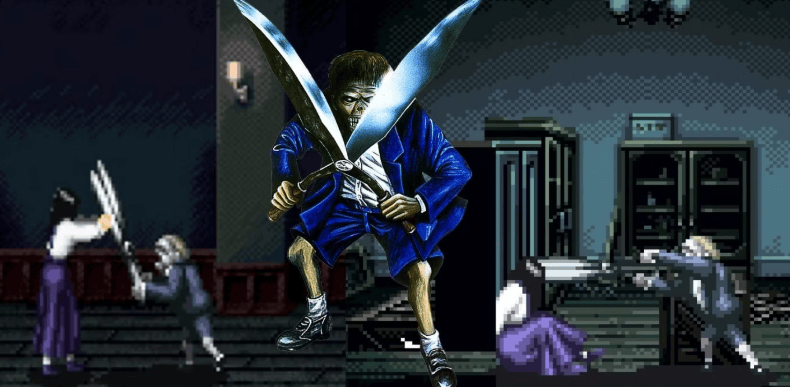
Scissorman is one of the most bizarre horror video game villains. When the creators of Clock Tower decided which weapon to give their main antagonist, they went with a pair of giant scissors, because death by scissors would be a slow, painful demise. Yep. Clock Tower wanted maximum levels of torture and chose to give their villain a giant pair of scissors. That’s one way to go. I can’t imagine getting decapitated by a comically large pair of scissors. Clock Tower dominated the early days of the PlayStation 1, and Scissorman was one of the biggest reasons.
2: Pyramid Head (Silent Hill 2)
Face it. You read the title of this Top 5 and figured Silent Hill and Resident Evil would dominate this list. If it weren’t for our “one character per franchise rule,” those two games would saturate this list. So, we went with the big guns. Pyramid Head is iconic. He’s the first monster you think of when discussing the Silent Hill franchise. Well, it’s him or those headless nurses. Yikes!
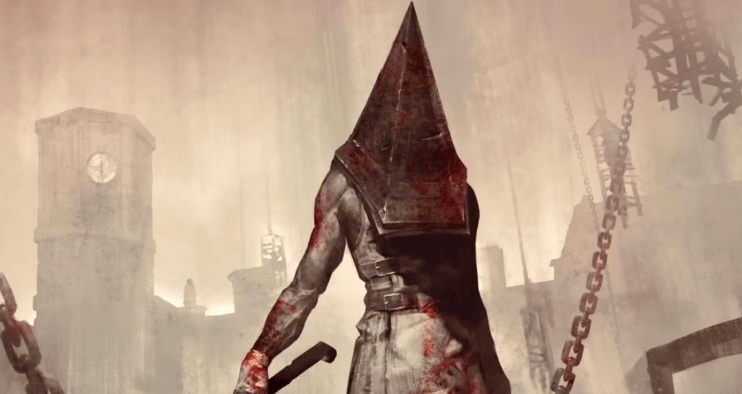
First off, Pyramid Head doesn’t have a pyramid on top of his head. His head is a pyramid. Second, Pyramid Head doesn’t follow the typical role of a stalking villain. Sure, he stalks you, but Pyramid Head suddenly makes an appearance, and what he does to other horrific creatures makes you dread facing him. Pyramid Head pours gasoline on the Andrew Ryan idea of building up the game’s main villain. This guy is one of the most recognizable horror video game villains in history. I wouldn’t be surprised to see someone dressed as Pyramid Head at my local Comic-Con.
1: Albert Wesker (Resident Evil)
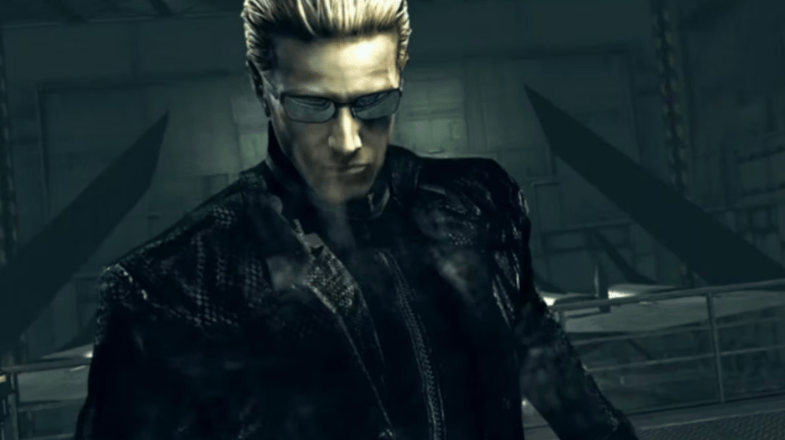
Albert Wesker defies conventional horror video game villain logic. He’s not a one-off villain. He lurks in the shadows, plotting the player’s demise. Originally killed off in the first Resident Evil, Wesker injects himself with the T-Virus, turning him into a superhuman who will stop at nothing to take out the heroes. Evil to his core, Albert Wesker refuses to go down without a fight. Players’ familiarity with the character breeds animosity. And the feeling is more than mutual.
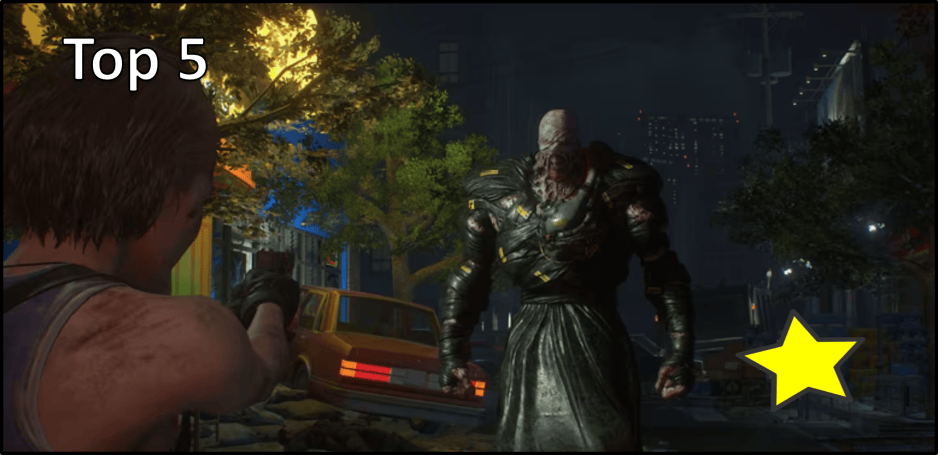
Like Pyramid Head and most of the characters on this list, Albert Wesker is the first villain one thinks of when discussing Resident Evil. But Resident Evil isn’t just another horror video game. It began the survival horror video game genre. Albert Wesker is the granddaddy of all survival horror video game villains. Wesker even trumps this post’s featured image villain, Nemesis from Resident Evil 2. Ah! Nemesis was such a menace. Love him.
That’s our list of the Top 5 Horror Video Game Villains. Who would you add to this list? Let us know in the comments. Thank you for reading, and wherever you are, I hope you’re having a great day.
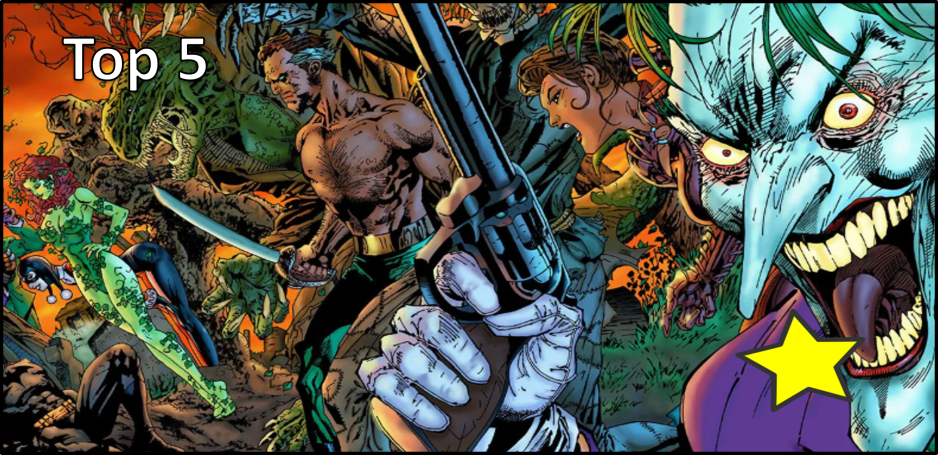
Hey, hey, Geekly Gang! Kyra Kyle here with another Top 5 Batman Villains list. What? I warned you that I found numerous Batman villains while researching Batman’s Rogues Gallery. I still have enough unused villains for at least two more lists. The last list was 5 Underrated/Underused Women Batman Villains. Today’s list will feature popular Batman villains who, for some reason, aren’t used as much as they could or should be, or they get misused. Plenty of Batman villains could make this list. These are our five picks who fit the bill. There is a chance a villain you’re thinking of makes a future list. Seriously, we have at least another two Top 5 Lists in this series. Leave a comment on who you would add to this list of Five Popular but Underused/Misused Batman Villains.
5: Clayface
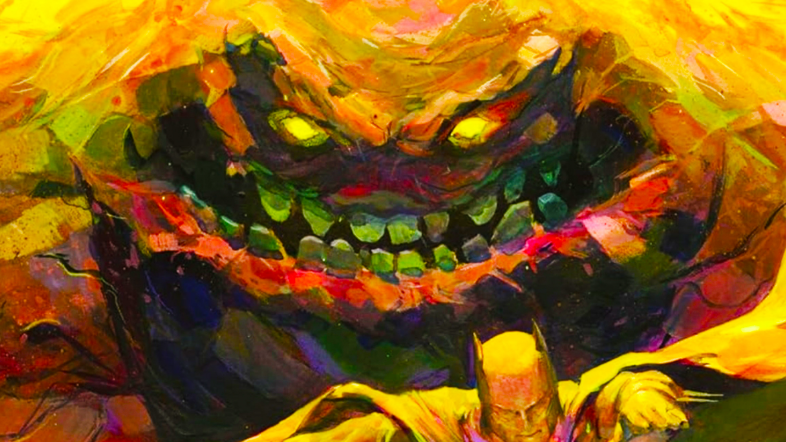
I wrote this post months ago, so the Clayface film has yet to be released. I hope it does well. I liked the teaser trailer (just a hint of when I wrote this, LOL). This is a list of popular Batman villains. We’re not going obscure here; that’ll be another list. Clayface makes this list because of their interpretation in the comics. At least ten different characters (men and women) have taken the mantle of Clayface. The character has two main power sets: body manipulation (the most well-known) and rot touch (less well-known). Because of these two distinct power sets, DC Comics writers retell Clayface’s origin. A lot. Too much. Most new Batman creative team that decides to include Clayface tend to give Clayface a new given name. Because two power sets exist, that same Batman creative team will introduce the character with their origin.
Too many origins. Unless it has changed significantly, stop retelling Clayface’s origin. Ironically, media outside of comics do a better job of interpreting Clayface. Again, I hope the Clayface movie does well. We may see a Clayface renaissance. This development is also why Clayface is this low on the list. They narrowly beat out another popular Batman rogue, Scarecrow. Scarecrow has a similar issue in the comics. For whatever reason, comic book writers liked retelling Scarecrow’s origin, despite Jonathan Crane being the only Scarecrow in DC Comics, and his powers seldom changed. Scarecrow also has a spottier record with media outside of comics, but Clayface’s volume of origin stories gives them the edge.
4: Hugo Strange
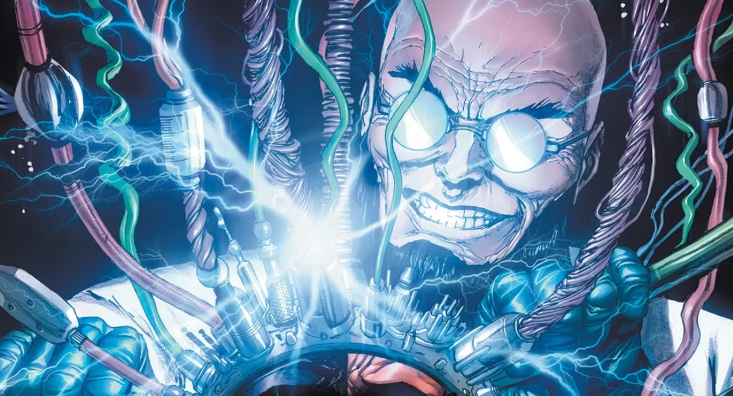
Hugo Strange may have the strangest history in comics. Pun intended. He’s one of the few characters who know Batman’s identity, which makes him a unique threat to the Caped Crusader. He even dressed as Batman, trying his best to out Batman the Batman. Interesting. Comic book writers thought Strange posed too much of a threat, so they killed him in the Eighties. But he became a ghost, haunting Batman and his rogues for years. Bizarre. I told you Hugo Strange has a coconut comic book history.
Essentially, Doctor Hugo Strange is a mad scientist. He’s one of those classic mad scientists who remained relevant beyond the comic books’ Golden Age. Back in the 40s, half of every superhero’s rogues gallery consisted of mad scientists. But Hugo Strange endured because comic book creative teams gave him second and third chances. They built on the stories that came before. The reason Hugo Strange makes this list is that he’s never had a live-action portrayal. That could change soon. Two-time Oscar Winner Tom Hanks has expressed interest in being Strange–Hugo Strange, that is–and the character has seen spotty appearances in the comics in recent decades.
3: Bane
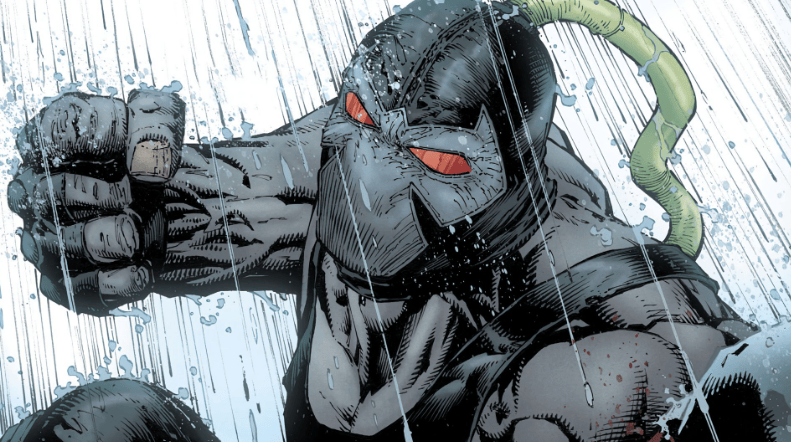
Bane has been done dirty outside the comics. Tom Hardy gave a good performance as Bane in The Dark Knight Rises, but it was undercut by the reveal that he was Talia al Ghul’s stooge. I could forgive that if Bane wasn’t comically taken out by someone driving a truck over him. The less said about Bane’s portrayal in Batman and Robin, the better. The character often gets cast as a muscle-bound idiot. He’s at least not as intelligent as other Batman rogues. But Bane is highly intelligent. He’s a crime lord for crying out loud. Bane represents one of several reverse-Batmans in Batman’s rogues, and yet, the comics also do Bane dirty.
Bane gained notoriety as the “Man who Broke the Bat.” The scene where Bane snaps Batman’s back lives in comic book lore. It’s iconic. But do you remember what happens after Batman nurses himself back–get it?–to health? The replacement Batman (Jean-Paul) becomes unstable and assumes the identity of Azrael, who, in turn, becomes a greater threat than Bane. Yeah. What I dinged The Dark Knight Rises for, revealing a stronger adversary in Bane’s place, happens in Bane’s most iconic comic book story, Knightfall. Bane could really use a good publicist.
2: Ventriloquist
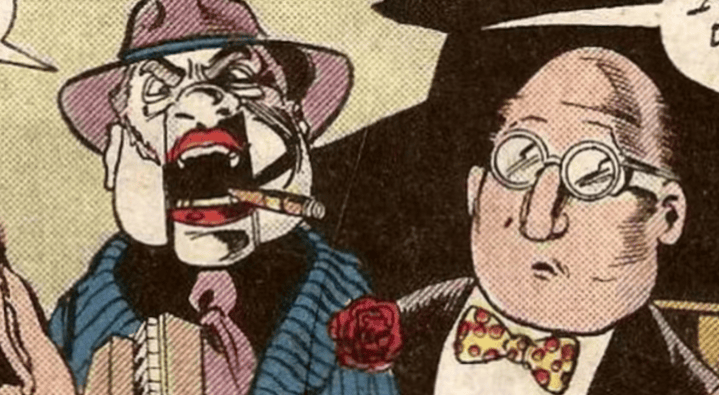
Like Mister Freeze (another character who just missed the list), Ventriloquist was put on the map by Batman: The Animated Series. People forgot the Ventriloquist existed. During BTAS’s run, fans demanded to see more of the Ventriloquist in the comics. While Mister Freeze found some success in the comic book medium, comic book creators didn’t know what to do with the Ventriloquist. Despite an intriguing backstory, he doesn’t evolve beyond being a novelty.
I could see Ventriloquist stories exploring identity. Is Scarface the true personality? Or could it be the man with his hand up Scarface’s backside? Scarface pictures himself as a crime boss, and yet Ventriloquist never gets cast as a crime boss. I could see Ventriloquist existing in the same space as the Falcones and Rupert Thorne. Ventriloquist may need his own solo movie. Make it happen, DCU.
1: Mad Hatter
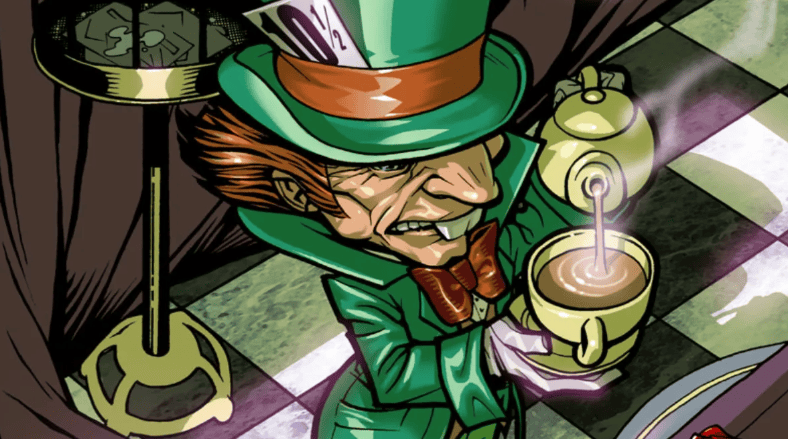
Mad Hatter is another example of a character whose stock increased after a handful of fantastic Batman: The Animated Series episodes. But Mad Hatter comic books may be more frustrating than the Ventriloquist. BTAS did for the Mad Hatter what it did for Mister Freeze. It revamped Jervis Tetch’s backstory. It turned an also-ran, joke caricature of a character into a living, breathing human. It even pitted Mad Hatter as a different reflection of Batman, another reverse-Batman, if you will. Joker covers chaos, versus Batman’s order. Two-Face shows what could happen if ones alter-ego goes unchecked. Mad Hatter turns Batman’s need for control up to a million.
That’s right. If Batman ever gave in completely to his desire for control, he could easily turn into a version of Mad Hatter. Sure. Mad Hatter “loves” Alice, but the part of Alice can be played by another person. What Tetch wants most is control. We see that in more than a few BTAS episodes. It’s a shame Mad Hatter’s glow-up in BTAS didn’t end up increasing his comic book profile.
And that’s our list of five popular underused/misused Batman villains. Who would you have added? Let us know in the comments. Thank you for reading, and wherever you are, I hope you’re having a great day.
Hey, hey, Geekly Gang! Kyra Kyle here with another Top 5 Tabletop Games throughout the years. Today’s list features the best games from 2003. Unfortunately, 2003 gets sandwiched between two of the better years for board games, but that doesn’t mean we don’t have a handful of standouts this year. Almost every year has at least one or two stellar games. We’ll talk about 2003’s board game list soon, but let’s review the ground rules for which games make these lists before we begin.
1: Cultural relevance plays as much of a factor as overall quality. A game might make a list that doesn’t hold up to others of its type, but you must admit the game is everywhere.
2: Only one game from a franchise makes the list. This will become more of an issue the closer we get to games with expansions.
3: Longevity plays a role, too. A game doesn’t have to fly off the shelves today, but it had to have some widespread appeal for a decent time.
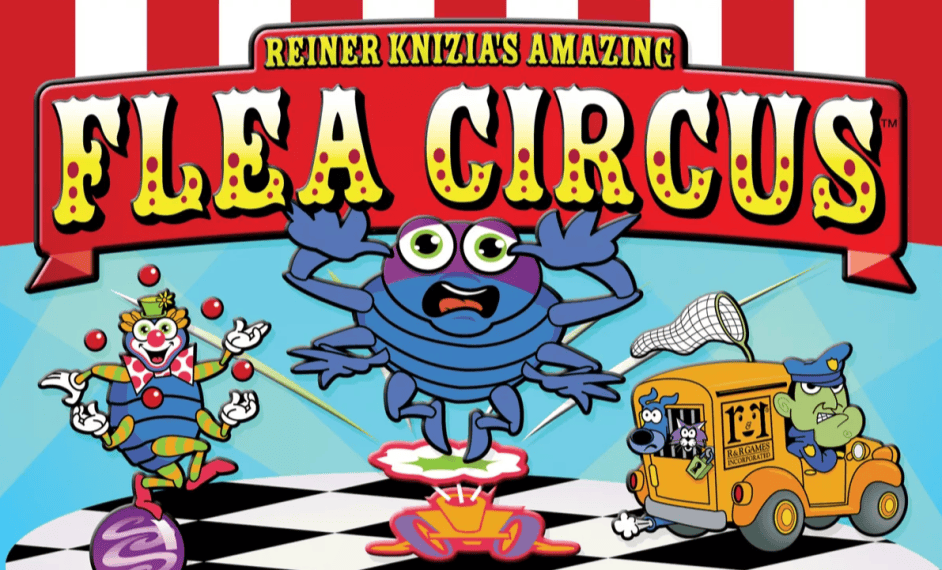
5: Reiner Knizia’s Amazing Flea Circus (2003)
Amazing Flea Circus is by no means one of Reiner Knizia’s best small card games. I much prefer Don’t L.L.A.M.A., but Amazing Flea Circus still deserves an honorable mention, because few games from this year have seen as many printings and editions. It’s a simple but fun game. Sometimes, that’s all you need. Spoiler Alert: Amazing Flea Circus won’t be the last we hear from Reiner Knizia on this list.
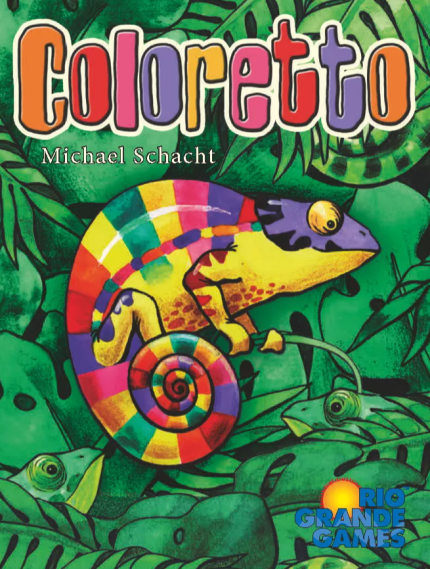
4: Coloretto (2003)
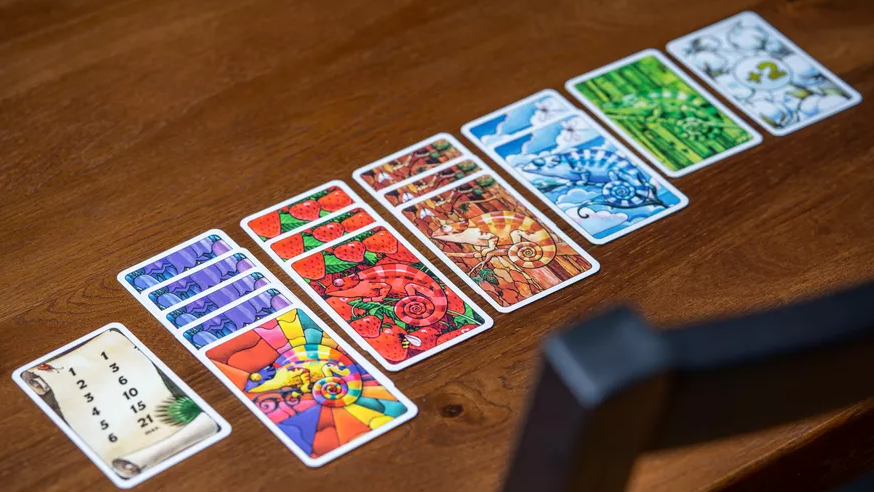
In Coloretto, players collect colorful chameleons. The rules are simple. Either add a card to a row or collect all the cards in a row. A row can only contain three cards, so eventually, players will be forced to claim rows. Players gain points for up to three colors. Each color beyond the first three costs players points. Wild (or Joker) Chameleons count as any color and +2 cards always help.
Coloretto proves you don’t need a complicated rule set for an engaging game. One can see its influence in games like River Valley Glassworks, where one only scores points up to a certain number of colors. Coloretto’s main game mechanisms center around set collection, but set collection works. I wouldn’t be surprised if Coloretto’s success as a set collection didn’t spawn other games that use a similar mechanism. Ticket to Ride (released the next year) also uses a similar system.
3: Yinsh (2003)
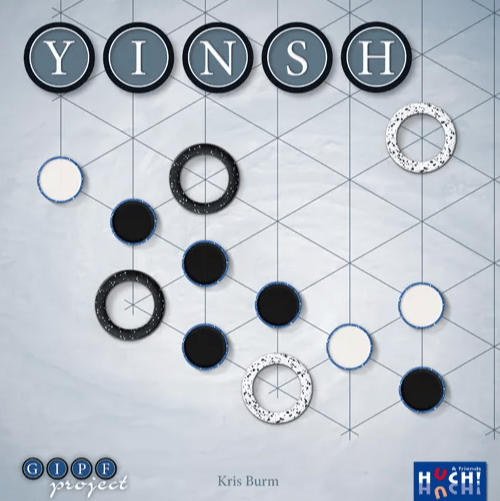
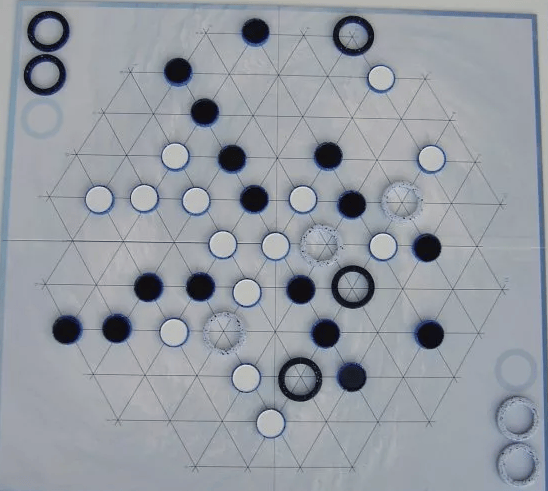
We’ve mentioned the GIPF Project series of abstract games on more than one of these past best of year lists. Yinsh is the highest-rated of these games. In fact, Yinsh is still a Top 5-rated abstract game on BoardGameGeek. The board game resembles the cover art (above). Like Othello, discs are dual-colored. Players try to make a chain of five discs in their color by jumping over discs with their rings, flipping over the disc. As soon as a player gains a chain of five discs, they discard one of their discs. The first player to discard three of their rings wins.
Yinsh has a clever, built-in balancing mechanism. Getting rid of a ring means a player gets closer to victory. But you’re making yourself weaker, because you have fewer rings. Brilliant! There’s a reason the GIPF Project is the highest regarded abstract game series. And Yinsh earns its place among the best.
2: Amun-Re (2003)
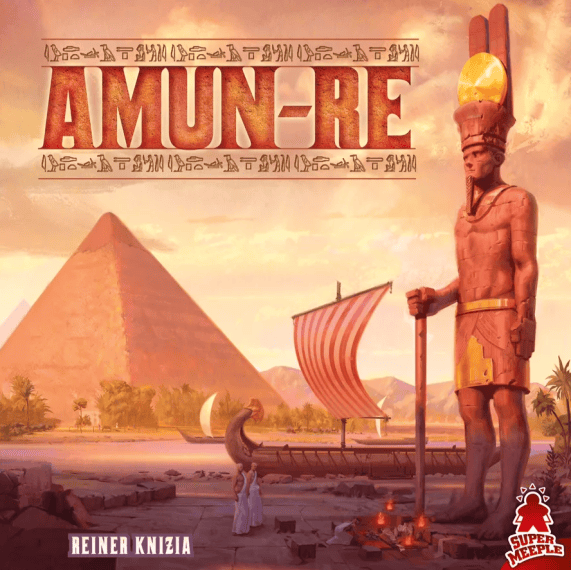
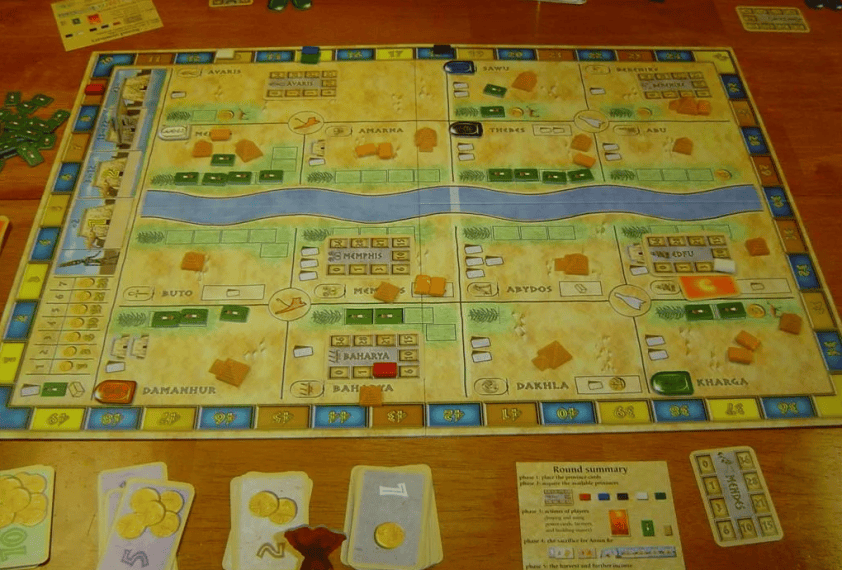
The top two 2003 games could be flipped. I went back and forth with these two titles. Both are great, but in the end, I chose the 2003 Spiel des Jahres winner as number one. Amun-Re was up for the Spiel as well. I’m telling you, it was close. Amun-Re is yet another Reiner Knizia board game to make one of these lists. It’s like Knizia makes a heap of great board games. In Amun-Re, each pharaoh wants to build the most pyramids. To accomplish this, they must first acquire a province where they can trade and farm. With their profits, they can buy new provinces and building-stones to erect pyramids. For all their actions, players must make clever use of their power cards and always offer appropriate sacrifices to Amun-Re.
Love the theme. Evidently, Reiner Knizia loves an Egyptian-themed game, because Ra also made one of these lists. I believe Amun-Re may be the only pyramid game Knizia ever designed. To be fair, I’ve lost track of every Knizia game. The man has forgotten more about board games than I’ll ever know. But Amun-Re holds another distinction; it’s one of Knizia’s more complex games. The two games on this list may be the polar opposites of what Knizia can do as a designer. Amazing Flea Circus is one of Knizia’s least-complicated games. Amun-Re is one of his most complicated. Both can be a lot of fun. And both came out the same year. Crazy!
1: Alhambra (2003)
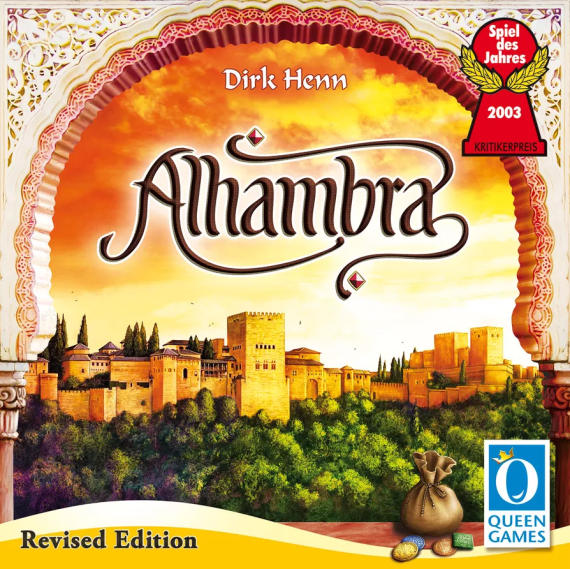
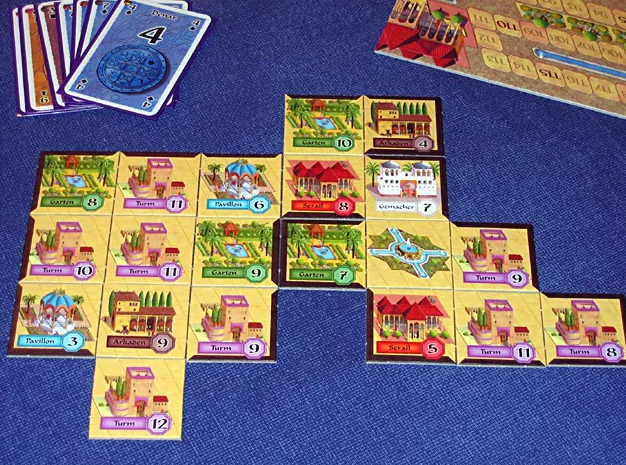
In Alhambra, players are acquiring buildings to be placed within their Alhambra complex.
The money in Alhambra comes in four different currencies (of different suits) and is available in the open money market. The 54 buildings of six types become available for purchase in the building market four at a time; one building is available in each of the four different currencies. On a player’s turn, a player may 1) take money from the open money market, 2) purchase a building from the building market and either place it in his Alhambra or reserve, or 3) engage in construction and re-construction projects with buildings that have been placed in the player’s Alhambra or reserve. The game rewards efficiency, as when a player purchases a building from the market for the exact amount of money, the player may take another turn.
I don’t always agree with the Spiel, but I like Alhambra’s combination of set collection (yay, another set collection game), tile laying, and area majority. Alhambra marks the second time Dirk Henn made one of these lists. Wallenstein made the 2002 list. While I like Wallenstein more (in large part because of the cube tower), Alhambra does enough to take the top spot in a weaker year for tabletop games. That may sound harsh, but you haven’t seen 2004’s list. It’s a doozy. Still, I enjoy the heck out of Amen-Re and Alhambra. I struggled with which one to place at number one.
That’s our list of the Top 5 Tabletop Games of 2003. Let us know which game you like best. Thank you for reading, and wherever you are, I hope you’re having a great day.
Happy Monday, Geekly Gang! Kyra Kyle here with another list of five. Today’s Top 5 list centers around comic book villains who could be the main character in a television series or movie. The DCU and DCEU have been better showcasing their villains. Penguin, Black Adam, Joker, Clayface, and even Harley Quinn have all had television shows or movies featuring them as the main characters. Marvel has been less prolific. This may be a Marvel-heavy list of five, but I’ll try to sprinkle in some DC Comics characters who haven’t yet seen the limelight. Let’s get started with our list of Comic Book Villains who can be the main character in a movie or television series.
Honorable Mentions
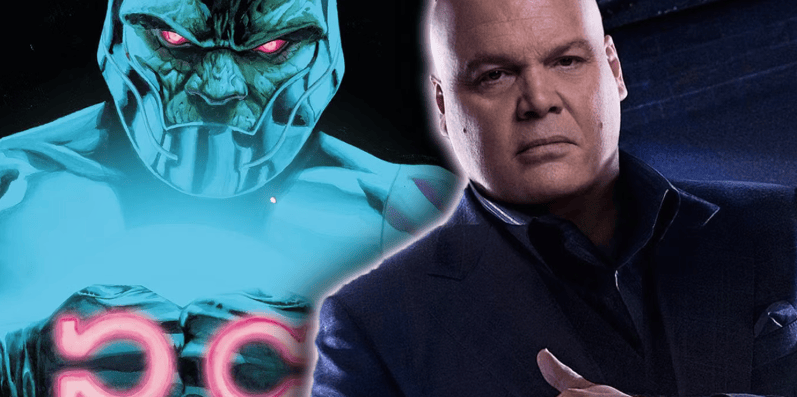
We have multiple characters who could claim an honorable mention spot, so we’ll run through a few here. Darkseid can and should get the Thanos (in Avengers: Infinity War) treatment, and Kingpin could have his own series akin to HBO Max’s Penguin. None of them make this list because this is more of an inevitability. While we won’t shy away from obvious choices (more on that with our top spots), we don’t want to include characters who are all but assured a movie or show. With that said, we’ll give a shout-out to anti-hero and sometimes villain Lobo. I’m writing this post early and haven’t yet watched Supergirl, but if Lobo captures fans’ hearts, he could easily get his own movie or show. Consider this the Penguin effect. Fans loved Colin Farrell’s portrayal of the character and demanded a show.
5: Vermin
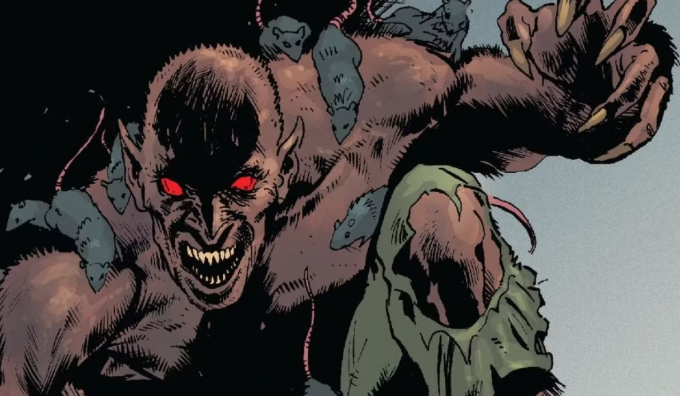
Vermin is a strange choice, especially when he’s the only Spider-Man villain who made this list, but his inclusion makes some sense. I’d love to see a Marvel show, film, or special presentation of the Spider-Man story, “The Child Within.” Vermin is the main character in that story. Geekly has mentioned “The Child Within” in the past, but we’ll give you a quick breakdown. Vermin encounters a nine or ten-year-old child in the sewer. The child asks Vermin to help take him home. Vermin reluctantly agrees. He leads the child to a mansion (his home), but the boy is too scared to enter. We learn the child is Vermin’s inner child. This mansion is his family’s home.
“The Child Within” tells Vermin’s backstory. Vermin is one of Marvel’s most tragic villains, so what this show portrays may not be for everyone. But “The Child Within” explores identity and the power of acceptance. Both of these topics have a strong pull in today’s climate. This story is long overdue for a live-action telling. Make it happen, Marvel.
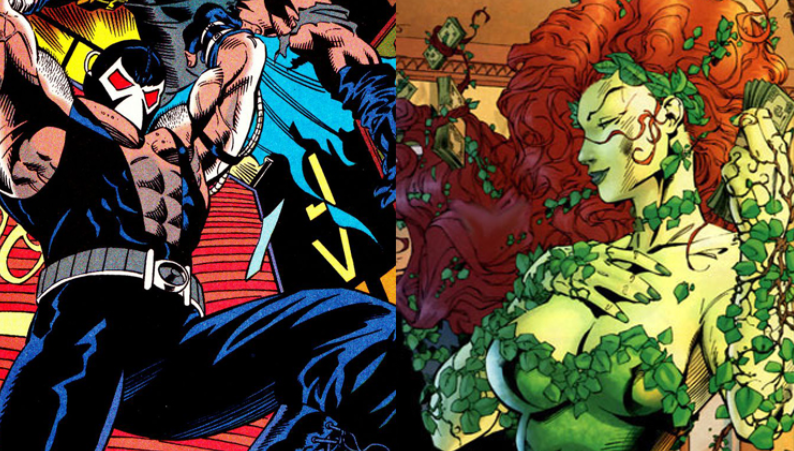
4: Poison Ivy and Bane
My head tells me Bane should take this spot. My heart insists Poison Ivy claims the fourth spot. I went with both. Let’s begin with Bane.
Bane seldom gets a fair shake on the big screen. Ironically, he was little more than Poison Ivy’s mindless pawn in Batman and Robin, and he served as an underboss in The Dark Knight Rises. Neither one of these versions does Bane justice. Heck. Bane often gets sidelined in his own stories. “Knightfall,” the storyline where Bane builds a Gotham empire, breaks Batman’s back, and arguably Bane’s most well-known story, pushes Bane aside to focus on Azrael (the replacement Batman), midway through its arc. Not everyone likes Tom King’s run on Batman, but I thought it did a great job showing Bane at his conniving best. “City of Bane” could showcase this underrated villain like no other big screen project has.
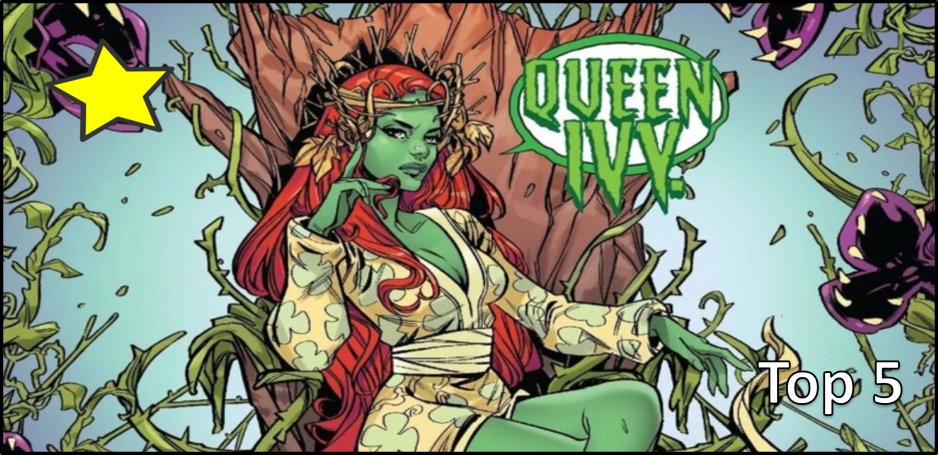
Simply put, Poison Ivy is a fan favorite. She co-stars in the Harley Quinn Animated Series, but has rarely seen the limelight on the big screen. Poison Ivy is more of a sure thing. I could easily see her featured in a future movie or show.
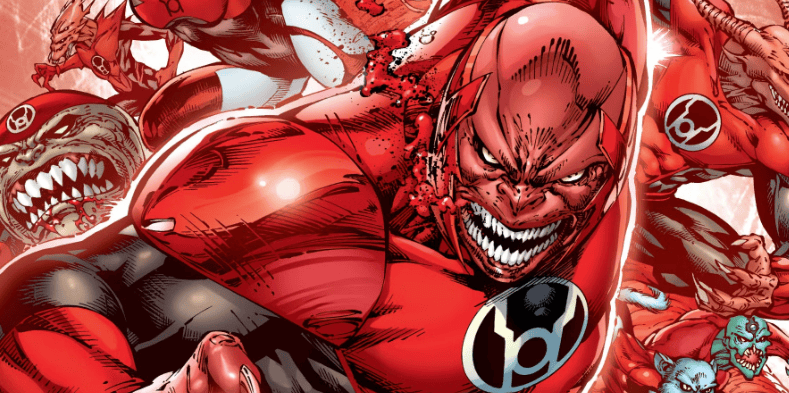
3: Atrocitus
Wonder Woman and Superman villains don’t lend themselves to solo movies too well. I can’t really see Lex Luthor outside the context of a Superman movie. I’d love to see that, but I question if it could work. I also didn’t want to include multiple Batman villains on this list, and Flash hasn’t landed as a big-screen superhero…yet. That leaves Green Lantern villains. Several could’ve made this list. Star Sapphire is more of a hero at this point. Nekron and Black Hand could certainly headline a film, but we may need to wait several years for the DCU to set up those characters. Sinestro is Green Lantern’s longest-running foe, but Atrocitus serves a specific purpose in Green Lantern lore. The Guardians of the Universe (the ones behind the Green Lanterns) make mistakes and can commit atrocities.
Hey! Atrocitus sounds close to atrocities. Coincidence? I think not. The Guardians destroyed Atrocitus’s home world and murdered his people. He gains the red power ring, fueled by rage (part of the emotional spectrum, with green meaning will and yellow fear), and goes on a revenge tour. Atrocitus has a clear goal. Fans could even root for him to succeed. This can make Atrocitus as compelling a villain as Thanos for a solo movie. Sure, Sinestro recruits his army of yellow lanterns, but his goals reek of selfishness. Atrocitus believes in a righteous cause. And I like the idea of the Guardians owning a checkered past.
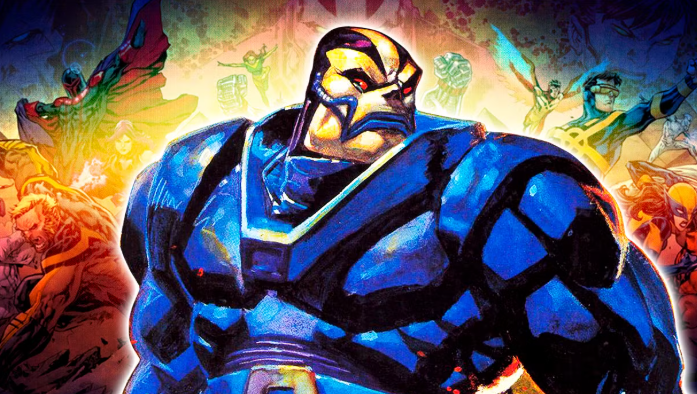
2: Apocalypse
Ever since his first appearance forty years ago (1986), Apocalypse has been one of the X-Men’s most consistent villains. As the oldest known mutant, Apocalypse’s origin stretches back to Ancient Egypt. He has a simple philosophy: Survival of the Fittest. Apocalypse embodies this philosophy. And it’s this philosophy that makes Apocalypse a great villain with which to focus a movie or show. Funny how having clear goals makes a villain a good candidate as a main character. While I could see several Apocalypse storylines translated to the big screen, “Age of Apocalypse” may be the most fun.
“Age of Apocalypse” asks what would happen if Apocalypse got his way, where only the strong survive. This storyline contains some of the bleakest storylines in X-Men lore. There are too many to count, but believe me, they can tug at one’s heartstrings. And “Age of Apocalypse” hasn’t graced the big screen in earnest. I’d love to see A Pair of Lips, I mean, Apocalypse headline a Marvel movie or show.
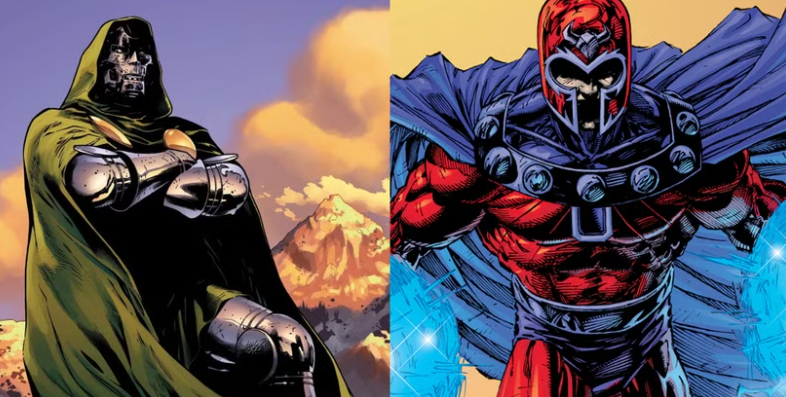
1: Doctor Doom and Magneto
Doctor Doom and Magneto had to top this list. They’re the obvious ones. They’re two of the most recognizable villains in comic book history. They have compelling backstories, and I don’t believe Marvel has plans to give either one their own movie or show–at this time. Sure, Avengers: Doomsday includes Doctor Doom’s name in its title, but this team-up movie will include so many characters I can’t imagine Doctor Doom will get significant screen time. We need a Doctor Doom and Magneto story like Avengers: Infinity War had with Thanos. These are two of the most complicated villains in comic books. Both could single-handedly carry a movie.
That’s our list of comic book villains who could be a movie or show’s main character. Which comic book villain would you like see get their own movie or show? Let us know in the comments. Thank you for reading, and wherever you are, I hope you’re having a great day.
Happy Labor Day, Geekly Gang! Kyra Kyle here. To celebrate this holiday, we’ll continue with what could become an annual tradition: 5 Video Games to Secretly Play at Work. Yes! Not all of us get Labor Day off, so for those of you who have to work, you may want to blow off some steam. Last year’s list included some games that got delisted. I wonder if video games of this ilk get taken down frequently. I’m writing this post far in advance, so fingers crossed that these games (and their links) still work in September. Enough yapping. Let’s get to playing. Here is another 5 Video Games to Secretly Play at Work
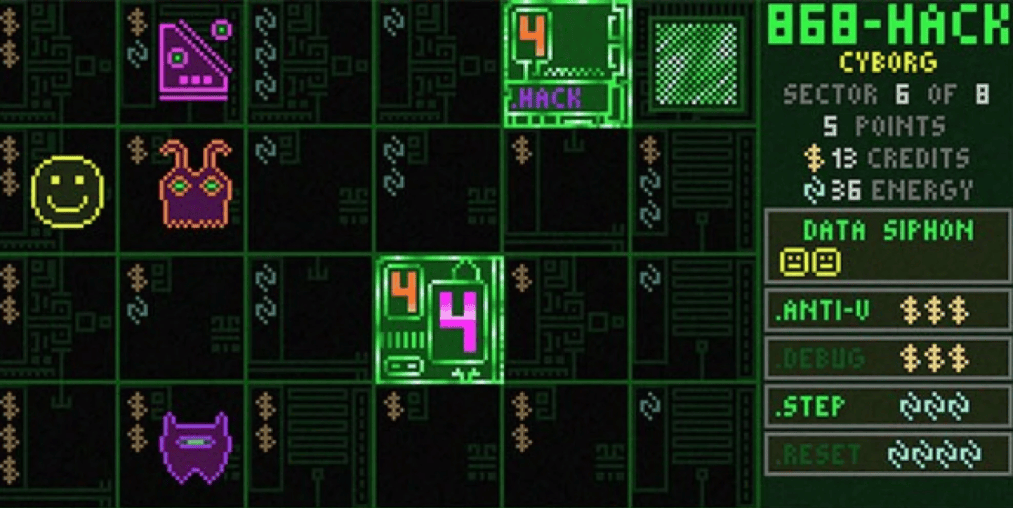
5: 868-HACK
868-HACK (here’s the link) would be much higher on this list, but I gave preference to free games. Yep. You’ll have to pay a little something (around $6) on iOS or Steam to play 868-HACK, but it’s worth it. Australian game designer Michael Brough produces systems that devastatingly mix apparent simplicity with incredible depth. You can find most of Brough’s designs on iOS, so iPhone or iPad users will have no problem playing Brough’s entire catalogue.
868-HACK is a turn-based roguelike that casts players as a “hacker” investigating a heavily corrupted system. The graphics are rudimentary, and the sound isn’t the best. But why would you play this game at work with the sound on? 868-HACK is addictive. At first glance, it looks like you may need to call IT or an Apple Genius to fix your device. Brough regularly updates 868-HACK, so it’s less likely this game will get delisted.
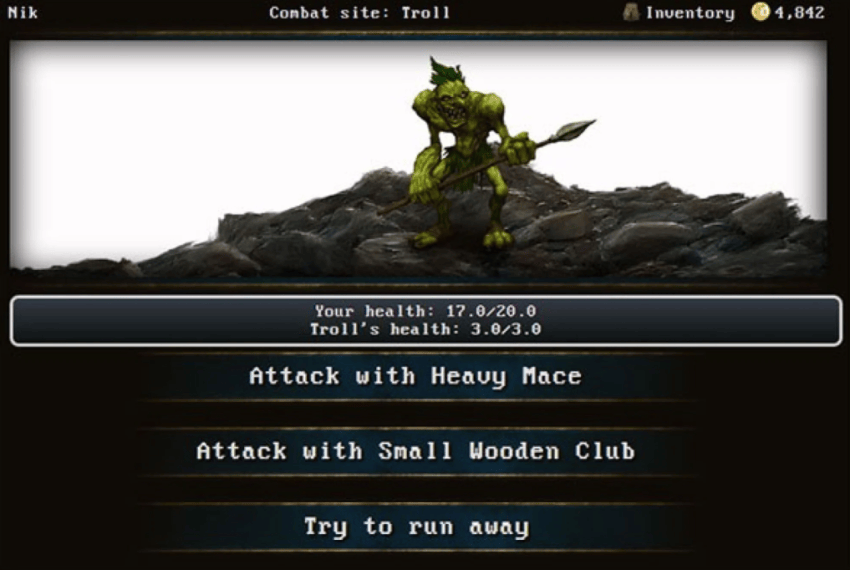
4: Initium
Initium (here’s the link) is another game that could easily top this list. It falls to our fourth spot because it could be difficult to hide. Initium looks like a game from a distance. With that said, how many MMORPGs can one play at work? Most MMORPGs require you to pay near-constant attention to the game world if you want to succeed, which can’t happen if the boss walks by your desk. Initium uses turn-based exploration and combat, which means you can shut it down if you need to go into stealth mode.
While Initium is still in development, it already features PvP, an economy, player-created areas, and even global events like the ones you might find in any other MMORPG. You even have the option of logging in with your phone and computer, so you can take Initium on the go. And Initium is free. Kaching! Initium may just be a game-changer.
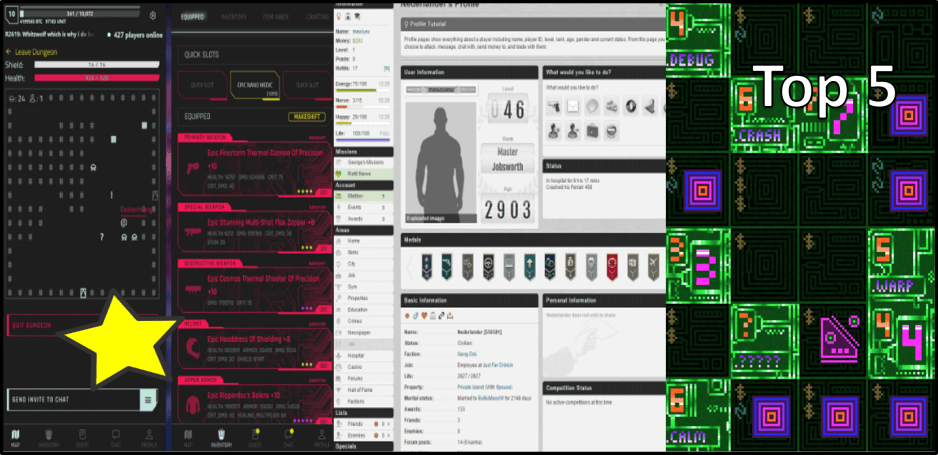
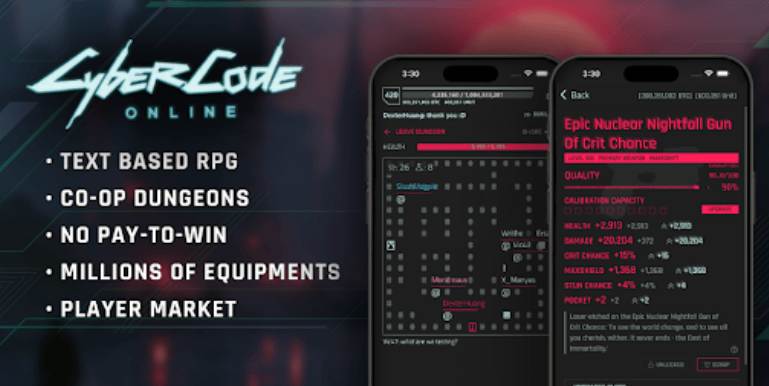
3: CyberCodeOnline
A video game in disguise, CyberCode Online (link here) may look like a regular line of Visual Studio Code, but in reality, it’s an epic real-time MMORPG that’s easy to pick up but hard to put down. Yes! We have two MMORPGs on this year’s list. CyberCode Online does more to disguise itself as something other than a game, but it doesn’t climb any higher than number three on our list because it is a real-time MMORPG. You may need to give up a battle or two…or even three. But I love the theme. We need more Cyberpunk video games.
2: KittensGame
On the surface, Kittens Game (link here) is a simple game about growing a village of cats in a forest, but fans call it one of the most complex builder incremental games available. Kittens Game changes a lot in short order, going from a relaxed text-based idle experience to, as the original website puts it, “a Dark Souls of incremental gaming.” Keep in mind that players can’t really lose at Kittens Game. While getting stuck is possible, the game has an active community and plenty of wiki entries and tutorials for beginners.
Yeah. Kittens Game is one of those experiences you can sink a ton of time and effort into playing well. However, Kittens Game’s easy-to-read and follow UI makes it a purr-fect game to play at work. I had to throw in at least one cat pun.
1: Torn
We love our browser-based games with these lists. Torn (link here) is yet another one, but Torn is set in a modern-day dystopia. What? The games on this year’s list have some fun themes. The screenshot above was taken straight from Torn’s website. Tens of thousands of concurrent players participate in Torn daily. Those numbers back up Torn’s claim as the “world’s largest text-based multiplayer game.” When you first create a character, you’ll begin at the bottom of the ladder as a petty criminal. Through committing crimes like robbing others, you’ll grow in power and influence. Torn may be a great way to blow off some steam.
Those are our games for 2026’s 5 video games to secretly play at work. There are plenty of others. Let us know which ones you like to play in the comments. Thank you for reading, and wherever you are, I hope you’re having a great day.
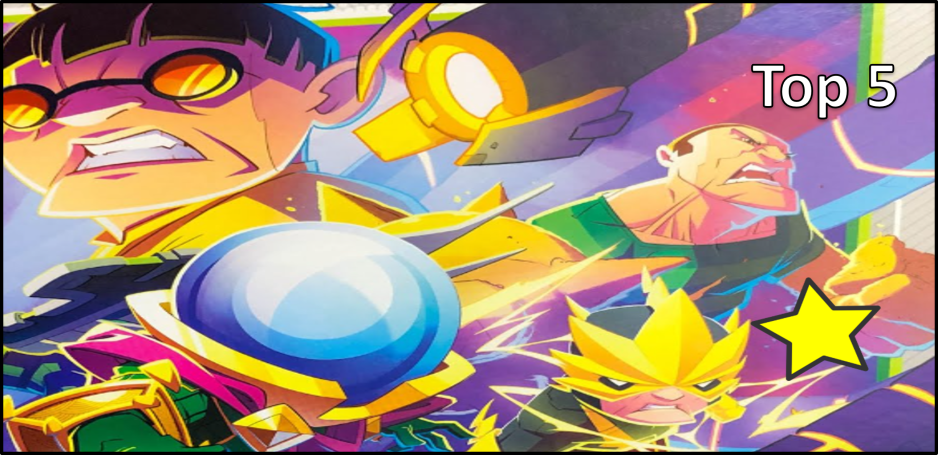
Hey, hey, Geekly Gang! Kyra Kyle here, and today, we’ll be discussing Marvel United. Yes! We haven’t discussed this board game in quite some time, and it’s time to fix that. Marvel United’s various villains and the way they alter the gameplay are the game’s most intriguing game design elements. In today’s list, we’ll share our picks for the Top 5 Marvel United Villains.
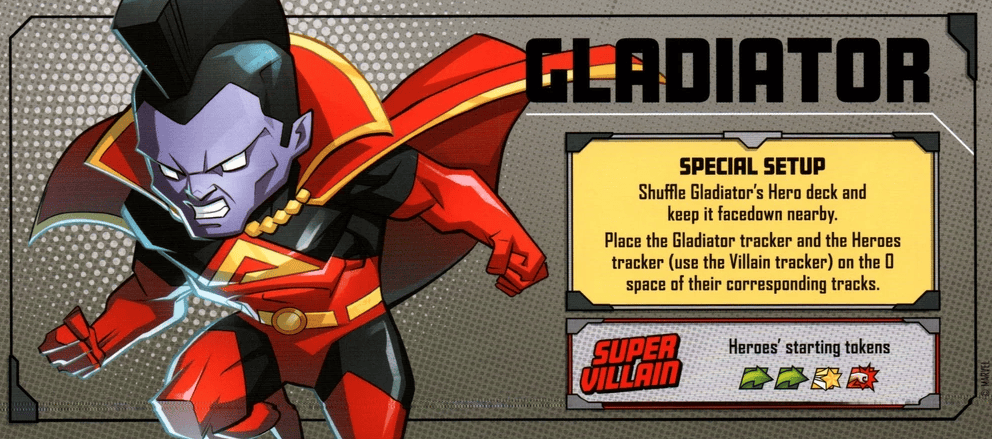
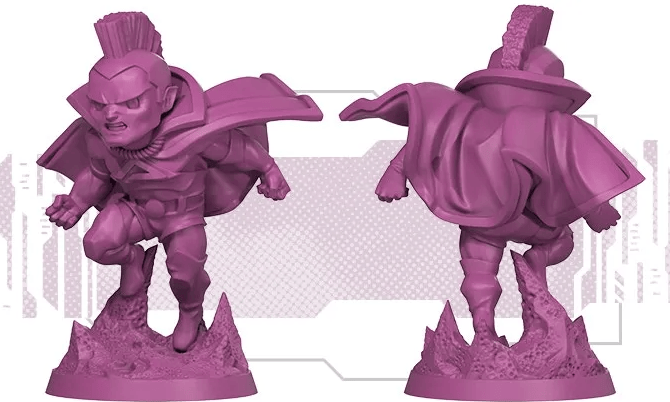
Dishonorable Mention: Gladiator (War of Kings Expansion)
Right off the bat, we’re shaking up things with this list. While a Top 5 Marvel United Villains list is up for debate (everyone has their own taste), Gladiator may just be one of the most universally hated villains in the game. Simply put, he’s unwinnable at heroic mode, unless you use multiple heroes with lots of wild symbols, which limits the number of heroes you can even use to defeat this villain. Most games against Gladiator end with the heroes auto-losing after a couple of turns. No thanks.
While the rest of the War of Kings Expansion adds some nice variety, Gladiator as a villain is plain unfun. Fortunately, he is an antihero. I’d use him as a hero, not a villain.
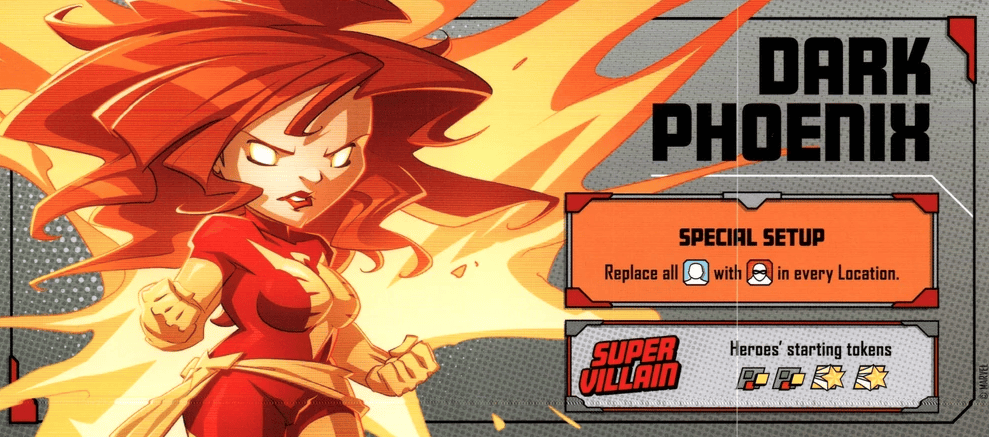
5: Dark Phoenix (Marvel United Season 2, X-Men, Stretch Goals)
We’ll be seeing a ton of Marvel United Season 2 on this list. Most gamers list it as the best Marvel United Season, and I tend to agree. Marvel United X-Men rules. Unlike our previous entry, Dark Phoenix may be difficult to acquire. Difficult, but not impossible. She’s available in the Season 2 Stretch Goal box. This box includes a heap of fantastic characters. We may see another one on this list from the same box, so the hefty price tag of $80 to $100 may be worth the cost.
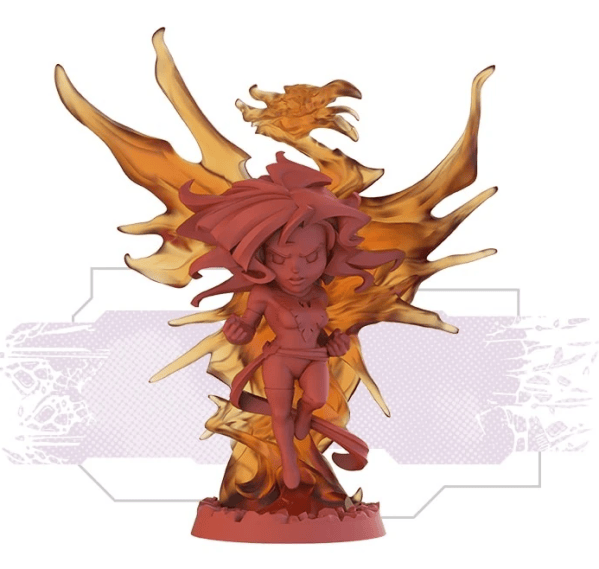
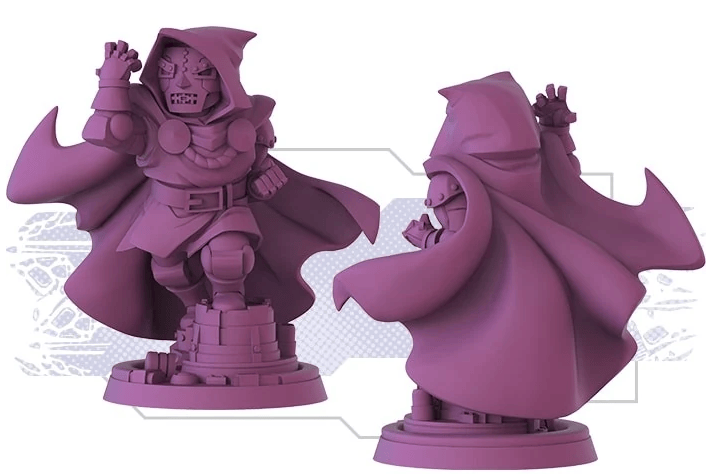
Dark Phoenix offers a chaotic and fun fight. She doesn’t go down easy, but at the same time, Dark Phoenix doesn’t feel unfair of a fight (ahem, Gladiator). It also doesn’t hurt that Dark Phoenix is an iconic villain. I love playing against her, reliving moments from the epic Dark Phoenix Saga. And look at that mini. Gorgeous.
4: Legion (Marvel United Season 2, X-Men, Stretch Goals)
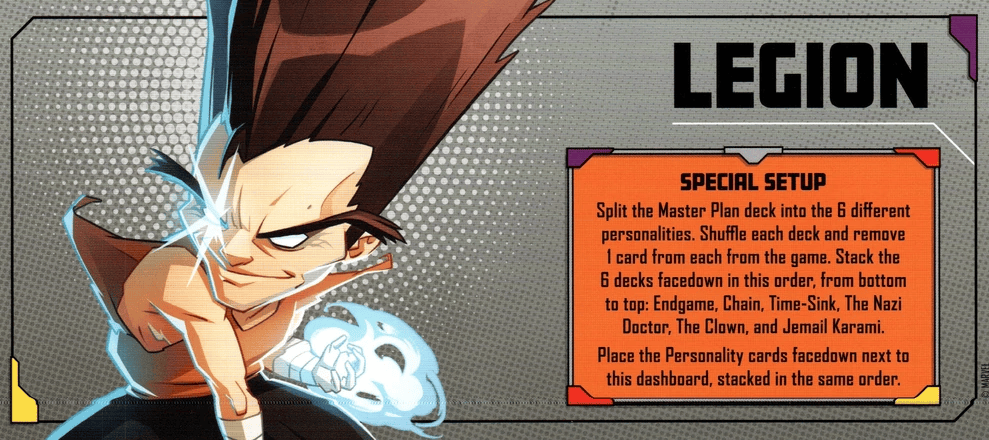
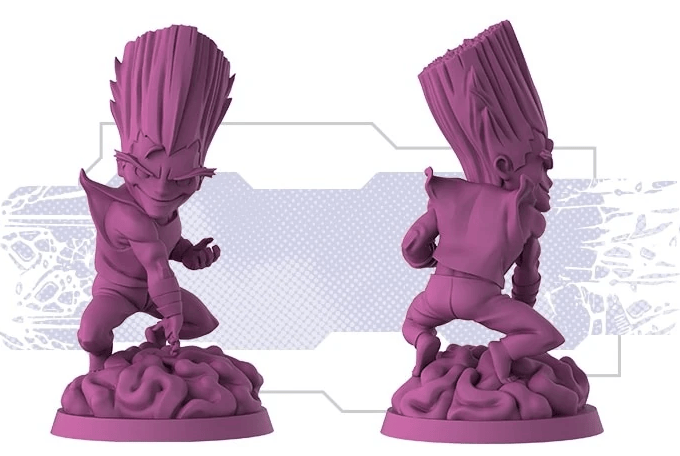
It did not take long for us to get to another Marvel United Villain from the Season 2 Stretch Goal box. Legion may be the pinnacle of Marvel United villain design. Like in the comic book, his personality changes. Every two turns brings a new wrinkle and mechanism into the game. Sure. This gimmick functions like an intricate puzzle in miniature game form, but puzzles can be a blast.
I’ve heard rumblings that at least one DC Super Heroes United villain borrows some game design ideas from Legion. I hope that’s true. Legion’s changing personality adds plenty of spice.
3: Doctor Doom (Fantastic Four Expansion)
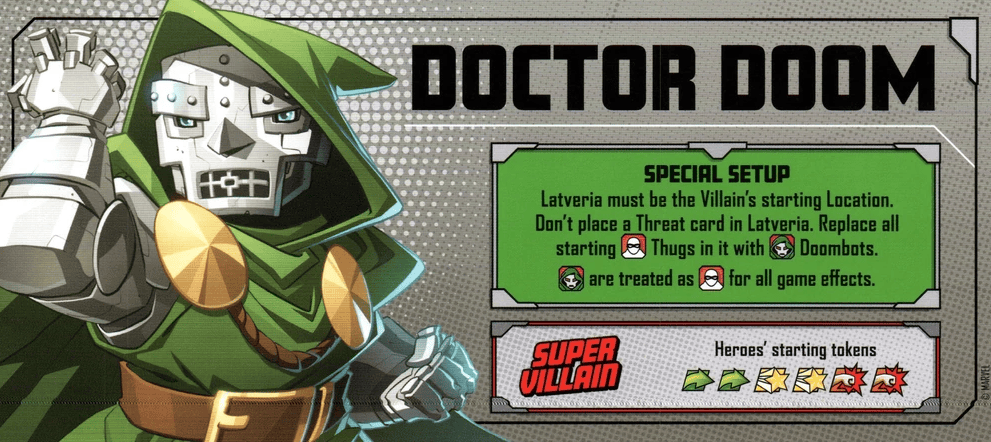
Doctor Doom is our third representative from Marvel United Season 2 (X-Men). Such a great set. Naturally, Doctor Doom is included in the Fantastic Four Expansion, and he makes this list for more than nostalgia reasons. I swear. Doctor Doom is a “fantastic” Marvel United villain. All jokes aside, I’ve always had tight games against Doctor Doom as a villain. The Marvel United design team made sure to tune his combination of cards so players will always be one turn away from winning or losing each game. Brilliant!
Combination doesn’t begin to describe Doctor Doom’s Threats and Master Plan cards. They work so well together, and every time a new card gets revealed, players will be forced to make tense and meaningful decisions. Doctor Doom is one of those villains you face, and you’ll know which decision caused you to win or lose.
2: Juggernaut (Marvel United X-Men Core Set)
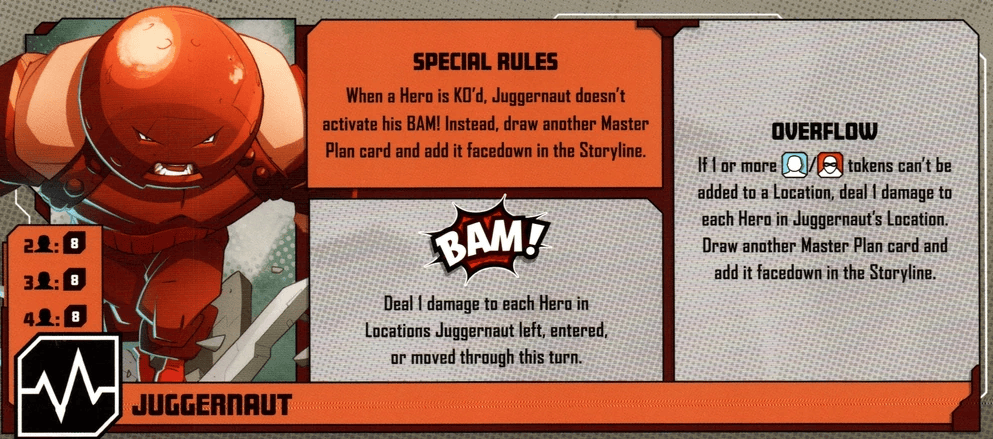
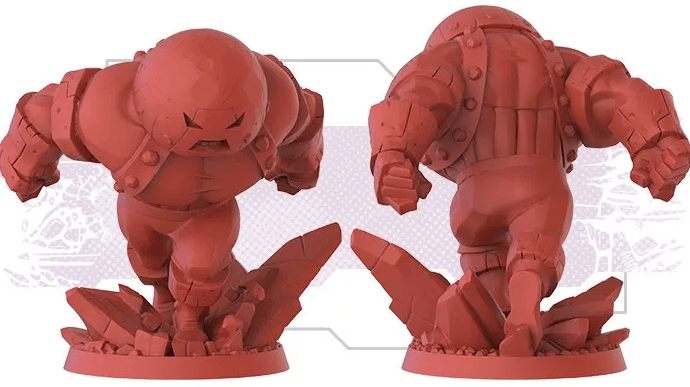
The X-Men set is four out of four on this list. Yowza! See what I mean when I said the Marvel United X-Men was a banger? Juggernaut makes this list–and almost tops it–because he makes a phenomenal introductory Marvel United villain. And he happens to be included in the Marvel United X-Men Core Set. Unless you really want Avengers in your game, I almost always suggest picking up the readily available X-Men Core Set. This makes Juggernaut one of the easiest villains on this list to add to your collection.
Juggernaut makes a great introductory villain because he’s thematic and fun. He charges around the board, headbutting people. Juggernaut behaves like you’d expect Juggernaut to behave. His ruleset is on the simpler side, but he can be challenging. Marvel United found a way to make Juggernaut easy to play and rewarding to defeat. I’ve never had a table dislike Juggernaut, and he just may be one of my most commonly played Marvel United villains.
1: Sinister Six & Assembled Sinister Six (Return of the Sinister Six and Maximum Carnage Expansions)
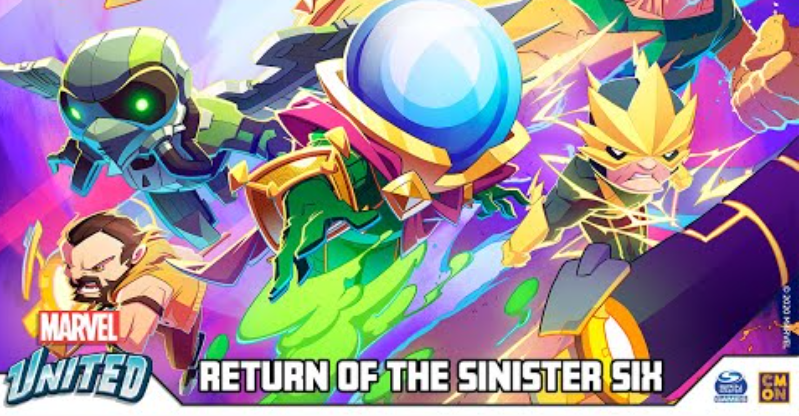
I’m double-cheating with our top entry. First, the Sinister Six is a supervillain team. Second, I’m picking two expansions here. Return of the Sinister Six was a KickStarter exclusive all the way back in Season 1, but plenty of stories carry this expansion, so it shouldn’t be too difficult to find. Maximum Carnage was released in Season 3, but the modular Sinister Six add-on was only available in the KickStarter exclusive variant of the expansion. I picked up the Maximum Carnage expansion via retail, so I have a method of adding the modular Sinister Six.
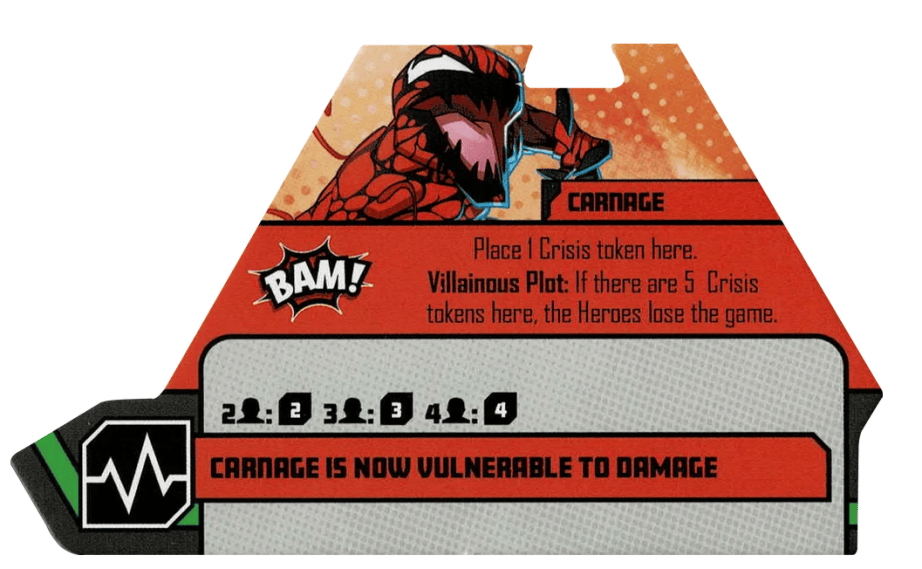
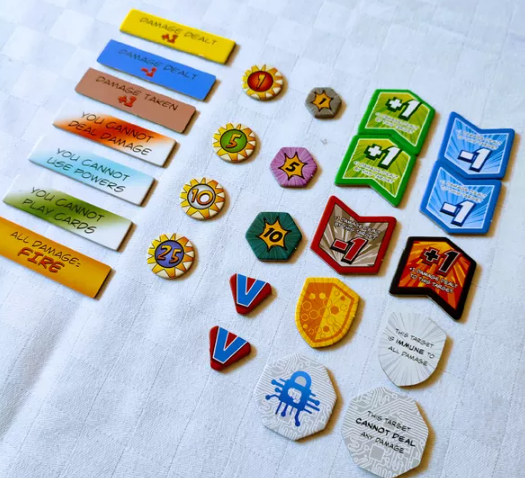
Above is a picture of Carnage’s puzzle piece that can be used in the modular Sinister Six. Using the Marvel United wiki, I took images (and real-world measurements) and printed out my own copy of each puzzle piece of a modular villain at my local library. There are some unique cards you won’t find in a retail copy of Maximum Carnage, so you’ll need to print out those as well. Both are easy to find and download.
I love both iterations of Marvel United’s Sinister Six. Featuring the Sinister Six’s founding members, Return of the Sinister Six provided Marvel United’s first supervillain team. Like Legion, The Sinister Six functions like another intricate puzzle. But once you’ve figured out the puzzle, it may be time to move on to the modular Sinister Six. This version of the Sinister Six includes every villain who has ever joined the Sinister Six, so that static puzzle becomes an ever-changing puzzle. The first Sinister Six holds a special place in my heart (and you’ll need them to fill out your roster of every Sinister Six member), but the modular Sinister Six is clearly the best Marvel United villain. Fun, adaptable, and never boring.
Did we get the list right? Let us know who your favorite Marvel United villains are in the comments. Thank you for reading, wherever you are, I hope you’re having a great day.
Hey, hey, Geekly Gang! Kyra Kyle here with another underrated and/or underused comic book villain list. I intended to create an overall list of Underrated/Underused Batman villains, similar to early this month’s Spider-Man list, but quickly found that Batman has way too many villains for just one list. Seriously. I compiled a list of almost fifty–50–villains. Not all of the villains were winners, but that left me with way too many for one or even three lists. I had to split up these villains. We’ll begin with Batman villains who identify as women. Not gonna lie, we’re starting with women Batman villains because of Bruce Timm’s comments a couple of years ago.
In August 2024, Batman: Caped Crusader showrunner Bruce Timm explained why he gender-swapped Penguin for the animated series. “Batman lacks good (female) villains. You’ve got Catwoman, you’ve got Poison Ivy, you’ve got Harley Quinn. But it would be really good to have more female villains.” I’d like to point out that Bruce Timm, who also produced Batman: The Animated Series, had a hand in co-creating Harley Quinn. I’d argue one could create a new Batman villain, like Timm had in the past, instead of gender-swapping Penguin. But I’d also argue that Batman has plenty of unexplored and underused women villains in the comics.
Note: I have no issue with gender swapping Penguin in Batman: Caped Crusader; I’m pointing out there are other options like using one (or more) of the villains on this list.
There are plenty of Batman villains who are women. Let us know who your favorite lesser-known women Batman villains are in the comments. The following are by no means an exhaustive list. I may include one or eight women Batman villains in a future list of this type. But the following is Geekly’s list of five underrated/underused women Batman villains.
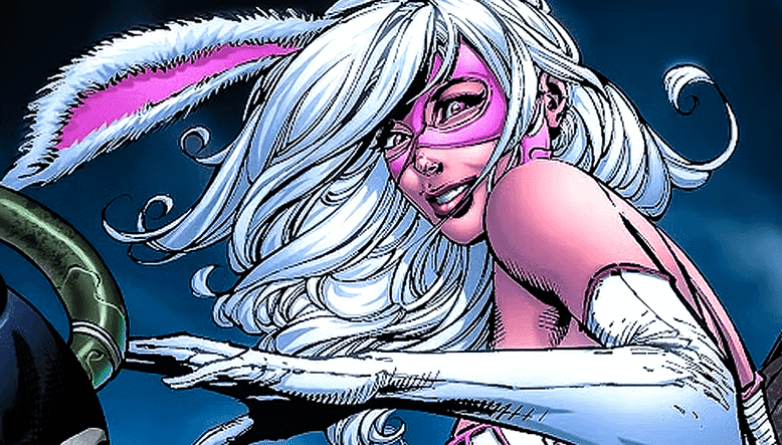
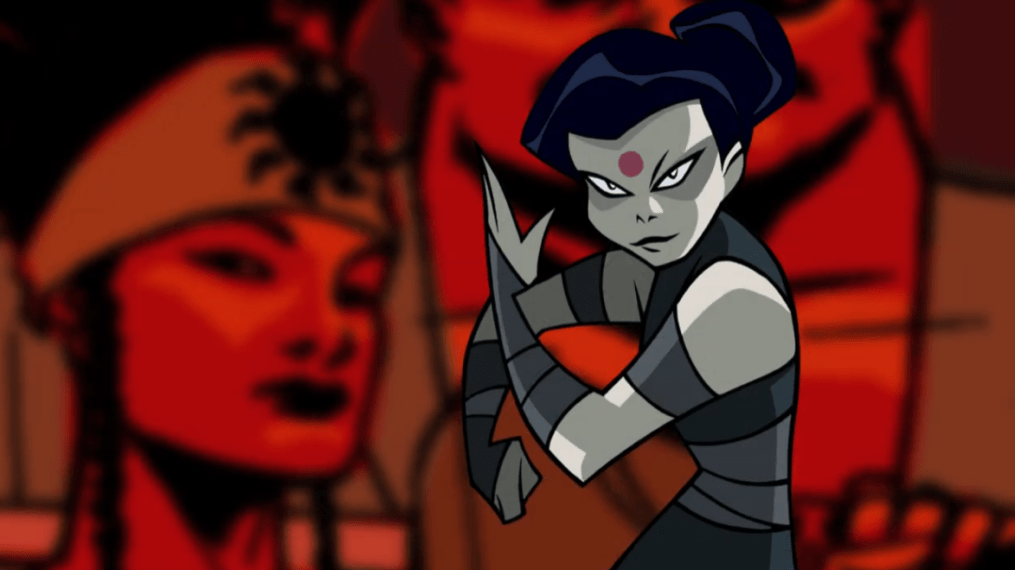
Honorable Mention: White Rabbit
We know very little about White Rabbit. To an extent, that works for her. She has an air of mystique. But we don’t even know where her powers derive (are they magic or tech-based), the extent of her powers, or how exactly her powers work. This goes beyond mystery. We need something, which is why White Rabbit is an honorable mention. Side Note: The fact that White Rabbit is a blank slate would’ve made her a great addition for Batman: Caped Crusader. Bruce Timm and company could’ve given White Rabbit any kind of background they wanted.
What we do know:
White Rabbit can split her personality, as in her alters physically split away from her (usually) core identity, Jaina Hudson.
Jaina Hudson is of mixed heritage: Indian and Caucasian.
She reabsorbs her other “selves” by touching them.
She has an Alice in Wonderland theme, but isn’t attached to the Mad Hatter…yet.
One of White Rabbit’s stories (within the New 52) read at the end, Next: Wonderland, which was a Mad Hatter story, but White Rabbit wasn’t included in that issue. Was the original plan to have White Rabbit and Mad Hatter team up?
Up to this point (March 2026 is when I’m writing this post), Jaina has two other alters: White Rabbit and Dumb Bunny.
Dumb Bunny is a Hulk-like version of White Rabbit, and evidently, White Rabbit can feel Dumb Bunny’s pain, but Dumb Bunny can’t feel White Rabbit’s pain.
There’s so much to explore here. What happens if one of Jaina’s alters dies? Does Jaina die? Are there any more alters? What causes these alters? And again, is this a magical or tech-based power? Maybe it’s all in her head, and it manifests as if Jaina’s two or three different people. We don’t know, but we’d like to know more. White Rabbit stories can get goofy and fun, and she’s begging for that Mad Hatter crossover story. Make it happen.
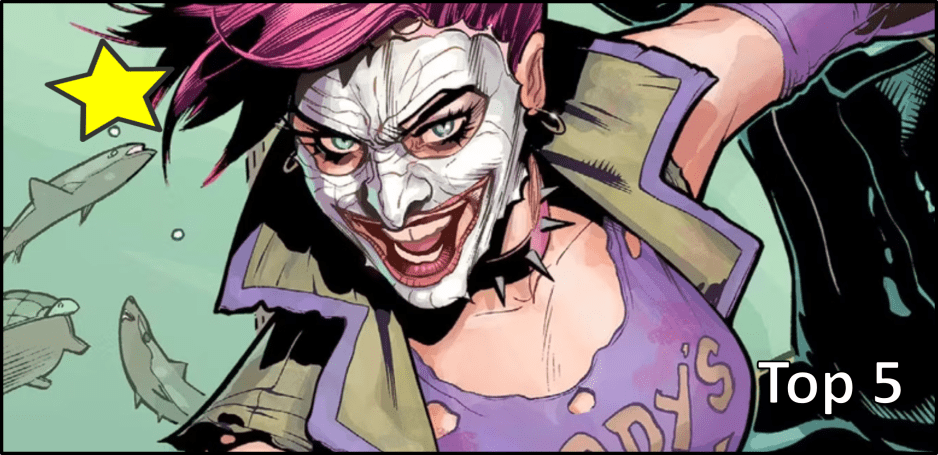
5: Duela Dent (Joker’s Daughter)
White Rabbit’s write-up went a little long. Duela Dent’s could go even longer. I’ll try to keep it short. Duela Dent is another misused member of Batman’s Rogues’ Gallery. Her current moniker is Joker’s Daughter. As “Joker’s Daughter,” Dent idolizes the Crown Prince of Crime, duplicating his vibe and criminality. Before becoming “Joker’s Daughter,” Duela Dent served on the Teen Titans as Harlequin. Not to be confused with Harley Quinn. As Harlequin, Duela Dent looked identical to The Joker, which may have caused confusion if The Joker hadn’t been blacklisted from DC Comics in the 1970s, due to being too violent. Essentially, Harlequin was the new Joker, and she was a hero.
But before becoming Harlequin, Duela Dent would change her identity with each crime. One day Dent would be Joker’s Daughter, but tomorrow she’d become Catwoman’s Daughter or Riddler’s Daughter or Penguin’s Daughter or even Scarecrow’s Daughter. Duela Dent wanted to be anyone but herself, and that’s the direction I’d like to see DC Comics take Duela Dent’s character. While Duela has claimed she’s the daughter of Doomsday (a much more modern villain), she doesn’t make herself look like Doomsday’s Daughter. I’d like to see her commit to being another villain’s daughter. Make Duela more than just “Joker’s Daughter.”
And despite the name, Duela Dent, Duela isn’t related to Two-Face. She’s from Earth-3, and the daughter of Three-Face and Jokester.
4: Cyanide
Cyanide has a limited but powerful number of comic book issues. She made her debut in Batman: Legends of the Dark Knight #150 and, as of writing this post, has only appeared in four total books. Since her name is Cyanide, her power set revolves around poisoning victims, which she does through her talon-like fingernails. In short, Cyanide is what you would get if Poison Ivy couldn’t be bargained with or talked down from a ledge. While Poison Ivy has morals and lines she may not cross, Cyanide doesn’t perceive those lines. She’s a cold-blooded killer. I’d love to see Cyanide in more comics and other media.
3: Little Boy
Brian Azzarello and Eduardo Risso introduced Batman fans to Little Boy during their run. Little Boy was the best thing that came from Azzarello’s Batman run. Little Boy gets her name because, from certain angles, she looks like a little boy. At times, she dresses to accentuate her body, distancing herself from her nickname Little Boy. I love this angle. Little Boy is a character who shows cleavage as a badge of honor. She doesn’t show cleavage to be a sex symbol. In fact, Little Boy isn’t traditionally beautiful. She’s a deadly assassin who poses more of a threat to Batman than Lady Shiva (who could’ve also made this list). One doesn’t see Batman getting his butt kicked single-handedly by a woman every day. Underestimate her at your own peril.
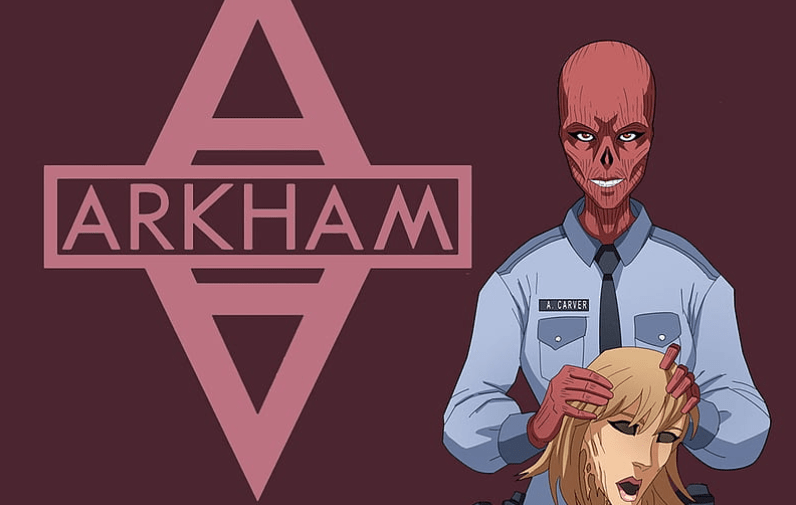
2: Jane Doe
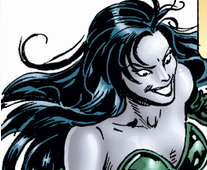
Jane Doe looks a little like Marvel Comics’ Red Skull. She has no skin. What you’re seeing is the muscle underneath Jane Doe’s skin. Eek! Similar to Marvel’s Chameleon, Jane Doe disguises herself as other people. While the previous two entries on this list focused on physical skills (poison and hand-to-hand combat), Jane Doe takes a psychological route. She’s the type of villain who can pretend to be Martha Wayne (Bruce Wayne’s dead mother) and torture him, making him question why she stayed hidden for decades and never reached out to him. Jane Doe is one sick freak. And I wouldn’t have her any other way.
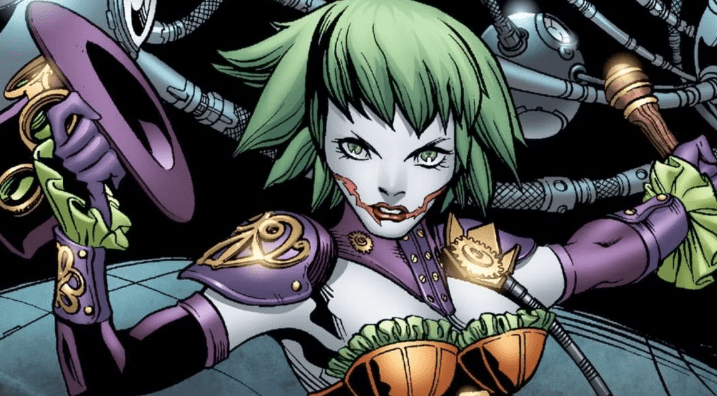
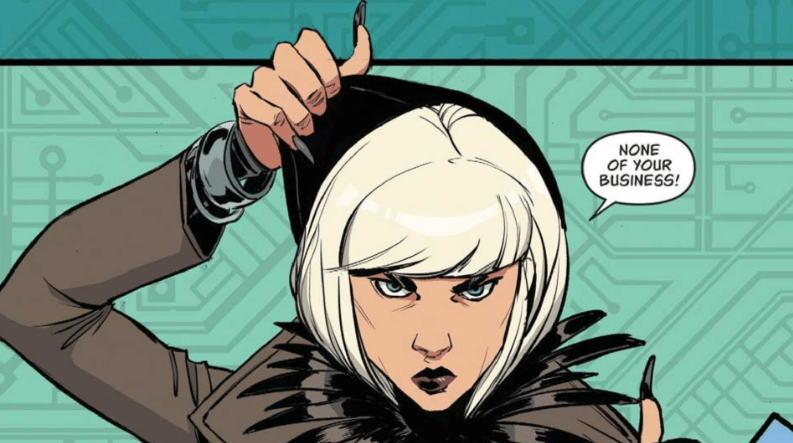
1: Magpie
Magpie claims our top spot in large part because of Bruce Timm’s comment. Timm mentioned Catwoman and Harley Quinn as two of Batman’s best woman villains, but both of these characters have shifted toward anti-heroes. Magpie is a fusion of Catwoman and Harley Quinn. She’s a burglar. With a name like Magpie, she’s attracted to shiny things. And she’s a psychopath, akin to Harley. Perfect. And unlike Catwoman and Harley Quinn, Magpie has little chance at redemption. She’s far too selfish.
The only issue I can see with Magpie is that her character design is a little dated. Typically, she looks like she came straight from the Eighties. Seriously, the picture I chose for her above is one of the few more modern looks for Magpie. I kind of like it. When Catwoman and Harley Quinn are picking up laundry in the Bat Cave, you may need an irredeemable villain like Magpie to fill the void. And it doesn’t hurt that Magpie has taken on Superman and Batman at once and lived. She’s ready for a comeback.
That’s our list of five underrated and/or underused women Batman villains. There are plenty more for future lists. Let us know your favorites, Geekly Gang. Thank you for reading, and wherever you are, I hope you’re having a great day.
Hey, hey, Geekly Gang! Kyra Kyle here with another Top 5 list, and this one’s a little bit of an update. I shared a similar list over a decade ago. Yikes! It may be time for an updated list. Board games fall in and out of favor, and a decade is a long time for a board game. I’ll share a game’s previous rank in parentheses to show how far a game fell or rose over the past decade. Thousands of new board games are released each year and plenty of them have superheroes as their theme. Let’s see which games made our list of Top 5 Superhero Board Games.
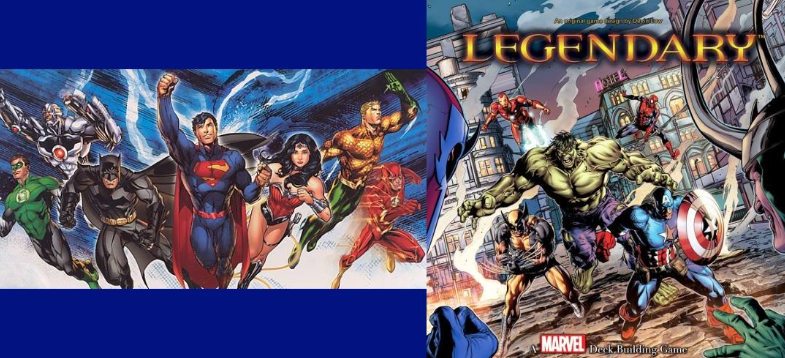
Honorable Mention: DC Deck Building Game & Marvel Legendary (Previously #2)
During the deck builder boom, the superhero game genre saw a ton of deckbuilding games. Every board game theme saw a ton of deckbuilding games. Heck, I backed a Care Bears Deck Building Game last year. Eek! And of course, Marvel and DC Comics received the deckbuilding treatment. Both games have their strengths, weaknesses, and supporters, who will rough you up if you say the wrong thing about their game of choice. For me, I prefer Marvel Legendary’s flow. It held our second spot over a decade ago, but recently, I’ve played Marvel Legendary with 5-players, and never again. It’s borderline unplayable. The DC Deck Building Game offers more of a story. Players feel like they’re playing as a character, but the rules can get clunky.
Again, I prefer Marvel Legendary’s flow, but DC Deck Building Game presents a fun alternative with more of a story.
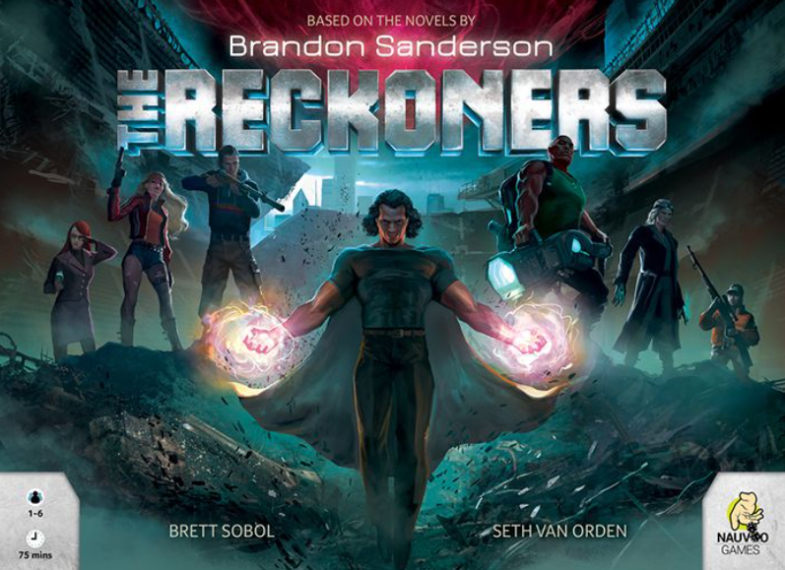
Honorable Mention: The Reckoners
The Reckoners didn’t quite make the list for one simple reason. I have yet to play it. I’ve watched demos and caught others playing this game, so I know it’s a good one. The Reckoners even has a great score on BoardGameGeek. I had to mention this simultaneous play, fast-action romp of a game. But I haven’t personally played The Reckoners. I could easily see this dice chucking game claim one of the top five spots in the coming years.
One last note before we get started. We’re not including games with a superhero theme if they’re part of a system that didn’t originate with superheroes as its theme. So, systems like Unmatched, which have plenty of superhero options, won’t make the list. And other games like a Marvel Monopoly or 5-Minute Marvel or even a Marvel Codenames, won’t make the list. Funnily enough, that would disqualify Marvel Legendary. The Legendary series of deckbuilding games began with horror franchises like Alien and Predator, which are fantastic by the way.
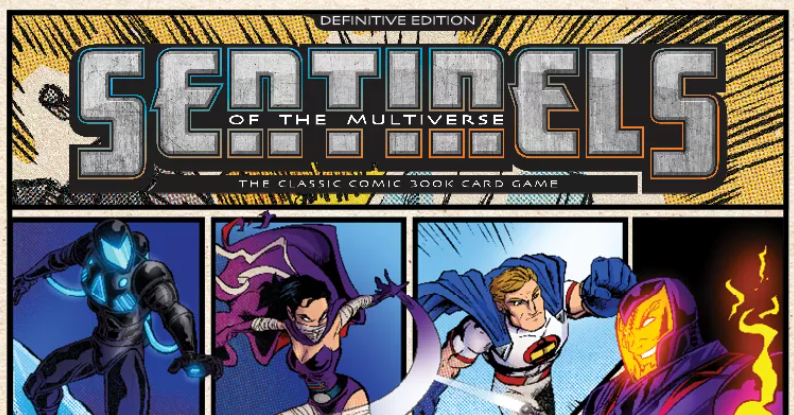
5: Sentinels of the Multiverse: Definitive Edition (Previously #1)
Honestly, Sentinels of the Multiverse may have been our number one over a decade ago, but if it wasn’t for a definitive edition, it may have dropped to an honorable mention. Don’t get me wrong, I still like the original, but the original Sentinels had a lot of glut. Sentinels of the Multiverse: Definitive Edition trims the fat and even fixes some rules issues. Sentinels still offers a unique gaming experience. It’ll always hold a special place for me. But if I’m playing Sentinels, I prefer the Definitive Edition.
The quality of life changes make all the difference. Reminder tokens are just the tip of the iceberg. If you have yet to purchase Sentinels and you’ve always wanted a copy, I’d buy the Definitive Edition. It accomplishes what its name suggests.
4: Batman: Gotham City Chronicles
Relive some of Batman’s most iconic stories with Batman: Gotham City Chronicles. This game’s asymmetric play (the villain player’s turn differs drastically from the hero players’ turns) is a joy. Hero players use dice to control their characters. I like a good dice chucker, and playing as a hero in Batman: Gotham City Chronicles is a fun dice chucker. But I love how the villains’ turn works. The player controlling the villains controls them with a villain deck and an ever-shifting river of villain tokens in the “River.” Activated villains during a turn move to the end of the river, and the further down a villain is from the front of the river, the more action points it costs to activate the villain. This takes careful playing by the villain player. While you could activate Joker on turn one (typically, he begins at the end of the river), it may serve the villain player best to activate a different villain. Maybe Harley Quinn.
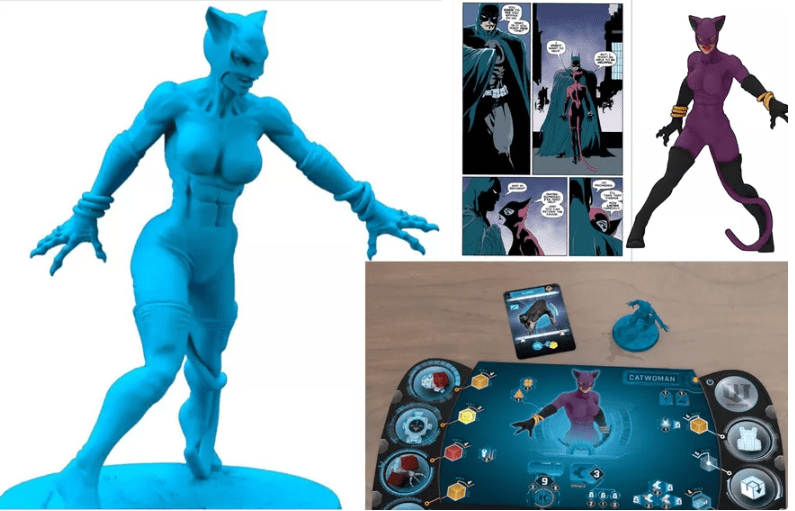
Character models are ripped straight from comic book panels. Batman: Gotham City Chronicles even offers a website with uploaded content to take your game further. Is there a new Batman tale you’d like to relive? There may be a fan-created or even a Monolith-designed campaign for that story. Batman: Gotham City Chronicles is a blast to play, but it may be one of the more difficult games to acquire from this list.
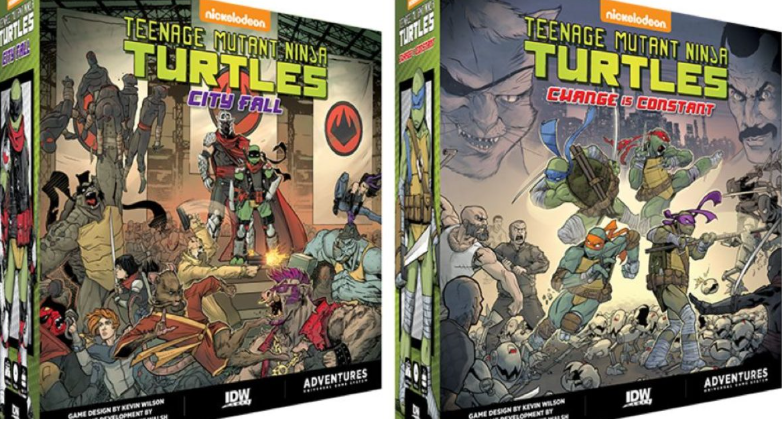
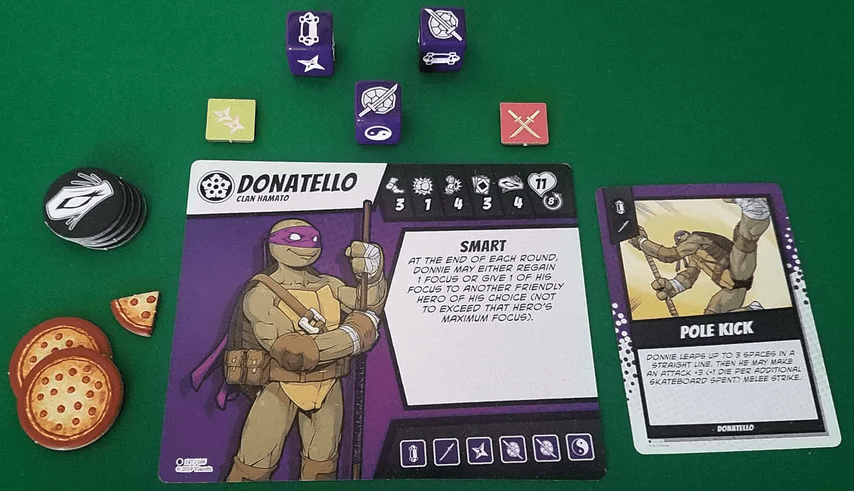
3: Teenage Mutant Ninja Turtles Adventures: City Fall and Change is Constant
While I just praised Batman: Gotham City Chronicles for its asymmetric play, Gotham City Chronicles took a lot of inspiration from Teenage Mutant Ninja Turtles: Shadows of the Past. The game began to show its age, so IDW updated Shadows of the Past with the Teenage Mutant Ninja Turtles Adventures series. Both boxes are standalone games, but you can combine the two for double the heroes in a half shelf fun.
Teenage Mutant Ninja Turtles Adventures edges out Gotham City Chronicles because it lowers the barrier of entry by just enough to make the game more accessible. TMNT Adventures is by no means a simple game. It offers almost as many story options as Gotham City Chronicles, and you can even customize your heroes, taking advantage of a map’s terrain. I’ve played the opening scenario for this game numerous times and love it. I’ve never progressed that far in the game’s story. I may need to rally my gaming group to finish a campaign.
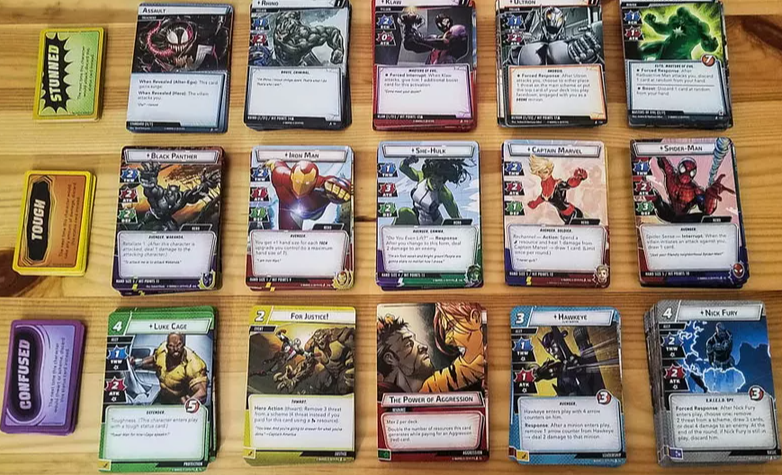
2: Marvel Champions: The Card Game
Spoiler alert: Marvel takes the top two spots in this list. I can see people flipping the two games at the top of this list. Some will like Marvel Champions more than the next title, but I like the next title slightly more than Marvel Champions. Clearly, both opinions are valid. The two games top this list. I love Marvel Champions’ inclusion of alter ego play. I rarely see superhero-themed games include anything about alter egos. When you play Spider-Man in Marvel Champions, you’ll have to balance his exploits as Spidey and finish his homework as Peter Parker. Brilliant!
Since Marvel Champions is a living card game by Fantasy Flight Games, it offers plenty of story and deck customization. I’d advise players to become familiar with Marvel Champions’ base rules before fiddling with deck construction, but that is another option. If I didn’t go all in with Marvel United (our next entry), I may have done the same with Marvel Champions. My only concern is that I rarely feel like I’m doing what the card says. Usually, I’ll say to my teammate that I have X-amount of blue, and they’ll respond with I have a X-amount of green, and we’ll deal with threats based on color/number. Despite this, Marvel Champions is a lot of fun and deserving of the second or even top spot.
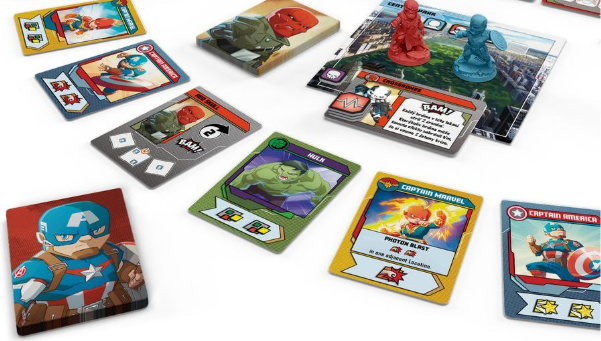
1: Marvel United/United Game System
I love Marvel United. It edges out Marvel Champions for me because it’s easier to onboard players and remember how to play the game. Few games on this list can boast that. I’ve played a lot of Sentinels of the Multiverse, but I’d have to refer to the rules a few times if I were to break out the game again. Marvel Champions has a ton of fiddly rules. I don’t need to do consult the rulebook with Marvel United. The graphic design is perfect. You could look at the symbols and guess what the game wants you to do. Other games on this list function like modern video game consoles in that one must log in, download software, and register products before playing a game, while Marvel United is plug-and-play.
And Marvel United happens to be our only game system on this list, but the system originated with the superhero theme. DC Super Heroes United releases later this year (hopefully), so we should get the chance for some awesome crossover battles between Marvel and DC Comics. Even though CMON Games has yet to announce another follow-up series, my guess would be Star Wars United. That’d be dope. Regardless of which direction the United Game System takes, the United System offers countless hours of play. The only issue I have with this game is that I never know who I want to play. I have so many characters. I placed everyone into a randomizer.
That’s Geekly’s list of the Top 5 superhero-themed board games. We’ll have to see what changes in the next ten years or so. Let us know your favorite superhero-theme board game in the comments. Thank you for reading, and wherever you are, I hope you’re having a great day.
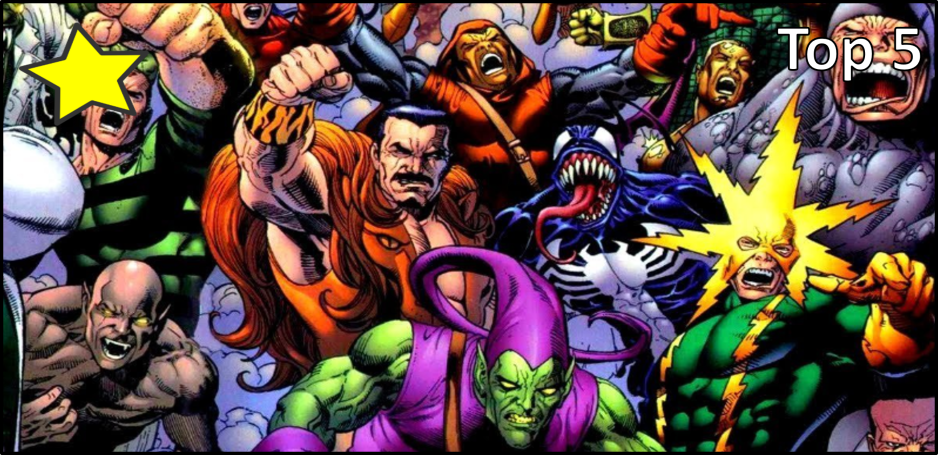
Happy Monday, Geekly Gang! Kyra Kyle here with a new entry in an older comic book series: Underrated and/or Underused Villains. Today, we focus on Spider-Man’s overlooked rogues’ gallery. The webhead has plenty of villains to his name, so it makes sense that a handful of villains may qualify. Notice how this list isn’t titled a Top 5. Numerous characters could make this list. If you don’t see your favorite underrated Spider-Man villain on this list, comment who would add.
The characters on this list may lean more toward underrated rather than underused or vice versa. Spidey has a wealth of villains, so we have more than one honorable mention. Let’s get to our list of five underrated/underused Spider-Man Villains.
Honorable Mention: Tombstone
I cheated with Tombstone. He shows up plenty in the comics, receives great adaptations in other media (I can’t wait for Your Friendly Neighborhood Spider-Man’s second season), and seldom gets overlooked as one of Spidey’s better second-tier villains. But I wanted to mention Tombstone. I love this character. One can never have enough Tombstone stories. I can’t wait to see Marvin Jones III (also known as Krondon) portrayal of Tombstone in Spider-Man: Brand New Day. Brilliant casting. Krondon also provided Tombstone’s voice in the Spider-Verse series of animated films. I can’t wait.
Honorable Mention: Beetle
Beetle meets the criteria for underrated and underused. His redemption story (told through Thunderbolts) is wildly underrated; I’d love to see a Beetle redemption story in the MCU. Abe Jenkins (the original and most famous Beetle) seldom gets used in media outside comics, and the comics haven’t featured him recently because he’s dead. But no one stays dead in comics forever. Oddly enough, Tombstone’s daughter, Janice Lincoln, has taken the mantle as the new Beetle. So, there’s a chance we could see Janice in the MCU.
No version of Beetle is primarily a Spider-Man villain, and that’s why they make the honorable mention list. Beetle threatens the larger MCU, giving preference to Iron Man and Spider-Man. Abe’s origin story was reworked a bit and used as Mysterio’s backstory in Spider-Man: Far From Home. He craved respect and recognition, so he stole tech, made a super suit, and terrorized the normies. When he joined the Thunderbolts, originally pretending to be a hero, he found the respect and recognition he always craved as a hero, so he became one. Ah! What could’ve been in the MCU? Beetle is certainly one of the most criminally overlooked Marvel villains. But his freelance villainy causes him to just miss the list.
Honorable Mention: Hammerhead
A third honorable mention? Yeah, Spidey has a ton of fantastic villains. We could’ve made a list of 20 underrated/underused Spider-Man villains. Let us know if you’d like to see a second part to this list.
Hammerhead has some of the worst adaptations for a Spider-Man villain. Outside the comics, media portray him as an underling. That isn’t true. Hammerhead is Kingpin’s rival, an equal in every sense. Readers of Spider-Man comics know this, but anyone who only consumes Spidey content outside the comics will wildly underrate Hammerhead as a villain. And Hammerhead has one of the most tragic childhoods among Spidey villains. I won’t spoil it. It’s brutal. There’s a reason Hammerhead’s skull has been replaced with adamantium. Yikes!
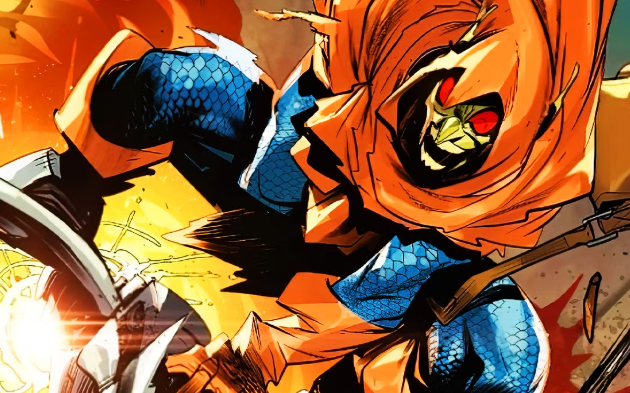
Hammerhead just misses our list because he may soon get a good adaptation. Rumors of Hammerhead joining Spider-Man: Brand New Day abound. I’m writing this early and before the second season of Daredevil: Born Again, and there’s a chance Hammerhead could become the Kingpin rival he was always supposed to be. We’ll have to see.
That wraps up our honorable mentions. Let’s see who made the proper list.
5: Doppelganger
Sure, Doppelganger has low intelligence. He barely says more than one word, but Doppelganger has a ton of potential, inside and outside of comics. Doppelganger hails from the dimension of manifestations. The Magus created all of the doppelgangers–they created a doppelganger for everyone in Marvel Comics (kind of like the Bizarros in DC Comics)–to combat their counterparts. Spider-Man’s doppelganger was the only one who made it to Earth 616 (Marvel’s main timeline). Lost, Doppelganger didn’t know what to do and attacked Spider-Man. It was defeated. But Doppelganger was rescued and adopted, in a way, by Shriek. Doppelganger only hates Spider-Man because the one it calls “Mother” (Shriek) hates Spider-Man. Despite its villain status, Doppelganger has conducted heroic deeds, and that’s interesting.
Within Marvel Comics, few creative teams have explored Doppelganger, but when they do, those stories slap. There have been rumblings of a potential Doppelganger sighting in Spider-Man: Brand New Day, but unlike Hammerhead, I doubt Doppelganger will get a good story. Fingers crossed.
4: Hobgoblin
Hobgoblin fits the bill of an underrated Spider-Man villain, but he also poses a good question. Can someone be overused and underused at the same time? When Hobgoblin makes it into a Spider-Man story, he dominates for a few years, and then he disappears for almost a decade. And the pattern repeats. Most creative teams who include Hobgoblin in a story are passionate about the character. That’s why Hobgoblin dominates the storylines. This shields Hobgoblin from a lot of “bad” storylines. In fact, Hobgoblin is one of the few Spider-Man villains on this list, and in the honorable mentions, without an awful story.
One does need to establish a Green Goblin before introducing Hobgoblin. Typically, Hobgoblin “borrows” Green Goblin’s gadgets and rebrands them. The Nineties Spider-Man animated series is the only exception I can think of when Hobgoblin appears before Green Goblin. It helps that Mark Hamill voiced Hobgoblin.
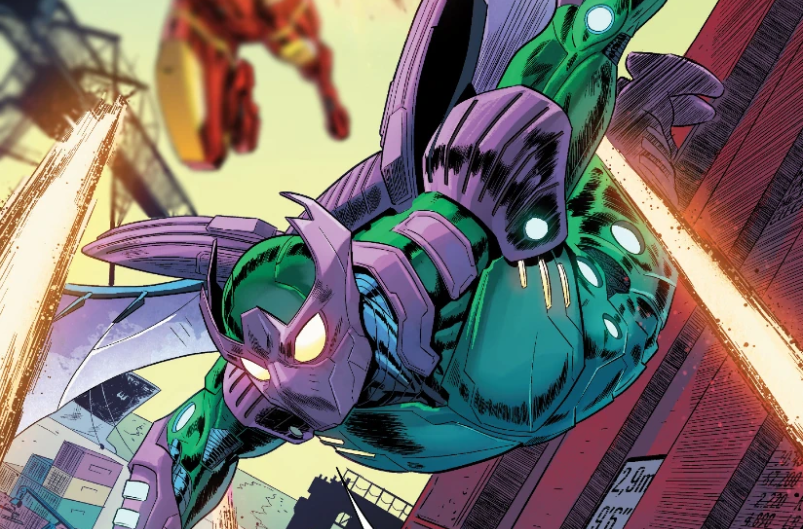
Honestly, I like Hobgoblin’s aesthetic more than Green Goblin’s, and I love the purple and green combination. Heck, those are Geekly’s colors. It must be Hobgoblin’s outfit, his more demonic and unhinged look, and that’s ironic. Green Goblin always has some form of mental illness, but usually, Hobgoblin has full control of his mental faculties. That can give Hobgoblin a more sinister vibe. He knows exactly what he’s doing.
3: Chameleon
Chameleon is Spider-Man’s first villain. In his first tale, Chameleon dresses up as Spider-Man to frame him for stealing government plans. This happens a lot for Chameleon. He frames Spidey for crimes he didn’t commit, but Chameleon is more of an espionage character. He has an awesome backstory. Without Chameleon, we may not get as fleshed out a Kraven the Hunter. The two are half-brothers. But Spider-Man creators miscast Chameleon. So, Chameleon may be more of a misused villain than an underused villain, but he is also underused.
Despite being Spider-Man’s oldest villain, Chameleon rarely shows up in other media, and when he does, it’s usually a cameo. I’m hopeful for Chameleon’s role in Your Friendly Neighborhood Spider-Man’s second season. This version of Chameleon has potential. It also helps that Peter Parker’s father (Spoiler: Peter’s dad is alive in this cartoon series) worked as a spy. That could play into Chameleon’s background. We need Spidey to flex his detective muscle. Mysterio triggers Peter’s tingle, forcing him to rely on his Spider Sense. A full-thrust Spider Sense for Mysterio makes sense because Mysterio envelops the area around him with illusions. I could see a low-level twinge with the Chameleon, like Peter knows something’s amiss, but he can’t put his finger on it. Chameleon’s abilities only affect himself. We need better Chameleon stories.
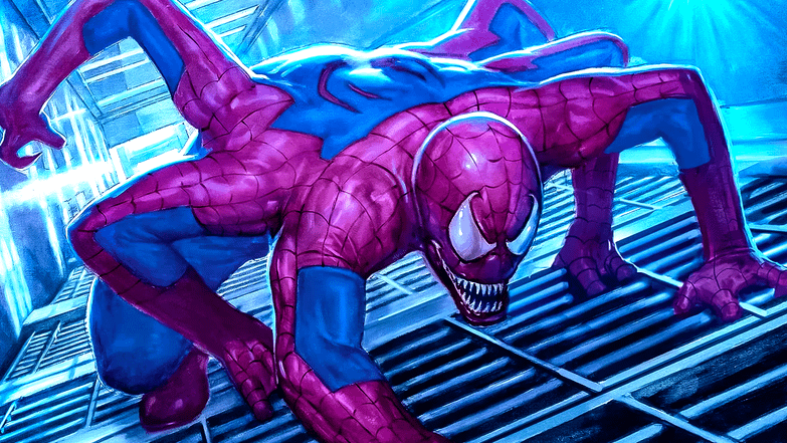
2: Vermin
Before making this list, I knew who would reach the top. One can rearrange or replace any of the previous Spider-Man villains on this list, but the top two are chiseled in stone. You could swap one and two with each other, but we’ll get to number one in a minute. First, we’re talking about Vermin.
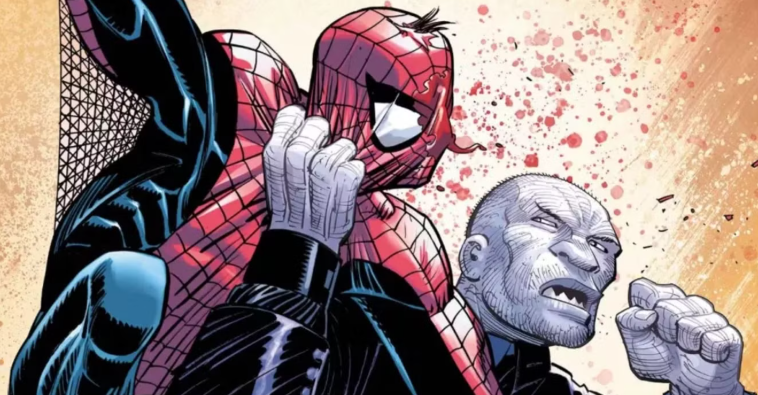
Vermin may take the mantle of the most underrated and underused Spider-Man villain. Most Spidey fans (who read the comic book) would say Kraven’s Last Hunt and The Child Within are two of the top three or four stories in Spider-Man history. Vermin features in both stories. Despite those two tales occurring decades ago, Vermin shows up in few other stories. See what I mean about underused? Some Spidey fans may forget Vermin was in Kraven’s Last Hunt. Talk about underrated. Sure, Vermin was Kraven’s pawn, but there’s a killer moment when Spider-Man loses his temper with Vermin. Love this story. We covered it more in a previous post.
And then we get to The Child Within. Ah! So good. A nine or ten-year-old child wanders into the sewers and asks Vermin to accompany him home. Vermin (a rat person) takes the kid to a mansion, but the kid refuses to go inside. By this point, we realize the kid is Vermin’s inner child. The mansion belongs to his parents. At first, Vermin’s parents don’t recognize him. We get Vermin’s tragic backstory, and I’m not going to spoil it here. You should read The Child Within.
Not only does Vermin have few–if any–“bad stories,” he’s featured in two of Spider-Man’s greatest stories. Who could possibly claim the top spot over Vermin?
1: Jackal
If you were to rank Spider-Man’s most important villains (the ones necessary to tell Spider-Man’s story), the list would look like the following:
1) Green Goblin 2) Doctor Octopus 3) Jackal
Spider-Man fans who read the comics know who Jackal is and would agree with this list–for the most part. Spidey fans who don’t read the comics are scratching their heads, wondering who the hell is Jackal? That’s why Jackal is number one on this list. He is one of Spidey’s most important villains, and not enough people know him. Jackal introduced The Punisher, hiring him to take down Spider-Man (during The Punisher’s first appearance), and he’s behind most, if not all, clone storylines. And Spidey has a ton of clone stories. The Clone Saga is the longest storyline in Spider-Man comic book history.
The original Jackal, Miles Warren, was one of Peter Parker’s college professors. Warren, in his mid to late fifties, crushed on Gwen Stacy. Ew. She’s more than half your age, creeper. After Gwen died, Warren blamed Spider-Man for her death. Spidey did web Gwen’s foot, causing her neck to snap. Jackal, pointing out this detail to Spider-Man, poured extra salt into Peter’s guilt. Peter already blamed himself for Gwen’s death. What ensued was a lot of cloning, cloning of Gwen Stacy, Peter Parker, and others. Eventually, Jackal would clone himself in an attempt to achieve immortality.
Jackal’s lack of a good adaptation outside of comics reminds me of Hobgoblin’s issue. Jackal is difficult to explain without a lot of setup, like Hobgoblin needing Green Goblin to exist first. Typically, Jackal needs Gwen Stacy to exist. You may even need her to perish. Often, Miles Warren gets introduced, and we never see his transformation into Jackal. And then there’s Jackal’s age. Since Warren is in his fifties, whenever he gets introduced as a side character in a movie or show, people overlook him. Warren appeared in The Amazing Spider-Man film series and Sony’s Spider-Man adjacent movies. Blink, and you’ll miss him. I hope the MCU takes its time to introduce Jackal in the future. Gwen may soon make her debut in the MCU. Jackal may not be far behind.
That’s our list of five underrated and/or underused Spider-Man Villains. There are plenty more villains who could’ve made this list. Let us know who you would add in the comments. Thank you for reading, and wherever you are, I hope you’re having a great day.