


Happy Wednesday, Geekly Gang! Kyra Kyle here, and today, our writers share what they’ve been reading over the past month. Feel free to share what you’ve been reading over the past month because we’re all part of the Geekly Gang. I’ll get things started with what I’ve been reading this past month.

Yes! In preparation for the upcoming Supergirl movie (releasing later this month), I read Supergirl: Woman of Tomorrow, and I’m glad I did. I like the addition of Ruthye. Ruthye serves as a Nick Carraway-style narrator (The Great Gatsby). The story may be Supergirl’s, but it’s told in Ruthye’s voice. While Ruthye has a tendency to monologue, I love it when Supergirl’s actions contradict Ruthye’s narration. For example, “Many view Supergirl as soft,” and Supergirl swears while beating someone to a pulp, to which Ruthye will add, “In my experience, that was not the case.” Instant chuckles.
Tom King wrote Supergirl: Woman of Tomorrow. I figured I would enjoy the title, because I enjoyed Tom King’s (sometimes maligned) run on Batman. Honestly, I don’t know why some readers didn’t care for King’s Batman run. I blame it on King killing off Alfred Pennyworth during the City of Bane (2019), and Batman’s faithful butler has yet to return. The fact that Alfred has remained dead shocks me. Good on DC Comics. I mention King’s work on Batman to suggest that he takes risks, and Supergirl: Woman of Tomorrow takes risks. Future authors codified Supergirl Kryptonian with PTSD in future Supergirl stories, but King took the first leap.
And this is a heck of a first leap. I can’t wait to see what Season thinks of Supergirl: Woman of Tomorrow. After I was done reading the story, I shared it with her, and she finished it in one sitting. Yay! And after Season was finished, she handed the book to Skye. We may have a three-way crossover this month. Woo hoo!

As you can see, I went on a DC Comics kick this month. Comic book writer Greg Rucka is another favorite. I liked his runs on Wonder Woman, so I was excited to try out Batwoman: Elegy. We begin in medias res (in the middle), and I appreciate Batwoman: Elegy refusing to hold the reader’s hand. But I was confused. Some context could’ve helped, but the story flows. Super fast. I blew through Batwoman: Elegy, and I don’t recall Rucka’s Wonder Woman reading that quickly. In short, Rucka made the right choice. Batwoman moved through this story so quickly, as if she were trying to run away from something. Turns out, it’s her past.
The context I complained about not having at the beginning reveals itself toward the middle of Batwoman: Elegy. This story’s speed gets the reader to those ah-ha moments faster. Only one thing bothered me in Batwoman: Elegy. The story overcommits to linking Batwoman to Batman. While I appreciate Batwoman: Elegy trying to link its character with the rest of Bat Family, at times it felt forced, and other times it was downright confusing. Evidently, Batman had a similar case to Batwoman’s, and Batwoman: Elegy remixes the two events. Batwoman: Elegy is a great origin story for the character, but at times, it get turned around.

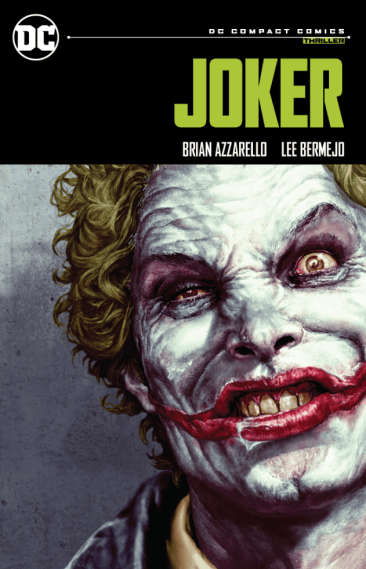
This is my final DC Comics entry, I swear. I didn’t know what to expect from Harley Quinn and the Gotham City Sirens. Paul Dini (writer of Batman: The Animated Series) is another excellent comic book writer, and Harley Quinn and the Gotham City Sirens serves as a source material (of sorts) for the Harley Quinn: Animated Series. The final product reads like a series of odd occurrences, some of which make their way into the Harley Quinn series. I expected a comical tone. Harley Quinn and the Gotham City Sirens took itself far more seriously than I imagined.
The stories were engaging. Short, but engaging. Dini tends to write short-form comic book stories. If you’re expecting a longer narrative like Supergirl: Woman of Tomorrow or Batwoman: Elegy, you won’t find it with Harley Quinn and the Gotham City Sirens. This is the third graphic novel I read this month, and frankly, I needed a change of pace. Harley Quinn and the Gotham City Sirens fills that role. Don’t enter reading this story thinking it’ll be as comical as the Harley Quinn: Animated Series.

I mentioned last month (I think) that I had read the Proactive Roleplaying Guide from the Game Master’s Handbook line, and I was going to start reading The Game Master’s Handbook of Collaborative Campaign Design. Phew! That is a long title. But the title’s length makes it easy to search online for the book. I love this series. I knew I’d love this book. And didn’t disappoint. Jonah and Tristan Fishel hand game masters the keys to incorporating the methods in this book into any tabletop role-playing game, even ones that are underway.
The biggest hurdle will be letting go of some authority as the game master. When the Fishels say collaborative campaign design, they mean it. The game master and the players craft the world and campaign they wish to play. Funnily enough, this leads to more buy-in by the players. Players take ownership of the game and its world. And it alleviates pressure on the game master to always come up with something. Will The Game Master’s Handbook of Collaborative Campaign Design work for every situation? No. It wouldn’t work for the two-hour session I have planned for the upcoming Comic-Con: Nebraska (stop by and say hi), but I can’t wait to try out this method with a longer campaign.
That’s all I have for what I’ve been reading. Let’s check in with Season and Skye.

With the upcoming release of the Supergirl DCU film, the rest of the Geekly crew has convinced me to take a closer look at the movie’s inspiration, Supergirl: Woman of Tomorrow. I am in the process of reading Supergirl: Woman of Tomorrow, but what I’ve gleaned is this is a complex tale about the emotional struggles of the title heroine following the destruction of her home planet. Kara is despondent that her people have been wiped out. As a result, she’s developed a habit of taking trips to planets with red suns to repress her powers and drown her sorrows in booze. It’s genuinely depressing to see a beloved superhero in such a state, but I look forward to seeing how the story conveys the need to rise above one’s circumstances.

Same! I also read Supergirl: Woman of Tomorrow in preparation for the upcoming movie. As previously mentioned, I read it in one sitting. Can you tell I enjoyed it? I appreciate the story not being told from Supergirl’s perspective. I mean, she began the story wasted, so her being the narrator would have been less reliable. There is a point in Supergirl: Woman of Tomorrow when Ruthye makes conjectures about what happened when Supergirl left her on a safe planet. I’m curious whether they’ll include this in the upcoming movie.
Supergirl: Woman of Tomorrow had good pacing and evened out the heaviness of the story with goofy moments. The ending is truly something to behold and is well-earned.

The Spellshop is a popular 2024 romantasy title. It’s also my first time reading a romantasy. Kiela ran away from the city of Alyssium to the remote island of Caltrey with illegally acquired spell books due to a revolution in Alyssium. I thought most romantasies had a lot of hot and heavy moments, but The Spellshop proved me wrong. Kiela focuses on survival in her new/old home (her parents’ house before they moved to the city), and all of her neighbors want to help her. Kiela isn’t a social person, so the help is unwelcome at first. She warms up to the villagers (and a local guy) and manages to thrive on Caltrey. There are a couple of scenes with kissing in them, but acts of service are the primary love language in The Spellshop.
Did I mention Kiela’s best friend, Caz, is a talking spider plant? Honestly? Caz is the main reason I picked up the book. Tee hee!

Back in April, I mentioned The Husky and His White Cat Shizun. I’m still reading that (I’m on Volume 5), but I’ve also started reading Heaven Official’s Blessing. I watched the anime for Heaven Official’s Blessing, and the ending was abrupt. Apparently, they’re releasing a new season this year. Anyway, the light novels have a faster pace than the anime, though they’re redundant in places. Seriously, if Mo Xiang Tong Xiu cut out half of the redundant sentences, I guarantee the first volume could have been shorter by at least thirty pages. I still enjoy the story, and the characters are cute. I’m excited to see what lies beyond the anime.
Hey, hey! Kyra Kyle here again. Those are all the books our writers have been reading this past month. What’ve you been reading? Let us know in the comments. Thank you for reading, and wherever you are, I hope you’re having a great day.
Hey, hey, Geekly Gang! Kyra Kyle here. Supergirl is right around the corner, so now may be the best time to get into reading Supergirl comics. Many of the stories mentioned in this list will come from the previous two decades because Supergirl was a girl version of Superman for many years until DC Comics decided to kill her in Crisis on Infinite Earths. Spoiler: Crisis on Infinite Earths didn’t quite make this list, but I’d recommend reading it for reasons other than Supergirl lore.
Crisis on Infinite Earths occurred in the Eighties, and Supergirl’s death would stick longer than most comic book characters. And when Supergirl returned, comic book creators took her in different directions. Finally, Kara Zor-El would break free of her cousin’s shadow. We have some interesting stories to discuss. Which comic book stories made our Supergirl Starter Stories.
We’ll start things off with our only single issue on this list.

Fun fact: Action Comics #252 contained three stories. The first featured the iconic Superman villain, Metallo’s first appearance in “The Menace of Metallo.” And the third was Supergirl’s origin, “The Supergirl from Krypton.”
Honestly, I only included “The Supergirl from Krypton” because it’s Supergirl’s first appearance. I like to include a character’s origin whenever possible. Very little happens in “The Supergirl from Krypton” besides Superman and Supergirl meeting for the first time and a lengthy backstory of how Kara Zor-El ended up on Earth. But Supergirl’s origin is interesting.
Her Kryptonian hometown, Argo City, was blasted free of Krypton’s destruction in a bubble of compressed air, designed by Kara’s father Zor-El (who’s also Superman’s uncle). Zor-El created a force field around the city to maintain its atmosphere, but years later, a meteor shower penetrated the air bubble, and Zor-El saved his daughter by building her a spaceship, similar to Superman’s. He sends her to Earth because somehow the Kryptonians on Argo City know about Superman. Sure. Supes can’t take on Kara as his ward (and risk his secret identity), so he sends her to an orphanage. Nice move, Supes.
“The Supergirl from Krypton” doesn’t have a lot of space to explore the cousins’ relationship, but there’ll be plenty of time to do that in the coming years.

Peter David had an excellent run on Supergirl. You should check it out if you have the time, but I’m focusing on David’s storyline, “Many Happy Returns” because David primarily wrote about Linda Danvers, the Post-Crisis on Infinite Earths’ Supergirl. This post focuses on Kara Zor-El, but Linda Danvers was a good character in her own right. Danvers is the reason Kara Zor-El in the Supergirl series had the surname Danvers.
Anyway, “Many Happy Returns” marks Kara Zor-El’s return to DC Comics continuity. A lot more happens in “Many Happy Returns,” we’re talking multiverse jumping and a romance between Earth-One’s Superman and Linda, leading to Linda needing to save Kara on her world. Long story short, Linda does something she can never come back from, renounces being a hero, and Kara Zor-El takes back the mantel of Supergirl.

Jeph Loeb’s classic run on Supergirl helped define the character. While “The Supergirl from Krypton” spun a tale of a teenage Kryptonian living on an asteroid for years before getting launched into space to join her cousin, “Supergirl: Girl of Steel” presents the more familiar story of Supergirl leaving Krypton at the same time as her then infant cousin. Supergirl was tasked with protecting Kal-El on Earth, but her ship got lost and she spent decades in suspended animation. By the time Kara Zor-El reached Earth, her cousin no longer needed her. And now, she needed to find her way.
“Supergirl: Girl of Steel” is an iconic story at this point. You can see its influence on the Supergirl television show, and the upcoming Supergirl film will use another story (more on that in a bit) that builds on “Supergirl: Girl of Steel’s” structure. This is a must read.

“The Hunt for Reactron” may take place on New Earth, but it does an excellent job showcasing Reactron, one of Supergirl’s greatest foes. And you can’t go wrong with Greg Rucka’s storytelling. On New Earth, Kara Zor-El’s father and many more Kryptonians survived Krypton’s destruction. They establish a New Krypton, and Reactron, with the help of Superman villain Metallo, disturb the peace. Okay. I soft-balled that. Reactron kills Kara’s father.
Understandably, Kara flies off in a rage. What ensues is fellow Kryptonian Thara Ak-Var (Flamebird) preventing Kara from doing something she’ll regret. Is she successful? You’ll have to read “The Hunt for Reactron.”

We go from one villain-defining story to another. Leading up to 2010, Bizarro had existed for decades. Bizarrogirl made her debut in this story, and she does so with a bang. Unlike Bizarro who’s the opposite of Superman, Bizarrogirl functions like a mirror for Kara Zor-El. Leading into this story, New Krypton falls and several Kryptonians (like Flamebird) die with it. Supergirl is in mourning.
Bizarro sends Bizarrogirl to Earth to cause trouble. While Bizarrogirl is away, Bizarro World gets attacked by giant bug-like creatures spawned by “Godship.” The insectoids overrun Bizarro World, and Bizarrogirl’s people believe she abandoned them. She blames herself for Bizarro World’s downfall just as Supergirl blames herself for New Krypton’s demise. I love how Bizarrogirl asks Supergirl if self-punishment ever ends, and Kara tells her it might not, but it’s what you do afterwards that counts. Supergirl takes her own advice, and the two start healing. “Bizarro-Girl” is a great read.

The New 52 brought changes to the DC Comics Universe. This version of Supergirl has just landed on Earth. She believes she’s dreaming. She must be on Krypton (instead of Earth) and encounters Superman. Confused, Kara Zor-El attacks the man calling himself Superman. She had babysat her infant cousin Kal-El three days ago. But this is indeed a grown Kal-El. He explains to her that the Earth’s yellow sun gives them superpowers like Kryptonian Worldkillers. What’s a Worldkiller? We find out when we meet Reign for the first time.
Reign explains that Worldkillers, like her, were the result of Kryptonian scientific experiments. They were genetically altered to be killing machines. And just like Kryptonians, Reign isn’t the only Worldkiller who survived Kryton’s destruction. Kara must take on four Worldkillers alone. The Worldkillers want nothing more than to kill innocent lives. Kara manages to save the humanity and drive off the Worldkillers…for now.
“Supergirl: The Last Daughter of Krypton” introduces yet another great Supergirl villain, Reign. She made such an impression that she was featured in a season of Supergirl. Not bad for a new villain. “Supergirl: The Last Daughter of Krypton” shows Kara Zor-El as truly alone. It sows the seeds for our next entry as well.

Surprise. Worldkillers return in “Red Daughter of Krypton.” But before we get there, Supergirl fights off Cyborg Superman and H’el in space. H’el is another great Supergirl villain. We don’t get too much of his backstory here, but in short, he tempts Kara Zor-El with turning Earth into a New Krypton. While this pitch wouldn’t do much for Superman, Supergirl has more of an attachment to Krypton. Regardless, after Supergirl finishes this fight she returns home to find Lobo antagonizing her. All this leads to a red lantern ring finding its way to Kara. Red Lanterns feed off anger, and in “Red Daughter of Krypton,” we see Kara Zor-El give into her rage.
Even though most Red Lanterns, like Atrocitus, who does make an appearance, can be viewed as villains. We do see heroes take on a red lantern ring. Here’s looking at you, Guy Gardner. In the end, Supergirl manages her rage. She retains the moniker of a superhero. But “Red Daughter of Krypton” reveals a new side of Supergirl that writers will explore.

We get another origin story of sorts with “Supergirl: Being Super.” In this one, Kara Zor-El becomes Kara Danvers. This is an obvious nod to the Supergirl television show in the middle of its run on the CW. “Supergirl: Being Super” remixes details of the original Supergirl origin. She lives in Midvale, which is where Superman dropped her into an orphanage. But she also discovers her powers, similar to Kal-El. The Supergirl in “Supergirl: Being Super” drops the Supergirl as Superman protector for a moment and explores what it would be like if Supergirl were a novice.

“Supergirl: Woman of Tomorrow” was the first comic I knew would make this list. If you were to search against this title, you’ll find the Supergirl 2026 movie as a top result. Simply put, “Supergirl: Woman of Tomorrow” is the basis for the upcoming DCU Supergirl film. Yay!
Written by Tom King (who had just finished an iconic run on Batman), “Supergirl: Woman of Tomorrow” returns Kara Zor-El to Superman’s would-be protector. Only a grown Superman doesn’t need a babysitter. So, she’s on a foreign planet (Earth) with no purpose and gives in to her baser instincts. This is a lost Kara Zor-El. The ending of the DCU’s Superman (2025) does a great job of setting up her character. Kara gets wasted. She’s aimless. She struggles to find purpose, but eventually, she finds herself. The award-winning “Supergirl: Woman of Tomorrow” received widespread acclaim. I can’t wait to see how the DCU interprets this story.
Those are the Supergirl stories that made our list. Are there any Supergirl stories you would add to this list? Let us know in the comments, Geekly Gang. Thank you for reading, and wherever you are, I hope you’re having a great day.
Hey, hey, Geekly Gang! Kyra Kyle here, and I’m getting excited for the upcoming Supergirl film. How about you? Let’s get ready for the DCU’s next entry at the end of the month, shall we? We know Lobo will feature in the movie. Supergirl and Lobo cross paths often enough, but I wouldn’t consider Lobo a Supergirl villain. Who are Supergirl’s top villains? Kara Zor-El and Kal-El share a lot of enemies. We’ll do our best to avoid a Top 5 Supergirl Villain list that looks too much like a Top 5 Superman Villain list. Besides, Geekly already did a list for Superman.So, who made the list of Top 5 Supergirl Villains?

Anti-Monitor made his debut during the DC Comics Crossover Event, “Crisis on Infinite Earths.” Famously, Superman held a deceased Supergirl in his arms. DC Comics made it clear that no character was safe. Heck, Supergirl would stay dead and buried for a couple of decades. No one ever stays dead for long in comics, but Supergirl was one of the ones that stuck around longer than fans expected. And yet, Anti-Monitor doesn’t quite make this list. We’re using the same logic as the Top 5 Superman Villains list. Darkseid took a lower spot on Supes’s list because he’s more of a universal threat. Anti-Monitor is that and then some. And while Doomsday went on to become a thorn in Superman’s side decades after Superman’s death, Supergirl has seldom encountered Anti-Monitor. He still gets a mention. How could he not? Even though he seldom graces the pages of Supergirl comics, Anti-Monitor was at the heart of one of DC Comics’–and Supergirl’s–iconic moments.

Reign only knows her name, the fact that she’s a Worldkiller, has incredible combat skills (especially swords), and Krypton has something to do with her past. This is a good set-up. Reign holds Kryptonians–and Supergirl in particular–in contempt. Reign may be one of the newer villains on this list, but she plays well against Kara Zor-El. The two have clashed a handful of times over the past decade and a half after Reign’s introduction. Reign made such an impression that she featured on the Supergirl CW show. Is it a matter of time before we see Reign on the big screen?

Bizarro didn’t quite make our Superman’s Top 5 Villain List, but that was largely because he was the opposite of Superman. Supergirl has a Bizarro version, too. But Bizarro Girl differs from the original Bizarro. Bizarro Girl is a reflection of Kara Zor-El. I hope to see Bizarro Girl in the upcoming Supergirl movie–she works well in stories about self-acceptance–but I’m also okay waiting. Supergirl suffers from the loss of Krypton. Unlike her cousin, Supergirl witnessed Krypton’s downfall. Similarly, Bizarro Girl wasn’t present when the Godship (insectoid world-eaters) attacked Bizarro World. With her people believing she abandoned them, Bizarro Girl went into isolation. Her journey mirrors Supergirl’s. And it’s always fun to have some Bizarro comedy thrown in for good measure.

I knew Silver Banshee would make this list but had no idea where she fits. Three. The middle? Does that sound good? Silver Banshee has a couple of things going against her on this list: she started as a Superman villain, and she often flips sides and fights alongside Supergirl. Despite beginning as a Superman villain, Silver Banshee quickly became an iconic Supergirl villain. And even though she may be picking up Kara Zor-El’s laundry at the moment (Is Silver Banshee still a friendly?), she’s had several iconic fights against Supergirl in the past. One can’t tell Supergirl’s story without Silver Banshee, but she just misses out on the top two spots because she goes the way of Catwoman. Is she friend or foe? Who knows. But Silver Banshee is a classic Supergirl character.

While H’el could work–and occasionally serves–as a Superman villain, he works best as a Supergirl villain. This Kryptonian clone wants to reconstitute Krypton at Earth’s expense. We’ve seen this storyline work with Superman and General Zod, but H’el’s relationship with Kara Zor-El works even better. Superman views Earth as home. Supergirl still views Krypton as home. H’el’s pitch of a New Krypton tempts Supergirl into betraying her adoptive homeland. It also doesn’t hurt that Supergirl’s first encounter with H’el was him rescuing her. The two have a bond, and Supergirl can’t fully see him as a villain, which makes H’el that much more of an effective Supergirl villain. H’el’s like a toxic boyfriend. Supergirl defends him while he’s ripping the Superman family a new one. Eventually, H’el finds that one line Supergirl can’t ignore, and she springs into action.

Reactron controls radiation. That makes him a formidable foe. But Reactron can manipulate radiation in any form, including kryptonite. That makes Reactron deadly to Supergirl. In fact, when Supergirl got hit with Scarecrow’s fear toxin, Reactron was who she saw. I don’t think we need more of a case for Reactron being atop a top Supergirl villains list than that, but let’s continue. Unlike some other villains on this list, Reactron was created to be a Supergirl villain. He destroyed New Krypton and kidnapped Kara Zor-El’s mother. Oh, and he killed Kara’s father, Zor-El. No wonder Reactron haunts Supergirl’s nightmares.
I can’t wait to see who the DCU casts as Reactron and how the film series plans to use him. Looking through this list of villains, Supergirl’s rogues are varied. The DCU has a blank canvas for this character. Supergirl has plenty of source material. I can’t wait to see some engaging Supergirl stories. If I had to guess, Supergirl won’t include Reactron. Maybe, he’ll get a mention. Reactron demands plenty of screen time.
That’s our list for the Top 5 Supergirl Villains. Who would you add or take away? Would you shuffle the order? Let us know in the comments. Thank you for reading, and wherever you are, I hope you’re having a great day.

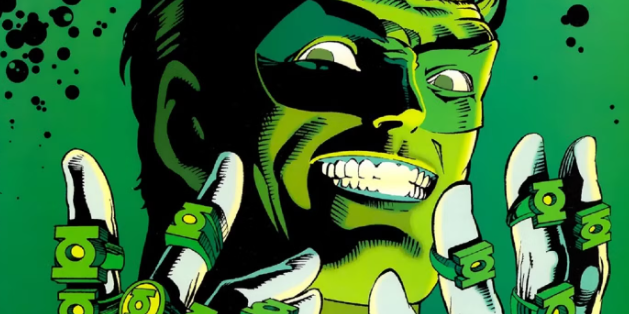
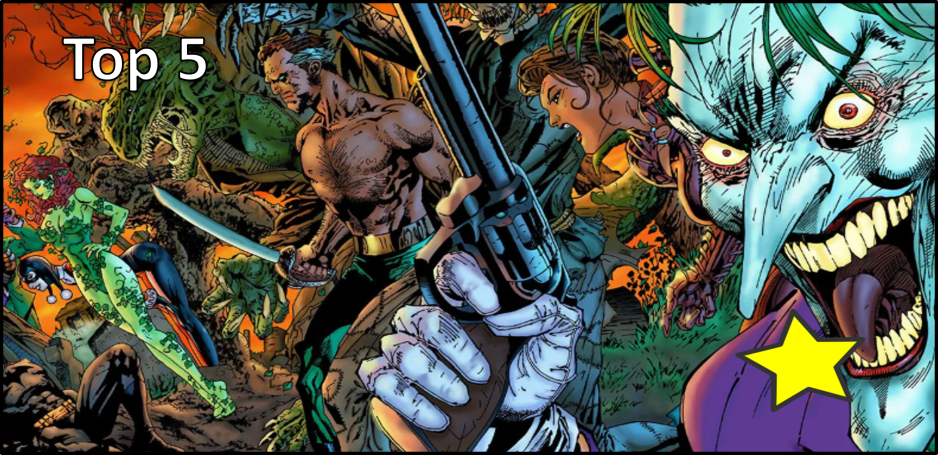
Hey, hey, Geekly Gang! Kyra Kyle here. I’m continuing to write far in advance. Who knows if Lanterns is still releasing new episodes? I’m writing so far in advance that Lanterns’ schedule hasn’t yet been released. Even though we don’t know Lanterns’ schedule, let alone which stories the show pulls from, that doesn’t prevent us from discussing Guy Gardner starter stories.
Guy Gardner has a crazy history in the DC Comics universe. Gardner may be the one Lantern who’s represented more shades of the emotional spectrum than any other Lantern. Gardner’s varied past means we’ll have plenty of single-issue comics and longer storylines from multiple eras of comic book history. Guy Gardner’s past is not for the faint of heart. Buckle up.

Hal Jordan was one of several people Abin Sur’s ring could’ve bestowed its power. The power ring chose Hal because he was geographically the closest to Abin Sur. In “Earth’s Other Green Lantern!” Hal Jordan uses a machine named the Memory Machine to watch one of these alternate worlds. In this world, a man named Guy Gardner became Earth’s Green Lantern.
We gain some insight into why Guy Gardner is typically angry. A few issues later, Guy suffered a head trauma that led to a drastic change in demeanor fans saw after he woke up. In his prime, Guy’s a friendly teacher and occasionally worked as a prison counselor. This story shows how much the Green Lanterns and the Guardians torpedoed Guy’s life. They stole his future to make him a backup for one of the Lantern Corps’ least reliable members.

The events of Crisis on Infinite Earths made John Stewart disposed, fighting alongside the Monitor across the universe. Guy Gardner is selected as John’s replacement on Earth. During this event, in “4,” Guy is selected to join the Guardians’ newer, smaller Green Lantern Corps. “4” elevates Guy to official Green Lantern status, bringing the number of official Sector 2814 (which includes Earth) Green Lanterns up to three.

At least one issue of the massive Blackest Night crossover made each of the Green Lantern starter story lists. Long-dead superheroes sprang from their graves, powered by Black Lantern rings. Heroes from every color in DC’s emotional spectrum united to push back the dead. “Red Badge of Rage” was the first time Guy dabbled with another color in the emotional spectrum. He became pure rage.
After Kyle Rayner fell to the Black Lanterns, Guy tapped into his anger. Instead of expressing grief, Guy’s bravado transformed his sadness into rage, making him a potent Red Lantern. Guy punched his way through dozens of Black Lanterns, smashing them into bits, and then he vomited energy-blood over the rest. Guy became a one-man army. He finished the Black Lantern Corps, teasing Guy’s tenure with the Red Lantern Corps.

“Blood Debts” does a great job of showing Guy Gardner’s heroic journey. Red Lanterns gives Guy a new purpose as Earth’s primary Red Lantern, but Red Lanterns: Futures End shows a far future Guy who turned his rage into a Blue Lantern for Hope. Guy kept a huge secret from his ally, Bleez. As the pair dispatch the last Red Lantern from the universe, Bleez asks how Guy’s blue ring can be so powerful, as blue rings need proximity to green rings to create constructs. Guy reveals a string of rings around his neck. He had mastered the entire emotional spectrum.

“High Noon” is a window into an odd era of Green Lantern history. After Hal Jordan seemingly sacrificed himself to stop Sinestro, the Sinestro Corps fell under the leadership of Sinestro’s daughter, Soranik Natu. Soranik took the Sinestro Corps in a different direction. She turned away from fear and proposed a Sinestro Corps alliance with the Green Lanterns. Many people on both sides weren’t happy with the alliance, especially Guy Gardner.
Guy Gardner challenges the massive alien Yellow Lantern Arkillo to a fistfight with no power rings. Guy holds his own, and after the fight, Arkillo and Guy become the closest allies between the two Corps of Lanterns.

Whenever I think of Guy Gardner, I think of the iconic punch Batman gives Guy in the kisser. Justice League Vol 1 #5 holds that iconic scene (turned meme).
Guy isn’t always a great teammate, which makes him the perfect addition for the Justice League International (subsequent series after the Justice League mini-series), led by Maxwell Lord and sometimes Batman. Justice League International showcases how annoying and powerful Guy Gardner can be. Batman’s iconic punch earned a smile from Martian Manhunter and cheers from Blue Beetle and Black Canary, but what folks tend to forget is how wildly Guy’s mood swung after getting punched.
Nathan Fillion’s Guy Gardner borrows the most from the Guy Gardner we see in Justice League International. The team (The Justice Gang in Superman) is even funded by Maxwell Lord. I’d love to see a live-action version of this iconic moment.

Guy Gardner Reborn occurs immediately after Hal Jordan fought Guy for his ring. Guy contemplates his choice to honorably resolve his dispute with Hal for two days before he decides to escape toward Qward and steal Sinestro’s yellow ring. The resulting space opera shows how mean Guy Gardner can get. Add in the Main Man (Lobo), and Guy Gardner Reborn becomes a buddy-cop story fueled by mutual disrespect and vengeance. Guy Gardner Reborn heralded one of Guy Gardner’s best eras.

Through the power of an odd suction-cup creature named the Xanoglpyh, Guy Gardner is forced to relive his traumatic past. Guy always had a deep-seated need for approval. This same need drove him to find a yellow power ring. Ringless Green Lanterns treat Guy like a brute. By the end of this arc, the other Lanterns offer to help Guy retrieve his yellow ring, despite knowing Guy shouldn’t have the ring. The short-lived series gives a lot of Guy Gardner’s heroic past some much-needed context.

Who needs a power ring? Everyone’s least favorite Green Lantern goes through another space odyssey in the wild ride that is Guy Gardner: Warrior. Guy used a yellow Qwardian power ring until Hal Jordan became Parallax and destroyed it. Ordinarily, this would mean Guy Gardner wouldn’t have powers. But Guy Gardner: Warrior reveals Guy’s Vuldarian heritage. His new alien powers allow him to construct weapons and armor from his body, no power ring required.
Guy turns into his wackiest best self with powers similar to but distinctly different from the Lanterns. During this series, Guy battles a clone of himself, goes to hell, and learns his importance to the War of Light.
Those are the Guy Gardner Green Lantern stories that made our list. We covered Hal Jordan and John Stewart starter stories the past two months. Are there any Guy Gardner Green Lantern stories you would add to this list? Let us know in the comments, Geekly Gang. Thank you for reading, and wherever you are, I hope you’re having a great day.