Whatcha Reading, Geekly? May 2026

Happy Wednesday, Geekly Gang! Kyra Kyle here. Today, our writers share what they’ve been reading over the last month. Feel free to share what you’ve been reading this past month, too, because we’re all part of the Geekly Gang. I’ll get things started with what I’ve been reading this past month.

Kyra’s Reads

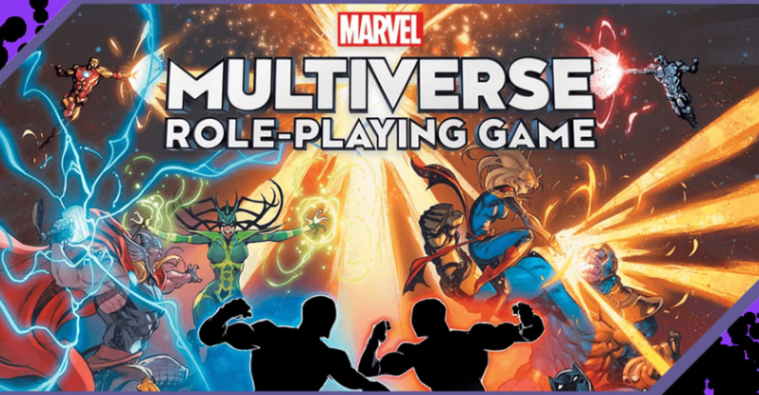
I have a Marvel Multiverse Role-Playing Game session planned at a public event this Saturday (May 16, 2026, at the Bellevue, Nebraska, Public Library), and while I could’ve read one or two core books, I fell down a rabbit hole. I’m sure I read something else this past month. I’ll probably remember it while I’m typing this entry, but picking up four 300-page rulebooks for a tabletop role-playing game is a good reading load. Throw in multiple auxiliary role-playing game books, and it becomes a lot of reading.

One feature I like about the Marvel Multiverse RPG books is that their pages are color-coded. At first, I didn’t care for these color-coded pages. They look garish on the shelf. But those colors help with quickly locating chapters. Rules can be found at the beginning. These page colors may be difficult to spot at first because the chapters are really small (the Marvel Multiverse RPG is a rules-light game), but you’d expect rules to exist at the beginning of a TTRPG book. The larger sections are for Powers, Characters, and World Building. I know to look at the red pages for a character and the purple pages for Powers and so forth. Color-coded pages may look weird on your shelf, but I’ll sacrifice aesthetics for functionality.

I picked up the core rulebook, and you don’t even need to do that if you want to get started playing the Marvel Multiverse RPG. The company uploaded a quick-start book on its website. Just click the “Try Free” button, and a laundry list of content loads. I was surprised by how much content Marvel made available for players. Sure, other sites like Fuzzy on the Details offer copious fan-made content for the game, and you can check them out here if you’re interested. But Marvel gives players everything they need to demo the game before buying.

The Quick-Start Book with a Thunderbolts* Adventure is a great place to begin. The Quick-Start Book offers an abridged version of the rules, everything you need to get playing. And the Thunderbolts* Adventure introduces game elements almost like a video game tutorial. My group is choosing a different starting adventure, the Marvel Rivals Timestream Adventure.

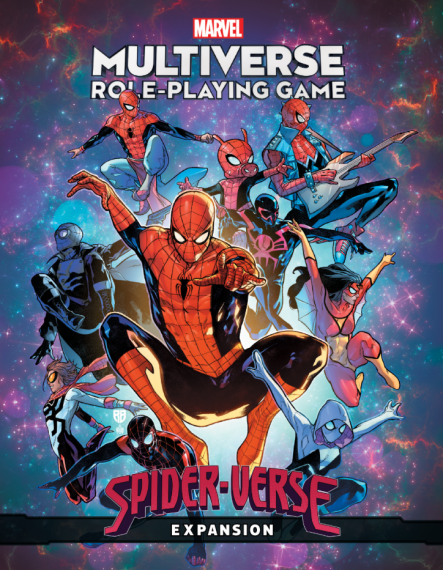
I talked about the Marvel Rivals Timestream Adventure in last week’s Whatcha Playing, so I won’t repeat what I said in that post here. But I will say that I like the Adventure’s flexibility. It can be a one-shot or the beginning of a longer campaign if we choose to continue the story. Getting back to the major Expansion books, I picked up Spider-Verse and X-Men. I prefer X-Men to the Spider-Verse because this Expansion adds more powers. More options. I was a little disappointed that we didn’t get any new abilities in Spider-Verse. Even so, Spider-Verse is solid.

All Marvel Multiverse Role-Playing Game’s bigger books have a third to almost half of their pages dedicated to character entries. This could change in the future, but you’ll be seeing a lot of red pages. And that makes the Marvel Multiverse RPG different from many other TTRPGs. With so many choices of pre-constructed characters, why would anyone make their own character? That’s not to say that the Marvel Multiverse RPG doesn’t have a good character creation system. It does. I can easily whip up a compelling character in short order, and I’m in the process of converting the TSR Marvel RPG rolling charts to aid with character creation. After I’m done, I may post those charts here. Let me know if you’d be interested in that. But the Marvel Multiverse RPG lends itself to players assuming the role of established characters.

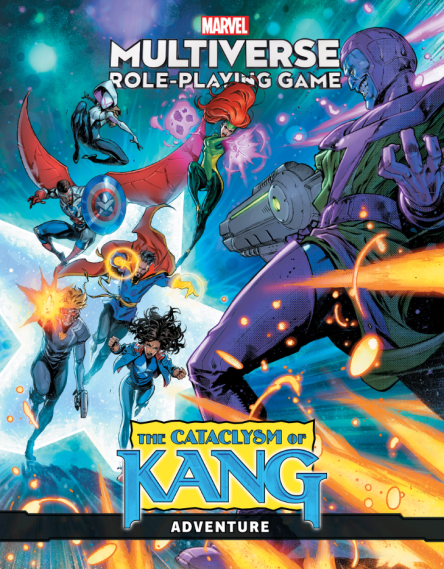
How you play the Marvel Multiverse RPG will depend on your gaming group. I also picked up The Cataclysm of Kang. This Adventure differs from the others (one-shots) I mentioned earlier. The Cataclysm of Kang requires hundreds of gameplay hours to complete. It’s a massive campaign, and fewer players will have interest or patience for this long a campaign. Note: I picked up The Cataclysm of Kang because it could play out like an alternative MCU Kang storyline. What could’ve happened if the MCU didn’t biff that villain? Just like the other hardbacks in the Marvel Multiverse RPG, The Cataclysm of Kang offers plenty of pre-generated characters. $40-$50 is a lot if you’re only interested in more characters. Fortunately, DriveThruRPG offers $5 deals on just the characters. The site even sells easier-to-print versions of the game’s maps. And while you’re on DriveThruRPG, check out some of the other free content.

You could play the Marvel Multiverse RPG without ever buying the core book or any of the expansions. Or you could drop considerably less money than I have and pick up some essentials and cheaper content on sites like DriveThruRPG and FuzzyOnTheDetails. You also don’t need to be the biggest Marvel buff. No one will quiz you on Marvel lore. You could take a show or movie you liked from anything Marvel, even the stuff that predates the MCU, and ask what if.

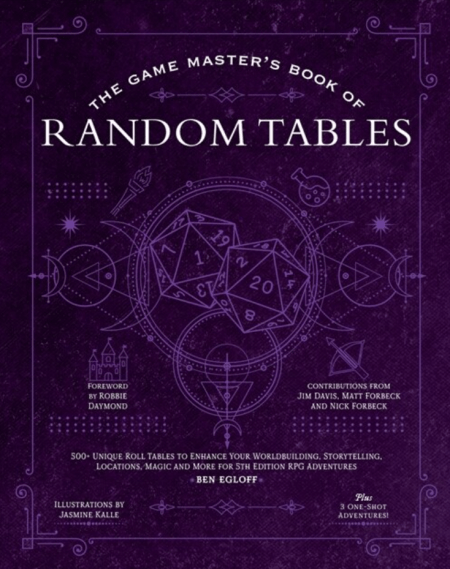
I continued with The Game Master’s Book Of series with Random Tables and a handful of other titles. Like I said, I went down a rabbit hole. Send help! Naturally, I’ve been converting some of these random roll tables for the Marvel Multiverse RPG, but if you’re running a high fantasy role-playing game, you shouldn’t need to adapt anything found in this book. I love The Game Master’s Book Of Series. They provide so much for any role-playing game. Sure, they do lean toward Dungeons & Dragons, but most of these books–except for the dragons book, but who doesn’t love dragons?–can be useful for numerous RPGs. I read the Proactive Roleplaying and Collaborative Campaign Design books last month. Those two are paperback, but the hardback books are only $25 or less, and they’re high-quality books. You can’t beat The Game Master’s Book Of series’ value.

I did read something else this month. I started re-reading Strunk and White’s The Elements of Style. I read this book so often that I forget to include it in these lists. Strunk and White’s The Elements of Style is a great book to refresh one’s grammar. And I need all the help I can get.

That’s all I have for what I’ve been reading this past month. I’m sure I forgot several other books on my list, but hey, that’ll give me something to talk about next month. And it looks like I’m on my own for this week. We’ll have to check in with Season and Skye next month with their reads. But let us know what you’ve been reading in the comments, Geekly Gang. Thank you for reading, and wherever you are, I hope you’re having a great day.
Whatcha Playing, Geekly? May 2026

Happy Wednesday, Geekly Gang! Kyra Kyle here, and today, our writers share what they’ve been playing over the past month. Feel free to share what you’ve been playing over the past month, because we’re all part of the Geekly Gang. I’ll get things started with what I’ve been playing over the past month.

Kyra’s Video Games

I’m a basketball fan, but NBA2K hasn’t had a decent release in several years. The last version I played of NBA2K had so many game-breaking bugs, I don’t know if I finished playing a single exhibition game. Enter, Hoop Land. I downloaded it on Steam (there was a recent sale), but it’s also available on mobile devices. Yay!

Don’t let Hoop Land’s 8-bit graphics fool you. Hoop Land is everything I wished NBA2K would be. Hoop Land gives players so much control of the game. A lot is going on with this title, and I love it. Manage your team to victory with adorable sprite hoopers. I haven’t had too much time for a full review, but I enjoy simulating games and jumping in to play the occasional match. Player development works the way you’d imagine, at least, so far, and Hoop Land offers plenty of options to customize your league. Do you see the player scouting report above? That gets very specific. I see some team rebuilds in my near future. I may even download the mobile version of Hoop Land, so I can play while I watch the NBA playoffs. Woo hoo!

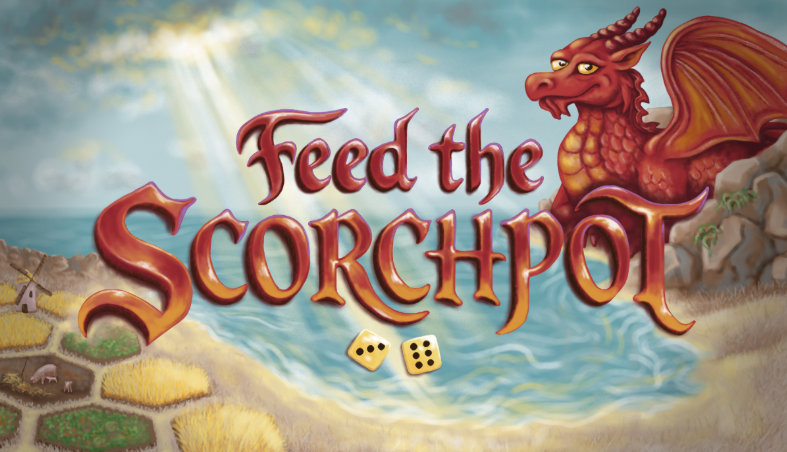
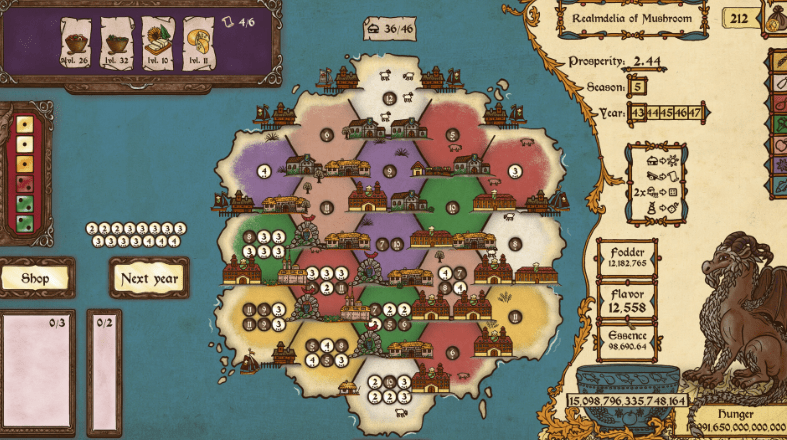
While Feed the Scorchpot only offers a free demo (on Steam), that demo cooks up a lot of gaming hours. What is it with me downloading addictive video games this past month? Feed the Scorchpot takes graphics akin to Potion Craft–if you know me, you know I love Potion Craft’s graphics (here’s our review of Potion Craft)–and combines them with a roguelike Catan. What? The classic board game Catan could use an update. I wasn’t expecting one like Feed the Scorchpot. The developers market it as Balatro meets Catan, and that’s a good description.

As you can see in the image above, a lot is going on with Feed the Scorchpot. Don’t worry, the demo has a comprehensive tutorial that slowly introduces new game elements. It will all make sense. Players build a village Catan-style and roll dice each turn (season), collecting resources on farms adjacent to tiles whose numbers are rolled. Using those resources, players cook recipes to feed a dragon (the Scorchpot). Meet the required points (hunger), and the dragon allows you to live another year.

Players can purchase recipes (more options), upgrade their dice to specialty dice (all dice begin as vanilla six-sided dice), build more powerful structures on spaces, and even add numbers to tiles, so those tiles are more likely to produce resources. Feed the Scorchpot is one of those games that gets players saying, Just. One. More. Turn. Ah! So good. I can’t wait for Feed the Scorchpot’s full release.

Kyra’s Board Games

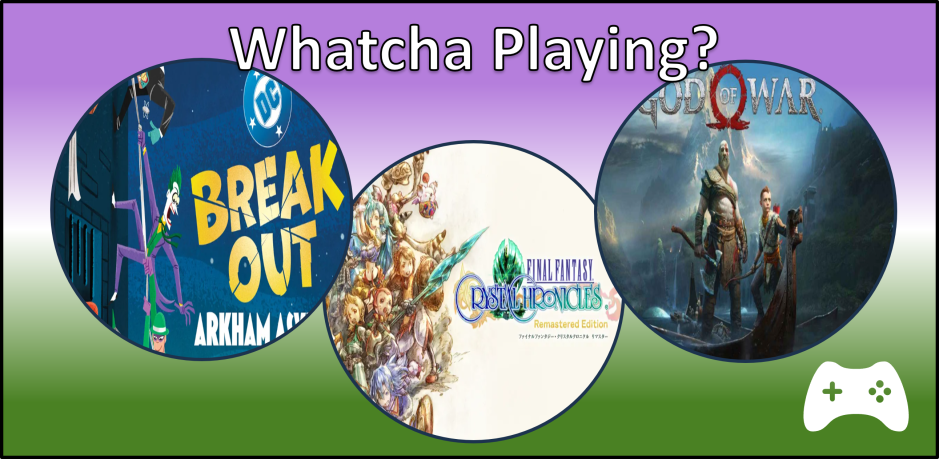
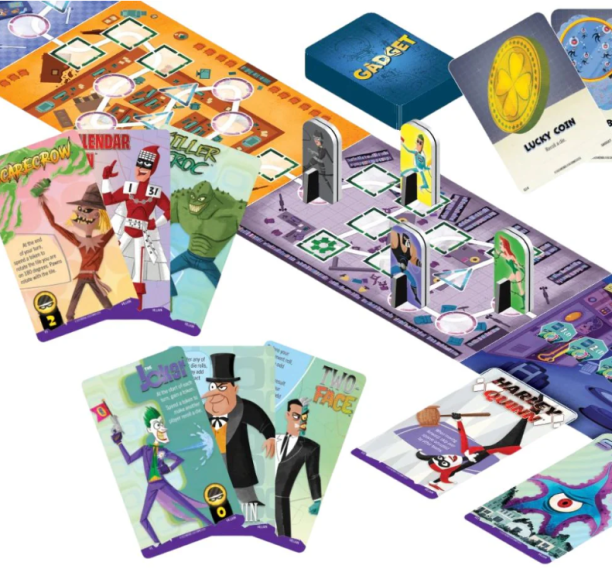
DC Breakout: Arkham Asylum is a simple roll-and-move game. Yes. They still make roll-and-move games. And for a roll-and-move game, DC Breakout: Arkham Asylum is a lot of fun. Players take the role of two Arkham inmates racing to break out of the asylum before anyone else. The game is played in two rounds, so you’ll actually have two chances to beat your opponents to the finish line.

DC Breakout: Arkham Asylum doesn’t take itself too seriously. Each game plays out different than all the rest, because the board changes, villain power combinations can break the game in odd ways (you will be placing two villains into the same standee to form your team of two rogues), and gadget cards add another layer of mayhem. After a few plays, we did notice some game-breaking combos. I won’t share them here; you should discover them on your own. But I don’t care that two specific villains teamed together may constitute an unfair advantage. DC Breakout: Arkham Asylum isn’t a long game. There are so many villains included in this game (40) that you may not come across that tandem of characters in numerous plays. And the premise is goofy. Perfect for kids and families.

Cat a Comb caught my eye in two ways. First, the game is shaped like a soda can. Yes, please. The container may be difficult to put on a shelf with the rest of my games, but I like an odd-shaped board game container. Second, the game is about cats. Yay! What you see pictured above is all that comes inside Cat a Comb (minus the extremely short rulebook). Cat a Comb is a great two-player strategy game. Perfect whenever you arrive to a board game night early with one other participant, and you’re waiting for the rest of your group to arrive. That happens a lot to me if you can’t tell. (Wink.)

I could include any number of other board games on this list, but I think I’ll close out this month’s list with the Marvel Multiverse Role-Playing Game. I always liked the TSR Marvel RPG from the 1980s, and the Multiverse Role-Playing Game looks as if it has legs (as in it’s still being published years after its initial release). Outside of the TSR Marvel RPG, Marvel role-playing games have a spotty track record. Most of them don’t last beyond one or two years. The Marvel Multiverse Role-Playing Game has already surpassed that threshold, so I’m giving it a shot. Just in time for Comic-Con season (I will be attending one or two of those) and Free RPG Day. You may catch me at a local game shop, running a Marvel Multiverse Role-Playing Game module.

First, I’ll run the Marvel Rivals Timestream Adventure. This one-shot is a great place to begin a Marvel Multiverse RPG campaign. The framework offers enough flexibility to branch out from the module. The adventure is written in a way to promote player agency and choice. I like that. Of course, I’ll add my own twists to the base adventure, because I’m going to do that, but Marvel Rivals Timestream Adventure offers a good introduction to the Marvel Multiverse RPG system and some of its characters. This module even includes Rank X characters, which are otherworldly beings who can’t be damaged. It’ll be fun showing characters of this power level in the Marvel Universe.

I have two complaints about the Marvel Rivals Timestream Adventure. One, the module assumes you have the Core Rulebook and access to the X-Men expansion. It includes power sets found in the X-Men expansion and doesn’t explain them. Two, the Game Modes included at the end of the module don’t offer any story hooks. Both of these gripes are small. You can look up some of the X-Men expansion rules online. It’s a pain, but doable. And you don’t really need story hooks, but it would’ve been nice. The Marvel Rivals Timestream Adventure takes about four hours to complete, so I may craft my own one-shot for Free RPG Day or one of the conventions, since most events of those types last about two hours. I’ll keep you posted if I create an adventure and may share the adventure on Geekly.

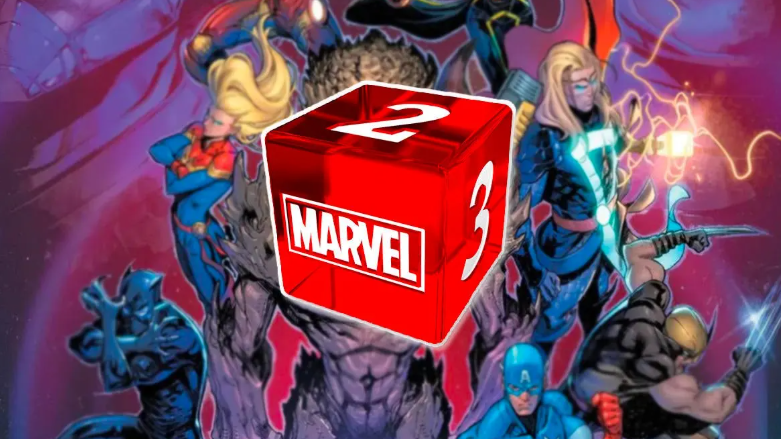
As for the Marvel Multiverse RPG’s core rules, they’re easy to learn and require few peripherals. You don’t even need official Marvel dice (like the one pictured above). I have a set of “Marvel Multiverse RPG” dice where I painted an “M” over the “1” on a standard red d6. Every player just needs three 3d6s, with one a different color, and you’re set to play. That’s it. The rules are simple but flexible to accommodate multiple powers, a good thing for an RPG that includes countless super-powered people. And several websites offer free Marvel Multiverse RPG resources. I like what I’ve read so far and should run the Marvel Rivals Timestream Adventure next week. I can’t wait.

That’s all I have for this month. Let’s check in with Season.

Season’s Video Games

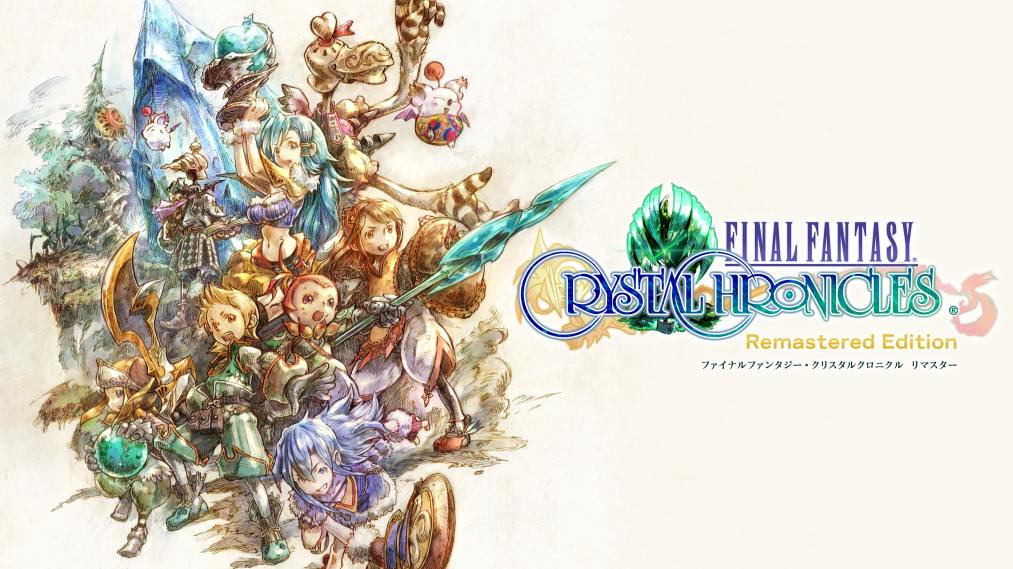
Hi, Geekly Gang! Are you fans of remasters? I know I am. I’ve never finished the original Final Fantasy: Crystal Chronicles since it was difficult to do in single player. Players get to choose a character from one of four races. The biggest differences between these races (other than appearance) are the gear they can equip and their fighting style. You set out on a caravan in a miasma-filled world to collect drops of myyrh from myyrh trees in different monster-infested stages. Each level has a mini-boss with varying levels of difficulty in each stage. You have to collect three drops of myyrh each year in order to progress and unlock new stages.

I’m closing in on the final few stages of Final Fantasy: Crystal Chronicles Remastered Edition, and I’m excited to see the ending after all these years. Final Fantasy: Crystal Chronicles Remastered Edition offers online multiplayer. You can play with friends or join random lobbies. I’ve been playing with one of my friends, and we’ve been having a blast. The downside to multiplayer is that the game only progresses for the player who hosts the lobby. If you collect myyrh in one of the stages, the host is the only player who gets the myyrh. You have to dissolve the party and switch hosts so a different player can collect myyrh. You end up replaying the same stages multiple times, but you get to learn each stage map really well.

What have you been playing, Skye?

Skye’s Video Games

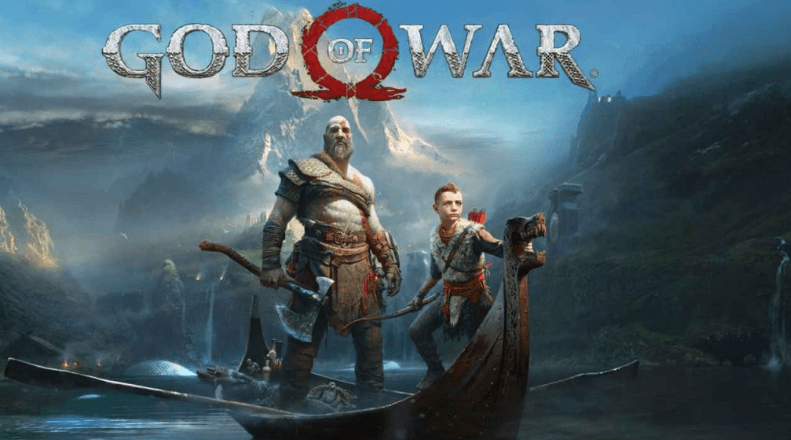
I received God of War as a Christmas gift last year and made a pledge to finish it before the end of the year. By now, y’all are probably familiar with my tendency to play each of my games at the hardest difficulty just ‘cause I can. So far, God of War has proven to be the most difficult gaming experience I’ve put myself through. Having a heavy emphasis on skill and timing-based combat, God of War demands quick learning and careful decision-making from its players. As a result, God of War is very unforgiving to noobs like me for poorly executing combos or being slow to dodge incoming attacks. The only reason I’ve been able to make any progress so far is that I tend to do every side quest before the main quest. Wish me luck, ‘cause I know I’m gonna need it.

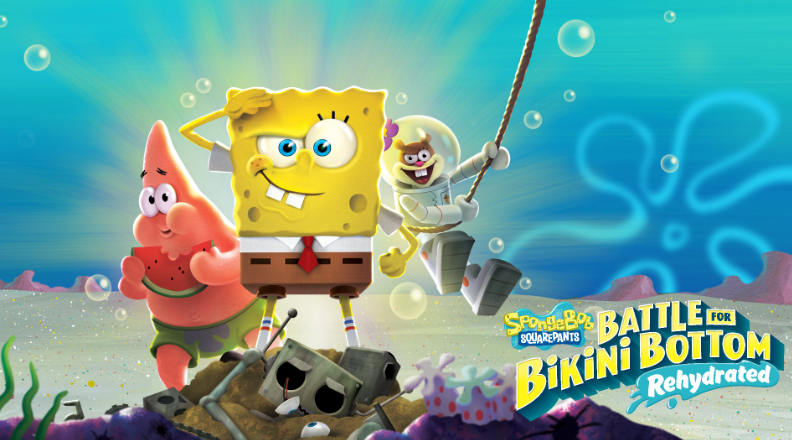
Battle for Bikini Bottom’s Remaster was a game my sister acquired for free through her PlayStation Plus subscription, and I only recently noticed it in her library. Since I played the original on the GameCube, I felt the need to relive my childhood. It’s safe to say, Rehydrated didn’t disappoint. After all, SpongeBob SquarePants Battle for Bikini Bottom Rehydrated strictly updated the graphics, so I was able to relive my favorite levels without worrying about content alterations. In case you’re curious, my favorite level is The Flying Dutchman’s Shipyard primarily because of the level’s design and music that constantly gets stuck in my head. Battle for Bikini Bottom is a fun romp of a game for any SpongeBob fan since it allows you to roam through some of SpongeBob’s most iconic locations and is loaded with references.

Hey, hey! Kyra Kyle here again. Those are all the games our writers played over the past month. What did you play this past month? Let us know in the comments. Thank you for reading, and wherever you are, I hope you’re having a great day.