Lanterns “Lights Out” Review

Hey, hey, Geekly Gang! Kyra Kyle here with another review/reaction of this week’s episode of Lanterns, “Lights Out.” If you want to see our thoughts on last week’s episode, “The Weenie,” here’s a link to that review. I was pleasantly surprised when Lanterns ended its 2016 storyline this week. It ends about as well as one might imagine (not well at all), but before we get into my thoughts on “Lights Out,” let’s get the spoiler warning out of the way. There’s little chance of me discussing this episode without spoiling the story. You’ve been warned. Without further ado, let’s talk about Lanterns “Lights Out.”

To say everything came to a head in Lanterns’s 2016 storyline would be an understatement. Hal Jordan gets disgraced, John Stewart doesn’t keep the ring, the Manhunter gets killed, and half of Rushville gets blown up. Yikes! There’s a lot going on in this episode, but the fact that this happens during Lantern’s fifth episode with three more remaining this season, gets me excited. Like I said, I was pleasantly surprised by Lanterns ending its 2016 storyline this week. This should mean that most of the remaining episodes will fill in the gaps between 2016 and 2026, and more importantly, move the story along. Hal Jordan died at the end of the pilot episode. That was a promise that Lanterns season one won’t end in 2016 and will explore the events following Hal’s death (and who has the ring); the final three episodes should make good on that promise.

I’ll be upfront and say that I was wrong about John Stewart taking the ring from Hal Jordan. Technically, he does. I didn’t think that he would take the ring and not claim it as his own. The events of “Lights Out” lead to Hal Jordan losing the ring (maybe, the Guardians have it right now, so who knows?) and John Stewart losing his desire for the ring. Lanterns attempted to make the reason why John wouldn’t want the ring because he had to kill the Manhunter, and he’s in love with the Manhunter. This felt rushed and forced. Sure, it’s physically there, but I never quite bought John’s relationship with the Manhunter. I could buy John not wanting the ring because the Guardians wouldn’t give him the ring; he had to take it from Hal. Again, this is in the show’s dialogue and plays a factor, but Lanterns offers both options and doesn’t commit to either one. That may be why I didn’t buy John and the Manhunter’s relationship.

For a show that does a great job with characterization, I was disappointed with Lanterns‘ choose your own reason why John doesn’t want the ring. Regardless of the reason, John returns the ring to the Guardians. Will we see Guy Gardner in the sixth episode of the season? Lanterns keeps using Fillion’s Guy Gardner as its thumbnail. It’s been at least three weeks. It would make sense if the ring passes from Hal to Guy Gardner. The show would also earn its name of Lanterns. We aren’t talking about one or even two of Earth’s Green Lanterns. Here’s a third. And I’d like to see the Sinestro Corps. play a role in the upcoming episodes. With Hal incapacitated, Sinestro could wreck some havoc. Ending the main story thread (what happened in Rushville in 2016) with three episodes remaining means Lanterns will need another great threat. The Sinestro Corps. could fill that role well.

But some of that is conjecture, let’s return to the Rushville story. With the exception of John giving back the ring, the story played out like I thought it would. And that’s a great thing. Lanterns introduced concepts in the first four episodes and did a fantastic job with callbacks in “Lights Out.” The odd anti-Green Lantern smoke returns. The kamikaze aliens. The bizarre red lasers that explode folks. John’s artwork. The Manhunter’s crystal heart. And the reverse white laser that can heal (explaining how no one in Rushville gets sick). It all works. It’s chef’s kiss good. But there are three episodes remaining. The final episodes concern me, to some extent. Lanterns did such a great job of setting up all of these threads, and for the most part, it tied up those lose ends during “Lights Out’s” runtime. There isn’t a lot of time remaining to set up another entire story arc.

Switching from one major threat in a single season to another reminds me of what happened in the first season of Netflix’s Luke Cage. The first half (or just over first half) of that show was excellent, and then the show lost momentum changing gears to another big threat. That’s the other reason why I think Lanterns will turn to Sinestro and the Sinestro Corps.. The show has already introduced Sinestro. It hasn’t set up any other villain, except for maybe Parallax. Sinestro and the Sinestro Corps. use yellow power rings, charged by fear. Parallax is the living embodiment of fear in the DC Universe. The fact that the Green Lantern Corps.’s most persistent enemy uses Fear Rings is why Lanterns included the idea of the green power ring asking if humans were afraid when choosing a human to be Green Lantern. You can’t have fear (the main enemy’s strength) when wielding a Green Lantern power ring.

Earlier in this series, I mentioned how Lanterns did little with Green Lantern’s powers, and the audience seldom say Green Lantern’s uniform. That still happens in the show, but I like that we’ve seen more of Green Lantern’s powers as the season’s progressed. Rushville’s story made me forget about the reduction of costumes and powers. Now that Rushville’s story has concluded, I’m going to want to see some awesome Green Lantern constructs and more of the costume. Guy Gardner doesn’t mind wearing the costume. We’ll see if there’s a massive row between Green Lantern and Sinestro or Green Lantern and Parallax.

Lanterns has managed to ground Green Lantern, introduced intriguing characters, and deliver on several promises posed at the beginning of the season. After the season airs, I may binge the entire season. Knowing the sheriff’s past may heighten some of those earlier scenes. This is a show that drops plenty of bread crumbs as well as Easter eggs. Those are my thoughts on this week’s episode of Lanterns (“Lights Out”). Thank you for reading, and wherever you are, I hope you’re having a great day.

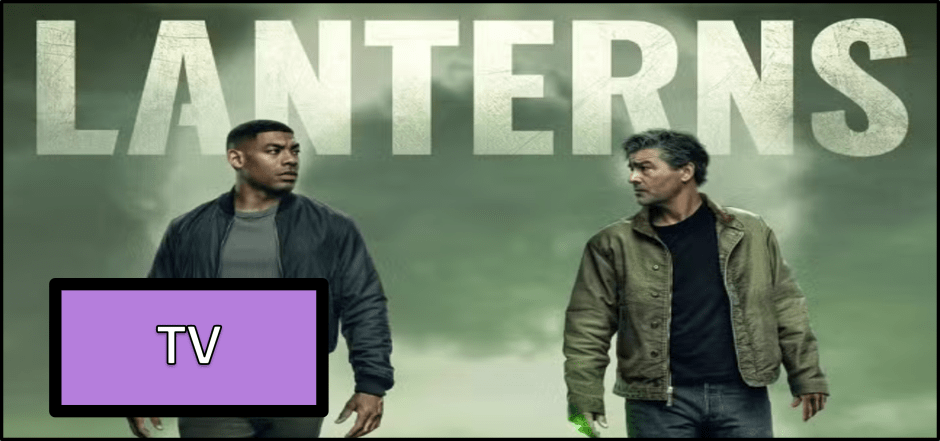
Lanterns “The Weenie” Review

Hey, hey, Geekly Gang! Kyra Kyle here with another reaction/review of this week’s episode of Lanterns, “The Weenie.” If you’d like to see our thoughts on last week’s episode “OutKast,” check it out here. This post will only cover “The Weenie.” “The Weenie” goes back to the 2016 timeline, and while the episode is entertaining (Lanterns is a bingeable show), “The Weenie” illustrates why stories shouldn’t feature too many flashbacks: knowing the future (to some extent) can lessen a story’s tension.

I’ll get right to it. Spoiler warning is in effect. Again, I don’t know why someone who hasn’t seen Lanterns at all would want to read a reaction/review of the show’s fourth episode, but hey, you do you. And you’ve been warned about spoilers.

Lanterns‘ pilot ends in 2026 with Hal Jordan dead, and John Stewart checking Hal’s hand for the power ring. Much of “The Weenie’s” main tension exists between Hal and John. Sinestro insists Hal call John by what John really is: Hal’s replacement. The guardian we met last week (during John’s flashback episode) returns this week (in 2016) and tasks John with taking the power ring from Hal. But we (the audience) already know that John didn’t recite the oath and take the ring away from Hal. Why would John check Hal’s hand for a power ring in 2026 (Hal’s death) if he took the ring from Hal in 2016? I wanted the tension to build a lot more than it did. That’s the danger of too many flashbacks or a flashback within a flashback.

I’m done picking at that nit. Despite the reduced tension (from what I would’ve liked), “The Weenie” manages to recapture Lanterns‘ momentum. Losing momentum can also occur with more flashbacks. “The Weenie” onboards viewers into the action. Continuing Hal’s conversation with Sinestro (from episode two, “Trust Fall”) helped. It served as a brief recap. We gain context for John missing his payphone call from his parents; the call was really from the Guardians. And I love Lanterns‘ ability to contrast Hal and John’s personalities. During this episode, John said that everyone, including him, was lying. Lanterns accomplishes this with great dialogue. Most characters give half-truths or at least obfuscate their true intentions.

That last element adds to Lanterns‘ intrigue. The identity of the Manhunter (the killing machine the Guardians created before forming the Green Lantern Corps.) was revealed. I had an inkling as to the Manhunter’s identity. “The Weenie” removed all doubt. I liked how Lanterns executed the reveal. The show let the characters’ nature do the work. Centering one’s narrative with its main characters is always a great choice. Kudos!

And I have to hand it to Lanterns. While the show continues to dodge Green Lantern’s costume, it showed the biggest Lantern construct to date (John’s digging device). Sure, Hal wears the costume during his brief scene with Sinestro, but for the most part, Lanterns doesn’t like to show the character in costume. Getting back to John’s digging device, its inclusion makes me excited for more Lantern constructs in future episodes. Lanterns kept its special effects budget low during the first half of its first season, but the second half of the season should splurge a little.

The town of Rushville continues to be a great setting, almost its own character. “The Weenie” reveals that the Manhunter prevents people in Rushville from getting sick or dying. That explains the hospital’s unpacked equipment and the fact that Hal was the only patient to sign the log. This will cause some future tension between the city of Rushville and the aliens who want to hunt down the Manhunter. The aliens plan to blow up Rushville if Hal and John don’t deliver the Manhunter to them, but the Manhunter means a lot to the town of Rushville. It’s a lose-lose situation, and we do see some demolished buildings in Rushville during John Stewart’s return to the town (in 2026). Something explodes, but what? How? Unlike John’s refusal to take the ring from Hal, we know less about Rushville’s fate.

We didn’t see much of Rushville in 2026. The sheriff talks to John as if life continued for the town of Rushville…in some capacity. I like that Lanterns is using Manhunters as its chief villain for its first season. Teasing Sinestro is a great touch. Something tells me we’ll see the Sinestro Corps. before the season finale. I’m still waiting for Guy Gardner to make an appearance. Lanterns continues to use Fillion’s Gardner as its thumbnail. The big teasers. Does this mean Gardner got the ring before Stewart? Was he the one who took the ring from Hal? Who knows? Lanterns has done a great job setting up these mysteries. Time will tell if the show sticks the landing.

Those are my thoughts on Lanterns “The Weenie.” What are yours? Let us know in the comments. Thank you for reading, and wherever you are, I hope you’re having a great day.

Lanterns “OutKast” Review

Happy Friday, Geekly Gang! Kyra Kyle with a review/reaction of this week’s Lanterns episode, “OutKast.” If you’d like to see our review of last week’s Lanterns episode “Trust Fall,” check it out here. I have mixed feelings about Lanterns “OutKast.” I watched the episode three times and went back and forth with how I read this flashback episode, and “OutKast” is a flashback episode, and this episodes use of the chosen one cliche. Let’s start this discussion with “OutKast’s” use of flashbacks.

I figured Lanterns “OutKast” would feature plenty of flashbacks. The pilot took place in 2016, showed glimpses of the Nineties, and ended with Hal Jordan dying in 2026. Oh! Spoiler alert is in effect. I don’t know why anyone reading a review/reaction of the third episode in a television series would not have seen the show’s pilot, but I’m sorry to the one or two readers who haven’t yet seen Lanterns “Pilot.” This review will contain spoilers. Consider yourself warned. While last week’s episode “Trust Fall” continues the 2016 storyline, “OutKast” recounts John Stewart’s past. While watching “OutKast” the first time, I kept hearing my writing instructors in my ear. No! Not a flashback episode. If you need to write a flashback episode, it probably means you didn’t start your story where it should’ve started.

But I enjoyed “OutKast.” After I pushed away those critical voices in my head, the episode explored themes I hoped the episode (and the show as a whole) would explore. John Stewart’s upbringing fascinated me. You could tell there was a lot going on behind the scenes during the show’s pilot. The fact that John’s father was a Green Lantern candidate with Hal Jordan added some nice depth. The scenes between John’s parents (specifically his mother) and a Guardian harkened to classic Green Arrow-Green Lantern comic book storylines. I love the following interaction:

Bernadette (Johan’s Mother): Do you understand how unfair it is to ask a Black man in America if he’s afraid?

Lianna (Guardian): By “Black,” you mean… brown skin?

Bernadette: We are terrified daily of persecution and still show up, sometimes better, than everyone around us. Did you know that?

Lianna: I did not.

Bernadette: Even in space, y’all don’t consider us.

I can’t help but make a connection between this scene, and the one found in Green Lantern (Vol 2) #76, where a black man confronts Hal Jordan’s Green Lantern:

I been readin’ about you…how you work for the blue skins…and how on a planet someplace you helped out the orange skins…and you done considerable for the purple skins! Only there’s skins you never bothered with! The Black skins! I want to know how come?! Answer me that, Mr. Green Lantern.

Ah! I don’t care that scene is a little hokey by today’s standards, but I love it. That scene is one of the first images that pops into my head when I think about Green Lantern (Hal Jordan). As soon as I heard Lanterns would include Hal Jordan and John Stewart, I hoped the show would lean in, at least a little bit, to some of those classic 1960s Green Arrow-Green Lantern issues. The scene between Bernadette and Lianna paid homage to this classic Green Lantern comic book scene, but it took it in an interesting direction. Bernadette directly tells a Guardian. This causes the Guardian (and by extension, the audience) to recontextualize fear. I love the idea of Hal Jordan not having fear because he was a white man, and John Stewart Senior had fear because of his race, but he overcomes that fear.

Ultimately, I’m of two minds in regard to “OutKast’s” use of flashbacks. Yes, Lanterns could’ve woven these flashbacks throughout the rest of the season. Conventional storytelling teaches writers to do that. But Lanterns only has a handful of episodes remaining. A flashback-heavy episode was bound to happen. You might as well have one flashback episode in full instead of multiple episodes littered with flashbacks. Funnily enough, “OutKast” had a flashback (John’s past) inside of a flashback (John meeting with a Guardian), which was a flashback to the flashback (the events of 2016 with Hal and John). Wait. I’m confused. Despite a lot of flashbacks, “OutKast” was easy to follow and a fun ride. I love John Stewart’s backstory in Lanterns.

And we get to the chosen one cliche. I mentioned it in the opening, and I have to deliver here. Again, I’m of two minds. Using an unkind reading of the story, “OutKast” is guilty of using the chosen one cliche. Lianna (the Guardian) mentions that John Stewart (Senior) was chosen for a reason and his “worthiness” could be inherited, and she mentions that John’s mother (Bernadette) was formidable in her own right. One could easily read the chosen one cliche from this interaction. I certainly did the first time I watched Lanterns “OutKast.” But John Stewart (Junior) corrects Lianna by saying that humans aren’t programmed, they’re raised. A kind reading of this story leans toward a battle between nurture versus nature.

I go back and forth with Lanterns “OutKast.” On one watch, I may view the episode through an unkind reading. On another, I switch to a kinder reading. Regardless, Lanterns has been surprisingly rewatchable. I’d still like to see more costumes and powers, but the show holds my interest. On a completely different note, I love the reference to Atlanta Hip Hop stars OutKast. And I love the closing track, “Gasoline Dreams.” Ah! So good and it fits.

Those are my thoughts on Lanterns “OutKast.” Let me know yours in the comments. Thank you for reading, and wherever you are, I hope you’re having a great day.

Lanterns “Trust Fall” Review

Hey, hey, Geekly Gang! Kyra Kyle with a review/reaction of this week’s Lanterns episode, “Trust Fall.” If you’d like to see our review of last week’s Lanterns episode “Pilot,” check it out here. “Trust Fall” builds on “Pilot’s” great foundation. Like I said in the previous review, Lanterns “Pilot” does almost everything you’d want a first episode to do. And my concern of Lanterns avoiding the superhero genre expectations (costumes and powers) has waned. Again, I can see why Lanterns doesn’t want to blow its entire effects budget in the first episode or two, and “Trust Fall” shows us more of Hal Jordan and John Stewart in action.

If you haven’t yet watched Lanterns “Trust Fall” and you don’t want any spoilers, you may want to watch the show first and then return to this review/reaction to see what you agree or–most likely–disagree with in this post. I’ll wait. Are you done? Great! Let the spoilers commence. I mentioned it in the opening paragraph, but I like how Lanterns is easing the audience and its budget with the Green Lantern’s larger universe. Hal Jordan dons the uniform, travels to the Planet Oa (The Guardians’ home planet), and even meets with Sinestro. And of course, all this happens in the final five minutes of “Trust Fall’s” runtime. But it counts. I don’t need much, just a taste of Green Lantern goodness, and Lanterns‘ second episode delivers on some of these promises.

After watching this episode (twice), I have hope for the rest of the season/series. I meant what I said last week. Lanterns is a fantastic show. I enjoyed every minute of the pilot episode, but last week’s episode could’ve been the pilot for a show set outside the DCU. “Trust Fall” made the show feel as if it belonged in the DCU. I love Hal Jordan and John Stewart’s relationship. Sinestro hints that John may be more of a danger to Hal than the big bad alien threat developed during this episode (more on the Manhunters later). This rings true. It would make sense if Hal was nervous about John becoming Green Lantern soon. Jordan did say in the pilot that the Green Lantern job was his until the day he died. And Hal Jordan has been cagey about The Guardians. When John Stewart asks what The Guardians thought about what’s happening in Rushville, Hal Jordan dodges the question. It’s obvious Hal and The Guardians aren’t on speaking terms.

Through two episodes, Lanterns has done an excellent job of answering some questions but posing more. During “Trust Fall,” the name Manhunters gets introduced. Ah! The Manhunters are one of Jack “King” Kirby’s DC Comics creations. Kirby is best known for cocreating the Marvel Comic Book Universe, but he had several gems with DC Comics. Kirby had a knack for science fiction themed stories. His work on Fantastic Four is iconic, but Kirby also created Darkseid and The New Gods. It made sense for Kirby to build on Green Lantern’s lore. The Manhunters were the android precursors to the Lantern Corps. I won’t spoil too much of The Manhunters’ backstory here, just in case Lanterns uses a healthy dose of this comic book lore, but John Stewart has a history with The Manhunters, and I like the direction Lanterns is taking its first season. A Manhunter makes for a fantastic first season villain.

“Trust Fall” splits the two lanterns into separate stories. Hal Jordan continues his investigation of Rushville, Nebraska. Turns out, a Manhunter may be behind the odd goings on in the town. The town knows aliens exist, and they’ve rigged their metal detectors to spot alien lifeforms. Yeah, Macon’s benefactor may be The Manhunter causing mayhem. But this town has layers. The hospital has equipment that’s barely used. Heck, the hospital itself is a lot larger than one you would find in most rural Nebraska towns in the Sandhills. There’s a lot happening under the surface. Oh, yeah. Macon has one of his goons shoot Hal in the shoulder (a warning shot). Seriously, I love this town and it’s seedy underbelly. The two lanterns spilt up because Hal sends John to retrieve his lantern.

Yes! We physically see a Green Lantern’s lantern. Hal keeps it in a pocket dimension (classic), and we even meet Earl, an alien man-eating plant. Like I said, Lanterns “Trust Fall” sprinkles in enough Green Lantern goodness. I even like how members of the same alien race (who infiltrated Rushville, Nebraska) abduct John Stewart. These aliens implant memories of their home world getting destroyed and family members being killed by The Manhunters. And this does play out in a John Stewart Green Lantern story. Great inclusion here. And the introduction of Sinestro to the greater story could lead to a ton of fun.

Ah, Sinestro. Seeing him in all his pink-skinned glory made me smile, and so do the layers to the town of Rushville, Nebraska. I was on the fence about grounding Lanterns to the planet Earth. When one thinks of Green Lantern stories, one pictures planet hopping and exotic locales. Lanterns following Supergirl, which had a muted color palette and a lack of planet hopping (in relation to the source material, Supergirl: Woman of Tomorrow) gave me pause. The show isn’t in the clear yet, but I like a slow introduction to Green Lantern’s larger universe. If Lanterns continues introducing more sci-fi elements at the rate it did from episode one to two, I’d call that a good escalation. And the largest use of a Green Lantern ring (John Stewart producing a bird) was adorable and showed how John and Hal differ as Green Lanterns.

One random observation: a picture Nathan Fillion’s Guy Gardner graced Lanterns “Trust Fall” banner in my HBO Max app. Was Guy Gardner in this episode? Was he supposed to be at one point? Not gonna lie, I saw the pic and got a little excited to see Fillion’s Gardner again. We may need to wait for episode three.

Lanterns continues its solid start with this week’s episode, “Trust Fall.” I can’t wait for the next episode, and my fingers are crossed for a second season. No word on that…yet. Thank you for reading, and wherever you are, I hope you’re having a great day.
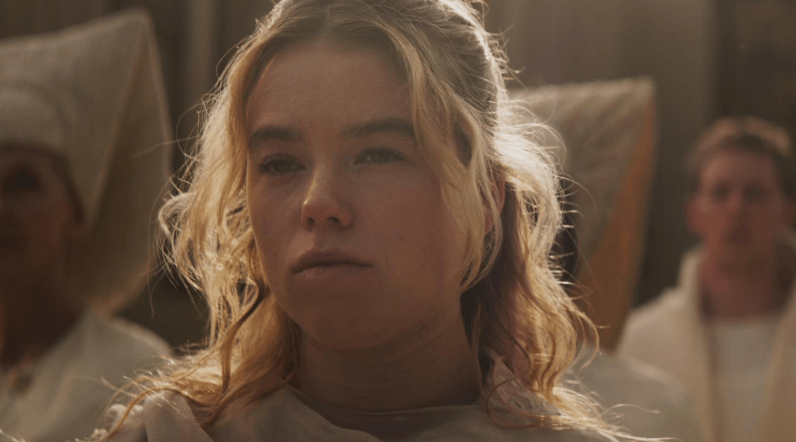
Lanterns “Pilot” Review

Happy Saturday, Geekly Gang! The Lanterns pilot episode released this past week, and I’ve had some time to watch the show a few times. I’ve got some thoughts and if Season’s watched the episode, she may have thoughts as well. It’s time for another Geekly review/reaction of Lanterns “Pilot” episode. Before we begin, I’ll warn everyone that there will be spoilers for Lanterns “Pilot.” Okay, that’s out of the way. Let’s get into the show.

Kyra’s Take

Lanterns “Pilot” does everything a pilot episode should do for a series. It does a great job showing us the main characters (Hal Jordan and John Stewart) and their relationship, it creates intrigue (the question that must be answered by the end of the season), and the small town in western Nebraska even becomes its own character. Great work. If Lanterns wasn’t part of the DCU or based on the Green Lantern property, I’d probably give the episode a near perfect score. It is that good. But Lanterns has yet to follow through with two simple and easy genre expectations for a superhero show/movie: costumes and powers.

And this is on the heels of Supergirl (review here if you want to read it), which also featured a superhero who refused to wear her costume for three-quarters of the movie’s runtime. But at least Supergirl used her powers. Lanterns barely shows Hal Jordan using his ring, and John Stewart recounts what he does with the ring to the audience. Bubble wrap would’ve been nice to see. Superhero stories don’t have too many genre expectations, but not meeting either one (costumes or powers) is a little concerning. I’m concerned about Lanterns; we haven’t reached gripe levels yet. I could see saving money on special effects (powers), but you made the Green Lantern costume. Why not show Hal in the costume for more than fifteen seconds? I know. I know. Character reasons, but the DCU already did that with Supergirl. Will this become a trend? But I meant what I said. Lanterns “Pilot” is almost pitch-perfect.

I’m putting the costume/power concerns on the backburner. Lanterns comes out with a bang. The audience can tell Jon and Hal have a long history. I love their opening scene in the car. “Why do your ‘sirs’ sound like f*** yous?” Classic. Both men come from broken homes. Hal’s father died in a plane crash, and we don’t see John’s mother. The two react differently to their circumstances and this shines through their character choices. Jon using the ring for bubble wrap meant he totaled Hal’s car. Something Hal takes offense to. We do hear why Hal no longer wears his costume. Fair. He could’ve worn the costume under a bomber jacket and jeans. Just saying. And that’s where the show shifts to western Nebraska. Like I said, the little town becomes a character, an engaging character.

I like how Hal navigates the small town politics. Again, it’s obvious this isn’t the first time Hal has visited this Nebraskan town. He even mentions that the town is close to where he gained his Green Lantern ring. This town is more than it seems. The sheriff (portrayed by brilliant character actor, Kelly Macdonald) may try to deny it, but aliens regularly visit this Nebraska town. An alien entity has infiltrated this town, and the sheriff’s father-in-law builds a militia to fend Earth from the aliens he believes will colonize the planet. Lanterns has a lot to say about the world’s current climate. Xenophobia runs rampant in parts of the United States, especially parts like rural Nebraska. I can’t wait to see more of this town and its citizens. Lanterns does a great job of creating a fascinating web.

And that’s before we talk about the alien Hal and John encounter. Extraterrestrials do want to infiltrate this Nebraska town. It’s for the power ring. It’s gotta be for the power ring. A conversation between Hal and John in a bar all but confirms these aliens’ intent. And I love the bar scene from Lanterns “Pilot.” Again, we see how these two Green Lanterns tick. John shows far more patience than his mentor. Despite Hal giving John his ring for safe keeping, John refuses to put on the ring. He believes it’s a test. And knowing what little we do about this version of Hal Jordan, it may be a test. But my favorite moment was when Hal counterfeits a $20 to flood the bar’s jukebox with Melanie’s “Brand New Key.” He pisses off the bar regulars, and they fight him. All of this was a ploy to get arrested so he could interrogate the alien the town’s sheriff has in custody. Everyone, including John Stewart, dubs this a stupid plan. So good.

How this little town works could be its own show. Aliens and Green Lanterns are just a bonus. This may be where my disconnect derives. Lanterns “Pilot” is a great episode, but is it a story unique to Green Lantern? We’ll see. Hal’s bizarre behavior deserves more exploration. He frequents this Nebraska town, and the episode ends with his passing and missing his power ring. Uh oh! Again, brilliant way to open a series. I see a handful of flashbacks in the future while John Stewart unearths who has Hal’s ring, because it’s obvious John doesn’t. When he examines Hal’s body, John looks for Hal’s ring and doesn’t find it. Lanterns “Pilot” lays down a stellar opening for the series. This episode leaves us with plenty of questions and some characters that require more digging.

Those are my thoughts on Lanterns “Pilot” episode. Let us know yours in the comments. Looks like I’m on my own this week. Season may catch up for next week’s episode of Lanterns. Thank you for reading, and wherever you are, I hope you’re having a great day.
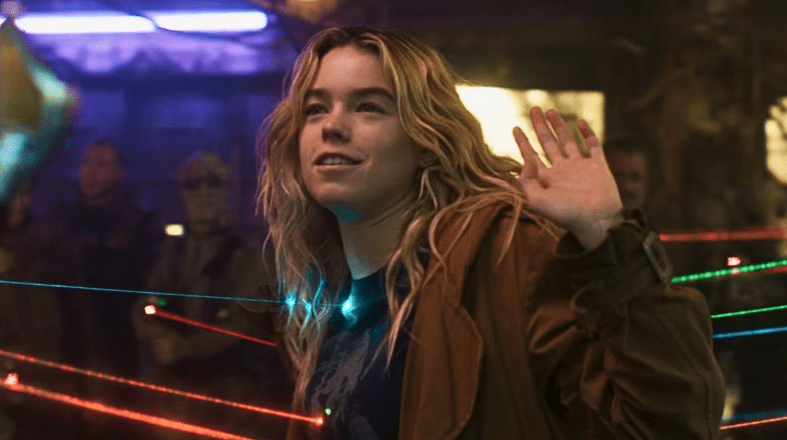
Supergirl Movie Review

Hey, hey, Geekly Gang! Kyra Kyle here. A couple of our writers watched the DCU’s second movie entry, Supergirl, this past week. Sure. We’ve only watched the movie once, so this may be more of a reaction than a review. Typically, I like to watch a movie at least twice before dubbing my thoughts a “review.” But I do have some thoughts, and I may be joined by another of our writers for Geekly’s Review/Reaction of Supergirl.

Kyra’s Thoughts

Supergirl is a good movie. I don’t know where all the hate for the movie originates. I’d even say Supergirl is on par with last year’s Superman, with one significant flaw holding it back: “the brides.” The brides represent an even larger issue of Supergirl attempting to cater to a wider audience. We’ll return to the brides and the rest in a minute, but back to Supergirl as a whole. The acting is on point. Eve Ridley gives a great performance as Ruthye. Milly Alcock is perfect as a Supergirl: Woman of Tomorrow (the movie’s source material) version of Supergirl. And Jason Momoa was more believable as Lobo in three seconds than he was as Aquaman through three DCEU films.

However, Lobo is also the reason why Supergirl isn’t as good as it could be–Lobo was a ploy to get other demographics interested in the movie, but we’ll talk more about that later, too. Again, I love Momoa in the role, but the character disrupted this movie. Other critics claim that Supergirl’s plot is scattered. Lobo is the main reason the movie’s plot goes off course. The writers shoehorned a character who didn’t exist in the source material: Supergirl: Woman of Tomorrow. While a scattered plot may be a fair criticism of Supergirl, last year’s Superman had a far more scattered narrative. I didn’t look at some of these critics’ reviews for Superman, but I venture to guess they didn’t dock Superman nearly as much as Supergirl for the same flaw. And Superman was worse in that regard.

My biggest gripe with Supergirl also stems from Lobo’s presence: the brides. I told you we would return to this topic. In the source material, the main villain, Krem, is a mercenary who really loves killing people. Lobo is also a mercenary who really loves killing people. How do we differentiate between them? Make Krem a sex trafficker. No. Just no. The brides (girls around 13) gave me the ick while I was watching Supergirl. It took me a minute to figure out why the brides made me cringe. I can see why this could be a dealbreaker for some. Supergirl could’ve omitted Momoa’s Lobo (or given him a cameo, seriously, three seconds was all Momoa needed to show he embodied the character) and replaced his scenes with a hopeful scene or two from the source material. This could’ve brightened the movie. Possibly even allowed for more comedic moments, which brings me to my next point.

Supergirl’s darker tone could also be a dealbreaker for others. Supergirl is a very different character from Superman. And that’s a fantastic thing. Corenswet’s Superman never knew Krypton. Alcock’s Supergirl watched her family, her home, and her people die. I love how Supergirl showed the difference between these two characters when they shared screentime. If anything, Supergirl upstaged the DCEU’s Superman. Cavill’s Superman had PTSD for unspecified reasons. Alcock’s Supergirl has PTSD for a very concrete reason: she watched the last of Krypton die. This is the equivalent of Cavill’s Superman as a CIS man trying a menstrual cramp simulator and screaming at the first setting. Alcock’s Supergirl would claim that setting tickles.

I could even see some people disliking Supergirl’s use of trauma to propel the narrative. Sometimes, you just want a dumb, fun movie. Heck, 2025’s Superman could be categorized as a dumb, fun movie, so the DCU conditioned audiences (through one movie) that the new DCU will be bright and fun. Despite its tonal differences, Supergirl fits within the DCU. And I’d argue that Kara overcomes her trauma, and that should be lauded. Supergirl’s trauma makes her interesting. Kara possesses numerous conflicting emotions. At one point, Supergirl was a red (rage) lantern in DC Comics. The fact that she chooses hope makes her a hero. While Supergirl is dark for a PG-13 movie, it’s nowhere near as dark as 2008’s The Dark Knight. So those critics need to stop clutching their pearls or throw that same vitriol at The Dark Knight.

The final negative I’ve seen from most Supergirl critics is the movie’s sepia-toned world. Supergirl: Woman of Tomorrow features vibrant colors. The Supergirl movie doesn’t. And this is where I’m bringing back the idea that Supergirl included certain things in the hopes of appeasing different demographics. Supergirl’s sepia-toned worlds resemble the Snyderverse films. News flash, DCU. Snyderverse fans only want the DCEU to return. Nothing you can do can change that, so why not go with more vibrant colors? And we return to Lobo. Yes. Lobo was that problematic of an addition to this story. At first, I thought the DCU wanted another marketable character in the Supergirl cast (sell some toys or a variant popcorn bucket), but the more I thought about it, Lobo’s presence was meant to appeal to testosteroni males. After all, Lobo is the Main Man.

Supergirl works as a worthy follow-up to 2025’s Superman. I’d like to see where the DCU takes the Superman family. Yes, there are more members of the Superman family the DCU could explore. Supergirl suffers from appealing to a lot of different demographics that it had no hope of winning over. Synderverse fans are a lost cause. And despite Lobo’s inclusion, many of the testosteroni boys whom Lobo was meant to win over still dubbed Supergirl “woke” because it’s a movie about a super-powered woman. Supergirl has the bones of a fantastic movie. The performances are phenomenal. Too bad the DCU tried to cater to certain demographics.

Those are my thoughts on Supergirl. Let’s see what Season thinks about the film.

Season’s Thoughts

I also think Supergirl got too much hate from critics. If you isolate Supergirl from Supergirl: Woman of Tomorrow, it’s an enjoyable movie. It’s fun to watch regardless, but I couldn’t help myself from comparing it to the source material. I’ll get to the source material later.

Supergirl showed Kara overcoming adversity, but that got overshadowed by Lobo and the sex trafficking of young girls. The reason the movie gave for the sex trafficking of young girls was because the Brigands were an all-male race. Okay. I suppose you can argue that reason, but the sex trafficking was so unnecessary and ham-fisted into the plot. It was plain gross for the sake of being gross. Krem also killed one of the girls for sport. If the Brigands really needed these girls to continue their race, why kill one of them instead of capturing them?

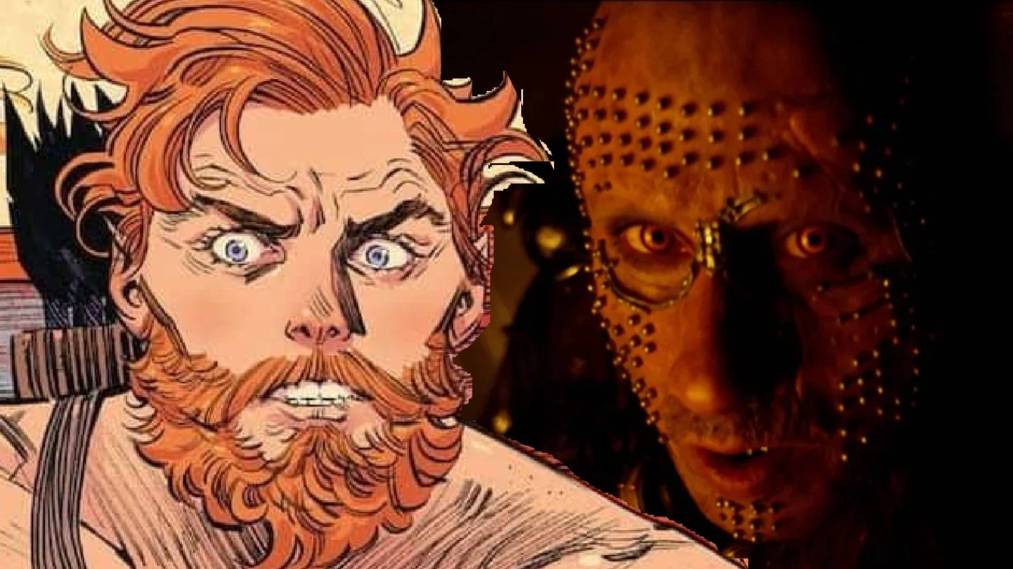
Speaking of Krem, an interesting design choice was made for him in Supergirl that doesn’t match with Supergirl: Woman of Tomorrow. My guess is it goes back to Lobo’s inclusion. Lobo is already an interesting looking character with extreme expressions and mannerisms. In Supergirl: Woman of Tomorrow, Krem looks like a red-headed barbarian with crazy eyes. Supergirl made Krem out crazy-fie Lobo with several piercings across his face, leather clothes, and a rat tail turned into a braid. They also gave him red eyes. You know, to match Lobo. Since Krem was the more evil between himself and Lobo in Supergirl, he had to have a more extreme appearance. I see you, Craig Gillespie.

I’m sorry to all the Lobo fans out there, but he was a distraction. Spoiler alert: Lobo stole Comet’s scene in Supergirl. In Supergirl: Woman of Tomorrow, Comet is the one who saves Supergirl from the onslaught of Brigands, losing his life in the process. This is a very dark and emotional moment in the source material. I cried when I read it. In Supergirl, Lobo rescues Supergirl from the Brigands and turns it into a slapstick comedy moment. Supergirl explained Lobo’s reason for being present was that he was after the bounty of one of the Brigands. That makes sense for Lobo’s character, but Supergirl is only one-hundred and seven minutes. All of Lobo’s screentime is distracting from the main story.

On to the positives. Supergirl was fun to watch. Milly Alcock did an amazing job of capturing Supergirl as a character. Eve Ridley also did a good job of portraying Ruthye. Ruthye’s internal monologue wasn’t included in Supergirl, but I didn’t mind. The movie could have easily been lengthened to over two hours if Ruthye narrated the movie.

I didn’t think Supergirl would include the green sun. I was pleasantly surprised. Not only was it included, but it cut out the extra exposition in Supergirl: Woman of Tomorrow, which was much appreciated. Supergirl: Woman of Tomorrow dragged a bit on the extent of Supergirl’s affliction to the green sun. In Supergirl, Ruthye’s strength was portrayed through her restraint and perseverance. We didn’t need to watch her slay monsters.

That’s my take on Supergirl. Geekly Gang.

Hey, hey, Geekly Gang. Kyra Kyle here again. Did you agree with our takes? What do you think of Supergirl? Let us know in the comments. Thank you for reading, and wherever you are, I hope you’re having a great day.
Getting Into Comics: Supergirl Starter Stories

Hey, hey, Geekly Gang! Kyra Kyle here. Supergirl is right around the corner, so now may be the best time to get into reading Supergirl comics. Many of the stories mentioned in this list will come from the previous two decades because Supergirl was a girl version of Superman for many years until DC Comics decided to kill her in Crisis on Infinite Earths. Spoiler: Crisis on Infinite Earths didn’t quite make this list, but I’d recommend reading it for reasons other than Supergirl lore.

Crisis on Infinite Earths occurred in the Eighties, and Supergirl’s death would stick longer than most comic book characters. And when Supergirl returned, comic book creators took her in different directions. Finally, Kara Zor-El would break free of her cousin’s shadow. We have some interesting stories to discuss. Which comic book stories made our Supergirl Starter Stories.

We’ll start things off with our only single issue on this list.

Single Issue

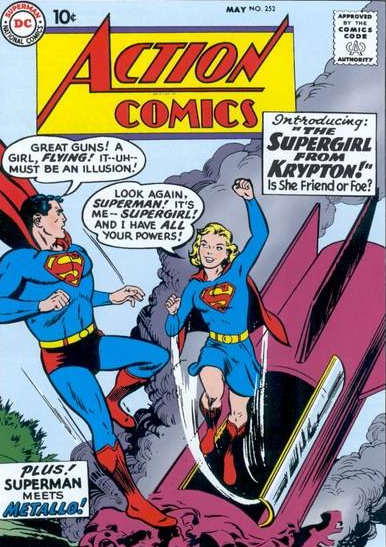
“The Supergirl from Krypton” (Action Comics #252; written by Robert Bernstein/art by Al Plastino; May 1959)

Fun fact: Action Comics #252 contained three stories. The first featured the iconic Superman villain, Metallo’s first appearance in “The Menace of Metallo.” And the third was Supergirl’s origin, “The Supergirl from Krypton.”

Honestly, I only included “The Supergirl from Krypton” because it’s Supergirl’s first appearance. I like to include a character’s origin whenever possible. Very little happens in “The Supergirl from Krypton” besides Superman and Supergirl meeting for the first time and a lengthy backstory of how Kara Zor-El ended up on Earth. But Supergirl’s origin is interesting.

Her Kryptonian hometown, Argo City, was blasted free of Krypton’s destruction in a bubble of compressed air, designed by Kara’s father Zor-El (who’s also Superman’s uncle). Zor-El created a force field around the city to maintain its atmosphere, but years later, a meteor shower penetrated the air bubble, and Zor-El saved his daughter by building her a spaceship, similar to Superman’s. He sends her to Earth because somehow the Kryptonians on Argo City know about Superman. Sure. Supes can’t take on Kara as his ward (and risk his secret identity), so he sends her to an orphanage. Nice move, Supes.

“The Supergirl from Krypton” doesn’t have a lot of space to explore the cousins’ relationship, but there’ll be plenty of time to do that in the coming years.

Storylines

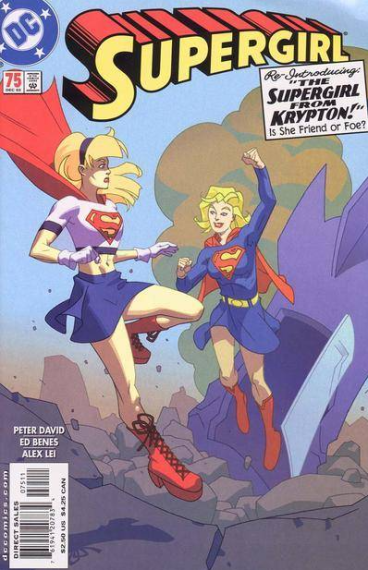
“Many Happy Returns” (Supergirl #75-#80 written by Peter David/art by Ed Benes; 2003)

Peter David had an excellent run on Supergirl. You should check it out if you have the time, but I’m focusing on David’s storyline, “Many Happy Returns” because David primarily wrote about Linda Danvers, the Post-Crisis on Infinite Earths’ Supergirl. This post focuses on Kara Zor-El, but Linda Danvers was a good character in her own right. Danvers is the reason Kara Zor-El in the Supergirl series had the surname Danvers.

Anyway, “Many Happy Returns” marks Kara Zor-El’s return to DC Comics continuity. A lot more happens in “Many Happy Returns,” we’re talking multiverse jumping and a romance between Earth-One’s Superman and Linda, leading to Linda needing to save Kara on her world. Long story short, Linda does something she can never come back from, renounces being a hero, and Kara Zor-El takes back the mantel of Supergirl.

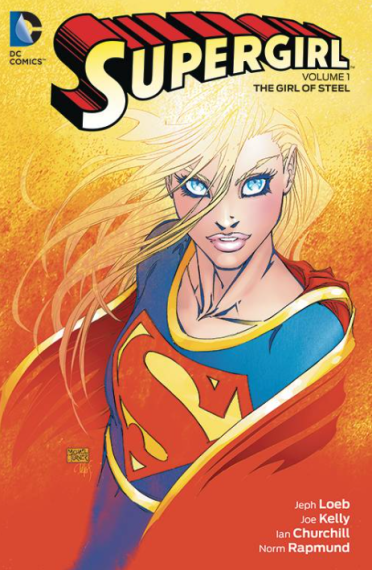
“Supergirl: Girl of Steel” (Supergirl #0-10 and #12; written by Jeph Loeb, Greg Rucka, Jimmy Palmiotti, Justin Gray, and Joe Kelly; art by Ron Adrian, Rob Lea, Ian Churchill, Andy Lanning, Amanda Conner, Jimmy Palmiotti, and Norm Rapmund; 2005-2007)

Jeph Loeb’s classic run on Supergirl helped define the character. While “The Supergirl from Krypton” spun a tale of a teenage Kryptonian living on an asteroid for years before getting launched into space to join her cousin, “Supergirl: Girl of Steel” presents the more familiar story of Supergirl leaving Krypton at the same time as her then infant cousin. Supergirl was tasked with protecting Kal-El on Earth, but her ship got lost and she spent decades in suspended animation. By the time Kara Zor-El reached Earth, her cousin no longer needed her. And now, she needed to find her way.

“Supergirl: Girl of Steel” is an iconic story at this point. You can see its influence on the Supergirl television show, and the upcoming Supergirl film will use another story (more on that in a bit) that builds on “Supergirl: Girl of Steel’s” structure. This is a must read.

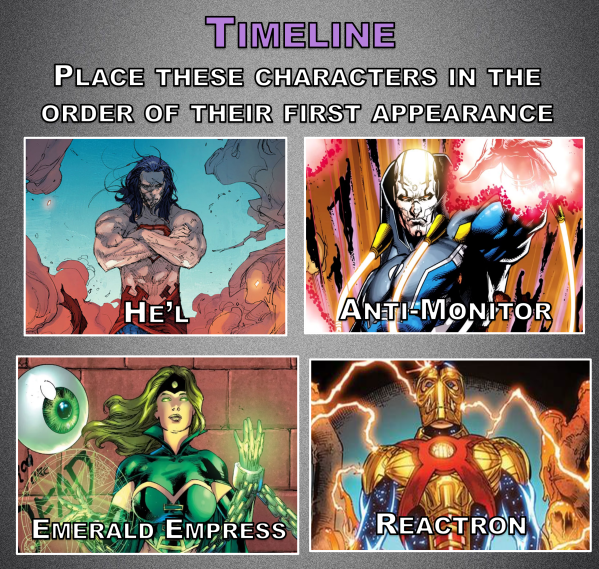
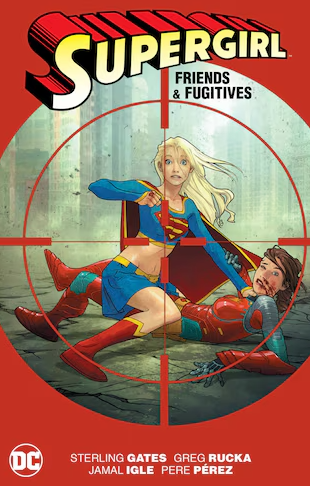
“The Hunt for Reactron” (Action Comics #881-882, Supergirl #44-50, Supergirl Annual #1, and Superman: Secret Files 2009) written by Greg Rucka and Sterling Gates; art by Jamal Igle; 2009-2010)

“The Hunt for Reactron” may take place on New Earth, but it does an excellent job showcasing Reactron, one of Supergirl’s greatest foes. And you can’t go wrong with Greg Rucka’s storytelling. On New Earth, Kara Zor-El’s father and many more Kryptonians survived Krypton’s destruction. They establish a New Krypton, and Reactron, with the help of Superman villain Metallo, disturb the peace. Okay. I soft-balled that. Reactron kills Kara’s father.

Understandably, Kara flies off in a rage. What ensues is fellow Kryptonian Thara Ak-Var (Flamebird) preventing Kara from doing something she’ll regret. Is she successful? You’ll have to read “The Hunt for Reactron.”

“Bizarro-Girl” (Supergirl #53-#57) written by Sterling Gates; art by Jamal Igle; 2010)

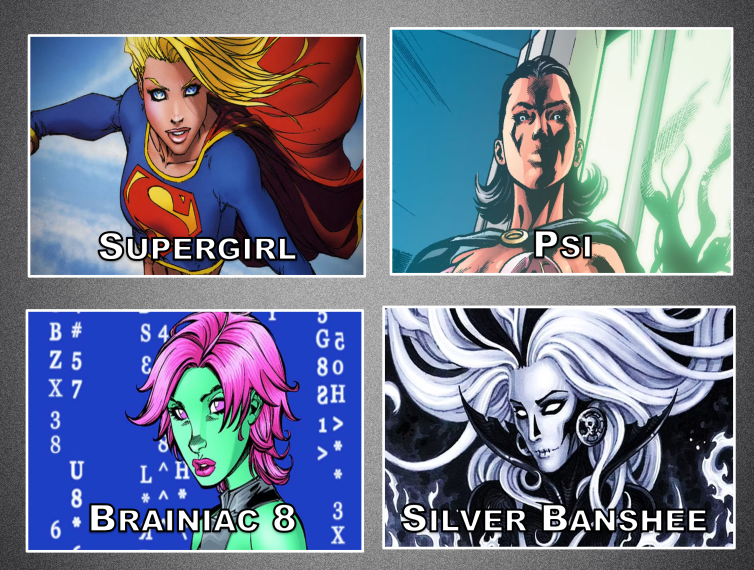
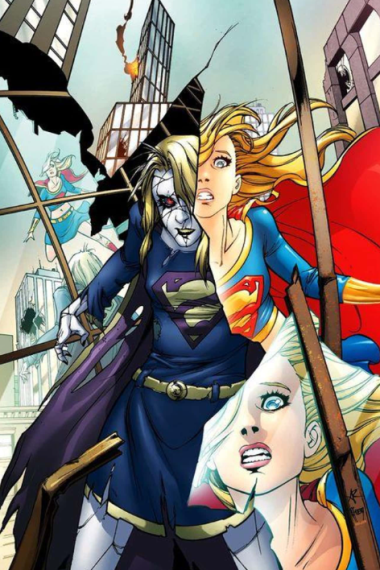
We go from one villain-defining story to another. Leading up to 2010, Bizarro had existed for decades. Bizarrogirl made her debut in this story, and she does so with a bang. Unlike Bizarro who’s the opposite of Superman, Bizarrogirl functions like a mirror for Kara Zor-El. Leading into this story, New Krypton falls and several Kryptonians (like Flamebird) die with it. Supergirl is in mourning.

Bizarro sends Bizarrogirl to Earth to cause trouble. While Bizarrogirl is away, Bizarro World gets attacked by giant bug-like creatures spawned by “Godship.” The insectoids overrun Bizarro World, and Bizarrogirl’s people believe she abandoned them. She blames herself for Bizarro World’s downfall just as Supergirl blames herself for New Krypton’s demise. I love how Bizarrogirl asks Supergirl if self-punishment ever ends, and Kara tells her it might not, but it’s what you do afterwards that counts. Supergirl takes her own advice, and the two start healing. “Bizarro-Girl” is a great read.

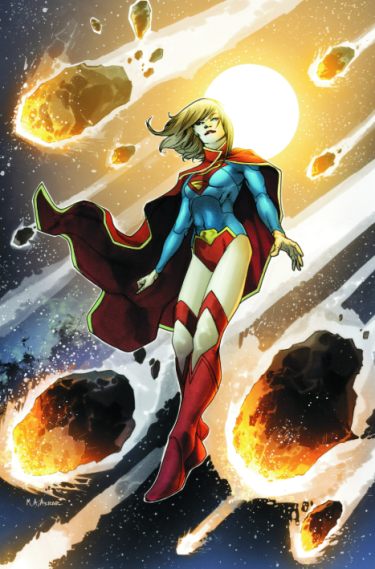
“Supergirl: The Last Daughter of Krypton” (Supergirl #1-7; written by Michael Green; art by Mike Johnson and Mahmud Asrar; 2011-2012)

The New 52 brought changes to the DC Comics Universe. This version of Supergirl has just landed on Earth. She believes she’s dreaming. She must be on Krypton (instead of Earth) and encounters Superman. Confused, Kara Zor-El attacks the man calling himself Superman. She had babysat her infant cousin Kal-El three days ago. But this is indeed a grown Kal-El. He explains to her that the Earth’s yellow sun gives them superpowers like Kryptonian Worldkillers. What’s a Worldkiller? We find out when we meet Reign for the first time.

Reign explains that Worldkillers, like her, were the result of Kryptonian scientific experiments. They were genetically altered to be killing machines. And just like Kryptonians, Reign isn’t the only Worldkiller who survived Kryton’s destruction. Kara must take on four Worldkillers alone. The Worldkillers want nothing more than to kill innocent lives. Kara manages to save the humanity and drive off the Worldkillers…for now.

“Supergirl: The Last Daughter of Krypton” introduces yet another great Supergirl villain, Reign. She made such an impression that she was featured in a season of Supergirl. Not bad for a new villain. “Supergirl: The Last Daughter of Krypton” shows Kara Zor-El as truly alone. It sows the seeds for our next entry as well.

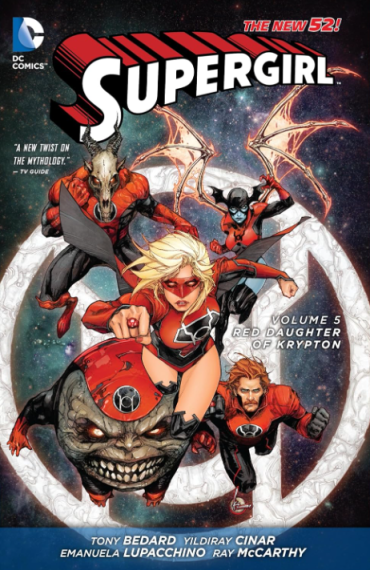
“Red Daughter of Kryton” (Supergirl: #26-#33; Green Lantern #28; Red Lanterns #28-34; written by Various; art by Various; February 2014-October 2014)

Surprise. Worldkillers return in “Red Daughter of Krypton.” But before we get there, Supergirl fights off Cyborg Superman and H’el in space. H’el is another great Supergirl villain. We don’t get too much of his backstory here, but in short, he tempts Kara Zor-El with turning Earth into a New Krypton. While this pitch wouldn’t do much for Superman, Supergirl has more of an attachment to Krypton. Regardless, after Supergirl finishes this fight she returns home to find Lobo antagonizing her. All this leads to a red lantern ring finding its way to Kara. Red Lanterns feed off anger, and in “Red Daughter of Krypton,” we see Kara Zor-El give into her rage.

Even though most Red Lanterns, like Atrocitus, who does make an appearance, can be viewed as villains. We do see heroes take on a red lantern ring. Here’s looking at you, Guy Gardner. In the end, Supergirl manages her rage. She retains the moniker of a superhero. But “Red Daughter of Krypton” reveals a new side of Supergirl that writers will explore.

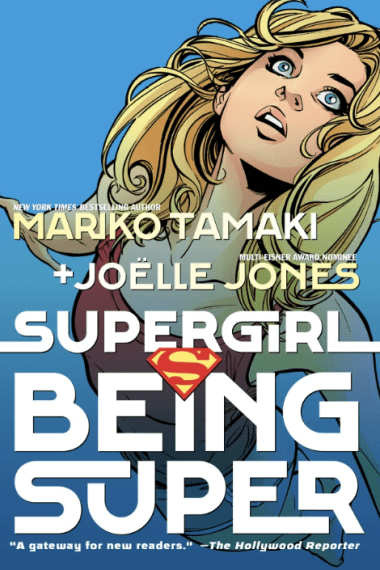
“Supergirl: Being Super” (Supergirl: Being Super #1-4; written by Mariko Tamaki; art by Joelle Jones; 2017)

We get another origin story of sorts with “Supergirl: Being Super.” In this one, Kara Zor-El becomes Kara Danvers. This is an obvious nod to the Supergirl television show in the middle of its run on the CW. “Supergirl: Being Super” remixes details of the original Supergirl origin. She lives in Midvale, which is where Superman dropped her into an orphanage. But she also discovers her powers, similar to Kal-El. The Supergirl in “Supergirl: Being Super” drops the Supergirl as Superman protector for a moment and explores what it would be like if Supergirl were a novice.

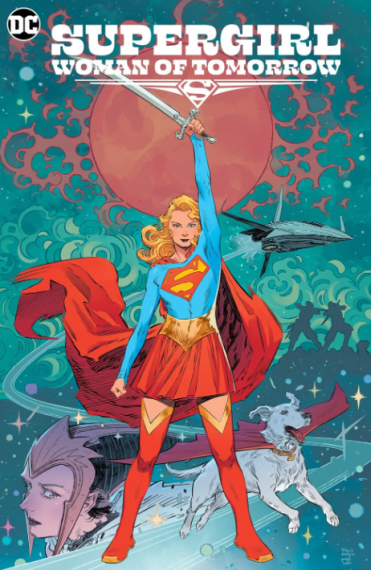
“Supergirl: Woman of Tomorrow” (Supergirl: Woman of Tomorrow #1-8; written by Tom King/art by Bilquis Evely; August 2021-April 2022)

“Supergirl: Woman of Tomorrow” was the first comic I knew would make this list. If you were to search against this title, you’ll find the Supergirl 2026 movie as a top result. Simply put, “Supergirl: Woman of Tomorrow” is the basis for the upcoming DCU Supergirl film. Yay!

Written by Tom King (who had just finished an iconic run on Batman), “Supergirl: Woman of Tomorrow” returns Kara Zor-El to Superman’s would-be protector. Only a grown Superman doesn’t need a babysitter. So, she’s on a foreign planet (Earth) with no purpose and gives in to her baser instincts. This is a lost Kara Zor-El. The ending of the DCU’s Superman (2025) does a great job of setting up her character. Kara gets wasted. She’s aimless. She struggles to find purpose, but eventually, she finds herself. The award-winning “Supergirl: Woman of Tomorrow” received widespread acclaim. I can’t wait to see how the DCU interprets this story.

Those are the Supergirl stories that made our list. Are there any Supergirl stories you would add to this list? Let us know in the comments, Geekly Gang. Thank you for reading, and wherever you are, I hope you’re having a great day.