
1st Board Game
2nd Board Game
3rd Board Game

1st Board Game

2nd Board Game
3rd Board Game

Hey, hey, Geekly Gang! Kyra Kyle here with another week of Geek News. The Kansas City Renaissance Fair was fantastic. I had a blast. We have plenty of new releases in board games and video games. We even have some tabletop RPG new releases. What? That’s right. GameFound’s RPG Party returns. I’m so glad they’re making this an annual event. Woot! Without any further ado, let’s talk about some games.
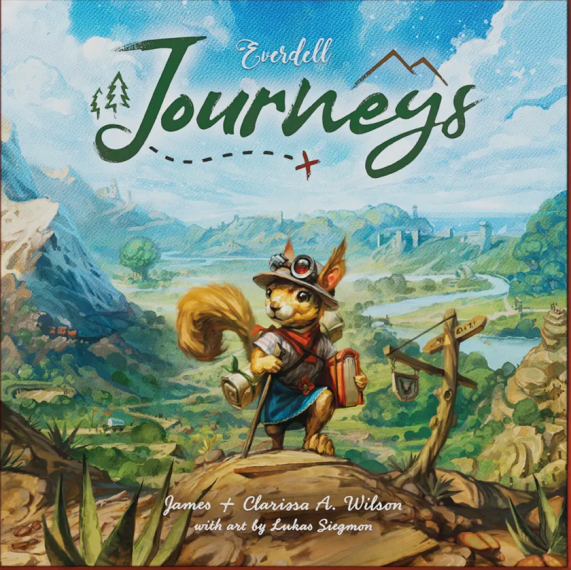
Set out from the hustle and bustle of the big city and see the cozy world of Everdell on your own two paws in Everdell Journeys.
In this card-drafting adventure, you’ll lay down a path of cards featuring the breathtaking landmarks, riveting cities, and new friends you’ll find on the road. Send your traveler along the path of cards to activate them, scoring points and gaining resources. Chart your course wisely and score powerful combos based on the cards in your path, filling your journal with memories to share by the hearth at your journey’s end!
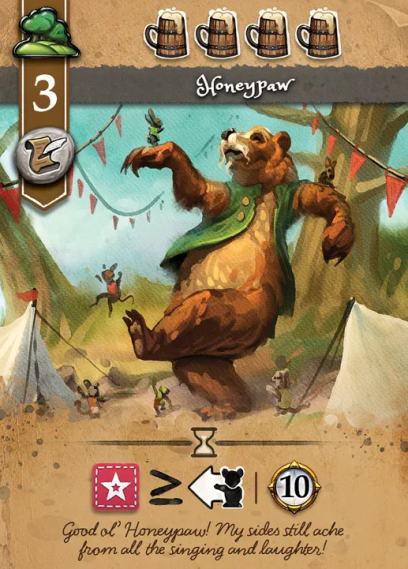
Thank you, Tycoon Games, for the description. My spouse and I love the Everdell series. We have almost everything from the base game and adore Everdell Duo. Tycoon Games has done a good job with its Everdell spin-off games so far. That’s a good sign for Everdell Journeys. While Everdell Duo offered a campaign and co-op variants of the original game, Everdell Journeys uses card-drafting. Yes! According to the publisher, Everdell Journeys takes between thirty minutes to an hour to play. That tracks for a card-drafting game. I like those games’ ability to speed up gameplay. The picture above has me a little concerned about the game’s icons. There’s a lot going on with the symbols at the bottom of “Honeypaw.” Still, Everdell hasn’t missed yet with one of its spin-offs. Everdell Journeys deserves attention.
And we get more than one Everdell spin-off game with this campaign. Each pledge comes with a free copy of Everdell Gather, which is a card game variant of Everdell. I like it when longer games, like Everdell, condense its concepts into a card game that’s easier to get to the table. Games of Everdell Gather take around twenty minutes. Yes, please. And we get two Everdell spin-offs for the price of one. Yes, yes, y’all! Everdell Journeys offers pledges that range between $49 and $699. $50 for two games isn’t bad. If you’re interested in Everdell Journeys, check out its KickStarter page.
Each player shapes their cat’s path: will you be the aggressor, stealing prestige and robbing opponents of their dignity? Or perhaps you’ll focus on foraging and construction, fancying up your backyard with luxurious structures? Live off adventure by completing quests, fulfilling ambitions, and dueling for glory, or dominate the market through cunning auctions and hiring the best workers? With multiple paths to victory and high replayability, Catvale offers a delightful mix of strategy, luck, and creativity, where the future of the land rests in the paws of the most cunning and ambitious cat.
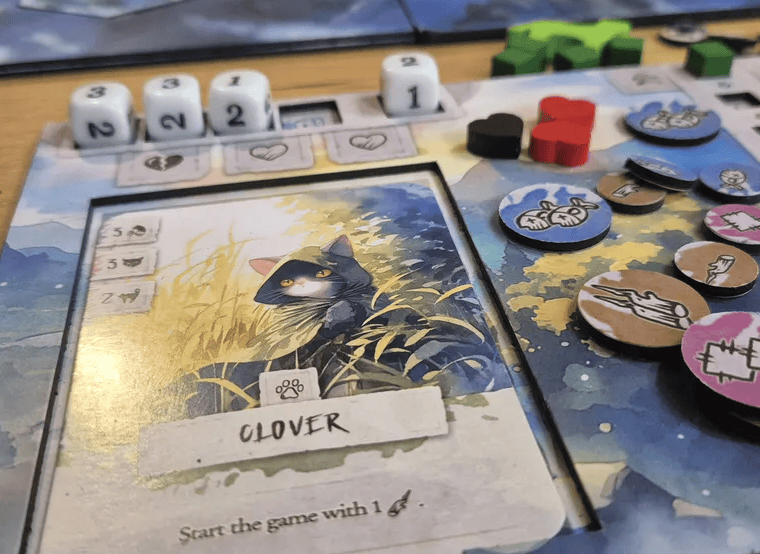
Thank you, FU Dice, for the description. I haven’t heard much about Catvale before this week. This game sounds like a winner with my family. My oldest daughter loves cats. Catvale has RPG elements, dice rolling, worker placement, and tile placement. If combined properly, these are some of my favorite board game mechanisms and Catvale could be a killer game. I love the artwork. The components look like good to great quality. FU Dice is a new company. While there’s always a risk with newer board game companies, the people behind FU Dice have a history in the board game design/production space with Glass Cannon Unplugged, who made the Apex Legends, Don’t Starve, and Dying Light board games. The company may be new, but the designer (Lukasz Burdowski) and the people running FU Dice have plenty of experience.
Catvale offers multiple pledge levels, ranging $79 – $499. The highest level offers premium wooden pieces. If you’re interested in Catvale, check out its KickStarter page.
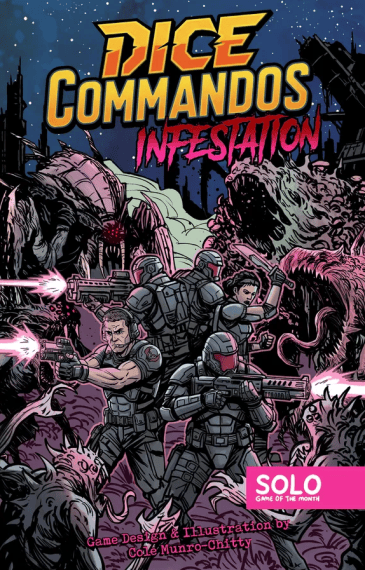
The sequel to Dice Commandos, Infestation is a tactical dice puzzle game where you control a team of elite commandos facing an evolving alien threat.
Battle rogue androids, powerful company men and the brooding alien queen. Complete objectives, and fight to survive using dice, weapons, and deadly abilities.
Choose 1 of 6 missions and an enemy faction type to battle against. Each round you will use your commandos to perform 3 actions; move/fight, train, deploy, load-outs and completing objectives. Your commandos are dice that have special abilities and move according to their pip values. You will move your commandos around the map strategically fighting enemies and setting up the conditions to complete your mission objectives.
You must complete you mission objectives before time runs out or before your commando team is defeated by the alien threat!
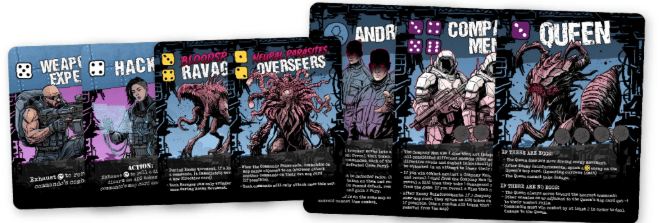
Thank you, Solo Game of the Month, for the description. And, yes! We have another board game from Solo Game of the Month. I love this company. It offers a lot of game for not a lot of money and still manages to make quality games. As the name implies, Solo Game of the Month produces a lot of great solo games, a growing trend in modern board gaming. Don’t have a dedicated gaming group? Play solo games. We missed the original Dice Commandos when it originally released, but we caught its sequel, Dice Commandos Infestation. The original game paid homage to Predator, and Infestation looks to do the same with Starship Troopers. Oh, yeah! This’ll be fun.
If you’re interested in Dice Commandos Infestation, check out its GameFound page.

Tres Tesoros is a fast-paced card game for 2 to 8 players that combines strategy, luck, and treasure hunting.
Players roll a custom D12 dice at the start of their turn to determine how many cards they draw and how many actions they can take. Throughout the game they collect Gem cards, protect them with Shields or Mirrors, and use special action cards to disrupt their opponents and gain an advantage.
The goal is to complete a winning collection of Gems before anyone else. Easy to learn and quick to play, Tres Tesoros offers constant interaction and unexpected twists where a single roll can change the course of the game.
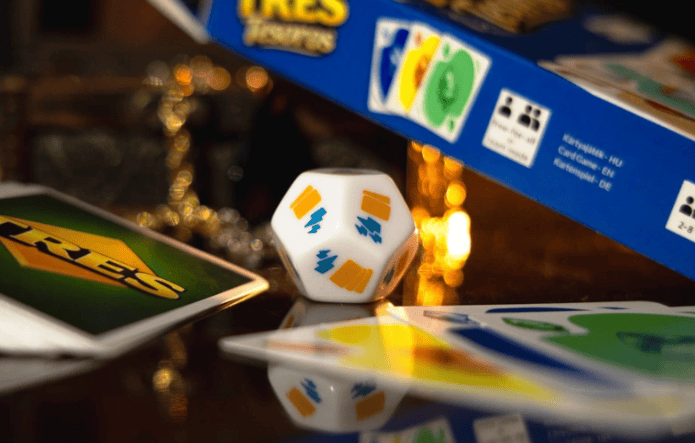
Thank you, Dreamkeepers Games, for the description. Tres Tesoros has a simple premise, and sometimes, that’s all you need. It looks like an easy game to learn and claims to scale well, supporting up to eight players. I haven’t yet played Tres Tesoros, so I don’t have an opinion there. The game flow is roll the die (a twelve-sided die), follow the directions of the die face you rolled by playing gems (cards for points) or attacking your opponents (cards to rid your opponents of points?). Like I said, simple and quick. While I can’t imagine Tres Tesoros’s pledges costing too much, it is on GameFound, so we don’t have an exact dollar amount. If you’re interested in Tres Tesoros, check out its GameFound page.
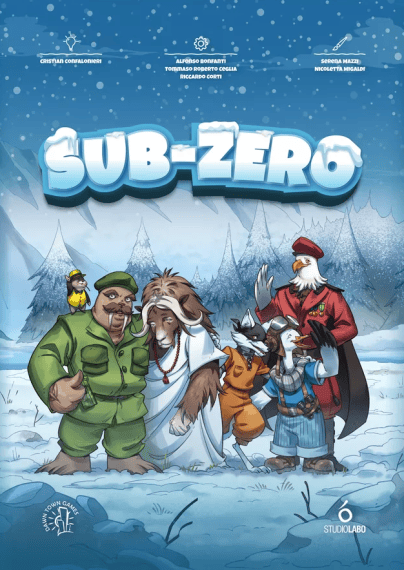
As a faction of Arctic animals take over territories and stockpile food to survive the winter. Fight the cold, avoid humans, and escape the polar bears!
In Sub-Zero, you lead a faction of arctic animals chosen from Walrus, Goose, Musk Ox, Bald Eagle, Arctic Fox, and Lemming.
The first player of the turn rolls a set of dice indicating the actions available for that turn, the players in clockwise order choose which dice to use and remove it from the pool available to the others. From the season’s black or white dice set, you can then place your animals on the board, collect food from a territory and lower its value, use your faction’s special action (each faction is different from the others), or spend points to choose a specific action of the dice
From the blue die of the season, reduce the value of a territory by lowering, place a human scientific expedition on a territory, collect food, or send a Polar Bear against the animals of the other factions. The game takes place in 15 rounds divided into 3 seasons: spring, summer, and autumn. At the end of the 3 seasons, the player with the most points (in food) wins!
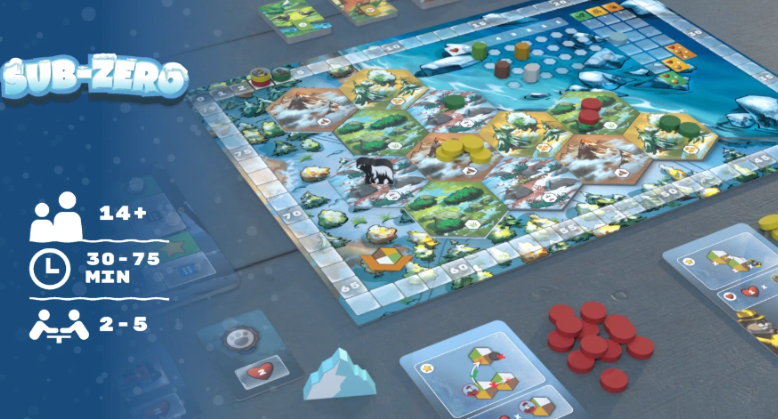
Thank you, Dawn Town Games, for the description. Pictured above is a screenshot from Board Game Simulator, not the final game components. That being said, Sub-Zero looks good from a production standpoint. Dawn Town Games has a few games under their belt and have a good track-record. Sub-Zero features more dice rolling and worker placement (like some other games this week), but adds a twist of area control/manipulation. That makes sense for a game where you’re trying to survive the elements. Sub-Zero introduces some interesting concepts. I like how players take on the roles of animals and must avoid humans. Nice touch! If you’re interested in Sub-Zero, check out its GameFound page.
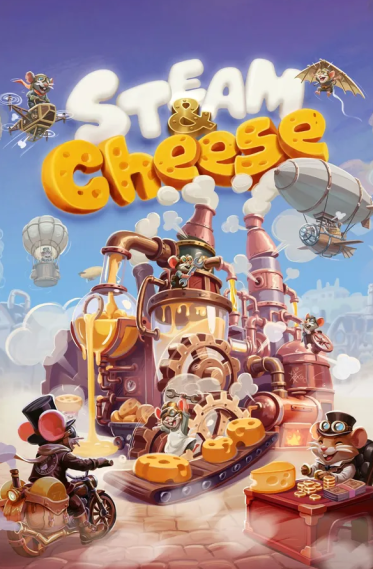
In a world similar to the one we know, mice became the dominant species. They built houses, roads, and cities, and increasingly developed a taste for fine foods — their appetite for cheese grew immeasurably. The better the cheese, the more valuable it became. So they began importing spices from the Far East by zeppelin. These spices are used to make the cheese even more delicious. But cheese production is no simple undertaking. A large machine factory was built, where the resourceful mice constantly sought to install ever-better machines to increase productivity. Sales representatives from all over flocked to the factory operators to purchase cheese. The merchants’ demands are high, but great wealth is granted to those who satisfy these desires.
In this expert level euro game players place dice in various action boards to choose which action with which strength they want to perform. They get resources depending on the dice color and determine the strength with the dice values. Milk is placed on the player board and needs to be transformed to cheese with different machines (actions). They try to fulfill orders and move on various bonus tracks. The player with the most victory points wins.
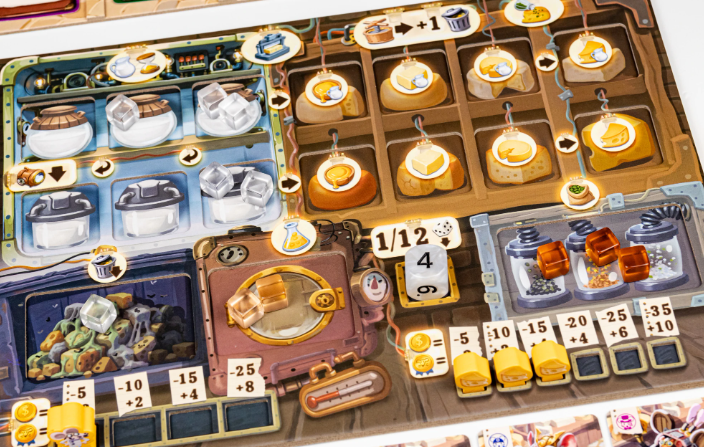
Thank you, Skellig Games, for the description. Oh my ghost! Steam & Cheese looks adorable. Steampunk mice making cheese is a fantastic theme mashup. I included the entire description for Steam & Cheese because it’s so good. Skellig Games has produces some phenomenal games, too: Darwin’s Journey, On Mars, Anachrony, Voidfall, and Age of Steam. This is a company with an excellent track record. I don’t know what makes Steam & Cheese an “expert level” euro game, but it does look complicated. Whenever I think of an expert level euro game, I think of a game I can lose on turn one. I hope that isn’t the case with Steam & Cheese. But I don’t yet have a game in my collection like that. I could stand to have a least one.
Steam & Cheese looks so good. I may throw caution to the wind and pick up a copy. If you’re interested in Steam & Cheese, check out its GameFound page.
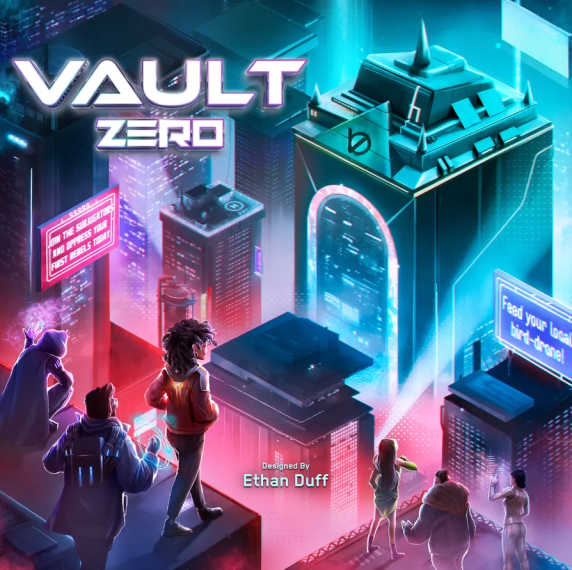
Vault Zero is a combination deck-builder, engine-builder, and action programming game set in a techno-dystopian future. Players take the role of rebel hackers who are all working to build machines that can hack into Vault Zero, the digital fortress that contains the government’s darkest secrets, and expose those secrets to the public and cause a mass uprising.
Players begin each turn with only one actin available to them, but cards they collect can add action economy in three different ways depending on their color. With a full board players will be triggering effects that trigger effects that trigger effects. Find effects that generate Key cards and get 5 of them in your hand at once to steal a secret from the Vault! Steal your 5th secret, and you’ve won the game!
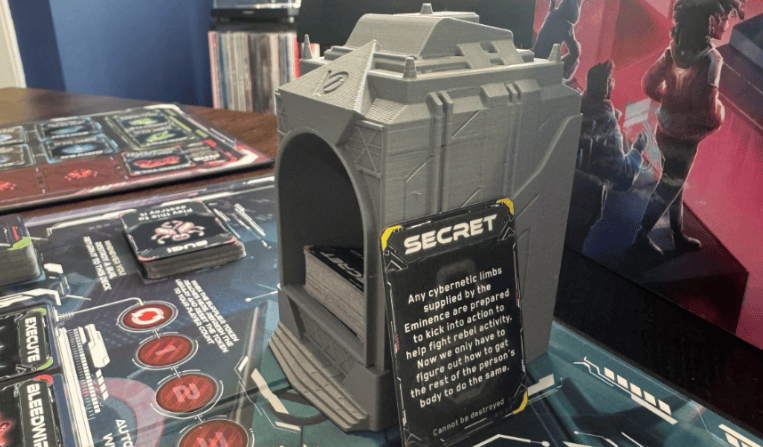
Thank you, Horse Thief Games, for the description. Oh my ghost! I know I already said that once in this week’s write-up, but look at the games in this week’s stable of board games. They all look so good. Vault Zero adds several other elements I love in games. I don’t have too many deck-builders anymore (culled a handful of months ago), and I love it when an engine gets going. Vault Zero also happens to have a great theme, and look at the table presence the titular vault (pictured above) provides. Vault Zero will be one of those games people will stop to look at during a convention. If you’re interested in Vault Zero, check out its GameFound page.

Typically, we don’t cover tabletop RPGs on Geekly because there are so many releases each week, but this week is special. GameFound launched its second annual RPG Party. Woo hoo! 23 TTRPGs get featured on the site for the week, and let me tell you, some of the games sound amazing:
Budapest 1899 by Dragonmount Press (delves in to the occult and folklore of Hungary as it prepares to enter the 20th century)
Lights, Dice, Action! by Regular Wizard Co (a game about creating a TV series or blockbuster movie)
The Long Watch by StudioSquidink (an “uncanny solo RPG” that sees the player join a mysterious and underfunded organisation)
Heroes After Dark by Adam Krafter (where you play as Vespers – heroes who mysteriously trasform into monsters every night to fight evil with evil)
Murder of Crows by Michael Endo Weil (crows investigate the murder of other crows)
Hope Dies Last by Infinite Citadel & Mike Underwood (A triptych of Daggerheart-compatible campaign frames where defiant heroes fight against overwhelming odds)
Haunted by Jeremy Kerr (a tabletop RPG of supernatural noir investigation)
Trashumanism by Le Destroy (A biopunk TTRPG set in the Trashumanism Universe)
Twisted Lands by 9thPersona (players become Gidim – hunters, scholars, envoys, and problem-solvers navigating a living world of strange ecologies, ancient technology, powerful cities, and choices that leave lasting consequences)
Kraldum by tooth & shore (Go down to the shore below the city. Collect what you can. Survive what lurks there and beat the rising waters to make it home.)
Tales & Twists by by Jack of all Tracks (Dive into a menagerie of brand new worlds filled with whimsy, adventure and horror with new rules for resistance, dungeon crawling, and the tug of war between resilience and corruption)
GridShock by Paul Vermeren | VX2 (You are a new breed of heroes, fighting to restore hope to a warped world in the grip of villainy)
Myco//Drift by Crimson Adder (players take on the role of genetically altered pilots bonded to skyscraper-sized fungal bio-mechs known as Myco Suits)
Ivory Tower by RiftKid Games (Save your flying city, witness the end of the world, and rule the remaining rubble in this TTRPG about a scheming council of archmages)
The Wine Dark Sea by Abyssal Raven Games (Play as lost star farers trapped in a place of dreaded legend outside the known universe)
Heroes of a Thousand Tales by Adventure_Horizon (Every rule is designed to make you play, feel, and fight like you’re the hero of your own anime series)
Unbounded by Roger “Moishe” Main (Level up through the Ability Trees and learn to harness your Atzmah to create any character concept you can imagine)
Witches of Winter by Violet Blitz (A modern fantasy TTRPG about witchcraft, community, and climate collapse)
Everdoom by Tremor Pings (A shared-authority narrative game for four players who discover the destiny of a legendary hero by telling their fable together)
Winter Bones: An RPG for Doomed Mice by We Be Dangerous Publishing (Become mice. Tiny, fragile creatures battling for survival against the horrors born of the Deep Still. Monsters lurk beneath the frost. Do you have what it takes to evade their clutches?)
Road Warriors: A Stand Up Comedy Odyssey by DGB Games (Road Warriors is a game about playing fledgling stand up comedians on your first tour. The gigs are rough, the audiences are worse and your hit points are based in self esteem. Good Luck!)
What a great round-up of TTRPGs. Which one of the above titles sounds the most interesting to you? Have you playtested any of them? Let us know in the comments. I’m glad GameFound has made RPG Party an annual event. Good luck to all the games listed above. You guys rock!

On Halloween night, 1978, no one is safe from Michael Myers. Become the Boogeyman or fight back against the face of evil itself in Halloween.

Halloween: The Game releases just in time for Spooky Season. I see what you did there. The game has received solid reviews. That’s great to see. Games based on horror franchises can be hit or miss at times. Halloween: The Game can be played as a solo experience or with multiple players. Think a Michael Myers specific Dead by Deadlight, where one player is the killer and the rest attempt to survive their attacks. Halloween: The Game is available on PC, PlayStation 5, and Xbox Series S/X.
That’s all the geek news we have for this week. Thank you for reading, and wherever you are, I hope you’re having a great day.

Hey, hey, Geekly Gang! Kyra Kyle here, and today, we’ll be discussing Marvel United. Yes! We haven’t discussed this board game in quite some time, and it’s time to fix that. Marvel United’s various villains and the way they alter the gameplay are the game’s most intriguing game design elements. In today’s list, we’ll share our picks for the Top 5 Marvel United Villains.
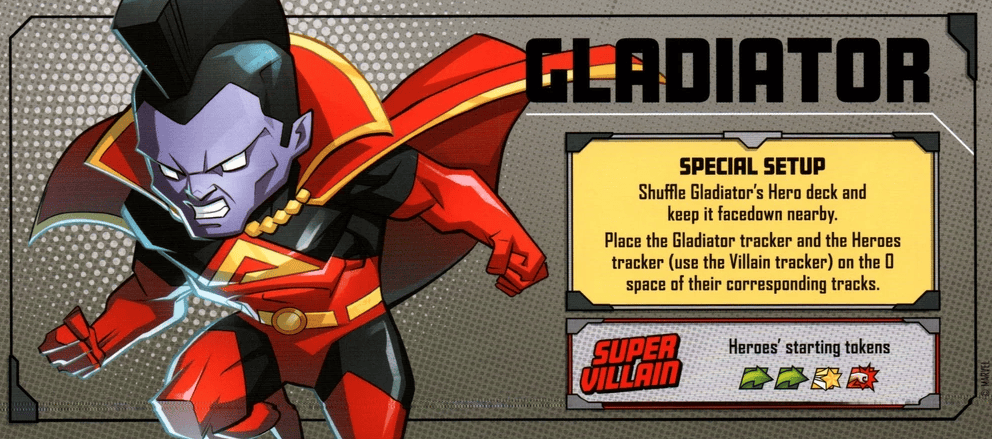
Right off the bat, we’re shaking up things with this list. While a Top 5 Marvel United Villains list is up for debate (everyone has their own taste), Gladiator may just be one of the most universally hated villains in the game. Simply put, he’s unwinnable at heroic mode, unless you use multiple heroes with lots of wild symbols, which limits the number of heroes you can even use to defeat this villain. Most games against Gladiator end with the heroes auto-losing after a couple of turns. No thanks.
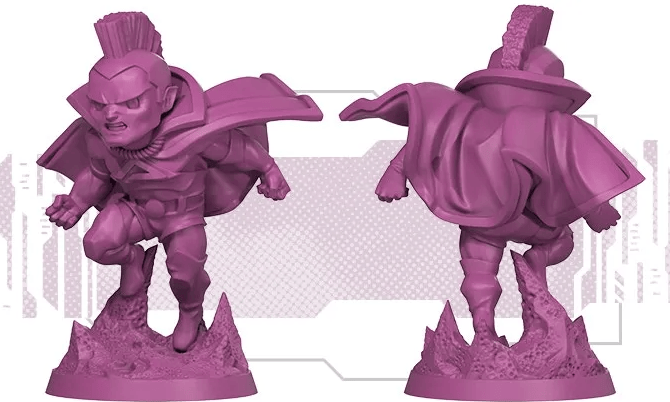
While the rest of the War of Kings Expansion adds some nice variety, Gladiator as a villain is plain unfun. Fortunately, he is an antihero. I’d use him as a hero, not a villain.

We’ll be seeing a ton of Marvel United Season 2 on this list. Most gamers list it as the best Marvel United Season, and I tend to agree. Marvel United X-Men rules. Unlike our previous entry, Dark Phoenix may be difficult to acquire. Difficult, but not impossible. She’s available in the Season 2 Stretch Goal box. This box includes a heap of fantastic characters. We may see another one on this list from the same box, so the hefty price tag of $80 to $100 may be worth the cost.
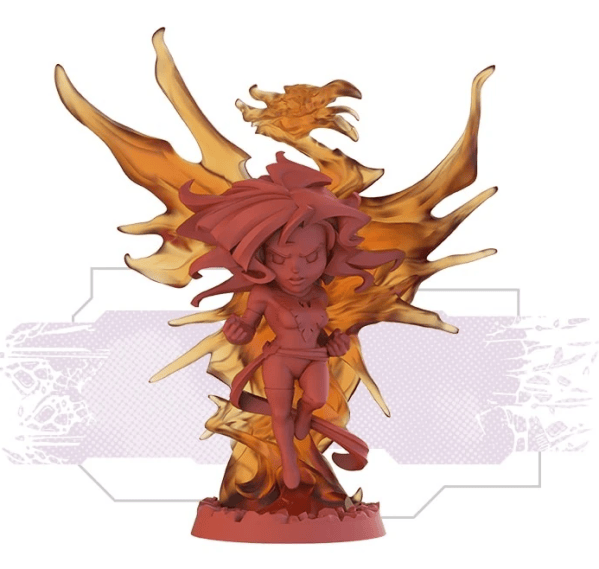
Dark Phoenix offers a chaotic and fun fight. She doesn’t go down easy, but at the same time, Dark Phoenix doesn’t feel unfair of a fight (ahem, Gladiator). It also doesn’t hurt that Dark Phoenix is an iconic villain. I love playing against her, reliving moments from the epic Dark Phoenix Saga. And look at that mini. Gorgeous.

It did not take long for us to get to another Marvel United Villain from the Season 2 Stretch Goal box. Legion may be the pinnacle of Marvel United villain design. Like in the comic book, his personality changes. Every two turns brings a new wrinkle and mechanism into the game. Sure. This gimmick functions like an intricate puzzle in miniature game form, but puzzles can be a blast.
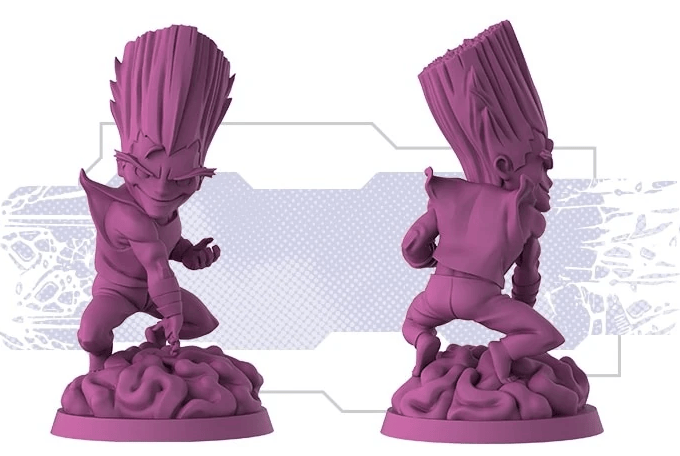
I’ve heard rumblings that at least one DC Super Heroes United villain borrows some game design ideas from Legion. I hope that’s true. Legion’s changing personality adds plenty of spice.
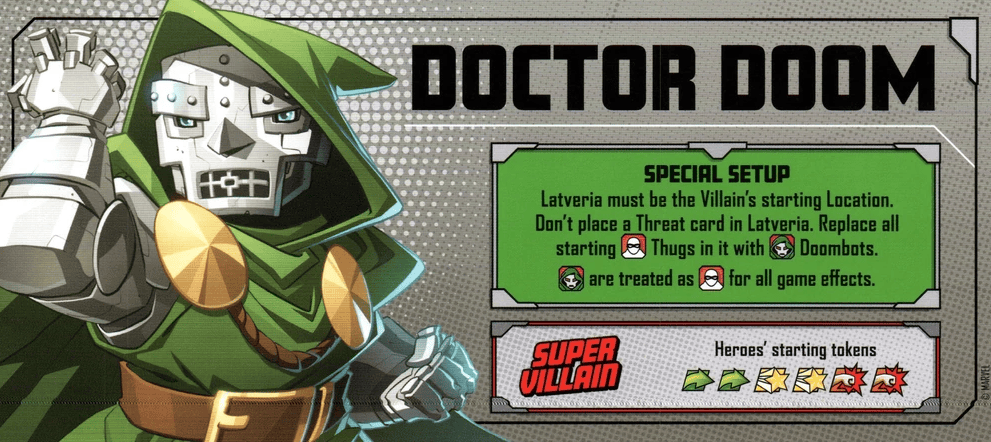
Doctor Doom is our third representative from Marvel United Season 2 (X-Men). Such a great set. Naturally, Doctor Doom is included in the Fantastic Four Expansion, and he makes this list for more than nostalgia reasons. I swear. Doctor Doom is a “fantastic” Marvel United villain. All jokes aside, I’ve always had tight games against Doctor Doom as a villain. The Marvel United design team made sure to tune his combination of cards so players will always be one turn away from winning or losing each game. Brilliant!
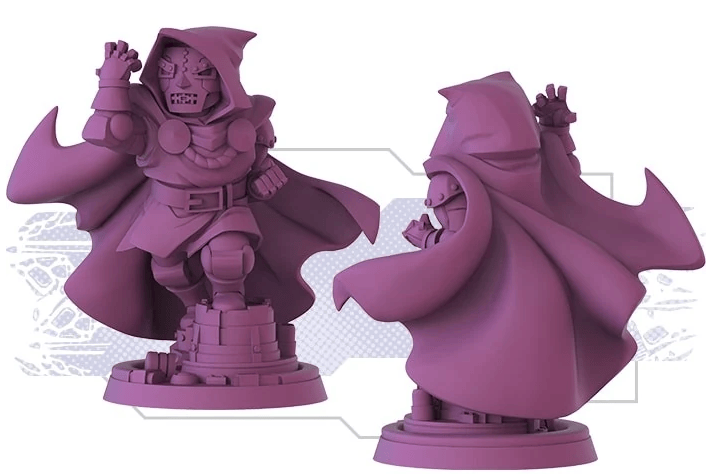
Combination doesn’t begin to describe Doctor Doom’s Threats and Master Plan cards. They work so well together, and every time a new card gets revealed, players will be forced to make tense and meaningful decisions. Doctor Doom is one of those villains you face, and you’ll know which decision caused you to win or lose.
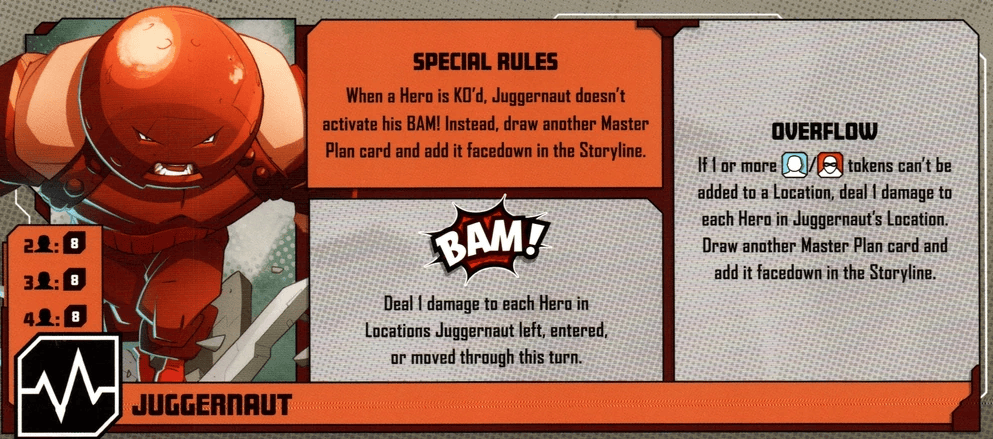
The X-Men set is four out of four on this list. Yowza! See what I mean when I said the Marvel United X-Men was a banger? Juggernaut makes this list–and almost tops it–because he makes a phenomenal introductory Marvel United villain. And he happens to be included in the Marvel United X-Men Core Set. Unless you really want Avengers in your game, I almost always suggest picking up the readily available X-Men Core Set. This makes Juggernaut one of the easiest villains on this list to add to your collection.
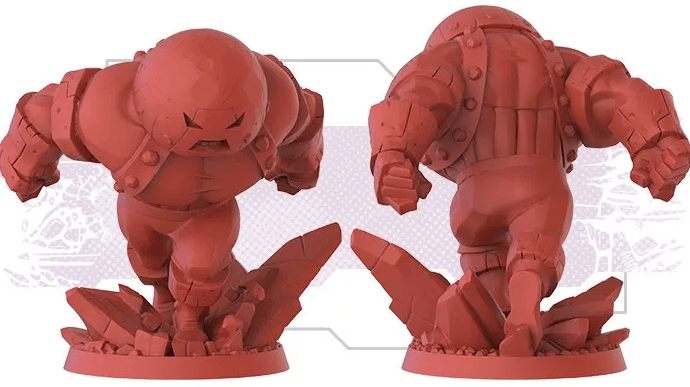
Juggernaut makes a great introductory villain because he’s thematic and fun. He charges around the board, headbutting people. Juggernaut behaves like you’d expect Juggernaut to behave. His ruleset is on the simpler side, but he can be challenging. Marvel United found a way to make Juggernaut easy to play and rewarding to defeat. I’ve never had a table dislike Juggernaut, and he just may be one of my most commonly played Marvel United villains.

I’m double-cheating with our top entry. First, the Sinister Six is a supervillain team. Second, I’m picking two expansions here. Return of the Sinister Six was a KickStarter exclusive all the way back in Season 1, but plenty of stories carry this expansion, so it shouldn’t be too difficult to find. Maximum Carnage was released in Season 3, but the modular Sinister Six add-on was only available in the KickStarter exclusive variant of the expansion. I picked up the Maximum Carnage expansion via retail, so I have a method of adding the modular Sinister Six.
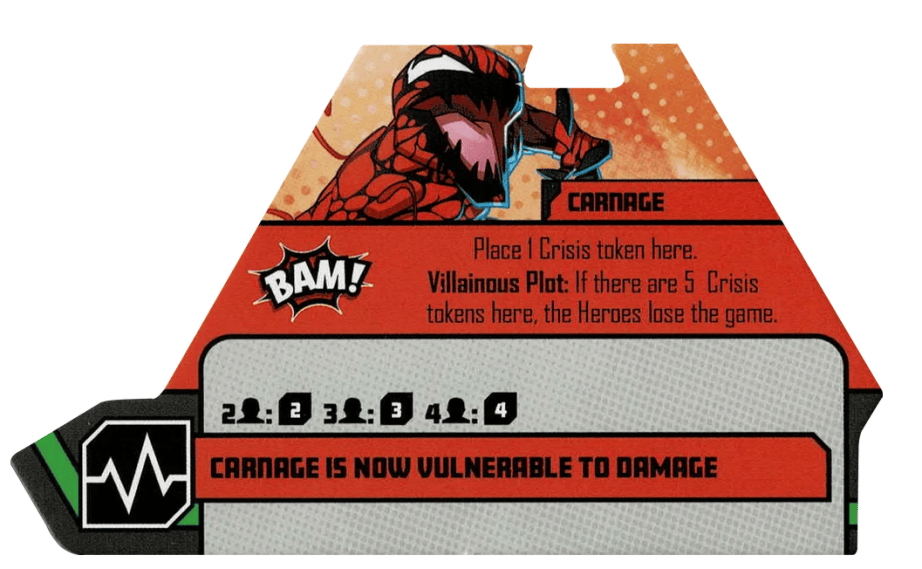
Above is a picture of Carnage’s puzzle piece that can be used in the modular Sinister Six. Using the Marvel United wiki, I took images (and real-world measurements) and printed out my own copy of each puzzle piece of a modular villain at my local library. There are some unique cards you won’t find in a retail copy of Maximum Carnage, so you’ll need to print out those as well. Both are easy to find and download.
I love both iterations of Marvel United’s Sinister Six. Featuring the Sinister Six’s founding members, Return of the Sinister Six provided Marvel United’s first supervillain team. Like Legion, The Sinister Six functions like another intricate puzzle. But once you’ve figured out the puzzle, it may be time to move on to the modular Sinister Six. This version of the Sinister Six includes every villain who has ever joined the Sinister Six, so that static puzzle becomes an ever-changing puzzle. The first Sinister Six holds a special place in my heart (and you’ll need them to fill out your roster of every Sinister Six member), but the modular Sinister Six is clearly the best Marvel United villain. Fun, adaptable, and never boring.
Did we get the list right? Let us know who your favorite Marvel United villains are in the comments. Thank you for reading, wherever you are, I hope you’re having a great day.
Hey, hey, Geekly Gang! Kyra Kyle with another board game design brain dump. I’m still submitting designs to various publishers. I’ve received a couple of rejections. Brotherwise Games gave me a prompt response. I’ve given up on a handful of publishers (like Lucky Duck Games), marking them down as “never responded” in my spreadsheet. Seriously, I wish there was a submission tracker like Duotrope for board games, so designers could share notes on which publishers are more responsive than others. I guess I can do that here. While I don’t particularly care for Brotherwise Games’ submission manager (they use Google Forms and pics), I do like how prompt they were with a response. And that’s another thing the board game community could use, a more standardized online submission manager program like Submittable.

Anyway, I’ve made tweaks to Spill the Beans. My goal is making Spill the Beans more enjoyable at lower player counts, and I think I’ve accomplished this by having players “bust” if they spill too many of the same bean type. Love it! Spill the Beans is still a party game at its core, but I’ve playtested multiple smaller player count games at designer meet-ups and received good feedback. You would think a player may get lucky, pushing their luck by spilling out more beans and not busting, and that does occur, but the game evens out over time. And smaller player count games take little time at all. Spilling out more beans per turn means that the game concludes a lot faster at smaller player counts (a problem the game had before this change). Players are just as likely to run out of beans as they are to fill two jars.
Enough about Spill the Beans, I’ve also been submitting Whirligig Pets to various publishers. I’ve had fewer responses for Whirligig Pets than Spill the Beans. I may be submitting to the wrong publishers. Or I may need to submit games during conventions. Or it could be something else entirely. Again, board games need a submission tracker and submission manager program like Duotrope and Submittable.

I wrote the Monster Chef rulebook. It’s up for review with multiple design groups. I’m getting close to submission with this title. I can’t wait. Monster Chef has plenty of theme and could tie in well with the upcoming season of Delicious in Dungeon (2027). I’m also exploring expansions for this title. Monster Chef is a joy to develop.
The same isn’t always true of Rustbucket Riots. I’m still playtesting this game’s shift from dice placement to bag builder. I like what I’ve seen so far, but balance has become an issue. If I can unknot Rustbucket Riots’ balancing issues, it could proceed to a similar state to Monster Chef.

And we come to two newer designs that don’t even have names–yet–and I may want to help a fellow game designer get one of their title’s published. I won’t name her design here, but I love the game’s quilting theme. One of my new titles doesn’t have a theme. Well, I don’t care for the theme of flowers that it currently has. Too many games use a flower theme, so I may need to shake up a few things. My second title is fallout shelter game includes multi-use tetrominoes and spinners. Oh, yeah. We’re gonna get freaky.
That second title has been on the backburner for over a year. I wanted to get Spill the Beans, Whirligig Pets, and Monster Chef to good states before starting another project. I can’t wait to take the fallout shelter game to conventions. Woo hoo!
That’s all I’ve been working on over the past month. I should have more updates next month. Nuke-Con (in Omaha) is on the horizon. I’ll be attending with Spielmasons. If you’re going, stop by and say hi. Thank for reading, and wherever you are, I hope you’re having a great day.
Happy Wednesday, Geekly Gang! Kyra Kyle here, and today, our writers share what they’ve been playing over the past month. Feel free to share what you’ve been playing because we’re all part of the Geekly Gang. I’ll get things started with what I’ve been playing over the past month.
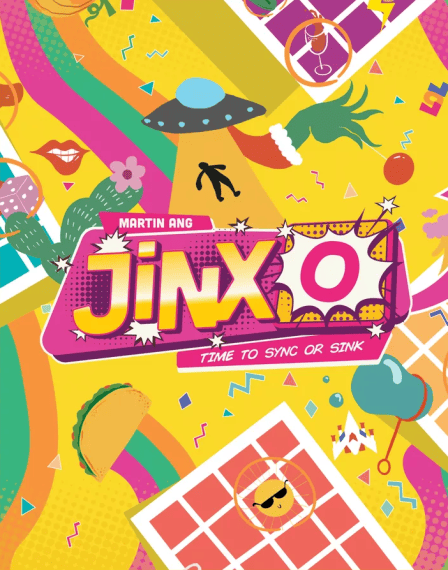
JinxO is a goofy party game in the vein of Sixes. Each player has a dry erase marker and board and try to match other players’ answers to bizarre questions. “Name an animal that looks like it’s drunk.” “Where on your body would you hide a weapon?” If you match with at least one other person, you circle your answer (gain one point). If you match with only one other player, you gain a star (three points). Players also receive points for circling every square in a row or column (kind of like Tic-Tac-Toe), and whoever has the most points wins. Fast, silly, and replayable, JinxO is a great icebreaker game. I can see kicking off a gaming convention with JinxO.
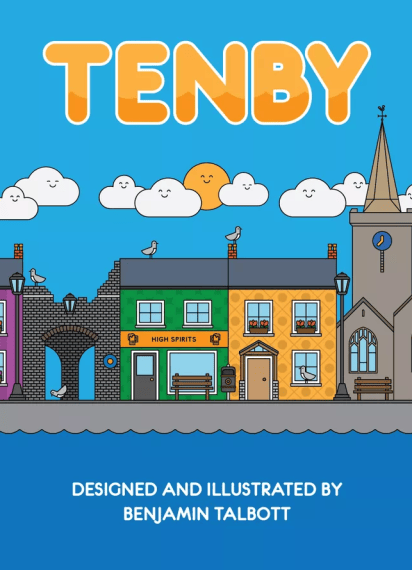
I love Tenby. It packs a lot of “game” into a small box, and Tenby rewards players who pay attention to small details. Look at the game’s cover (above). The number of smiling clouds, seagulls, specific doorways, benches, lampposts, flowers, and chimneys pictured could score points. Tenby has charming artwork, but that artwork serves a purpose. I may need to chain those smiling clouds for more points. And I like how Tenby determines play order. The game uses an action deck. Each card is numbered from 1 to 36 (I think). The higher the number on the action card, the better the action, but the later in the round you’ll be able to take that action. I liked that in Kingdomino; I like it in Tenby. I love building my own cozy streets in the Welsh town, Tenby.
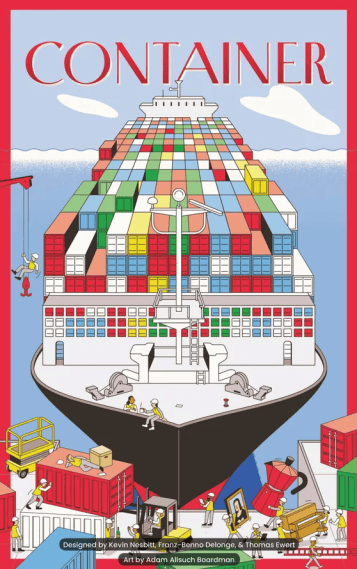
Container is an AllPlay remake of the 2006 board game of the same name. While it does a great job of streamlining the original, there’s a lot going on in Container. When I played it at a convention, it took over thirty minutes for the teach. Just the teach. Yikes! The game box says Container takes 90 minutes. We had a full player count (five), and it took far longer than 90 minutes. But enjoyed my time with Container. AllPlay has a knack for putting highly strategic games into small packages. Container is no different. Make no mistake, Container is a heavy Euro game. I came in second (almost a tie), but I don’t know if deserved that placement. Resources are brutal in this game. I felt like I was underwater most of its runtime. You will take out loans. But you’ll need to time when you take out loans well.
I’d love to try Container at a smaller player count and play with gamers who already know how to play. I’d like to skip the teach.
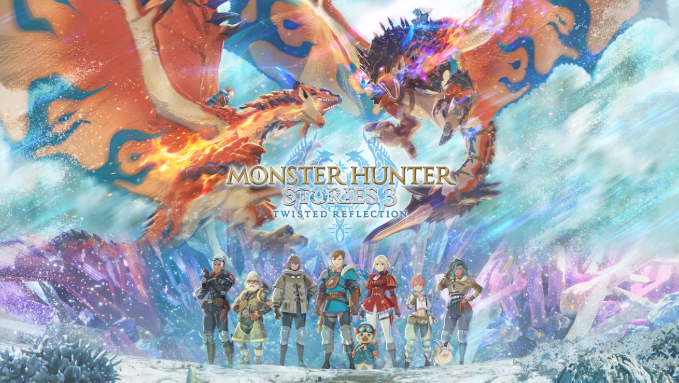
I’ve been getting back into Monster Hunter Stories 3: Twisted Reflection, and I almost wanted to start over from the beginning. There’s a lot more to Monster Hunter Stories 3 than I remembered. Yikes! I’m not even sure where I was in the story. Anyway, the game is still a joy to play. The art style differs from the core games in the Monster Hunter series. The art fits Monster Hunter Stories 3’s vibe of a bizarre Monster Hunter/Pokémon mashup. Don’t let the cute artwork fool you. Monster Hunter Stories 3 holds a lot of strategy. You need to know when to switch monsters, which attacks work best and where you should target them. This is the biggest reason why I’ve thought about restarting the game. I like the the unexpected strategic depth.
Those are all the games I’ve been playing. Lets see what Skye has been playing.

Astro’s Playroom doubles as a love letter to classic PlayStation games and a guide to core components of the PlayStation 5. Astro’s Playroom takes you inside your console to not only highlight what it’s capable of but also provide you with references to classic PlayStation titles that will make your heart flutter. Astro’s Playroom nods to various games like Ratchet & Clank, Jak & Daxter, Ape Escape, Tomb Raider, Uncharted, Final Fantasy VII, Monster Hunter, Resident Evil, Silent Hill 2, God of War, The Last of Us, Horizon: Zero Dawn, Ghost of Tsushima, and that’s barely scratching the surface.
Honestly, part of the fun of Astro’s Playroom is going through the various levels to see how many references you can spot. If you get a PlayStation 5 and have been with PlayStation for years, I trying Astro’s Playroom.

I finally got around to playing Death Stranding. I can see why so many folks were impressed with the game. Putting aside the bizarre premise which adds a lot of intrigue, Death Stranding is unique in its mechanics. As the post-apocalyptic deliveryman Sam Porter Bridges, your job is to make deliveries across the ruined United Cities (that’s right, Cities) of America, locate the President’s successor, and reconnect the country in the process. Piece of cake, right? However, you carry all your cargo on your back, and you have to keep your balance on your travels. The whole time.
Death Stranding is the first game I’ve played that’s used this mechanic. Being an open world game, you have to hold various buttons while trudging through rivers and traversing uneven terrain to get to delivery locations. Some will see Death Stranding as a glorified “Walking Simulator” which I understand. It’s certainly an acquired taste, but I’ve managed to enjoy it for the most part. My main complaint about the game concerns its combat. Given the fact Death Stranding centers around delivering cargo, it’s incredibly difficult when you come across an enemy while simultaneously trying to complete an order and have boxes on your back stacked 8 meters high. It gives me the feeling that the combat was added purely for the sake of avoiding the label “Walking Simulator” and nothing else. Still, I look forward to completing Death Stranding.
Hey, hey! Kyra Kyle here again. Season shared with me that she’s mostly played Apex Legends. She may play a new game by next month. So, those are the games our writers have been playing this past month. What’ve you been playing this month? Let us know in the comments. Thank you reading, and wherever you are, I hope you’re having a great day.

Happy Sunday, Geekly Gang! Kyra Kyle here with another week of Geek News. We’re still taking a break from headline news, but we had some big losses in the entertainment space this week. We’ll have to share some love for those we lost this past week. Yowza, what a brutal week. But first, let’s talk about new releases for board games and video games. With the holidays on the horizon, we have a lot of great new releases to discuss. Let’s talk about games.
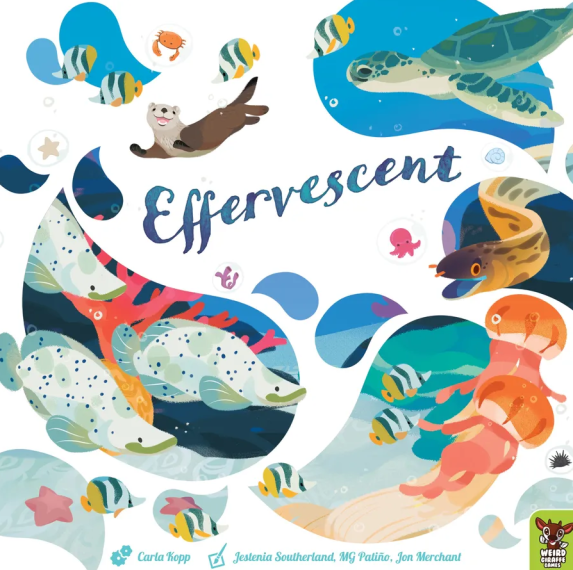
Effervescent features an organic, grid-free tile-laying system where players have infinite freedom of placement. On a turn, a player must position a curved sea creature tile so that its tail touches the head of an existing creature on the table. Instead of packing pieces tightly edge-to-edge, this head-to-tail placement method creates spaces between the tiles. Players place their shimmering colony tokens onto the board by matching their tile placements to a row of three ever-evolving Drift cards. When tiles successfully surround a pocket of open water, an enclosure is formed. Anyone with tokens inside the sealed enclosure scores points based on shared communal Harmony cards.

Thank you, Weird Giraffe Games, for the description. I like Effervescent’s take on tile placement. As you can tell from the picture above, the tiles are oddly shaped. Players also place beads, bubbles, in between each of these tiles. This results in some bizarre tile placement combos. I have yet to play Effervescent, so I can’t speak to how well the rules describe how players can place these odd, raindrop shaped tiles and bubbles. Fingers crossed it isn’t too difficult to learn Effervescent. I’m intrigued. Effervescent offers multiple pledge levels, ranging from $39 to $69. If you choose the highest option, Weird Giraffe Games throws in a copy of Flock Ton of Flamingos and Spelling Beach. I’m loving the theming with this trio. If you’re interested in Effervescent, check out its KickStarter page.
Herobound is a rethemed update of The Last Stronghold. A cooperative game for 1-2 super heroes who will attempt to push back the forces of evil threatening all parts of the globe. Survive the onslaught to save the world.
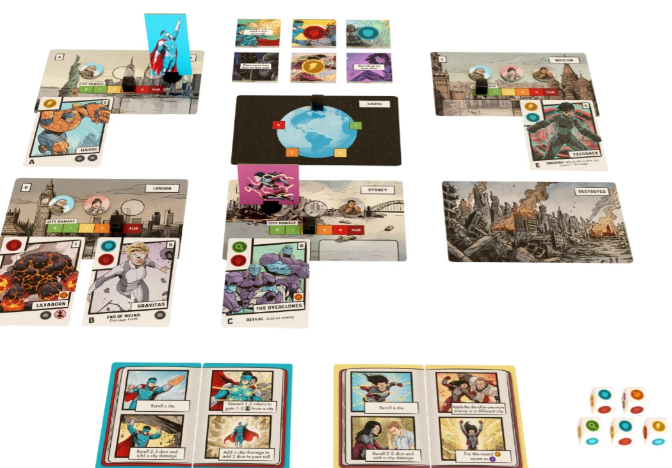
We’ve covered plenty of Solo Game of the Month releases because they’re great games (great production and great mechanisms) that feature a solo gaming option or are solo game only experiences. Each entry in the Solo Game of the Month Series also has a low cost of entry. I’m a sucker for superhero-themed board games, so Herobound sounds fantastic. Herobound’s artwork reminds me of Sentinels of the Multiverse. Another win. And Herobound’s GameFound campaign also features a ton of add-ons for other Solo Game of the Month entries. Most are valued at $25. If you’re interested in Herobound, check out its GameFound page.
Opera Magna is the result of a collaboration between two of the most respected names in the Italian board game scene: Tommaso Battista (designer of Barrage and D.E.I.) and Stefano Castelli (creator of Potion Explosion and Chamber of Wonders).
The game is a resource-management Eurogame built around mechanical elegance, delivering a deep and layered gameplay experience within a streamlined playtime.
Set in 15th-century Florence, the game casts players as merchants supplying the grand construction site of the Basilica. At the heart of the experience lies a dynamic market system in which resource values shift with every action, and where managing what you leave to your opponents is just as crucial as choosing what to bring into your own workshop.
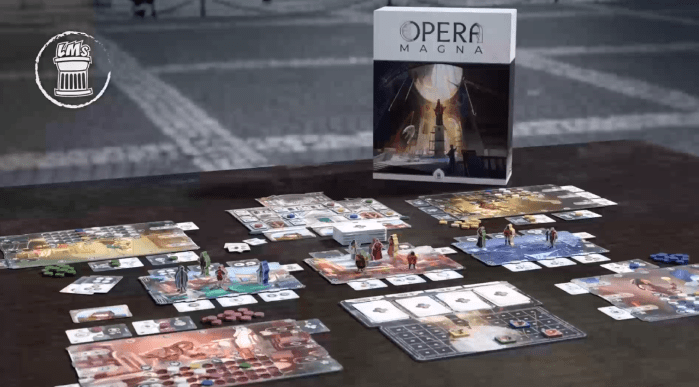
Thank you, Ludus Magnus Studio, for the description. Opera Magna looks amazing. We have an overview of the game above, but if you were to zoom in, you’ll find breathtaking artwork. I like the theme. The two co-designers has me excited. A quick search on BoardGameGeek revealed that Opera Magna has a short playtime. I don’t know how Opera Magna manages to stay within an hour playtime, but I’d be down for a medium-weight resource management game about the Basilica. Sign me up. Opera Magna has a pledge cost of about $50. If you’re interested in Opera Magna, check out its GameFound page.

Fox Flip is a quick, easy-to-learn 2-player game of skill, luck, and timely flips. Play timely fox cards to outfox your opponent and win piles of cards!
To start, deal 7 cards to each player. The player opposite the dealer goes first. Alternate turns playing cards of equal or greater value, or by following the Fox card rules.
At some point, someone won’t be able to play. When that happens, you have one chance to stay in the game by flipping the top card of the deck onto the play pile. Flipping a card acts as your turn. If the flipped card satisfies the current rule in play, you survived and normal play resumes starting with the other player. If the flipped card doesn’t satisfy the current rule in play, the other player wins the pile.
Once a pile is won, alternate turns drawing 1 card per turn up to a maximum of 7 cards. Once a player has 7 cards, they must play a card on their next turn, which restarts the play phase.
Continue playing until the deck is empty and all cards have been won.
When all cards have been won, count your cards. 1 card = 1 point. The first player to 100 points wins. A typical game of Fox Flip takes 3-4 rounds.
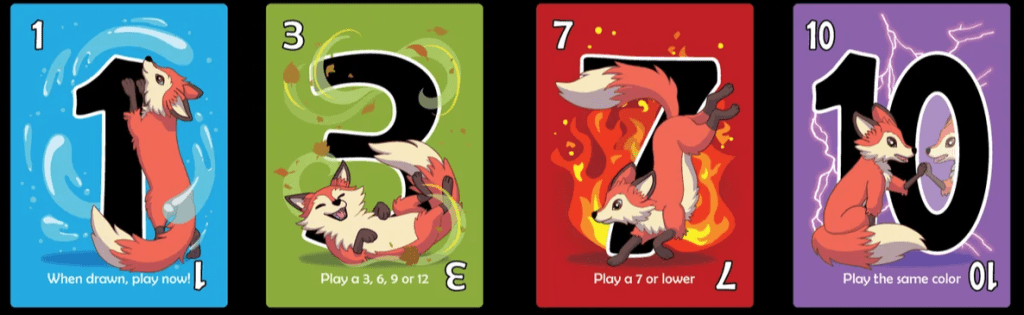
Thank you, Ticket Booth Games, for the description. I had to throw in a fun, quick card game. Fox Flip fits that bill. It’s a two-player only game, so turns should be lightning fast. Even though Fox Flip takes three or four rounds to play, the game caps out at twenty minutes long. A huge plus. I like the age range for Fox Flip; this is a game you can play with kids. And look at that adorable art. We need more cartoon foxes in board and card games. Fox Flip pledges are $12. That’s a good price for a card game. If you’re interested in Fox Flip, check out its GameFound page.

It’s the 1980s, and you’re in charge of marketing for a startup brand of cola. The game will last up to five years, starting in 1981, and each year ten market share tokens are up for grabs. The market share tokens get bigger as the soda market grows, so they get more valuable as the years go by. You track who’s winning by placing market share tokens on a bar graph in the middle of the table. Whoever has the most market share at the end of the game wins!
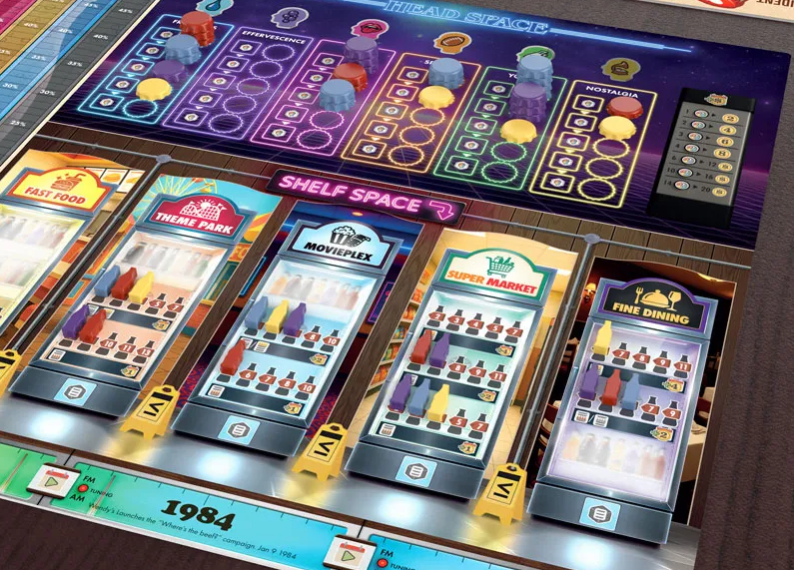
Thank you, One More Turn Games, for the description. Honestly, I thought Cola Wars had already launched, and I missed it. I’ve seen marketing for this game for months. Full Disclosure: I’m a huge soft drink, soda, cola fan. I will consider backing Cola Wars. I’ve got to. The pictures above feature a late-stage prototype. Cola Wars already looks so good. The bottles, the bottle caps, and the fun 80s aesthetic. I like how Cola Wars will offer two box sizes, depending on which one you prefer. Most modern board games have near-square shapes, but board games from the 1980s were rectangular shaped. You can pick either one. Yes! I may just pick up the odd-shaped rectangle box for funsies. If you’re interested in Cola Wars, check out its GameFound page.
Jurassic Crisis is a semi-competitive, PvPvE survival board game for 1–4 players, inspired by the video game ARK Survival Evolved. You must survive on an island inhabited by dinosaurs while mastering various mechanics – from resource management and positioning to character development, base building, and dinosaur taming.
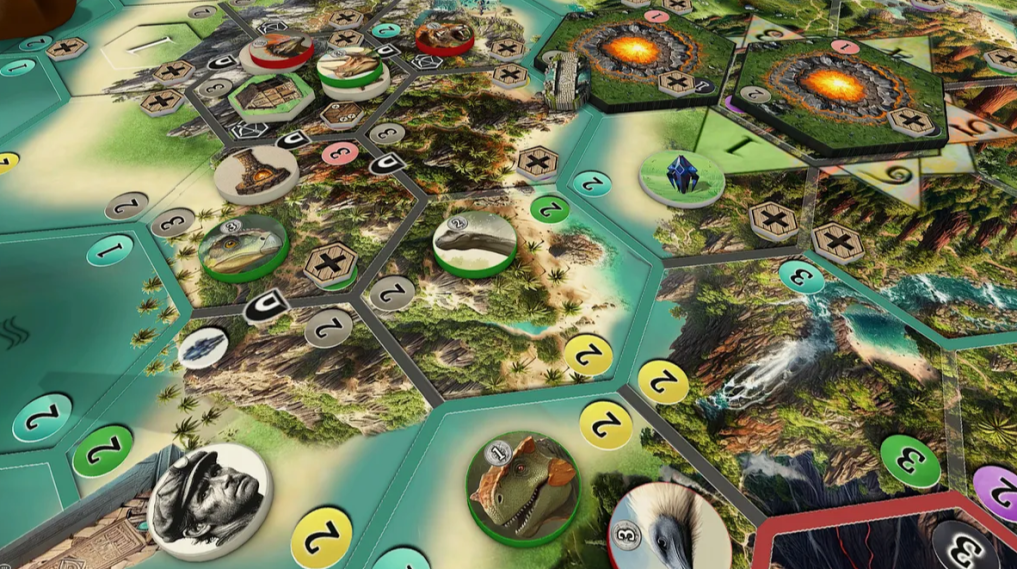
Thank you, Sperling Spiel, for the description. We go from a Kyra-themed game in Cola Wars to a Season-themed game in Jurassic Crisis. (Pictured above is the prototype on Tabletop Simulator). Not gonna lie, I’m interested in Jurassic Crisis as well. We don’t have too many pictures of the final product. Jurassic Crisis is on GameFound and this is a preview, so we don’t have a price point for Jurassic Crisis’s pledges, but I’m keeping an eye on this title. It runs a little long for my tastes, but I’ll make an exception for a dinosaur survival game. Yes! If you’re interested in Jurassic Crisis, check its GameFound page.
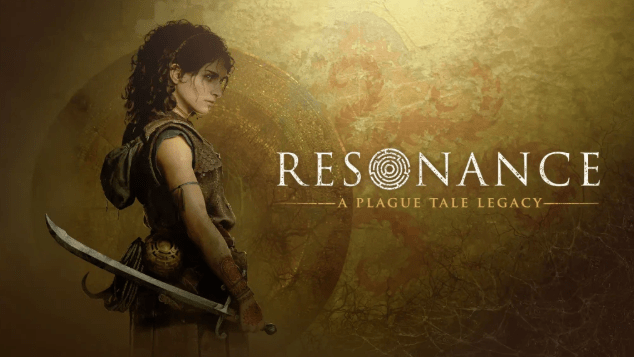
Embark on an original story, prequel to the award-winning games: A Plague Tale. As Sophia, journey to the Minotaur’s Island, outsmart deadly foes, unravel ancient secrets, and confront a mythical creature at the heart of a devastating curse.
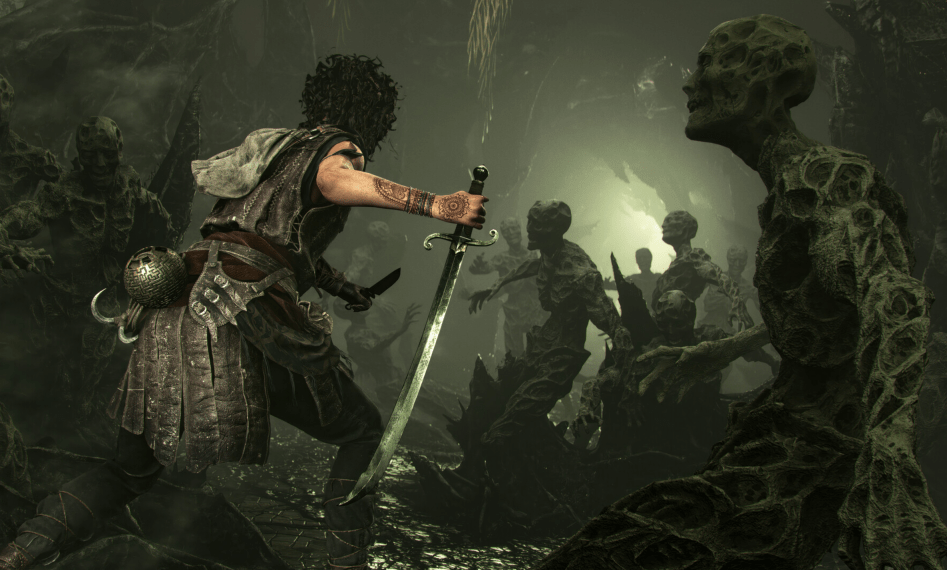
Truth time. I’ve never played the original A Plague Tale. It’s been in my to be played (TBP) pile for several months, but I haven’t yet had the chance to play it. I don’t believe you need to have played A Plague Tale to understand Resonance: A Plague Tale Legacy. Resonance: A Plague Tale Legacy is a prequel to the original game. Might be interesting. I love the graphics. The setting of Minotaur’s Island is phenomenal. Automatic wishlist. But I may want to play the original before diving into Resonance: A Plague Tale Legacy. It’s available on PC, PlayStation 5, and Xbox Series S/X.

Command an elite squad through a gritty and authentic story in STAR WARS Zero Company, a single-player turn-based tactics game set in the twilight of the Clone Wars.
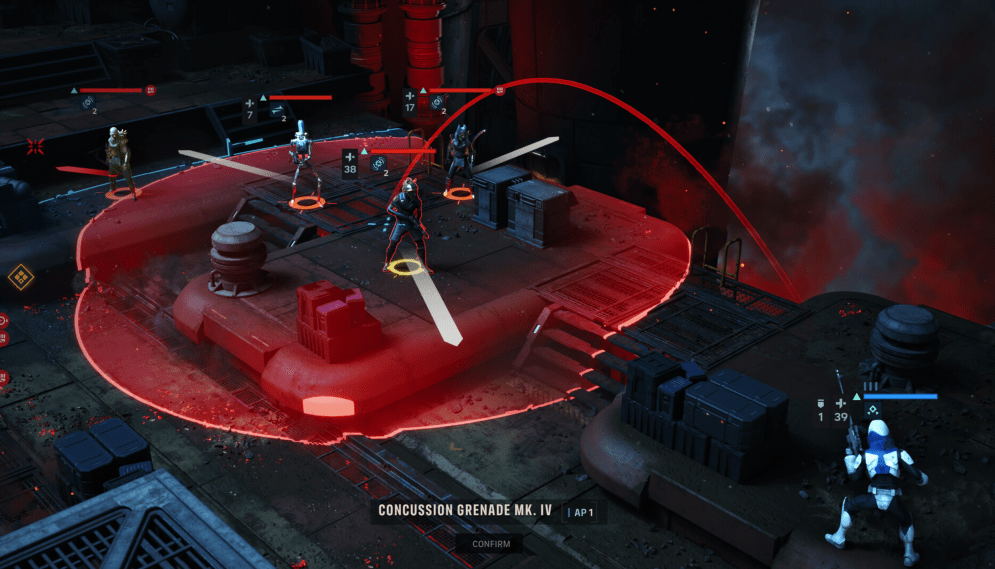
Star Wars: Zero Company is Respawn’s third Star Wars video game (I think), and it differs from all the rest. Respawn’s previous Star Wars games were Souls-like games. Again, these games are in my TBP. I really need to play more video games. Eek! Star Wars: Zero Company gives their Star Wars games a tactical RPG element. A quick look at the graphic above shows a set-up similar to Baldur’s Gate 3. This has me excited, and Star Wars: Zero Company has received good reviews. Respawn has a great reputation in video game circles; I’m not surprised about Star Wars: Zero Company’s reviews. Star Wars: Zero Company is available on PC, PlayStation 5, and Xbox Series S/X.
It’s been about a year since our last melancholy happy trails post. These segments are where we remember those we lost this past week. And this past week was another tough one. We lost some icons.

“You can’t be a diamond in a rhinestone world.” Ah! We lost a great one in Dolly Parton on August 25, 2026. Dolly–can I call her Dolly?–was a fabulous queer advocate. Even though I grew up in the South, I never had the greatest affinity for country music. But Dolly was different. She was unapologetically herself. She took up space. She encouraged others to be themselves. And while she was deeply religious, she was an LGBTQ advocate. Dolly proved one could be both Christian and support LGBTQ rights. And she taught us that a little pink and glitter can go a long way. We’ll always love you, Dolly.

As Fran-N-Furter (Rocky Horror Picture Show), Tim Curry may have the single greatest entrance in all of cinema. Curry had other iconic roles like Pennywise (It), Wolfgang Amadeus Mozart (Broadway production of Amadeus), King Author (Spamalot), and Wadsworth (Clue). Curry embraced the misfits. He’s another icon who refused to be defined as one thing. Curry was ridiculously talented but never took himself too seriously. Few humans were ever dubbed an “Honorary Muppet.” Curry’s work makes me smile. Don’t dream it. Be it. Rest in peace, Tim.

“Autobots, Roll Out!” Peter Cullen’s smooth baritone screamed cool as Optimus Prime. Cullen found ways to make audiences care for his characters: Monterey Jack (Chip ‘n Dale’s Rescue Rangers), The Predator (Predator), and Eeyore (Winnie the Pooh). Cullen may be best known as Optimus Prime and Eeyore, but he had range. A ton of range. For many (myself included), Cullen’s voice defined childhoods. Over the years, Cullen shook our minds. Rest in peace, Peter.
That’s all the Geek News we have for you this week. We’ll be off next week for Labor Day Weekend; it’s a holiday, Geekly Gang. Thank you for reading, and wherever you are, I hope you’re having a great day.
Hey, hey, Geekly Gang! Kyra Kyle here with another week of Geek News. We had a few board games and video games release this past week. Let’s begin by discussing this week’s board game new releases.

Spirit Train is played in 3 Cycles. Each Cycle consists of a series of rounds where players will determine what to do using a unique simultaneous action selection mechanic. Before the start of each day, conductors will select between a list of different rooms to fill their train with. These rooms will provide base actions depending on the shape/size of the room. How many rooms you use will affect the speed and energy level of your train, as well as turn order. When spirits are active on your train, they will provide you even more actions. The number of active spirits you can select will depend on the current mood of your spirits (spirits are more active when they’re happy!). You can maximize the number of actions you use by strategically placing active spirits into rooms you’ve created specifically for them on your train.

Thank you, SweaterBear Games, for the description. I love how players can customize their trains (image above). Each player slides rooms into their trains and this will attract/satisfy the spirits you carry to their final destination. I like this theme. I like Spirit Train: The Final Journey’s gimmick. The artwork looks amazing, in keeping with the cozy vibes Spirit Train: The Final Journey presents and very Studio Ghibliesk. And I don’t have too many train games. I can pick up one more. Spirit Train: The Final Journey offers pledges ranging from $59 to $179. If you’re interested in Spirit Train: The Final Journey, check out its KickStarter page.

In The Monolith, 3-4 players take on the roles of shaman, leading their warriors in battle against each other, all for the pleasure of the monolith that holds them in thrall.
Each round, players take turns spending hearts to complete actions. These actions allow them to recruit and move warriors, move their shaman and activate any shaman powers, or bid hearts on powerful divination cards
When a player thinks they’ve taken the actions they need for the round, they dump their remaining hearts into the monolith. The sooner they feed their hearts to the monolith, the more actions they will have during combat, but do it too soon, and risk watching the other players change the board state in your absence!
Once all players have put their remaining hearts in the monolith, the monolith is lifted, revealing the combat actions the remaining hearts have been sorted into! Battles are fast and brutal, and only the most clever players will outmaneuver their enemies and boast of their deeds to the sacred stone!

Thank you, Plaid Hat Games, for the description. While I don’t typically care for “dudes on a map” games, The Monolith is another board game with an intriguing gimmick. Having players place their hearts into the titular monolith and then revealing which combat actions are at a player’s disposal gets my attention. Board games need to use cube towers more, and the monolith is a cube tower, sorting player resources. It sounds as if players can manipulate how much they intend to invest in combat. And the quick combat system may be another barrier lifted for me and “dudes on a map.” Most games of this ilk have involved combat mechanisms. The Monolith sports shorter combat times. I’ll give it a shot. The Monolith offers pledges between $69 and $99. If you’re interested in The Monolith, check out its KickStarter page.

Overclock is a solo 4x game played with 36 cards. Every card has two sides: a network node on the front and a powerful ability on the back. Play it as a node to grow your network and boost production, or sacrifice it for a game-changing program, a permanent upgrade, or a defensive sentinel. You can’t have both, and that choice is at the heart of every turn. Deploy nodes, scan for data, purge corrupted files, and negotiate shaky alliances with factions that get more dangerous every cycle. The Kill-Code never stops deleting, factions hit harder as the game escalates, and your decisions in the first few cycles shape whether you survive the final ones.
Multiple Ghost characters, asymmetric factions, and a modular difficulty system make every game feel different.

Thank you, Made of Dreams, for the description. I like the state of solo games in the board game hobby. Overclock looks like another great example of a solo game with a quick setup, small footprint, intriguing gimmick (multi-use cards), and a great theme. Board games with cyberpunk themes have been springing up lately, but I don’t believe a good solo game with this theme exists. I may be wrong. Let me know in the comments. Regardless, I can’t see Overclock having a large sticker price. Overclock will be launching on GameFound, and GameFound projects don’t always list their pledge levels when their project is in preview mode, but I’m following Overclock. I can’t believe Made of Dreams created a solo 4X game. If you’re interested in Overclock, check out its GameFound page.

Set in the Roaring ’20s, The Sinking City 2 is a survival horror steeped in Lovecraftian dread. Defy an eldritch deity and explore the drowned alleys of Arkham, stalked by the dead, as you weigh one life against an entire city.
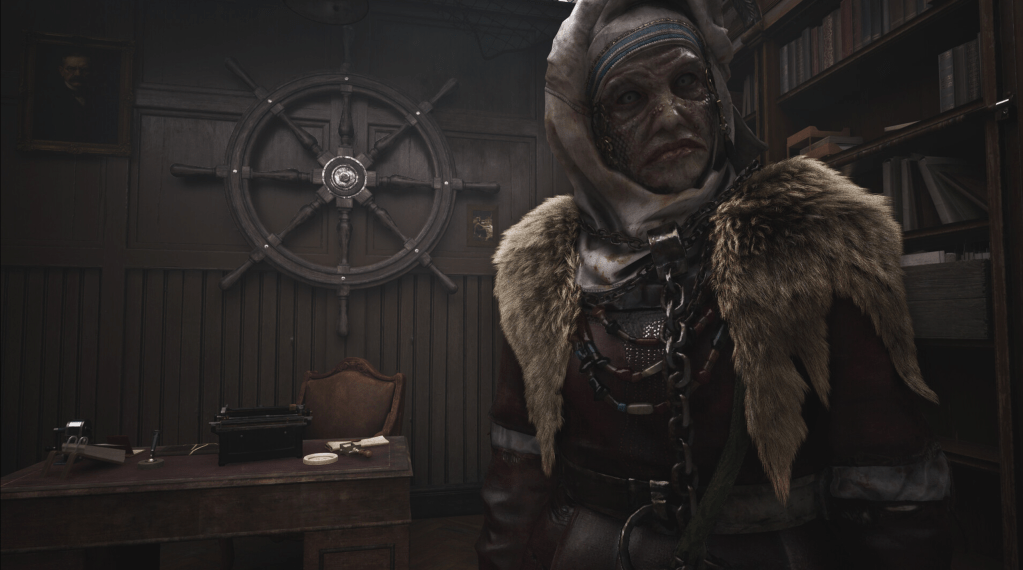
Thank you, Frogwares, for the description. The Sinking City 2 is set in the fictional city of Arkham, so it wears its Lovecraftian DNA on its sleeve. The sequel is a standalone story to the original The Sinking City. You don’t need to play the original to understand everything happening in The Sinking City 2. I never got around to playing the original, but the premise interested me. Players are trying to survive a sinking city. Arkham is literally submerging under water. The Sinking City 2 captures the vibe of Lovecraftian horror. It’s received good to very good reviews. I’m putting this game on my radar. The Sinking City 2 is available on PC, PlayStation 5, and Xbox Series S/X.

Their Flesh Is Your Weapon. Mortal Shell II is a standalone sequel action-RPG with adrenaline-charged, high-stakes combat. Possess warrior Shells, dethrone false gods, redeem a ravaged world.

Thank you, Playstack, for the description. Mortal Shell II is another standalone sequel, where you won’t need to play the first game to understand the sequel’s story. I’ve had Mortal Shell II on my radar for a while now. I love the graphics. Look at the detail above. Wow! Character customization looks great. I’m getting strong Dark Souls vibes. That’s a plus. Mortal Shell II looks like one of those games I could sink countless hours into, trying as many character builds as I can. It’s not on sale (Steam) right now, but I’ve wishlisted Mortal Shell II and will most likely pick up a copy when it does go on sale. Mortal Shell II is available on PC, PlayStation 5, and Xbox Series S/X.

Feed the Scorchpot is a dice roguelike about feeding a dragon for twenty years. Roll ingredients, build your island, and fuse absurd recipes into combos that break the score wide open. Miss a meal and you’re next on the menu.

I’ve covered Feed the Scorchpot when it dropped its demo earlier this year. It released this past week on Steam, and I’ve been playing a lot of this one. For now, I won’t say too much about this Balatro meets Catan video game, but there may be a Feed the Scorchpot review in the not-so-distant future. You’ve been warned.
That’s all the geek news we have for you this week. Thank you for reading, and wherever you are, I hope you’re having a great day.

Hey, hey, Geekly Gang! Kyra Kyle here with another Top 5 list, and this one’s a little bit of an update. I shared a similar list over a decade ago. Yikes! It may be time for an updated list. Board games fall in and out of favor, and a decade is a long time for a board game. I’ll share a game’s previous rank in parentheses to show how far a game fell or rose over the past decade. Thousands of new board games are released each year and plenty of them have superheroes as their theme. Let’s see which games made our list of Top 5 Superhero Board Games.
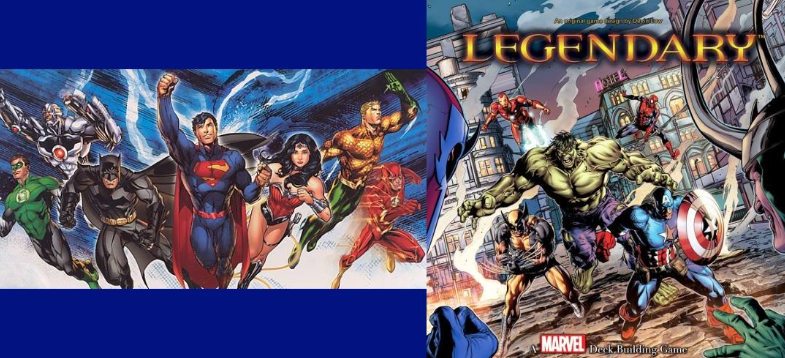
During the deck builder boom, the superhero game genre saw a ton of deckbuilding games. Every board game theme saw a ton of deckbuilding games. Heck, I backed a Care Bears Deck Building Game last year. Eek! And of course, Marvel and DC Comics received the deckbuilding treatment. Both games have their strengths, weaknesses, and supporters, who will rough you up if you say the wrong thing about their game of choice. For me, I prefer Marvel Legendary’s flow. It held our second spot over a decade ago, but recently, I’ve played Marvel Legendary with 5-players, and never again. It’s borderline unplayable. The DC Deck Building Game offers more of a story. Players feel like they’re playing as a character, but the rules can get clunky.
Again, I prefer Marvel Legendary’s flow, but DC Deck Building Game presents a fun alternative with more of a story.
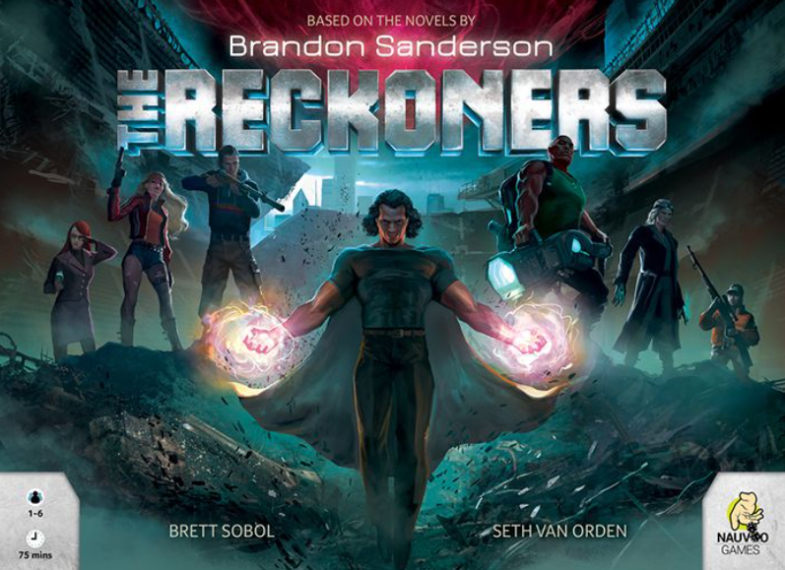
The Reckoners didn’t quite make the list for one simple reason. I have yet to play it. I’ve watched demos and caught others playing this game, so I know it’s a good one. The Reckoners even has a great score on BoardGameGeek. I had to mention this simultaneous play, fast-action romp of a game. But I haven’t personally played The Reckoners. I could easily see this dice chucking game claim one of the top five spots in the coming years.
One last note before we get started. We’re not including games with a superhero theme if they’re part of a system that didn’t originate with superheroes as its theme. So, systems like Unmatched, which have plenty of superhero options, won’t make the list. And other games like a Marvel Monopoly or 5-Minute Marvel or even a Marvel Codenames, won’t make the list. Funnily enough, that would disqualify Marvel Legendary. The Legendary series of deckbuilding games began with horror franchises like Alien and Predator, which are fantastic by the way.
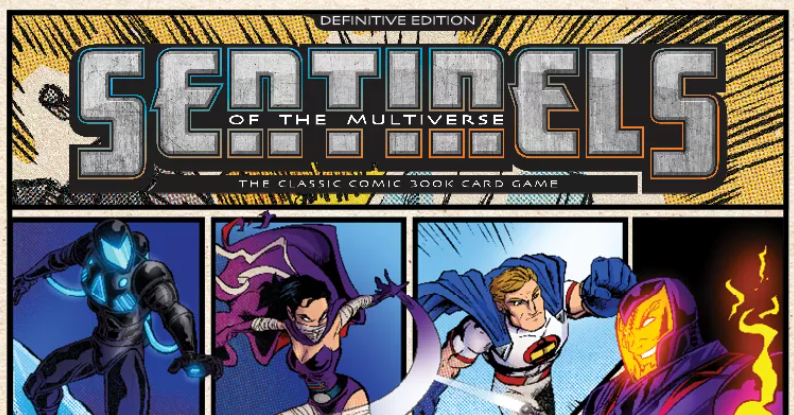
Honestly, Sentinels of the Multiverse may have been our number one over a decade ago, but if it wasn’t for a definitive edition, it may have dropped to an honorable mention. Don’t get me wrong, I still like the original, but the original Sentinels had a lot of glut. Sentinels of the Multiverse: Definitive Edition trims the fat and even fixes some rules issues. Sentinels still offers a unique gaming experience. It’ll always hold a special place for me. But if I’m playing Sentinels, I prefer the Definitive Edition.
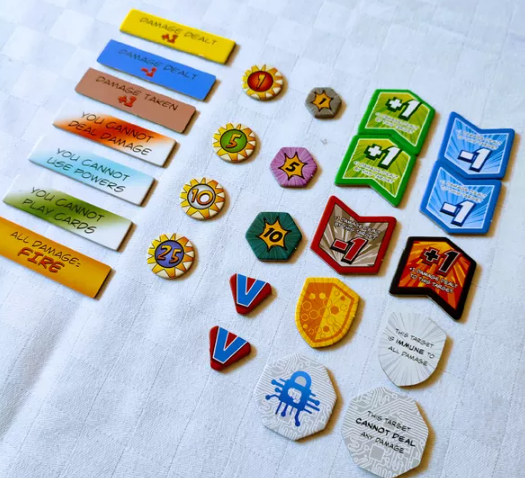
The quality of life changes make all the difference. Reminder tokens are just the tip of the iceberg. If you have yet to purchase Sentinels and you’ve always wanted a copy, I’d buy the Definitive Edition. It accomplishes what its name suggests.
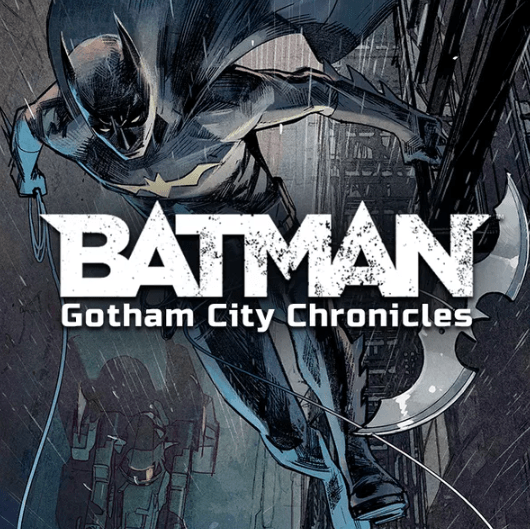
Relive some of Batman’s most iconic stories with Batman: Gotham City Chronicles. This game’s asymmetric play (the villain player’s turn differs drastically from the hero players’ turns) is a joy. Hero players use dice to control their characters. I like a good dice chucker, and playing as a hero in Batman: Gotham City Chronicles is a fun dice chucker. But I love how the villains’ turn works. The player controlling the villains controls them with a villain deck and an ever-shifting river of villain tokens in the “River.” Activated villains during a turn move to the end of the river, and the further down a villain is from the front of the river, the more action points it costs to activate the villain. This takes careful playing by the villain player. While you could activate Joker on turn one (typically, he begins at the end of the river), it may serve the villain player best to activate a different villain. Maybe Harley Quinn.
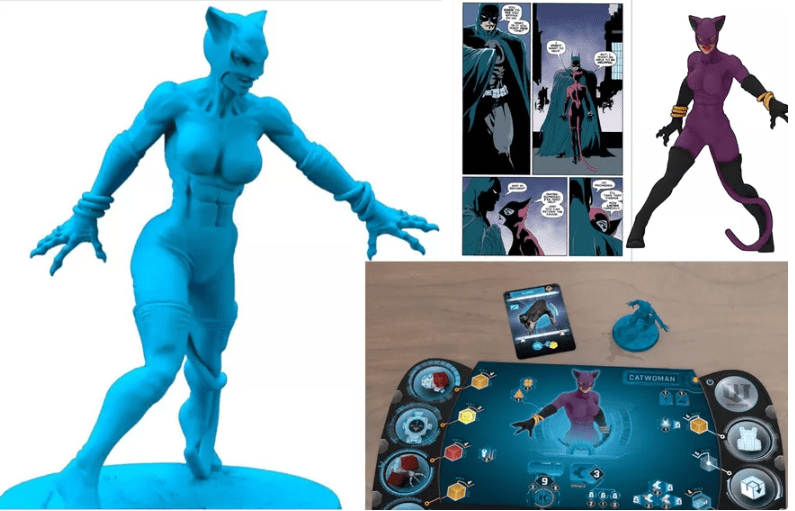
Character models are ripped straight from comic book panels. Batman: Gotham City Chronicles even offers a website with uploaded content to take your game further. Is there a new Batman tale you’d like to relive? There may be a fan-created or even a Monolith-designed campaign for that story. Batman: Gotham City Chronicles is a blast to play, but it may be one of the more difficult games to acquire from this list.
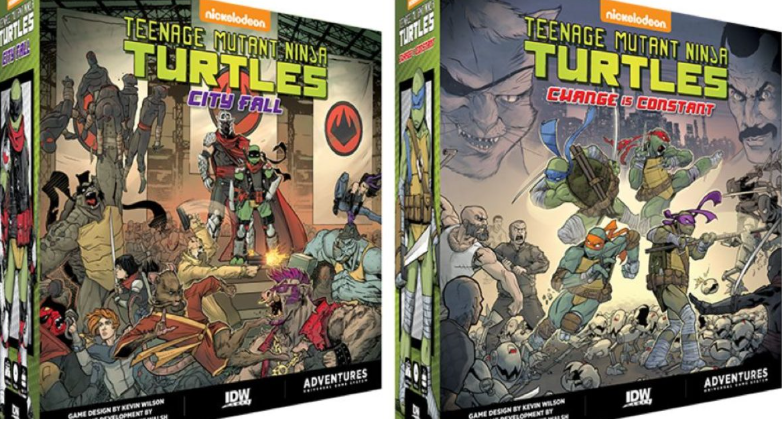
While I just praised Batman: Gotham City Chronicles for its asymmetric play, Gotham City Chronicles took a lot of inspiration from Teenage Mutant Ninja Turtles: Shadows of the Past. The game began to show its age, so IDW updated Shadows of the Past with the Teenage Mutant Ninja Turtles Adventures series. Both boxes are standalone games, but you can combine the two for double the heroes in a half shelf fun.
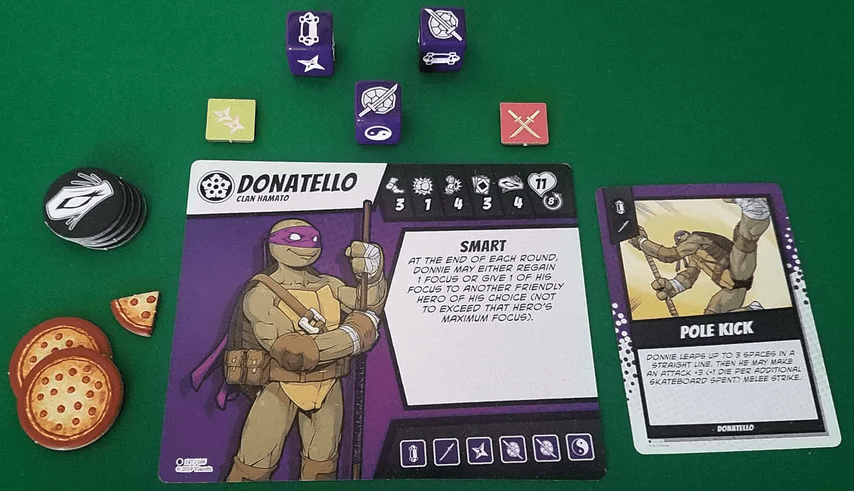
Teenage Mutant Ninja Turtles Adventures edges out Gotham City Chronicles because it lowers the barrier of entry by just enough to make the game more accessible. TMNT Adventures is by no means a simple game. It offers almost as many story options as Gotham City Chronicles, and you can even customize your heroes, taking advantage of a map’s terrain. I’ve played the opening scenario for this game numerous times and love it. I’ve never progressed that far in the game’s story. I may need to rally my gaming group to finish a campaign.
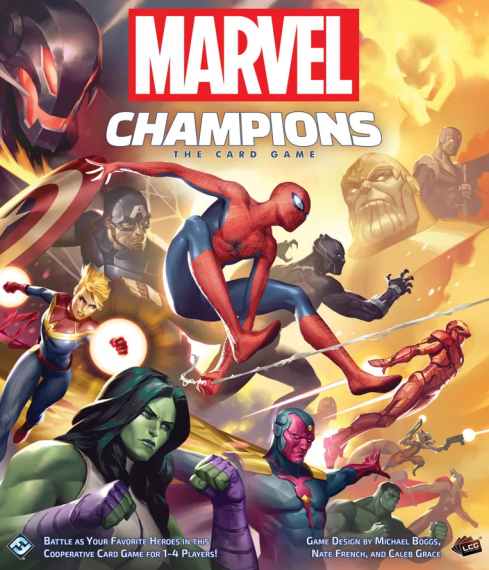
Spoiler alert: Marvel takes the top two spots in this list. I can see people flipping the two games at the top of this list. Some will like Marvel Champions more than the next title, but I like the next title slightly more than Marvel Champions. Clearly, both opinions are valid. The two games top this list. I love Marvel Champions’ inclusion of alter ego play. I rarely see superhero-themed games include anything about alter egos. When you play Spider-Man in Marvel Champions, you’ll have to balance his exploits as Spidey and finish his homework as Peter Parker. Brilliant!
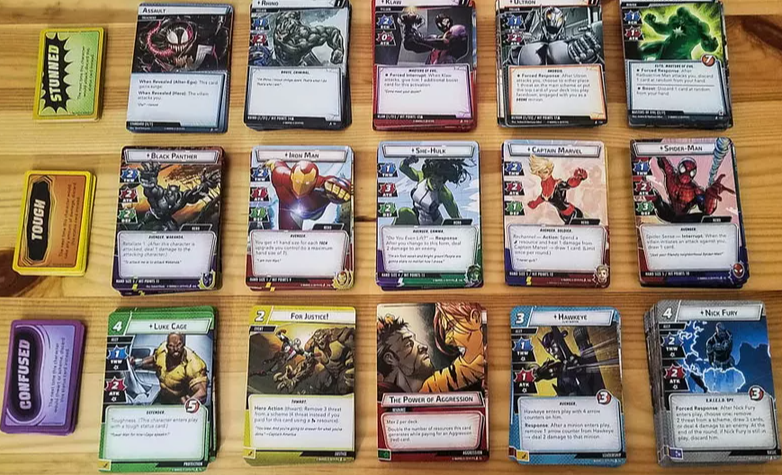
Since Marvel Champions is a living card game by Fantasy Flight Games, it offers plenty of story and deck customization. I’d advise players to become familiar with Marvel Champions’ base rules before fiddling with deck construction, but that is another option. If I didn’t go all in with Marvel United (our next entry), I may have done the same with Marvel Champions. My only concern is that I rarely feel like I’m doing what the card says. Usually, I’ll say to my teammate that I have X-amount of blue, and they’ll respond with I have a X-amount of green, and we’ll deal with threats based on color/number. Despite this, Marvel Champions is a lot of fun and deserving of the second or even top spot.

I love Marvel United. It edges out Marvel Champions for me because it’s easier to onboard players and remember how to play the game. Few games on this list can boast that. I’ve played a lot of Sentinels of the Multiverse, but I’d have to refer to the rules a few times if I were to break out the game again. Marvel Champions has a ton of fiddly rules. I don’t need to do consult the rulebook with Marvel United. The graphic design is perfect. You could look at the symbols and guess what the game wants you to do. Other games on this list function like modern video game consoles in that one must log in, download software, and register products before playing a game, while Marvel United is plug-and-play.
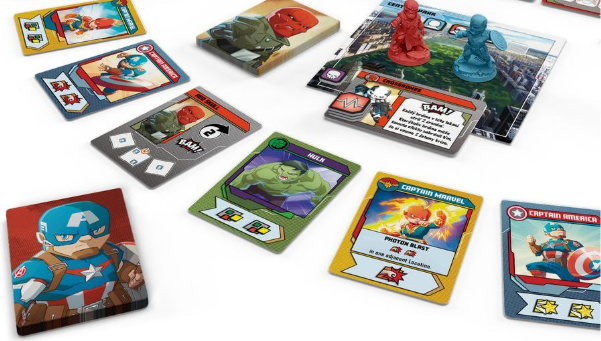
And Marvel United happens to be our only game system on this list, but the system originated with the superhero theme. DC Super Heroes United releases later this year (hopefully), so we should get the chance for some awesome crossover battles between Marvel and DC Comics. Even though CMON Games has yet to announce another follow-up series, my guess would be Star Wars United. That’d be dope. Regardless of which direction the United Game System takes, the United System offers countless hours of play. The only issue I have with this game is that I never know who I want to play. I have so many characters. I placed everyone into a randomizer.
That’s Geekly’s list of the Top 5 superhero-themed board games. We’ll have to see what changes in the next ten years or so. Let us know your favorite superhero-theme board game in the comments. Thank you for reading, and wherever you are, I hope you’re having a great day.

Happy Sunday, Geekly Gang! Kyra Kyle here with another week of Geek News.
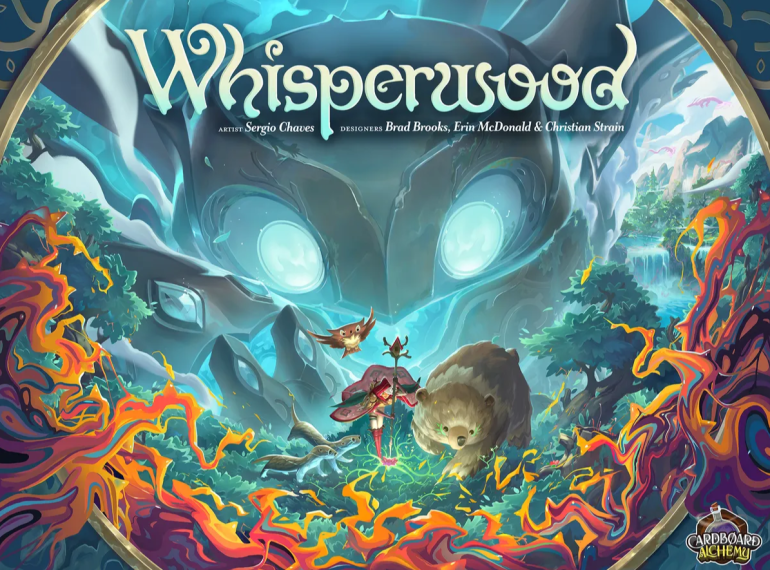
Whisperwood is a bag-building game for 2-4 players of druids harnessing the power of the elements and the natural world to restore a forest. Each round players simultaneously summon magical energy in the form of tokens and plan the incantations they will perform. The players then perform their incantations in turn order, restoring air, water and earth, partnering with wildlife, inscribing runes and awakening the Guardian Golems to perform magical tasks. The land is strewn with corruption and the druids must absorb and purify this corruption to heal the forest – but take on too much corruption and your magical abilities will be compromised!
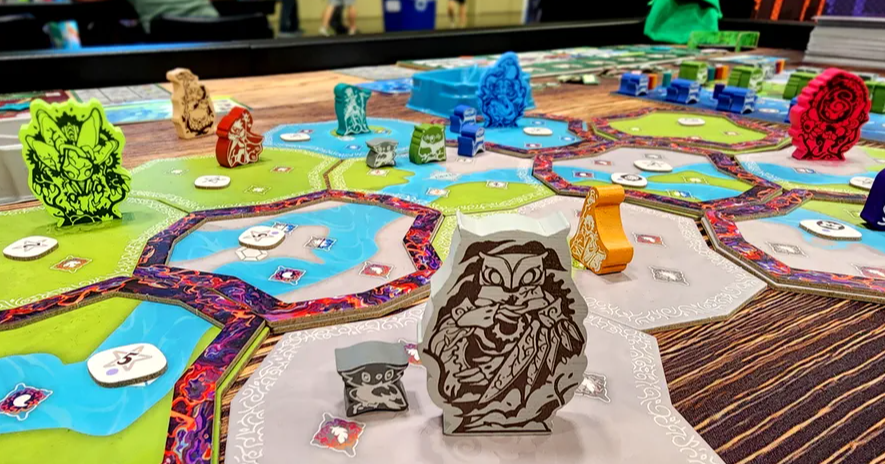
Thank you, Cardboard Alchemy, for the description. Whisperwood had me at bag building. The game’s production (above is a picture of Whisperwood’s prototype…just the prototype) has me sold. Publisher Cardboard Alchemy has a good track record (Flamecraft and Creature Comforts, anyone?). So, Whisperwood is definitely on my radar. At first, I thought Whisperwood was a cooperative game, but I may like it more as a competitive game. The tiles look amazing. Their irregular shape could yield some interesting maps (if Cardboard Alchemy intends to keep tiles in its final product). I’m a sucker for simultaneous action selection. It doesn’t have the hectic nature of real-time, but it still speeds up play. Whisperwood offers pledges between $99-$249. If you’re interested in Whisperwood, check out its KickStarter page.

In The Altered: Anomaly Containment Archives, players serve as Evaluation Commissioners within B.A.R. Playing solo or as a group, they open classified dossiers, examine physical evidence, compare conflicting testimonies, decode hidden information, and reconstruct the lives of individuals known as Signators, each connected to an anomalous event. No game master is required.
Across seven interconnected cases, players must issue binding rulings: who remains human, who has become Altered, and what must be contained. Branching choices and blind-bag token management carry the consequences of each ruling into later cases, while containment breaches are resolved through tactical card play. To win the campaign, the commissioners must resolve the linked investigations and contain the final threat shaped by their accumulated decisions.
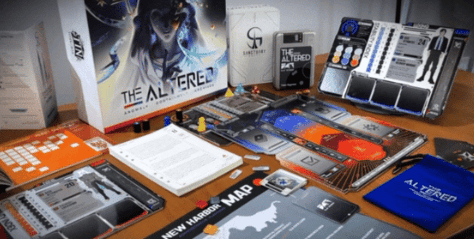
Thank you, Tin Universe, for the description. I haven’t seen a deduction/mystery board game with as much hype as The Altered: Anomaly Containment Archives in decades. It’s been a while. Many of my favorite influencers have been promoting The Altered: Anomaly Containment Archives. Personally, I love the fusion of Sci-Fi and Mystery. Yes, please. Mrs. Geekly is a huge Clue (Cluedo) fan, so I may need to pick up a copy. The Altered: Anomaly Containment Archives offers pledges in the range of $56-$238. If you’re interested in Altered: Anomaly Containment Archives, check out its KickStarter page.
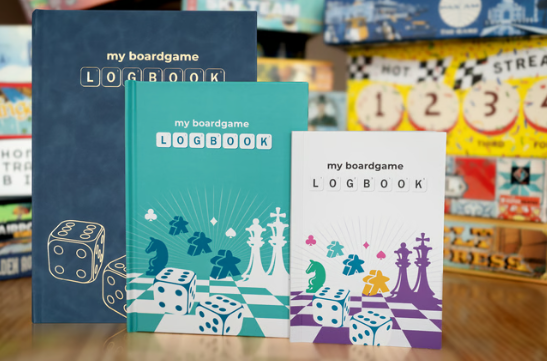
I love the idea of My Boardgame Logbook. I struggle to keep track of which boardgames I play, so My Boardgame Logbook is a nice addition to my boardgame library. Haven’t played a game in a long while? My Boardgame Logbook will show which games you’ve played the most and least over the past several years. I feel a purge coming. Can you feel it? But My Boardgame Logbook goes one step further. You can catalogue each play of your boardgames. With this book you can say without a doubt that one member of your gaming group wins a particular game more than anyone else. Look at the scoreboard.

While I like the idea of logging in game scores, I’m more interested in logging the games themselves. My Boardgame Logbook may be a good tool to determine which games should stay in rotation and which need to leave. My Boardgame Logbook offers multiple pledge levels $13 to $313. You’re sure to find the perfect logbook for your games. If you’re interested in My Boardgame Logbook, check out its KickStarter page.
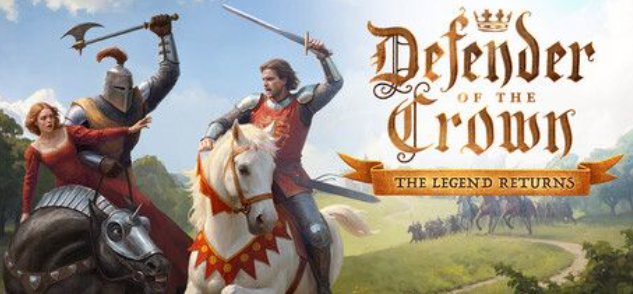
The legendary medieval strategy adventure has returned – enhanced for a new generation of knights. Conquer provinces, raise armies, storm castles, and influence the balance of power through bold strategy and action moments.

The classic Defender of the Crown video game series returns. The series is known for being obtuse (difficult to learn controls and win conditions), and while Defender of the Crown: The Legend Returns addresses this issue, the game is still difficult to get into but offers a wealth of strategic goodness. Can you lead your knights to victory? Find out in Defender of the Crown: The Legend Returns, available on PC.
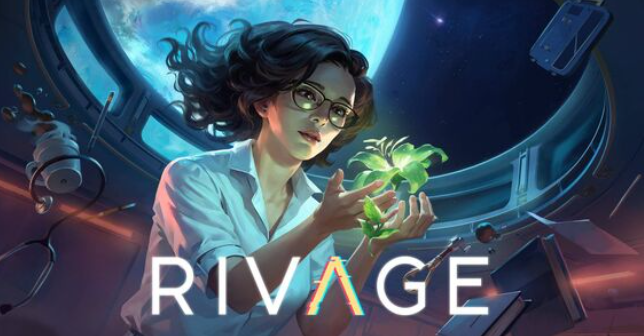
Rivage is an immersive sci-fi puzzle adventure set aboard the A.R.E.S. space station trapped in a space phenomenon. Wake up as Miranda, forced to explore, solve intricate puzzles to unravel the fate of your missing crew.
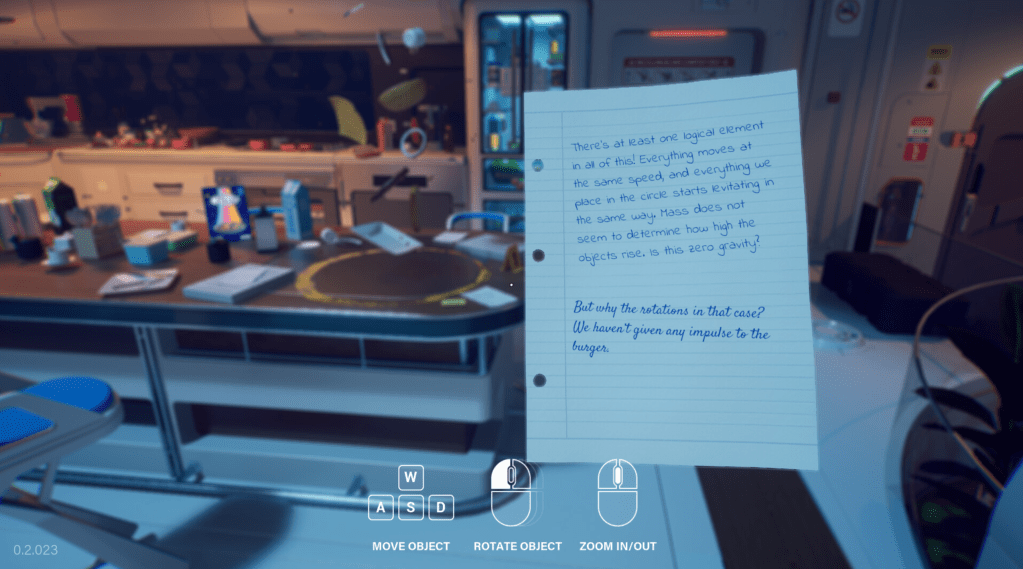
Ah! Rivage returns to the roots of a walking simulator. I don’t know if the publisher/developer would think that was a diss, but it so isn’t from me; I even shared a list of great dark walking simulators (I love this genre of game). Miranda is trapped on a space station and must solve intricate puzzles to find her missing crew. Yes, please. I immediately wishlisted Rivage on Steam. This looks like an indie hit Geekly covers. Let us know if you’d like a review. Rivage is available on PC, PlayStation 5, and Xbox Series S/X.
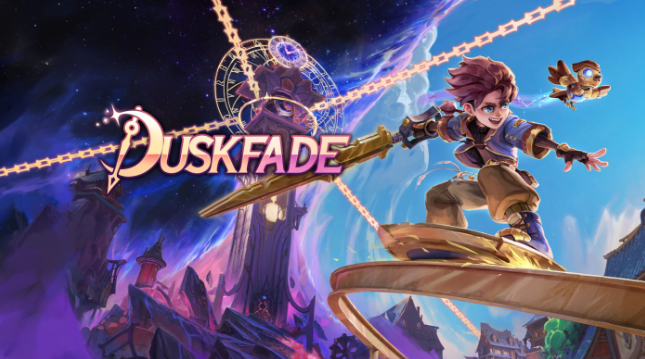
Shatter the shackles of time as you jump, swing, and slash through a fantastic world in this love letter to classic 3D action platformers. Zirian, accompanied by his mechanical Cuckoo, must save his sister from a mysterious Clock Tower that has plunged the land into eternal night.

Platformer video games are not dead. Games like Duskfade prove this to be the case. I love the premise, the action portrayed in the images and videos I’ve seen, and the fact that Duskfade is a world in perpetual night. Duskfade is another game I immediately wishlisted on Steam. But you may not need to wait that long. Duskfade is offering a 20% discount for the next two weeks. Duskfade is available on PC, PlayStation 5, Nintendo Switch 2, and Xbox Series S/X.
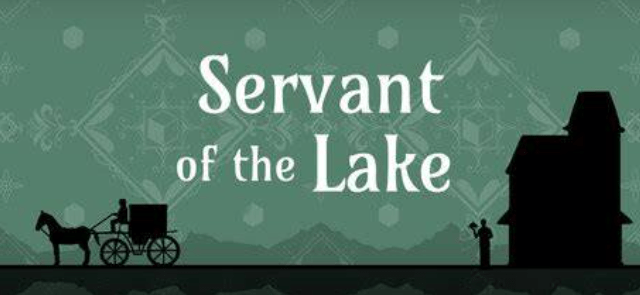
Begin your new job as a servant at the mysterious Vanderboom estate. Solve puzzles, serve the family and uncover their dark alchemical secrets in Servant of the Lake, a single-player point-and-click adventure in the Rusty Lake series.
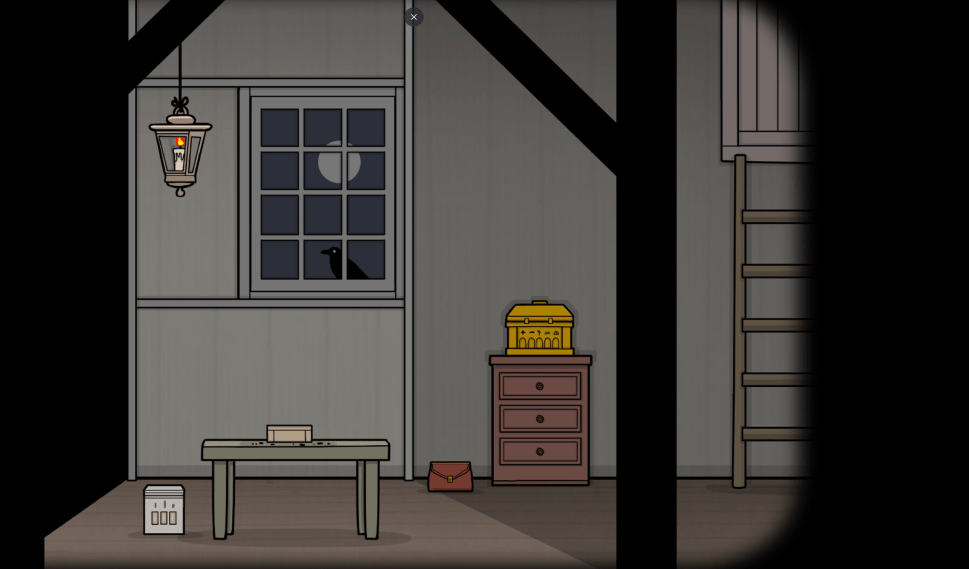
Servant of the Lake is yet another puzzle-heavy video game, and I’m loving it. Servant of the Lake has received great reviews. I can see it. This is another great entry in the Rusty Lake series. Automatic wishlist. Servant of the Lake gives me mad King’s Quest vibes and I’m here for it. I love that indie games have taken over the video game landscape. I hope more game like Servant of the Lake can dominate sales. Servant of the Lake is available on PC.
That’s all the Geek News we have for this week. Thank you for reading, and wherever you are, I hope you’re having a great day.
Happy Sunday, Geekly Gang! Kyra Kyle here with another week of Geek News. We’re still taking a break from headlines, but we have plenty of new releases for board games and video games. Let’s get to the games.
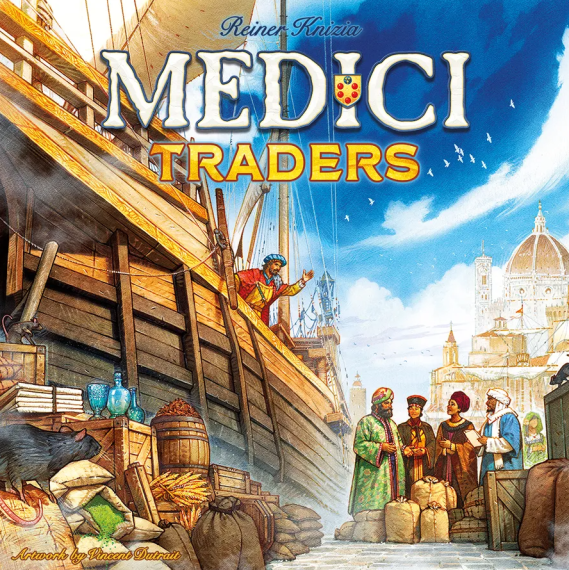
Like the classic Medici Board Game, Traders is a tile game that takes you to 15th century Florence, Italy. Players acquire the most valuable goods and optimally pack them on their ships. They simultaneously draw goods tiles, adding up to 3 tiles to their tray, which they then move to the center of the table.
After all players have added their trays to the center, the first player selects one of the trays, adding florins (coins) to the tray, as they wish, to help solidify their claim to those goods. Future players may either take a tray from the center (again placing florins to the tray to help solidify their claim) OR surpassing the number of florins on a tray that another player has already claimed, and taking that tray. The original player gets their florins back. Play continues around the table in this way until all players have claimed a tray.
Florins used to claim trays are turned into the bank and players load the goods from their claimed tray onto their ship. Ships in Traders have multiple levels – one for each day (turn) and an upper deck that can hold special goods with upper deck railings.
The above steps are repeated until all players have filled all 7 spaces on the current day’s ship level.
At the end of each day, players score. First, players score based on who has the highest points of goods on the current day’s level of their ship. Then, players score for each type of good anywhere on their ship. Players with the most of each type of good score the most points for that good.
At the end of three days, the player with the most florins wins.
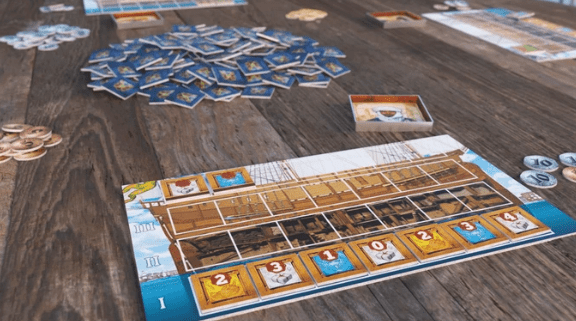
Thank you, APE Games, for the description. I played the heck out of the Medici app. Yes! Medici may be another game I prefer more as an app. And I’ll also throw in app board games because it saves on physical space. Regardless of how you play Medici, the game is excellent. The subject matter may not appeal to everyone. In Medici, you’re trying to manage your resources, selling them at their highest value. Medici Traders looks to streamline a lot of what Medici does and shrink down the game’s runtime. This was the biggest reason why I played Medici as an app. I didn’t think my game group had the patience for a multiple hour game about resource management. But Medici Traders plays in less than forty-five minutes. The upkeep from round to round appears minimal. I may have to pick up a physical copy of a game in the Medici line.
And since Medici Traders is part of the Medici line, designer Reiner Knizia returns. Knizia has a way of making a resource management game with auctions and trading fun. Medici Traders offers several pledge options, ranging from $34 to $139. If you’re interested in Medici Traders, check out its KickStarter page.
1899. For more than a century, the European public has been fascinated by Egyptology and the discoveries of Denon, Champollion, Petrie and others. Seeking adventure and glory, teams of archaeologists search the sands of Egypt for hidden treasures.
Mykerinos. Embody archaeologists seeking relics from ancient Egypt for powerful benefactors. Will you be convincing at the museum’s final exhibition?
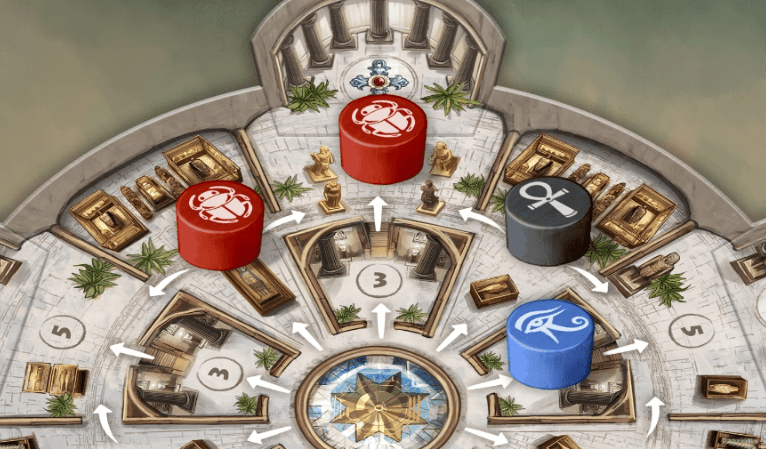
Thank you, Looping Games, for the description. Looping Games has been around for just over a decade, and they have reproduced some fantastic games. Mykerinos is the latest decades-old game to receive a facelift from Looping Games. The production value looks amazing. I like Mykerinos’s theme. The tagline goes hard. “Excavate the past. Control the present. Win the final exhibition.” Sounds simple enough, but like many Looping Games (publisher of the 1900 series), Mykerinos provides plenty of strategic depth. If you’re interested in Mykerinos, check out its GameFound page.
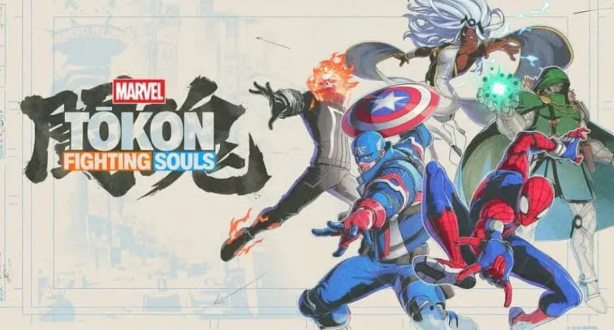
Assemble your team of legendary Marvel characters in the ultimate 4v4 tag team fighter.
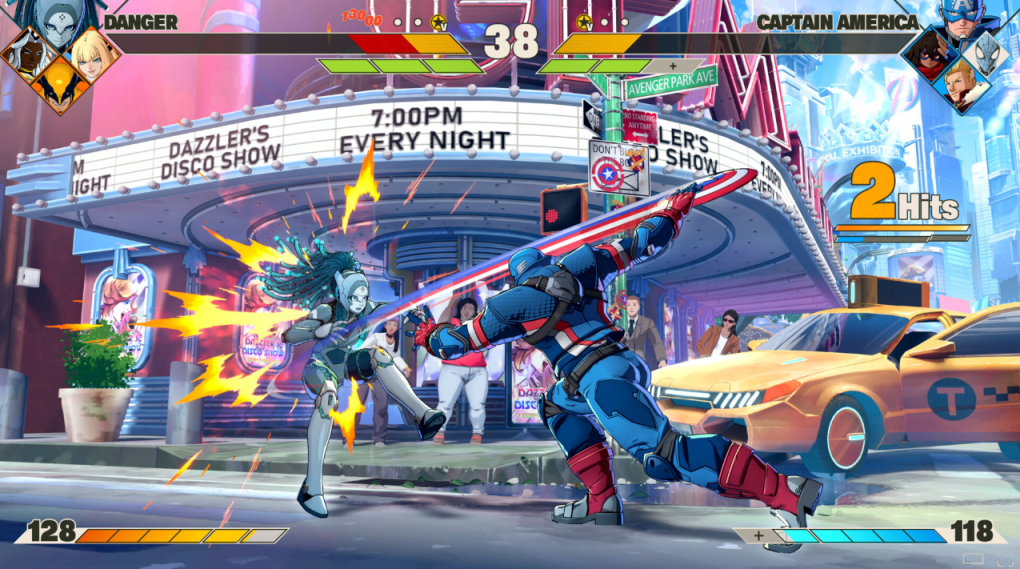
If Marvel vs Capcom wasn’t enough, PlayStation is giving us a Marvel fighting game with a twenty-character roster in Marvel: TOKON Fighting Souls. I’m certain more Marvel characters will be released in the coming months. Twenty characters isn’t a huge roster for a 4v4 tag team fighting game. Each player will control four different characters, so forty percent of all the characters will be included in any one match. Yikes!
Marvel: TOKON Fighting Souls has plans for four future characters with its DLC. We’ll have to see if these characters will be free downloads. The graphics look amazing. Developer Arc System Works has a history with fighting games, so they have the talent and experience to translate Marvel characters into a fighting game. The relatively small roster also gives me hope that each character will play differently from the rest. I’ve got this one on my radar. Marvel: TOKON Fighting Souls is available on PC and PlayStation 5.
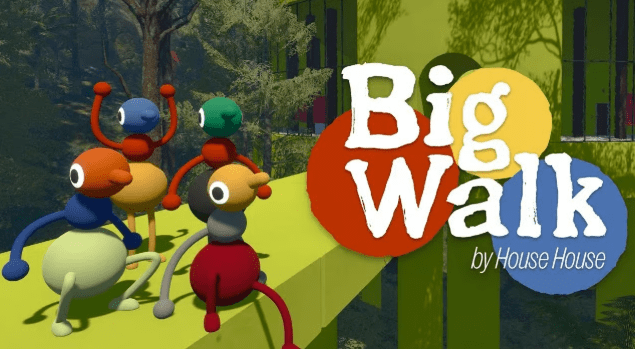
Hang out and get lost with close friends in a big world. Big Walk is a cooperative online walker-talker from the creators of Untitled Goose Game.
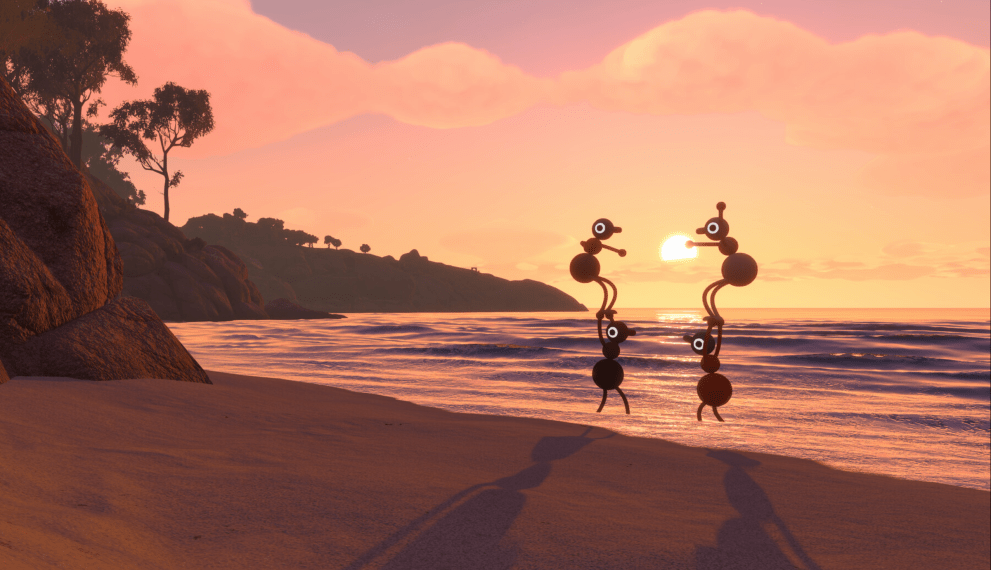
I enjoyed playing Untitled Goose Game. I’m not good at it, but I had fun playing it. House House has done it again with Big Walk. Big Walk follows the footsteps of highly cooperative games like Meccha Chameleon, Among Us, and Peak. You and your three friends are the only living beings in the world of Big Walk. The four of you are on the titular “big walk” across this uninhabited planet. You must work together to solve puzzles and earn plenty of nubs. Big Walk is part of a growing category of video games that promote friendship. You and your pals must communicate well, and while the stakes aren’t as high as other games, Big Walk can be very rewarding. Big Walk is available on PC and Nintendo Switch 2. Honk, honk!
That’s all the new releases for board games and video games that we have for you this week. Thank you for reading, and wherever you are, I hope you’re having a great day.
 jkgeekly.com