
Hey, hey, Geekly Gang! Kyra Kyle here with another Top 5 Tabletop Game List throughout the years. 2001 is the year in board games we’re covering today. While 2001 saw a lot of great games, I don’t see as many of them played as much today. And yet, 2001 in board games set industry standards and even introduced one of the most interesting game mechanisms. We’ll get to the games in a bit, but first, let’s review our list’s criteria.
1: Cultural relevance plays as much of a factor as overall quality. A game might make a list that doesn’t hold up to others of its type, but you must admit the game is everywhere.
2: Only one game from a franchise makes the list. This will become more of an issue the closer we get to games with expansions.
3: Longevity plays a role, too. A game doesn’t have to fly off the shelves today, but it had to have some widespread appeal for a decent time.
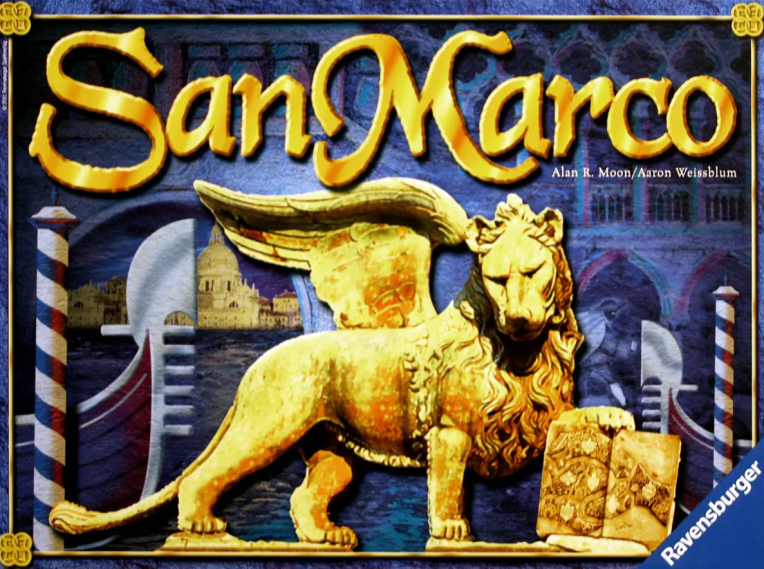
Honorable Mention: San Marco (2001)
Alan R. Moon almost makes one of these lists again—he won’t need to wait long for another entry—and while San Marco helped popularize area control and card drafting as game mechanisms, it’s since been overshadowed. San Marco won a handful of awards, but it just missed out on our list.

5: Zombies!!! (2001)
We begin 2001’s Top 5 Board List with Zombies!!!. This design by Todd Breitenstein still has its defenders today, but many Zombies!!! Fans have moved on to another game that will most likely make one of these lists: Zombiecide or Dead of Winter. You can’t deny Zombies!!!’s influence on the board game industry. It proved a miniature or standee-heavy game could make bank, solidified zombies as a board game theme (Zombies!!! was one of the first zombie games), and its use of tiles as terrain has been duplicated for decades.
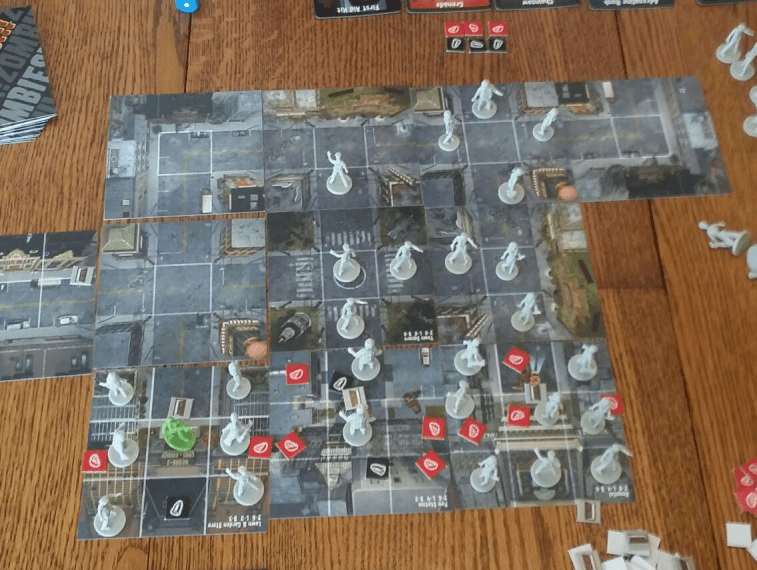
Zombies!!! cornered the market for zombie board games for well over a decade. It shocked me that no other board game attempted to claim Zombies!!! throne until 2012.
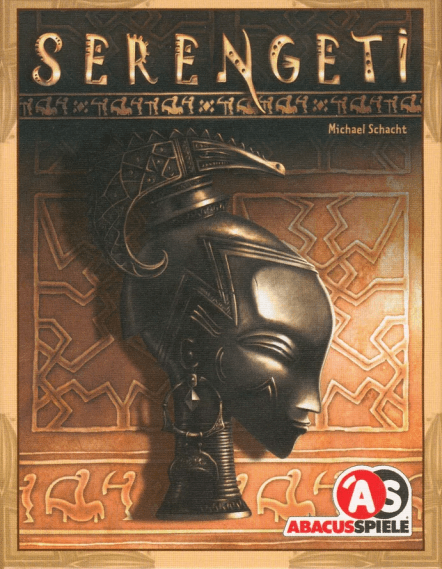
4: Serengeti (2001)
Serengeti has the opposite problem of Zombies!!!. While Zombies!!! makes this list for its cultural relevance and lacks a standout game mechanism, Serengeti offers a fantastic twist for an auction and payout mechanism and often gets forgotten, in part, because it got rethemed as Don (a gangster game). Both games made the list, but just barely.
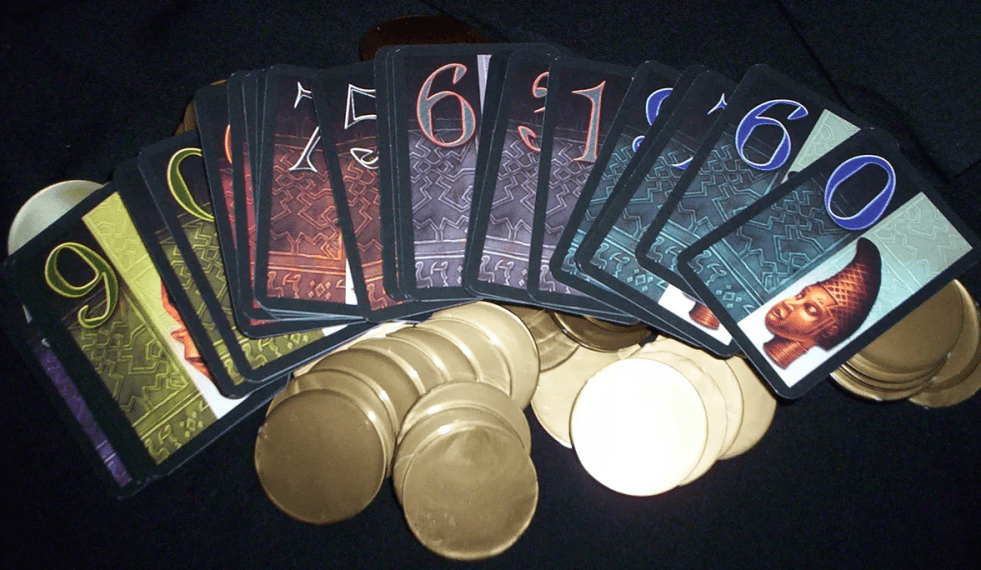
Players bid for African art (sensitivity may be the reason the game got rethemed) with the local currency “Hongo.” Players may not bid a number whose “ones” digit matches the number on any card they previously won. The payout mechanism is that players owning a card whose number matches the “one” digit gain a share of the bid. Serengeti has this nice push-pull of wanting to acquire lots, but it matters when you obtain the lot, because you stand to gain a kickback every time someone else gains a similar lot. It’s no wonder Serengeti won several awards as the best card game of 2001.
3: Evo (2001)
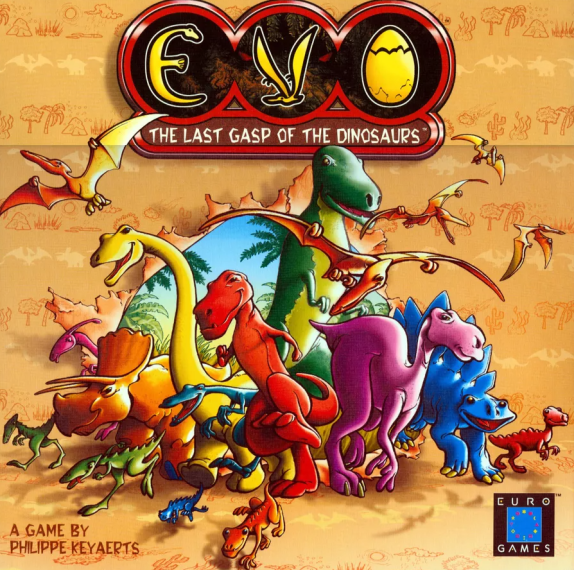
I struggled figuring out where I should place the next three games. You could invert the rankings of all three of the next three games, and I’d agree with you. Regardless, I had to put these games in some order, and we begin with Evo. You control the survival and evolution of dinosaur species named Dinos. Guide their migrations, perfect genes to develop and mutate your Dinos, and push out other creatures to become the “dominant species.”
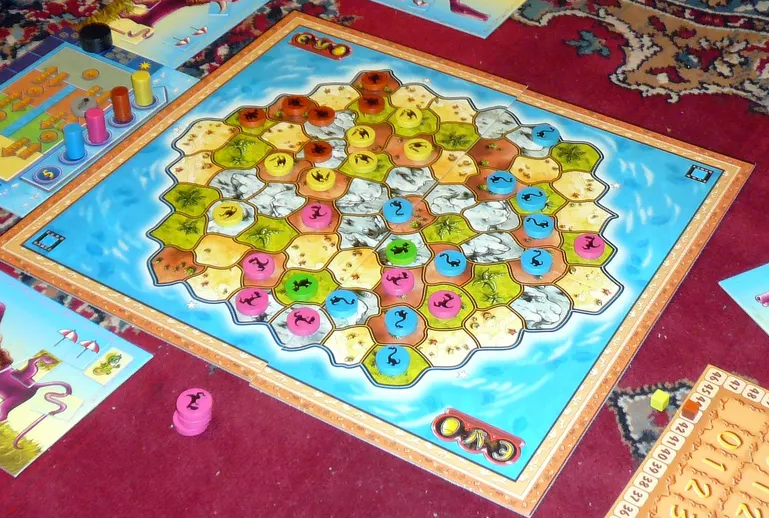
Another board game would be released over a decade later, Dominant Species, which owes a lot to Evo. But Evo is more streamlined than Dominant Species. I’ve heard people talk about Evo, and that’s another vote for it to climb higher on this list. Evo was nominated for a lot of awards, won a couple, and is highly regarded. Why didn’t it land higher on this list?

2: Zendo (2001)
Zendo has the innovative game mechanism I mentioned at the beginning. Zendo is a game of inductive logic where one player, the Moderator, creates a secret rule (like a structure must consist of at least two pyramids) that the rest of the players figure out by building and studying configurations of the game pieces. The first player to correctly guess the hidden rule wins.

Zendo uses Looney Pyramids and was originally released as part of a group of games that could be played with Looney Pyramids in 2001. Zendo was later released as a standalone game in July 2003 and promptly won multiple awards, including the 2005 Mensa Select. Zendo makes its players think creatively. Its bizarre game components make it stand out.
1: TransAmerica (2001)
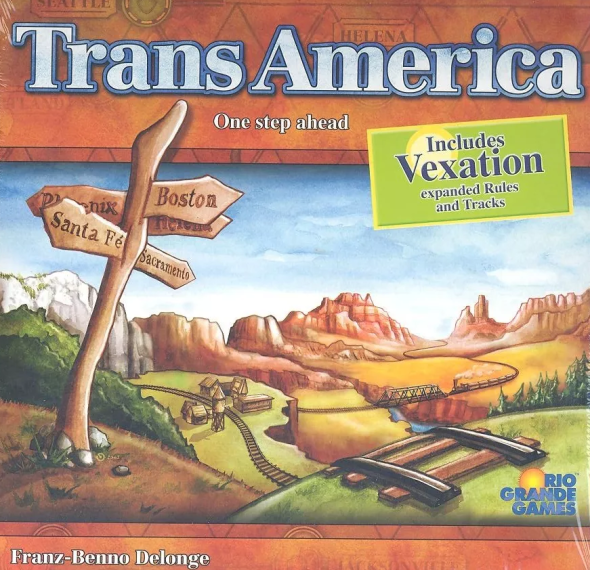
TransAmerica is yet another board game on this list to win multiple awards. TransAmerica was even nominated for the 2002 Spiel des Jahres (German game of the Year)—I still don’t yet know how the Spiel des Jahres committee determines when a game is eligible—and just barely missed. Like Zendo, TransAmerica earned the 2003 Mensa Select. But TransAmerica takes the top spot on this list because it combines accolades with cultural relevance. Train games were nothing new, but TransAmerica streamlined train board game mechanisms. Something we’ll see with a future number one game.
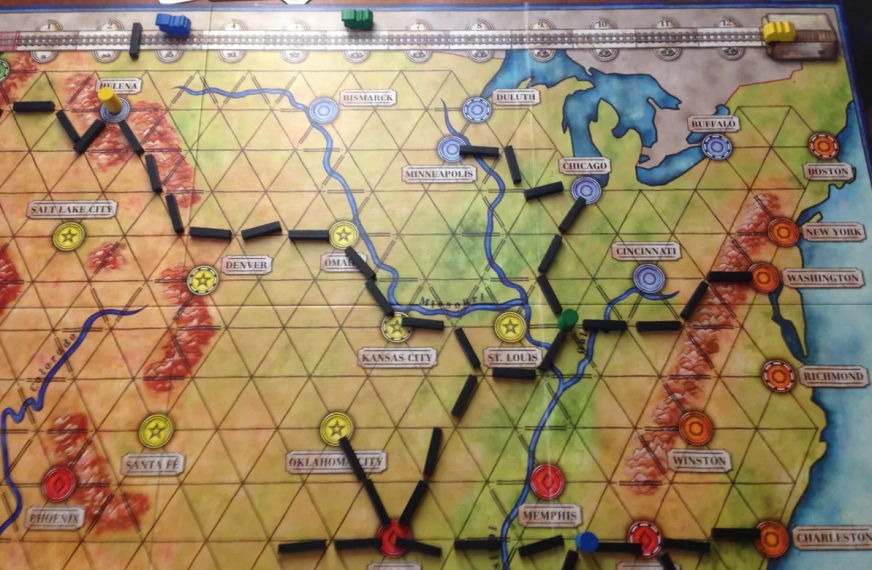
Each player has a set of five cities strung across the United States that need to be connected by rail. Players begin by placing their station on an intersection on the map, then take turns placing one or two rails each turn on the lines of the map. Initially, players can only be adjacent to their station or on a line that touches their station, but once one’s network connects with another player’s, one can place their rails anywhere along the combined network. I love how TransAmerica rewards players who know when to connect their networks with another player’s. Can you take advantage of others’ rails more than they can benefit from yours? TransAmerica boasts a short play time, perfect for players new to the hobby.
Did we get the list mostly correct? Let us know which games you’d add in the comments. Thank you for reading, and wherever you are, I hope you’re having a great day.
 jkgeekly.com