Geekly TV: November 24, 2014

Bobs

Bob’s Burgers

Kyle’s Review

Welcome to the best, worst Thanksgiving tradition: the Running of the Turkeys.

What do you get when lock up a horde of psychotic turkeys, ducks, geese, and chickens? Comic mayhem. The family abandons Bob on his favorite holiday to go down to Wonder Wharf and take in Mr. Fishodor’s spanking new Thanksgiving Day extravaganza.

It’s hard to mention anything about this episode without giving things away, but you should see what happens when Linda encounters a cycloptic turkey, the kids when they get stuck on a Scramble Pan ride, and Bob when he decides to start his own personal disco. No one knows what sets off the poultry. It could be the pecking order, the spirit of Thanksgiving, or the beginning of a turkey revolution, but you’ll be glad Bob’s Burgers set the turkeys free.

On a side note, Teddy’s life on a turkey farm saves the groups’ giblets on more than one occasion. If you want to survive the Turkeyapocalypse, you have to think like a turkey.

Verdict: The best Thanksgiving episode in a long time.
Grimm

Grimm

Kyle’s Review

This week’s episode of Grimm takes a minor step back.

Let’s start with the Wesen of the week. While I applaud the continued focus on Nick’s detective work, the solution left me scratching my head, and that was before it got silly. I can’t tell if it was meant to be funny—Grimm can have some chuckle moments—but this was a little much. The rest of the story elements don’t fare much better.

Most of the episode revolved around the ongoing drama elements. I don’t believe in the cast’s aversion to Nick’s cure. So what if Juliette looks like someone else while they make love? Team Nick throws out at least fifteen different solutions: turn out the lights, pretend that you’re role playing, she’s the same person on the inside, etc. To make matters worse, Juliette made her peace with the angle the writers are trying to take (as to why she wouldn’t want to go through with this) in the season premiere, and they toss the ick factor aside in less than an episode. The reason they toss it aside is huge, but it’s another underdeveloped thread.

We also get a groan of a new thread this week. Renard wants his baby back, even though he doesn’t know where she is. Mothers cloud everything in this series: the sorceress supreme Adalind’s mom in season one, the butt kicking and reclusive Nick’s mom in season two. Now we get the loving yet manipulative Renard’s mother. I like that there’s some depth to this character, but does Grimm have to resort to mothers every season as their twist?

The shocking third season mom Adalind gets plenty of air time in this episode too. How could anything as convenient as Adalind’s escape be anything but a hoax? She falls for it—literally. But what’s the point of breaking her spirit? The royals want the same thing as Adalind: Adalind’s magical baby. But she clearly doesn’t know where her child is and has no hope of finding her.

Verdict: Easily the weakest episode this season but still watchable.

Constantine

Constantine

Kyle’s Review

This episode was undercooked in some areas but brought to the right temp in others.

The portrayal of Zed’s ability has been uneven all season, but it works for the most part here. She gains a psychic link with a malevolent spirit in New Orleans. I’m not sure if I buy her power’s link with the map introduced in the pilot, and if Zed’s going to connect with haunted cities in this way, Constantine should make weekly trips to New Orleans, but I dug the change of scenery. I also dug Papa Midnight’s return.

Papa Midnight showed that he wasn’t as deep as a puddle. He actually believes he’s helping people. While I like this angle, I’m not sure that I buy it. Someone who goes after a devil-spawned album doesn’t usually play nice with others. I’m also not sure how this will play out. We know that Zed will eventually betray Constantine—we knew this from the “I’ve got a fishhook caught in my eyebrow and I like it” glances she gives John—but I don’t know if we should see Papa Midnight take her place. He’s the best foil Constantine has at this point. I don’t think Papa will join Chas in the taxi, but it was nice to see him make an uneasy truce with John.

The malevolent spirit—actually there’s more than one—stems from Papa Midnight’s magic gone wild. I love that there was a human element underlying the demonic. You can’t spend too much time in the clouds or floating in lava. But I wish they’d avoid the Zed betraying John story arc like it’s hot lava.

My eyes hurt from the eye roll I had when Papa Midnight’s spirit buddy confirmed that “someone close to John Constantine will betray him.” We get it. Don’t wait until the end of the season for how she’ll betray him. Get it over with already.

I’d be remiss to mention that we see Chas in action this week. He gets killed again, but we see him come back to life. Still no word as to how or why he has this power. Hopefully, they’ll explain this soon.

Verdict: It was great to see Papa Midnight in action, but I’m not sure about much else.
Quiz Answers: Lame Super Villains 2

1) Kite Man: A; 2) Oddball: D; 3) Mandrill: B; 4) Paste-Pot-Pete: C; 5) Captain Cadaver: D; 6) Ruby Thursday: C

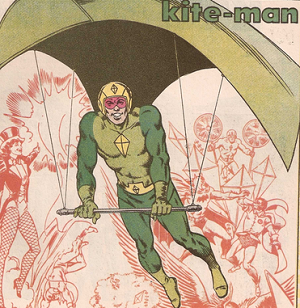
He loves to fly kites of all sizes, and his name is Charles Brown.

KiteMan01

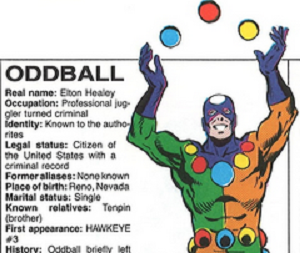
The world’s greatest juggler, Oddball specializes in throwing spheroids filled with different junk.

Oddball01

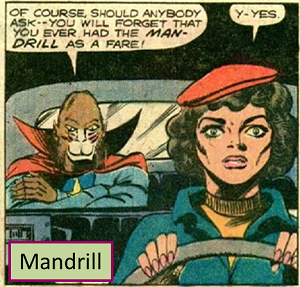
A half-human, half-mandrill and irresistible to females, Mandrill beds any female he wants and forms an army of female slaves to become master of the world.

Mandrill01

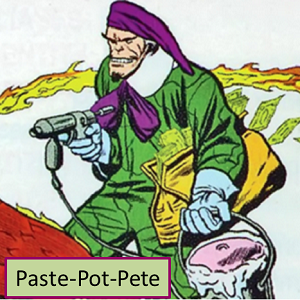
Glues people to the ground with his paste gun.

PastePotPete01

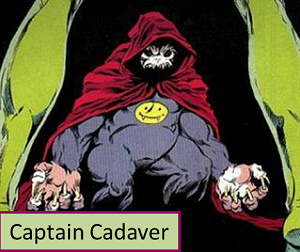
A three-foot vampire who wears a smiley fanged t-shirt.

CaptainCadaver01

Came up with a high-tech organic computer shaped like a ruby crystal ball, but instead of selling the tech to Bill Gates, she chops off her head and replaces it with the computer.

RubyThursday01

Lame Super Villains Quiz 2

Here are some more villains you love to hate. Pick the right lame power for these lame super villains.

1) Kite Man
a) He loves to fly kites of all sizes, and his name is Charles Brown—and he’s always getting his kites stuck in the same tree.
b) Uses geometric theory to generate deltoids with his mind.
c) Sprouts wings shaped like the famous quadrilateral that allow him to glide from place to place.
d) Hawkman’s dwarf half-brother.

2) Oddball
a) Turns ordinary people into hippies or hipsters by pegging them with one of his oddballs.
b) Wields a pool cue as a weapon and has henchmen named after the odd numbered billiard balls—What? No magic eight ball?
c) Lost a testicle after getting kicked in the groin too many times and now he’s out to make every other man an oddball.
d) The world’s greatest juggler, Oddball specializes in throwing spheroids filled with different junk.

3) Mandrill
a) A super intelligent ape, Mandrill plans to make all humans his slaves.
b) A half-human, half-mandrill and irresistible to females, Mandrill beds any female he wants and forms an army of female slaves to become master of the world.
c) Transforms into a human-sized power drill that can burrow deep into the Earth’s crust.
d) Uses his exotically colored bottom to hypnotize his victims—while the rest of us have to wear Juicy Pants; dude, share.

4) Paste-Pot Pete
a) Uses alliteration to confound people who stammer or stutter.
b) Hypnotizes glue sniffers with his magical paste-pot.
c) Glues people to the ground with his paste gun—he’d kill at a crafting convention.
d) Gives everyone a contact high with the marijuana-laced paste he spews from his mouth.

5) Captain Cadaver
a) Having cheated death himself, Captain Cadaver raises an army of dead on a semi-daily basis.
b) The reanimated corpse of an army officer, Captain Cadaver steals from rich bureaucrats that denied him his veteran’s benefits in life.
c) A ghost that possesses dead bodies and brings them back to life, Captain Cadaver gains the proclivities and memories of those he possesses.
d) A three-foot vampire who wears a smiley fanged t-shirt.

6) Ruby Thursday
a) Opens a chain of restaurants to rival Ruby Tuesdays, but she doesn’t include a salad bar.
b) Can turn invisible, prompting heroes to sing, “Good bye, Ruby Thursday”—and then The Rolling Stones sue them for copyright infringement.
c) Came up with a high-tech organic computer shaped like a ruby crystal ball, but instead of selling the tech to Bill Gates, she chops off her head and replaces it with the computer.
d) Pass out when she kisses you, and you don’t come to until next Thursday—“Good bye, random hero.”

GeeklyAnswers

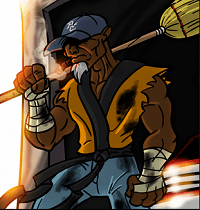
Spotlight: Mister Fixer

MisterFixer01First Appearance: Sentinels of the Multiverse: Rook City
Who he is: The kung-fu master of the Multiverse’s Dark Watch.
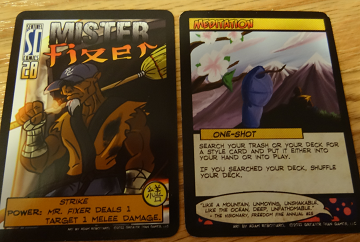
Innate Power: Strike: Mr. Fixer deals 1 target 1 melee damage.
Primary Damage Type: Melee
Secondary Damage Type: Predominantly Projectile
Nemesis: The Chairman and Zhu Long


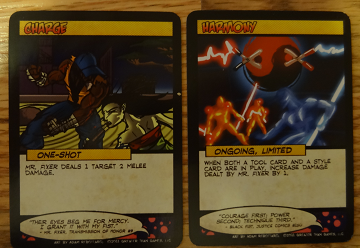
Deck Concept: Mr. Fixer only has one power, his innate power Strike. But Strike doesn’t do a lot—at first. You have to build on it and your attack cards. You have to—have to—play both a tool and a style to get the most out of Mr. Fixer’s deck. If you don’t have one or both of these cards in play, don’t attack. Draw an extra card. Harmony boosts your damage once Mr. Fixer has a tool and a style, so play Harmony as soon as you can. With that out of the way Mr. Fixer loves to manipulate damage despite not dealing a lot of it, so you have to choose your tool and style to fit the needs of the game.
Tools: Dual Crowbars gives Mr. Fixer a much needed boost, but Jack Handle can deal with crowds of villains. Hoist Chain reduces damage dealt to Mr. Fixer—which is a great thing if you’re facing The Matriarch or someone of her ilk—while the Pipe Wrench blends offense and defense—something most heroes have to play two cards for. Tire Iron is by far the most problematic tool.
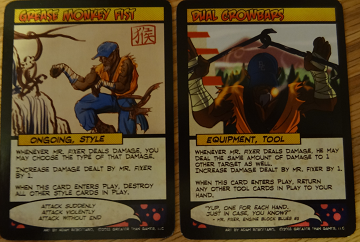
Styles: Grease Monkey Fist gives Mr. Fixer a damage boost and can change his damage type, while Alternating Tiger Claw makes damage irreducible—good for shielded targets. Riveting Crane can make the damage of everybody on Mr. Fixer’s team irreducible. And Driving Mantis pairs defense with a little damage redirection.

MisterFixer02Deck Strength: Mr. Fixer can fix just about any situation. His damage flows like water from one sitch to the next.
Best Team Support Card: Grease Gun: Non-hero targets cannot deal damage. You may not use powers. You may not draw cards. At the start of your turn, destroy this card.

MrFixer01Best Personal Support Card: Dual Crowbars: Whenever Mr. Fixer deals damage, he may deal the same amount of damage to 1 other target as well. Increase damage dealt by Mr. Fixer by 1. When this card enters play, return any other tool cards in play to your hand.
Best Attack: Charge: Mr. Fixer deals 1 target 2 melee damage.

MrFixer02Deck Weakness: He doesn’t deal a lot of damage at first, and this flaw makes him sputter in the beginning of games. Once you get going, Mr. Fixer’s flexibility outweighs his failure to start on time. He relies a lot on ongoing cards, so any villain or environment effect that discards those types of cards would be detrimental, and he doesn’t have anything to destroy an ongoing or environment card.

MrFixer03Worst Card: Tire Iron: All damage dealt by Mr. Fixer is projectile damage. After Mr. Fixer damages a target, if that target has 2 or fewer HP, destroy it. When this card enter play, return any other tool cards in play to your hand.
Ultimate Team-up: Mr. Fixer needs damage boosts. Anyone who can give him that is good in his book. Legacy and Ra come to mind. He also grants plenty of bonuses to heroes who specialize in hitting a lot of targets: Chrono-Ranger and Fanatic. And his Salvage Yard boosts Bunker’s and Nightmist’s decks.

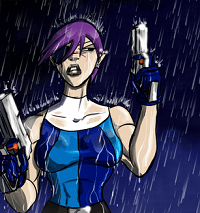
Spotlight: Expatriette

Expatriette02First Appearance: Sentinels of the Multiverse: Rook City
Who she is: The female Punisher of the Multiverse’s Dark Watch.
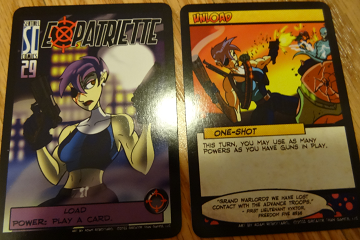
Innate Power: Load: Play a card.
Primary Damage Type: Projectile
Secondary Damage Type: Fire, Cold, and Lightning
Nemesis: Citizen Dawn and Citizen Slash


Deck Concept: You have two ways to play Expatriette’s deck, and you can’t split the difference between these two paths.
The first path: You could setup with a ton of guns, load them with ammo and damage boosts, and then play Unload during your power phase (using her innate power Load), and fire all of her guns. Keep in mind that despite Load counting as a power, having Pride on the field lets you use Prejudice for free. You gotta love going berserk with fully automatic weapons.
The second path: This one isn’t as dramatic, but you could use Speed Loading and any two ammo cards to recycle and play ammo for free. The only problem with this setup is that you run the risk of stalling without proper card draw. As with most things in Sentinels of the Multiverse you have to consider the other heroes on the field.

Expatriette03Deck Strength: Damage and lots of it. You definitely know what Expatriette’s specialty is. She doesn’t have a lot of global effect cards, but RPG Launcher does a nice job with its versatility.
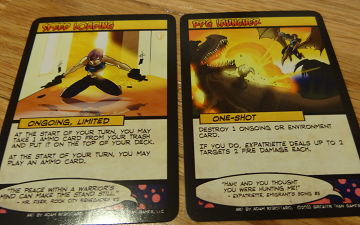
Best Team Support Card: RPG Launcher: Destroy 1 ongoing or environment card. If you do, Expatriette deals up to 2 targets 2 fire damage each.Expatriette05Best Personal Support Card: Speed Loading: At the start of your turn, you may take 1 ammo card from your trash and put it on the top of your deck. At the start of your turn, you may play an ammo card.
Best Attack: Unload: This turn, you may use as many powers as you have guns in play.Expatriette01Deck Weakness: Card draw. Plain and simple. Expatriette has few ways of searching her deck, drawing extra card, or claiming cards from her discard pile, and she needs card draw in order to power her guns. She also only has one way of soaking damage, too. Flak Jacket guards against a single attack, so you have to guess when the big attack comes.

Expatriette04Worst Card: Shock Rounds: Play this card next to a gun card. When that card’s power is used to damage a target, Expatriette deals all non-hero targets 1 lightning damage. After that power is used, destroy this card.
Ultimate Team-up: Anyone who can give her card draw or boost her damage. I’m looking at you Legacy, Visionary, and Argent Adept.

Geekly TV: November 21, 2014

Arrow

Arrow

Jim’s Review

Arrow took a forward step this week. We were long overdue for a break from Laurel, and we got it. Thank goodness for small mercies.

With that said, I still had some pretty glaring issues with the episode. Cupid was far more corny than clever. Her performance never quite reached Count Vertigo levels of overacting, but it came closer than anything should. That, in combination with her tendencies to spout clichés about love gave her a very formulaic feel, like she could have been credited as Generic Crazy Stalker #1. I think the tipping point for me came when she was about to say, “If I can’t have you, no one can.” She didn’t get to finish the statement, but we all know it’s what she was going to say.

Speaking of formulaic plot devices, I thought that’s exactly what we got with the Ollie/Felicity/Palmer angle tonight. I can live with a love triangle, but I rolled my eyes when Ollie walks in to tell Felicity how he feels, just in time to see her locking lips with Palmer. That gave the episode something way too close to a Saved by the Bell feel.

Thea’s storyline with finding a DJ for the club bored me. It was underdeveloped, and the fact that she let the guy who’d been creeping her out all episode kiss her? That made me wonder if this was the same Thea who’d been training as an assassin in Corto Maltese just a couple episodes ago.

The flashback sequence also fell a little flat. If you read DC comics (not necessarily Green Arrow), you probably know where they’re going with the nice Japanese lady, and this week’s flashback seemed to serve little purpose but to fake that part of their audience out.

I realize that’s an awful lot on the negative side, but there were some positives here, too. Getting our first glimpse of how Palmer will become who comic book fans know he will be was nice. There was also an interesting teaser for more to come with regard to The Suicide Squad, but the real teaser is the upcoming Flash/Arrow team-up episode.

All in all, season 3 hasn’t been nearly as good as season 2. The writing on this show needs to even out. They need to let character development take more than a commercial break. Felicity is in danger of becoming little more than a bone for two dogs to fight over, and we need some scrap of conflict (other than tired romance angles) to carry through for more than an episode. It seems they’re forgetting Ra’s and Malcolm. They need those central conflicts to simmer, and fill the role that Slade did last season.

Verdict: It was better than last week, but it’s still not meeting the standard it’s set in the past.

Kyle’s Take

Arrow has no direction this season. It fires darts every which way: ARGUS, League of Assassins (Ra’s Al Ghul), Merlyn, Thea (Speedy), Brother Eye, and Suicide Squad. These are just a few. The creators must think that if they fire enough darts, they’ll eventually hit a bull’s-eye. I liked the addition of The Flash last season—because I knew The Flash was getting his own series—but this season has introduced too many heroes (some even in flashbacks): the new Black Canary, Wildcat, The Atom, and Katana. Even the villain at the end of this week’s episode was more of a stinger for The Flash. Sure, he could serve as an Arrow villain, but he’s part of The Flash’s rogues. Arrow needs to be more than a Superhero/Supervillain way station.

TheFlash

The Flash

Jim’s Review

This was a decent episode. We get some flashbacks to Barry’s childhood, though there really wasn’t anything surprising in it. The tie-in with the villain of the week felt a little contrived.

One of my bigger complaints with the show is that Barry really should just tell Iris already. The situation with the villain coming after her seemed to want to support the logic in maintaining the ruse, but I’m not sold.

All of this was made much worse by Barry revealing his identity to the villain/former bully at the end. I just can’t accept that he’d risk letting an enemy (even a neutralized one) know his secret, but not Iris.

I understand the story with Harrison Wells is the show’s long game, and it’s an interesting one, but I feel like they need to give us something new with it. The ending sequence adds a wrinkle to the equation, but if they string it out too much more, they’ll run the risk of telegraphing the punch.

Verdict: A decent–if not particularly impressive– episode.

Kyle’s Take

This was a weak episode of The Flash. The flashbacks gave us nothing. This episode’s main villain didn’t progress the running story arc. The episode even felt out of place. Why wasn’t this villain in the pilot? Or at least in the episode right after the pilot? We even get regurgitated lines of narration, but it’s delivered in Iris’s voice this time. This week served as a place holder for things to come. I did like the introduction of Reverse-Flash/Professor Zoom in present day Central City, but I have to agree with Jim: Harrison Wells only has until the mid-season break to reveal his plot (at least to the viewers) before his scheming becomes telegraphed.

Gotham01

Gotham

Jim’s Review

Gotham continued circling the drain this week. At this point, I’m beginning to suspect the writers actually have some moral objection to subtext.

Harvey Dent’s introduction to the show was absolutely cringe-worthy. His miraculous ability to turn a troubled kid’s life around in 30 seconds had all the syrupy nonsense of a GI JOE public service announcement with none of the nostalgia.

There was absolutely nothing in the scenes between Bruce and Selina that wasn’t awkward. Her mix of street-wise truisms and forced vulnerability rang completely false. I actually rolled my eyes as she told young Bruce that her mother was a government operative.

The plot of the show was no less problematic than its execution. We’re never told why it’s necessary to break one specific bomb-maker out of prison. Are there suddenly no more bomb-makers left in the world?

Probably the single most offensive aspect of the episode was its continued insistence on exploiting the “lipstick lesbian” angle. We learn that Barbara has left Jim because she wants to be away from Gotham and the GCPD hazards, but we’re shown she’s just moved on (or back to) her old flame, who happens to be a different GCPD cop. The two ladies’ end-of-show makeout session isn’t just shoddy writing, it’s a transparent attempt to draw the attention of 13-year-old boys who can’t figure out a way around their parents’ internet porn blocks.

Verdict: This show is now only valuable as accidental comedy.

Kyle’s Take
I was going to make snarky comments about this episode but I’ll leave that for Jim this week. Let’s just say that nothing works on this show. Absolutely nothing. I will focus on this episode’s ending. Bisexuality does not equal infidelity. Gay is not synonymous with unfaithful. Neither is lesbian. Gotham airs this scene just two weeks after LGBT history month ends and a month after National Coming Out Day. It’s shows like Gotham that further stereotypes, hindering marriage equality. JK Geekly is no longer reviewing Gotham.

Timeline: Antoine Bauza

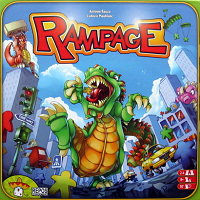
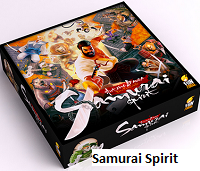
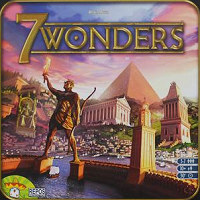
Now it’s time to cover one of the most prolific board game designers of the past five to ten years, Antoine Bauza. Can you name these Bauza hits in the order they were released?

Rampage01  GhostStories01  Samurai01

Tokaido01  Takenoko01  7Wonders01

GeeklyAnswers

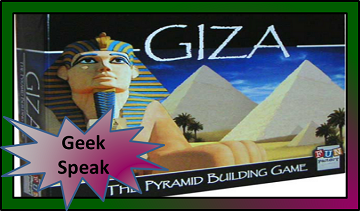
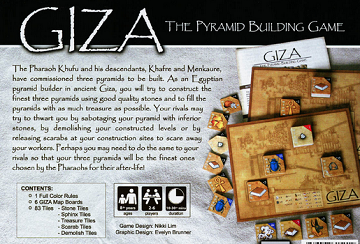
Giza: The Pyramid Building Game

Designer: Nikki Lum
Publisher: Fun Factory
Date Released: 2005

Number of Players: 2-6
Age Range: 8 and up
Setup Time: nominal
Play Time: 10-20 minutes

Game Mechanics:
Hand Management
Set Collection
Tile Placement

Game flow:
You’re an ancient Egyptian architect and tasked with constructing three fine pyramids. The fast, simple game of Giza builds fun for the whole family.

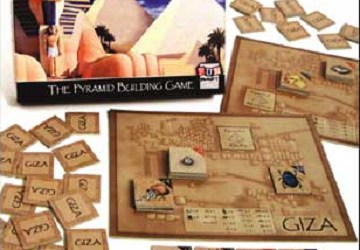
Giza03Each player gets a map board, and each of these map boards has an outline for three pyramids (the pyramids of Menkaure, Khafre, and Khufu) and an outline for the Great Sphinx. These outlines serve as the construction sites upon which players place pyramid, treasure, or sphinx tiles. Players take turns playing tiles from their hands until one player tops off all three of their pyramids. Each tile has its own point value (located in the top right hand corner of the tile), and the player with the highest score wins.

Giza02You get a hand of four tiles, and there are five types of tiles: stone, treasure, demolish, scarab, and sphinx. Stone tiles are used to construct pyramids. Some stone tiles have positive points, and others have negative points. Stone tile point values—and value in terms of physical area—range from 1-5 (positive and negative). Since you’re building a pyramid, you have to place lower value stone tiles on top of higher value stone tiles. As soon as someone has a one or a peak (positive or negative value) on all their three construction sites, the game ends. You can have a pyramid of one tile. Normally, you don’t want to have a short pyramid, but I have seen players win this way.

Giza04Treasure tiles act like the jelly between stones. You can only place a treasure tile on a stone tile of the same value. For example, one of your construction sites has a stone tile that’s a size two, so you can place an ankh (a treasure worth two points) on top of your size two stone and then still build the peak of your pyramid. Treasure tiles are a great way to negate negative value stone tiles as they can be placed on a positive or negative tile bearing the appropriate size.

Giza01Demolish tiles do their name sake. They destroy one placed tile (negative or positive) when played. Scarab tiles disrupt construction. You can put a scarab tile on top of any pyramid, sphinx or even another scarab tile. Players can’t play any stone, sphinx or treasure tiles on this construction site until the scarab tile is removed by skipping a turn.

Then, there are sphinx tiles which are only used to construct the sphinx. Completed sphinxes gives a player a whopping twenty points, but beware, the base of the sphinx gives a player negative points, so you may not want to build the sphinx feet until you have its body in your hand. And there’s only one sphinx head.

On your turn, you can play 1 tile or discard any number of tiles from your hand. Then, you draw up to four tiles at the end of your turn. Giza’s rules are simple, but like all fast, furious, and fun games, it’s deceptively simple.

Giza05Review:

If you get more than three players at the table, the claws come out. You also have to manage your hand like, wondering how long you should hold onto your sphinx pieces or a lower level treasure piece that you can’t place yet. The strategy is dialed down, but the replayability of Giza far outweighs any simplicity.

Verdict: Easy on the strategy and more interesting when you have more players, Giza delivers a quick game that’s fun to play.

Quiz Answers: Antoine Bauza

GhostStories02  7Wonders02  Takenoko02

Tokaido02  Rampage02  Samurai02

That’s a lot of games in a short period of time, and we could’ve had three or four games from the same year. Talk about productive. Let’s see how we did.

All 6 correct) You take New York by storm. Err you trample it to the ground.

4-5 correct) You almost grew bamboo as high as an elephants eye, but a panda gobbled your crop.

2-3 correct) You were two steps away from a cultural victory, but you’re stuck between Sparta and Carthage and got crushed like velvet.

0-1 correct) You had seven samurai defending the village when you needed seventy.

Sentinels of the Multiverse: Rook City

Designer: Christopher Badell, Paul Bender, and Adam Rebottaro
Publisher: Greater Than Games, LLC
Date Released: 2012

Number of Players: 2-5
Age Range: 13 and up
Setup Time: Less than 10 minutes
Play Time: 10-90 minutes

Game Mechanics:
Cooperative Play
Hand Management
Variable Player Powers

Game Flow:
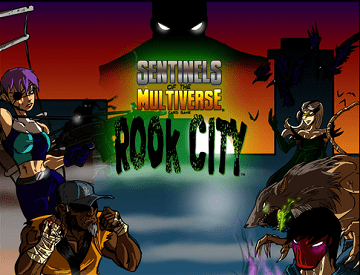
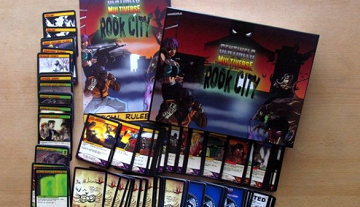
Sentinels of the Multiverse: Rook City is the first expansion for the popular comic book themed card game. I won’t go into detail with the base game flow. If you didn’t catch our Sentinels of the Multiverse: Base Game review, you can read it here. Let’s just say that Sentinels of the Multiverse is a cooperative card game, where players team up with each other to beat the stuffing out of a super villain—which has a dummy hand similar to Bridge. With that out of the way let’s tackle the new stuff in this expansion.

RookCity02


Review:

Rook City does its best to right some wrongs with Sentinels’ gameplay balance. The two super heroes introduced in this set have the flavor of two other heroes (in the base game) but add an extra wrinkle that both improves and hinders their effectiveness.

At first glance, Mister Fixer’s deck looks similar to Bunker’s. It has style cards instead of mode cards, and it also features equipment. But if you look closer, Mister Fixer’s deck focuses on boosting his damage or redirecting damage dealt to him, while Bunker’s deck isn’t as focused—it can do just about anything. This focus defines Mister Fixer’s role but also makes him less of a panacea than most of the heroes introduced in the base game.

RookCity03Expatriette—the other new hero in this set—looks like a cross between The Wraith and Ra. Like The Wraith she has equipment cards, but her cards focus on guns and ammo which leads to damage increases and damage type conversion, and damage manipulation sounds more like Ra. Despite boosted damage, neither one of these new heroes measures up to the studs from the base game. And that’s a good thing.

Conversely, Rook City introduces four spiffed up villains: Plague Rat, Spite, The Chairman/The Operative, and The Matriarch. While all four can trip up our intrepid heroes, The Matriarch and The Chairman/The Operative stand above the rest. Ladies first, so let’s start with The Matriarch.

RookCity04She doesn’t have a special win condition like Baron Blood or Grand Warlord Voss, but she doesn’t need one. It’s fitting that her nemesis is Tachyon because she runs through her deck her hero counterpart. You’ll find it difficult to stop her once she gets her fowl on the board—and she gets her fowl on the board quickly. Imagine fighting twenty or so weenie villains before you can touch The Matriarch—who has a lot of HP by the way—and you might have an understanding of how frustrating she can be. Several fans have named The Matriarch their least favorite villain and have even said that she’s no fun to play against. But she’s not this set’s only tough villain.

RookCity05The Chairman is almost as infuriating with his thugs as The Matriarch is with her fowl. And to make matters worse, The Chairman is immune to damage until you take out so many of his underbosses, and heroes can’t win the game unless they take out The Operative, who runs interference for The Chairman. Yikes! There’s a reason that when Greater Than Games measured the toughness of their villains, The Chairman and The Matriarch were tied for the toughest. Just like the heroes in this set, Sentinels needed these villains so games would become less of a picnic.

RookCity01And speaking of less than a picnic, the two new environments in Rook City favor the villains more so than any one environment in the base game. Pike Industrial Complex can act fairly between the heroes and villains, but the set’s namesake Rook City environment feels like a cancerous Gotham City. Crooks and crooked cops don’t usually help heroes.

Verdict: A great addition for the Sentinels of the Multiverse. Rook City does a great job of addressing gameplay balance in the series, but it may have done too good of a job.