Geekly TV: December 01, 2014

Constantine

Constantine

Kyle’s Review

This episode had a lot of good things going for it: we get more of Constantine as a character, the acting was better than usual, Constantine has to do some detective work, and the solution he comes up with makes some sense.

We get a reprieve from Zed this week, but let’s talk about the acting by actors who were in this week’s episode. The boy who gets possessed by a malevolent spirit is slightly more subtle than Zed’s fishhook brow scheming face, but it works. He starts the episode as a docile, let a tick suck its fill because he doesn’t want to hurt it boy, and then turns into the antichrist. But considering he only has thirty minutes to transform, the boy does morph into the pint-sized serial killer as subtly as he can. We do see him change in a few steps which make his transformation pop, and after a shaky opening sequence, the boy’s parents are believable.

Having to deal with a troubled boy reminds Constantine of his own childhood. Of course we’re fed most of this information by Manny the Angel of Exposition, but Manny actually works in this case. He colors Constantine as a child lashing out. We can also empathize with Constantine because why wouldn’t God handle this problem himself, and you got to love the line, “You’re not special like Joan. You’re more of a desperation move.”

Constantine has to show off some detective moves too. I won’t spoil the ending, but it’s a refreshing twist—on possession in this case—that’s been lacking in every episode of Constantine to date. I will highlight the earthly detective work. The twenty or so killings occur over the last 35 years. The MO’s the same and they happen in a straight line. Why wouldn’t the Birmingham Police pick up on the pattern? Why does Constantine need a magical map to notice the killings are happening in a line (he had access to newspaper clippings)? Let the cops have the earthly detective work and leave the ethereal detective work to Constantine.

Verdict: An entertaining episode with a few flaws.
Grimm

Grimm

Kyle’s Review

This week’s episode of Grimm was mostly paint-by-the-numbers.

Nick got his powers back, which isn’t a surprise. It was never a question of if; it was a question of when he’d get them back. The Wesen of the week didn’t amount to much except they brought up a pre-Grimm case for Nick that he could never solve because he wasn’t a Grimm yet. Armed with the knowledge of a Grimm, the boys track down the killers, and in true melodramatic fashion, Nick becomes incapacitated when his friends need him the most. Just when all seems lost, he snaps to with his Grimm powers intact. Tada!

Everything else plays second fiddle to Nick getting back his powers, but this episode does an adequate job of reminding us of the other balls Grimm’s juggling: Adalind and the royals, Rosalee and Monroe getting shunned by Wesen-kind, Renard and his mother’s machinations, Trubel and the bizarre sect of Wesen, and Josh fleeing to Nick for help.

We’ll have to see which—if any—story threads gain clarity. There’s a lot of smoke and mirrors this season.

Verdict: An enjoyable—yet predictable—episode that might allow the show to move forward.
Bobs

Bob’s Burgers

Kyle’s Review

Why would Bob ever sign up for a burger contest? Sure, he’s a gourmet burger cook, but contests just aren’t his style. It turns out that he signed up while he was polishing off a glass of wine. Something he claims he’ll never do again. Let’s hope he does.

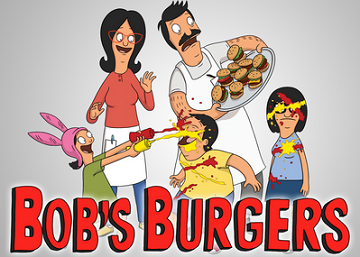
What ensues is an unorthodox father and son bonding tale. Bob entrusts his burger’s most important ingredient to Gene—his son whose name Bob’s other two kids use as a verb for spacing out when someone needs you the most—and of course, Gene doesn’t pack the all-important black garlic. The show complicates matters two to three shades of crazy, and eventually, Gene redeems himself, and Bob pulls off his best Rocky. The story was solid, but the strength of Bob’s Burgers is the relationship between the Belcher family members, and this episode showcased that strength.

Unlike other cartoon sitcoms like The Simpsons and Family Guy, Bob’s Burgers’ family dynamic rings true. The characters are more functional as human beings (there’s no Homer or Peter) and they have surprising depth. You can also tell that every member of this family cares about each other in their own way and that should make you smile as much as the jokes.

Verdict: Another solid episode that shows why the Belcher family might be the best one on TV.
Quiz Answers: Strange Games 1

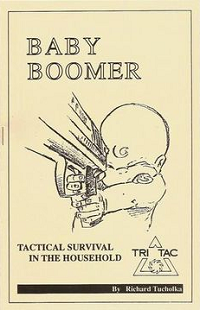
Baby Boomer

BabyBoomer
Your newborn just nabbed an automatic weapon and gunned down the family dog. Now he’s aiming at you.

Antler Island

AntlerIsland
You’re a stag and you’re trying to get with a doe.

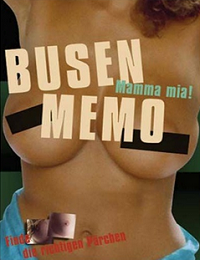
Busen Memo

BusenMemo
The game of Memory: women’s breasts edition.

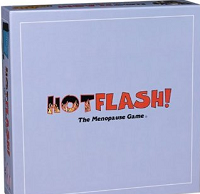
HotFlashh! The Menopause Game

HotFlash
All the fun of Menopause in a tabletop game.

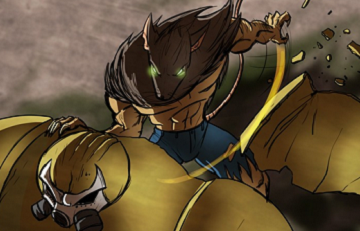
Spotlight: Plague Rat

PlagueRat01First Appearance: Sentinels of the Multiverse: Rook City
Who he is: The rat man of Rook City’s sewers.
Initial Side: Plaguebearer
Innate Power (Initial Side): Whenever a card named infection is destroyed, Plague Rat deals each hero target (H) (H = number of heroes) toxic damage. At the end of the villain turn, Plague Rat deals each hero target 1 irreducible melee damage.
Advanced Power (Initial Side): Increase damage dealt by Plague Rat and by infected heroes by 1.
Villain Cards that Begin Game in Play: Plague Locus (13 HP): Increase damage dealt by Plague Rat and all infected heroes by 1. At the end of the villain turn, Plague Rat regains X HP, where X = the number of infected heroes.

 
How he flips to his other side: All active heroes are infected.
Nemesis: Chrono-Ranger
Second Side: Filthy Vermin

PlagueRat02Innate Power (Second Side): At the start of the villain turn, Plague Rat deals each infected hero 2 toxic damage. He also gives infected heroes a couple of powers as well. At the end of the villain turn, Plague Rat deals each hero target 1 irreducible melee damage.
Advanced Power (Second Side): At the start of the villain turn, Plague Rat regains (H) times 2 HP.

PlagueRat03Most Fiendish Ongoing Card: Infection: When this card is played, if all active heroes are infected, discard this card and play the top card of the villain deck. Play this card next to an active hero who is not infected. That hero is infected. At the start of that hero’s turn, they deal themselves 1 irreducible toxic damage.

PlagueRat04Most Fiendish One-Shot Card: Ravage: Plague Rat deals each hero target other than the hero target with the highest HP 2 toxic damage. Search the villain deck for as many copies of the card Infection as hero targets damaged this way. Play them. Shuffle the villain deck.
Most Fiendish Villain Target Card: Plague Locus (13 HP): Increase damage dealt by Plague Rat and all infected heroes by 1. At the end of the villain turn, Plague Rat regains X HP, where X = the number of infected heroes.

PlagueRat05How to Defeat Plague Rat: You either have to eliminate his ongoing cards (Tempest, Tachyon, and Visionary to name a few heroes who can do that), or you need to ramp up the damage and wail on him. A combination of The Mighty Ra, Tempest, Legacy, and Fanatic works well. Ra’s Embrace the Flame (deal damage equal to the number of ongoing villain cards are in play) turns unstoppable with the sheer number of ongoing cards in Plague Rat’s deck.

Spotlight: Rook City

RookCity01First Appearance: Sentinels of the Multiverse: Rook City
Where it is: The Gotham City or the Sin City of the Multiverse.
Primary Damage Type: Melee
Secondary Damage Type: Projectile and Toxic


Deck Concept: Pick on the heroes with an endless supply of buffs for the villains and debuffs for the heroes. Throw in a few global effects that hurt the heroes only, but let one global card Toxic Sludge affect all targets. Give the heroes some control over the villain and environment decks and serve with a healthy dose of kick the heroes’ butt.
Biggest Global Effect: Toxic Sludge: At the end of the environment turn, this card deals each target with at least 4 HP 2 toxic damage, then deals each target with at least 10 HP 3 toxic damage. At the start of the environment turn, each player may discard 1 card to destroy 1 environment card.
Worst Card (for the Heroes): Scum and Villany: At the end of the environment turn, play the top card of the villain deck. At the start of the environment turn, the villain character card deals each hero target (H) (H = number of heroes) minus 1 melee damage and destroys this card.

RookCity02Oddest Way to Win (Achievement Time): Falling Statuary: When this card enters play, this card deals the target with the second lowest HP 3 irreducible projectile damage. At the end of the environment turn, destroy this card.
How to Escape: Toxic Sludge hurts everyone, while Twisting Back Alleys and Blighted Streets stall the heroes. Grin and bear the latter two by playing extra villain cards or not dealing damage with a hero (sounds like a job for Argent Adept or Visionary), and let Toxic Sludge run rampant for a turn or two so long as you have healing (again Argent Adept). Keep Tony Taurus and Dr. Tremata in the game as long as they make sense for you to do so (this means accepting more damage from the villain), but make sure you take out the Ambitious Racketeer as soon as you can.

Spotlight: Pike Industrial Complex

Pike01First Appearance: Sentinels of the Multiverse: Rook City
Where it is: A chemical plant on the seedy side of Rook City—think Axis Chemical from 1992’s Batman.
Primary Damage Type: Toxic
Secondary Damage Type: Cold, Energy, and Melee
Deck Concept: Increase damage with some cards, reduce damage done to environment targets with others, and plenty of global effects that harm the heroes and the villains. Who wants to be their own night light?


Biggest Global Effect: Chemical Explosion: Destroy all vat cards. Deal all targets X toxic damage, where X = the number of cards destroyed by this card plus 3. At the end of the environment turn, destroy this card.
Worst Card (for the Heroes): Supercooled Trisolvent Vat: Whenever a player plays a hero card, deal their hero 1 cold damage. At the end of the environment turn, deal each target 1 cold damage, 1 toxic damage, and 1 energy damage.

Pike02Oddest Way to Win (Achievement Time): Escaped Lab Rat (3 HP): At the end of the environment turn, this card deals the 2 non-environment targets with the lowest HP 1 melee damage each.
Bonus Odd Way to Win: Supercooled Trisolvent Vat: Whenever a player plays a hero card, deal their hero 1 cold damage. At the end of the environment turn, deal each target 1 cold damage, 1 toxic damage, and 1 energy damage.
Bonus, Bonus Odd Way to Win: Chemical Explosion: Destroy all vat cards. Deal all targets X toxic damage, where X = the number of cards destroyed by this card plus 3. At the end of the environment turn, destroy this card.
How to Escape: Shielding helps. Healing helps, too. You don’t want the Escaped Lab Rats to gang up on you, so take them out quickly. And watch out for Experimental Mutagen. The bad thing is that rats reenter the battlefield, and they’re buffed. The good thing is that you know what you’ll be doing the next turn.

Geekly TV: November 28, 2014

TheFlash

The Flash

Jim’s Review

This was an interesting, if somewhat formulaic episode. The de-powered superhero is something we’ve all seen before, though it feels very early in Flash’s development to play that card. I suppose there’s some originality in that.

Seeing Clock King come back was a cool way to prepare the audience for the upcoming Arrow/Flash crossover. It’s a character I never expected to translate well to live action TV, but it’s well executed again here.

The split conflicts, Barry and the crew under attack at the lab, and Iris and company held hostage by Clock King represented a different structure. I definitely feel the Clock King element of the episode was more interesting as Barry’s conflict was handled in sort of a hokey way. Finding how his loss of power was an issue of mind over matter was pretty unsatisfying to me.

The bright spot on Barry’s side of the episode was Dr. Wells. I still wish they’d move his story forward more, but the character certainly seems to have been complicated in this episode.

Verdict: Another entertaining episode.

Kyle’s Take: Jim and I agree for the most part. I have to add that while I appreciate the split conflicts and the shake up to the usual order of a Flash episode, we aren’t left with a lot of time with either conflict. The episode felt rushed at times because they had to wrap up both conflicts in about twenty minutes, and one of the two story threads suffered as a result. Still, there’s a lot to like in this episode: Clock King and Dr. Wells in particular.

Timeline: Silver Age Comic Book Heroes

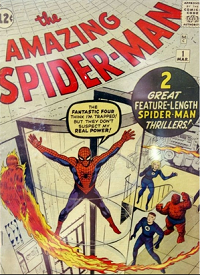
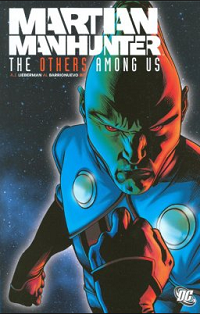
We covered the Golden Age of Comics heroes a couple of months ago. Let’s see how well we do with Silver Age comic book heroes. Name the following heroes in the order of when they first appeared.

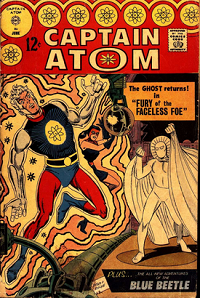
TheFlashQuiz01  TheHulkQuiz01  CaptainAtom01

Spider-manQuiz01  IronManQuiz01  MartianManhunter01

GeeklyAnswers

Quiz Answers: Silver Age Comic Book Heroes

MartianManhunter02  TheFlashQuiz02  CaptainAtom02

TheHulkQuiz02  Spider-manQuiz02  IronManQuiz02

The Silver Age of Comics may have been called the Marvel Age of Comics, but it took Marvel a while to get started. Let’s see how we did.

All 6 correct) You streaked through this quiz, but you’re late for work.

4-5 correct) Is that Gamma radiation? Or are you just happy to answer these quiz questions?

2-3 correct) Not bad, not good either. Maybe you should take in a science exhibit. Watch out for radioactive spiders.

0-1 correct) Your psychic warns you of traveling out of the country. If you do, bring plenty of iron.

Kittens in a Blender

Designer: Brian and Brent Knudson
Publisher: Closet Nerd Games
Date Released: 2011

Number of Players: 3-4 (best with four)
Age Range: 8 and up
Setup Time: minimal
Play Time: less than 20 minutes

Game Mechanics:
Hand Management
Rock-Paper-Scissors

Game flow:
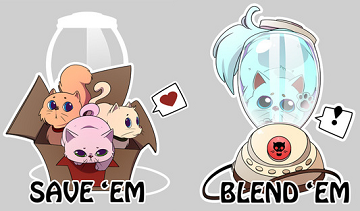
You and the other players at the table own a group of kittens—assigned to each player by color (red, green, blue, and yellow)—and we all know that kittens are curious by nature. Unfortunately, your kittens have wandered into a dangerous kitchen with a blender so large it can blend kitties into Frappucinos. You have to save your kittens by getting them into a super-sized box, while dooming your opponents kittens by placing them in the blender and hitting frappe. Sound twisted? It is, but Kittens in a Blender is good, clean, grotesque fun for the whole family.

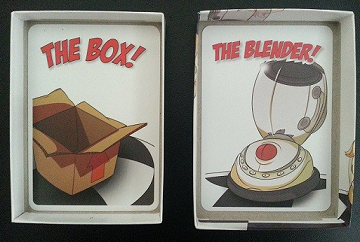
Kittens04You start the game by placing the game box top on the table, open-side up and placing the oversized Blender card in it face up. That’s the Blender. Then, you place the oversized Box card face up in the game box’s base. That’s the Box. Leave a little space between the Blender and the Box, and that space is the Counter. The Blender is considered one space from the Counter, and the Counter is one space from the Box, so the Box is two spaces away from the Blender. (This will make more sense when we get to the different kinds of cards.)

Kittens05You play two cards on your turn and then draw back up to a 6 card hand. Players can play kitten cards on the Counter, in the Blender, or in the Box. All other cards are played face up in front of the player, so everyone knows which cards have been played.

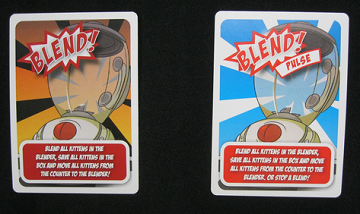
The two most common cards—other than the adorable, ill-fated kittens—are Kitties on the Move and Blend cards. Kitties on the Move moves any number of kittens a total number of spaces equal to what’s printed on the card (1, 2, or 3). Blend cards blend every kitten in the Blender, saves the kittens in the Box, and moves the kittens on the Counter to the Blender. There are some Blend: Pulse cards that allow players to counter another Blend card that’s been played on a turn, so you can save your kitties.

Kittens06Mayhem ensues when you play cards that send all the kittens to the Blender, to the Box, or to the Counter. There’s even a card that allows you to select one players kittens and put just their kittens in the blender. Take that, you sorry so-and-so. And you can throw a complete wrench in the works by playing Dog’s in the Kitchen, which makes each player hand their cards to the player on their left or right.

Play ends when all 16 Blend cards have been played. Saved kittens are worth 2 points, and blended kittens lose you 2 points. The highest score wins.

Kittens02Review:

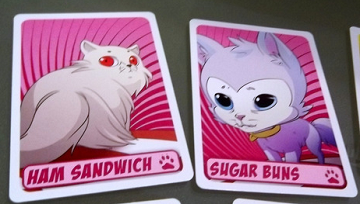
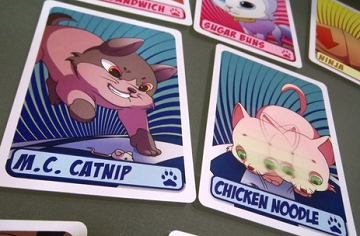
Did I mention that most of these kittens are gut-wrenching cute, and they have awesome names? No. Well, they are and they do, and that makes sentencing these little guys to death all the more reprehensible. You’ll find yourself having to make tough decisions with your own kittens like who do I save, Romeo or Chopsticks? Personally, I’d pick Chopsticks because Romeo’s supposed to die.

Kittens07The gameplay is fast and furious. You won’t find much in the way of strategy as most of the game revolves around how lucky you and your kittens are. Still, Kittens in a Blender is a great way to pass the time. Just make sure you don’t put your real life kittens in a blender and give your kitty at home a hug and apologize for playing such a despicable game.

Kittens03P.S. That’s not my cat. Someone else took the game too far.

Verdict: An easy, quick, cute and raunchy card game that’s fun for a wide range of gamers. If you’re looking for a strategy heavy game or a game with more substance, you’ll have to go somewhere else, but if you’re looking for some kooky fun, Kittens in a Blender might hit the spot.

Settlers of Catan

Designer: Klaus Teuber
Publisher: Mayfair Games
Date Released: 1995

Number of Players: 3-4
Age Range: 10 and up
Setup Time: between 15-20 minutes
Play Time: up to 90 minutes

Game Mechanics:
Dice Rolling
Hand Management
Modular Board
Route/Network Building
Trading

Game flow:
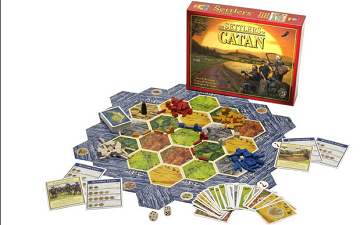
The game that started the whole German/designer game craze that has revitalized the tabletop industry, Settlers of Catan has players pioneer a series of settlements and a network of resources and roads, building up to a civilization. It’s hard to believe, but the modular board game mechanic caught fire with this game.

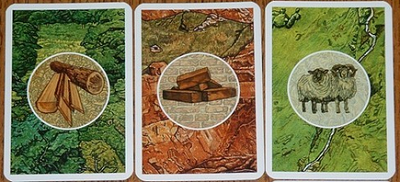
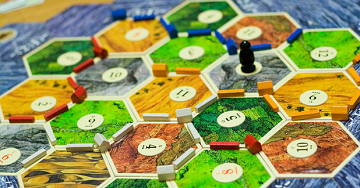
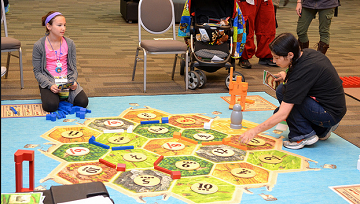
Catan02Unless you play the initial set up (developed to be well-balanced and recommended for beginning players), every game board of Settlers of Catan looks different. The simple yet elegant design has players set up the game by randomly placing land tiles that have different land types—these land types grant different types of resources you need to build things—and number chips that show which number you have to roll on two six-sided dice in order to obtain the resource associated with the land tiles. Players build by spending resources that are represented by resource cards. Mountains provide ore, plains yield grain, farmland gives wool, forests have wood, and hills provide brick.

Catan07Each player starts the game with two settlements and two roads. Since land tiles are hexagonal, settlements are placed on one of the tile’s corners, and the roads go on the border between two tiles. Settlements have to have at least one corner between them, so you have to use your head when placing your settlements. You’ll want to get a combination of resources you can use to drive you to victory, while blocking your opponents from getting the resources they need.

Catan08On each player’s turn he or she rolls the dice. The number on the dice determines which land tiles produce resources that turn. (You can produce resources on other players’ turns.) There’s also a robber token, which starts on the desert tile, and if a player rolls a 7, the robber must be moved to another land tile, and anyone—including the person rolling the die—with more than 7 resource cards in their hand must discard half of their resource cards. Once the robber is moved, any tile he’s moved to ceases to produce resources, and the player who moved the robber gets to steal one resource at random from a player with a settlement on the tile in which the robber was moved.

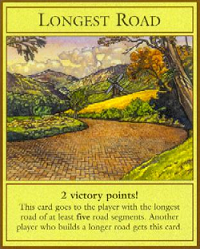
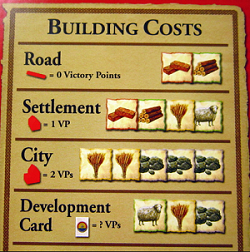
Catan05You earn victory points by building settlements, cities, development cards, owning the largest army, and even the longest continuous road. The first person to 10 victory points wins. You can upgrade your settlements to cities. A settlement only gives you one resource, while a city gives you two resources. Players can draw development cards by turning in one wool, one ore, and one grain to the bank, and there are two ways to earn victory points off of development cards: some cards have a point value (you simply play them for quick points), and knight cards. If you draw into a knight card, you can use the card to move the robber before you roll the dice on your turn. You keep the used knight cards in a stack by you, and if you have three or more knight cards, you earn the largest army, provided no one else has the largest army.

Catan01Then, there’s the trading aspect. You can trade resources with any player on your turn, and only with the player whose turn it is on their turn. You can also trade with the bank, but you have to have 4 or one kind of resource to the get the one you want. This trade ratio to the bank makes trade routes important. If you have a settlement (or city) on a trade route tile, you own the trade route, and there are plenty of routes to be had: there’s a 2:1 ratio for trading each individual resource, and there are 3:1 trade routes for any resource. You’ll find that when you’re close to winning the game, people won’t want to trade with you, so these trade routes can seal a victory.

Catan04Review:

But it’s trading with players that give Settlers its charm. You’ll find plenty of awkward moments when someone starts shouting, “Wood. I need wood. I have sheep, but I need wood.” The Big Bang Theory makes good use out of this common occurrence when Sheldon Cooper asks for the same trade. His friends laugh and tell him that his girlfriend might be able to help him out.

Catan03And you have to love the strategic aspects of Settlers. Everyone has their own opinions on what works best. Wood and Clay are used to build roads, so if you load up on those two resources, you can build the longest route—securing two victory points—and run the tables on your opponent. I prefer to focus on grain. I’ll pick a plain tile with a good number on it—keep in mind that 6s and 8s are rolled more often than 2s and 12s—and even though I may have a slower start to my game, grain is used to build everything except roads. But I’ve even seen someone win by dominating wool—the least useful resource on paper, since it doesn’t have nearly as many uses as the others. One of my military buddies built several cities on wool tiles and owned the 2:1 wool route to the bank. He loaded up on wool and rode the wool train to victory.

Catan06Despite its age—Settlers turns twenty in 2015—Settlers of Catan continues to delight tabletop gamers. In fact, 2013 saw the fourth large expansion of the game, Catan: Explorers & Pirates.

Verdict: Unlike some evergreen tabletop games Settlers of Catan ages well. The well-balanced combination of a variable board, trading, and a focus on strategic resources make it relevant today as it was twenty years ago.