

Happy Wednesday, Geekly Gang! Today is the rare fifth Wednesday of a month, so our writers will be sharing personal updates over the past few months. I’ll kick things off for this month’s Personal Updates.

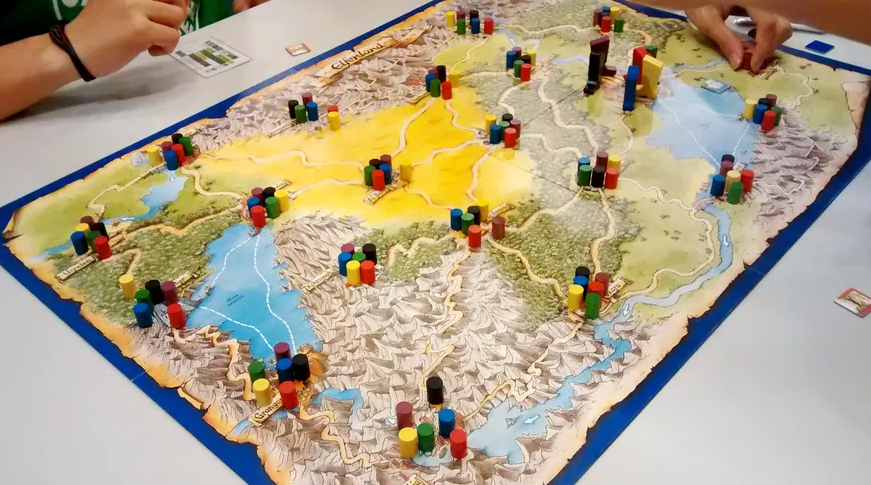
I’ve been sick (with the crud) over the past few weeks, but before getting sick, I was featured in a board game design panel at Nuke-Con early this month. While the panel went well, I’d like to expand on it for next year. Be on the look out for Nuke-Con 2026. I also playtested Rustbucket Riots and Whirligig Pets several times during this same convention.

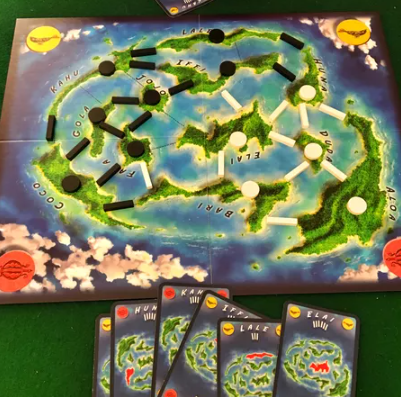
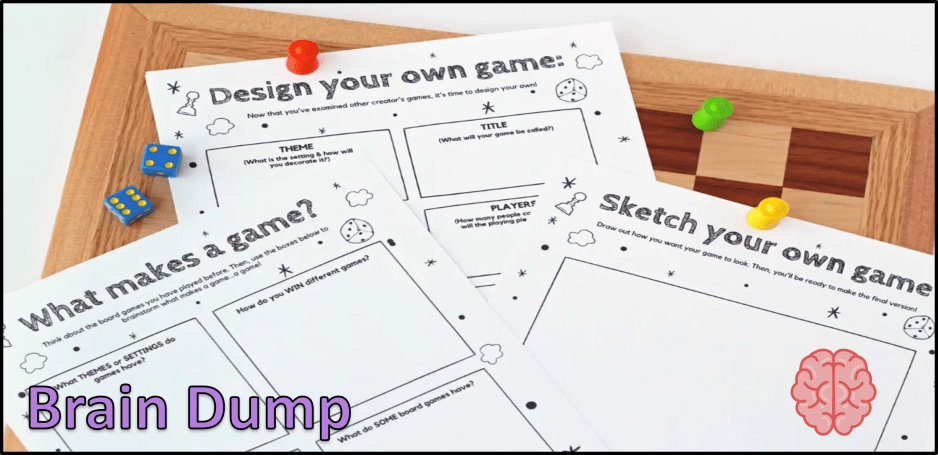
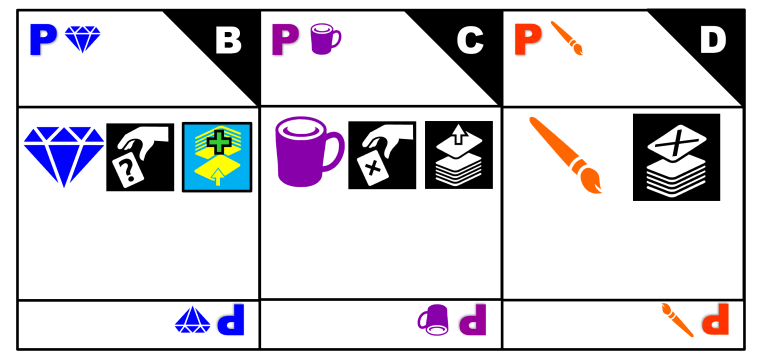
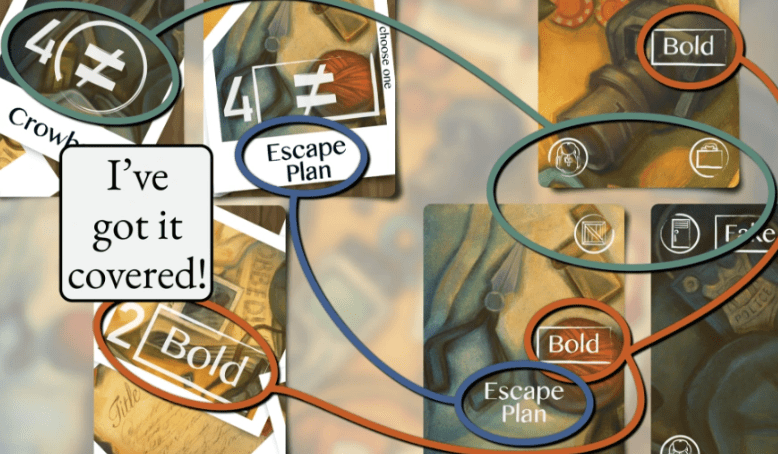
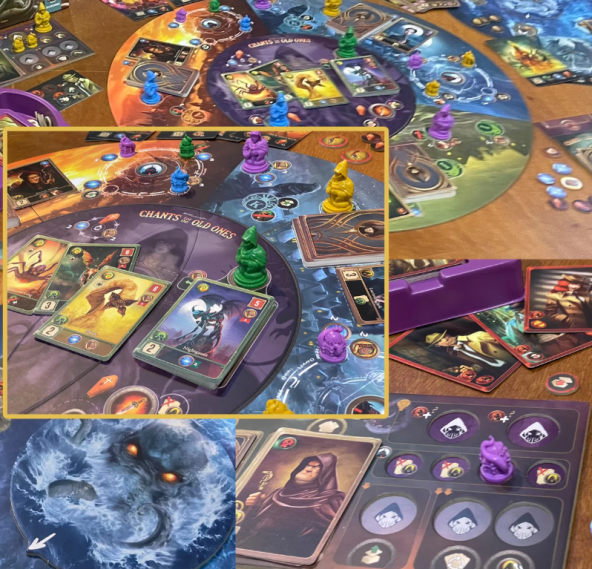
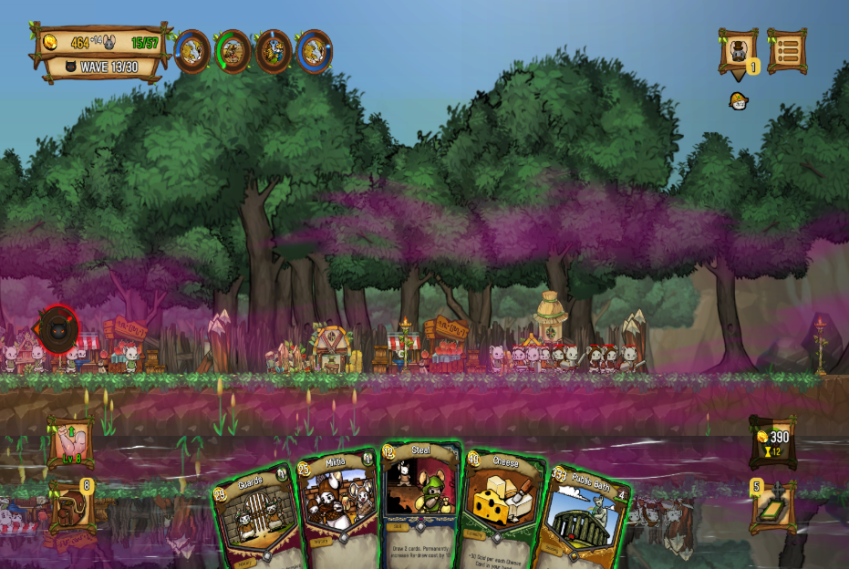
Whirligig Pets (formerly Whistlestop Pets–I need to change the above image) is ready for submission. I still need to find a better way to ramp up the tension in Rustbucket Riots. I think I found a way to tweak the enemy/time cards, so players experience a steadier upward ramp. Before this recent change, evening cards were brutal. I like the new balance, but higher player counts are where balance can get tricky. We’ll see if this new balance sticks.
I won’t go into too much detail with Rustbucket Riots. I already did some of that with this month’s Game Design Brain Dump. If you’re interested, you can see Rustbucket Riots’ origin.
One last important note I discovered during the con: I need to figure out the best way to teach this game. Rustbucket Riots has a lot of odd game mechanisms that many players find unfamiliar, and the spatial puzzle can be overwhelming. I know many of you haven’t played, but here’s a quick rundown on how a round plays:
1) Enemy Turn (Draw Time Cards Equal to Number of Players)
2) Players play one card from their hand
3) Roll and Lock Dice
4) Place Dice (on gears)
5) Spend Dice (by removing dice from gears)
I’ll begin with this and then get into the weeds as the game progresses. Maybe this will help. I hope to see some of you at the gaming table soon.

Similar to board game design, I posted a writing brain dump earlier this month. I’ll try not to recap too much of what I posted there. I’m still viewing my work in progress through a macro lens. Characters have merged. I combined some characters who could be considered fridged (the character’s sole purpose was to motivate the protagonist) with another character with a larger role. I’m finding character arcs for each major character, and I’ve found I don’t have as many characters as I did prior. This may be an easier editing pass than I first thought. Famous last words.

Novel in November (formerly National Novel Writing Month or NaNoWriMo) begins in a handful of days, and I’ll be attending as many Omaha Writers’ League (OWL) events as I can. Above is a calendar of OWL events. All locations are in Omaha. Events are subject to change. (I believe November 11th is left blank in observance of Veterans’ Day.) If you’re in the local area, I look forward to seeing you at one of these events. I’ll be at many of these events, trying to make sense of my nonsense. There’s a reason I call my updates writing brain dumps.
That’s all I have for this month. Let’s see what Skye’s been doing.

I’ve done some interesting things over the past quarter. I became a member of my local library’s board-game community, attended Metropolitan Community College’s annual Inter-Tribal Powwow, and protested the protection of the United States’ founding ideals of “liberty and justice for all,” among other things.
My greatest achievement–in my opinion–in the past quarter was scheduling a date with my surgeon to undergo the final part of my medical transition. I’m scheduled for November of next year (2026), and words can’t describe my immense satisfaction. Advanced warning to y’all: I suspect I’ll be in recovery during that time next year. I’ll do my best to post, but I might be hopped-up on pain meds.
Overall, I would consider the past quarter (Aug-Oct) a productive one. Despite personal obligations, I’ve still enjoyed posting and offering my opinions on JKGeekly with the rest of the Geekly writers. Posting my thoughts online is one of my greatest joys, and I thank everyone for welcoming me into the Geekly Gang.
Here’s to another three months of Geek with y’all. Happy Halloween!

Hi, Geekly Gang! It’s been a while since I gave an update. I’ve recently started a new full-time job, so I’ve been adjusting to my new schedule. I’ve also been sick with the crud this past week. It’s a good thing I’m writing this update, because my voice is shot. Blegh!
As for writing, I’ve tried to get a couple of pieces published, but no luck yet. They’re a couple of short flash fiction pieces. Maybe I’ll share them here someday. I’m going to keep submitting until I get some bites. Fingers crossed! I’ve also been enjoying writing monthly plushie reviews for you, Geekly Gang. If you have a favorite plushie, please let me know. I’m always down for new plushie recs.
Hey, hey! Kyra Kyle here again. Those are our writers’ updates for the past few months. Feel free to share what you’ve been up to over the past month or three, Geekly Gang. Thank you for reading, and wherever you are, I hope you’re having a great day.


Happy Black Cat Day, Geekly Gang! That’s right. Today is Black Cat Day. I didn’t know a day like this exists. Hey, hey! Kyra Kyle here. We’re celebrating Black Cat Day by listing five famous (and popular) black cats in media. Oh, it’s about to get spooky up in here.

We’ll start this list with the titular feline in Edgar Allan Poe’s “The Black Cat.” Often read as the companion piece to “The Tell-Tale Heart,” “The Black Cat’s” point of view character gets spooked by Pluto, walling him beside his deceased wife. Poe may have had some unresolved issues.
Originally published in 1845, “The Black Cat,” like many of Poe’s works, has stood the test of time. Loose adaptations have cropped up over time. More recently, the Black Cat returned in Netflix’s Fall of the House of Usher, and Wednesday (another Netflix offering) makes more than one reference to this short story. Not bad for a black cat with only one eye.

Many 90s kids know Salem Saberhagen from Sabrina: The Teenage Witch. Salem is a 500-year-old witch serving a 100-year sentence for attempting to take over the world. Salem’s old self gives off mad supervillain vibes. Getting transformed into a powerless American shorthair robbed him of a modicum of his sassiness.
Salem serves as a mentor for Sabrina as she navigates her life as a teenage witch. Sympathetic and often self-serving, fans of Sabrina: The Teenage Witch know that Salem’s the real star. Yas, Queen!

Luna (from Sailor Moon) stands out from many of the other black cats on this list. The crescent moon on her forehead makes her visually stand out, but her serious nature runs counter to many other black cats in anime, who are usually sarcastic or silly or both. Luna assembles the Sailor Senshi on Earth. She’s Usagi’s mentor, and her serious nature plays well against Usagi’s childish nature. Someone needs to be the grown-up. Who cares if the grown-up is a cat?

Thackery Binx was a 17th-century boy who was transformed into an immortal cat by the evil (but fabulous) Sanderson sisters. Binx spends eternity guarding the witches’ house, ensuring no one lights the black flame candle. Fast-forward to modern-day when Binx befriends Max, Dani, and Allison. The three kids light the candle. This alerts the sisters, so Binx does what he can to help his friends defeat the witches. In the end, Binx’s soul leaves the cat’s body and reunites with his sister. This is such a great moment. Can someone pass the tissues?

This cat’s story isn’t as bittersweet as Binx’s. I promise. I love the scene where Jiji finds a black cat mug, points to it, and says, “Hey, Kiki, it’s me!” Jiji is by far the cutest black cat on this list. Add the fact that he’s voiced by the late, great Phil Hartman, and you have a character who can’t be beat. Kiki’s Delivery Service is a fantastic Studio Ghibli film. The Jiji character highlights what makes Phil Hartman great as a voice actor. Jiji stole the show with his sarcastic wit and endearing nature, quickly becoming one of the film’s most beloved characters.
At the end of the film, Jiji stops talking, which remains a mystery for fans. According to Hayao Miyazaki, the film’s director, the young witch and her pet lose their ability to communicate because Kiki grows up and doesn’t need her “other self” to rely on anymore. Okay. This story is bittersweet. I did it again. I’m not crying. You’re crying.
That’s our list of famous black cats in media. Thank you for reading, and wherever you are, I hope you’re having a great day.
Happy Sunday, Geekly Gang! Kyra Kyle here with another week of Geek News. This past week confirmed a months-long rumor: Warner Bros. is for sale.

Bugs Bunny looks enthused with being on the market. We’ll discuss Warner Bros. posting a for-sale sign and this week’s new releases for board games and video games during this week’s Geek News.

No. Yakko and Wakko aren’t for sale. Warner Bros., as a property, is for sale. After months of speculation that Paramount would purchase all of Warner Bros., Warner Bros. removes all doubt by announcing it intends to sell, but the entertainment giant states it wants as much money as possible. If that means a single party purchases Warner Bros., great, but if Warner Bros. can accrue more money by slicing its properties into smaller pieces, fantastic.
My guess–and this is just a guess–is Warner Bros. will choose to split up its properties. Unless one entity blows away Warner Bros. with an offer for everything, the studio will most likely sell to numerous buyers. Of course, Paramount has expressed interest. The rumors appear to have been true, and Warner Bros. rejected Paramount’s first offer. Apple TV has also expressed interest. And I wouldn’t be surprised if Disney wanted to acquire a property or two. Looney Tunes could be added to classic Disney characters. Marvel and DC Comics could have crossover movies. I could continue. The possibilities are endless; only time will tell what will become of Warner Bros.’s properties.

Geekly tends to cover superhero movies, so we’ll focus on what a Warner Bros. sale would mean for the newly minted DCU. While DCU Chairmen James Gunn and Peter Safran could lose their jobs after DC Studios is sold, I doubt this will actually happen. Love Gunn and Safran’s DCU or hate it, I don’t expect new leadership to pull the plug on a profitable franchise this soon after it launches. And yet, profits may regulate the DCU’s future.
Producing DCU films and shows costs a lot of money. At the moment, Gunn and Safran intend to accelerate the DCU’s slate of projects. Lanterns, Supergirl: Woman of Tomorrow, and Clayface are slated for a 2026 release. We could see another season of Harley Quinn and Creature Commandos next year, too. And the DCU has plenty more scheduled for the not-so-distant future. Wonder Woman: War of the Gods, The Brave and the Bold, The Batman 2, Booster Gold, and Waller have all been rumored or announced for a 2027 release. New ownership may slow down the frequency of upcoming DCU releases.

I don’t believe anything will change with the DCU’s release schedule until after a sale takes place. So, the DCU’s 2026 release schedule should remain mostly untouched. Who knows? Depending on DC Studios’ buyer, nothing may change. Who would you like to purchase DC Studios?
While I wouldn’t mind a single Marvel-DC Comics crossover movie (or even a trilogy of them) or a series, I prefer these two worlds to remain separate. Apple could use the content more than Paramount, but it’d be interesting to see Star Wars and Marvel on one platform, while Star Trek and the DCU were on the other. Share your thoughts in the comments.

Blending tactical card-based combat, deep character customization, and endless loot, Threshold immerses its players in a massive, open, living world that responds to their choices. While I have yet to play Threshold, player turns appear easy to understand. Each player’s round plays out with the same rhythm: 1) Draw 5 cards from your deck, 2) Spend cards to perform actions, 3) Enemies act, and 4) Advance the day. I like the Threshold’s streamlined design.

As of the writing of this post, Threshold has yet to launch, so I can only speculate on its gameplay. It appears as if players may mismatch the cards in their deck, creating a unique character. If that’s the case, count me in. Combat seems quick and tactical. I like the idea of Threshold’s world adapting to my choices, but I hope that extends beyond combat. Threshold’s description suggests that players will travel from region to region, where dynamic events occur. Could this be a great blend of MMOs and action RPGs?

I’ve been looking for a good RPG in board game form. Threshold piques my interest. If you’re interested in Threshold, check out its GameFound page.

After meeting an untimely end in a saloon poker game turned deadly, you awake in purgatory. With new powers and a set of poker cards forged from your soul, you must play your way through the three gates of purgatory and ride into the afterlife. Drawing Dead has a killer theme. Pun intended. I love the Solo Game of the Month company. I don’t know how they’re able to produce stellar solo games most months (I’ve seen them skip one or two months here and there). I’ve been playing a ton of Balatro recently, so Drawing Dead is right up my alley.

Drawing Dead’s player deck is a fully functional poker deck. I am down with the four-colored suits and may pick up a few copies of Drawing Dead to play standard card games. Just ignore the special effects printed in the middle of each card. While we don’t yet know the pledge values for Drawing Dead, Solo Game of the Month tends to sell their games for around $30. If you’re interested in Drawing Dead, check out its GameFound page.

Who wants to play a destruction derby? Joyride: Full Throttle is equal parts Formula D, Mario Kart, and Destruction Derby (this was a Mad Max-like video game back in the day). Comic book artist Ant Williams’ work gives Joyride: Full Throttle character. Joyride: Full Throttle oozes character from its pores. I can’t wait to drift around the beachfront boardwalk and abandoned mall. Each map has its own identity.

And each driver and vehicle has their own vibe, too. And you know I’ll be loading up on Thumpers, Wrenches, and Volleybombs, waiting for the perfect moment to drop them on my opponents.

Push your luck as you take corners at speed. Manipulate dice on your dashboard, balancing precision and speed. Smash into your rivals to knock them off course. I love how interactive Joyride: Full Throttle is. And publisher Rebellion Unplugged just announced full miniatures. I’m certain these will cost extra (as an upgrade) when Joyride: Full Throttle releases its pledge details later this week. We don’t yet know these pledge details, but if you’re interested in Joyride: Full Throttle, check out its GameFound page.

I may need a refreshing dip in a lake after that last entry. Fortunately, Cascadia: Alpine Lakes has you covered. Alpine Lakes is the standalone sequel to the wildly popular Cascadia. Take your tile-laying to new puzzly heights with Cascadia: Alpine Lakes.

Cascadia: Alpine Lakes is designed by Randy Flynn, creator of the original Cascadia. Alpine Lakes shakes up the original gameplay by adding double hex tiles. These tiles add to the strategic nature of the original, and the development team behind Alpine Lakes is the same award-winning team behind Calico, Verdant, Fit to Print, Nocturne, and Knitting Circle (Molly Johnson, Robert Melvin, Shawn Stankewich, and Dylan Mangini). And Beth Sobel returns as the artist.

Cascadia: Alpine Lakes builds off the original in interesting ways. You won’t need the base Cascadia game to play this version, but there is a pledge level that includes the original Cascadia. Pledges range from $39 to $129. If you haven’t yet played the modern classic Cascadia, Cascadia: Alpine Lakes may be a great place to start. If you’re interested in Cascadia: Alpine Lakes, check out its KickStarter page.

Garage Rock transports gamers back to the 1980s: big hair, cassette tapes, and BMX bikes ruled the neighborhood streets. Garage Rock is a medium-weight, worker-placement game where players step into the shoes of a teenage garage band. Fight for glory in the high-stakes “Battle of the Bands,” hosted by the infamous local pirate radio DJ, Johnny Law.

I love Garage Rock’s table presence. Check out that treehouse dice tower in the middle of the board. The stage (in the top right-hand corner) looks amazing. Garage Rock looks as if it uses a lot of table space, but that’s okay. Its toy factor and theme make up for what appears to be a large game. Who wants to rock out with me?

Compete against other players to perform at gigs. Grow your band’s popularity. And it looks as if Mariposa Games thought of everything for this game’s box insert, even a spot for the Jean Jacket expansion, should you choose to add it to your pledge. Garage Rock looks amazing. The bits are thematic like demo tapes, song tokens, talent ribbons, and 16 unique transparent acrylic instruments. Pledges range from $79 to $250. If you’re interested in Garage Rock, check out its KickStarter page.

Designed by conservationists, Kavango tells inspirational conservation success stories of southern Africa. In fact, 20% of Kavango’s profits are donated to African-based charities working to safeguard the region’s extraordinary wildlife. The Lodges Expansion marks Kavango’s first major expansion. I have yet to play Kavango, but Season has and swears by this game. Seriously, it’s on her Christmas list. She’s probably editing this post, and I expect a message suggesting we back Kavango: Lodges Expansion for “research.”

Kavango uses simultaneous turns, which I love, because it keeps gameplay fast. Kavango’s theme is an important one, and I also love that Mazaza Games commits to charity. It’s a good feeling knowing your pledge goes toward a worthy cause. Kavango’s pledges are also reasonable: $20 (for just the expansion if you already have the base game), $40 for all the extras without the base game, or $60 for everything, including the original Kavango. If you don’t have the base game, I’d go with the $60 pledge; you get a lot of game for the price point. If you’re interested in Kavango, check out its KickStarter page.

I already covered six board game releases in quick succession. This week saw a ton of new releases, because we’re ramping up for the holidays. I’m going to go through video games quickly as well. Like the board games, these won’t be the only video games that were released this past week. Consider this section video game new release highlights.
Ninja Gaiden 4 was released over a decade after Ninja Gaiden 3 (2012). According to multiple critics, Ninja Gaiden 4 is a triumphant return to the series and well worth the wait. Like other games in the series, Ninja Gaiden 4 features punishing gameplay. Ninja Gaiden was the video game that made players “Git Gud” before Dark Souls, and 4 continues that brutal legacy. Ninja Gaiden 4 is available on PC, PlayStation 5, and Xbox Series X/S.

Sticking with the theme of older video game titles receiving their first new entry in over a decade, Katamari returns for the first time in 14 years with Once Upon a Katamari. I’ve spent countless hours rolling that funky-shaped ball, trying to get as many objects to stick to the katamari as I can. Once Upon a Katamari has received plenty of positive reviews. So, it looks like we’re two for two with returning franchises this week. I can’t wait to pick up a copy of Once Upon a Katamari. It’s available on PC, Nintendo Switch, PlayStation 5, and Xbox Series X/S.

The streak doesn’t continue, it would seem. Vampire: The Masquerade – Bloodlines fans–like me–have waited 21 years for a proper sequel to the open-world, action role-playing indie. According to many critics, Vampire: The Masquerade – Bloodlines 2 stumbles to live up to the original. This doesn’t surprise me. Bloodlines 2 had a torturous development cycle. The lead game designer changed multiple times. The lead writer was canned over a year before the game’s release. But Bloodlines 2 has a silver lining. From what I’ve heard, the writing is stellar. Any outlet that gives Bloodlines 2 a higher grade will most likely mention how deep and well-written the story’s characters are, but the janky combat and occasionally woeful performance issues make Vampire: The Masquerade – Bloodlines 2 a game I may wait to pick up at a discounted price.

Plants Vs Zombies: Replanted compiles all the game’s various iterations over the past 16 years, but the final product has been leaving critics wanting. Plants Vs Zombies’ original gameplay stays mostly intact–for better and for worse. The original game was fair and balanced most of the time, but the game had some unwarranted difficulty spikes that Replanted does little to quell. Plants Vs Zombies: Replanted tries to update the graphics, but many of the upgrades don’t quite land. Plants Vs Zombies: Replanted’s ending music video may be the most egregious. Players watch the original video on a tube television (picture inside of a picture) with downgraded graphics, which diminishes the ending’s impact.
But Replanted’s best addition may be the Cloudy Day Mode, where gameplay cycles between day and night. I may have found my way of new way to play Plants Vs Zombies. Plants Vs Zombies is available on PC, PlayStation 4, PlayStation 5, Nintendo Switch, Nintendo Switch 2, Xbox One, and Xbox Series X/S.

Ever want to run your own dinosaur theme park? That’s the theme of Jurassic World Evolution 3. Yes. Jurassic World Evolution 3 is the third entry in this popular game series. Jurassic World Evolution 3 has received good reviews. I’m certain Season has played at least one game in this series. Let us know if you’d like to see a future review.

I knew little about Bounty Star before its release this past week. Bounty Star’s subtitle, The Morose Tale of Graveyard Clem, sums up the game’s story. Bounty Star begins with the worst day of Clementine McKinney’s life. She hopped into a mech, tried to save the people she loved, and lost everything. Clementine McKinney died that day. Graveyard Clem was born from the ashes. Graveyard Clem rebuilds her life in the wastes. Bounty Star bounces between mech combat and daily life on a farm, raising chickens and growing crops. Gamers will embody all aspects of the flawed Graveyard Clem. Bounty Star offers two disparate gameplay loops that I can’t wait to try. Equal parts mech combat game and farming sim? Sign me up.
That’s all we have for Geekly News this week. With the holidays around the corner, we may do more quick recaps in the coming weeks. Thank you for reading, and wherever you are, I hope you’re having a great day.
Organ Trail gives a zombie apocalypse twist to the classic Oregon Trail. Not to be confused with the 2023 film of the same name, Organ Trail was developed by Men Who Wear Many Hats in 2010. 2010! That makes this game a decade and a half old. Yikes! Organ Trail began as a web game before a 2012 Kickstarter campaign expanded its release to Steam and iOS. Organ Trail has gone on to sell over half a million copies.
Hey, hey, Geekly Gang! Kyra Kyle here. Today, we’re reviewing the 2013 Organ Trail: Director’s Cut. The developer claims that this version moves past the original’s pure parody of Oregon Trail to become a game in its own right. Trade in your Conestoga wagon for a station wagon. It’s time to see how Organ Trail rates against our criteria.

Organ Trail follows its inspiration’s lead (Oregon Trail) with its game mechanisms, but it differs enough to warrant a higher than average score. The Director’s Cut adds Choose Your Own Adventure aspects to the original’s release. Fighting off biker gangs and avoiding zombie deer stampedes are nice touches. But the bulk of the game (at least for me) was with scavenging. Honestly, I spent most of Oregon Trail hunting, so spending a lot of time scavenging (Organ Trail’s version of hunting) makes sense.

Despite being essentially the same mini-game, scavenging (in Organ Trail) feels far different from hunting (in Oregon Trail). First, the zombies are heading toward you. While you may find the occasional wild animal that will attack you (like a bear), animals like deer in (Oregon Trail) run away from you. Organ Trail even references the bear by having a bear be a boss fight, so there is a tip of the cap there. Second, killing zombies doesn’t give you any resources. Instead, you must pick up randomly generated items in the wilderness. While this makes thematic sense, I kind of miss the push and pull of do I use bullets to kill animals for food, trading one resource for another. But ultimately, the zombies are fun.

I do my best to dodge zombies, which is easy to do if you don’t face a horde. Zombies in the scavenging mini-game will follow your movements, so you can trap them behind fences, walls, trees, and other obstacles. The other mini-games, like avoiding a zombie deer stampede, shake up the doldrums, but repairing your station wagon is the most pervasive mini-game outside of scavenging. Repairing your car is a timing mini-game, and I stink at it. Looks like I’ll have to carry plenty of extra scrap. Even so, the trickiest mini-game to master is the one where a bandit randomly picks one of your friends/family members to kidnap. You’ll only get one shot to shoot the bandit in the head. Don’t miss.

There are 20 stops before you reach your destination, Safe Haven (in the Pacific Northwest), and each stop has some combination of an Auto Shop, Combat Training, and supplies for you to purchase, but every stop has a Job Board. Jobs add even more mini-games. These jobs become more important at higher difficulty settings. If you begin on “Easy” mode, you won’t need to do them beyond the halfway point on your trip. Player choice is paramount in Organ Trail.
Note: I’ve played the PlayStation4 and Steam versions. The PlayStation version is better than Steam’s. Unfortunately, players have fewer options if they play on Steam, so I’d lower the rating by a point for the Steam version.

Organ Trail’s core gameplay loop of scavenge, repair, shop, rest, and travel is a satisfying one, especially when you throw in the day/night cycle. You may want to rest or repair during the evening, when zombie activity is higher. This is a consideration when leaving a stop. There’s a percentage chance you’ll encounter a zombie horde, but player choice comes into play. You can sneak past the horde, floor the gas and try to speed past them, or bust out your shotguns and shoot while you drive. Even with a set gameplay, Organ Trail offers micro choices that have a profound impact.

Just like Oregon Trail, random events occur while you drive. Some are silly, like “Mike gets bored and starts making an annoying noise.” Others are more serious, like “Your mom has dysentery,” and you may need to stop and rest or risk her dying. And since Organ Trail is set in a zombie apocalypse, someone, like Jamie, could be bitten by a zombie (which is indicated by a green skull). So long as you keep them healthy with med packs, which aren’t cheap, they won’t turn. I hear there’s a weirdo at Safe Haven who pays for someone who’s infected.

Add in some combat upgrades for yourself and some car upgrades, and Organ Trail has plenty of options for you to explore. This improves Organ Trail’s already stellar gameplay loop.

Organ Trail has a simple but effective narrative. You’re traveling from one side of the United States to the other. The game uses liminal space to tell its story. I could see plenty of gamers missing Organ Trail’s story. To get the most out of Organ Trail (from a narrative perspective), it’s best to talk to strangers at each stop. They fill in the gaps by asking why the government thought nuking its people would “solve” the zombie crisis.

Nuclear strikes are the reason why you must take an indirect route to make it from Washington DC to Safe Haven. Other tidbits of information are sprinkled during these interactions. Organ Trail manages to add in a few more with merchants and the random bandits who abduct your passengers. Organ Trail has an interesting world. How did the disease (if zombism is a disease) cross over from humans to deer and bears?

While clunky (or outdated) at times, Organ Trail has a simple-to-understand and navigate user interface. If you’ve ever played Oregon Trail, you’ll know how to play Organ Trail. The game keeps players informed with specific details about their party. You can check the map and see how many stops you have remaining, and if you know anything about geography, you can plan when you may need certain upgrades like snow tires. Hint: most likely when you’re traveling through the Rockies.

Notifications will pop up on the main screen if any major issues occur. The tabs work and are self-explanatory. I have few issues with Organ Trail’s user interface.

I struggled with scoring Organ Trail’s graphics. Yes. The graphics aren’t the best, but they’re not meant to be the best. Organ Trail is a retro game, parodying a video game released in the mid-80s. And yet, Organ Trail finds ways to make its graphics unsettling. This works to steep the game in atmosphere.

Organ Trail has a good mix of sound effects meant to mimic Oregon Trail (like clinks and bloops after a stage is complete) and others that subtly suggest a game with a darker subject matter (like splattering brains and cocking a gun). Organ Trail’s soundtrack, by Ben Crossbones, does a lot of heavy lifting. I often play video games on mute; I didn’t with Organ Trail. Crossbones does a great job of capturing the game’s mood and theme without going too over the top. Organ Trail’s soundtrack is the right level of creepy.

Organ Trail plays quickly, no less than five hours, so it’s easy to replay this title. It offers multiple difficulty settings, and the higher ones offer a good challenge. There’s even a leaderboard (Organ Trail grades your accomplishments during each playthrough). I even like the addition of finding your tombstone from a previous playthrough. All of this is fantastic, but I don’t see gamers playing Organ Trail more than a handful of times. I could see replaying it after several years. I sure have. I can only give this game a slightly above-average replay factor.
Organ Trail is typically sold for $5-10. That’s a steal for the amount of game you get. I recommend giving it a try, especially if you like zombie apocalypses and the original Oregon Trail.


Happy Wednesday, Geekly Gang! Kyra Kyle here. Today, our writers share the music they’ve been listening to over the past month. Feel free to share what you’ve been listening to over the past month, because we’re all part of the Geekly Gang. I’ll get things started with my geekly tunes for October.

I’ve been revisiting Gorillaz’s catalog after their recent announcement of their upcoming ninth studio album, The Mountain. Gorillaz’s early stuff is phenomenal. Their first three albums resonate today. I’ll throw on Gorillaz, Demon Days, and Plastic Beach, while cleaning or doing some other chore. I giggle at “Clint Eastwood’s” beat. I had a Casio keyboard with the same “Rock” beat. All one had to do was hold down the drum break at the beginning to create the intro. So good.
Demon Days and Plastic Beach allowed Damon Albarn to stretch his creative muscles. And he got political. “Dirty Harry” tackled The War on Terror, while most of Plastic Beach addressed climate change. “Superfast Jellyfish” may be the catchiest song about destroying oceanic wildlife. But hey, the jellyfish left behind taste just like chicken. Yum.

Despite The Fall’s interesting premise (most songs were written and recorded while Gorillaz was touring in different cities), it may just be Gorillaz’s weakest album. It’s a quieter version of what the Foo Fighters would try a few years later in Sonic Highways (easily the Foo’s weakest album). Writing and recording music during a road trip sounds like a good idea, but I haven’t heard it done well recently. Let me know if another band does a great job with this concept.
While Humanz has some catchy tunes, it shows the band leaning heavily into featured artists and collaborations. I’ll still jam to “Saturn Barz” or “Strobelight.” Heck, “We Got the Power” is a catchy tune for positive change. Albarn admitted to rushing The Now Now with B-sides from Humanz, so the two albums have similar sensibilities. Several critics trashed The Now Now for not taking enough risks, and I can see that, but there are plenty of great tracks like “Humility” and “Tranz” from The Now Now. And I love that Ace (from Powerpuff Girls) filled in on bass for Murdoc. The Now Now is Gorillaz at their most optimistic. I liked this change of pace.

And then we get to my favorite modern Gorillaz album: Song Machine. “Aries” was my COVID-19 anthem. It’s so good, and it differs from “Momentary Bliss” and “Désolé,” which are both amazing. The latter may be my favorite track from this album. Featured artist Fatoumata Diawara is a queen. Gorillaz stretch their artistic muscles with Song Machine. The group ventures into world music, reggae punk, new wave, RnB, and even bossa nova. With so many music styles, I’m certain you’ll find your favorite Gorillaz deep-cut on Song Machine.
Cracker Island is more of a mixed bag. The singles are probably the best tracks from the band’s latest album, so they knew which ones to release. The title track is a bop. “Skinny Ape” lives rent-free in my head. And “New Gold” is synth-pop warmth. But many of the other tracks fall flat. Still, there’s enough to like from Cracker Island that I’m excited for The Mountain, which is scheduled for a March 2026 release. We should be hearing plenty of singles in the coming months.
I took longer with Gorillaz than I thought. While I have listened to many more artists, I’ll save those for later and check in with Season to see what she’s been listening to over the past month.

I decided to go back in time for this month’s tunes, Geekly Gang. I watched a live (recorded) performance of “Runaround Sue” on YouTube, then listened to it for the rest of the week on repeat. No wonder “Runaround Sue” has so many covers. If you’re looking for an older bop, “Runaround Sue” is definitely worth a listen. Fun fact: Two years after “Runaround Sue” was released, Dion married Susan Butterfield. Coincidence?

“Sukiyaki” or “Ue o Muite Arukou/上を向いて歩こう” (“I Look Up When I Walk”) was released the same year as “Runaround Sue”: 1961. “Sukiyaki” didn’t break into the U.S. Billboard Hot 100 until 1963. Sukiyaki is a type of Japanese hot-pot dish that contains beef. They called the song “Sukiyaki” in English because it was easier for English speakers to recognize as a Japanese word.
Kyu Sakamoto performed “Sukiyaki,” but Rokusuke Ei wrote the song. Rokusuke Ei would write another of Sakamoto’s songs in 1963, “Miagate Goran Yoru no Hoshi wo/見上げてごらん夜の星を” (“Look Up at the Stars in the Night”). There’s a lot of looking up in Rokusuke Ei’s songs. Sadly, Kyu Sakamoto passed away in a plane crash in 1985.

Okay. So, I had a theme, but this song threw my theme out the window. Let’s get into some weird ’90s bubblegum pop with “Candy” by the K-pop boy band H.O.T.. They knew what they were doing with that band name. I originally saw a clip of a “Candy” cover by NCT Dream on Instagram and thought the lyrics were wacky. So, I watched the original music video. I recommend watching with the closed captions on, because this song is toxic. LOL. In a nutshell, they sing about waking up and wanting to break up with someone, then deciding to stick around because their lover smiles. What?
Outside of that, the outfits are bizarre. They’re in a mall theme park for part of this video, and most of them sport a single fuzzy mitten on one hand. I think the target audience for the music video was supposed to be tweens, but it came off as Sesame Street gone wrong.
That’s all from me. What are you listening to this week, Skye?

I’ve been revisiting the oldest records in my collection. Whenever I listen to Californication, I remember opening presents with my folks, who were all too eager to feed my vinyl hobby. My family’s discriminating musical taste has exposed me to all kinds of music, and some of my favorite memories come from the soft-rock tracks found on Californication. Notable tunes like “Scar Tissue,” “Otherside,” “Porcelain,” “Road Trippin’,” and the title track (my favorite) “Californication,” make appearances on Californication. Good times.

Transformer was also among the first records in my collection. I hadn’t heard of it before I received it as a present. In fact, at the time, my knowledge of Lou Reed was limited. My family provided me a quick history lesson, which piqued my interest, resulting in Transformer becoming a classic album in my record case. I listened to Transformer on repeat that Christmas Day. Songs like “Perfect Day,” “Hangin’ Round,” “Walk on the Wild Side,” “Satellite of Love,” and “Wagon Wheel” quickly became favorites, and now I can’t imagine life without Transformer. Thanks, fam.
Hey, hey! Kyra Kyle here again. Those are the tunes our writers have been listening to over the past month. Feel free to share the music you’ve been listening to over the past month, Geekly Gang. Thank you for reading, and wherever you are, I hope you’re having a great day.