

Hey, hey, Geekly Gang! Kyra Kyle here with another reaction/review of this week’s episode of Lanterns, “The Weenie.” If you’d like to see our thoughts on last week’s episode “OutKast,” check it out here. This post will only cover “The Weenie.” “The Weenie” goes back to the 2016 timeline, and while the episode is entertaining (Lanterns is a bingeable show), “The Weenie” illustrates why stories shouldn’t feature too many flashbacks: knowing the future (to some extent) can lessen a story’s tension.
I’ll get right to it. Spoiler warning is in effect. Again, I don’t know why someone who hasn’t seen Lanterns at all would want to read a reaction/review of the show’s fourth episode, but hey, you do you. And you’ve been warned about spoilers.
Lanterns‘ pilot ends in 2026 with Hal Jordan dead, and John Stewart checking Hal’s hand for the power ring. Much of “The Weenie’s” main tension exists between Hal and John. Sinestro insists Hal call John by what John really is: Hal’s replacement. The guardian we met last week (during John’s flashback episode) returns this week (in 2016) and tasks John with taking the power ring from Hal. But we (the audience) already know that John didn’t recite the oath and take the ring away from Hal. Why would John check Hal’s hand for a power ring in 2026 (Hal’s death) if he took the ring from Hal in 2016? I wanted the tension to build a lot more than it did. That’s the danger of too many flashbacks or a flashback within a flashback.
I’m done picking at that nit. Despite the reduced tension (from what I would’ve liked), “The Weenie” manages to recapture Lanterns‘ momentum. Losing momentum can also occur with more flashbacks. “The Weenie” onboards viewers into the action. Continuing Hal’s conversation with Sinestro (from episode two, “Trust Fall”) helped. It served as a brief recap. We gain context for John missing his payphone call from his parents; the call was really from the Guardians. And I love Lanterns‘ ability to contrast Hal and John’s personalities. During this episode, John said that everyone, including him, was lying. Lanterns accomplishes this with great dialogue. Most characters give half-truths or at least obfuscate their true intentions.
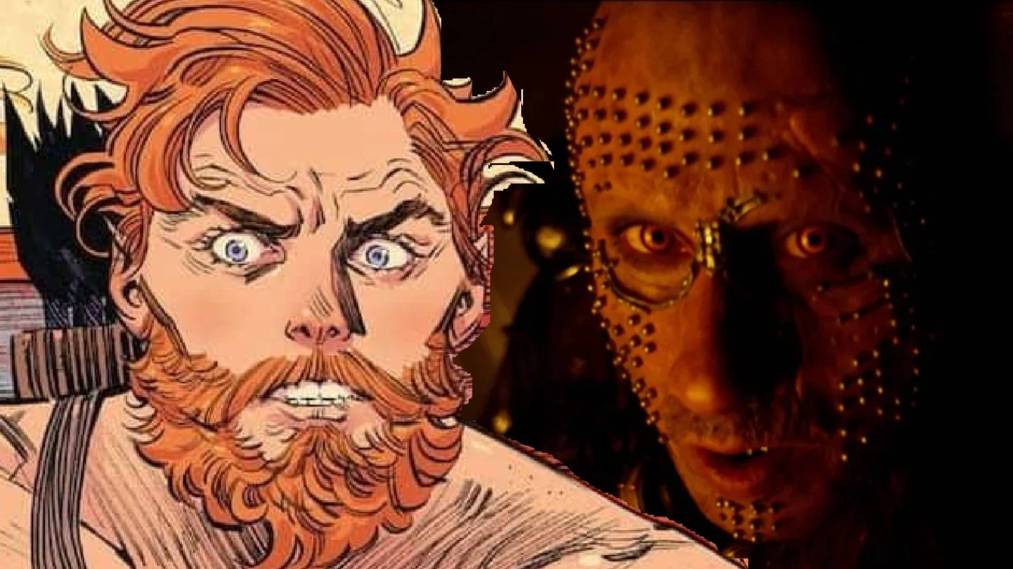
That last element adds to Lanterns‘ intrigue. The identity of the Manhunter (the killing machine the Guardians created before forming the Green Lantern Corps.) was revealed. I had an inkling as to the Manhunter’s identity. “The Weenie” removed all doubt. I liked how Lanterns executed the reveal. The show let the characters’ nature do the work. Centering one’s narrative with its main characters is always a great choice. Kudos!
And I have to hand it to Lanterns. While the show continues to dodge Green Lantern’s costume, it showed the biggest Lantern construct to date (John’s digging device). Sure, Hal wears the costume during his brief scene with Sinestro, but for the most part, Lanterns doesn’t like to show the character in costume. Getting back to John’s digging device, its inclusion makes me excited for more Lantern constructs in future episodes. Lanterns kept its special effects budget low during the first half of its first season, but the second half of the season should splurge a little.
The town of Rushville continues to be a great setting, almost its own character. “The Weenie” reveals that the Manhunter prevents people in Rushville from getting sick or dying. That explains the hospital’s unpacked equipment and the fact that Hal was the only patient to sign the log. This will cause some future tension between the city of Rushville and the aliens who want to hunt down the Manhunter. The aliens plan to blow up Rushville if Hal and John don’t deliver the Manhunter to them, but the Manhunter means a lot to the town of Rushville. It’s a lose-lose situation, and we do see some demolished buildings in Rushville during John Stewart’s return to the town (in 2026). Something explodes, but what? How? Unlike John’s refusal to take the ring from Hal, we know less about Rushville’s fate.
We didn’t see much of Rushville in 2026. The sheriff talks to John as if life continued for the town of Rushville…in some capacity. I like that Lanterns is using Manhunters as its chief villain for its first season. Teasing Sinestro is a great touch. Something tells me we’ll see the Sinestro Corps. before the season finale. I’m still waiting for Guy Gardner to make an appearance. Lanterns continues to use Fillion’s Gardner as its thumbnail. The big teasers. Does this mean Gardner got the ring before Stewart? Was he the one who took the ring from Hal? Who knows? Lanterns has done a great job setting up these mysteries. Time will tell if the show sticks the landing.
Those are my thoughts on Lanterns “The Weenie.” What are yours? Let us know in the comments. Thank you for reading, and wherever you are, I hope you’re having a great day.








 jkgeekly.com