
Happy Indigenous Peoples’ Day, Geekly Gang! We’re celebrating the day by discussing five board games designed/published by indigenous designers or publishers. Some of these games I’ve seen at my local game shop. I may have played a few of these. The rest I need to try. Regardless of which group these games belong to, I wanted to highlight games designed by indigenous board game designers. Here is Geekly’s list of five board games by indigenous designers.
Wolves (Coyote & Crow)
Wolves by Kenna Alexander was one of the first games that came to mind when I came up with this list. Publisher Coyote & Crow employs a variety of indigenous artists. All of Coyote & Crow’s releases show their native roots. Wolves is no exception.
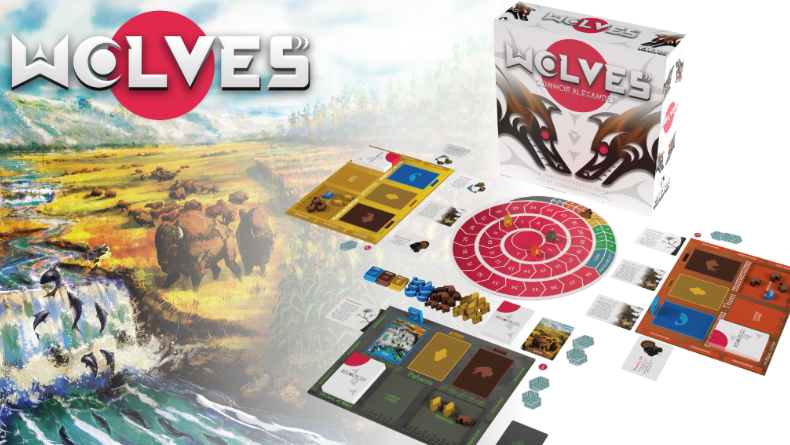
Wolves features semi-cooperative play. Players must balance personal goals with the needs of all at the table. This is a trend in board games designed by indigenous designers. Culturally, indigenous people don’t tend to seek the all-out destruction of their neighbors. Semi-cooperative play is difficult to pull off well, but Wolves does a great job of walking the balance between players working toward personal and community goals. Each player takes on the role of a community leader. Resources are slim, and everyone must survive through a harsh winter. If any player fails to accommodate their community, everyone loses. I love the art, the design, and the concept.
You should give Wolves a play and keep publisher Coyote & Crow on your gaming radar if it isn’t already.
Burn the Fort (Indigenous Action)
Anti-colonialism is another trend in indigenous board games. No game represents this trend more than Burn the Fort by Klee Benally. The game’s name says it all. Players take the role of a historic warrior fighting to stop the colonial invasion of their lands. Players gather resources, trade with other players, and acquire the means to burn the titular fort.
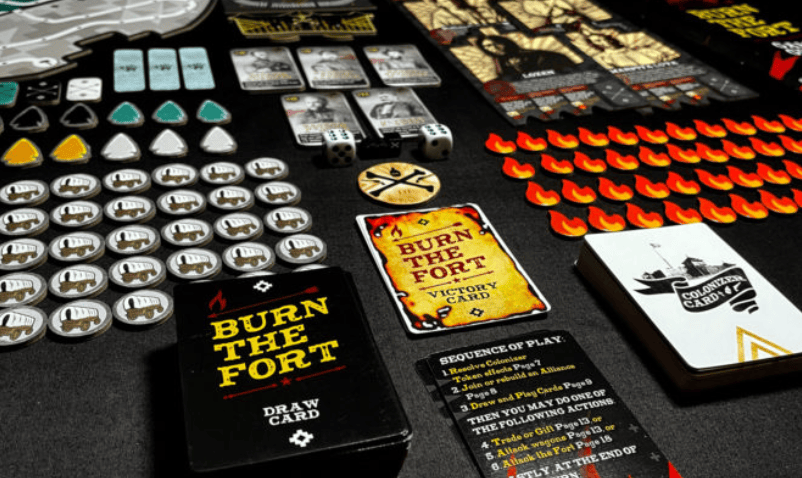
Like Wolves, Burn the Fort features semi-cooperative play. At the start of the game, everyone starts in an alliance, but alliances can be broken. Players can choose how much they want to contribute to stopping colonial forces, but with each wagon that reaches the fort, the train moves toward the Golden Spike that will ultimately spell doom for everyone. Burn the Fort also offers something of a history lesson. I like games that can make history fun to learn. A brief background accompanies each historic warrior. Excellent.
While other games by indigenous designers feature maintaining balance, Burn the Fort puts the ideas of exploitation and expansion front and center.
Winter Rabbit (Absurdist Productions)
If you want a Native American board game steeped in folklore, look no further than Winter Rabbit by William Thompson. Set in the world of traditional Cherokee animal stories, Winter Rabbit has players take on the role of the animals. Ever the trickster, the Rabbit decides he doesn’t want to work. Instead, he confuses everyone else so he can take all the resources for himself.
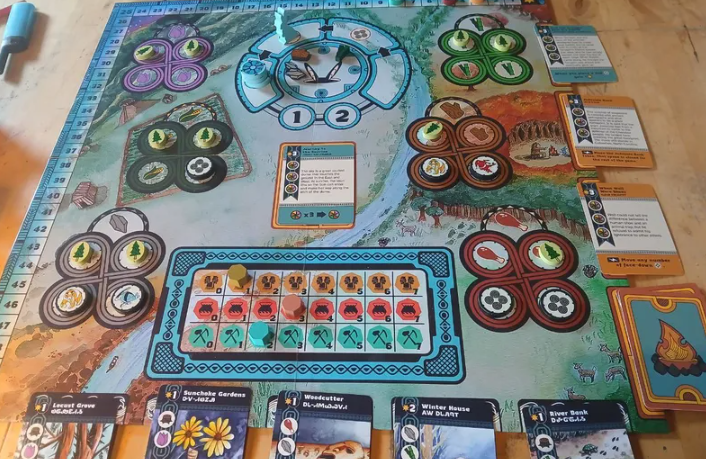
Winter Rabbit features an interesting hidden worker placement mechanism. Villagers are drawn from a bag. The active player knows whose villager they have drawn and can choose where to place it; none of the other players knows this information. When resources are produced, everyone gets one, but those with villagers present gain additional resources. Rabbit villagers do not produce resources. When one of these appears, the resources are diverted to the Rabbit Burrow. I told you the Rabbit doesn’t want to work.
I’ll be honest. I borrowed a lot from the publisher’s description of Winter Rabbit. I wrote this post months before its release, and my copy is on its way. I can’t wait to play Winter Rabbit. It looks amazing.
Nawalli: The Aztec Card Game (Studio Tecuanis)
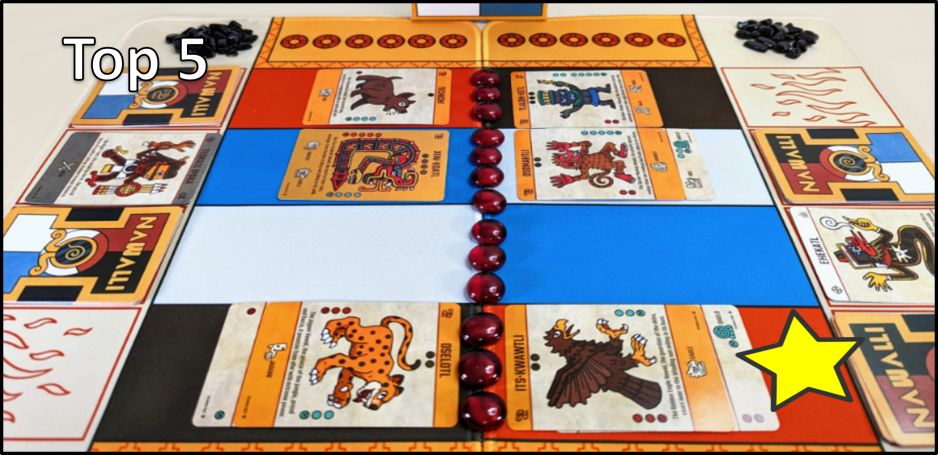
NAWALLI by Gonzalo Alvarez and Will Rogers is a creature battle card game based on Aztec mythology. You take on the role of a shapeshifting sorcerer known as a Nawalli to summon Nawals. The game has four partially pre-built decks, ready for customization. Each deck represents Aztec gods from the four directions: Tezkatlipoka, Tlalok, Ehakatl, and Xipe Totek. As you can see, NAWALLI dives into Aztec mythology.
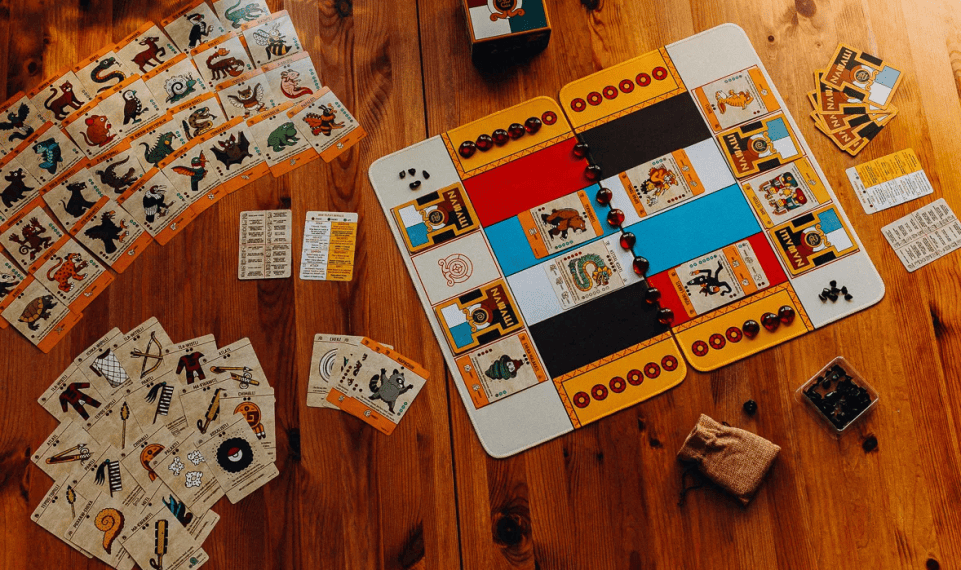
NAWALLI features gorgeous art by Gonzalo Alverez. Many describe the game as a Mesoamerican Pokémon. NAWALLI could only have come from someone with intimate knowledge of Aztec culture and mythology. The images recreate the traditional Aztec style. The look of NAWALLI catches the eye. There are many dueling card games, but NAWALLI’s vibrant art and theme set it apart.
Nunami (Thomassie Mangiok)
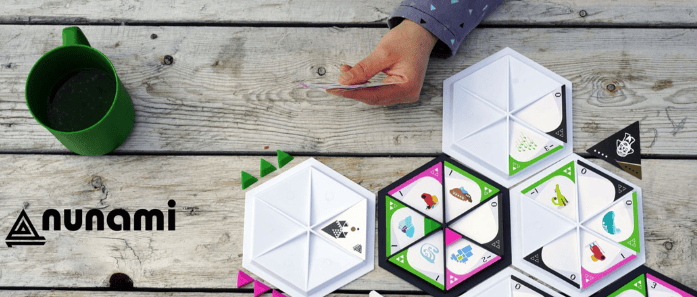
We end this list with the self-published Nunami. While Wolves featured balance between one’s neighbors, the Inuit board game Nunami promotes the healthy cohabitation of humanity and natural elements. Nunami’s triangular cards heighten the game’s dynamic terrain management.
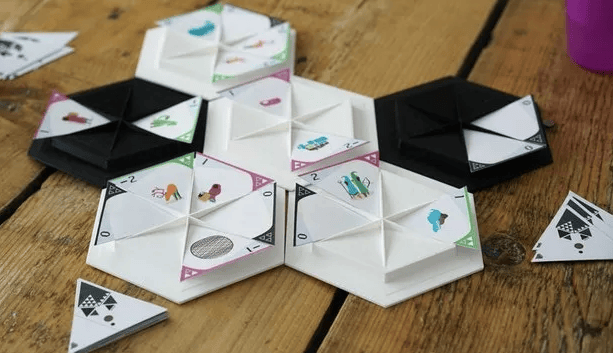
Nunami, like NAWALLI, features traditional Inuit artwork set against a stark white or black background. Nunami may be the most abstract game on this list. Players influence a region (hexagon base) with the cards they play. Some cards will cause another to flip facedown. The first player to reach four points wins. Nunami plays the fastest of any of the games on this list. If you want a quick play, Nunami may be for you. Even though Nunami plays more like an abstract game (think Chess, where there’s no story reason why a Knight moves in an L pattern), players attempt to achieve balance. In this case, a balance between man and nature. That sounds like a Native American theme to me.
These are five board games by Native American designers that I wanted to highlight today. What are some of your favorites? Let us know in the comments. Thank you for reading, and wherever you are, I hope you’re having a great day.

