Hey, hey! Kyra Kyle here. I have signed up for HBO Max and have been catching up and keeping up on DC Universe (DCU) content, so Geekly should have plenty of DCU content going forward. After Superman (2025), the DCU is back. Woo hoo! Or at least it’s back enough for a cinematic universe to bloom. Sure, Superman’s final box office numbers may not be where Warner Bros. and DC want them to be, but superhero movies seldom crack the $1 billion mark anymore. Captain Marvel was the last solo superhero movie to reach that mark. That was in 2019. What happened in 2020? That’s on the tip of my COVID. The movie industry has yet to recover from the pandemic. But 2025 was a banner year for superhero films.
I’m writing this post early (super early, as I take a break from writing posts for the final four months of the year to write a novel). As I’m writing this, the final box office numbers have yet to be reported. There’s the slimmest of chances Superman reaches a $1 billion. Even if it doesn’t, Superman is a success in the modern film landscape, and it did enough to get me excited for the DCU’s upcoming projects. Let’s talk about the DCU’s 2026 slate of films and shows.
Quick update: I revisited this post closer to its release date and adapted the proposed release dates.
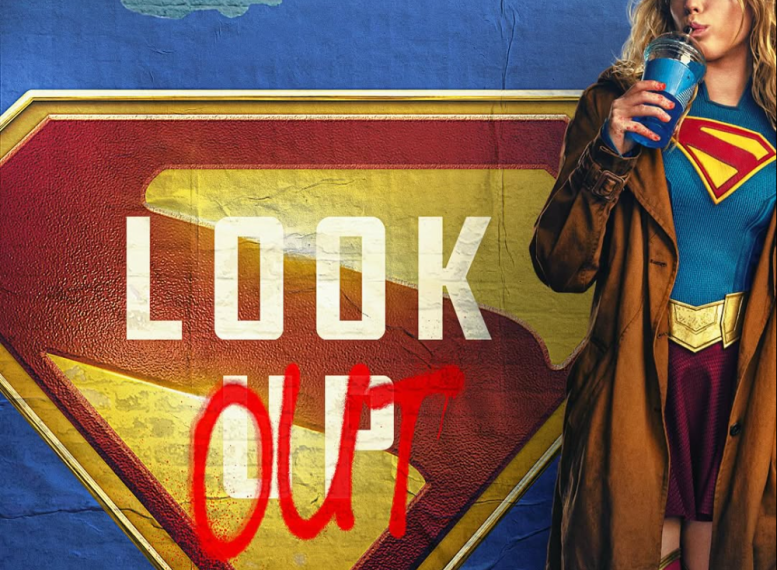
Supergirl: Woman of Tomorrow (June 26, 2026)
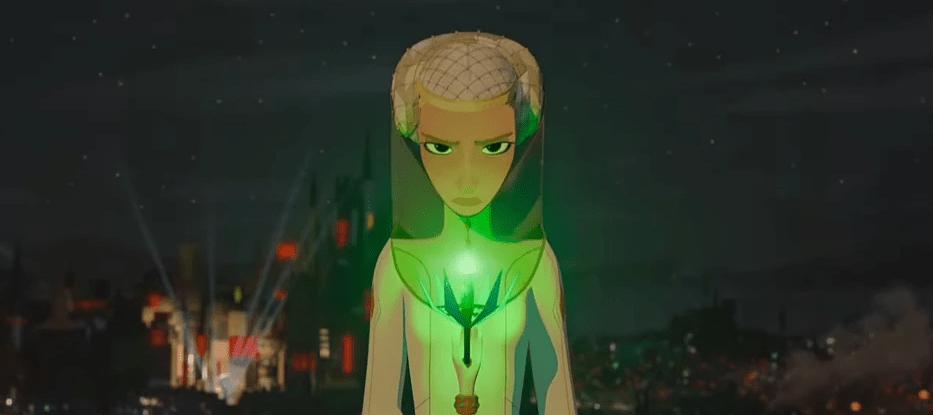
Supergirl: Woman of Tomorrow is scheduled for a June 26, 2026, release. We caught a glimpse of Milly Alcock’s Supergirl in Superman (2025). Alcock’s portrayal and the upcoming film’s title, Supergirl: Woman of Tomorrow, suggest that the movie will follow the events of Tom King’s run of Supergirl. If you haven’t yet read Supergirl: Woman of Tomorrow, you should. It’s an excellent read, and this film sounds amazing.
Quick spoiler warning. I will delve a little into the Supergirl: Woman of Tomorrow graphic novel. If you want to go into the Supergirl: Woman of Tomorrow film blind, feel free to jump to the next entry. Superman was launched as a baby from Krypton. Kara (Supergirl) was a teenager and watched her world fall apart. Neighbors and loved ones were swallowed by earthquakes and explosions. Her father managed to build a barrier around Argo City (Kara’s home city), only to see Krypton’s remaining residents die as the now asteroid turned into kryptonite. Kara lost her world twice. So, the DCU’s Supergirl will struggle with PTSD and will claw her way out from rock bottom. This should make for a very different Supergirl and a riveting story.
Lanterns (Late Summer 2026)
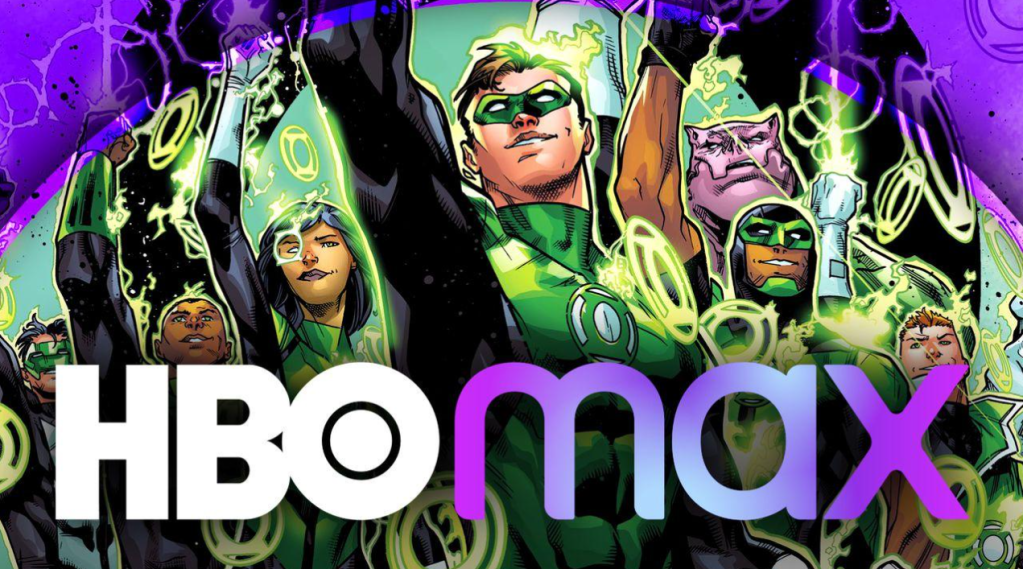
I’ve been waiting for a Green Lanterns show for years. The DCEU teased one for almost a decade, promising to take the bad taste of Ryan Reynolds’s Green Lantern out of our mouths, and never delivered. Rejoice, because the DCU made Lanterns a priority. It should be the third or fourth DCU project (depending on whether you count Krypto shorts), and I’m here for it. Teaming Hal Jordan and John Stewart together in a buddy cop way gives me classic 80s Green Lantern/Green Arrow vibes.
Lanterns showrunner Chris Mundy has described the show as a “huge HBO-quality event” in the style of True Detective. Yes, please. Nathan Fillion will return as Guy Gardner–I loved his hair in Superman–and there’s a chance we could see more Green Lanterns in this series. But that’s not a guarantee. Lanterns will be an Earth-based detective story, so alien Green Lanterns may not fit in the first season’s narrative. I may have to wait for Kilowog. I’m unsure if Lanterns was affected by the Netflix sale or if some other issues occurred, but Lanterns has been bumped from an early 2026 to a late summer 2026 release. My guess is that the DCU wants to continue the momentum of Superman (2025), being followed by the second season of Peacemaker.
Clayface (September 11, 2026)
We know little about the upcoming Clayface film, and that may be for the best. I love that DC Comics doesn’t shy away from films based on villains. I doubted Joker after it was first announced, but I’m holding back any judgment with a Clayface film. Mike Flanagan penned the script; he’s best known for his work on Netflix horror series: The Haunting of Hill House, The Haunting of Bly Manor, Midnight Mass, The Midnight Club, and The Fall of the House of Usher. Clayface director James Watkins has a history of horror with The Woman in Black, Speak No Evil, and one of the most disturbing episodes of Black Mirror, “Shut Up and Dance.”
While I would’ve liked to have seen Clayface in a Batman movie, I’ll take Clayface getting a stand-alone film. James Gunn’s right-hand man, Peter Safran, likened Clayface to the classic horror film, The Fly. I can see that working. We’ve heard conflicting reports as to whether Clayface will exist within The Batman’s universe. Time will tell if Clayface truly is a stand-alone film or part of a larger universe. Considering who’s behind the project and Clayface’s premise, I can’t wait to watch.
That’s all we have for DCU projects that should release in 2026. We could see other DCU shows crop up, like the animated series My Adventures with Green Lantern. We’ll keep you posted. Which one of these DCU projects has you the most excited? Let us know in the comments. Thank you for reading, and wherever you are, I hope you’re having a great day.
Hey, hey, Geekly Gang! I haven’t done a free-to-play video game review in a handful of months and figured I’d give the treatment to a game I played a lot of this past summer, Clicker Heroes. Yes. Clicker Heroes has been out for over a decade, but it’s still available on multiple platforms: PC, mobile, PlayStation 4, and Xbox One. Clicker Heroes started as a Flash game, so this free-to-play video game has been around for some time. But just because a game is “free-to-play,” does that mean that it’s free-to-play friendly? Let’s subject Clicker Heroes to our review criteria.
Mechanisms: 2/10
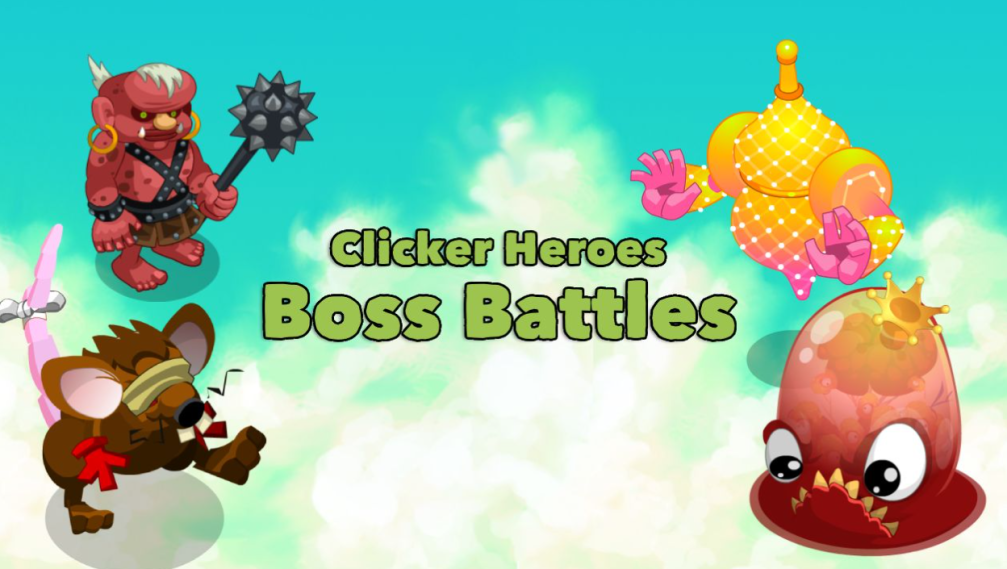
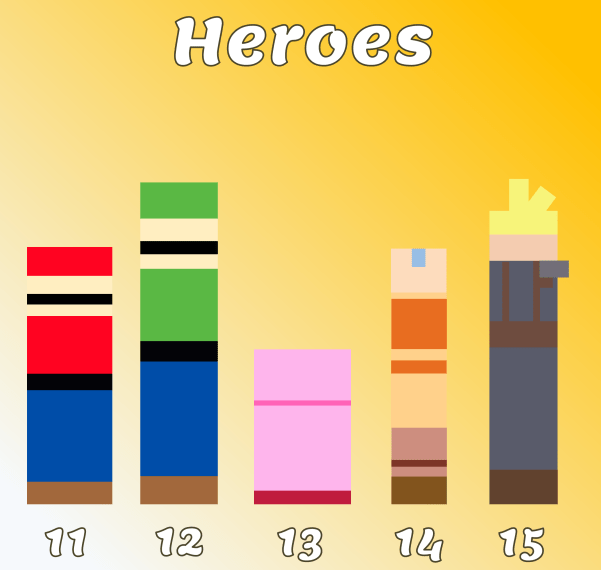
Clicker Heroes doesn’t cover new ground, so its mechanisms score suffers as a result. Don’t get me wrong, I like idle games. I played the heck out of AdVenture Capitalist. I did the same with Clicker Heroes. I sunk hundreds of hours into this game, but it doesn’t do anything more than click on heroes, like the game’s name suggests, allow you to upgrade the heroes, and then face the next goofy-looking boss monster.
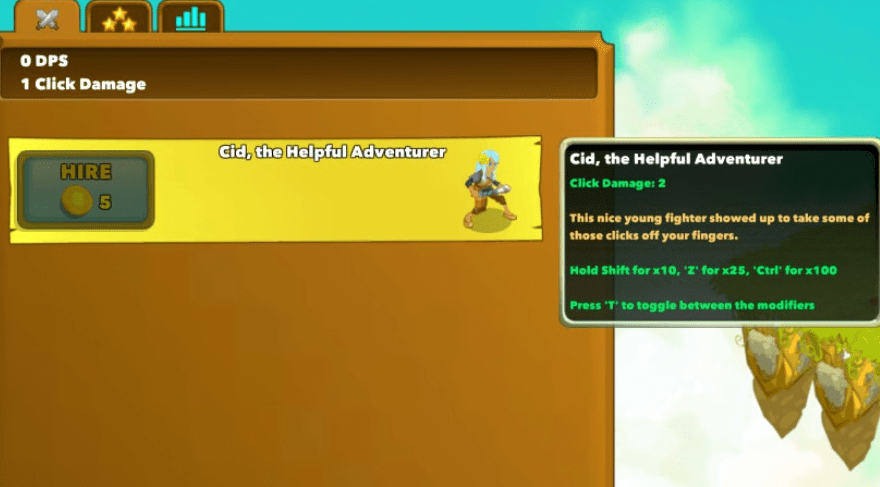
I do like how you can choose to upgrade your heroes by factors of 1, 10, 25, and 100 levels each time. This makes leveling up lesser heroes like Cid, the Helpful Adventurer (your first Hero), a breeze. Goldfish and Bees will flash on the screen with button prompts, but this does little to shake up the stale gameplay.
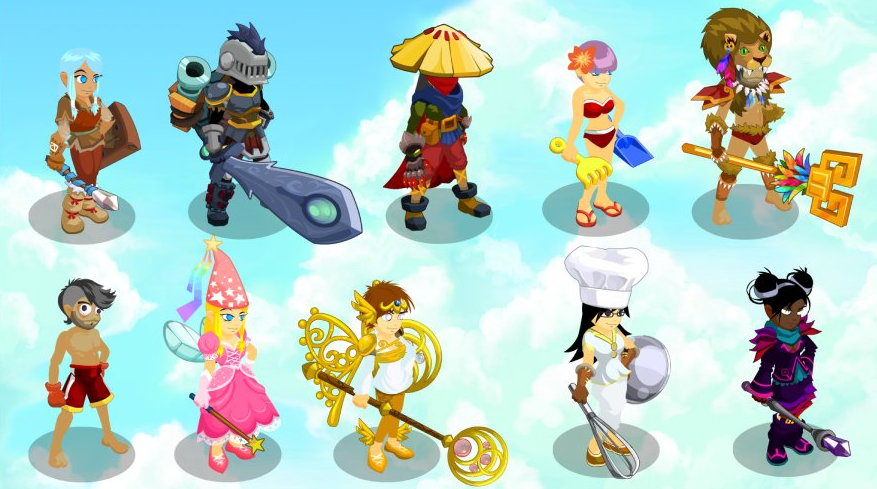
Above Image from GameDesigning.Org
Gameplay Loop: 2/10
I know I just said I sunk hundreds of hours into Clicker Heroes, but most of that time I spent AFK (away from keyboard), and that’s by design. Clicker Heroes is one of those games you log in once, maybe twice, a day, check on your heroes, and put the game back to sleep.
You’re encouraged to “ascend” your world, which erases much of your progress, and then you must climb back to where you just were. This is what keeps Clicker Heroes’ gameplay loop score from reaching even lower, because Clicker Heroes’ most engaging gameplay is at the beginning. Waiting for your power-ups to recharge or your characters to defeat enough monsters to upgrade your heroes becomes tedious.
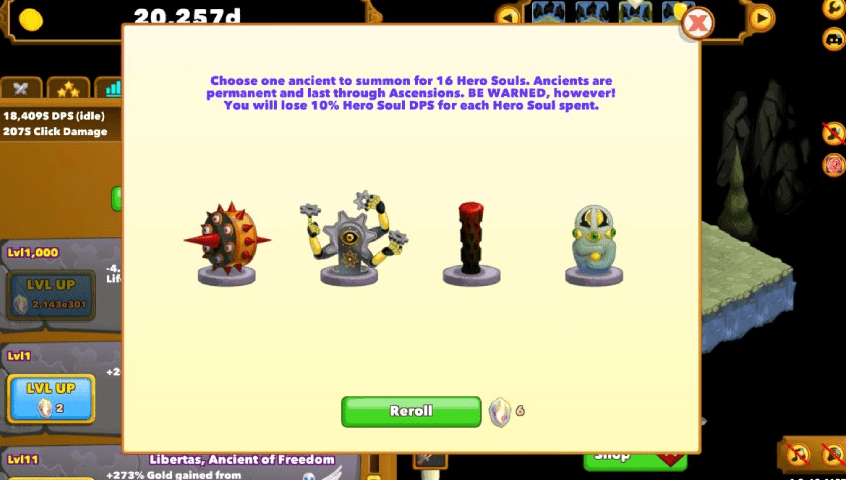
After some time, you can use hero souls (from ascending) and purchase Ancients that can help you progress faster in the game, but once you reach Level 300, you’re given the choice to “transcend” your world. This is another layer of ascending that erases your gilded heroes (upgraded heroes through relics) and your Ancients. So, after “ascending,” you go all the way back to the game’s tedious beginnings.
But you do obtain “Outsiders,” which are supposed to be stronger Ancients, but it takes a long time to accrue enough ancient souls, what you get for “transcending,” before you begin to see a tangible difference. Plenty of websites offer ideas on how to speed this process, but I don’t imagine too many players will sink enough time into learning Clicker Heroes’ math to take full advantage. Clicker Heroes becomes a slog.
Respecting Time: 1/10
Clicker Heroes is an idle game, so it’s supposed to be more of a time waster, and it does indeed do that. I can forget Clicker Heroes exists for several days and return to my heroes. But Clicker Heroes makes upgrading your world so difficult that it goads gamers into either spending hours of research to get the perfect set-up or spending money to make the hurting stop. Is the drop of juice you get worth the tens of billions of squeezes? I don’t think so.
True Cost: 3/10
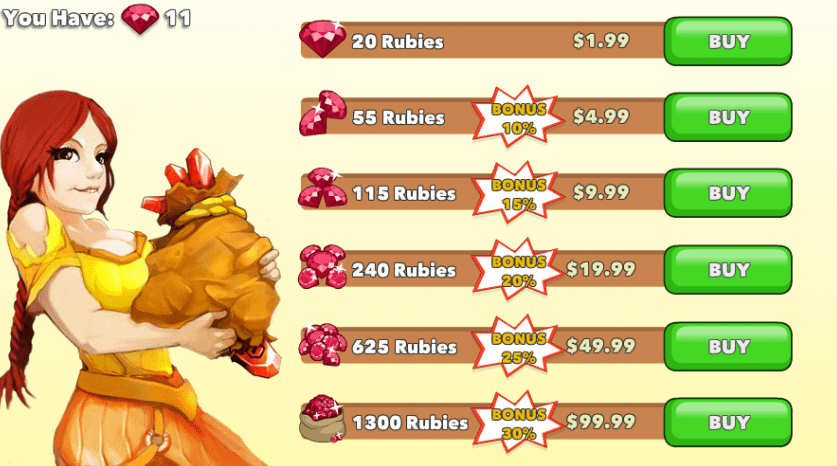
While Clicker Heroes offers skins for auto-clickers (Why would anyone want that?, but okay), it gains most of its money through the purchase of rubies. Fortunately, players can earn rubies by sending mercenaries on missions, opening relics, and clicking on goldfish. But I still struggled with how to grade Clicker Heroes’ “True Cost” or its “free-to-play friendliness,” because I can see players getting caught in a trap. Heck, I got baited into that same trap: reviving mercenaries.
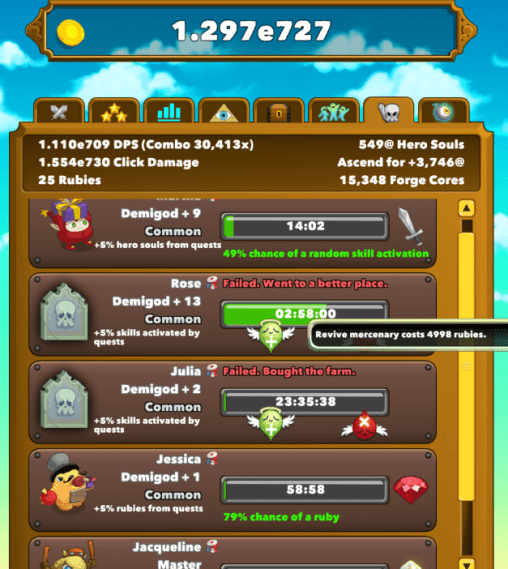
Every once in a while, one of your mercenaries may perish while on a mission. You can spend rubies to revive a mercenary, but there’s some math (I haven’t done the research) where the mercenary’s level and/or the amount of time they have remaining for a mission dictates the number of rubies you’ll need to revive them. In my experience, reviving mercenaries takes a mountain of rubies. Players have little chance of having enough rubies to revive advanced mercenaries, like the “Demigod +13 level” mercenary pictured above with the low, low revival price of almost 5000 rubies. Looks like time to open another credit card and buy 5000 rubies for about $400.
With one exception, outside of reviving mercenaries, I see little use for spending rubies. That one exception is a one-time damage boost for your Heroes. This costs somewhere between 50-100 rubies, and once you buy it, you’ll have it for the duration of the game. 100 rubies or less is a steal.
But the remaining ruby purchases involve buying gilded Heroes, which will reset after you ascend, some version of speeding up Clicker Heroes’ glacial pace, or buying an auto-clicker. Eh. I almost gave Clicker Heroes an average score for “True Cost.” Reviving mercenaries aside, few of the other ruby purchases can be avoided.
User Interface: 2/10
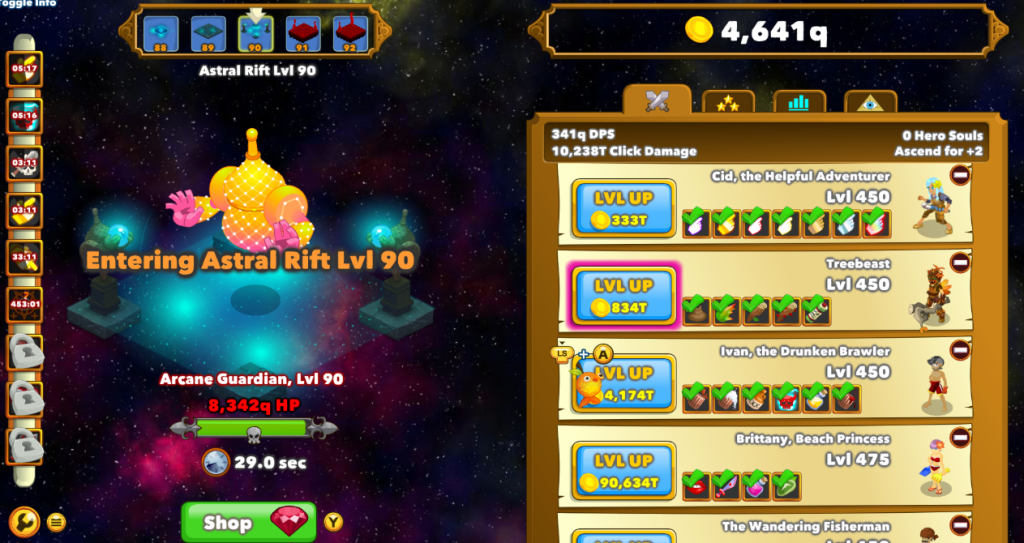
Clicker Heroes doesn’t have that many menus and submenus, but what is there is confusing and difficult to navigate. I’ve played the game for months and still get turned around, not knowing where I can find certain information. I can’t imagine a noob looking at the screen above and being able to tell what does what. And several buttons have multiple functions, so it’s easy to misclick.
Graphics: 3/10
While simplistic, Clicker Heroes’ graphics are pleasant. I’m grading this one on a little bit of a curve, because Clicker Heroes is over ten years old. But the game hasn’t received too many graphic updates through the years, so I can’t get too crazy with this score.
Audio: 6/10
I had to average Clicker Heroes’ audio score. Clicker Heroes has epic music. It often gets stuck in my head. But the sound effects are as annoying and repetitive as clicking a button thirty-five times a second. Ow! My ears. Those moments when I don’t use an ability and listen to Clicker Heroes’ soundtrack make all the difference for this score.
Aggregated Score: 2.72
Clicker Heroes is an idle game, so don’t expect much. While it has charm, the graphics haven’t been upgraded too much to keep up with modern devices. Clicker Heroes can be a slog if you don’t research how to maximize your Heroes or spend money, and I worry about gamers who fall into the ruby pit of reviving their “good” mercenaries.
Happy New Year’s…Eve, Geekly Gang! The holiday happens to fall on the fifth Wednesday of December, and whenever a month has five Wednesdays, our writers share personal updates. So, today sounds like a great day for New Year’s Resolutions. Feel free to share your New Year’s Resolutions in the comments. I’ll get us started.
Kyra’s Resolutions
I may have spoiled some of my resolutions with a previous writing brain dump, so you may find some repeats here. I’ll try to keep this short.
1) Write something every week. First, this needs to be something outside Geekly. Yes. I write something every week–or at least most weeks–for the site, so this is personal writing like a short story or chapter in a novel. But this could be as little as a single word. I’m not putting a word count on this resolution. My idea is that one word usually leads to a sentence, which will lead to much more.
2) Work on a game every week. This could be playtesting, developing an existing design, or even designing a new game. Again, the simple act of working on a game every week should lead to more than a single design or development session.
3) The above images remind me that I need to be more consistent with posting brain dumps–at least one of each per month.
4) Read one book a month in a genre that I write or a genre I’m interested in writing. It’s always a good idea to stay current with what sells. And reading helps with one’s writing. Don’t worry about reading another person’s writing impacting your writing. You have your own unique perspective.
5) Read one writing craft book or publishing business book next year. 2025’s book was Strunk and White’s The Elements of Style, and I barely got that one under the wire. Reading about the act of writing is crucial if one wants to write. And I could stand to learn more about the writing/publishing business.
6) Read at least one book next year in a genre I don’t intend to write. This past year, I read I Got Abducted by Aliens and Now I’m Trapped in a Rom-Com. I don’t know if I’ll ever write a romantacy novel, but I’m glad I read this title. Kimberly Lemming did a great job balancing comedy, steamy romance, and social commentary. Kudos! And romantacy sells. I needed to read at least one book from the genre. I may read another one or two in 2026. Romance and fantasy are two of the best-selling genres. Put them together, and you get a powerful combination.
7) Play at least six board games with themes or mechanisms I don’t usually gravitate toward. This is the board game design equivalent of the previous resolution. Nuff said.
8) Get something published. This resolution is largely out of my control, but I’m not so sure. If I don’t share a publication in a literary journal or board game through a publisher in the next twelve months, I may post a short story or poem on JK Geekly by the end of 2026. Let me know if you’d be interested in this style of content. I’ll even offer this invitation to our other Geekly writers. I can’t wait to see what they have in store.
9) I have plenty of other personal goals, like staying active and volunteering more with Extra Life, but I’ll still primarily focus on writing and board game design with these resolutions. Case in point, I’ll be at ScroogeCon in Lincoln, NE, January 10, 2026, with Extra Life. If you’re in the area, stop by and say hi. I helped raise thousands of dollars for the Children’s Hospital in 2025 and hope to raise even more this upcoming year.
Looks like I’m flying solo this week. Season and Skye aren’t sharing any New Year’s Resolutions in this post. I guess that means they won’t fail at any resolutions by next Friday. They don’t have to sweat Quitter’s Day (January 9, 2026). Smart.
What are your New Year’s Resolutions, Geekly Gang? Let us know in the comments. Thank you for reading this past year, and wherever you are, I hope you’re having a fantabulastical New Year’s Celebration.
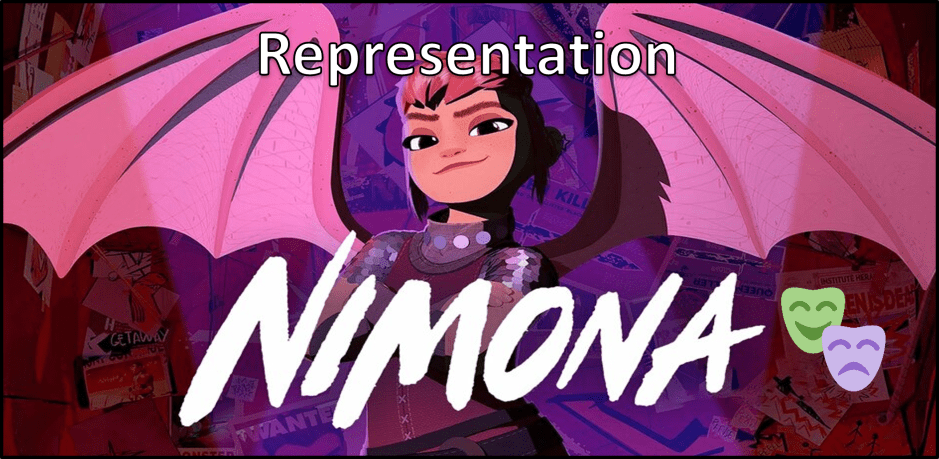
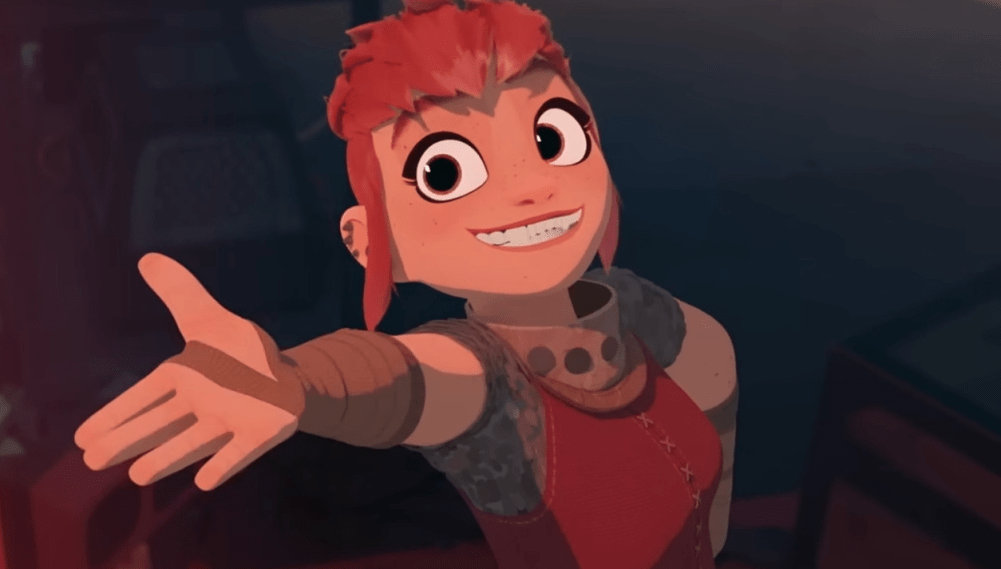
Hey, hey, Geekly Gang! Kyra Kyle here. Today, we continue our deep dive series on transgender representation in media. Dead End: Paranormal Park was our last deep dive in this series. We’re in the middle of the holidays, so I figured we’d cover a movie instead of a series. Nimona began as a 2015 graphic novel of the same name. Nimona highlights queer themes and fluidity of identity and how they oppose and subvert traditional controlling institutions and exclusionary systems. Wow! That sounded clinical. On a personal note, I identify as gender queer, something akin to nonbinary, so I can see myself in Nimona.
Nimona features a lot of great storytelling. Most main characters go through a satisfying arc that fits in the film’s overall theme. Early on, Nimona includes details that take on new meaning during a second viewing. This is always welcome. Specifically, dialogue like “Go back to the shadows from whence you came” hits differently each time in Nimona. In short, I haven’t seen an animated film this refreshing since Shrek and early Pixar movies. I could continue with how much I love Nimona’s story, but that’s not the purpose of this post. It’s time to break down Nimona’s transgender–and more specifically gender queer/nonbinary–representation.
Spoiler Warning
There’s no way I can cover this subject without major spoilers. Nimona is a Netflix original film; feel free to watch Nimona before reading. With that said, you’ve been warned.
Gender Non-Conformity and Other Queer Themes
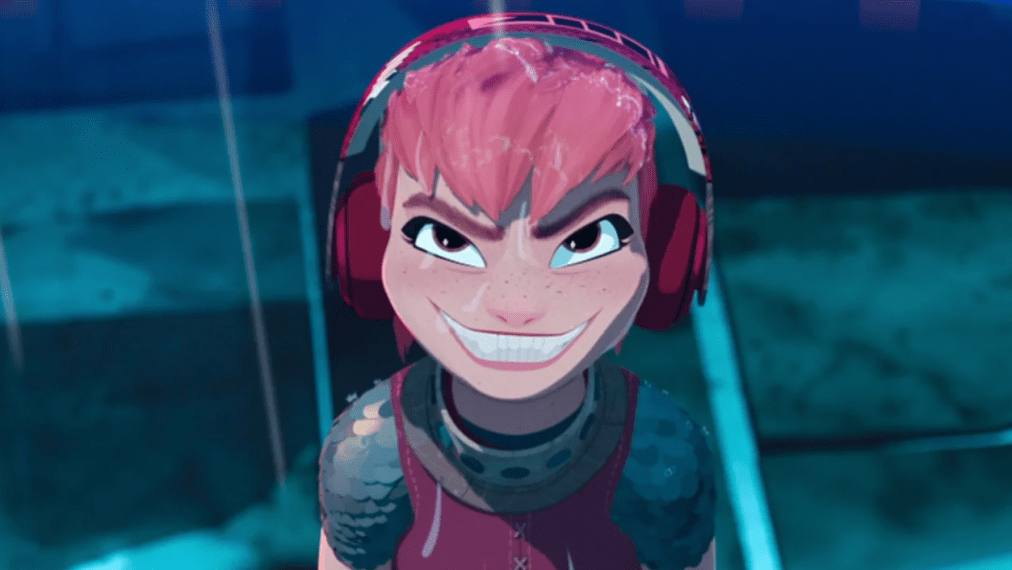
We’ll view Nimona through various lenses, but before we get into how others view the title character Nimona, we need to discuss who Nimona is. Nimona is a shapeshifter.
Gender and Pronouns
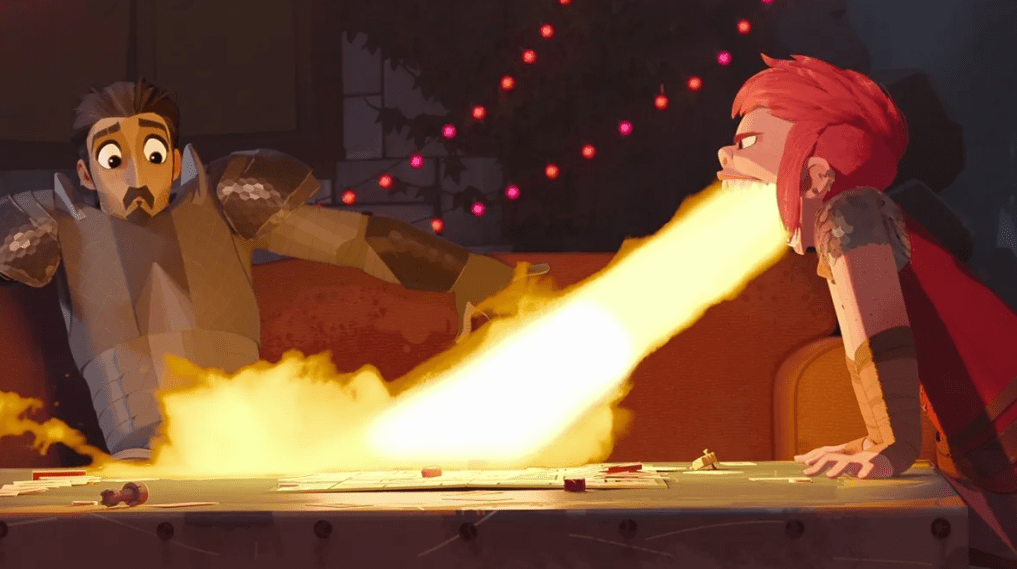
Nimona doesn’t identify as any one gender, and because of that, I’ll be using they/them pronouns for Nimona. To be fair, Nimona avoids using pronouns at all. They’d probably say their pronouns are Nimona/Nimona. Perhaps Nimona’s pronouns are Ni/Nem. I’ll use Nimona instead of pronouns as often as I can. I wouldn’t want Nimona breathing fire on my scalp.
Nimona definitely doesn’t identify as a “girl.” Ballister constantly tries to dub Nimona as a girl. Most people who interact with Nimona use she/her pronouns if they want to be nice, but there are a few people who use the pronoun it for Nimona. The main antagonist, The Director, almost exclusively uses it for Nimona.
But I do like how Nimona seems unfazed by anyone misgendering them. Sorry if I used the wrong pronoun, Nimona. Not the scalp. Nimona goes with the flow, no matter which pronouns Nimona hears. Not even it/its upsets Nimona in an overt way. Even so, the pronoun it suggests the person using the pronoun sees Nimona as the one word Nimona hates to be called most: monster.
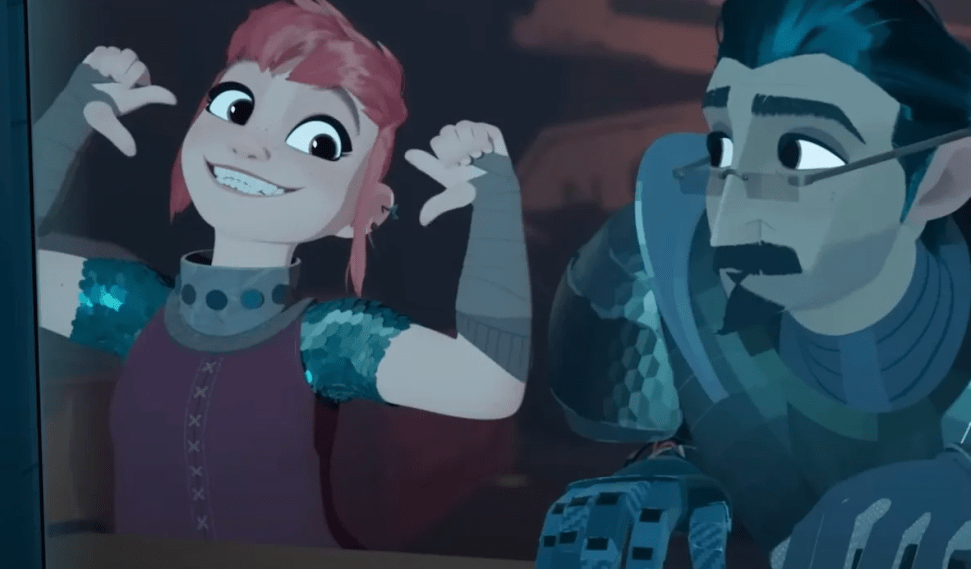
“Who has four thumbs and is great at distractions?”
Gender Fluid
I always loved Ranma’s ability (from Ranma 1/2) to switch from a masculine form to a feminine form with the touch of cool or warm water. This ability to change gender on a whim spoke to me when I was younger. I think it does for most gender queer people. In fact, Maia Kobabe (ey/em pronouns, pronounced like they/them with the “th” taken off) in eir graphic novel Gender Queer, mentions Ranma 1/2 by name when ey mentioned the media that inspired em to find emselves.
Ranma 1/2 was one of the stories Kobabe read when ey were still an egg. Note: “Egg” or “Egg Mode” is LGBTQ+ slang to describe transgender individuals who do not realize they are a transgender person yet, or are in denial about being a transgender individual. Extra Note: Gender Queer: A Memoir by Maia Kobabe is a must-read for gender non-conformity; Ranma 1/2 is a fun read in its own right.
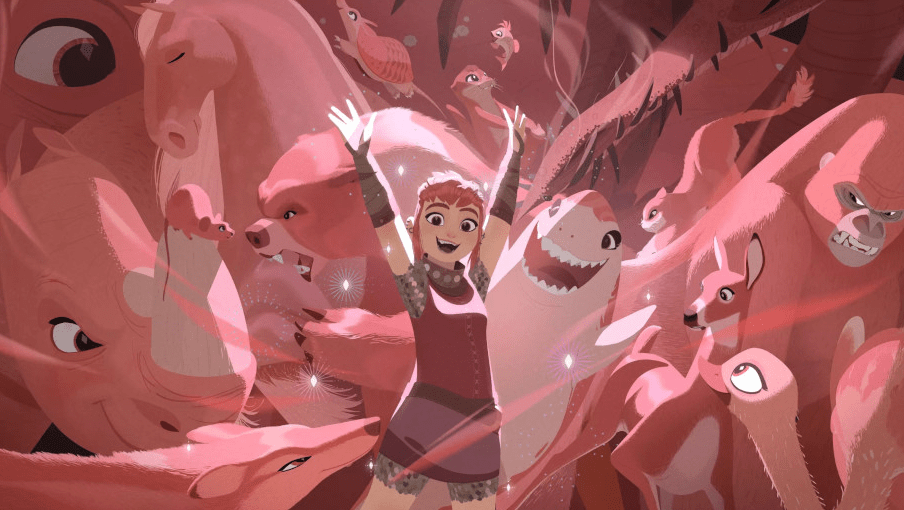
Nimona’s ability to shapeshift into almost any living being taps into a similar primal desire for a gender queer egg. I like how Nimona uses its title character’s ability as an allegory. The entire film does a great job of tackling difficult issues through a fantasy setting. That’s the power of fantasy. Since Nimona can shift into almost living being, the film gives Nimona plausible deniability. In short, Nimona is gender queer coded.
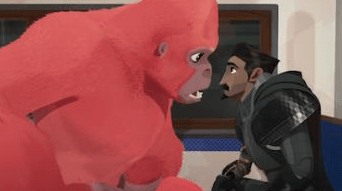
And yet, there is one moment Nimona outright drops pretense, and I love it. When Nimona and Ballister go to the market to kidnap the Squire, Ballister chastises Nimona for shapeshifting. Nimona shifts to a gorilla. Ballister scolds Nimona. Then, Nimona shifts into Nimona’s typical form. Again, Ballister scolds Nimona. Nimona blows up. “You want me to shift, then you don’t want me to shift. Pick a lane.” Then, Nimona transforms into a little boy, and Ballister laments, “And now you’re a boy.” Nimona says, “I am today.” That’s a perfect moment for certain gender queer, gender fluid, or nonbinary people. Heck, I feel like that often. Too bad I can’t morph into a gorilla or dragon. I pick dragon.
Wouldn’t It Be Easier if You Were a Girl
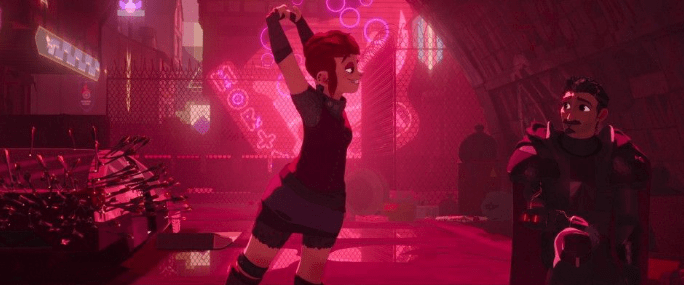
Nimona has plenty of relatable moments. Nestled between a few action sequences, you’ll find two quieter moments: one on the subway train and the other in a shady part of town after Nimona and Ballister kidnap the Squire. The subway train scene is the first time Nimona and Ballister slow down to get to know each other.
Ballister: Can you please be normal for a second?
Nimona: Normal?
Ballister: I think it would be easier if you were a girl.
(I skipped a few lines) Nimona: Easier for who?
Ballister: Easier for you. A lot of people aren’t as accepting as me.
I’ve heard what Ballister said more than once. Wouldn’t it be easier if you picked one of the pre-approved genders? It would be easier for you. Translation: it would be easier for the person asking me the question, not easier for me. I know who I am, just like Nimona in this scene. Ballister would continue questioning how Nimona became Nimona. He wants to–in his words–know “what” he’s dealing with. Nimona feeds Ballister a story that turns out to be rooted in truth. The Kingdom’s ultimate hero, Gloreth, rejected Nimona when they were children.
Nimona could’ve always had their powers and doesn’t know where these powers originate. We never see anyone else with Nimona’s shapeshifting ability during the film. Others with Nimona’s abilities may also be in hiding. Or Nimona could be an original.
What is original is how Nimona describes their need to shapeshift. I’m sure I’ll mention this scene again, you’ve been warned. I love how Nimona describes shapeshifting. It comes close to how it can feel for a gender fluid person. “I feel worse when I don’t do it (shapeshift), like my insides are itchy. You know that second right before you sneeze? That’s close to it. Then I shapeshift, and I’m free.”
Nimona adds that they could not shapeshift, but they wouldn’t be living. This is why it isn’t easier if Nimona was a girl. Nimona is Nimona. Nimona needs to shift. It’s like asking someone not to sneeze when they have the urge. It hurts.
Nimona wears its queer identity on its sleeve, but it does so in subtle ways. This works to give Nimona a wider potential audience. Nimona does an incredible job of depicting life as a gender queer/gender fluid/nonbinary person. But Nimona explores more of the LGBT+ community.
Goldenloin and Boldheart
Nimona doesn’t shy away from Ballister Boldheart and Ambrosius Goldenloin’s homosexual relationship, and that’s great. Ballister and Ambrosius’s relationship is front and center. This works, especially after Ballister becomes a fugitive. The Kingdom views Ballister as a villain. Even though this role change is due to Ballister being framed for the Queen’s murder, it works on another level because of Ballister’s sexual orientation. Modern society isn’t that far removed from viewing homosexuality as deviant or even a mental illness. And many countries and religious/political zealots still view homosexuality as against the natural order.
Nimona drives this point home after Ballister defends the Kingdom. He claims that certain people are to blame for his getting ostracized, while Nimona insists the entire system needs to change. According to Nimona, the controlling institutions that run a Kingdom that would hunt a “villain” like Ballister and a “monster” like Nimona should be challenged. Amen, Nimona, amen.
Ballister is Still Repressed
Despite Ballister fully embracing his sexual identity, he’s still repressed. Nimona mentions how brainwashed Ballister has become after his knight training. Ballister seldom lets himself go until he’s spent plenty of time with Nimona. Nimona helps Ballister break out of his shell. Nimona affords Ballister the means to take a critical look at society and question everything. In short, Nimona lets Ballister “Unclench his mustache.”
We’ll talk about the wall and how no one, not even Ballister, has seen what’s on the other side of the wall. The people of the Kingdom as a whole are repressed.
Other Queer Representation
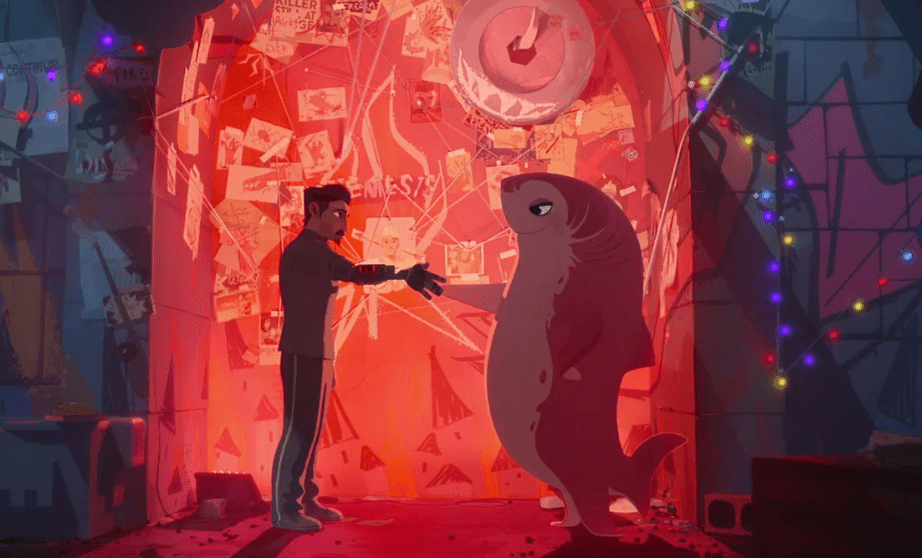
Nimona includes so much queer representation. Here are a few short segments. During the closing credits, Nimona literally breathes a rainbow flag of fire. The film’s color scheme tends to lean toward the colors of the transgender flag: pink, white, and light blue. RuPaul is one of the news anchors. RuPaul for the win. “Sashay away” turns into “A knight who might not be right.” I’m probably missing dozens more queer references. Feel free to add any you found in the comments.
Fluid Identities Versus Controlling Institutions
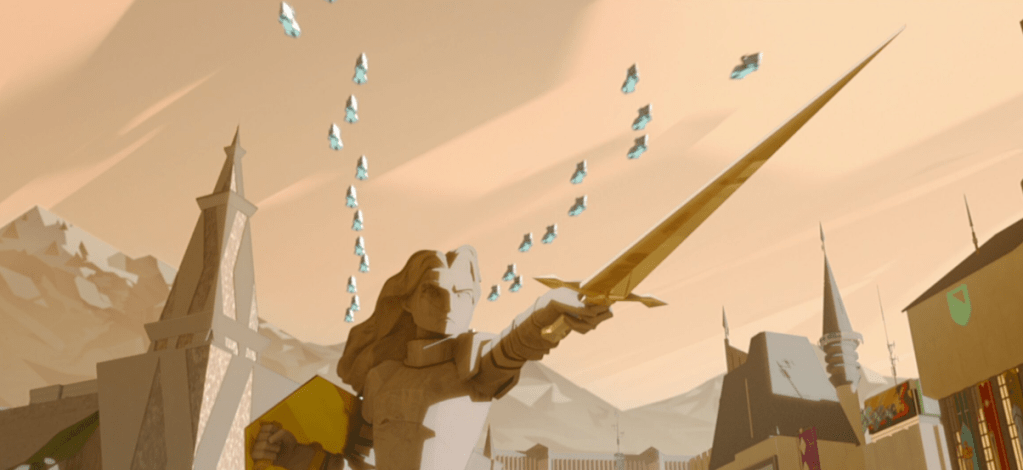
Our next lens returns to that clinical definition I spewed in the opening: controlling institutions. Nimona shows how controlling institutions quell fluid gender identities in many ways. We’ll begin with the piece of dialogue I also mentioned near the beginning of this post. “Go back to the shadows from whence you came.” During Nimona’s opening, this line is given like a storybook. Think classic Disney animated films. Nimona’s opening has Warrior Queen Gloreth–or rather Nimona reading the story–heroically deliver this line. Eventually, we learn this line is what a child Gloreth says to her friend Nimona. This story thread shows how fear of someone with a fluid gender (or gender queer) is a learned behavior.
Learning to hate differences
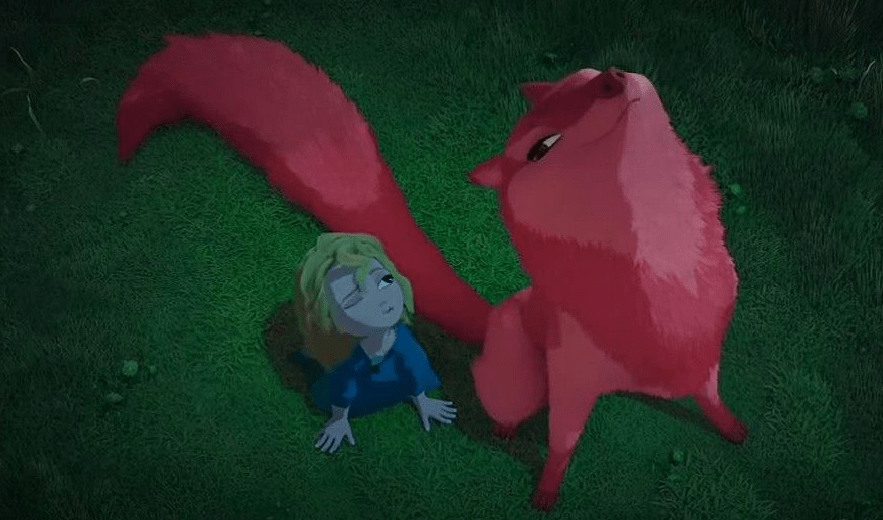
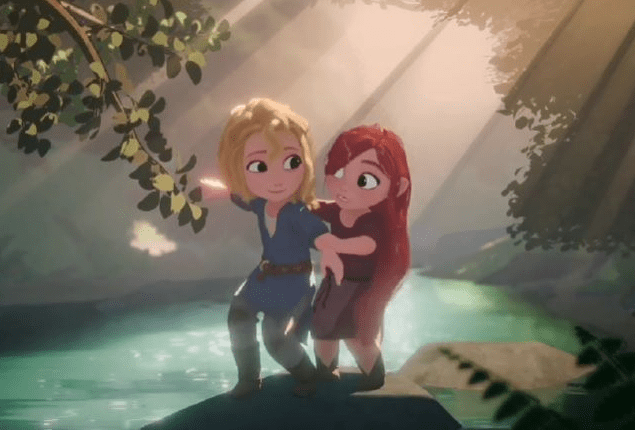
Gloreth and Nimona begin as friends. Gloreth doesn’t think it’s weird or dangerous that Nimona can transform into other creatures. In fact, Gloreth thinks it’s fun riding Nimona as a horse and swinging from tree to tree with gorilla Nimona. Gloreth doesn’t view Nimona as dangerous until her parents teach her to fear Nimona.
Society has a nasty way of perpetuating stereotypes and demonizing people who differ from societal norms. The fear of going against societal norms keeps people in check. Societal norms (or peer pressure on an institutional level) keep people under control. Nimona does a great job of showing how society can demonize others, while also shining a light on a Kingdom ready for change. Sure, Nimona tells us and Ballister (Nimona’s “boss”) that once someone sees you one way, they’ll never see you as anything else, but Nimona shows us how Ballister changes how he views Nimona. And I like how Ballister is the first commoner turned knight, a position historically held by nobility in the world of Nimona. This shows the Kingdom is ready for change.
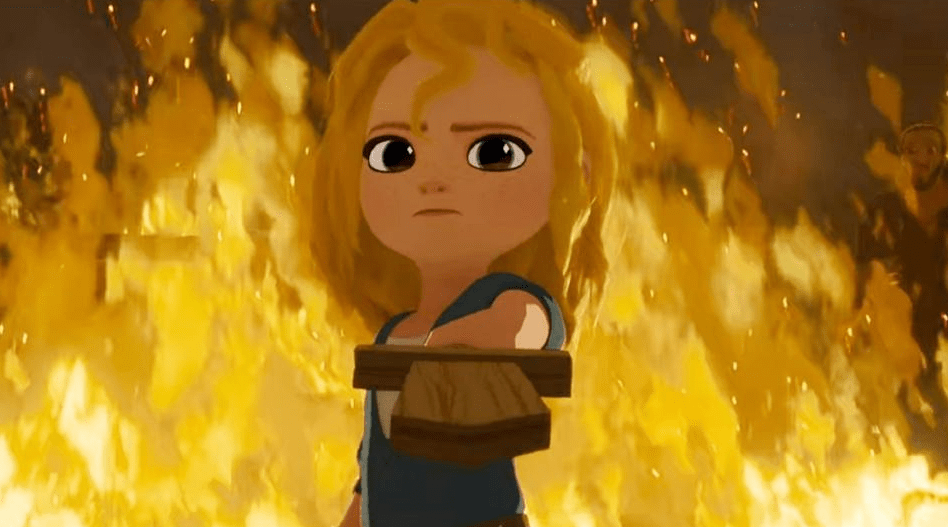
People have a habit of hating people who are different. Divorced from outsider influence, Gloreth accepts Nimona. She even revels in the two’s differences. Gloreth’s parents fear Nimona because of their differences. Gloreth attempts to stand up for her friend, but she can’t prevent the village from attacking Nimona. The mob inadvertently sets their own village on fire. I like the imagery of attacking Nimona, resulting in attacking oneself. Humanity grows the more we allow individuals to be themselves. We all have our differences; we should revel in them. As the village burns, Gloreth picks up a toy sword and utters the line, “Go back to the shadows from whence you came.” This line hits differently each time it shows up in Nimona. During the opening, the line is told like a warm and familiar fairy tale. Here, the line is cold and heartbreaking. Relegating queerness to the shadows is one of the ruling institutions’ insidious methods of control.
Life in the Shadows
When they targeted the Institute for Sexual Research (Institut für Sexualwissenschaft), Nazis burned decades–if not over a century–of books on transgender studies in 1933. Modern radical religious groups and far-right political zealots view transgender people as a fad, something that hasn’t existed for long, even though transgender and gender queer people predate Nazis by at least several decades. Even today, governments sign executive orders, legally limiting the number of genders to only two. Thank you, Trump.
In truth, gender non-conforming people pre-existed the current era. Society and the ruling factions have a knack for forcing gender non-conforming people into the shadows. Ancient Egypt recognized three genders. Pharaoh Akhenaten (either 1353-1336 BCE or 1351-1334 BCE) is depicted with feminine and masculine features. Gender non-conforming people have always existed.
Going back to Nimona’s opening cinematic, after Nimona finishes the storybook introduction, the movie fades to black, and text reads, 1,000 Years Later. Yep. We’ve been here for over a thousand years. That tracks.
Obviously, it stinks for gender non-conforming people to be relegated to the shadows, but by doing so, society hurts itself. Refusing to recognize gender non-conforming people narrows one’s worldview. This line of thinking traps people into small boxes. Society withers when it doesn’t recognize more of its citizens. The world is a less colorful–or, as Nimona would phrase it, metal–place. And that’s why I love the image of the thousand-year-old village attacking Nimona and, in turn, attacking themselves. Such a great scene.
Nimona and Ballister outside the Wall.
A Life of Confinement
When Ballister asks what it feels like to shapeshift, Nimona shares that they feel worse when they don’t shapeshift, like their insides feel itchy. They liken the itch to the second before a sneeze. Shapeshifting makes them feel free. Shapeshifting is part of who they are. When asked what would happen if they held in the shapeshifting itch, Nimona says, they’d die. Nimona clarifies they wouldn’t “die” die, but they sure wouldn’t be living. I love this allegory for what it feels like to be gender non-conforming. Nimona’s way of living contradicts the Kingdom.
The Kingdom has built a wall from the outside world. The people of the Kingdom view everyone who’s different as a monster, especially Nimona. Everyone in the Kingdom is scared of what lies on the other side of the wall, even Ballister. When Nimona asks Ballister if he’s been beyond the wall, Ballister sarcastically says, Yes, I have, because I have a death wish. Nimona suggests that there may be nothing beyond the wall, and in the context of “nothing,” Nimona means to say nothing scary or threatening exists beyond the wall. Gloreth’s old village rests beyond the wall, as does a beautiful mountain scape and lake. The Kingdom sees none of this. The people of the Kingdom are trapped inside their fear.
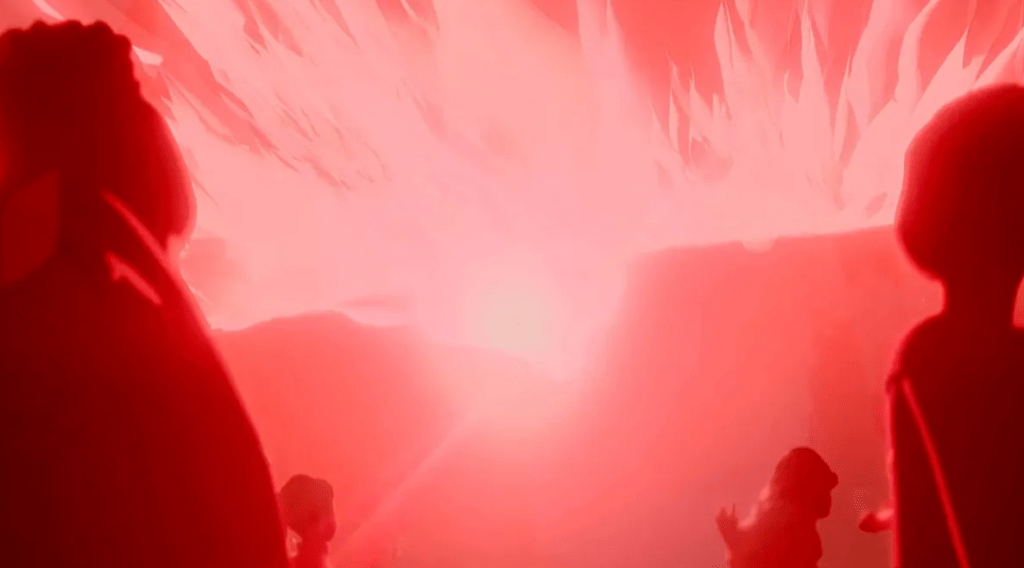
I love the ending, where Nimona takes out a cannon aimed at the Kingdom (more on this in the next section), and the resulting explosion reveals what lies beyond the wall. Absolute beauty. The world is a better place when we accept others’ differences.
Tradition Is Greater than Life
The Director, Nimona’s main antagonist, illustrates a group of people who love tradition above life. The Director is a stand-in for religious and/or political zealots. She murders the Queen and frames Ballister for the Queen’s murder. This act sets the events of Nimona in motion. The Director blamed the Queen for knighting a commoner (Ballister). The Queen sullied the Kingdom’s good name for inviting anyone to become a knight (instituting a meritocracy instead of an aristocracy or plutocracy). In the Director’s mind, ridding the Kingdom of the Queen and Ballister could restore the “natural order.”
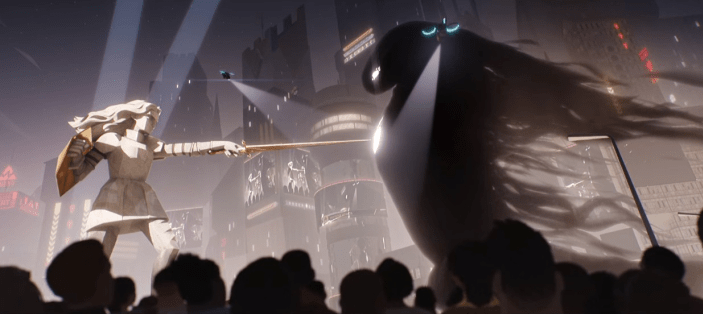
During Nimona’s final fight scene, the Director aims a cannon at Nimona. At this point, everyone in the Kingdom ceases to view Nimona as a threat, everyone except the Director. She repeatedly shows disregard for human life. By aiming a cannon at Nimona in this moment, the Director is aiming a cannon at the Kingdom itself. Thousands of people will die. To the Director, that sacrifice is worth it to maintain tradition. Only tradition matters. And this is where religious and political zealots turn deadly. It’s okay to have traditions, but placing tradition above life is an error we see humanity make throughout history. Funny how stories that feature a monstrous main character like Nimona reveal humanity to be the true monsters.
Subtle Discrimination
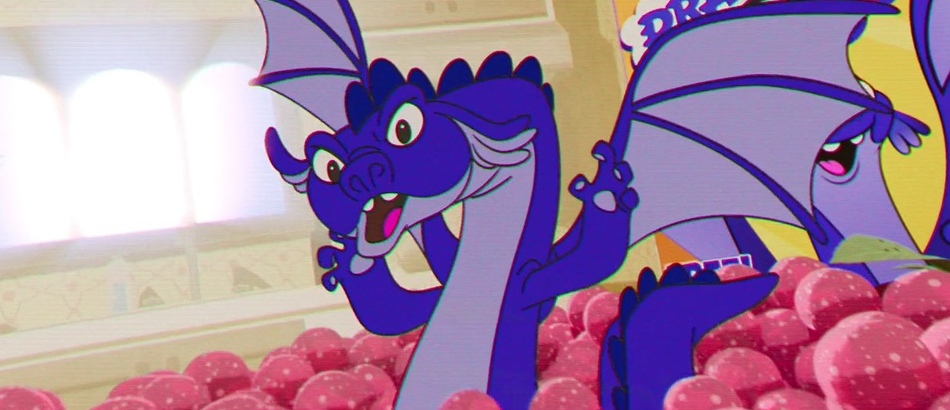
Throughout Nimona, we see children slaying monsters like Nimona: cereal commercials featuring dragons, robotic horse rides outside stores where children can slay various augmented reality monsters, and random slogans like “slay your thirst.” Sure, the Kingdom has plenty of overt discrimination against monsters, but the insidious examples prove more damaging. As Nimona says, children grow up to hate monsters. Hate is in the Kingdom’s DNA.
But Nimona also shows hope. It takes most of Nimona’s runtime, but Ballister learns to see Nimona for who Nimona’s true self.
Nimona even explores self-discrimination. Ballister struggles to accept parts of himself. He views the Kingdom as above reproach. Even after Ambrosius severs Ballister’s arm, Ballister defends Ambrosius’s action. We even catch a glimpse inside Ambrosius’s head as he tries to logic his way through cutting off his lover’s arm, because it was his training. Nimona marvels at how well The Institute brainwashed Ballister, but Nimona isn’t immune to self-discrimination.
Nimona attempts to take their life, a far too common occurrence for gender non-conforming people. Nimona mentions the subtle and casual discrimination against “monsters” earlier in the film’s runtime. I love how Nimona phrases their conflicted feelings.
Nimona: I don’t know what’s scarier. The fact that everyone in this kingdom wants to run a sword through my heart… or that sometimes, I just wanna let ’em.
Ballister stops Nimona from plunging a sword through their heart. Sometimes it only takes one person’s acceptance. Ballister is the one person for Nimona. Let’s end this segment with what Ballister says to Nimona in Nimona’s moment of crisis.
Ballister Boldheart: I’m sorry. I see you, Nimona. And you’re not alone.
Closing Thoughts
Nimona is a great watch. I didn’t mind rewatching it dozens of times for this write-up. I even shared it with my family on Parents’ Day (the last Sunday in July, which can be used to celebrate gender non-conforming parents). I don’t believe Nimona did too well when it first released on Netflix in 2023. The film struggled to reach the Top 10, but Nimona offers a singular experience on the streaming giant. If you missed it during its original release, you should give Nimona a watch. Even though it packs a ton of LGBT representation–transgender representation in particular–Nimona never gets preachy. It’s a fun movie.
This was another long, deep dive. I appreciate you reading this far. Let us know if there are any other great and maybe even not-so-great transgender representations in media you’d like to see us cover in the future. Thank you again for reading, and wherever you are, I hope you’re having a great day.
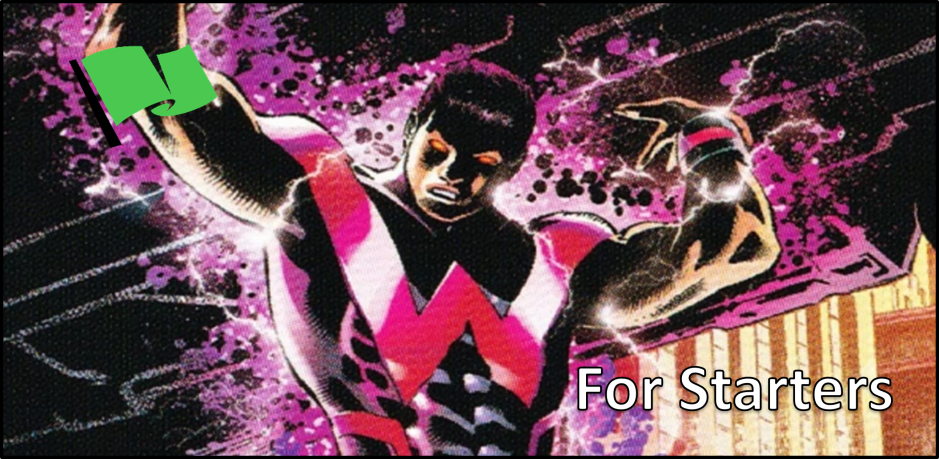
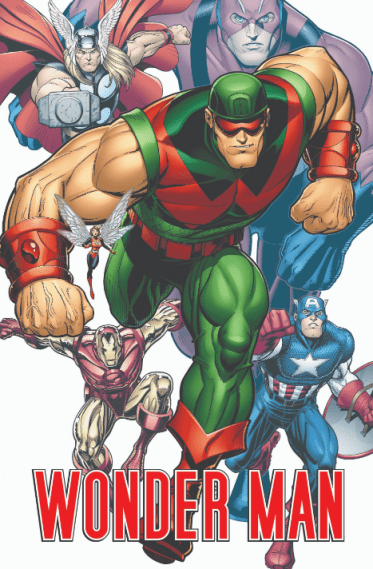
The Wonder Man television series got us excited to make a Wonder Man post. Geekly may have bitten off more than we could chew with a Wonder Man Starter Stories. I remember reading a lot of Wonder Man in West Coast Avengers—that’ll make an appearance on this list—but Wonder Man may be one of Marvel’s most sporadically published characters, especially in his early years. This is partially due to Wonder Man’s origin story (he died), but the character was a sore spot between Marvel and DC Comics. DC Comics had Wonder Woman as an established character and wanted the ability to write a Wonder Man character, but Marvel beat them to the punch. Lawsuits ensued. As a result, Wonder Man appeared in storylines but was rarely a key contributor until the mid-1970s.
Hey, hey, Geekly Gang! Kyra Kyle here, and today we’re going to cover Wonder Man starter stories. Today’s post will differ from most starter stories. Wonder Man will have a ton of single-issue stories, so I’ll do my best to include Wonder Man Omnibuses that should collect many of these stories, and you may get several extra stories to boot. Yay! We’ll begin with single issues, and after the single comics, we’ll list which comic book collection includes the comic. Let’s begin.
Single Issues
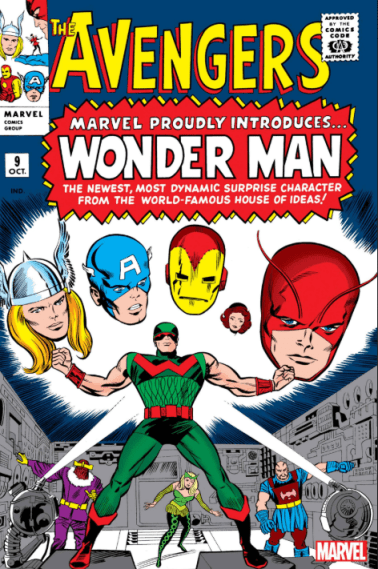
“The Coming of The…Wonder Man” (Avengers #9; written by Stan Lee/art by Don Heck; August 1964)
“The Coming of The…Wonder Man” storyline may hold the secret as to why Wonder Man doesn’t show up that often in his earlier years. Spoiler alert: Wonder Man dies. And it’s a death that stuck for years, according to Stan Lee.
Brief Synopsis: Wonder Man (Simon Williams) gets arrested for embezzling Tony Stark’s money. The Masters of Evil break him out of jail, give him powers, and send Wonder Man to destroy The Avengers. Zemo ensures Wonder Man’s allegiance by poisoning him. Wonder Man gains The Avengers’ trust, but The Avengers do the same with Wonder Man, because they want to help him (get unpoisoned), even though they don’t know him. Wonder Man has a change of heart and sabotages Zemo’s plot.
Yeah! Wonder Man may die at the end, but he dies for a good reason. I can see why writers wanted to honor this sacrifice…for like three or four years.
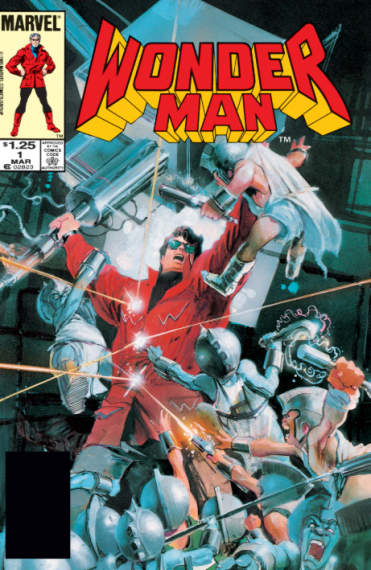
“Wonder Man” (Wonder Man #1, One-Shot; written by David Michelinie/art by Kerry Gammill; December 1985)
The “Wonder Man” One-Shot shows Wonder Man at his conflicted best. By this point, Wonder Man has been an Avenger and an actor—we should see some of this play out in the Wonder Man television series—and he tries a new occupation: science tech trouble-shooter. What does that even mean? Wonder Man finds out in this action-packed one-shot adventure.
Omnibus Listing
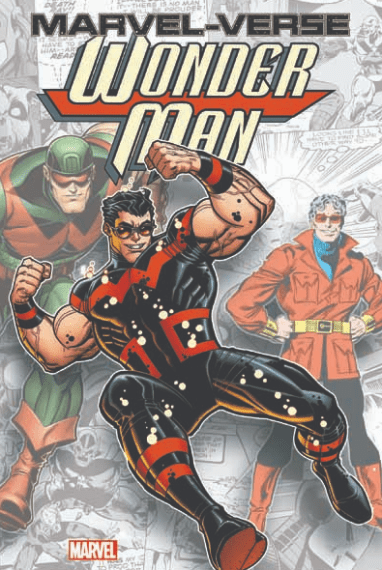
Marvel-Verse: Wonder Man (March 12, 2024)
This recent comic book collection includes Wonder Man’s first appearance, his one-shot adventure, and a couple more issues (Marvel Two-In-One, 1974; Avengers #14, 1998).
Single Issues
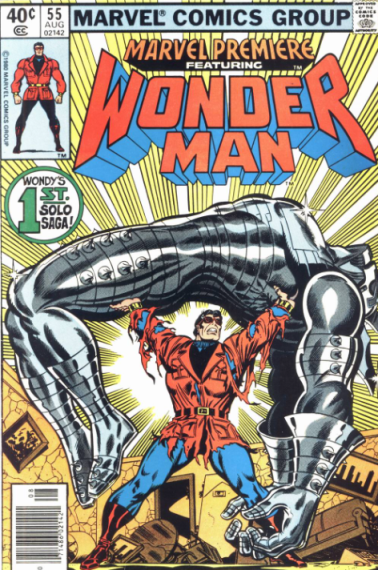
“A Force of Two” (Marvel Premiere #55; written by David Michelinie and Bob Layton/art by Ron Wilson; May 1980)
While the Wonder Man one-shot above may be the flashiest Wonder Man solo adventure to date, “A Force of Two” (Marvel Premiere #55) was his first proper solo adventure. Michelinie pens this issue as well. “A Force of Two” explores Simon Williams’ corporate background, which includes a brief rivalry with Stark Enterprises. In fact, “A Force of Two’s” main antagonist is none other than Madame Masque, one of Iron Man’s greatest villains who hasn’t made their way to the MCU. (Quick note: There was a character named Whitney Frost, Madame Masque’s alter ego, who served as a Black Widow assassin in the Agent Carter series, but a proper Madame Masque has yet to make her MCU debut.) Wonder Man fights Madame Masque and her super criminal ring, Maggia, as she tries to take over Wonder Man’s company, Williams Innovations.
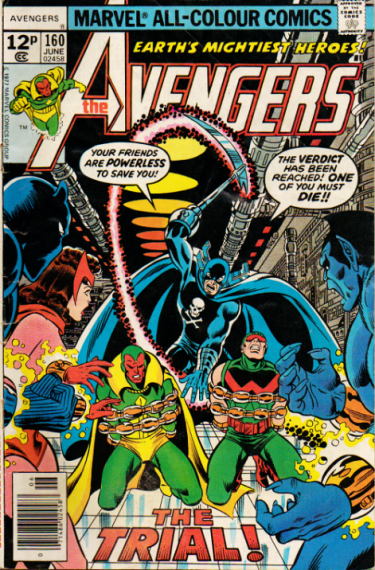
“…The Trial” (Avengers #160; written by Jim Shooter/art by George Perez; June 1977)
“…The Trial” features a major revelation: Simon Williams has a brother. Gasp! I’m cheating a bit with this entry. Honestly, this storyline goes back a couple of issues with Avengers #158, but fortunately, the collection I selected (listed below) includes the entire storyline. Spoiler Alert, I suppose, for an almost five-decade-old comic book. Lol. Antagonist Grim Reaper, one of the best Avengers villains to not yet make their MCU debut, has been a thorn in the Avengers’ side for years. We learn that Eric Williams (Grim Reaper) is Simon Williams’ (Wonder Man’s) brother. “…The Trial” also reminds us that Vision’s mind was originally built from Simon Williams’ brainwaves (like Simon’s consciousness was downloaded from the cloud). Hmm. I wonder if this could influence the MCU.
Wonder Man releases a year or two before VisionQuest. Could VisionQuest include at least a reference to Vision’s original comic book origin (and include Simon Williams)? The MCU has leaned into its darker characters, and Grim Reaper’s aesthetic matches this shift. Could we see Grim Reaper in the not-so-distant future? We’ll have to see. “…The Trial” is another iconic Avengers comic book and worth reading.
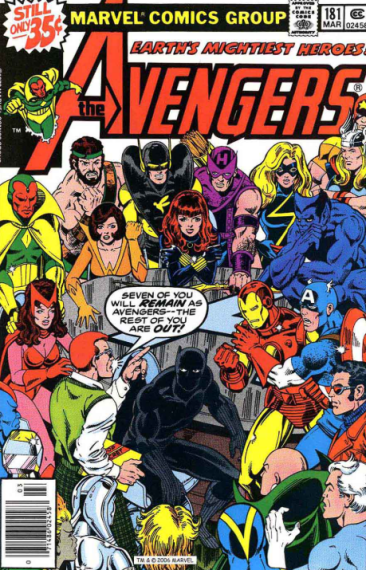
“On the Matter of Heroes!” (Avengers #181; written by David Michelinie/art by John Byrne; December 1978)
I mentioned the MCU a lot in previous entries—mostly because Wonder Man is around the corner—and “On the Matter of Heroes!” is yet another story that could factor into the MCU. In the comics, Wonder Man and Beast (one of the original X-Men) are close friends. “On the Matter of Heroes!” has the pair watching The Adventures of Robin Hood starring Errol Flynn. Wonder Man and Beast discuss the psychological role heroes play for the public. Beast and Wonder Man share a similar sense of humor and are plagued by self-doubt about their place in the Avengers. Beast questions his place because he’s a mutant, while Wonder Man struggles with his mortality. He’s afraid of dying again.
“On the Matter of Heroes!” muddies the water when Wonder Man and Beast return to the Avengers Mansion. Ultimately, due to government influence, Wonder Man is out of the Avengers, and Beast remains. I must mention it. Could Wonder Man introduce Simon Williams’s friend, Hank McCoy (Beast)? The X-Men near their MCU debut.
Omnibus Listing
Wonder Man: The Early Years Omnibus (December 20, 2023)
“A Force of Two,” “…The Trial,” and “On the Matter of Heroes!” are collected in Wonder Man: The Early Years Omnibus. Numerous other comics are also included. This collection is over a thousand pages. Yikes!
Storyline
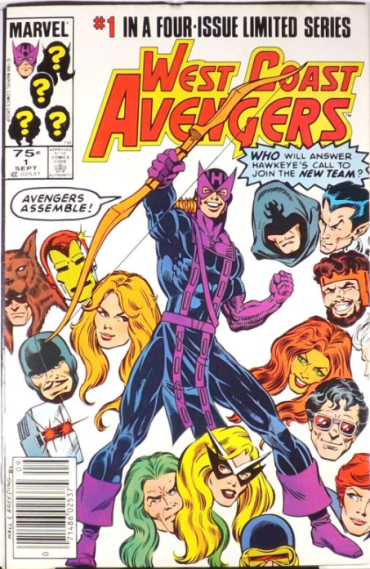
West Coast Avengers Limited Series (West Coast Avengers #1-4; written by Roger Stern/art by Bob Hall; 1984)
West Coast Avengers began as a limited series in 1984. Eventually, it became a monthly title for over a decade. Vision wants to increase the Avengers’ reach, so he creates the Avengers’ first offshoot team, the West Coast Avengers. At this time, Wonder Man has a side hustle as an actor, so a Los Angeles-based Avengers made sense. Simon clashes with almost everyone on the team, especially Iron Man (James Rhodes during this series), as Williams struggles to balance crime fighting with an acting career. Wonder Man features Simon Williams as an actor; West Coast Avengers may play a role.
Single Issues without an Omnibus (as of this post)
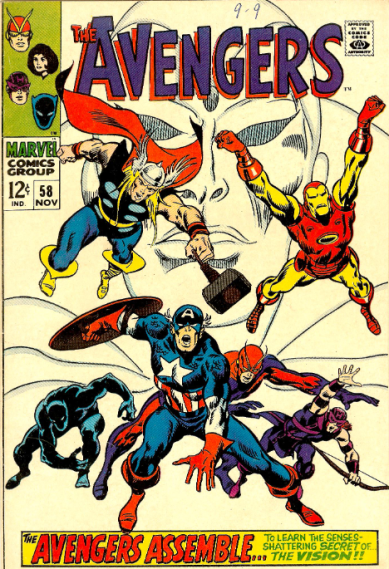
“Even An Android Can Cry” (Avengers #58; written by Roy Thomas/art by John Buscema; September 1968)
While you get the gist of Vision’s origin in “…The Trial” (listed above), “Even An Android Can Cry” is the first telling of this origin story. Somehow, Ant-Man recorded Wonder Man’s brain patterns before he died during his debut (in Avengers #9). Ultron finds these brain patterns and uses them to create the perfect android in Vision. In a roundabout way, Wonder Man and Vision are brain brothers.
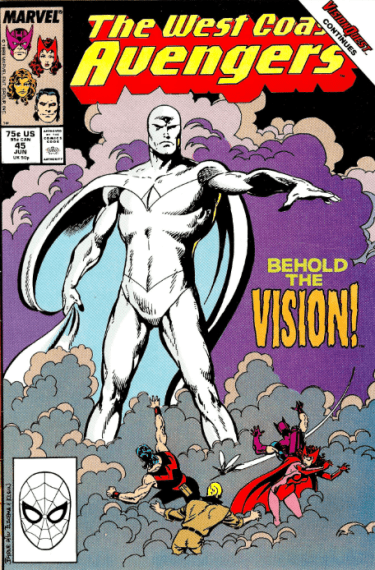
“New Faces” (West Coast Avengers #45; written and art by John Byrne; February 7, 1989)
“New Faces” explores the heartbreaking, bizarre, and fascinating relationship between Wonder Man and Vision. After the government dismantles Vision, the android is left a blank slate. “New Faces” is the comic that introduces a White Vision (like the one found at the end of WandaVision). Scarlet Witch asks Wonder Man to contribute his brain waves to bring back her husband, Vision. Wonder Man refuses.
Wonder Man didn’t have a choice the first time. Vision and Wonder Man shared a rocky relationship because Wonder Man has feelings for Wanda, too. “New Faces” packs an emotional punch and is well worth a read. And check out the top, right-hand corner of “New Faces'” cover: VisionQuest Continues. Yep. This is the comic book version of VisionQuest.
Those are the stories that made our list. Are there any you would add to the list? Let us know in the comments, Geekly Gang. Thank you for reading, and wherever you are, I hope you’re having a great day.














 jkgeekly.com