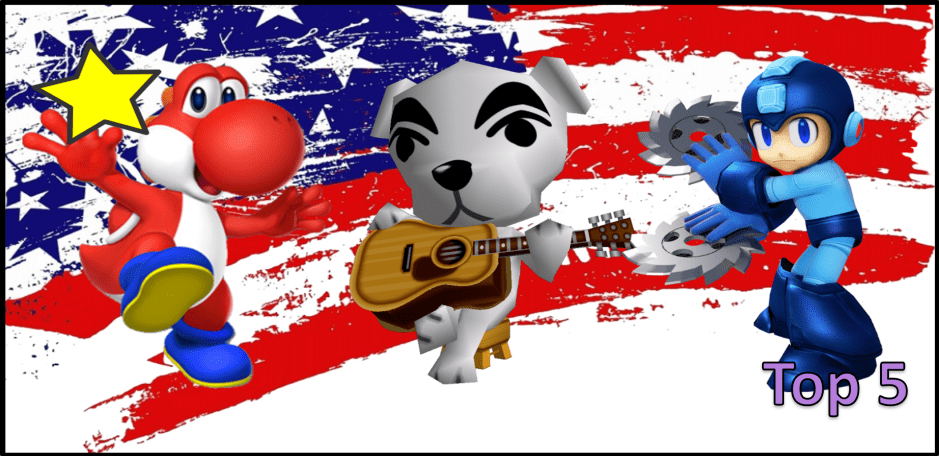
U-S-A! U-S-A! U-S-A! The United States of America celebrated its Independence Day yesterday, so we’re celebrating belatedly by listing our picks of the top 5 video game characters that use a red, white, and blue color palette.
Hey, hey! Kyra Kyle here. We’re doing something a little different with today’s Top 5. It’s no longer the United States’ Independence Day, but who are we kidding? Someone will be lighting fireworks tonight. We can set off a few of our own with these top 5 red, white, and blue video game characters.
5) King Dedede
Video game designers may have ulterior motives when selecting their characters’ color palettes. Nintendo certainly did with King Dedede when they introduced him to the Kirby franchise. Visually, he combines Santa Claus’s outfit, a bald eagle’s beak, and John Henry’s hammer. Personality-wise, King Dedede is a glutton, selfish, and hostile toward the color pink. In short, he’s all American.
Take that, you pesky amoeba. King Dedede won’t be the only video game villain who wears red, white, and blue. ‘Murica!
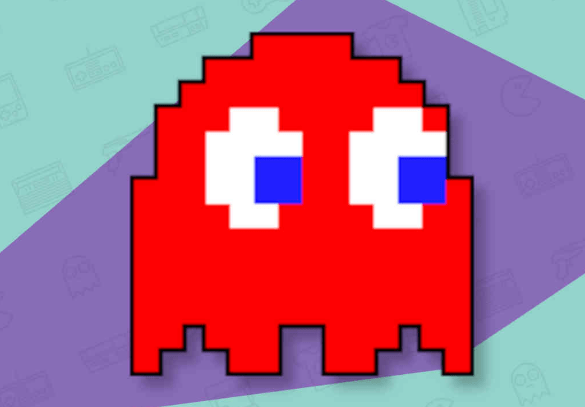
4) Blinky (a.k.a. Shadow)
Blinky (from 1980’s Pac-Man) may not be the first character you think of when discussing red, white, and blue video game characters, but he is classic. Shadow is the leader of the team of ghosts (they’re actually monsters) who chase Pac-Man. While Pinky (Pink) and Inky (Cyan) attempt to ambush Pac-Man by taking routes the player doesn’t choose, Blinky chases our protagonist and applies pressure.
Shadow is the most aggressive of all the ghosts (monsters) and the most dangerous. When players get caught, they’re usually caught by Blinky. He has true American vigor. He races to chop down Pac-Man like George Washington chopped down a cherry tree.
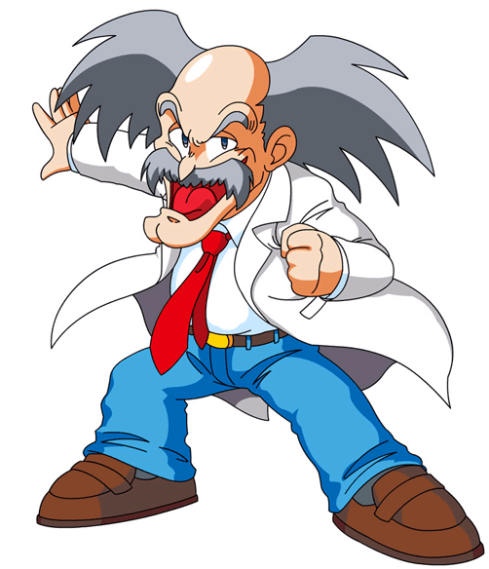
3) Dr. Wily
Wow! Are there any video game heroes who use a red, white, and blue color scheme? Yes. They’re next on our list, but we have one final video game villain before we reach them: Mega Man’s Dr. Wily. Before Dark Souls, Dr. Wily pushed gamers to “get gud.” I don’t know how many times I attempted a Mega Man level, only to leave my palms sweaty after countless hours. Thank you for making me a better gamer, Dr. Wily. I salute you.
Dr. Wily also happens to have an advanced degree, adding to a long line of PhDs with nefarious plans. You’d think universities would weed out these bad eggs before they graduate. Oh well. If Wily’s university had expelled him, we may not have gotten a killer robot dragon in Mega Man II.
2) Sonic
Sonic is Sega’s mascot. Ever since the speedy hedgehog raced onto game consoles in 1991, he’s worn red and white shoes, white gloves, and he has blue fur. Very patriotic of you, Sonic. Sonic is ubiquitous with Sega. He’s the first character–and possibly only character–one would think of with Sega Games.
It also doesn’t hurt that Americans are an impatient bunch. Sonic’s speed gets you those rings now. Not later. Now! Hot dogs, muscle cars, and Sonic the Hedgehog. Is there anything more American?
1) Mario
Yeah. We couldn’t go with any other video game character than Mario. You probably read this list and already knew the fictional plumber would top this list. Mario has always featured red and blue. Even in his short stint as “Jumpman” in his Donkey Kong debut (1981), he was always pictured on the video game cabinet to be wearing white gloves, even if the hardware at the time couldn’t effectively render those pixels.
You know you’re a big deal if people know you mononymously. If you utter Mario, most people will picture a plump plumber, wearing a red shirt and hat with blue overalls. Since Mario wears red, white, and blue, he tops this list. It also doesn’t hurt that Mario is often seen with stars. Talk about a Star Spangled hero.
Did we get the list right? Which red, white, and blue color palette video game characters should make this list? Let us know in the comments. Thank you for reading, and wherever you are, I hope you’re having a great day.
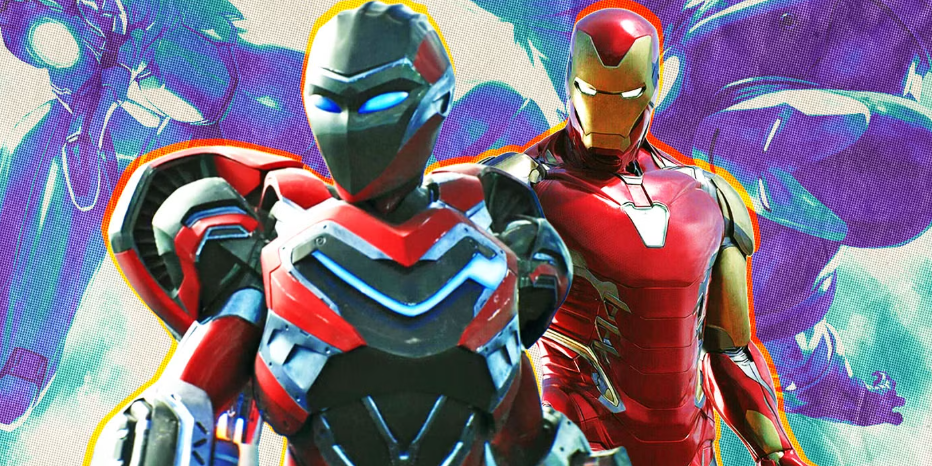
Happy Friday, Geekly Gang! Kyra Kyle here, and we’re going to discuss Ironheart’s final three episodes. There’s little chance that we’ll cover this subject without major spoilers, so this is your spoiler warning. Last week, Ironheart finished strong, but I wondered if it would continue this momentum during its second episode release. In short, it did.
Ironheart managed to raise the stakes with almost every scene; that’s good to see. Sacha Baron Cohen was electric as Mephisto. Unlike my thoughts from last week (I guessed Ironheart would show Mephisto ruing its fifth episode), Ironheart held off showing Mephisto until its final episode. That’s a fantastic choice. This kept Mephisto from being watered down over two episodes. The MCU has been building toward Mephisto for a while. (Yes, there will be some minor MCU homework, but Ironheart does a good job revisiting Dormammu and the events of the first Doctor Strange.) The show ends on a cliffhanger. It looks as if Mephisto wins. That’s an intriguing ending for what would’ve been Ironheart’s first season. We’ll have to discuss Ironheart’s future at some point. Why not now?
Few Marvel shows on Disney+ have received second seasons, and that’s before considering Ironheart’s potential for underperformance. Disney+ hasn’t yet released its streaming numbers for Ironheart, but I’d imagine it didn’t do well because the show starts slow–really slow–and there’s a chance fewer viewers will give Ironheart episodes 3-6 a watch. Seriously, the last four episodes save the show. Despite leaving a lot of bread crumbs, I doubt Ironheart receives a second season. We’ll see Mephisto and Ironheart again in future MCU projects, but it’s a shame their story won’t continue through a second Ironheart season or an Ironheart special. I’d be okay with a one-shot Ironheart Disney+ special.
Getting back to Ironheart’s final three episodes, the characters grew on me. I was warming up to them during episode three, but Ironheart really did ramp up the tension and/asked interesting questions with each of its scenes. Of course, there were the ubiquitous battles. Ironheart wouldn’t be a Marvel project without the fights growing in intensity. But Ironheart did enough groundwork to make Riri’s showdown against The Hood’s gang, Zeke Stane, and The Hood meaningful. Each of these factions (and yes, The Hood’s gang and The Hood) has different goals and desires, and I like how Ironheart pitted these characters’ motivations against each other.
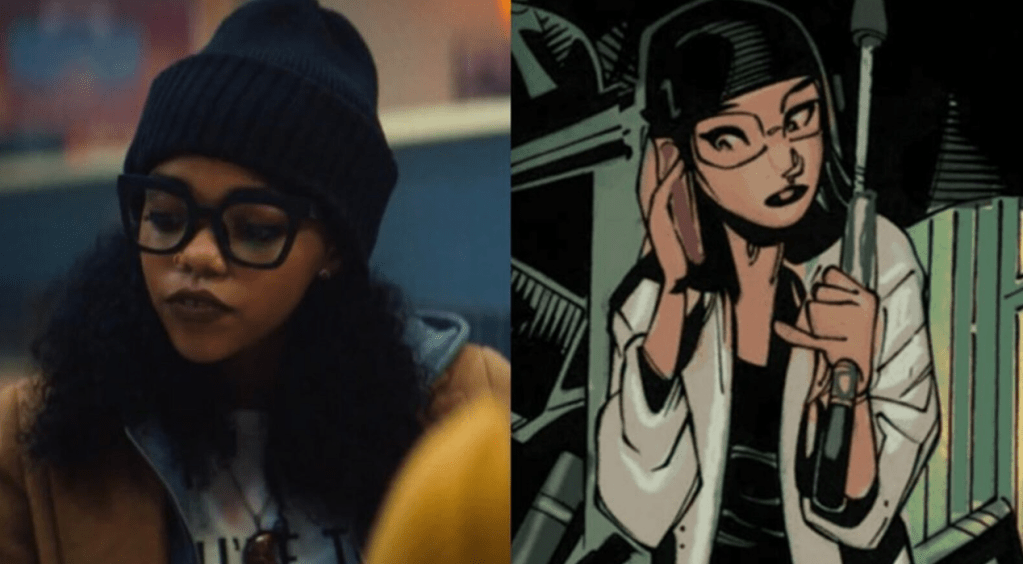
Even Mephisto’s goals differ from The Hood’s. Did I mention Sacha Baron Cohen is amazing as Mephisto? I have? Well, I’d watch Ironheart just for his performance, but Ironheart had plenty of amazing acting performances. I don’t want to list them all here. Few, if any, Ironheart characters fell flat, but I’ll take this moment to give a shout-out to the surprise Doctor Strange (from the comics) character Zelma Stanton.
Regan Aliyah’s adorkable Zelma Stanton does a great job of tying Ironheart into Doctor Strange and Wandavision/Agatha: All Along. I like how Marvel digs deep into its comic book lore in odd but meaningful ways. Ironheart wouldn’t work without Zelma. Kudos for including her. I have one small gripe. The now iconic scene of Mephisto tempting Riri Williams is a little on the nose (from a writing perspective), but Cohen’s gravitas is outstanding, and I don’t care if I’ve heard a similar version of the devil.
So, is Ironheart worth your time? I’d consider skipping the first two episodes and watching the episode recap for episode three. I’d definitely skip Ironheart’s first episode; it’s a slog. I’m concerned about how the MCU will continue the stories introduced in this show, so I’d have to give Ironheart an incomplete. It ends with a compelling cliffhanger, but there’s little chance we’ll get a satisfying payoff. Please, give us an Ironheart Disney+ special. Beyond those early hiccups, Ironheart was a fun watch. It even manages to set up a solid foundation for future MCU stories.
Ironheart’s future is up in the air. I wish I could tell you that all the great story threads introduced in this show will get a satisfying resolution, but only time will tell. Honestly, Riri’s reunion with Natalia and showing signs of Mephisto taint gave me a smile. Not since Thanos have we seen a Marvel villain succeed, and Sacha Baron Cohen’s Mephisto can serve as a fantastic MCU villain.
Happy Wednesday, Geekly Gang! The Geekly writers have another month of video games and board games to discuss, but we’d like to hear about the games you’ve been playing, too. Whatcha been playing, Geekly Gang?
Kyra’s Games
Kyra’s Video Games
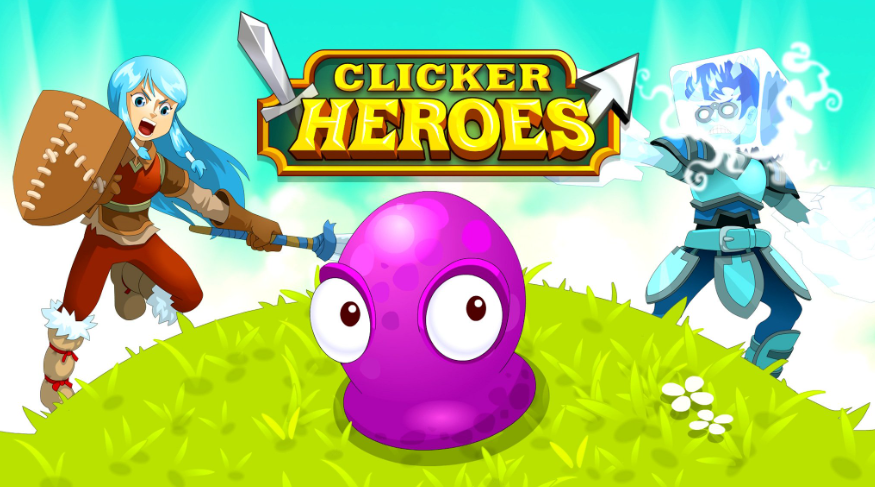
I haven’t played many new video games this past month, but I have gotten into a decade-old mobile game, Clicker Heroes. Yes, this is a hella old mobile game, but it’s new to me. The monsters remind me of the monsters from My Singing Monsters. I’m guessing that’s on purpose. Oh! I may have to redownload My Singing Monsters. Clicker Heroes is a standard idle game. The idea of the game playing itself while you’re gone isn’t new (it’s at least a ten-year-old concept at this point), but Clicker Heroes does a good job of executing the gameplay. I wonder if I can level up my heroes enough to break the game.
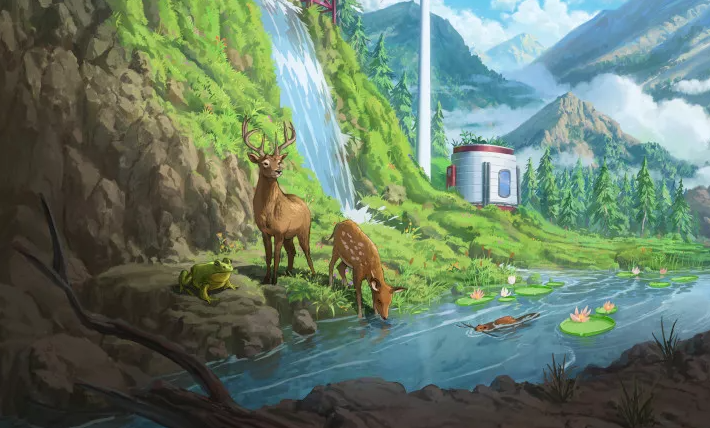
Just because I haven’t played many “new” video games doesn’t mean that haven’t been replaying games. Terra Nil and Dorfromantik have dominated my video game hours this past month. I’m writing reviews for both of these cozy games. These reviews should be posted in September. That let’s you in on how far into the future these reviews are. Terra Nil is an anti-city builder (you’re trying to reclaim the earth for wildlife), while Dorfromantik is tile tile-laying video game, where you’re building a pastoral landscape. Both are chill games. I love playing them for the vibes.
Kyra’s Board Games
My gaming group has played even more Flip 7 over the past several weeks. Flip 7 is one of those games we play as a warm-up or as a quick change of pace game. Essentially, Flip 7 is a large group game of Black Jack with specialty cards. The game’s easy to pick up, scales really well, and is a great way to bring in people who aren’t already board game enthusiasts. My Monday gaming group meets at the public library, so we get a lot of random people who walk up to the table. Flip 7 works as an introductory game. It combines just enough new elements with a classic card game.
Prior to joining my gaming group, I hadn’t played many Set Enterprises card games. But we’ve been playing Quiddler, which is a quick and fun word-building game, and Karma, where players try to empty their hands, but they have three cards face-down that they don’t know what they are until they’re played. I’m a bigger fan of Quiddler than Karma, but I appreciate what Karma’s trying to do. The face-down cards cause enough chaos that they even the playing field of a standard card-shedding game. Still, there’s a little too much luck involved (for my tastes) with the Set Enterprises card games I’ve played. But I do really like Quiddler. It’s short enough that I don’t mind the heightened aspect of luck.
I could talk about a handful of other board games, but I’m certain Season and Skye may mention them in their write-ups. I won’t swoop in with any of their entries. Speaking of which, let’s see which games Season and Skye have played over the last month.
Skye’s Games
Skye’s Board Games
I’ve heard good things about Cretaceous Rails for a while–mainly from Kyra and Season–but I haven’t played it until now. I had fun. Cretaceous Rails is a simple board game about creating a dinosaur tourist resort by time-traveling to the past. While I didn’t do so well my first time, I rarely do, I still enjoyed Cretaceous Rails enough to want to play again. Cretaceous Rails is one of those games that has several interesting elements that can only be properly explored across multiple playthroughs. I intend to “git gud.” Also, it’s trains and dinosaurs. Together at last! What’s not to love?
Skye’s Video Games
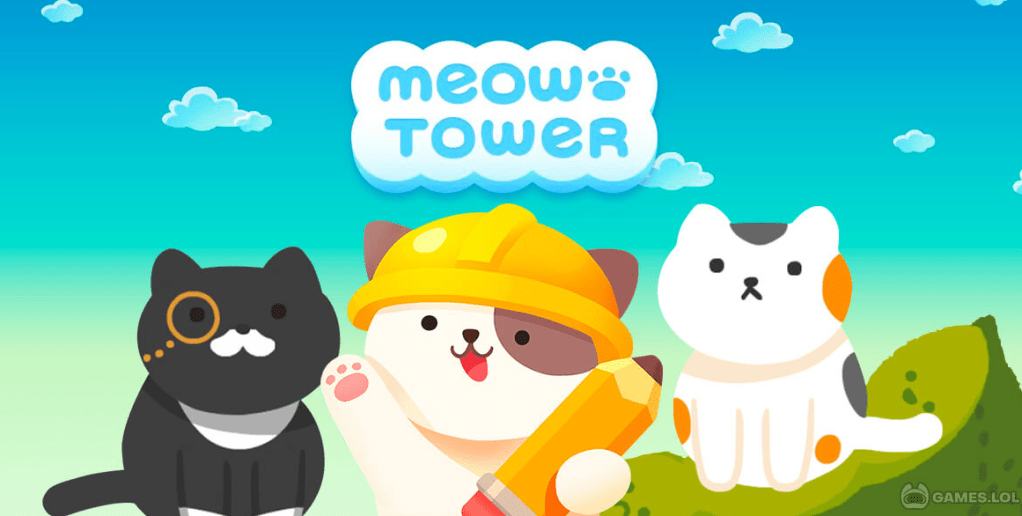
Over the past month, I’ve migrated back to mobile games. Meow Tower is one of the phone games I’ve discovered. In Meow Tower, you’re a human making an apartment building for cats. That’s pretty much it. You get to know each of the cats individually; you design each of their rooms to their liking. You progress through Meow Tower by solving puzzles, specifically Nonogram puzzles. If you’re unfamiliar, Nonograms are spatial puzzles that force you to uncover hidden images given the available clues. If you like brainteasers and cute cats, Meow Tower is a great leisure game.
Last Stronghold is another phone game. I know, I lost a good amount of gamer-cred this past month. Last Stronghold is a basic zombie survival game. What appeals to me about Last Stronghold is its focus on building up your base, exploring the world around you, saving other survivors, and shooting zombies in the face. I just described every zombie game in existence. Dang it. My favorite thing about Last Stronghold is its art style. Call me petty, but that’s pretty much it. With it being an offline phone game, Last Stronghold also has a significant element of leisure to it, which allows you to go at your own pace. Last Stronghold is by far the most benign zombie apocalypse I’ve ever seen.
Season’s Games
season’s board games
Wingspan is technically a board game, but I’ve played the Steam variant. I’m still counting it since I have physical copies of Wyrmspan and Finspan. It’s like the same thing. The interface on Wingspan is easy to follow. Players can tab between different zones, and the game will remind them in which order to take actions. It’s definitely easier to learn how to play Wingspan through the Steam version since there’s a tutorial. My only nitpick with this version is that players must remember which birds are holding eggs whenever they need to spend eggs. Players can click on the zone where said bird is, but there isn’t a separate interface.
season’s video games
I completely forgot a Persona 5 gacha game was getting released on June 26th. I got an ad for it on YouTube the other day and was like, “Oh. Yeah. I forgot that was a thing.” I’ve gotten a decent way through the story so far, and it’s definitely made me nostalgic for the original Persona 5. The combat hasn’t changed, except that it can be sped up, and they’ve included auto-battles. Some other minor differences include synergy between characters instead of confidants, and, as far as I know, there isn’t a finite amount of time to complete the story.
Persona 5 The Phantom X has players progress the story similarly to the original Persona 5. You must complete the first Palace and learn mechanics. Story-wise, it’s better than other gacha games. I wouldn’t expect anything less from a Persona game, even if it’s a free-to-play gacha game. I’m also digging the character designs. Unlike most gacha games, there are an even number of men and women characters, and they’re adequately dressed. I’m not a fan of boobs in my face. Just saying.
Side note: I pulled for Joker and got him on my first ten pulls. I’m a huge Joker simp lol.
Hey, hey, Geekly Gang! Kyra Kyle here again. Those are all the games our writers have played over the past month. Feel free to share the games you’re playing. Thank you for reading, and wherever you are, I hope you’re having a great day.
It’s the beginning of the third quarter, so we have another JK Geekly update for you. Hey, hey, Geekly Gang! Kyra Kyle here. JK Geekly has continued a once-a-day production schedule for several months now. Woo hoo! We’re keeping a couple of months ahead with most of our schedule, so by the time you’re reading this, we’re probably working on autumn/winter posts. Autumn and winter already? Is 2025 ending this quickly? Yikes!
Quizzes
We kept up with our quizzes, but we may slow production of one or two types (multiple choice and matching). Not too many people are viewing these. Instead, we have a new quiz type: Sweet Emoji. These quizzes will have a topic and a set of emojis for clues. Can you figure out what each clue means based on the emojis?
Next month (August 2025) will feature a Sweet Emoji quiz every Tuesday and Thursday. When the calendar reaches September, we’ll weave Sweet Emojis with Color Palettes, Timelines, and Multiple Choice/Matching. Multiple choice and matching won’t go away entirely; they’ll just alternate on the day one would appear. Let us know if you like this new kind of quiz.
TV Show and Movie Reviews
Geekly began posting TV show and movie reviews the day after the show or movie dropped, but we’ve found that the Friday or Saturday (or even the following Monday) after the show or movie drops is plenty of time to gather our thoughts and provide a longer breakdown of what we think. We’ll continue with this trend going forward. Let us know if you have a preference for when we release show and movie reviews or first impressions.
Whatcha Series
The Whatcha series is going strong. The Geekly Gang enjoys sharing what they’ve been doing over the past month, and you get to know us better. We’ll continue cycling through “Whatcha Playing?,” “Whatcha Watching?,” “Geekly Tunes,” and “Whatcha Reading?” every Wednesday in that order. You won’t have to wait long to see what the Geekly Gang has been getting into lately. Feel free to share what you’ve been playing, watching, listening to, and reading. We’re all part of the Geekly Gang.
Friday Potpourri Turning Into Writing/Design Diaries
Sure. We mentioned TV show and movie reviews earlier, but that’s only one type of post you may see on a Friday. Geekly has been testing the waters with memes, Geekly castings (where we fan-cast upcoming movies), and deep dives. Our first Geekly casting involved the MCU X-Men. Our first deep dive was Autism Representation in the Big Bang Theory. Let us know which of these posts you like best. We’ll continue with Geekly castings and deep dives, but they’ll be woven in with our usual Monday/Saturday posts. This will free up Fridays for writing and game design diaries.
Kyra Kyle will get even more personal with their writing and game design process. Beginning this September, they’ll alternate between the two diary types.
Quick scheduling note for this month’s deep dive. With so many releases occurring during July (the bulk of IronHeart, Superman, and Fantastic Four: First Steps), we won’t have another deep dive until August, but we’ll make up for it with a double dose of deep dives.
JK Geekly Discord Server
We haven’t seen many people join the JK Geekly Discord Server. We’re struggling to advertise it. We’ll post it here again and see if we get any new users and figure out other ways to promote the server. We’d love to see you on Discord, Geekly Gang.
Closing Thoughts
That’s all we have for now. We’ll have another one of these posts ready for October. Until then, stay safe, thank you for reading, and wherever you are, we hope you’re having a great day.
Another week and another video game review of a game I’ve played a lot. It’ll be difficult to remain objective while discussing Onirim, but I’ll do my best. Usually, I delete Solitaire from my mobile devices and replace it with Onirim. You can find me in line playing a few games of Onirim. Like I said, I play Onirim a ton.
Hey, hey! Kyra Kyle here. At its core, Onirim is a solitaire game, which is why I replace Solitaire with this title. While this video game is a fun twist on classic Solitaire, Onirim remains a solitaire game, a tabletop card game converted to an app. How will it fare with our review criteria? Let’s find out.
Mechanisms: 10/10
Be honest. You saw this coming. Like I said, Onirim is an interesting twist on classic solitaire. The deck has four suits, each suit has four card types, here’s where the theme comes into play. The player is traveling the dream world (hence the name Onirim, a take on oneiric) and needs to safely escape the land of dreams by opening three doors in each suit. If you draw into a suit’s door and have a matching key, you may open the door. If you don’t have a matching key when you draw a suit’s door, you draw another card and shuffle the door back into the deck. This is where the digital version of Onirim trumps the physical version: shuffling.
During a game of Onirim, you’ll often shuffle the deck. Nightmare cards (which don’t belong to any of the four suits) may be drawn. Bad things will happen when a nightmare appears (it’ll be up to the player what happens exactly), and if the player draws extra nightmares in a turn, any nightmares beyond the first also get shuffled back into the deck. There’s a lot of shuffling, and the digital app does all that shuffling for you. Typically, I prefer a physical tabletop game over a digital version of that same game, but Onirim enhances this already stellar game.
Since the player has choices when a nightmare card gets drawn, Onirim provides player agency and adds a layer of strategy. The remaining two card types (in the base game; there are expansions that we won’t discuss here) are suns and moon cards in all four suits. Suns are the most common card type. Moons are less common. And the rest of the game is playing three cards of the same suit but with different symbols, in the top play area. When that happens, the player searches for a door card in that suit, and then reshuffles the deck. Yes. More shuffling. I love playing the Onirim video game.
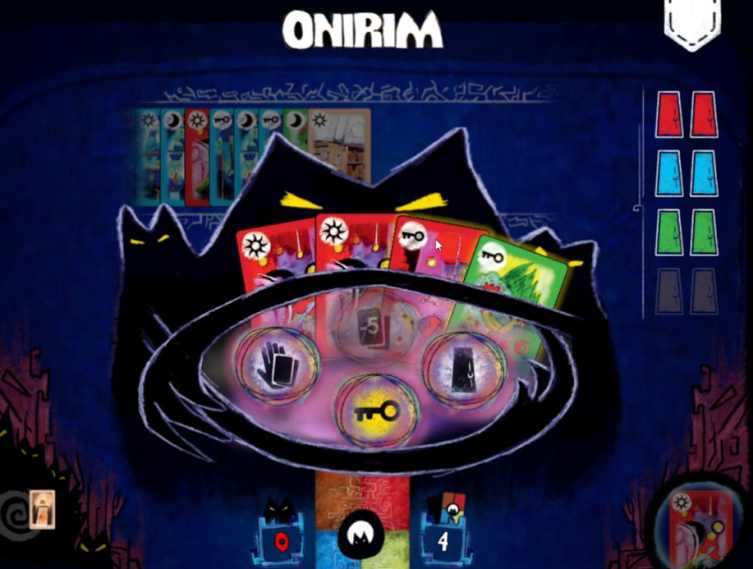
Above Image from GameDesigning.Org
Gameplay Loop: 10/10
Onirim games play fast, and each game is unique. The simple premise, the colorful twist on solitaire, and the options a player has once a nightmare card is drawn grant Onirim a high gameplay loop score. I don’t mind waiting in line while playing Onirim. And like I said, I replace Solitaire with Onirim. Obviously, this game’s gameplay loop is fantastic.
Narrative and Storytelling : 3/10
We’re combining narrative and storytelling for Onirim because Solitaire doesn’t have any story. Onirim has an intriguing premise. The nightmare cards and doors needed to escape the dream world, hint at a greater story, but I can’t give Onirim top marks in either of these categories. This is partly why I combined the two. But Onirim does just enough to not get below a three.
User Interface: 8/10
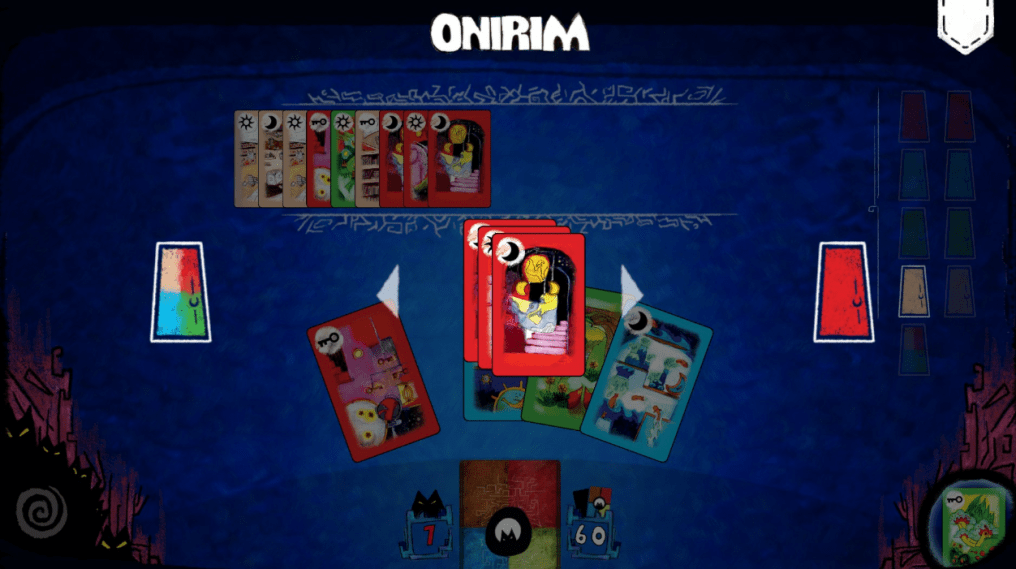
Onirim has a clean look. The play area up top is easy to see (the image above includes an expansion, so there’s a card type, the whirlpool, that I haven’t mentioned). Your hand is visible below the play area. Beneath your hand, you’ll find how many nightmare cards remain (the black demon with the red number on the left, and how many cards remain in the deck; you lose if you run out of cards before opening all twelve doors). The filled-in cards let you know which doors have been opened, and the top right corner is where you can access the main menu. Clean. Easy to read.
I lowered Onirim just a hair for the User Interface because of how difficult it can be to navigate all-time statistics. This isn’t a big deal for a lot of players, but if one becomes invested and explores that rabbit hole, one would want an easier set of menus.
Graphics: 6/10
Onirim has amazing graphics for a solitaire game. But it’s still a solitaire game. Onirim does what it can within the confines of a card game, but no matter how good the cards look, they’re still cards. That said, Onirim may be the prettiest card game I’ve seen. It has to get an above-average score.
Audio: 5/10
Onirim is another game I play with the sound off. The soundtrack is atmospheric, but kind of blends into the background. The sound effects could–and probably should–boost this score even more. But I’m going to stay as objective as I can. While the shuffling effect can be satisfying, you’ll hear it a lot, and it can also detract from the experience. There’s so much shuffling.
Replay Factor: 10/10
Since Onirim is Solitaire with a twist, you’ll find it difficult to play only one game. The app keeps track of your all-time stats, so I end up trying to beat my all-time best, and if that happens, I’ll try raising my overall win percentage or how quickly I typically beat the game. Solitaire with stats. That’s a rabbit hole. It also gives Onirim high marks in replay value.
Happy Sunday, Geekly Gang. Kyra Kyle here with another week of Geek News. I wrote this post a day or two early because my birthday is this weekend. Yay! I’m leveling up another year. But before I eat my body weight in key lime pie and beef stroganoff, we have some Geek News to cover, starting with the final Fantastic Four: First Steps trailer. I know. I know. We’ve covered every Fantastic Four trailer. Somehow, I keep missing some of the Superman trailers. I’m equally excited for both films.
Marvel Releases Fantastic Four: First Steps Final Trailer
The MCU released the final trailer for Fantastic Four: First Steps. I appreciate that we didn’t get too many new spoilers with this trailer, but that doesn’t mean there aren’t some peppered in. We may venture into spoiler territory.
The trailer begins with the Fantastic Four at the Ted Gilbert Show when an alarm on their watches sounds. The scenes before this moment give us the longest looks we’ve seen of Marvel’s first family using their powers: Mr. Fantastic stretching, Invisible Woman throwing up a force field and manipulating objects, The Human Torch flying past a Coppertone billboard of himself and setting it on fire, and a bystander wanting The Thing to say, It’s Clobbering Time.
I love the running gag of everyone trying to coax The Thing into saying, “It’s Clobbering Time.” This is a trope used in certain Fantastic Four comics, where The Thing may have said Clobbering Time once, or it was used for a television show (in First Steps, it’s a cartoon), and I can’t wait to see the payoff because, undoubtedly, he will say Clobbering Time, perhaps in the scene where Johnny carries The Thing (with a beard–look at his rock beard, that’s awesome).
A few more moments stick out. We get a better look at Shalla-Bal. I’ve talked about how I didn’t like the CGI for this Silver Surfer, and I’m glad to see an improvement with this trailer. We get an extended look at Galactus, but not a straight-on look at the titan. The Fantastic Four fly into a black hole, and it’s implied that Sue may be pregnant with Franklin at the time. Flying into a black hole while Sue is pregnant with Franklin could supercharge Franklin’s powers. Someone in the crowd by the Fantastic Four carries a sign that reads, Earth Believed In You, which implies that the Fantastic Four have already failed in some way.
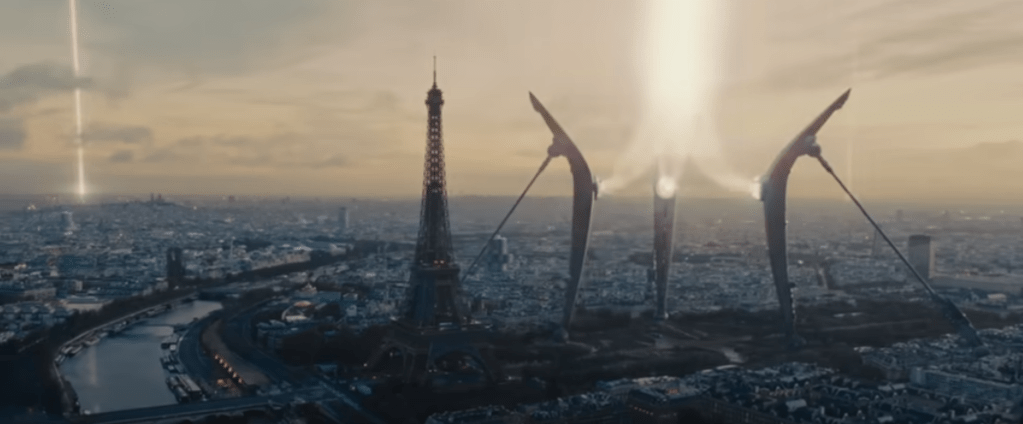
And there are those three massive devices. One is by the Eiffel Tower. I’m unsure where the other two in the distance are from Paris. Could this be what Reed was working on with his massive blackboard? We’ll have to find out. I’ll paraphrase one of the top comments on this trailer. The marketing team is doing a great job by holding back three things: 1) Galactus’s face, 2) The Thing saying, “Clobbering Time,” and 3) Johnny saying, “Flame On.” I agree. It’s best to see and hear these things when Fantastic Four: First Steps hits theaters on July 25th.
Grail Games Launches The Pixel Series on KickStarter
Grail Games returns with a trio of retro-art board games. Even though Aliens Attack!, Ohio Bob, and Harvest Valley use the same 8-bit art style, they couldn’t be more different in gameplay. Aliens Attack! is a tower defense game, Ohio Bob offers a fun adventure, and Harvest Valley is a farming sim. All three games are smaller, easier to store and transportable.
The Pixel Series even features some board game designing giants like Bruno Faidutti and Hisashi Hayashi. You can back this project and receive individual games for $10 or the entire set for $26.You can even throw in a fourth game in the series, Level 10, which is a reprinting of Okey Dokey.
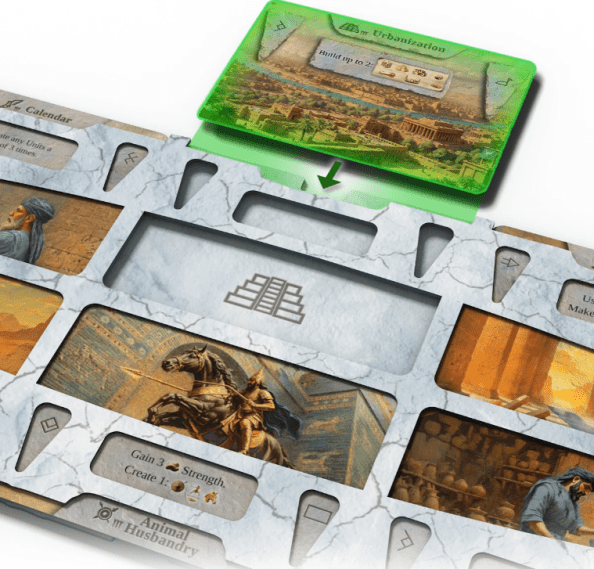
Even though it isn’t the Mesopotamian Royal Game of Ur, the board game Mesopotamia does include knucklebone game pieces, which were game pieces in the classic board game. Meeple Pug’s Mesopotamia puts players in the role of civilization leaders in this stunning 4X game (explore, expand, exploit, and exterminate). Mesopotamia foregoes a tech tree for research tiles that make each player’s civilization unique.
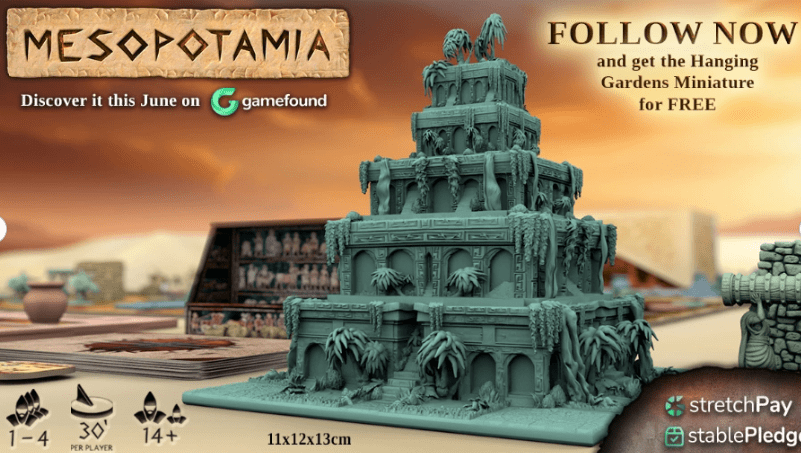
I love Mesopotamia’s customizable player boards. This gaming component could spark a series of games with a similar component. Mesopotamia’s gameplay encourages trading, exploration, and combat. Those knucklebone game pieces come in handy when attacking one of your opponents. Mesopotamia’s game pieces are top-notch. This is a gorgeous game, and that’s before considering the prelaunch Hanging Gardens Miniature.
That miniature looks amazing, and Mesopotamia has plenty of other detailed miniatures. I like the addition of note one, but three solo-player modes: exploration, siege, and castle defense. Mesopotamia offers a lot of gameplay options. It launches early next week, so we don’t yet know how much this campaign costs. If you’re interested in Mesopotamia, follow its GameFound page.
Modern Classic Board Game Colosseum Receives a Glow-Up on GameFound
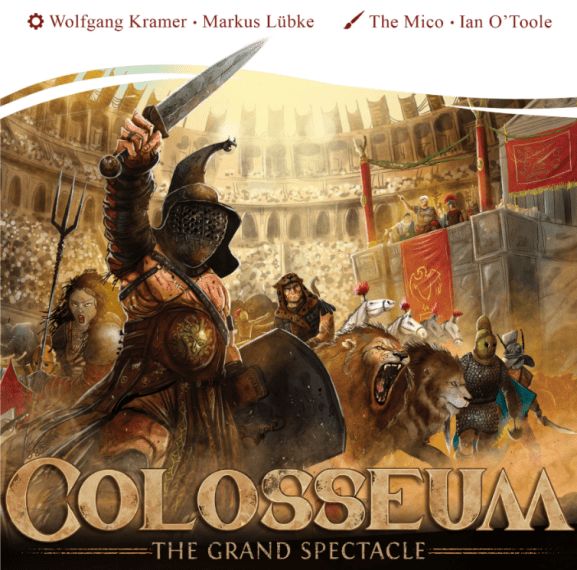
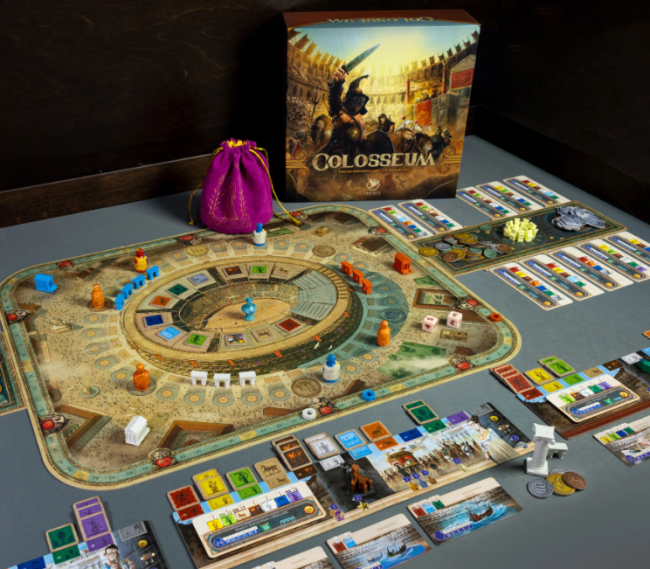
Yes! If you’ve ever been interested in the Wolfgang Kramer and Markus Lubke design Colosseum, The Grand Spectacle may be the edition to add to your collection. Ian O’Toole is one of the best board game graphic designers/artists working today, and Colosseum: The Grand Spectacle is a feast for the eyes.
I’ve always liked Colosseum’s take on the roll/spin and move game mechanism, which is often maligned and hated in the board game community. Colosseum does it right; take some of the chance out of rolling dice. I also agree with the Dice Tower’s Tom Vasel. Colosseum works at 5-players, which is rare in a game of this type.
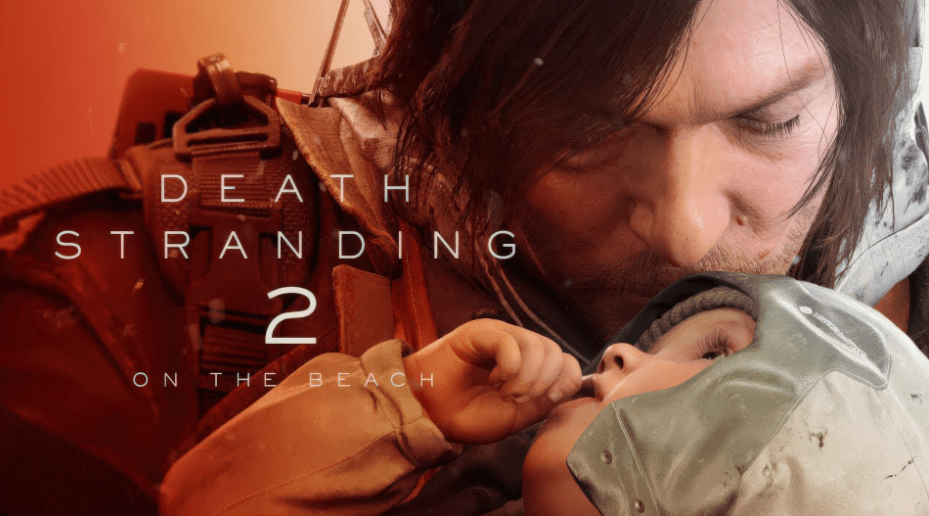
Death Stranding 2: On the Beach was released this past week and topped video game sales. In case you haven’t played the original, the first Death Stranding is on sale for most systems. Modern video games have updates during their first week, so Death Stranding 2 adding one a day after its release doesn’t raise any eyebrows. Oddly, we know nothing about this Death Stranding 2 update. The update offers no information about what it’s patching. The Death Stranding 2 team offers no clues. No one seems to know what this patch does. Hopefully, it fixes some of the game’s audio issues. Perhaps Hideo Kojima likes keeping this update a mystery.
Tamagotchi Plaza Releases on the Nintendo Switch 2
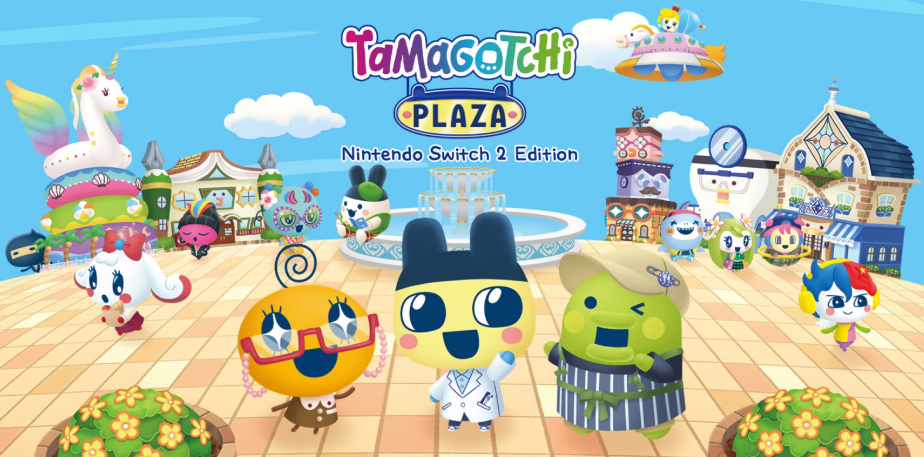
Tamagotchi Plaza, a shop simulator, was released for the original Nintendo Switch and Nintendo Switch 2. It looks adorable. I have fond memories of Tamagotchi, and I’m happy if Tamagotchi Plaza popularizes the pet raising sim to a new generation of gamers. Tamagotchi Plaza looks interesting–I may check out this title at some point–but Tamagotchi Plaza continues a disturbing trend for Nintendo Switch 2. If you already own a game for the original Switch, you can play it on the Switch 2 for a small Switch 2 upgrade fee.
While the upgrade fee isn’t the same price as a full-fledged game, it comes off as a shameless cash grab. Why should I have to pay an additional $10 for The Legend of Zelda: Breath of the Wild when I already own the game? Yes. $10 isn’t that much, but if you convert each one of your original Switch titles to the Switch 2, that adds up quickly. And this practice will embolden other console producers to do the same. We already got a Horizon: Zero Dawn remaster for the PlayStation 5 when it was released on the previous console.
Tamagotchi Plaza is a new game, and players would have to buy the Switch 2 upgrade for a game they just bought if they were to pick up a Switch 2 later this year. Okay. I get it. You could play the original version of Tamagotchi Plaza, but the Switch 2 version adds new shop types. Why would you want to play the Switch version if you were to upgrade to a Switch 2 after it becomes available again? I’m concerned about this business model for the video game community. But, hey, many of us–myself included–have purchased Skyrim eleven times. How’s this any different?
That’s all we have for Geek News this week, Geekly Gang. Thank you for reading, and wherever you are, I hope you’re having a great day.
Geekly hasn’t covered a superhero team’s rogues gallery since the Avengers, and there’s no better place to continue that trend than with the X-Men. The X-Men topped our list of Most Powerful Rogues Galleries. If you missed that post, you can check it out here. No one messes with X-Men villains.
Hey, hey! Kyra Kyle here. We’re back with another Top 5 Villains List. Marvel’s merry band of mutants has no shortage of enemies. Here’s our list of the Top 5 X-Men Villains.
5: Emma Frost
The fifth spot on most Top 5 Villains lists could go in several directions. While the X-Men are no different, Emma Frost was an easier selection than many fifth spots. No disrespect, Juggernaut.
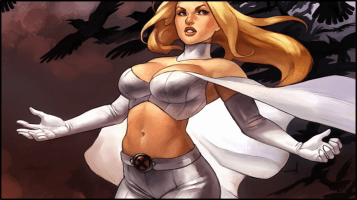
Like most great X-Men villains Emma Frost spends as much time as a hero as she does a villain. As a villain, Frost typically serves as the Hellfire Club’s White Queen. We had to include at least one classic member of the Hellfire Club; they’re a frequent thorn in the X-Men’s side. This alone could explain Emma Frost’s inclusion on this list, but Frost opposes Charles Xavier like no other X-Men villain. She teaches young mutants and twists them into doing her bidding.
The Hellions are the most famous of Emma Frost’s disciples. They were a rival class of young mutants. One by one, Frost manipulated the Hellions. She took advantage of Thunderbird’s grief (because of his brother’s death) and coaxed him into taking revenge against the X-Men. At Frost’s request, Empath used his abilities to force Firestar to love him and join the plot. Emma Frost is a powerful mutant telepath. She’s used these powers to control more than just the Hellions. Kitty Pryde, members of the New Mutants and the New Warriors has at some point been one of Frost’s victims.
4: Mystique
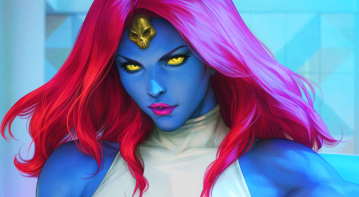
Raven Darkhölme or Mystique (even Raven’s an assumed name, so we don’t know Mystique’s real name) has one of the wildest backstories of any X-Men villain. Again, she’s had her fair share of heroic stints, but Mystique is at her best when she shapeshifts, deceives, and infiltrates.
Nearly immortal, Mystique has done it all. In 1895 (or earlier), she took up the identity of consulting detective Sherlock Holmes. She convinced a time-traveling Kitty Pryde to not assassinate Adolf Hitler during the start of World War II. She’s been a member of the Brotherhood of (Evil) Mutants, organizing the third incarnation of the team. During this time, she adopted a young girl named Anna Marie (Rogue) and manipulated her into stealing Carol Danvers’s powers.
Mystique is the biological mother of a couple of prominent figures in the X-Men universe: Nightcrawler and Graydon Creed. While Nightcrawler is another popular X-Man, Graydon Creed is the leader of the mutant-hating organization Friends of Humanity. Creed would later become a politician and after he became too much of a problem, he was assassinated. Mystique was the gunman. Ruthless and conniving, Mystique will do whatever it takes to accomplish her goal.
3: Mister Sinister
Mister Sinister is the figure in the shadows. A world-renowned geneticist, Mister Sinister treats humans and mutants as his playthings. He’s cloned (even himself), created new life, and manipulated mutant DNA for enhancing powers (again, he did this to himself). The original Nathaniel Essex (Mister Sinister) was transformed into his current form by the mutant known as Apocalypse, and his clone has spent most of his life scheming ways to break free from Apocalypse. To achieve this end, Mister Sinister has manipulated the lives of critical members of the mutant race. Cyclops, Jean Grey, Gambit, Havok, and even Professor X have been Mister Sinister victims.
Madelyne Pryor may be Mister Sinister’s greatest creation. She posed as Jean Grey, married Scott Summers (Cyclops), and gave birth to a child Nathan Summers (Cable). Yeah. Mister Sinister is all up in the Summers’ family tree. Cable’s given name Nathan is a nod to Mister Sinister’s original name Nathaniel. You could view Cable as having the family name of two families.
Beyond Sinister’s family skullduggery, he was the one responsible for wiping out the Morlocks. Unknowingly, Sinister was the one who unleashed the Legacy Virus, a mutant-specific pandemic that decimated the mutant populous. Despite multiple lifetimes of villainy, Professor X appointed Mister Sinister a seat on the mutant island nation Krakoa’s Quiet Council. His life’s work aided with the re-establishment of the country after the Krakoa Massacre.
2: Apocalypse
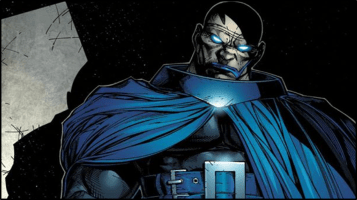
We go from Mister Sinister to the mutant who created him, Apocalypse. En Sabah Nur, translated as “The Seven Lights,” has lived for generations. Born in ancient Egypt, Apocalypse began life as a slave, and over time, he became a conqueror. His laundry list of abilities was crucial in Apocalypse’s Road to Conquest. Here’s a brief list of Apocalypse’s powers: self-resurrection, psychic-link, self-atomic manipulation, biomorphing, size alteration, superhuman strength, superhuman durability, superhuman stamina and endurance, telepathy, force fields, and telekinesis. The previous list was a third of Apocalypse’s powers.
Is it any wonder that Apocalypse has taken the guise of a god of destruction and the end times? Like all the other villains on this list, Apocalypse has a massive history with the X-Men. One of Nur’s standout storylines is the Age of Apocalypse. In this alternate future, Apocalypse sees his “Survival of the Fittest” philosophy to a logical conclusion. The mutants who survive are the ones able to adapt to Apocalypse’s extreme worldview.
No one aspect of Apocalypse showcases his extreme worldview than his Horsemen. Numerous X-Men have served as one of the Horsemen of Apocalypse, but Warren Worthington III may still be the most iconic. Nur transformed Worthington from the natural, angelic wings of Angel to the twisted techno-organic wings of Archangel. Archangel served as Death. War, Famine, and Pestilence round out the remaining members. The entire universe is at stake whenever the Horsemen arrive. The same can be said of Apocalypse. En Sabah Nur lives for destruction.
1: Magneto
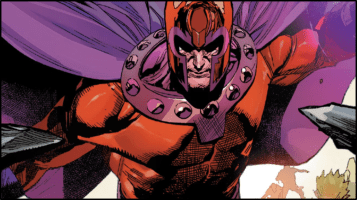
Magneto is one of the most iconic comic book villains of all time. He had to take the top spot. His origin story is legendary. After suffering atrocities at the hand of the Nazis while interred in Auschwitz, Erik Lehnsherr (known by multiple other names like Max Eisenhardt) vowed never to let anything like the holocaust happen to the people he loves. This trauma formed Magneto’s worldview, and when humanity began lashing out against mutants, Magneto fought back. He wants to live in a world where mutants are humanity’s masters, and this puts him at odds with X-Men founder Professor Charles Xavier who dreams of peaceful mutant-human coexistence.
No other villain typifies an X-Men antagonist more than Professor X’s friend Magneto. We could discuss why Magneto takes the top spot for days, but ultimately, anyone who knows of the X-Men knows about Magneto. Most readers expected to see Magneto take the top spot. Magneto is iconic.
Did we get the list right? Let us know who you would add or remove in the comments. And wherever you are, I hope you’re having a great day.
Hey, hey, Geekly Gang! Kyra Kyle here. The first half of Ironheart’s episodes were released this past week, and I’ll share my thoughts, but as you can see, I’m not giving each episode its own review. JK Geekly has covered Your Friendly Neighborhood Spider-Man and Daredevil: Born Again, and typically, we give each episode its own post. We’re not doing that for Ironheart because it drags. With these first three episodes, the show takes double the time it needs (for at least the first two episodes), so we figured we’d cover the first three episodes as if they were one and a half episodes or a single Marvel special.
At its heart–Ha! Heart was unplanned–Ironheart has the structure for a good story. It sets up an interesting conflict between tech and magic, I like the show’s social commentary, Riri has an intriguing (enough) backstory, and I like many of its characters. Ironheart’s execution is lacking. Quick note: We will go into spoiler territory throughout this review; you’ve been warned. Ironheart actively keeps why Riri Williams wants to make an iron suit a secret for over two episodes. Really? While it makes sense for Riri to obscure her motives from other characters, it hurts Ironheart’s story, keeping the viewers in the dark. Spoiler: Her dad, Gary, was a Tony Stark superfan, and that’s why she wants to build an iron suit. We could’ve gotten that information in any one of five flashback scenes with Gary, but Ironheart deliberately keeps the audience at bay.
And Ironheart uses too many flashback scenes, with none of these scenes pulling double duty. Those flashback scenes with Gary Williams show his and Riri’s relationship, but give few other details (like Gary is a Stark fan), and it isn’t just the flashback scenes. Most of the scenes in the first two episodes are one-note. This leads to the show doubling in length. Fortunately, Ironheart’s third episode, “We in Danger, Girl” picks up the pace. Joe turns out to be Obadiah Stane’s son, Ezekiel, and this is done in a scene that pulls double duty. 1) Riri needs tech to go undetected by The Hood. 2) Ezekiel reveals who he is and why he has so much advanced tech. In fact, Ironheart’s third episode sheds most of what bogs down the previous two episodes, so I’m cautiously optimistic about next week’s Ironheart offering.
While it’s not always about the action, “We in Danger, Girl” cranks up the action and tension while raising the stakes at most turns. It even manages to throw in a few welcome comedic moments. I like Riri’s panic attack side story. We don’t get enough superheroes struggling with the very act of being a superhero. Riri’s moral ambiguity at the beginning was also welcome. I even liked how Riri struggles because of her ethnicity. I just wish Ironheart’s story were tighter.
But “We in Danger, Girl” did enough for me to watch Ironheart’s next three episodes. The cast is excellent. I like this version of Slug better than the comic book version; I need more of this Slug. The story is picking up the pace. I’m excited to see how The Hood and Mephisto interact and how Riri’s not-so-good choices will impact her future. Riri is a flawed and compelling character, and her relationship with the AI Natalie (Riri’s friend who died) is top-notch, but I wonder how many viewers will sit through Ironheart’s first two episodes. Thank you for reading, and wherever you are, I hope you’re having a great day.