Geek Out

Game Design Brain Dump: November 21, 2025

Happy Friday, Geekly Gang! Kyra Kyle here with another board game design brain dump. I’m taking a break from Rustbucket Riotswhich I covered in last month’s brain dump–and discuss a Blackjack Deck Building game I originally made in 2018. Seven years! Yikes! Guess I got the seven-year itch. This Blackjack Deck Builder has gone through multiple minor rule modifications and name changes. The deck, based on a standard playing card deck, doesn’t have jacks and kings, so it’s had the name No Jack and No Kings.

Play Faster

My oldest daughter had a high school friend, who will remain nameless. We’ll call her C. C loved deck building games, but she wouldn’t draw her hand at the end of each turn (allowing her to plan her next turn), and every time she drew cards into her hand, she’d act like she was reading them for the first time. This frustrated my daughter and her friends. I thought of No Jack or No Kings to fix this issue.

A quick explanation of deck building card games: each player begins with the same (or at least similar) small decks and purchase cards from a supply to add to their decks, making each deck unique.

While many starter cards in a deck building game have limited text, cards one would add to their hands could contain a heap of text. This would cause C’s turns to last three minutes or more, as she read the more complicated cards that she added to her deck. So, I took out most text. Standard playing cards have little to no text. Next, C had the issue of not drawing her hand at the end of her turn. What standard card game doesn’t require a hand? Blackjack.

The above sample card (Page of Coins) is a prototype. The end product will hopefully look a lot better. Lol.

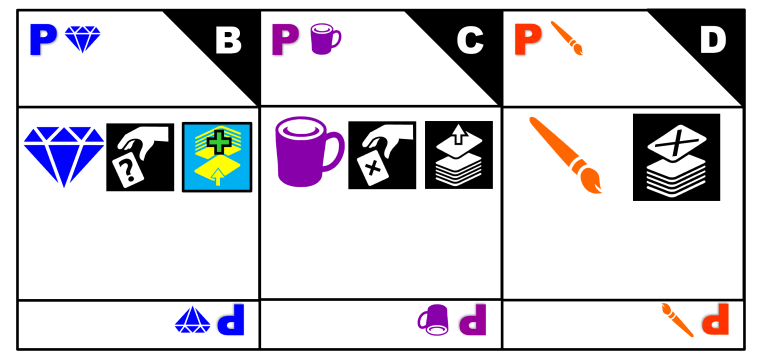
I merged deck building with Blackjack and came up with No Jack or No Kings, and it worked. With the exception of changing the suits, the only cards that look different from a deck of standard playing cards are the face cards. C knew how to play Blackjack. Players would draw cards from the top of their decks, following the standard rules for Blackjack. If you drew over 22 points of cards, you’d bust and lose your turn. If a face card remains in play (without busting) at the end of a turn, the player can move the face card to their tableau and gain its ability. In the case of the page above, every time that player draws a coin suit card, they gain one extra money to purchase other cards. No Jack/No Kings starter decks begin with one face card from one of the four suits. Each suit has a different power.
Trouble with Asymmetry

Most players in deck building games begin with the exact same cards. Choosing to go with asymmetric powers at the onset of this game, however slight, proves difficult to balance. Brushes allow players to cull cards from their discard. Deck building experts see this as overpowered. But Diamonds and Cups have better win percentages. Diamonds allow players to manipulate decks (take cards from a discard and placing them on the bottom). If you’re good at counting cards, you can induce more 21s (or Blackjacks). Cups let players discard a drawn card and draw a new one. This is also strong.

The first page I showed, the Page of Coins, is the weakest of all four. But perception matters. Even though I’ve playtested No Jack/No Kings hundreds of times and found Cups and Diamonds win more often than not, players still “feel” more powerful with Brushes and, to a lesser extent, Coins. Granted, one of my playtest weekends was with someone at a Protospiel. He played No Jack/No Kings throughout the entire weekend (like a few dozen times), hoping to sculpt a deck of only Tens and Aces. This gamer played Brushes in each game and lost every time. Winning didn’t factor into his enjoyment. He wanted to build a near-perfect deck. So, the numbers may be a little skewed.

Does anything need to be changed? Honestly, I don’t know.

How to Win at No Jack/No Kings

I just realized we discussed No Jack/No Kings mechanisms without sharing how to win. There’s a separate deck of Patrons. Every patron can be claimed with a Blackjack (21), but each patron also gives discounts to two suits. If you have a face card from either suit in your tableau and you reach the lower number, you can claim the patron. Every turn, you can either claim a patron or purchase cards from the supply. That’s how the gamer (Protospiel) lost so many times. He would purchase cards if they fit in his “perfect deck” instead of claiming a patron. The first player to claim six patrons wins.

No Theme and Simple Mechanisms

I don’t know why I shelved No Jack/No Kings for almost a decade. My best guess is that I wanted No Jack/No Kings to have more theme or more complexity. I no longer care if No Jack/No Kings has a theme, and any additional mechanisms I added to the game diluted the core gameplay. I was obsessed with everything No Jack/No Kings didn’t have and failed to see what it did have. That same Protospiel (seven years ago, I’m guessing), I only taught the game once. Other gamers taught No Jack/No Kings to the rest of the convention, and the game was played consistently for two and a half days. I need to get out of my own way. Ugh!

I’m finalizing the starter decks and the cost of cards. But there are shockingly few things to balance/tweak after I pin down the starter decks, so I’m left with one question. Which name do you like better, No Jack or No Kings?

Let me know in the comments. Thank you for reading, and wherever you are, I hope you’re having a great day.
Whatcha Watching, Geekly: November 2025

Happy Wednesday, Geekly Gang! Kyra Kyle here. Today, our writers share what they’ve been watching over the past month. You’re welcome to join the fun and share what you’ve been watching, Geekly Gang. I’ll get us started with the movies I watched.

Kyra’s Movies

All our geekly writers watched the two movies I’ll be discussing. I’d like to see what Season and Skye have to say about each of these films.

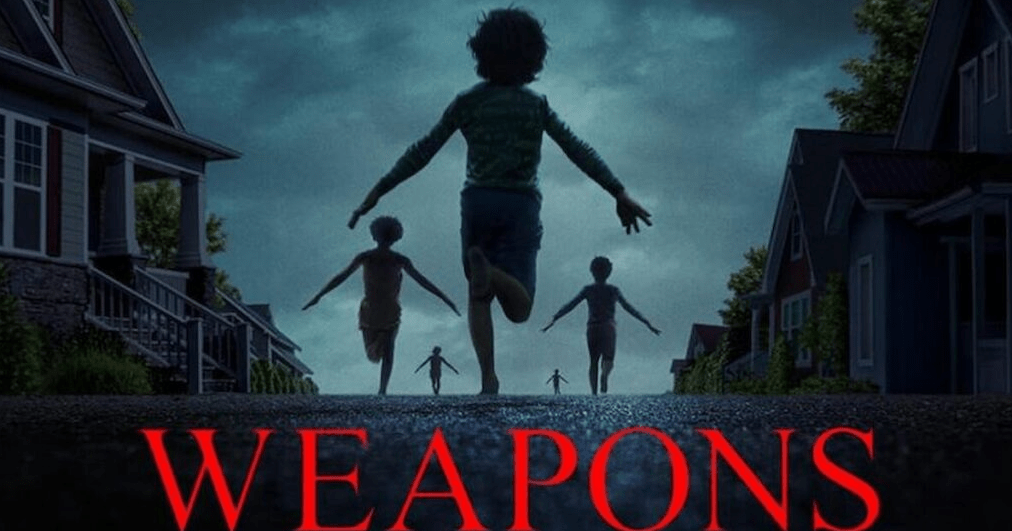
In short, Weapons had too many point-of-view (POV) characters. If you’re like me and you thought Weapons started strong, dragged in the middle, and found its footing at the end, that’s because the movie had too many POVs. The teacher made the best choice as the first POV. Good job there. The audience needed at least one parent’s POV. Great choice to include one, but I question this POV’s placement in the movie’s sequence. I didn’t like how the parent immediately followed the teacher. Director Cregger didn’t trust his audience to remember someone painting “Witch” on the side of the teacher’s car. This will be an ongoing issue.

Then, we get a few POVs we didn’t need. The cop adds nothing. The junkie actively made the story worse. How cool would it have been if the first time the audience saw the kids in the basement was when the father found them? Instead, a random junkie undercuts that potential emotional weight. And the principal’s POV is repetitive. And what was with making the principal gay? This inclusion reeks of tokenism. Within ten minutes of learning the principal is gay (which we only learn because we’re in his POV), the principal kills his husband. Hollywood needs to uphold the tired trope of Bury Your Gays.

Weapons gets back on track with the kid’s POV, and then it’s relatively smooth sailing–from a story perspective. Weapons is a good movie, but it’s overhyped. It doesn’t deserve a 93% fresh rating. Limiting Weapons to three POVs (the teacher, the kid, and the father, and in that order) and bouncing between the three would’ve given Weapons a chance to dig deeper into these characters. Weapons is praised as a “smart film,” but it treats its audience like imbeciles. Writer/Director Zach Cregger doesn’t trust his audience to piece together things, which is why the movie spells out everything in the principal’s POV, even when all the information delivered in the principal’s POV can be obtained through the other POVs. We’re left with puddle-depth characters and inconsistent world-building.

Oh, and what was with dropping the machine gun references and imagery outside of the teacher and father’s POV after the beginning? Again, if we only got three POVs (specifically, the three I mentioned), the idea that Weapons is a metaphor for school shootings would’ve been clearer.

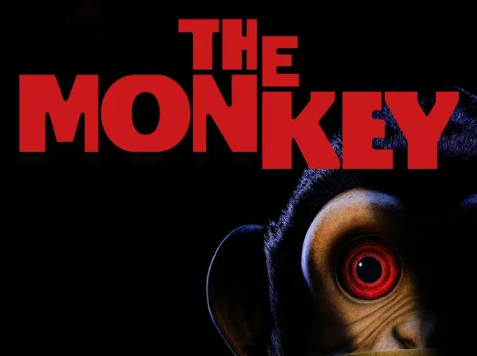
Objectively, Weapons is a better movie than The Monkey, but I had a lot more fun watching The Monkey. Even though it’s a horror comedy, The Monkey does a better job setting up stakes for its characters (we actually have a ticking clock of the father losing visitation rights with his son after the weekend) and building emotional resonance than Weapons. So, maybe The Monkey is the better film.

Make no mistake. The Monkey is ridiculous. Its acting is over-the-top but in the best possible ways. I laughed out loud during Elijah Wood’s scene; he’s a treasure. Some of the lines and character choices are jarring, but in a deliberate, self-aware manner. I loved watching the Final Destination-like deaths occur, preceded by the titular wind-up monkey drumming its tune. I especially like the bus filled with cheerleaders at the movie’s end. I won’t say any more, but it’s hilarious. And the nods to other Stephen King stories were fun.

The Monkey doesn’t have a lot to say, but doesn’t need to have a greater message. Sometimes you just want–or need–a good laugh.

Kyra’s Show

I’m back to watching true crime. While writing this post, I’m eagerly awaiting the final episode of Hulu’s Murdaugh: Death in the Family. I first learned about the Murdaughs when Netflix released its documentary series years ago, so I was somewhat familiar with what to expect. But Hulu’s docudrama Murdaugh: Death in the Family lives up to the craziness surrounding this case.

I forgot a lot of the specifics for the Murdaugh Murders. I’m fighting the urge to rewatch the Netflix documentary before finishing Murdaugh: Death in the Family. Going in blind must be a treat. I don’t want to spoil anything, but the Murdaugh Murders are perfect fodder for true crime series, movies, and much more. There are so many elements to this story. Money laundering. Drug abuse. Infidelity. Wire fraud. Witness tampering. Wrongful deaths–plural. And this all happens before Mags and Paul Murdaugh are slain. The suspect pool for the Murdaugh Murders is limited to the entire state of South Carolina. Who wouldn’t be a suspect?

At least, that’s what I would’ve thought if I hadn’t watched the other content before watching Murdaugh: Death in the Family. If you haven’t seen anything else about the Murdaughs, refrain from doing so until after watching this series. The acting is on point.

That’s all I have for this month. What’ve you been watching, Season?

Season’s Movie

I’m going to be honest. I didn’t watch much this past month. I’ve been busy and haven’t had time to sit down and watch something. However, I do like to have something playing in the background while I fall asleep. For that, A Goofy Movie is perfect.

I’ve been feeling nostalgic, and I remember owning A Goofy Movie on VHS. I watched it so much, my mom eventually hid it. I remember jamming out to Tevin Campbell’s music (“I2I” and “Stand Out”), which was the main reason I watched A Goofy Movie. This time, I focused on the parent-child relationship. It holds up, even after removing nostalgia glasses. A Goofy Movie is a good watch for all ages.

What are you watching, Skye?

Skye’s Movie

The Monkey was my introduction to director Osgood Perkins. I’m not dissatisfied. Kyra came to me on Halloween and told me about this ridiculous horror comedy that had to be seen to be believed. Funny thing: I’ve seen it, but I’m still not sure I believe it. Did I enjoy The Monkey? Without a doubt, yes. The Monkey was the most insane horror comedy I’ve seen in recent years, which kept me laughing even when the screen was covered in gore. Yeah, this movie loves its body parts. Everything is just the right amount of wrong, and the fact it all revolves around a monkey doll turns the absurdity up to 11. I highly recommend The Monkey, just not too soon after mealtime.

Skye’s Show

Um, sure. Since I watched Monster: Ed Gein last month, Monster: Jeffrey Dahmer felt like the next logical step. Technically, Monster: Jeffrey Dahmer is better than Monster: Ed Gein, but that’s a low bar. Simply put, it’s obvious why people call Monster: Jeffrey Dahmer insensitive. It’s dead set on violating the stories of real-life murder victims, and some episodes were downright infuriating. True crime has always fascinated me, but there’s a right and a wrong way to do it. Monster: Jeffrey Dahmer is definitely the wrong way. If you’re curious about these true stories, it’s better to watch documentaries or read dissertations about them. Don’t be Ryan Murphy.

Kyra Kyle again. It looks like Skye enjoyed The Monkey. Yay! Thank you for reading, and wherever you are, I hope you’re having a great day.

Holiday Helpers: Sugar Daddy

Happy Turkey Day, Geekly Gang! Season here. Are you worried the food comas in your family will get too intense next week? Never fear! I’ve got the perfect solution to get you and your family active after next week’s feast. Or, at least, annoy the crud out of them. Let’s get smacking with this month’s plushie review: Sugar Daddy.

Before we begin, let’s review the categories. I’ll be looking at size, softness, kid-friendliness, and cuddliness. There won’t be an aggregated score.

Size

The Sugar Daddy plushie is more on the medium side. It’s slightly smaller than Chibithulhu and is perfect for whacking unsuspecting victims on the backside.

Softness Versus Firmness

Sugar Daddy has a bit of softness, but it isn’t a plush I’d recommend substituting for a pillow. It’s definitely a plushie I’d recommend hitting a wall with for stress relief. Also, definitely keep it out of arm’s reach from mischievous house guests.

Kid Friendly Versus Adult Only

I’m leaving this one in the middle. It’s really open to interpretation and how you use it. Kids and adults alike can have a lot of fun with the Sugar Daddy plushie. I recommend a scavenger hunt. Whoever finds the Sugar Daddy plushie gets to smack the person they want to hide it next. How would you use it, Geekly Gang?

Cuddle Buddy Versus Desk Buddy

Sugar Daddy is easy to cuddle with, but I wouldn’t recommend it due to its firmness. It’d make a great couch decoration, but I can also see someone keeping it locked away in a safe to avoid mischief. Honestly, I think Sugar Daddy makes for goofy decor anywhere in the house. It’s one of those things that makes people question why you have it. Keep them guessing.

Final Thoughts

Sugar Daddy is a fun plushie to have around. We’ve had many a giggle fit in my family whenever we chase each other around the house with it. I’m not sure if they’re in circulation anymore, but you can purchase a Sugar Daddy plush between $7 and $30 on eBay. I highly recommend getting one for fun, or if you’re a candy lover looking to add a Sugar Daddy plushie to your collection.

Do you agree with my assessment of the Sugar Daddy plushie? Would you like me to cover more candy/food-related plushies in the future? Let us know in the comments. Thank you for reading and have a relaxing time with your families.

P.S. This year, I’m thankful for all of you, Geekly Gang. I appreciate you taking time out of your busy schedules to read our posts and leaving us likes and comments. I hope we can continue to bring you content you enjoy reading.

Geekly News: November 16, 2025, New Releases

Happy Sunday, Geekly Gang! Kyra Kyle here. I’m still on a pseudo-hiatus with Novel in November. I just shared a writing update a couple days ago, but this means that Geek News will mostly be video game and board game new releases. Let’s begin with board game new releases.

Exactly as Planned Sneaks Onto GameFound

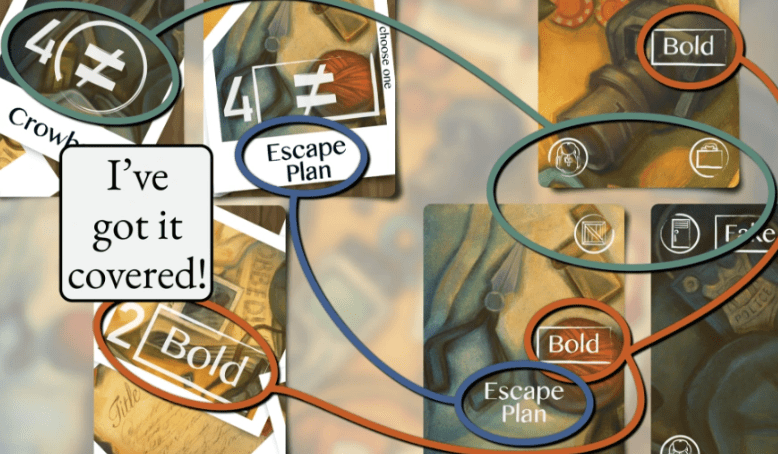
I love it when a publisher/designer allows players to demo their game. Exactly As Planned offers a solo, cake-walk heist to whet gamers’ whistles. You can play the game by checking out Exactly As Planned’s GameFound page. And it won’t take long. Exactly As Planned lasts exactly 5-minutes. Gamers on the clock, attempting to play the correct cards to pull off their semi-coordinated heist.

I love Exactly As Planned’s box art. The off-centered “As” is hilarious. Once gamers become accustomed to Exactly As Planned’s ruleset, they can add a little spice to the proceedings. One team member may be speaking only in questions, a second might have to stare at the ceiling, and a third may be restricted to saying only “yes” and “no.” If Exactly As Planned sounds like chaotic fun, check out its GameFound page.

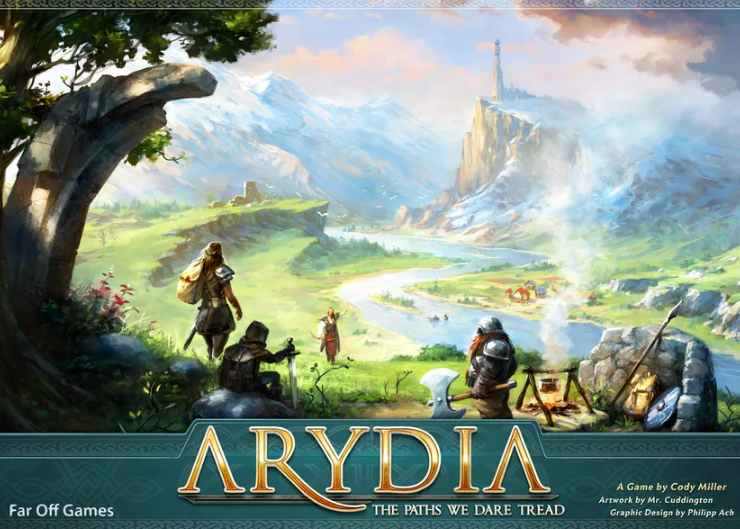
Arydia: The Paths We Dare Tread Journeys to GameFound

Arydia: The Paths We Dare Tread is another big box, fantasy, open-world, and open-ended exploration board game. So, what separates Arydia from other board games like it that we’ve covered over the past handful of months? Prowess.

Publisher Far Off Games and designer Cody Miller of Xia: Legends of a Drift System are well known for immersive, exploration board games. Despite being over a decade old, Xia maintains a top 200 spot on BGG. And Arydia: The Paths We Dare Tread brings this same scale and grandeur to a fantasy setting. This GameFound campaign is Arydia’s second printing. The game sports a whopping 9.1 out 10 on BGG, where most games are lucky to get a 7. And I love the idea of a “green legacy” game. Far Off Games notes that Arydia features all the hallmarks of a legacy game–packages to open, hidden information, progression, discovery, and exploration–but allows you to reset the game when you complete it so that you can start again or pass it on to someone else.

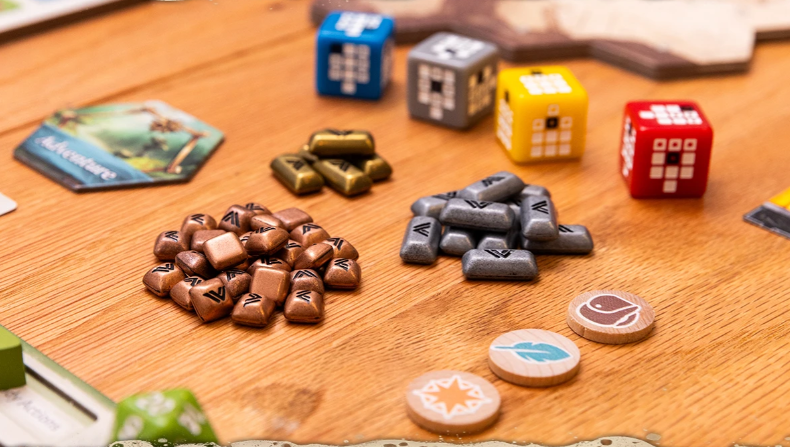
We need more “green legacy” games. While it can be cool to burn your board game after playing (like I’ve seen others do with Pandemic Legacy), it’s also a waste. And look at the dice. I don’t know if the dice signal how a unit can move or where a spell casts its area of effect, but I’d like to find out. Arydia comes with plenty of detailed miniatures and other game components. If you’re interested in Arydia, check out its GameFound page.

Chants for the Old Ones Lurks on GameFound

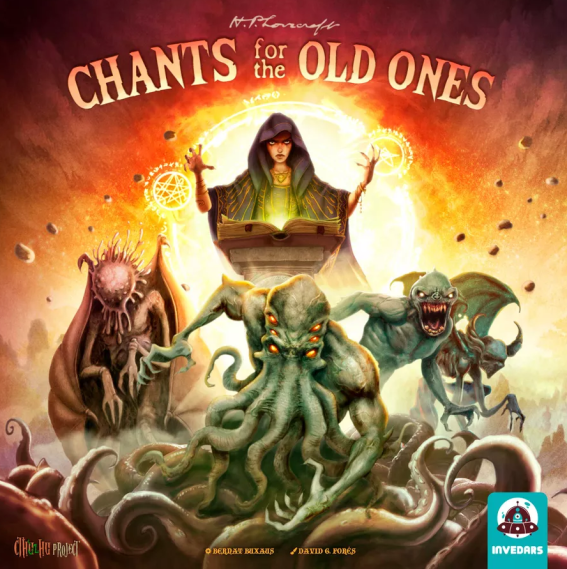
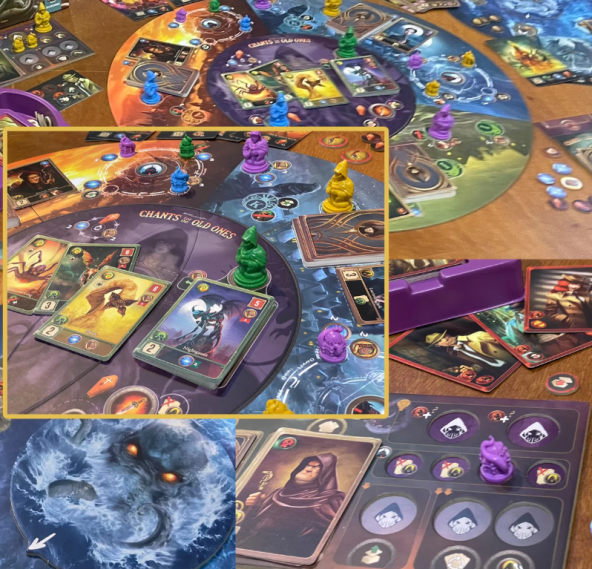
Chants for the Old Ones is another second printing making its way onto GameFound, this time with two new expansions: The Eye of Dagon and The New Orders’ Reckoning. Players control unique cults with various paths to earn victory and unleash the power of the Old Ones. Perform dark rituals. Control key areas of the city. Do your worst in this deck-building and worker placement game set in the Cthulhu Mythos.

I like Chants for the Old Ones’ combination of deck building and worker placement. Those are two fantastic game mechanisms. Playing a Lovecraftian cult is a bonus. And I like how The New Orders’ Reckoning expansion adds a playable cult for the King in Yellow (Hastur) himself. If you’d like to get your Cthulhu on, check out Chants for the Old Ones’ GameFound page.

Elements of Truth Launches on KickStarter

Elements of Truth shakes up the traditional trivia game. The game includes four question types for each of its 250 cards: More or Less, Multiple Choice, Number Line, and True or False. Multiple Choice and True and False need no introduction. More or Less has players choose whether one “fill-in-the-blank” has more or less of something than another “fill-in-the-blank” thing. But Number Line has me most intrigued. Players write an answer on the (provided) whiteboard to see if they can get as close to the numerical correct answer.

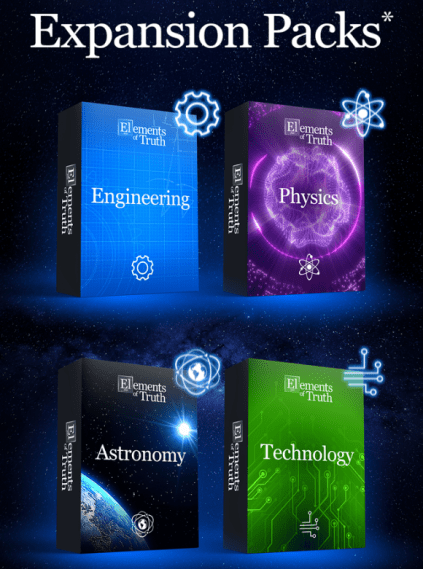
Elements of Truth offers five expansion packs (four pictured above). Each question pack includes an additional 200 question cards in a particular subject. My history of playing Trivial Pursuit makes me wonder if gamers will want to pick up at least one of these expansion packs. 250 question cards are easy to memorize after a few plays. The base game pledge is $39. Players can get the first question pack (Veritasium, which isn’t pictured above) in addition to the base game for $59. Or go all-in for $99. If you’re interested in Elements of Truth, check out its KickStarter page.

Anno 117: Pax Romana Releases

The Anno series of city-building real-time strategy games continues with the earliest setting for the franchise. Gamers are given the choice to build the Roman Empire (Latium) or the Celtic kingdom (Albion). You’ll have the choice between paths of loyalty or rebellion. You can focus on military might or economic growth. And, for the first time, gamers will be able to play Anno 117: Pax Romana in first-person.

This option alone piques my interest for Anno 117: Pax Romana. I’ve played numerous city-building games and always wondered what it would be like to experience my city at ground level. Anno 117: Pax Romana has received good reviews from critics. Rome has been built (and torn down) in many video games. I may try my hand at building the Celtic Kingdom. Anno 117: Pax Romana is available on PC, PlayStation 5, and Xbox Series X/S.

Lumines Arise Releases on Steam and PlayStation

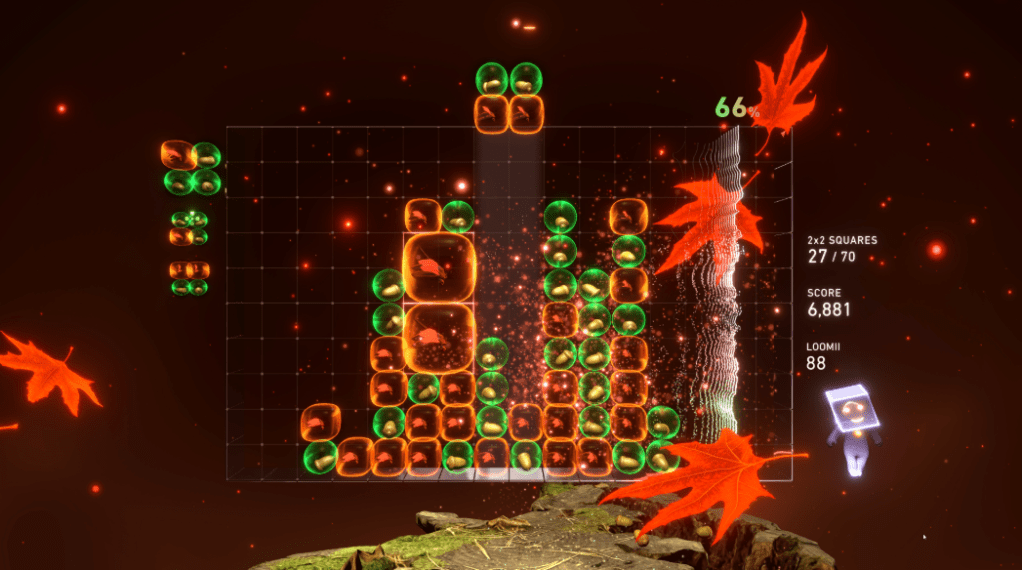
I’ve been a fan of the Lumines series ever since it was first released on the PlayStation Portable, and Lumines Arise is the first new title in the series since 2012. More than just a Tetris clone, Lumines gives the familiar formula a new twist. Every block is 2×2, but they contain up to two colors. The blocks slide into spaces left in the puzzle, and gamers must match colors (in 2×2 blocks or better) before they explode.

I’ve always enjoyed Lumines’s slick design. At first glance, you may find Lumines confusing, but you’ll get used to the game’s aesthetics soon enough. Lumines Arise includes numerous game modes, ensuring ample replayability. The classic Journey mode returns. Gamers will play over 35 stages, called skins. Each skin has its own theme with music and visuals to match the stage’s vibe. I love the themes that use vegetables. What?

After gamers complete the Journey, they unlock a new mode called Survival. Players play endlessly–or at least until they top out–with the skins transitioning as they reach certain milestones. That could get trippy with Lumines Arise’s bizarre skins. Lumines Arise also offers Training Missions, Challenges (various game states with goals and some variations on gameplay), Time Attack (clear enough blocks in the allotted time), and Dig Down where the blocks come from below. Trippy.

I can’t wait to get my hands on Lumines Arise. It’s received good to great reviews from most critics, with a slight edge given to the PlayStation 5 version over the PC version. Honestly, I always intended to pick up this title for PS5 anyway.

That’s all the Geek News we have for this week. Thank you for reading, and wherever you are, I hope you’re having a great day.
Quirky Video Game Review: Ratropolis

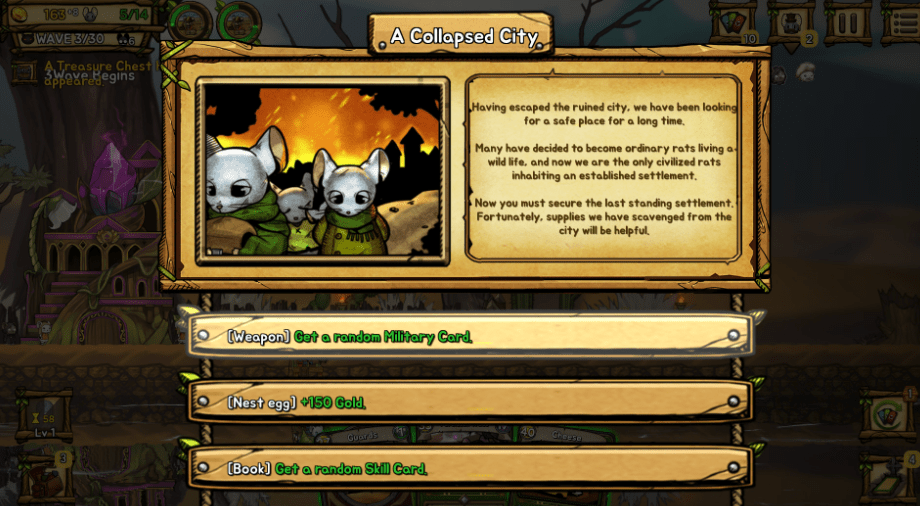
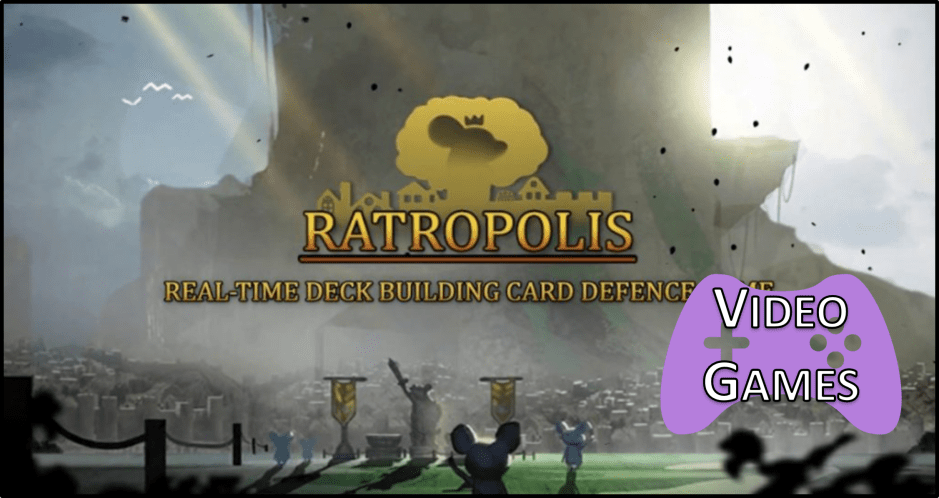
Happy Spooky Season, Geekly Gang! Kyra Kyle here, and while Ratropolis doesn’t exactly fit the horror aesthetic for this month’s theme, it is an interesting blend of deck building, tower defense, and real-time strategy. That’s right, it’s time for another quirky video game review. Relatively new, Korean video game design group, Cassel Games, combines so many disparate themes and mechanisms that they couldn’t possibly work together. Could they? Let’s put Ratropolis against our video game review criteria.

Mechanisms

Game Mechanisms: 9/10

Ratropolis does manage to merge its separate parts into a cohesive whole, but I don’t imagine players unfamiliar with deck building to fare well. Sure, Ratropolis begins with slow waves of enemies. The deck-building is somewhat pared down, but this game retains most of a deck-building game’s complexity, and the time constraint can be intimidating. The real-time strategy meets tower defense work well together. They’re almost seamless.

The deck-building does get streamlined to a point. Ratropolis splits cards into specific leader types: Builder, General, Merchant, Navigator, Scientist, and Shaman. Each leader type has a male and female variant with their own special powers, so this specializes each potential deck even further. You begin the game with the Builder, which allows for upgraded buildings and extra building cards that provide sustained benefits, even resources over time. Ratropolis has addictive gameplay and since it offers so many avenues to customize your deck, once you get hooked, you’ll lose several hours and not even notice.

I can’t believe how well Ratropolis blends its various game mechanisms. Each leader takes advantage of different design spaces, and I love that. Different avenues for victory make a great deck-builder, and Ratropolis is a great deck-building game without the added wrinkles of an RTS and tower defense.

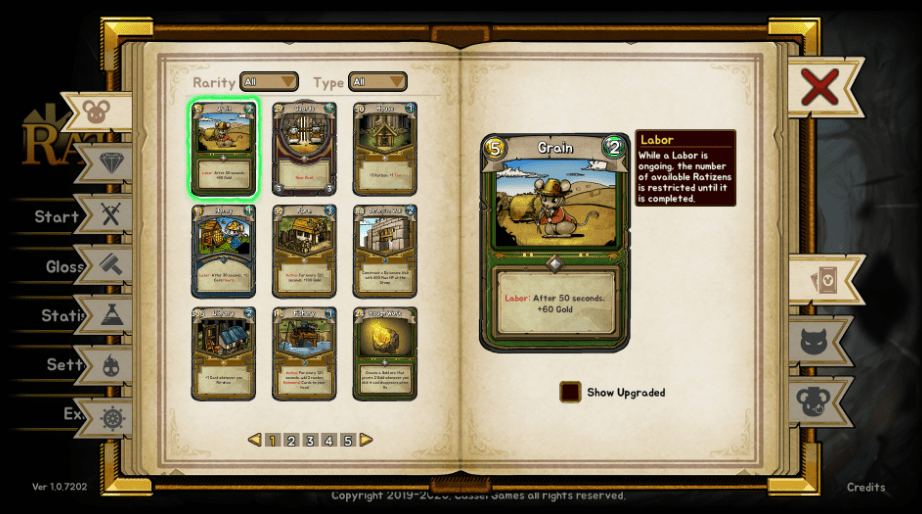
Speaking of tower defense, Ratropolis does an excellent job of ramping up its difficulty from one wave to the next. Gameplay balance like that is difficult to find. Each city run lasts up to 30 waves of enemies. The furthest I’ve ever gone has been level 25 or 27. Each new enemy type adds a new threat for the player to manage, and while these new challenges can feel unfair when first introduced, runs don’t take too long (players can even send in a new wave early to earn extra in-game money), and a quick look at Ratropolis’s card library should reveal a strategy to deal with each one. The only reason Ratropolis doesn’t get top marks in game mechanisms is that the deck-building can–at first–be overwhelming.

Gameplay Loop: 10/10

I spoiled this entry in the last one. Yes! Ratropolis has an addictive gameplay loop. I spent hours playing the game, not knowing I had spent hours playing the game. Not only does Ratropolis start players with one leader type, but you can unlock other leaders and extra cards for each deck by gaining experience. Ratropolis manages to add a little bit of Pokémon to its gameplay. Gotta catch ’em all! These new cards tend to be more complex, but they also break the game in fun ways. Ratropolis is one of those video games where you’ll be arguing to play one more game.

Story or Narrative

Narrative/Storytelling: 6/10

One wouldn’t think a deck-builder, real-time strategy, tower defense video game would have much of a story, but that’s not the case with Ratropolis. The game has a loose story that adapts to the events of your game. Did you recently have a lot of rat citizens die during an enemy raid? You may get approached by grieving parents who want burials for their children. You decide how your rat leader reacts. Do you give them a proper burial? Do you ask the parents for a death tax? Yikes! That got dark, but so does Ratropolis’s story. This game paints its story in its liminal spaces, but there isn’t much in the way of an overarching narrative.
User Interface: 7/10

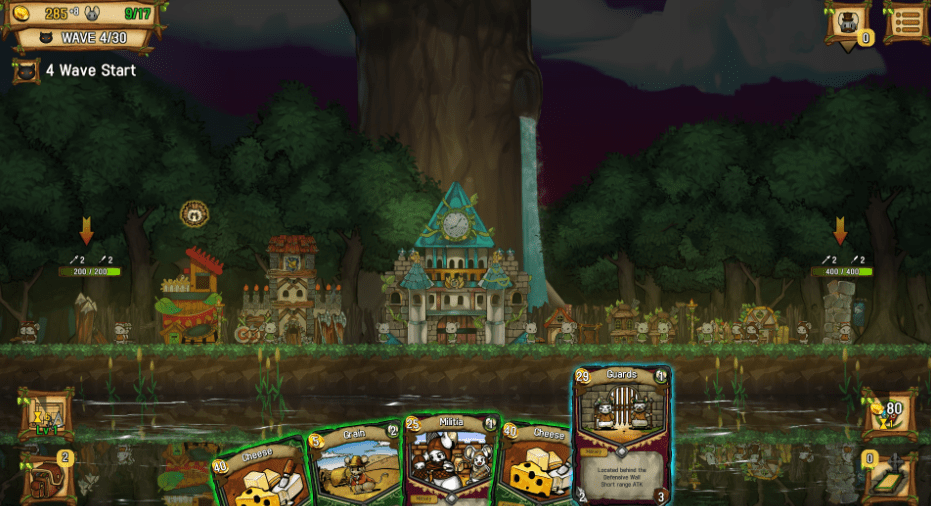
Ratropolis’s user interface is well designed, but a lot is going on in this game. Too much. I don’t know how Ratropolis could fix this issue, but it is an issue and drags down the game’s user interface score a hair. Currently (I’m writing this review in June 2025), Ratropolis is only available on Windows (and by extension, Steam). I can’t imagine Ratropolis on a console or mobile device, despite deck-building games running well on smartphones. Information pockets form in all four corners. The screen is cut into two sections: the top is the city (which players can scroll from side to side, making this space even larger and unwieldy), and the bottom center shows the player’s hand. Many cards have extensive text, so that adds even more cognitive load (how much information one’s brain must compute at one time).

Throw in the random story elements, and Ratropolis can get overwhelming. Still, Ratropolis has a space for everything. It offers a clean interface for players to find most information. I don’t know how the game could improve on its UI design, but it’s missing something.

Graphics: 8/10

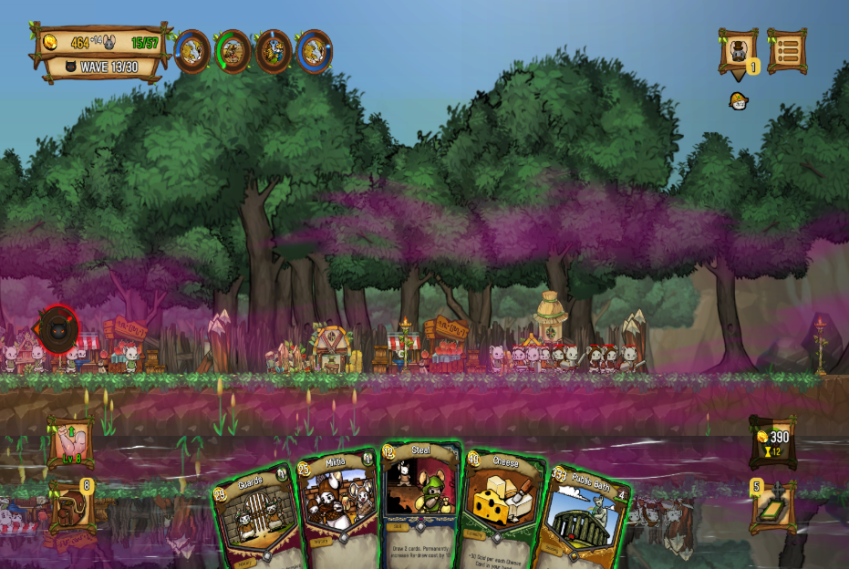
Ratropolis’s graphical details are fantastic. The images on the cards are cartoonish but have a well-defined style. Ratropolis is a pretty game. I may have lowered it to average if it wasn’t for the city, slowly building in the space above the cards. Look at the reflection effects in the water. You can see your entire ratropolis reflected in the river. Depending on the location you build your city (Ratropolis offers a handful of places, which can vary gameplay), you’ll be given flourishes that make every rat city unique.

Audio: 7/10

Typically, I play most video games with the sound off. That makes grading a game’s audio difficult. But I have heard plenty of Ratropolis’s audio, and it’s well above average. While the soundtrack does its job (it doesn’t stand out, but it serves the game well), the sound effects, especially the jingling of merchants entering your city or the growls and grumbles of various enemies invading your rat city raise this score. In fact, it’s these unique sounds–that I grew accustomed to–that made managing my city a lot easier. I won’t go as far as to say that you need to play Ratropolis with the sound on, but the sound mixing immerses me in the game’s world. And that’s what you want from a game’s audio.

Replay Factor: 10/10

Unlocking all the leader types, the cards, and the random city generator that makes each playthrough different gives Ratropolis an infinite replay factor. Not since Civilization have I felt this strong of an urge for “just one more turn” or game or unlock one card in my journey of mastering the Merchant leadership style. Ratropolis combines several game mechanisms that lend themselves to replay (deck-building, tower defense, and a varied enemy and environment for a real-time strategy). These mechanisms work together to form a game you won’t put down for hours.

Aggregated Score: 8.14

Ratropolis does the unthinkable and combines deck-building, tower defense, and real-time strategy into one addictive indie game package. This game may not appeal to everyone, but if you’re interested in two or more of the game’s three main mechanisms, you should try Ratropolis.

Writing Brain Dump: November 14, 2025

Happy Friday, Geekly Gang! I haven’t shared a Writing Brain Dump in a month. Today looks like a good day for a Writing Brain Dump. I’m about halfway through my most recent edit for Rustbucket Riots (working title). And the biggest step I made was reformating the story’s arc.

The Three-Act Structure May Need Tweaking for a Novel

I found Julian Maylett’s YouTube channel a short while ago. Maylett has a great AuthorTube channel, and I like his six-pillar structure. But I adapted this structure so it works better for me. I’ll paraphrase something I said in the previous Writing Brain Dump. What works for someone else’s writing practice may not work for yours. Everyone is unique. So, it made sense that I adapt Julian Maylett’s method to better suit mine. Feel free to do the same.

I boiled down Maylett’s method to a novel’s storyline resembling a heartbeat. The Three-Act Structure (pictured above) begins with an inciting incident, followed by rising action (complications), a crisis, a climax, and falling action (or denouement if you want to be fancy). Maylett claims that (except for a novel’s prelude, which is different from a prologue) each segment within a novel includes its own version of a Three-Act Structure. After mapping out the four segments following the prelude (Trigger Event, Trailer Moments, Journey to Hell, and the Grand Finale), the novel’s shape resembled a heartbeat.

We’re looking at four Three-Act Structures occurring consecutively.

See what I mean. Each segment contains an inciting incident, rising action, a climax, and falling action. But, paraphrasing Maylett, segments will morph what constitutes an inciting incident, rising action, etc., each time, depending on when in the story the segment occurs. One of the examples Maylett gave (for the Trigger Event) was The Hunger Games. We’re talking the first novel (or movie) here. And viewing this novel through Maylett’s lens can be eye-opening. If we view The Hunger Games in the classic three-act structure, one would most likely cite Katniss offering herself as tribute as the story’s inciting incident, but that isn’t the inciting incident when using what I’m going to call the heartbeat method.

The Reaping itself is the inciting incident for The Hunger Games’ Trigger Event (the first full segment). Prim being old enough to participate in the Reaping is a complication (rising action), as is Katniss placing her name into the Reaping multiple times to feed her family. Katniss has a brief moment of doubt when Prim’s name is drawn (the crisis), and she must choose to save her sister by offering herself as tribute or let Prim participate and most likely die. Katniss choosing to offer herself as tribute is the Trigger Event’s climax.

Then, we see the fallout of Katniss’s decision (the resolution or falling action), before the next segment (Trailer Moments) begins with another inciting incident and the process starts anew. I love Maylett’s approach. I took the bones of this approach and applied it to my manuscript.

I’ll press pause on the rest of the segments, so I can edit those and share my thoughts after editing each segment, but there is an odd segment before these four: The Prelude.

The Prelude is Not a Prologue

A prologue’s events occur separately from the rest of the novel, while the prelude sets the novel’s tone. If you’re talking about speculative fiction, the prelude introduces the reader to your novel’s world, while hopefully not inundating them in exposition. Unlike the other segments, the prelude has only three parts: an opening image, a flawed action, and the theme whispered.

Let’s go back to The Hunger Games as an example for the prelude. The novel (and movie) opens with Katniss illegally hunting game. We’re introduced to Katniss’s world through the simple act of survival. Katniss bags a kill. Her family can eat. This hunt is The Hunger Games’ opening image. It’s a concrete image. Then, The Hunger Games progresses to the Flawed Action. In the novel, Katniss shares that she spoke out against injustice, and it got her in trouble, so now, she protects herself and her family by keeping her opinions to herself. All this does is close off Katniss. It’s a flawed action Katniss needs to unlearn, but she isn’t yet ready to learn.

Finally, The Hunger Games reaches its Theme Whispered. Katniss’s friend (and love interest) Gale suggests the two of them should head to the forest, live off the grid, and effectively leave the country. Gale implies Katniss’s crime of hunting isn’t wrong. The government is wrong. By the end of three books, Katniss takes on the government head-on, but she isn’t ready to hear this yet. According to Maylett, the Theme Whispered should be spoken aloud by a character who doesn’t have too much relevance to the story (at least not yet), and the whispered theme should be memorable enough to stick in the back of the reader’s head.

The Hunger Games does this well. If you’ve read (or watched) The Hunger Games, you may not have noticed the Theme Whispered in the first chapter (or opening sequence), but now that I’ve mentioned it, you can’t help but see it. Lovely foreshadowing.

Echoing Heartbeats

And that’s why I like the heartbeat system. Since readers get repeating beats, they can’t help but notice patterns. Maylett’s system includes some specifics, the deeper into the story we journey, but I’ll save those for later.

I hope you’re having a wonderful Novel in November (formerly NaNoWriMo). Where are you with your progress this month? Are you editing or writing something new? Let me know in the comments. Thank you for reading, and wherever you are, I hope you’re having a great day.