
1980 Video Games

Hey, hey, Geekly Gang! Kyra Kyle here with another reaction/review of this week’s episode of Lanterns, “The Weenie.” If you’d like to see our thoughts on last week’s episode “OutKast,” check it out here. This post will only cover “The Weenie.” “The Weenie” goes back to the 2016 timeline, and while the episode is entertaining (Lanterns is a bingeable show), “The Weenie” illustrates why stories shouldn’t feature too many flashbacks: knowing the future (to some extent) can lessen a story’s tension.
I’ll get right to it. Spoiler warning is in effect. Again, I don’t know why someone who hasn’t seen Lanterns at all would want to read a reaction/review of the show’s fourth episode, but hey, you do you. And you’ve been warned about spoilers.
Lanterns‘ pilot ends in 2026 with Hal Jordan dead, and John Stewart checking Hal’s hand for the power ring. Much of “The Weenie’s” main tension exists between Hal and John. Sinestro insists Hal call John by what John really is: Hal’s replacement. The guardian we met last week (during John’s flashback episode) returns this week (in 2016) and tasks John with taking the power ring from Hal. But we (the audience) already know that John didn’t recite the oath and take the ring away from Hal. Why would John check Hal’s hand for a power ring in 2026 (Hal’s death) if he took the ring from Hal in 2016? I wanted the tension to build a lot more than it did. That’s the danger of too many flashbacks or a flashback within a flashback.
I’m done picking at that nit. Despite the reduced tension (from what I would’ve liked), “The Weenie” manages to recapture Lanterns‘ momentum. Losing momentum can also occur with more flashbacks. “The Weenie” onboards viewers into the action. Continuing Hal’s conversation with Sinestro (from episode two, “Trust Fall”) helped. It served as a brief recap. We gain context for John missing his payphone call from his parents; the call was really from the Guardians. And I love Lanterns‘ ability to contrast Hal and John’s personalities. During this episode, John said that everyone, including him, was lying. Lanterns accomplishes this with great dialogue. Most characters give half-truths or at least obfuscate their true intentions.
That last element adds to Lanterns‘ intrigue. The identity of the Manhunter (the killing machine the Guardians created before forming the Green Lantern Corps.) was revealed. I had an inkling as to the Manhunter’s identity. “The Weenie” removed all doubt. I liked how Lanterns executed the reveal. The show let the characters’ nature do the work. Centering one’s narrative with its main characters is always a great choice. Kudos!
And I have to hand it to Lanterns. While the show continues to dodge Green Lantern’s costume, it showed the biggest Lantern construct to date (John’s digging device). Sure, Hal wears the costume during his brief scene with Sinestro, but for the most part, Lanterns doesn’t like to show the character in costume. Getting back to John’s digging device, its inclusion makes me excited for more Lantern constructs in future episodes. Lanterns kept its special effects budget low during the first half of its first season, but the second half of the season should splurge a little.
The town of Rushville continues to be a great setting, almost its own character. “The Weenie” reveals that the Manhunter prevents people in Rushville from getting sick or dying. That explains the hospital’s unpacked equipment and the fact that Hal was the only patient to sign the log. This will cause some future tension between the city of Rushville and the aliens who want to hunt down the Manhunter. The aliens plan to blow up Rushville if Hal and John don’t deliver the Manhunter to them, but the Manhunter means a lot to the town of Rushville. It’s a lose-lose situation, and we do see some demolished buildings in Rushville during John Stewart’s return to the town (in 2026). Something explodes, but what? How? Unlike John’s refusal to take the ring from Hal, we know less about Rushville’s fate.
We didn’t see much of Rushville in 2026. The sheriff talks to John as if life continued for the town of Rushville…in some capacity. I like that Lanterns is using Manhunters as its chief villain for its first season. Teasing Sinestro is a great touch. Something tells me we’ll see the Sinestro Corps. before the season finale. I’m still waiting for Guy Gardner to make an appearance. Lanterns continues to use Fillion’s Gardner as its thumbnail. The big teasers. Does this mean Gardner got the ring before Stewart? Was he the one who took the ring from Hal? Who knows? Lanterns has done a great job setting up these mysteries. Time will tell if the show sticks the landing.
Those are my thoughts on Lanterns “The Weenie.” What are yours? Let us know in the comments. Thank you for reading, and wherever you are, I hope you’re having a great day.
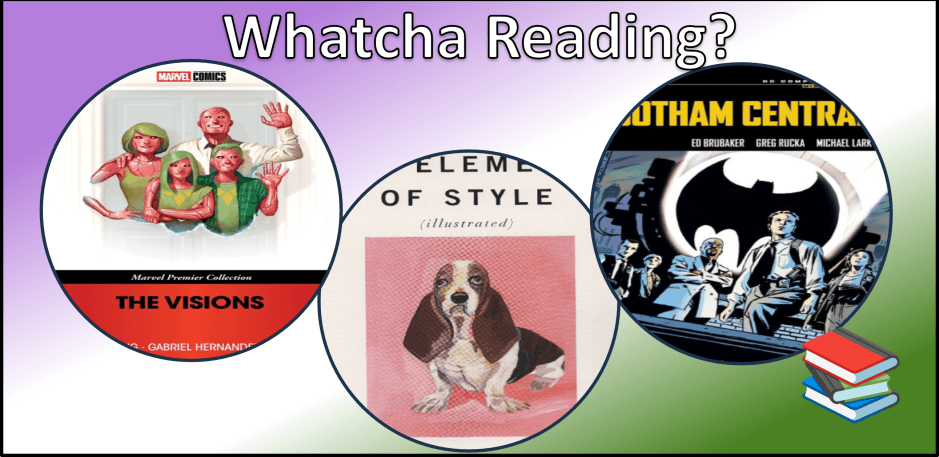
Happy Wednesday, Geekly Gang! Kyra Kyle here, and today, our writers share what they’ve been reading over the past month. Feel free to share what you’ve been reading, because we’re all part of the Geekly Gang. I’ll kick off this post by sharing what I’ve been reading over the past month.
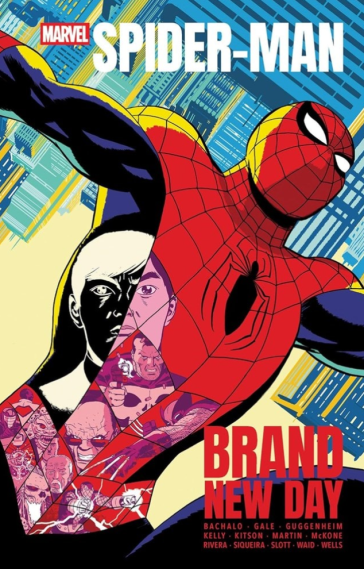
First off, I like how Marvel Comics has adopted DC Comics’ Compact Graphic Novel format. Yay! These volumes fit much nicer on the shelf, they pack a lot of story in smaller space, and they’re cheaper than full-size graphic novels. Compact graphic novels cost almost half that of full-size graphic novels, so I can pick up multiple volumes at a time. Hint: You’ll be seeing a lot of compact graphic novels on my list in the near future. My unsponsored plug for compact graphic novels has concluded, let’s get to Spider-Man: Brand New Day.
I can see why the MCU used the Spider-Man: Brand New Day title and none of the story. Don’t get me wrong, I enjoyed reading Spider-Man: Brand New Day, but the story was all over the place. The Spider-Man: Brand New Day comic book story arc plays out like a short story collection. The first story has little to nothing to do with the Mr. Negative storyline. Hammerhead’s tale builds up Mr. Negative as a shadowy figure working behind the scenes. Then, we get a yarn about a Bookie. While fun, the Bookie story doesn’t build off of Hammerhead’s. And then The Shocker shows up, and of course, he’s working with Mr. Negative. After that, we get an Anti-Venom comic, showing us who is Mr. Negative.
As you can tell, Spider-Man: Brand New Day is all over the place. Why does Anti-Venom reveal Mr. Negative’s identity? That reveal doesn’t carry much weight, because Spider-Man: Brand New Day sparingly shows Mr. Negative’s alter-ego and why Peter Parker would care. The original Sony Spider-Man Video Game does a much better job of telling Mr. Negative’s backstory. Heck, I only cared about the character because I played the video game first. You almost need to play the video game before reading the graphic novel for context. Spider-Man: Brand New Day defined Spidey for a generation. It may be rough around the edges, but it’s a good read.
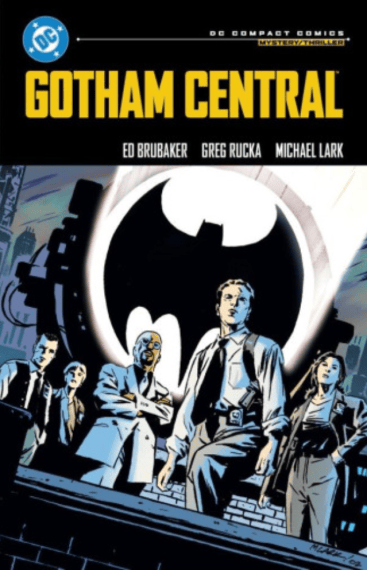
I had to read at least one DC compact graphic novel this month. Gotham Central beat out a couple of others in my TBR pile. I’m glad I chose this one. I can see why Gotham Central earned several accolades (including multiple Eisner Awards). These stories show the Gotham City Police Department (GCPD) working in a city that includes Batman. Some treat The Dark Knight as an extension of the GCPD. Others resent Batman. All of them navigate a criminal underground that includes heavy hitters like Poison Ivy and Mister Freeze. What can an ordinary cop do against someone like Mister Freeze? Gotham Central answers these questions.
Gotham Central also shows the inner workings of a city on fire. Crime is rampant. Death is everywhere. The GCPD officers we follow do their best. Renee Montoya (pictured above on the far right) is a standout, but Gotham Central fleshes out existing GCPD characters and introduces many others that remain staples in the Batman Mythos. You don’t see a lot of Batman in Gotham Central, but that’s the point. The Gotham television show made a half-hearted attempt at adapting Gotham Central. One of the show’s biggest issues may have been to age down Commissioner Gordon. Gotham Central ages up Gordon and showed the power vacuum left behind in Gordon’s absence. That would make for a good show.
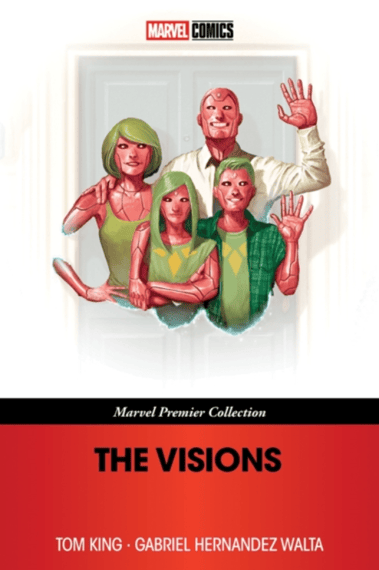
Spider-Man: Brand New Day was the first of Marvel Comics’ Compact Graphic Novels. The series would become the Marvel Premier Collection, and the covers look similar to the one pictured above. Since I discovered Marvel’s compact graphic novel line, I read two of them this past month. I enjoyed The Visions more than I thought I would. I shouldn’t doubt Tom King (Supergirl: Woman of Tomorrow). You can see some of The Visions’ influence on the MCU’s WandaVision, but I’d like to VisionQuest take different elements from this storyline. I don’t want to spoil too much in this write up; you should read The Visions when you get the chance.
After gaining a new title (Avengers’ Ambassador to the Pentagon), The Vision moves to Washington DC with his family. The Visions explores what happens when a synthezoid constructs a family of his own. What could go wrong? Turns out, everything. The Visions does a great job placing us where The Vision is as a character. I am grateful for that. The Vision has one of the messier comic book origins you’ll find, but The Visions walks the reader through decades of confusing continuity. You don’t need a heap of comic book lore to know what makes him tic. Kudos to Tom King for making The Visions accessible.
The Visions is a page-turner. Each issue presents a new twist. Each issue ends on a moment you can’t wait to see what happens next. The Visions may have been my fastest read from this past month. It may have little to do with the greater Marvel Universe, but that makes The Visions endearing. It dives into who The Vision is and what kind of synthezoid family he’d create. The Visions explores what is to be human. Funny how a story about a synthetic person lends itself to examining humanity.

It’s the summer, so I reread Strunk and White’s The Elements of Style. I don’t do this every year, but I do it most years. I’ve mentioned The Elements of Style last year, I believe. I love my illustrated copy. The pictures aren’t neccessary. You can buy a cheaper copy of The Elements of Style for less than five dollars, but if you want to splurge, the illustrations (by Kalman) add whimsy. Reading books like The Elements of Style may be more vital this year than in past years.
AI writing is everywhere. One of the ways you can spot AI writing is its overuse and misuse of em dashes (–). Em dashes are valid forms of punctuation. But you shouldn’t use em dashes in place of a semi-colon, colon, parentheses, or commas. Right now, large language models (LLMs or AI) abuse em dashes. Programmers can change which forms of punctuation their LLMs will overuse and misuse. You’ll need to read style books like The Elements of Style to make sure you don’t sound like a toaster or the slur The Visions introduced, a Socket Lover.
Those are all the books I’ve read or finished this month. I started a couple of others but didn’t want to include them until I was closer to finished. Looks like I’m on my own this month. Hopefully, Season and Skye will join us for next month. Thank you for reading, and wherever you are, I hope you’re having a great day.







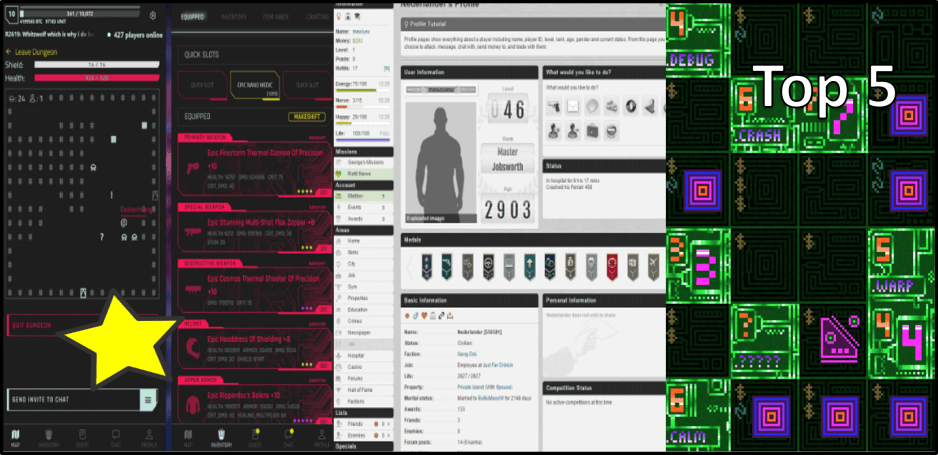
Happy Labor Day, Geekly Gang! Kyra Kyle here. To celebrate this holiday, we’ll continue with what could become an annual tradition: 5 Video Games to Secretly Play at Work. Yes! Not all of us get Labor Day off, so for those of you who have to work, you may want to blow off some steam. Last year’s list included some games that got delisted. I wonder if video games of this ilk get taken down frequently. I’m writing this post far in advance, so fingers crossed that these games (and their links) still work in September. Enough yapping. Let’s get to playing. Here is another 5 Video Games to Secretly Play at Work
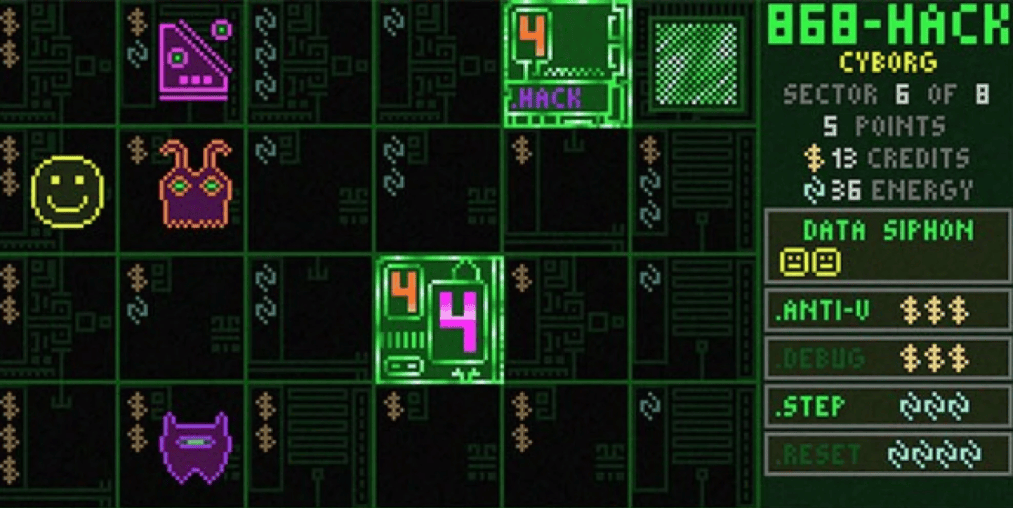
868-HACK (here’s the link) would be much higher on this list, but I gave preference to free games. Yep. You’ll have to pay a little something (around $6) on iOS or Steam to play 868-HACK, but it’s worth it. Australian game designer Michael Brough produces systems that devastatingly mix apparent simplicity with incredible depth. You can find most of Brough’s designs on iOS, so iPhone or iPad users will have no problem playing Brough’s entire catalogue.
868-HACK is a turn-based roguelike that casts players as a “hacker” investigating a heavily corrupted system. The graphics are rudimentary, and the sound isn’t the best. But why would you play this game at work with the sound on? 868-HACK is addictive. At first glance, it looks like you may need to call IT or an Apple Genius to fix your device. Brough regularly updates 868-HACK, so it’s less likely this game will get delisted.
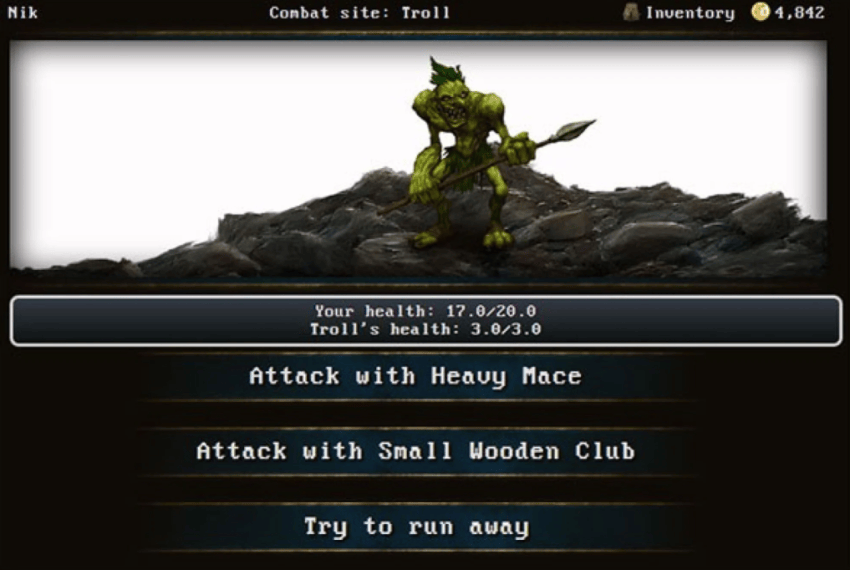
Initium (here’s the link) is another game that could easily top this list. It falls to our fourth spot because it could be difficult to hide. Initium looks like a game from a distance. With that said, how many MMORPGs can one play at work? Most MMORPGs require you to pay near-constant attention to the game world if you want to succeed, which can’t happen if the boss walks by your desk. Initium uses turn-based exploration and combat, which means you can shut it down if you need to go into stealth mode.
While Initium is still in development, it already features PvP, an economy, player-created areas, and even global events like the ones you might find in any other MMORPG. You even have the option of logging in with your phone and computer, so you can take Initium on the go. And Initium is free. Kaching! Initium may just be a game-changer.
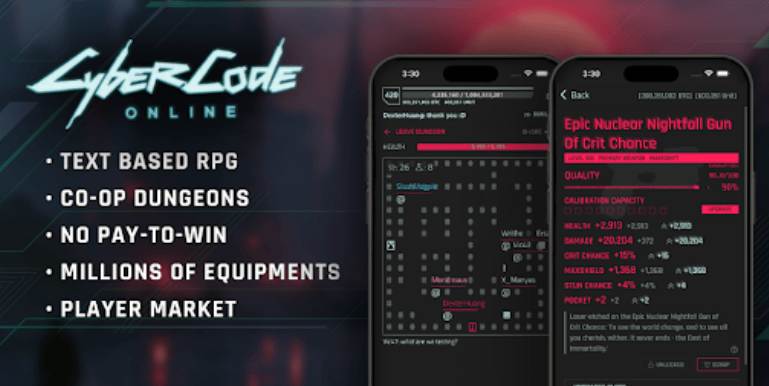
A video game in disguise, CyberCode Online (link here) may look like a regular line of Visual Studio Code, but in reality, it’s an epic real-time MMORPG that’s easy to pick up but hard to put down. Yes! We have two MMORPGs on this year’s list. CyberCode Online does more to disguise itself as something other than a game, but it doesn’t climb any higher than number three on our list because it is a real-time MMORPG. You may need to give up a battle or two…or even three. But I love the theme. We need more Cyberpunk video games.
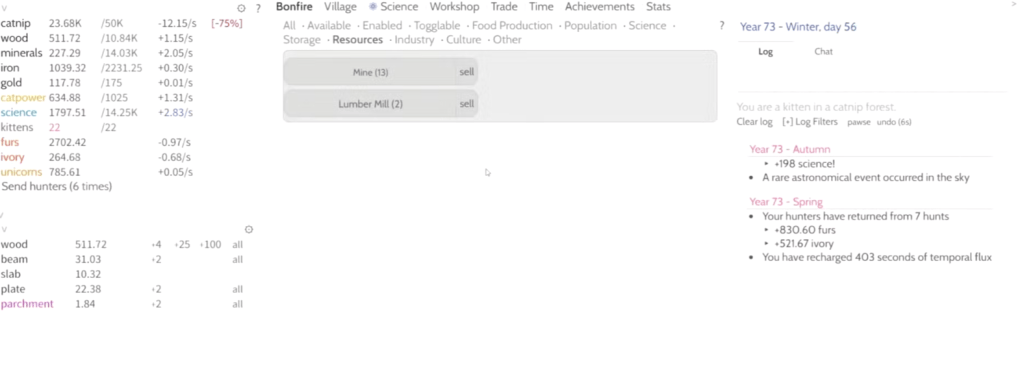
On the surface, Kittens Game (link here) is a simple game about growing a village of cats in a forest, but fans call it one of the most complex builder incremental games available. Kittens Game changes a lot in short order, going from a relaxed text-based idle experience to, as the original website puts it, “a Dark Souls of incremental gaming.” Keep in mind that players can’t really lose at Kittens Game. While getting stuck is possible, the game has an active community and plenty of wiki entries and tutorials for beginners.
Yeah. Kittens Game is one of those experiences you can sink a ton of time and effort into playing well. However, Kittens Game’s easy-to-read and follow UI makes it a purr-fect game to play at work. I had to throw in at least one cat pun.
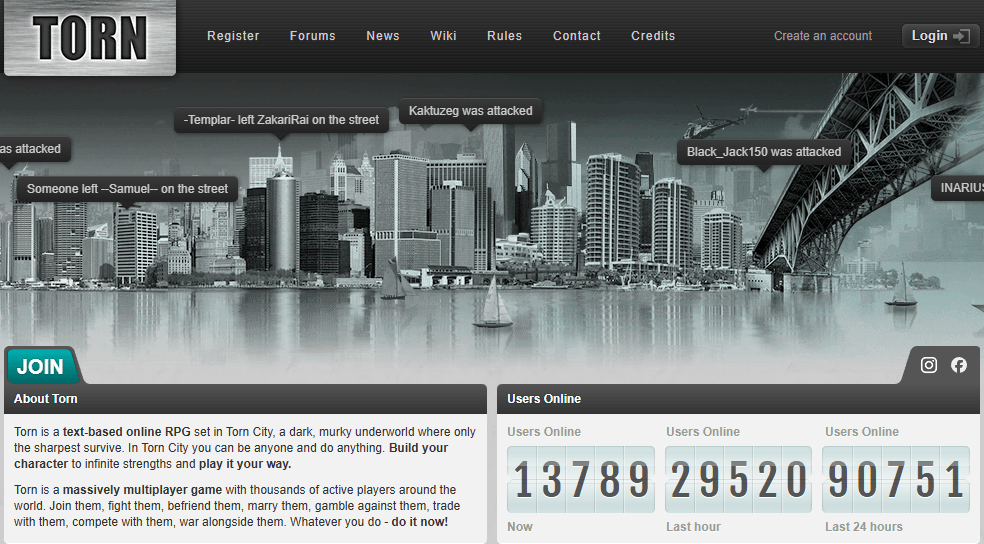
We love our browser-based games with these lists. Torn (link here) is yet another one, but Torn is set in a modern-day dystopia. What? The games on this year’s list have some fun themes. The screenshot above was taken straight from Torn’s website. Tens of thousands of concurrent players participate in Torn daily. Those numbers back up Torn’s claim as the “world’s largest text-based multiplayer game.” When you first create a character, you’ll begin at the bottom of the ladder as a petty criminal. Through committing crimes like robbing others, you’ll grow in power and influence. Torn may be a great way to blow off some steam.
Those are our games for 2026’s 5 video games to secretly play at work. There are plenty of others. Let us know which ones you like to play in the comments. Thank you for reading, and wherever you are, I hope you’re having a great day.
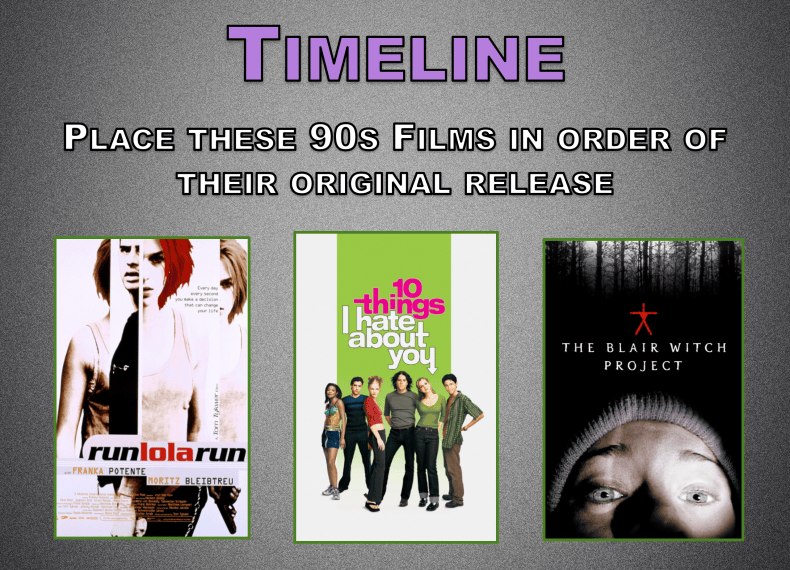

Hey, hey, Geekly Gang! Tomorrow is Labor Day, and by the time you’re reading this, I’ll most likely be at the Kansas City Renaissance Faire. If you’re at the Ren Faire, feel free to say, “Hey, hey, Geekly Gang!” I may just respond. But being away from my keyboard means we won’t have a Geekly News post this week. Instead, I’ll share a previously unreleased Timeline Quiz. Woot!
Have a great and safe Labor Day weekend, and we’ll see you next week, Geekly Gang.
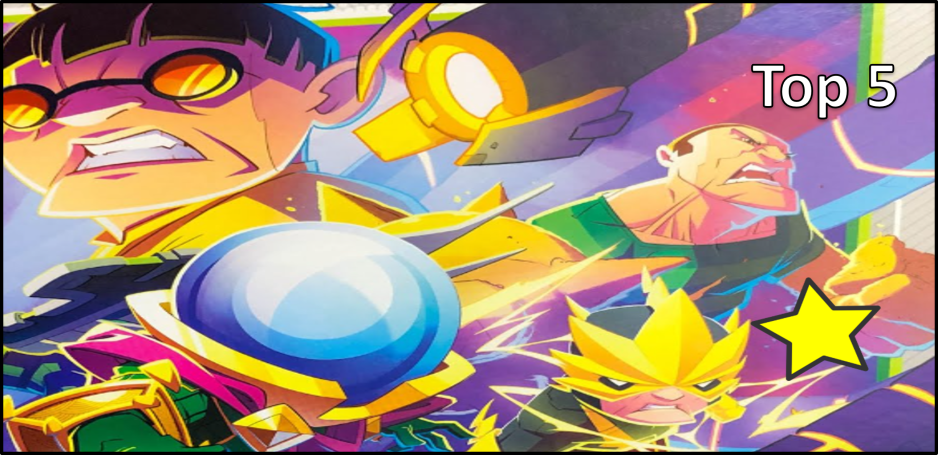
Hey, hey, Geekly Gang! Kyra Kyle here, and today, we’ll be discussing Marvel United. Yes! We haven’t discussed this board game in quite some time, and it’s time to fix that. Marvel United’s various villains and the way they alter the gameplay are the game’s most intriguing game design elements. In today’s list, we’ll share our picks for the Top 5 Marvel United Villains.
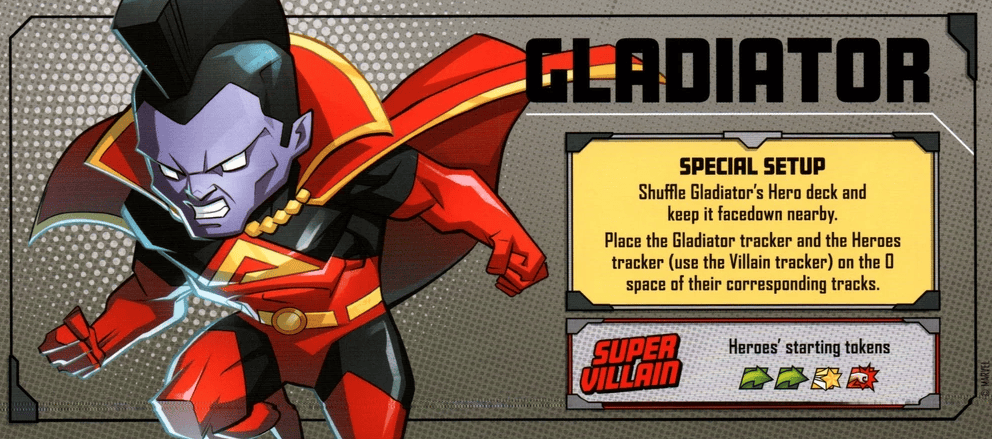
Right off the bat, we’re shaking up things with this list. While a Top 5 Marvel United Villains list is up for debate (everyone has their own taste), Gladiator may just be one of the most universally hated villains in the game. Simply put, he’s unwinnable at heroic mode, unless you use multiple heroes with lots of wild symbols, which limits the number of heroes you can even use to defeat this villain. Most games against Gladiator end with the heroes auto-losing after a couple of turns. No thanks.
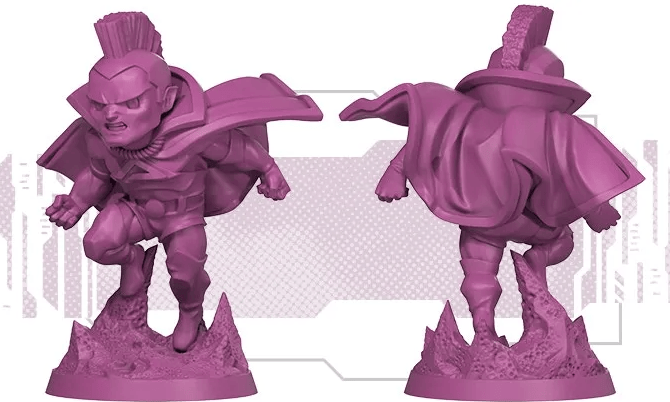
While the rest of the War of Kings Expansion adds some nice variety, Gladiator as a villain is plain unfun. Fortunately, he is an antihero. I’d use him as a hero, not a villain.
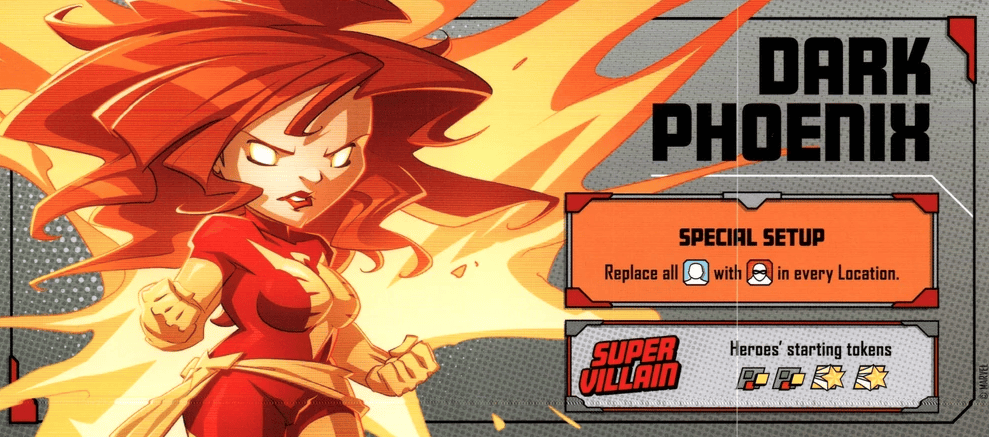
We’ll be seeing a ton of Marvel United Season 2 on this list. Most gamers list it as the best Marvel United Season, and I tend to agree. Marvel United X-Men rules. Unlike our previous entry, Dark Phoenix may be difficult to acquire. Difficult, but not impossible. She’s available in the Season 2 Stretch Goal box. This box includes a heap of fantastic characters. We may see another one on this list from the same box, so the hefty price tag of $80 to $100 may be worth the cost.

Dark Phoenix offers a chaotic and fun fight. She doesn’t go down easy, but at the same time, Dark Phoenix doesn’t feel unfair of a fight (ahem, Gladiator). It also doesn’t hurt that Dark Phoenix is an iconic villain. I love playing against her, reliving moments from the epic Dark Phoenix Saga. And look at that mini. Gorgeous.
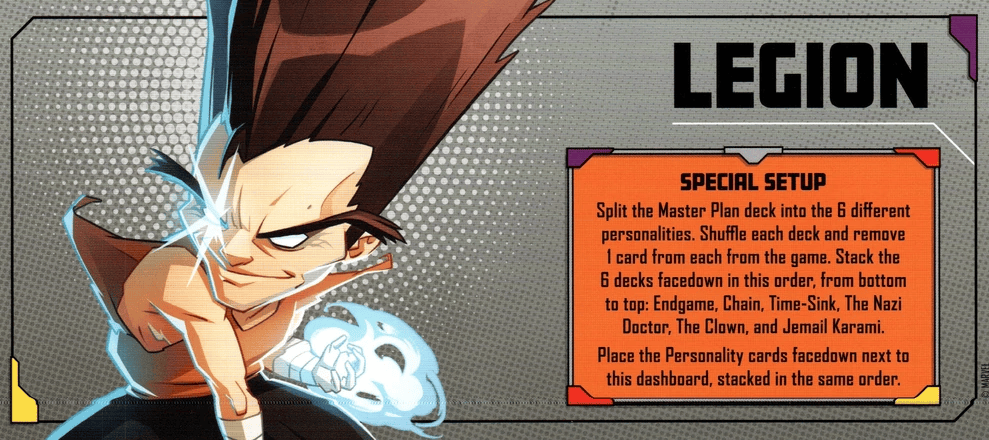
It did not take long for us to get to another Marvel United Villain from the Season 2 Stretch Goal box. Legion may be the pinnacle of Marvel United villain design. Like in the comic book, his personality changes. Every two turns brings a new wrinkle and mechanism into the game. Sure. This gimmick functions like an intricate puzzle in miniature game form, but puzzles can be a blast.
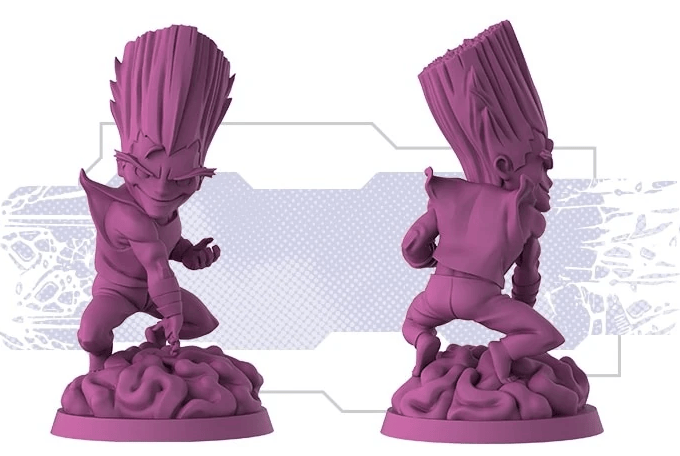
I’ve heard rumblings that at least one DC Super Heroes United villain borrows some game design ideas from Legion. I hope that’s true. Legion’s changing personality adds plenty of spice.
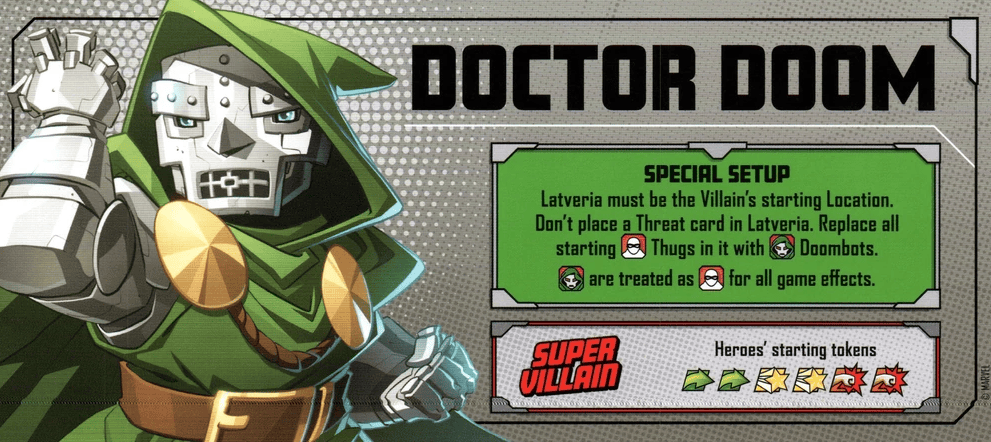
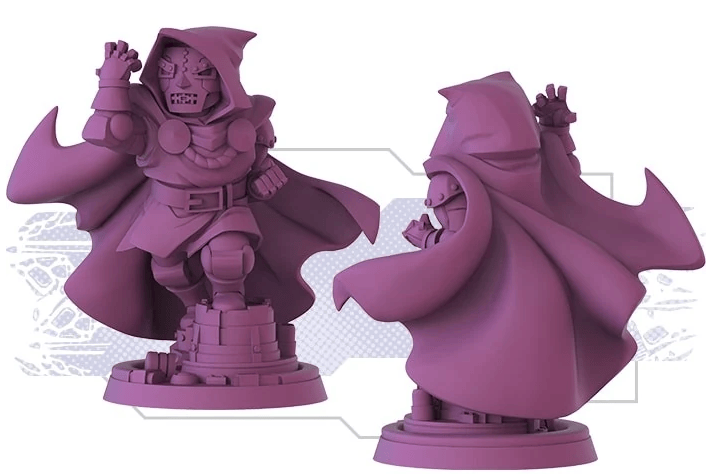
Doctor Doom is our third representative from Marvel United Season 2 (X-Men). Such a great set. Naturally, Doctor Doom is included in the Fantastic Four Expansion, and he makes this list for more than nostalgia reasons. I swear. Doctor Doom is a “fantastic” Marvel United villain. All jokes aside, I’ve always had tight games against Doctor Doom as a villain. The Marvel United design team made sure to tune his combination of cards so players will always be one turn away from winning or losing each game. Brilliant!
Combination doesn’t begin to describe Doctor Doom’s Threats and Master Plan cards. They work so well together, and every time a new card gets revealed, players will be forced to make tense and meaningful decisions. Doctor Doom is one of those villains you face, and you’ll know which decision caused you to win or lose.
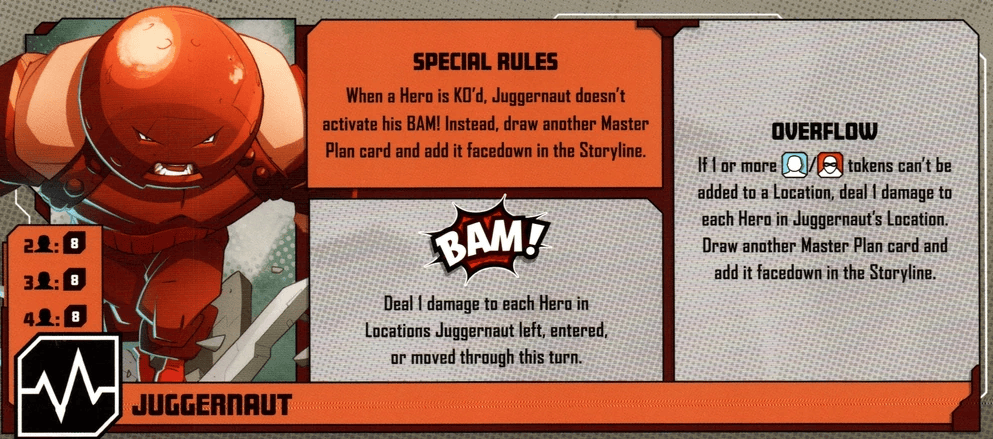
The X-Men set is four out of four on this list. Yowza! See what I mean when I said the Marvel United X-Men was a banger? Juggernaut makes this list–and almost tops it–because he makes a phenomenal introductory Marvel United villain. And he happens to be included in the Marvel United X-Men Core Set. Unless you really want Avengers in your game, I almost always suggest picking up the readily available X-Men Core Set. This makes Juggernaut one of the easiest villains on this list to add to your collection.
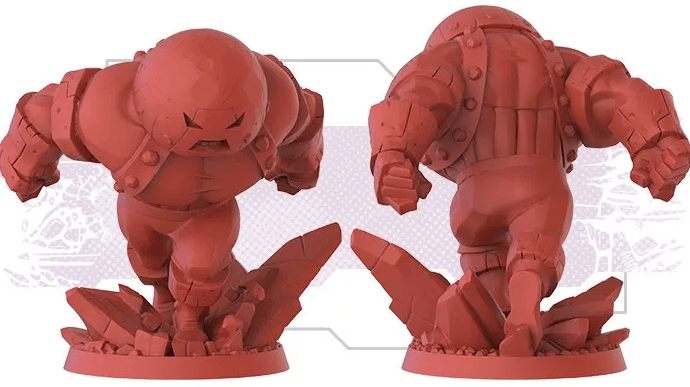
Juggernaut makes a great introductory villain because he’s thematic and fun. He charges around the board, headbutting people. Juggernaut behaves like you’d expect Juggernaut to behave. His ruleset is on the simpler side, but he can be challenging. Marvel United found a way to make Juggernaut easy to play and rewarding to defeat. I’ve never had a table dislike Juggernaut, and he just may be one of my most commonly played Marvel United villains.
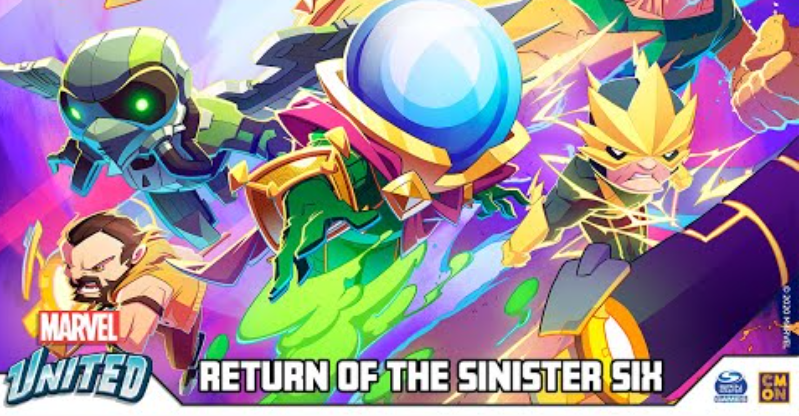
I’m double-cheating with our top entry. First, the Sinister Six is a supervillain team. Second, I’m picking two expansions here. Return of the Sinister Six was a KickStarter exclusive all the way back in Season 1, but plenty of stories carry this expansion, so it shouldn’t be too difficult to find. Maximum Carnage was released in Season 3, but the modular Sinister Six add-on was only available in the KickStarter exclusive variant of the expansion. I picked up the Maximum Carnage expansion via retail, so I have a method of adding the modular Sinister Six.
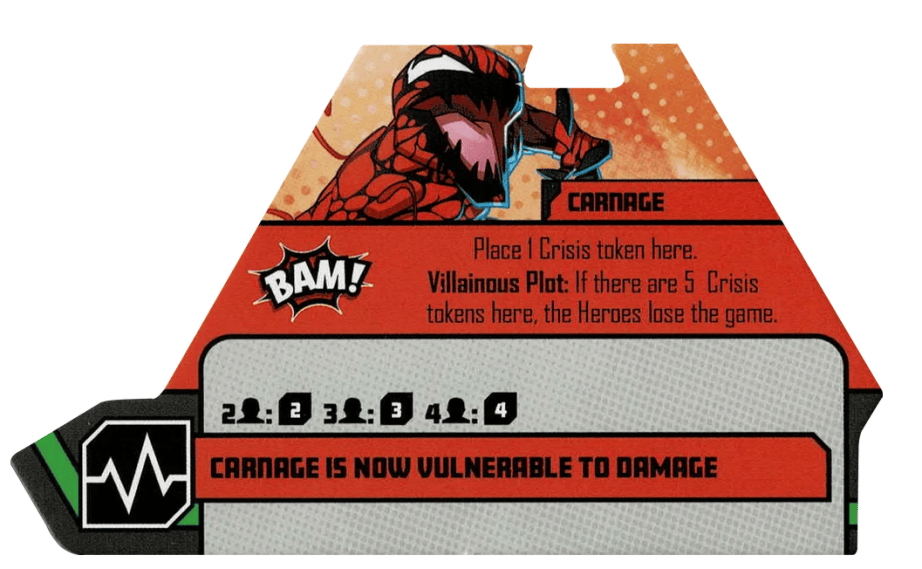
Above is a picture of Carnage’s puzzle piece that can be used in the modular Sinister Six. Using the Marvel United wiki, I took images (and real-world measurements) and printed out my own copy of each puzzle piece of a modular villain at my local library. There are some unique cards you won’t find in a retail copy of Maximum Carnage, so you’ll need to print out those as well. Both are easy to find and download.
I love both iterations of Marvel United’s Sinister Six. Featuring the Sinister Six’s founding members, Return of the Sinister Six provided Marvel United’s first supervillain team. Like Legion, The Sinister Six functions like another intricate puzzle. But once you’ve figured out the puzzle, it may be time to move on to the modular Sinister Six. This version of the Sinister Six includes every villain who has ever joined the Sinister Six, so that static puzzle becomes an ever-changing puzzle. The first Sinister Six holds a special place in my heart (and you’ll need them to fill out your roster of every Sinister Six member), but the modular Sinister Six is clearly the best Marvel United villain. Fun, adaptable, and never boring.
Did we get the list right? Let us know who your favorite Marvel United villains are in the comments. Thank you for reading, wherever you are, I hope you’re having a great day.
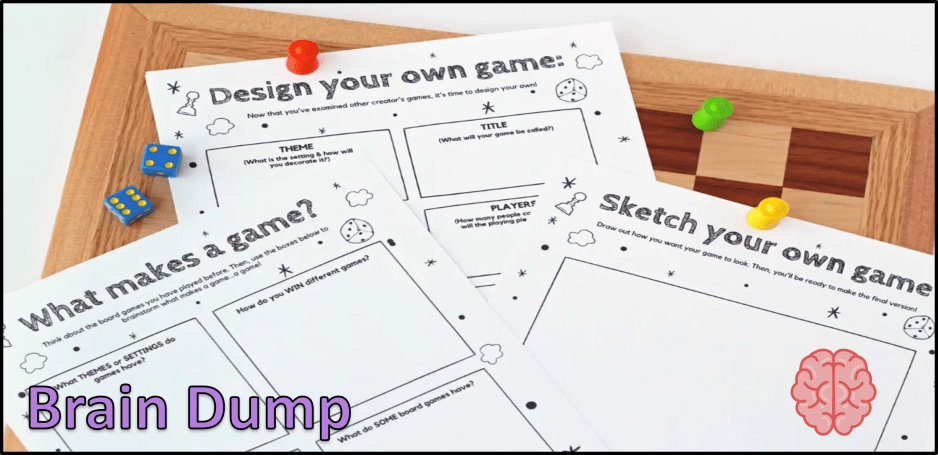
Hey, hey, Geekly Gang! Kyra Kyle with another board game design brain dump. I’m still submitting designs to various publishers. I’ve received a couple of rejections. Brotherwise Games gave me a prompt response. I’ve given up on a handful of publishers (like Lucky Duck Games), marking them down as “never responded” in my spreadsheet. Seriously, I wish there was a submission tracker like Duotrope for board games, so designers could share notes on which publishers are more responsive than others. I guess I can do that here. While I don’t particularly care for Brotherwise Games’ submission manager (they use Google Forms and pics), I do like how prompt they were with a response. And that’s another thing the board game community could use, a more standardized online submission manager program like Submittable.

Anyway, I’ve made tweaks to Spill the Beans. My goal is making Spill the Beans more enjoyable at lower player counts, and I think I’ve accomplished this by having players “bust” if they spill too many of the same bean type. Love it! Spill the Beans is still a party game at its core, but I’ve playtested multiple smaller player count games at designer meet-ups and received good feedback. You would think a player may get lucky, pushing their luck by spilling out more beans and not busting, and that does occur, but the game evens out over time. And smaller player count games take little time at all. Spilling out more beans per turn means that the game concludes a lot faster at smaller player counts (a problem the game had before this change). Players are just as likely to run out of beans as they are to fill two jars.
Enough about Spill the Beans, I’ve also been submitting Whirligig Pets to various publishers. I’ve had fewer responses for Whirligig Pets than Spill the Beans. I may be submitting to the wrong publishers. Or I may need to submit games during conventions. Or it could be something else entirely. Again, board games need a submission tracker and submission manager program like Duotrope and Submittable.

I wrote the Monster Chef rulebook. It’s up for review with multiple design groups. I’m getting close to submission with this title. I can’t wait. Monster Chef has plenty of theme and could tie in well with the upcoming season of Delicious in Dungeon (2027). I’m also exploring expansions for this title. Monster Chef is a joy to develop.
The same isn’t always true of Rustbucket Riots. I’m still playtesting this game’s shift from dice placement to bag builder. I like what I’ve seen so far, but balance has become an issue. If I can unknot Rustbucket Riots’ balancing issues, it could proceed to a similar state to Monster Chef.

And we come to two newer designs that don’t even have names–yet–and I may want to help a fellow game designer get one of their title’s published. I won’t name her design here, but I love the game’s quilting theme. One of my new titles doesn’t have a theme. Well, I don’t care for the theme of flowers that it currently has. Too many games use a flower theme, so I may need to shake up a few things. My second title is fallout shelter game includes multi-use tetrominoes and spinners. Oh, yeah. We’re gonna get freaky.
That second title has been on the backburner for over a year. I wanted to get Spill the Beans, Whirligig Pets, and Monster Chef to good states before starting another project. I can’t wait to take the fallout shelter game to conventions. Woo hoo!
That’s all I’ve been working on over the past month. I should have more updates next month. Nuke-Con (in Omaha) is on the horizon. I’ll be attending with Spielmasons. If you’re going, stop by and say hi. Thank for reading, and wherever you are, I hope you’re having a great day.
 jkgeekly.com