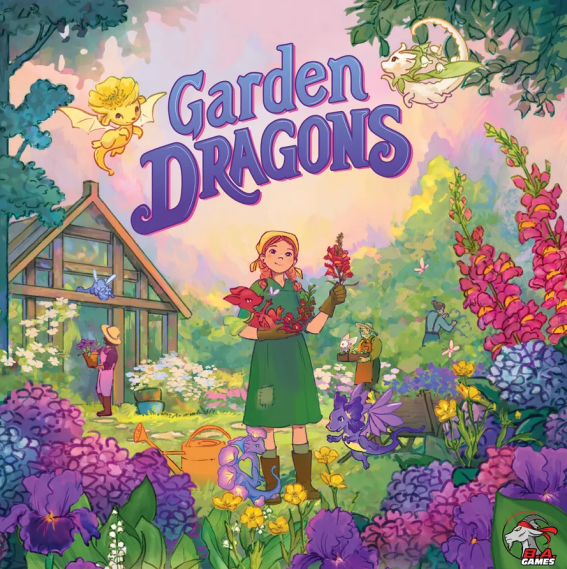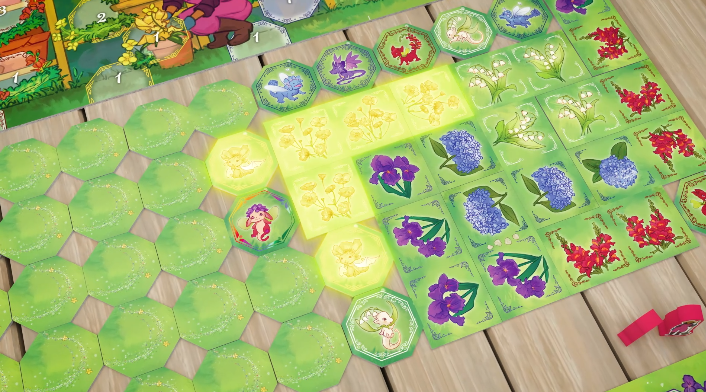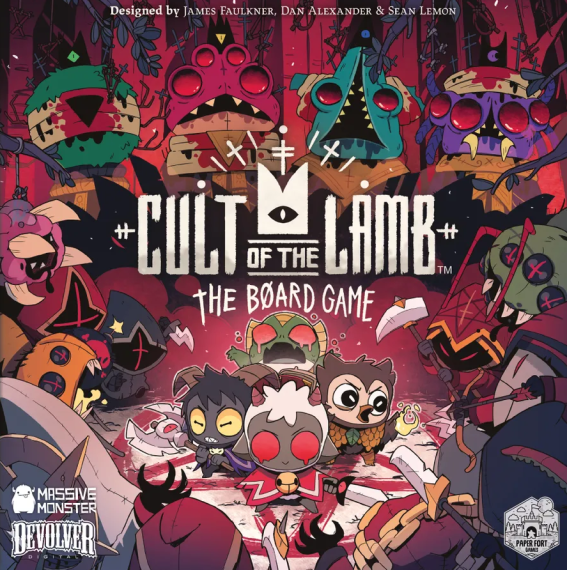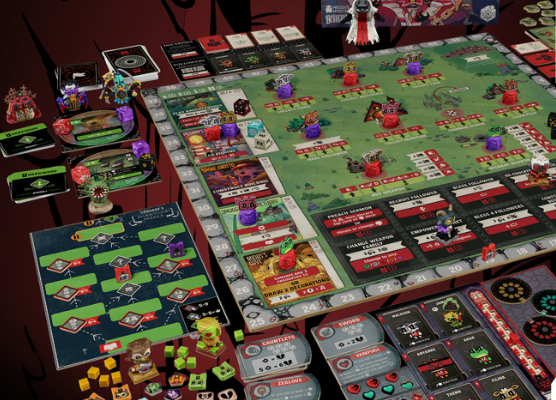
Happy Wednesday, Geekly Gang! Kyra Kyle here, and today, our writers share what they’ve been watching over the past month. Feel free to share what you’ve been watching in the comments, because we’re all part of the Geekly Gang. I’ll get things started with what I’ve been watching over the past month.
Kyra’s Movies
When I mentioned to Skye that I saw Send Help this past month, she asked if I had gone to the movies. Nope. Send Help made its way to HBO Max two weeks ago, and I took advantage of the new release. I’m surprised by how quickly movies like Send Help (a 2026 release) make it on streaming services. From what I’ve seen, it did well at the box office, received good reviews, and was fairly popular. Also, don’t be surprised if Skye lists Send Help in a Whatcha Watching in the near future.
I’ll echo what reviewers have said: Send Help is a return to form for director Sam Raimi. It has a rom-com set-up, and just when you think it might venture toward a rom-com, it goes a different direction. Send Help is a horror comedy through and through. The twist surprised me, but it made sense with context. That was good. The over-the-top gore in places felt earned and played up for laughs–oddly enough. I liked it. At an hour and a half (minus credits), Send Help doesn’t overstay its welcome, and that’s an excellent move for a horror flick. If you have HBO Max, Send Help is a good popcorn movie.
I’m unsure where to place The Punisher: One Last Kill. It’s the latest Marvel Special Presentations, available on Disney+. Does it count as a movie or TV show? It doesn’t matter. I won’t go into detail about the show here because I discussed it at length in my review/reaction. In short, The Punisher: One Last Kill is Jon Bernthal’s best performance as the character. I also like Disney/Marvel’s recent trend of letting the actors portraying their characters contribute as much as they want to the project. Bernthal co-wrote The Punisher: One Last Kill’s screenplay, while Charlie Cox and Vincent D’Onofrio had creative control with Daredevil: Born Again. Hope this trend continues.
Kyra’s Shows
I don’t know if I mentioned Hollywood Demons in one of my Watcha Watching posts last year, but I did watch the show as its first season aired. That first season featured a lot of Hollywood actors doing terrible things. The less said about the actor who played the dad from 7th Heaven, the better. Yuck! Hollywood Demons’s second season goes in a different direction, and I prefer this season to the first. The second season asks what makes Hollywood stars behave the way they do. What are the underlying issues? The last episode I watched, “Doctor Feelgoods,” shows how registered doctors hook their clients on illicit drugs. Heck, a legal doctor gave Matthew Perry his first dose of ketamine, the drug that would eventually kill him.
Needless to say, Hollywood Demons won’t be for everyone, but I like the behind-the-scenes look. And the show doesn’t get as repetitive as others of its ilk. Doctor Drew keeps his commentary relatively fresh.
Daredevil: Born Again completed its second season this past month. Like the Punisher Special, I won’t go into too much detail because I’ve already posted reviews/reactions for each episode. You can find them here. Daredevil: Born Again, season two, was way better than its first season. The show found its footing. I loved Daniel Blake’s storyline and a few others. I’m glad Daredevil: Born Again took its title character where it did. If you know, you know. I can’t wait to see how Matt Murdock gets out of this jam.
I’m keeping it short this month. Season and Skye have some movies and shows they’d like to share. Let’s check in with them.
Season’s Movie
Hi, Geekly Gang! Per usual, I haven’t watched much, but I do have a movie I watched while I had a bad allergy flare-up. I tend to watch movies when I feel unwell. Turning Red follows thirteen-year-old Meilin Lee, an eighth grader entering her rebellious phase with a helicopter mom. What could possibly go wrong?
Meilin has a nightmare one night and transforms into a giant red panda. She screams when she sees herself in the bathroom mirror. Her mom asks her what’s wrong through the bathroom door and asks, “Did the red peony bloom?” I’m using it the next time I’m on my period. Meilin’s mom grabs painkillers and more types of pads than I knew existed while Meilin hides in the shower. From here on, there’s a lot of embarrassment for Meilin at school, and her parents explain to her that she transforms into a red panda because of her ancestor, Sun Yee. Sun Yee asked the gods for a way to protect her people while the men were at war. Since then, the women in the family transform into red pandas whenever they have an emotional spike.
Turning Red is a cute coming-of-age movie. It did a good job of showing the fear a parent has of growing distant from their child as that child grows up. I had many emotions swirling as I watched it. If you’re looking for something that may make you cry while ending on a high note, I recommend Turning Red.
What are you watching, Skye?
Skye’s Movies
I eased myself into watching more movies in theaters with the latest Pixar film, Hoppers. I was more disappointed than anything else. Hoppers felt too one-noted, mundane, and shallow. Simply put, Hoppers bore little resemblance to the Pixar films I love. However, Hoppers was an improvement to Pixar’s last cinematic outing, Elio. That doesn’t mean much. Despite having elements of good ideas (like most one-shot Pixar films lately), Hoppers never fully delivers on them. It sticks to standard stories you’d see in most other kids’ films. There were two highlights: the insect queen getting squished, and when Jerry used the HOPPER technology. If the film had gone through one or two more drafts, I feel like it could have been something.
What did you expect? It’s The Super Mario Galaxy Movie. I could stop my summary right there, but y’all probably want to hear more. While Super Mario Galaxy isn’t anything great, you can’t say it’s kidding itself about what it is: a bright, colorful waste of time. Illumination Studios prides itself on having no substance in its films, but they still make boatloads of cash. Super Mario Galaxy is no exception.
Of course, having Nintendo attached to this film increased their box office returns exponentially. While I want to be mad at this (as both a movie fan and a Nintendo fan), I’ll also say this is the closest we’ll get to an authentic Super Mario film series. The games never had much plot or depth to them; you just played them. That also seems to be the mentality here: no real plot or depth, just watch. Also, I can’t deny that countless references to the games are fun.
I didn’t know what to expect with Project Hail Mary. It’s safe to say I enjoyed it. The way the story develops is a combination of charming, mysterious, and tragic. While the characters aren’t the most complex, you identify with them and their goal of preventing the sun from dying. Every moment you’re on this ship with these characters, the urgency of the situation feels more real. This is one of those moments when a longer running time helps a film rather than hurts it. All this considered, I still have the sense that there was something about Project Hail Mary I missed after my first viewing. This is a film I’d be glad to examine in more detail.
I watched Fuze by accident. My local theater has a weekly “Mystery Movie” that allows unsuspecting moviegoers to buy a ticket to a show they don’t know anything about. Sure enough, I bought a ticket for this “Mystery Movie,” and it happened to be Fuze. I wouldn’t see Fuze in theaters otherwise. I’m still unsure what it was supposed to be. The whole thing centers around a WWII-era bomb discovered in a city that’s still active and needs to be defused. You’d think that’d be it, but there’s also a bank robbery going on at the same time. Okay? Not only that, but there’s also a random immigrant family being focused on for some reason. Huh? Then, in the end, it turns out it was all a big plot by terrorists. What? After that, we see how our terrorist protagonists met. Why? [Roll credits.] Can someone tell me what this was about?
LOL Sounds like Skye had an interesting month at the movies. Hey, hey! Kyra Kyle here again. Those are all the shows and movies our writers watched over the past month. Let us know what you’ve been watching. Thank you for reading, and wherever you are, I hope you’re having a great day.
Happy Monday, Geekly Gang! Kyra Kyle here with another video game history post, where we discuss a video game company’s history. My last post in this series covered indie game developer inXile Entertainment, and today’s video game publisher/developer, Obsidian Entertainment, has ties with inXile. Founded by former Black Isle Studios employees Feargus Urquhart, Chris Avellone, Chris Parker, Darren Monahan, and Chris Jones, Obsidian Entertainment began by making stellar video game sequels (for series like Knights of the Old Republic and Neverwinter Nights) until they branched out into unique titles. We’re in for a wild ride. But before we get to the founding of Obsidian, let’s take a brief look at what the gang accomplished as Black Isle Studios.
Black Isle Studios
Interplay subsidiary Black Isle Studios made some of the best–no, iconic–story-driven, top-down isometric third-person RPGs. If you enjoy this gamestyle, you owe it to yourself to check out Black Isle Studios’ back catalogue. Who am I kidding? If you’re a fan of this style of game, you’ve played one or more of these games: the first two Baldur’s Gates, the first two Fallouts, the Icewind Dale series, and Planescape: Torment. Ah! Black Isle Studios made so many great titles with the Infinity Engine. Remember the name Infinity Engine. It will return.
Speaking of a name returning, we get another visit from Titus Interactive Studio. They featured in the inXile Entertainment history, too. While inXile founder Brian Fargo would cite creative differences with Titus Interactive Studio and leave the company after Titus acquired a controlling stake in Interplay for $25 million (per a Los Angeles Times article), soon after the deal, Interplay shut down Black Isle Studios. (Here’s Gamespot’s announcement.) Just to add a little context, Black Isle Studios was working with the Dungeons & Dragons intellectual property for one of its games it had sunk a year and a half of development, and the D&D license was lost. The timing of this lost license was brutal. But Black Isle Studio lead Feargus Urquhart (pronounced “FUR-gus URK-heart”) knew the end was near and before the layoff was official, he gathered some of his fellow developers to form what would become Obsidian Entertainment.
The closure still stung. I’ve heard plenty of RPGers say the loss of Black Isle Studios hurt the most. At the time of its closure, Black Isle Studios was working on some huge titles. Their version of Fallout 3, codenamed Van Buren, would get repurposed for parts of Fallout: New Vegas, and Baldur’s Gate III: The Black Hound. Baldur’s Gate, which is set in the D&D universe, was supposed to have had two releases around 2003-2004 (when the studio closed). Fans of the series would have to wait two decades.
In the end, everything worked out on the Baldur’s Gate front. Obsidian Entertainment would make a spiritual successor to Baldur’s Gate II–more on that in the Pillars of Eternity segment–and Larian Studios did a stellar job with Baldur’s Gate III. We’re about to get into Obsidian Entertainment proper, but first, let’s discuss the name Black Isle Studios. It could help to understand Obsidian’s name.
According to a Kotaku article, Interplay wanted to call the branch Feargus Urquhart would run DragonPlay. “I just thought DragonPlay sounded lame,” Urquhart said. “They were looking for Something-Play, I guess. The joke was always that the adult version of Interplay would be…ForePlay.” That last name wouldn’t work, so Urquhart named the new branch Black Isle, after a Scottish region of the same name, which coincidentally contains a Castle Urquhart. I wonder why he chose Black Isle? Hmm.
Above is a picture of An Sgurr “The Nose” in Scotland. Beside An Sgurr is Black Isle Studio’s logo. An Sgurr is composed of pitchstone, which is a dark volcanic rock and a close relative to obsidian. Obsidian isn’t native to Scotland. Is it just me or does An Sgurr resemble the rock depicted in Black Isle Studios’ logo? No one at Obsidian Entertainment has confirmed if the following is true or has expressly said how the company got its name, so we’re entering conjecture corner here. My guess is that Pitchstone Entertainment sounded lame. Why not adopt a studio name with pitchstone’s cousin? Why not call your new company Obsidian Entertainment?
The Founding of Obsidian Entertainment
After starting their business, Urquhart, Parker, Jones, Monahan, and Avellone needed office space, so (according to the Obsidian 20th Anniversary Documentary on YouTube) Urquhart offered his and his wife’s finished attic. “The best price for square footage for office space was free,” Urquhart said. “My wife and I bought our first house, and one of the weird options was to finish (the) attic, which was 450 square feet of space…It turned out to be me and two or three people (working there), and eventually, before we got office space, we had seven people working up there.”
Photo taken from the Obsidian 20th Anniversary Documentary
Not going to lie, judging from the picture above, there doesn’t appear to be a lot of space in the attic. Five people looks like it would be squished. I can’t imagine an addition two or three working in this space, especially with the size of computers in the early 2000s. Those are full-sized, 27-inch monitors, creating a ton of heat. And according to Urquhart, this all happened while his wife was about eight and a half months pregnant. I like how Game Director/Co-Founder Chris Parker put it. “We would have to show up in the morning, park, and quietly enter his (Urquhart’s) house and be quiet.” One mustn’t wake the sleeping, eight and a half month pregnant wife.
Studio Programming Director and Co-Founder Chris Jones shares, “It was great because we needed a place to work initially. It’s not like you can run out tomorrow and have office space when you don’t have money, and there’s no income coming in…It was a cool environment for us. We were all just in one room together, trying to fit wherever we could. It was a little chaotic, but it was a neat experience.” Start-up companies tend to have fun and interesting origins. Working out of a finished attic with limited space is a great starting point for Obsidian Entertainment. But what happens when someone invites a potential customer to that cramped space? Can BioWare find a space to fit?
Star Wars: Knights of the Old Republic II: The Sith Lords
Free office space wasn’t the only fortune Obsidian had. They had ideas. Several ideas for games and pitched numerous ones to various publishers. One of the first games Obsidian pitched was an action RPG Star Wars game. According to Urquhart (in the Kotaku article, “The Knights of New Vegas”), “We actually talked to him (then President of LucasArts Simon Jeffrey) about doing sort of an action-RPG Star Wars game, which I always thought would be cool to do–like a little party-based action-RPG, with first-person lightsabers and R2D2.” Jeffrey would admit the idea sounded cool but wondered if Obsidian could make a sequel to Knights of the Old Republic.
Obsidian was a good fit for a Knights of the Old Republic (KOTOR) sequel. There were a couple of snags. One, the first Knights of the Old Republic wasn’t even out yet, and two, LucasArts would give Obsidian 15 months to finish the sequel for a 2004 holiday release. Eek!
My favorite anecdote from the Obsidian 20th Anniversary Documentary KOTOR II segment comes from Chris Parker. “When we first got the KOTOR II contract, we hadn’t played the (first KOTOR) game yet. BioWare was kind enough to send two engineers down to our studio…BioWare had a ton of people working on highly respected games, and they’re taking their code base and dropping it off in some dude’s attic. We thought it was hilarious. They looked puzzled the whole time.”
Oh! To be a fly on the wall during BioWare and Obsidian’s interaction. Parker would serve as producer on Knights of the Old Republic II: Sith Lords. The team would max out in the low thirties. Obsidian had to do most things as cheaply and efficiently as possible. Parker stated that a slow week for him was working about 60 hours, and a busy week was more like 80 to 90 hours. Strapped for time, Chris Jones automated as many processes as he could to the point where the team could build nightly. Every day, Obsidian would have a fresh build of KOTOR II.
Obsidian’s will remain committed to iterating early and then reiterating as quickly as they can to work out as many bugs as they can. Unfortunately, KOTOR II had an extremely short development cycle. The final product contained plenty of rough edges, and the team couldn’t include everything they wanted in the game that shipped. Despite its rushed production, KOTOR II received good reviews. It marked Obsidian’s arrival. KOTOR II’s success proved that big time video companies could trust Obsidian with high-profile titles, and Obsidian would continue to cut its teeth with sequels to popular games.
Neverwinter Nights 2
Obsidian’s familiarity with making Dungeons & Dragons video games (like Icewind Dale and Baldur’s Gate) made their pitch to follow up BioWare’s Neverwinter Nights a no-brainer. Even though Atari had taken over publishing duties for Neverwinter Nights 2, they hired Obsidian to develop the game. Neverwinter Nights 2 should’ve been an easy title to finish. But the team of nearly fifty people at this point needed an additional year to deliver Neverwinter Nights 2. But would Atari agree? And what was the reason for this delay? Instead of using the established engine from the original, Obsidian built its own creator engine. This proved to be a blessing.
Fortunately, Atari was willing to wait. They changed the project’s targeted release window from Christmas 2005 to October 31, 2006. This gave Obsidian the time they needed to construct the creator engine, and building a new creator allowed Obsidian to release DLC (Mask of the Betrayer in 2007, Storm of Zehir in 2008, and Mysteries of Westgate in 2009) that almost play like full video games in their own right. Still, Obsidian gave itself a lot of work.
Darren Monahan (Chief Information Officer and Co-Founder) summed it up best in the Obsidian 20th Anniversary Documentary. “We decided to make a new renderer and that snowballed into a lot of changes…When you changed the renderer, you have to change the tools. When you change the tools, the renderer has new limitations. We ended up snowballing quite a bit on features. That was a lesson learned…We continue to work on the tools and update them and ship them out (at least as of the 2023 interview). And I know some people still play Neverwinter Nights 2 today.” Neverwinter Nights 2 reminds me of the classic video game release saying, ” A delayed game is eventually good.”
Obsidian was riding high on the success of two BioWare game sequels. But it’ll experience a few bumps. There had to be some misfires.
First Round of Cancelled Projects and a Near Miss
We’re going back in time a little bit here: 2005. Obsidian would be in the middle of Neverwinter Nights 2’s production, and Urquhart continued to pitch games to publishers. I’m going to quote Head of Development Justin Britch. “Even as a mid-sized publisher, we had a lot of projects at the same time.” Britch wouldn’t join Obsidian until much later and that quote was taken from E3 2020 Los Angeles. But regardless of its size, Obsidian has always had a lot of projects going at the same time. Not every project sees a finished product.
In 2005, Obsidian was making all sorts of games. According to the Kotaku article “The Knights of New Vegas,” one of the publishers they contacted was Disney, who enlisted Obsidian to design a video game prequel to Snow White and the Seven Dwarves. Tentatively called Dwarves, it would be a third-person action game for Xbox 360 and PS3 that focused on Snow White’s seven companions. “It was a lot of fun,” Urquhart said. “We turned in a cool prototype. We worked on it for about a year. It’s one of the games here that the team just loved working on. And unfortunately–which, it happens in this industry–you have changes of focus at a publisher.” The changes of focus were caused by a new Disney CEO, who led to a shift in direction. Suddenly, Disney was no longer interested in a Snow White prequel. Snow White was untouchable, they said. The game was cancelled.
Obsidian continued to keep itself busy. While wrapping up Neverwinter Nights 2, Urquhart got a call from Sega. It pays to have connections, because Sega America was at the time run by Simon Jeffrey, the same executive at LucasArts who signed Obsidian for KOTOR II. Jeffrey was looking for a brand new original RPG. Despite having a team of 50 people, Obsidian had no one to spare at the time (this and Dwarves was all happening at the same time as Neverwinter Nights 2), but Sega was willing to wait until a team would become available. And eventually, Obsidian came up with a concept: A Spy RPG. This concept would become Alpha Protocol. Not everyone at Obsidian liked the pitch. Chris Parker didn’t believe he’d seen a “good” Spy RPG, and the game type wasn’t in the company’s wheelhouse. They seldom did pure action. Add in some technical issues, like beginning development with Unreal Engine 2.5 and switching to Unreal 3 mid-process, and Alpha Protocol’s production was a mess.
Urquhart likens Alpha Protocol’s protagonist as a mixture of the three JBs: James Bond, Jason Bourne, and Jack Bauer. But that presented another issue for Obsidian. How do you make one character equal parts those three characters? Oh. And the game wanted to be action/adventure and an RPG. Alpha Protocol was getting pushed in different places. And the finished product was uneven. In fact, Urquhart felt Alpha Protocol became two games attached together. Most of Obsidian would say the action was servicable–at best. But the RPG side did things no RPGs had done to that point and few to none have done since. Alpha Protocol gave its players agency. Players could do what they wanted to do and then get rewarded no matter what. You could be any of the JBs. You could be evil. Alpha Protocol was a sandbox. I’ll let Chris Parker, Alpha Protocol’s biggest critic at the company, have the final word. “I’m happy with how Alpha Protocol turned out. It’s a remarkable role-playing game for all the choice and consequence you have, and all those cool characters and setting-specific elements make it unique.”
Sega signed up for a second Obsidian RPG. Aliens: Crucible was a Sci-Fi role-playing game set in the Aliens intellectual property. It was an action-based, third-person game where you could travel an open world with up to two companions from a cast of about 16 total characters. That set-up sounds vaguely familiar. I can’t quite put my Courier on it. In all seriousness, Studio Design Director Josh Sawyer was at the helm of Aliens: Crucible, and he would go on to direct Fallout: New Vegas. I’ll let Sawyer (from the 20th Anniversary Documentary) explain his thoughts on the Aliens RPG. “I wanted to show you could make a role-playing game in a setting that wasn’t traditional for a role-playing game…The Aliens franchise thrived on the interpersonal (relationships) between characters, and I thought in the best Obsidian role-playing games, that was at the heart of the experience.”
Like Alpha Protocol, Aliens: Crucible had its own share of production issues. Once again, Obsidian built a game engine alongside the game. This would take advantage of new technology and graphics, but it made focusing on the game’s script difficult. And Sega wasn’t as upfront with what they wanted from game milestones. I’ll let Chris Jones explain. “What we were delivering as milestones to Sega never looked that good because we were working on functionality first…They started to get wary as to where the game was going to end up. They couldn’t see where it was going visually.” By the time Obsidian delivered polished visuals to Sega, visuals Sega would think were amazing, Sega pulled the plug on Aliens: Crucible. It was devastating.
Layoffs ensued. Obsidian let more people go at once than they had ever done at that point. The company’s future looked bleak. But all of the work Obsidian sunk into Aliens: Crucible–over two and a half years–would come in handy with the company’s next project.
Fallout: New Vegas
Shortly after Aliens was cancelled, Urquhart got a call from Todd Vaughn, vice president of development at Bethesda. Fallout 3 had just been released, and Bethesda’s internal team had moved on to Skyrim. But the company wanted to release a game between Fallout 3 (2008) and Skyrim (2011). That’s where Obsidian could help.
Bethesda wanted–or rather needed–a quick turnaround. Many of Obsidian’s employees had worked on Van Buren (Black Isle’s vision of what could be Fallout 3). So, the game’s story had a skeleton. Sawyers’s work on Aliens: Crucible introduced a refreshing companion system. Obsidian needed to hammer out the details and get started. Urquhart sat down with the other four owners and brainstormed. The new Fallout game needed to place a heavy focus on factions, as per fan request. Shortly after that, they set the game in Las Vegas and plotted out a rudimentary intro. What could be more Vegas than starting off the game with you getting shot in the head and buried in the desert?
Despite loving Fallout’s world, Urquhart worried about the short turnaround. Obsidian was gaining a reputation. KOTOR II and Alpha Protocol shipped with several bugs. Having less time to develop Fallout: New Vegas meant Obsidian risked the game shipping with a lot of bugs. Guess what? Fallout: New Vegas had bugs, a Bethesda’s worth of bugs. Obsidian signed the deal in April and had to get the game done in October, which made the timeframe for completion 18 months. Yikes! It’s amazing what the team at Obsidian was able to accomplish.
In the Obsidian 20th Anniversary Documentary, Game Director Josh Sawyer shares his thoughts on Fallout: New Vegas when it first released. “I didn’t think it was going to have the staying power that it ultimately did. It was five or six years later after the game came out that it started to develop this cult following, and now it’s still going strong, which is incredible.” Fallout: New Vegas received good to great reviews, but I remember those reviews docking the game a point or two for its copious bugs. Sawyer would also mention Fallout: New Vegas’s incredible modding community, and I agree. The modding community saved this amazing game. Fallout: New Vegas remains a lot of people’s favorite RPG of all time.
Obsidian was back on top. Fallout: New Vegas had repurposed the companion system from Aliens: Crucible, but the Onyx Engine, which was an Obsidian original developed for that same game, still lay on the shelf. It would have to wait for its moment until another RPG giant called. Square Enix.
Dungeon Siege III
Square Enix had just acquired the Dungeon Siege IP from Gas Powered Games, but at that time, the JRPG giant had little time to dedicate its in-house team to a new Dungeon Siege game. By this point, Obsidian had made a name for itself as the developer to call if someone wanted a well-received sequel in a fan-favorite series. And it didn’t hurt that Dungeon Siege creator Chris Taylor signed on to help whoever would take over the project. But Dungeon Siege III had a twist. It would be the first game in the series that would have a console version.
Darren Monahan (in the Obsidian Anniversary Documentary) best summed up the challenge. “The idea there was to figure out how do we do Dungeon Siege, which is a point-and-click–and bring in console players? You have this Venn diagram of hardcore PC Dungeon Siege players and then bring in console players that it something like Diablo and marry that group together.” Obsidian ended up making a Dungeon Siege that wasn’t close enough to the original games for most fans. And by the company’s own admission, the multiplayer doesn’t work the way people expected. Dungeon Siege III received average to mixed reviews. Critics picked enough nits. Many complaints centered around the decision to make Dungeon Siege III playable on console. The PC controls suffered.
Obsidian has kept itself busy. Their reputation has given them phone calls, like the one from Square Enix, and they don’t need to pitch as often to publishers. But it was a phone call from an unlikely source that led to one of Obsidian’s most bizarre RPG offerings.
South Park: The Stick of Truth
While Urquhart was walking into the office one day, a receptionist said, “You have a voicemail from someone from South Park.” Urquhart thought nothing of it. Why would South Park be calling a video game developer? It turned out the person who called was Greg Capnanis, who worked with South Park Digital Studios, which was Matt Stone and Trey Parker’s digital company they owned in conjunction with Comedy Central. The call was real. The pitch Capnanis gave Obsidian in the voice mail of a South Park RPG was legitimate. And it turned out that South Park Digital Studios had put together a short animatic that showed how they wanted a South Park RPG to look.
The game that would become South Park: The Stick of Truth started strong. South Park Digital gave Obsidian the source artwork. Within no time the team had a demo to share. To this day, Urquhart remembers South Park Digital walking up to the projection screen and staring at the textures, amazed that the game looked so much like the TV show. Getting the vibe right for South Park: The Stick of Truth was one of Urquhart’s proudest moments as a video game developer.
Not everything made the final cut of South Park: The Stick of Truth. I’ll let Chris Parker (from the Obsidian 20th Anniversary Documentary) explain. “Both the Ginger Forest and the *beep* boss fight went to the cutting room floor at some point. There’s some really gross stuff in the *beep* fight. There was the *beep*. That was disgusting. Wasn’t there one where she would *beep* on the player and put them on *beep* and then basically, *beep* and then somehow *beep* out again? The player would get *beep* *beep* and *beep* *beep* *beep*. It was disgusting.” Not kidding. The documentary beeped out a lot of what Parker said, but to Parker’s and Obsidian’s credit, they would regularly check in with the team involved with South Park: The Stick of Truth, making sure the team was comfortable with the game’s content. Unsurprisingly, the team got smaller the deeper into the project.
The early days of South Park: The Stick of Truth were fantastic. Obsidian talked with Matt and Trey on a regular basis. But then, the duo got pulled away with other projects, specifically the Book of Mormon Musical, and South Park Digital had no plans of financing the production of the RPG. Obsidian needed a third party. They got one with THQ, but THQ went bankrupt. Just when it seemed South Park: The Stick of Truth would never see publication, Ubisoft purchased the game from a THQ fire sale.
South Park: The Stick of Truth would receive great reviews. Few people would know about the perils the game’s production saw. It waited for a new publisher for well over a year, and the publisher it found was Ubisoft. According to Urquhart, working with Ubisoft as a publisher proved to be challenging. Ubisoft wanted to renegotiate the contract Obsidian had already signed with THQ and sent the updated contract to Urquhart while he was away at his brother-in-law’s 50th birthday. He negotiated the contract on grassy knoll, screaming at the top of his lungs. The Stick of Truth wound up being a great game. But what happens when another high value game doesn’t make it to production?
Stormlands Was Supposed to Be an Xbox One Exclusive
Obsidian is well established around 2010-2011. They began their career by making great sequels to popular franchises and even started a new franchise from a licensed intellectual property–here’s to you, Stick of Truth–but Obisidian made few games of original properties. Their last attempt at an original property was 2010’s Alpha Protocol, and it wasn’t as big of a success as Obsidian wanted. All that was supposed to change with Stormlands.
Stormlands sounded interesting. It was supposed to play like fantasy but was post-apocalyptic. Based on Justin Cherry’s arty style–the same Justin Cherry who lent his art design talents to Vampire: The Masquerade – Bloodlines—Stormlands had breathtaking visuals. Players would partake in melee combat in a magical world beset by a magical apocalypse. The concept made a splash when Obsidian pitched the game to publishers. An Xbox 360 demo sealed a deal with Microsoft. Stormlands was going to be an Xbox One launch title. The stars were aligned. After finding success with Fallout: New Vegas and South Park: The Stick of Truth, a successful Stormlands would launch Obsidian into an exclusive group of AAA developers.
After signing the contract, Stormlands received a new executive producer, who was themselves new to Microsoft. They had ideas about the game. But the conversations soon turned into a negative feedback loop. Microsoft’s ideas would make the timeline longer and the budget higher, which meant Stormlands wasn’t going to be available for the Xbox One launch. If you remember the Xbox One launch, Microsoft wanted to promote Connect. Why have Connect as a standard feature for all Xbox Ones if every game in the Xbox One’s catalogue can’t make use of it? Josh Sawyer (in the Obsidian Anniversary Documentary) states, “My lead team started coming to me individually and saying, we can’t do this. We can’t technologically do it. This doesn’t sound like it’s going to be fun. Even if we could technologically do it, it’s not going to be a good experience.” When Sawyer approached Urquhart about his misgivings about the project, Urquhart wondered why Sawyer didn’t want to tell Microsoft. “Because,” Sawyer said, “I think they’re going to cancel the project.”
Microsoft would cancel Stormlands. The cancellation would lead to the largest grouping of layoffs Obsidian has ever seen. The day Stormlands was cancelled was Obsidian’s darkest. The half of Obsidian’s workforce that wasn’t terminated was sent home for the week. They were in tears. Many of their friends lost their jobs. But the ones who remained had to pick up the pieces.
Obsidian spun off a variety of people into multiple three to five-person groups to drum up some projects. It got everyone’s creative juices churning. While these groups would lead the company to Kickstarter and Pillars of Eternity, several other projects came to fruition.
Pathfinder AdventuresCard Game
One of the ideas proposed by Obsidian’s smaller groups was to work on a smaller game. In particular, a mobile game. The company had never done a mobile game like Pathfinder Adventures Card Game, and the project was pitched with a small team. A small game wouldn’t require a large team, right? Right? Not exactly. In Obsidian’s efforts to produce something quick, they did the opposite.
Just because Pathfinder Adventures Card Game was a mobile game didn’t mean it could get by with a small team and a short development window. Obsidian soon learned that the same principles for making a compelling video game extend to mobile games. The group behind Pathfinder Adventures Card Game had little oversight from Obsidian. The company had other games on the horizon and left the group, many of them junior designers, alone to their own devices. To their credit, the designers behind Pathfinder Adventures Card Game were dedicated to the project. Obsidian should’ve given them more resources. The game received mixed reviews. And Obsidian learned a couple of things: 1) They aren’t much of a mobile game company. 2) Give every game a sufficient number of team members and oversight.
Oh. But there were other smaller games Obsidian produced during this timeframe. Another came from overseas.
Armored Warfare
Urquhart received a request for a proposal from mail.ru, which is a Russian communication software company. mail.ru had broken into games, but they struggled to get a foothold in the Western market. They wanted to make a World of Tanks clone. The proposal intrigued Obsidian because World of Tanks was massive. Even if what would become Armored Warfare could capture 20 percent of World of Tanks’ market share, the game would be successful. There’s only one problem. Obsidian was known primarily for RPGs. Who would buy them as a tank combat game developer? This was a job for Co-founder Chris Jones.Before Obsidian, he had worked on all manner of games: action games, fighting games, and most importantly, simulations.
Jones and company threw together quick demos using off-the-market assets, and mail.ru loved it. Obsidian spent several months polishing Armored Warfare. I’ll let Jones (via the Obsidian Anniversary Documentary) set the stage. “The funnest thing about Armored Warfare was watching the company playing the game every day. We’d have daily playtests. We had afternoon sessions with people shooting each other. It was a great experience.”
With a couple of smaller wins in their corner, Obsidian was ready to tackle crowdfunding. But first, they would help an old friend cross the finish line.
Helping Out with Wasteland 2
Before Obsidian would begin its crowdfunding project for Pillars of Eternity, it would help out inXile’s production of Wasteland 2. inXile and Obsidian had broken away from Interplay and remained friendly. In fact, according to a Shack News article, they had an agreement to share technology. I won’t go into Wasteland 2. We did that in our inXile History post. But Obsidian would see proof of concept. Even though few video game projects became successful after Kickstarter, it can be done.
Pillars of Eternity
While they had found modest success with Armored Warfare, Obsidian had several cancelled smaller projects by this time, and the company was still feeling the pangs from Stormlands. They needed a big win. They needed to return their top-down, isometric third-person RPG roots. Obsidian, and Black Isle Studios before it, was at its best when it made those types of RPGs. Icewind Dale, Baldur’s Gate, the original Fallouts, Neverwinter Nights, and the list continues. inXile proved with Wasteland 2 that gamers still had an appetite for such a game. But did they still believe in Obsidian?
The company chose to make their spiritual successor to Baldur’s Gate II: Shadows of Amn, and they were using KickStarter. Most at Obsidian tempered their expectations. When they clicked the button to make Pillars of Eternity’s project go live, it took seconds for it reach $50,000, reaching the game’s original goal. Then, it leaped to $1 million. Urquhart contacted Game Director Adam Brennecke at the 24-hour mark, which happened to occur on Saturday. Brennecke was at home, but that level of success changed his plans. According to Brennecke (in the Anniversary Documentary), “We had to rearrange the schedule. We had to get things done faster than we had initially expected because with KickStarter, you want an engaging campaign. You had the cadence planned out but with that initial success, we needed something out on Monday. We had to work on that over the weekend.”
Obsidian would throw a watch party on a newly founded Twitch. At the time, Obsidian’s watch party for the end of the Pillars of Eternity KickStarter campaign was the most-watched video on Twitch. The project topped at $3.9 million, the largest KickStarter campaign at that time. That’s so much money. That’s a lot of hype. So, did Pillars of Eternity match the hype? What do you think?
Obsidian had the team. They were returning to their roots. Pillars of Eternity received a 90 Metacritic score, and it’s not easy getting a score that high on Metacritic. It became a game of the year candidate for multiple publications. Pillars of Eternity was everything gamers loved about the old Black Isle Studios games. The company had come full circle. And they happened to do so with their own original property. And Pillars of Eternity proved the industry was interested in isometric role-playing games. What would be the next hit in this vein?
Tyranny
After the KickStarter campaign concluded and Obsidian was developing Pillars of Eternity, they had an idea for another top-down, third-person, isometric role-playing game, Tyranny. Tyranny would place more emphasis on making player choices have more impact on the game’s story. The game’s themes would venture more grimdark as the player’s character rebels against the evil overlord Kyros. Obsidian wondered if they should self-publish Tyranny. But they weren’t a publisher. Fortunately, Swedish publisher Paradox Interactive reached out to Obsidian. Paradox saw Pillars of Eternity’s success and wanted an original idea. They jumped at the opportunity to publish Tyranny.
While not as big of a success as Pillars of Eternity–How many games are?–Tyranny added several tools to Obsidian’s repertoire. I’ll let Chris Parker explain (via the Obsidian Anniversary Documentary). “Tyranny is a great example of a game where we focused on true role-playing mechanics, truly great system building, and had a lot of cool features like the glossary…These are systems that, if possible, we want to include in every role-playing game. We can figure out how to do it better next time.” Tyranny may not be a direct sequel to Pillars of Eternity, but fans wouldn’t need to wait long for a Pillars of Eternity sequel.
Pillars of Eternity II: Deadfire
Pillars of Eternity II: Deadfire saw a couple of changes. First, Obsidian switched crowdfunding sites from KickStarter to Fig. Second, the sequel wouldn’t receive the same nostalgia boost as the first game. Never underestimate the power of nostalgia. When the original Pillars of Eternity launched, Obsidian hadn’t developed a top-down, third-person isometric role-playing game in well over a decade. This time around, they had squeezed in Tyranny, and Deadfire was a sequel. Obsidian was very familiar with sequels, but to this point, the company had only worked on sequels for other companies. Pillars of Eternity II: Deadfire held the distinction of Obsidian making a sequel for one of their own properties. This was special.
And wouldn’t you know it? Deadfire’s Fig campaign garnered more than the original KickStarter campaign. I guess, never underestimate the power of a customer base, knowing you make a good product, and brand recognition.
Pillars of Eternity II: Deadfire builds on the original in almost every way. Look at how much the graphics improved. The team spent extra time getting light effects just right. The environments are beautiful and feature a big world map. But the big addition Pillars of Eternity II: Deadfire made was full voiceover work. This made completing the project difficult. You need to schedule recording sessions and split up the actors’ time across characters. It’s stressful and a lot of work. But Obsidian pulled off the near-impossible.
Like its predecessor, Deadfire holds a great Metacritic score. So, why have fewer gamers played Deadfire? Marketing. The eventual publisher, Versus Evil, came late into Deadfire’s development. By the time the publisher came onboard, there wasn’t enough turnaround to fix something wrong with an initial marketing pitch. When something didn’t work, they threw away the pitch. The game sold well to its core audience, but didn’t sell well after launch. While there were some complaints like combat difficulty and ship-to-ship combat (which may be Deadfire’s least successful mechanism), most didn’t know Pillars of Eternity had a sequel. I sure didn’t. With a little more lead in, Pillars of Eternity II: Deadfire could’ve bested the original in every way.
But Obsidian wouldn’t need to worry about a publisher for long. They were about to get acquired by an unlikely buyer.
Xbox Game Studios Purchases Obsidian
After about seventeen years, Obsidian grew tired of finding money to produce games. Publishing never appealed to them. But the founders also hated laying off employees. Who would enjoy that? A steady source of income meant Obsidian wouldn’t experience the joys of payroll. Monahan (again, from the Obsidian Documentary) described it best. “Over that 17 years, it was a lot of money coming in, and the money stopped coming in, and there were a couple of times when I had to rush to the bank myself and withdraw a bunch of money to make sure payroll happened.” In short, Obsidian wanted stability.
The company had asked others if they’d be interested in purchasing them as an imprint. Oddly enough, a familiar face came in with a competitive offer. Microsoft buying Obsidian was awkward. Microsoft was the publisher for Stormlands, which they terminated in 2012. The aftermath of that decision led to a mass layoff. Stormlands’ cancellation almost led to Obsidian’s dissolution. The idea that Obsidian would go back to Microsoft seemed counterintuitive. But Xbox Game Studios insisted Obsidian stay Obsidian. When most companies buy out another company, they absorb the acquired company. Microsoft didn’t want a Microsoft-Irvine. They wanted Obsidian.
With a newfound financial security, Obsidian was ready for its next chapter. What would be a better way to celebrate a corporate buyout than with a video game that’s a parody of late-stage capitalism?
The Outer Worlds
The Outer Worlds marked the reunion of Leonard Boyarsky (Creative Director) and Tim Kaine, who had worked on the original Fallout and Arcanum. The Outer Worlds blends Boyarsky and Kaine’s personalities. I like how Boyarsky put it (in the Documentary). “I’d pull (The Outer Worlds) from being too silly, and he’d (Kaine would) pull it from getting too dark. We could agree on where we landed…Left to our own devices, he would’ve skewed a little bit sillier and more comedic, and I would’ve veered a bit more into the dark underside of humanity.”
The Outer Worlds found a healthy balance between comedy and social commentary. The game was an immediate success. Obsidian had yet another franchise they could build upon. The Outer Worlds had a little bit for everyone. And those company jingles were hilarious. I still find myself singing, “It’s not the best choice; It’s Spacer’s Choice.”
Obsidian knew it wanted to include DLC for its project and got to work. In fact, Obsidian developed The Outer Worlds’ DLC while working on the base game. Nine to ten months passed before they brought in Game Director Carrie Patel. She pitched a revision to the DLC that gave it a strong noir take on The Outer Worlds. The DLC lived in a similar space to the rest of The Outer Worlds but felt different. It gave Obsidian room to play, push the flavor, and adjust the tone just a bit. Variance to The Outer Worlds’ DLC proved Obsidian could adapt.
And that brings us back to E3 2020 Los Angeles and the comment Justin Britch made. “Even as a mid-sized publisher, we had a lot of projects at the same time.” During E3, Obsidian announced multiple projects. In Peril on Gorgon, the DLC for The Outer Worlds, and an early access launch trailer for Grounded. With Grounded’s trailer, Obsidian made a joke with CD Projekt Red. “If you want this year’s biggest release, then wait on Cyberpunk 2077. But if you wanted the smallest, we’ve got you covered. Grounded.”
Grounded
Even though Obsidian’s trailer mentions that they’ve never made a game like Grounded, survival games share similarities with RPGs. Character development and exploration are hallmarks of both games. The original idea for Grounded originated during Pillars of Eternity’s development, but it wouldn’t be until Pillars of Eternity II: Deadfire that Grounded would receive a concrete pitch and a small team. Survival games were around in 2012, but they weren’t as big as they would become in the coming decade. The creative team was nervous. They hadn’t made a survival game like Grounded. And the pitch was odd. I’ll let Chris Parker (Documentary) explain. “Right out of the gate, I was scratching my head. Really? We were going to do a Honey, I Shrunk the Kids, but it’s a survival game with role-playing elements.”
Early on, Grounded got review bombed. Was it because Grounded poked fun at Cyberpunk in its trailer? Did gamers question if Obsidian could pull off a survival game? Or was it Grounded’s concept? No matter the reason, Grounded began with poor early reviews, but that would change. Head of Strategy and Operations Marcus Morgan recalls his time at XO, which is an Xbox dedicated event for just Xbox games. He watched people play Grounded. They were having a great time. Obsidian had another hit.
Grounded broke the mold in more than one way for Obsidian. Not only was it the company’s first survival game, it was the company’s first foray into early access. Game designer Adam Brennecke always wanted to try early access. He wanted to get the game into players’ hands as quickly as possible. The lifeblood of a game is iteration. The sooner players could “break” a game, the faster designers could address issues. Obsidian would repeat this process with Grounded’s sequel. But we have a couple more games to discuss before we get to Grounded 2.
Pentiment
Microsoft has stayed true to the word. They’ve let Obsidian be Obsidian. Sure, character-driven role-playing games will ensue, but Obsidian has always pushed boundaries. Pentiment is a good example of Obsidian pushing boundaries. And it illustrates Obsidian being able to be Obsidian. Josh Sawyer had a few games on his bucket list. Sawyer shared them in the Documentary. “When I got into the industry in 1999, I wanted to make a Dungeons & Dragons game, a Fallout game, and a historical game. I got to make a D&D game right away (Neverwinter Nights 2). It took a little while to make the Fallout game (Fallout: New Vegas), but the historical game eluded me for the longest time.” Sawyer fell in love with a game called Darklands (1992). It focused on the 15th century in the Holy Roman Empire and added fantastic elements.
Sawyer framed Pentiment as a narrative adventure with mystery components and gameplay similar to Night in the Woods, Mutazione, and Oxenfree. Pentiment is set at the beginning of the Reformation, and Sawyer cited Umberto Eco’s The Name of the Rose as inspiration for Pentiment’s setting. Players spend most of their time inside a monastery. And as you can tell by the image above, Pentiment contained stellar, historically influenced art. Is it any wonder Pentiment earned a Peabody Award? Pentiment may not be a game for everyone, but the ones who Pentiment is for love it. Obsidian was on a roll. They had two games that would get sequels, and an indie darling in Pentiment. Their next project would be an action RPG set in the world of Pillars of Eternity.
Avowed
Set in Pillars of Eternity’s setting, Avowed spent several years in development limbo. Urquhart had insisted Avowed feature multiplayer. It never materialized. The game didn’t function as a multiplayer experience. After Microsoft acquired Obsidian, they insisted the team ditch the multiplayer aspect. Once that was settled, Avowed made progress.
Avowed would ditch Pillars of Eternity’s open world for explorable zones (similar to The Outer Worlds). Player choices would affect the world and the companions traveling with the player character. And then there’s the announcement of factions. Avowed would pivot into factions and social standing within each faction, echoing Fallout: New Vegas. Did Avowed live up to the hype? It received favorable reviews. I haven’t had a chance to play Avowed. It is scheduled for a PlayStation 5 release in February 2026. (I’m writing this post in January.) Fallout: New Vegas is on many people’s top games of all time. A game can be fantastic and fall short. But I’m excited to try Avowed in the coming months. I may have already played it by the time you’re reading this post.
2025 was the Year of Obsidian Sequels
In addition to Avowed, which is a spin-off of Pillars of Eternity, Obsidian released two other sequels: Grounded 2 and The Outer Worlds 2. The company is going strong. Its partnership with Microsoft has freed the creatives at Obsidian to do what they do best: make games. While I’m excited for great sequels and spin-offs, I like that Obsidian continues to challenge itself with projects like Pentiment. The future looks bright for this role-playing game juggernaut. Here’s to another 20 years of Obsidian.
This was a long one. If you made it this far, you’re awesome. We all know it. Let me know if you enjoy this series and which game developer or even designer get the video game history treatment. Thank you for reading, and wherever you are, I hope you’re having a great day.
Happy Friday, Geekly Gang! Kyra Kyle here with a review/reaction to The Punisher: One Last Kill Special Presentation. This special has an uneven distribution of action and character exploration/backstory, but this imbalance works for The Punisher: One Last Kill. In short, it’s a bloody good time.
I really liked how Jon Bernthal loses himself as Frank Castle. He pulls off a tortured marine well. His ex-platoon members haunt him. The cinematography drives home the claustrophobic nature of these ghosts. Frank can’t escape his former partners or the family he failed to protect. The Punisher has a clear goal (end the crime family that destroyed his family), and at the beginning of The Punisher: One Last Kill, he’s accomplished that goal. No wonder he’s ready to say his final goodbyes while visiting his daughter’s grave. But Frank Castle hasn’t completed his goal. One member of the Gnucci remains. Ma Gnucci.
I love Judith Light’s portrayal of Ma Gnucci. The character makes sense for The Punisher: One Last Kill, and one of Ma Gnucci’s chief storylines echoes a storyline from Daredevil: Born Again. Ma Gnucci creates an Anti-Vigilante Task Force. The Punisher: One Last Kill reworks this into a bunch of goons trying to kill The Punisher on Ma Gnucci’s behalf. That’s a good interpretation. I also like how succinctly The Punisher: One Last Kill introduces Ma Gnucci. Kudos all around.
And getting back to Frank Castle, I liked how disorienting his portrayal of post-traumatic stress was and how he couldn’t tell who was real. He’s not okay. He’ll live with the ghosts of his past. The Punisher: One Last Kill managed to address PTSD well, while still remaining true to the MCU. Not an easy task. It took an appearance by Karen Page (Deborah Ann Woll) to slap a little sense into the protagonist. Because of Castle’s mental state, I’m still unsure if we actually saw the real Karen Page. Actually, I’m almost eighty-five percent sure Karen’s appearance was in Frank’s head. He could be recalling a previous exchange with Karen, and The Punisher: One Last Kill found the perfect time to pivot toward action.
At first, I thought about taking The Punisher: One Last Kill to task for presenting an uneven story. All psychological drama upfront; a lot of gory action on the backend. But like I said, it works. In the beginning, Frank’s interior sucked all the oxygen out of the room. Just as it enters the realm of too much self-loathing, The Punisher: One Last Kill introduces Ma Gnucci, and we get reprieve from Frank’s inner thoughts. Again, great job setting up Ma Gnucci. Shortly after Gnucci threatens Frank, Karen Page appears, attempting to get through to Frank, and that’s when Ma Gnucci’s goons attack everyone in the neighborhood. Good pacing.
What comes next are a mixed bag of action sequences. There are some hokey visual effects (Castle falling on an air conditioning unit), but the majority of the action is well done and represents some of the better actions sequences in recent MCU history. I especially liked The Punisher taking down a heavily tattooed muscle man with a ballpoint pen. Nice!
The Punisher: One Last Kill offers up as much blood and gore as any Deadpool movie or Logan, and this is in the span of twenty minutes. Wow! Just wow! While several may view this as “overkill”–get it?–these action sequences serve as Frank Castle working through his demons. They feature plenty of character moments, not the least of which is when Frank watches Ma Gnucci make her escape. Frank has the option to hunt her and claim his “last kill” of the Gnucci family, but he doesn’t. Those same goons Gnucci hired to attack Frank Castle cause havoc in The Punisher’s home streets.
After subsequent viewings, I love The Punisher: One Last Kill’s symmetry. In the opening moments, we see the city as its own character, performing its daily routine. Frank seldom interacts with his neighbors. Toward the end, Frank engages. He aids a family not too unlike the one he lost. During the special’s closing moments, he helps a former Marine fight back against a bully. Frank Castle has found a connection with humanity. He’s found purpose. Is it a little spelled out for the viewer? Sure. But it’s effective. The Punisher: One Last Kill offers plenty of blood. It unleashes The Punisher with rated R action. But it also gives Frank Castle his humanity. It gives him hope. It gives The Punisher a reason to live. And that’s beautiful. Bombastic, gory, beauty.
I always thought Jon Bernthal was a good choice as The Punisher, but his moments to shine in the role were spotty at best. The Punisher: One Last Kill showcases what Bernthal can do in the role. Those are my thoughts on The Punisher: One Last Kill. What are yours? Let us know in the comments. Thank you for reading, and wherever you are, I hope you’re having a great day.
Happy Wednesday, Geekly Gang! Kyra Kyle here. Today, our writers share what they’ve been reading over the last month. Feel free to share what you’ve been reading this past month, too, because we’re all part of the Geekly Gang. I’ll get things started with what I’ve been reading this past month.
Kyra’s Reads
I have a Marvel Multiverse Role-Playing Game session planned at a public event this Saturday (May 16, 2026, at the Bellevue, Nebraska, Public Library), and while I could’ve read one or two core books, I fell down a rabbit hole. I’m sure I read something else this past month. I’ll probably remember it while I’m typing this entry, but picking up four 300-page rulebooks for a tabletop role-playing game is a good reading load. Throw in multiple auxiliary role-playing game books, and it becomes a lot of reading.
One feature I like about the Marvel Multiverse RPG books is that their pages are color-coded. At first, I didn’t care for these color-coded pages. They look garish on the shelf. But those colors help with quickly locating chapters. Rules can be found at the beginning. These page colors may be difficult to spot at first because the chapters are really small (the Marvel Multiverse RPG is a rules-light game), but you’d expect rules to exist at the beginning of a TTRPG book. The larger sections are for Powers, Characters, and World Building. I know to look at the red pages for a character and the purple pages for Powers and so forth. Color-coded pages may look weird on your shelf, but I’ll sacrifice aesthetics for functionality.
I picked up the core rulebook, and you don’t even need to do that if you want to get started playing the Marvel Multiverse RPG. The company uploaded a quick-start book on its website. Just click the “Try Free” button, and a laundry list of content loads. I was surprised by how much content Marvel made available for players. Sure, other sites like Fuzzy on the Details offer copious fan-made content for the game, and you can check them out here if you’re interested. But Marvel gives players everything they need to demo the game before buying.
The Quick-Start Book with a Thunderbolts* Adventure is a great place to begin. The Quick-Start Book offers an abridged version of the rules, everything you need to get playing. And the Thunderbolts* Adventure introduces game elements almost like a video game tutorial. My group is choosing a different starting adventure, the Marvel Rivals Timestream Adventure.
I talked about the Marvel Rivals Timestream Adventurein last week’s Whatcha Playing, so I won’t repeat what I said in that post here. But I will say that I like the Adventure’s flexibility. It can be a one-shot or the beginning of a longer campaign if we choose to continue the story. Getting back to the major Expansion books, I picked up Spider-Verse and X-Men. I prefer X-Men to the Spider-Verse because this Expansion adds more powers. More options. I was a little disappointed that we didn’t get any new abilities in Spider-Verse. Even so, Spider-Verse is solid.
All Marvel Multiverse Role-Playing Game’s bigger books have a third to almost half of their pages dedicated to character entries. This could change in the future, but you’ll be seeing a lot of red pages. And that makes the Marvel Multiverse RPG different from many other TTRPGs. With so many choices of pre-constructed characters, why would anyone make their own character? That’s not to say that the Marvel Multiverse RPG doesn’t have a good character creation system. It does. I can easily whip up a compelling character in short order, and I’m in the process of converting the TSR Marvel RPG rolling charts to aid with character creation. After I’m done, I may post those charts here. Let me know if you’d be interested in that. But the Marvel Multiverse RPG lends itself to players assuming the role of established characters.
How you play the Marvel Multiverse RPG will depend on your gaming group. I also picked up The Cataclysm of Kang. This Adventure differs from the others (one-shots) I mentioned earlier. The Cataclysm of Kang requires hundreds of gameplay hours to complete. It’s a massive campaign, and fewer players will have interest or patience for this long a campaign. Note: I picked up The Cataclysm of Kang because it could play out like an alternative MCU Kang storyline. What could’ve happened if the MCU didn’t biff that villain? Just like the other hardbacks in the Marvel Multiverse RPG, The Cataclysm of Kang offers plenty of pre-generated characters. $40-$50 is a lot if you’re only interested in more characters. Fortunately, DriveThruRPG offers $5 deals on just the characters. The site even sells easier-to-print versions of the game’s maps. And while you’re on DriveThruRPG, check out some of the other free content.
You could play the Marvel Multiverse RPG without ever buying the core book or any of the expansions. Or you could drop considerably less money than I have and pick up some essentials and cheaper content on sites like DriveThruRPG and FuzzyOnTheDetails. You also don’t need to be the biggest Marvel buff. No one will quiz you on Marvel lore. You could take a show or movie you liked from anything Marvel, even the stuff that predates the MCU, and ask what if.
I continued with The Game Master’s Book Of series with Random Tables and a handful of other titles. Like I said, I went down a rabbit hole. Send help! Naturally, I’ve been converting some of these random roll tables for the Marvel Multiverse RPG, but if you’re running a high fantasy role-playing game, you shouldn’t need to adapt anything found in this book. I love The Game Master’s Book Of Series. They provide so much for any role-playing game. Sure, they do lean toward Dungeons & Dragons, but most of these books–except for the dragons book, but who doesn’t love dragons?–can be useful for numerous RPGs. I read the Proactive Roleplaying and Collaborative Campaign Design books last month. Those two are paperback, but the hardback books are only $25 or less, and they’re high-quality books. You can’t beat The Game Master’s Book Of series’ value.
I did read something else this month. I started re-reading Strunk and White’s The Elements of Style. I read this book so often that I forget to include it in these lists. Strunk and White’s The Elements of Style is a great book to refresh one’s grammar. And I need all the help I can get.
That’s all I have for what I’ve been reading this past month. I’m sure I forgot several other books on my list, but hey, that’ll give me something to talk about next month. And it looks like I’m on my own for this week. We’ll have to check in with Season and Skye next month with their reads. But let us know what you’ve been reading in the comments, Geekly Gang. Thank you for reading, and wherever you are, I hope you’re having a great day.
Hey, hey, Geekly Gang! Kyra Kyle here with another Top 5 villains list. Today’s list is none other than video games. Like many narratives, villains drive a video game’s story, so let’s look at some of the greatest video game villains of all time.
5) Andrew Ryan (BioShock)
Nope. I’m not going to spoil BioShock’s Andrew Ryan plot twist. I don’t care that the original BioShock was released in 2007. BioShock is almost twenty years old. Oh, my! Still, I’ll refrain from spoiling BioShock’s ending for the handful of people who don’t know. Seriously, people mention the original BioShock’s plot twist with Andrew Ryan as readily as the plot twist in Soylent Green. Andrew Ryan is people! JK Throughout BioShock’s runtime, Andrew Ryan’s vision for society challenges the player. His charisma and philosophical ideals are why gamers return to BioShock. And his worldview can lead to thought-provoking discussions. What more could you want from a video game villain?
4) GLaDOS (Portal)
BioShock may raise questions about video game narratives (Why do you blindly follow a video game narrator’s directions?), but Portal adds wry humor. GLaDOS is at the center. This sassy AI’s dry wit and passive-aggressive comments promote unique challenges for players as they navigate deadly puzzles. Portal may be a puzzle game, and GLaDOS an AI, but both are unforgettable. GLaDOS may also be the inspiration behind The Stanley Parable’s antagonistic narrator six years later. And I’ve never heard of a game developer bringing in a voice actor at the beginning of a project. Typically, voice actors are invited well into a video game’s development. With Portal 2, Ellen McLain (GLaDOS’s voice actor) was involved from the beginning. Developer Valve only wanted to hear McLain’s voice. No need for a stand-in.
3) Ganon (Legend of Zelda Series)
Demon King Ganon is the embodiment of evil in the Legend of Zelda series. As Link’s main antagonist, Ganon first appeared in The Legend of Zelda (1986), but he can be a touch confusing. Ganondorf made his first appearance in The Legend of Zelda: Ocarina of Time (1998), and Ganondorf is more or less Ganon as a humanoid, specifically a gerudo. No matter if he’s Ganon or Ganondorf, he is a force to be reckoned with, and his relentless pursuit of power keeps Hyrule in constant peril.
2) Kefka (Final Fantasy VI)
I could go with Sephiroth (Final Fantasy VII) for this spot, but let’s face it, Kefka is Sephiroth’s blueprint. Over the course of Final Fantasy VI, players watch the characters descend into madness. And while Sephiroth attempted to destroy the planet with Meteor, Kefka succeeded. Or at least half-succeeded. Sephiroth will always hold a special place, but Kefka’s maniacal laughter lives rent-free in my head. Sometimes, you need to send in the clown.
1) Bowser (Super Mario Bros. Franchise)
We had to go with the King of Koopas, Bowser, claiming the top spot. In short, Bowser’s a classic video game villain. He’s been tormenting Mario for decades. With his massive size and fire-breathing, Bowser remains Mario’s biggest threat. No disrespect, Wario and Waluigi. Whether he’s kidnapping Princess Peach, or ah, kidnapping Princess Peach, or even kidnapping Princess Peach, Bowser is a fan favorite. Maybe, change it up once, Bowser. Sheesh! I’m still waiting for a Bowser solo game. Make it happen, Nintendo.
Did we get the list right? Who did we miss? Let us know in the comments. Thank you for reading, and wherever you are, I hope you’re having a great day.
Happy Friday, Geekly Gang! Kyra Kyle here with another review/reaction to this week’s episode of Daredevil: Born Again, “The Southern Cross.” Simply put, I liked Daredevil: Born Again Season Two’s finale. It works if Daredevil: Born Again wants to continue with a third season–we already know that Daredevil: Born Again has been picked up for at least a third season–or if the show wants to end with this season. That’s the mark of a good ending. I also love the symmetry between this season’s opening episode title (“The Northern Star”) and its closing episode title (“The Southern Cross”). In the comics, Daredevil has always leaned into religious undertones. “The Southern Cross” works.
Yes. I have some gripes, and they’re ones you’ve heard before in previous episode reviews/reactions, so I’ll continue with what I liked about “The Southern Cross,” for now. Matt Murdock and Kingpin’s showdown in court was inevitable. What occurs in court pays off many of Daredevil: Born Again Season Two’s story threads. Great! Honestly, I don’t think the original Netflix Daredevil spent much time in the courthouse beyond its first season. The fact that Daredevil: Born Again Season Two’s final fight occurs at that same courthouse fits. It’s a little hokey, but I like it. Treating this episode as an extended bottle episode was a good idea. Sure, we see the courthouse’s exterior, and a few shots occur around the courthouse, but “The Southern Cross” is the closest a show like Daredevil: Born Again would ever get to a bottle episode.
Narrowing the final episode to predominantly one location allowed Daredevil: Born Again to focus on its characters. You don’t need to establish another locale if the location of the shot seldom changes. Love. Love. Love. Daredevil: Born Again made the right call. The acting was on point. What else would you expect from Charlie Cox (Daredevil) and Vincent D’Onofrio (Kingpin)? I’ve mentioned it before, but Daredevil: Born Again is a passion project for Cox and D’Onofrio, and it shows. Like I said, “The Southern Cross” manages to tie up several loose ends. Daredevil and Kingpin receive satisfying/interesting conclusions to this season. BB working at the same newspaper as her father made me smile. Heather Glenn’s descent into the new Muse could be terrifying, and I’m here for it. I don’t want to spoil it here, but Glenn’s closing scene legitimately gave me chills.
Other storylines were touched on. I got a better sense of McDuffie. White Tiger got a decent close to her story. It was rushed (more on that in a minute), but functionally, it worked. Jessica Jones and Luke Cage’s moment near the end was equal parts fan service and earned. I questioned bringing in Jessica Jones more than halfway through the season, but for the most part, she worked. Sure, I enjoyed Netflix’s Jessica Jones series, and that may have blinded me to her character being rushed into the season’s story. But Kristen Ritter knows this character. Jessica Jones may have aged since we last saw her, but she still takes a swig of Scotch before punching faces. And Jones felt less of a distraction than The Punisher last season. She didn’t hijack the narrative in any way. Conversely, The Punisher became the symbol the AVTF (Anti-Vigilante Task Force) wears.
Jones (and by extension, Luke Cage) justifies Matthew Lillard’s character’s existence. Funny how Bullseye takes Luke Cage’s place at the end of “The Southern Cross.” That served as another great development. But I hope Lillard’s Mr. Charles and Bullseye don’t serve a sole purpose of linking Daredevil: Born Again to the larger MCU. Yes. I know Daredevil: Born Again belongs to the greater MCU, but I like that it’s mostly its own thing. And I don’t want a heap of crossovers in Season Three.
I’m sure I mentioned last year that the Born Again title is one of several where Matt Murdock’s secret identity of Daredevil gets discovered. It should come as no surprise that Murdock’s secret identity was revealed, but in classic MCU fashion, Daredevil: Born Again takes liberties. In the comics, Karen Page sells out Daredevil for drugs. That wasn’t going to fly on a Disney+ show. And I liked that Daredevil: Born Again gave Matt Murdock agency over his identity. Daredevil has been incarcerated in the comics before, which is where we leave him at the end of “The Southern Cross.” This should lead to more nods to the comics, which are always appreciated.
I’ve staved off my critiques, but it’s time to discuss them. Daredevil: Born Again rushes its story. This stems from a combination of a few too many characters and a shorter episode tally than the original Netflix Daredevil. Again, I don’t think Daredevil: Born Again seasons need to run 13 episodes, but a couple more would help establish some of these characters. While I liked Heather Glenn’s transformation, her arc was rushed. We hadn’t seen White Tiger in a couple of episodes (rightfully so, as the show developed other characters, but again, too many characters), and suddenly, White Tiger appears. Okay. I’m unsure of Buck’s fate. I think he lived. And many of Kingpin’s cabinet members and aides got lost in the shuffle. And that gets us back to Kingpin.
Wilson Fisk’s ending was jarring, and I don’t understand how it took place. And I watched this sequence multiple times. The attorney general offers Mayor Fisk a deal to exile himself in return for not pressing charges against him. Okay. I don’t think that’s a thing, but perhaps. We’ll go with it. But before Fisk takes the deal, he goes on a rampage in the courthouse. The offer should’ve been for giving Fisk immunity for the crimes he committed as Mayor before he rejected the attorney general’s offer. How can Fisk escape any punishment after killing at least a few New York citizens and hospitalizing a dozen more? Wouldn’t the deal be voided? That’s a nitpick. We got to see Kingpin fight, and that was cool.
Daredevil: Born Again Season Two was miles better than the first season. I enjoyed this season of the show and eagerly await the next season. Daredevil: Born Again is Marvel’s flagship Disney+ series and for good reason. Clearly, Charlie Cox and Vincent D’Onofrio love playing these characters, and I love watching them. Those are my thoughts. What are yours? Let us know in the comments. Thank you for reading, and wherever you are, I hope you’re having a great day.
Happy Wednesday, Geekly Gang! Kyra Kyle here, and today, our writers share what they’ve been playing over the past month. Feel free to share what you’ve been playing over the past month, because we’re all part of the Geekly Gang. I’ll get things started with what I’ve been playing over the past month.
Kyra’s Video Games
I’m a basketball fan, but NBA2K hasn’t had a decent release in several years. The last version I played of NBA2K had so many game-breaking bugs, I don’t know if I finished playing a single exhibition game. Enter, Hoop Land. I downloaded it on Steam (there was a recent sale), but it’s also available on mobile devices. Yay!
Don’t let Hoop Land’s 8-bit graphics fool you. Hoop Land is everything I wished NBA2K would be. Hoop Land gives players so much control of the game. A lot is going on with this title, and I love it. Manage your team to victory with adorable sprite hoopers. I haven’t had too much time for a full review, but I enjoy simulating games and jumping in to play the occasional match. Player development works the way you’d imagine, at least, so far, and Hoop Land offers plenty of options to customize your league. Do you see the player scouting report above? That gets very specific. I see some team rebuilds in my near future. I may even download the mobile version of Hoop Land, so I can play while I watch the NBA playoffs. Woo hoo!
While Feed the Scorchpot only offers a free demo (on Steam), that demo cooks up a lot of gaming hours. What is it with me downloading addictive video games this past month? Feed the Scorchpot takes graphics akin to Potion Craft–if you know me, you know I love Potion Craft’s graphics (here’s our review of Potion Craft)–and combines them with a roguelike Catan. What? The classic board game Catan could use an update. I wasn’t expecting one like Feed the Scorchpot. The developers market it as Balatro meets Catan, and that’s a good description.
As you can see in the image above, a lot is going on with Feed the Scorchpot. Don’t worry, the demo has a comprehensive tutorial that slowly introduces new game elements. It will all make sense. Players build a village Catan-style and roll dice each turn (season), collecting resources on farms adjacent to tiles whose numbers are rolled. Using those resources, players cook recipes to feed a dragon (the Scorchpot). Meet the required points (hunger), and the dragon allows you to live another year.
Players can purchase recipes (more options), upgrade their dice to specialty dice (all dice begin as vanilla six-sided dice), build more powerful structures on spaces, and even add numbers to tiles, so those tiles are more likely to produce resources. Feed the Scorchpot is one of those games that gets players saying, Just. One. More. Turn. Ah! So good. I can’t wait for Feed the Scorchpot’s full release.
Kyra’s Board Games
DC Breakout: Arkham Asylum is a simple roll-and-move game. Yes. They still make roll-and-move games. And for a roll-and-move game, DC Breakout: Arkham Asylum is a lot of fun. Players take the role of two Arkham inmates racing to break out of the asylum before anyone else. The game is played in two rounds, so you’ll actually have two chances to beat your opponents to the finish line.
DC Breakout: Arkham Asylum doesn’t take itself too seriously. Each game plays out different than all the rest, because the board changes, villain power combinations can break the game in odd ways (you will be placing two villains into the same standee to form your team of two rogues), and gadget cards add another layer of mayhem. After a few plays, we did notice some game-breaking combos. I won’t share them here; you should discover them on your own. But I don’t care that two specific villains teamed together may constitute an unfair advantage. DC Breakout: Arkham Asylum isn’t a long game. There are so many villains included in this game (40) that you may not come across that tandem of characters in numerous plays. And the premise is goofy. Perfect for kids and families.
Cat a Comb caught my eye in two ways. First, the game is shaped like a soda can. Yes, please. The container may be difficult to put on a shelf with the rest of my games, but I like an odd-shaped board game container. Second, the game is about cats. Yay! What you see pictured above is all that comes inside Cat a Comb (minus the extremely short rulebook). Cat a Comb is a great two-player strategy game. Perfect whenever you arrive to a board game night early with one other participant, and you’re waiting for the rest of your group to arrive. That happens a lot to me if you can’t tell. (Wink.)
I could include any number of other board games on this list, but I think I’ll close out this month’s list with the Marvel Multiverse Role-Playing Game. I always liked the TSR Marvel RPG from the 1980s, and the Multiverse Role-Playing Game looks as if it has legs (as in it’s still being published years after its initial release). Outside of the TSR Marvel RPG, Marvel role-playing games have a spotty track record. Most of them don’t last beyond one or two years. The Marvel Multiverse Role-Playing Game has already surpassed that threshold, so I’m giving it a shot. Just in time for Comic-Con season (I will be attending one or two of those) and Free RPG Day. You may catch me at a local game shop, running a Marvel Multiverse Role-Playing Game module.
First, I’ll run the Marvel Rivals Timestream Adventure. This one-shot is a great place to begin a Marvel Multiverse RPG campaign. The framework offers enough flexibility to branch out from the module. The adventure is written in a way to promote player agency and choice. I like that. Of course, I’ll add my own twists to the base adventure, because I’m going to do that, but Marvel Rivals Timestream Adventure offers a good introduction to the Marvel Multiverse RPG system and some of its characters. This module even includes Rank X characters, which are otherworldly beings who can’t be damaged. It’ll be fun showing characters of this power level in the Marvel Universe.
I have two complaints about the Marvel Rivals Timestream Adventure. One, the module assumes you have the Core Rulebook and access to the X-Men expansion. It includes power sets found in the X-Men expansion and doesn’t explain them. Two, the Game Modes included at the end of the module don’t offer any story hooks. Both of these gripes are small. You can look up some of the X-Men expansion rules online. It’s a pain, but doable. And you don’t really need story hooks, but it would’ve been nice. The Marvel Rivals Timestream Adventure takes about four hours to complete, so I may craft my own one-shot for Free RPG Day or one of the conventions, since most events of those types last about two hours. I’ll keep you posted if I create an adventure and may share the adventure on Geekly.
As for the Marvel Multiverse RPG’s core rules, they’re easy to learn and require few peripherals. You don’t even need official Marvel dice (like the one pictured above). I have a set of “Marvel Multiverse RPG” dice where I painted an “M” over the “1” on a standard red d6. Every player just needs three 3d6s, with one a different color, and you’re set to play. That’s it. The rules are simple but flexible to accommodate multiple powers, a good thing for an RPG that includes countless super-powered people. And several websites offer free Marvel Multiverse RPG resources. I like what I’ve read so far and should run the Marvel Rivals Timestream Adventure next week. I can’t wait.
That’s all I have for this month. Let’s check in with Season.
Season’s Video Games
Hi, Geekly Gang! Are you fans of remasters? I know I am. I’ve never finished the original Final Fantasy: Crystal Chronicles since it was difficult to do in single player. Players get to choose a character from one of four races. The biggest differences between these races (other than appearance) are the gear they can equip and their fighting style. You set out on a caravan in a miasma-filled world to collect drops of myyrh from myyrh trees in different monster-infested stages. Each level has a mini-boss with varying levels of difficulty in each stage. You have to collect three drops of myyrh each year in order to progress and unlock new stages.
I’m closing in on the final few stages of Final Fantasy: Crystal ChroniclesRemastered Edition, and I’m excited to see the ending after all these years. Final Fantasy: Crystal Chronicles Remastered Edition offers online multiplayer. You can play with friends or join random lobbies. I’ve been playing with one of my friends, and we’ve been having a blast. The downside to multiplayer is that the game only progresses for the player who hosts the lobby. If you collect myyrh in one of the stages, the host is the only player who gets the myyrh. You have to dissolve the party and switch hosts so a different player can collect myyrh. You end up replaying the same stages multiple times, but you get to learn each stage map really well.
What have you been playing, Skye?
Skye’s Video Games
I received God of War as a Christmas gift last year and made a pledge to finish it before the end of the year. By now, y’all are probably familiar with my tendency to play each of my games at the hardest difficulty just ‘cause I can. So far, God of War has proven to be the most difficult gaming experience I’ve put myself through. Having a heavy emphasis on skill and timing-based combat, God of War demands quick learning and careful decision-making from its players. As a result, God of War is very unforgiving to noobs like me for poorly executing combos or being slow to dodge incoming attacks. The only reason I’ve been able to make any progress so far is that I tend to do every side quest before the main quest. Wish me luck, ‘cause I know I’m gonna need it.
Battle for Bikini Bottom’s Remaster was a game my sister acquired for free through her PlayStation Plus subscription, and I only recently noticed it in her library. Since I played the original on the GameCube, I felt the need to relive my childhood. It’s safe to say, Rehydrated didn’t disappoint. After all, SpongeBob SquarePants Battle for Bikini Bottom Rehydrated strictly updated the graphics, so I was able to relive my favorite levels without worrying about content alterations. In case you’re curious, my favorite level is The Flying Dutchman’s Shipyard primarily because of the level’s design and music that constantly gets stuck in my head. Battle for Bikini Bottom is a fun romp of a game for any SpongeBob fan since it allows you to roam through some of SpongeBob’s most iconic locations and is loaded with references.
Hey, hey! Kyra Kyle here again. Those are all the games our writers played over the past month. What did you play this past month? Let us know in the comments. Thank you for reading, and wherever you are, I hope you’re having a great day.
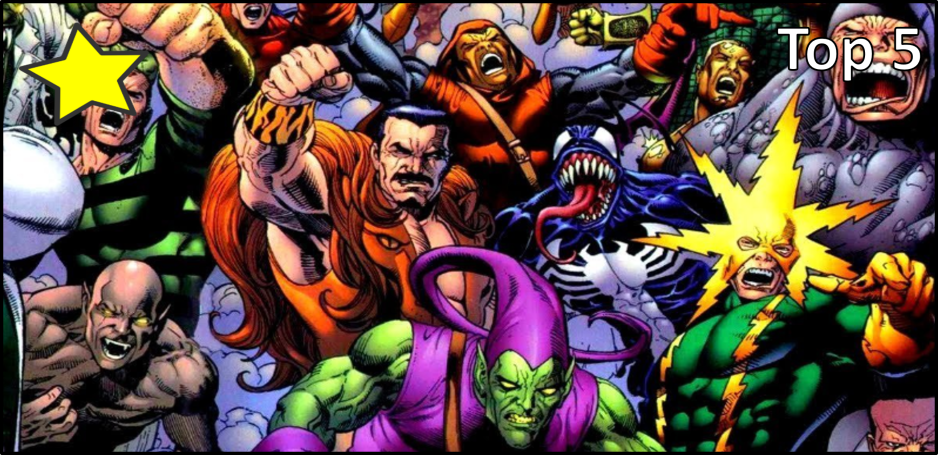
Happy May the Fourth, Geekly Gang! Kyra Kyle here. We’re celebrating with a Star Wars Top 5. A great hero needs an intriguing villain. Yes! We’re continuing our Top 5 Villains Series with a Top 5 Star Wars Villains.
5: Jabba the Hutt
Jabba the Hutt is a massive space slug who oozes out a living, making shady deals throughout the galaxy. He reminds me of Beelzebub, the devil associated with gluttony. Jabba is the pinnacle of excess. He moves as little as he can, forcing his servants to do most things for him. He stuffs his face all day long, smokes his hookah, and admires the woman he has on a leash. Heck. Whenever he gets bored, he’ll feed his enslaved women to the space monster in his basement. Yikes!
Jabba has an iconic design. His giant puppet–Lucasfilm pulled off this giant space slug with a puppet–impresses audiences decades after Return of the Jedi’s original release. Growing up, I had an original Jabba the Hutt figure from Jenner. Looking back, there were so many red flags with that figure. And we can’t forget Spaceballs’s Pizza the Hutt, who ate himself while trapped in his car. I can’t wait for Spaceballs 2.
4: Grand Admiral Thrawn
Grand Admiral Thrawn differs from every other villain on this list in almost every way. Thrawn originates from a Star Wars novel–The Heir to the Empire trilogy, to be exact–before making his debut in the Star Wars Rebels animated series. His story went from being canon to not being canon and then back again. And Thrawn’s approach separates him from most Star Wars villains. He’s as cold and calculating as his skin tone. He seldom uses overwhelming force. No. He’ll understand a community or culture first, before dismantling it from the inside. Thrawn’s tactics may be the most diabolical in Star Wars lore.
3: Darth Maul
Even in his debut, Darth Maul looked cool. Double lightsabers will do that. Heck. Fighting Obi-Wan Kenobi and Qui-Gon Jin at the same time adds to his mystique. But Maul’s story doesn’t truly begin until after the events of The Phantom Menace. Of course, Darth Maul survives being bisected by Obi-Wan Kenobi. He gains a set of robotic spider legs and eventually a set of humanoid robotic legs. Maul would become a threat to the Republic, then the Empire, and finally the Sith themselves. Some villains want to watch the world burn, and we’re here for it.
2: Emperor Palpatine (Darth Sidious)
Emperor Palpatine has appeared in every Star Wars trilogy of films, so far. He’s the Lord of the Imperial Galaxy and internet memes. Palpatine began his political career in the service of the Galactic Republic but soon obtained power and destroyed Galactic democracy. And the people cheered. I refuse to make parallels between Palpatine and real life. Anyway, the Emperor’s crimes are countless. Nope. This doesn’t resemble real life. Back to fantasy, Palpatine nearly wiped out the Jedi with Order 66. He killed Mace Windu, and nobody gets away with murdering a Samuel L. Jackson character. And the Emperor plunged the Galaxy into an era of darkness and tyranny.
Not bad for a meme lord.
1: Darth Vader
Could it be anyone else? Darth Vader is the height of a cool villain. Admit it. “The Imperial March” plays when you catch a glimpse of him. Darth Vader is one of cinema’s most iconic villains. Period. What’s not to like? His imposing stature, black space samurai armor, creepy breathing, or James Earl Jones’s rich voice. Darth Vader is the epitome of evil. Like many classic villains, he started as a force of good and became corrupted. And let’s face it, the Star Wars prequels primarily exist to show Darth Vader’s descent. And boy, did we enjoy the ride.
Did we get the list right? Who would you put on this list? Let us know in the comments. Thank you for reading, and wherever you are, I hope you’re having a great day.
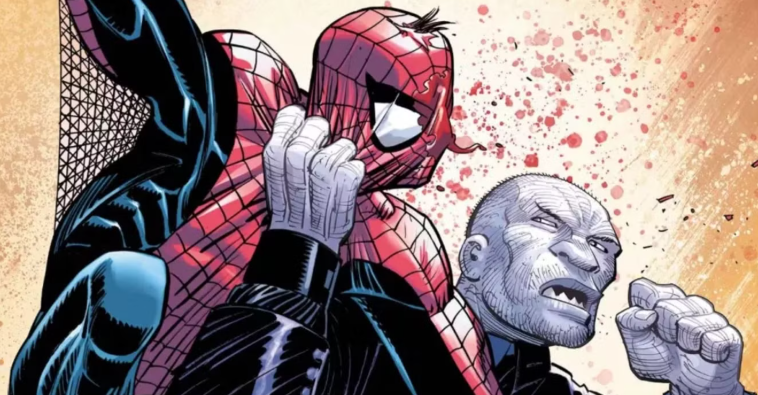
Hey, hey, Geekly Gang! Kyra Kyle here with another week of Geek News. We have some board game and video game new releases to geek out about, but first, let’s discuss the headlines from the prior week. It looks as if Sony has made news yet again. We waited to discuss Sony and its PlayStation DRM scandal until we received clarification. Well, we got that clarification, maybe. Let’s discuss Sony’s One-Time DRM Check.
Sony Confirms One-Time DRM Check After Fan Backlash
A little over a week ago, Sony said they would require an internet connection every 30 days for any digitally downloaded game to remain valid on a PlayStation 5. What was the reach of this policy? Would the server one purchased a game from matter? If the DRM (Digital Rights Management) check was built with a specific server in mind, a server may not exist the next time a gamer would want to access a game. You could lose access to the game. Sony dragged their feet answering gamers’ questions. And when they did answer questions, they let AI do the talking. If you’ve been reading these Geekly News posts for any time now, you know where I stand with AI. That was not the right move, Sony. Finally, after over a week of needling, Sony has clarified their One-Time DRM Check.
This check doesn’t affect games purchased before March 2026. If you purchased a game digitally from the PlayStation store before March 2026 and haven’t yet purchased one since, you’re safe…for now. The update applied to purchases made after March 2026 requires a one-time online license check, not recurring monthly validations. According to Sony, these measures are to combat a digital refund exploit. Evidently, some hackers can simulate a product key, never open the game with the key, and demand a digital refund, bilking Sony out of money. The percentage of people who do this must be small, but the number doesn’t need to be large. You just need a handful of crooks exploiting this policy.
While this makes sense from an anti-theft standpoint, Sony’s one-time DRM check still raises alarms. This check is a reminder that any game purchased digitally is not an owned game. A company can revoke your license at any time. And Sony hasn’t been subtle with its pushing of “digital-only” game purchases. The company’s announcement of a PlayStation 6 Lite, a less powerful version of the company’s next console, will most likely be a digital-only console. With the full version PlayStation 6 costing over $1000 and the Lite costing significantly less than that, Sony may intend to make game ownership a thing of the past or charge gamers extra for the privilege of owning a game. Sony will also make sure they get a bigger chunk of the pie up front, too.
Ironically, Sony won this generation of the console war because it refused to use any invasive DRM checks. We’re not like Xbox. We won’t ever include DRM checks. Well, they lied. And this could be a slippery slope. Sure, this policy is a one-time DRM check, but the next one could require a monthly check-in. It doesn’t help that Sony took more than a week to have a human respond to fan backlash. AI. Really?
Again, I may switch back to retro gaming. When you had a game cartridge or disc, you owned the game. And there might be something to the video game pirates abusing this refund exploit. I’m not condoning what they’ve been doing. They’ve illegally acquired someone else’s intellectual property. They should be prosecuted. Heck, these video game pirates may have set gamers on a path of getting screwed with oppressive DRM checks. But is it stealing when no one who purchased the game in that manner (digital download) ever owned the game in the first place?
We think this issue has been addressed. We’ll let you know if Sony changes their mind or if the AI starts its uprising.
River Valley Jewelcraft Launches on KickStarter
Return to the cozy town of River Valley! But this time, dig a little deeper. Glass is so last year.
Now, it’s all about the rare, radiant gemstones under our idyllic little town of River Valley. Miners, craftspeople, and artisans of all kinds have converged to make and sell the most beautiful jewelry in the land.
On your turn, roll dice to gather gems. Use your unique movement rules and player powers to explore the mine. Carefully lay tiles to improve your potential spoils. Finally, use your gems to craft exquisite jewelry to build a powerful scoring engine!
While River Valley Jewelcraft is a return to the setting and soul of River Valley Glassworks, it’s a completely brand-new game with completely unique gameplay and components.
Thank you to the publisher, All Play, for River Valley Jewelcraft’s description. I love River Valley Glassworks; it’s been in the Geekly rotation of games for a handful of weeks now. Needless to say, I’m interested in the follow-up River Valley Jewelcraft. The new game gives me shades of King Domino and potentially Machi Koro in the best ways. Players acquire rock tiles, which function like dominoes, from the market and place them on unique player boards. Then, the dice determine which numbers activate and produce resources. Interesting. Like I said, River Valley Jewelcraft borrows ideas from popular games, but it looks to make them its own. And I’m always happy to return to the town of River Valley. If you’re interested in River Valley Jewelcraft, check out its KickStarter page.
The Quest Kids: Giant Adventure Launches on GameFound
The Quest Kids: Giant Adventure is a LIFE-SIZED fantasy game experience for kids.
Using 36 giant cardboard tiles players will create a dungeon in their own home and act as the game pieces as they search for treasure, silly bad guys and stars.
Giant Adventure features the same award-winning mechanics as The Quest Kids board game, but in a new, one-of-a-kind immersive experience.
Thank you, Treasure Falls Games, for the description. My kids are far beyond playing a game like The Quest Kids: Giant Adventure, but I wished a game like this existed when they were younger. We would’ve played the heck out of this game. And knowing my kids, they probably would’ve played this game a lot on their own. The large tiles put kids in the game. Literally. Kids use themselves as their pawns. The ruleset is easy enough for children five years old and older to learn. The tiles are sturdy enough to play The Quest Kids: Giant Adventure outdoors. That’s where I imagine my kids playing. LOL If you’re interested in The Quest Kids: Giant Adventure, check out its GameFound page.
Flockers Launches on GameFound
The sharp chill of winter means it is time to fly south. But be vigilant—predators and decoys dot the landscape.
In the tactical card game Flockers, you will build a flock of snow geese that is best suited to swiftly navigate the terrain below.
Playing cards might add to the flight path, advance your flock token, or allow geese to graze so they have the vitality to continue south.
Fly south the furthest and the fastest to win. Let’s fly!
Thank you, Odd Bird Games, for the description. Many recent board games have used a bird theme, but few tackle the idea of migration. Players fly their flock of snow geese southward for the winter. Love the theme. And I love the geese playing pieces. The Flockers‘ name stops just shy of something naughty. Love it. The artwork looks amazing. Look beneath the snow goose playing piece. Are those cards depicting a topographical map? Wow! If you’re interested in Flockers, check out its GameFound.
Invincible VS Releases
Ever want to recreate the brutal fights in Invincible? Invincible VS has you covered in a new 3v3 tag fighting game set in the Invincible universe. Battle to the death as a team of fan-favorite characters in iconic locations. Invincible VS is a solid showing for first-time developer Quarter Up. It has received mixed to positive reviews and does a good job of capturing the vibe of the show.
Invincible VS has just enough blood to warrant its intellectual property. The gameplay follows the Street Fighter/Injustice formula. Sure. The intellectual property does a lot of heavy lifting here, but if you’re interested in fighting games (I stink at fighting games, by the way), and you want to play in the world of Invincible, you may want to give Invincible VS a try. Personally, I’d wait for it to go on sale. Invincible VS is available on PC, Xbox Series S/X, and PlayStation 5.
Saros Releases
Saros features a haunting story of a lost off-world colony on Carcosa under an ominous eclipse. You play as Arjun Devraj, a powerful Sotari Enforcer, who will stop at nothing to find who he is looking for. Thank you, Housemarque, for the description. Saros has received great reviews. It combines bullet hell, a third-person shooter, and roguelite elements into an engaging game. With Saros, Housemarque has built on their success with Returnal.
We may still be in the first half of 2026, but Saros makes an early push for the Game of the Year. Sony’s acquisition of Housemarque made Saros possible. And Saros fits well within Sony’s catalogue of character-driven, single-player adventure games like The Last of Us, God of War, Uncharted, and the Spider-Man video game series. But gamers who own systems other than a PlayStation 5 will have to wait for Saros, or it may not arrive on another system at all. Recently, Sony canceled Ghost of Yotei’s PC release. Ghost of Yotei, too? Sony has been on a roll.
Heroes of Might and Magic: Olden Era Releases
Heroes of Might and Magic: Olden Era is the official prequel, hailing back to the origins of the genre-defining, critically acclaimed series of turn-based strategy games. Raise grand armies and wield devastating spells to overcome your foes in both solo and multiplayer. I have a spotty history with Heroes of Might and Magic. I’ve enjoyed every game I’ve played of this long-running series, and it looks as if Heroes of Might and Magic: Olden Era is another game in this series that I’ll have to check out. Heroes of Might and Magic: Olden Era has countless downloads and has gained near-universal acclaim.
Heroes of Might and Magic: Olden Era features plenty of game modes to pique many gamers’ interest. Critics and gamers alike claim this is a good continuation of the series with “deep and complex gameplay” and it contains an “overwhelming sense of nostalgia.” This is a game that pays tribute to the games that came before it in the series, but presents a path forward. Yep. It’s only a matter of time before I play Heroes of Might and Magic: Olden Era. I have a lot of games on my to-play list. Heroes of Might and Magic: Olden Era is available on PC.
Constance Releases on PlayStation 5, Xbox Series, and Nintendo Switch
Constance is a 2D hand-drawn action adventure featuring a paintbrush-wielding artist, striving to escape from a colorful but decaying inner-world, created by her declining mental health. Yes! We have a quirky, Metroidvania game releasing this week. Thank you, Constance and btf Games. I’m always down for a quirky video game.
And look at those gorgeous graphics. Constance taps into the soul of those classic side-scrolling games. I love the theme. It works for the month of May, Mental Health Awareness Month. The titular character, Constance, battles mental health issues. The use of a paintbrush to reframe one’s inner-world rings true and presents a healthy way to combat mental health struggles. I know Constance was released on Steam in November of last year, but I love that a wider audience has a chance to play. Constance is available on PC, PlayStation 5, Xbox Series S/X, and Nintendo Switch.
That’s all the Geek News we have for you this week. Thank you for reading, and wherever you are, I hope you’re having a great day.
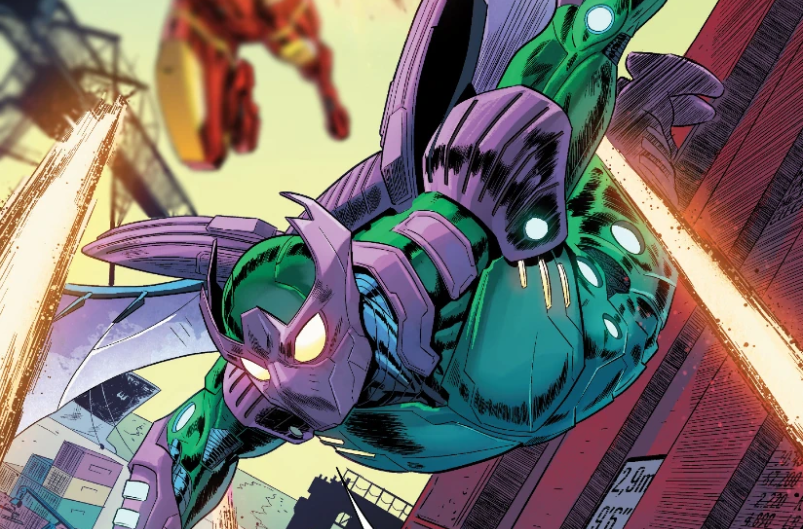
Hey, hey, Geekly Gang! Kyra Kyle here with another review/reaction to this week’s episode of Daredevil: Born Again, “The Hateful Darkness.” First off, amazing episode title. I love that title, “The Hateful Darkness.” Metal! I had some issues with this week’s episodes, but I’m not gonna lie. That ending kills.
Literarily. Oh. Spoilers are in effect. You’ve been warned. We’ll begin with what worked in “The Hateful Darkness.” I’ve said it a few times already, Daniel Blake’s story has been one of Daredevil: Born Again Season Two’s best stories. Michael Gandolfini did a great job. That was in the past tense for a reason. Blake’s story comes to an abrupt end in “The Hateful Darkness’s” closing moments. Blake’s passing at the hands of his buddy Buck’s hands was not in the original plan.
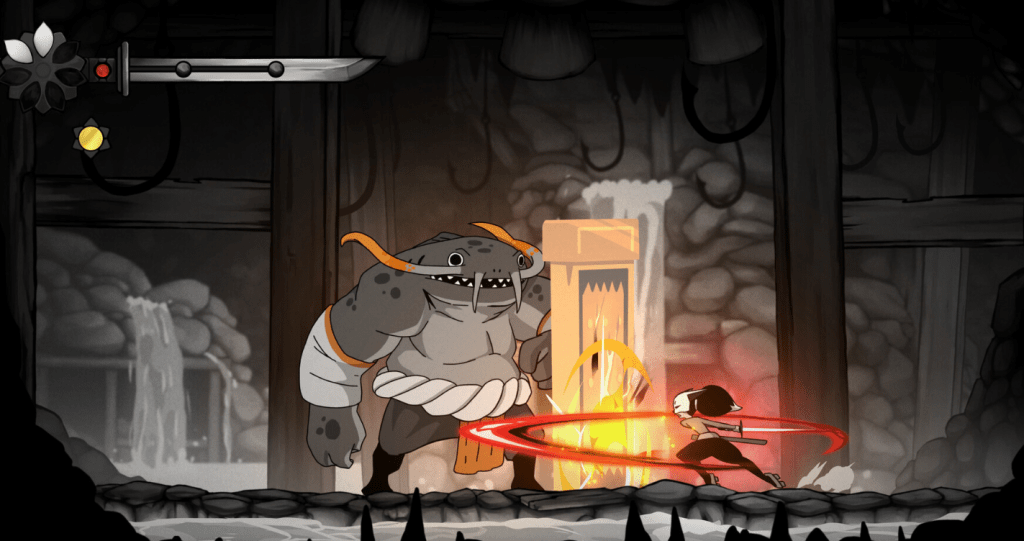
Daredevil: Born Again had intended to bring Blake back for Season Three. But Blake had a full circle moment in “The Hateful Darkness.” What made Blake’s story so great was how he was pulled in two directions. He cared for BB, and he wanted power through Mayor Fisk. Blake had every intention of handing over BB to Buck, but he had a hero moment and let her go. Not all hero moments require tights. Not all hero moments need to include world-wide or even city-wide stakes. Not all hero moments end with the hero prevailing. Blake made the choice to be BB’s hero. He did what was right in the moment. Blake living after making this choice would’ve cheapened his heroic choice. And I loved how Buck looked gutted.
Like I said, Blake’s death scene was not the original plan, but Daredevil: Born Again is a labor of love by producers Charlie Cox (Daredevil) and Vincent D’Onofrio (Kingpin). Along with Gandolfini (Daniel Blake), they felt as if the character was better served if he died in this moment–for all the reasons I mentioned. The showrunners knew Gandolfini’s Blake was a fan favorite. This wasn’t an easy decision. It was the right decision. Kudos! Arty Froushan’s Buck looked as conflicted as he did because the crew returned to shoot Blake’s death. Froushan thought the extra shoots were to clean up a prior day of filming. He didn’t know his character would kill his friend. Those were real emotions. The scene was phenomenal.
“The Hateful Darkness” also sprinkled in some other great moments: Matt Murdock returning to the courtroom, Karen Page and Heather Glenn’s showdown, and the opening scene with Page and Wilson Fisk. All of these were executed well, but they did feel off, and here’s where I talk about Daredevil: Born Again’s shortcomings. Jessica Jones’s presence still feels forced. She shares another rooftop scene with Daredevil. Jones even jokes about it. Marvel is so bad with self-referential jokes. They’ll joke about the thing they often include, while still using the thing they often include. Have the two meet somewhere else. Maybe a bar? Maybe not, because I’m sure Jones is trying to stay sober for her daughter.
We do receive news of Luke Cage’s involvement with the United States government. Jones and Mr. Charles (Matthew Lillard) share a scene in Charles’s hotel room. I mentioned it before but Daredevil: Born Again has too many characters it’s trying to juggle. Charles and New York’s governor disappear for long periods of time until the plot needs them to return. McDuffie (Murock’s partner) has had little to do before this episode, taking place in court. Better to show up for the penultimate episode than not at all, I guess. White Tiger has all but disappeared. I don’t know if I care enough about the character yet for that to bother me, but the fact that she’s vanished is a symptom of too many characters. Heck. I had forgotten about Cherry until this episode.
Daredevil: Born Again feels different than the original Netflix Daredevil series. Sure, I’ve driven home the point of there being too many characters, but Daredevil: Born Again may have overcorrected for the original Daredevil series. Thirteen episodes each season for Netflix’s Daredevil was too many, but eight or nine episodes a season for Daredevil: Born Again is too few. The show feels rushed. When I said that “The Hateful Darkness” had other great moments, I didn’t kid. But while the scene of Matt Murdock’s return to the courtroom was well executed, it took the ticker at the bottom of the screen for me to remember that New York City was looking for Murdock. The show went on so many tangents I had forgotten a major plot point.
Likewise, Karen Page and Heather Glenn’s confrontation felt inevitable, but it also came out of nowhere. There was little to no buildup. Page even cites what Glenn said about her relationship with Matt Murdock, but that exchange happened in season one. I thought Page talking about a stranger lying beside her in bed sounded familiar the first time I heard it. It took a second viewing to remember Page and Glenn’s conversation in Daredevil: Born Again, season one. The show could’ve brought up Glenn and Murdock’s prior relationship sooner. Armed with remembering NYC was looking for Murdock, and Glenn’s former girlfriend status with Murdock made those moments hit harder. They were well done. But they felt rushed.
I would love it if Daredevil: Born Again had a ten to eleven-episode run. It doesn’t need the Netflix Daredevil 13-episode run. Again, that’s too long. But Daredevil is at his best when his show has room to breathe. I loved the episodes of Daredevil: Born Again when the show had time to focus on a select few characters. Venessa’s death was handled with grace. I liked the episode where Matt could finally mourn Foggy’s death. And “The Hateful Darkness” concludes with another banger of an ending. There’s a lot to love, but there’s something missing.
But those are my thoughts about Daredevil: Born Again, “The Hateful Darkness.” What did you think? Let us know in the comments. Thank you for reading, and wherever you are, I hope you’re having a great day.