Quirky Video Game Review: Potion Craft

Potion Craft by indie game developer niceplay games created a craft system you want to play. Visuals inspired by medieval manuscripts blend with unique gameplay for concocting potions to form a singular video game experience.

Hey, hey! Kyra Kyle here. We’ll get back to another free-to-play game soon enough, but in the meantime, let’s cover another paid game. You can get a good deal on the game through sites like Steam or the PlayStation store (PS4/PS5). Usually, Potion Craft sells for around $20, even without a sale. Potion Craft’s unique graphics drew me in, but its stellar gameplay kept me engaged for hours. Let’s see how well Potion Craft stands up to our rating system.

Mechanisms: 10/10

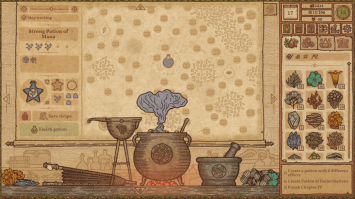
Potion Craft innovates on the tried and tired crafting game. The video game scene has seen an influx of alchemist simulator games in the last few years. Most of these alchemist simulators would have players accruing ingredients through exploration (through a dungeon mechanism separate from alchemy) and learning new potions through trial and error. Potion Craft streamlines this process. Players explore a perilous map by adding ingredients to their alchemy pot. Ingredients (that players obtain through farming or purchasing from vendors) move the player’s cursor on the map north, south, east, or west. But these ingredients seldom allow for traveling in a straight line. Spiral and zig-zag movements reign supreme. Once the bottle-shaped cursor reaches an ability, players can stoke the fire and boil their potion, so the potion gains that ability.
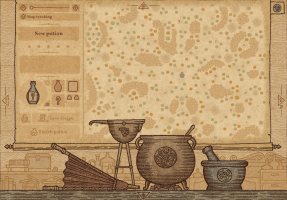
This simple, yet ingenious, twist puts the focus on alchemy. I waited for a second gameplay type where I played as my character dungeon diving for ingredients. That gameplay never came, and Potion Craft is the better for it. At times the gameplay can feel puzzly, but with the focus on what I put in my alchemy pot almost all the time, I felt more like an alchemist in Potion Craft than I’ve ever felt in any other video game of this ilk. And I’ve played a handful of alchemist simulators. If an alchemist simulator sounds intriguing to you, you owe it to yourself to play Potion Craft.

Gameplay Loop: 9/10

Pick ingredients from your alchemical garden. Then, tend to your garden. Serve your customers by guessing which potion would best fix their problem. You may haggle with the price if you want. Finally, explore the alchemy map to find new potion types or find better (more efficient) ways to produce potions.

Potion Craft is one of those notorious games for “just one more turn.” Everything seems as if it’s just one day (turn) or two away. Even when you know how to make a potion and save the potion’s recipe, you can create the potion, using fewer ingredients, so that you spend fewer future ingredients. That’s another great feature of Potion Craft. The ingredients you used when creating a potion recipe you saved will be used whenever you make potions from that saved recipe. There’s a reason to make the same potion twice. Let’s say that it took you three Waterblooms to make an Ice potion. But you unlocked Tangleweed and began farming that and it only takes you one of those to make an Ice potion. This can save you time, resources, and money in the long run. Brilliant!
Frequently, I’ll make a less-than-desirable recipe for a potion type just to have a means of making that potion. When I unlock the means to make that same potion on the cheap, I take it. And it feels good exploring the map through alchemy, even when I’ve already unlocked the ability I’m heading towards. Each day, experience boosts (in the form of alchemy books) reset, and players can collect them again. This allows you to level up your alchemy skills, and the skill tree, while basic, does a good job of giving players choices. Do you want to focus on selling potions, exploring the map, or farming? The choice is yours.

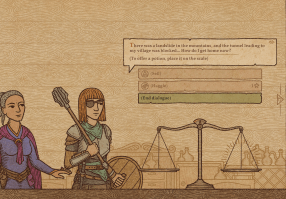
And then there are the customers. This dovetails into the Storytelling section (and less so for Narrative) but I’ll begin discussing the customers here. Customers often don’t tell you exactly what they want. Even when they do, there are often multiple ways to fix a problem. Light spoiler: a customer may say that they locked themselves out of their house; you can choose to give them an explosive potion or acid. I don’t know how many times I’ve seen Season pick a means of fixing a problem that didn’t cross my mind. And she’s said the same for ways that I’ve solved the occasional problem.

But the core element is map traversal through alchemy. I didn’t expect to like the map movement that much, but Potion Craft nails the explorative nature of throwing things in a pot and seeing what happens.
Narrative: 5/10

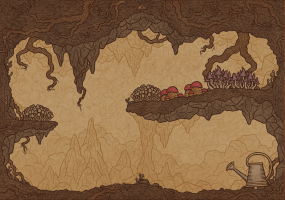
Potion Craft doesn’t have much in the way of a narrative, but I gave it a five because of its implied customer backstories. Sure, some customers have generic “my stomach hurts, do you have a potion for that?” But others have more sinister motives should you get to know them better. Others still have bizarre stories like why does a scuba diver exist in medieval times? Players will have to piece together scraps of story to make one that makes sense, but Potion Craft does have a loose-knit story.
Storytelling: 7/10

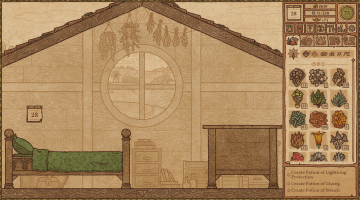
Like Papers, Please, which we covered last month, Potion Craft tells its story in the game’s negative space. Hidden within the string of customers who stop by for potions rests a deeper narrative for those characters and the town in which they live. I won’t spoil some of those stories here, but Potion Craft builds its world and its story through the people who stop by for magical potions. And I love this world.

Citizens solve mundane problems with magic. Why not? If magic is plentiful, why wouldn’t you solve any minor inconvenience with alchemy? Potion Craft runs with this premise. You can solve people’s issues at lower difficulty settings through multiple means. You may need a specific potion with multiple effects if you raise the difficulty. Unlocking abilities to converse with customers may yield even more backstory. And that’s where Potion Craft’s story lies: the characters’ backstories.

User Interface: 8/10

Potion Craft does a great job of showing players where their alchemical ingredients will lead them on the map. The locations are easy to navigate. The goals are easy to find and understand. In short, Potion Craft does a great job of showing its players how to play the game. But at the same time, it still gives players the freedom to come up with unique solutions to problems.

Like I said before, there’s more than one way to fix an issue, and Potion Craft gives players the time and space to explore those options. Potion Craft’s setup isn’t the hectic DMV hellscape as Papers, Please. It organizes things in a way for players to thrive. Potion Craft is a layback and chill game instead of a tense, don’t make a single mistake game like Papers, Please. While the two user interfaces work for the games that use them, I prefer Potion Craft’s interface. I’d rather a game show me exactly what I can do. Potion Craft does this better than most.

Graphics: 9/10

Potion Craft uses medieval documents and medical books as the basis for its graphics. While simplistic, the art amplifies Potion Craft’s subject matter. I don’t know if any other graphics would’ve worked for this game. You can tell that Potion Craft is a labor of love for the designers. The user interface and graphics merge intuitively. Part of the reason why the user interface works as well as it does is because the graphics feed into the user interface and the theme. I feel as if I’m grinding leaves, flowers, berries, and roots with a mortar and pestle. There were times when I swore, I could smell the herbs.
Audio: 6/10

I’m not going to lie. I played Potion Craft while muted most of the time, but when I did have the sound on, it worked well. I wouldn’t say that Potion Craft has the most memorable soundtrack. Its soundtrack is serviceable. Potion Craft’s sound effects are what give it an above-average audio rating. You can hear the crunch of leaves and fruit. Heating your potion is satisfying. Pouring water into your solution to thin your potion is visceral. Seriously, I had to go to the restroom after hearing pouring water on more than one occasion. Potion Craft amplifies its tactile gameplay with sound effects.

Replay Factor: 8/10

This is a difficult section to grade. Potion Craft may not offer much in terms of replays through different games. You can get by beating each difficulty setting once. As of this write-up, there are four different difficulties. This still gives you well over 100 hours of gameplay. I’m giving Potion Craft a higher replay factor score because of the replays during your initial play.

I mentioned before that you may want to optimize your potion recipes. That leads to numerous hours of gameplay. But Potion Craft has a sneaky other reason why you might play. Your alchemy shop has a reputation score. You could play an evil alchemist and only sell potions to people who have nefarious plans. I didn’t know who would order a Necromancy potion with my first play. Switching to an evil alchemist showed me who would order a Necromancy potion. It doesn’t look like it, but Potion Craft is a sandbox game.

Aggregated Score: 7.8

I enjoyed my multiple playthroughs of Potion Craft. It’s the preeminent alchemist simulator game. If you have any interest in an alchemist simulator game, give Potion Craft a try. With Potion Craft’s quirky graphics, I didn’t know what to expect. The streamlined nature of Potion Craft’s gameplay is a revelation. Developer niceplay games and publisher tinyBuild are on my radar. I can’t wait to see what this studio has planned for next.


Thunderbolts* Review

Thunderbolts* takes a familiar MCU formula and adds deep themes, allowing its characters to shine. Yes! The Geekly Gang has had a chance to watch Thunderbolts* on the big screen. Hey, hey! Kyra Kyle here. Happy Friday. Today we’ll be covering Geekly’s thoughts on the latest Marvel film to release, Thunderbolts*.

Thunderbolts* is indeed the sleeper hit I was hoping for at the beginning of the year (during our MCU preview). I’d even say it’s one of the better recent Marvel projects. We’ll get to some of the goodness here after a while, but I wanted to start by saying that I appreciated not needing to do MCU homework for this movie. Because Sentry can tap into others’ past trauma, the audience got a good introduction to most of the characters. No hundreds of hours of viewing necessary.

That alone was a relief. Florence Pugh’s Yelena Belova was an excellent choice for a primary point-of-view character. Thunderbolts* does bounce a little bit, but Yelena is the character the audience shares the most time. Thunderbolts*‘ Yelena isn’t the jovial Yelena from previous projects (like Hawkeye or Black Widow). This is a woman struggling with the loss of her sister (and by extension, her family). She’s lost and trying to find her place in the world. I said this during Geekly’s preview several months ago, and I’ll reiterate here: Yelena is relatable.

So many of the Thunderbolts* are relatable. They’ve fallen short of glory. They’re haunted by their demons. They find a way to endure and persevere. It’ll be difficult not to get preachy with this response, but I’ll try and restrain myself. In short, Thunderbolts* is about mental health.

I’ll try to stay as spoiler-free as I can. It’ll be difficult. I love how Thunderbolts* introduced Sentry. This could’ve handled Sentry’s introduction poorly, but Bob’s inclusion was handled with care. He battles demons of his own, and like I said prior, he can draw people into their past trauma. This will come back to bite the Thunderbolts in the future because every member has trauma. Sentry forces the team to face their past, and eventually, the Thunderbolts help Sentry battle his own self-loathing. Bob views it as an ever-present void. Again, for someone dealing with depression, this is relatable.

I don’t want to get into any further detail; it’ll get too spoilery. How the Thunderbolts assemble has shades of the Guardians of the Galaxy. It worked for the Guardians; it works for the Thunderbolts. There are a few exceptions, but most Thunderbolts are tasked with assassinating one of the other future members. Julia Louis-Dreyfus’s character (Valentina) is in the throes of impeachment trials and uses the various members to cover up her tracks. Her final loose ends are the Thunderbolts. Okay. That was kind of a spoiler. Thunderbolts* may use familiar tactics, but the way the movie executes these tactics feels fresh.

Thunderbolts* even manages to introduce small details earlier in the film that end up mattering more than the audience may have thought. That’s always fun. It’s like watching a puzzle piece fall into place. And Thunderbolts* does a good job of managing those puzzle pieces.

My only gripe is that I wish we had seen more of certain characters. To be fair, that’s a good problem to have. This is a minor spoiler, but one of the Thunderbolts dies early in the movie’s runtime. I see why Marvel did it. Fans didn’t care for this interpretation of the character, and knowing the multiverse, the character could return (even with the same actor) in some other form, hopefully one closer to the comic book.

And I wish we had gotten more screen time with Ghost. Again, I understand why Marvel went this direction. Ghost’s past is similar enough to Yelena’s (suffering from a childhood where she must do bad things). Thunderbolts* had a lot of characters to juggle, so someone had to draw the short stick. Ghost still had plenty of moments.

I don’t want to continue and risk spoiling any more of Thunderbolts*. It’s a great watch, one of the MCU’s better releases in recent years. Just be prepared with a box of tissues. Thunderbolts* covers some heavy topics.

I’m so glad Thunderbolts* was the first MCU movie I watched this year. I can’t wait for Fantastic Four: First Steps to release. Thank you for reading. Like Thunderbolts* tells us, be kind to yourself, and wherever you are, I hope you’re having a great day.

Whatcha Playing, Geekly: May 2025

Hey, hey, Geekly Gang! Kyra Kyle here. Today’s post is a Whatcha Playing, where we’ll ask our writers what they’ve been playing (tabletop games and video games) over the past month. As always, you’re part of the Geekly Gang, too. Feel free to share which games you’ve played over the last month.

Kyra’s Games

I’ll preface my entries by saying that I won’t include my board game prototypes (of course, I’ve played these games many times recently) or any of the gacha games I still play (Wuthering Waves and Honkai: Star Rail). If I ever stop playing these games, I’ll let you know. With that said, let’s begin with the tabletop games I’ve played over the last month.

Board Games

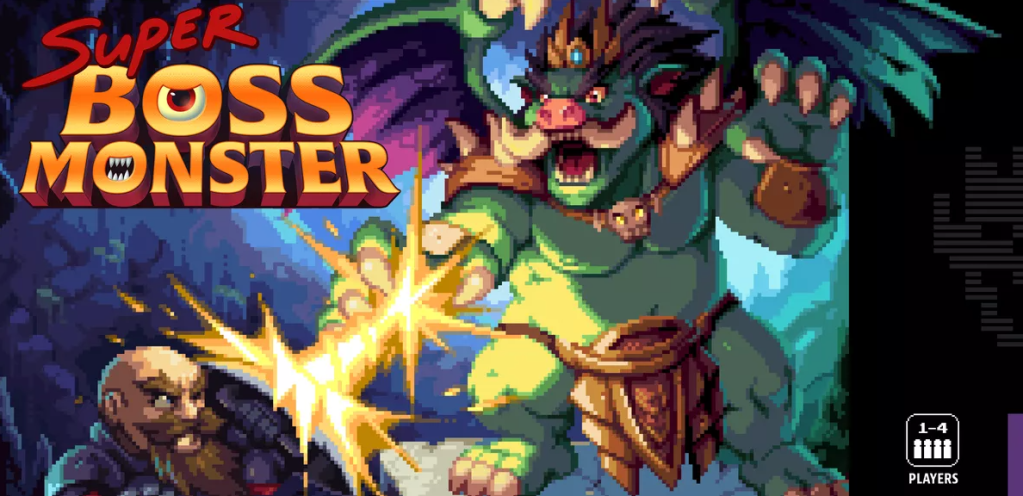
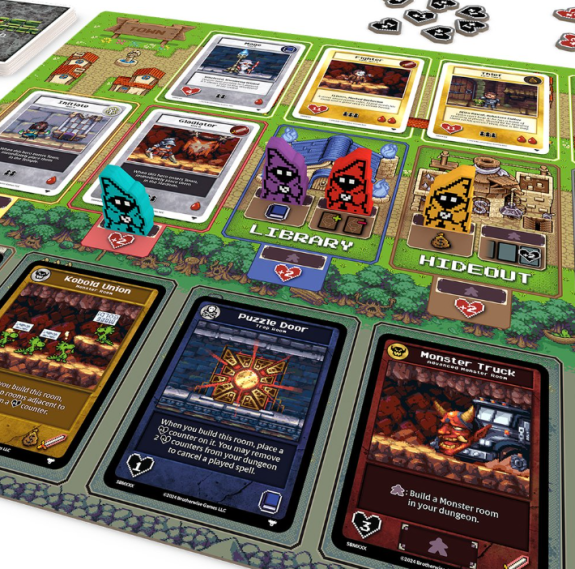
Someone from my game group received their copy of Super Boss Monster and brought it to the table. I love the original Boss Monster despite some of the cards being stronger than others. Super Boss Monster tries to balance cards more than the original, but most notably, it adds worker placement by giving each player a minion they can control and take an action from the town. The town becomes more than the place where heroes are generated.

Of course, that still happens, but now I can choose to give myself more perks during a turn, and as you can see at the bottom of the above picture, players draft cards into their hands, giving players more agency. But I was left a little wanting. While these new additions are great in theory, they slowed the game down to a crawl. The original Boss Monster plays in about thirty minutes. Super Boss Monster took two and a half hours. Granted, none of us played the new additions before, but there are so many new additions to Super Boss Monster, and the game adds phases to each turn that I can’t see the game speeding up too much, even if we knew how to play. I was hyped for Super Boss Monster. It’s a good game, but I’ll hold onto my original copy.

Another one of my game group members received their copy of Monty Python and the Holy Grail: The Game. This game has the prerequisite silliness needed to call itself a Monty Python game. It even comes with a set of coconuts, or should I say, horseshoes. If that wasn’t silly enough, Monty Python and the Holy Grail: The Game also comes with a catapult and animeeples shaped like cows, chickens, and pigs. You will be catapulting your enemies.

I wanted to say that I liked Monty Python and the Holy Grail: The Game more than I did, but our gaming group was workshopping ways to streamline how the game played. Most members in this gaming group aren’t designers. I’m a part of game designer groups, and I’d expect discussion on how to streamline a new game. I wasn’t expecting this with Monty Python and the Holy Grail: The Game. I’m also certain I was winning the game (we ended the game early because it ran long), and I did so by abusing the “bring out your dead” space. I waited for the followers’ discard pile to fill up, head to “bring out your dead,” and gained victory points for every follower I shuffled back into the draw deck (that’s how “bring out your dead” works). It felt cheap.

Perhaps we played the game wrong, but Monty Python and the Holy Grail: The Game played longer than it should. The catapult, while fun, slowed the game down further. I liked several elements of this game, but it didn’t make a cohesive whole.

Video Games

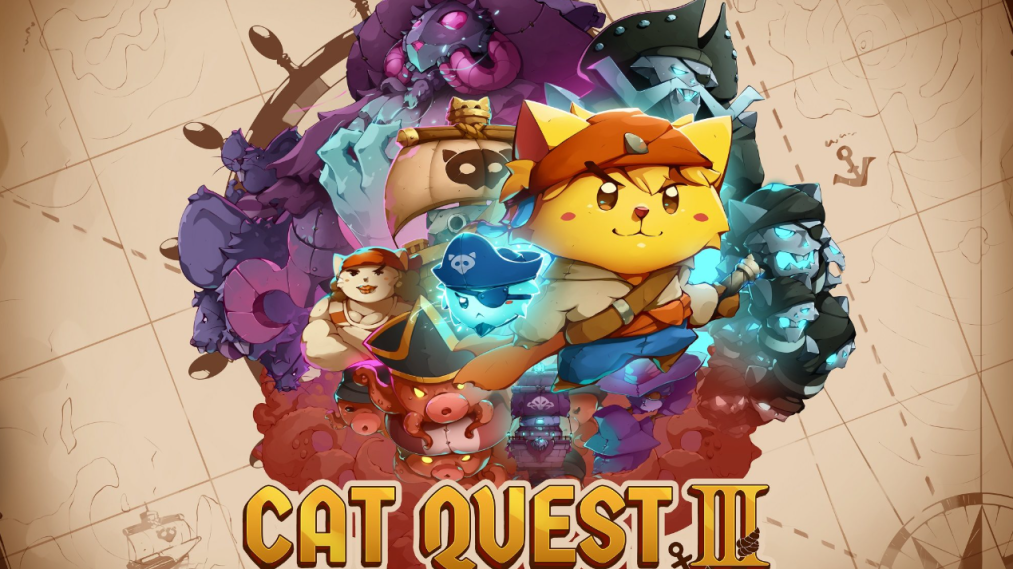
I went trophy hunting this past month. As a result, many of the video games I played weren’t that good. The Cat Quest series is the one exception. Are the trophies easy to obtain? Yes. Very easy. The story is a little thin as well, but the gameplay is addictive. I had a lot of fun playing each entry of the series.

The first Cat Quest allows the player to fly by flapping their arms. Watching a cartoon cat flap their arms and fly is freaking adorable and hilarious. It’s hilarable. The second Cat Quest brings in a dog character to pair with the cat. Cat Quest II had the most strategic value of the trilogy (unsure if there will be a fourth Cat Quest). But Cat Quest III has the best theme (cat pirates), the shortest runtime that promotes multiple playthroughs, and takes all the fun elements of the previous games and builds upon them. Cat Quest may have an easy-to-obtain platinum trophy, but it’s also a fun game series.

That’s all I have for tabletop and video games this month. I’ll pass this post over to Season and Skye, so we can see what they’ve been playing.

Season’s Games

Before I dive in, I’m going to level with you, Geekly Gang. I’ve hardly played anything outside of my gacha games this last month. I don’t think a single board game hit the table for me. Finals have been ramping up, graduation is imminent, and there’s a huge conversion project going on at my day job. Without further ado, I’ll share my games.

video games

Thank you to Gigi for recommending Legends of Elysium. This is a beautiful game. It combines tile laying, cards, and mana. It’s sort of like a Magic: The Gathering board game. I didn’t play too much of it, but I enjoyed learning a few strategies and crawling across the map to defeat my opponent. I don’t think there’s a campaign mode to play against the CPU. It’s more along the lines of Marvel Snap and only has PvP available. I’ll have to play some more of Legends of Elysium and collect cards. I definitely want to see more of what Legends of Elysium has to offer.

The other game I’ve been casually playing is Birushana: Rising Flower of Genpei. It’s a visual novel set during the Genpei War in medieval Japan. I stopped by GameStop and thought the art was pretty, so I figured, sure. I’ll take a gander. It is a romance visual novel that allows the player to romance characters who are based on actual historical figures. Not going to lie: I Googled the heck out of the Genpei War and the figures featured in the game because history is cool. I haven’t gotten all the endings yet but, if you’re into romance, period pieces, and great voice acting (Japanese only), I’d recommend Birushana: Rising Flower of Genpei. Also, there’s blood because, you know, war and stuff.

I wish I had more to share this time around. Skye, whatcha been playing?

Life Is Strange Video Game

Skye’s Games

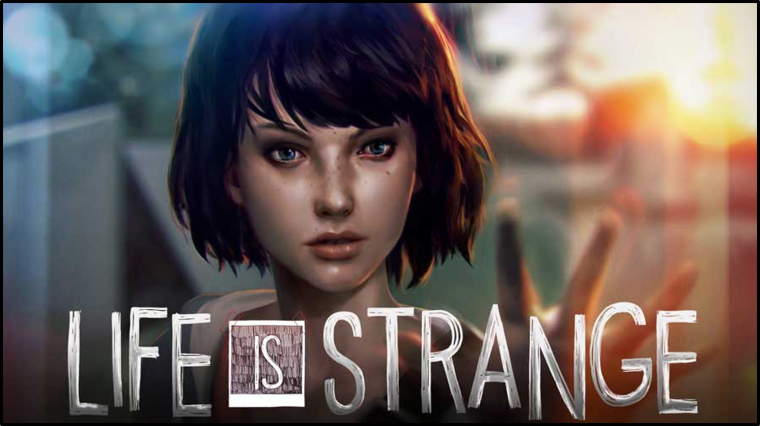
I know I’m late with playing Life is Strange. I’m glad I finally got around to playing it. Life is Strange was released a decade ago, but the game remains relevant and rich in story, characters, and atmosphere. Story-driven games are great at making the player question their own morals, and Life is Strange is no exception. In fact, player choices are even more complicated by allowing players to rewind time and try for the best possible outcome.

Life is Strange wasn’t the first game to feature player choice, but it popularized the genre. For good reason, too. My favorite part is collecting all the Polaroids. I wanna make my Max the best photographer she can be. Life is Strange also happens to have an easy Platinum Trophy to obtain. Don’t judge me! A plat is a plat.

Ghost of Tsushima is another game that’s been a long time coming, and worth it. Ghost of Tsushima has been one of those games that’s difficult for me to put down. One of my favorite aspects of open-world RPGs (or JRPGs in this case) is the exploration. I love gallivanting into the unknown and, bit by bit, uncovering every piece of the map.

Not only is it fun to explore, but Ghost of Tsushima’s combat is stellar (with a learning curve), the story is interesting, and I love its setting of 1300s Japan. The first thing you’ll notice about Ghost of Tsushima is that it’s gorgeous. I haven’t had much time to play any other games, but I’m glad I managed to check Life is Strange and Ghost of Tsushima off my list.

Hey, hey! Kyra Kyle again. That’s what we’ve been up to in terms of board games and video games this past month. Be sure to let us know what you’ve been playing because we’re all part of the Geekly Gang. Thank you for reading, and wherever you are, I hope you’re having a great day.

Tabletop Game Review: Flamecraft

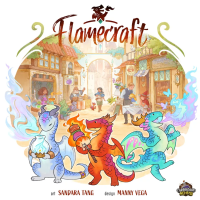
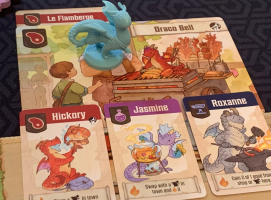
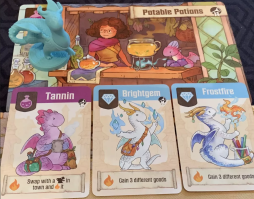
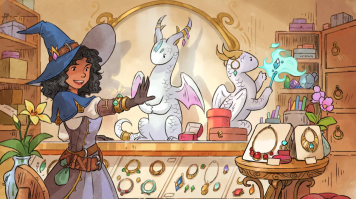
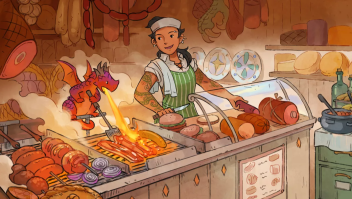
In Flamecraft, players take on the role of Flamekeepers, gathering items, placing dragons, and casting enchantments to enhance the town’s shops. Dragons specialize in bread, meat, iron, crystals, plants, and potions, and the Flamekeepers know which shops are the best for each dragon type. Can you build the most reputation and become the Master of Flamecraft?

Hey, hey! Kyra Kyle here. The tabletop game we’re reviewing today has plenty of cute dragons and fantasy puns galore. Flamecraft took home some awards in the past two years, including 2022 Origins Awards Fan Favorite, and was nominated for several more. A world of dragons awaits, but before we explore further, let’s look at Flamecraft’s details.

The Fiddly Bits

Designer: Manny Vega
Publisher: Cardboard Alchemy and Lucky Duck Games
Date Released: 2022
Number of Players: 1-5
Age Range: 8 and up
Setup Time: 10-15 minutes
Play Time: About 60 minutes

Game Mechanisms

Contracts
Hand Management
Modular Board
Set Collection
Solo/Solitaire Game
Worker Placement

Game Setup

Flamecraft’s rulebook has a well-written Game Setup section. It features large, well-marked pictures that help set up the game. All one needs to do is follow the directions, step by step. I began to re-write what was written in the rulebook but thought a “Too Long, Didn’t Read” version was more appropriate here. If you’re interested in the full rulebook, here’s a link.

Roll out the Town mat so that it’s in the middle of the table.

Place the Starter Shops (with a bugle symbol on them) faceup on any 6 Shop spaces in Town and do the same with the Starter Artisan Dragons, which have the same symbol.

Place the Goods tokens in a spot (or spots) where all players have access to them and then place the Coin tokens on the fountain.

You’ll have to sort the various shop types into piles based on the icons in the top left corner. Make a pile for each of the 6 Goods icons and a seventh pile for all other icons. Flip all 7 piles facedown and separately shuffle them. Take 1 card from each of the Goods Shops and 4 from the 7th pile to make the Shop deck and then shuffle the Shop deck and place it to the side of the Town mat.

The Artisan Dragon deck has special rules for 2 and 3-player games. Follow those guidelines if you’re playing with fewer than 4 players to make the Artisan Deck. Don’t do anything with a larger player-count game. Shuffle the deck and place it on its designated spot on the Town mat. Reveal the top 5 cards and place them faceup in the Park.

Shuffle the Fancy Dragon cards and place them on the marked space next to the Fountain.

Shuffle the Enchantment deck (use the purple one for new players) and place it on the marked space inside the Reputation track. Reveal the top 5 cards and place them in a faceup row next to the deck.

Give each player a player token (dragon), a Reputation marker (heart), and a player aid card in a matching color. Place all Reputation markers near the start of the Reputation track.

Deal each player 3 Artisan Dragons and 2 Fancy Dragons. Each player chooses 1 Fancy Dragon to keep and returns the Fancy Dragon they didn’t choose to the bottom of the deck.

Game Flow

Flamecraft’s rulebook also does a good job of explaining the game’s flow. I’ll try to be as brief as possible here. Again, you can check out the full rulebook with the link above.

Goal

You want to become the most successful Flamekeeper in town by having the highest Reputation. Visit Shops, place Artisan Dragons, cast Enchantments, and satisfy the goals of your secret Fancy Dragons. The player who is furthest ahead on the Reputation track wins.

Taking a Turn

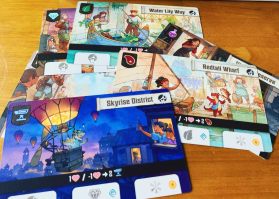
On your turn, you must visit a Shop. Then choose to either Gather or Enchant there. At the end of your turn, you must check if you need to expand the Town (more on that later), discard down to your Dragons (cards) and Goods (resource) limit, and refresh the faceup Enchantments and Artisan Dragons.

Visiting a Shop

Move your player token onto a Shop card. You must choose a different Shop than the one you visited on your last turn. If another player (or players) are visiting the shop you move to, you must give each player at that shop 1 Good of your choice or 1 Coin from your supply. If you don’t have enough Goods to give 1 to each player, you must choose a different shop to visit.

First Option after Visiting: Gathering from a Shop

If you choose to Gather from the Shop, follow these steps in order:

1) Gather Goods, Coins, and Dragons printed on the shop and from each Artisan Dragon and Enchantment there.
2) (Optional) Place a Dragon: You may place 1 Dragon from your hand into a Dragon slot with a matching icon and then gain the rewards on that slot.
3) (Optional) Fire up a Dragon: You may use the Fire ability of any 1 Artisan Dragon at the Shop.
4) (Optional) Use Shop Ability: You may use the Shop’s ability if it has one.

Second Option after Visiting: Enchanting a Shop

If you decide to Enchant the Shop you visit, follow these steps in order:

1) Cast Enchantment: Choose an Enchantment card from the faceup row that matches the Shop’s icon. Pay its Goods cost to tuck it behind the Shop and gain the rewards printed on the Enchantment.
2) (Optional) Fire Up All Dragons: You may use the Fire abilities of any number of Artisan Dragons at the Shop.

End of Turn

After Gathering or Enchanting, take the following steps to clean up for the next player’s turn:

1) Expand Town: Flip any new Shops you drew during your turn faceup. (Note: If you filled the final spot for an Artisan Dragon on your turn, draw a new Shop.)
2) Dragons & Goods: Return Dragons and Goods until you have no more than 6 Artisan Dragons and 7 Goods of each type. (Note: Fancy Dragons do not have a limit.)
3) Refresh Park & Enchantments: Draw new faceup Artisan Dragons and Enchantments until there are 5 of each.

End of the Game

When the last card in either the Artisan deck or Enchantment deck is drawn or revealed, this triggers the end of the game. Each player gets 1 final turn, including the player who triggered the game’s end.

Once all players have had a final turn, gain end-game Reputation as follows:

1) Leftover Coins: Each player gains one Reputation for each Coin.
2) Fancy Dragons: Each player reveals each Fancy Dragon with a Moon icon whose goals they’ve fulfilled and scores the indicated amount of Reputation.

Whoever has the highest Reputation wins.

Review

As you might tell from the game setup and flow, Flamecraft has a lot going on, but it isn’t too much for younger players and players unfamiliar with tabletop games to understand. The Board Game Geek community lists Flamecraft’s suggested age as 8 and up, while the game box lists the age as 10 and up. I usually side with BGG. This gap doesn’t seem like much, but it depends on how well-versed a child is with tabletop games. Kids familiar with tabletop games can play Flamecraft at 8; I’d go with a year or two older if the child isn’t as familiar with tabletop games. Why do I place so much emphasis on this? Flamecraft is what the tabletop game community calls a gateway game. Gateway games bridge the gap between new and seasoned board game players. In this regard, Flamecraft is fantastic.

Would I pick Flamecraft above all other games of its ilk (middle-weight games that feature worker placement, set collection, hand management, and others)? Maybe. Maybe not. But there aren’t many games of this type that can be classified as middle-weight. A large divide has formed with modern board games. They either skew heavier and more complex for a hardcore audience or go the opposite direction and streamline into simpler games for a mainstream audience. Flamecraft is one of the few recent board games in the middle. Games like Flamecraft are necessary for the hobby.

I also like how Flamecraft’s various game mechanisms work together. You can find these game mechanisms in other games and in similar combinations to Flamecraft, but Flamecraft has found the right balance to introduce a player to these concepts. My favorite twist on an older mechanism is that Flamecraft uses worker placement, but it eliminates action blocking. You can go to a space with other players, but you’ll need to pay a fee. This can lead to an action being functionally blocked, but there isn’t a hard rule of action blocking.

Flamecraft also uses a newer type of game mechanism, and I like the direction that tabletop games are headed. The board is a shared space. Anything you do to improve the game state can help your opponent. This leads to interesting choices. Will this upgrade help me more than my opponent? If so, I’ll do it. If not, I may choose another option. This combination of a kinder version of older game mechanisms (worker placement) and the introduction of a rising game mechanism (the board as a shared space) makes Flamecraft a fabulous example of where board games have been and a glimpse of what could be their future.

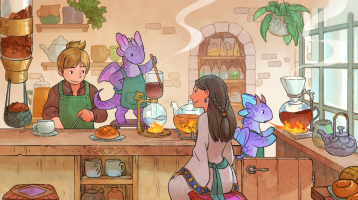
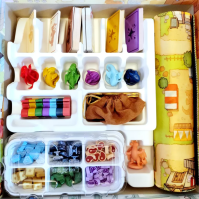
I can’t believe it’s taken me this long to get to the art, but the art is phenomenal. Sandara Tang did a great job of making Flamecraft feel as cozy as the cozier options for older game mechanisms. I like the Neoprene mat more than I would’ve expected. Does it curl at the edges? Sure. Does it struggle to lay flat? Indubitably. However, the mat’s unruliness doesn’t detract from the game and works for its aesthetic; the soft feel of the mat matches the game’s color palette. The mat also makes the game easier to store. And the dragons. Who doesn’t love cute dragons? If you’re a dragon fan, you owe it to yourself to give Flamecraft a try.

Too Long Didn’t Read

Flamecraft occupies a shrinking spot in the tabletop gaming space: middle-weight game. It combines old and new gaming elements with a fun and approachable theme. My favorite elements are the lack of “action blocking” with worker placement (which works well for a younger player demographic) and the idea that the board is a shared space. Any action you choose could help your opponent. This leads to interesting choices.

Geekly News: May 4, 2025, MCU Reveals First X-Men Villain

First things first. Happy Star Wars Day! We plan to celebrate with various games. Let us know how you plan to celebrate May the Fourth. Hey, hey! Kyra Kyle here. This geek week’s news cycle had a few developments, but we’ll start with the MCU.

Mister Sinister Named the MCU X-Men’s First Villain

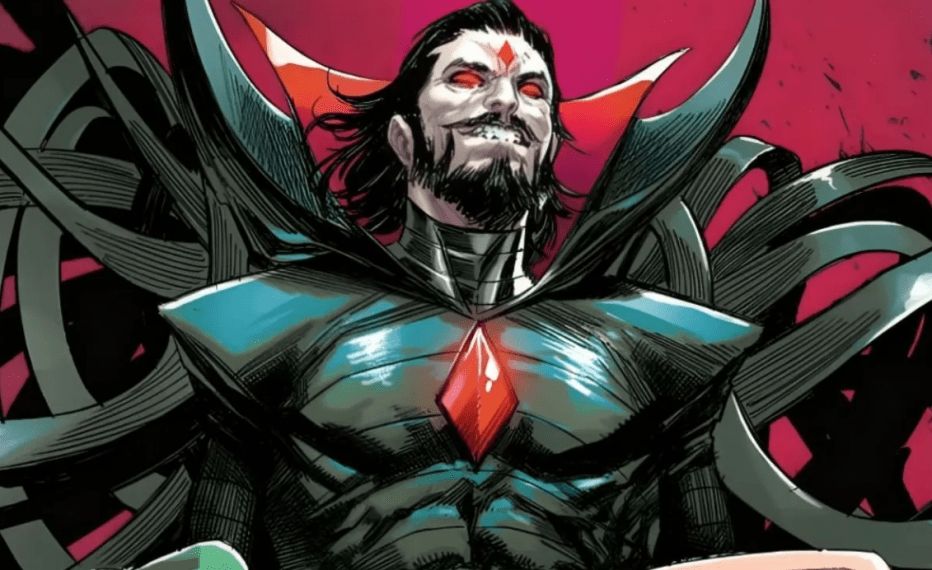
While not guaranteed, the MCU heavily implied that they intended for Mister Sinister to be the first villain the MCU’s rendition of the X-Men would face. Mister Sinister has been rumored for months. Several trusted sources have confirmed that we’ll see Doctor Nathaniel Essex soon. This tracks. Often, the MCU would rather use a villain who hasn’t yet made their big screen debut as the villain in a major film, and the rebooted X-Men would be a major release.

I have reservations with Mister Sinister being the X-Men’s first villain. Typically, he’s better served with a slow build. Mister Sinister’s original concept was of a child at the same orphanage as Cyclops, but he secretly ran the facility. Mister Sinister ages slowly, so while he looked like an 11-year-old like Cyclops was at the time, he was 50 years old. I can see the MCU making it appear like Mister Sinister hid in plain sight for decades, but I’m not sold on this angle. We’ll have to see how the MCU intends to incorporate Mister Sinister. He’s not the easiest villain to plop into a narrative, but I’d love to see him on the big screen.

Skye casted Robert Pattinson as Mister Sinister in our recent Geekly Casting: X-Men in the MCU post. I like that casting. I can see it. There have also been rumors of Keanu Reeves joining the MCU. Of the two roles we know will happen, Reeves would make a good Beyonder (Secret Wars) or Mister Sinister. We’ll let you know as we get more information.

Whoopsie! Chrono Trigger Remake May or May Not Have Been Leaked

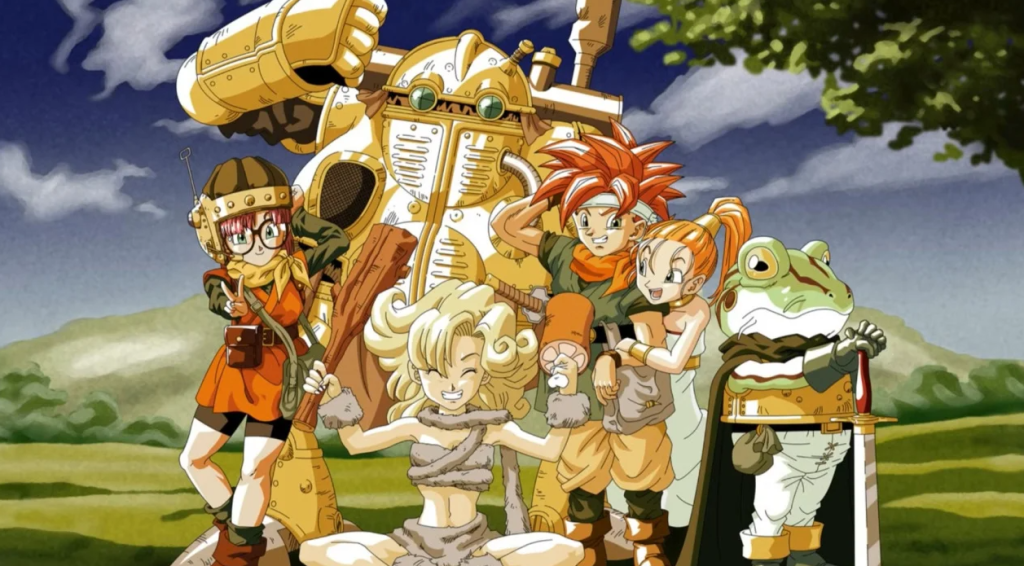
2025 marks Chrono Trigger’s 30th anniversary. Fans got excited for a Chrono Trigger Remake after a statement was released that the game would be next in line at SquareEnix to get the remake treatment. At first, news releases made it sound as if original game designer Yuji Horii had made an announcement for a Chrono Trigger remake at Napoli Comicon 2025, but Horii’s comments were mistranslated. Here’s a link to the Napoli Comicon 2025 panel in question:

https://www.twitch.tv/videos/2448211166?t=18941s

Still, one must think there may be some smoke. Chrono Trigger is celebrating a milestone anniversary. It would make sense that SquareEnix has something planned for this year. Fingers crossed that SquareEnix continues its trend of video game remakes with Chrono Trigger.

Flamecraft Duals Hits Kickstarter

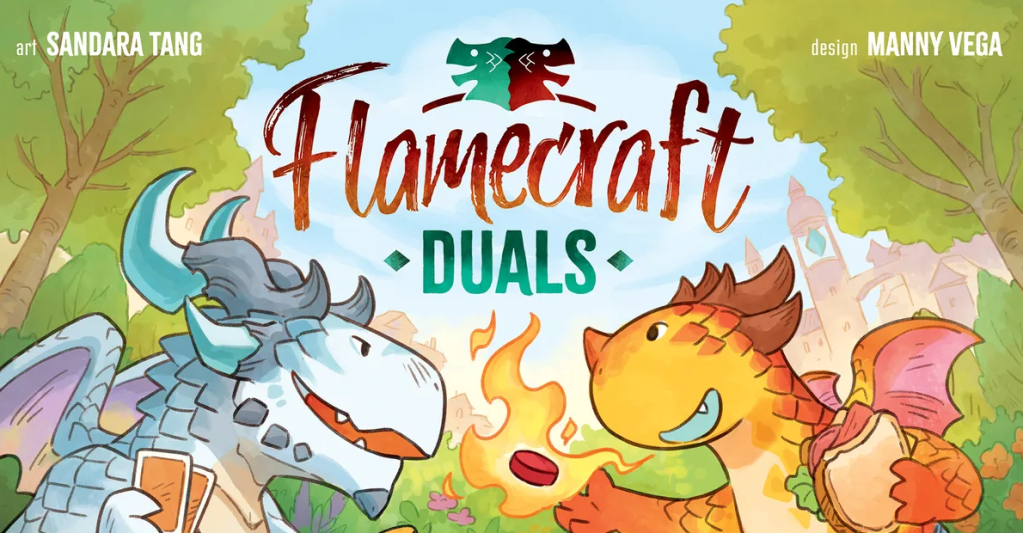
While the original Flamecraft can accommodate 2-player games, it thrives at higher player counts. Flamecraft Duals continues the trend of 2-player variants of popular games. The production quality looks fantastic. I like the use of buddy tokens. Flamecraft Duals may be set in the same universe as Flamecraft, but plays very differently from the original. I don’t have a lot of bag pulling games, so I may consider picking up Flamecraft Duals. Gamers can even purchase the Dragons & Dragons add-on that modifies the original game. You can back the base Flamecraft Duals for $30 or Dragons & Dragons for $20. There’s even a Horde option where Cardboard Alchemy includes promo cards, an art book, and two dragon plushes for $99.

Trash Rush Launches on Kickstarter

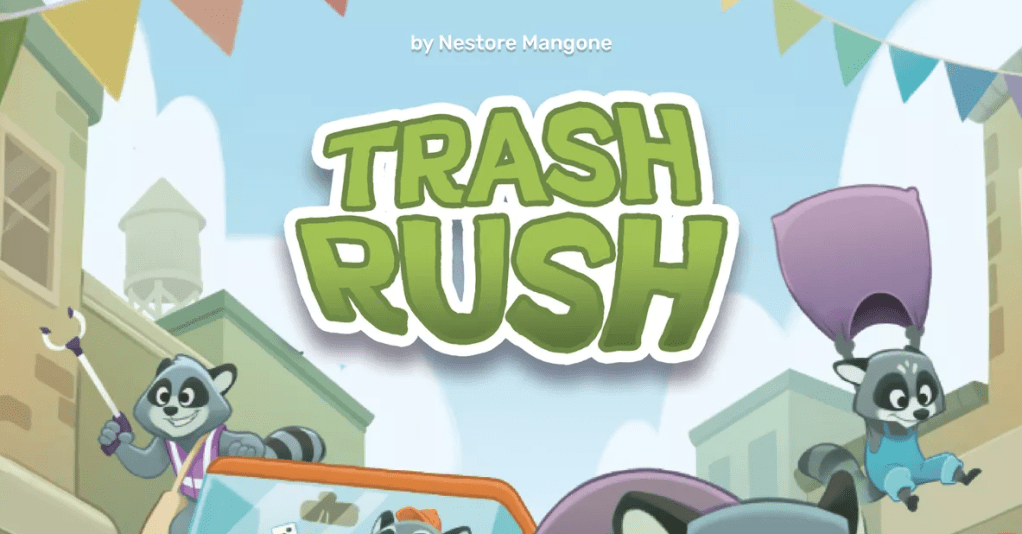
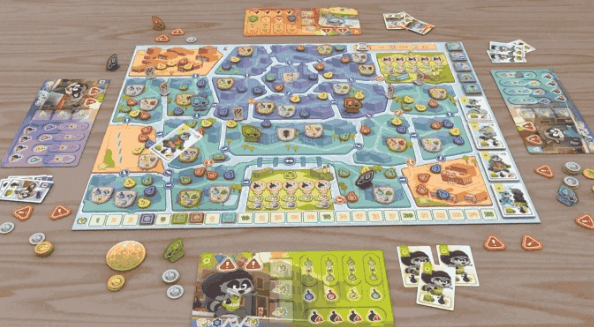
Raccoons work as trash collectors in Trash Rush. What’s not to love? Trash Rush is a quick to learn and streamlined experience. Players control their team of raccoon trash collectors by playing cards from their hands once per turn, but be careful. Whatever order you place your raccoons’ actions will be the order they will conduct those actions for the entire round. Despite a simple concept and easy-to-learn rules, there are plenty of strategic choices.

Per Rhado, from Rhado Runs Through, Trash Rush is a good alternative to Ticket to Ride. Players must generate a network and optimize their ability to collect trash. I can’t get over the raccoon characters. Yay! And it helps that Trash Rush has multiple ways to play: multiplayer competitive, cooperative, and solo. The base game costs about $34 (the totals are calculated in Euros). If you include Trash Rush’s first expansion, a pledge will cost about $59, and the all-in pledge runs around $72. Shipping is not included, of course.

Super Pixel Tactics Lands on GameFound

If you’re like me, you’ll have to wait for Super Boss Monster to make it to your local game store, but Boss Monster isn’t the only board game inspired by classic video games. Pixel Tactics pits players against each other in a battle to the death. Super Pixel Tactics is the new definitive version by Level 99 Games. I’m actually more impressed by the storage capacity of Super Pixel Tactics. Super Boss Monster had issues with storing a lot of its bits; Super Pixel Tactics shouldn’t have that same issue.

I even like how Super Pixel Tactics is accommodating sleeves. That doesn’t happen that much, and so many board gamers love to sleeve their cards. The gameplay gets some much-needed tweaks but stays mostly the same. I am excited about the new solo mode. If you’re looking for a two-player combat game that’s set in a classic video game universe, you should consider Super Pixel Tactics. The pledge levels include the full collection at $100, the first two Pixel Tactics and a mat for $60, just the first game for $15, and everything, including all the bling, for $150.

Ranking Thunderbolts* Characters Before Watching the Movie

Thunderbolts* was released the other day. Geekly hasn’t yet watched the movie, to the best of my knowledge. There is a chance that while you’re reading this, we’re watching Thunderbolts*, but that got me thinking, which Thunderbolts* characters interest me the most before watching the movie?

Hey, hey! Kyra Kyle here. We’re trying something a little different with this post. It’s a pre-viewing post of Thunderbolts* where we’ll cite which characters on the Thunderbolts roster interest us the most. This list will be subjected. I fully expect people to leg-wrestle me to move a character up or down a spot. Without further ado, here’s our ranking of which Thunderbolts* characters are the most interesting before watching the movie.

Unranked: Bob/Sentry

I know Sentry from the comics. He can be the most interesting character on this list. If I were to rate him ahead of Thunderbolts*, I would’ve struggled with putting him at 1 or 2. Yes. Sentry can be the most interesting character in this lot. He’s also making his MCU debut.

The MCU’s version of Sentry may not be as intriguing as what occurred in the comics. I’m playing it safe and leaving him unranked, but make no mistake, if Sentry were included in this list, he’d be high. I don’t want to spoil any potential plot points (I haven’t seen the movie, so I don’t know particulars about the MCU Sentry), but Sentry can be a lot of fun.

6: Alexei Shostakov/Red Guardian

I liked David Harbour’s portrayal of Red Guardian in Black Widow. I also don’t think there’s much left for the character to explore. I hope I’m wrong.

Red Guardian serves as comic relief and little else. Going back to Sentry, there’s little chance that the Thunderbolts encounter Sentry, and everyone survives. There’s a good chance Red Guardian becomes a martyr. I could see the loss of Red Guardian deepening Yelena Belova’s storyline (the loss of a mentor/father figure). I could also see the death of one or more Thunderbolts reminding viewers that no one’s safe.

5: Antonia Dreykov/Taskmaster

I considered not ranking Taskmaster either. The character’s a blank slate. No longer brainwashed by her father (in Black Widow), Antonia Dreykov’s character could go in any direction. Heck. She suffered an accident (bombing) and became brainwashed by her father at a young age. Her character could go in multiple directions at once, while she tries to find herself.

This fact also made me want to raise her ranking. I want to see who she is in a different setting. She has plenty of trauma for Thunderbolts* to mine.

4: Bucky Barnes/Winter Soldier

Stop me if this sounds familiar. I like Sebastian Stan as the Winter Soldier, but I don’t think there’s much left for his character to explore. I hope I’m wrong.

Okay. There may be more for the MCU to explore with Bucky than there is with Red Guardian. Bucky is an iconic character and there are plenty of Bucky stories to tell that don’t include Steve Rogers and some of those stories include the Thunderbolts. But if you know much about the Thunderbolts, you know that they don’t keep leaders for long, and the Winter Soldier is the team’s de facto leader. I can see the team getting a change in leadership at the end of the movie. A change in leadership may be necessary.

3: Yelena Belova/Black Widow

Florence Pugh is too electric as Yelena for her not to show up multiple times in the MCU. I also liked Pugh’s voice-over as Yelena during the second trailer. She shares that there’s something wrong with her, an emptiness. She’s just drifting. She doesn’t have a purpose, so she throws herself into her work. This shows how human Yelena is as a character.

There are a couple of other characters who narrowly edge out Yelena Belova. Seriously, you could rearrange these top three, and I’d be okay with it. I can’t wait to watch Yelena in Thunderbolts*.

2: John Walker/U. S. Agent

Wyatt Russell’s John Walker lives a disgraced life as the man who tarnished Captain America’s name. That has some depth. Throw in the fact that someone else (Sam Wilson) wears Captain America’s uniform, and Walker must be a bundle of emotions.

I could see Walker finding his redemption story. Does that mean that he has a story beyond this one? Perhaps. Does that mean that he could sacrifice himself for the good of the team? Maybe. There’s a high probability that Walker doesn’t survive the events of Thunderbolts* either. I’m not kidding. One or more members of the Thunderbolts could die before the credits roll. Sentry is no joke.

I can’t imagine a group of assassins and super soldiers will fare well against Marvel’s version of a psychologically unstable Superman. Oops. Spoilers. Sentry has a power set like Superman’s.

1: Ava Starr/Ghost

Ghost was the best thing out of Ant-Man and the Wasp. She deserved another vehicle, and I’m glad that Thunderbolts* is giving her that vehicle. Starr gained the ability to render herself intangible and generate extreme amounts of power following a quantum accident that killed her parents. The United States government took advantage of her powers and turned her into an assassin in return for a cure for her condition. They lied.

After Janet van Dyne heals Starr, she’s free to forge her own path. Unfortunately, it looks as if old habits die hard. Ghost only knows how to be an assassin. I can’t wait to see her fight against her training.

Did we get the list right? Let us know who you would rank where. Thank you for reading and wherever you are, I hope you’re having a great day.

Fifth Wednesday Personal Update

Hey, hey! Kyra Kyle here. Geekly plans to do individual personal updates on the fifth Wednesday of each month (not every month has a fifth Wednesday; this happens about once a quarter). This particular post is mine. Hey! How are you? I’ve been keeping busy for the last several months. With Geekly finding its groove, I’ve been able to switch to other endeavors.

Kyra’s Writing

My first novel is a part family epic, part fictionalized war memoir titled Crooked as a Dogwood. I continue to submit Crooked as a Dogwood to literary agents. I’m on a path to 100 rejections, and then I plan to submit to small publishers. In the meantime, I’m editing a second novel based on events after Rustbucket Riots, the title of one of my board games in progress. I may be submitting the Rustbucket Riots novel before I reach my 100 rejections for Crooked. And I’m not stopping there, I’m writing fiction, essays, and poetry most days. I have enough for a collection or two, and there’s a third novel in progress.

Hopefully, one of these titles will get picked up, and that could help out with the others. Even if it doesn’t, I’m enjoying the ride, just like the one with my board games.

Kyra’s Game Designs

As I mentioned a few times, I attended Protospiel Kansas City earlier this month. The convention was a good time. Spending time with like-minded people is always fun, but the newly established United States tariffs hung like a cloud over the con. I’ve mentioned the tariff’s negative effect on board game companies at length. Several small board game companies have banded together in a lawsuit against President Trump. And that’s what most people discussed during Protospiel. The future is uncertain.

But what is certain is that I’m going forward with small game designs (Whirligig Pets, Spill the Beans, No Jack, and Wildflowers) and one larger design, Rustbucket Riots. The four smaller designs should be ready to present before the end of summer, with Rustbucket Riots not far behind. I’d prefer to go with a publisher, especially with the uncertainty of tariffs, but Geekly could be in the publishing business (both books and games) in the not-so-distant future.

So, I’ve been keeping busy. I have a roadmap for writing and game design, but it’s okay if plans change. I’m willing to go with the flow. That’s all I have for now. I’ll hand the post over to Season and Skye, so you can see what they’ve been doing.

Season

Hey, Geekly Gang! I hope everyone had a fantastic April. I’m graduating with my BFA in Creative Writing this May. Yay! I’ve been busy with classwork and work work. I work full time and, even though I have one class, my schedule’s been packed with my final portfolio, ordering my cap and gown, a capstone presentation, etc. Phew!

I’m taking a break from major projects for Geekly for a couple of months while I get everything sorted. I’ll still be working behind the scenes on the editing side of things during that time and I’ll be participating in Wednesday posts. Don’t worry. Video Game Cult Classics aren’t going away. I’ll keep up with them regularly once my schedule stabilizes.

That’s all I’ve got for this update. See you next time. What have you been doing, Skye?

Skye

Hello, Geekly Fam! I’ve come to tell you about what’s been going on in my life this past month. Wait, I have a life outside of blogging? Surprisingly, yes. Science still can’t explain it. Here are some noteworthy moments I can tell y’all about.

I had a life-changing medical procedure at the end of last month. Don’t worry. I’m not sick, I’m just trans. To be clear, this medical procedure isn’t the one you’re thinking about. That one comes later. Despite not being the epic leap forward I hoped for, I’m still delighted with how it turned out. For two weeks, I was bedroom-bound, but now I’m feeling better and more active.

In fact, I’m so active that I’ll be switching jobs. I’ll still be blogging, but my day job is changing. A Barnes & Noble opened this month closer to where I live. I was dissatisfied with my previous job and decided to seize the opportunity. Nothing has been decided yet, but I have been invited to an interview. I’m excited! Fingers crossed.

Those are the major developments. Hopefully, plenty of big things will happen over the next three months when we do another one of these updates. Thanks for reading, and I’ll try to give y’all all the juicy Skye goss I can. 😉

Top 5 Thunderbolts Rosters

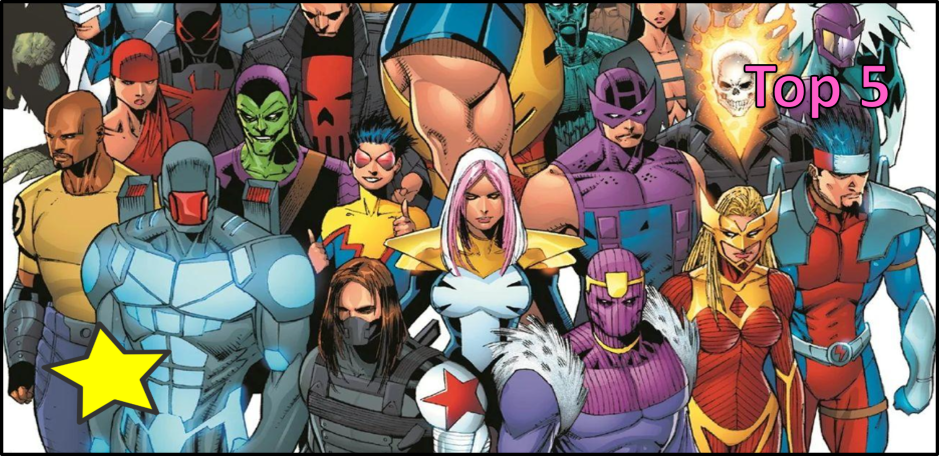
Thunderbolts* releases this week with a new cast of characters. Some of the characters we’ll see in the upcoming film have been members of one of the various incarnations of the group. Others are new faces. The Thunderbolts team has seen plenty of new faces since its inception in 1997, so begs the question, Which Thunderbolts rosters are the best?

Hey, hey! Kyra Kyle here. We’re doing something different with today’s Top 5 in comics. As of this post, there have been thirteen iterations of Marvel’s Thunderbolts. With that many rosters to choose from, which rosters have had the best storylines? We intend to cover that with today’s list. Buckle up. These are the top five Thunderbolts rosters.

5: New Thunderbolts

First Appearance: New Thunderbolts (Vol 1) #1; written by Fabian Nicieza & Kurt Busiek; art by Tom Grummett (2005-2006)

Notable Members

MACH-IV
Songbird
Atlas
Donnie Gill/Blizzard II
Radioactive Man
Joystick
Speed Demon
Andreas von Strucker/Swordsman II
Genis-Vell/Photon

Marvel launched New Thunderbolts in the wake of the Thunderbolts’ first era. Original Thunderbolt Abe Jenkins reformed his ways as The Beetle and became MACH-I. Jenkins made a new suit for himself, becoming MACH-IV, and wanted to give other villains the same chance and reformed the new Thunderbolts. MACH-IV’s New Thunderbolts earned the respect of the Avengers.

The New Thunderbolts stopped Purple Man from enslaving New York City by drugging the water supply with his pheromones, the same ones that allow him to control his victims. Before the team could interrogate the Purple Man, he was teleported away by his boss, Baron Zemo. Zemo would eventually take control of the New Thunderbolts. The New Thunderbolts would lose their chance at redemption and became an army of villains used against Captain America’s Secret Avengers during Civil War.

Ultimately, New Thunderbolts was a solid iteration of the team. I always liked the basic Thunderbolts premise of supervillains pretending to be superheroes but ending up adopting the roles of heroes. Thunderbolts prove that no one’s beyond redemption.

Unless Baron Zemo’s in town. He loves to play the role of spoiler.

4: Luke Cage’s Thunderbolts

First Appearance: Thunderbolts (Vol 1) #144; written by Jeff Parker; art by Kev Walker (2010-2012)

Notable Members

Songbird
MACH-V
Moonstone
Fixer
Ghost
Juggernaut
Satana
Boomerang
Centurius
Mister Hyde
Shocker

In the years before Luke Cage assumed control of a new Thunderbolts team, the Thunderbolts had a run of horrible leadership, notably Norman Osborn. The team had become villainous. Captain America himself tasked Luke Cage to front a new Thunderbolts team, and this started a great run of comics. The team repurposes the heavily fortified superprison known as The Raft and uses Man-Thing as a form of transportation.

Luke Cage’s Thunderbolts are one of the odder iterations of the team. This team has a long time, too. At one point, the team splits off to become two separate groups. The Thunderbolts serviced the Americas, while the “Underbolts” had a European jurisdiction. These Underbolts get lost in time, specifically the World War II era, and pass themselves off as the American Thunderbolts, fighting beside Captain America (pre-frozen) and Namor. The team continues its fight with the Nazis and Human Torch androids that were created by Baron Heinrich Zemo (the current Baron Zemo’s father). Yes. Luke Cage’s Thunderbolts’ stories got wild.

3: Norman Osborn’s Thunderbolts

First Appearance: Thunderbolts (Vol 1) #110; written by Warren Ellis; art by Mike Deodato Jr. (2006)

Notable Members

Songbird
Moonstone
Swordsman
Radioactive Man
Mac Gargan/Venom
Bullseye
Robbie Baldwin/Penance

Yep. Norman Osborn may have been a horrible Thunderbolts leader, but his complicated leadership led to some great theater.

Osborn’s Thunderbolts occurred after Marvel Comics’ Civil War event. These new Thunderbolts were tasked with tracking down and arresting individuals avoiding the Superhuman Registration Act. This Superhuman Registration Act appeared in the MCU and sparked a similar story of the same name Civil War. Just imagine Norman Osborn, struggling with his Green Goblin persona, leading a team of villains to track down any superhero he dared not to register.

Times got rough, to say the least. This Thunderbolts team would lead Osborn to create his first Dark Avengers roster.

2: Red Hulk’s Thunderbolts

First Appearance: Thunderbolts (Vol 2) #1; written by Daniel Way; art by Steve Dillon (2013)

Notable Members

Red Hulk
Agent Venom
Punisher
Elektra
Deadpool
Red Leader
Mercy

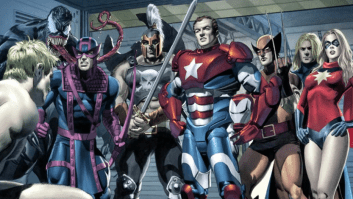
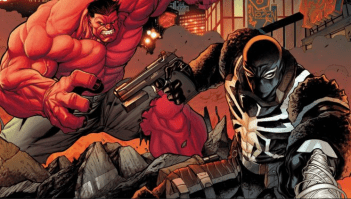
Red Hulk’s Thunderbolts happened on the heels of Luke Cage’s. The government disbanded the Thunderbolts program, but General Thaddeus “Thunderbolt” Ross (Red Hulk) formed his team of anti-heroes. This new Thunderbolts served as a covert super-powered strike team. This sounds like the team’s premise in the upcoming Thunderbolts*.

Red Hulk’s Thunderbolts had a short but memorable run. Even the small moments are great. My favorite was when Deadpool’s name gets pulled for a mission, and he wants to kidnap actor Ryan Reynolds. Ha! At the time of this moment’s publication, Ryan Reynolds had not yet redeemed himself as Deadpool—way to go, Thunderbolts.

Getting back to the larger storylines. Ross started with former Code Red mercenaries and began adding a few villains. It’s this addition of villains that led to the team’s downfall. The team tracks down Doctor Faustus. The Punisher wants to kill Faustus for murdering high school children. Instead, Red Hulk recruits Faustus to join the Thunderbolts. The Punisher leaves the team and then takes them down. Womp, womp.

1: Original Thunderbolts

First Appearance: Thunderbolts (Vol 1) #1; written by Kurt Busiek; art by Mark Bagley (1997-2000)

Notable Members

Baron Zemo/Citizen V
Moonstone/Meteorite
Fixer/Techno
Beetle/MACH-1
Goliath/Atlas
Screaming Mimi/Songbird

The original is often the best. The original Thunderbolts introduced the idea of supervillains pretending to be superheroes (to gain access to their foes) and then liking the recognition and feeling good about doing good deeds. This differs from the Suicide Squad. Suicide Squad villains are looking for reduced sentences or perks in their prison accommodations. Except for their founding member Baron Zemo and one or two others, the Thunderbolts genuinely wanted to reform.

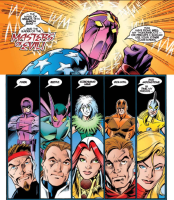
I also love the Thunderbolts’ reveal at the end of the first issue. This scene is iconic.

Did we get the list right? Let us know which Thunderbolts teams you would add or remove in the comments. Thank you for reading and wherever you are, I hope you’re having a great day.

Geekly News: April 27, 2025, Thunderbolts* Fan Screenings

Hey, hey, Geekly Gang! Kyra Kyle here. It’s another Sunday, so we have another week of Geek News. There is plenty of tariff news and updates, but we talk about that a lot. Let’s sandwich those stories with more cheerful news.

Thunderbolts* Fan Screenings

Thunderbolts* becomes the first MCU movie in history to receive advanced screenings for fans. Typically, advanced screenings are reserved for critics, who must sign a non-disclosure agreement and a gag order preventing them from leaking any information about the movie. Advance movie screenings are meant for critics to form an opinion and write a review in advance of the movie’s release. Those reviews will feature zingers the studio can use in future trailers and teasers. But Thunderbolts*’ advanced screening includes fans. Fans don’t care about a gag order.

In fact, the MCU may be banking on fans talking, generating word-of-mouth buzz. It takes a week or so for word-of-mouth to take effect. Thunderbolts* dropping advanced screenings with fans will accelerate this effect. But be careful on the internet. Thunderbolts* may become the MCU movie with the most spoilers.

Geekly has no idea what this development means for the MCU or the Thunderbolts* movie. Will this become the norm? Is Marvel so confident about Thunderbolts* that they’re comfortable with whatever fans will say? Who knows? I will say that heading into this year’s slate of films, Thunderbolts* had me intrigued. Thunderbolts* wasn’t one of the MCU’s make-or-break 2025 titles, but in our 2025 MCU Preview, I listed it as a potential sleeper hit.

Nintendo Switch 2 Pre-Order Wave One Ends

On Thursday, April 24, 2025, Nintendo opened United States pre-orders for its latest hybrid game console, the Switch 2. Pre-orders continued until the order quota was reached. Taking current United States trade policies into consideration, the order quota was based on how many copies the video game company thought would yield the best results.

The Switch 2’s United States pre-order wave one lasted less than one day. Customers who were able to buy a copy won’t receive their systems until June 2025. Don’t worry if you weren’t one of the lucky few who snagged a copy. Nintendo intends to run another Switch 2 pre-order within another eight months (in time for the holidays), when the company believes it can turn a profit by sending systems to the United States. Unfortunately, staged releases for the United States are the new normal.

Rising shipping costs and tariffs have caused tech companies like Nintendo to re-evaluate their business with United States customers. This has become an issue with other business types; Geekly covers geek culture, so we’re interested in video games and board games. We’ll have more on board games in the next segment. Getting back to the Switch 2, most of Geekly’s statistics are derived from an interview with a GameStop manager. I live in the greater Omaha area, and according to the GameStop manager, the Midwest quad-state region (Nebraska, Iowa, Kansas, and Missouri) received 2,000 total Nintendo Switch 2 systems. That is 2,000 Switch 2s for a population of over 14 million. Granted, most of the 14 million people living in those four states have no desire to purchase a Switch 2 at this time, but Wal-Mart overordered and had to issue tens of thousands of refunds in the Midwest quad-state region alone.

Geekly will keep you posted on when the next waves of United States Switch 2 pre-orders will occur. Good luck to all of you who want a copy. We’ll also give updates on any new developments. Hopefully, there will be a resolution to the United States’ trade war soon.

Geekly News CMON Games Tariffs

Board Game Company Madness

We’ve discussed board game companies and the effect rising tariffs have had on them in the past; this will be a quick update. Final Frontier Games and Boardlandia have closed their doors. Greater Than Games and CMON Games have suspended all future crowdfunding campaigns and board games under development, and laid off countless employees until a viable manufacturing/shipping option becomes available. Small board game publisher, Rookie Mage Games, joined forces with three other indie board game companies in suing President Trump over his new tariffs.

According to Jordan McLaughlin, founder of Rookie Mage Games (via The Columbus Dispatch), “I will not stand by and allow my years of hard work and the hard work of many other small businesses to be ruined in a desperate political ploy for attention and ego validation.” McLaughlin continues, “Attempting to move manufacturing jobs back to the United States is a worthwhile effort. There are smart ways to do it, and there are dumb ways.” Numerous board game companies, including Stonemaier Games (producer of Wingspan and Scythe) have joined Rookie Mage Games’ lawsuit. We’ll keep you posted on this emerging story.

This War of Mine, Second Edition Launches on Gamefound

The award-winning board game adaptation of This War of Mine returns to Gamefound. This War of Mine features countless morally gray choices for players to make while they attempt to survive in a war-torn country. Since the game is fully cooperative, players share the experience and the consequences.

This War of Mine, Second Edition showcases numerous updated maps to explore. Producer Awaken Realms is known for its ornate miniatures, and This War of Mine, Second Edition includes additional scenario books. Countless hours of griping stories await. This War of Mine, Second Edition has plenty of pledge options on its Gamefound page.

Solo Game Dicemancy Releases on Gamefound

I love the increased number of great solo board games. Dicemancy looks interesting. It’s a tower defense game with plenty of combotastic abilities. That’s music to my ears. Players construct unique spells they think will help them ward off enemies. I like the domino-style spell cards players can stack for power-ups. Dicemancy plays quickly (about 45 minutes), has minimal setup, and doesn’t appear to take up too much table space.

Dicemancy features adorable art, and at $25 (plus $5 for shipping), it’s a low-cost option for a new board game. Feel free to give Dicemancy’s Gamefound page a look.

That’s all we have for Geekly News this week. Thank you for reading, and wherever you are, I hope you’re having a great day.

Tabletop Game Review: Draft & Write Records

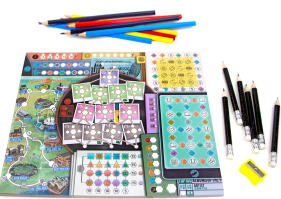
Geekly has played quite a few roll-or-draft and write games (we’ve picked up a couple of great ones over the holidays), and we’ve yet to cover one. In Draft & Write Records players assume the role of a rock band manager. You’ll scout performers, crew, and producers to outperform your competition.

Hey, hey! Kyra Kyle here. We reviewed a new board game for this month (I don’t count expansions, no matter how awesome), so we’re back with another board game review. Draft & Write Records’ name derives from the mechanisms it uses. Players draft and pass cards (which represent band members and important events) and then they write down what the card they drafted said on a massive score sheet (like Yahtzee only way more dynamic). The player with the most points at the end of the game wins.

Before we get any further, we’ll take a quick break from the road and discuss Draft & Write Records’ fine print.

The Fiddly Bits

Designer: Bruno Maciel
Publisher: Inside Up Games
Date Released: 2024
Number of Players: 1-6
Age Range: 12 and up
Setup Time: 5-10 minutes
Play Time: 30-60 minutes

Game Mechanisms

Automatic Resource Growth
Chaining
Closed Drafting
Grid Coverage
Hidden Victory Points
Paper-and-Pencil
Pattern Building
Set Collection
Simultaneous Action Selection

Game Setup

1) Each player takes a Band (Score) Sheet and one pencil (with regular lead).

2) Place the colored pencils within reach of all players.

3) Choose and Record your Band Name. This is optional but fun. I like having players state what they named their bands before play begins.

4) Each player selects a starting color at random and fills in the circle to the left of their band name with one of the colored pencils. Multiple players can choose the same color.

5) Set up the “Play Stack” by looking at each Play Card (gold-backed cards). You’ll find a number in the bottom right-hand corner of the card’s front. This number (if there is one) will let you know how many players are needed to use that card in the game. In a 3-player game, return the cards with 4+, 5+, and 6 indicators to the box.

6) Shuffle the remaining Play Cards to form the “Play Stack.”

7) Shuffle all the Goal Cards (blue-backed cards) and place them in the middle of the table to create the “Goal Stack.”

8) From the Goal Stack, draw and place the top four cards faceup to the right of the Goal Stack to create a line of publicly available Goals.

9) Then, deal two cards from the Goal Stack to each player. Each player selects one card to keep as their personal goal, placing it facedown near their Band Sheet, and the remaining cards are shuffled back into the Goal Stack.

10) Get ready to ROCK!

Game Flow

Each round of Draft and Write Records is divided into two phases: the Week Phase and the Weekend Phase.

Week Phase

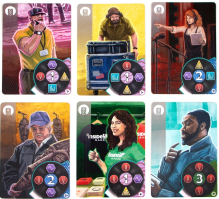
During the Week Phase, players draft cards to take actions on their Band Sheet. At the beginning of this phase, deal each player five cards from the Play Stack (the gold-backed cards). Players will select one of these cards and pass the remaining cards to the next player. Each round, the direction players pass their cards changes (to the left, then to the right, and so forth).

During the “Week,” each player will draft four cards in total and discard the last remaining card to their personal discard pile next to their Band Sheet.

1) Players will denote which card they selected by placing the card they chose facedown next to their Band Sheet.

2) Once all players have placed a card facedown, those cards are revealed. Each player takes the action corresponding to the card they chose and records it on their Band Sheet.

We won’t go into detail about all the actions a player can take (there are a lot), but these actions will be indicated by an icon and color on the top left-hand side of each card. These symbols will match symbols found on a player’s Band Sheet.

3) Once all players have taken their action (or chain of actions if they have any), they pass the remaining cards from their hand to the next player.

4) Players repeat this process until they only have two cards remaining. They then choose one of those two cards and discard the other one.

Weekend Phase

During the weekend, players can claim publicly available Goals. If anyone can claim the Goal, they do so, marking the points on their Band Sheet and taking any additional bonuses (like Money). Multiple players can claim a publicly available Goal during a round, but as soon as even one player claims a Goal, it gets scored (by all players who accomplished it), discarded, and a new goal from the Goal Stack takes its place.

Once this is done, and if no one has triggered the end game, another Week begins.

End Game

Play continues until at least one of three end-game triggers occurs.

1) A player claims their sixth Goal.

2) A player checks their fifth Fail. (While there are Fail cards in the Play Stack, a Fail can occur if a player doesn’t or can’t play one of the cards they drafted.)

3) A player fills all 12 of their Crew posts.

After this happens, end-game scoring occurs. We won’t go into detail what these sections are. There are six sections where you can score points and then you subtract the points indicated in your Fail section. Draft and Write Records does a good job of indicating where these sections are and what they mean. The scoring section uses the same icons as the rest of the Band Sheet.

Whoever has the most points at the end of the game wins.

Review

There are many ways to score in Draft and Write Records, so many that I didn’t bother to list the ways. And while it’s easy to tell where to fill in actions on your Band Sheet as you play cards, the sheer number of ways to score can be overwhelming. You won’t have more than five cards in your hand and that helps, but early hands in a round can overload players with too many choices. Draft and Write Records is a game you’ll need to play a few times to get comfortable. Conversely, it’s this same number of scoring means that gives Draft and Write Records ample replayability.

Draft and Write Records is a joy. Its rounds don’t take long. You can expect that with closed drafting games. End of the round scoring (checking to see if someone finished a Goal) doesn’t take long either. I don’t check what other players have filled into their Band Sheets. I could see some players doing that and then feeding the players to their right or left (depending on the round) cards they cannot use. But the Play Cards do that to you anyway. Draft and Write Records forces players to make the best choices they can with the information given. Outside of the time it takes to learn the rules and then the game’s nuances, the game’s biggest issue can be the inability of players to recover from a bad strategy. You may commit to a plan early that will not work and then you’re stuck with that plan.

Fortunately, Draft and Write Records doesn’t take that long to play. The box reads that the game can take up to 60 minutes, but I’ve played it at max player counts and it took about an hour with rules explanation. The fewer players, the less time it will take to play. Lower player count games take closer to thirty minutes. I could see someone take a wrong turn and redeem themselves in round two. There’s a good chance of a round two.

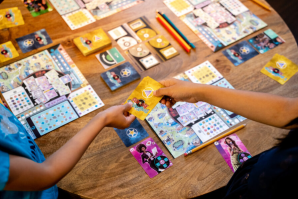
Draft and Write Records’ use of colored pencils is a nice touch. The harmony game mechanism tied to the colored pencils proves crucial. The game didn’t add colored pencils for the sake of adding them. It matters if colors match, creating harmonies, and leading to more chain effects. And chain effects reign supreme. If you like making one good play that sets up another, Draft and Write Records has you covered. I’ve lost count of how many times I’d create a harmony, take the bonus, and that bonus (like producing a record or single) would lead to another bonus and another. Lather, rinse, repeat. And it’s this combotastic gameplay that makes Draft and Write Records shine.

Not going to lie. Draft and Write Records is one of those games where I’ll talk to myself while filling in a long play, and I relish the time it takes for me to go from one bonus to the next, and everyone must watch me fill in blanks until I’m done. The longer it takes for me to fill in my play, the more potential points I just earned. In short, this draft and write game has many combos, and those combos are satisfying.

Verdict

While it may take a couple of playthroughs to understand the rules enough to exploit its numerous ways to score, Draft and Write Records takes little time to play, even at higher player counts. Its harmony game mechanism shines and headlines a series of chain reaction scoring. Draft and Write Records is combotastic.