Quirky Video Game Review: Stacklands

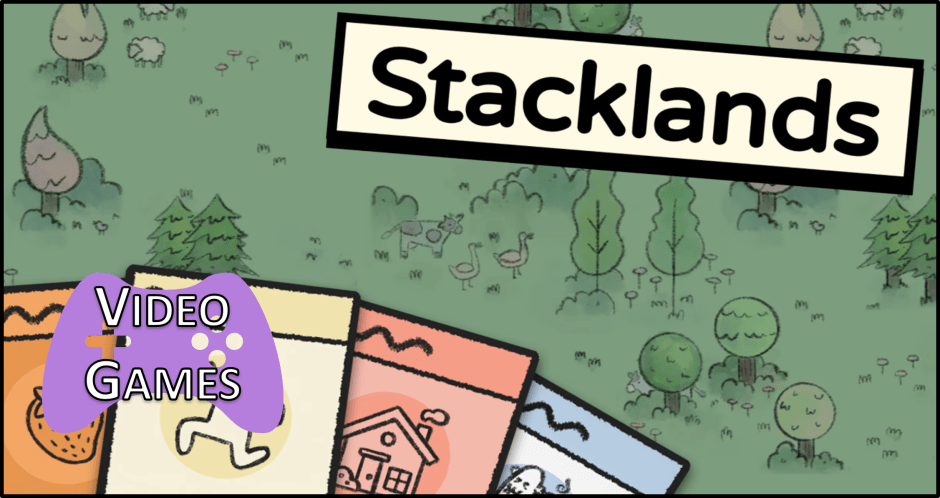
Stacklands merges a survival/civilization game with the skeleton of a collectible card game, and the results are interesting. Developed by indie designer Sokpop Collective, Stacklands takes these disparate themes and mechanisms and makes sense of them. Prepare to drag cards on a board and stack them on top of each other for numerous interactions.

Hey, hey! Kyra Kyle here. Today, I’m reviewing a quirky video game I’ve meant to cover for a while. Full disclosure: I’ve played a heap of Stacklands on Steam. I purchased all the DLC–we’ll only touch on some of the bonus content–and spent countless hours watching my card-sharped citizens build an empire. But how does Stacklands stack up against our review criteria? Let’s find out.

Mechanisms

Game Mechanisms: 10/10

Quirky indie video games tend to sport fresh game mechanisms, and Stacklands is no different. Stacklands combines a collectible card game and a civ builder into a cohesive whole. The experience is a great loop of exploration and optimization for your villagers. I’ve never had this much fun stacking one card on top of another card and getting something in return. One chicken on top of another chicken yields an egg. Place that egg card on a campfire and produce a cooked egg. Sounds simple, but a multitude of these actions may occur at once. Players must manage the timers for each interaction and generate enough food at the end of the day to feed their civilians. Any items you don’t use or can’t use may be sold for coins that are used to purchase new card packs. Card packs contain new items and ideas.
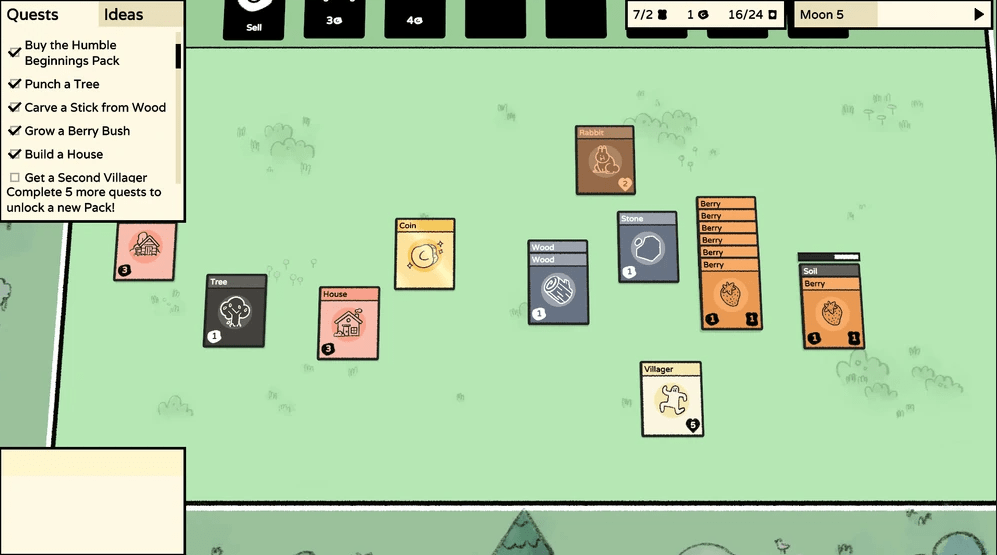
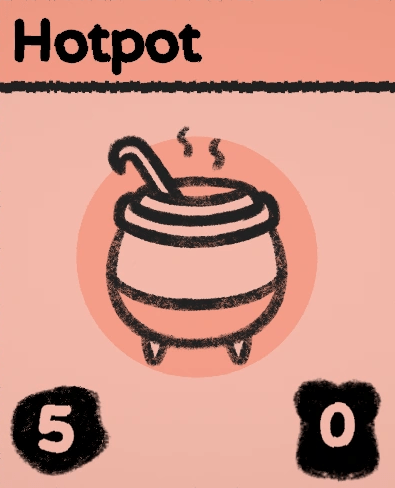
The gameplay loop and exploration (of what I can put together to make something exciting and new) are addictive. Earlier versions of Stacklands proved difficult to manage some of these elements, but later patches fixed many of these issues. I have as much fun optimizing my little village as I do discovering new ideas. If you were to construct a hotpot, you could place food into the pot that you wish for your villagers to eat first. This way, you can keep more valuable food items. Small upgrades like this add strategy.
And Stacklands is full of small and large upgrades ready to make your village strong enough to fight off invaders. Yes. There will be invaders who will randomly attack your village, but usually after the first five or six moons (or days). Enemy cards are indicated by red backgrounds. You may choose to fight these enemies unarmed (like the picture below) or upgrade your Villagers with weapons that will change their job title from Villager to something fancier, like Warrior or Swordsman.

Stacklands also has a knack for ramping up the difficulty. Most difficulty spikes happen organically; you won’t face a stronger creature unless you spend money to buy a more expensive pack that may contain the stronger creature. The largest of these difficulty spikes is at the player’s discretion. I don’t know how many times. I’ve accidentally summoned a demon and watched in horror as the demon decimated my villagers.
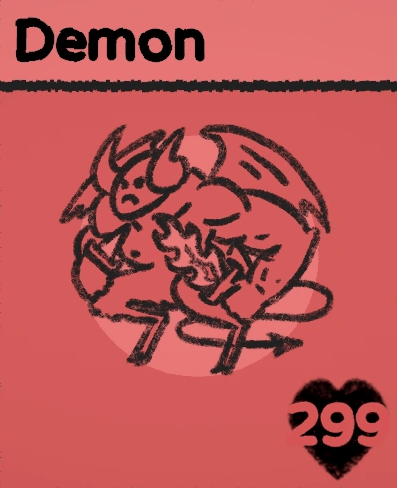
But I was the one who summoned the Demon. I’ll know for next time not to do the thing that summoned the Demon until after I’m prepared to defeat an enemy with 300 health. Like many survival games, you’ll need to restart your Stacklands village when you have no more living Villagers, but when you do restart your village, you don’t need to relearn skills and ideas. I don’t mind this. It lessens the danger, and often, I’ll have a better item I’ve unlocked and can outfit my villagers with better gear or a more optimized village. Heck. I’ve let a larger enemy torpedo my village, so I could start over.

Gameplay Loop

Above Image from GameDesigning.Org

Gameplay Loop: 10/10

I’ve already mentioned Stacklands’ gameplay loop. Combining collectible card packets with building a civilization of card villagers is fantastic. Stacklands also manages its difficulty spikes well. Players have more control over what they’ll face. Buying more expensive packs could mean stronger enemies appear, but you’ll want to unlock every card in each packet type and as quickly as possible.

Collecting cards like Pokémon mixed with exploration is a potent combination. And since Stacklands has so many hidden tech trees (the game doesn’t spell out its tech trees in a diagram), you’ll find hours of enjoyment reverse engineering a recipe. How do I get a gold bar? I need a smelter and gold ore. How do I make a smelter, and which booster pack contains gold ore? Stacklands has so many rabbit holes to explore.

Story or Narrative

Narrative: 6/10

Stacklands has a few side stories that make up a somewhat larger narrative, but it doesn’t have a traditional storyline. There’s the demon I mentioned earlier. The demon isn’t too difficult to defeat if you have the proper equipment and a large enough army. You’ll also have to challenge a witch who summons monsters from a strange portal. Defeating the witch is the closest thing the base Stacklands game has to a larger story.

Players must construct a stable portal so they can enter the witch’s realm and fight her seemingly endless army of baddies. The army the player sends may choose to return home after each level of witch minions. Defeat the final level and then the witch. Players will receive a “you completed the game” notification, but that’s not the end. You may continue playing Stacklands and its DLC. The only location you can access without buying DLC is the island. This has a “story” similar to the witch on the mainland, but it’s the paid DLC that has fleshed out stories. I’m not including the DLC in this review, but if I did, this score would rise a point or two.

Storytelling

Storytelling: 5/10

Stacklands‘ storytelling is no better than average. I promised I wouldn’t include the paid DLC (which only costs a few dollars) in this score. The base game’s story is okay. The DLC ventures into some interesting territory. I talk briefly about them. One alternate plane deals with waste; you’ll need to optimize your village so you won’t produce too much pollution. Another plane centers around death. A third pivots hard into combat and rage. Stacklands‘ DLC is well worth the price (if you like the base game), but it’s the base game’s storytelling we’re grading here, so it’s average.
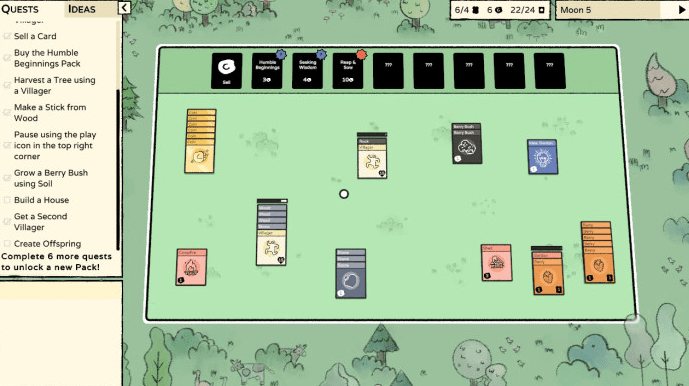
User Interface: 9/10

While Stacklands has a lot going on at once, it does a good job of presenting these options to the player. In the top left, you’ll find tabs for Quests and Ideas. The quests are self-explanatory. If you don’t know what to do next, check out your active quests.

Ideas are the recipes you know. Stacklands does a great job of grouping similar recipes into tabs. You may expand these tabs to see individual recipes or collapse them if you’re not looking for that recipe type.

In the far right corner, you’ll find out which day (moon) you’re on, and the symbol on the right of this box lets you dictate how fast time moves. To the left of the moon, you’ll find your village’s vitals (food, coin, and how many cards you may have in your village–booster packs don’t count toward this total). The image above may be from Moon 5, so there aren’t as many cards in play, but Stacklands has so many ways to optimize your village that you can build one that minimizes your number of cards and is almost automatic.

Once you find a consistent source of food, you’ll be able to focus on other things Stacklands offers, and there are plenty of choices. Stacklands rewards trial and error. Don’t be afraid to make mistakes.

Graphics: 6/10

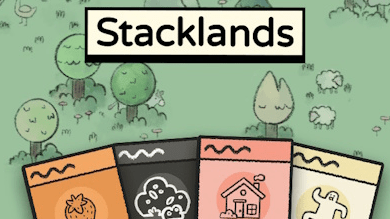
While I enjoy Stacklands‘ graphics, they are minimal. Stacklands chooses legibility over style. Even though that’s the right choice for a game like this, I can’t tell you that Stacklands has amazing graphics. The game’s graphics are crisp, at times adorable, and most importantly, functional.

Audio: 7/10

You like lo-fi chill jams, don’t you? Who am I kidding? Of course you do. Stacklands’ soundtrack makes great background music. To be honest, I hardly notice it while I’m playing. Where this score gets a bump is when considering Stacklands’ sound effects: card shuffling, ripping open a booster pack, the little bloopy combat noises, and adorable animal calls. Sokpop Collective took time and care with Stacklands’ sound effects, and it shows.
Replay Factor: 9/10

Stacklands has plenty of DLC, and that DLC has its own puzzles for you to solve. The DLC adds a good ten to twenty gameplay hours. But the base game has tons of replay value in its own right. Even if you defeat the witch and the demon, you may want to beat the time it took you to defeat the witch and the demon. I’ve also discovered numerous recipes after beating these two, which then prompted another playthrough. Sure, I beat the game, but I figured out how to make a resource magnet. That would optimize my village to the fullest.

Again, I may be biased. I put a heap of time into Stacklands, but it has a fair amount of replay value. Each new play can lead to a different path to success.

Aggregated Score: 6.9

Geekly News: May 20, 2025, Sadie Sink’s Role in Spider-Man: Brand New Day

Hey, hey, Geekly Gang! Kyra Kyle here. My partner and I are celebrating our 28th anniversary, and it happens to be Memorial Day weekend as well, so we’ll have a shorter Geekly News than usual. But that doesn’t mean that we don’t have anything to talk about. Let’s get to this week’s Geek News.

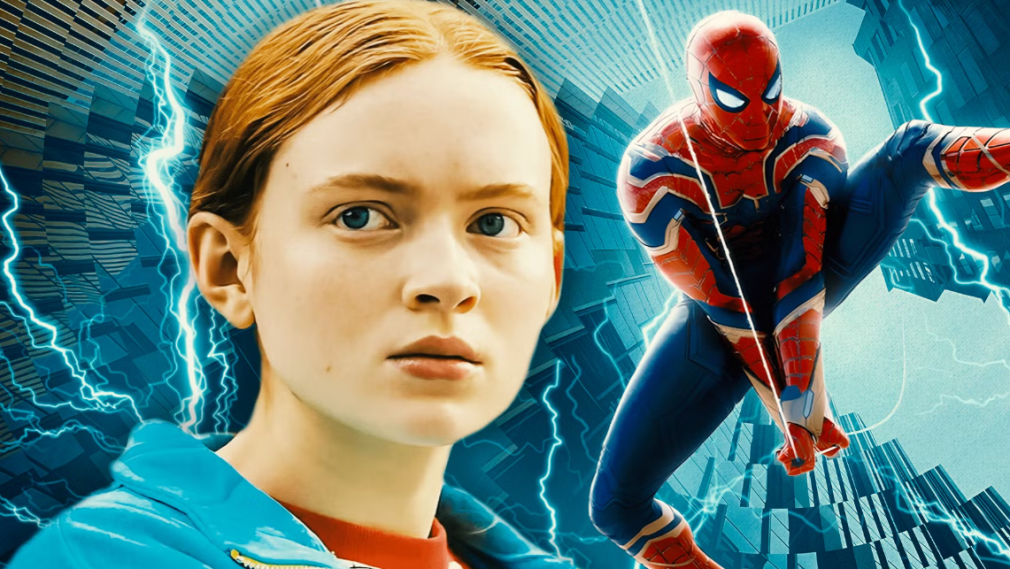
Sadie Sink’s Role in Spider-Man: Brand New Day

A leak about Sadie Sink’s role in Spider-Man: Brand New Day occurred the day last week’s Geekly News posted, so we’re a little late with this update. Geekly has also covered Sink’s role in Spider-Man: Brand New Day in a previous geek news post, but we may have been bamboozled. A month ago, we learned that Sink’s character would be a mutant. Geekly assumed that meant that Sink would tie into the X-Men in some fashion (possibly Jean Grey, more likely Firestar). Now, it appears that Sink’s character will be connected with Tobey Maguire’s Spider-Man, but Sink could still be a mutant.

Marvel kept a tight wrap on who Sadie Sink would play until Podcaster and MCU insider John Rocha revealed on The Hot Mic podcast that Sink will be playing Mayday Parker, the daughter of Tobey Maguire’s Peter Parker/Spider-Man. This reveal lines up with Maguire’s Spider-Man in Spider-Man: No Way Home. While Garfield and Holland’s Spider-Men (Spider-Mans?) complain about not being lucky in love, Maguire’s Spider-Man suggests that he’s married. In the comics, the Spider-Baby (the child of Earth-982’s Peter and Mary Jane Parker) becomes Spider-Girl. This would also track with what we learn about Maguire’s Spider-Man in No Way Home. Maguire’s Spider-Man is retired. Why would he need to fight crime when his daughter is Spider-Girl?

Sink as Spider-Girl solidifies Spider-Man: Brand New Day as a Multiverse story. This also makes sense. The MCU will need to tie up loose ends to its Multiverse Saga before it can begin the Mutant Saga. And Spider-Girl could still count as a mutant. If she inherited her abilities from her father, Peter, this version of Mayday Parker would’ve been born as Spider-Girl. May Parker would be a mutant.

Murder on the Rocks Launches on Kickstarter

Murder on the Rocks looks amazing, even if the game doesn’t appear to be one I typically like. Gamers take on quirky roles at a cocktail, masquerade party. One player is a murderer. The murderer attempts to kill each partygoer one by one, while the other partygoers try to deduce who the murderer is. In short, Murder on the Rocks sounds like it plays similarly to Werewolf. If you like Werewolf, Mafia, or any tabletop game with hidden roles, you should check out Murder on the Rocks.

I like the inclusion of red and green vials. If the partygoers get aspects of the murder correct, they add drops from the green vial. Whenever the murderer claims a victim, they add drops from the red vial. I assume the red and green liquids inside the vials are food coloring, so gamers should be able to add more “envy” or “blood” to each vial. Players also wear blindfolds (masquerade masks). That could be a fun twist on Werewolf. And Murder on the Rocks ditches a game box for a drink mixer. Oddly shaped game containers can be difficult to store, but this container strengthens the game’s theme.

Pledge values for Murder on the Rocks range from $32 for the base set (Straight Up) to $116 if you want the Reserve Collector. Murder on the Rocks has a lot of cool bits. I’ve never seen vials used like this in a game. If you’re interested in Murder on the Rocks, check out their Kickstarter page.

Knight Moves Kicks Off on Gamefound

I like what I’m seeing from the board game producer, Solo Game of the Month. The company does what it says, it releases about one solo game every month. We covered Dicemancy last month on Geekly News, and Solo Game of the Month is at it again with Knight Moves. This adorable solo game features double-sided stage and boss cards. The player cards are also double-sided because gamers may choose melee or ranged attacks. Players program their knight and then execute their actions.

You can place and move barrels, defeat enemies, and upgrade your knight. Multiple scenarios provide plenty of replay value. Most games take about 45 minutes, which is a good length for a solo game. And the price tag of $25 makes Knight Moves a lot of game for not a lot of money. I’m impressed by Solo Game of the Month’s dedication to providing great solo-gamer experiences. Solo games are exploding in tabletop games. I also love the art. Solo Game of the Month keeps things clean, easy-to-read, and charming. If you’d like to pledge for Knight Moves, check out its Gamefound page.

Netflix Announces Clash of Clans Animated Series

Netflix continues a growing trend of turning popular video games into television series. The streaming giant announced this week that it intends to release an animated series based on Clash of Clans.

Clash of Clans will join Angry Birds, Splinter Cell, Cuphead, Castlevania, Dragon’s Dogma, and many more on Netflix. The streamer hasn’t given a timeframe for Clash of Clans’ release. Geekly’s guess–and it is a guess–will be that the show will release some time before May 2026.

That’s all the news we have for this week. Thank you for reading, and wherever you are, I hope you’re having a great day.

Tabletop Game Review: Marvel United, Tales of Asgard

We haven’t covered a Marvel United expansion in a couple of months. It’s about time we returned to the series. Geekly won’t be covering every Marvel United expansion, but we will review the ones worth your time or the ones we believe people will most likely purchase. So, you could consider the Marvel United expansions we cover as ones you may want on your radar.

Hey, hey! Kyra Kyle here. In Marvel United, players act as iconic Marvel heroes who work together to stop the master plan of a powerful villain controlled by the game. Each villain has a unique master plan, cards that trigger various effects, and threats that make clearing locations difficult. Heroes clear missions, making the villain vulnerable, and finally take on the big bad villain before they complete their dastardly plan. Can you save the day in time? Tales of Asgard casts players as Marvel versions of Nordic mythology.

Hark, brave do-gooder. Before we doth continue further, thou must first indulge Tales of Asgard’s finest of prints.

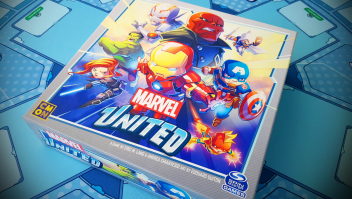
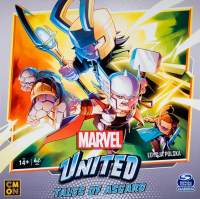
Marvel United Box Close Up Board Game Review

The Fiddly Bits

Designer: Andrea Chiarvesio and Eric M. Lang
Publisher: CMON Global Limited and Spin Master Ltd.
Date Released: 2021
Number of Players: 1-4
Age Range: 8 and up
Setup Time: 5-10 minutes
Play Time: 30-40 minutes

Game Mechanisms

Cooperative Play
Hand Management
Modular Board
Solo / Solitaire Game
Variable Player Powers

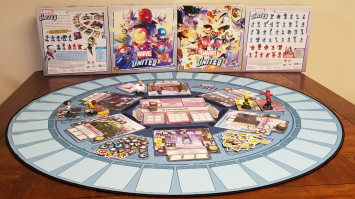
Marvel United Tabletop Game Set Up

Game Setup

We already covered the Game Setup and Game Flow in our Marvel United review (here’s a link to that review), so we’ll go over the basics in the following two sections. Let’s cover an abbreviated review of the game setup and rules.

Marvel United’s setup can change depending on which Villain and Heroes you choose to play. Each game consists of six locations. Typically, core sets have eight locations. Since Tales of Asgard is an expansion, it only has six. You may choose your locations or shuffle them and choose six at random. Each Location card has spaces at the top for civilians and thugs and a rectangle with a block of text that will state “End of Turn” at the top of the box.

Place civilian/thug tokens on their matching spaces. Shuffle the Villain’s Threat deck and deal out each Threat face-up so that it covers the rectangle at the bottom of each location. You must clear this threat before gaining the “End of Turn” effect printed on a Location. Place health tokens where signified on threat cards and on the Villain dashboard. Place the three mission cards (Defeat Thugs, Rescue Civilians, and Clear Threats) face up under the villain dashboard where the text reads “Unlocked.”

Each player shuffles their hero decks and then draws three cards to form their hands. Shuffle the Villain’s Master Plan deck. Leave the Master Plan deck face down. This will be the villain’s draw pile.

Players place their miniatures on one of the six location cards, usually the centralmost location for each player (easy access). Then, they place the villain on the location card opposing the heroes.

Marvel United Game Flow Board Game Review

Game Flow

The villain(s) play first. Draw the top card of their master plan deck. The villain moves the number of spaces indicated. Resolve any BAM! Effects and these effects will be printed on a space within the villain’s dashboard. Then, place the civilian/thug tokens (if any) indicated at the bottom of the card. After all these effects are resolved, the heroes get their turn.

Heroes pick who goes first, and hero turns will continue around the table clockwise. At the beginning of each game, Heroes will get three turns before the villain receives another turn. During their turn, heroes play one card from their hand.

Marvel United Sample Hero Turns Gacha Game Review

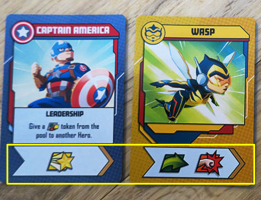
Resolve actions and the symbols printed at the bottom of the hero’s card in any order. The symbols at the bottom of a hero’s card will be shared with the next player, but any printed action will not be shared. Heroes will use these actions to complete missions. The game begins with three missions in play: Defeat Thugs, Rescue Civilians, and Clear Threats. Each mission card will have spaces for the tokens they require to complete. As soon as these spaces are filled, the card is discarded, and the mission is considered complete. Mission cards can be completed in any order.

After the heroes complete the first mission, the villain panics and will act (play a card) every two hero cards instead of every three hero cards. After the heroes complete the second mission, the villain becomes vulnerable to damage. The heroes can complete the third mission, but it isn’t necessary. If the heroes do complete the third mission, each hero immediately draws 1 card, increasing each player’s hand size by one.

Play continues back and forth until either the villain wins (by completing their unique master plan or anyone, heroes or villains, runs out of cards) or the heroes win by dealing enough damage to the villain after the villain becomes vulnerable to damage.

Review

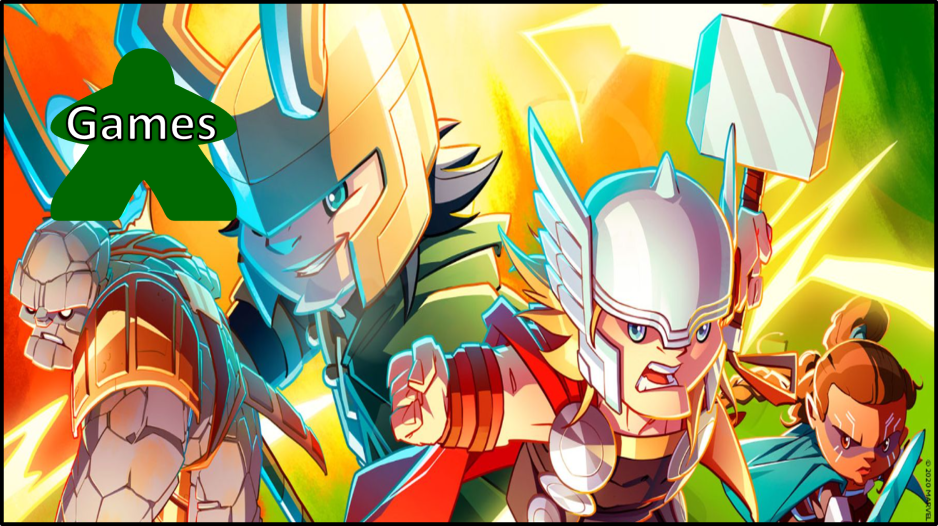
In the comics and the MCU’s first phase, Thor is a part of the core three Avengers: Captain America, Iron Man, and Thor. We’re mostly covering the Tales of Asgard expansion because plenty of people will want to have Thor as part of their heroic line-up, especially since the original core box contains Cap and Iron Man. That said, I think the gameplay highlights for Tales of Asgard are its villain, Loki, and oddly enough the Challenge card. Let’s begin with this unique Challenge.

Traitor Challenge Marvel United

The Traitor Challenge is a hint of what would come in the X-Men Marvel United set. Each player gets 1 Allegiance card, 1 Suspicion Token, and a Wild Token. Three Allegiance cards show “Loyal,” while one is a “Traitor.” The Traitor card must be in play and shuffled with enough Loyal cards to hand out to every other player. Naturally, there’s a three-player minimum with this challenge. If you play a two-player game, it’s obvious who the traitor is. Players may choose to play a Hero card facedown (gaining no benefit from it) to discard their Suspicion Token. This matters because once 2 Missions are complete, all Loyal Heroes still with a Suspicion Token take damage until they’re KO’d. This leads to players who are loyal wanting to discard their Suspicion Token. A player who doesn’t care to do that may be the traitor.

Another thing that happens after 2 missions are complete is that the players guess who the Traitor is. If correct, each Loyal Hero gains 1 Wild Token. The Traitor’s hero is removed from play and now plays as the Villain, drawing 2 Master Plan cards and playing 1 each turn. This is the hint of X-Men Marvel United. Marvel United’s next set allows players to assume a villainous role. The Traitor Challenge is a precursor to this playstyle, and it still works even with future sets. If you enjoy the idea of one player being the Traitor, this challenge is perfect. And it works well with Tales of Asgard’s villain. Loki often assumes the visage of others, so the Traitor Challenge is thematic.

Loki Marvel United

Loki’s a great villain whether you choose to play with the Traitor Challenge or not. Loki is a bit faster than the villains found in the original core set. That makes sense. He’ll hop around the map, making it difficult to deal damage after he’s vulnerable. He also has an “Illusion” Threat Card that makes dealing damage to Loki (while he’s at that location) impossible. While not as powerful as some villains (who have Threat Cards that make their villains impervious to damage for the card existing at all on the board), this, combined with Loki’s movement, makes him a challenge.

Loki Henchman 01 Frost Giants Marvel United

The “Master Trickster” and “Frost Giant” Threats are standard fare. Effective but nothing too special. The “Frost Giant” has more health (5) than most Henchmen, so they can be a chore to dispatch. Loki’s Master Plan deck features a lot of “Each Hero alone in their Location” or “Each Hero not alone in their Location” takes 1 damage, and if the previous statement is untrue, draw another Master Plan card and add it facedown in the Storyline. Both actions can prove fatal because Loki likes running out of cards in his deck by placing Master Plan cards facedown and dealing damage to Heroes whittles a player’s hand and feeds into Loki trying to speed up the clock.

Loki Overflow Effect Marvel United

Loki’s Overflow ability can also get annoying. If 1 or more Tokens can’t be added to a Location, Loki gains 1 additional Health (may go above his starting value). While Loki has below-average health for a main villain, his Overflow ability gives him more survivability. Loki surviving an extra round could mean that he may run out of cards and win.

I mentioned that Loki has a lot of movement. Fortunately, the Locations included in the Tales of Asgard expansion sport a lot of movement for their “End of Turn” abilities. “Heimdall’s Observatory,” “Throne Room,” and “Bifrost Bridge” have some form of mass movement. That’ll help when trying to catch up with Loki. The “Odin’s Vault” and “Valhalla” Locations have card draw which can be helpful, while “Asgardian Palace” has an underwhelming “You may add up to 2 Civilian and/or 2 Thug Tokens to any Location.” “Asgardian Palace” can help if you’re facing a Villain who doesn’t place enough Tokens, but most Marvel United villains place ample Tokens, and other Locations allow players to add a Token and clear a token in one action.

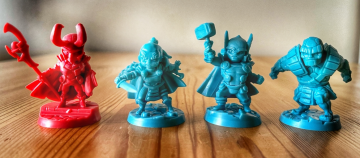
Valkyrie Marvel United

I waited long enough. Here are the Heroes. Surprisingly, Valkyrie is the most balanced character of the bunch. She has a fair amount of Heroics and plenty of movement with her “Warsong” special abilities. The other two Heroes from the base Tales of Asgard expansion, Thor and Korg, focus on Attack. While this makes sense, they do come off as one-note characters. Thor has a little more Heroics and Movement, while Korg allows players to target multiple enemies at once. Both Heroes are situational, but I’d give Thor the nod as a more universal character.

But Thor doesn’t quite claim the top spot as a Hero. If you happen to get the Kickstarter exclusive of Tales of Asgard, you’ll also get Beta Ray Bill. Bill is almost identical to Thor, but I prefer his “Stormbreaker” ability to Thor’s “Mjolnir.” I know, that’s sacrilege. Mjolnir beats Stormbreaker. But “Stormbreaker” gives players more choice with where they assign damage and grants more card draw. Both of those edge out Thor’s “Mjolnir.” Even without the Kickstarter exclusive, Tales of Asgard has some solid Heroes.

Too Long Didn’t Read

The Kickstarter version of Tales of Asgard includes one of the better characters in this expansion, Beta Ray Bill, but Thor and Bill are close enough to each other and serve a similar purpose. The Traitor Challenge Card shows where Marvel United will go in the future, while Loki serves as an interesting villain.

Whatcha Watching, Geekly? May 2025

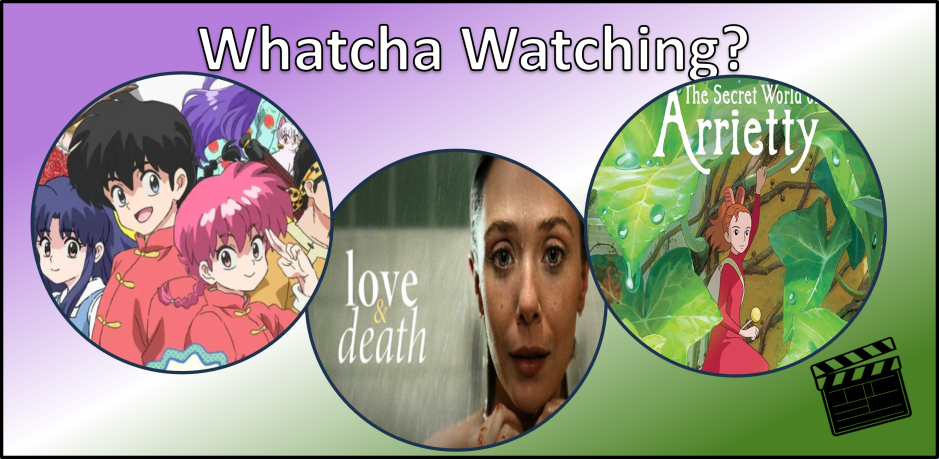
Hey, hey, Geekly Gang! Kyra Kyle here. It’s another Wednesday, and Geekly will be discussing the shows and movies we watched over the past month. I won’t be including Thunderbolts* in this post because I’ve already written a review about that movie. And as usual, we’re all part of the Geekly Gang. Feel free to share what you’ve been watching over the last month.

Kyra’s Shows

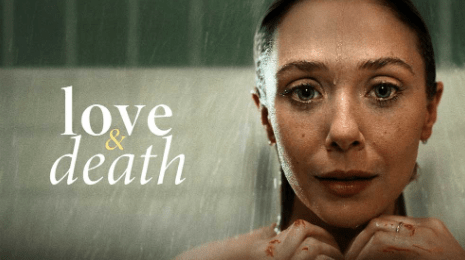
Ten minutes into watching Love & Death, it dawned on me that I had already watched a show with this same premise, Candy. So, I decided to do something a little different with this month’s Whatcha Watching. I rewatched Candy after finishing Love & Death and compared the two shows. Candy and Love & Death differ in two key ways: narrative structure and whose side of the story is told.

Candy (released in 2022 on Hulu) and Love & Death (released in 2023 on Max) follow Candy Montgomery, who was charged with the murder of Betty Gore in 1980. Candy pleaded not guilty based on self-defense. Both mini-series (with some alterations) share the basic details of the case. Candy Montgomery and Allan Gore (Betty’s husband) had an affair that ended amicably. Betty finds out about the affair a year later and accosts Candy with an axe, and Candy defends herself. Both shows also share specific details, such as Candy’s attorney quoting John Steinbeck in his closing arguments, but the two shows couldn’t be any more different.

Love & Death frames its story chronologically. This happens, and then this, and then this. It’s easy to follow. The structure and the time Love & Death spends on developing characters provide a window into who the characters (or real-life people) are and why they may do what they do, and when we finally see the death scene (which happens beyond the halfway point), the murder scene carries a lot of weight.

Conversely, Candy uses non-linear storytelling, bouncing from the present to the past and back again. I’m unsure why Candy chose this style of storytelling. Non-linear narrative structure is often nicknamed the narrative structure of trauma. Perhaps that was what they were going for. Candy shows the murder weapon within the first fifteen minutes and a glimpse of the murder within the first thirty minutes. It’s easy to get lost when something is supposed to happen because Candy shifts timelines.

Narrative structure isn’t the only way these shows differ. Love & Death attempts to stay neutral for all parties involved but leans toward sympathy for Candy Montgomery. Candy leans further into siding with the victim, Betty Gore. Betty’s ghost is even present during the reading of Candy’s verdict. What? There are some head-scratching choices made with Candy, but the show is still a good watch.

Before we move on, I have one other note: Candy uses the commonly seen “Based on a true story” at the beginning of each episode, while Love and Death uses the less common “This is a true story.” I didn’t know where to discuss this; it’s odd. The producers of Love & Death must be wagging their fingers at the producers of Candy. Tsk tsk. I’m unsure how I feel about Love & Death’s assertion, but I am sure that I prefer Love & Death slightly more than Candy.

Both are solid shows, and it was fun watching them back to back. Even though I watched Candy years ago, I forgot the show’s particulars. Watching Love & Death first before rewatching Candy allowed me to keep the timeline straight.

Candy’s narrative structure doesn’t help the story. There were scenes where I wondered if Candy’s husband was distant (like he was in Love & Death), and that’s why Candy cheated, or that Candy cheated on a man trying to make their marriage work (which seemed to be the direction Candy had gone). Candy’s non-linear narrative makes it difficult to track Pat Montgomery (Candy’s husband). Pat learns things about Candy, and he changes over time. Love & Death shows this well. Candy makes it unnecessarily murky at times.

Even so, I love Candy’s set design and atmosphere. Jessica Biel looks the part of Candy Montgomery. And I like that Candy is a trippy mini-series. But I lean toward Love & Death as the better series, even if they may be reaching with “This is a true story.” Biel may look more like Candy, but Elizabeth Olsen has the space and story to embody the character…I mean, real person.

I’ve watched other shows, but I wanted to share my thoughts on these two shows about the same topic that were released a year apart. Let’s see what Season and Skye have been watching.

Skye’s Movies

Blade Runner

I’ve been catching up on my movies. After several trips to my local Barnes & Noble, I’ve gotten a few DVDs. Among them is the original Blade Runner. This is a film that’s been on my watchlist for a while, and I’m glad I watched it, but I must admit I have complicated feelings. This is a movie I want to like, but I don’t know if I can.

I’ve heard an abundance of praise for the original Blade Runner, and I was hoping it would live up to expectations. Blade Runner’s look and feel are amazing, but plot-wise, I don’t know what it’s about. A few things likely went over my head. Before solidifying my opinion, I’d prefer to watch it at least one more time. I’ll gladly give Blade Runner a second chance.

Se7en

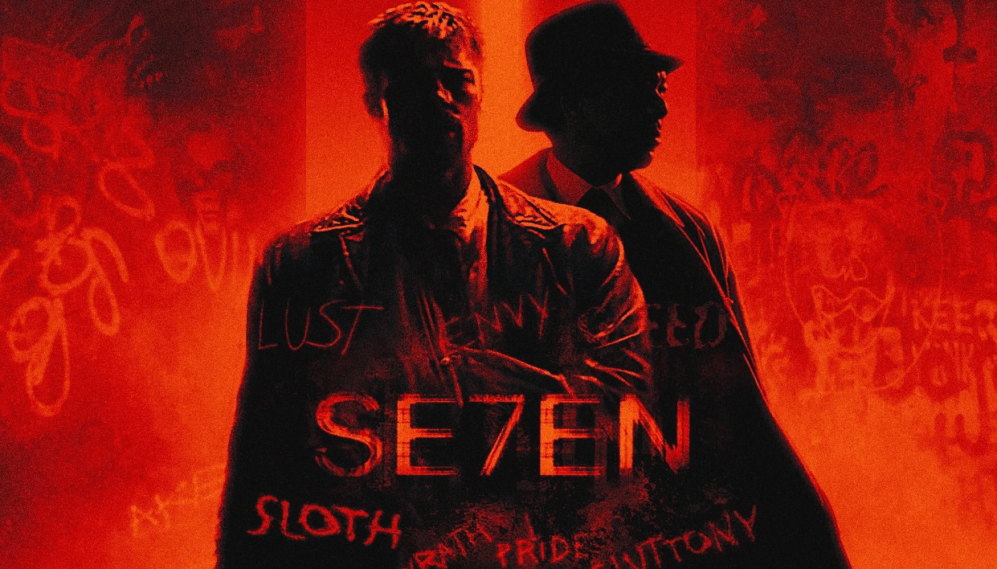
I’ve already seen Se7en, but I didn’t own it on DVD. Since I picked it up at Barnes & Noble, I needed to recapture the magic. Needless to say, Se7en holds up pretty well. It’s one of those movies that makes me question my reality and the value we place on morality. How do we determine objectively good morals, and how do we enforce them?

Since humans are imperfect, does anyone have the right to enforce morality? I know that’s deep, but these were the questions running through my head after first viewing Se7en. Of course, they came right back when I rewatched it. If you’re in the mood for an eerie, mysterious, and brutal tale detailing the human condition, Se7en is for you. Find out what’s in the box.

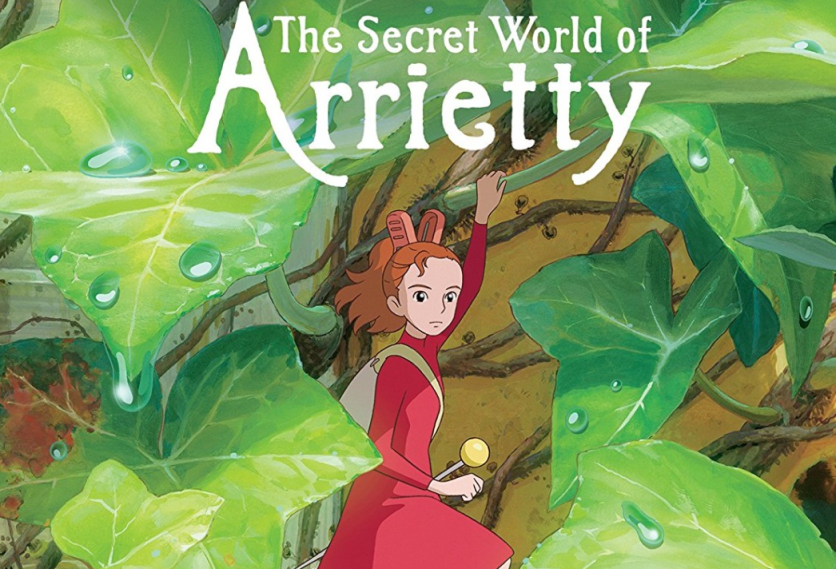
The Secret World of Arrietty

I’ve been on a Studio Ghibli kick, so it’s a great time to watch The Secret World of Arrietty. My favorite thing about the film is the worldbuilding. Focusing on a family of little people living inside a normal sized house, there’s a lot of inventive gadgetry they come up with to maneuver around the place. Each item was clever and cute when I saw them on screen.

Outside of that, I couldn’t get into The Secret World of Arrietty’s story. Mostly because there wasn’t much of a story. I respect The Secret World of Arrietty for trying to embrace a non-traditional plot structure, but in the process, it lost the personal connection. This movie is very cute (one that kids will love), but there unfortunately isn’t much substance to it. Since it’s a Ghibli film, you can bet The Secret World of Arrietty has plenty of breathtaking animation.

Season’s Movie

Hey, Geekly Gang! I’ve been watching more anime than usual lately, which isn’t something I’ve done in a while. I watched The Rose of Versailles (2025) because I saw some clips on Instagram and thought it looked interesting. I had no idea what it was about. The Rose of Versailles is a period piece set during the French Revolution in which a woman leads an army and storms the Bastille (which was a pivotal moment in the actual French Revolution). The Rose of Versailles follows the themes of empowering women and romance. Apparently.

I say “apparently” for the romance because I didn’t care for it. Spoiler alert: The female lead (Oscar) dies at the end of the movie and wants to be with the man she fell in love with. It wasn’t necessarily out of nowhere because the guy she fell in love with grew up with her. But it was shoved in toward the end after she was adamant that she wouldn’t marry and live for her country.

On a different note, Aya Hirano was cast as Marie Antoinette in the Japanese version. I enjoyed watching her in something again after she’d received threats from former fans. I watched a lot of anime she was in when I was a teenager. Some of her notable work includes Fairy Tail (Lucy), The Melancholy of Haruhi Suzumiya (Haruhi), and Death Note (Misa).

Season’s Show

It was a matter of time before I started watching the Ranma 1/2 remake. I loved the original anime. This remake has a lot to live up to. Right off the bat, they faked me out with the intro song. It opened with Genma hitting a gong, but the song was completely different, so I’m docking points for that. Outside of that, the Ranma 1/2 remake stayed true to both the original anime and the manga. I’m watching the English dub first because that’s how I first watched the original when I was younger. I’ll probably re-watch Ranma 1/2 in Japanese at some point.

Speaking of the English dub, what the heck is up with Nabiki’s voice? Her voice used to be smooth and cool-sounding in the original anime, but they made Nabiki sound screechy in the remake. On the flip side, girl Ranma is more palatable to listen to this time. The original anime didn’t finish the manga’s story and ended in a weird place. I think this had something to do with the producer at the time. I hope the Ranma 1/2 remake sees the full story through to the end.

Hey, hey! Kyra Kyle again. Feel free to share what you’ve been watching over the last month, because you’re part of the Geekly Gang, too. Thank you for reading, and wherever you are, I hope you’re having a great day.

Five Underused Board Game Mechanisms

Geekly discussed commonly used board game mechanisms last month (here’s a link to that post if you missed it), so let’s switch things up and talk about some interesting, underused game mechanisms. We turned to Board Game Geek again to find some good board game mechanisms that don’t appear in enough board games. Thank you again, Board Game Geek.

Hey, hey! Kyra Kyle here. I scoured the hundreds—and I mean hundreds—of game mechanisms listed on Board Game Geek and ran searches to see how many games are listed on the site with each mechanism. Several game mechanisms have thousands of games that use them. That’s a lot. We aren’t looking at those today. We’re giving some love to those game mechanisms that are used in less than 300 games. I baseline like most of these mechanisms. It helps a game mechanism to make this list if I like it, but I included some mechanisms that I thought were in a lot more games. Which board game mechanisms made this list? Let’s find out.

Crayon Rail System

Number of games

171

Description

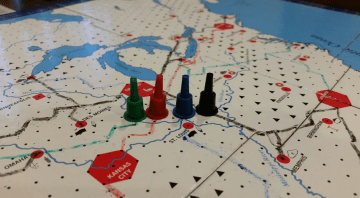
The Crayon Rail System is a subcategory of Route/Network Building. This game mechanism uses crayons or another non-permanent method of drawing lines on a board. Typically, the route/network constructed in games that use this mechanism are railroad tracks. Empire Builder is the most popular Crayon Rail game.

Thoughts

We begin this list with a game mechanism that’s a subcategory or variant of a more prominent game mechanism. The Crayon Rail System deviates from Route/Network Building just enough. I like Route/Network Building, and by extension, the Crayon Rail System. Real talk. The mechanism has one major issue: most games that use the Crayon Rail System are almost always train games. I like train games. I have over a dozen train games and have played dozens more. However, a game mechanism needs more than one theme to be used by more games. The Crayon Rail System is too niche.

I’ve played a handful of games that use the Crayon Rail System mechanism. The ones I’ve played were a joy. There must be themes other than trains that can use this mechanism. Free the Crayon Rail System.

Games that use this mechanism

Empire Builder, Iron Dragon, Nippon Rails, Eurorails, and Empire Express

I Cut, You Choose

Number of Games

175

Description

I Cut, You Choose is a game mechanism where one player divides a set of resources into different groups, and then, the other players choose which group they want first. Typically, drafting continues with the player who divides the resources into the groups receiving the final group. A group could include abstract resources, like turn order. Stamp Swap includes a first-player token. Many other games that use the I Cut, You Choose mechanism will include a “swap rule” to minimize a first-player advantage. In Hex, after the first player moves, the second player can choose to switch sides (taking over the first player’s color as well as their first move).

Thoughts

Less than 200 games use the I Cut, You Choose game mechanism. That’s shocking. Okay. Technically, the I Cut, You Choose mechanism is a drafting variant (like the Crayon Rail System is a variant of Route Building), but I Cut, You Choose adds so much to the drafting game mechanism that it feels unique. I love playing head games with my opponents. I Cut, You Choose is almost like playing Chicken with your opponents. Can I nudge you to pick one group over another? Can I psyche you out over picking a group because you’re worried about why I split the groups the way I did? Games that use the I Cut, You Choose game mechanism often have a lot of table talk. Table talk gives board games a spark.

Before my research, I didn’t know of Hex. I may have to try that one or a game that allows for the second player to swap moves with the first player. That sounds like another layer of messing with one’s opponent. Why did they pick that move? Should I swap with them? I love that kind of tension.

Games that use this mechanism

New York Slice, Dice Hospital, Castles of Mad King Ludwig, Tussie Mussie, and Stamp Swap

Mancala

Number of Games

208

Description

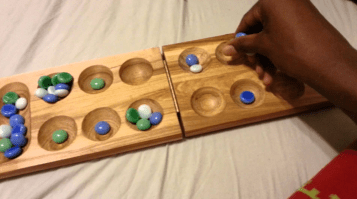
Typically, a game featuring the Mancala mechanism will have players picking up tokens in one space and then place them one-by-one in spaces in a specific direction around a circle with the space that receives the last token having special significance. The Mancala mechanism gets its name from the original game Kalah which dates back to Ancient Egypt.

Thoughts

Several games using the Mancala mechanism have been released recently. I was shocked the Mancala game mechanism made this list. Is it a favorite of mine? Not exactly. The Mancala game mechanism is elegant. I respect the heck out of it. But something with this game mechanism and my brain doesn’t click. Lol, I stink at games that use the Mancala game mechanism. Picking a game that uses the Mancala game mechanism when you play against me is the easiest way to secure a victory.

My inability to play games with this mechanism well aside, more games should include the Mancala mechanism. I like the tactile feel of dropping tokens one-by-one in consecutive spaces. Games that use the Mancala mechanism also include playing head games with your opponent. Spatial awareness is key. Because you move tokens into spaces one-by-one on your turn, making a move could empower your opponent to make an even better move on their turn. I love it when a game gives me feedback on how I lost. You can lose some board games and tally it up to luck. In games that feature a Mancala mechanism, you give your opponent the ability to defeat you.

Games that use this mechanism

Five Tribes: The Djinns of Naqala, Trajan, A Fistful of Meeples, Gold West, and Finca

Programmed Movement

Number of Games

267

Description

Typically, board games that feature programmed movement have players simultaneously program movement, reveal, and then execute their movement. Chaos can ensue, and players who have good spatial relations tend to benefit from programmed movement. Robo Rally uses this game mechanism to good effect.

Thoughts

The description of programmed movement took me by surprise. I gathered these definitions from various sources, including Board Game Geek, so I can’t take sole credit. The simultaneous nature of programmed movement is what got me. This eliminates games like Space Alert (I checked BGG and as of the time of this post; it doesn’t qualify as having the programmed movement). Space Alert has players select actions for their characters in real-time (there’s an actual countdown that occurs) and after the timer sounds, they execute their actions. Except for “revealing and then executing movement,” the mechanism works the same. It’s a head-scratcher.

Space Alert isn’t alone with its programmed movement adjacent mechanism. This could be why there are fewer games with programmed movement as a mechanism, but even if one made the description broader, games with programmed movement would still have fewer than 400 games.  Getting back to the mechanism as defined, I like programmed movement a lot. The chaotic nature of programming something and then watching your plans crumble can cause frustration, but it can be a joy.

Games that use this mechanism

Robo Rally, Mechs vs. Minions, Flamme Rouge, Colt Express, and Space Cadets

Rondel

Number of Games

268

Description

Rondels are wheel-shaped game mechanisms that contain multiple actions players can take. Player choice is limited to their ability to move around the rondel and select the action depicted on the rondel’s wedge. Typically, the rondel mechanism prevents players from taking the same action in consecutive turns. Board games that feature rondels tend to allow players to move further around the rondel by paying a cost.

Thoughts

While many games include a “don’t take the same action in consecutive turns,” rondel games are subtle. They don’t tell you, “Don’t take the same action.” Rondels nudge players not to play the same action and to try more of the actions the game has to offer.

Many rondel games do allow players to pay for additional movement around the rondel, but making a complete trip around the rondel (to claim the same action) is usually cost-prohibitive. I hope you really want that action because it’ll cost you half your victory points or in-game currency to claim it again. I always thought of the rondel mechanism as one of those game designer’s game mechanisms. I enjoy rondels. I also thought they showed up in thousands of games because the circles I play games with love talking about the latest game that uses a rondel. I agree with them. Game designers need to increase the number of games that use rondels. Double the number of games. Triple them!

Games that use this mechanism

Planet Unknown, Wonderland’s War, Unconscious Mind, Merchants of the Dark Road, and New York Zoo

Closing Thoughts

We shortened this list from the 10 Common Board Game Mechanisms list a month ago. Ten may have been too many mechanisms. While some of these mechanisms make sense that they wouldn’t show up in too many games, I’m looking at you, Crayon Rail System, others like the Mancala game mechanism should be in a lot more games. I’m shocked that with the tabletop game industry’s current climate that the Mancala mechanism doesn’t have at least 500 games to its name.

Like the game mechanisms that made the most popular list, we’ll be handing out board game designers a questionnaire to get their thoughts on each game mechanism. This may still be a month or two away from happening, but we’ll let you know when this series is ready. Until then, let us know of any board game mechanisms you think should be in more games. I hope you found something useful in the post. And wherever you are, I hope you’re having a great day.

Geekly News: May 18, 2025, New Superman Trailer

Hey, hey, Geekly Gang! Kyra Kyle here. We’ve had quite a few trailers over the past week. We’ll start with Superman, because the DCU hasn’t received nearly enough shine from JK Geekly, and that’s on me. Let’s fix that with this week’s Geekly News post.

New Superman Trailer

JK Geekly didn’t cover the first Superman trailer, mostly because that trailer received unnecessary–and frankly, baffling–criticism. The most vocal critics didn’t care for the first trailer’s comedic elements. One tweet that ripped apart a small scene with robot medics, where one (voiced by Alan Tudyk) said there was no reason for Superman to thank the robots because they don’t possess feelings, and the next robot medic shows emotion, received 37 million likes. That was a joke. Most of the responses didn’t seem to understand comedy. I would get the criticism if the joke wasn’t well told. That wasn’t what most people suggested. Regarding the comedy, I thought it worked well enough for a quick joke. But this doesn’t even get into fans’ costume vitriol.

I probably should’ve covered the first trailer anyway, but I waited for the second trailer, so let’s get to it. John Murphy’s interpretation of John Williams’s classic Superman theme was fantastic. I like the premise this second Superman trailer presents. Lois knows Clark is Superman. Thank goodness. Superman presumably stopped a war, which is something he might do, and that causes an international incident (which would definitely happen if other nations believed Superman represented the United States), and that leads Lex Luthor to sow doubt in the Earth needing a Superman. So far, this is all on brand.

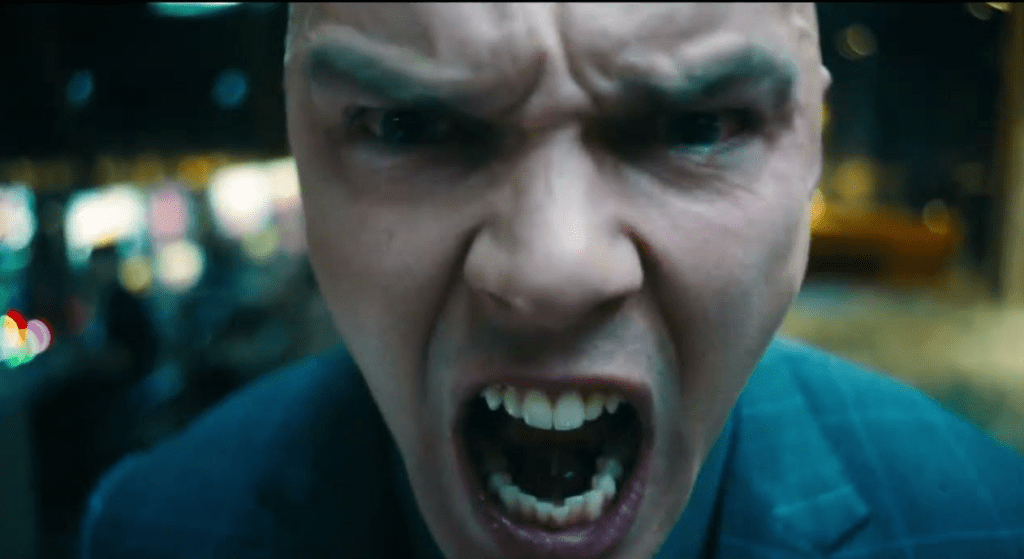
I love this premise. Pa Kent and Lois nail their portrayals. Ma Kent cleaning Superman’s boots so he could help people was adorable. Lex might be a little campy. Nicholas Hoult is an accomplished actor; I’ve liked him since his major acting debut in the BBC series Skins. I have hope this is Hoult channeling a bit of Gene Hackman’s Lex (not Jesse Eisenberg’s Lex), and the moment where he ventures into camp is fleeting. I can’t stress this enough. These trailers offer glimpses of an over two-hour movie.

Similarly, I’m a little concerned about David Corenswet’s Superman losing his cool with Lois. From what we see (in a trailer for a two-hour movie), Lois doesn’t press him too much. Perhaps, there’s more to this scene that we’re not seeing. But Corenswet’s Superman slightly loses his cool. This isn’t a Michael Gambon as Dumbledore screaming at Harry Potter when the text in The Goblet of Fire clearly states that he calmly asks Harry a question. Outside of losing his cool while saying, “People were going to die,” Corenswet looked and sounded like he could be a younger, slightly arrogant, and naive Superman.

The two Superman trailers have me excited for the movie. I can’t wait to see the movie in a couple of months.

Ironheart Trailer Drops

The MCU’s Ironheart trailer dropped this week, too. This marks the closest a Marvel project was to releasing before it received its first trailer. Even Werewolf By Night, a surprise Marvel project in 2022, had a trailer months before it released. I don’t know what this means for Ironheart. This could mean that the studio has little faith in the project or that they have the utmost confidence. It could also be a nothingburger. I find it odd that Ironheart didn’t receive a trailer sooner when Sinners (a film by Ironheart’s producer Ryan Coogler) was atop the box office.

My favorite comment for the Ironheart trailer was “I’m genuinely impressed they haven’t disabled the comments.” lol. Same. Most viewers didn’t care for the premise, and to be fair, Ironheart didn’t do a good enough job of setting up its premise. I’ve read the show’s description, and Ironheart sounds like it could be great. Riri Williams (Ironheart) picks up where Iron Man left off. The Hood (the main antagonist) is a magic user who runs a criminal underground. SciFi versus Magic. What’s not to love? Ironheart and The Hood’s relationship gives me strong vibes of what Iron Man and The Mandarin should’ve been. And Ironheart could be setting up the ultimate magic meets technology with Doctor Doom. I’ll amend what I said. Ironheart could be epic.

But this trailer falls flat. It’s paint-by-numbers. Reintroduce Riri (in case people forgot who she was from Black Panther: Wakanda Forever), clumsily introduce the antagonist, and give the viewer a vague idea of the show. Still, I like Ironheart’s inclusion of practical effects; Riri’s armor-up scene was tight. And Ryan Coogler wouldn’t attach his name to a stinker. Ironheart still interests me. The trailer could’ve done more.

Coexist Will Launch on Gamefound on May 19, 2025

Take control of a wildlife conservation team with Coexist. Publisher Matagot Games has an amazing track record. They’ve teamed up with Stonemeier Games for Wingspan, Scythe, and several others. One of Matagot Games’ originals, Takenoko, still hits my table. We don’t know much about Coexist’s gameplay. Matagot has shared that the core game flow is recruiting caretakers, welcoming animals to your conservation headquarters, and releasing animals back into the wild after their needs are met, or you may lower your reputation by placing the animals in a reserve.

Matagot Games has teamed up with Human Initiative to Save Animals (HISA). I love it when board game companies do this; whenever this happens, a portion of the game’s profits will go to HISA, a real-world conservation organization that’s based in Bordeaux. Coexist’s art looks fantastic.

Bordeaux street artist A-Mo provides Coexist’s art. Matagot Games stays true to its Bordeaux roots. HISA is headquartered there, and A-Mo is from there. I love the theme, Matagot Games seldom releases a poorly received game, and the varied animal types needing specific things (so one conservation team cannot save every animal) could supply a lot of strategic value.

Since Coexist hasn’t yet been released, Geekly doesn’t have specifics for the campaign’s pricing. If you’d like to follow the campaign, feel free to visit Coexist’s Gamefound page.

Battle Monsters Launches on Kickstarter

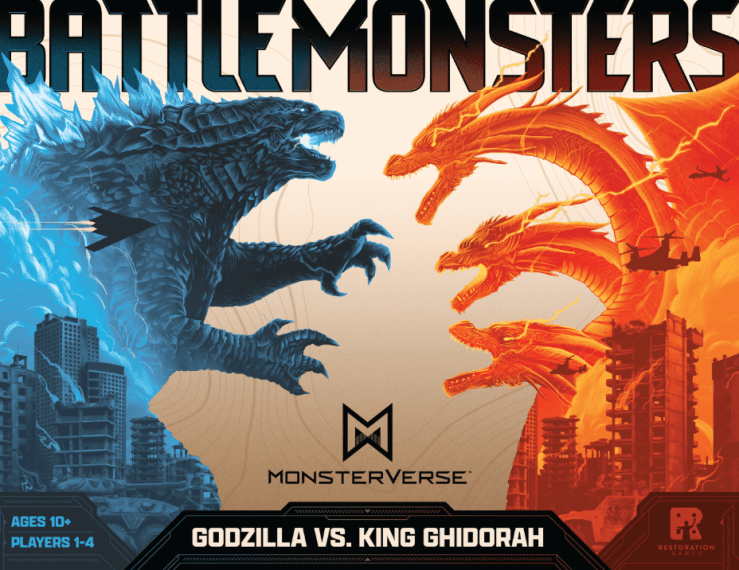
Strategic kaiju battles await with Restoration Games’ Battle Monsters. This title reimplements 1992’s Battle Masters, which used the Warhammer intellectual property. That makes sense. Restoration Games is known for taking old games (like Thunder Road: Vendetta and Fireball Island), occasionally retheming the game if they cannot use the license, and re-engineering old games for modern gamers. Battle Monsters looks to be another great title.

Wow! Those detailed miniatures look amazing. A lot comes in the box, no matter which box you choose. The game features quick dice-based combat. Players control a kaiju and a team of soldiers. Coordinating your forces is the key to victory. You can mix and match any titan (kaiju) and faction on any map. I also like that there’s a solo play option; that’s a great trend for the board game hobby.

The smallest pledge amount is $125, and you must choose between the Godzilla and Kong boxes. The Big Bundle runs $299, and gamers receive Godzilla, Kong, and the Mothra expansion. The Mega Bundle costs $379, but backers at this level receive all Battle Monsters’ content, including upgrades like specialty stands for each kaiju miniature. If you’re interested in getting your kaiju on, check out Battle Monsters’ Kickstarter page.

SquareEnix Leaks Kingdom Hearts IV Screenshots

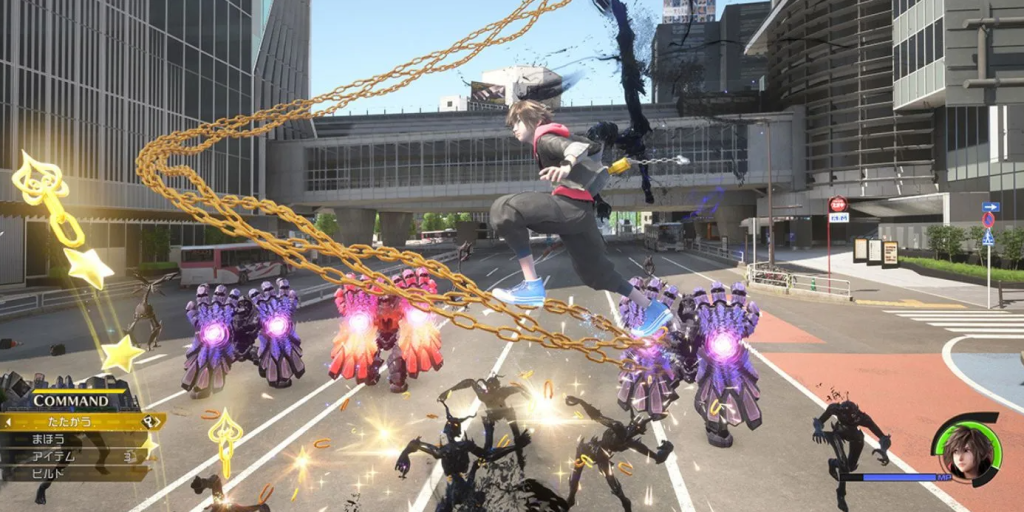
While we knew SquareEnix was working on Kingdom Hearts IV, the game released its first images. Most of the images are of low quality. We chose one of the better shots to show gamers what they could expect from SquareEnix’s upcoming title. Kingdom Hearts IV’s environment looks like a virtual Shibuya. These photos reveal little of the game’s story or other locations. We’re certain Shibuya will be one of several locations players will visit.

The above image is grainy as heck, but one thing is for certain. The player is controlling Mickey. This may be a first for the Kingdom Hearts series. Mickey is seldom a playable character. I can’t wait to see if players will get to play as the famous mouse.

That’s all the geek news we have for this week. Next week, I’ll be out of town, so Geekly News may be rather short. We’ll see when the day comes. Thank you for reading. And wherever you are, I hope you’re having a great day.

Top 5 Tabletop Games from 1993

1993 is another solid year for tabletop games. This year’s releases saw one massive title and a handful of titles for an older audience. As we dive deeper into the nineties, we’ll have a large pool of tabletop game titles with which to choose.

Hey, hey! Kyra Kyle here. Back with another Top 5 Tabletop Games. We’ll talk about the board games that this year’s list soon, but let’s recap the ground rules for which games make these lists before we start.

1: Cultural relevance plays as much of a factor as overall quality. A game might make a list that doesn’t hold up to others of its type, but you must admit the game is everywhere.

2: Only one game from a franchise makes the list. This will become more of an issue the closer we get to games with expansions.

3: Longevity plays a role, too. A game doesn’t have to fly off the shelves today, but it had to have some widespread appeal for a decent time.

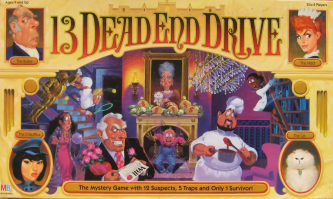
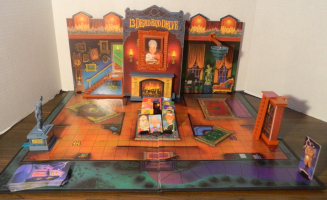
5: 13 Dead End Drive (1993)

13 Dead End Drive is the only board game on this list that could be considered a child’s game. We’re getting to the adult-themed games soon enough. 13 Dead End Drive has a murder theme. The death of a wealthy old woman triggers a feud over her will. Players use traps located on the board (the mansion), to kill characters controlled by other players to claim the estate.

Players are dealt all the “Character cards” which correspond to matching pawns on the board. Since there are 12 characters, players will control more than one character. Players don’t show which characters they were dealt. Matching “Portrait cards” determine who is the current favorite for the inheritance. The third type of cards are “Trap cards” which are used to spring traps and eliminate characters.

During each turn, a player rolls two dice and moves two pawns, one pawn for each die. It is legal for players to move a pawn that isn’t theirs, especially if the move places a pawn on a Trap space. Characters must end their turn on a Trap space by exact count, and a player must play a matching Trap card for the Trap to take effect. Players win by being the last character standing, escaping the Mansion while one’s character’s Portrait is displayed, or having the final character’s Portrait displayed when the Detective reaches the front door (at the end of 10 rounds).

Despite, the macabre premise, 13 Dead End Drive uses humor and goofy characters to make the game approachable. The game also marks an interesting twist to a murder-themed board game. While games like Clue (or Cluedo) has players trying to figure out who committed a murder, 13 Dead End Drive empowers players by committing a dozen murders.

No. Seriously, this is a game geared toward a younger audience.

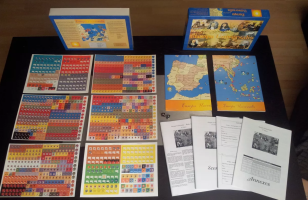
4: Europa Universalis (1993)

Europa Universalis is a monster of a board game. The official playing time listed on the game box is six hours, but the game can last for weeks. Board Game Geek estimates the playing time to be 15 days. Europa Universalis is a geopolitical strategy game set from 1492 to 1792. Players take control of European powers during this period. Each country has unique events, objectives, and special rules, for example, Russia’s military power is limited until the arrival of Peter the Great, and England has access to powerful privateers.

Europa Universalis has plenty of freedom of choice. It offers control over economics, military, maintenance (yes, you’ll have to maintain your country), discoveries, and colonial investment. But this leads to a major drawback, the game has a lot of calculation and management during the game for income, price changes, maintenance (of your regions), and the purchasing of military resources. Europa Universalis may work better as a video game. Fortunately, Swedish video game developer Paradox Development Studio (along with the help of the board game’s designer Philippe Thibaut) adapted Europa Universalis into a video game in 2000. This long-running video game challenges Civilization as the top civilization simulator.

3: Call My Bluff (Liar’s Dice) (1993)

Call My Bluff (Liar’s Dice) has an odd history. The Liar’s Dice class of games has existed since the 15th century (originally named Dudo from the Incan Empire). A variant of Liar’s Dice was published by Milton Bradley six years prior in 1987. Call My Bluff is a remake of the original Liar’s Dice, which was then in the public domain. Richard Borg earned the 1993 Spiel des Jahres (the German Board Game of the Year) for his adaptation of this classic game.

Five dice are used per player with dice cups used for concealment. In each round, every player rolls a “hand” of dice under their cup and looks at their hand while keeping it concealed from the other players. The first player begins bidding, announcing any face value and the minimum number of dice that the player believes are showing that value, under all of the cups in the game. Ones are often wild, always counting as the face of the current bid.

Turns rotate in clockwise order. Each player has two choices. They can make a higher bid or challenge the previous bid, typically with a call of “liar,” hence the name Liar’s Dice. Once a bid is challenged, all dice are revealed. If the bid is valid (at least as many of the face value and any wild aces as the player’s bid), the bidder wins. Otherwise, the challenger wins. The player who loses a round loses one of their dice. The last player with dice at the end of the game wins. Call My Bluff’s simplicity and entertainment value earned it the Spiel des Jahres. If the rules sound familiar, the video game series Red Dead Redemption includes a version of Call My Bluff.

2: We the People (1993)

We the People simulates the American Revolution. I’m sensing a simulation theme with 1993 board games. Published by Avalon Hill and designed by Mark Herman, We the People was the first wargame to use cards as the primary means of controlling the pace and tempo of play; the card play introduces a strong element of fog of war through hidden card information.

One player controls the British, while the other plays as the Continentals/Americans. The map has a web of cities and towns connected by lines along which armies can move. We the People marks one of the first times a designer used a point-to-point movement system, which has become standard with a lot of games. Tens of thousands of modern board games use a point-to-point movement system, and not just war games. The cooperative game about stopping a global pandemic, aptly named Pandemic, may be the most famous game to use a point-to-point movement similar to the one Mark Herman pioneered.

We the People has inspired other war games like Richard Borg’s Command and Colors series. Yes, this is the same Richard Borg who designed the previous game on this list Call My Bluff. But We the People may have influenced GMT Games the most. GMT has produced numerous games implementing Herman’s card-driven combat. Their games include The Napoleonic Wars, Here I Stand, Virgin Queen, and Twilight Struggle, which remains one of the highest-ranked board games on Board Game Geek.

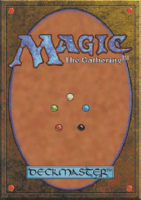
1: Magic: The Gathering (1993)

Magic: The Gathering takes the top spot. No other game that was released during 1993 could’ve taken this spot from the granddaddy of all collectible card games. Magic: The Gathering beget a flurry of collectible card games in the following decade: Pokémon, Yu-Gi-Oh!, Legend of the Five Rings, and World of Warcraft (eventually rebranded as Hearthstone) to name a few. Magic: The Gathering’s designer Richard Garfield even made a few more collectible card games to add to his tally like Netrunner, BattleTech, Vampire: The Eternal Struggle, and the original Star Wars Trading Card Game.

Not going to lie. I played most of these collectible card games at one point or another. Magic: The Gathering has stood the test of time. Sure, Pokémon and Yu-Gi-Oh! have endured, but they were released years after Magic. Magic has outlived most of the games it inspired.

The greatest testament to Magic: The Gathering topping this list is that most people read Magic: The Gathering and nodded yes. Magic is the right answer. Magic is the only answer for top tabletop game for 1993.

Did we get the list right, for the most part? Let us know which games you’d add in the comments. And wherever you are, I hope you’re having a great day.

Check out the other lists in this series:
Top 5 Tabletop Games Prior to the 1930s
Top 5 Tabletop Games of the 1930s
Top 5 Tabletop Games of the 1940s-50s
Top 5 Tabletop Games from the Early 1960s
Top 5 Tabletop Games from the Late 1960s
Top 5 Tabletop Games from the Early 1970s
Top 5 Tabletop Games from 1980-1981
Top 5 Tabletop Games from 1982-1983
Top 5 Tabletop Games from 1984-1985
Top 5 Tabletop Games from 1986-1987
Top 5 Tabletop Games from 1988-1989
Top 5 Tabletop Games from 1990-1991
Top 5 Tabletop Games from 1992

Whatcha Reading, Geekly?

We’re switching things around a little bit this month with our Whatcha Wednesday series. Today marks our second Whatcha Reading post. Hey, hey! Kyra Kyle here. The Geekly Gang may not have as many books to cover this month as we did last month (it’s only been two weeks since our last Whatcha Reading). Whatcha Reading can include novels, poetry, short stories, essays, comic books, and anything in between. As always, feel free to share what you’ve read recently. We’re all part of the Geekly Gang.

Kyra’s Reads

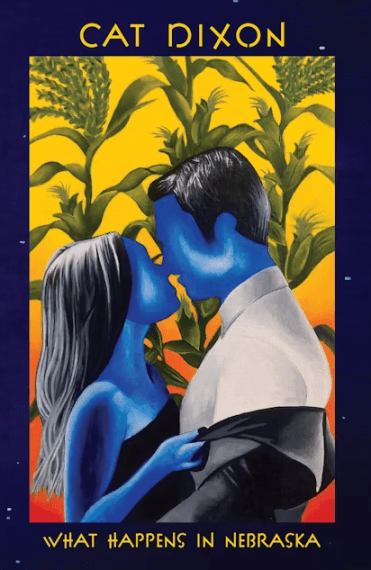
I mentioned The King in Yellow in last month’s Whatcha Reading, but I put it on hold for the moment. A new Barnes & Noble opened up, and I’ve picked up several new titles. One of my favorite aspects of Barnes & Noble is that your local store will carry books by local authors, and one of the poetry books I read last month is What Happens In Nebraska by Cat Dixon.

What Happens In Nebraska by Cat Dixon

Dixon’s What Happens In Nebraska doesn’t pull any punches. Each poem is raw, a wound that refuses to heal. But that doesn’t stop Dixon from playing with her poetry. “Keep Your Options Open” may be the first Choose Your Own Poem I’ve ever seen. It shows that a poet can explore pain while maintaining a sense of whimsy. I also love it when a writer gets specific, and I enjoyed the details in “Missed Connection.” It’s uniquely Omaha. It gives the poem authenticity and the universal theme of loss. What Happens In Nebraska has a lot of highlights; too many to list here, but I’ll share one more. “Horror Movie” begins with a new romance before it descends into the horror of a modern relationship. There’s a reason rom-coms end when the couple gets married.

Letters to a Young Poet by Rainer Maria Rilke

I also picked up Rainer Maria Rilke’s Letters to a Young Poet during my recent trip to Barnes & Noble. I haven’t yet finished Letters to a Young Poet, but what I have read makes it a great companion piece to What Happens In Nebraska. Letters to a Young Poet compiles a series of letters Rainer Maria Rilke wrote to a young officer cadet (Franz Xaver Kappus), advising him on writing, love, suffering, and the nature of advice. Rilke’s dense and poetic letters can inspire any artist.

I love Barnes & Noble’s selection of local authors, and they have a great selection of tabletop games. Super Boss Monster, which just shipped to Kickstarter backers, is already available at Barnes & Noble. Usually, tabletop games that go to Kickstarter take a handful of months to reach stores. Barnes & Noble gets many titles early. Be sure to check out your local Barnes & Noble.
Let’s see what Skye has been reading. Take it away, Skye.

Skye’s Reads

Anathema by Keri Lake

After a recent trip to the library, I found some interesting literature. Among them is Anathema. While I’m not far into it, some elements stand out. I like how the author pointed out that this was her first experience with gothic fantasy. Thank you, author, for telling us up front. Trying out new genres and getting outside our comfort zones can only lead to self-improvement.

While I have progressed too far in the novel, he author clearly knows how to start a story. The first sentence of the first chapter: “The forest hadn’t eaten in a while.” That’s one of those sentences that ignites the imagination. And it makes me want to keep reading.

Three Dark Crowns by Kendare Blake

Another suggestion from my local librarian. Thanks for the recommendation! Also, support your local library. Like Anathema, Three Dark Crowns falls firmly in the fantasy genre. Considering these stories were released after The Lord of the Rings, both have Tolkien-esque qualities. Bonus points to Three Dark Crowns for not starting off with worldbuilding that feels like homework.

What sets this story apart from Anathema is its premise. Three Dark Crowns focuses on royalty (shocker), but in the context of three princesses who are sisters. One will become queen. Only one. She’ll do so by killing her two sisters. This concept has been done before, but it immediately hooked me. From the introduction onward, tension builds. I look forward to exploring it more alongside Anathema.

Kyra Kyle again. Season doesn’t have an entry this week. She’s preparing to graduate from college. Woo hoo! I’m sure she’ll return soon. Thank you for reading, and wherever you are, I hope you’re having a great day.

Getting Into Comics: Scarlet Witch Starter Stories

Today is Miss Kyra’s birthday. I asked her which comic book character’s history she wanted Geekly to cover today, and she picked another character with a complicated past, Scarlet Witch. Yes. Today will be covering comic books for new readers of the Scarlet Witch.

Hey, hey! Kyra Kyle here. Like many X-Men characters, Scarlet Witch has played jump rope with being a villain and a hero. Wanda Maximoff has even had moments of turning into an otherworldly being. She’s been a member of the Brotherhood of Evil Mutants, the Avengers, and Defenders. Scarlet Witch blurs the line between superpowers and magic. She has the power to bend reality.

Single Issues

We’ve split this list into single issues and longer stories. Let’s begin with single issues.

The Brotherhood of Evil Mutants (Uncanny X-Men #4, written by Stan Lee/art by Jack Kirby; March 1964)

Magneto proved a worthy adversary to the X-Men when he took on the team alone (Uncanny X-Men #1). The Brotherhood of Evil Mutants marks the team of the same name’s first appearance. Toad, Mastermind, Quicksilver, and Scarlet Witch join Magneto. But the team already shows cracks.

Quicksilver and Scarlet Witch want nothing to do with the Brotherhood. Magneto coerced them into joining. He reminds them of when he rescued the twins from an angry mob. The citizens of a small European town want to kill the Scarlet Witch for burning down a barn with her mutant powers. Magneto reminds the pair that humans would continue to hunt them for their abilities, which isn’t a complete lie.

The X-Men track down the Brotherhood to a palace in Santo Marco. The X-Men’s actions reinforce Magento’s claims that humanity will hunt down mutants. Mutants are hunting down other mutants who disagree with them. A quick battle ensues. Once the X-Men enter the palace, Magneto arms a series of bombs meant to destroy the palace and Santo Marco with it. Bystanders would be killed. Scarlet Witch and Quicksilver can’t abide by this plan, so as they escape, Quicksilver disarms the remaining bombs that would’ve taken the country. The Brotherhood of Evil Mutants shows Scarlet Witch’s tenuous relationship with Magneto.

The Old Order Changeth (Avengers #16, written by Stan Lee and Jack Kirby/art by Jack Kirby, Dick Ayers, and Carl Hubbell; March 1965)

Scarlet Witch makes good on her threat of leaving Magneto’s employ. It took her one year—almost to the day—from debuting as an X-Men villain to becoming a card-carrying member of the Avengers. The Old Order Changeth does what it says. The Master of Evil (the Avengers’ main antagonist team at the time) disbanded after burying their leader Baron “Heinrich” Zemo. (Note: the current Baron Zemo is Heinrich’s son, Helmut.) Wasp, Giant-Man/Ant-Man, Iron Man, and Thor leave the Avengers. Naturally, Hulk is missing. So, Captain America is chilling at the Avengers Mansion advertising that the team needs new members.

Hawkeye and Black Widow flip sides and join the Avengers. They had been duped into helping the Russians who wanted to disrupt the Avengers. Mission accomplished, I guess. Scarlet Witch and her twin brother Quicksilver also want to redeem their past as members of the Brotherhood of Evil Mutants and join. It may not seem like much but the Avengers changing their roster in just over a year (this issue is the sixteenth of a monthly comic) shook up the Marvel landscape.

What was Scarlet Witch’s role in this comic book issue? She doesn’t have a large role. While living in Switzerland, she learns about the Avengers needing new members. She travels by cruise ship to the U.S. and auditions for a spot with Tony Stark. The Old Order Changeth marks Wanda’s first step as a hero, and the first step is often the most important.

New Faces (The West Coast Avengers #45, written by John Byrne/art John Byrne; February 1989)

We jump a couple of decades to our next single issue New Faces. Surprise! The Avengers add a new member or two. US Agent (John Walker) joins the team which causes Hawkeye and Mockingbird to depart. This storyline has many layers and is worth the read, but we’re more interested in another storyline, the one between the Scarlet Witch and her husband Vision.

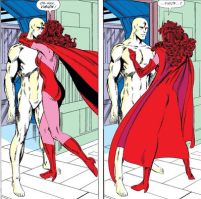
By the time of New Faces, Wanda and Vision have twin sons, Tommy and Billy. There’s a whole issue of Tommy and Billy going through a series of nannies who can’t manage to care for them. The nanny introduced in this issue, Mrs. Hunter, loses the twins in the nursery. We never see Mrs. Hunter again, so there’s a chance she got fired off-camera. The bigger issue rests with Vision. Vision needed to be reprogrammed. Unfortunately, while Vision has all the information, he lacks an emotional connection with that information. When Wanda hugs Vision, he asks her why. He no longer feels love.

Hank Pym explains that Vision misses one element, his brother Wonder Man’s brain patterns. Manipulated by Baron Zemo and then Black Talon, Wonder Man’s brain patterns had been used for Vision without his permission. Wonder Man refuses to help Vision because he had no control over his life for many years. While Wonder Man’s reason is understandable, Wanda is heartbroken when she sees the new Vision speaking monotonously, like he did when they first met. New Faces is the first time Vision wears all white. The MCU adopted a version of this costume with its current iteration of Vision.

Story Arcs

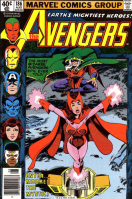
The Witch of Wundagore Mountain (The Avengers #185-187 written by Steven Grant, Mark Gruenwald, David Michelinie/art by John Byrne 1979)

The Witch of Wundagore Mountain is the first attempt at Scarlet Witch and Quicksilver’s origin story. The twins’ origin has been twisted and changed so many times, but this story marks the first real attempt at a Scarlet Witch origin. She wasn’t Magneto’s daughter. She even believed that her parents were the Whizzer (a Golden Age comic book hero with superspeed like Quicksilver) and Miss America. But the pair found that to be fiction.

A man named Django Maximoff claims to be her father, but she will soon learn that he’s her adoptive father. She was born on Mount Wundagore in the laboratory of the High Evolutionary. One of the High Evolutionary’s earliest creations, an anthropomorphic cow named Bova, cared for her. This is a bizarre story, and it takes many turns. Outside of flashbacks, Scarlet Witch becomes possessed by Chthon who, with the help of Scarlet Witch, holds the other Avengers prison.

We just scratched the surface with The Witch of Wundagore Mountain. It’s a harrowing tale.

Darker Than Scarlet (Avengers West Coast #56-57 & 60-62, written by John Byrne, Roy Thomas, and Dann Thomas/art by John Byrne and Paul Ryan; 1990)

After being a hero for most of her Marvel Comics tenure, Scarlet Witch hops over to the dark side during Darker Than Scarlet. She joins her would-be father Magneto, and at first, it seems like she isn’t the only one. The end of this storyline’s first issue shows Quicksilver joining Magento too. Toward the end of the story, we find that Quicksilver remained loyal to the Avengers, only joining his family to convince Scarlet Witch to reconsider and stop Magneto’s evil schemes.

While Scarlet Witch and Quicksilver have been on opposite sides before, Darker Than Scarlet is one of the few times that the twins have acted as enemies for a prolonged time. Typically, one of the twins would have a lapse of judgment before the other one eventually saved them, but Darker Than Scarlet shows Scarlet Witch reaching new levels of evil.

House of M #1-8 (written by Brian Michael Bendis/art by Olivier Coipel; 2005)

While Darker Than Scarlet was Scarlet Witch’s first big heel turn, House of M is her most infamous and had a profound impact on the greater Marvel Universe. Wanda becomes unhinged when she realizes that her children aren’t real. She loses control and uses her reality-altering powers, killing Vision, Hawkeye, and Scott Lang. These deaths cause the Avengers to fracture.

This new reality is unlike any other in the Marvel universe to that point. Wanda utters, “No more mutants,” which returns the world to the reality it had before, but with one significant change. Nearly all people who were mutants become normal humans. Only 198 mutants remain.

While Scarlet Witch plays a key role during House of M, Quicksilver works behind the scenes. He convinces Scarlet Witch to use her powers to reshape reality, and it is Quicksilver’s injuries at the hand of Magneto that inspire Scarlet Witch to wipe out most of mutantkind.

Avengers: Children’s Crusade #1-9 (written by Allan Heinberg/art by Jim Cheung; 2010-2012)

House of M and Avengers: Disassembled led Scarlet Witch into a dark period. Avengers: Children’s Crusade is Wanda’s first step to redemption. The story revolves around Speed and Wiccan, who believe they’re Wanda’s lost children. The Disney+ series Agatha All Along borrows aspects from Speed and Wiccan’s story here. Accompanying Speed and Wiccan is their grandfather, Magneto.

When the kids find their mother, she’s lost her memories and powers and is about to marry Victor Von Doom. When Scarlet Witch’s memories begin to return, she learns that her powers had overloaded when she worked with Doom to bring her children back from the dead. Scarlet Witch’s children redeem her. Once reunited, she seeks redemption for the chaos and destruction she had caused.

Rumors persist that Scarlet Witch may not have died during the events of Doctor Strange in the Multiverse of Madness. The MCU could reintroduce the character following the events of Agatha All Along and a subsequent series with Speed and Wiccan. If that happens, she will have a lot to atone.

Witches’ Road (Scarlet Witch #1-5 written by James Robinson/art by Vanesa Del Rey; 2016)

Witches’ Road has a simple premise: witchcraft is broken. Joined by Agatha Harkness’s spirit, Wanda travels the world to fix witchcraft. If this premise sounds familiar to MCU fans, a similar journey may be hinted at the end of Agatha All Along. Scarlet Witch had the moniker of witch but seldom associated herself with witchcraft until the events of Witches’ Road.

Thanks, Agatha All Along. Now all I hear when I say Witches’ Road is the song from the Disney+ series. Anyway. During the comic book storyline Witches’ Road, Wanda solves magical crimes and pieces witchcraft back together. She must solve the mystery of who broke magic.

I lost count of how many Scarlet Witch stories missed the cut. I added Witches’ Road at the last second or it could’ve been one more storyline. Scarlet Witch has had so many great stories. Let me know which Scarlet Witch stories you’d add to the list. Thank you for reading, and wherever you are, I hope you’re having a great day.

Geekly News: May 11 2025, World Video Game Hall of Fame Inductees

Happy Mother’s Day, Geekly Gang. We wish all the mothers out there a great day. Since today is Mother’s Day, we may go a little light on Geekly News. We may have some events we’ll have to do today.

World Video Game Hall of Fame inducts Defender, Tamagotchi, GoldenEye 007, and Quake

The World Video Game Hall of Fame inducted four games this past week. All four video games are worthy additions. Defender raised the bar on difficulty in video games. The game might be too difficult for some people; I remember avoiding Defender while in the arcade. GoldenEye 007 was one of the best multiplayer first-person shooters. I would lose even while playing Odd Job. I’m sensing a pattern with these games. I stink at them. 🤪Quake ushered in a new generation of graphics, while Tamagotchi marked the first pet simulator. This list is impressive.

But so are the video games that didn’t quite make the cut. The World Video Game Hall of Fame competition was fierce. Finalist games included Age of Empires, Angry Birds, Call of Duty 4: Modern Warfare, Frogger, Golden Tee, Harvest Moon, Mattel Football, and NBA 2K. Some of these games should enter the hall next year.

Bumfuzzled Set to Launch Early Next Week on Gamefound

We’re doing something a little different today. Bumfuzzled is a set of wooden puzzles that feature unusual piece shapes. It should launch some time next Tuesday (May 13, 2025), and I’m excited for these. The puzzles look amazing. And look at the piece shapes.

If you’re tired of the same old puzzles, give Bumfuzzled a try in a few days.

Allplay Announces Another Round of Kickstarter Games

Allplay produces a lot of great games of various shapes and sizes. I mentioned Allplay as one of the board game companies that produces stocking stuffer games. Allplay also releases waves of these games on Kickstarter, and they just announced another nine games for a future Kickstarter campaign. Nine games! Wow! Seven of these nine games will be of the small box variety (great stocking stuffers). As of writing this post, there are no details about when these games will ship, but Allplay tends to ship bundles like these within a year. We only know of four games for sure: Alibis, High Rise, Wordsy, and Piñatas.

All of these games look promising. Alibis is designed by Don’t Mess With Cthulhu’s Yusuke Sato. Sato has done a great job with social deduction in the past, and Alibis appears to be a cooperative deduction game. Interesting. Allplay is reprinting two fantastic Gil Hova designs Wordsy (which is a well-regarded word game) and High Rise (a strategic city-building game with a touch of corruption). The final game is a new design by Reiner Knizia, Piñatas. Piñatas is another trick-taking game by the board game legend. I’ve been playing a lot of Knizia’s most recent trick-taking game, Don’t LLAMA. It’s a good bet that Piñatas will be excellent.

We’re keeping today’s Geek News brief. Happy Mother’s Day again. Thank you for reading, and whether you’re a mother or not, wherever you are, I hope you’re having a great day.