Board gamers find the same game mechanisms in many games. We covered the topic of common board game mechanisms a couple of months ago and last month we addressed some underused board game mechanisms. Here are links to those previous posts (10 Common Board Game Mechanisms and 5 Underused Board Game Mechanisms). Once again, we’re headed to Board Game Geek.
Hey, hey! Kyra Kyle here. I checked the hundreds—and I mean hundreds with a capital H—of game mechanisms listed on Board Game Geek and ran quick searches to see how many games are listed on the site with each mechanism. I won’t rehash the search criteria. If you’re interested, you can check out the previous Common Board Game Mechanisms post. Even though the previous list had ten mechanisms, it had some notable omissions. I also promised to cover the worker placement mechanism in the last list, so I included it in this set of mechanisms. Let’s see which five mechanisms made the second list.
Cooperative Games
Description
Players work together in a cooperative game to achieve a common win condition or win conditions. Players all win or lose the game together.
Thoughts
More than just a mechanism, cooperative board games may be more of a game classification. Cooperative games took off in popularity with Pandemic. Some cooperative games existed before then, but there were significantly fewer. Cooperative games have exploded in the past two decades or so. I tend to teach a lot of board games, and cooperative board games tend to be easier to teach than competitive board games because all players have a common goal. I feel as if I need to overexplain a competitive game because I don’t want someone to think that I’m trying to gain a competitive advantage by omitting information. I stand to gain nothing from withholding information while teaching a cooperative board game. I also find that the table starts playing a cooperative board game sooner. It’s more acceptable to learn as we go.
Easier and faster rules explanation aside, cooperative board games can sometimes feel like players are trying to solve a complex puzzle. If puzzles don’t appeal to you, you might not care for cooperative games. Another common issue with cooperative board games is that they can lead to a dominant player. One player could become the self-appointed leader and everyone else follows along. But a lead player token that players pass each round can combat this tendency. I’ve found other variations on this idea, and they can work.
Games that use this mechanism
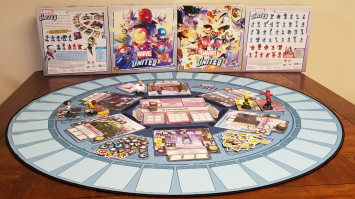
Pandemic, Spirit Island, Kingdom Death: Monster, Marvel United, and Sleeping Gods
Modular Board
Description
Games with modular boards don’t have a typical board. These games compose their boards with multiple pieces, often tiles or cards. These pieces can be randomized or reconfigured to form different scenarios (which is another popular game mechanism or classification). The malleability of the “board” can lead to different strategies, exploration, and other possibilities. Some games that use modular boards will have multiple pieces that aren’t used simultaneously, which preserves table space. Unused pieces remain out of play until they’re needed.
Thoughts
I love the variability of a modular board. As the description mentioned, these games can also use scenarios or missions that can tell a story. Or you may be able to shuffle the pieces (tiles, cards, or whatever) and form hundreds of board variations. Despite playing a game hundreds, if not thousands of times, modular boards can make the same board game feel new.
Like cooperative games, there is a downside to this mechanism. Some games that use modular boards may have specific layouts with a labeling system. This can slow down the gameplay or increase setup time while players sift through the pieces necessary to build the board. But this is a nitpick. When executed well, modular boards can add extra spice.
Games that use this mechanism
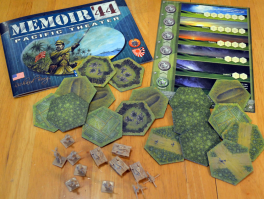
Catan, Mansions of Madness: Second Edition, Betrayal at House on the Hill,Memoir ‘44, and Gaia Project
Simultaneous Action Selection
Description
Games that use simultaneous action selection have players plan their turn secretly and simultaneously. Then, the players reveal their plans at the same time.
Thoughts
Put simply, simultaneous action selection speeds up gameplay. It may not be the first game mechanism I look for in a board game, but it’s one that I’m glad exists. Simultaneous action selection eliminates a board game’s “turns.” Everyone has a turn at the same time or at least everyone chooses what they’re going to do at the same time.
That last distinction can’t be overstated. Gloomhaven has players select their actions and a player’s initiative for the round simultaneously, but each player has a designated turn. Even with this wrinkle, it’s a player’s planning for a turn that takes the most time, so I still say that a game like Gloomhaven speeds up player turns even if players don’t execute their turns simultaneously. For the games that do allow for the simultaneous execution of turns, they can be lightning-fast.
Games that use this mechanism
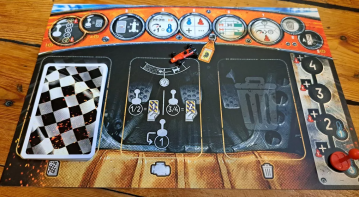
Heat: Pedal to the Metal, Orleans, Gloomhaven, The Quacks of Quedlinburg, and Sushi Go!
Take That
Description
Take That are competitive maneuvers that directly target one opponent’s progress toward victory but don’t directly eliminate any characters or components representing the opponent. Take That mechanisms can include stealing, nullifying, or force-discarding of one opponent’s resources, actions, or abilities. Take That maneuvers can lead to dramatic changes in a player’s position of power over a short period.
Thoughts
Not going to lie. As a rule, Take That is my least favorite game mechanism on this list, but I may be in the minority. Numerous games include Take That as one of their mechanisms. It got me thinking what does Take That mean? Any maneuver that can weaken one of your opponents can be considered Take That. Thousands of games include mechanisms like that. Most games with a combat element would have Take That because anything that weakens your opponent for a moment would qualify and that happens a lot in that game type.
So, I should clarify. I don’t care for games centered around the Take That game mechanism. But again, many of these games, like Munchkin or Uno, are wildly popular. But since the definition of Take That can encompass a lot of design space, Take That may have the most room to grow. Is it possible for a game focused on the Take That mechanism to not feel like people taking turns backstabbing each other? Perhaps it’s the length of a predominantly Take That game that matters. Part of why I don’t care for Munchkin is because the game can drag. After all, players are incentivized to tear down the leader, artificially extending the game’s length. I’m torn. Share your thoughts about the Take That mechanism in the comments.
Games that use this mechanism
Munchkin, Uno, Scythe, Blood Rage, and Love Letter
Worker Placement
Description
Worker Placement is a stylized form of Action Drafting where players place tokens (typically the person-shaped “meeple”) to trigger an action from a set of actions available to all players, generally one-at-a-time and in turn order. Some games achieve the same effect in reverse: the turn begins with action spaces filled by markers, which are claimed by players for some cost. Each player usually has a limited number of tokens with which to participate in the process, although these may increase as the game progresses.
There is usually * a limit on the number of times a single action may be taken. Once that limit for an action is reached, it typically either becomes more expensive to take again or can no longer be taken for the remainder of the round. As such, not all action can be taken by all players in a given round, and “action blocking” occurs. If the game is structured in rounds, then all actions are usually refreshed at the start or end of each round so that they become available again.
Thoughts
The Worker Placement mechanism had the longest and most complicated description of the bunch. I mostly used Board Game Geek’s definition. I always check BGG for mechanism definitions and put them in my own words, but I couldn’t describe Worker Placement. It’s a great mechanism but a difficult one to put into words. And where I placed the asterisk (*) is a point of contention. The use of the word “usually” in this context can be controversial. Many players will claim that a worker placement game doesn’t need to place limits on the number of times an action can be taken during a round and dislike the inclusion of “action blocking” in the definition. Others swear that “action blocking” is a defining element of worker placement.
And that might be one downside to the Worker Placement mechanism: hate drafting. Some players will choose an action, not because it helps them, but so they can block an action for an opponent. This is why the inclusion of “action blocking” is controversial.
Typically, I enjoy games that include the Worker Placement mechanism. I was surprised that this mechanism fell short of the original list. Worker Placement games are popular but not as prevalent as one might expect. There’s a tactile joy about managing your workers. Tension builds whenever the board fills up and worrying if you’ll be able to choose the action you want for a round. That would be a positive mark for “limits to the number of times a single action may be taken.”
The Worker Placement mechanism may be the most difficult mechanism to convey than any other game mechanism on this list, but the idea of managing your resources, workers, and time makes games that use this mechanism special, especially when the mechanism is used well. In short, bring on more Worker Placement.
Games that use this mechanism
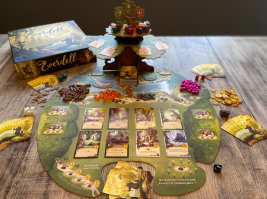
Everdell, A Feast for Odin, Dune: Imperium, Lords of Waterdeep, and Stone Age
Closing Thoughts
This mechanism grouping had more of a mixed bag. I may need to challenge my ideas on Take That. I enjoyed using a wider lens to look at board games. I hope you found something useful in the post. Feel free to share your thoughts on any of these game mechanisms and let us know which game mechanisms you’d like for us to discuss in a future post. Thank you for reading, and wherever you are, I hope you’re having a great day.
Happy Wednesday, Geekly Gang! For this week’s Whatcha series, our writers will share which books they’ve been reading over the past month. Yes. It’s Whatcha Reading, Geekly? for July 2025. Wait. I checked with Season and Skye, and they don’t have any selections for this month. Uh oh! Looks like I’m flying solo this week. I’m sure our other writers will have plenty to share in August. Let’s get to our list.
Kyra’s Non-Fiction Books
Beyond the Gender Binary is a reread for me this past month, but I’m still counting it as a book I read. I attended Alok Vaid-Menon’s Omaha show (June 24, 2025) during their Hairy Situation Tour, and they signed my well-worn copy of Beyond the Gender Binary. Yay! This book is a short read, like a really short read, at about 50 pages. Beyond the Gender Binary is small enough to fit inside your pocket; this is the hook of every book within the Pocket Change Collective.
Alok fills the pages of this book with a new perspective on the gender binary and what lies beyond it. Beyond the Gender Binary is a hug for anyone questioning their gender identity. Their personal stories speak to me. I’ve loaned my copy of Beyond the Gender Binary to many people who wanted to learn more about individuals who identify as non-binary, gender queer, and/or gender fluid. I may need to purchase a second copy after Alok signed my current copy of Beyond the Gender Binary. No book–no matter how big or small–can capture every aspect of gender non-conforming people, but despite its small size, Beyond the Gender Binary serves as a fantastic introduction.
I love the Pocket Change Collective. I’ve read at least half of the books pictured above, and I may have to hunt for the ones I have yet to read. I highly recommend this book series. It’s easy to read in one sitting, and each one in the series may broaden your perspective.
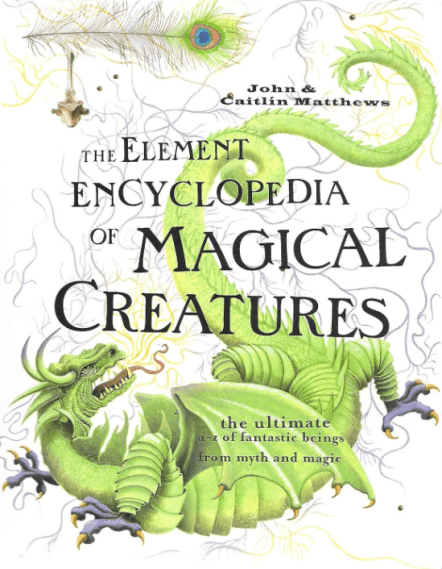
Speaking of broadening one’s perspective, I’ve been reading The Element Encyclopedia of Magical Creatures, making note of mythical creatures that interest me and ones I’d like to research further. I like the magical creatures that haven’t been done to death (in fantasy stories), and love the ones from cultures I know less about. What started as research on fantasy creatures has morphed into a cultural study. What’s not to love?
Kyra’s Poetry
A writer’s history shouldn’t factor into their work, but Arthur Rimbaud may be one of the few exceptions. He rose to prominence quickly. Illuminations, Rimbaud’s poetry collection I read this past month, was his last major poetic work, written when he was twenty years old. After he finished–or rather abandoned–this poetry collection, Rimbaud traveled the world, taking odd jobs, and never wrote again. Over the years, Rimbaud deserted his Dutch military post in Java (Indonesia) and sneaked back to France, ultimately spending the majority of his remaining days in Ethiopia. He died at 37 of bone cancer. Illuminations was published in 1886 without Rimbaud’s knowledge. The publishers referred to him as the late, great Rimbaud, even though he hadn’t yet died.
Illuminations has inspired many artists (Jim Morrison of The Doors, Bob Dylan, and Patty Smith, to name a few) as well as artistic movements like Dadaism and Surrealism. We don’t know which order these dozens of prose poems are supposed to have gone in because Rimbaud had abandoned the project before their publication. The poems range in topic. They’re a window into Rimbaud’s struggles to find steady employment in the United Kingdom and later Germany, while living with Paul Verlaine. The couple often fought. Their breakup may have prompted Rimbaud to travel the world.
As a result of these influences, Illuminations mingles gorgeous images with dread and the unknown. Check out this paragraph from “Mystical”: The flowery sweetness of stars and sky and the rest descends opposite the embankment, like a basket, against our face, and creates the flowering and blue abyss down there.
Illuminations will follow up an awe-inspiring pastoral scene with a garotte around your neck. It’s a mind-bending, singular work of poetry deserving of its cult-like following. Illuminations is one of those poetry collections you could read and reread dozens of times and find something new and exciting. I read the John Ashbery translation (pictured above this segment). It stays faithful to the original text and even provides the original French beside its English translation.
Kyra’s Fiction Books
Eric Raglin is yet another queer author to make my reading list this past month. It’s like June was Pride month or something. Kidding aside, I had to include a local (Nebraska) writer in this month’s mix. Raglin’s Nightmare Yearnings is a phenomenal horror short story collection with only a few hints of queerness thrown in for good measure, and I love the variety in this collection. While each story is bizarre and tackles some darker truth of the human condition, the stories serve as a horror anthology like The Twilight Zone or Black Mirror.
I love how “Under the Roof, Upon the Horns” explores toxic masculinity. This story boils down to a son attempting to please his father and shows how men are the only ones who care how masculine other men behave. Masculinity is a trap. Resist! Nightmare Yearnings also includes goofy stories like “Top 5 Ghosts Caught on Camera” to prevent it from getting too preachy. But one of my favorite stories in this collection is “My Better Half.” It’s a body horror short story where a woman splits her bisexual man lover into two halves: the gay and the straight side. The gay half ends up in the closet. Ugh! This is such a good story, and it speaks to me as someone who’s pansexual. I could discuss more of Nightmare Yearnings’ offerings–there are plenty of fantastic stories in this collection–but I’ll leave the rest for you to discover.
Nightmare Yearnings includes author notes. These notes provide a little insight into what Eric Raglin was thinking while writing each short story. This is also a great way to pick and choose stories. It’s a preview of what to expect or a little peek behind the veil after you’ve read a story. I wish more short story collections included author notes by the author.
That’s all I have for this month’s Whatcha Reading. What did you read this past month? Let us know in the comments. Thank you for reading, and wherever you are, I hope you’re having a great day.
The DCU launches later this week with James Gunn’s Superman. We’re getting prepared by ranking all the Superman movies up to this point. Hey, hey! Kyra Kyle here, Geekly Gang. As you’ll find out, I haven’t watched some of these movies in years, if not decades.
Many of these Superman movies are “products of their time.” That happens when a film was released in the ’70s and you’re watching it almost half a century later. We’ll have some exclusions on this list. We won’t include 1997’s Steel or 1984’s Supergirl because those were offshoots, not mainline Superman movies. We also won’t include team-up movies like 2016’s Batman v Superman or 2021’s Justice League; we’ll just cover the solo Superman films. Besides, Jim and I discussed our thoughts on Batman v Superman when it first released. Wow! That was a long time ago.
Let’s rank all the Superman movies, starting with sixth place and counting down to number one.
6) Man of Steel (2013)
From a technical standpoint, Man of Steel may be the most polished Superman movie (Superman Returns may have something to say about that), but that’s expected from the most recent Superman solo movie. And a sound Superman movie from a technical standpoint doesn’t necessarily make a great or even good Superman movie. But I’m getting ahead of myself. Let’s talk about the good elements within Man of Steel.
Man of Steel puts much time and effort into building up Krypton. Perhaps this is why we received a Krypton television series that no one wanted and few watched. Zod is fleshed out in this version of Superman more than he will be in our next entry, Superman II. Man of Steel gives more of a reason why Krypton has fallen into disrepair. That’s good.
In principle, I also like the idea of Superman needing to hone his skills and Ma Kent giving him the guidance he needs. I even like how the fight scenes incorporate the ground more than most recent superhero films. More on this point in Superman II. Can you tell I’m running out of steam for nice things to say? I could be missing a point or two, but let’s rip off the band-aid.
Man of Steel is the most disappointing Superman movie. It easily takes our sixth spot because it’s not a Superman movie. To be clear, I don’t blame Henry Cavill or any other cast member for this assessment. They did what they could with the material. Man of Steel has problems at the story and direction level.
Man of Steel hammered home Superman’s trauma. They do so at the narrative structure. Non-linear stories are the hallmark of a trauma story (like the Sweet Here After), so much so that writers will refer to non-linear storytelling as the trauma storytelling method. Superman seldom lends himself to trauma. Sure, he has issues he must overcome, but the level Man of Steel stoops to is worthy of Batman. Not every superhero is Batman. Superman is nothing like Batman. Supes has issues, yes. He doesn’t necessarily have trauma. Certainly not the deep-seated trauma Man of Steel presents. I half expected Superman to turn into Martian Manhunter. That person has trauma.
Man of Steel also ushered in the reluctant and darker version of heroes in the DCEU. The DCEU did this so much that the reluctant hero went from being a trope to a cliche. There isn’t much difference between a trope and a cliche, except that tropes can often be done well and cliches usually can’t. Man of Steel set the DCEU on a collision course with failure. Superman isn’t a reluctant hero. Wonder Woman usually isn’t a reluctant hero. Batman going over the edge–actually makes sense–but from a character standpoint, little else in the DCEU made sense.
I know I said that Zod and Krypton were fleshed out well in Man of Steel. That’s both a good and bad thing. Man of Steel relies too much on Krypton and builds it up so much that it neglects Kal-El’s relationship with Earth. Outside of Martha Kent, Superman has no connection with Earthlings. This was the worst possible move. I blame writer David S. Goyer. He turns everyone, including Leonardo da Vinci (Da Vinci’s Demons, which I don’t suggest watching), into Batman. Again, Superman is nothing like Batman.
I’ll end with Man of Steel’s wanton destruction. Many people have mentioned this before, but I’ll add my two cents. Superman doesn’t even attempt to draw Zod and the others to an unpopulated location. Superman does exactly that during his fight with Zod in Superman II. Why didn’t you do your homework, Davey? While it’s true Zod may have taken the battle back to a city or town, Superman should’ve attempted to draw fire away from humans. But this is a Superman who has no connection with Earth or humans. Man of Steel’s Superman isn’t really Superman.
Man of Steel would’ve claimed our fourth spot because it’s the fourth best movie of this bunch, but it’s not a Superman movie. They never call him Superman. Perhaps this is a movie about Skibidiman.
5) Superman IV: The Quest for Peace (1987)
I’ll try to stay positive at first while discussing every Superman movie, but Superman IV: The Quest for Peace makes that difficult. But not impossible. With an hour and a half runtime, Superman IV: The Quest for Peace is the shortest Superman film by at least thirty minutes. If another movie is eighty percent as bad as Superman IV: The Quest for Peace and runs thirty minutes to an hour longer, does that make the other movie worse? That’s a real debate for the next film on this list. Superman IV: The Quest for Peace is self-aware enough to know it should waste as little of a viewer’s time as it can, and I’ll say the movie’s pacing is good. Not great, but good.
There’s even a hint at a good story in Superman IV: The Quest for Peace. The Kryptonian judges, whom Superman asks for advice about ridding the world of all its nuclear weapons, warn him against Earth putting all their faith in one man, even if that man is Kal-El. Lex Luthor espouses this logic numerous times in the comics. I wonder if a version of Superman IV: The Quest for Peace’s script includes Lex worrying that Superman is too powerful. Instead, Superman IV leans heavily into “the threat of nuclear war is good for business.” While that’s a good motivation for Lex, he’d most likely spin that underlying desire as Superman is overreaching by ridding the world of its most dangerous weapons. But that’s Lex saying the quiet part out loud, and Superman IV: The Quest for Peace’s creatives had some naked political agendas.
The script and direction aren’t subtle with their politics. Even the tertiary story gets in on the action. A greedy businessman, Warfield (again, subtle), takes over the Daily Planet. He commodifies the news, and in the end, he gets his comeuppance. While I agree with Lacy Warfield’s (the man’s daughter) sentiment that a newspaper’s business should be journalism, not money, the message is ham-fisted at best. This exact scenario has played out in modern reporting, but that doesn’t mean the message wasn’t cranked to the highest volume and the nob yanked.
Any scene with the kid asking Superman to rid the world of nuclear weapons gives a bad name to saccharine. It’s beyond the term. The entire nuclear weapon storyline is a product of the Eighties. Superman IV: The Quest for Peace would look a lot different in today’s climate. And that brings us back to capitalism needing the threat of war to survive. Lex Luthor becomes a stand-in for capitalism, not caring where the money comes from so long as the money flows. In short, Superman IV: The Quest for Peace is over the top with its messaging.
Before I get into the horrid action sequences, let’s discuss that awkward double-date scene with Superman, Lois, Clark Kent, and Lacy Warfield. It’s the definition of cringe. Fortunately, the scene doesn’t last long, but leads to some eye-rolling situational comedy.
Yep. Superman IV: The Quest for Peace has some of the worst special effects in superhero cinema. What’s worse is that some of the head-scratching superpowers introduced in Superman II (more on that film later) return in Superman IV. Amnesiac kisses? Check. Telekinetic vision? Double check; Superman and Nuclearman use this ability. And Superman IV adds poisonous fingernails, which age Superman for some reason, for Nuclearman. What’s worse is that Superman IV reuses old footage. Many of the fight scenes repeat, and Lex even uses his dog whistle trick from the original Superman. Yikes!
Superman IV: The Quest for Peace takes the fifth spot for all these reasons, but it’s still a Superman movie. And because of Superman IV’s brevity and pacing, I watched this movie in fewer sittings than the next film on this list.
4) Superman III (1983)
Superman IV: The Quest for Peace may be the worst movie in the Superman franchise (I don’t include Man of Steel as a Superman movie), but Superman III is disappointing. If it wasn’t for the existence of Man of Steel, Superman III would be the most disappointing Superman movie. I’ll try to say some nice things about Superman III before I list the numerous ways the movie failed.
An internal Superman struggle is a good direction for a story. Superman III introduces a synthetic Kryptonite, and the synthetic Kryptonite turns Superman evil. Not bad. It’s a little hokey that Clark Kent physically walks away from the Nega-Superman to fight himself, but this scene may have inspired Black Kryptonite (Smallville “Crusade” in 2004 and eventually the comics), which does just that. An exposed Kryptonian splits into two identities, one good and one evil. An internal Superman struggle is a solid foundation. Unfortunately, Superman II also had a hint of internal struggle, so the series was already getting repetitive.
I also liked Clark’s return to Smallville. Superman is a small-town kid at heart, and he often returns to Smallville in the comics. Heck. One of the most recent Superman stories features Lois and Clark moving to Smallville and starting a family. The Lana Lang love story felt forced, but I can see why the Superman film series wanted to shake things up from the status quo of Lois and Clark. And Lana is canonically one of Superman’s love interests, one of the few outside of Lois Lane.
Oh, what could’ve been. Here comes the disappointment. Early drafts of Superman III’s script included Bizarro and Brainiac. While watching the final fight sequences, you can see Bizarro and Brainiac’s influence. Superman III’s second conflict centers around Richard Pryor’s character, who can somehow speak to computers (a stand-in for Brainiac), asking a billionaire to construct a killer computer (a second stand-in for Brainiac), and this supercomputer transforms a woman (Vera) into a Bizarro-like monstrosity. And the fight I mentioned prior between Superman and himself is yet another Bizarro stand-in. Just use Brainiac and Bizarro.
Not gonna lie, Robot Vera gave me nightmares as a kid. But here’s where we get into the not-so-nice points. Richard Pryor was shoehorned into this movie. Superman II leaned into slapstick and camp (more on that movie in a little while), so Superman III felt it had to market itself as a comedy. Pryor is a big name. Let’s squeeze him into Brainiac’s shoes. That’s not speculation. The studio has admitted they felt as if they “had to market Superman III” as a comedy. To his credit, Pryor wasn’t as annoying as I remembered. He can be annoying, but the script gave him little to work with, and the skiing sequence was stupid.
In general, the script stank. One could almost see what Superman III tried to do with its story (Brainiac and Bizarro) and changed course to match what they believed audiences wanted. And everything was about computers. Superman has powers, but we have computers. What powers the world? Computers. What can defeat Superman? Brainiac…I mean, computers. I cringed every time Robert Vaughn spoke about technology. He came off like Grandpa trying to explain the interwebs to the youngins, who, you know, grew up with computers. And don’t get me started on some of the graphics. I may have played the missile scene (a pixelated Superman dodges heat-seeking missiles) in an ’80s video game or two. Superman III wasn’t entirely bad, but it disappointed.
3) Superman II (1980)
I went into this rewatch of Superman movies thinking I’d put Superman II at number one, but the remaining movies on this list narrowly edge out Superman II. I’ll discuss those two movies in a moment. Before I go into Superman II’s shortcomings, let’s discuss what it gets right. Superman II does one thing modern superhero movies should adopt: gravity.
Literal gravity. Because Superman II had technical limitations, the movie’s four flying characters (Superman, General Zod, Ursa, and Nan) must occasionally land. This roots the viewer in what’s up and what’s down. It grants each blow more impact. The one I think of specifically is when Ursa mockingly calls for Superman, he turns to face her, and she throws a manhole cover into Supe’s midsection. Superman flies backwards, and while this is a dated (and comical) action sequence, it looks like it hurts. Black Panther is overall a better movie than Superman II, but the battle where Black Panther and Killmonger tumble in what looks like weightlessness doesn’t have the same impact.
I’ll add another bright spot for Superman II before listing some nits. I liked the character’s origin (and a few highlights from the previous movie) being recapped during the opening credits. I forgot Superman II did this. The MCU would be easier to keep up with if it did something similar. This wouldn’t work all the time, but I wouldn’t mind a refresher to cut down on MCU homework, and studios can stop force-feeding us character origins. Consider sliding an origin story into the movie’s opening credits.
Okay. We’ve reached the nitpicks. While Superman: The Movie has hints of comedy, Superman II includes actual slapstick comedy moments (Otis during the prison break). It isn’t too distracting, but these moments show what the movie franchise would become. Superman II leans more into camp. Again, the movie is still good, but this also shows the franchise’s direction. And then there are the powers. What is going on with these odd one-off superpowers? Superman: The Movie had Kal-El reverse the Earth’s rotation to turn back time. This is odd, but it makes Bizarro-World sense. Superman II says, Hold my beer.
Odd powers include: Saran wrap Superman logo, General Zod (and company) using telekinesis vision, a pod (ray) that turns Kryptonians into humans (which got switched off-camera into shielding a Kryptonian), and Superman having amnesic kisses. Most of these powers are very convenient for the plot, which is rather thin.
At its core, Superman II is a love story between Lois and Clark. I like this idea. Unfortunately, Superman II’s execution of this story was as clumsy as a Clark aw, shucks moment. Pair this with some other baffling choices (like why did Clark have to walk back to the Fortress of Solitude instead of bumming a ride from Lois? I didn’t understand this when I was a child and still don’t), and Superman II doesn’t shine quite as bright as our next two entries.
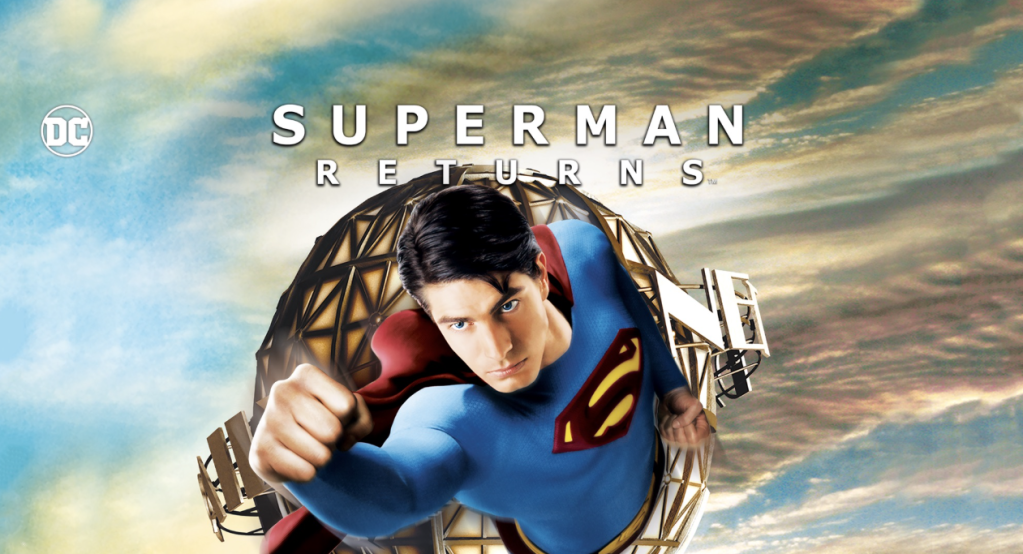
2) Superman Returns (2006)
I wasn’t expecting Superman Returns to be this watchable. I had to get over the cringe of seeing Kevin Spacey’s name (and watching him on-screen), but the man does a brilliant job as Lex Luthor. His performance is close enough to Gene Hackman’s while deviating until he made the character his own. The remaining cast followed suit, except for Frank Langella’s Perry White. Langella blends a hard-nosed, hard-working journalist with an editor who wants to sell numerous copies of the Daily Planet. Langella’s performance is a perfect marriage of Warfield (who took over the Planet in Superman IV) and the original Perry White. I’m impressed with Superman Returns’ acting and direction.
Even though Superman Returns’ runtime is the longest of all six movies ranked, it has good pacing. Were there a few moments that dragged a hair too long? Sure. But every Superman movie has those moments; Superman Returns may have the fewest of these moments. But many of the movie’s cool moments or story beats look and feel familiar. That’s because we’ve seen them in Superman: The Movie. This is why Superman Returns doesn’t take the top spot. Unlike Star Wars: The Force Awakens did with Star Wars: A New Hope, Superman Returns doesn’t lift all of Superman: The Movie’s story threads. The movie makes enough alterations.
But here are the similarities I found. Lex wants beachfront property and will murder millions of Americans to get it; he just switches coasts and the means. Lex’s woman accomplice grows a conscience and foils his plans at the last moment. Lex uses Kryptonite again, which didn’t happen as much as one might think in previous Superman movies, but it did in Superman: The Movie. These are major story beats and almost all of them came from the original, but Superman Returns, like the movie’s actors and their portrayals, it does take enough liberties to make the movie feel fresh.
I’ve waited long enough to mention the one plot point most people hated in Superman Returns: Lois and Clark’s son. The passage of time has softened my response to this storyline, but this doesn’t bother me. I can’t remember if Lois and Clark’s child bothered me in 2006. Recently, the two had a child in the comics. I mentioned this series in the Superman III write-up above, but I’ll reiterate it here. The story where Lois and Clark have a child and set roots in Smallville is one of the better Superman runs of the past decade to decade and a half. Had Superman Returns been released after this comic book run, more fans could’ve bought into Superman having a biological son with Lois. Regardless, I didn’t mind this story. It wasn’t handled the best–I would’ve tweaked a few things like Clark knowing he had a son–but it wasn’t a deal breaker.
But I do have a gripe that almost was a deal breaker. When is Superman Returns supposed to be set? Superman Returns takes place between ten and fifteen years after Superman II, so that would make the movie’s timeframe 1990 to 1995. Why does everyone have cellphones? Didn’t that happen in the early 2000s? Cellphones and other advanced technology may be the biggest head-scratchers, but Superman Returns holds a lot of anachronisms. The movie doesn’t know when it wants to be set. Still, Superman Returns is a good watch. Just turn off the switch in your brain that asks what time this is and allow the shock of Lois and Clark having a kid together to wane. Years later, Superman Returns is a surprisingly watchable movie.
1) Superman: The Movie (1978)
Yes! We have the original Superman (1978). I haven’t watched Superman: The Movie in years, decades perhaps. I forgot how the movie opens. A kid leafing through an issue of the Daily Planet is quaint. It made me smile. I got the vibe of a storybook mixed with the iconic newspaper where Clark and Lois work. The same can be said of the opening theme.
John Williams’ soundtracks always put me in a great mood. And then we’re treated to Jor-El (Superman’s birth father, portrayed by Marlon Brando) sentencing General Zod and his cronies to the Phantom Zone. Surprisingly, Superman: The Movie had the foresight to introduce the potential villain of its sequel. That didn’t happen often before the 2000s. In that sense, Superman: The Movie was ahead of its time.
Unlike Pa Kent’s death scene in Man of Steel, John Kent’s death of a heart attack in Superman: The Movie makes sense. Despite all Superman’s powers, he can’t save everyone, not even the ones closest to him. Pa Kent’s death scene in Superman: The Movie humanizes Clark Kent; it reminds him of the fragility of human life. I also like that Pa Kent’s death doesn’t serve to set up Kal-El as a reluctant hero like it did in Man of Steel. I hope 2025’s Superman abandons the reluctant superhero cliche.
I won’t go into a blow-by-blow for the remainder of Superman: The Movie. I was just shocked by how little I remembered from the movie’s opening and how groundbreaking some of these scenes were. Superman: The Movie may have flaws and be a product of its time, but it legitimized superhero movies. Oddly, it took over a decade for another major superhero film (Batman 1989) other than a Superman movie to grace the silver screen. No. I don’t count 1984’s Supergirl; unfortunately, it was a cash grab on the Superman movie franchise. I’m looking forward to a better Supergirl film.
Superman: The Movie takes a while to get going. Most of its early runtime revolves around Superman’s origin, but the movie does a great job telling this story. Movies like Superman 1978 do such a great job of showing a superhero’s origin that including an origin for well-known characters in modern superhero movies is a turnoff. I may like Superman II’s action more, but it does venture more into camp, and Superman Returns borrows more than a little of Superman: The Movie’s sugar to claim this top spot. Sometimes the original is the best.
That’s our list. How would you rate the previous Superman movies before this year’s film releases? Let us know in the comments. I can’t wait for Superman to release later this week. Except for Man of Steel, I had fun rewatching these movies. Yes. I even enjoyed rewatching Superman IV: The Quest for Peace. RIP, Christopher Reeve, Gene Hackman, and Margot Kidder. Thank you for reading, and wherever you are, I hope you’re having a great day.
Happy Sunday, Geekly Gang! Kyra Kyle here with another week of geek news. This week is a little quiet due to the United States Holiday, the Fourth of July, and the upcoming DCU and MCU movies: Superman and Fantastic Four: First Steps, respectively. So, we don’t have any major news to report. Instead, let’s discuss some board game releases for the upcoming week.
Mafia Blitz Launches on KickStarter
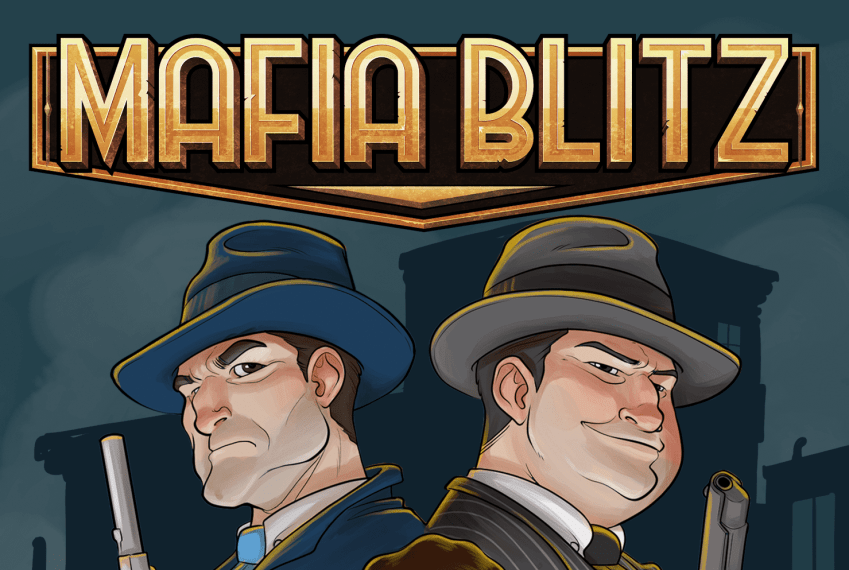
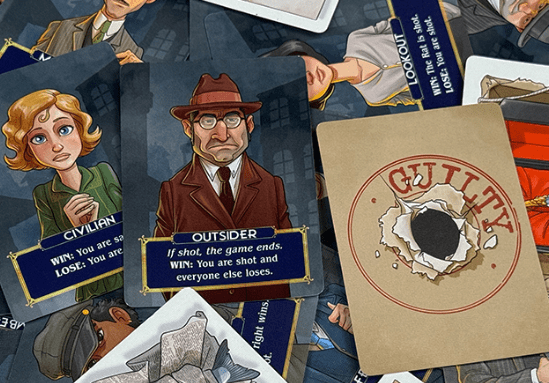
Honestly, I’ve never cared for social deduction games, but fast-paced social deduction games that don’t include player elimination (like One Night: Ultimate Werewolf), I can get behind. That is the premise of Mafia Blitz. Mafia pioneered the social deduction game. Mafia Blitz, designed by frequent Meeple Mountain contributor Mark Iradian, aims to do the same for quick social deduction games. Each role has unique win conditions, with many roles having overlapping win conditions. There are even some roles that include end-game triggers.
I like Mafia Blitz’s approach of having one price point: $20. Too often, crowdfunding projects include multiple add-ons, which can lead to a different gaming experience from one copy of the same game to the next. Mafia Blitz doesn’t have that issue. If you’re interested in Mafia Blitz, check out their KickStarter page.
Paradise: A Wastepunk Boardgame Launches on GameFound
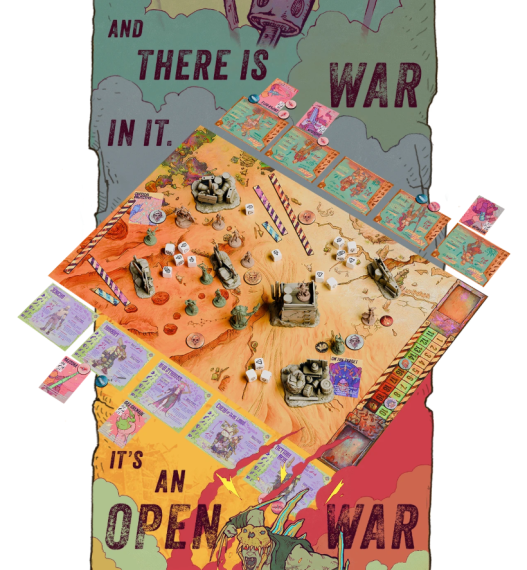
Paradise: A Wastepunk Boardgame is another board game type I don’t typically care for (a skirmisher combat game), but it’s another one that has me intrigued. Its setup reminds me of a Memoir ’44 that has character abilities. Coincidentally, Memoir ’44 is one of the few skirmisher games I enjoy.
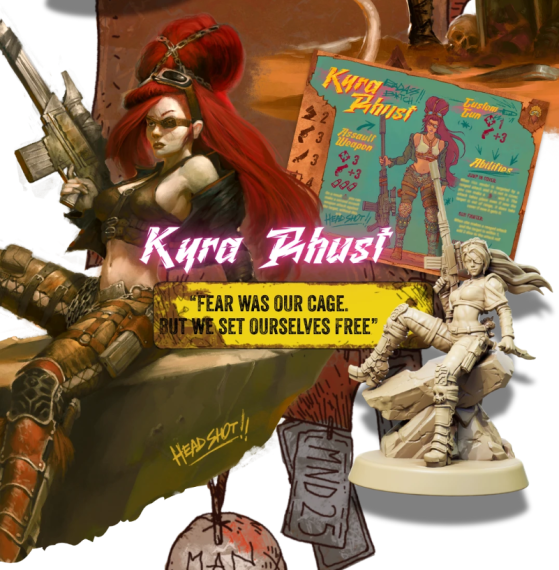
Throw in some quick dice combat, what appears to be gear cards, and detailed terrain pieces, and Paradise: A Wastepunk Boardgame has my attention. I also love the colorful palette Mindwork Games uses. Paradise: A Wastepunk Boardgame is Italian board game design studio Mindwork Games’ first design. They give me strong early CMON vibes. Both companies began as purveyors of awesome miniatures. That fact should let you know the level of detail this game’s miniatures will have. I wonder what the quality difference is between the PVC and resin miniatures. The resin minis are more expensive, and resin minis tend to break more easily than PVC minis. It’s something to consider.
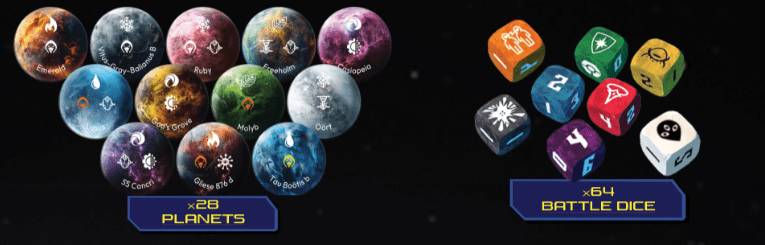
Far Far Out looks fantastic. The Netherlands-based game design group Studio Inifinitus offers multiple ways to win in this Civilization-like board game. The system tiles look amazing. These system tiles interlock and contain planets.
Players then place planets on top of the system tiles. I’m unsure if the planets always spawn on specific systems or if it differs each game. My guess is that players can change up which systems a planet can be placed. Far Far Out is stunning.
The game lists three ways to win. Far Far Out’s inclusion of 64 battle dice–64!–suggests that one method for victory is military/combat, but Far Far Out insists these battle dice serve multiple purposes. Far Far Out features a lot of exploration. I like that in a game set in outer space. We don’t know too much about the game’s mechanisms, but they have us intrigued.
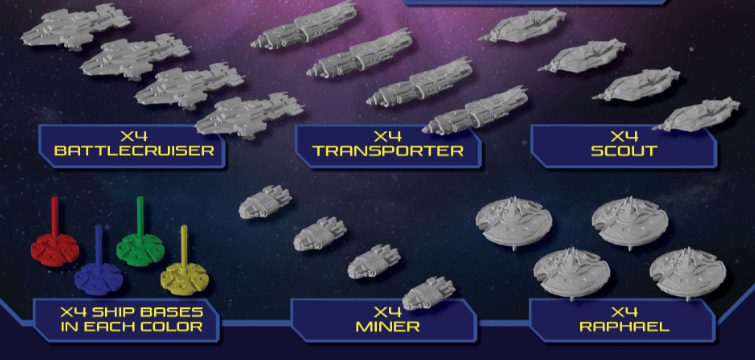
Far Far Out’s more expensive pledge (around $175) includes intricate miniatures, while its less expensive pledge (around $117) includes detailed standees. The only difference I’ve found between the two versions is the unpainted miniatures (pictured above), but Far Far Out leaves the description of its more expensive pledge as “all deluxe content.” The campaign could add more deluxe content, so keep an eye out. The price tag is a bit high because Far Far Out includes a lot of bits. This is a premium game with a premium price. If you’re interested in Far Far Out, zoom to its GameFound page.
Rest in Peace, Jim Shooter
Former Marvel Comics Editor-In-Chief and comic book visionary Jim Shooter passed away on June 30, 2025. Shooter has a complicated comic book history. On one hand, he “rescued” the comic book industry. By the mid-1970s to early 1980s, comic books had gone stale. A 13-year-old Shooter would get his start with DC Comics and proceed to pull comic books out of its slump. During his time as Marvel Comics Editor-In-Chief, Shooter orchestrated the massive crossover event, Secret Wars, which is the major event the MCU is currently building toward. But Shooter wasn’t without his share of controversy.
Shooter’s Marvel Comics was openly homophobic, refusing to feature queer stories. Writer/artist John Byrne was forced to conceal Northstar’s sexual orientation for years before the character became the first openly gay comic book character. Instead of letting Northstar out of the closet, Shooter penned the first comic book that featured a queer storyline: two gay men attempt to r*pe Bruce Banner and this caused Banner to transform into The Hulk. Shooter had a “Don’t Say Gay” Policy with Marvel Comics. This restriction prevented positive queer representation in Marvel Comics for over a decade.
Still, Jim Shooter (during his teen years) wrote the first race between Superman and The Flash. This race between titans has become a tradition for DC Comics, and he solidified much of the Legion of Super-Heroes lore during his early tenure. Shooter even created one of my favorite Superman villains, Parasite. And Shooter’s jump to Marvel Comics ended the revolving door of editors after Stan Lee had transitioned to Marvel Films. Shooter was the editor who oversaw the growth of Chris Claremont and John Byrne’s classic run of The Uncanny X-Men, which led to the team becoming a global phenomenon. The Uncanny X-Men also saw the inclusion of many BIPOC stories.
Shooter has an impressive comic book history and a checkered past with queer inclusion. His contributions to comic books, and especially Marvel Comics, will not be forgotten. As a member of the LGBT community, I wish Shooter had done more for LGBT inclusion in Marvel comics. Even so, my thoughts go out to Shooter’s family. Rest in Peace.
That’s all the geek news we have for this week. Thank you for reading, and wherever you are, I hope you’re having a great day.
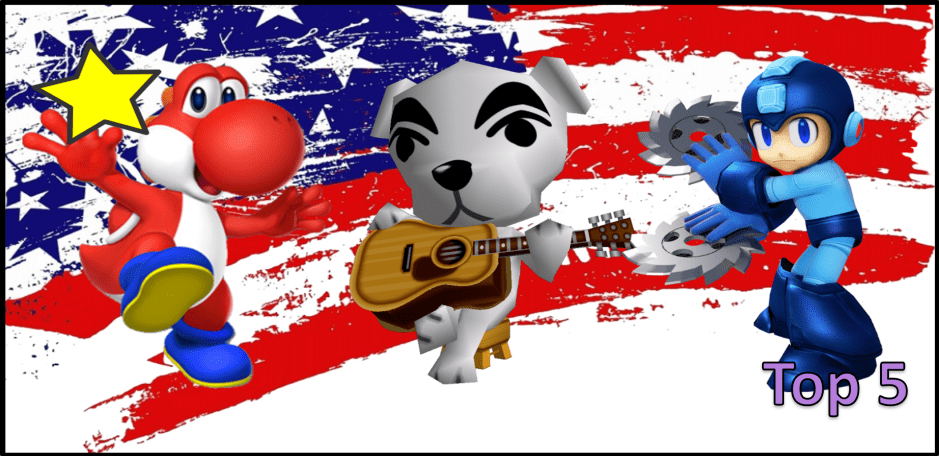
U-S-A! U-S-A! U-S-A! The United States of America celebrated its Independence Day yesterday, so we’re celebrating belatedly by listing our picks of the top 5 video game characters that use a red, white, and blue color palette.
Hey, hey! Kyra Kyle here. We’re doing something a little different with today’s Top 5. It’s no longer the United States’ Independence Day, but who are we kidding? Someone will be lighting fireworks tonight. We can set off a few of our own with these top 5 red, white, and blue video game characters.
5) King Dedede
Video game designers may have ulterior motives when selecting their characters’ color palettes. Nintendo certainly did with King Dedede when they introduced him to the Kirby franchise. Visually, he combines Santa Claus’s outfit, a bald eagle’s beak, and John Henry’s hammer. Personality-wise, King Dedede is a glutton, selfish, and hostile toward the color pink. In short, he’s all American.
Take that, you pesky amoeba. King Dedede won’t be the only video game villain who wears red, white, and blue. ‘Murica!
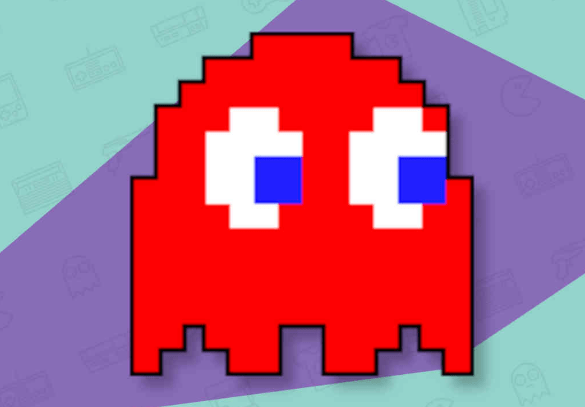
4) Blinky (a.k.a. Shadow)
Blinky (from 1980’s Pac-Man) may not be the first character you think of when discussing red, white, and blue video game characters, but he is classic. Shadow is the leader of the team of ghosts (they’re actually monsters) who chase Pac-Man. While Pinky (Pink) and Inky (Cyan) attempt to ambush Pac-Man by taking routes the player doesn’t choose, Blinky chases our protagonist and applies pressure.
Shadow is the most aggressive of all the ghosts (monsters) and the most dangerous. When players get caught, they’re usually caught by Blinky. He has true American vigor. He races to chop down Pac-Man like George Washington chopped down a cherry tree.
3) Dr. Wily
Wow! Are there any video game heroes who use a red, white, and blue color scheme? Yes. They’re next on our list, but we have one final video game villain before we reach them: Mega Man’s Dr. Wily. Before Dark Souls, Dr. Wily pushed gamers to “get gud.” I don’t know how many times I attempted a Mega Man level, only to leave my palms sweaty after countless hours. Thank you for making me a better gamer, Dr. Wily. I salute you.
Dr. Wily also happens to have an advanced degree, adding to a long line of PhDs with nefarious plans. You’d think universities would weed out these bad eggs before they graduate. Oh well. If Wily’s university had expelled him, we may not have gotten a killer robot dragon in Mega Man II.
2) Sonic
Sonic is Sega’s mascot. Ever since the speedy hedgehog raced onto game consoles in 1991, he’s worn red and white shoes, white gloves, and he has blue fur. Very patriotic of you, Sonic. Sonic is ubiquitous with Sega. He’s the first character–and possibly only character–one would think of with Sega Games.
It also doesn’t hurt that Americans are an impatient bunch. Sonic’s speed gets you those rings now. Not later. Now! Hot dogs, muscle cars, and Sonic the Hedgehog. Is there anything more American?
1) Mario
Yeah. We couldn’t go with any other video game character than Mario. You probably read this list and already knew the fictional plumber would top this list. Mario has always featured red and blue. Even in his short stint as “Jumpman” in his Donkey Kong debut (1981), he was always pictured on the video game cabinet to be wearing white gloves, even if the hardware at the time couldn’t effectively render those pixels.
You know you’re a big deal if people know you mononymously. If you utter Mario, most people will picture a plump plumber, wearing a red shirt and hat with blue overalls. Since Mario wears red, white, and blue, he tops this list. It also doesn’t hurt that Mario is often seen with stars. Talk about a Star Spangled hero.
Did we get the list right? Which red, white, and blue color palette video game characters should make this list? Let us know in the comments. Thank you for reading, and wherever you are, I hope you’re having a great day.
Happy Friday, Geekly Gang! Kyra Kyle here, and we’re going to discuss Ironheart’s final three episodes. There’s little chance that we’ll cover this subject without major spoilers, so this is your spoiler warning. Last week, Ironheart finished strong, but I wondered if it would continue this momentum during its second episode release. In short, it did.
Ironheart managed to raise the stakes with almost every scene; that’s good to see. Sacha Baron Cohen was electric as Mephisto. Unlike my thoughts from last week (I guessed Ironheart would show Mephisto ruing its fifth episode), Ironheart held off showing Mephisto until its final episode. That’s a fantastic choice. This kept Mephisto from being watered down over two episodes. The MCU has been building toward Mephisto for a while. (Yes, there will be some minor MCU homework, but Ironheart does a good job revisiting Dormammu and the events of the first Doctor Strange.) The show ends on a cliffhanger. It looks as if Mephisto wins. That’s an intriguing ending for what would’ve been Ironheart’s first season. We’ll have to discuss Ironheart’s future at some point. Why not now?
Few Marvel shows on Disney+ have received second seasons, and that’s before considering Ironheart’s potential for underperformance. Disney+ hasn’t yet released its streaming numbers for Ironheart, but I’d imagine it didn’t do well because the show starts slow–really slow–and there’s a chance fewer viewers will give Ironheart episodes 3-6 a watch. Seriously, the last four episodes save the show. Despite leaving a lot of bread crumbs, I doubt Ironheart receives a second season. We’ll see Mephisto and Ironheart again in future MCU projects, but it’s a shame their story won’t continue through a second Ironheart season or an Ironheart special. I’d be okay with a one-shot Ironheart Disney+ special.
Getting back to Ironheart’s final three episodes, the characters grew on me. I was warming up to them during episode three, but Ironheart really did ramp up the tension and/asked interesting questions with each of its scenes. Of course, there were the ubiquitous battles. Ironheart wouldn’t be a Marvel project without the fights growing in intensity. But Ironheart did enough groundwork to make Riri’s showdown against The Hood’s gang, Zeke Stane, and The Hood meaningful. Each of these factions (and yes, The Hood’s gang and The Hood) has different goals and desires, and I like how Ironheart pitted these characters’ motivations against each other.
Even Mephisto’s goals differ from The Hood’s. Did I mention Sacha Baron Cohen is amazing as Mephisto? I have? Well, I’d watch Ironheart just for his performance, but Ironheart had plenty of amazing acting performances. I don’t want to list them all here. Few, if any, Ironheart characters fell flat, but I’ll take this moment to give a shout-out to the surprise Doctor Strange (from the comics) character Zelma Stanton.
Regan Aliyah’s adorkable Zelma Stanton does a great job of tying Ironheart into Doctor Strange and Wandavision/Agatha: All Along. I like how Marvel digs deep into its comic book lore in odd but meaningful ways. Ironheart wouldn’t work without Zelma. Kudos for including her. I have one small gripe. The now iconic scene of Mephisto tempting Riri Williams is a little on the nose (from a writing perspective), but Cohen’s gravitas is outstanding, and I don’t care if I’ve heard a similar version of the devil.
So, is Ironheart worth your time? I’d consider skipping the first two episodes and watching the episode recap for episode three. I’d definitely skip Ironheart’s first episode; it’s a slog. I’m concerned about how the MCU will continue the stories introduced in this show, so I’d have to give Ironheart an incomplete. It ends with a compelling cliffhanger, but there’s little chance we’ll get a satisfying payoff. Please, give us an Ironheart Disney+ special. Beyond those early hiccups, Ironheart was a fun watch. It even manages to set up a solid foundation for future MCU stories.
Ironheart’s future is up in the air. I wish I could tell you that all the great story threads introduced in this show will get a satisfying resolution, but only time will tell. Honestly, Riri’s reunion with Natalia and showing signs of Mephisto taint gave me a smile. Not since Thanos have we seen a Marvel villain succeed, and Sacha Baron Cohen’s Mephisto can serve as a fantastic MCU villain.
Happy Wednesday, Geekly Gang! The Geekly writers have another month of video games and board games to discuss, but we’d like to hear about the games you’ve been playing, too. Whatcha been playing, Geekly Gang?
Kyra’s Games
Kyra’s Video Games
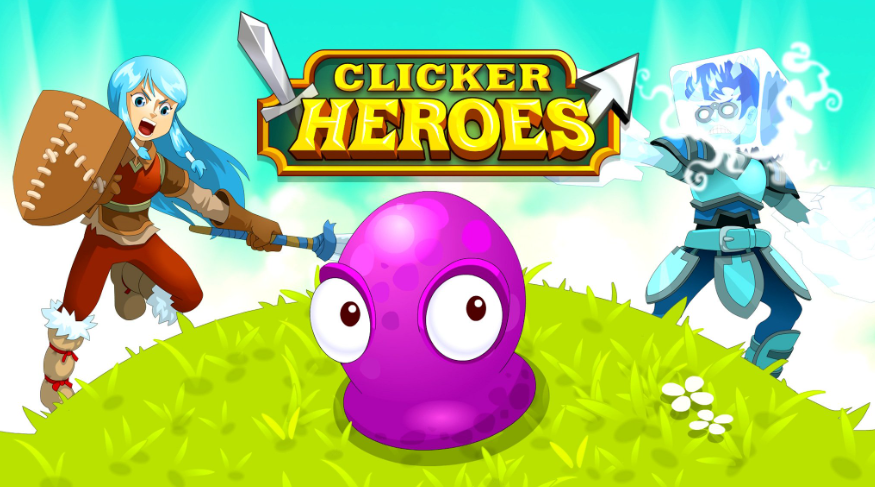
I haven’t played many new video games this past month, but I have gotten into a decade-old mobile game, Clicker Heroes. Yes, this is a hella old mobile game, but it’s new to me. The monsters remind me of the monsters from My Singing Monsters. I’m guessing that’s on purpose. Oh! I may have to redownload My Singing Monsters. Clicker Heroes is a standard idle game. The idea of the game playing itself while you’re gone isn’t new (it’s at least a ten-year-old concept at this point), but Clicker Heroes does a good job of executing the gameplay. I wonder if I can level up my heroes enough to break the game.
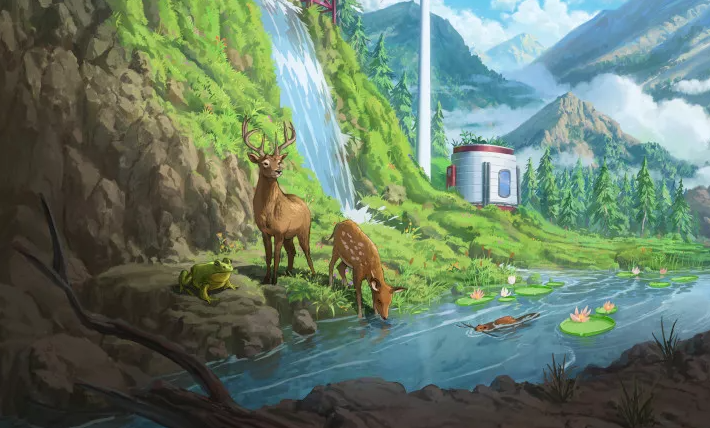
Just because I haven’t played many “new” video games doesn’t mean that haven’t been replaying games. Terra Nil and Dorfromantik have dominated my video game hours this past month. I’m writing reviews for both of these cozy games. These reviews should be posted in September. That let’s you in on how far into the future these reviews are. Terra Nil is an anti-city builder (you’re trying to reclaim the earth for wildlife), while Dorfromantik is tile tile-laying video game, where you’re building a pastoral landscape. Both are chill games. I love playing them for the vibes.
Kyra’s Board Games
My gaming group has played even more Flip 7 over the past several weeks. Flip 7 is one of those games we play as a warm-up or as a quick change of pace game. Essentially, Flip 7 is a large group game of Black Jack with specialty cards. The game’s easy to pick up, scales really well, and is a great way to bring in people who aren’t already board game enthusiasts. My Monday gaming group meets at the public library, so we get a lot of random people who walk up to the table. Flip 7 works as an introductory game. It combines just enough new elements with a classic card game.
Prior to joining my gaming group, I hadn’t played many Set Enterprises card games. But we’ve been playing Quiddler, which is a quick and fun word-building game, and Karma, where players try to empty their hands, but they have three cards face-down that they don’t know what they are until they’re played. I’m a bigger fan of Quiddler than Karma, but I appreciate what Karma’s trying to do. The face-down cards cause enough chaos that they even the playing field of a standard card-shedding game. Still, there’s a little too much luck involved (for my tastes) with the Set Enterprises card games I’ve played. But I do really like Quiddler. It’s short enough that I don’t mind the heightened aspect of luck.
I could talk about a handful of other board games, but I’m certain Season and Skye may mention them in their write-ups. I won’t swoop in with any of their entries. Speaking of which, let’s see which games Season and Skye have played over the last month.
Skye’s Games
Skye’s Board Games
I’ve heard good things about Cretaceous Rails for a while–mainly from Kyra and Season–but I haven’t played it until now. I had fun. Cretaceous Rails is a simple board game about creating a dinosaur tourist resort by time-traveling to the past. While I didn’t do so well my first time, I rarely do, I still enjoyed Cretaceous Rails enough to want to play again. Cretaceous Rails is one of those games that has several interesting elements that can only be properly explored across multiple playthroughs. I intend to “git gud.” Also, it’s trains and dinosaurs. Together at last! What’s not to love?
Skye’s Video Games
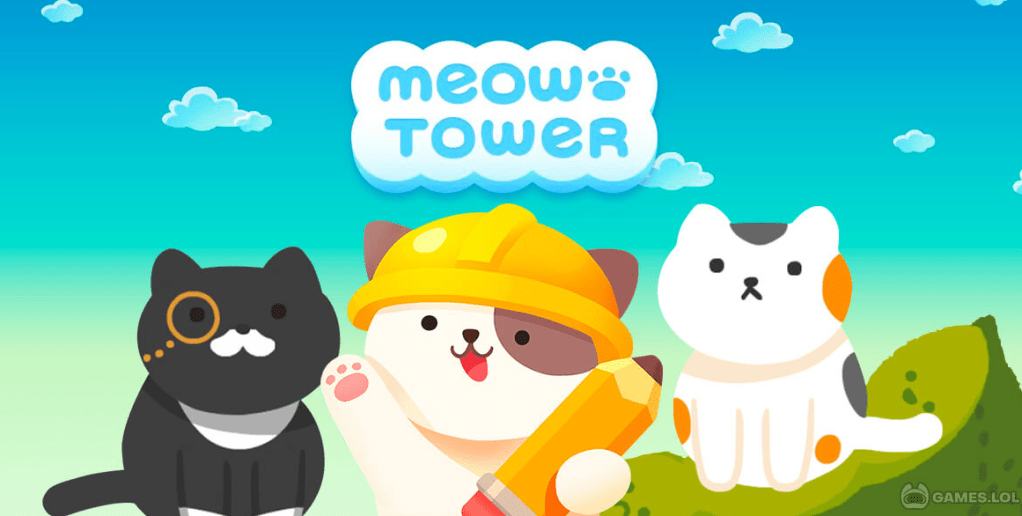
Over the past month, I’ve migrated back to mobile games. Meow Tower is one of the phone games I’ve discovered. In Meow Tower, you’re a human making an apartment building for cats. That’s pretty much it. You get to know each of the cats individually; you design each of their rooms to their liking. You progress through Meow Tower by solving puzzles, specifically Nonogram puzzles. If you’re unfamiliar, Nonograms are spatial puzzles that force you to uncover hidden images given the available clues. If you like brainteasers and cute cats, Meow Tower is a great leisure game.
Last Stronghold is another phone game. I know, I lost a good amount of gamer-cred this past month. Last Stronghold is a basic zombie survival game. What appeals to me about Last Stronghold is its focus on building up your base, exploring the world around you, saving other survivors, and shooting zombies in the face. I just described every zombie game in existence. Dang it. My favorite thing about Last Stronghold is its art style. Call me petty, but that’s pretty much it. With it being an offline phone game, Last Stronghold also has a significant element of leisure to it, which allows you to go at your own pace. Last Stronghold is by far the most benign zombie apocalypse I’ve ever seen.
Season’s Games
season’s board games
Wingspan is technically a board game, but I’ve played the Steam variant. I’m still counting it since I have physical copies of Wyrmspan and Finspan. It’s like the same thing. The interface on Wingspan is easy to follow. Players can tab between different zones, and the game will remind them in which order to take actions. It’s definitely easier to learn how to play Wingspan through the Steam version since there’s a tutorial. My only nitpick with this version is that players must remember which birds are holding eggs whenever they need to spend eggs. Players can click on the zone where said bird is, but there isn’t a separate interface.
season’s video games
I completely forgot a Persona 5 gacha game was getting released on June 26th. I got an ad for it on YouTube the other day and was like, “Oh. Yeah. I forgot that was a thing.” I’ve gotten a decent way through the story so far, and it’s definitely made me nostalgic for the original Persona 5. The combat hasn’t changed, except that it can be sped up, and they’ve included auto-battles. Some other minor differences include synergy between characters instead of confidants, and, as far as I know, there isn’t a finite amount of time to complete the story.
Persona 5 The Phantom X has players progress the story similarly to the original Persona 5. You must complete the first Palace and learn mechanics. Story-wise, it’s better than other gacha games. I wouldn’t expect anything less from a Persona game, even if it’s a free-to-play gacha game. I’m also digging the character designs. Unlike most gacha games, there are an even number of men and women characters, and they’re adequately dressed. I’m not a fan of boobs in my face. Just saying.
Side note: I pulled for Joker and got him on my first ten pulls. I’m a huge Joker simp lol.
Hey, hey, Geekly Gang! Kyra Kyle here again. Those are all the games our writers have played over the past month. Feel free to share the games you’re playing. Thank you for reading, and wherever you are, I hope you’re having a great day.
It’s the beginning of the third quarter, so we have another JK Geekly update for you. Hey, hey, Geekly Gang! Kyra Kyle here. JK Geekly has continued a once-a-day production schedule for several months now. Woo hoo! We’re keeping a couple of months ahead with most of our schedule, so by the time you’re reading this, we’re probably working on autumn/winter posts. Autumn and winter already? Is 2025 ending this quickly? Yikes!
Quizzes
We kept up with our quizzes, but we may slow production of one or two types (multiple choice and matching). Not too many people are viewing these. Instead, we have a new quiz type: Sweet Emoji. These quizzes will have a topic and a set of emojis for clues. Can you figure out what each clue means based on the emojis?
Next month (August 2025) will feature a Sweet Emoji quiz every Tuesday and Thursday. When the calendar reaches September, we’ll weave Sweet Emojis with Color Palettes, Timelines, and Multiple Choice/Matching. Multiple choice and matching won’t go away entirely; they’ll just alternate on the day one would appear. Let us know if you like this new kind of quiz.
TV Show and Movie Reviews
Geekly began posting TV show and movie reviews the day after the show or movie dropped, but we’ve found that the Friday or Saturday (or even the following Monday) after the show or movie drops is plenty of time to gather our thoughts and provide a longer breakdown of what we think. We’ll continue with this trend going forward. Let us know if you have a preference for when we release show and movie reviews or first impressions.
Whatcha Series
The Whatcha series is going strong. The Geekly Gang enjoys sharing what they’ve been doing over the past month, and you get to know us better. We’ll continue cycling through “Whatcha Playing?,” “Whatcha Watching?,” “Geekly Tunes,” and “Whatcha Reading?” every Wednesday in that order. You won’t have to wait long to see what the Geekly Gang has been getting into lately. Feel free to share what you’ve been playing, watching, listening to, and reading. We’re all part of the Geekly Gang.
Friday Potpourri Turning Into Writing/Design Diaries
Sure. We mentioned TV show and movie reviews earlier, but that’s only one type of post you may see on a Friday. Geekly has been testing the waters with memes, Geekly castings (where we fan-cast upcoming movies), and deep dives. Our first Geekly casting involved the MCU X-Men. Our first deep dive was Autism Representation in the Big Bang Theory. Let us know which of these posts you like best. We’ll continue with Geekly castings and deep dives, but they’ll be woven in with our usual Monday/Saturday posts. This will free up Fridays for writing and game design diaries.
Kyra Kyle will get even more personal with their writing and game design process. Beginning this September, they’ll alternate between the two diary types.
Quick scheduling note for this month’s deep dive. With so many releases occurring during July (the bulk of IronHeart, Superman, and Fantastic Four: First Steps), we won’t have another deep dive until August, but we’ll make up for it with a double dose of deep dives.
JK Geekly Discord Server
We haven’t seen many people join the JK Geekly Discord Server. We’re struggling to advertise it. We’ll post it here again and see if we get any new users and figure out other ways to promote the server. We’d love to see you on Discord, Geekly Gang.
Closing Thoughts
That’s all we have for now. We’ll have another one of these posts ready for October. Until then, stay safe, thank you for reading, and wherever you are, we hope you’re having a great day.
Another week and another video game review of a game I’ve played a lot. It’ll be difficult to remain objective while discussing Onirim, but I’ll do my best. Usually, I delete Solitaire from my mobile devices and replace it with Onirim. You can find me in line playing a few games of Onirim. Like I said, I play Onirim a ton.
Hey, hey! Kyra Kyle here. At its core, Onirim is a solitaire game, which is why I replace Solitaire with this title. While this video game is a fun twist on classic Solitaire, Onirim remains a solitaire game, a tabletop card game converted to an app. How will it fare with our review criteria? Let’s find out.
Mechanisms: 10/10
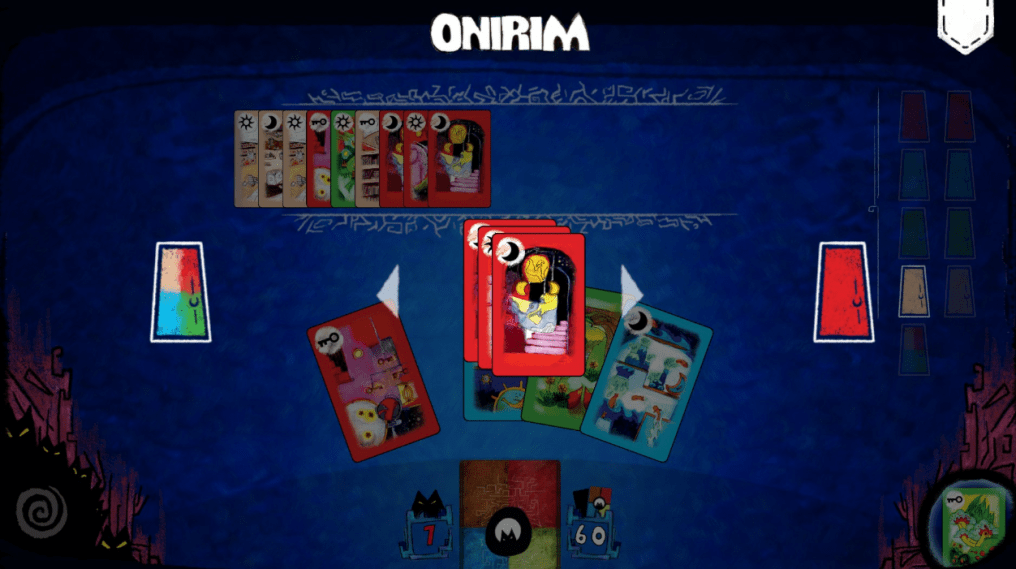
Be honest. You saw this coming. Like I said, Onirim is an interesting twist on classic solitaire. The deck has four suits, each suit has four card types, here’s where the theme comes into play. The player is traveling the dream world (hence the name Onirim, a take on oneiric) and needs to safely escape the land of dreams by opening three doors in each suit. If you draw into a suit’s door and have a matching key, you may open the door. If you don’t have a matching key when you draw a suit’s door, you draw another card and shuffle the door back into the deck. This is where the digital version of Onirim trumps the physical version: shuffling.
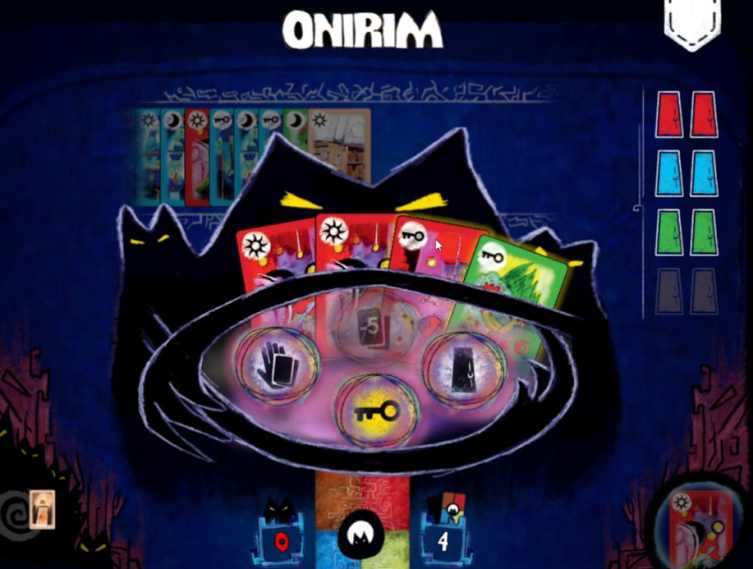
During a game of Onirim, you’ll often shuffle the deck. Nightmare cards (which don’t belong to any of the four suits) may be drawn. Bad things will happen when a nightmare appears (it’ll be up to the player what happens exactly), and if the player draws extra nightmares in a turn, any nightmares beyond the first also get shuffled back into the deck. There’s a lot of shuffling, and the digital app does all that shuffling for you. Typically, I prefer a physical tabletop game over a digital version of that same game, but Onirim enhances this already stellar game.
Since the player has choices when a nightmare card gets drawn, Onirim provides player agency and adds a layer of strategy. The remaining two card types (in the base game; there are expansions that we won’t discuss here) are suns and moon cards in all four suits. Suns are the most common card type. Moons are less common. And the rest of the game is playing three cards of the same suit but with different symbols, in the top play area. When that happens, the player searches for a door card in that suit, and then reshuffles the deck. Yes. More shuffling. I love playing the Onirim video game.
Above Image from GameDesigning.Org
Gameplay Loop: 10/10
Onirim games play fast, and each game is unique. The simple premise, the colorful twist on solitaire, and the options a player has once a nightmare card is drawn grant Onirim a high gameplay loop score. I don’t mind waiting in line while playing Onirim. And like I said, I replace Solitaire with Onirim. Obviously, this game’s gameplay loop is fantastic.
Narrative and Storytelling : 3/10
We’re combining narrative and storytelling for Onirim because Solitaire doesn’t have any story. Onirim has an intriguing premise. The nightmare cards and doors needed to escape the dream world, hint at a greater story, but I can’t give Onirim top marks in either of these categories. This is partly why I combined the two. But Onirim does just enough to not get below a three.
User Interface: 8/10
Onirim has a clean look. The play area up top is easy to see (the image above includes an expansion, so there’s a card type, the whirlpool, that I haven’t mentioned). Your hand is visible below the play area. Beneath your hand, you’ll find how many nightmare cards remain (the black demon with the red number on the left, and how many cards remain in the deck; you lose if you run out of cards before opening all twelve doors). The filled-in cards let you know which doors have been opened, and the top right corner is where you can access the main menu. Clean. Easy to read.
I lowered Onirim just a hair for the User Interface because of how difficult it can be to navigate all-time statistics. This isn’t a big deal for a lot of players, but if one becomes invested and explores that rabbit hole, one would want an easier set of menus.
Graphics: 6/10
Onirim has amazing graphics for a solitaire game. But it’s still a solitaire game. Onirim does what it can within the confines of a card game, but no matter how good the cards look, they’re still cards. That said, Onirim may be the prettiest card game I’ve seen. It has to get an above-average score.
Audio: 5/10
Onirim is another game I play with the sound off. The soundtrack is atmospheric, but kind of blends into the background. The sound effects could–and probably should–boost this score even more. But I’m going to stay as objective as I can. While the shuffling effect can be satisfying, you’ll hear it a lot, and it can also detract from the experience. There’s so much shuffling.
Replay Factor: 10/10
Since Onirim is Solitaire with a twist, you’ll find it difficult to play only one game. The app keeps track of your all-time stats, so I end up trying to beat my all-time best, and if that happens, I’ll try raising my overall win percentage or how quickly I typically beat the game. Solitaire with stats. That’s a rabbit hole. It also gives Onirim high marks in replay value.
Happy Sunday, Geekly Gang. Kyra Kyle here with another week of Geek News. I wrote this post a day or two early because my birthday is this weekend. Yay! I’m leveling up another year. But before I eat my body weight in key lime pie and beef stroganoff, we have some Geek News to cover, starting with the final Fantastic Four: First Steps trailer. I know. I know. We’ve covered every Fantastic Four trailer. Somehow, I keep missing some of the Superman trailers. I’m equally excited for both films.
Marvel Releases Fantastic Four: First Steps Final Trailer
The MCU released the final trailer for Fantastic Four: First Steps. I appreciate that we didn’t get too many new spoilers with this trailer, but that doesn’t mean there aren’t some peppered in. We may venture into spoiler territory.
The trailer begins with the Fantastic Four at the Ted Gilbert Show when an alarm on their watches sounds. The scenes before this moment give us the longest looks we’ve seen of Marvel’s first family using their powers: Mr. Fantastic stretching, Invisible Woman throwing up a force field and manipulating objects, The Human Torch flying past a Coppertone billboard of himself and setting it on fire, and a bystander wanting The Thing to say, It’s Clobbering Time.
I love the running gag of everyone trying to coax The Thing into saying, “It’s Clobbering Time.” This is a trope used in certain Fantastic Four comics, where The Thing may have said Clobbering Time once, or it was used for a television show (in First Steps, it’s a cartoon), and I can’t wait to see the payoff because, undoubtedly, he will say Clobbering Time, perhaps in the scene where Johnny carries The Thing (with a beard–look at his rock beard, that’s awesome).
A few more moments stick out. We get a better look at Shalla-Bal. I’ve talked about how I didn’t like the CGI for this Silver Surfer, and I’m glad to see an improvement with this trailer. We get an extended look at Galactus, but not a straight-on look at the titan. The Fantastic Four fly into a black hole, and it’s implied that Sue may be pregnant with Franklin at the time. Flying into a black hole while Sue is pregnant with Franklin could supercharge Franklin’s powers. Someone in the crowd by the Fantastic Four carries a sign that reads, Earth Believed In You, which implies that the Fantastic Four have already failed in some way.
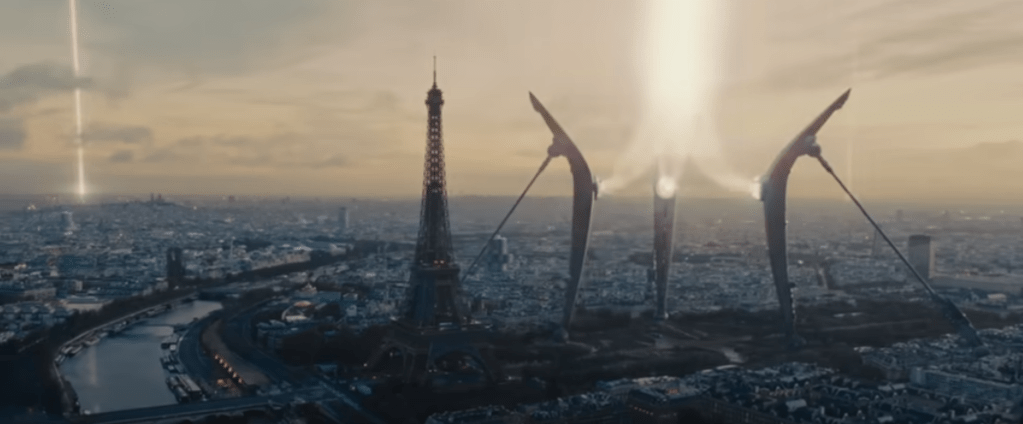
And there are those three massive devices. One is by the Eiffel Tower. I’m unsure where the other two in the distance are from Paris. Could this be what Reed was working on with his massive blackboard? We’ll have to find out. I’ll paraphrase one of the top comments on this trailer. The marketing team is doing a great job by holding back three things: 1) Galactus’s face, 2) The Thing saying, “Clobbering Time,” and 3) Johnny saying, “Flame On.” I agree. It’s best to see and hear these things when Fantastic Four: First Steps hits theaters on July 25th.
Grail Games Launches The Pixel Series on KickStarter
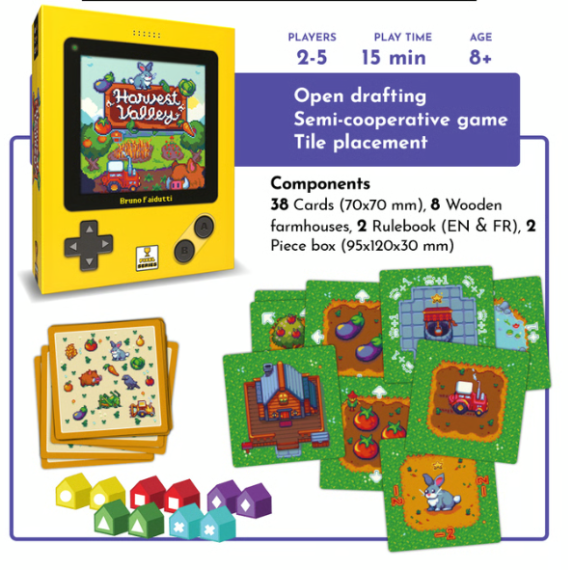
Grail Games returns with a trio of retro-art board games. Even though Aliens Attack!, Ohio Bob, and Harvest Valley use the same 8-bit art style, they couldn’t be more different in gameplay. Aliens Attack! is a tower defense game, Ohio Bob offers a fun adventure, and Harvest Valley is a farming sim. All three games are smaller, easier to store and transportable.
The Pixel Series even features some board game designing giants like Bruno Faidutti and Hisashi Hayashi. You can back this project and receive individual games for $10 or the entire set for $26.You can even throw in a fourth game in the series, Level 10, which is a reprinting of Okey Dokey.
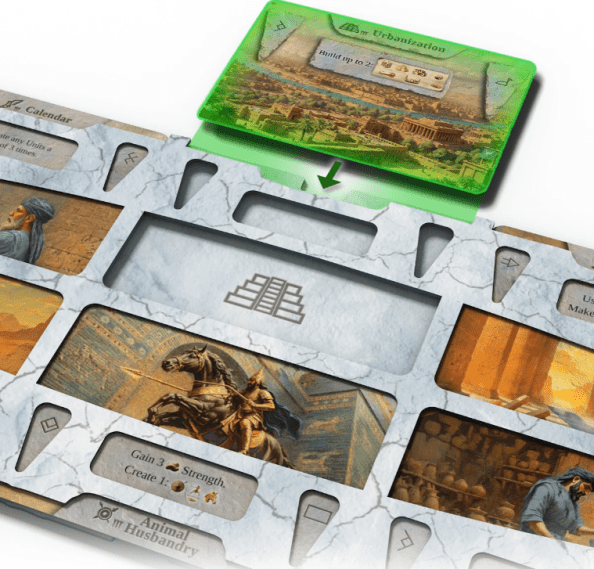
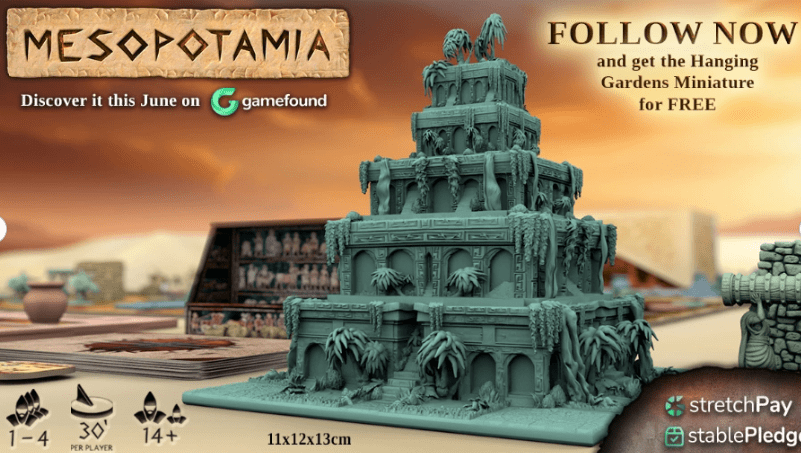
Even though it isn’t the Mesopotamian Royal Game of Ur, the board game Mesopotamia does include knucklebone game pieces, which were game pieces in the classic board game. Meeple Pug’s Mesopotamia puts players in the role of civilization leaders in this stunning 4X game (explore, expand, exploit, and exterminate). Mesopotamia foregoes a tech tree for research tiles that make each player’s civilization unique.
I love Mesopotamia’s customizable player boards. This gaming component could spark a series of games with a similar component. Mesopotamia’s gameplay encourages trading, exploration, and combat. Those knucklebone game pieces come in handy when attacking one of your opponents. Mesopotamia’s game pieces are top-notch. This is a gorgeous game, and that’s before considering the prelaunch Hanging Gardens Miniature.
That miniature looks amazing, and Mesopotamia has plenty of other detailed miniatures. I like the addition of note one, but three solo-player modes: exploration, siege, and castle defense. Mesopotamia offers a lot of gameplay options. It launches early next week, so we don’t yet know how much this campaign costs. If you’re interested in Mesopotamia, follow its GameFound page.
Modern Classic Board Game Colosseum Receives a Glow-Up on GameFound
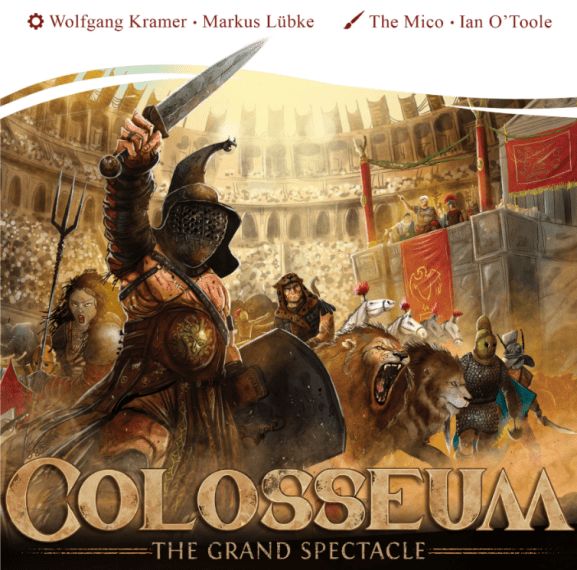
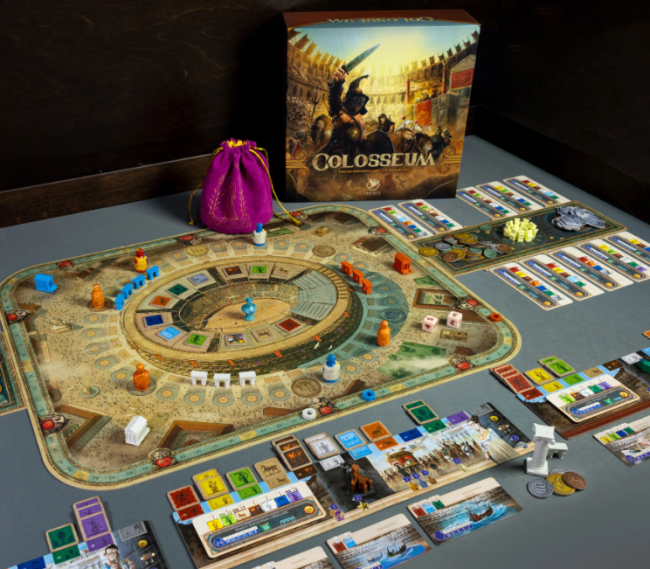
Yes! If you’ve ever been interested in the Wolfgang Kramer and Markus Lubke design Colosseum, The Grand Spectacle may be the edition to add to your collection. Ian O’Toole is one of the best board game graphic designers/artists working today, and Colosseum: The Grand Spectacle is a feast for the eyes.
I’ve always liked Colosseum’s take on the roll/spin and move game mechanism, which is often maligned and hated in the board game community. Colosseum does it right; take some of the chance out of rolling dice. I also agree with the Dice Tower’s Tom Vasel. Colosseum works at 5-players, which is rare in a game of this type.
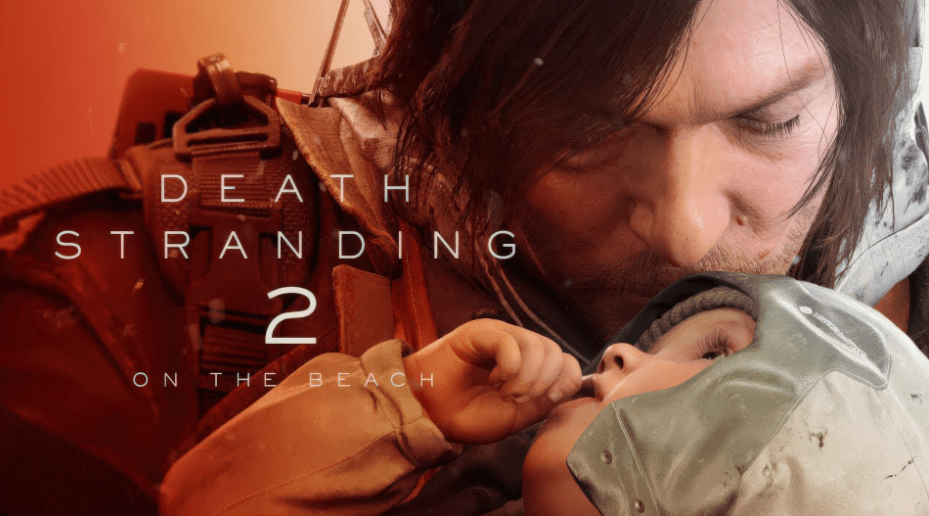
Death Stranding 2: On the Beach was released this past week and topped video game sales. In case you haven’t played the original, the first Death Stranding is on sale for most systems. Modern video games have updates during their first week, so Death Stranding 2 adding one a day after its release doesn’t raise any eyebrows. Oddly, we know nothing about this Death Stranding 2 update. The update offers no information about what it’s patching. The Death Stranding 2 team offers no clues. No one seems to know what this patch does. Hopefully, it fixes some of the game’s audio issues. Perhaps Hideo Kojima likes keeping this update a mystery.
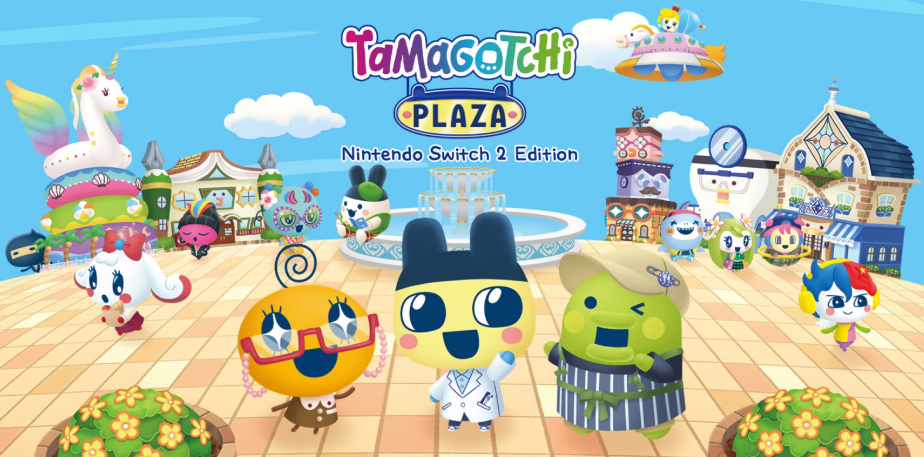
Tamagotchi Plaza Releases on the Nintendo Switch 2
Tamagotchi Plaza, a shop simulator, was released for the original Nintendo Switch and Nintendo Switch 2. It looks adorable. I have fond memories of Tamagotchi, and I’m happy if Tamagotchi Plaza popularizes the pet raising sim to a new generation of gamers. Tamagotchi Plaza looks interesting–I may check out this title at some point–but Tamagotchi Plaza continues a disturbing trend for Nintendo Switch 2. If you already own a game for the original Switch, you can play it on the Switch 2 for a small Switch 2 upgrade fee.
While the upgrade fee isn’t the same price as a full-fledged game, it comes off as a shameless cash grab. Why should I have to pay an additional $10 for The Legend of Zelda: Breath of the Wild when I already own the game? Yes. $10 isn’t that much, but if you convert each one of your original Switch titles to the Switch 2, that adds up quickly. And this practice will embolden other console producers to do the same. We already got a Horizon: Zero Dawn remaster for the PlayStation 5 when it was released on the previous console.
Tamagotchi Plaza is a new game, and players would have to buy the Switch 2 upgrade for a game they just bought if they were to pick up a Switch 2 later this year. Okay. I get it. You could play the original version of Tamagotchi Plaza, but the Switch 2 version adds new shop types. Why would you want to play the Switch version if you were to upgrade to a Switch 2 after it becomes available again? I’m concerned about this business model for the video game community. But, hey, many of us–myself included–have purchased Skyrim eleven times. How’s this any different?
That’s all we have for Geek News this week, Geekly Gang. Thank you for reading, and wherever you are, I hope you’re having a great day.



































 jkgeekly.com