Geek Out

Progress?

Kyle: Writing

It may not look it, but I write more than JK Geekly articles. I continue to work on trios of flash fictions (triplets) that are told from three different viewpoints or different manner of storytelling. I wrote two this week and edited another three. I’m even pitching a collection of these stories to various publishers. I’m expecting my rejections any day now.

I’m also gaining ground on a novel that uses a similar approach to the triplets. It’s trippy, but hopefully it’ll make sense. I’m sure Jim will let me know one way or the other after I finish modeling this clay.

Kyle: Games

Play test. Play test. Play test. I play tested a lot of the Blackjack deck builder “No Jack” and I finished a first draft of the rule book.


“Wildflowers,” a tile placement game where players make one flower the most dominant, will be off for some more blind play testing soon. Thanks in advance, Drew. A blind play test is where gamers play by reading the rule book; most early play tests have the designer teach the game to players.

Wildflowers01.jpg

“Wildflowers” is also out to a couple of agents and game companies, and we’ll see what that’ll bring. Again, I’m expecting my rejections at any time.

That’s all I have for today. We’ll be back tomorrow and the rest of the tomorrows this week with some brand-new content. Be kind to one another and stay geeky.

Scaffolding Approach to Learning Tabletop Games

Many video games do a great job of easing their players into how to play. Look left, look right. Now, walk forward. Over time, video games introduce more complicated actions until the player knows everything they need to know to play the game. I prefer to call this style of teaching games scaffolding.

The game builds larger concepts atop of smaller concepts, instructing how to play little by little. Video games have a leg up on tabletop games in this regard. Few tabletop games besides Fluxx (which starts with two rules, draw a card and play a card, and grows to multiple rules) and Krosmaster Arena (that uses a system of small missions like a video game) use a scaffolding approach. And more should. I don’t know how many minutes or hours are wasted by teaching and learning tabletop games. To be good at a tabletop game, you must know everything about it before playing.

So, it’s up to the people who introduce others to the tabletop game hobby to do what board games are incapable or unwilling to do: ease people into learning complicated mechanisms by having them play. When I teach tabletop games to people who are new to the hobby, I tend to pick simple, fast games of a gaming type and build on the principles set by those games.

Scaffolding

It’s a scaffolding approach to teaching tabletop games. It’ll also be an ongoing series for various starter board games, so keep your eyes open for starter games in the future. And have an awesome Saturday.

Next Saturday’s miscellaneous post will be a little more involved, I think. You’ll just have to complain to Jim about me until then or leave a comment with how you like to teach people new games. Dealer’s choice.

Geekly News: October 5, 2018

Another day and another new content type. We’re trying our hat at Geekly News today. Even though your uncle Geekly could scour the internet for any type of Geek News, most weeks this post type will list new releases for the coming week. We’re lucky this first week features a major movie announcement and a leak at Bethesda’s parent company ZeniMax.

ElderScrollsVI

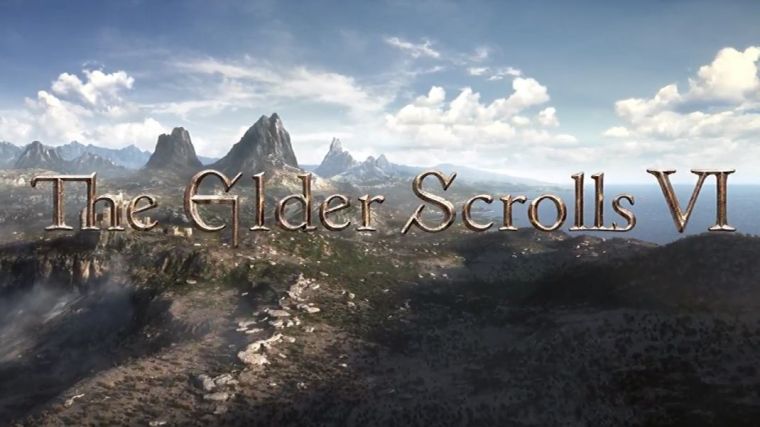
Elder Scrolls VI

People have been debating for years which Tamriel province will host the sixth entry in the Elder Scrolls main series, and ZeniMax may have given players their first concrete evidence. Sure, some internet sleuths found evidence in the short teaser trailer, but that’s more in the realm of speculation.

And this new information could be filed as that too, but there’s a more compelling argument to be made. The attorney who registered a copyright for Morrowind, Oblivion, and Skyrim years before each game’s release just registered a copyright for a single-player game set in the Elder Scrolls universe entitled Redfall.

This development suggests that Elder Scrolls VI will be set in part or entirely in Hammerfell (home of the Redguards) and will feature a questline involving Redguards.

Why not call it Hammerfell? Many Elder Scrolls games aren’t named by the province in which they occur, Morrowind and Skyrim are the exception, not the rule, they’re named based on the game’s storyline. Sure, Redfall could pertain to something other than Redguards and the contested Hammerfell/High Rock border, but it’s likely that Redguards and Hammerfell will factor into this latest installment.

There’s still no release date for Elder Scrolls VI. If your uncle Geekly were to place a bet for when Redfall will be released, he’d go with a post Playstation 5, X-Box 2 (who knows if Microsoft will stick with this naming convention, but to the best of my knowledge it’ll be X-Box 2) release.

It could also be that ZeniMax wants fans to talk about Elder Scrolls VI more. If so, mission accomplished.

Megaman Live Action Movie Announced.jpg

Mega Man Live Action Movie

Capcom has announced that its Mega Man franchise is going to get the live-action Hollywood treatment. The press release came one day after Mega Man 11’s release and the movie celebrates the franchise’s 30th anniversary.

The film is tentatively titled MEGA MAN (in all caps) and has writer/directors Henry Joost and Ariel Schulman (Catfish, Paranormal Activity 3) attached to the project. Capcom says it aims to “appeal to a diverse audience, including not only game players but action movie fans as well, with an adaptation that maintains the world of the Mega Man games, while incorporating the grand production and entertainment value that Hollywood movies are known for.”

Video game movies don’t have the best track record, but I’ll be keeping my fingers crossed with this title. It’s a safe bet that your uncle Geekly will be watching this film on opening weekend. There’s no release date set for this project as of this write-up.

And now for some new releases for the upcoming Week.

Video Games

AssassinsCreedOdyssey

Friday, October 5, 2018

Assassin’s Creed Odyssey (PS4, Xbox One, PC)

This is the latest of the Assassin’s Creed games and it’s set in ancient Greece. Be ready for a lot of “This…Is…Sparta!.”

Super Mario Party (Switch)

My family and I have had some fun with this title in the past. It blends roll, spin and move (roll dice to see how far you can go in a turn: for example, Monopoly) of tabletop games with minigames one might find in other Mario titles.

Venom-Movie-Symbiote.jpg

Movies

Venom

This one troubles me. Based on the trailers, the special effects are dated and that’s not a good thing for a comic book movie. I’m also concerned with how they pronounced symbiote.

A Star is Born

Lady Gaga (first major acting role) and Bradley Cooper (first time director) recreate this Barbara Streisand classic. I may not see this one in theaters, but I’ll probably see it when it’s out on video or streaming.

ManInTheHighCastleSeason3.jpg

TV

Friday, October 5, 2018

Big Mouth (Netflix)

I’ve heard good things about this one. It’s a raunchy cartoon series centered around puberty. I haven’t gotten around to watching it because there are a lot of raunchy cartoon series to choose from.

Into the Dark (Hulu)

This one confused me a bit. Netflix recently released a movie entitled Hold the Dark. Hulu’s Into the Dark is an American horror anthology series for those who think American Horror Story isn’t enough. I’ll give it a chance.

The Man in the High Castle (Amazon)

I’ll have to finish the second season before starting the upcoming third. The Man in the High Castle is easily one of Amazon Prime’s best series.

DoctorWho11

Sunday, October 7, 2018

Doctor Who (BBC America)

The adventures of the first female Doctor Who begins today. Yes! Bring it on.

Star Wars Resistance (Disney)

There have been several successful Star Wars cartoons. The franchise almost redeemed the prequels with all the work Star Wars animated series put in. Resistance is set in the sequel’s timeline. It’ll interesting to see how this series builds Poe Dameron’s character.

The Walking Dead (AMC)

I wonder how long people can survive in a world with zombies. The Walking Dead endeavors to answer that question with nine years and counting. This year has the distinction of Andrew Lincoln (Rick Grimes) leaving the series.

Arrowverse

Tuesday, October 9, 2018

The Flash (CW)

Ah, the Arrowverse. I might watch an episode or two just for old time’s sake. These shows are no longer appointment television for me, but it can be fun to watch certain DC comics characters grace the small screen.

Black Lightning (CW)

I never got into Black Lightning because I had all but given up on the Arrowverse by the time it was released, but Black Lightning is one of the first live-action superhero TV shows to feature an African-American protagonist (Netflix’s Luke Cage beat it by a half year), and from what I’ve seen, it doesn’t intertwine as much with the rest of the Arrowverse. I’ll probably give it a shot. Looks like I have some binging to do.

Wednesday, October 10, 2018

Riverdale (CW)

I never got into Riverdale, but I know that many folks think of it as something more than a fusion of Dawson’s Creek and Archie Comics. This may be one of those series I watch well into the show’s run.

Thursday, October 11, 2018

Supernatural (CW)

This CW standard enters its 14th season today. Talk about your long-running television shows.

That’s all we have for Geekly News this week. May the geek with you and be kind to one another.


My Favorite Game Mechanics TMNT: Shadows of the Past and Batman: Gotham City Chronicles

It might be time for a new series of articles: my favorite “fill in the blank.” We’ll talk about something in a game or show or movie or comic book that we like and dig into why we like that one thing. Good old Uncle Geekly will get things started with some board game mechanisms, or for the tabletop game newbie, the elements that make up a tabletop game. This week we’ll cover Teenage Mutant Ninja Turtles: Shadows of the Past and Batman: Gotham City Chronicles and their asymmetric one versus many game mechanism.

TMNT_ShadowsOfThePast01

Teenage Mutant Ninja Turtles: Shadows of the Past

Both of this week’s games can be classified as “one versus many,” meaning that one player plays one side of the characters (usually villains) and two or more players assume the role of the other (usually heroes).

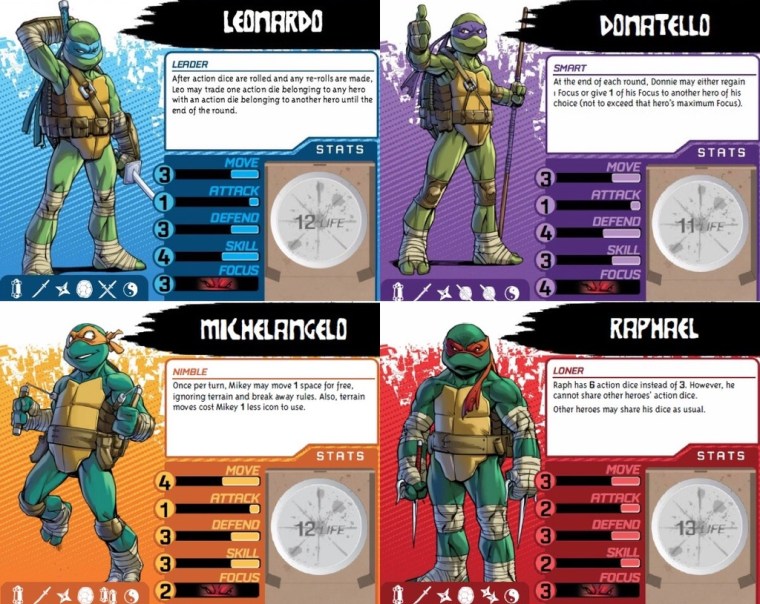
First off, I like how these games make the player who assumes the villains (the one) asymmetric to the gameplay style of the heroes (the many). TMNT: Shadows of the Past has the Turtle players rolling dice and performing actions based on what they roll, while the player who assumes The Foot Clan, Shredder, and the rest uses a deck of cards.

The individual turtles also play like their personalities and that gets to another mechanism I enjoy in Shadows of the Past: sharing dice. The turtles can share what they roll with their teammates. Dice placement makes all the difference. Each turtle player places their dice in front of them in a row and other turtles can only borrow a die that’s the closest to them. The player on your right can only borrow the die that’s the farthest on the right of the row.

Leonardo gets a bonus whenever someone borrows his dice. He’s the leader and that makes sense. Raphael gets extra dice but can’t borrow anything because he’s a loner. This is such a great touch because the players who’re playing Leo and Raph tend to sit as far away from each other as possible and those are the turtles who tend to butt heads the most.

Playing as either side can be fun, but also different, and that adds replay value. It also helps that TMNT: Shadows of the Past has a scenario system that works like playing through classic turtle stories.

Ah. It’s almost like reading the original comics.

Batman-Gotham-City-Chronicles-1

Batman: Gotham City Chronicles

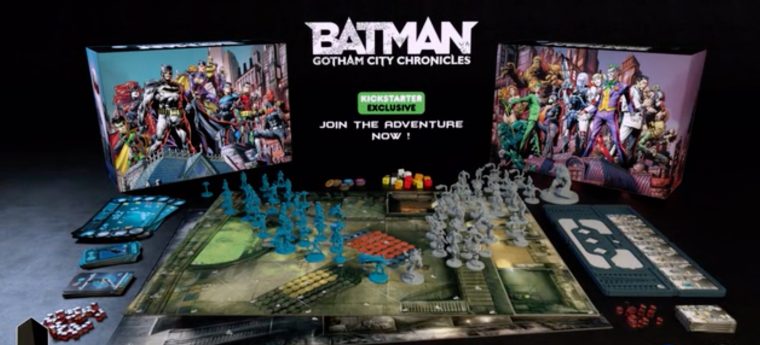
Monolith Board Games uses a similar gaming system with Batman: Gotham City Chronicles. Like TMNT: Shadows of the Past, the two sides use asymmetric gameplay, but both sides use gems that serve as their energy pool. The heroes have a set number of actions, depicted on their character cards. They use their gems to activate any of the actions they have at their disposal.

The villain (or Overlord) has a group of enemy tiles on a track that begins with smaller enemies on the left and larger ones on the right.

In a sample Batman game for instance, it’d be henchmen on the far left, Harley Quinn on the spot just left of the Joker, and of course the Joker would be on the far right.

Somewhat like the heroes, the Overlord activates their enemy tiles by using energy gems equal to the spot on the track that the enemy tile they want to activate is on. So, if you want to activate the first set of villains, pay one gem. If you want to activate the second set of villains, pay two, and so forth. As soon as a villain is activated, it goes to the end of the track (far right), and the other tiles slide one spot to the left.

This is so clever because the Overlord could activate the small fry for cheap or they could pay a little extra if the villain to the right has more strategic value. They wouldn’t spend all their gems to activate the Joker, would they? But it is the player’s choice.

But the heroes are also satisfying because they each have unique abilities based in their character’s lore—so Catwoman may be more useful than Red Robin in a game requires theft, but Red Robin is more useful in another that needs more detective work—and each scenario has very different objectives. The heroes win if they meet their objectives. The villains win if the heroes don’t.

Perhaps the best thing is that Batman GCC recreates dozens of classic Batman comic book tales. Not the movies or TV shows, the original comics. And from what I’ve seen, they may be using Capullo’s art as the basis for the miniatures. What!?

Is there anything you like about these games that we didn’t mention? Maybe you like TMNT better than Batman, and I’m too much of a Batman fanboy. You could have them challenge each other to a duel or you can let us know your thoughts in comments.

X-Men Starter Stories

Comic book movies have flooded Hollywood and that’s led to new comic book readers, but there’s too much history for a lot of these characters that newbies to the hobby can get lost. Not to worry your uncle Geekly and Big Bad Jim have you covered. We’ll make recommendations for newcomers to various aspects of geekery.

Keep in mind that these are recommendations. You can read our list and disagreeing with it. We won’t hold that against you, but we may have to challenge you to a leg wrestling match.

We’ll start this ballgame with one of the largest superhero teams in comics: The X-Men.

The X-Men have had plenty of various lineups, eras, and variants, so they prove difficult to follow, especially if you’re new to the comic books.

Over the course of its history the X-Men have grown and expanded more than any other Marvel property. Time travel, group dynamic changes, and characters losing their minds don’t help matters much.

Hi, everyone. This is good, old uncle Geekly with a group of starter stories that feature everyone’s favorite Marvel mutants the X-Men.

250px-X-Men_First_Class_01

X-Men: First Class (written by Jeff Parker/art by Roger Cruz; 2006-2007)

No. This story doesn’t mirror the movie by the same name; it’s a reimagining of the original class of students to don the uniform: Scott Summers (Cyclops), Jean Grey (Marvel Girl), Robert Drake (Iceman), Warren Worthington III (Angel), and Hank McCoy (Beast).

The X-Men can get overly convoluted. X-Men: First Class strips down the original characters to their teenage roots. It’s a light-hearted and fun series, and the one quality that puts it on this list is that the reader doesn’t need to know much about the series find enjoyment. It’s a great jumping off point.

Giant-Size X-Men

Giant-Size X-Men #1 (written by Len Wein/art by Dave Cockrum; May 1975)

This one predates Chris Claremont’s fabled run on Uncanny X-Men (1975-1991) and introduces readers to the second wave of X-Men: Storm, Colossus, Nightcrawler, and Wolverine. It opens in medias res with Professor X recruiting this new team to rescue the original X-Men, and it’s this group of mutants who defined the group for a generation. It’s also arguably the most diverse team roster, something in which the X-Men prides itself.

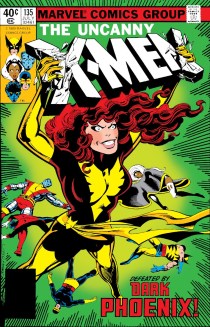
X-Men_Vol_1_135

X-Men: Dark Phoenix Saga (written by Chris Claremont and John Byrne/art by John Byrne; 1980)

This one is iconic. Jean Grey had been reborn as the Phoenix after becoming a being of pure thought. This new persona made her a target for Mastermind (of the Hellfire Club) and what follows is a long descent into madness. One could liken it to a superhero version of The Exorcist.

The Dark Phoenix Saga is required reading for anyone wanting to get into X-Men comics. Readers get a good look at the Hellfire Club, the Shi-ar, and even throws in the Kree and Skrull empires. The Dark Phoenix Saga is a who’s who of Marvel aliens.

This story was adapted for the X-Men Animated Series. X-Men: The Last Stand contained story elements, and the upcoming Dark Phoenix film should be a direct, live-action adaptation of the story that has been inducted into Columbia University’s library. Yeah, Xavier’s school isn’t the only one that views The Dark Phoenix Saga highly.

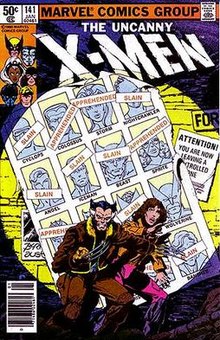
220px-X-Men_v1_141

X-Men: Days of Future Past (written by Chris Claremont and John Byrne/art by John Byrne; 1981)

This story marked the end of Claremont and Byrne’s run on the X-Men, and this is also where the X-Men’s time travel stories begin. While the series may have done time travel to death, in Days of Future Past it was refreshing, novel, and easy to follow.

The story alternates between the present year of 1980 and the future year of 2013. Wow. We’ve already lived beyond the fictional year for this story. The story’s 2013 paints a bleak existence for mutants. They’re killed one by one and must send one of their own back in time to stop the dystopia.

Kitty Pride, the one who’s chosen to go back in time, becomes a full-fledged member of the team, and this story is the first one to promote Mystique to the Brotherhood of Evil Mutants’ leader. Both characters come into their own here, so this classic is a must read.

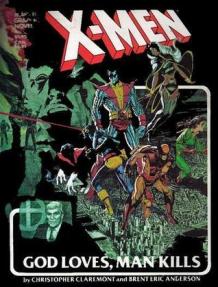
X-Men_GodLovesManKills

X-Men: God Loves, Man Kills (written by Chris Claremont/art by Brent Anderson; 1982)

So many X-fans would call God Loves, Man Kills the defining X-Men arc, and they may be right. The main antagonist doesn’t wear tights or have powers. Humanity is at war with itself.

This is a realistic portrayal of how the world may react to the dawn of mutants and how those mutants would react to that world. It’s an analogy of bigotry and small mindedness. It also showcases how tenuous allegiances can be in the series as Magneto joins forces with the X-Men to rescue Professor X, who is forced to mentally kill all mutants on Earth.

Some fans may notice elements of this story in X2: X-Men United.

X-Men_FatalAttractions

Fatal Attractions (written by Fabian Nicieza and Scott Lobdell/art by various; 1993)

It’s difficult to pick an X-story from the 1990s and beyond without listing a bunch of other stories one would have to read to get most of the references. Fatal Attractions requires very little background info. It recasts Magento as the X-Men’s chief antagonist. This crossover event also features Cable’s return to X-Force (good for Deadpool 2 fans) and one of the most desperate fights between Magneto and Professor Xavier.

There’s even an iconic battle between Wolverine and Magneto that left some fans squeamish.

That’s my list for readers new to X-Men. Did I miss any stories or include some that I shouldn’t? You could send me a message via telepathy, but I’m telepathetic. Leaving a comment would be more effective.

TV for Fall 2018

TV? I know what you’re thinking. The last iteration of JKGeekly devolved into nothing but TV posts. Don’t worry, we’ll get back to other geekery. Today we’re going to warm up  with a new type of post: 3 Lists of 3.

This particular type of post will feature three small, interrelated lists of three. I hope you like the format because I have more than this one planned for Mondays. Here are three lists of three for television that I’m sure will offend someone. I don’t care. Do your worst.

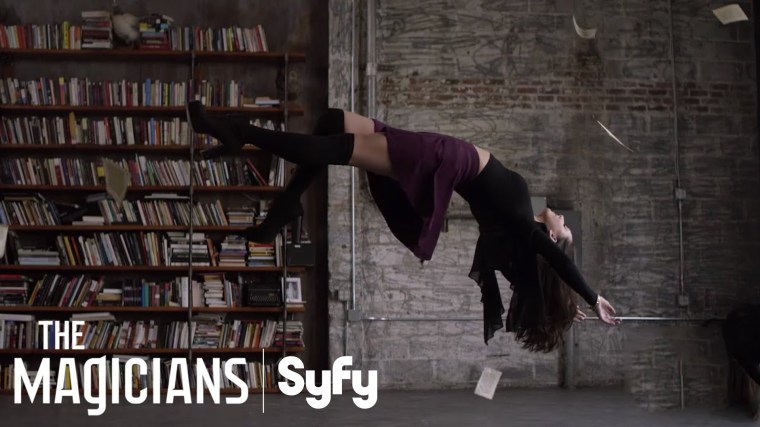
TheMagicians

Underrated or Overlooked TV Series

 The Magicians (7.5 out of 10 on imdb)

This particular list of 3 was difficult to compile. I’m starting with a series that isn’t that lowly rated, but it’s still rated a 7-point-something; it’ll be hard to find something good to say about a 6 or less. The Magicians gets a lot of gratuitous nudity and over-sexed hate that Game of Thrones gets—more on GoT in a bit—but like Game of Thrones that hate may go too far. It also gets saddled as a Harry Potter clone, and again, that’s as unfair of a comparison as GoT and Lord of the Rings. The Magicians is an interesting take on magic in a modern setting and is one of the better, binge-able SyFy shows.

BBC’s Skins (8.2 out of 10 on imdb)

Did I mention how difficult this list was to compile? The BBC version of Skins makes this list despite being rated an 8.2 because fewer people have seen it, and they should. Skins is an odd show. It centers around teenagers making their way in the world and the bizarre things that happen to them. We’re talking a musical number breaking out of nowhere and someone who suffers from anorexia getting phantom text messages to tell her to eat. I received text messages for weeks, telling me to eat more fiber. Those were some angry butt dials.

Anyway, Skins is also an odd show to watch as several of the cast regulars, who were in their late teens or early twenties at the time, have since appeared in major films and television shows.

Crazy Ex-Girlfriend (7.7 out of 10 on imdb)

Yeah, Skins may have two or three sneaky musical numbers in the series run, but Crazy Ex-Girlfriend has two or three musical numbers in each episode. It’s not for everyone. I even pause the show every once and a while because it’s getting too ridiculous. She’s singing about period sex again. Turn on the red light.

It’s also a bit of a cheat having the show on this list because the critics at Rotten Tomatoes rate it in the 90s, but Crazy Ex-Girlfriend is very good and tends to get overlooked.

It’s a CW show that satires other CW shows. At first, it subtly suggests that someone who lives their life according to romances (books, TV shows, and movies) should seek psychiatric help because life doesn’t follow a romance plot. After a while it flat out says, life isn’t a romantic comedy. It’s okay to enjoy them, but don’t expect your life to be one. There is more love in life than romantic love. You can love your family and friends. Sorry. Uncle Geekly has a long, complicated history with CW shows, so this sentiment is refreshing, but Crazy Ex-Girlfriend also does a good job at handling mental illness and behavioral problems without stigma. And some of the musical numbers are catchy and fun—even the ones about period sex.

game-of-thrones_01

Overrated TV Series

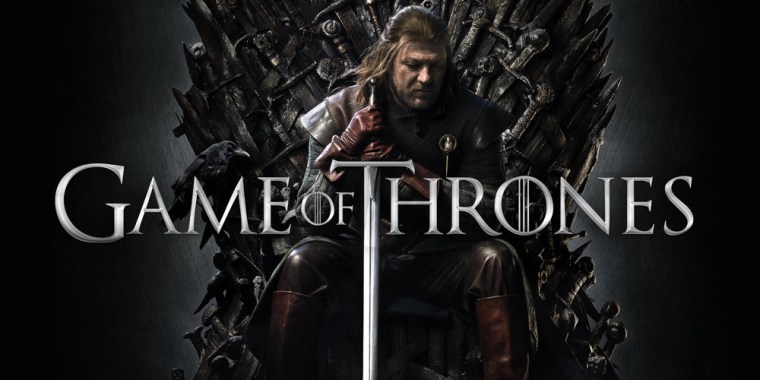
Game of Thrones (9.4 out of 10 on imdb)

I’m not saying that Game of Thrones is bad by any means, but 9.4 is a little high. As of this write-up it’s the fourth best TV show of all time according to imdb, edging out Breaking Bad. I’d place Breaking Bad ahead of Game of Thrones and there are plenty of shows further down the list that I’d happily place ahead of the gang from Westeros too. Oddly enough, some of the reasons I’d knock Game of Thrones down a few dozen spots are the same reasons George R. R. Martin believed that it wouldn’t make a good TV show: too many characters, and at times, unfocused storytelling.

Stranger Things (8.9 out of 10 on imdb)

If neuroscience is correct in saying that nostalgia provides a similar chemical brain reaction as methamphetamines, then Stranger Things is TV’s version of crystal meth. Hey, another Breaking Bad reference. Yay! There’s little else to this series than a ton of callbacks that include frame-by-frame recreations of 80s shows and movies. I like plenty of 80s properties, but if I have a hankering for 80s nostalgia, I’ll watch the originals.

House of Cards (8.8 out of 10 on imdb)

House of Cards can be fun to watch. I like seeing how the various traps are set and schemes come to fruition, but the show gets a little too ridiculous at times. Perhaps even random musical number ridiculous. One needs to suspend disbelief to an absurd measure with this title. While I’m okay doing that for the occasional fantasy or science fiction story, it’s a little difficult to do so for shows that are supposed to be more grounded.

It also doesn’t help that Kevin Spacey’s recent sex scandal and subsequent firing from the show make House of Cards difficult to watch.

chilling-adventures-sabrina

Intriguing Upcoming TV Series

The Romanoffs (October 12, 2018)

The Romanoffs is the first TV show from the creator of Mad Men since Mad Men ended in 2015. It also features a great cast of Diane Lane, Aaron Eckhart, and Paul Reiser and centers around various people who believe they’re descendant of the Russian royal family. This could get trippy, and I look forward to watching the Amazon original.

The Chilling Adventures of Sabrina (October 26, 2018)

The reboot of the campy teen series Sabrina the Teenage Witch airs just before Halloween and The Chilling Adventures of Sabrina pits a young witch against the forces of evil that threaten her family and the world. Mad Men star Kiernan Shipka stars as Sabrina, and the reboot shows plenty of promise. But if there’s no talking cat, I might reconsider.

Homecoming (November 2, 2018)

I may need to listen to the hit Gimlet Media podcast of the same name, but the excellent cast (Julia Roberts, Sissy Spacek, and Dermot Mulroney to name a few) and Mr. Robot creator Sam pique my interest.

Are there any shows we missed with our lists? Which shows do you think are overrated or underrated? Which shows do you look forward to this upcoming season? Let us know in the comments.

A New Beginning

New design? Check. New content design? Check. Looks like the site’s ready for launch. Here goes nothing.

Hi.

It’s been a little while since Jim and I updated the site, so I guess this is the first of the new blogs. Sorry it’s not better, but we’ve been a little busy washing our non-existent hair.

Okay. I’m just jealous of the hair Jim has; he’s still holding on to some tufts. I’m the one rocking the Patrick Stewart or Vladimir Putin. I hear bald can be sexy, but that may be a lie someone fed me to make me feel better about my scalp eating its own follicles.

As you can tell—or not tell—we have a new look and new types of content. Don’t worry. We’ll still talk about all things Geekly, but we’re steering away from straight up reviews—for the most part—for something marginally different.

We may take deeper looks at some things with articles like “My favorite ‘fill-in-the-blank’” and “Unpopular Opinions,” take a quick overview of certain topics with “3 Lists of 3,” and introduce newcomers of various Geekly hobbies with “For Starters.” Heck, we might even throw in some Geekly News at the end of the week. Who knows? We’ll throw things on the wall and see what slithers onto the floor.

But we’ll get to those articles throughout the coming days and weeks.

Geekly’s Free Video Game Summer: September 18, 2016


One more week after this one, where did the summer go? Hi, guys, it’s me, Kyle. I’ll get to the games in a bit, but I wanted to remind everyone that I’ll be taking a breather after next week before posting new free video game reviews in the autumn. Jim and I will be ramping up our TV show coverage, and I may need a few weeks to get prepared. Here’s another Geekly Free Video Game Summer post; I wanted to merge tabletop games with video games, so this week’s post will be free video games based on tabletop games.

pokemontcgonline

Pokemon: Trading Card Game (TCG) Online

Pokemon: TCG Online does a great job of transferring the game from the table to your mobile device. That can be a good and bad thing. There have been countless releases of Pokemon: TCG in the past two decades and Pokemon: TCG Online has samples from many of those releases, which leads to unbalanced power with the decks players construct, especially when you challenge opponents online. Of course you could play block format (only the sets released in the past year) but you’re still subject to opponents who have been collecting cards a lot long than you. When you’re first starting out, you will lose—a lot.

The game also includes legacy (last several years) and unlimited (any card from any Pokemon release) and you’re likelihood of winning a game diminishes with each group of cards you add to the card pool, but you could play with that awesome Wobbufett—if you have that awesome Wobbufett, that is. The gameplay is the classic Pokemon: TCG gameplay.

Players summon Pokemon with one as their main Pokemon and up to five on their bench, should the main Pokemon get defeated. Pokemon need energy cards attached to them to perform their abilities so energy cards are the second most common, and the rest of a deck consists of trainer or support cards that do various things to support the Pokemon on your team. At the beginning of each match, both players draw ten cards from their deck and place them face down, which make up their rewards, and the first player to earn all ten of their reward cards wins.

Okay. Most of you probably didn’t need the gameplay refresher, but it is addictive—as most Pokemon products tend to be. I didn’t mind the trip down memory lane with Pokemon TCG Online. It’s a solid TCG and if you have any interest in Pokemon, I recommend it; you also don’t have to keep binders of cards: space saving idea.

neuroshimahexapp

Neuroshima Hex!

I covered the tabletop game Neuroshima Hex over a year ago (here’s a link) and not much is different with the app version, except that the app makes the game easier to play and more accessible, and that’s always a good thing. Players take command of a faction and the game is played 19 honeycomb grid. Instead of cards, players use hexagonal tiles to denote their forces. Each player starts the game with their headquarters tile with 20 hit points. Players win if they are the first player to lower their opponent’s HQ to zero hit points or if the tile draw pile is exhausted, whoever’s HQ has the most hit points wins.

Players take turns playing tiles. Most tiles are unit tiles. They’ll deal damage on whatever face (of the hexagon) they have a triangle. Short triangles are melee attacks and only work on adjacent units or if the HQ is adjacent. Long, skinny triangles are ranged attacks which hit the first enemy unit (or enemy HQ) in the direction the triangle is positioned. Every unit also has a number which denotes their initiative (how quickly they act); the higher the number, the faster the unit performs their attack. Once the board fills up with tiles or a player uses a combat tile (a burst symbol on the tile), the two armies fight. Units with the highest initiative perform their attacks first and play continues in initiative until every unit gets an action.

And it’s the computer’s calculations during combat that makes the Neuroshima Hex app more enjoyable than the original tabletop game. I almost always forget a unit or two, or an ability. Playing online negates human error, and my brain doesn’t have to crunch as many numbers. Neuroshima Hex packs a lot of game and strategy in a small amount of time (10-15 minutes). If you want a new-age Chess with a faint war theme, Neuroshima Hex might be right up your alley. I highly recommend it.

summonwarsapp

Summoner Wars

Oh, this is the game that put Plaid Hat Games (Dead of Winter, and Mice and Mystics) on the map. I enjoy Summoner Wars, and the free-to-play app does a great job of transitioning the game to mobile platforms.

Similar to Neuroshima Hex, players take control of a faction, each with strengths and weaknesses, only this time you’re playing in a fantasy world and you’re a summoner. Summoner Wars’ gameplay is miniatures without the miniatures. You manipulate cards, which represent your units, on a 6×8 grid. You have your customary attack, defense, health, and movement you’ll find in any miniatures game, and most units have special abilities you can exploit. The first player to lower their opponent’s summoner card’s health to zero wins.

Summoner Wars doesn’t try to reinvent miniatures battle. If you’re looking for a more in-depth miniatures game, you’d be better off looking elsewhere, but Summoner Wars is an accessible game for folks who are interested in miniatures as a game type, and it’s fun. If you want to play more than the fire elves, you’ll have to pay money to unlock other factions, but the free version of Summoner Wars offers a lot in terms of strategy and replayability. You may not be able to play as other factions, but you can play against them. This is another game I highly recommend.
zombiediceapp

Zombie Dice

There had to be one game I didn’t like in this group, and Zombie Dice is that game. I like the original tabletop version of Zombie Dice (I reviewed it a while ago; here’s a link), but the app version doesn’t measure up to the fun of rolling dice and pressing your luck. The pressing your luck aspect is still present but I tend to not like games that use a lot of dice rolling in a video game, especially when you can tell whether or not the games cheating.

Players take on the role of a zombie. You role dice, which denote humans, and the first zombie to eat 13 brains wins. Now, there are three results you can get on a zombie die: brains, shotgun blast, and footsteps. If you roll brains, you ate one brain. If you roll a shotgun blast, you got shot or hit by a human; you only get three shotgun blasts before you lose your turn. If you roll footsteps, your prey escaped. When it’s your turn you grab three dice and roll them. After any roll you can choose to keep your brain total and pass your turn or you can continue to roll, but if you roll three shotgun blasts, your turn ends, you lose any points you gained this turn (keeping your total for the game), and play goes to the zombie on your left.

Zombie Dice is a simple, press your luck game, but it’s a blast. The app isn’t as much fun. Since there are only three results, it’s easy to tell when you roll far too many shotgun blasts, while your computer opponent tends to roll far too many brains. Hmm. Feel free to pick up the physical copy of Zombie Dice (you can find it at most supermarkets today), but don’t bother playing the mobile app.

bossmonsterapp

Boss Monster

Boss Monster is yet another tabletop game I’ve reviewed in the distant past (here’s a link), and this is another app that does a great job of capturing the essence of the original.

Players are the boss monster at the end of a video game. You build your dungeon, attract video game heroes to your dungeon, and collect souls. If your dungeon fails to defeat a hero, you receive a wound (or two if it’s an epic hero). If you receive five or more wounds, you lose. The first player to collect 10 hero souls or the last boss monster standing wins.

There isn’t much to add from the original review, except that the Boss Monster app runs slow. The original game can take a while to pay (about 20-30 minutes for a card game, which is a little on the long side), but the extra time it takes for heroes to travel through dungeons in the app makes a typical game run about the same time as the original, and there’s usually only one human character. That’s way too long for a solo-mobile game. I like Boss Monster but the game needs to speed up its processing power. I’ll still keep it in my permanent collection, but Boss Monster is one of those games I have to be in the mood to play. I’d prefer to play the original tabletop version.

That’s one more week down and only one more to go. I’ll try to get some free-to-play MMORPGs under my belt for next week. Let’s end the Free Video Game Summer with a bang. Until next we meet, thanks for reading.

Geekly’s Free Video Game Summer: September 9, 2016

FreeVideoGame6

Hello again. It’s me, Kyle, and I have another week of Free Video Game Summer. I’ll take a break later this month, mid-September is the beginning of autumn, and continue this series as an ongoing free video games post—I’ll probably write posts for this series with less regularity, perhaps once every other week or something—but until then here’s another theme-less Video Game Summer post in which I’ll probably figure out a recurring theme half-way through the post. Oh, well.

smashsquad

Smash Squad

I downloaded Smash Squad toward the beginning of the summer and waited until a good group of games to pair it with presented itself. There aren’t any. It many ways it’s not your typical free-to-play video game and in other ways it is. Let’s start with what makes Smash Squad unique: its concept. Take a finger flick tabletop game like Flick ‘em Up and merge it with a superhero game where you can upgrade your heroes and you get Smash Squad.

Your squad is composed of pog-like discs. Each of these discs has health, attack, and defense and you flick them (pull back in the opposite direction of the way you want to shoot your disc) at your opponent’s discs. If you take out their discs before they take out yours, you win. Ah, this is such an interesting game mechanism. I love flicking my discs at other people’s discs. This mechanism is done well and it makes Smash Squad stand out from the horde of other free games. But what’s underneath Smash Squad’s shiny new mechanism resembles many other games.

There’s an energy system. Instead of the player not being able to compete for a while, each disc/hero has energy and you can’t play them until they have enough energy to compete. This functions the same way as other free-to-play games, but once you advance in rank and have plenty of heroes, you could play Smash Squad more regularly than you would other games of its ilk.

You can also upgrade your squad. Smash Squad has several levels of items—of varying rarity and cost to purchase with real-world money—that players can use to upgrade their squad. It’s always difficult to see how many crystals, jelly beans, or whatever the item you can purchase is costs when there are odd currency exchange rates. Like many free-to-play games Smash Squad monetizes pain and suffering. You don’t have to spend real-world money, but you will have to wait some time to unlock certain goodies.
Overall, the good outweighs the bad and Smash Squad offers a unique gaming experience. It may not be your thing, but you should give it a spin—or a flick.

worldzombination

World Zombination

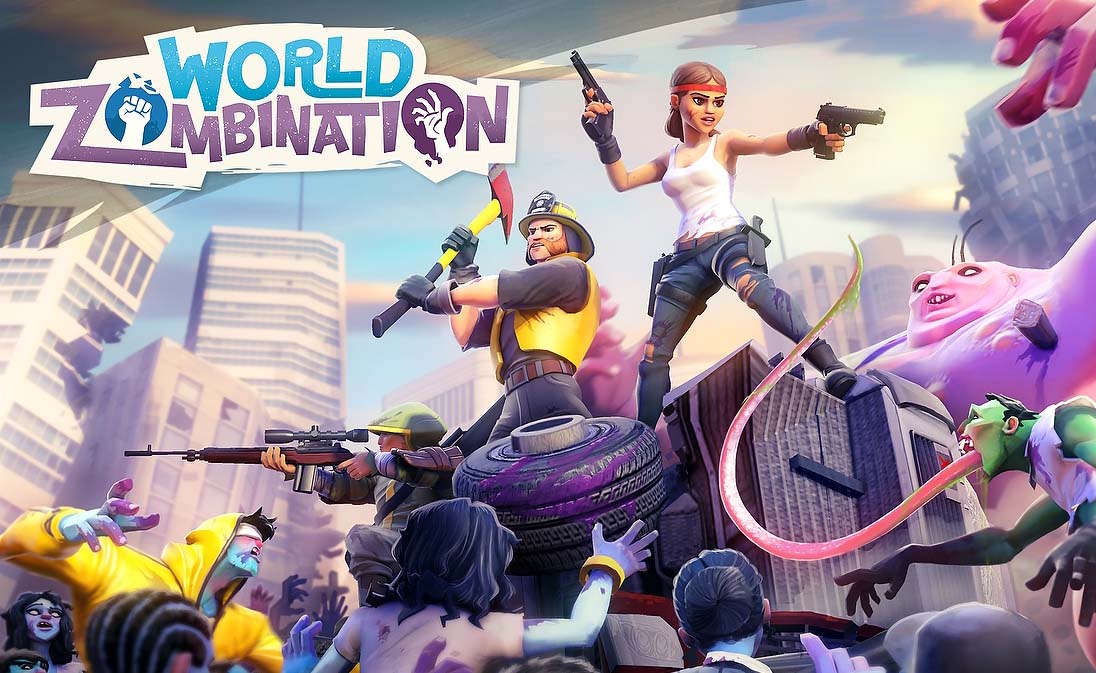
World Zombination is a tower defense game that allows players to control either the humans, the defense, or zombies, the horde of enemies. Let’s face it, you’re going to want to play as the zombies. No offense to the humans—they’re already on the defensive—but few games allow you to play as zombies or as the enemy horde attacking the tower defense. I did play as the humans as well as the zombies, and World Zombination does a good job of presenting a tower defense game with a twist: your towers move. But the zombie side of things makes this game shine.

You get to load out your zombie power-ups and deploy your horde in strategic places to overwhelm those pesky humans. While it can be satisfying to fight off the zombie horde, it was more satisfying to gobble up brains. Ultimately there’s little difference between the two sides. You get a lot of the same power-ups. The objective is the only thing that changes when you go from human to zombie or vice versa. But it’s the objective that makes playing as the zombies unique.

Now, World Zombination has a lot of the same things we see in other free-to-play games: wait times for power-ups, hard to obtain in-game currency that tempts players to spend real money, and energy recharging that can be cut down if you use the same hard to obtain in-game currency. You’ll have to be patient, or be willing to spend real money, but World Zombination provides a singular tower defense experience, especially when you factor in player-versus-player game modes.

batmanarkhamunderworld

Batman: Arkham Underworld

Okay. I just said that no other tower defense game besides World Zombination allows you to play as the enemy horde. Well, Batman: Arkham Underworld does that, too. In fact, Batman: Arkham Underworld plays a lot like World Zombination with a different theme and skin. This time, you play as Batman’s rogues.

Batman: Arkham Underworld isn’t a bad game, it provides an experience similar to World Zombination, but Batman’s rogues as a theme doesn’t work as well as a zombie horde. It’s one thing to unlock a new zombie type and power them up. It’s another when the game treats Batman’s rogues like World Zombination treats its zombies; they aren’t unique enough to justify the theme. Batman: Arkham Underworld plays like your controlling a zombie horde masquerading as Batman’s rogues’ gallery.

Batman: Arkham Underworld has many of World Zombination’s features, and you can find some solid game play. It’s not as if Batman: Arkham Underworld is a bad game; the theme doesn’t match the game mechanism. Still, if you like Batman and enjoy the idea of a playing as the side seldom played in a tower defense game, you may like Batman: Arkham Underworld. And it’d be redundant to have both Batman: Arkham Underworld and World Zombination.

ghostbusters-slime-city

Ghostbusters: Slime City

Ghostbusters: Slime City cashes in on the summer blockbuster Ghostbusters, but you won’t find many of the characters from the original movie or the reboot—human characters that is; Slimer and the Stay Puft Marshmallow Man make appearances. Ghostbusters: Slime City has the most action of any game I’ve covered so far, but it maintains the level-up aspects of your equipment as well as your headquarters and a bank, and I’m not sure the mini-games make much sense.

Beyond the weird mini-games like feeding Slimer hot dogs and gaining money, the core game play is busting a bunch a ghosts by pointing and swiping on your touch screen. Your ghostbuster will run out of power and you have to take your finger off your screen for them to recharge their battery and when you have power, you continue to point and swipe. At random moments you’ll trap ghosts—I’m not sure how the game determines which ghosts you trap—but most ghosts are blasted with your proton ray. You get a few minutes to bust the target number of ghosts you need to bust and then you either beat the level or have to replay it. Ghostbusters: Slime City is a straightforward game. It doesn’t add any new game play or offer an engaging story—although there is one the game shoe horns into the gameplay—but if you like Ghostbusters and busting makes you feel good, you may want to give Ghostbusters: Slime City. This game doesn’t cover enough new ground to be staying in my permanent collection.

spider-manunlimitedapp

Spider-Man Unlimited

Spider-Man Unlimited is Temple Run with a Spider-Man skin. There’s nothing wrong with that premise. In fact, Spider-Man Unlimited does a great job of incorporating new game mechanisms to the Temple Run model that are suited to Spider-Man. Web slinging is fantastic. Battling enemies is intuitive but challenging. And the dynamic level generation keeps players on their toes.
That last point can be a good or bad thing. I like being challenged by a game, even if it’s a free-to-play game, but you can get stuck on a level for a really long time and instead of being able to memorize what’s going to show up next on a map, because you died several times on a stage, Spider-Man Unlimited does a good job of changing up the level each time. You could be fighting enemies and dodging obstacles one play through of a stage, only to be web slinging the next time.
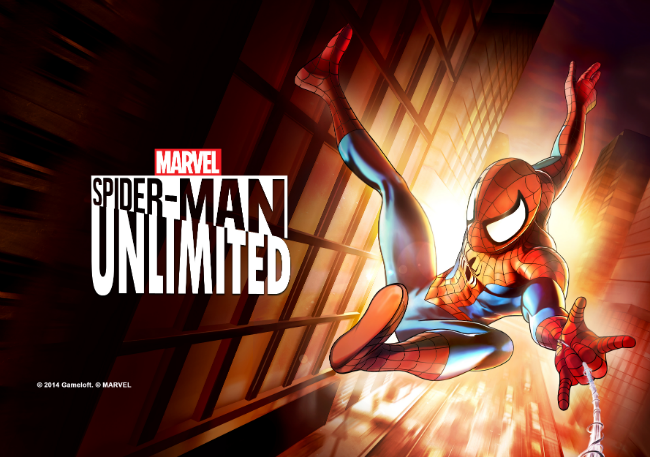
A free-to-play game wouldn’t make money without having power-ups, enhancements, and boosts for your heroes, and Spider-Man Unlimited uses the customary difficult to obtain in-game currency, energy recharge times, and the like. Again, you can spend a lot of money getting through things—and Spider-Man Unlimited can be frustrating enough to make you want to spend money—or you could be patient and clear the level without spending money.

Regardless, Spider-Man Unlimited adds enough to the Temple Run formula to make it uniquely Spidey, fresh, and worth a quick play.

All right. We’re almost done with Free Video Game Summer. Until next we meet, thanks for reading.