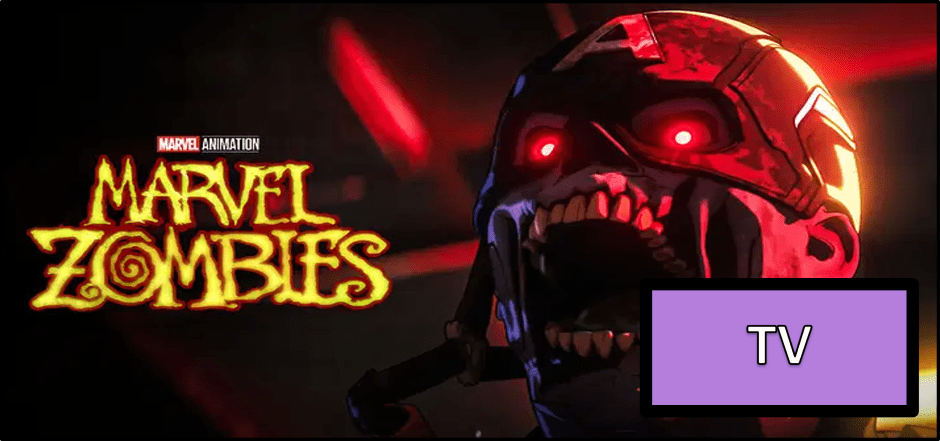
Happy Weekend, Geekly Gang! Kyra Kyle here, and I’m sharing my thoughts on Marvel Zombies on Disney+. Honestly, I didn’t think Marvel Zombies was necessary. I got enough of this world during the episode or two of What If? that featured Marvel Zombies. The concept is simple. Most Marvel superheroes become zombies.
The original comic book series managed to strike a balance where readers cared about the characters and had a healthy dose of hope. Most of that is dashed at some point, but readers could hold onto some hope for at least a little time. The animated series is rushed (there are only four episodes), so any hope lasts approximately five minutes. Without hope, there are no stakes. Everything becomes futile. I don’t believe this world to be anything but “let’s see all the MCU turn into zombies.” Mission accomplished, I guess. Instead of any real hope that could lead to stakes, let’s throw in all the least serious characters in the MCU, so they’re dropping one-liners every few seconds. But laughs don’t make for a compelling story.
Marvel Zombies’ short run means that it’s over quickly. That’s a plus. If you want to burn an hour and a half, there are worse ways to do it. I can’t recommend this series, but wait, Marvel Zombies could be getting a second season. Great.
Some will enjoy Marvel Zombies. You do get to watch MCU characters turn into zombies, and that can be fun. Some of the ways they turn are inventive. The animation is phenomenal. Marvel Animation Studios is knocking things out of the park, so you could watch Marvel Zombies for the visuals alone. And I do like that Marvel Zombies is a standalone story. We don’t need another show in the connected universe.
One last positive: Marvel Zombies makes Zombie Hawkeye a menace. Hawkeye is terrifying. Most of Hawkeye’s scenes are in the first episode, and I would recommend watching this version of Hawkeye. Heck, I’d watch a show with Zombie Hawkeye (the only zombie is Hawkeye) hunting superheroes.
I’ll keep this Marvel Zombies review short. Thank you for reading, and wherever you are, I hope you’re having a great day.
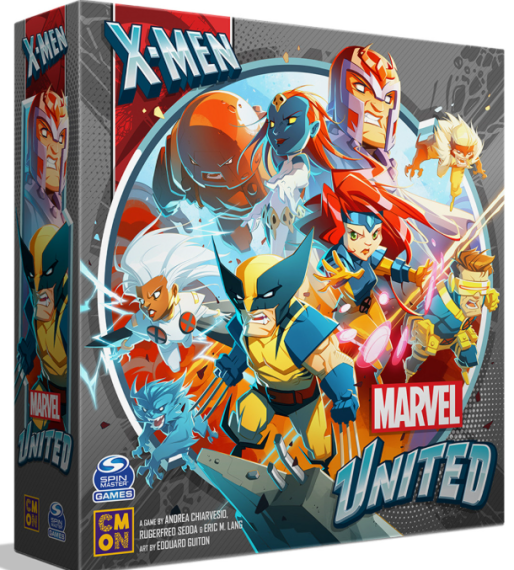
We’ve discussed many Marvel United expansions from the game’s initial set; it’s time to talk about Marvel United: X-Men. This version of Marvel United adds team play and a one versus many option, where one player controls the villain while the others play the heroes. This increases gameplay options and allows for a fifth player to join in on the fun.
Hey, hey! Kyra Kyle here. In Marvel United: X-Men, players act as iconic X-Men heroes who work together to stop the master plan of a powerful villain controlled by the game and in some cases another player. Each villain has a unique master plan, cards that trigger various effects, and threats that make clearing locations difficult. Heroes clear missions, making the villain vulnerable, and finally take on the big bad villain before they complete their master plan. Can you save the day in time? Marvel United: X-Men adds Marvel’s merry mutants to the fray.
Before we get any further, we’ll take a side quest and discuss Marvel United: X-Men’s less heroic details.
The Fiddly Bits
Designer: Andrea Chiarvesio, Eric M. Lang, and Francesco Rugerfred Sedda Publisher: CMON Global Limited and Spin Master Ltd. Date Released: 2021 Number of Players: 1-5 Age Range: 8 and up Setup Time: 5-10 minutes Play Time: 30-40 minutes
We already covered the Game Setup and Game Flow in our original Marvel United review (here’s a link to that review), so we’ll go over the basics in the following two sections. Let’s cover an abbreviated review of the game setup and rules.
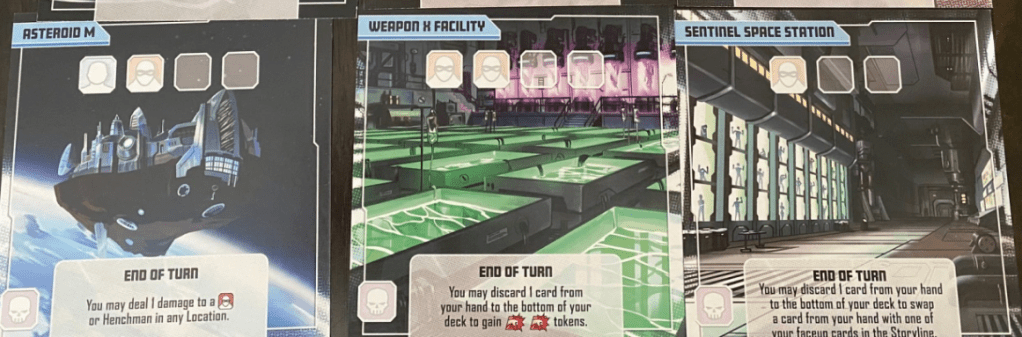
Marvel United: X-Men’s setup can change depending on which Villain(s) and Heroes you choose to play. Each game consists of six locations. Eight locations are included because Marvel United: X-Men is a core set. You may choose your locations or shuffle them and choose six at random. Each Location card has spaces at the top for civilians and thugs and a rectangle with a block of text that will state “End of Turn” at the top of the box.
Place civilian/thug tokens on their matching spaces. Shuffle the Villain’s Threat deck and deal out each Threat face-up so that it covers the rectangle at the bottom of each location. You must clear this threat before gaining the “End of Turn” effect printed on a Location. Place health tokens where signified on threat cards and on the Villain dashboard. Place the three mission cards (Defeat Thugs, Rescue Civilians, and Clear Threats) face up under the villain dashboard where the text reads “Unlocked.”
Each player shuffles their hero decks and then draws three cards to form their hands. Shuffle the Villain’s Master Plan deck. Leave the Master Plan deck face down. This will be the villain’s draw pile.
Players place their miniatures on one of the six location cards, usually the centralmost location for each player (easy access). Then, they place the villain on the location card opposing the heroes. If one player chooses to play as the villain, hand the Super Villain cards to them, and the Heroes gain access to Super Hero cards. These new card times can be played if the game state triggers their use (for example, “You play a Master Plan card” or “Any Hero has 4 or more cards in their hand at the end of the Hero Turn.” Timing is key.
Game Flow
The villain(s) play first. Draw the top card of their master plan deck. The villain moves the number of spaces indicated. Resolve any BAM! Effects and these effects will be printed on a space within the villain’s dashboard. Then, place the civilian/thug tokens (if any) indicated at the bottom of the card. If a player has taken the role of the villain, they get a hand of cards and can choose which card they play. The heroes get their turn after all the villain’s effects are resolved.
Heroes pick who goes first, and hero turns will continue around the table clockwise. At the beginning of each game, Heroes will get three turns before the villain receives another turn. During their turn, heroes play one card from their hand.
Resolve actions and the symbols printed at the bottom of the hero’s card in any order. The symbols at the bottom of a hero’s card will be shared with the next player, but any printed action will not be shared. Heroes will use these actions to complete missions. The game begins with three missions in play: Defeat Thugs, Rescue Civilians, and Clear Threats. Each mission card will have spaces for the tokens they require to complete. As soon as these spaces are filled, the card is discarded, and the mission is considered complete. Mission cards can be completed in any order.
After the heroes complete the first mission, the villain panics and will act (play a card) every two hero cards instead of every three hero cards. After the heroes complete the second mission, the villain becomes vulnerable to damage. The heroes can complete the third mission, but it isn’t necessary. If the heroes do complete the third mission, each hero immediately draws 1 card, increasing each player’s hand size by one.
Play continues back and forth until either the villain wins (by completing their unique master plan or anyone, heroes or villains, runs out of cards) or the heroes win by dealing enough damage to the villain after the villain becomes vulnerable to damage.
Review
Marvel United: X-Men features many new game concepts for the United game system. Having one player take on the role of the villain is the most obvious. I like that Spin Master and CMON games include a chart that allows gamers to play villains from the previous set. Since X-Men characters have a knack for flip-flopping their allegiance, it makes sense that Marvel United: X-Men began the trend of purple miniatures (anti-heroes who can be played as heroes or villains). This feature is crucial to the game design, as I forgot it began with Marvel United’s second wave (X-Men). Marvel United: X-Men also adds a team element with its Blue and Gold Team expansions. That doesn’t factor in too much with the core set. We’ll talk more about the X-Men Blue and Gold Teams in the future.
Power creep is a real thing in Marvel United: X-Men. In the original set, players were lucky if they had three unique abilities and anything more than three cards in their deck with special abilities. Marvel United: X-Men heroes have a minimum of four cards in their deck with special abilities and at least two unique special effects, but there are plenty of heroes with way more than four special ability cards. Marvel United: X-Men also includes plenty of powers that deal with crisis tokens. The original set had a few ways to deal with crisis tokens; most of the methods came in the form of Location “End of Turn” abilities. I like the inclusion of heroes with crisis token abilities. The heroes in Marvel United’s second way had plenty of new ways to affect the game state.
Beginning with the anti-heroes (the purple miniatures who can be heroes or villains), let’s get into specific heroes you can find in the Marvel United: X-Men Core Set. Mystique features few Heroics but plenty of Move and Attack. Her two special abilities (two copies of each card) allow her to prevent new tokens (Thugs or Civilians) from being added by the next Master Plan card, and she can redirect damage from herself to Henchmen or Thugs. This plays into Mystique’s ability as an infiltrator. Typically, Marvel United: X-Men does a good job of showing each anti-hero as their heroic and villainous selves. Magneto is the other anti-hero included in the Core Set. Like Mystique, he has little Heroics but can zoom around the board and deal copious amounts of damage. I like Magneto’s ability to convert symbols into Wild symbols. This makes him versatile.
Perhaps because of the increased number of powers within hero decks, Marvel United: X-Men does an even better job of capturing its heroes. Wolverine begins the game with a healing factor. Cyclops uses Leadership, while Beast also has a regenerating factor (not as persistent as Wolverines) and he specializes in heroics and movement. So far, far thematic, but I really like Storm, Jean Grey, and Professor X. Storm can reposition the entire team, Jean Grey can manipulate the Storyline with Telekinesis, and Professor X may be the most powerful hero in the X-Men Core Set. He’s surprisingly mobile with a penchant for heroics. He can also use Telepathy to manipulate the Storyline, give tokens with Leadership, turn symbols into Wilds, and even turn Thugs into Civilians.
In short, the heroes of Marvel United: X-Men have more personality than the previous set. Professor X may be overly powerful. Half of the cards in his deck possess special abilities, and two of the other six cards feature wild symbols. The villains in the X-Men Core Set provide plenty of twists for gameplay, but that’s to be expected from Marvel United villains. The villains have always represented this game’s most intriguing design space. Sabretooth hunts heroes, while Juggernaut charges from one location to the next, damaging everyone in his way. Magneto is especially difficult to stop. He can nullify all Hero effects and hand out crisis tokens to heroes, damaging them for each crisis token the hero possesses. But Mystique may be the most interesting villain from this lot. She targets Senator Kelly, and the heroes lose if she carries out her assassination.
Marvel United: X-Men’s Locations have varied “End of Turn” abilities. Token draw, healing, moving to another location, rescuing a Civilian, and dealing damage to a Thug/Henchman are standard fare by this point, but Marvel United: X-Men’s Locations gives these mechanisms a few twists. But my favorite “End of Turn” ability may be Sentinel Space Station’s. You may discard 1 card from your hand to the bottom of your deck to swap a card from your hand with one of your face-up cards in the Storyline. This ability is a hint of what one can expect in other Marvel United: X-Men expansions.The Marvel United: X-Men Core Set does enough to show what the second United wave of games offers. It does a great job of building on a solid foundation.
Too Long; Didn’t Read
Marvel United: X-Men adds numerous wrinkles to the United Series’ gameplay. A player can take the role of the villain, team play is possible, and antihero characters can be either heroes or villains. The heroes within Marvel United’s second wave have more personality, while the villains remain stellar. Mystique’s mission of assassinating Senator Kelly is fantastic.
Thank you for reading, and wherever you are, I hope you’re having a great day.
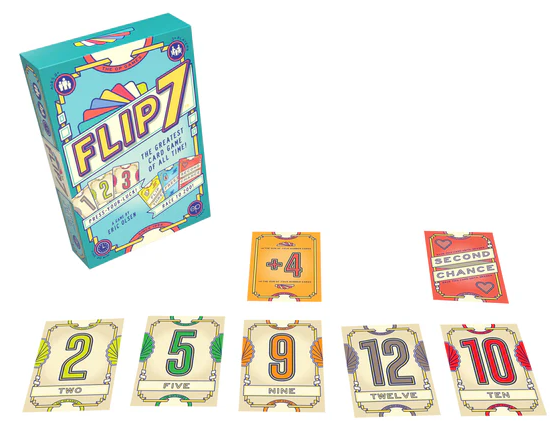
Flip 7 takes the premise of Blackjack and extends it to party game proportions. Flip over cards one by one without flipping the same number twice. While the game choices are simple (hit or stay), the ramifications of your actions aren’t. Are you the type of player to play it safe and bank points before you bust, or will you risk it all for the bonus by flipping over seven unique cards in a row? Hey, hey! Kyra Kyle here. We’ll review Flip 7 in a moment, but before we draw our first card, let’s discuss Flip 7’s fine print.
The Fiddly Bits
Designer: Eric Olsen Publisher: The Op Games; KOSMOS Date Released: 2024 Number of Players: 3-18 Age Range: 6 and up Setup Time: Nominal Play Time: 10-20 minutes
Shuffle the deck and choose a player to be the Dealer for the round.
In turn order, the Dealer deals one card face up to each player, including themselves. If an Action card is drawn, resolve it immediately (more on Action cards in the Game Flow section). Once any Action cards are resolved, continue dealing until everyone has been dealt a card. Not everyone will have a Number card (a card with a number). Some players may have multiple cards because of other Action cards.
Game Flow
The Dealer now offers each player in turn the option to “Hit” (deal them another card) or “Stay” (exit the round and bank their points). If you Hit, put the Number cards in a single row with Score Modifier cards.
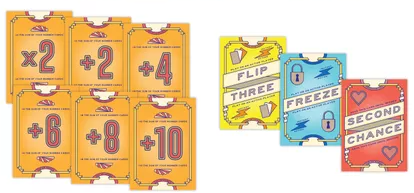
Flip 7 features a special deck of cards. It’s Number cards range from 0 to 12. There are copies of each card equal to the card’s value. For example, there are 12 copies of the 12 Number card and 5 copies of the 5 Number card. Zero is the only exception; there’s only one copy of the 0 Number card. Flip 7’s deck also contains Score Modifier cards (Times 2 which doubles your point value and the rest adding a flat number to your score). Flip 7 also has three Action cards: Freeze, Flip Three, and Second Chance. Second Chance allows you to ignore one bust (drawing the same Number card). Flip Three allows the player to choose a player (even themselves) to draw three cards in a row. Freeze cards are given to a player to force them to stay for the round (they will not be able to draw more cards).
Remember: Players bust (don’t receive points and are eliminated from the round) if they draw two of the same Number card.
The round continues until one of two criteria are met. 1) There are no active players because all players have busted or chosen to stay. 2) One player can Flip 7 number cards, ending the round immediately.
At the end of each round, players score points. Add the value of all your Number cards. Adjust your score with any Score Modifier cards. If you Flip 7 Number cards during the round, score an additional 15 points.
When starting the next round, set all cards from the previous round aside. Do not shuffle them back into the deck. Pass the remaining cards in the deck to the left, that player becomes the new Dealer. When the deck runs out, shuffle all discards to form a new deck. If you need to reshuffle mid-round, leave all cards in front of the players where they are.
At the end of the round when at least one player reaches 200 points, the player with the most points wins.
Review
Flip 7 has taken the tabletop gaming community by storm. I can see why. It has a simple premise (party game Blackjack) and easy-to-understand choices each turn and round. Flip 7 is necessary for the tabletop community. In practice, Flip 7 is the game I can play with my grandma and my four-year-old niece. It’s the most gateway of gateway games.
Since this is the case, I’ve played Flip 7 a ton over the past several months. Seriously, Flip 7 was released during the holiday season (December 2024), I’m writing this in early May (we write many of our reviews weeks, if not months, in advance), and I’ve played this game with 10 different game groups and over 150 times. That’s about 30 times every month. I’ve almost played Flip 7 once every day. One of those months was February, so I’ve definitely played Flip 7 once every day. Frankly, I’m sick of playing Flip 7. It’s a good filler game, but I haven’t seen a game with this much crossover appeal.
And that’s a strength for Flip 7. It’s one of the few games I can get everyone on board playing. That’s why it’s necessary for the tabletop community and for tabletop gaming. But does it convince non-gamers to try other games that aren’t Flip 7? I’m unsure.
But I do like the inclusion of Action cards. There are three copies of each Action card. Freeze seems mean, but it could be pivotal in stopping someone who had an easy rise to the top of the scoring track; it’s a decent catch-up game mechanism of sorts but this can devolve into targeting the leader (like Munchkin). Players can only hold onto one Second Chance. I don’t know how many times I’ve seen a player forced to give a second copy of Second Chance to an opponent. Those cards have a way of finding the same player. But Flip Three has the most strategic value. During the early game, you may want to target yourself. Later in the game, you’ll want to choose someone else and force them to bust. Is this enough strategy? Probably not for many tabletop gamers.
I can see that people who can count cards have an advantage in Flip 7, but that takes the fun out of the game. While the rules don’t forbid someone from looking at the discard, it goes against the soul of Flip 7. The Number cards value equaling the number of copies in the deck is clever, and the game doesn’t overstay its welcome—unless you’ve played it over 150 times in a handful of months.
Flip 7’s box says 3+ players. Its entry on BoardGameGeek lists it as 3-99 players. The rulebook suggests that if you have more than a dozen players, use a second copy of Flip 7. While this may be technically true, the game plays best at 5-6 players. Flip 7 would overstay its welcome if you included over a dozen players. It would take forever for twelve people to determine whether they should hit or stay. There isn’t much else to Flip 7, but I’d be bored if I had to wait for eleven other people to make that simple choice. And forget 98 other people. I’d walk away from the table.
Too Long; Didn’t Read
While not my first or second choice of filler game, Flip 7 has enough crossover appeal to appease the masses. It doesn’t have enough strategy for hardcore tabletop gamers, but Flip 7 is the kind of game I can get my grandma or four-year-old niece to play. Therefore, Flip 7 is a good game to keep on hand for non-gamers.
Kitaria Fables by Indonesian indie game studio Twin Hearts combines a farming sim like Stardew Valley with a mild adventure game. Players assume the role of a cat hero Nyanza (or Nyan for short), hence the name Kitaria, as Nyan upgrades his weapons and armor and learns new abilities to save the Empire.
Hey, hey! Kyra Kyle here. We’re covering a video game today that’s unlike most we’ve covered in the past. Kitaria Fables is a cozy game. Full disclosure: I’ve picked up this game on sale for multiple systems (Steam, Switch, and PlayStation 4), but I’ve played the most on PS4. Cozy games have taken off in the past few years, and I’m here for it. I love a good cozy game. But how does Kitaria Fables stack up against our review criteria?
Mechanisms: 7/10
Kitaria Fables has solid game mechanisms, but there’s a reason it’s often compared to Stardew Valley—I compared Kitaria Fables to Stardew Valley in the opening paragraph of this review. Kitaria Fables borrows many mechanisms, its graphic design, and some of its perspective from Stardew Valley. All of the mechanisms Kitaria Fables borrows are well done. But I can’t give it top marks.
Still, Kitaria Fables adds a few things to the Stardew Valley formula to make it stand out. Not the least of which is the adventure aspects. Gone are the procedurally generated mines. In their place are regions to explore and enemies to vanquish. Enemies will drop items to use for upgrade materials. So far, this sounds like a typical adventure game, but Kitaria Fables opts to go with ability upgrades instead of leveling.
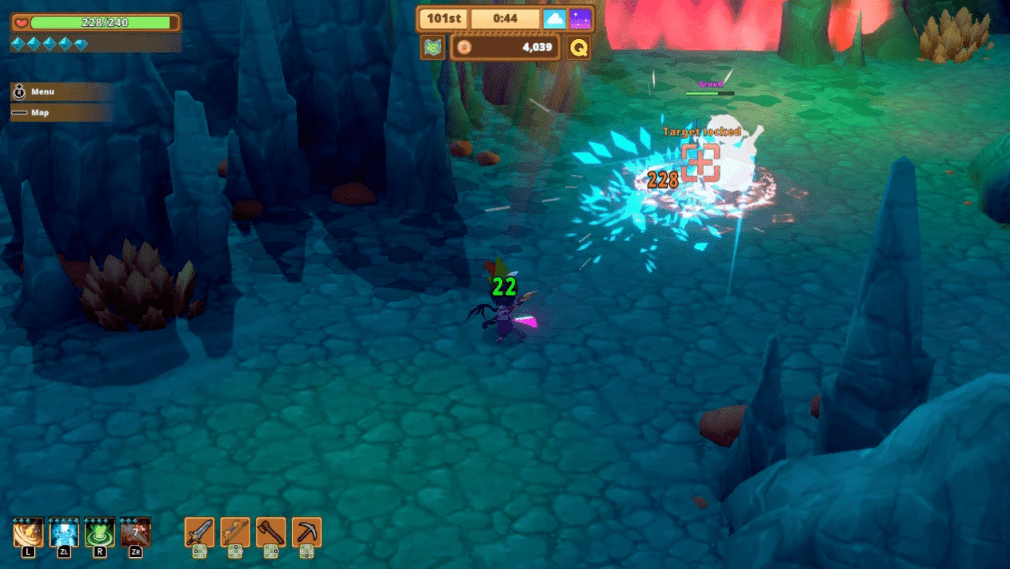
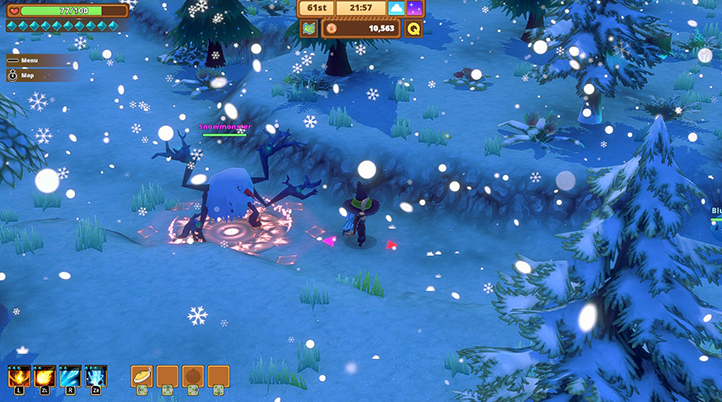
Players can trade out Nyan’s magic abilities at any time. The only downside is that more powerful spells usually cost more magic gems. In the top left-hand corner, you’ll see Nyan’s health. Magic gems are displayed below Nyan’s health bar. Nyan can gain more magic gems by physically attacking enemies, so there’s a push-pull with varying Nyan’s combat style.
I’ve seen other games use custom move-sets similar to Kitaria Fables’ setup (like the Cat Quest series), but Kitaria Fables does just enough to separate itself from its competition. But not enough to escape a slightly above average score.
Gameplay Loop: 8/10
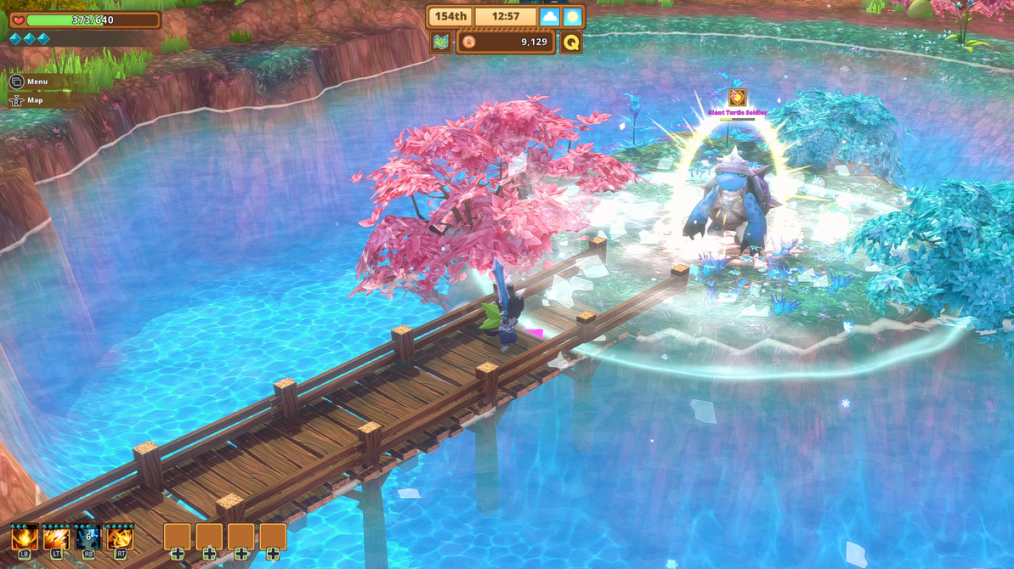
This score should come as no surprise. Kitaria Fables combines Stardew Valley and Cat Quest. I didn’t think of Cat Quest before writing this review (funny how both games have cat protagonists). With Stardew Valley and Cat Quest as inspiration, Kitaria Fables has a high gameplay loop score. All enemies (including bosses like the one pictured above) respawn at the beginning of each day, so it’s easy to grind Nyan to god-like powers.
Kitaria Fables has a couple of obtuse missions. I was stuck a handful of times and used trial and error to figure out what the game meant for me to do. But those moments were few and didn’t detract from the overall experience. And the NPCs rebooted their routine every in-game day in addition to the enemies respawning. If I couldn’t figure out something one day, I could try again the next. This is one of the reasons why Kitaria Fables is a cozy game. It induces little to no stress.
Narrative: 3/10
The Empire, the Calamity, Capital City, and other generic terms left me wanting. Kitaria Fables doesn’t have much of a story, and the story it has can get grown-inducing. I’m unsure if this lack of story comes from poor localization or if Kitaria Fables wanted generic names and storylines to make it easy for people from different backgrounds to follow. Either way, I’m unimpressed. Kitaria Fables has one big twist. I won’t spoil it here, even though that’s unnecessary. The big reveal is obvious.
Storytelling: 5/10
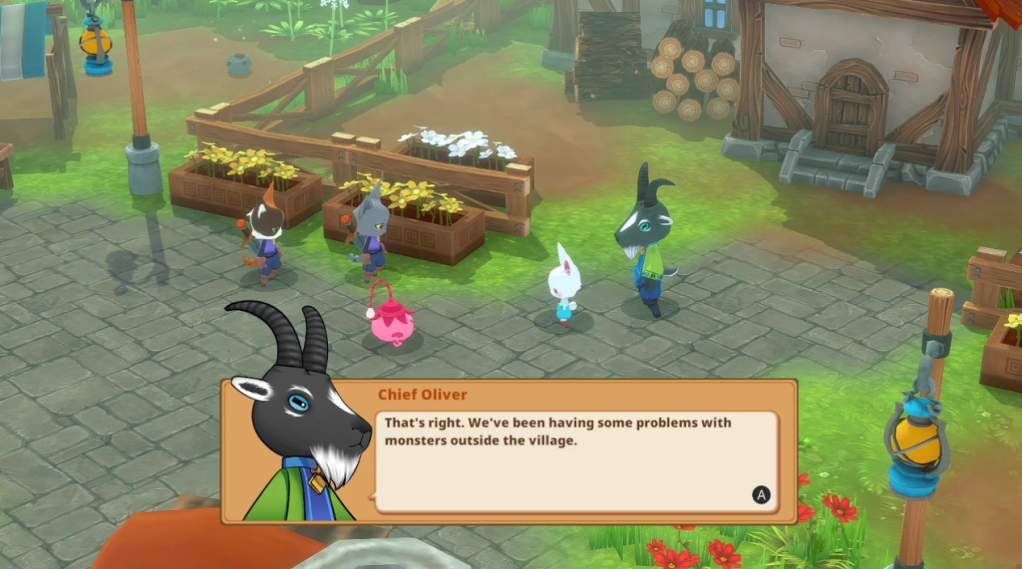
I can’t tell which score should be higher, narrative or storytelling. I’m giving storytelling an average score. That seems right. Kitaria Fables does a good job of executing its story, but it just has a forgettable story. Still, look at the adorable animal people. I love characters like Caramel, a brown furred mouse child who lives in Paw Village. Caramel will ask Nyan for a piece of candy. If you give him candy, you’ll unlock a mission. If you refuse to give him candy, you’ll unlock a different mission. This happens to be one of the obtuse story branches I mentioned in the gameplay loop section. You can unlock both missions. All you must do is interact with Caramel on two different occasions.
User Interface: 8/10
Kitaria Fables has an easy-to-use interface. During combat, Nyan will have items (to include healing items) and spells/moves assigned to hot keys. While not in combat, Nyan can pull up a menu (on the left-hand side of the screen) that will have clearly marked tabs. Players will receive different options depending on whether Nyan interacts with an NPC or an object (like a mirror to change Nyan’s appearance) or doesn’t interact with anything.
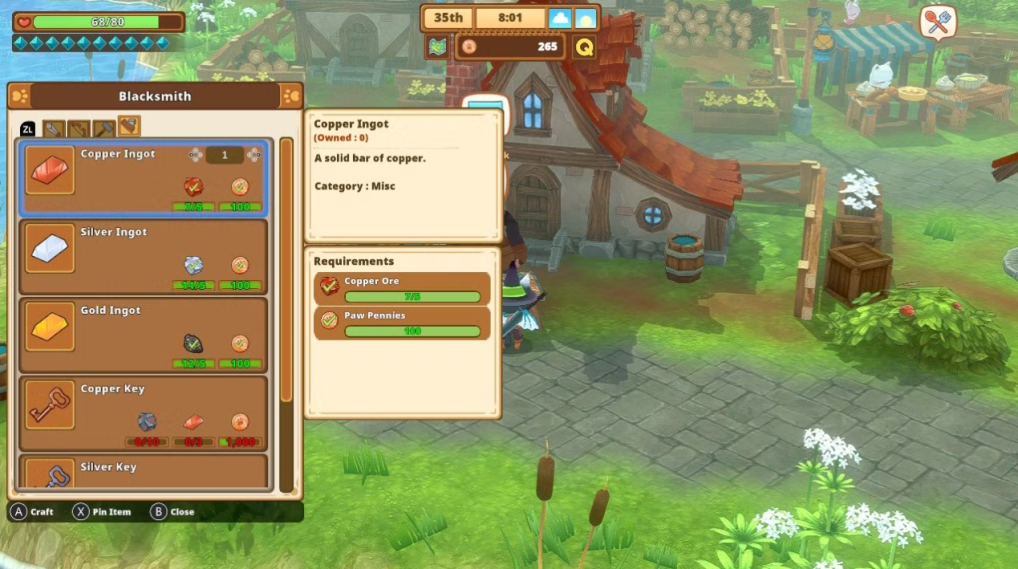
Players can pin items (if they find them in a store) to know how much of an item they need for an upgrade. This is standard stuff, but you’d be surprised how many games forget to include a pin object option. Kitaria Fables does a great job of incorporating good practices from other games with its user interface. The only reason I knock the game down a point is the Switch version. If you pick up Kitaria Fables on PlayStation 4 or Steam, go ahead and raise this score. The Switch version isn’t too difficult to navigate, but it’s lacking.
Graphics: 8/10
Kitaria Fables features charming graphics, but it doesn’t take top marks because Twin Hearts may have lowered the graphic quality to fit on the Switch. Honestly, if Kitaria Fables exclusively came out for the Switch 2 and PlayStation 5 (three or four years later), the graphics score could be even higher. Older systems may have held back the graphics, but that doesn’t mean that Kitaria Fables’ look is anything but enchanting.
I also love Kitaria Fables’ colorful world. Each zone feels unique: lush forests, dank swamps, and barren deserts. Kitaria Fables mixes up its enemies in quirky ways to match the various biomes. Despite some technical limitations, Kitaria Fables has gorgeous graphics.
Audio: 8/10
When I first booted Kitaria Fables, the music didn’t grab me. It was there and pleasant. But the more I played, the more Kitaria Fables’ soundtrack grew on me. Kitaria Fables’ soundtrack isn’t one of those wow you when you first hear it soundtracks. It’s one of those slow-burning soundtracks. I wasn’t surprised to see the Kitaria Fables’ soundtrack available on vinyl. It can be infectious.
Replay Factor: 6/10
I enjoyed my time with Kitaria Fables. Heck, I blew through the game in a few days and picked it up on multiple platforms. But I wouldn’t call Kitaria Fables a game with high replay value. I can hope that I’ll forget specifics about Kitaria Fables and return to the game in several years. While a solid game, Kitaria Fables’ linear story (with no alternative storylines) makes it a one-time play game. And that’s okay.
Aggregated Score: 6.6
Kitaria Fables delivers a well-constructed video game that combines elements of Stardew Valley and Cat Quest. I enjoyed a lot of the colorful characters and the gorgeous set pieces. And cats, who doesn’t love cat people? While I wouldn’t expect a game with a ton of replay value, Kitaria Fables is a great one-time play game, especially if it’s on sale.
Happy Friday, Geekly Gang! Marvel Studios Animation released its fifth project in its short four years of existence with Eyes of Wakanda. This series looks amazing. The premise of time-hopping through history, showing Wakanda’s secret spies, the Hatut Zaraze (War Dogs), retrieving Wakanda’s advanced technology, sounds exciting. And Eyes of Wakanda is fun, I can see where storyboard artist Todd Harris wanted to go with Eyes of Wakanda’s story, but the reduced episode run makes it difficult for the Eyes of Wakanda to find its stride.
The War Dogs’ mission is to sneak into outside countries and recover lost Vibranium artifacts that, if they fall into the wrong hands, could expose or bring harm to Wakanda. The Hatut Zaraze do their best to keep Wakanda hidden from the outside world. This idea dovetails into the first Black Panther film; Killmonger found a Wakandan artifact on display in a museum. More on this moment later. Eyes of Wakanda’s first season features four key moments in Wakandan history: the Bronze Age, the Trojan War, the beginning of China’s Ming dynasty, and the First Italo-Ethiopian War. Each episode leans into the region’s cultural aesthetics. Eyes of Wakanda shows accurate depictions of the people who lived in each location during that time. I can’t say it enough, the art style is fabulous.
I also like how these four episodes are stand-alone stories. You don’t need to watch either of the Black Panther movies or do any other MCU homework. Everything you need to know is contained in four half-hour episodes. The first and final episodes of Eyes of Wakanda’s first season stand out above the middle two. I like the idea of reintroducing Iron Fist in the third episode–there’s hope we’ll have another Iron Fist sighting in the MCU–but the middle two episodes don’t do as much to explore Wakanda. The first episode shows how far advanced Wakanda is from the rest of a Bronze Age society. The fourth directly ties into Black Panther and Killmonger (this is the artifact, the axe, Killmonger steals from the museum). I have mixed feelings about forcing Eyes of Wakanda to connect with Black Panther, but the MCU is going to MCU. The bookend episodes also delve further into their protagonists.
In the first episode, we follow failed Dora Milaje candidate Noni, while the fourth episode centers on eager Wakandan Prince Tafari. I didn’t see the same character development in the middle two episodes. Or at least, the middle two didn’t stand out as much.
Eyes of Wakanda’s short run works against it. A couple more episodes like the first and fourth could’ve allowed Eyes of Wakanda to find its footing. Several television shows need at least two or three episodes to “really get going,” and I got that vibe from Eyes of Wakanda. With a larger episode order, Marvel Studios Animations could’ve shown more sides of Wakanda.
Still, what’s here is fun, and two hours isn’t a long investment for an animated series. And I can’t stress how amazing Eyes of Wakanda’s animation is. To this point, What If? was Marvel Studios Animations’ crowning achievement for art style and direction. Eyes of Wakanda gives What If? a run for its money. Thank you for reading, and wherever you are, I hope you’re having a great day.
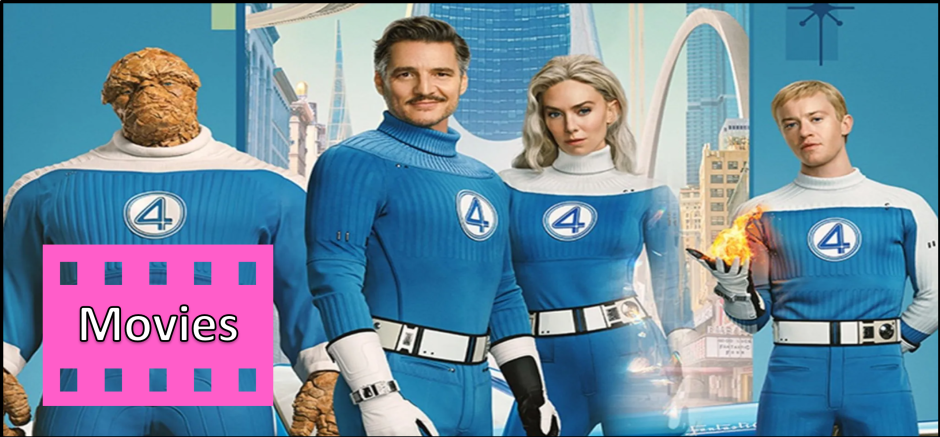
Happy Friday, Geekly Gang! Kyra Kyle here with a Fantastic Four: First Steps review. Right off the bat, I must say 2025 is a banner year for superhero films and shows. The DCEU had been flailing for years; Superman (2025) gives the franchise new hope. The MCU has been a shell of itself in previous years, but Thunderbolts* and Fantastic Four: First Steps have been a return to form. I love that little MCU homework is needed for Fantastic Four: First Steps. Spider-Man: Homecoming aside, Fantastic Four: First Steps is the closest the MCU has felt to a Phase One movie in almost a decade. Fantastic!
I’ll try to avoid spoilers in this review. If you’ve read the Fantastic Four comic book, you should know the basis for a Galactus story. Fantastic Four: First Steps is the most comic book accurate Fantastic Four film. I mentioned in a previous Geekly News post that Shalla-Bal does have a basis in the comics; she’s Norrin Radd’s longtime romantic interest and has powers comparable to the Silver Surfer. In alternate universes, Shalla-Bal becomes Galactus’s herald in Radd’s stead, so if Earth 828 (nice tribute to Jack Kirby’s birthday, August 28th) is an alternate universe, it makes sense if she becomes Galactus’s herald. This allows Radd to become the Silver Surfer in Earth 616 (or some other Marvel universe). And Galactus is terrifying.
Galactus reminds me of the Reapers in Mass Effect: part living being and part machine. This visual effects decision makes sense. It allows for Galactus to look like his comic book counterpart. I cheered when I saw him onscreen. Galactus’s look is another great comic book accurate element. Johnny Storm figuring out Shalla-Bal’s history and pleading with her to save Earth was another classic comic book moment. Both Radd and Shalla-Bal sacrificed themselves to save their planet (Zenn-La) from Galactus, only to become Galactus’s pawns and destroy other planets.
I even liked the montage at the beginning of Fantastic Four: First Steps. It shows the team has been in the superhero/explorer/adventuring business for years, while not bogging down the film with extra runtime. While I would’ve liked to have seen John Malkovich’s Red Ghost, it made sense for Fantastic Four: First Steps to cut his scenes from the movie. Fantastic Four: First Steps had a tight 114-minute runtime. Just under two hours. That’s unheard of with modern blockbusters. Rumors swirled a few months ago that Fantastic Four: First Steps had a runtime of over two and a half hours, which would’ve made it one of the longest MCU films before edits. Fantastic Four went from being one of the longest MCU films to the fifth shortest. The audience got what it needed in that runtime. Kudos to Fantastic Four for cutting unneeded scenes.
Fantastic Four: First Steps is just what the MCU needed. Just like Superman (2025) got me excited for DC Comics movies again, Fantastic Four: First Steps got me excited for the MCU again. And like Superman, I have some notes for Fantastic Four: First Steps. The biggest is Galactus’s timeline. While Galactus does lumber through the universe on his never-ending quest for sustenance, it doesn’t make sense that Earth prepares for the titan’s visit when he’s already in our solar system. Galactus passes Jupiter by the time the Fantastic Four share their plan with the world, a plan that would take months to prepare. When the team’s first plan fails, they don’t switch to their second plan until Galactus is passing the moon. What? That timeline makes little sense.
Galactus entering our galaxy when the Fantastic Four share their first plan, and then reaching Jupiter when the Fantastic Four pivot to another plan, would make more sense. This is a nitpick, but I chuckled at this timeline’s absurdity. Invisible Woman giving birth in space with no bodily fluids is another one of my silly nitpicks. I get why Fantastic Four: First Steps chose not to include a zero-gravity placenta, but I figured I’d mention the lack of bodily fluids. Don’t get me wrong, I just finished a jumbo-sized popcorn and pretzel bites before the birth scene. My stomach appreciated the lack of floating bodily fluids. Still, Franklin Richards’s birth was the most sterile birth I’ve ever seen.
I could mention another nitpick or two, but those are smaller nitpicks, and they didn’t detract from Fantastic Four: First Steps. This is the Fantastic Four film I’ve waited for decades, and I’m so glad I got to review it on Geekly. I watched the 2015 Fantastic Four in the theater and reviewed it. Fantastic Four: First Steps was a huge upgrade. This film features the most comic book accurate Fantastic Four. And I hope Fantastic Four: First Steps begins a new trend for the MCU: less MCU homework for each project and cutting out unnecessary scenes for tighter runtimes. Fantastic Four: First Steps continues the MCU’s upward trajectory. Thank you for reading, and wherever you are, I hope you’re having a great day.
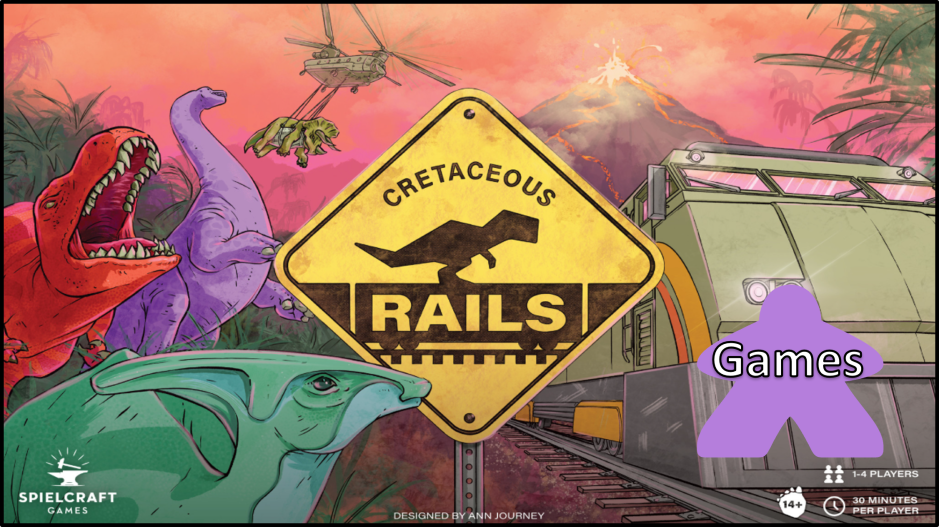
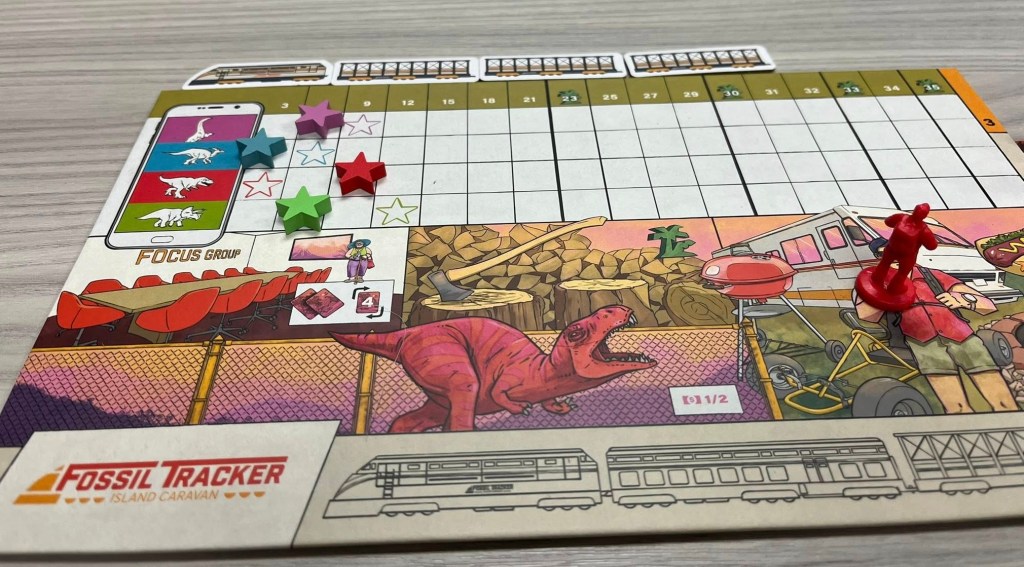
Cretaceous Rails combines trains and dinosaurs in one board game. Holy Fish Heads! That may or may not be a direct quote from the Cretaceous Rails game designer. Hey, hey! Kyra Kyle here. I’m doing something a little different with today’s board game review. As you might be able to tell, I know Cretaceous Rails’ game designer, Ann Journey, and the publisher Spielcraft Games. I’ll attempt to stay unbiased, but I wanted to be upfront about that relationship. In Cretaceous Rails, people have learned that dinosaur parks built in the modern world are too deadly. Instead, they send people back in time to witness dinosaurs in their natural habitat. Players compete to create the best dino safari resort experience. We’ll get to the game, but first, let’s discuss some disclaimers.
The Fiddly Bits
Designer: Ann Journey Publisher: Spielcraft Games Date Released: 2025 Number of Players: 1-4 Age Range: 14 and up Setup Time: 10-15 minutes Play Time: 45-120 minutes (depending on the number of players)
Game Mechanisms
Modular Board Network and Route Building Pick-up and Deliver Worker Placement
Game Setup
Cretaceous Rails’ rulebook has a streamlined setup section, so I’ll be using the rulebook as the basis for this section.
Action Tiles
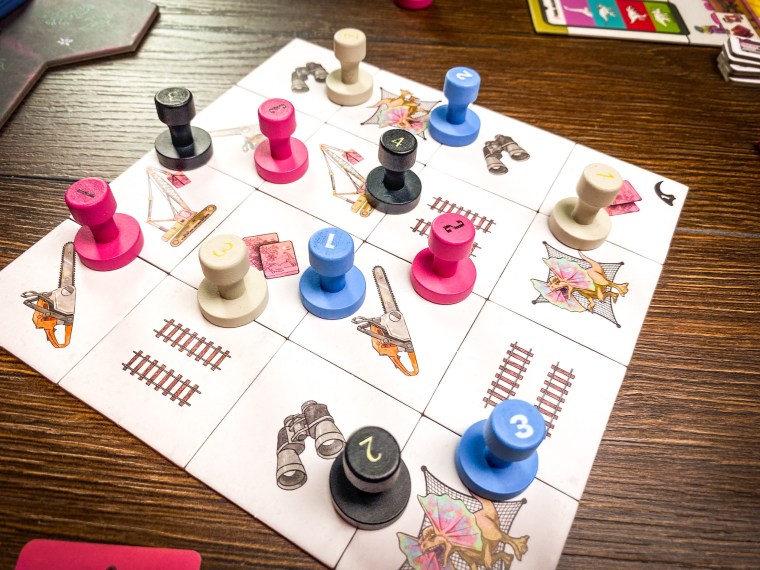
* Shuffle all 16 action tiles and randomly place them face up in a 4×4 grid within reach of all players to create the action grid.
* Place the first player marker on the Draw Cards action tile with the first player marker icon (shaped like a raptor claw).
Resort Card Display
* Place the resort card display board within reach of all players.
* Shuffle all 84 resort cards and place them face down in the resort card deck space near the resort card display board.
* Deal eight cards from the deck face up onto the eight spaces of the resort card display board.
* Place the round tracker on the dinosaur footprint labeled “1.”
Player Setup
Each player chooses a company. The only difference among the companies is the starting dinosaur, the beginning point value of dinosaurs, and aesthetics. None of these differences significantly affect the gameplay, so pick the company that looks cool or begins the game with your favorite dinosaur.
Each company gets: * 1 Player board (all other items must match your company’s color and design) * 4 Executives * 30 Rails * 1 Train Engine Tile * 8 Train Car Tiles
* Place your Train Engine in front of your player board. This begins your train, but doesn’t count as storage.
* Place 2 Train Car Tiles behind your Train Engine Tile to form your starting train.
* Draw 1 card at random from the resort card deck and add it to your hand.
* Place the remaining Train Car Tiles, 30 Rails, and 4 Executives off to one side within reach.
* Take the tourist, dinosaur, and jungle token indicated by the icons on your player board and place them on their respective icons on your player board.
* Place the remaining tourists in the tourist sack.
Map Setup
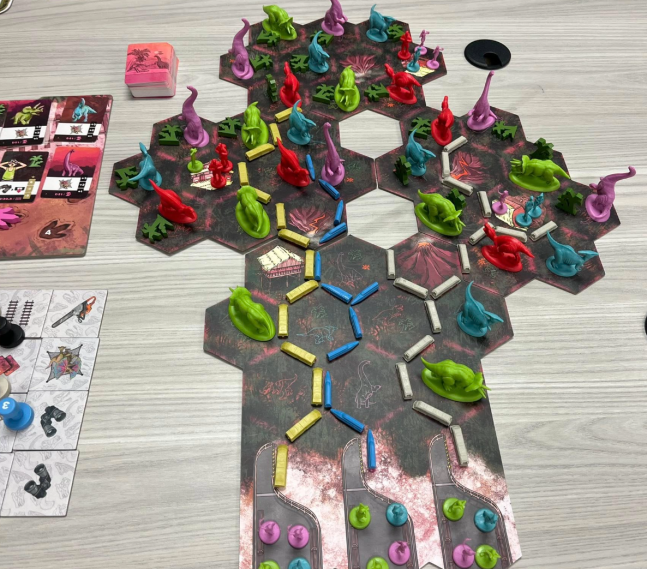
* Place the starting map tile for the appropriate player count in the center of the table within reach of all players.
* Place 1 randomly-selected jungle map tile per player beside the starting map tile to form the map.
* Place one jungle token on each hex marked with a jungle token icon.
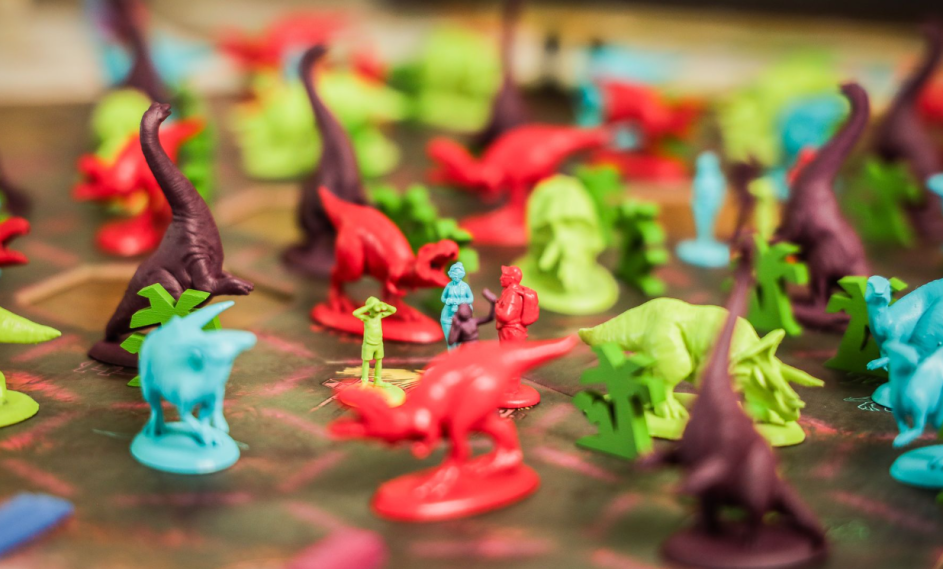
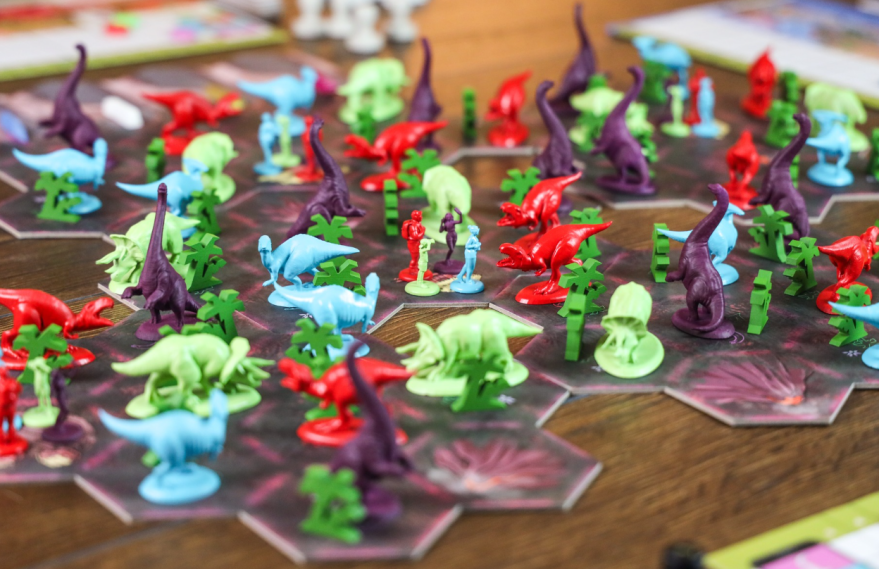
* Place a matching dinosaur miniature on each hex marked with a dinosaur icon. Each tile has two of Tyrannosaurus Rex, Triceratops, Titanosaurus, and Parasaurolophus.
* Randomly place 4 tourists from the Tourist Sack on each cabin hex and each player’s home hex.
Starting Positions
* Randomly select who goes first. Play will proceed clockwise from the first player.
* In reverse turn order, starting with the last player, select home hexes on the starting map tile.
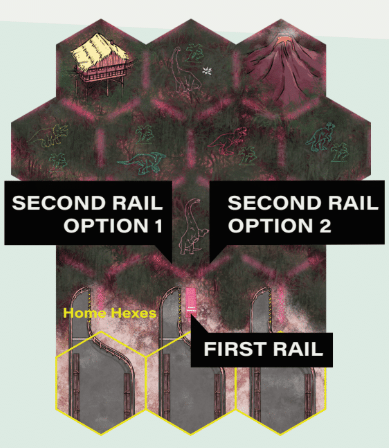
* When you select a home hex, place two Rails on the starting map tile. Place the first Rail on the line pointing out of your chosen home hex, and the second Rail on the line going to the left or right in front of the first rail.
HINT: Choose your home hex based on the dinosaurs and volcanoes near it, the tourists on it, and your plans for building your rail network into the jungle.
Game Flow
Cretaceous Rails is played over four rounds. Each player receives four turns per round.
Each turn, players will place an Executive on a vacant action space between two action tiles. Players will take both actions adjacent to the Executive they just placed. You may choose the order in which to take your two actions each turn. You can also forgo one of your actions and unload your Train Cars onto your player board.
Outside of unloading your Train Cars, there are six actions depicted on the Action cards: Lay Rails, Draw Resort Cards, Build Resort Cards, Clear Jungle, Safari, and Capture Dinosaur.
Lay Rails allows players to place two Rails (train minis) on the map, extending their company’s rail network.
Draw Resort Cards lets players draw Resort cards from the Resort Card Display Board.
If you meet any number of Resort Card requirements and take the Build Resort Cards action, you may build any number of Resort Cards in your hand that you can legally place. The third (top) row can only hold as many Resort Cards as the number of Resort Cards in the second row. The second (middle) row can only have as many Resort Cards placed in it as the number of Resort Cards in the first (bottom) row. The bottom row has no restrictions. Go nuts! But most Resort Cards receive bigger boosts in higher rows.
The remaining three actions will add items to your Train Car Tiles that you will then have to unload in your player boards. These actions may cause you to replace one of your adjacent actions with empty Train Cars.
Clear Jungle has the player take a jungle token from any hex adjacent to their rail network. You must place the jungle token on one of your empty Train Cars. Jungle tokens aren’t refilled throughout the game. Once they’re gone, they’re gone. You cannot take the Clear Jungle action if you don’t have at least one empty Train Car.
The Safari action has a couple of steps. Take a tourist from any hex adjacent to your network and place it in one of your empty Train Cars. Again, if you don’t have at least one empty Train Car, you cannot take the Safari action. You may not take a tourist from another player’s home hex. When you take a tourist, add up the number of dinosaurs adjacent to your rail network of the color and type that corresponds to the tourist you picked. Only count dinosaurs in hexes with no jungle tokens (your tourists can’t see through dense jungle). Each volcano adjacent to your rail network counts as a dinosaur of that type. Move the rating marker on your player board for that dinosaur color/type up the rating track that number of spaces. This number determines the value of each dinosaur in your resort.
Capture Dinosaur allows players to take a dinosaur from any hex adjacent to their rail network with no jungle token and place it in one of their empty Train Cars. Again, you cannot take the Capture Dinosaur action if you don’t have at least one empty Train Car.
End of Round
A round ends after all players have taken four turns each.
At the end of each round, perform these steps, in this order (skip these steps in the final round): * Each player performs the Unload Train Cars action.
* Each player takes back all four of their Executives.
* Discard all eight Resort Cards in the display. * Refill the display with eight new Resort Cards from the deck. * Pick up all of the Action Tiles, shuffle them, and randomly distribute them into a new action grid. * The player who took the First Player Marker this round places it back on its draw cards Action Tile. That player will go first next round.
End of Game
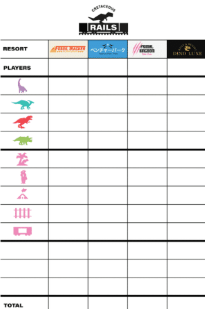
Each player performs the Unload Train Cars action one final time. Then, each player tallies their score. There are two sources of victory points: Captured Dinosaurs and Resort Card Scoring Multipliers. Players can use the scoring guide and pad to keep track of each player’s victory points. Whoever has the most victory points at the end of the game wins.
Review
Cretaceous Rails has two standout elements: the Action Grid and Resort Cards. Ann Journey says that she got the idea of the Action Grid from another game, but I haven’t seen this version of worker placement. It’s quick. The Action Grid gets shuffled and reformed, resulting in varied gameplay from round to round. What may be a good tactic in an early round may not be that good of a tactic in later rounds. The actions themselves are balanced and provide a lot of strategic possibilities. I can lessen someone’s safari bonus by capturing dinosaurs. I can play keep away by taking resources from the main map, while reserving my home hex’s tourists. And all of these actions work well with the Resort Card system.
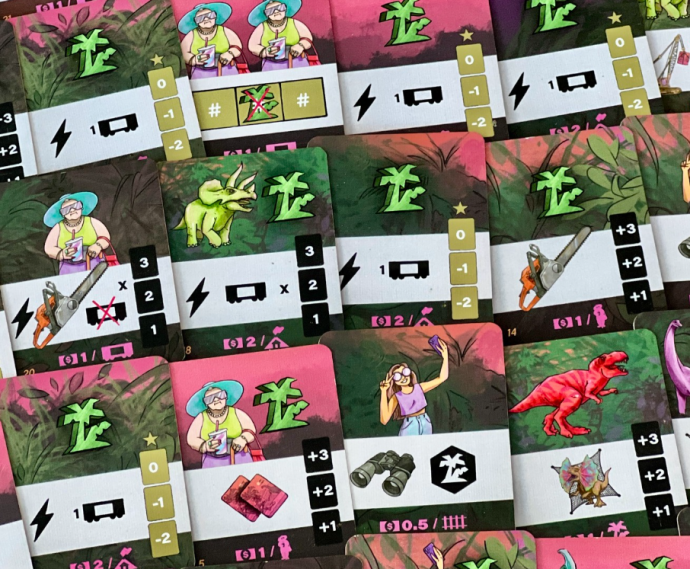
I love how Resort Cards are placed. The bottom rows needing to be larger than the ones above them makes thematic sense if one thinks of the player board as one’s resort, which it is. You can’t have a top-heavy structure. The Resort Cards themselves are multi-use, and that’s one of my favorite game mechanisms, and a trend I like continued in more board games. Each Resort Card has three rows. The top shows what the player needs to place on the Resort Card to construct it. Any Dinosaurs placed on Resort Cards are worth their full value, while Dinos left on Player Boards are worth half points, rounded down. This does enough to entice players to build Resort Cards, even if they don’t stand to gain as much from the Resort Card’s effect.
The Resort Card’s effect is indicated in the middle row of each card. Many of these effects have levels that are determined based on which row you build the card. This adds even more tactical choices to each game of Cretaceous Rails. I don’t know how many times I took a penalty (like lowering a dinosaur’s rating) because I needed the effect of a Resort Card. And each Resort Card has endgame scoring modifiers at the bottom. Again, I’ve spent plenty of Cretaceous Rails games building Resort Cards that I only wanted for the endgame scoring. Players only score the Resort Cards they managed to build. This is the magic of multi-use cards. Love, love, love.
My main critique of Cretaceous Rails is that the game can run a little long. While individual player turns don’t take long, analysis paralysis can be an issue. I tend to plan my turns in advance and then adapt if someone takes the set of actions I want, but other players don’t play that way, and certain players—you know the type—can take extremely long turns. Cretaceous Rails is one of those games (specifically at higher player counts) where the board state can change a lot before you receive another turn, and I have second-guessed my decision on several turns.
The Cretaceous Rails box lists the game’s runtime as 30 minutes per player. However, it’s more like 45 minutes at the lowest player count and 30 minutes for each additional player after the first. Upkeep between rounds can take a hot minute. Typically, I have one player handle one part of the setup (like shuffling Action Tiles and resetting the Action Grid), while another player handles another part of the in-between round setup (like wiping the Resort Card Board and setting up the new round’s Resort Card Board). While Cretaceous Rails doesn’t have a lot of setup between rounds, it does slow down gameplay.
Despite the occasional gameplay slowdown, Cretaceous Rails does a wonderful job combining trains and dinosaurs, and that’s what the game sets out to do. Trains and dinosaurs together at last! The Rails (train minis) play out like a fusion of Ticket to Ride and Catan. Experienced gamers will have an idea of how they work; players new to the board game hobby may struggle. I also like how the trains are two-fold. While the network plays like Ticket to Ride, the Train Car Tiles provide a tasty dollop of resource management. Since every player unloads their Cars at the end of each round (even the last one), you’ll want to time when you unload your Train Cars in the middle of each round. So, time is a hidden secondary resource one must manage. I love it.
One final note: Cretaceous Rails’ production value is phenomenal. That’s something you can expect from Spielcraft Games. I know. I have a relationship with Spielcraft Games’ owner, but it’s true. Alex Wolf puts in a lot of work to ensure his games look top-notch. Getting back to Cretaceous Rails, if you’ve ever wanted to play a combination of trains and dinosaurs, Cretaceous Rails is your game.
Too Long; Didn’t Read
Cretaceous Rails captures its theme of gamers running a dino safari resort experience. While the game mechanisms interestingly converge, the multi-use Resort Cards and the Action Grid stand out. Cretaceous Rails offers plenty of ways to win, but that can also cause analysis paralysis and may not be the best for gamers who are new to the board game hobby.
Happy Friday, Geekly Gang! Kyra Kyle here. I watched Superman (2025) this past week, and I’ve had time to gather some thoughts. Truth time. I’ve had conflicting thoughts on Superman. It’s a fun watch, but is it trying to do too much too soon?
I like the idea of skipping Superman’s origin. We don’t need it. If you want to watch a good version of Superman’s origin, you can rewatch 1978’s Superman. Geekly even has an All Superman Movies Ranked post from last week.Superman (2025) does a good job of sprinkling in just enough of Superman’s origin, so rewatching Supes’ origin may not be necessary. David Corenswet’s portrayal of the Man of Steel is comic-book accurate, which is a step up from Henry Cavill’s Superman. I said this before, and I’ll say it again: I don’t blame Cavill for this misstep. The onus belongs to David S. Goyer and Zach Snyder. Those two missed the mark with Superman as a character.
After the Snyder-verse malaise, Superman (2025) is a breath of fresh air. Outside of Corenswet, most of the actors in Superman nail their character portrayals. Rachel Brosnahan behaves like a fusion between a young Margot Kidder Lois Lane and Lois from the comics. Nathan Fillion makes a great Guy Gardner. I can’t wait to see him in Lanterns. Skyler Gisondo is a fantastic Jimmy Olsen. And Edi Gahegi steals numerous scenes as Mister “God-Damned” Terrific. I always thought Mister Terrific was one of DC Comics’ underappreciated and underused heroes before this movie. I’m glad he had some time to shine.
Nicholas Hoult’s Lex Luthor is more of a mixed bag. I love Hoult’s portrayal of Lex during the first half of Superman. Lex’s cold demeanor when Superman bursts into his lair is peak Luthor. But then Hoult’s Lex leans over the top toward the end of the film. While Lex earned this crescendo during the events of Superman, part of me hoped he remained reserved, if only on the surface. I think that’s what made that scene with Lex sipping coffee as Superman bursts into his lair so great. Outwardly, Lex was in control, but you could see him seething underneath the skin. Such a good scene.
Superman even does a great job of setting up the DCU, and this is where the film may be trying to do too much too soon. Early MCU films established the universe’s characters in solo films. Superman uses Miracle-Gro for its universe. While I didn’t expect–or want–an origin story (most of the early MCU films included origin stories), I don’t know if a Captain America: Civil War-type story was the best place to begin the DCU. Civil War was a Phase Three MCU movie. Phase Three! You kinda leapfrogged two phases.
As a result, Lois and Clark’s relationship didn’t get enough time to develop. The most romantic scene between Lois and Clark is undercut by the Justice Gang fighting an interdimensional imp. (Quick note: The interdimensional imp could be none other than Mister Mxyzptlk.) Don’t get me wrong. I chuckled at Guy Gardner beating the imp over the head with a green bat, but I couldn’t tell you what Lois and Clark said during the scene when Clark first tells Lois he loves her. This is like a Rom-Com have one of the characters accidentally profess their love at dinner, but we have someone making silly faces outside the restaurant window and screaming booga-booga. What did he say? Did Superman say something important?
That said, I love how Superman’s world feels lived in. One of the few things I remember Clark telling Lois during the romantic scene is the Justice Gang said they don’t want or need his help against the interdimensional imp. This is why I’m conflicted. How much do you pare from this world to tell a more focused story? Where is the line between telling a great Superman story and setting up too much of the DCU? Honestly, I don’t know the answer to either of these questions.
What I do know is that Superman’s side characters, like Jimmy Olsen and Perry White, didn’t get enough screen time or character development. Olsen fared better than White, and both actors nailed the vibe of their comic book counterparts, but I would’ve liked more Olsen and White. Plotlines were condensed, not because there were more Superman stories to tell, but the DCU needed time to expand in a single film.
To Guy Gardner, Never change your hairstyle. You’re rocking that bowl cut.
Even though Superman suffers a little under the weight of launching a cinematic universe, this is an issue with most modern superhero films outside the MCU’s first phase, which was almost two decades ago. Yikes! Case in point, Batman (1989) is the last time a Batman film only featured one villain. Batman (1989) was over three and a half decades ago, and we’ve had almost a dozen Batman films since. Superhero movies have the impulse to add more when more isn’t always needed. The result can be an inch-deep ocean of a story, instead of a 700-foot deep river.
Despite any shortcomings, I enjoyed Superman. This film is comic-book accurate. My reservations about setting up too much of the DCU at once aside, Superman got me excited for Lanterns and Supergirl. The Supergirl cameo suggests that this version of Supergirl will borrow heavily from the excellent Supergirl: Woman of Tomorrow comic storyline. I can’t wait to see Kara claw her way back from rock bottom.
Those are my thoughts, for now, about Superman (2025). Let us know what you thought of the film. Thank you for reading, and wherever you are, I hope you’re having a great day.
Happy Friday, Geekly Gang! Kyra Kyle here, and we’re going to discuss Ironheart’s final three episodes. There’s little chance that we’ll cover this subject without major spoilers, so this is your spoiler warning. Last week, Ironheart finished strong, but I wondered if it would continue this momentum during its second episode release. In short, it did.
Ironheart managed to raise the stakes with almost every scene; that’s good to see. Sacha Baron Cohen was electric as Mephisto. Unlike my thoughts from last week (I guessed Ironheart would show Mephisto ruing its fifth episode), Ironheart held off showing Mephisto until its final episode. That’s a fantastic choice. This kept Mephisto from being watered down over two episodes. The MCU has been building toward Mephisto for a while. (Yes, there will be some minor MCU homework, but Ironheart does a good job revisiting Dormammu and the events of the first Doctor Strange.) The show ends on a cliffhanger. It looks as if Mephisto wins. That’s an intriguing ending for what would’ve been Ironheart’s first season. We’ll have to discuss Ironheart’s future at some point. Why not now?
Few Marvel shows on Disney+ have received second seasons, and that’s before considering Ironheart’s potential for underperformance. Disney+ hasn’t yet released its streaming numbers for Ironheart, but I’d imagine it didn’t do well because the show starts slow–really slow–and there’s a chance fewer viewers will give Ironheart episodes 3-6 a watch. Seriously, the last four episodes save the show. Despite leaving a lot of bread crumbs, I doubt Ironheart receives a second season. We’ll see Mephisto and Ironheart again in future MCU projects, but it’s a shame their story won’t continue through a second Ironheart season or an Ironheart special. I’d be okay with a one-shot Ironheart Disney+ special.
Getting back to Ironheart’s final three episodes, the characters grew on me. I was warming up to them during episode three, but Ironheart really did ramp up the tension and/asked interesting questions with each of its scenes. Of course, there were the ubiquitous battles. Ironheart wouldn’t be a Marvel project without the fights growing in intensity. But Ironheart did enough groundwork to make Riri’s showdown against The Hood’s gang, Zeke Stane, and The Hood meaningful. Each of these factions (and yes, The Hood’s gang and The Hood) has different goals and desires, and I like how Ironheart pitted these characters’ motivations against each other.
Even Mephisto’s goals differ from The Hood’s. Did I mention Sacha Baron Cohen is amazing as Mephisto? I have? Well, I’d watch Ironheart just for his performance, but Ironheart had plenty of amazing acting performances. I don’t want to list them all here. Few, if any, Ironheart characters fell flat, but I’ll take this moment to give a shout-out to the surprise Doctor Strange (from the comics) character Zelma Stanton.
Regan Aliyah’s adorkable Zelma Stanton does a great job of tying Ironheart into Doctor Strange and Wandavision/Agatha: All Along. I like how Marvel digs deep into its comic book lore in odd but meaningful ways. Ironheart wouldn’t work without Zelma. Kudos for including her. I have one small gripe. The now iconic scene of Mephisto tempting Riri Williams is a little on the nose (from a writing perspective), but Cohen’s gravitas is outstanding, and I don’t care if I’ve heard a similar version of the devil.
So, is Ironheart worth your time? I’d consider skipping the first two episodes and watching the episode recap for episode three. I’d definitely skip Ironheart’s first episode; it’s a slog. I’m concerned about how the MCU will continue the stories introduced in this show, so I’d have to give Ironheart an incomplete. It ends with a compelling cliffhanger, but there’s little chance we’ll get a satisfying payoff. Please, give us an Ironheart Disney+ special. Beyond those early hiccups, Ironheart was a fun watch. It even manages to set up a solid foundation for future MCU stories.
Ironheart’s future is up in the air. I wish I could tell you that all the great story threads introduced in this show will get a satisfying resolution, but only time will tell. Honestly, Riri’s reunion with Natalia and showing signs of Mephisto taint gave me a smile. Not since Thanos have we seen a Marvel villain succeed, and Sacha Baron Cohen’s Mephisto can serve as a fantastic MCU villain.
Another week and another video game review of a game I’ve played a lot. It’ll be difficult to remain objective while discussing Onirim, but I’ll do my best. Usually, I delete Solitaire from my mobile devices and replace it with Onirim. You can find me in line playing a few games of Onirim. Like I said, I play Onirim a ton.
Hey, hey! Kyra Kyle here. At its core, Onirim is a solitaire game, which is why I replace Solitaire with this title. While this video game is a fun twist on classic Solitaire, Onirim remains a solitaire game, a tabletop card game converted to an app. How will it fare with our review criteria? Let’s find out.
Mechanisms: 10/10
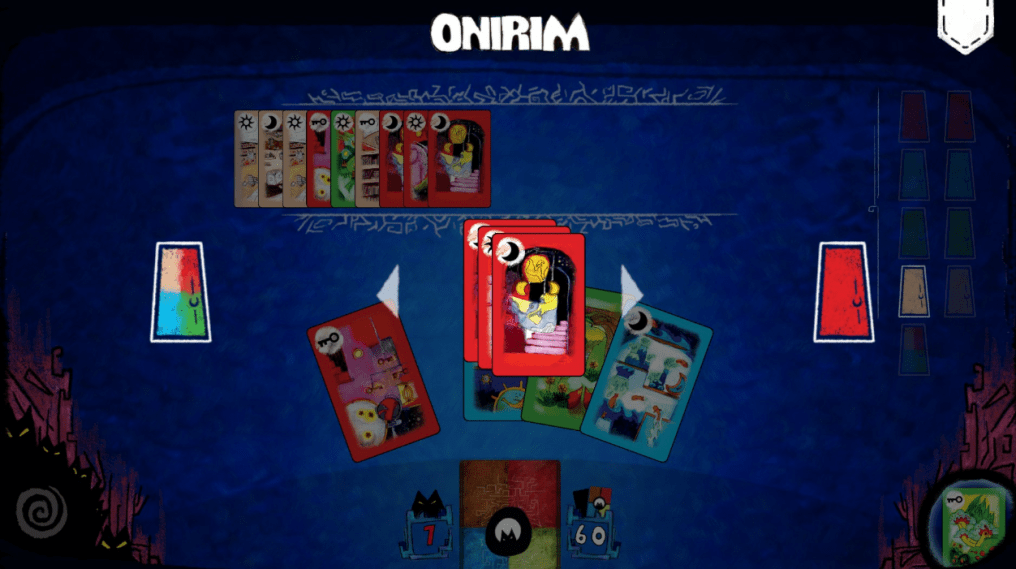
Be honest. You saw this coming. Like I said, Onirim is an interesting twist on classic solitaire. The deck has four suits, each suit has four card types, here’s where the theme comes into play. The player is traveling the dream world (hence the name Onirim, a take on oneiric) and needs to safely escape the land of dreams by opening three doors in each suit. If you draw into a suit’s door and have a matching key, you may open the door. If you don’t have a matching key when you draw a suit’s door, you draw another card and shuffle the door back into the deck. This is where the digital version of Onirim trumps the physical version: shuffling.
During a game of Onirim, you’ll often shuffle the deck. Nightmare cards (which don’t belong to any of the four suits) may be drawn. Bad things will happen when a nightmare appears (it’ll be up to the player what happens exactly), and if the player draws extra nightmares in a turn, any nightmares beyond the first also get shuffled back into the deck. There’s a lot of shuffling, and the digital app does all that shuffling for you. Typically, I prefer a physical tabletop game over a digital version of that same game, but Onirim enhances this already stellar game.
Since the player has choices when a nightmare card gets drawn, Onirim provides player agency and adds a layer of strategy. The remaining two card types (in the base game; there are expansions that we won’t discuss here) are suns and moon cards in all four suits. Suns are the most common card type. Moons are less common. And the rest of the game is playing three cards of the same suit but with different symbols, in the top play area. When that happens, the player searches for a door card in that suit, and then reshuffles the deck. Yes. More shuffling. I love playing the Onirim video game.
Above Image from GameDesigning.Org
Gameplay Loop: 10/10
Onirim games play fast, and each game is unique. The simple premise, the colorful twist on solitaire, and the options a player has once a nightmare card is drawn grant Onirim a high gameplay loop score. I don’t mind waiting in line while playing Onirim. And like I said, I replace Solitaire with Onirim. Obviously, this game’s gameplay loop is fantastic.
Narrative and Storytelling : 3/10
We’re combining narrative and storytelling for Onirim because Solitaire doesn’t have any story. Onirim has an intriguing premise. The nightmare cards and doors needed to escape the dream world, hint at a greater story, but I can’t give Onirim top marks in either of these categories. This is partly why I combined the two. But Onirim does just enough to not get below a three.
User Interface: 8/10
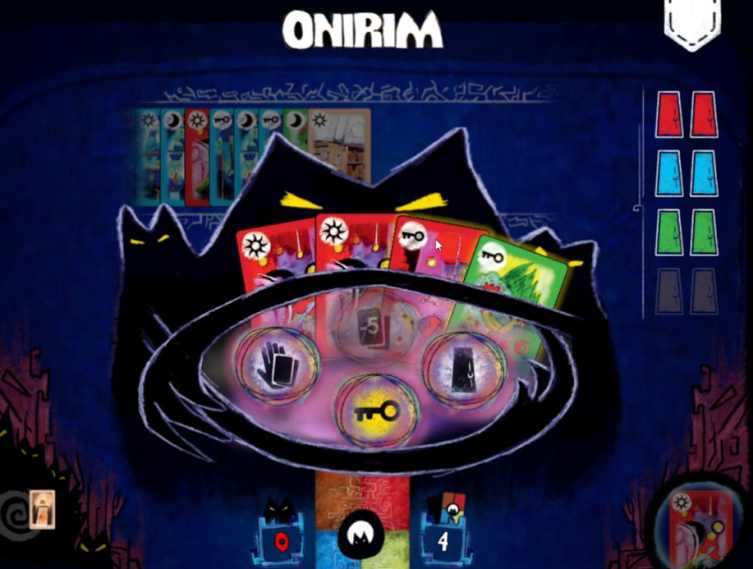
Onirim has a clean look. The play area up top is easy to see (the image above includes an expansion, so there’s a card type, the whirlpool, that I haven’t mentioned). Your hand is visible below the play area. Beneath your hand, you’ll find how many nightmare cards remain (the black demon with the red number on the left, and how many cards remain in the deck; you lose if you run out of cards before opening all twelve doors). The filled-in cards let you know which doors have been opened, and the top right corner is where you can access the main menu. Clean. Easy to read.
I lowered Onirim just a hair for the User Interface because of how difficult it can be to navigate all-time statistics. This isn’t a big deal for a lot of players, but if one becomes invested and explores that rabbit hole, one would want an easier set of menus.
Graphics: 6/10
Onirim has amazing graphics for a solitaire game. But it’s still a solitaire game. Onirim does what it can within the confines of a card game, but no matter how good the cards look, they’re still cards. That said, Onirim may be the prettiest card game I’ve seen. It has to get an above-average score.
Audio: 5/10
Onirim is another game I play with the sound off. The soundtrack is atmospheric, but kind of blends into the background. The sound effects could–and probably should–boost this score even more. But I’m going to stay as objective as I can. While the shuffling effect can be satisfying, you’ll hear it a lot, and it can also detract from the experience. There’s so much shuffling.
Replay Factor: 10/10
Since Onirim is Solitaire with a twist, you’ll find it difficult to play only one game. The app keeps track of your all-time stats, so I end up trying to beat my all-time best, and if that happens, I’ll try raising my overall win percentage or how quickly I typically beat the game. Solitaire with stats. That’s a rabbit hole. It also gives Onirim high marks in replay value.







































 jkgeekly.com