3 Lists of 3 Movie Marathons

It’s Friday night, and you have no plans—or your plan options are limited. Why not try a movie marathon? But which movie marathon should you choose? Old uncle Geekly doesn’t know for sure, I don’t know what type of movies you like, but the following three lists of three could help narrow the search.

Short and Sweet Marathons Most People Could Finish

three-flavours-cornetto-trilogy.jpg

Three Flavours Cornetto Trilogy (5 Hours and 29 Minutes)

The shortest of the movie marathons on this list is the one named after the various flavors of Cornetto ice cream treats featured in each film: Shaun of the Dead, Hot Fuzz, and The World’s End. Edgar Wright and Simon Pegg make a dynamic duo in these three comedies. The different themes and characters also make the Cornetto Trilogy feel like it isn’t a trilogy and perhaps, the easiest one to watch.

I may not be The World’s End’s biggest fan, but it’s still a good movie and the trilogy doesn’t come close to overstaying its welcome.

TheDarkKnightTrilogy

The Dark Knight Trilogy (7 Hours and 37 Minutes)

Jim might slap the back of my wrist with a classroom ruler for including Christopher Nolan’s Dark Knight Trilogy: it’s overrated. To be fair, I agree with him, but it’s still a quick watch, and the films have their moments—Heath Ledger’s Joker alone is worth the price of admission. While Kevin Conroy will always be my Batman, Christian Bale does a good job, despite hyperventilating through half the movies, and many of the villains are satisfyingly menaces.

BackToTheFutureTrilogy

Back to the Future (5 Hours and 42 Minutes)

I had to go with the film series that has pervaded pop culture so much that there was a Back to Future Day on October 21, 2015. Universal Pictures created a trailer for Jaws 19, Mattel manufactured a hoverboard as seen in the film, Pepsi produced a limited run of “Pepsi Perfect,” Nintendo released the Wild Gunman game Marty played in the Café ‘80s scene, and many more including Nike recreating the Nike Mag shoes Michael J. Fox wore. The Back to the Future franchise begets Rick and Morty. ‘Nuff said.

Ridiculously Long Marathons I Might Be Crazy Enough to Try One Day

JamesBondMovieMarathon

James Bond (2 Days, 4 Hours, and 56 Minutes)

He’s the world’s best/worst secret agent—he’s given his real name to how many people?—and along with Sherlock Holmes, one of the most successful and recognizable fictional characters of all time. James Bond also has 26 movies (before the one that’s due in 2019) with six actors portraying the titular character. Sure, the early films are dated. Daniel Craig’s turn is a modern retelling of Connery’s and if one is looking for a more relatable Bond, one should turn there. I also wouldn’t blame you for not wanting to blow an entire long weekend. We’re talking days. Days!
MarvelMovieMarathon

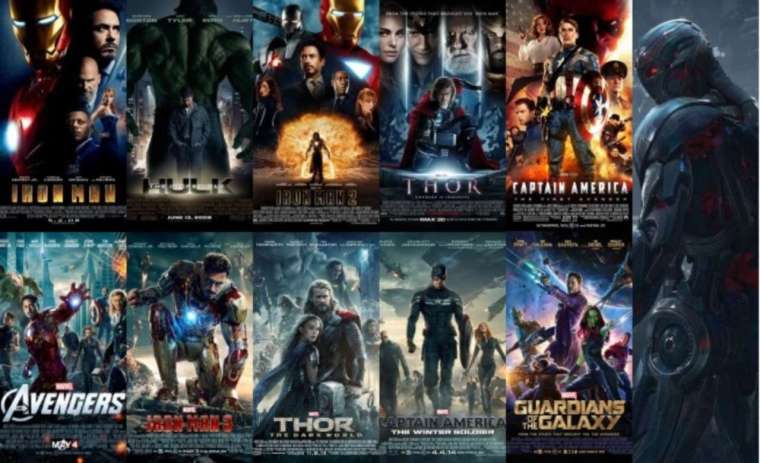
The Marvel Cinematic Universe (1 Day, 18 Hours, and 44 Minutes—and counting)

While DC continues to flounder (I hope that changes soon), Marvel consistently produces strong movie-going experiences. The trick was to start with solid individual movies before expanding and crossing the various franchises. The only problem is that there are too many Marvel movies. This marathon only includes the films, not the Netflix originals and other TV shows. I’m crazy; I’m not that crazy.

You may not be able to finish every film over a standard weekend. You may have to call in sick from work. If I’m being honest, I’d have to be a little sick to attempt this movie marathon that gets longer every other month. So, I wouldn’t be lying. I am sick. Cough. Cough.

MiyazakiMarathon

Miyazaki Marathon (1 Day and 10 Minutes)

Miyazaki’s marathon is the shortest of the full day ones, and it happens to be the most likely one I’ll try to make happen. Season squeed after hearing that. I’ll have to track down his shorts (that make up about an hour of this runtime) and make sure we have all the animated features he’s ever written and directed. We’ve got to do this right.

To date Miyazaki is the only anime director to have ever won an Academy award. It’s shocking that he’s only won one. He’s a director who I’m always on the lookout for his next release.

Classic Geekly Movie Marathons

Lord-of-the-rings-Hobbit-Movie-Marathons

The Middle-Earth Anthology (20 Hours, 13 Minutes)

You could be forgiven if you wanted to cut the showtime in half and watch only The Lord of the Rings trilogy, Uncle Geekly won’t judge, but even at 10 hours or so, The Lord of the Rings will occupy a large portion of your day. No regrets. Miss Geekly has me beat as she’s seen it at least five or six times with all the bonus features.

Any way you slice it, the Middle-Earth Anthology is cinematic magic and worth your time. Peter Jackson and company do a phenomenal job of bringing to life the series that birthed epic fantasy.

StarWarsMovieMarathon.png

Star Wars (22 Hours, 27 Minutes)

This runtime includes the anthology films (Solo and Rogue One) and that may turn off several fans. It also doesn’t include the upcoming ninth main film, but I had to include Star Wars somewhere on this list. It’s too good. It transformed people’s lives. Some other fill-in-the-blank hyperbolic statement that somehow doesn’t seem like enough.

There are so many ways to watch the films: in order of release, chronological order, and many, many others. I won’t go into the virtues of how to watch these films, you do you, but with a runtime of just under a day one could watch a Star Wars marathon on a day like May the Fourth.

StarTrekMovieMarathon

Star Trek (1 Day, 1 Hour, and 17 Minutes)

Okay. This one may be the other more than a day marathon I’ll have to try at some point and that’s why it’s on the lists of classics. Star Trek may not get the same recognition as the other two titles on this list of three, but it’s every bit as iconic. I’m also required to say something like “iconic” because Jim would put me in a sleeper hold if I didn’t. Zzzz.

Where was I? Yes. Some of Sci-Fi films’ greatest moments have come from Star Trek movies, and it deserves to be on our classic Geekly movie marathons.

That’s my list. I’m sure you guys have more marathons you’d like to add. Tell me how wrong I am in the comments.

On Hiatus

Your uncle Geekly’s going on hiatus over the next week for Thanksgiving, but I’ll be back on Sunday, November 25th.

If you live in the United States, Happy Thanksgiving. If you live somewhere else in the world, Happy fourth Thursday in November.

We hope you’re all doing well, and we’ll see you next week. Until then, be nice to each other and stay geeky.

Hilarious Video Game Glitches

Glitches can ruin a video game. Some give your character two heads—and that can be equally hilarious and terrifying—while others cause sharks to fly in the sky. Many video game glitches make a game unplayable, but there are those few that a pure comic gold. These are video game glitches that improve a game. Your uncle Geekly may play more tabletop games than video games, but he seen enough of these funny video game glitches.

HeavyRainShaun.jpg

Heavy Rain: Shaun!
Heavy Rain is an excellent game—it may be more of an experience than a game, but it’s excellent–and despite all its great moments, Heavy Rain lacks levity. Thankfully, one glitch provides some. One of the main characters, Ethan, looks for his missing son in the final act of the video game and it’s this scene where the game’s glitch can be activated.

You’ll have to watch for a dialogue option for “Shaun!.” If you see that the text is blurred, there’s a strong chance the dialogue will be locked for the rest of the act. You can press the “X” button and force Ethan to scream “Shaun!” for far too long and at inappropriate moments like in the middle of dialogue with another character.

“What do you think we should–”

“Shaun!”

“We could try–”

“Shaun!”

I’m pretty sure those weren’t dialogue options, but it was about that bad. Even better, Ethan’s mouth moves every time he yells so this isn’t just an audio glitch.

CrysisLandSharkHo

Crysis: Land Sharks—Ho!

This one’s very easy to activate. It’s a famous glitch, but Crysis’s land sharks deserve a mention. Go to the beach, take and few steps into the water and wait for a shark to attack.

Once you’ve baited the shark, walk on land, and the shark will follow you, often flying in the air. Sharknado has nothing on Crysis; these sharks are everywhere.

SkyrimBasketHead

Skyrim: Basket Head

This glitch may be fixed depending on which version of Skyrim you own, but the basket head lives on in Bethesda glitch infamy. I prefer to play with it to be honest. All one has to do is grab a basket, bucket, or cauldron and place it over the head(s) of any shopkeeper. Skyrim takes line of sight literally.

The NPCs won’t be able to see you rob them blind, but keep an eye on the basket. While they won’t take off the basket, NPCs will shift and do their usual movements and that could cause what you placed over their heads to slip off.

Fastidious gamers can use a wheel of cheese to weigh down the basket, securing it to the shopkeep’s head. Ah, the power of cheese.

Fallout4TrashCanRocket

Fallout 4: Trash Can Rocket
As you can tell, I can make a list of nothing but Bethesda glitches. In fact, Fallout 4—at one point—had the same basket head glitch as Skyrim. You can give that a whirl if you want.

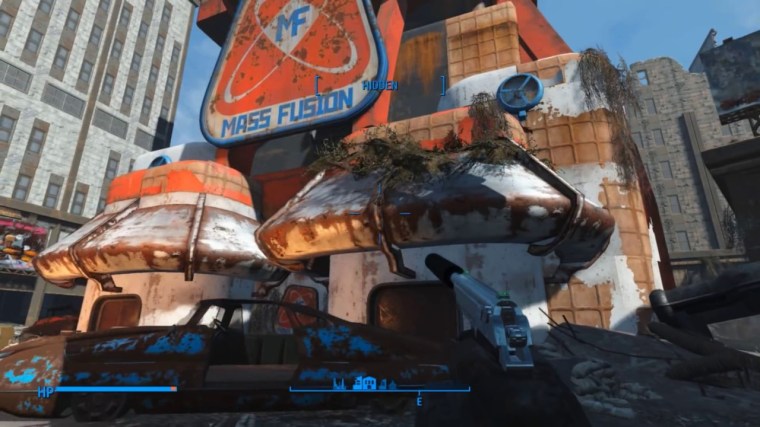
Fallout 4 offers the hard to find Freefall Legs (never take fall damage) and easier to find jetpack-equipped power armor for climbing up the Mass Fusion building (the largest building in the game), but the funniest way to climb the building is to pick up a trash can and stand with your back against the building’s wall. It’ll take some practice, but eventually, you’ll be able to jump while looking at the trash can you’re holding. This will cause the player to climb up the wall.

Jump. Jump. Jump! toward freedom.

WarlordGandhi

Civilization: Warlord Gandhi

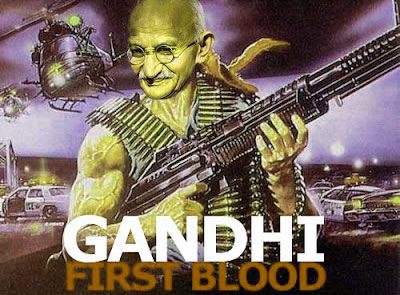
I went old school with this one. The first Civilization video game had an aggression level for each AI leader that spanned 1-255. The idea was that each leader had a baseline aggression (toward the player) at the beginning of the game and every action the player took would affect the leader’s disposition one way or the other.

Gandhi was supposed to be the most peaceful leader, so the designers gave him an aggression of 1. That makes sense. But what the designers didn’t do was create an endpoint.

As a result, if someone chose Democracy as their government, it reduces other leaders’ aggression by 2, and since Gandhi has 1 point of aggression and subtracting 2 from 1 makes an invalid negative value, his aggression rolls over to 255.

Yep. Gandhi declared war on me. Oh! He’s talking smack now.

This can only happen late game, so Gandhi nuked me to the Stone Age. After the shock wore off, I couldn’t help but laugh and do it again.

These are some of Uncle Geekly’s favorite video game glitches, but they are by no means the only ones. Are there any video game glitches that make you smile? Let us know in comments, and I’ll make not to tell Jim. Jim not tell you to tell. Comment to us Jim know.

Syntax error. Error. Error!

Shaun!

HeavyRainShaun

My Favorite Game Mechanics: Sentinels of the Multiverse

There isn’t just one game mechanic that I like from Sentinels of the Multiverse, there are several, but most of them center around one thing: character building.

Sentinels may not be perfect—your Uncle Geekly will have to write an in-depth analysis about it after a while—but most of the design choices in Sentinels do something to characterize the heroes, the villains, and sometimes the world in which they live. Players feel like they’re heroes. They feel super. And that doesn’t happen as much as it should in board games with superheroes.

Some games like Marvel: Legendary (perhaps a better game than Sentinels overall) puts gamers in the role of someone like Nick Fury. You’re assembling a team of superheroes to deal with a threat. Others put gamers in the role of a superhero, but there isn’t an attachment to the character or the characters are flat. You are a unique hero in Sentinels.

SotM_NightMist

While there may be some misses (in terms of character building), there are more characters like NightMist. She’s reckless. How do we know this? She’s just as likely to hurt her teammates as she is the enemy, and the mechanisms in her deck bring out that flavor. Legacy is the leader of the gang. A lot of his abilities promotes this identity. Visionary has a more hands-off approach and many cards in her deck reflect her personality.

The villains have just as much personality, and Sentinels does one of the best jobs in tabletop gaming of building antagonists. Some villains have no regard for their henchmen and prefer the heroes to squish them, others may care for their righthand man, but have no attachment to anyone else. Still others depend on no one else but themselves. These henchmen, if there are any, also tend to build on the eccentricities of the various villains. Citizen Dawn’s lackeys don’t behave like anyone else’s. Grand Warlord Voss has his own unique cronies. The Matriarch always has a murder of crows in tow.

SotM_Dreamer

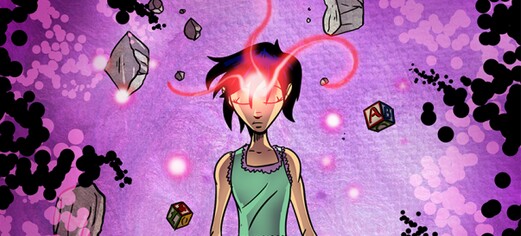
There are even some villains like Akash’Bhuta who are more forces of nature than true villains. The Dreamer who is an 8-year-old girl whose dreams come to life, but she suffers from night terrors and therefore, she’s a victim herself. And Wage Master who’s the resident Mister Mxyptlk who turns game play upside down just because it strikes his fancy. The characters in Sentinels have plenty of—well—character.

Even the environment decks (that represent the location the game takes place) have their own sense of character. Certain environments like Wagner Mars Base aren’t so good for specific characters like Bunker (kind of like Ironman) or The Wraith (a female Batman) because it randomly destroys equipment, while other environments like Rook City (a Gotham City type) hates on all heroes because even the cops are crooked. There are even a few environments that handle heroes with kid gloves. I won’t mention them here. Greater Than Games has plenty of forums for that and many of new game copies rates each environment according to difficulty.

It’s easy to fall in love with Sentinels despite any shortcomings. It has personality. And personality is something more superhero games and antagonists in cooperative games need.

What do you like most about Sentinels? Is there another game that handles character building in a fun and interesting way? Let us know in comments.

Iron Man Starter Stories

Iron Man doesn’t get the due that other Marvel characters receive. Heck, he’s the character who kicked off the Marvel Cinematic Universe. Show some respect, people. He’s also had a checkered past when it comes to the quality of his storytelling.

Some Iron Man moments are some of the best in the business. Others leave readers shaking their heads. It’s a rollercoaster of a ride for Iron Man readers, but fortunately, your uncle Geekly’s here to point you in the right direction of some of the better Iron Man titles that serve as great jumping off places for new Iron Man readers.

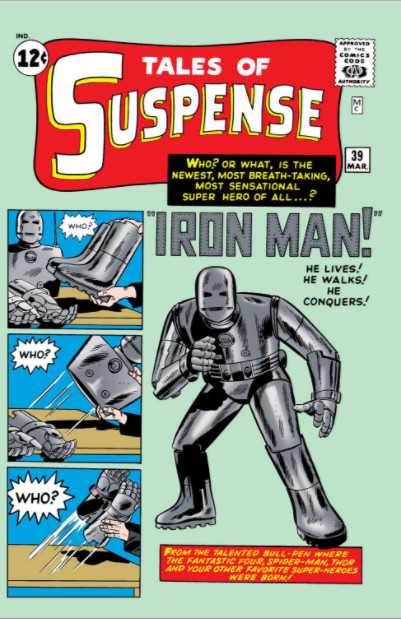
Tales_of_Suspense_Vol_1_39.jpg

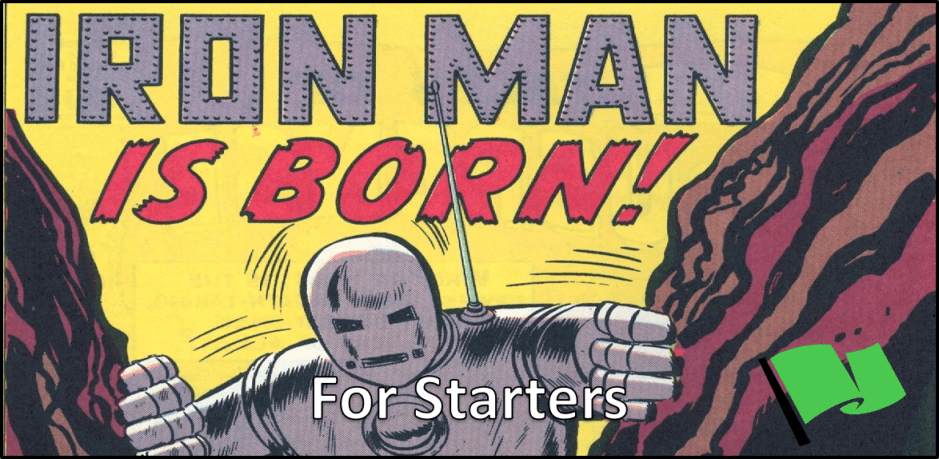
Tales of Suspense #39 “Iron Man’s Origin” (written by Stan Lee/art by Steve Ditko; 1963)

What better place to start than with Iron Man’s origin? What new readers may be surprised when they first read this story is the reflective nature toward communism that it takes—in 1963. We’re in the height of the Cold War. This is a story originally based in Vietnam that was published a year before the Vietnam War started in earnest.

It’s no wonder the Iron Man film obliquely addressed the War on Terror. Iron Man has a history of taking on current events and international conflict. You could spend thousands of dollars to get your hands on an original comic, but Uncle Geekly suggests that you pick up the anthology Essential Iron Man.

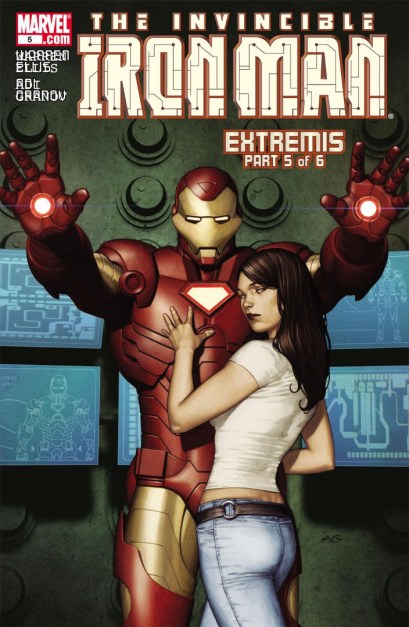
IronManExtermis

Iron Man: Extremis (written by Warren Ellis/art by Adi Granov; 2005-2006)

We’re going to jump several decades to this essential Iron Man story. Extremis updates Iron Man’s origin—something that’ll look familiar if you’ve seen the first Iron Man movie—and serves as the primary source material for Iron Man 3.

This story handles Aldrich Killian (the main antagonist in Iron Man 3) a lot differently than the movie, but the key story elements are present. It also updated Tony’s suit and his relationship with it that one can see in later Marvel Universe movies. Extremis is one of the best Iron Man stories and well worth the read.

IronManDemonInABottle04

Demon in a Bottle (written by David Michelinie and Bob Layton/art by John Romita Jr., Bob Layton, and Carmine Infantino; 1979)

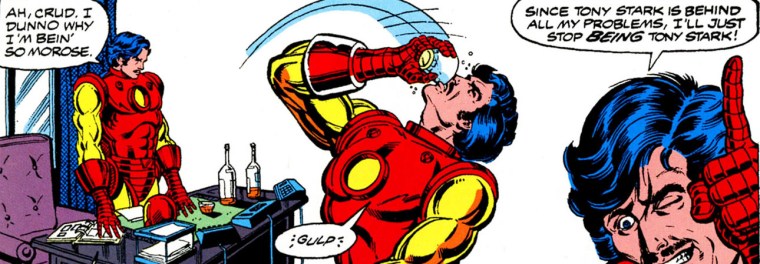
Sorry, but we’re going back in time with this one. “Demon in a Bottle” introduces Tony Stark/Iron Man’s struggles with alcoholism. This addiction remains one of Tony’s defining characteristics.

The Marvel Cinematic Universe glossed over Tony’s alcoholism (there was a moment in Iron Man 2 where he got drunk at a party while wearing his armor), but any collection of Iron Man stories must include “Demon in a Bottle.”

Whether he struggles with his addiction or comforts someone else with an addiction, Tony Stark gained some needed personality and depth with this story, and this story happened almost by accident.

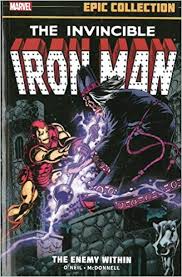
IronManTheEnemyWithin.jpg

The Enemy Within (written by John Byrne/art by John Romita Jr.; 1990)

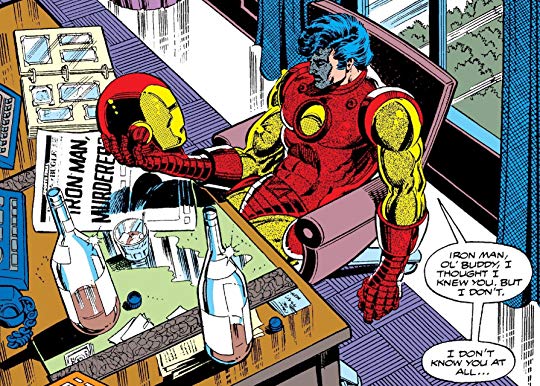
Tony’s alcoholism continues to gnaw at him. When he’s pushed over the edge with AIM, the Serpent Squad, and Diablo while fighting a corporate takeover by Obadiah Stane (main villain of the first Iron Man movie), he turns to the bottle and after several drinks, it’s obvious that Tony is in no shape to fight.

James Rhodes fills in for Tony for the first time in this story and this leads to his transformation as War Machine. Fans of War Machine will love this story. Others will find “The Enemy Within” as a fantastic character study for Tony.

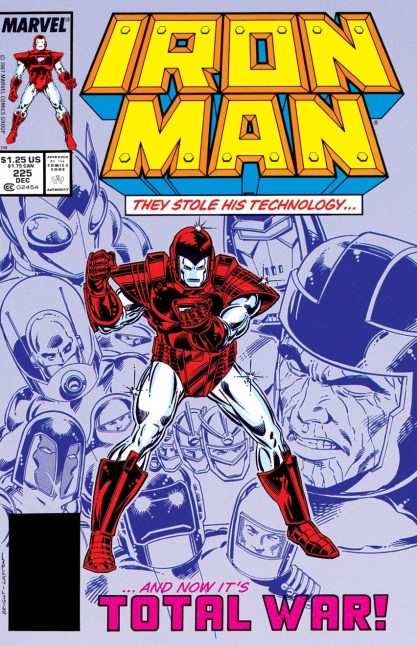
IronManArmorWars

Armor Wars (written by David Michelinie and Bob Layton/art by Mark D. Bright and Barry Windsor-Smith; 1987-1988)

Armor Wars has more action than most of the other titles on this list so far. It also features some of Iron Man’s greatest foes like Titanium Man and Crimson Dynamo. Tony travels to his Vault as he battles the government and infiltrates SHIELD.

But this story is more than just action. It shows how Tony can be careless, aggressive, and out of control with his armor. It’s a story about relationship—specifically ones Tony destroys—as well as who he beats up, and it’s well worth the read.

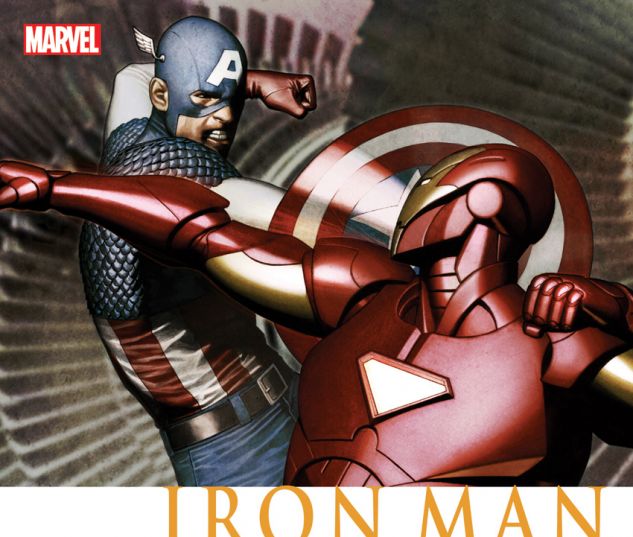
IronManCivilWar

Civil War (written by Mark Millar/art by Steve McNiven; 2006-2007)

This one is by no means a great Iron Man story (I have plenty of issues with it), but it’s a massive tale for the greater Marvel Universe and Tony is in the middle of it.

Like the movie Captain America: Civil War, Tony fights for power registration in his attempt to make the world safer for civilians—or normies. Oddly enough, the movie does a somewhat better job of making the story a little more even keel, but the comic book Civil War is biased in Cap’s favor and that mostly comes from the fact that Tony would never want power registration.

Still, there was a movie that uses Civil War as its source material and this event is one of Marvel’s largest. Just make sure to read the stories centered on Iron Man.

IronManWorldsMostWanted

World’s Most Wanted (written by Matt Fraction/art by Salvador Larroca; 2009)

I couldn’t end this list with Civil War, so I added one extra story. World’s Most Wanted picks up the pieces of the events after Civil War—sort of.

It was a tall order to return Iron Man to his former glory after he betrayed his friends, but Fraction was up to the task and softly reboots the character. Norman Osborne has taken over HAMMER (which movie fans will remember as a huge player in Iron Man 2), and Osborne wants Tony’s knowledge of the superhero community. Tony erases his memories, so he can’t betray his friends.

This returns Tony to person we know even if he had to lobotomize himself to do it.

That’s my list for beginning Iron Man readers. I’m sure there are some omissions. You can let me know what you’d pick by message raven or just leave a comment.

3 Lists of 3 Anime

Hi, everyone. It’s been a while since this anime geek has gone on a tangent about anime and she’s raring to dive in with a three lists of three. This week’s three lists of three will look at various anime. All three lists of three will have similar themes, but look at different aspects of that theme.

Spoiler alert: some endings may be revealed. Ready to geek out over anime?

Overlooked anime

ParanoiaAgent01.png

Paranoia Agent (2005)

Paranoia Agent may be a bit of a mixed bag since most of the reviews online are fan-made. That being said, Satoshi Kon is better known for his movie, Paprika. Paranoia Agent may seem nonsensical and weird for the sake of being weird at first, but as the series progresses, the audience learns that everything happens for a reason. Each occurrence in Paranoia Agent bears significance to future events, and eventually, the end of the series. The continuity in this series is detailed. If this one doesn’t sound appealing, the “happy” opening theme is certainly memorable.

Ranma1_2

Ranma ½ (1989)

Rumiko Takahashi is best known for her series Inuyasha. While Inuyasha isn’t a bad series, it contains a lot of tropes, and, wrap me in a straitjacket, but I don’t remember much of the story. Ranma ½ uses some of these tropes while taking a comedic spin on them (such as Akane being a tsundere (kind-hearted but beats up the object of her affection) and Ryoga constantly getting lost). Since Ranma switches between male and female, the series puts traditional gender roles to the forefront. The characters find themselves in hilarious situations and I think the series deserves more credit.

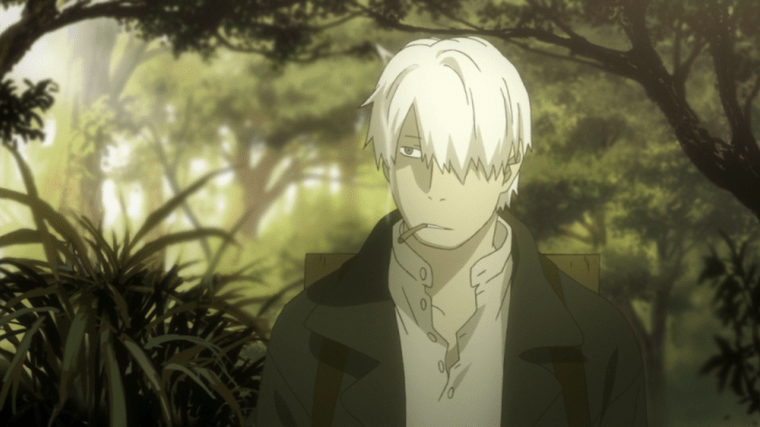
MushiShi

Mushi-Shi (2005)

Mushi-Shi is one of the stranger series out there. The main character, Ginko, travels from town to town, dispelling supernatural/fantastical occurrences that are causing problems. Mushi-Shi is easy to get lost in with its unique stories and visuals, and calming sound effects. This series is a good escape from reality and doesn’t receive a lot of attention.

Overrated anime

SwordArtOnline.jpg

Sword Art Online (2012)

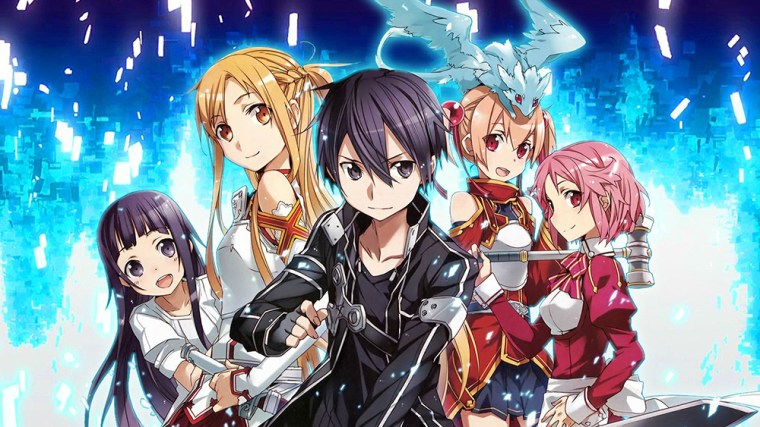
This one seems like it should be obvious, right? Depending on who you ask, Sword Art Online is either their favorite anime or their least favorite. I’ve heard someone say they like the light novels (books that have manga images but read like chapter books) as opposed to the anime, which I’m willing to give a go, since I’ve heard the original source material has better writing. Regardless, Sword Art Online has an inconsistent storyline that had an unnecessary number of episodes in the beginning. They should have condensed most of Season 1 into a couple of episodes as opposed to nine or ten. There are some things Sword Art Online does well, such as having the characters grow attached to an AI, which questions values. On the other hand, it doesn’t show the psychological effects of being trapped in an artificial world, not knowing who your true allies are. An anime that does a better job of this is Btooom!, which one of the characters has a mental breakdown.

AssassinationClassroom.jpg

Assassination Classroom (Ansatsu Kyoushitsu) (2015)

I’m going to be honest. I love Assassination Classroom. I even have a Nagisa hat and tee shirt of the gang. The reason Assassination Classroom made this list is primarily because of Koro-Sensei. He says he wants to educate the kids and asks them to kill him while simultaneously saying they’ll never be able to kill them and dampening their self-esteem, which is contradictory. Why would he build their confidence and smother it at the same time? On top of that he’s threatening to blow up the world. It isn’t clear throughout most of the series whether he cares about these kids and wants them to aspire to something, or if he’s busying himself with being a teacher so he won’t get bored. Granted, they explain his motivation toward the end of the series, but it isn’t timed well. This is right before—spoilers—Koro-Sensei dies. Despite this, they do an excellent job of giving each of the characters an adequate amount of screen time, which is difficult to do with twenty plus characters.

OuranHighSchoolHostClub.jpg

Ouran High School Host Club (2006)

Chances are if you’re into Shojo anime, there’s a good chance that this series has either been trafficked to you from streaming services or is one of the top results from an online search. It certainly was one of my favorite Shojo anime for several years. I watched the series five or six times, listened to the soundtrack, and looked up fanart. Yeah, I went a little crazy. The point of it was to break down Shojo tropes and make fun of them. This didn’t get across well in the anime and it ended up fortifying those tropes. The manga did a better job of deconstructing the Shojo genre, but not by much. It had a lot of editor’s notes to explain what was going on. Anyway, back to the anime, which did have some good episodes, one example being episode fifteen: “The Refreshing Battle of Karuizawa!” This episode gives the audience some much needed character development, but the series is already more than halfway over by this point. Most of the other episodes stuck to character stereotypes and overused themes. We don’t need another Alice in Wonderland parody.

Anime that were popular when they came out but haven’t withstood the test of time

HetaliaAxisPowers.jpg

Hetalia: Axis Powers (2009)

Remember that time when Hetalia: Axis Powers had a slew of fanart and doujins being published on a daily basis? What happened between the early to mid-2010s that sent this series downhill? So, what happened? Maybe the gimmick got old. Maybe people started to realize what they thought was cute was actually offensive to a lot of people. Whatever the reason, Hetalia: Axis Powers isn’t nearly as popular as it once was.

FreeAnime.jpg

Free! (2013)

When Free! came out it was hyped by gals and made fun of by guys due to the main characters being sexy high school boys in Speedos. I’m not joking. Its popularity lasted for a few years, even spawning another season, titled Free! Eternal Summer. The series itself was okay and didn’t have as much fanservice as I’d anticipated. They took the time to develop the characters to some degree. However, Free! dropped off the map a couple of years ago.

BleachAnime.jpg

Bleach (2004)

I know. Bleach is still a popular series, but it isn’t nearly as popular as it used to be. Neither is Naruto for that matter. In fact, Naruto was originally going to make this list due to its poorly placed filler, but after looking at several polls, Naruto was the clear winner in the vast majority of them. Bleach had a lot of filler too, but the timing of the filler was better than Naruto, so it was easier to watch. The writing got progressively worse after the Arrancar arc and ended up being an endless cycle of Ichigo losing and regaining his powers. If they decided to end the series after the Arrancar arc, I think Bleach would have left a better legacy.

There are a lot of anime out there that could make these lists. Do you agree with the ones chosen? Which anime do you think should be included in these lists? Let us know in the comments.
Underrated or Underused X-Men Villains

While we can, and probably will, make lists for underused or underrated characters in other superhero and superhero team books, the X-Men have so many characters in its stable that it’s easy to make a list of them. Old uncle Geekly likes easy tasks, so here’s a list of X-Men villains who are underrated or underused in the comics. I’m sure Jim will spank me with a paddle if I’m wrong.

X-MenChildrenOfTheVault

Children of the Vault (First appearance: September 2006)
You know you have a horrifying supervillain team when they turn Sabretooth’s fur white. Seriously, if you look closely in one of the panels, you can see if Sabretooth poops in the woods. He does by the way.

These superpowered villains don’t fall neatly into a human or mutant category. They’re beings that evolved from a baseline human genome over 6,000 years or so. Think of them as an off-shoot humanoid like a Neanderthal that developed over millennia with the help of the Weapon Plus Program that also produced Wolverine. That, and they want to end humans and mutants. They’re equal opportunity murderers with Spanish codenames like Sangre, Fuego, and Cadena.

Even though they’ve been around for over a decade, the Children of the Vault and their approximately 3,000 members (X-Men #193) haven’t been used enough and that’s why they make this list.

GraydonCreed.jpg

Graydon Creed (First Appearance: April 1993)

We go from a group trying to kill Sabretooth to Sabretooth’s estranged, human son.

Creed factors into so many X-Men characters backstories that I couldn’t possibly list them all here, but I will mention that he formed a group called the Friends of Humanity, and they’ve been a thorn in the X-Men’s side for a long time.

This entry may be a tad misleading. Creed was assassinated in 2010 by Mystique during his presidential campaign. He’s since been resurrected as a human-sentinel. In classic X-Men fashion, it’s more complicated than that, but classic Graydon Creed made a great foil for the X-Men. Plenty of X-Men the Animated Series may remember him fondly as well.

He hasn’t shown up that often since his transformation, but nothing says a trip back in time couldn’t return Creed to his original form. Make it happen, Marvel.

X-MenMastermind

Mastermind (First Appearance: March 1964)

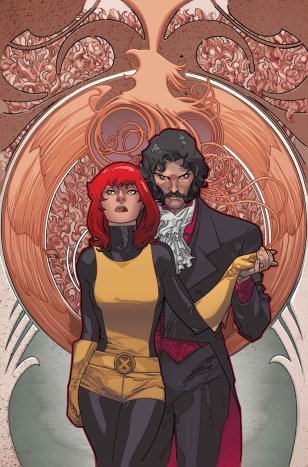
This is the guy who set the Dark Phoenix Saga in motion, and it often gets overlooked and viewed as an also ran. Sure, the original Mastermind perished in 1993, but he doesn’t get the credit he deserves as a pivotal member of the Hellfire Club.

Heck, the Hellfire Club asked him to turn Jean Grey as his initiation into their Inner Circle. When that turned into the Dark Phoenix Saga, his application was rejected, and he was forced out of the group.

But that didn’t stop Mastermind. He remained a thorn in the side of Cyclops and Wolverine—tearing apart future romances. He even went toe to toe with Rachel Summers, the second host of the Phoenix force. He may have died of the Legacy Virus, but he won’t be forgotten by this fan.

Mastermind is a classic X-Men villain who doesn’t get the same recognition as his Brotherhood of Evil Mutants and Hellfire Club teammates. It’s a shame.

X-MenSugarMan

Sugar Man (First Appearance: April 1995)
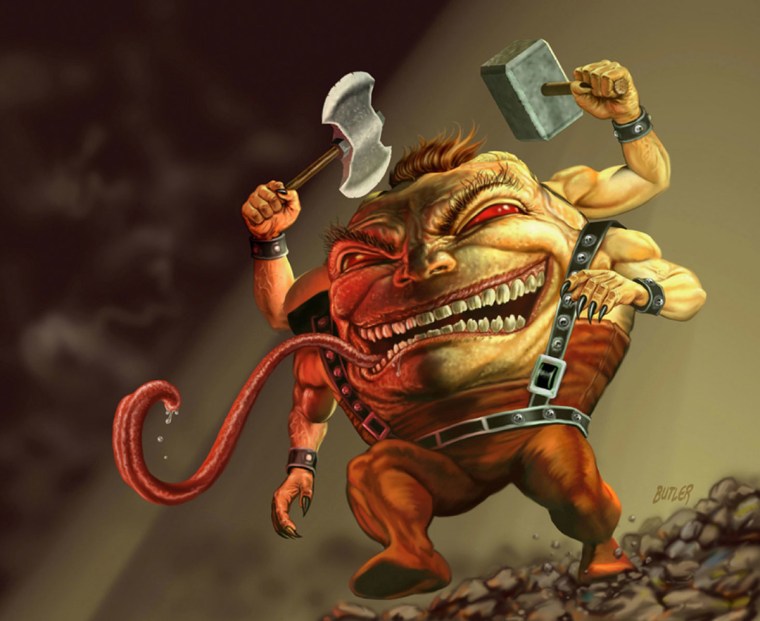
Sugar Man hasn’t made too many appearances because he’s tied to the Age of Apocalypse storyline, but that reality gave birth to Blink, and she’s made plenty of appearances since the 90s. Sugar Man must have the most unique look of any X-Men villain: four arms, a mouth full of razor teeth, a long strong tongue, and a head for a body.

He’s a cross between a troll and a mutant and he isn’t used enough in the X-Men universe. Give us some Sugar Man.

X-MenVargas

Vargas (First Appearance: July 2001)

Yeah, Vargas takes the humans hating mutants angle and adds a Captain America bend to it. He gave himself powers, so humans can compete with homo-superiors. He had a short but interesting run where Rogue may or may not have killed him. To be fair, it was revealed some years later that she spared his life and someone else took it.

While it makes sense that Vargas hasn’t made another appearance, you’d think more humans would take the Cap route to keep up with mutants. Maybe they have, and I missed it. If so, feel free to wag your finger at me.

I could’ve added more than these five, but your uncle Geekly wants to hear your thoughts. Are there any X-Men villains you’d like to see more of or who don’t get the due they deserve? I’ll accept picket signs with your answers on them, or you could take the easy route and comment. Your uncle Geekly won’t judge.

My Favorite Storytelling Element: Iron Man “Demon in a Bottle”

I’m not sure if I can say it any better than several other critics “’Demon in a Bottle’ is THE quintessential Iron Man story.”

Tony Stark/Iron Man’s alcoholism is one of his key characteristics, and “Demon in a Bottle” introduces this. Does “Demon in a Bottle” do as well of a job tackling this issue as other, more modern stories (in comics and other media)? Not necessarily. It’s a 1979 comic book story arc after all. Does writer David Michelinie speed through what occurs during recovery? Yes. It’s almost comical. But he does an excellent job with loss and the struggles Tony deals with, and it’s easy to see why “Demon in a Bottle” remains one of the best Iron Man stories.

Prior to “Demon in a Bottle” Iron Man was a relatively flat character. Many of the stories weren’t engaging. I like how the “Demon in a Bottle” begins as usual Iron Man fare at the beginning of the arc. The storyline ran from The Invincible Iron Man #120-128 (March-November 1979), but it wasn’t until issue 124 or so that alcohol really came into play.

demon-in-a-bottle-2.jpg

It’s odd watching modern critics address this story. They’ll say things like they wished Iron Man started with Tony’s alcoholism sooner and expand on it. Do I wish, in hind-sight, that “Demon in a Bottle” did more to address alcoholism or do so sooner in the arc? Yes. A serious subject like alcoholism deserves as much space as needed.

Other storylines in the 1970s dedicated plenty of issues to drugs. Roy Harper (the original Speedy) was revealed to be a heroin addict in Green Lantern vol. 2 #85 (1971), and Spider-Man fought drugs that same year (The Amazing Spider-Man #96-98), but those two storylines showed third-person accounts of addiction. Speedy wasn’t the main character in Green Lantern. Spidey fought crime, but drugs were kept at arms’ length, in third-person. Tony is Iron Man. “Demon in a Bottle” is a first-person account of how someone slowly descends—but perhaps not slow enough of a descent—into alcoholism.

Furthermore, Spider-Man and Green Lantern knew they were making a statement with their stories. “Demon in a Bottle” came out of nowhere. The issue of alcoholism grew organically, and that tends to be the insidious thing about addiction.

The first several issues Tony started drinking occasionally. As events unfolded—I won’t spoil much here, but many people would consider what happens in the early going of this story side battles and tragedies—he drank a little more each day until his addiction consumed him.

Comic book characters change a lot through the years and decades, but one thing has remained the same for Tony Stark/Iron Man since 1979. He battles with alcoholism. For a story that had little to no intention of making a statement, “Demon in a Bottle” makes a huge one. For a character who was just another guy in a flying suit, he gains one of his most defining characteristics.

IronManDemonInABottle03.jpg

Tony’s alcoholism has been revisited in later Iron Man storylines. He may offer advice to someone else suffering with addiction or he may hit the bottle again. Alcoholism is one of the things that makes Tony Stark relatable, human.

You can even see the impact “Demon in a Bottle” had in the film Iron Man 2. Tony gets drunk during a party in his armor and mayhem ensues. Director Jon Favreau may not have wanted to delve too deeply into Tony’s addiction—Disney/Marvel wanted to keep things light—but he wanted to homage to the most important Iron Man story.

I’m not sure what else there is to say. Perhaps one of you is more eloquent than me or has more insight into this groundbreaking comic book story. If you do, please share in the comments.

Getting Started with Auction and Bidding Games

Have you ever been roped into a bad board game like Monopoly? Well, your uncle Geekly may have some auction and bidding tabletop games that don’t cost as many hours or friendships as the Hasbro giant. These games introduce new gamers to the idea of getting properties or items for the best price and in some cases, selling them for more money. Who doesn’t like to make money-money, make money-money?

CloseUpForSale.jpg

For Sale

For Sale is the first game that came to my mind when thinking of an easy to get into auction and bidding game. Gameplay is broken into two phases. During the first phase, players bid money on properties (each player begins with the same amount of money; it’s all about how one uses one’s money). The second phase shifts to players selling the properties they acquired in the first phase.

It’s fast—really fast for an auction/bidding game. For Sale teaches the value of buying low and selling high. It doesn’t always boil down to who bought the best property (the properties range from manors to a cardboard box); one must know when to reach for the high value properties and when not to. It’s a great teaching tool for more complicated games that include auctions and bidding, and the concept of requiring players to outbid other players—not just match a bid—got its start with For Sale.

Prior to this game, one player could bid five coins for something and everyone around the table would have the chance to match it, and the last jerk at the table would. Then you’d have another slow round of bids for six coins. It took forever. Ugh!

Thank you, For Sale.

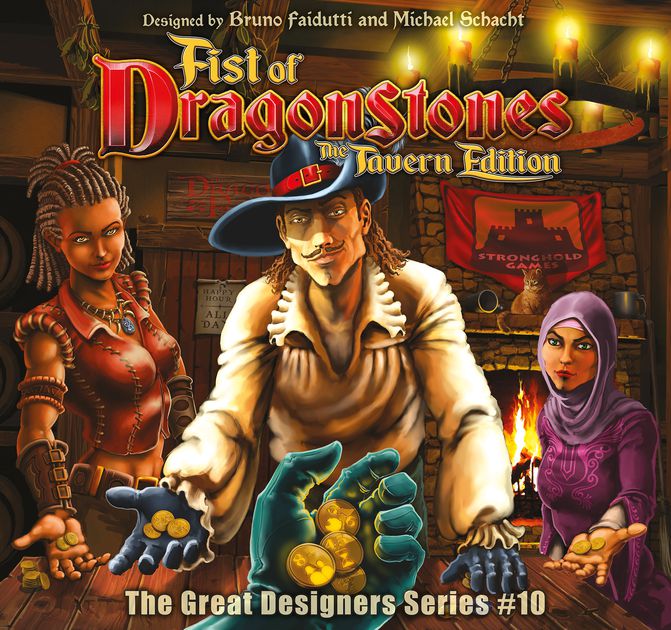
FistOfDragonstones

Fist of Dragonstones

While For Sale eases players into auction and bidding with a different economic layer each phase, Fist of Dragonstones adds a hidden bid mechanism and multiple economic layers. There’s more going on with Fist of Dragonstones, but if someone is looking for an auction/bidding game with more strategic value and still plays quick and easy (it also has a fun fantasy theme), consider Fist of Dragonstones.

Players bid on character cards (with abilities) by using a closed fist method. No. You’re not allowed to punch someone; you’re just holding out a closed fist, hiding your bid.

Players hide their total money (split between regular gold and fairy gold, which is magical) behind a player shield (a piece of cardboard) and when an auction occurs, every player takes the bid they plan to make (regular gold, fairy gold, or a combination of the two), holds their bid in their closed fist and reveal their bids at the same time. The highest bidder wins the auction, and any money used—whether the player won or lost the bid—is returned to the bank.

FistOfDragonstones01

Each character (the cards players are bidding on) has an ability that can help obtain more money or victory points. The first player to 4 victory points, wins.

The various character cards add replay value, and I don’t know of a single auction/bidding game that uses a fantasy theme. Maybe I should make Dragon Tycoon.

The inclusion of a closed fist bidding system is a great choice. Fist of Dragonstones uses the mechanism well and this a common game mechanism used in other tabletop games of various types—not just games that are predominantly auction or bidding.

There’s a reason this game put the juggernaut game publisher Days of Wonder on the map, and I hear it’s getting a reprint this year (2018). Bonus!

Stockpile

Stockpile

Ever wanted to play the stock market? Stockpile puts players in the shoes of a wolf of Wall Street. Well, maybe not, but the game does a good job of giving each player hidden information (about 1 of the game’s 6 stocks) that the other players don’t have to make decisions on whether to buy or sell a stock.

If a stock is about to plummet, ditch it into one of the stockpiles that players bid for during the round. Each player must place one stock face up in one of the stockpiles and one face down. Since there is one stock that is global knowledge (one of the risers and fallers for the round is known to all players), sneaky devils may want to put a stock of that type, face down so other players won’t know it’s there.

Stockpile01

Stockpile’s bidding system is unique from the rest of the games on this list as each stockpile has a corresponding calculator card above it. The numbers (0, 1, 3, 6, 10, 15, 20, 25) on the calculator buttons represent the bids (in thousands) a player can make, and players take turns placing their markers on an available number on one of the calculators. Players can outbid—but not match—a previous bid. If they do, the owner of the lower bid collects their marker and can bid again. As soon as all players have placed their markers, they collect all the cards in the stockpile that their marker is on.

The bidding in Stockpile doesn’t take that long as there are only eight possible bids one can make for each stockpile during a round. New gamers will see this style of bidding in a lot of games like Cyclades. Due to the streamlined bidding, Stockpile gets players involved with trying to predict stocks that will rise or fall over the course of the game.

Stockpile is great for commodity speculation, but it’s also one that I’ve seen an 8-year-old play and enjoy.

Final Thoughts

These games beat the pants off Monopoly. For Sale, Fist of Dragonstones, and Stockpile serve as great entry-level games with some solid replay value. Just make sure you don’t lose your pants in a shady business deal.

Know of any other great beginner auction and bidding games? Let us know in the comments.

3 Lists of 3 Movies

Your uncle Geekly kicked off these 3 Lists of 3 with TV so it’s only fair that we cover a few movies as well. Uncle Geekly doesn’t agree with critics most of the time and it might be a good idea to put on my psychic cap and see which upcoming movies will be better or worse than most critics think.

Upcoming movies that’ll be better than critics think they’ll be

Dark Phoenix (February 14, 2019)

I’m most likely wrong with this one. Heck, I may be wrong for countless reasons and if I am, I’ll owe Jim a lap dance from Jean Gray—How’s that for passing the buck to a fictional character? You’re welcome, Jim—but I want a well-done Dark Phoenix Saga live action film. It’s one of the X-Men’s most iconic storylines and X-Men: The Last Stand did a poor job of adapting it. Who knows what critics will think of this one? We’ll have to see what happens with Dark Phoenix, but I’m sure I’ll watch it no matter what and hope for the best.

Dumbo

Dumbo (March 29, 2019)

The Disney live-action movies are mixed bag and Tim Burton has been in a slump for some time, so Dumbo may or may not receive favorable reviews. I’m leaning toward fewer favorable reviews, since Burton tends to go odd with his interpretations. Even so, Dumbo has me intrigued. If there was any live-action Disney film Burton was perfect for, it’d be Dumbo and the director is reunited with Eva Green and Michael Keaton. This is the first time Burton and Keaton will have worked together since Batman Returns. I’m in.

Shazam

Shazam! (April 5, 2019)

I could go with Aquaman here because critics typically dock movies 10-15% on Rotten Tomatoes when they see DC is attached to a project, but I’m not as confident with Aquaman—something about a live action movie under the sea that may not land—so I’m going with the action-comedy Shazam!. About the only thing I know at this point is that Dawyne “The Rock” Johnson’s Black Adam won’t be the antagonist of this film, his movie should be even better, but I have faith that Shazam! will build on the momentum of Justice League’s second half—and I hope Aquaman does the same.

Upcoming movies that’ll won’t be as good than critics think they’ll be

FantasticBeastsTheCrimesOfGrindelwald

Fantastic Beasts: The Crimes of Grindelwald (November 16, 2018)

The first movie of this series was an abomination and it received 76% fresh on Rotten Tomatoes and while I believe the sequel can mostly go up from the first film, I don’t think it’ll be much better than a 40-50% and I won’t be surprised if it receives higher than the previous 76%. If you can’t tell, Fantastic Beasts: The Crimes of Grindelwald is a hard pass for me.

CaptainMarvel

Captain Marvel (March 8, 2019)

This one might be a little surprising. I like the Marvel cinematic universe, and this film should build on the events of Infinity War, even though it’s set in the 1990s. I also like the 90s, many of my formative years were spent in the 90s, but Captain Marvel reeks of a film dangerous with replacing many characters with Skrulls. If half of the characters have been Skrulls all along, Disney-Marvel can easily recast those characters to keep the universe going and that irritates me. Even if Disney-Marvel doesn’t do that, Captain Marvel is a prequel and I downgrade prequels because they seldom push a story forward.

JokerMovie

Untitled Joker Origin Movie (October 4, 2019)

While I think DC movies receive too much hate, something tells me that the Untitled Joker Origin Movie will get plenty of high marks by critics, based on the involvement of Martin Scorsese and Joaquin Phoenix. I have heard that the movie plans to use The Killing Joke as source material, too, but DC Animation didn’t do a good job with the story a few years ago. The early trailers look promising, but The Joker tends to work best when no one knows much about him: case in point Heath Ledger in The Dark Knight.

Surprise hit movies

WelcomeToMarwen

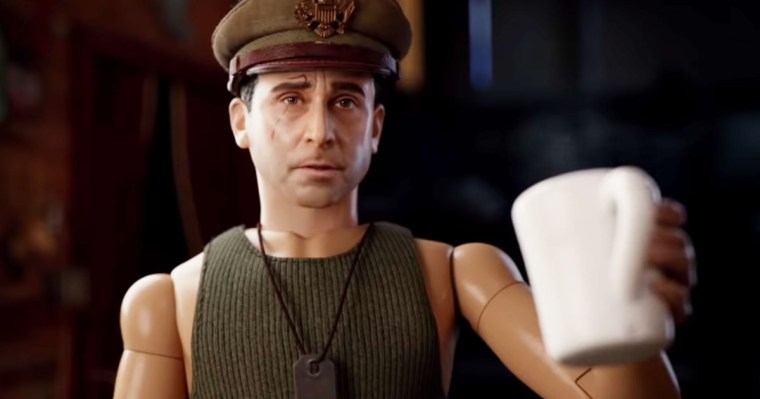
Welcome to Marwen (December 21, 2018)

This Steve Carrell engine deals with a man overcoming a traumatic experience. Welcome to Marwen is being released at the time when Oscar darlings tend to get released and while I’m sure the academy may consider the film, the direction of Robert Zemeckis usually leads to a well-received hit.

GlassMovie

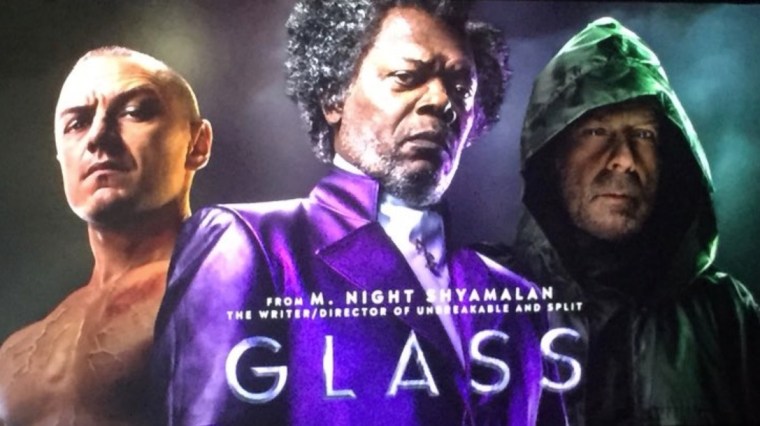
Glass (January 18, 2019)

The third movie of the surprising Unbreakable trilogy should make more money than the previous two films. The first set up the world, the second shocked many, and the third Glass should receive enough buzz to put M. Night Shyamalan back in the limelight—at least for a while. I’m not sure if Glass will be any good, but it should make plenty of money and should be intriguing.

ChaosWalking

Chaos Walking (March 1, 2019)

Dystopian worlds are overdone, but the premise of Chaos Walking is interesting (every living creature can hear each other’s’ thoughts in a stream of images, words, and sounds called Noise) and the stars (Tom Holland and Daisy Ridley) make this one interesting and a possible hit. I’m the least confident about Chaos Walking, but I’m hoping it delivers on some of its promise.

Are there any movies we missed with our lists? What do you think will be a surprise hit or a movie that’ll be better or worse than critics think? Let us know in the comments.