Geek Out

Daredevil: Born Again, “The Hollow of His Hand” Review

Daredevil: Born Again continues this week with a single episode, “The Hollow of His Hand.” The show focuses on the courtroom drama surrounding the White Tiger. While I think this is a good choice, the pacing for a storyline like this would play out better for a full 13-episode season (like the previous Daredevil series) instead of the 9-episode season, split in two, that Daredevil: Born Again has scheduled. Daredevil: Born Again is fated for getting rushed.

Hey, hey! Kyra Kyle here. I’ve had more time to digest Daredevil: Born Again’s first two episodes from last week, and they leave me wanting. Everything felt rushed. And while I understand that Daredevil: Born Again wants to get Matt Murdock into his Daredevil suit as soon as possible because the show only has three episodes remaining before it goes on hiatus, I can’t help but think that the original show would’ve taken its time and not rush through White Tiger’s trial. The showrunners must not be used to shorter seasons.

What remains does a good job of pitting Matt Murdock against Kingpin from an ideological standpoint. The sparing between Murdock proving vigilantes as necessary (even helping police) and Kingpin’s decree to the media that vigilantes operate outside and above the law works. The lack of scenes with White Tiger doesn’t work as well. Through witnessing on the stand, the life of White Tiger is told. We don’t see White Tiger in action. We don’t even see how his magical amulet works. I’m reminded of the writing adage: show don’t tell. Daredevil: Born Again does a lot of telling because they don’t have time or money.

Daredevil: Born Again marks the first Disney+ Marvel series when the production attempts to cut costs. I hope that scenes with White Tiger weren’t cut for time or budget. Puerto Rican actor Kamar de los Reyes who portrays White Tiger passed away from cancer on Christmas Eve 2023. He delivers a fantastic performance.

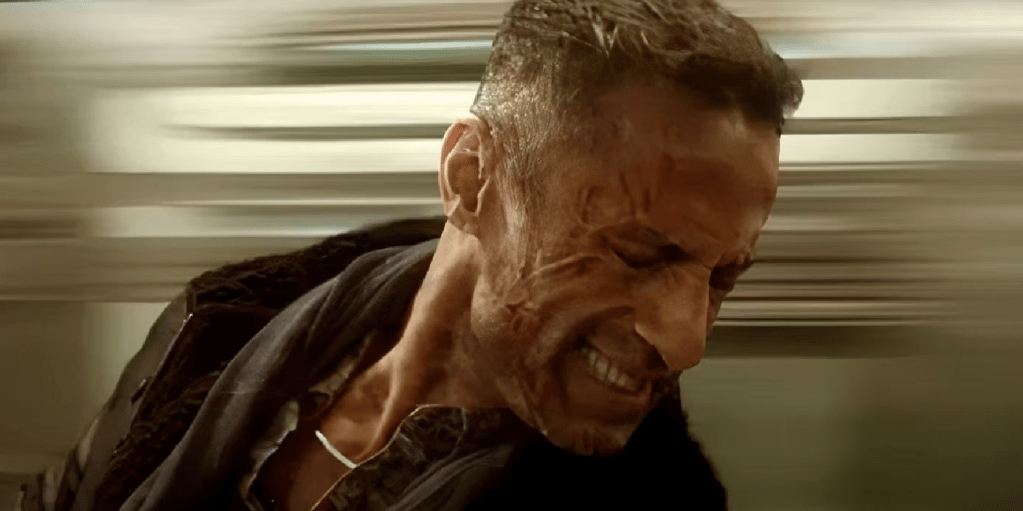
We get into spoiler territory here. You’ve been warned. After a short trial sequence, White Tiger gets gunned down days later by someone who may be The Punisher. I don’t know if the could be Punisher works for Fisk. The sequence where White Tiger dies occurs during a voiceover with Wilson Fisk, explaining how vigilantes should not exist. In the comics, the Punisher began as a mercenary for hire. It would make sense if he was behind White Tiger’s death, but Fisk has been distancing himself from crime as much as Murdock distances himself from crimefighting. The Punisher could also be exacting vigilante revenge against a vigilante for (accidentally) killing a crooked cop. That’d be an interesting twist.

End of spoilers.

Despite the swiftness of these events, Daredevil: Born Again does a great job of honoring White Tiger’s death. Like Foggy’s death in episode one, White Tiger’s death is sudden. But the twist of who may have killed him leaves the episode on a cliffhanger, and “The Hollow of His Hand” ends with a quiet moment. The only sound the audience hears is the coquis (a small frog native to Puerto Rico) whistling against the surf.

White Tiger had shared with Murdock that he only felt at peace when he sat on a bench by the ocean and could hear the coquis. This moment was well done. It’s a wonderful tribute to Kamar de los Reyes.

I want more moments like this one. The previous series would sprinkle in heart-felt beats in between the action. I have hope for the remainder of Daredevil: Born Again’s initial six episodes, but I’ve heard that Muse could become a main antagonist. How does Daredevil: Born Again hope to juggle the introduction of the Punisher, Muse, and the inevitable Kingpin showdown? Muse could’ve disguised themselves while they killed White Tiger. We’ll have to see. Thank you for reading, and wherever you are, I hope you’re having a great day.

Top 5 Daredevil Villains

While Daredevil: Born Again is ongoing, let’s discuss the best villains the Man Without Fear has ever had. Hey, hey! Kyra Kyle here. We’re back with the first Top 5 Villains List. Daredevil doesn’t have the most robust rogues gallery, but he does have a handful of standout villains. Here’s our list of the Top 5 Daredevil Villains.

5: Mr. Fear

Frankly, the top four Daredevil villains are set in stone—for the most part. The only variable I could find was at the fifth spot. I’ve said it a lot in previous Top 5s, but I could’ve gone in several directions. I almost feel like the bottom villain in a hero’s Top 5 villains must bring something a little different. Mr. Fear does that. You’d think that a villain whose gimmick involves fear would be no issue for Daredevil: The Man Without Fear, but Mr. Fear has posed a threat on more than one occasion. My favorite version of the Mr. Fear must be Matt Murdock’s old classmate, Larry Cranston. Cranston once gave Matt’s ex-wife Mia Donovan an overdose of a fear-inhibiting drug that led her to take an innocent’s life. Mr. Fear does more than hold his own with Daredevil’s typical martial arts-savvy characters.

4: Typhoid Mary

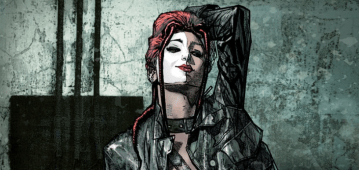
Ann Nocenti created Typhoid Mary. She’s a deadly and intriguing villain. Mary’s a mutant with telekinetic abilities and suffers from dissociative identity disorder, which gives her three different identities, a soft-spirited one (Mary), a violent one (Typhoid), and a sadistic one (Bloody Mary). Mary was once a soap opera actress and briefly in a relationship with Matt Murdock. One doesn’t know which one of Typhoid Mary’s personas is in control. Mary’s condition makes her unpredictable. Her mutant powers coupled with her innate mutant abilities make her a force. Season three of the Netflix Daredevil series included a version of Typhoid Mary. Typhoid Mary could make for an interesting foil with the MCU heading toward a Mutant Saga.

3: Elektra

Elektra Natchios is arguably the love of Matt Murdock’s life. Daredevil may have had a lot of girlfriends throughout the years—including the previous entry Typhoid Mary—but Elektra stands alone as Matt Murdock’s most iconic lover. Elektra’s the Catwoman to Matt’s Batman. As the daughter of a Greek ambassador to the United States, Elektra could’ve been anything. She chooses to be a villain for hire. Like Catwoman, Elektra always seems on the cusp of redemption, before showing Daredevil her ruthless nature. Elektra constantly switches sides. And her death at the hands of Bullseye remains one of the most iconic moments in Daredevil comics history.

2: Bullseye

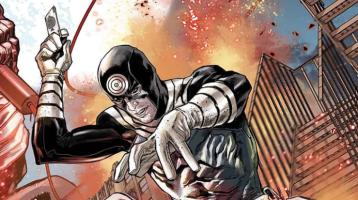
No villain may have caused more pain and suffering for Matt Murdock than the contract killer Bullseye. This is the man that Daredevil tortured by playing Russian Roulette with an empty gun. Bullseye’s hands make anything a lethal weapon. He’s built his reputation on his perfect aim, throwing knives and other sharp objects with insane accuracy. He also helps that Bullseye’s skeleton is coated in adamantium, like Wolverine’s. Despite his physical prowess, Bullseye strives to inflict emotional pain. He’s taken away two of the loves of Matt Murdock’s life, Elektra and Karen Page, and joked about it afterward. Bullseye is the worst kind of villain. He takes pleasure in what he does, and what he does can be sickening.

1: Kingpin

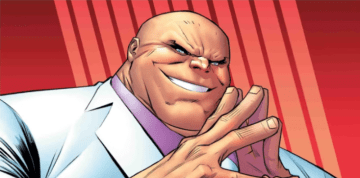
Kingpin started as a Spider-Man villain, but Frank Miller’s run on Daredevil changed the course of the villain’s life. Since Miller’s run on Daredevil, the pair love to hate each other. In the “Born Again” comic book series, Fisk learns Daredevil’s identity and dismantles every aspect of his life, stripping Matt of his law license and even blowing up his apartment. Kingpin’s actions drove Matt Murdock to the brink of insanity. But Fisk has always managed to outsmart and maneuver his way around Daredevil. During the “Return of the King” storyline, he weasels his way into an alliance with Daredevil. He does so intending to betray the Man Without Fear at the most opportune moment. Kingpin may be one of Marvel’s greatest villains, but over the past several decades, he’s been a thorn in Daredevil’s side and worthy of the top spot.

Did we get the list right? Let us know who you would add or remove in the comments. And wherever you are, I hope you’re having a great day.

Tabletop Game Review: Marvel United, Enter the Spider-Verse

Marvel United has copious amounts of expansions. It’s a CMON Games Kickstarter using the Marvel intellectual property. That’s bound to happen. Geekly won’t be covering every Marvel United expansion, but we will review the ones worth your time or the ones we believe people will most likely purchase. So, you could consider the Marvel United expansions we cover as ones you may want on your radar.

Hey, hey! Kyra Kyle here. In Marvel United, players act as iconic Marvel heroes who work together to stop the master plan of a powerful villain controlled by the game. Each villain has a unique master plan, cards that trigger various effects, and threats that make clearing locations difficult. Heroes clear missions, making the villain vulnerable, and finally take on the big bad villain before they complete their dastardly plan. Can you save the day in time? Enter the Spider-Verse puts players in the spandex of famous characters of the Spider-Man universe.

Before we get any further, we’ll take a side quest and discuss Enter the Spider-Verse’s less heroic details.
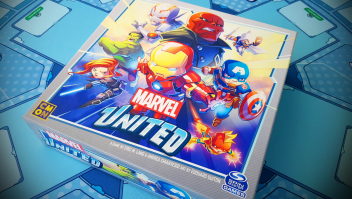
Marvel United Box Close Up Board Game Review

The Fiddly Bits

Designer: Andrea Chiarvesio and Eric M. Lang
Publisher: CMON Global Limited and Spin Master Ltd.
Date Released: 2021
Number of Players: 1-4
Age Range: 8 and up
Setup Time: 5-10 minutes
Play Time: 30-40 minutes

Game Mechanisms

Cooperative Play
Hand Management
Modular Board
Solo / Solitaire Game
Variable Player Powers
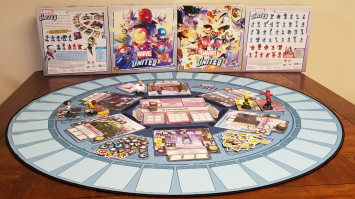
Marvel United Tabletop Game Set Up

Game Setup

We already covered the Game Setup and Game Flow in our Marvel United review (here’s a link to that review), so we’ll go over the basics in the following two sections. Let’s cover an abbreviated review of the game setup and rules.

Marvel United’s setup can change depending on which Villain and Heroes you choose to play. Each game consists of six locations. Typically, core sets have eight locations. Since Enter the Spider-Verse is an expansion, it only has six. You may choose your locations or shuffle them and choose six at random. Each Location card has spaces at the top for civilians and thugs and a rectangle with a block of text that will state “End of Turn” at the top of the box.

Place civilian/thug tokens on their matching spaces. Shuffle the Villain’s Threat deck and deal out each Threat face-up so that it covers the rectangle at the bottom of each location. You must clear this threat before gaining the “End of Turn” effect printed on a Location. Place health tokens where signified on threat cards and on the Villain dashboard. Place the three mission cards (Defeat Thugs, Rescue Civilians, and Clear Threats) face up under the villain dashboard where the text reads “Unlocked.”

Each player shuffles their hero decks and then draws three cards to form their hands. Shuffle the Villain’s Master Plan deck. Leave the Master Plan deck face down. This will be the villain’s draw pile.

Players place their miniatures on one of the six location cards, usually the centralmost location for each player (easy access). Then, they place the villain on the location card opposing the heroes.

Marvel United Game Flow Board Game Review

Game Flow

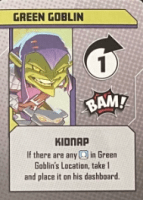
The villain(s) play first. Draw the top card of their master plan deck. The villain moves the number of spaces indicated. Resolve any BAM! Effects and these effects will be printed on a space within the villain’s dashboard. Then, place the civilian/thug tokens (if any) indicated at the bottom of the card. After all these effects are resolved, the heroes get their turn.
Heroes pick who goes first, and hero turns will continue around the table clockwise. At the beginning of each game, Heroes will get three turns before the villain receives another turn. During their turn, heroes play one card from their hand.
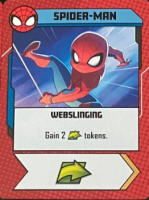
Resolve actions and the symbols printed at the bottom of the hero’s card in any order. The symbols at the bottom of a hero’s card will be shared with the next player, but any printed action will not be shared. Heroes will use these actions to complete missions. The game begins with three missions in play: Defeat Thugs, Rescue Civilians, and Clear Threats. Each mission card will have spaces for the tokens they require to complete. As soon as these spaces are filled, the card is discarded, and the mission is considered complete. Mission cards can be completed in any order.

Marvel United Three Mission Cards Board Game Review

After the heroes complete the first mission, the villain panics and will act (play a card) every two hero cards instead of every three hero cards. After the heroes complete the second mission, the villain becomes vulnerable to damage. The heroes can complete the third mission, but it isn’t necessary. If the heroes do complete the third mission, each hero immediately draws 1 card, increasing each player’s hand size by one.

Play continues back and forth until either the villain wins (by completing their unique master plan or anyone, heroes or villains, runs out of cards) or the heroes win by dealing enough damage to the villain after the villain becomes vulnerable to damage.
Enter the Spiderverse Marvel United

Review

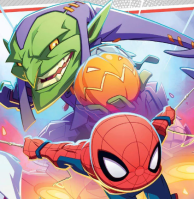
Enter the Spider-Verse features a lot of fan-favorite characters (Spider-Man, Green Goblin, and Miles Morales). Since that’s the case, it’ll be one of the first expansions players will purchase. And it’s a great choice.

Let’s begin with the heroes. Spider-Man has a lot of potential token gain. I don’t know how many times I saved the day by playing Spider-Man. Seriously, I may have completed most of the games in my guides (here’s a link to Geekly’s Marvel United guides) with Spider-Man. Frankly, he’s a broken character. Broken in the best possible way. I’ve easily played Spider-Man more than any other character in Marvel United. He’s Spider-Man. It’s great that Marvel United made him a character you can return to again and again.
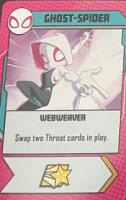
Ghost-Spider and Miles Morales may have more niche abilities, but given the right circumstances, they can be deadly. Ghost-Spider can swap in-play Threat cards (which could be nice for an ongoing ability), and she can defeat all Thugs in her location. Miles Morales’ strongest ability “Web” allows him to delay the Villain Turn by one card. “Web” is a more universal use. Miles may be my second-most played character. Then, there’s Spider-Ham. He’s a Kickstarter Exclusive and that’s okay. He stinks. Good news though. It’s okay if you purchase the retail version over the Kickstarter version. Spider-Ham’s inclusion is the only difference between the two versions, and you’re not missing much with Spider-Ham. Unless you’re a completist or you like Spider-Ham, buy the retail version of Enter the Spider-Verse.
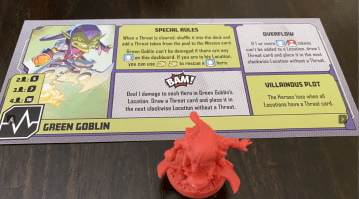
Enter the Spider-Verse’s sole villain Green Goblin is notoriously difficult to beat. I’ve only ever beaten Green Goblin by playing heroes and locations from the Enter the Spider-Verse expansion. Green Goblin has a special setup than the one above. Players don’t begin the game with threat cards in play on locations. Green Goblin will add them as he goes along, and he wins if each location has a threat card. This can lead to players clearing a particularly nasty threat card, like “Electro” or “Using Civilians as Shield,” and Green Goblin putting those cards back in play.
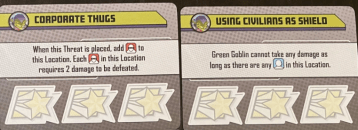
Even though Green Goblin wants to flood the field with threats, he’s just as comfortable throwing obstacles in the way to wait out the clock. “Using Civilians as Shield’s” ability is that Green Goblin will not take any damage as long as there are any Civilians at its location. “Corporate Thugs” make thugs more difficult to defeat. Green Goblin is a classic case of a villain who has multiple ways to defeat his enemies. The best way to stop Green Goblin is to load up on tokens, manipulate the villain deck, and delay the villain’s turn if you can. Fortunately, there are two heroes, and one location included in Enter the Spider-Verse expansion that do just that. Green Goblin earns his reputation as one of the initial Marvel United’s most difficult villains.

The new locations are classic Marvel New York ones. Brooklyn Bridge, Queens, the Daily Bugle, Oscorp Tower. These locations focus on extra tokens. This can be crucial in defeating certain Marvel United villains. Enter the Spider-Verse’s Green Goblin is one of these villains. The other three locations have healing (always appreciated), potentially rescuing a Civilian for free (always good for completing mission cards), and manipulating the villain deck. Couple these abilities with the heroes included in Enter the Spider-Verse, and you can see why this expansion tilts the playing field toward the heroes.

Each expansion adds a challenge card. Challenge cards add an extra layer of complexity to the game. Challenge cards may be small additions, but they can keep the game fresh with an extra rule or two added to the base game.  Enter the Spider-Verse introduces the “Secret Identity Challenge.” This is a classic challenge to add to any Marvel United game. Players must balance their crime-fighting life with their lives spent outside of spandex. This challenge is thematic, easy to understand, and adds just enough additional difficulty.

Enter the Spider-Verse Marvel United

Verdict

Even though I wouldn’t bother with finding the Kickstarter version unless you’re a completionist or a Spider-Ham fan, Enter the Spider-Verse is worth including in your Marvel United collection. The heroes and villain are some of the most powerful. The locations are iconic and pack a punch. And the Challenge Card adds a much-needed twist.

Harley Quinn: “Family Feud” Review

Kyra’s Thoughts

Harley Quinn races toward its season finale with its latest episode “Family Feud.” Offline, Season mentioned that Harley and Ivy made up too quickly for her liking. I agreed but then I looked up Harley Quinn’s remaining episodes. “Family Feud” is the eighth of ten scheduled episodes for this season. We only have two episodes remaining. What? While I would’ve liked to have seen the tension between Harley and Ivy last another episode, there aren’t that many episodes remaining. Harley Quinn needed to set up the final stakes in this episode, hint at how the gang plans to overcome the stakes, and then spend another episode assembling the supporting cast (King Shark, Clayface, Bane, and Lex Luthor) so they’re ready to enter the fray before launching into the season finale.

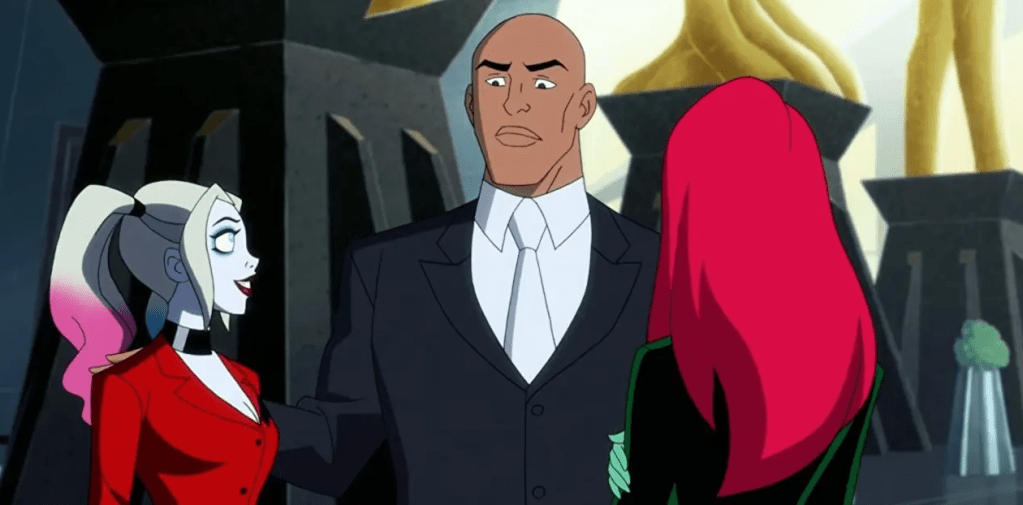
Yes! We have a Lex Luthor sighting. It’s always fun when Giancarlo Esposito joins the cast. He didn’t have much to do in “Family Feud” because the gals broke him out of jail, and he was incapacitated in a patented way only Harley Quinn could pull off. Harley’s mom runs him over with Harley’s car.

Harley’s family is where the episode’s title “Family Feud” derives. Truth time. I forgot about Harley’s piece of crap father until he showed up in this episode. It took me a while to remember Harley’s past with him (we haven’t seen him since season 1–four seasons ago), but Harley’s family past came screaming back as soon as Mr. Quinzel double-crossed Harley for money. That rang a bell. Nick Quinzel dies for real in this episode, and Harley doesn’t get the closure she wants.

Meanwhile, Ivy sneaks into Lena’s apartment to figure out a way to infiltrate Brainiac’s lair and free Frankette. I never thought that Harley and Ivy would stay at odds for long, but “Family Feud” may have been better served if the exploits of Harley and Ivy were reversed. I may have believed Ivy forgiving Harley as quickly as she did if she had to deal with Floronic Man or someone else from her past and learn the lesson that Harley did during this episode about being there for someone you love even after they screw up. Heck. Being there for someone after they screw up may be the most important time for someone to show their love. This was a missed opportunity.

This small gripe doesn’t detract from an otherwise fun episode. “Family Feud” balances its three threads well (Harley and her family, Ivy infiltrating Lena’s apartment, and Lena’s master plan) and the episode sets up Harley Quinn for what should be a hilarious season finale.

Season’s Thoughts

The pacing of Harley and Ivy patching things up was too fast for my liking. It shouldn’t have been set up if it was going to be a rush job. I get that relationship drama pulls in an audience, but they didn’t give themselves the space to work with it. I agree with Kyra that this small thing doesn’t detract from the rest of the setup “Family Feud” provides for the season finale.

Even though I also forgot about Nick Quinzel, I enjoyed the moments between him and Harley, even though they hated each other. I think Harley and Ivy grow more as characters when they’re apart than when they’re together. Sure. Their relationship with one another and how they love each other matures throughout the series. But they tend to face their pasts alone and then confide in one another after the fact. Harley did help Ivy with Floronic Man, but Ivy tried to deal with him herself first. I think Harley Quinn does a good job of showing Harley and Ivy as individuals, and I definitely got that from “Family Feud.”

I found it amusing that Lena didn’t have any plans to harm Frankette. She waved her hand and was like, “Get out of here.” This makes me wonder if Frankette will pull off some inside work for the season finale and save Metropolis. That would be a fun twist.
Thank you for reading, and wherever you are, I hope you’re having a great day.

Daredevil: Born Again, “Optics”

Daredevil: Born Again blessed us with two episodes on opening night. We covered the first episode “Heaven’s Half Hour” in our previous post. In this post, we’ll share our thoughts about Daredevil: Born Again’s second episode “Optics.”

Hey, hey! Kyra Kyle here. I spoke at length about my thoughts on Matt Murdock’s character journey and the camera work in our previous post. If you missed our review of Daredevil: Born Again’s first episode “Heaven’s Half Hour,” here’s a link to that post. Daredevil: Born Again’s first two episodes debuted at the same time. I’ll try to touch on things I didn’t mention in our previous post in this one. Let’s get started with Kingpin’s wife Vanessa.

I should’ve mentioned Vanessa and the fact that Kingpin became mayor of New York City in the previous post. Yikes! Those are some big omissions, but I will say that “Optics” builds on those two points more than “Heaven’s Half Hour.” Again, I’ll preface this section with a spoiler warning. At first, it looked as if Daredevil: Born Again planned for Vanessa to exit the show. Kingpin finds out that she’s cheating on him, and she begs him not to kill her lover. It doesn’t surprise me that Kingpin agrees. This shows that he loves her. I’m also not that surprised that Vanessa cheats on Kingpin. He’s been away, and she’s been left to her own devices. Like most things, “Heaven’s Half Hour” rushes these devolopments.

“Optics” takes a breath. The audience has time to absorb that Kingpin not only ran for mayor of New York City, but the city elected him mayor. We watch as Kingpin settles in as a politician. Pawns like the police commissioner, news outlets, and Fisk’s cabinet take shape. Honestly, the pacing of “Optics” reminds me a lot of the original series. We even have a chance to find more out about Matt Murdock’s supporting cast.

Truth time. I forgot the investigator who works with Murdock was the same former cop who learned Murdock’s identity as Daredevil during his rooftop fight with Bullseye. It took me his second scene as Murdock’s investigator for me to put those two things together. “Heaven’s Half Hour” flew by so fast. We needed a slower-paced episode like “Optics.”

This episode does a great job of weaving Murdock’s and Fisk’s new personal lives. “Optics” presents a lot of future tension that could bear fruit as the season progresses. Fisk functions like a man of the people mayor. This is a facade. He and Vanessa enter couples counseling. This serves double duty but in a good way. Kingpin needs to show his voters that he and his wife are on good terms. Does he go to counseling because he wants to save his marriage or is it “Optics?” Does Fisk want to rehabilitate his reputation and serve as an honest mayor and he kept his distance from Vanessa because she’s running his criminal empire? “Optics” presents a lot of interesting questions.

The episode’s title works for Murdock as well. He encounters White Tiger, another vigilante. His investigator friend warns him about stepping into the life of Daredevil. White Tiger’s case also seems unwinnable. Is Murdock taking on the case because White Tiger reminds him of Daredevil? Daredevil: Born Again skates lightly over White Tiger’s abilities. He doesn’t don his outfit when he helps a helpless person from a set of crooked cops. White Tiger’s inclusion is to set up an interesting court drama that should parallel Kingpin’s desire to rid New York of all its vigilantes. That’s not at all self-serving. Wink.

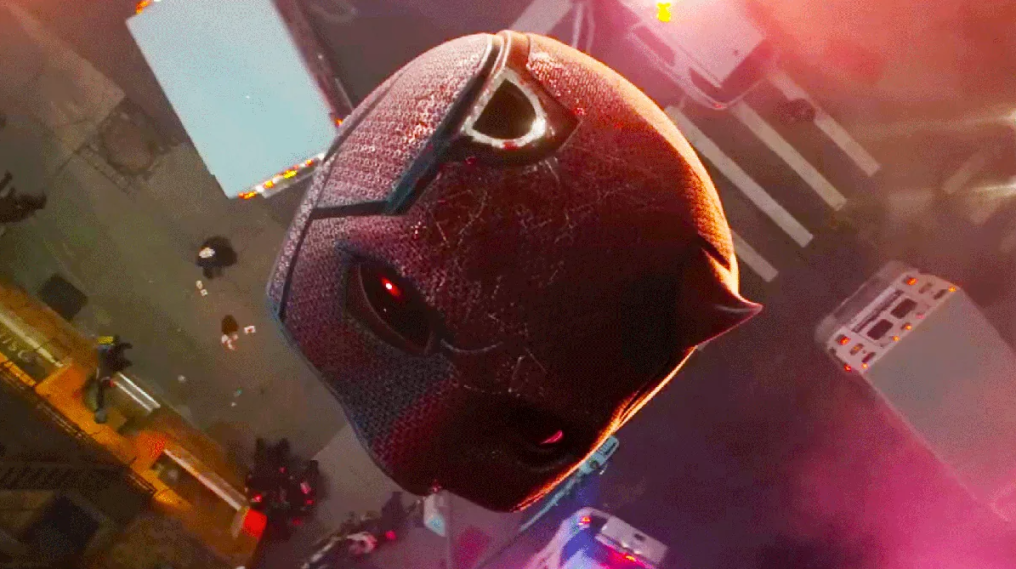
Murdock tries to be a lawyer and only a lawyer. This plays as his way of honoring Foggy’s death. But “Optics” ends with Murdock getting jumped by another set of crooked cops. Reluctantly, Matt fights back and we’re left with a classic Daredevil fight scene (close quarters and in your face), albeit one with Matt dressed in a suit and tie. It shouldn’t be long before we see Daredevil’s rebirth.

I mentioned this in the previous post, but the combination of watching “Heaven’s Half Hour” and “Optics” made the Daredevil: Born Again premiere a success. I commend Marvel’s foresight for releasing the first two episodes on the same night. Thank you for reading, and wherever you are, I hope you’re having a great day.

Daredevil: Born Again, Heaven’s Half Hour

Daredevil: Born Again is one of Geekly’s most anticipated Marvel releases this year. Heck. Most people couldn’t wait for season one of Daredevil: Born Again to release. I’ve even said that Daredevil: Born Again must succeed. So, how did the show measure up to this anticip-ation?

Hey, hey! Kyra Kyle here. I’m a little late with Geekly’s review of Daredevil: Born Again’s first two episodes but that’s because the first two episodes didn’t hit as well at first for me as it has with most people. Daredevil: Born Again’s first two episodes rate highly on Rotten Tomatoes, IMDB, and several other media outlets, so I’m in the minority. I watched these two episodes twice to find out why they didn’t land as well for me. I’ll start with the first episode, “Heaven’s Half Hour.” Hint: the second episode “Optics” showed promise and has me pumped for the third episode. Sigh of relief. Daredevil: Born Again is a great series.

But Daredevil: Born Again isn’t a great continuation of the original Netflix Daredevil. Full disclosure: after learning that Marvel wanted to continue where the original Daredevil left off, I watched the third season last week to prepare. Daredevil: Born Again doesn’t completely pick up where the previous show left off. It weaves in elements of the previous series. The two are different enough and Daredevil: Born Again takes some liberties.

I love that Marvel brought back Charlie Cox (Daredevil) and Vincent D’Onofrio (Kingpin). Those two actors embody those two characters. I’m never going to say no to Cox and D’Onofrio in a Daredevil project. I also love that Daredevil: Born Again brings back most of the original cast, even if it’s for a moment. Daredevil: Born Again does a fine job of capturing the original show’s veneer.

I say veneer instead of aesthetic because the external look of Daredevil: Born Again matches the original series, but the finer points differ–at least for the first episode. Several things felt off, but the most jarring change comes from Daredevil: Born Again’s camera work. A vlogger reports on the state of New York City. While this does an adequate job of letting the audience know the passage of time and the state of the city, it feels more at home in a Spider-Man project. Honestly, I expected to see someone play an acoustic guitar and sing about Spider-Man.

The non-vlogging camera work on “Heaven’s Half Hour” has more zoomed-out scenes. It felt out-of-place. In particular, the fight scene between Daredevil and Dex (who finally wears Bullseye garb, even if it’s just his gloves) feels different because the audience gets a bird’s eye view of the fight. The original series prided itself on up close and personal fights. One could feel each punch and kick.

The real kicker was how Daredevil: Born Again treated the former show’s cast. We’re getting into spoiler territory here. You’ve been warned. Foggy’s death (in the first ten minutes) gave the scene weight. That’s good and in keeping with the original show. Daredevil never shied away from killing off popular characters. Dex needed to pay for his crimes and for killing Foggy. Daredevil: Born Again suggests why Dex changed targets from Karen to Foggy, but it felt rushed.

Daredevil’s third season shows Karen staying in New York despite how bad things got, with people she cared about dying around her, and at the risk of her life. Karen’s actions felt off. While I could buy her leaving the city over grief (this could echo her leaving her family) Karen’s absence played more like Daredevil: Born Again wanting to start a new law office for Matt Murdock by any means necessary. And again, this development felt rushed.

“Heaven’s Half Hour” bogs down because it pulls double duty. It sheds the previous Daredevil series while trying to set up a new series. Like I said, I wouldn’t watch the original series right before watching Daredevil: Born Again. It colored my enjoyment of the show. Daredevil: Born Again is excellent separated from the original series. It’s easily one of Marvel’s best.

That brings me back to more praise for Daredevil: Born Again. While at first jarring, the camera work is deliberate. “Heaven’s Half Hour” zooms out from the action to give the audience detachment. Sure, this marks the end of the original Daredevil and the beginning of a new show, but it also mirrors Matt Murdock’s mental and emotional state. He becomes detached. The audience won’t see those in-your-face fights until the end of the second episode “Optics.” Disney+ released the first two episodes on the same night because they wanted the audience to see Matt Murdock’s change.

If I had only seen “Heaven’s Half Hour” this week, I may have been disappointed. Watched together, the first two episodes make for an interesting character study for Matt Murdock, and that was a big strength of the original series. So, perhaps the two shows aren’t that far apart. Thank you for reading. We’ll be back in an hour or so with our take on Daredevil: Born Again’s second episode “Optics.”

Getting Started With Comics: Daredevil Starter Stories

Daredevil: Born Again begins its run tomorrow, and Geekly is celebrating with another comic book starter stories list. Today may be the best day to begin reading Daredevil comics. We hope this list will help you decide where to begin your journey with the Man Without Fear.

Hey, hey! Kyra Kyle here. Daredevil has been around for a long time and has had plenty of brilliant runs throughout his time in Marvel comics. We’ll have a mix of story arcs (stories composed of multiple comic book issues) and single-issue stories (which will only have one comic book to the story). Daredevil has a nice split between single-issue stories and story arcs. We’ll begin with the story arcs. Enjoy!

Story Arcs

Punisher Versus Daredevil (Daredevil #183-184; written by Frank Miller and Roger McKenzie/art by Frank Miller and Klaus Janson 1982)

This is the first of several Frank Miller entries. Miller made his name writing for Daredevil, so it’s inevitable. This two-issue story called “Child’s Play” shows the difference between Daredevil and the Punisher. While Daredevil refuses to kill, the Punisher has no problem killing.

The pair team-up after a young girl on drugs takes a dive out of her school window and dies. Yeah. Miller’s Daredevil pushed the envelope of what the Comics Code Authority would allow in a story. Getting back to this story, with the help of the dead girl’s brother, Daredevil and Punisher track down the dealer responsible for selling her drugs. Daredevil and Punisher get into a fight over how they’ll handle the dealer after they find him. Daredevil #183’s cover showcases this fight; it’s iconic.

Born Again (Daredevil #227-233; written by Frank Miller/art by Frank Miller and David Mazzuchelli 1986)

The Disney+ series Daredevil: Born Again gets its name from a Frank Miller-penned comic book story arc, and the final season of the Netflix Daredevil series borrows a lot from Daredevil Born Again. It’s a classic.

Daredevil Born Again follows Daredevil’s descent into insanity and destitution at the Kingpin’s hands. Daredevil’s ex-girlfriend Karen Page becomes a heroin addict. Strapped for cash, she sells the information that Matt Murdock is Daredevil for a shot of heroin. This information is then sold to the Kingpin, and the Kingpin does all manner of things to destroy Daredevil’s personal life. Matt’s life becomes hell.

I hope the Disney+ series goes further than the Netflix series and dives deeper into Born Again’s storyline.

Last Rites (Daredevil #283-300; written by Ann Nocenti and Dan G. Chichester/art by Mark Bagley, Lee Weeks Greg Capullo, Kieron Dwyer, Ron Garney, Butch (Jackson) Guice, Don Hudson, Larry Alexander, June Brigman, Al Williamson, Doug Hazlewood, Fred Fredericks, Tom Morgan, and Roy Richardson; 1990-1992)

Last Rites is the longest story arc included on this list, but it’s a Daredevil essential. This storyline concludes Ann Nocenti’s epic run on the character (we’ll see more of Nocenti’s work later). Last Rites is a whirlwind. The Kingpin falls. An amnesiac Matt Murdock is no longer Daredevil. Instead, another person swings around New York wearing a red jumpsuit, committing surgically precise crimes.

Matt thinks he’s the boxer Jack Murdock, while Kingpin builds a media empire. Eventually, a reborn Daredevil is determined to deliver the last rites to Kingpin’s reign of terror. There are a heap of guest stars in this massive Daredevil story: Captain America, Taskmaster, Tombstone, Baron Strucker, The Punisher, and Ghost Rider. But at its heart, Last Rites is Daredevil and Kingpin battling to the death.

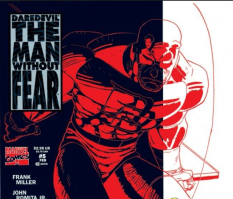
Daredevil: Man Without Fear (Daredevil: Man Without Fear #1-5; written by Frank Miller/art by John Romita 1993-1994)

If you can’t tell, Frank Miller will dominate this list. I tried to keep Miller’s number of stories at a minimum, but he will repeatedly show up. Daredevil: Man Without Fear was a miniseries from the early Nineties. The series explores Matt Murdock’s childhood, the accident that caused his blindness and powers, as well as his father’s death. The series features pivotal scenes that have become staples in the Daredevil mythos: Matt’s mentor Stick, his college flame Elektra, his best friend Foggy Nelson, and his primary nemesis Kingpin. Fans of the Netflix Daredevil show will see plenty of familiar scenes. Daredevil: Man Without Fear is a must-read.

Return of the King (Daredevil #116-119; written by Ed Brubaker/art by Michael Lark and David Aja 2009)

A story arc from Ed Brubaker’s historic run on Daredevil had to appear on this list. I chose Return of the King because it shows Kingpin—easily Daredevil’s greatest villain—at his backstabbing and conniving best. Wilson Fisk (Kingpin) flees to Europe to escape his life of crime, where he meets a woman and befriends her children. Fisk views this family as his own until they are killed by the Hand. Lady Bullseye, one of the Hand assassins, claims Daredevil sent her. And all hell breaks loose with Kingpin reclaiming his reign as king of the criminal underworld.

The Omega Effect (Avenging Spider-Man #6, Punisher #10, and Daredevil #11; written by Greg Rucka and Mark Waid/art by Marco Checchetto 2012)

Mark Waid’s run on Daredevil could be summed up in one word: fun. The Omega Effect joins this list because it features Daredevil teaming up with two of his most common allies: Spider-Man and Punisher. But you don’t get one Punisher. Frank Castle trains a second Punisher, Rachel Cole-Alves. This makeshift team crumbles when one of the members turns backstabber.

Single Issues

“Last Hand” (Daredevil #181; written by Frank Miller/art by Frank Miller and Klaus Janson; 1982)

“Last Hand” is another classic Frank Miller comic. It’s a simple concept. Bullseye escapes from prison and plots his revenge against Daredevil. But Bullseye also discovers Daredevil’s secret identity and figures the only way to hurt Daredevil worse than killing him is to go after his lover Elektra. “Last Hand” ends with Elektra’s iconic death.

“Roulette” (Daredevil #191; written by Frank Miller/art by Frank Miller and Terry Austin; 1983)

The title “Roulette” may come from Daredevil playing Russian Roulette with a helpless Bullseye (he’s paralyzed from their previous battle), but the reason for Matt Murdock playing Russian Roulette stems from another encounter. “Roulette” uses Daredevil torturing a hospitalized Bullseye with an empty gun as bread in a narrative sandwich. This narrative’s filling comes from Daredevil’s interactions with a father and son.

The father is bullied at work just as the son is bullied at school. There’s a hint that the father may be abusing his child at home, too. The kid idolizes Daredevil, even pretending that he is Daredevil at school, but he becomes disillusioned when his father pulls a gun on a coworker who’s blackmailing him, and Daredevil beats up the kid’s dad before he can shoot. This traumatizes the kid. Later, the kid brings his father’s gun to school and when he gets picked on again, he shoots the kid who’s bullying him. “Roulette” is a bleak story. But it’s a story that may have even more relevance today than it did when it was first published.

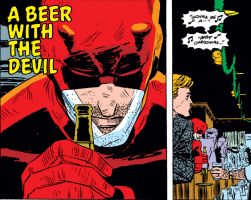
“A Beer with the Devil” (Daredevil #266; written by Ann Nocenti and John Romita Jr./art by John Romita Jr.; 1989)

“A Beer with the Devil” is easily the oddest entry on this list. Ann Nocenti’s run on Daredevil is one of the most daring. Pun intended. She takes plenty of risks and takes Daredevil to some bizarre places. She’s the one who introduced the antagonist Typhoid Mary (Daredevil #254, which almost made this list) and the demon Blackheart (Daredevil #270, which is another standout issue). But we’re going with “A Beer with the Devil.” It puts the devil in Daredevil. Matt Murdock spends Christmas in a seedy bar with Satan’s cousin Mephisto.

The stories on this list are just the tip of the iceberg. Daredevil has seen so many reboots and stellar story arcs that we’re bound to miss one or two of five hundred. Let us know which Daredevil stories you’d add to this list in the comments. And wherever you are, I hope you’re having a great day.