Geek Out

Ten Common Board Game Mechanisms

Board gamers tend to see the same game mechanisms from one game to another, so it made us wonder which board game mechanisms are the most common. Knowing this will allow new players (and older players) the kinds of game mechanisms they can expect to find in board games. Fortunately, the data required for this list is a lot easier to obtain and compile than our most common fantasy creatures post last year. Thank you, Board Game Geek.

Hey, hey! Kyra Kyle here. I checked the hundreds—and I mean hundreds—of game mechanisms listed on Board Game Geek and ran quick searches to see how many games are listed on the site with each mechanism. At the time of this post (early 2025), Board Game Geek caps its search results to the top 5,000 games that fit a search’s criteria. Almost thirty of the hundreds of game mechanisms searched yielded 5,000 results, which means each of these mechanisms could be in hundreds, if not thousands, of more games. Yikes!

Some mechanisms found in at least 5,000 games are movement-based or mundane, like “it uses paper and pencil” or “dice rolling,” which means that the game includes dice. We won’t bother covering those game mechanisms. But that still leaves dozens of interesting game mechanisms for multiple posts like this. We’ll cap this first post to ten of the most used game mechanisms. This doesn’t include mechanisms with over 3500 games like worker placement. I think this means that we need more worker placement games. I like worker placement games, so it’ll probably make the next list. But which board game mechanisms made this list? Let’s find out.
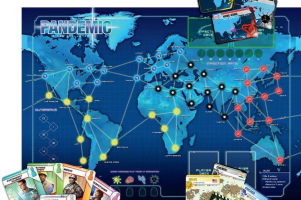
Action Points

Board games that use action points grant players a supply of action points each turn. Players may choose to use these action points in a variety of ways, typically there’s a list of options. Usually, players can spend their points any way they please. You could take the same action multiple times (or even take the same action for their entire turn) or mix and match actions from the player’s options. The options may cost the same number of action points, or their point value can differ.

Thoughts

Action points give players agency. Your turn can look completely different than your opponent/teammate. I mention “teammate” here because I’ve seen several cooperative board games use action points. The agency (giving players a meaningful choice, which affords those players power) granted by the action points game mechanism is why this game mechanism is so popular in board games. Everyone likes to feel as if they have some control.

Games that use this mechanism

Pandemic, Takenoko, Horrified, Dinosaur Island, and Sleeping Gods

Deck, Bag, and Pool Building

Usually, games that include deck/bag/pool building begin with each player owning a similar deck of cards (if the game uses cards) or a similar number and type of chits or dice (if the game uses a bag or pool). Over time, players will acquire new cards (or the like) and add them to their deck, bag, or pool. Eventually, each player will own a deck or bag unique to them. Each player will use their deck to pursue their path toward victory.

Deck building differs from deck construction (another popular game mechanism) because players build their deck during the game, while decks within a deck construction game have players build their decks before playing.

Thoughts

When done well, deck, bag, and pool building games offer endless replays, due to the countless ways players can build their decks. The best players are the ones who can adapt. They’re the ones who can see patterns form with the cards and what may counter an opponent’s deck. Because of this, veteran players of specific deck building games can exploit their knowledge to gain an edge, but there is a hint of randomness. You must draw into what you need. This randomness evens the playing field a touch.

Games that use this mechanism

Dominion, Orleans, Challengers!, Thunderstone, and Aeon’s End
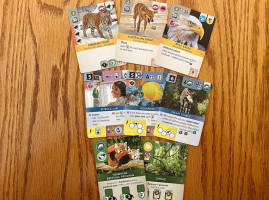
Hand Management

Games that use hand management reward players for playing their cards in certain sequences or groups. The optimal sequence may vary depending on board position, cards held, and cards played by opponents. Managing your hand means that you gain the most value out of available cards given your current circumstance. Often, these cards have multiple purposes, so this further complicates an “optimal” sequence.

Thoughts

Hand management could’ve been dismissed as a mundane game mechanism. Any game that includes a hand of cards will innately have hand management. But hand management is unique from this subset of board game mechanisms. Other mechanisms like dice rolling and paper and pencil mean that these physical elements exist within a game. Hand management suggests that players must take an active role in this game mechanism. And as the description says, this game mechanism is rewarding when players find the perfect sequence for their circumstances. Hand management also happens to show up the most on Board Game Geek’s Top 10-ranked games.

Games that use this mechanism

Brass: Birmingham, Ark Nova, Gloomhaven, Terraforming Mars, and Twilight Struggle
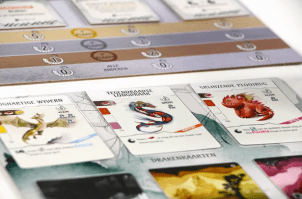
Open Drafting

Board games using open drafting have players pick (or purchase) cards (or tiles, dice, etc.) from a common pool to gain an advantage or assemble collections that meet objectives. Since the drafting occurs in the open, the identity of these cards (or other similar item) is known to other players. Drafting gives players a choice and the ability to gain a card another player may want, denying them something they wanted.

Open drafting differs from closed drafting, which is also known as “select and pass.” Everyone can see the item you gain as you obtain it.

Thoughts

Open drafting provides an immediate back-and-forth between players. Since you know what your opponents select each turn, and your opponents know what you select, a meta-game (or game within the game) takes shape. Like the two previous game mechanisms, players must adapt to what options are available during their turns and what they believe their opponents are planning to do. This back-and-forth can lead to table talk (talking between players at the table about the game they’re playing) and builds tension.

Games that use this mechanism

The Castle of Burgundy, Everdell, Wingspan, Blood Rage, and Splendor
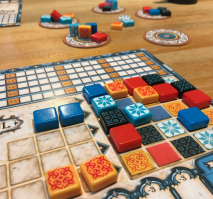
Pattern Building

Games that use pattern building task players with configuring game components to achieve sophisticated patterns. These patterns can score points or trigger actions. Unlike most other game mechanisms on this list, pattern building is synonymous with another game mechanism on this list (tile placement), which we’ll cover later. Often, players want to link similar component types together or as mentioned above, create elaborate patterns.

Thoughts

Pattern building is the most puzzle-based mechanism on this list. The shifting tiles (and sometimes cards) lead to tasty combinations. So many games that fall into this category can be visually stunning. If you must build a pattern, the pattern should be easy on the eyes. This leads to why a lot of modern games use pattern building. Puzzle + Beautiful Patterns = Popular Game.

Games that use this mechanism

Azul, Cascadia, The Isle of Cats, Harmonies, and Welcome To…

Push Your Luck

With push your luck games, players decide between settling for existing gains or risking them all for further rewards. Games of this type feature an amount of output randomness or luck. We mention the two types of luck in a previous post (link to the two types of luck, input and output luck here). Players focus on progressing and maximizing their results. But typically, the stakes rise. If things go wrong, you lose it all.

Thoughts

Push your luck can add spice to an otherwise dull series of mechanisms. Double or quit, keep going or stop, cash your gains or bet them. This isn’t a new idea. Plenty of gambling games, like Blackjack, make use of the push your luck mechanism. Heck. Many of you may have read the description and immediately thought of Blackjack. Gambling games aren’t the only games that use the push your luck mechanisms. In fact, board games that use the push your luck mechanism can be good for gamers who want the feeling of gambling without involving any real-world money. These games can create a similar rush.

Games that use this mechanism

Heat: Pedal to the Metal, King of Tokyo, The Quacks of Quedlinburg, Lost Cities, and Return to Dark Tower
Roll/Spin and Move

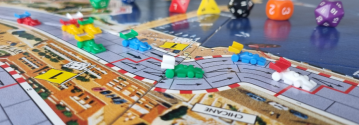
Roll/spin and move games deploy the use of dice (rolling) or spinners (spin) and then move in some capacity. Historically, players roll or spin and move their playing pieces per the number (or other result) rolled (or spun). Countless classic board games have used the roll/spin and move mechanism as a key ingredient. Most people outside the board game community may expect roll/spin and move within all board games. A roll/spin and move game is what most people outside the board game community think of when they think of board games. Board games like Monopoly and The Game of Life popularized roll/spin and move.

Thoughts

People within the board game community often use “roll/spin and move” as a derogatory term. People who do this imply that there is no thought involved with this mechanism. While this is the case for a lot of older games (there are some exceptions like Backgammon), modern board games have taken the roll/spin and move mechanism into new territory. I agree that players lose their agency (power and ability to make meaningful choices) if they must roll or spin and move the spaces indicated on a die (or spinner) with no additional input. But some newer games add other forms of movement to this formula. Other newer games allow players to manipulate the results. Even more modern board games have players roll dice ahead of a turn and then assign the dice results to an array of actions.

Roll/spin and move isn’t an inherently poor mechanism. How a designer uses roll/spin and move makes all the difference. The key to making roll/spin and move work is maintaining a player’s agency.

Games that use this mechanism (well)

Jamaica, Camel Up, Formula D, Stuffed Fables, and Colosseum

Set Collection

Board games that use the set collection mechanism often make the set worth points. The value of the items is dependent on being part of a set. These sets can either be the quantity of a specific item type or a type’s variety. In some cases, board games can use contracts that urge players to pick up certain items to fulfill the contract.

Thoughts

The set collection mechanism breeds external tension between players. One may pick up a resource or item to prevent an opponent from fulfilling a contract or gaining more points by having more of a resource (or item) than anyone else. Or two players may fight each other for the ability to pick up these items because they both want to accomplish the same goal.

The set collection mechanism by itself may fall flat, but set collection seldom shows up on its own. Set collection complements a host of other board game mechanisms. It can give a built-in reason for players to choose a course of action or a sudden gain of a lot of one item or an array (variety) of items can tempt players to change their strategy or tactics. Board gamers often overlook the value of the set collection mechanism, but several popular games use set collection.

Games that use this mechanism

Great Western Trail, Ticket to Ride, 7 Wonders, Lords of Waterdeep, and Tokaido
Tile Placement

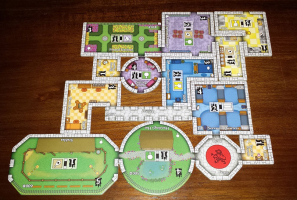
Tile placement games feature placing a piece (or tile) to score victory points or trigger actions. Usually, adjacent pieces or pieces in the same group/cluster or keying off non-spatial properties like color, a feature’s completion, and cluster size trigger the action or scoring. Pattern building often accompanies tile placement, but there are some notable exceptions, specifically, games that use modular boards and exploration.

Thoughts

While some tile placement games (like 1986’s Labyrinth and Dominos) existed before the modern board game boom (the mid-1990s and beyond), tile placement (and a few other mechanisms like worker placement and deck building) have taken the place of the roll/spin and move mechanism as modern board games’ dominant game mechanism. Just because the tile placement mechanism can be found in countless modern board games doesn’t mean that each game uses the mechanism the same way. Some games have a shared space for players to place tiles. Other games give each player a private building space. And several games do a little bit of both. Despite tile placement’s explosion after Carcassonne popularized it as a central game mechanism in 2000, tile placement remains a vibrant board game mechanism.

Games that use this mechanism

Carcassonne, A Feast for Odin, Galaxy Trucker, Betrayal on House on the Hill, and Castles of Mad King Ludwig

Variable Player Powers

The variable player powers game mechanism grants different abilities or paths to victory to each player. Each player has a unique power. Games that use variable player powers reward players who exploit their unique abilities while compensating for their abilities’ shortcomings.

Thoughts

The variable player powers game mechanism is perfect for any player who wants to stand out from their opponents. Because each character (or faction) within the game plays differently from each other, games that use variable player powers have a lot of replay opportunities. On a similar note, players may gel with a specific power over another one so playing a second game and trying a different player power could lead to better results.

Unlike other game mechanisms on this list (except for deck building and Dominion), variable player powers haven’t been around as long. Games that use the variable player powers mechanism also dominate Board Game Geek’s Top 10 ranked board games.

Games that use this mechanism

Gloomhaven, Twilight Imperium: Fourth Edition, Dune: Imperium, Pandemic Legacy: Season 1, and Cosmic Encounter
Closing Thoughts

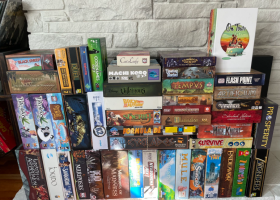
This was a longer list than I expected. It would be even longer if I didn’t cut the list of common board game mechanisms in half or into thirds. Let me know if you’d like to see more lists like this in the future.

Looking at the board game mechanisms listed on Board Game Geek allows for a macro view of the board game hobby. We can see trends. We can examine what makes a board game mechanism popular. A lot of these board game mechanisms grant some form of player choice or player empowerment. But that’s what I think. What do you think? Let us know in the comments.

Geekly may have another series in the offing. We’ll craft another set of surveys and reach out to board game designers to discover their thoughts about each of these game mechanisms (and game mechanisms that may find themselves on a future list like this one). I hope you found something useful in the post. And wherever you are, I hope you’re having a great day.

Harley Quinn: “The Mess Is the Point” Review

Season’s Thoughts

I’ll be the first to admit I teared up during the latter half of “The Mess Is the Point.” Harley Quinn managed to, once again, subvert my expectations while being comical.

“The Mess Is the Point” was another heavy episode, but it felt a bit lighter than “Bottle Episode (But Not a ‘Bottle Episode’).” I think that’s because I expected Harley and crew to be rescued in one way or another, so there was going to be a silver lining.

I never thought I’d say it, but I think I’d prefer Kyra’s prediction last week to how Frankette would get Harley and crew out of the bottle as opposed to what actually happened. By a small margin. I’m not overly attached to Frankette because she’s a new character, but seeing a baby get hurt is upsetting regardless of species. Frankette eating the Luthor siblings was par for the course.

Superman coming back to save the day was something I expected. I was really hoping he’d say some cheesy line about his and Lois’ Morse code exchanges to lean into Harley Quinn’s type of comedy. All he said was, “It sure is nice to be needed again.” Okay. I’ll admit it. That’s a line I expect out of superhero cartoons from decades ago, and I appreciate this inclusion.

Brainiac really tugged on my heartstrings this time around, too. I was tearing up when he sat with his family for the last time. He had so much buildup, but he didn’t seem like a villain. I was sad to see him go, but I don’t think Harley Quinn can do anything else with his character after season five. It seems like Harley and Ivy are staying in Metropolis. If there is a season six, I’m curious to see which of Metropolis’ rogues Harley Quinn will explore next.

Kyra’s Take

I agree with Season. Brainiac’s ending was heartfelt and fitting. Even though we didn’t spend too much time with Brainiac this season, he had a fleshed-out character arc. Harley Quinn did a good job juggling Brainiac and Lena’s storylines and tying them together at the end. I also don’t see Harley Quinn doing much with Brainiac beyond this season. Point of clarification: Harley and Ivy moved back to Gotham City by the end of “The Mess Is the Point.” Ivy claims that she stole the place from Cyborg. It may appear that Harley and Ivy stayed in Metropolis because Superman had placed Metropolis next to Gotham after he rescued the city from the bottle.

Speaking of cities in bottles, Harley Quinn can dip into countless DC Universe stories with the other cities Brainiac captured. This could lead Harley Quinn into Green Lantern, Blue Beetle, Hawkman/Hawkgirl, Legion of Superheroes, and Martian Manhunter storylines, just to name a few. Harley and Ivy even mention they will restore these cities in the future. And the Harley Quinn creative team has carte blanche to do whatever they want in the Harleyverse. It doesn’t affect the Canonverse. Max hasn’t officially announced a sixth season for Harley Quinn yet but with the show’s popularity and a desire by everyone involved in the project (per multiple entertainment news sources like Coming Soon who interviewed showrunner Dean Lorey), this may be a matter of time.

And speaking of time, allow me to time warp to season 5’s finale. It felt like a finale. Harley Quinn’s last two seasons failed to tie up loose ends. Season 3 focused on Harley becoming a superhero and her failing. Plot lines were dropped in season 4 after Nightwing gets killed and the ladies form the Gotham City Sirens. And that plot line got dropped in season 5’s opening minutes. Harley Quinn season 5 tied up all its Metropolis shenanigans while setting up potential future storylines. This ending tied up things so well that it made me wonder if Harley Quinn would be renewed for a sixth season. If Harley Quinn were to end with season 5, fans would at least have closure.

That said, I’m not ready to say goodbye to these characters yet. I’m rooting for a season 6. The show can go in plenty of directions. Let’s assume Harley Quinn gets renewed. The audience got a hint of space during the season finale. Let’s see more intergalactic mayhem. Add a dash of some familiar madness, too. Harley’s mom has moved in with Harley and Ives. That should spice up their living conditions. Harley/Ivy, King Shark, Bruce, Joker, and Bane all have children. The show could mine these relationships further. And was Bane’s wife pregnant? Oh my! That’ll be interesting.

Harley Quinn season 5 was one of the series’ best and most cohesive seasons. Fingers crossed that we’ll see a sixth season. Thank you for reading, and wherever you are, I hope you’re having a great day.

Daredevil: Born Again, “Sic Semper Systema” Review

Daredevil: Born Again released another episode last night, “Sic Semper Systema,” and Geekly’s here to share their thoughts. Hey, hey! Kyra Kyle here. Daredevil: Born Again approaches its season finale (or at least the cliffhanger before its break for the second half of the season), and the show manages to turn up the heat.

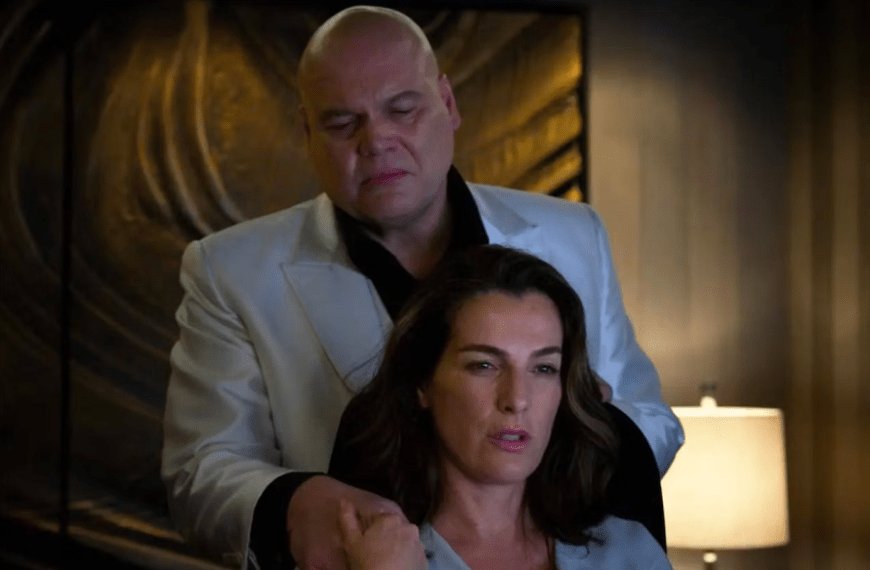
With four episodes in, Daredevil: Born Again proves it can build off the previous show’s success. The new series works best when it centers on Murdock and Fisk. With a few exceptions, the best moments are rooted in characters who originate from the original Netflix series. Wilson and Vanessa scenes have me hooked. I feared for Vanessa’s well-being whenever she and Wilson discussed her infidelity. That mistrust is rewarded in “Sic Semper Systema’s” closing. I won’t spoil it here, but there’s a great payoff.

Is it me or does Matt Murdock’s love interest Heather Glenn work better as the Fisk’s therapist than she does Daredevil’s lover? I love Margarita Levieva’s performance with the Fisks. I don’t know if Daredevil: Born Again has done enough to establish her as Murdock’s significant other. And I think that’s an issue with the new series. Again, four episodes in, and patterns emerge. Daredevil: Born Again had to rid itself of Karen Page and Foggy Nelson because they knew Murdock’s secret identity and would eventually support his vigilante work. Heck. Karen suggests that Matt don the cowl in the first episode. The new series wanted Murdock to fight returning as Daredevil. But it hasn’t done enough to build the new recurring characters in Murdock’s life. There are some exceptions.

As I said, I do like Heather as the Wilson’s therapist. Mayor Fisk’s advisors Daniel and Sheila are fantastic. “Sic Semper Systema” shows Kingpin’s former “business” peeking through his day-to-day as mayor. You know how the old Fisk would’ve handled Daniel’s mistake. Daredevil: Born Again does a great job of building this tension. And then throwing in a dark comedic moment. After Mayor Fisk says he won’t fire Daniel for his incompetence and Daniel insists that he’ll never be able to make amends, Sheila tells Daniel, that’s nice, now shut up. She put her job on the line for him and I saw in Sheila’s reaction to Fisk and Daniel’s “talk” that she feared for her and Daniel’s lives. Zabryna Guevara (Sheila) and Michael Gandolfini (Daniel) give great performances.

I also enjoyed one of “Sic Semper Systema’s” one-off characters. Charlie Hudson III’s Leroy Bradford works to show Murdock as a lawyer and the corruption of the legal system. Hudson is only on-screen for around ten minutes, but these moments are powerful.

Hamish Allan-Headley’s Officer Powell has been a standout for this young series. The scenes that include Officer Powell illustrate NYPD’s corruption. Powell serves as a great foil. He doesn’t factor into White Tiger’s murder (that we know of), but someone with connections to the NYPD is behind White Tiger’s death. Evidently, The Punisher has fans within the NYPD. The scene where Matt finds the casing from the bullet used to murder White Tiger is pitch-perfect. I don’t want to spoil it here, but moments like this hint at Murdock’s return as Daredevil. Sure, we physically see Murdock practice martial arts toward the end of “Sic Semper Systema,” but his investigative skills impressed.

Daredevil: Born Again handled The Punisher’s inclusion well. As I suspected, he wasn’t behind White Tiger’s murder. I’m glad he doesn’t steal too much screen time, and Frank Castle pushes Murdock’s buttons. Again, I’ll try not to spoil the scene, but The Punisher gives Murdock the push he needs to dust off his Daredevil attire. Jon Bernthal is a fan favorite for good reason. He embodies The Punisher. Daredevil: Born Again does a great job of hinting that The Punisher continues to fight the good fight. I can’t wait to see him in a future series.

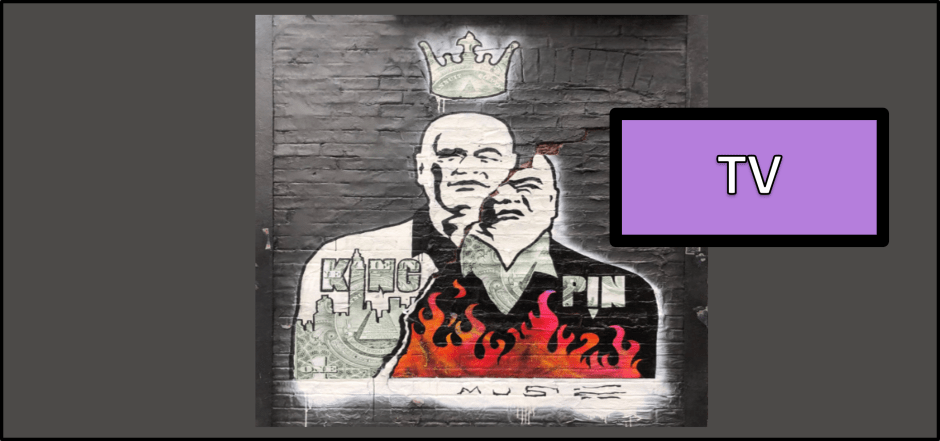
And that brings us to this season’s main villain Muse. Our featured image above is one of Muse’s murals. You can see his name at the bottom right. I may be heading into mild spoiler territory here. Beware. We don’t see much of Muse. Daredevil: Born Again is holding him back for the final two episodes before it goes on break, and that’s a good choice.

In the comics, Muse is active while Wilson Fisk is mayor (Daredevil comics, circa 2016). He paints his murals with human blood, so the red “paint” above (and in this week’s featured image) derives from the blood of his victims. Also in the comics, Muse had superpowers like heightened strength and increased reflexes. He’s an inhuman and also targeted other inhumans. This could be a way to tie Muse (and Daredevil) into the greater MCU and potentially reintroduce the Inhumans. I wouldn’t be surprised if Muse was a standard-issue human, but I’d be a little disappointed if he didn’t have the last and most significant of his superpowers: imperceptibility.

People don’t notice Muse is around because his body is a sensory void. This ability also works on Daredevil. Daredevil: Born Again mentions Spider-Man repeatedly and one of Spidey’s greatest enemies is Venom. Low key, Venom’s best ability is that he doesn’t trigger Peter Parker’s spider-sense. Muse plays a similar role to Daredevil, and the series (specifically the scene when Matt does detective work) is building up to a reveal that no one can sense Muse.

“Sic Semper Systema” generates a lot of speculation. That’s a great thing for Daredevil: Born Again. The series had a rocky start, but there’s hope for a strong cliffhanger next week. Thank you for reading, and wherever you are, I hope you’re having a great day.

Getting Into Comics: Punisher Starter Stories

Do you want to get into Punisher comics and don’t know where to start? Geekly has you covered. Daredevil: Born Again continues its run on Disney+ this week, and Geekly is celebrating with yet another comic book starter stories list. Today’s list features the Punisher.

Hey, hey! Kyra Kyle here. While Frank Castle (The Punisher) may not have been around as long as Matt Murdock (Daredevil), he has an extensive catalog of comic books. We’ll have a mix of story arcs (stories composed of multiple comic book issues) and single-issue stories (which will only have one comic book to the story). The Punisher has a nice split between single-issue stories and story arcs. We’ll begin with the story arcs. Enjoy!

Story Arcs

Circle of Blood (The Punisher #1-5; written by Steven Grant and Jo Duffy/art by Mike Zeck and Mike Vosburg 1986)

The Punisher spent the first decade as a side character. His first appearance (which we’ll mention in the single issues) in Spider-Man established the Punisher as a mysterious figure, but Circle of Blood established the Punisher as a character. Originally, Marvel intended to make Circle of Blood a four-issue limited series. That changed with the series’ popularity. Circle of Blood became so popular that the Punisher became a monthly comic. Within this mini-series, you’ll find the Punisher’s origins. Frank is a Vietnam veteran who watches his family die at the hands of a gang war. Motivated by anguish he becomes a one-man army of revenge.

Circle of Blood gives readers everything they need about the Punisher as a character. There’s no better place to start reading Punisher than with Circle of Blood.

War Zone (The Punisher War Zone #1-6; written by Chuck Dixon/art by John Romita Jr., John Buscema, and Joe Kubert 1992)

During the early Nineties, The Punisher had two monthly titles. The original Punisher series was strong enough, while Punisher War Journal devolved into “Punisher make things go boom and die.” Punisher War Zone’s first storyline breaks from the norm—at least the first half of the storyline does, which is why I included #1-6, instead of #1-11. The Punisher goes undercover and unearths a mob plot. Throw in someone who may or may not be Kingpin, Kingpin was in hiding at this time, and Punisher War Zone is a great place to see the Punisher working with the police on the down low and flexing his detective and heroic muscles.

Welcome Back, Frank (The Punisher #1-12; written by Garth Ennis/art by Steve Dillon and Jimmy Palmiotti 2000-2001)

Marvel produced this twelve-issue limited series in 2000-2001. First-time Punisher scribe Garth Ennis made a huge splash with Punisher Kills the Marvel Universe (which almost made this list) and this series gave him a second opportunity to write for the character. This won’t be Ennis’s last entry; Ennis will dominate this list. Welcome Back, Frank continues to depict Frank as a Vietnam War veteran. He announces his return to New York City by taking on the Gnucci crime syndicate. Publicly, the NYPD opposes Frank’s actions. Secretly, the police condone the Punisher’s actions. With the help of the police and his neighbors, Frank dismantles the Gnucci’s crime operation. Welcome Back, Frank showcases the Punisher’s tenuous relationship with the police and highlights the smaller good deeds, that I won’t spoil here, that make Frank Castle who he is. Welcome Back, Frank is a Punisher must-read.

Born (Born #1-4; written by Garth Ennis/art by Darick Robertson and Tom Palmer; 2003)

I warned you. Garth Ennis will dominate this Punisher reading list. Born is another great Punisher mini-series; a lot happens in this four-issue run. Born follows Frank Castle as he serves in the United States Marine Corps during his final tour in Vietnam in 1971. Half of Frank’s fellow Marines are addicted to heroin. Their commanding officer is an apathetic alcoholic who pretends he has malaria whenever the superiors plan an inspection of the base, Valley Forge. Of course, we see military combat. One by one, Castle’s unit falls, and he finds himself surrounded by the enemy. I won’t spoil any more of this heart-pounding series. If you’re interested in what made Frank Castle the man he is, you should read Born.

Barracuda (Punisher #31-36; written by Garth Ennis/art by John McCrea and Steve Dillon 2003-2004)

Barracuda refers to the man who could be the Punisher’s greatest villain. Screen Rant said this about Barracuda. “Far and away the most popular villain from the Punisher MAX comics, Barracuda has become one of the most iconic enemies Frank Castle has faced.” Barracuda is every bit the Punisher’s equal. Honestly, he may be more terrifying. Barracuda didn’t need a tragedy (like losing his family) to become a killer. While in elementary school, he shoved his thumbs into a classmate’s eyes. He castrated someone while in a youth detention center. This propensity for violence made Barracuda the perfect Green Beret. So, now he has special ops training and a massive frame to back up his nastiness.

There’s no better place to start with getting to know one of the Punisher’s greatest enemies than with this comic book run. The last thing you want to see is a smiling Barracuda.

The Slavers (Punisher #25-30; written by Garth Ennis/art by Leandro Fernandez and Scott Koblish 2006)

The Slavers storyline shows Frank Castle’s softer side. As the title implies, this story revolves around slaves and the people who keep them in bondage. Specifically, The Slavers is about a forced prostitution ring. I won’t get into too much detail here. On one hand, I don’t want to spoil the story. On the other hand, The Slavers is not for the faint of heart. While this story arc is one of the Punisher’s best (and of course, it’s written by Garth Ennis), it comes with a strong trigger warning. The Slavers proves that the Punisher has a heart of gold, even if his methods are savage.

Single Issues

“The Punisher Strikes Twice!” (The Amazing Spider-Man #129; written by Gerry Conway/art by Ross Andru, Frank Giacoia, and Dave Hunt; 1974)

“The Punisher Strikes Twice!” marks the Punisher’s first appearance. Narratively, this Punisher looks very different from the one we see in any other Punisher story on this list. Punisher is little more than a hired gun. A new costumed character called the Jackal hires Punisher to slay Spider-Man. Antics ensue.

After this first appearance, the Punisher would team up with Spider-Man. Eventually, he would make cameos in other titles, teaming up with Captain America and Nightcrawler until Frank Miller would contrast Daredevil’s crimefighting style against the Punisher’s. “The Punisher Strikes Twice!” may not be the character we know of as the Punisher, but a Punisher fun should read the comic that started it all.

“The End” (Punisher: The End #1; written by Garth Ennis/art by Richard Corben; 2004)

And we’re back to another Garth Ennis-penned Punisher story. “The End” is a Punisher one-shot story set in the wake of World War III. This post-apocalyptic story is a product of its time. Frank is tasked with finding a hidden bomb shelter beneath the former site of the World Trade Center.  With the War on Terror in full swing, “The End” mirrors American fears.

“The Cell” (Punisher: The Cell #191; written by Garth Ennis/art by Lewis LaRosa; 2005)

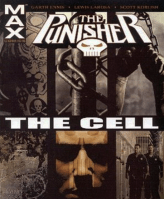
Within the darkest corners of Riker’s prison, old men control their criminal empire. These old men are given a new neighbor on their cell block: Frank Castle. The Punisher uses a prison riot to weaken the crime lord’s defenses. When they attempt to wait out the chaos, the Punisher strikes. “The Cell” shows a Punisher who can play the long game. This Punisher bides his time and waits for the perfect moment to attack.

This list is by no means exhaustive. We could’ve added a few other Punisher stories. Let us know which Punisher stories you’d add to this list in the comments. And wherever you are, I hope you’re having a great day.

Geekly News: March 16, 2025; CMON Games Could Lose $2 Million for 2024

Crowdfunding Board Game Giant CMON Games Claims They Could Lose $2 Million for 2024

CMON’s board issued a profit warning to the Hong Kong Stock Exchange earlier this week. It estimates its losses for 2024 at between $1.4m and $2.1m, with the final, audited total expected by the end of this month. $2 Million is a large number. Several factors have contributed to CMON Games claiming a loss for 2024. We’ll give a quick rundown on what led CMON in this direction.

A Quick History

CMON Games quickly bounced back from the pandemic. It suffered a 17.5% revenue drop to $25.1m in 2020 because of the pandemic. In 2022, CMON reached $45.3m and almost duplicated that success the next year due to multimillion-dollar Kickstarter campaigns for its long-running Zombicide series and games based on huge IPs such as Marvel and DC Comics.

Marvel United Box Close Up Board Game Review

Last September, CMON’s mid-year revenue had fallen for the first time since the pandemic, to just over $15.9m with slumping wholesale earnings putting a dent into the company’s H1 results. CMON’s wholesale revenue sank 39% to $5.9m in H1 2024 compared to the same period in 2023, while revenue from its crowdfunding campaigns fell by about 9.7% to just over $9.9m.

What CMON Claims Caused this Loss

CMON Games says the biggest contributing factor to this loss is the rising cost of living, which is eating into its revenue from tabletop game sales. They believe people aren’t buying as many board games because the cost of living has increased. Cost of living can and does play a role in reduced board game sales. But this can’t be the only factor.

CMON Switches from Kickstarter to Gamefound

CMON switched its crowdfunding strategy in February 2024 when it ended 12 years of running campaigns on Kickstarter. They chose to sign an exclusivity deal with Kickstarter’s crowdfunding competitor Gamefound. CMON had raised more than $108 Million in total on Kickstarter.

CMON’s first year on Gamefound began slowly. Large campaigns like DC Super Heroes United and Cthulu: Death May Die, Forbidden Reaches helped push CMON closer to the money they raised on Kickstarter the previous year.

At the mid-point of the year, the 2024 losses would almost wipe out CMON’s $1.8m profits across the previous three years combined, marking the first time the company suffered a loss since the pandemic.

Personal aside: I backed one of CMON’s projects on Gamefound and followed several others. The company had issues navigating Gamefound’s backend. There were growing pains but the year ended better than it could have. Different consumers use Gamefound and Kickstarter. Switching crowdfunding providers could contribute to a dip in sales. Gamefound also offers what equates to layaway, so certain Kickstarter marketing tactics CMON Games has cultivated over 12 years may not work as well on Gamefound.

CMON Bought IPs Last Year

CMON made two significant acquisitions last year. They bought Japon Brand, the Japanese board game collective that published Love Letter and Machi Koro and picked up the intellectual property rights to a pair of stalled Kickstarter projects from Mythic Games in January 2024.

The two games from Mythic Games, Hel and Anastyr, raised a combined $3.2 Million on Kickstarter. Per CMON Games, both games require extensive playtesting and editing to reach their standards for print. CMON Games plans to ship Hel and Anastyr to Kickstarter backers if the customers who originally backed the game are still interested. This created another issue with CMON Games switching from Kickstarter to Gamefound. Original backers of Hel and Anastyr haven’t received a single update since CMON Games acquired the rights to produce these games because CMON no longer uses Kickstarter.

Tariffs on Board Games

Geekly mentioned a month ago that tariffs on Chinese goods have complicated board game production. We belong to several board game groups and know several publishers. Many board game publishers have cited up to $2000 for a crowdfunded board game making $100,000. CMON deals in crowdfunding projects in the millions of dollars, and the company has at least seven completed campaigns that it will fulfill by the end of 2025. The company could lose at least $500,000 in tariffs alone.

CMON Agreed to Sell IPs

CMON started 2025 by agreeing to sell some of its intellectual properties in a $12 Million deal, with two new shareholders investing around $1.39 Million into the business by picking up a combined 16.66% stake in the company. CMON had entered a non-binding agreement to sell the unspecified IPs last August, but terminated the arrangement last month after CMON and the unnamed buyer failed to agree to terms.

CMON also revealed last week that the new shareholders had failed to hand over the money for their stakes and said it was seeking legal advice on how to cancel the process. CMON added at the time that it was now seeking other fundraising means to increase its general working capital in order to enlarge its capital base, increase the overall liquidity of its shares, and strengthen the company’s financial position.

Final Thoughts

Regardless of which factors affected their sales the most, CMON Games finds itself in a tight spot. One of board gaming’s dominant companies (especially post-pandemic) is struggling. But CMON has taken steps to get on the right track.

In January this year, CMON hired the CEO of tabletop gaming YouTube channel Man vs Meeple as its new global director of marketing. David Waybright will work full-time on promoting upcoming crowdfunding and retail releases from CMON while continuing to run Man vs Meeple, which specializes in previewing upcoming crowdfunded games. Fingers are crossed that CMON Games recovers.

Split Fiction Video Game Sells 2 Million Copies Its First Week

Split Fiction is the follow-up to Hazelight’s critically acclaimed It Takes Two (2021). It sold 2 million copies during its first week. Split Fiction was first announced at the 2024 Game Awards by studio chief Josef Fares, but began development immediately after Hazelight released It Takes Two. Like its predecessor, Split Fiction features dual protagonists who must work together, either locally (couch co-op) or online.

Split Fiction’s protagonists are named after Fares’ real-life daughters. Written by director and Hazelight studio chief Josef Fares and Sebastian Johansson, Split Fiction blends fantasy and science fiction, following a pair of authors trapped in the worlds they wrote. Split Fiction features unique gameplay mechanics involving split-screen combat, platforming challenges, and differing abilities for each character.

Steam’s Spring Sale Takes Up to 75% Off Your Favorite Games

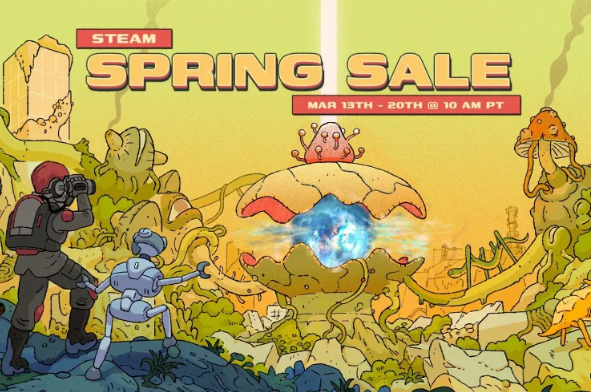
Spring starts early, thanks to Valve. Steam begins its annual Spring Sale, and while most of the games featured in this sale aren’t new, there are some classics you may consider purchasing if you don’t already own a copy.

You can pick up a copy of Square Enix’s Chrono Trigger in honor of the SNES RPG’s 30th anniversary. Cyberpunk 2077 is down to $42.76 (almost $40 off), which includes the expansion Phantom Liberty that significantly improves the gameplay. The 2016 Doom reboot is going for $1.99. I may have my eye on some deck-builder games. Slay the Spire is $6.24, while Inscryption is going for $7.99. Both of these games offer great mechanisms and blend in roguelike elements.

Steam’s Spring Sale ends March 20th so be sure to check out the store before then.

Wasteland Degenerates Launches on Kickstarter

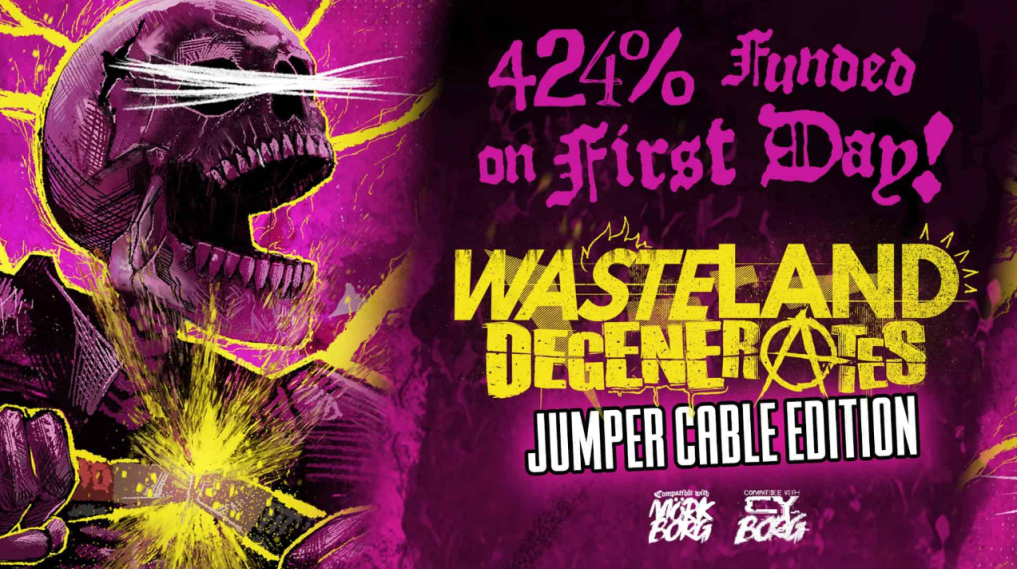
Tabletop Role-Playing Game Wasteland Degenerates launched on Kickstarter this week and was funded within hours. Wasteland Degenerates takes inspiration from the MÖRK BORG and CY_Borg systems. It features easy-to-roll-up characters, and dice rolls that can take out a character in seconds. If you want to explore the wastes, finding treasure from trash, and fight gnarly mutants, Wasteland Degenerates has you covered. While Wasteland Degenerates is based on, and compatible with, the award-winning MÖRK BORG and CY_Borg systems, it does not require any other books to play. You can learn more about this project on its Kickstarter page.

Modiphius Announces New Star Trek Adventures Sourcebook

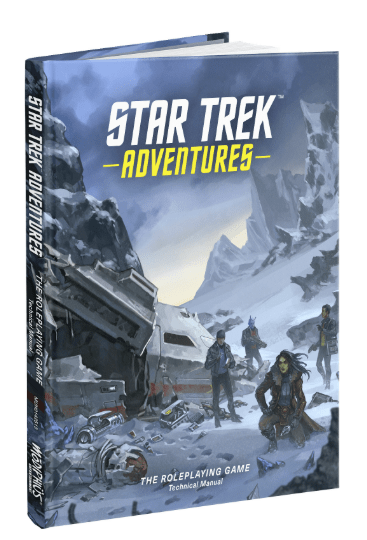
Take your Star Trek Adventures 2nd Edition RPG to the next level with the upcoming Technical Manual. Modiphius Entertainment announced that the new sourcebook will be released in June 2025.

This 129-page full-color hardcover book covers gear from across the Star Trek universe. The Technical Manual will cover details on Starfleet, Klingon, Romulan, Orion, and more technology. Add just about any piece of tech from the Star Trek universe, from universal translators to tricorders. The manual also details medical technology and the engineering elements of transporters.

The Star Trek Adventures 2nd Edition Technical Manual will retail for $46.23. You can order your copy of the base game and the Technical Manual by following this link.

Steamforged Games Announces Helldivers II: The Board Game

Steamforged Games has a history of bringing several video game properties to the tabletop game space, and they continue by announcing a board game adaptation of the hit sci-fi shooter Helldivers II. Manning squads armed with pistols, machine guns, and flamethrowers, players protect Super Earth against alien threats. You’ll complete high-risk missions, navigate battlefields, and overcome enemy swarms.

The crowdfunding campaign will launch on Gamefound on April 8, 2025.

That’s all the geek news we have for this week. Thank you for reading, and wherever you are, I hope you’re having a great day.

Top 5 Flash Villains

I can’t believe Geekly has been doing Top 5 Villains lists for superheroes and we haven’t covered Flash’s rogues gallery. Flash has one of the most extensive rogues galleries in comic book history. He may not have villains with the same name recognition as Spider-Man or Batman, but his rogues gallery is one of the best.

Hey, hey! Kyra Kyle here. We’re back with another Top 5 Villains list. Many of the Flash’s most iconic villains have superspeed, so we’ll be limiting this list to the top speedster. Let us know if you’d like a Top 5 List of Villainous Speedsters. In the meantime, here’s our list of the Top 5 Flash Villains.

Top 5 Ice Powered Comic Book Characters Killer Frost

5: Killer Frost

Flash’s top 4 villains were a breeze to compile. I knew who they were the instant I sat down. His fifth villain could go in several directions. I may have said that about more than one superhero, but that’s the truth. Killer Frost beats out the rest of the would-be Top 5 Flash villains if for no other reason than she used to be a Flash ally. She spends part of her time as an anti-hero, having spent stints with the Suicide Squad and Justice League. But whenever Caitlin Snow decides to turn evil, it spells doom for the Flash. Her connections with Flash and Firestorm add to her lethality. Cold powers prove effective against the Flash; cold can slow the speedster. Killer Frost’s freezing ability, as we’ll see with another Flash villain on this list, makes her dangerous.

4: Mirror Master

Mirror Master fills a similar role in Flash’s Rogues that Mysterio does in Spider-Man’s Rogues, and Mysterio ended up as Spider-Man’s fourth-placed villain. Hmm. Looks like the fourth spot is the perfect place for a villain designed to confuse their nemesis. Unlike Mysterio, Mirror Master possesses powers. His mirrors can hypnotize, turn him invisible, generate holograms, change his physical form, and travel into other dimensions. That final ability separates Mirror Master from Mysterio. One of my favorite recent stories Mirror Master showed him trap Flash within a parallel dimension of his creation.

Don’t let the high-speed fool you. Flash is one of DC Comics’ most powerful heroes. He can turn back time and alter the past. Brute strength doesn’t often work against the Flash. Mirror Master takes a different route. And I’m a sucker for a villain with a mischievous streak.

3: Gorilla Grodd

Gorilla Grodd is one of my favorite Flash villains. I wanted to place him at the one or the two spot, but two other villains narrowly beat him. Gorilla Grodd has superhuman strength, telekinesis, telepathy, a super genius-level intellect, and has a connection to the Speed Force. As his name suggests, he’s a gorilla. He hails from Gorilla City and is the sometimes leader of the metropolis led by super-intelligent gorillas. Gorilla Grodd not only has a laundry list of abilities, he has an army at his disposal.

Marry all of this up with Grodd’s connections with most of DC Comics’ supervillain organizations like the Legion of Doom, the Secret Society of Super Villains, and the Injustice League, and Gorilla Grodd has a plethora of allies he can summon. Grodd is one of Flash’s most formidable enemies.

2: Captain Cold

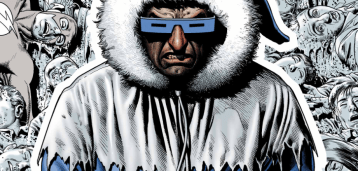
You can take everything I said about Killer Frost and her freezing powers and apply it to Captain Cold. But instead of Captain Cold being a personal friend of the Flash’s, he’s the man he instituted the Flash’s Rogues, Flash’s version of the Sinister Six, and serves as their leader. I had to put Captain Cold above Grodd because Grodd can get distracted by other heroes, and Captain Cold keeps his animosity toward the Flash. He knows which buttons to press and isn’t afraid to press them. His freezing abilities are only matched by his intellect. In short, Captain Cold knows how to use the Flash’s strength against him and that makes him deadly.

1: Reverse-Flash

Eobard Thawne (also known as Reverse-Flash and Professor Zoom) takes the top spot. He’s another speedster, so if we were to create a list of Top 5 Villainous Flash Speedsters, he’d be the top spot there as well. Thawne is one of the few characters in the DC Comics Universe who can travel back in time with little to no ill effects, and he uses this to his advantage. He’s erased characters to torment and destroy the Flash’s life. He even went back in time to kill Barry Allen’s mother. Reverse-Flash is plain evil.

He too has connections with the Legion of Doom, the Injustice League, and the Rogues. He had to take the top spot. Despite others’ attempts, no one has tortured the Flash more than Reverse-Flash. He does what his name says, he is the Flash’s antithesis.

Did we get the list right? Let us know who you would add or remove in the comments. And wherever you are, I hope you’re having a great day.
Harley Quinn: “Bottle Episode (But Not a ‘Bottle Episode’)” Review

Season’s Thoughts

We’ve got some characters rounded up in this week’s episode of Harley Quinn. Well, they’re all fun-sized, but they’re getting stuff done. Sort of.

There were a few jokes tossed here and there, but “Bottle Episode (But Not a ‘Bottle Episode’)” had a darker tone in comparison to previous episodes of season five of Harley Quinn. This tone was consistent throughout “Bottle Episode (But Not a ‘Bottle Episode,’)” which I appreciated since we’re ramping up for the season finale.

Since we’ve got one more episode to go in season five of Harley Quinn, I had a feeling Lex wouldn’t be the key to taking down Lena this episode. Their reunion was cute. Harley’s therapist powers working against her made for an interesting watch. Ivy cheerleading Harley during the therapy session was hilarious.

I didn’t think it was possible, but Joker’s romantic relationship is more stable than Bruce Wayne’s or Lois Lane’s. That entire scene with them interacting with one another about relationships was the funniest part of the episode.

The goofiness of “Bottle Episode (But Not a ‘Bottle Episode’)” aside, I have a feeling Frankette is going to be one of the keys to busting Harley and company out of the bottle. Like, she’ll smash it or something and de-shrink everyone (with or without Superman) and they take out the Luthors. I hope I’m not hitting the nail on the head because unpredictability makes Harley Quinn fun to watch.

Kyra’s Take

While it is difficult to write repeatedly, “Bottle Episode (But Not a ‘Bottle Episode’s’)” title is accurate and funny. At the end of this episode, Harley Quinn teases Superman. I expected him to make another appearance, and that’s a strength of the show. Viewers can predict who will get involved in Harley’s shenanigans, but they won’t be able to guess how they’ll be involved.

Harley Quinn loves meeting the audience’s expectations and then subverting those expectations. We anticipated Dick Grayson’s return, but not as Red X, and we couldn’t guess Alfred attempting to murder him. We anticipated Lex Luthor’s return, and Harley Quinn set him up as another Lena antagonist only to have him join forces with her, which makes sense for his character (he tried to rule the world in a previous season) and subverts how Harley and Ivy think the solution will go. Superman will return, but we have no idea what he’s done during his absence from Metropolis. We have no idea of his mental state.

I expect Frankette to be involved with Harley and Ivy escaping, but Harley Quinn will choose a wild–possibly disgusting way–for her to get involved. My money is on Frankette using her father’s “special rag” and ejaculating for the first time, producing plant material in the alien ship that Ivy can then manipulate. Before Ivy frees herself, she’ll get choked up while watching Frankette do the deed and say something like “Just like her dad.” Gross.

Too gross! Ugh! Forget what I said. Frankette goes into the Green and contacts Swamp Thing.

I also liked the interactions with Bruce Wayne, Lois Lane, and the Joker. Bruce couldn’t help but take a jab at the Joker’s daughter, who interns at Wayne Enterprises. Her tech short-circuited all electronics, not just Brainiac’s cloaking device. I love how Harley Quinn ties up a story thread. Joker spent the entire episode trying to get Bruce to finalize his daughter’s internship paperwork. Few elements get wasted.

I expect a few callbacks in the season finale next week. Hopefully, they won’t be as deep of a cut as Harley’s dad from the week prior. Does anyone know what Doctor Psycho or Riddler are up to? Thank you for reading, and wherever you are, I hope you’re having a great day.