


Happy Wednesday, Geekly Gang! Today’s post is Whatcha Reading, where our writers share what they’ve been reading over the past month. Feel free to share what you’ve been reading, too, because we’re all part of the Geekly Gang.

I heard about Dungeon Crawler Carl years ago and hadn’t had a chance to start the series. It’s fun. Short and sweet, Dungeon Crawler Carl is pure fun. Earth belongs to an intergalactic trade federation. It’s time to pay up with our natural resources, so aliens slurp the marrow from our planet, causing all buildings and cars to sink beneath the surface, instantly killing any beings inside the buildings and cars. Donning a jacket, boxers, and ill-fitting pink Crocs, our “hero” Carl survives because he’s retrieving his ex-girlfriend’s cat (Princess Donut Queen Anne the Chonk–Princess Donut for short) from a tree in the middle of winter. Dungeon Crawler Carl gets its title because the aliens play Dungeon Master for a Dungeon Crawl Carl must navigate.
If this sounds at all interesting, I suggest reading Dungeon Crawler Carl. It may not win any book of the year awards, but it’s a phenomenal premise for a television series. And hey, a Dungeon Crawler Carl television series was announced last week. Now may be the perfect time to read Dungeon Crawler Carl before it makes a splash on the small screen.
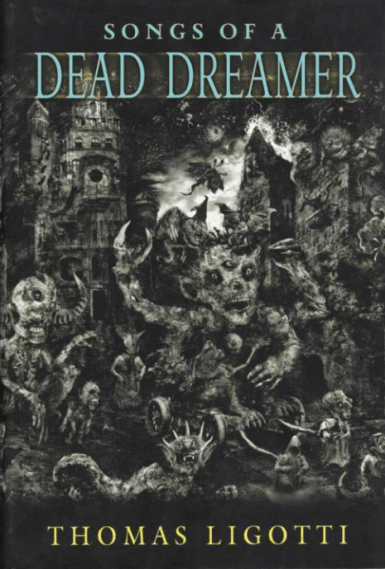
Thomas Ligotti produces modern cosmic horror classics. Songs of a Dead Dreamer is one of those cosmic horror classics. Ligotti takes Lovecraftian horror to new heights. Sometimes, Ligotti’s work leans into realism like Songs of a Dead Dreamer’s opening story, “The Frolic.” Other times, it fully embraces established tropes like “The Troubles of Dr. Thoss.” And I love Ligotti’s experimental “Notes on the Writing of Horror: A Story.” No matter which flavor of existential dread you prefer, Songs of a Dead Dreamer has you covered. If you like stories like Bird Box or anything by H.P. Lovecraft, you owe it to yourself to check out Songs of a Dead Dreamer.
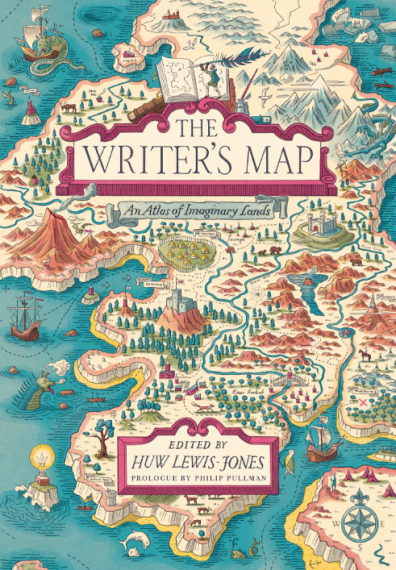
The Writer’s Map: An Atlas of Imaginary Lands compiles maps–many hand-drawn by the original creators–of fantasy and science fiction worlds. From a writing perspective, there may not be much to glean from these maps, but it’s fun leafing through the pages of literary history. I never knew Neverland had a map. Fun.
That’s all I have for Whatcha Reading this month. Let’s see what Skye’s been reading.

While it may seem like a self-help book, How to Walk Away is far from it. How to Walk Away is a novel focused on mental health. The main character, Maggie, survives a plane accident with her pilot fiancé, Chip. Sure, the story is mainly about Maggie’s hospital recovery afterward, but what keeps me reading is the mental battle taking place. Chip can’t forgive himself, and their future relationship is thrown into question. How to Walk Away is not about what happened. It’s about moving on.

I’ve been dying to read a book like Black AF History. Thank you, Michael Harriot, for giving us an alternative perspective on American history. I found Black AF History at my local library. Support your local libraries. Anyway, Black AF History is the history I was never taught in school but always wanted to know. My favorite aspect of Black AF History is how it’s explained from the perspective of the people who’ve been subjugated by this country since the beginning. Michael Harriot is clear that no teaching of history will be completely unbiased. This is just the history White people never wanted to hear.
Hey, hey! Kyra Kyle again. That’s everything our writers have read over the past month. Thank you for reading, and wherever you are, I hope you’re having a great day.

1997 was another stellar year for tabletop games. There were so many games to choose from that we have an honorable mention for the first time in a couple of yearly lists. Hey, hey, Geekly Gang! Kyra Kyle here. We’re back with another Top 5 Tabletop Games throughout the years; today’s list is the top five board games of 1997. We’ll talk about 1997’s board game list soon, but let’s review the ground rules for which games make these lists before we begin.
1: Cultural relevance plays as much of a factor as overall quality. A game might make a list that doesn’t hold up to others of its type, but you must admit the game is everywhere.
2: Only one game from a franchise makes the list. This will become more of an issue the closer we get to games with expansions.
3: Longevity plays a role, too. A game doesn’t have to fly off the shelves today, but it had to have some widespread appeal for a decent time.
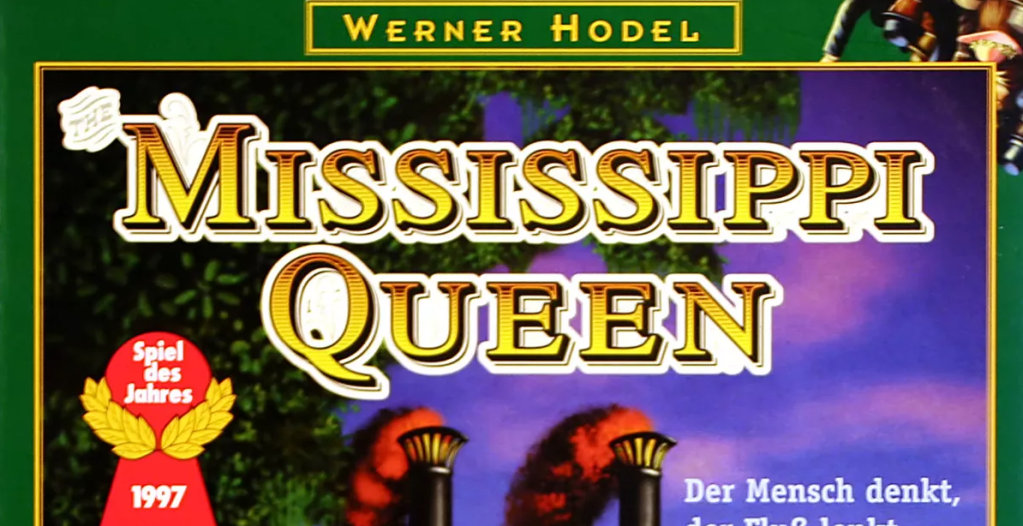
Yep. 1997’s winner of the Spiel des Jahres (German Game of the Year) just misses our list. Mississippi Queen puts gamers in the role of a paddlewheeler captain in a race down the Mississippi River in 1871. Mississippi Queen won numerous awards, not just the Spiel, and it’s a stellar game, but the other games that made this list have had longer staying power. Still, Mississippi Queen is a satisfying racing game.

The incomparable Reiner Knizia makes another one of these lists with Tigris and Euphrates. Many gamers may balk at this game being this low. Tigris and Euphrates is often dubbed a “gamer’s game.” It centers on a clash between neighboring dynasties along the Tigris and Euphrates Rivers. Funny, both of the first games we’re talking about are named after famous rivers. Anyway, Tigris and Euphrates offers tactical and strategic objectives, where immediate (tactical) goals are more realistic at larger but smaller player counts allow for long-term planning.

Tigris and Euphrates features drawing tiles from a bag. Players may redraw tiles if they don’t like the ones they drew by spending an action point (players have two action points per turn). After drawing tiles, players will place tiles and leaders onto the board, creating and expanding regions and kingdoms. During the game, players collect points in each of the four tile colors, prompting players to balance the tile types they play. Tigris and Euphrates has a lot more conflict than most German games during this time. It’s a classic.
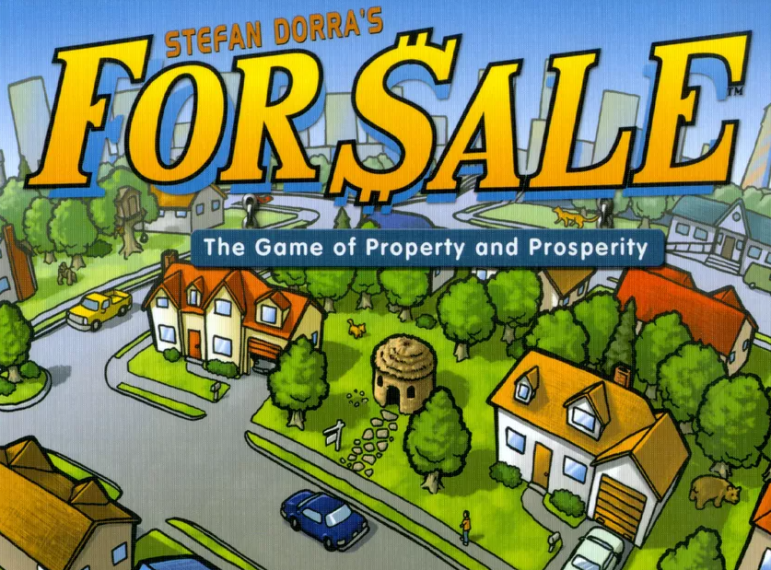
For Sale is a fast-paced auction card game about real estate. It’s played in two phases. During the first phase, players bid for several buildings. After all the properties are purchased, the second phase begins, and players sell their buildings for the highest profit. For Sale is one of those easy-to-teach, easy-to-learn, and difficult-to-master card games.
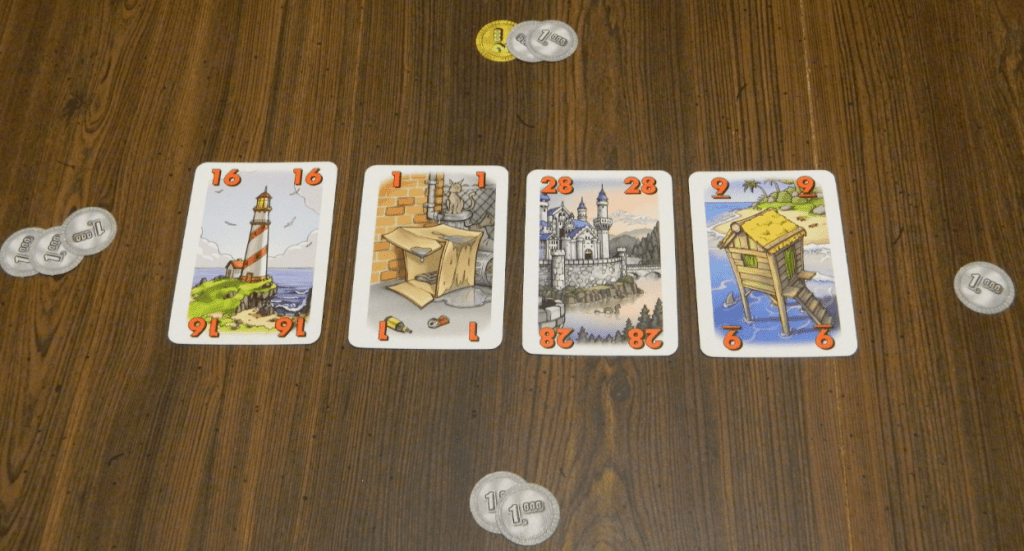
In short, For Sale may be the opposite of Tigris and Euphrates. Both are stellar games, but I’m giving For Sale the slight nod for its accessibility.

GIPF is the first abstract strategy game to make one of these lists in several posts. GIPF was recommended for the Spiel des Jahres in 1998. It has plenty of accolades, but GIPF makes this list because it began a series of abstract strategy board games by designer Kris Burm named the GIPF Project. TZAAR, ZERTZ, DVONN, YINSH, PUNCT, LYNGK, and MATRX GIPF are great games that use various game mechanisms. But we’re talking about GIPF, the game of pushing.

GIPF takes a board that looks like it could belong in Chinese Checkers. Players introduce a new piece (disc) on the hexagonal game board and push their piece in a straight line. GIPF involves no luck. It’s a straight-up brain burner, and it reintroduced the gaming community to abstract strategy games akin to Go or Othello.

Uwe Rosenberg makes his first appearance on one of these lists with Bohnanza. The game’s title is a pun on the German word Bohne (for bean) and the English word bonanza (for an exceptionally large and rich mineral deposit). Players plant bean cards and then harvest them to earn coins. Each player begins with a random hand of bean cards, and each card has a number on it corresponding to the number of that type of beans in the deck. Modern card game darling, Flip 7, may have borrowed that idea from Bohnanza. Cards with fewer copies in the deck are more difficult to collect, but players don’t need as many copies of the cards to harvest (or make a set).

Bohnanza features trading and can get political. Get ready to make your case. More so than any other game on this list—so far—I’ve seen Bohnanza played in game shops and board game cafés.

Twilight Imperium is a board game space opera. Twilight Imperium is the closest thing to a board game version of Star Wars. Twilight Imperium is a classic 4X board game: explore, expand, exploit, and exterminate. You choose how your civilization will settle the cosmos. Twilight Imperium is not for the faint of heart. Games run a minimum of five hours. This is one of the reasons why I’ve only observed games of Twilight Imperium. There’s a lot going on, but if you want to control every move of an intergalactic kingdom, few games do as good a job of capturing that vibe as Twilight Imperium.
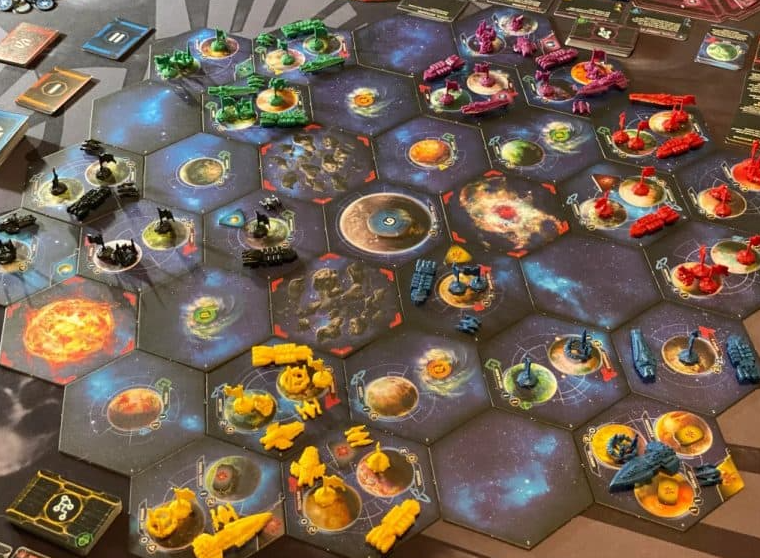
You can even dive into Twilight Imperium’s world with its novel series published by Aconyte Books or play the tabletop role-playing game spinoff. Twilight Imperium is a game that some board gamers play exclusively. And there may be a good reason for that. As recently as last year (2024), Nerdist and Polygon dubbed Twilight Imperium as one of the greatest board games ever made. Twilight Imperium easily tops our 1997 list of tabletop games.
Did we get the list mostly correct? Let us know which games you’d add in the comments. Thank you for reading, and wherever you are, I hope you’re having a great day.
Check out the other lists in this series:
Top 5 Tabletop Games Prior to the 1930s
Top 5 Tabletop Games of the 1930s
Top 5 Tabletop Games of the 1940s-50s
Top 5 Tabletop Games from the Early 1960s
Top 5 Tabletop Games from the Late 1960s
Top 5 Tabletop Games from the Early 1970s
Top 5 Tabletop Games from 1980-1981
Top 5 Tabletop Games from 1982-1983
Top 5 Tabletop Games from 1984-1985
Top 5 Tabletop Games from 1986-1987
Top 5 Tabletop Games from 1988-1989
Top 5 Tabletop Games from 1990-1991
Top 5 Tabletop Games from 1992
Top 5 Tabletop Games from 1993
Top 5 Tabletop Games from 1994
Top 5 Tabletop Games from 1995
Top 5 Tabletop Games from 1996
Happy Sunday, Geekly Gang! We don’t have much for geek news this week. Hopefully, we’ll have more headlines in the coming weeks. Instead of a bombshell or two, let’s get right into board game and video game new releases.

What board game fan hasn’t dreamt of making their own games? The Game Makers puts you in the shoes of a board game company, producing the most and best games you possibly can, and it returns to KickStarter this past week. Only this time, The Game Makers ditches the puns on popular board games and includes hundreds of real-world board games for you to create.
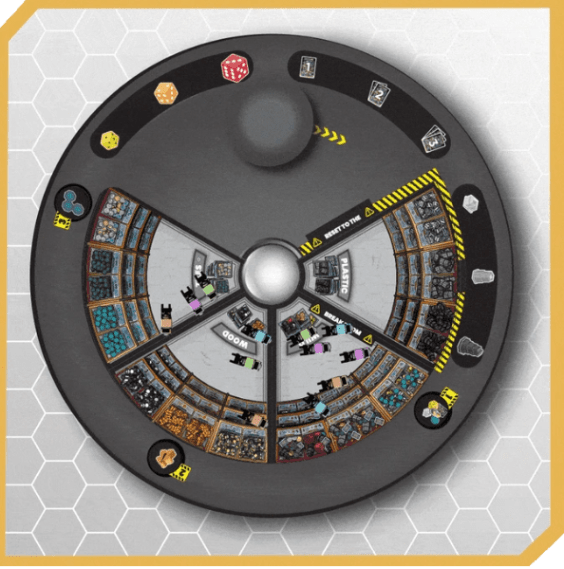
The Game Masters’ central action selection system is amazing. Players take snappy simultaneous turns by moving their forklifts along the four available options for production. This feature allows for games of less than 90 minutes, even when a game includes six players.
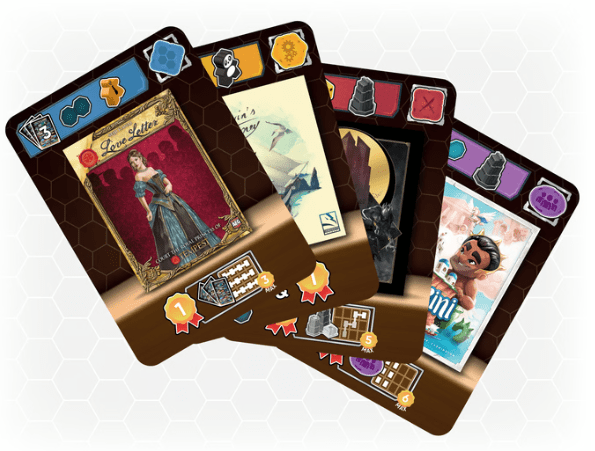
I’m also a big fan of dual-purpose cards. The Game Makers has these in spades. The Game Makers pledges range between $149-199, so it’s a little on the pricy side, but the game is well worth the cost. If you’re interested in running your own board game company, check out The Game Makers’ KickStarter page.

If you’re a huge Jane Austen and board game fan, Endearment is for you. Endearment allows gamers to become one of Austen’s beloved heroines and recreate many of her classic works in this swoonworthy game for one to four romantics.

Endearment is produced by Dux Somnium Games, which had other hits like Botany, La Fleur, and Artistry. Endearment continues the board game company’s flair for the dramatic. Dux Somnium Games has a reputation for high-quality components and easy-to-learn rules. While I don’t know the specifics for Endearment’s ruleset, I’ve ascertained it’s a scenario-based game (with scenarios based on Austen’s work), and that should add some replay ability for Endearment.

I’m intrigued by Endearment. The components look amazing, and Dux Somnium Games has a knack for capturing a theme. That’ll be much needed for Austen fans. Endearment pledges range from $49 to $329, with plenty of options in between those two price points. If you’re wanting to get your romantic gaming on, check out Endearment’s KickStarter page.

Terrorscape 2 channels Dead by Daylight in this team-based asymmetric horror game. Players take on the role of survivors or the killer in this epic game of cat and mouse.
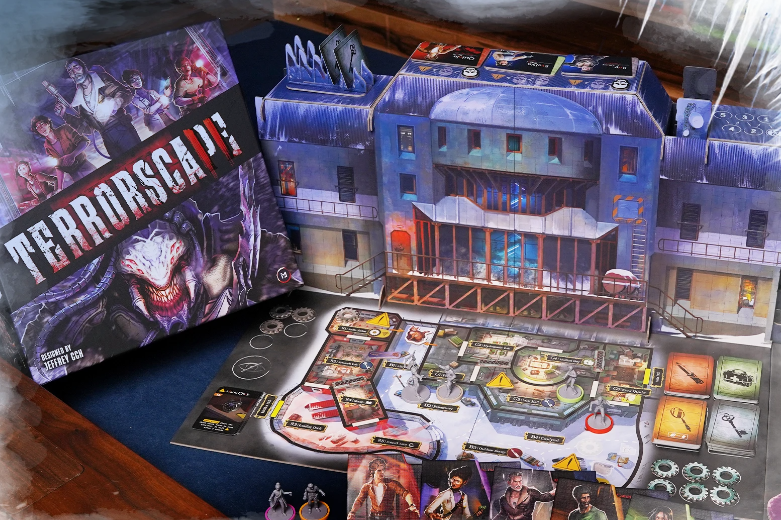
Terrorscape 2 features a 3D mansion, high-quality miniatures, and variable setups for plenty of replays. Since Terrorscape 2 is launching on GameFound, we don’t know much about its pledge levels, but it will launch on September 9, 2025 and if you’re interested in Terrorscape 2, check out its GameFound page.

Lost Games joins the latest trend of board game companies offering their entire annual catalogue in a single campaign. Wishland has received rave reviews, and it makes up half of the four games on offer in Lost Games’ four-game GameFound package. That’s a great sign. Lost Games’ other three games have also received favorable reviews. I love the idea of a board game company releasing all of its games in a single campaign.

And Lost Games offers a lot of value with its three or four-game bundle. Dreamwood, Medieval Realms, and Wishland: The Card Game are available with a $39 pledge (that’s three games for about $13 apiece), while gamers can include the Wishland Big Box (with all the expansions) for a pledge of $120. Sure, $80 is a lot for one game, but this is a game with at least three expansions, and you still get the previous three games at the same price. If you’re interested in Lost Games’ three or four-game bundle, check out its GameFound page.
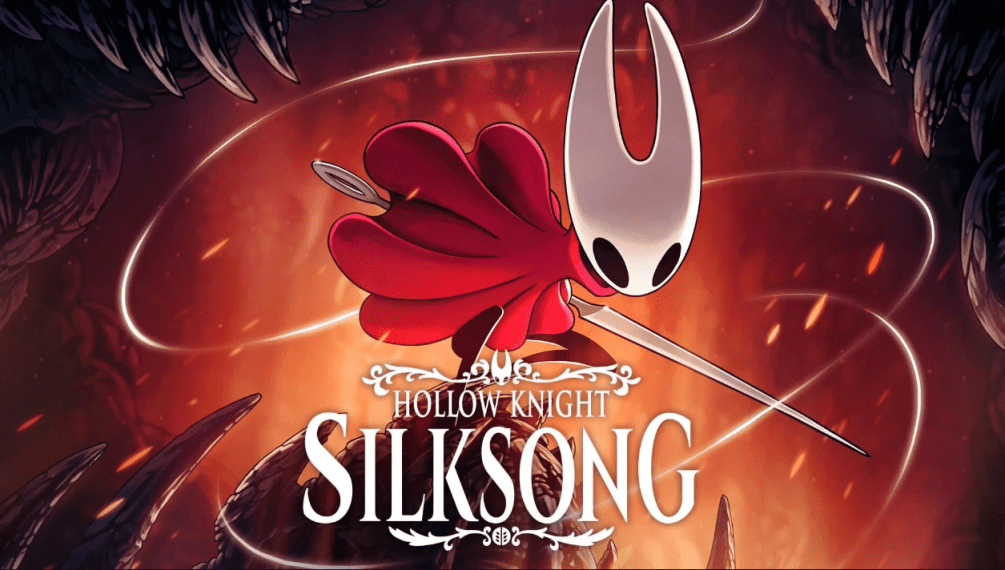
Hollow Knight fans rejoice. The long-awaited Hollow Knight: Silksong sequel released this past week. Hollow Knight: Silksong won Unity Awards’ “Most Anticipated Game” in 2021 and 2024. So, fans have been waiting for half a decade, and Hollow Knight: Silksong looks like it delivers.
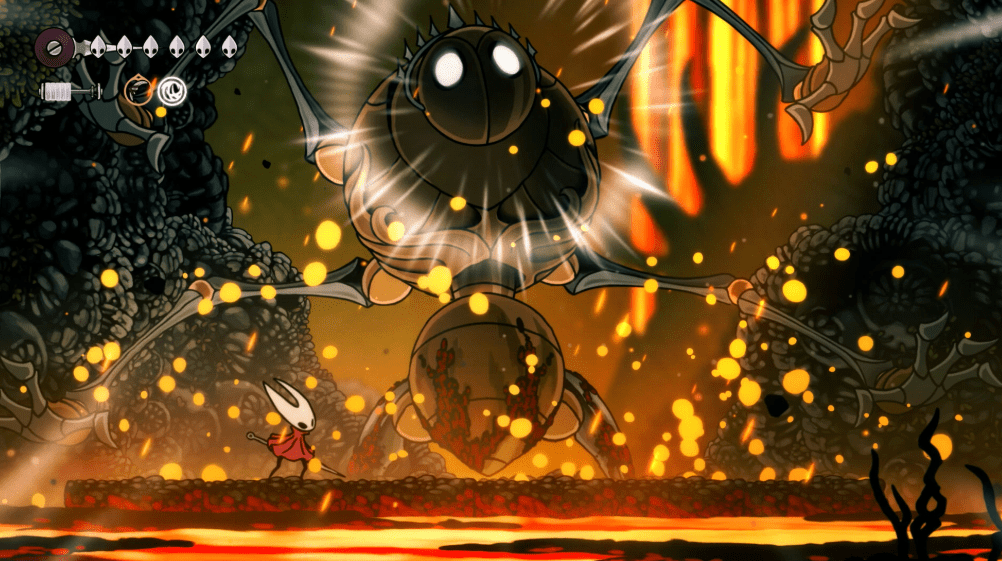
Hollow Knight: Silksong’s protagonist Hornet leaps through the air with ease. Hornet offers more gameplay options than their predecessor. They can flip over huge enemies like a gymnast and pull off insane acrobatic feats, and Hornet will need all of their tricks to make it through Hollow Knight: Silksong’s punishing platforming levels. Fortunately, healing receives an overhaul in Hollow Knight: Silksong. Instead of a slow drip heal like the Knight, Hornet can instantly heal three health nodes and can do so on the move. But beware. Hornet has a silk meter, and healing three nodes of health immediately empties the bar.

Hollow Knight: Silksong is available on multiple platforms: PC, Nintendo Switch, Nintendo Switch 2, PlayStation 4, PlayStation 5, Xbox One, and Xbox Series X/S. There are so many options. Hopefully, one of our writers will get enough hours in-game for an upcoming review.

The long-running golf video game series Everybody’s Golf/Hot Shots received its first new release in almost ten years, combining the game’s original title (Everybody’s Golf) and North American (Hot Shots Golf) title, Everybody’s Golf Hot Shots. Everybody’s Golf Hot Shots features over 10 golf courses and 25 golfers who (like in former entries) can be unlocked as playable characters.

Honestly, I haven’t played Everybody’s Golf for more than a session or two since the original PlayStation Portable. The series offers a lot of varied and goofy play. From what I can remember, Everybody’s Golf has plenty of depth in play, too. Everybody’s Golf Hot Shots received some backlash for its use of AI-generated images. But according to a GameRant article, Bandai explained AI-generated images were limited to “leaf and tree textures” on the golf courses. Background tree textures can be tedious to recreate, and using AI-generated images to create tree textures is understandable. Everybody’s Golf Hot Shots is available for PC, PlayStation 5, and Nintendo Switch. I wonder if Switch 2 will get a release date later. Fingers crossed.
That’s all we have for Geek News this week. Thank you for reading, and wherever you are, I hope you’re having a great day.

Evidently, September 6, 2025, is Beard Day. Who knew? Geekly has celebrated lesser-known observances over the past couple of months, like Shark Day. Why not comic book beards? Sorry, but I couldn’t help but make the Beard Hunter our featured image. Tee hee. Hey, hey, Geekly Gang! Kyra Kyle here. JK Geekly has ignored the important topic of beards in comic books for too long. We aren’t talking about the best comic book characters who wear beards; that’d be a different list. No, we’ll try to break down the best beards. Let’s get to these glorious flavor savers.

Typically, Lobo wears a mustache and mutton chops, which don’t qualify as a beard. I like it when Lobo sports a chin strap. He may always be the “Main Man,” but Lobo works best when he’s the “Mane Man.” What’s the point of surviving decapitation if you’re not sporting a yeard?
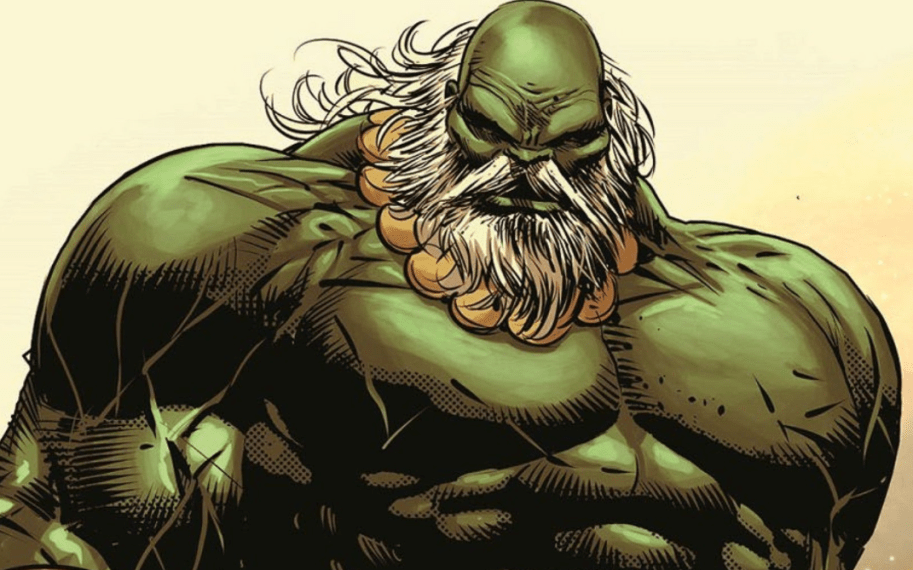
I admit it. I’m partial to Maestro. If you can no longer grow hair on your scalp, grow it on your face. Like I used to say, it’s just one’s hair migrating south for the winter. Look at Maestro’s luxurious beard. You can’t deny how magnificent his chin curtain looks. I wonder if he’d let me run my fingers through his Grizzly Adams. You know what, no. I want to keep my hands.
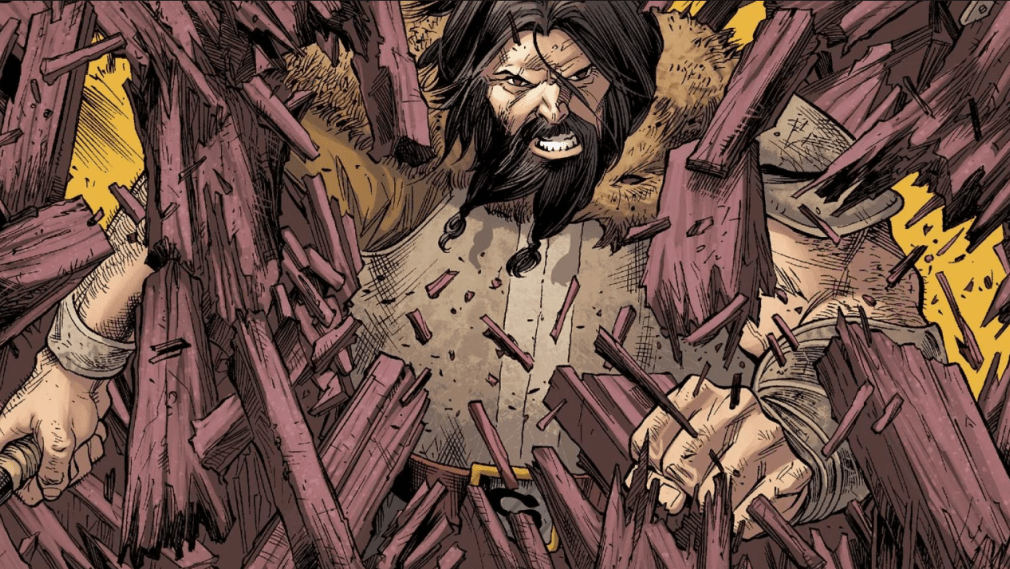
Vandal Savage has lived for a long time. I mean a long time. Centuries. Millennia. Savage has sported various beards throughout the years. Like Lobo, he’s even gone with mutton chops, but those count as beards. Savage looks best when he lets his grizzle flow. Vandal Savage has earned every touch of gray.

Aquaman is another comic book character who doesn’t always wear a beard, but let’s face it, he looks tough with a beard. Aquaman’s abilities make him one of DC Comics’ most powerful heroes, but he often gets clowned. That ended when he sported a lumberjack. There’s something about Arthur’s hair, all of his hair, flowing under the sea. Aquaman’s anchor shows true grit.

I almost went with Thor at this spot, but he’s another comic book character who isn’t always depicted with a beard. Instead, we’ll go with Marvel Comics’ Hercules, who rocked a hipster beard before it was cool. How long do you think it takes Hercules to topiarize that beard? Forget the muscles. You’ve got to give it up for a true beardionado.
I tried to put as many references to beards as I could in this post. Feel free to mention some of your favorite beard terms, and while you’re at it, add a few more comic book beards for this list. There are way too many great beards. Let’s share more hot fuzz. Happy Beard Day, Geekly Gang. Thank you for reading, and wherever you are, I hope you’re having a great day.




Happy Wednesday, Geekly Gang! Kyra Kyle here. For this week’s Whatcha, our Geekly writers will be sharing which games they’ve been playing over the past month. Let us know what games you’ve been playing, because we’re all part of the Geekly Gang. I’ll start by sharing the games I’ve been playing.
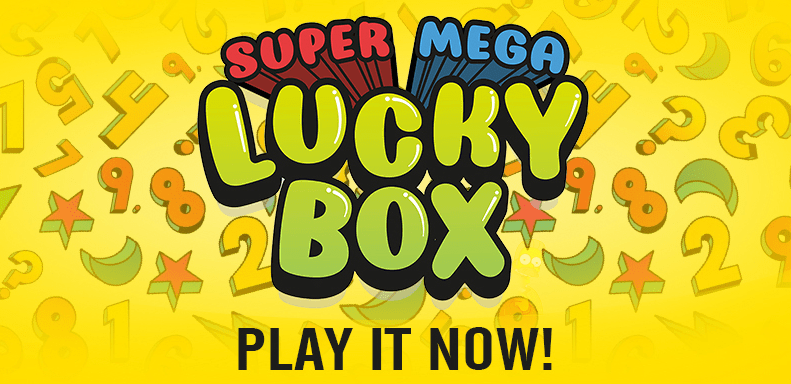
Phil Walker-Harding is known for Bärenpark, Gizmos, and Sushi Go!, and Super Mega Lucky Box is Walker-Harding’s twist on Bingo. Like many of Walker-Harding’s games, Super Mega Lucky Box is easy to learn but may take a few play-throughs to figure out the best strategy.

A deck of cards, containing two copies of numbers 1-9, is used to determine which box players may check off one of their multiple Bingo cards. (You begin the game with three.) As soon as you fill a column or row, you immediately claim the reward (if any), shown at the end of that column or row. Lightning bolts allow you to change the number on the card, so typically, you’re not stuck with a number you can’t use. Stars grant you victory points. Super Mega Lucky Box rewards players who can manage their resources (lightning bolts and rewards) and who know when to manipulate their Bingo cards and rewards to great effect.
A Mensa 2022 Select recipient, Super Mega Lucky Box encourages creative thinking. The game’s variability ensures no two games play the same.

Wazabi spelled with a “Z,” not an “S,” is–essentially–a dice version of Uno. Players begin the game with four dice, and they attempt to rid themselves of their dice. Each die has three possible results, give a die to another player, draw a card, and a W (more sides have W than the other two), which is the currency needed to play a card from your hand. During a turn, a player rolls the dice, follows the directions on the dice, and can play one card that they can afford. Cards cost 1, 2, or 3 W.

Wazabi can be fun, but it suffers from the same shortcomings as Uno, only you’re adding dice (another variation of luck) to the mix. Games of Wazabi can–and should–end in less than ten minutes, but typically, you’ll end up with a stalemate with players trading dice and cards back and forth for about twenty to thirty minutes. Still, I can see the appeal of Wazabi. It adds a little spice to Uno’s gameplay.

One of my game group members hates trick-taking games. He shall remain nameless. Anyway, this trick-taking game hater hasn’t shown up to meetings over the past month, so we’ve been playing a ton of trick-taking games: Little Devils, The Bottle Imp, Cat in the Box, and Squeeze.

I won’t go over all of these games, but I enjoyed each one. I like having a theme for game night. Quick. So-and-so isn’t here, let’s play games they hate playing. Each of these trick-taking games are nasty in their own way. The Bottle Imp requires the most replays to wrap your brain around what’s happening, although Cat in the Box isn’t too far off in that regard. Little Devils is the easiest to explain (we’ll have a review of that game in a couple of months), and it happens to be the meanest of the three non-traditional card games. But Squeeze (played with a traditional deck of cards) may be the most mean-spirited.
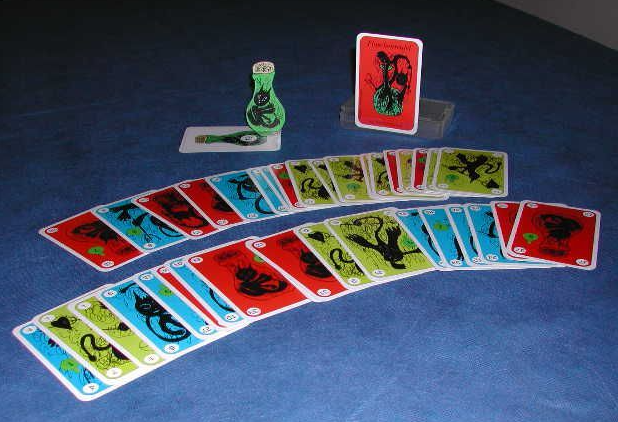
Players begin Squeeze with ten cards. The top card of the deck denotes which suit is trump for the round. The person to the dealer’s left makes their bid, and then everyone else makes a bid. When the bidding makes its way to the dealer, the dealer can only choose a number that doesn’t equal the total number of cards in hand.
For example, during the first round of a three-player game, if the first player says “3” and the second player says “4,” the dealer can say any number other than “3,” which would equal ten (3+4+3 = 10).

At least one person is guaranteed to miss their bid each round, hence the name Squeeze. “Zero” is a legal bid, so long as it wouldn’t equal the number of cards in play. Players earn ten points plus their bid if they achieve their bid, and get nothing for missing their bid. Play continues like this until a dealer deals only one card during a round. You don’t want to be the dealer during the final round. You may not have a choice of bid. Yikes!
My favorite thing about Squeeze is that you get less knowledge of what’s in players’ hands the longer you play. I may be the only one with trump for the round, but my trump cards are two and three. I’ve bid one and ended up getting a lot more tricks than one. Lol
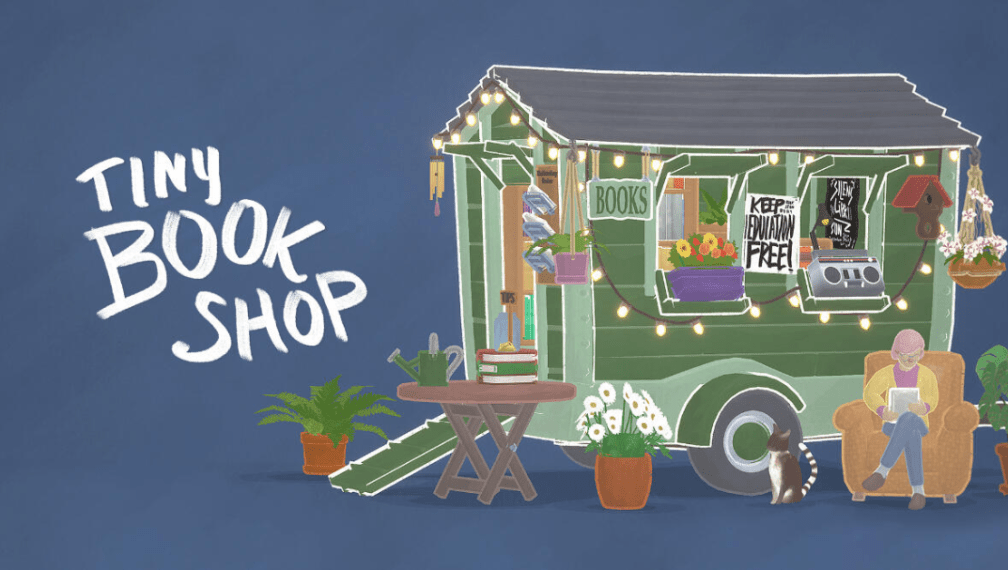
I won’t go into too much detail with Tiny Bookshop; this game will definitely make Season’s list, too. Geekly covered Tiny Bookshop during one of our Geekly News posts. In short, Tiny Bookshop is an excellent, cozy game and will probably receive a game review sometime in early 2026. I love making book suggestions for customers. Tiny Bookshop is one of the few video games that offer reading recommendations. What’s not to love?
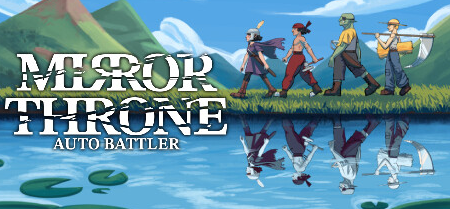
I like auto battlers. My favorite is the now-defunct Fate Arena, so I’ve been looking for a worthy replacement. I’ve put in a handful of hours with Mirror Throne, and it’s most likely not going to be my Fate Arena replacement. Mirror Throne doesn’t appear to have balanced abilities for its characters. I could be wrong. But I did run the table with one or two overly strong units during the game’s campaign. Mirror Throne only offers two factions (technically, a third that’s a mix of the other two), so gameplay styles are limited. But Mirror Throne has room for improvement.

While I’d like a more robust campaign mode, Mirror Throne needs to fix its competitive (Arena) mode. I dislike how I don’t know who I’m in a lobby with, and that I have no idea what kind of teams they’re building. That’s something Fate Arena handled beautifully. I want to know my competition. Instead, I’m given randos who may be bots.
Fate Arena also had bots, but you’d get an idea of who the bots were, and they didn’t dominate lobbies. I also wonder about leavers. Fate Arena would backfill leavers with bots; leavers were the main reason for bots in Fate Arena. Mirror Throne may suffer from leavers who only purchase one unit and duck the game. I can easily roll them.
I’ve played Mirror Throne after its first major update, and I still don’t know what’s going on during Arena mode. Hope is the currency needed to stay in the game (you begin a game with 100), and sometimes when I lose, I’ll lose 5 or 10 Hope, but other times it’s a whopping 25. What determines the amount of lost Hope? Mirror Throne is needlessly opaque.

Mirror Throne also matches me against opponents I may never see again in the lobby. I’m unable to build up a rivalry with any opponent. Mirror Throne has just been released, but it needs to iron out a lot of kinks. Fingers crossed.
That’s all I have for games this past month. Let’s see what Season and Skye have been playing.
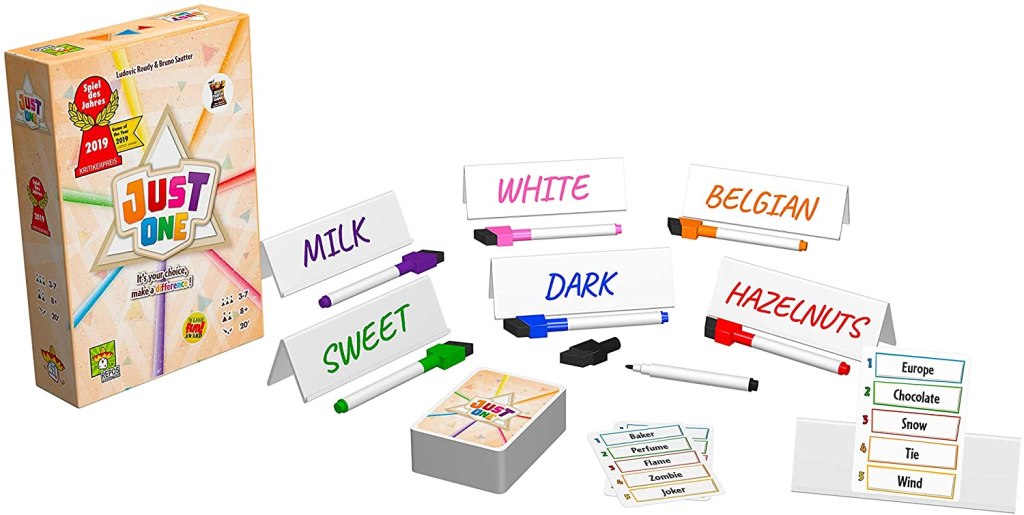
It’s been a minute since I last included a board game on this list. I originally played Just One at a going-away party with a former coworker years ago, but it’s recently hit the table again. Just One is a simple game that has the active player draw a card (without looking at the underside) and select a number (1 through 5). Each number has a word next to it. The rest of the players use their whiteboard standees to write one word that describes the word from the list the active player chose. Players reveal the descriptive words they chose to each other (without the active player looking), and if any words match, the players with matching words have to erase their whiteboards. The active player gets one chance to guess the word they picked.
I don’t remember how many rounds are supposed to be played. Whenever I play, my group plays until we burn out on guessing words.

Travel-sized Scattergories makes a comeback. We’ve covered SiXeS before, so I won’t go into too much detail. The gist of SiXeS is writing thirty-six words over six rounds in six minutes. Each round has a different category (or categories for Lightning rounds that occur every third round), which players either try to match words with each other or be unique. In rounds one and four, players are trying to match every word. In rounds two and five, players are trying to have different words. In rounds three and six, players are trying to match in six different categories with one word per category (Lightning rounds). Each round is timed for a minute, and players read their lists aloud once the timer is up.
I love games that let me flex useless knowledge. I always have a good time whenever SiXeS hits the table.

I’ve gone with another tabletop game in video game form with this month’s Inscryption. Inscryption is a rogue-like deck-building game that combines role-playing with escape room elements. You can get up from the table and explore the room around you for clues. Some of the puzzles offer the player cards to help them progress through the game. Not much is explained about your character (player piece) in the game, other than animals randomly start following you as you trek through the woods.
Your starting deck has three cards and a squirrel deck (which players may use as sacrifices). You collect cards and build your deck as you progress across the map. Every time you fail, you must start over with the same starting deck and build your deck from the ground up. You’ll start to notice something peculiar about one of the cards in your starting deck. I won’t go into further detail.
Inscryption incorporates an ARG (Alternate Reality Game) through some of its Easter eggs. An ARG is a code, link, or something else within a piece of content that connects the consumer to go into the real world to discover more lore. In Inscryption, several binary codes are scattered throughout the game, connecting players to external sources and providing context on fictional entities within the game. It’s fun for those who like a bit of sleuthing.
That’s all I’ve for this week. What have you been playing, Skye?
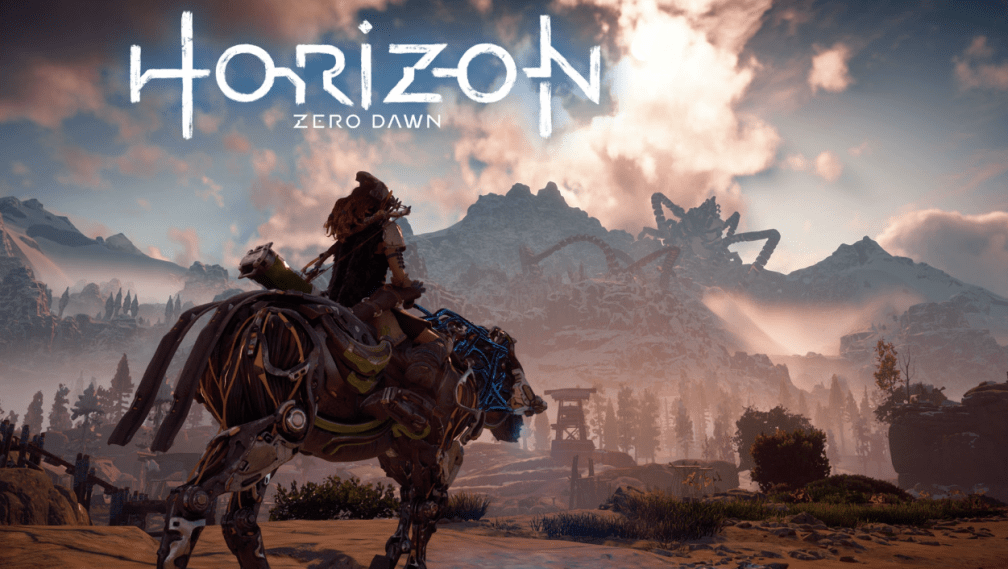
I made an important realization this month. If I get into a game, I really get into it. Case in point: Horizon: Zero Dawn. I hadn’t played Horizon: Zero Dawn before, and I was looking for another RPG. After finishing Ghost of Tsushima months ago, Horizon: Zero Dawn has filled that void. My favorite aspect of Horizon is exploration. I always love running around to the farthest reaches of an open-world game’s map and stretching the limits of what I can do. You can’t tell me what to do, game! I do what I want!
I got the random urge to play Don’t Starve again. What sets Don’t Starve apart from most other survival games is its tendency to throw random things at you without warning. You suddenly come across a new biome you’ve never seen and get killed by a subterranean tentacle. You’re barely managing to scrape by when a pack of wild dogs comes out of nowhere and mauls you to death. I still don’t have an ideal strategy, but Don’t Starve is an enigma I’m willing to spend my time. I forgot how much I love Don’t Starve.
Kyra Kyle again. Those are all the games our writers have played this past month. Let us know which games you’ve played over the past month, Geekly Gang. Thank you for reading, and wherever you are, I hope you’re having a great day.


 jkgeekly.com