Geekly News: March 15, 2026; New Releases

Hey, hey, Geekly Gang! Kyra Kyle here with another week of Geek News. We have quite a few new releases for video games and board games. We’ll mix things up a bit this week. We’ll skip a headline (we had two or three the past couple of weeks) and only go with new releases. Let’s get to this week’s new games.
Dusk Runners Launches on GameFound

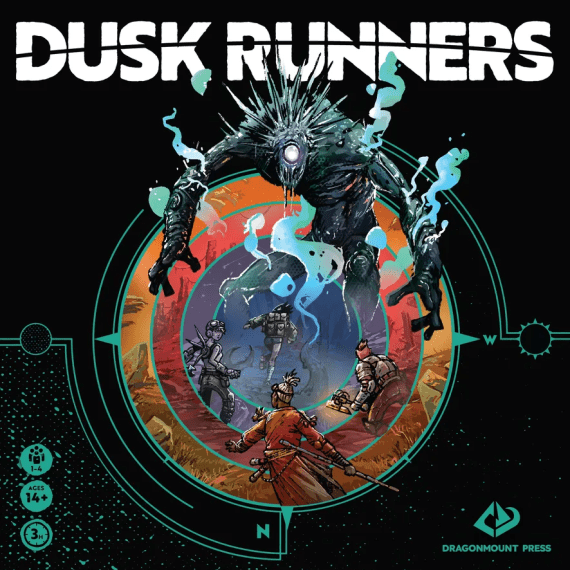
Welcome to Dusk Runners, a cooperative roguelike deckbuilder, set in a torn-apart world of years-long days and nights ruled by death. Take up the role of Dusk Runners, survivors and explorers who stay a few steps ahead of the night. Gather forgotten technologies so powerful they look like magic, battle monsters in the night to get stronger, make allies or enemies of survivor factions and learn ancient secrets in order to defeat the ultimate threat of the darkness: the Nightstalker.
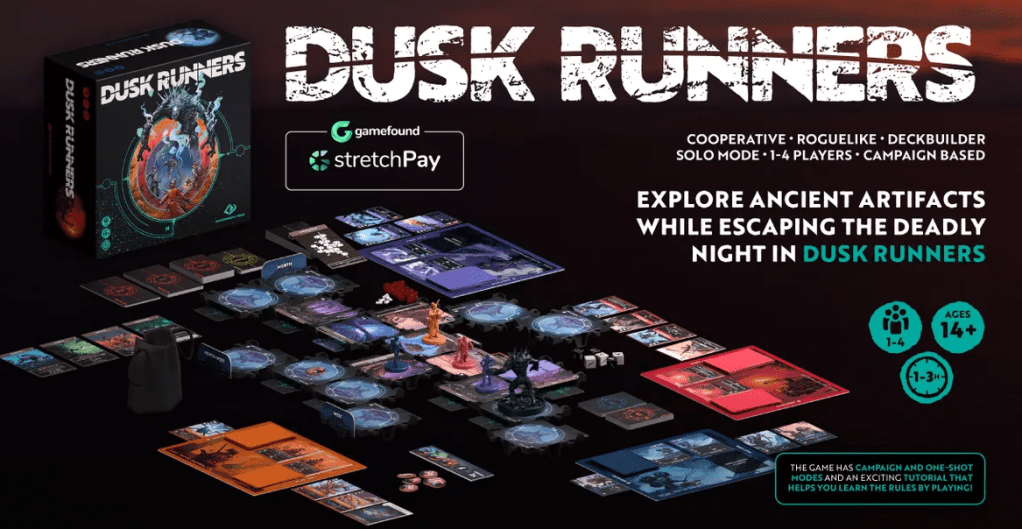
Thank you to Dragonmount Press for Dusk Runners’ description. Dusk Runners ticks a lot of boxes: cooperative, solo, deckbuilder, and roguelike. We have nothing but GameFound board games this week, so most–if not all–the games in this week’s roundup will be previews. We do previews for GameFound because the site does a great job with previews. Its “New” games aren’t always the newest games released. Since these are previews, we don’t have as much definitive information. I like deckbuilders. Check. I also enjoy cooperative games, and having a good solo option is a plus, especially if I can’t get everyone at the table. And roguelike means Dusk Runners should have plenty of variability. Score!

Dusk Runners’ one to three-hour runtime makes me a little concerned. Are most games one hour or three? It seems odd to have that much of a variance for a campaign-based board game. Usually, most scenarios clock in at about the same time, but I can see having more players could slow down the game. The theme has me intrigued, too. Explorers need to stay a few steps ahead of the night. How is the night portrayed in Dusk Runners? I love it when tiles disappear, and I hope that could be a mechanism in Dusk Runners. I’d like to know more. And if you want to know more, check out Dusk Runners’ GameFound page.
Apex: Carnivore Launches on GameFound

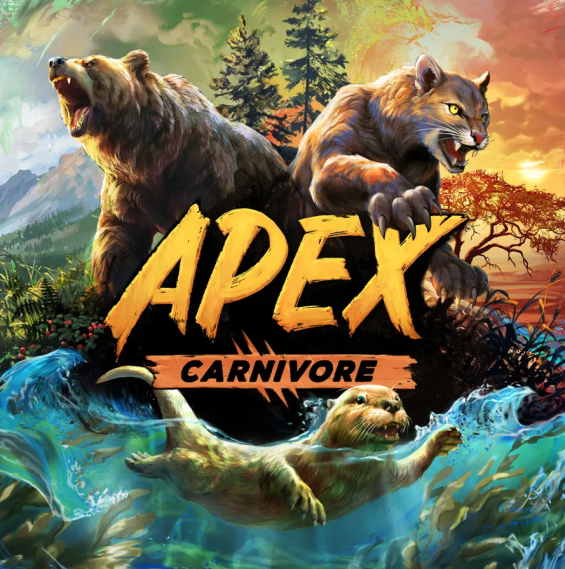
APEX: Carnivore is a fast, head-to-head evolution deckbuilder where both players start from the same Miacidae ancestor and branch toward one or more of three carnivore families: Felidae (cats), Ursidae (bears), and Mustelidae (weasels). Each trait you add reshapes how your species hunts, defends, and outmaneuvers its rival. The goal is to drive your opponent’s population to zero and become the apex carnivore.

Your deck is your species. Each round you draw a hand of traits and activate them. To activate a trait, or to evolve a new one from the shared pool, roll a d20 against its Difficulty Class. Succeed, and the effect triggers or the new trait mutates your species deck. There is no currency: your die and engine determine what you can activate and acquire. Active modifiers apply to every check that turn, rewarding timing and sequencing.

After both players have activated their traits, their species fight for survival. Compare total Power and Defense; any excess reduces the opponent’s population. Initiative may let you act first, while natural selection keeps decks lean and the game fast. Solo rules and 3–4 player free-for-all (with two copies) are included.
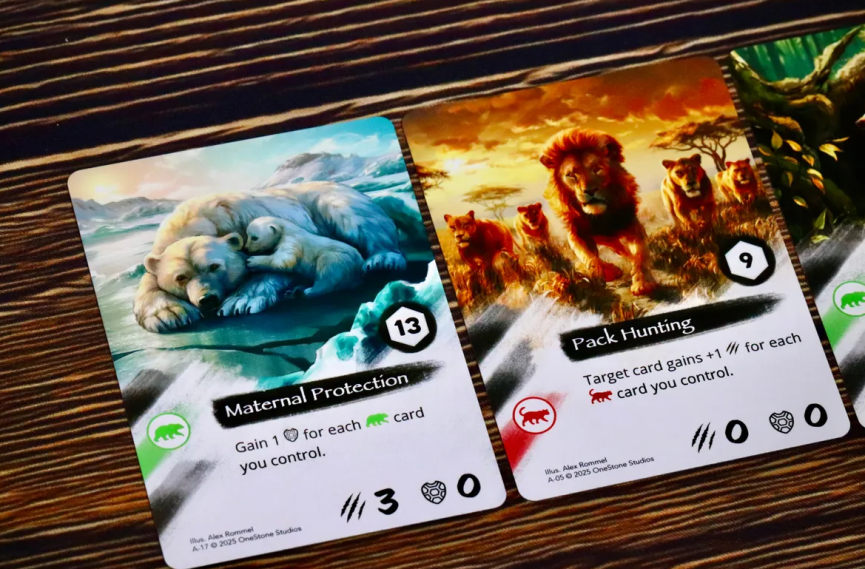
Thank you, OneStone Studios, for the Apex: Carnivore description. Apex: Carnivore has an interesting premise. I like the idea of creating my own animal species. This gives me Spore (the video game) vibes. The gameplay does remind me a little of Marvel: Legendary in a good way. In Legendary, one didn’t begin the game with a character, but would add cards to their deck, slowly revealing the two or three characters the player specialized in their deck. While having more than one character in one’s deck in Marvel: Legendary made little sense. Am I even playing a specific character? This concept makes way more sense in the context of building an animal. I’m making a half-bear, half-cat animal. Woo hoo!

Apex: Carnivore’s campaign features the game’s second printing and its first major expansion, Pack Instinct. Apex: Carnivore (2025) has received strong reviews. The Pack Instinct expansion features red panda pictures. We should expect animals of this ilk in the expansion. Fortunately, Apex: Carnivore has shared their pledge levels. This is rare for a GameFound preview. Gamers can pick up the base game (or just the expansion) for around $30 and the base game-expansion combo for just over $50. And of course, OneStone Studios offers a couple more pledge levels that include premium extras. Apex: Carnivore’s campaign launches in the next day or two. If you’re interested, check out its GameFound page.
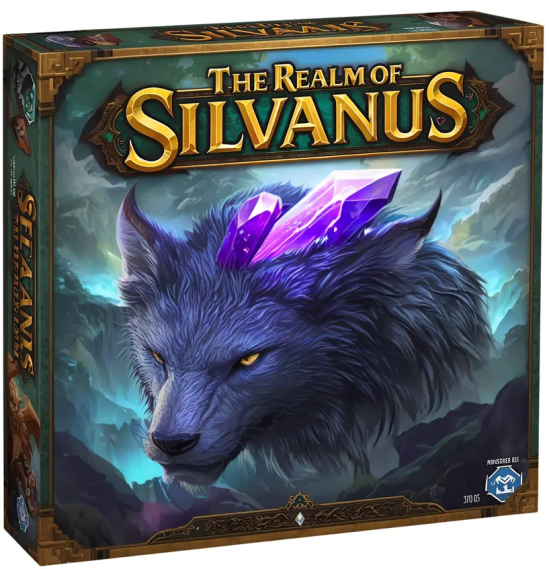
The Realm of Silvanus Launches on GameFound

Enter a mystical land, powered by elemental crystals and the might of sacred beasts. In The Realm of Silvanus, players take on the role of explorers chosen by Silvanus to restore harmony, gathering animal allies and channeling crystal energy to rebuild the Three Temples of Power: Jade, Emerald, and Diamond. The Realm of Silvanus combines strategic board movement, card collection, and resource management. On each turn, players roll the dice to travel across the forest board, drawing Animal, Crystal, or Surprise cards depending on where they land. Animals inhabit your temples, while crystals enhance their strength and value. Surprise cards introduce unpredictable twists: blessings, curses, or clever opportunities to outsmart your rivals.

Balancing luck, planning, and timing leads to victory. The goal of The Realm of Silvanus is to complete all three temples or reach the end of the board, while earning the highest total points from your animal allies, crystal upgrades, and bonus rewards. Each decision (whether to advance swiftly or carefully fortify your temples) shapes your destiny in the realm.
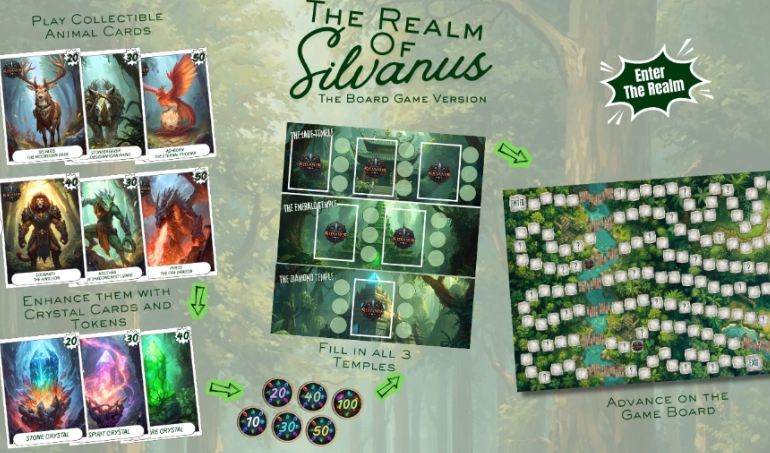
Thank you to The Realm of Silvanus production team for the description. I have more than a few reservations about this board game, but I’ll discuss those in a minute. First, let’s talk about what I like about The Realm of Silvanus. Everything on the left two-thirds (in the above picture) I like. The artwork looks cool. I don’t yet know how filling in all 3 Temples works, but I’m down with Temples holding various powers. I also like the two ways The Realm of Silvanus can end: finish the three temples or reach the end of the Game Board. This is a GameFound preview, so I don’t have all the details for The Realm of Silvanus, but if I’m reading the description properly, it looks like one player could trigger the end game, and another player can win if they have the most points. If so, that’s dope.

But I have reservations. The Realm of Silvanus is the company’s first game. Not always a deal breaker. I like giving new designers and publishers a chance. The company is also named The Realm of Silvanus. Not the best move. If gamers don’t resonate with the first game a publisher produces, you don’t want your company’s name sharing that game’s name. It’d be difficult to distance oneself from that game.

And The Realm of Silvanus uses a roll, spin, and move mechanism for advancement on its Game Board. I don’t know how The Realm of Silvanus plans to use the roll, spin, and move mechanism. It sounds like the board can affect which cards or events occur and can trigger the endgame. If so, great. Roll, spin, and move isn’t inherently bad. Last year’s Magical Athlete and this year’s DC Breakout: Arkham Asylum are great examples of modern roll, spin, and move variants. Just don’t be another version of Monopoly. We’ve moved past that version of roll, spin, and move. I’m interested to see what updates The Realm of Silvanus shares in the coming days. If you’re interested in The Realm of Silvanus, check out its GameFound page.
Hidden Realms: The Mummy’s Tomb Launches on GameFound

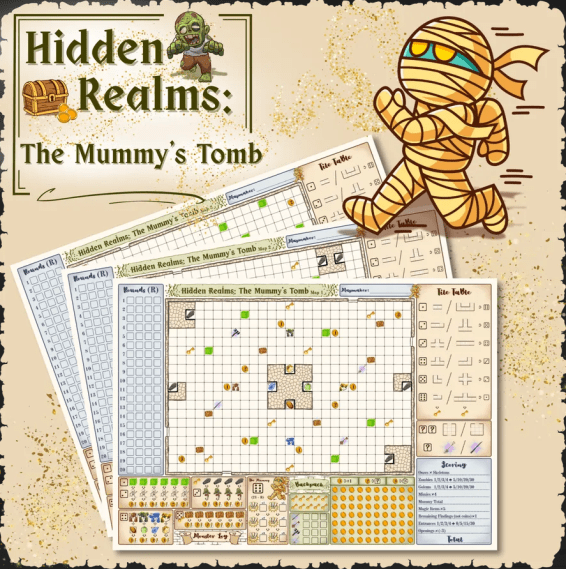
Hidden Realms: The Mummy’s Tomb is a single-page, Print & Play, Roll & Write dungeon crawl inspired by classic D&D maps. Draw polyomino shapes to map a new dungeon every game. Uncover treasure in the form of coins, keys, and magic items. Face deadly guardians, like oozes, skeletons, zombies, golems, mimics, and the Mummy itself. Plan carefully, because defeating it is not for the faint of heart. Are you up for the challenge?

The game is played over the course of 20 rounds. At the end of the 20th round, all players tally up their fame points, and whoever has the most wins. If you’re playing solo, you’re trying to set the most points possible or Beat Your Own Score. There are also achievements that can be completed in both solo and multiplayer modes.
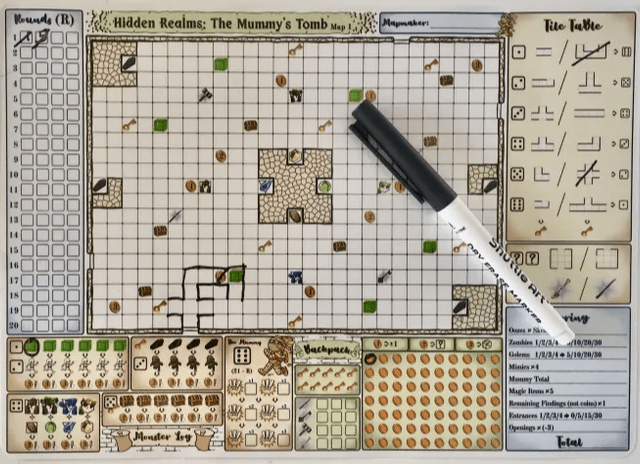
Hidden Realms: The Mummy’s Tomb offers a low-cost entry point for a Roll & Write dungeon crawl. I’m assuming Hidden Realms: The Mummy’s Tomb will not cost much because it’s a Print & Play. For those who don’t know what a Print & Play is, its name says it all. Players download a file and print off a copy of the game. The copy of Hidden Realms: The Mummy’s Tomb pictured above is also laminated, so one can use a dry-erase marker. That’s clever. I may have to try this.

I love Roll & Writes (a game type popularized by Yahtzee), and there are plenty of Roll & Write Dungeon Crawlers out there, like Paper Dungeons. Hidden Realms: The Mummy’s Tomb can offer someone a chance to test out whether they like Roll & Write Dungeon Crawlers before purchasing a more expensive game that will take up space on one’s shelf. I can’t be the only one who’s running out of room in my gaming shelf system. I may prefer Hidden Realms: The Mummy’s Tomb because it’s easier to store.
John Carpenter’s Toxic Commando Releases

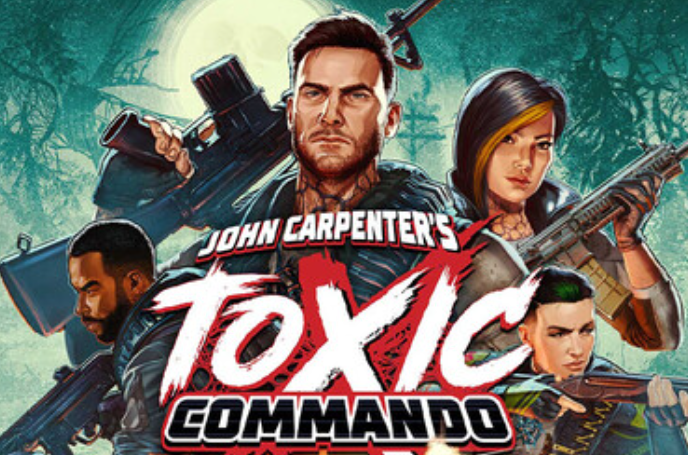
Pick a character and team up with three friends, ‘cause it’s time to save the world. Experience intense FPS action as you obliterate hordes of terrifying monsters! You may not be on the best team of mercenaries, but you are a Toxic Commando!

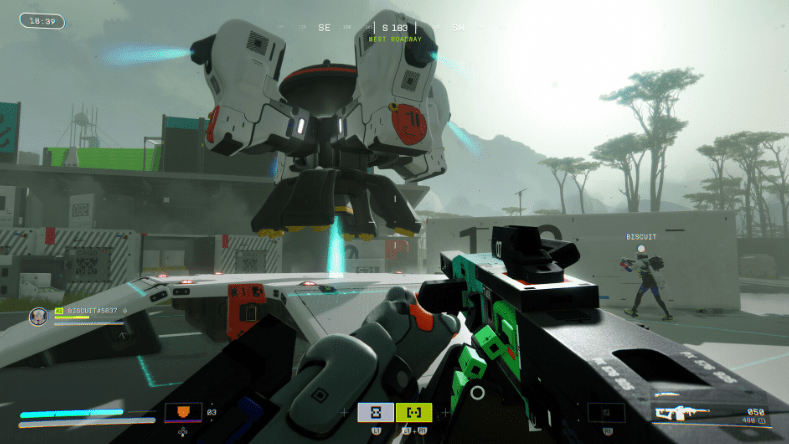
John Carpenter throws his hat into the video game ring. That’s reason enough to check out John Carpenter’s Toxic Commando. But is it any good? Toxic Commando–we’ll refer to the game as Toxic Commando going forward–can be an enjoyable experience with a couple of friends. The game doesn’t kid when it says you’ll fight a horde of terrifying monsters. Zombies. The terrifying monsters are zombies or zombie-like. Emphasis on horde.

Look at all those monsters above. Yikes! From what I’ve heard, Toxic Commando is a competent first-person shooter you can play with three friends. This isn’t bad for an initial video game release for John Carpenter. But I have also heard that Toxic Commando doesn’t feel as great on console. In particular, the PS5 loses some of the scale a PC gives players. I interpret those statements (by other gamers and critics) to mean that consoles narrow the player’s field of vision, so most of what you can see are the handful of zombies–I mean, monsters–in front of your face. Toxic Commando also offers fun set pieces like tanks and other vehicles. I can be fun, mowing over these monsters, and Toxic Commando offers RPG-like looting.

The looting can add to the game’s survival elements. But I’ve also heard that while thematic, the looting can become tedious. Still, Toxic Commando sounds like it’s worth it on PC, and if it goes on sale, it could be worth a flyer on console. John Carpenter’s Toxic Commando is available on PC, PlayStation 5, and Xbox Series S/X.
Solasta II Enters Early Access

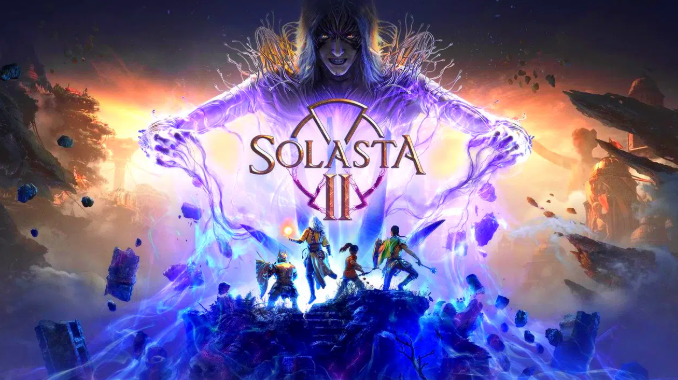
In a Mana-infused land, a dark force led by the enigmatic Shadwyn threatens Neokos. Bring your party of adventurers together across perilous realms in this Turn-Based Tactical RPG based on the SRD 5.2 (the most recent Dungeons & Dragons release, which is actually 5.5 Edition) ruleset. You make the choices, dice decide your destiny.

The above description comes from Solasta II’s publisher, Tactical Adventures. I looked up SRD 5.2, so you wouldn’t have to do so. While Solasta II is a direct sequel to the first Solasta, it functions as a spiritual sequel to Baldur’s Gate 3. Gasp! I gasped for the folks who may have seen that last statement as blasphemy. Solasta II is another game I have yet to play. There actually is one that was released this week that I have played, but I’m saving it for last. The game has received good to great reviews, and that’s no small feat for a game in early access.
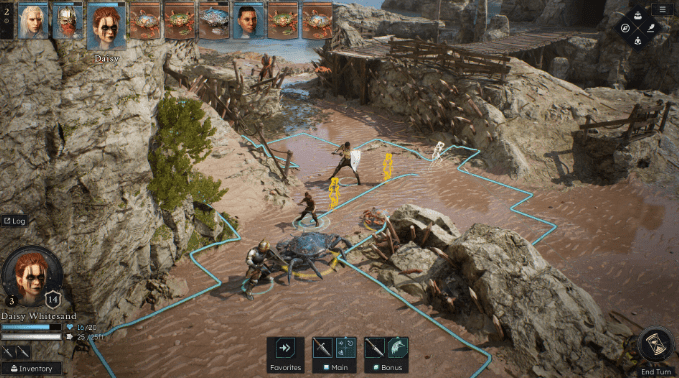
Solasta II looks pretty good. I can’t speak to the game’s story, but I have seen the character creation system. I can’t believe you can custom-make all of your starting party members. What? And designing your characters can get in detail.
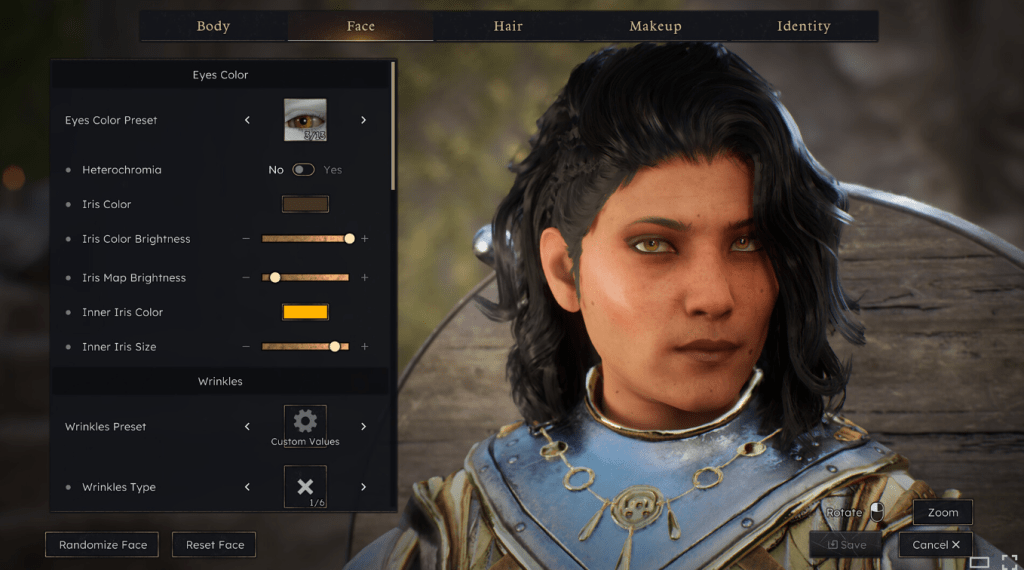
It’s a small thing, but someone in my family loves creating characters, and the ability to create more than one in a single game will have them stoked. Solasta II has done well this past week. We’ll have to see if it has staying power to survive early access. So many video games leave early access or can spend near a decade mired in “early access.” Fingers crossed that Solasta II makes it to the other side and gets a full launch. Since Solasta II is in early access, it’s only available on PC.
Collector’s Cove Releases

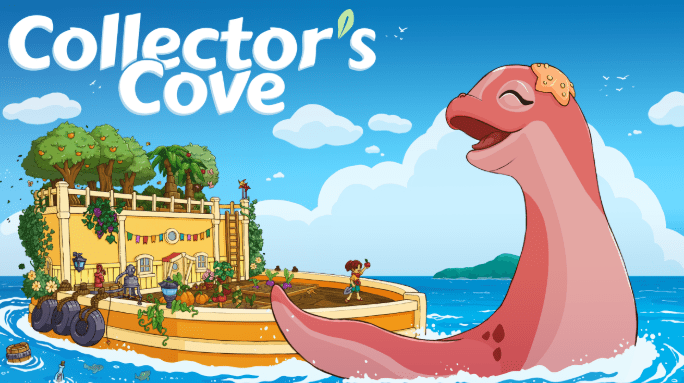
All aboard! Collector’s Cove is a cozy farming adventure on the high seas. Sail with your animal friend to uncharted waters, cultivate your floating farm, and discover new islands, crops and fish on your quest to become a Named Collector!

Collector’s Cove sets Harvest Moon on the seven seas. This cozy game carries the usual trappings of a farm and chill game. From what I’ve gleaned from reviews, the gameplay loop resembles many others of this game type and is easy to pick up. I like cute farming sims. I’ve played Fae Farm, plenty from the Harvest Moon series, Kitaria Fables, and of course, Stardew Valley. So, Collector’s Cove is on my radar.
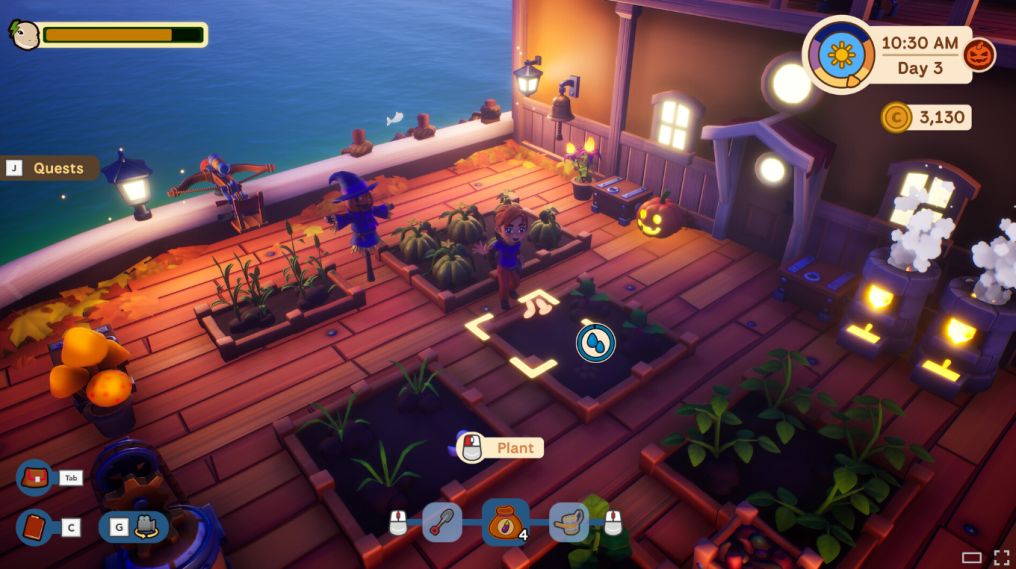
Like a lot of games in this genre, you’ll have plenty of missions (or quests) to progress the story, unlocking new abilities. Collector’s Cove offers a hodgepodge of game types (fishing, farming, sailing, decorating one’s quarters, and crafting). None of the individual activities is difficult to comprehend, because they can’t be. That’s not the point of these games. I wouldn’t mind floating on the ocean, exploring new islands (kind of like Animal Crossing: New Horizons), and sapping those islands dry for resources. Environmental conscience be darned.

The only odd thing I’ve seen (in other people’s reviews) is that Collector’s Cove has a limited cast of characters. You’ll mostly interact with your family. This doesn’t tarnish Collector’s Cove; it’s just odd. Most games like this have a robust cast of characters. But there must be a Harvest Moon release here or there that only includes a handful of NPCs. I can’t think of any. Still, I put Collector’s Cove on my wishlists, waiting for a sale. Collector’s Cove is available on PC, PlayStation 5, and Nintendo Switch.
Monster Hunter Stories 3: Twisted Reflection Releases

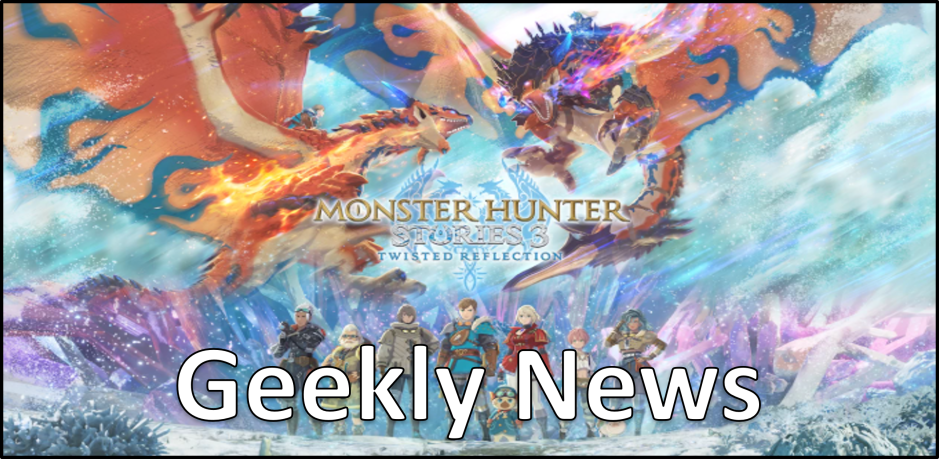
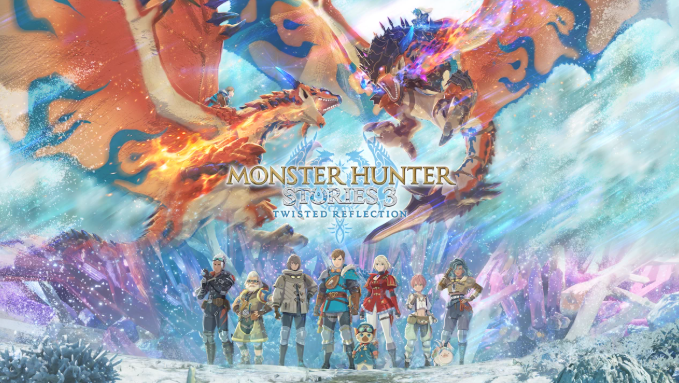
The third entry in the Monster Hunter Stories RPG series is here! Twin Rathalos, born in a twist of fate. Monster Hunter Stories 3: Twisted Reflection is an RPG series set in the Monster Hunter world, where you can become a Rider, raising and bonding with your favorite monsters.

Yes! We finally reached the game I picked up this past week. I’ve only played Monster Hunter Stories 3 for around three hours–it was released a day and a half ago as I’m writing this–and I’m hooked. Monster Hunter Stories 3 is the first of this series I’ve played, so I can’t speak to how it rates against the previous two entries. The story is ridiculous. But that’s to be expected in the mainline Monster Hunter series. One doesn’t play Monster Hunter for its story. You play it for the titular monsters. And I love making monster besties, or monsties, in Monster Hunter Stories 3.
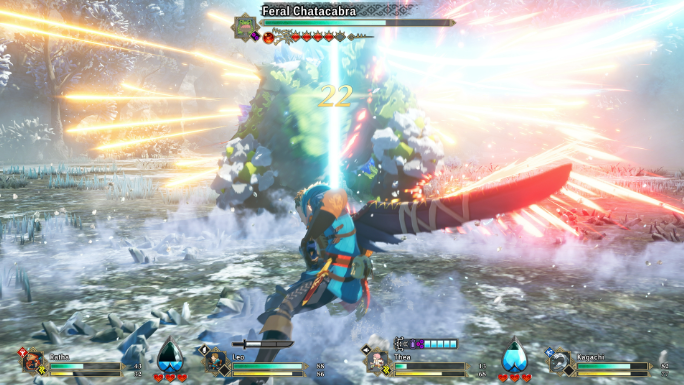
Most of the popular monsters in the Monster Hunter series make an appearance in Monster Hunter Stories 3. Heck, you begin the game with a Rathalos. The story overview (first paragraph in this write-up) mentions Twin Rathalos, and I’m certain the other Rathalos factors into Monster Hunter Stories 3’s storyline. Again, I couldn’t care less about the story. The voice acting is over-the-top. Characters sport the JRPG-styled mannerisms. And the ultimate attacks (for each of the monsters) play out like a summon spell in Final Fantasy VII, but at least you can skip the animation if it’s the one millionth time you’ve seen it. I like the shake-up the Monster Hunter Stories series gives the typical Monster Hunter gameplay formula.

Speed, Power, and Technique Attacks play out like a Rock-Paper-Scissors style of combat. Add this to an additional layer of elemental type (which also plays out like Rock-Paper-Scissors), and Monster Hunter Stories 3 prompts players to collect ’em all. You’ll need monsters with a Fire, Water, or Lightning (and others) element and each of the three attack types. This dual-layered game of Rock-Paper-Scissors adds plenty of complexity. And it’s fun collecting eggs and watching them hatch.
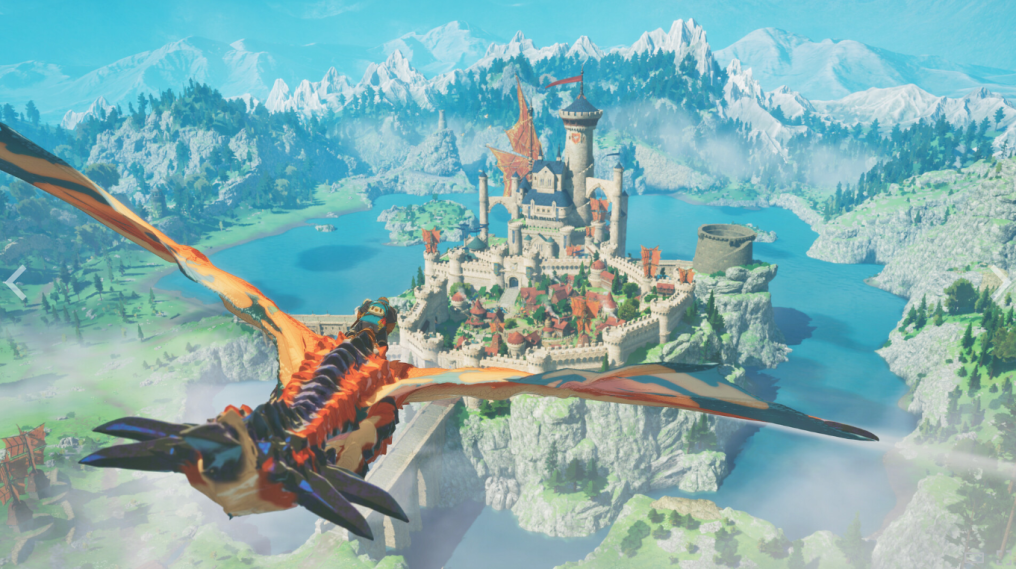
Did I mention you can ride your monsters? Flying on my Rathalos rules. But so does riding my Tobi-Kadachi up wall faces. Yes! I haven’t yet found (or built) a monster I can reliably ride on while they swim, but I’m working on it, and when that happens, I’m certain that’ll be a blast.

I’m enjoying my time with Monster Hunter Stories 3: Twisted Reflection so far. Customization is fabulous. One can easily change their appearance at a Catavan. I’ve been trying as many looks as I can, and I’ve considered purchasing some of the DLC. It’s a Monster Hunter title, so there are plenty of paid cosmetics available. But there are also plenty of armors and weapons to craft. I still lack plenty of the ingredients (only five hours played), so I have countless hours of crafting ahead of me. Monster Hunter Stories trades the realistic and intimidating graphics of the mainline Monster Hunter games for a softer color palette and a younger demographic. And yet, Monster Hunter Stories is very much a Monster Hunter game. I may have to pick up the other titles in this series.

Monster Hunter Stories 3: Twisted Reflection is available on PC, PlayStation 5, Xbox Series X/S, and Nintendo Switch 2.

Those are all the new releases we have for this week. Which game sounds the most interesting to you? Let us know in the comments. Thank you for reading, and wherever you are, I hope you’re having a great day.


Whatcha Reading, Geekly? March 2026

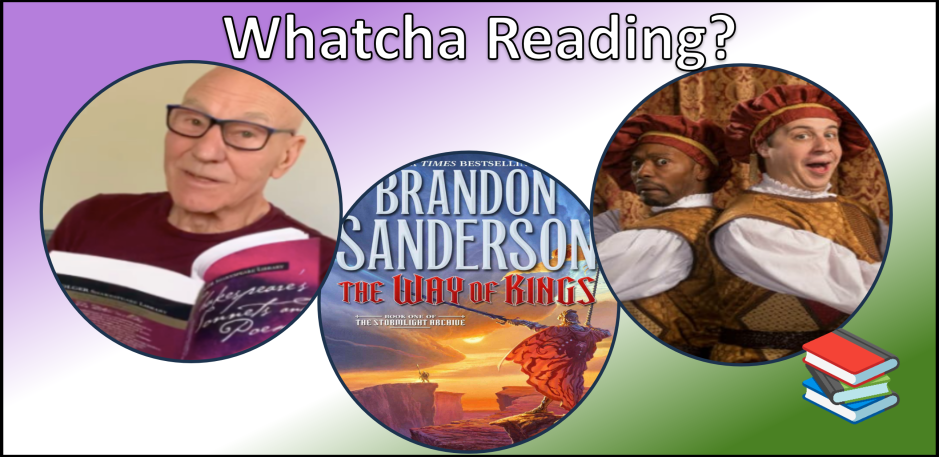
Happy Wednesday, Geekly Gang! Kyra Kyle here. Today, our writers share what they’ve been reading over the past month. Feel free to share what you’ve been reading this past month, because we’re all a part of the Geekly Gang. I’ll start things off with what I’ve been reading this past month.

Kyra’s Fiction

The Comedy of Errors was a welcome change after Titus Andronicus. Slapstick comedy, mistaken identity, The Comedy of Errors has it all. This is another one of Shakespeare’s earliest plays, and while the puns don’t always land (you’ve gotta love how language can change over almost half a millennium), the situational comedy of two sets of twin brothers habitually getting confused for one another bridges most eras.

It also helps that The Comedy of Errors is one of Shakespeare’s shortest plays. It didn’t take long to finish; I half wondered if my anthology (which is over a decade old at this point) might have missed or omitted a portion of the play. Nope. The Comedy of Errors was that short of a read. If you’d rather begin with a light-hearted tale of Shakespeare’s, you can’t go wrong with The Comedy of Errors.

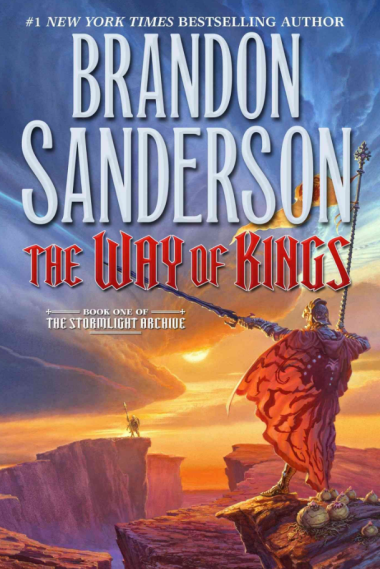
I also restarted Brandon Sanderson’s The Way of Kings in audiobook format. I’ll mention it here and again in my next segment, but audiobooks totally count as reading a book. The only issue I’ve found is stopping an audiobook and then returning to it can be difficult. More difficult than physically reading the book. That’s why this past month wasn’t the first time I began reading The Way of Kings. But that may be my problem and not everyone’s issue.

The narration of The Way of Kings switches between Kate Reading and Michael Kramer. Both narrators are a joy to listen to and bring extra pizazz to the text. Kramer is a long-time narrator for Brandon Sanderson’s books. He also narrated the Mistborn series. And I like how Reading and Kramer narrated different characters in the novel. Excellent. This eased my getting into the characters’ heads. I don’t know which one of the two stories I enjoy more. Sanderson does a good job of making both protagonists’ storylines unique and a page-turner.

I like listening to audiobooks as I walk, and I’ve gotten in a lot of walking. Thank you, Brandon Sanderson.

Kyra’s Poetry

I’m sticking with Shakespeare this month and going with an unconventional way of consuming The Bard. During the pandemic (2020), Patrick Stewart self-taped himself reading each one of Shakespeare’s sonnets. Here’s a link to Shakespeare Network’s playlist. I’ve heard Stewart has teamed up with a company to rerecord these with higher-quality audio, but I like Stewart’s original recordings. These recordings show Stewart in various rooms of his home and in his favorite reading spots. Simply magical.

Stewart’s performance elevates the sonnets. I love reading along with him, and typically, he gives some mild commentary with each poem. He even shares which sonnets are his favorites. Want to know? You’ll have to watch or listen. P.S. I count audiobooks as books I’ve read. People have shared stories long before they began writing them down. And listening to someone knowledgeable–and I would consider the Shakespearean-trained Sir Patrick Stewart knowledgeable of Shakespeare’s work–informs the listener of how the writer may have intended the written word to be perceived.

I could listen to Patrick Stewart for hours, and with this YouTube playlist, I can listen to Patrick Stewart for hours. Yay!

Kyra’s Nonfiction

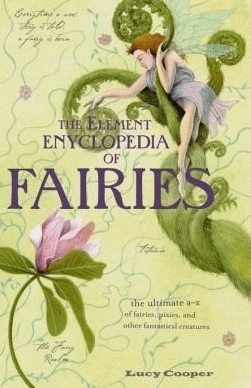
I’ve been reading The Element Encyclopedia of Magical Creatures and figured I’d read its companion piece, The Element Encyclopedia of Fairies. I always thought of fairies as predominantly a European invention, and they are for the most part. But this encyclopedia shares fantastic creatures from around the world. Creatures from East Asia tend to be my favorites. Which ones are yours? Let us know in the comments.

That’s all I have for this month. Our other writers don’t have entries for this month. Hopefully, we’ll hear from them soon. Thank you for reading, and wherever you are, I hope you’re having a great day.
Geekly News: March 8, 2026; Xbox Announces Next Gen Console

Happy Sunday, Geekly Gang. Kyra Kyle here with another week of Geek News. We have plenty of board games and video games new releases, but before we get into those, let’s discuss our headline for this week. Xbox revealed its plans for a next-generation console. What? Project Helix is on the way, and the details we’ve seen have made us the most excited for an Xbox console in several years.

Xbox Reveals Plans for Project Helix

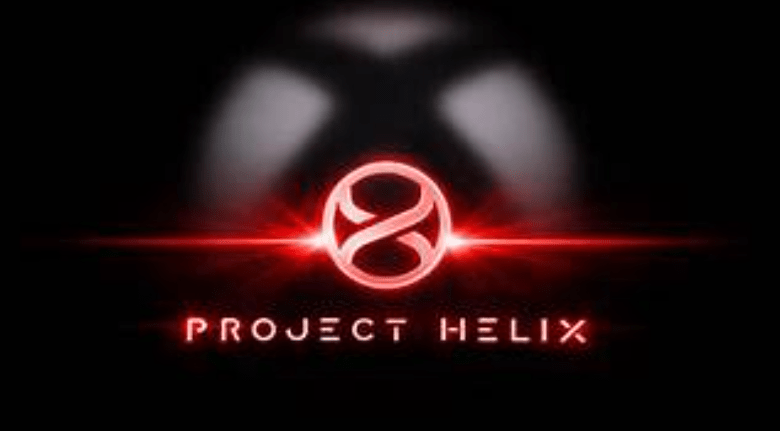
Xbox announced its next-generation console, following the Xbox Series X/S (sometime in the next few years, possibly as soon as late Fall 2027). Even though Xbox has pivoted to software over hardware, Codename: Project Helix confirms Xbox hasn’t left the console race. The official Xbox X account shared the project name “Project Helix” and a new logo (pictured above) that blends the classic Xbox logo with a DNA double helix. Xbox’s new CEO, Asha Sharma, shared more details in her own post, claiming the system will “lead in performance and play your Xbox and PC games,” which marks a major shift in Xbox’s approach.

Since the new Xbox machine will be capable of playing Xbox and PC games, it will challenge the upcoming Steam Machine. Talk about a new console generation. Xbox has hinted that its new system will run on Windows, which should allow players to download third-party software like Steam, GOG, and Epic. This has me excited. And one quick note on the name, Project Helix. Typically, tech companies use a working title for their consoles. Xbox Series X/S was nicknamed “Project Scarlett,” while Nintendo used “Project Revolution” for the Wii. While the name Helix may change, I could see Xbox keeping the double helix design in some capacity.

We should hear more news about Xbox’s upcoming console in the coming weeks. Xbox CEO Asha Sharma promises to meet with shareholders next week. While most details discussed during this meeting should remain confidential, fans may get a few tidbits of information in the coming days. We’ll keep you posted if we hear anything.

While this announcement occurred after Sharma assumed the CEO position, plans for “Project Helix” had to have been started during Phil Spencer’s tenure. But this could be a shift in direction after Spencer’s departure. Either way, “Project Helix” looks to shake up the video gaming console landscape, and we’re all for it. I may need to buy a new big-screen TV.

Botany: Floral Dragons Launches on KickStarter

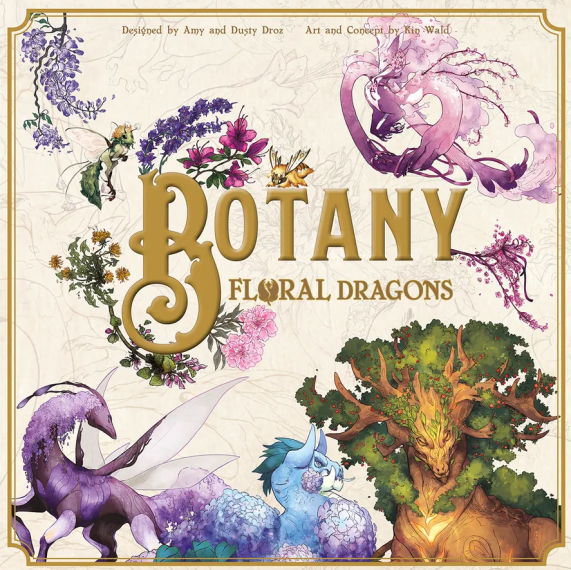
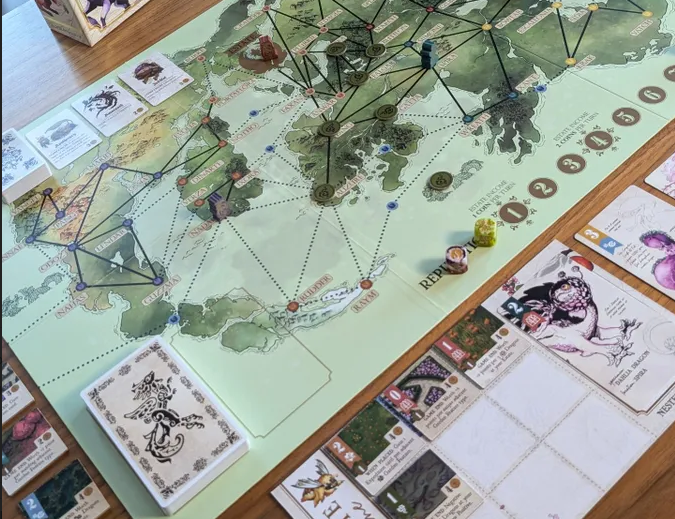
In Botany: Floral Dragons, players assume the role of a botanist, travelling the world in search of fame, fortune, and the coveted honor of floral dragons. As you travel the globe, you’ll need to manage your expedition funds, experience thrilling events, and acquire support. Each player begins the game with a set of randomized goals. Players can use these coins to traverse the globe and gain crew members and items, improving their odds of surviving the unknown. However, there is danger in spending too freely. Players must have coins to return with their specimens intact. Whenever you return to your estate, you’ll add new floral dragons and build new garden features. At the end of the game, the player with the most points wins.

We paraphrased Dux Somnium Games’ description for Botany: Floral Dragons. Thank you for the write-up. Botany: Floral Dragons features amazing graphics and artwork. Gardening games have grown–pun intended–in popularity over the past decade or so, and dragons are always a welcome addition. Botany: Floral Dragons’ combination of themes reminds me of Cretaceous Rails (dinosaurs and trains). Why hasn’t anyone combined these two themes before Botany: Floral Dragons?

Botany: Floral Dragons should build off of Dux Somnium Games’ 2025 release, Botany: A Victorian Expedition, and that game received good reviews. Dux Somnium Games always delivers with high-quality components, and I like that every game in their catalogue features similar art and graphics. Botany: Floral Dragons has the same vibe as previous Dux Somnium Games. Of course, this company is known for offering multiple pledge levels for their crowdfunding campaigns, too. Pledges range from $49 to $599. Wow! A lot of the extras included with the $599 are nice things to have, but unnecessary to play the game. Still, Dux Somnium Games are ones I can see some gamers wanting top-notch, upgraded pieces. If you’re interested in Botany: Floral Dragons, check out its KickStarter page.

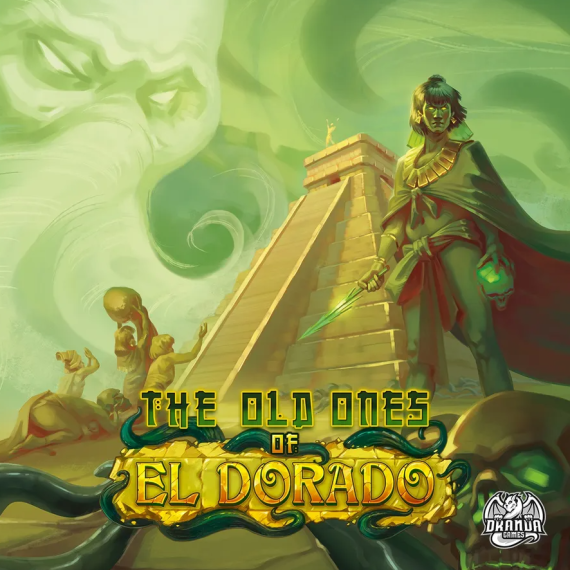
The Old Ones of El Dorado Launches on KickStarter

The Old Ones of El Dorado is a hand management and drafting game in which the cards form a closed economy of actions. You can play a card into one of four action rows and perform both the action of the space and the action on top of your card. However, the next player may choose to play into the same row, if there’s space, gaining them the action on their card, your card, and the action associated with that row. Each card offers two actions to choose from, but once played, the orientation becomes fixed.

Throughout The Old Ones of El Dorado, you’ll gather resources to construct temples, craft sacred masks, and raise shrines. You’ll make dark sacrifices to the Old Ones and send cultists into the village to obtain knowledge and goods. These efforts will earn you points and bring you closer to immortality as promised to you by the Old Ones of El Dorado… but is it a blessing or a curse?

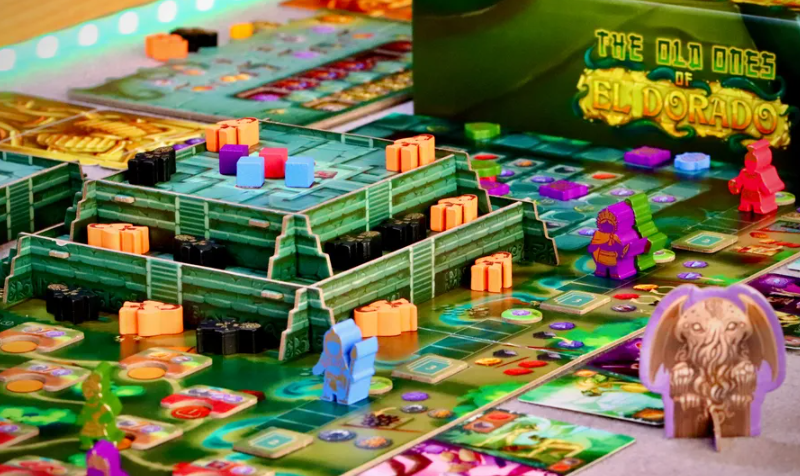
Another good description by publisher, Dranda Games, and another great mash-up of themes. Plenty of games have a setting of El Dorado, but even more have used the Cthulhu Mythos as a theme. I like The Old Ones of El Dorado’s use of meeples. And the 3D elements on the board grant life to the setting. My only issue may be the cardboard Cthulhu, First Player Marker. I’d love to see that as another wooden meeple. I need some Cthumeeple in my life.

The different meeples function as different workers. I like this concept in Worker Placement Games. The Old Ones of El Dorado looks to bring the Cthulhu Mythos to a heavy Euro game. That’s something else that doesn’t happen too often. Cthulhu-themed games lend themselves more to highly thematic games. I’d like to see how The Old Ones of El Dorado’s different meeple types function with the game’s 3D elements. The Old Ones of El Dorado offers multiple pledge levels: $47, $54, and $99. It looks as if the higher levels add more value for not as much money as one might think. If you’re interested in The Old Ones of El Dorado, check out its KickStarter page.

Re;Match: Marble Puzzle Fighter Launches on KickStarter

Re;Match: Marble Puzzle Fighter is an asymmetric 1 versus 1 fighting game, fueled by a marble puzzle system. Input your attacks each turn by clearing connected matching marbles from a 3 x 5 grid. Your attack corresponds to number and color marbles you cleared. The more marbles you clear, the bigger the attack. Every move changes the board state for what you allow your opponent to clear, and you can only clear from 2 of the 3 lanes, so every move has immediate consequences.

Deal damage to your opponent’s 3 health bars, each corresponding to a different color of attacks: Red, Yellow, and Blue. Breaking a health bar forces your opponent to spend a quarter to keep playing, and disables that color of attacks from being used. But be careful, a broken health bar turns those corresponding marbles into WILD connectors, allowing them to launch even more powerful attacks with their remaining colors, not to mention each cleared WILD marble restores health to that broken health bar, bringing it back into play.

Thank you, Brother Ming, for the description. Re;Match: Marble Puzzle Fighter has an undeniable toy factor. Look at the central marble puzzle piece. I don’t care for the game’s name. Why isn’t it Rematch instead of Re;Match? But this game earns that moniker, Rematch. From what I’ve seen, Rep;Match: Marble Puzzle Fighter matches last between 15-30 minutes. That’s short enough for a series of rematches. And players can choose between multiple combat styles (asymmetric powers). The DJ, Chef, Trickster, and Psychic have various playstyles. You’re bound to find one you like best.

Brother Ming Games is best known for its Genshin Impact line of game peripheries (like dice and playing cards). I’ll glad to see them stretching their wings in the tabletop game space. Since Brother Ming has experience with game production, I trust Re;Match: Marble Puzzle Fighter will use good quality materials. The acrylic standees I’ve seen in Re;Match’s pictures are in line with board game standards. A lot of games are switching to acrylic standees, and these look good. But who am I kidding? That marble puzzle element slays. Re;Match: Marble Puzzle Fighter offers pledge levels ranging from $99 – $300. If you’re interested in Re;Match: Marble Puzzle Fighter, check out its KickStarter page.

The Glasgow Train Robbery Launches on GameFound

The Glasgow Train Robbery is a co-operative game for two players inspired by one of the most infamous crimes in British history. Set in 1960s Scotland, you and your partner take on the roles of two key members of a criminal crew determined to intercept and rob a high-value train — without getting caught. Over the course of the game, you’ll work together to plan the heist, gather the right equipment, mislead the authorities, and finally execute the robbery in a high-stakes finale. Communication is limited, tension is high, and every decision counts. Will you manage to synchronize your actions, stay ahead of the investigation, and escape with the loot? Or will a single misstep derail the whole operation?

The Glasgow Train Robbery challenges players with unexpected twists and a constantly shifting landscape. The game is played over an undetermined number of turns, ending successfully if you manage to complete all five plan cards before the train reaches London, with the Coordinator needing to complete the first four, and the Operator the final one. Fail to complete the plan in time, the police will catch you. The Glasgow Train Robbery is the first title in a new series of games inspired by legendary historical heists. With a focus on historical flavor, immersive gameplay, and tight teamwork, this series invites players to step into the shoes of infamous criminals to see whether they can outsmart the law.

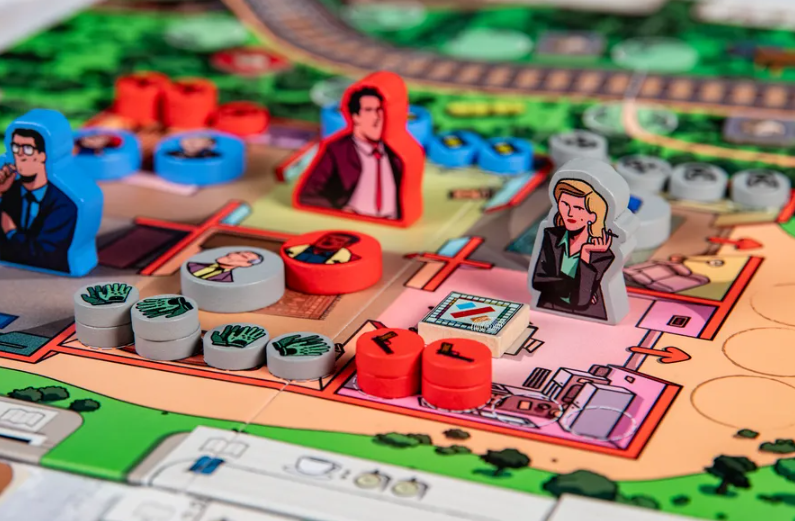
That was a great description, Salt and Pepper Games. I love The Glasgow Train Robbery’s theme and the fact that Salt and Pepper Game intends on making this an ongoing board game series. Yes! I can’t wait to play other famous heists throughout history. The Glasgow Train Robbery has been on my radar for several months. The look. The theme. The fact that Salt and Pepper Games is an up-and-coming board game publisher. Yes to all.

I’m a sucker for The Glasgow Train Robbery’s art. I also love wooden pieces in board games. Look at those uniquely shaped meeples. It makes the game look classic and unique. Salt and Pepper Games also has a knack for producing history-based board games. They’ve published Watergate, Resist!, and Skulls of Sedlec. I can’t wait to see what they’ll do with this new series of history-based board games. If you’re interested in The Glasgow Train Robbery, check out its GameFound page.

Marathon Releases

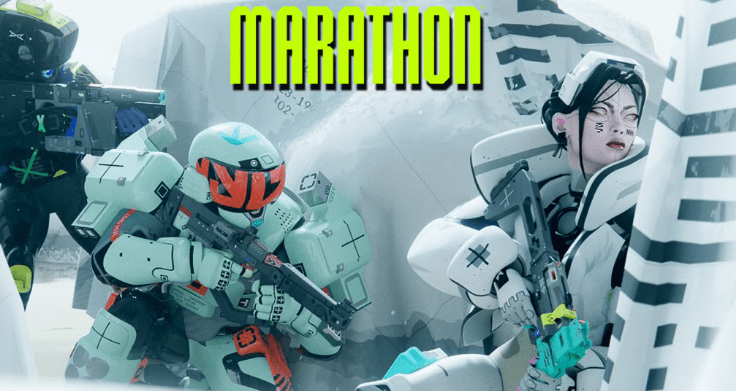
Marathon is a first-person multiplayer extraction shooter set in the same universe as the Destiny series. Yes. Bungie has returned to the Destiny universe, and the publisher takes a swing at the extraction shooter genre, a genre growing in popularity after the battle royale boom about a decade ago. Players deploy into a shared environment, search for loot, and attempt to successfully extract (either an item or non-combatants) from the region before getting eliminated by enemy players or environmental threats. While Marathon’s core gameplay focuses on player-versus-player (PvP) encounters, the game offers ample player-versus-environment (PvE) game options and hazards within PvP encounters.

Multiplayer extraction shooters await a smash hit (like Fortnite or Apex Legends), and Bungie has plenty of experience delivering fantastic video games. Marathon might be what this game genre needs to truly take off. Marathon is available on PC, PlayStation 5, and Xbox Series X/S.

Never Grave: The Witch and The Curse Releases

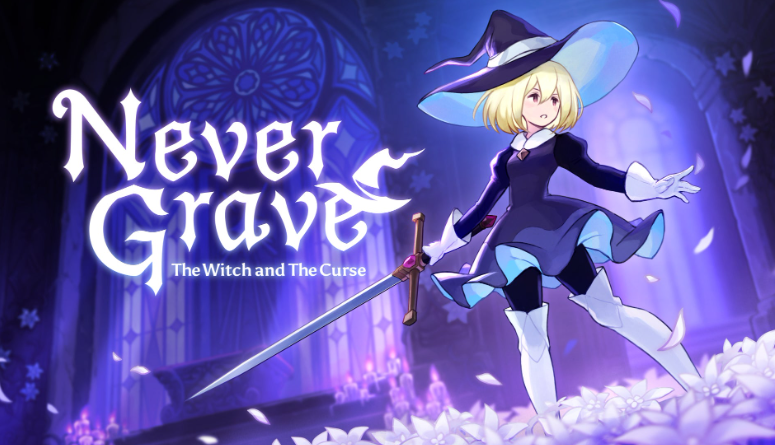
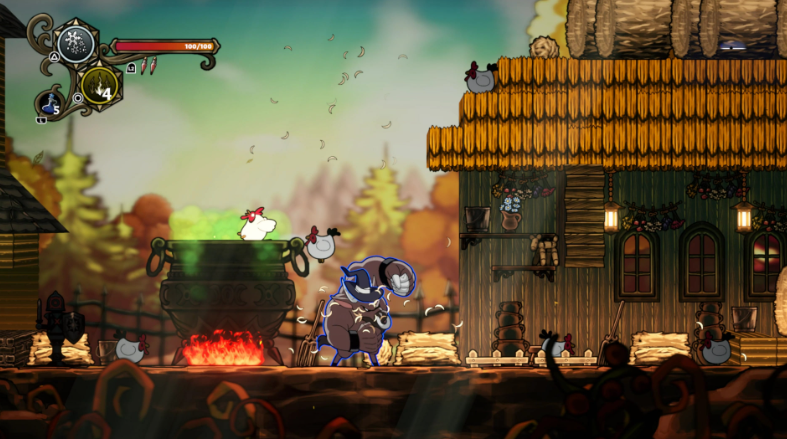
Never Grave: The Witch and The Curse is a Metroidvania x Roguelite where you journey with the aid of a cursed hat. Use a variety of magic or possess your enemies to reach the dungeon’s lowest levels. Bring back loot, build new facilities in your village, make a living, and strengthen yourself for the next battle. While you can play Never Grave: The Witch and The Curse as a solo experience, the game supports up to 4-player multiplayer.

It’ll be difficult for a side-scrolling Roguelite to stand out in this year’s market. 2026 may only have a dozen or so weeks under its belt, but it’s already produced stellar games of this type. Never Grave: The Witch and The Curse has received mixed reviews (as of this post), but it offers a multiplayer option that few Roguelite games released this year have. Roguelites don’t tend to support multiplayer, but a few levels might be fun. Never Grave: The Witch and The Curse is available on PC, PlayStation 4, PlayStation 5, Xbox Series X/S, and Nintendo Switch.

Planet of Lana II: Children of the Leaf Releases

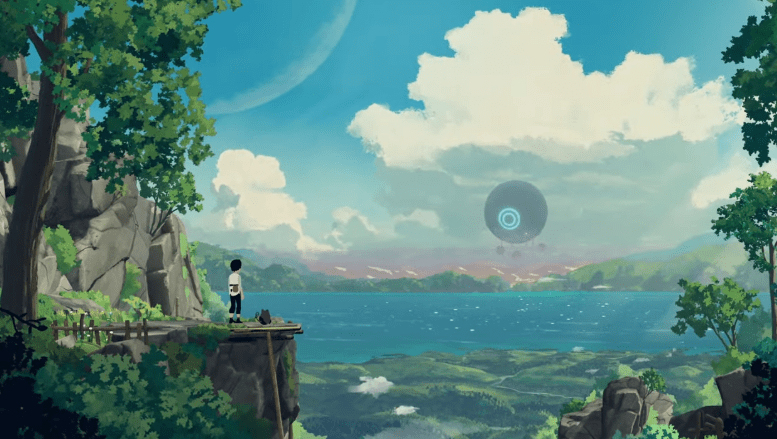
Sequel to the stellar 2023 puzzle-platform game Planet of Lana, Planet of Lana 2: Children of the Leaf trades a heroic rescue for a darker story of revenge. While the game’s mechanisms are inspired by cinematic platform puzzlers like Inside, Planet of Lana 2: Children of the Leaf takes its visual inspiration from Studio Ghibli.

So pretty. And from what I’ve seen in early reviews, Planet of Lana II has a banger story with a compelling ending that will stick with players for ages. I never got around to playing Wishfully’s original Planet of Lana, but I may dive into this haunting world. Can you help Lana rescue her planet’s soul? Planet of Lana II: Children of the Leaf is available on PC, PlayStation 4, PlayStation 5, Xbox One, Xbox Series X/S, Nintendo Switch, and Nintendo Switch 2.

Pokémon Pokopia Releases

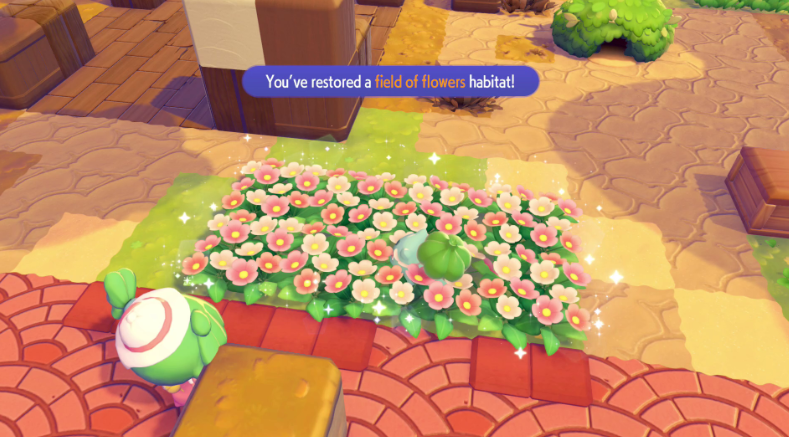
The Pokémon series finally gets a crossover with Animal Crossing–of sorts. Pokémon Pokopia is a life simulation game, and since Game Freak teamed up with Omega Force (developer of Dragon Quest Builders 2), I believe Pokémon Pokopia will share similarities with Dragon Quest Builders 2. If that’s the case, Pokémon Pokopia will be awesome. I love Dragon Quest Builders 2. Players navigate a day-night cycle and cultivate different biomes. This sounds so much like Dragon Quest Builders 2. I can’t wait.

Players control Ditto, who imitates a human. Players can customize Ditto’s appearance, including skin color, hair color, and clothing. Pokémon Pokopia features crafting and building mechanics that players use to befriend new Pokémon, who, in turn, can teach Ditto new moves to interact with the environment. Ditto can perform various tasks like creating bushes, watering dry plants, cutting debris, and smashing rocks. Pokémon Pokopia is only available for the Nintendo Switch 2. Whenever I pick up a Nintendo Switch 2, I know this game will be one of my first.

Slay the Spire 2 Enters Early Access

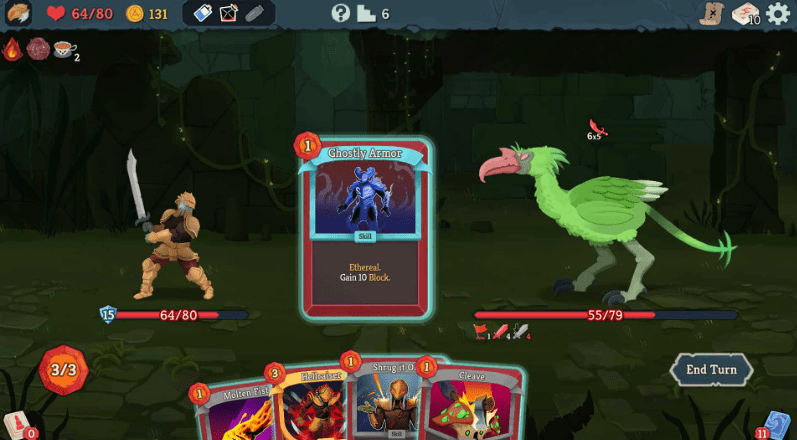
Yes! The sequel to the iconic roguelite deckbuilder, Slay the Spire, entered early access this past week. What did I say about roguelites being a crowded market this year? Wow! Within months of Hollow Knight: Silksong, Slay the Spire 2 drops. Late 2025 to 2026 has been insane.

If you liked the original Slay the Spire, you’ll undoubtedly like Slay the Spire 2. According to some reviews, Slay the Spire 2 plays a lot like the original in the early game. But after a few rounds, the sequel throws in some welcome wrinkles to the award-winning formula. So far, Slay the Spire has received universal praise.

Peak concurrent users hit 217,932 gamers during the sequel’s launch, nearly quadrupling the original game’s lifetime record. The surge to purchase Slay the Spire 2 was so great, it temporarily paralyzed Steam’s payment servers for 30 minutes. If you tried to make a purchase on Steam during this 30-minute window and couldn’t, blame Slay the Spire 2. But hey, Slay the Spire 2 is a fantastic game and worth the hype, so far. Slay the Spire 2 is available on Steam.

That’s all the Geek News we have for this week. Thank you for reading, and wherever you are, I hope you’re having a great day.
Game Design Brain Dump: March 6, 2026

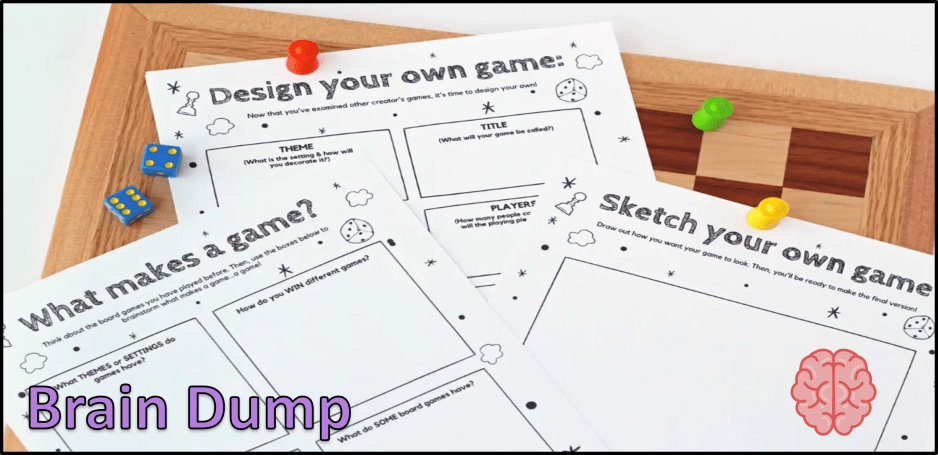
Hey, hey, Geekly Gang! Kyra Kyle here with another brain dump. Today’s post will be about board game design, but these brain dumps have a nasty habit of crossing over from writing to game design and back again. I may have found my stride. We’re averaging a brain dump (alternating between game design and writing) every other week. That feels good, so the next writing brain dump should occur on March 20, 2026. Yay! But let’s go to a macro look at game design. That’s right. We’re zooming out and potentially talking about the creative process as a whole.

I read another game designer’s (Ann Journey’s) game diary. She likened her design technique to her writing process, and it rang true. There’s a lot of crossover between game design and writing as both are creative endeavors. She would brainstorm, create an outline, and build her board game based on the outline. This resembles the Plotter approach to writing. Plotters are at one extreme end of the writing spectrum.


Yes. Like most things in life, writing can be depicted as a spectrum. In fact, the opposite extreme ends of the writing spectrum tend to get as hotly debated as political factions. When I say Plotters are at one end of the writing spectrum, we’re talking Ultra Conservative or Wacky Liberal levels of extreme. Plotters like JK Rowling insist that writing without an outline would be like taking a trip without a map. You’ll get lost. That makes sense. Pantsers are at the other end of the spectrum. They never use outlines. Stephen King may be the most famous Pantser. King wrote in On Writing, “Outlines are the last resource of bad fiction writers.” King suggests outlines limit inspiration and the joy of creativity. This also makes sense.

And like most things (like gender identity and sexual orientation), I fall somewhere in the middle. Pantsing and Plotting aren’t the only ways to write or design games. They’re the ones that get all the attention.

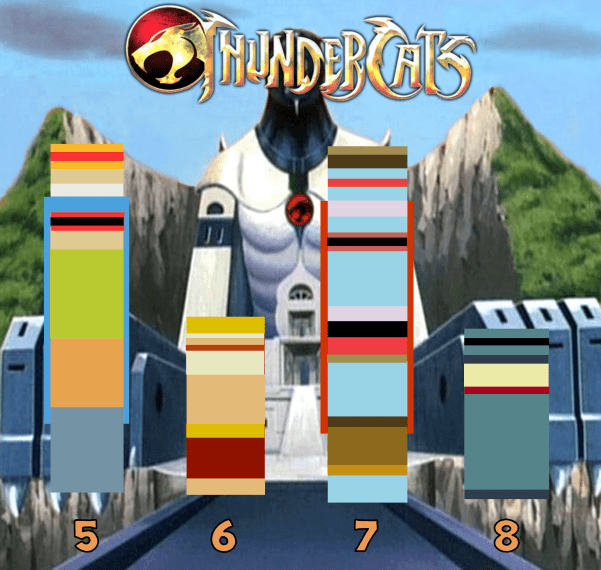
I’m somewhere in the purple. I like purple. Yay! We discussed how Plotting works within board game design. Ann Journey uses this method to great effect in Cretaceous Rails. Brainstorm, create an outline, and build a game based on the outline. Euro Games may insist on this method of board game design. Euros lend themselves to following a well-crafted outline and often feature distinct beginnings, middles, and ends.

But you could Pants your way to a good game. In the past, Molly Johnson, Robert Melvin, and Shawn Stankewich shared that they threw various ideas at the wall while designing Point Salad. If it’s cool, it rules, and if it rules, it makes it into the rulebook. That sounds akin to Pantsing. The Point Salad series of games (which also includes Point City and Point Galaxy) tends to be adaptable and demands that players remain flexible. This could be a feature of this method of board game design. I’m just throwing something against the wall here.

Then we get to two alternatives to Pantsing and Plotting: Lighthousing and Blotting. Are these two methods in the purple, or is there a Y-axis to this spectrum that I don’t see? I’m unsure, but I do know that Lighthousing and Blotting are two major alternatives to Pantsing and Plotting. There may be others.

While writing, whenever I Lighthouse, I usually know where my story begins (the opening scene), and I know a Lighthouse scene for the future, a poignant scene I know will make the final story, but I don’t know how to get there yet. This Lighthouse scene informs my decisions, but it also gives me leeway to explore. Early into Mysterium’s development, Oleksandr Nevskiy and Oleg Sidorenko knew how the game would begin and the game’s final turn. Most–if not all–of Mysterium’s design choices were in service of the game flowing from its beginning to that final turn. Lighthousing may be the method you’ll want to use if you have planned an epic final turn or series of turns.

Finally, we get to Blotting. I picture myself with a blank canvas whenever I Blot while writing. In my hand, I have a sopping wet paintbrush, like Bob Ross and his wet-on-wet painting method. I slap a scene on the blank canvas, and it causes a blot. Then I add another and another, and after I’m finished, I have to make sense of the mess by molding these Blots into a cohesive whole. While designing Marvel United, Eric Lang suggested that he knew his theme (Marvel Comics, obviously) and a handful of the game’s mechanisms. He just needed to take those elements and sculpt them into a cohesive gaming experience. Sounds like Blotting to me. Blotting can lead to fun and exciting fusions of disparate elements.

Word of caution for Blotting (and for designing games in general): One can add too many elements to a game. Typically, the fewer gaming elements, the better. The old adage “Less is More” is key.

I’ve used all of these methods for game design and writing. There are some I prefer and others I don’t. I wouldn’t say one method for a creative endeavor always trumps another. Your goal is to find which method works best for you and for your project.

And just because you Pants or Lighthouse your way to a story or game, doesn’t mean you can’t use a reverse outline. Have I talked about reverse outlines? Yes, in a previous writing brain dump. I’ll leave that link right here.

Remember, Stephen King subscribes to Pantsing. He has suggested that one’s reader won’t be surprised if you’re not surprised as the writer. Pantsing induces moments of surprise in King whenever he writes. But King is also known for horror fiction. The element of surprise is important for horror stories. There may be a reason Stephen King chooses the Pantsing method.

If you’ve made it through my rambling, you’re awesome. We all know it. Thank you for reading, and wherever you are, I hope you’re having a great day.