Kyle Kyra (they/them) writes fiction, nonfiction, and poetry. They live in a sleepy Nebraska town. Yes, corn lives outside their back door. They hold a BFA in creative writing from the University of Nebraska at Omaha, and their work has appeared in Menacing Hedge, Spank the Carp, Danse Macabre, The Door is a Jar, The Collidescope, and other journals and anthologies.
Happy Wednesday, Geekly Gang! Today, our writers share what they’ve been playing over the past month. Feel free to share what you’ve been playing, too, because we’re all part of the Geekly Gang. I’ll get things started with the games I’ve been playing over the past month.
Kyra’s Video Games
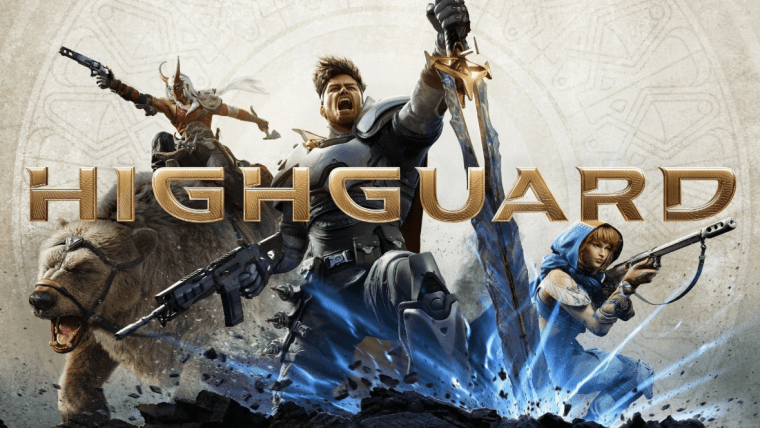
Highguard answers a couple of questions. What if Apex Legends was a base siege game? And what if Apex Legends had a fantasy theme with mounts? Many of the creatives behind Apex Legends made Highguard, so Highguard borrows more than a little bit from Apex Legends. If you know how the buttons work in Apex Legends, you’ll know how the combat works in Highguard. That’s a plus. There’s a lot more to unpack with Highguard. On one hand, I like the effort in creating a unique gaming experience. A base siege game is cool. On the other, Highguard has three game phases. That’s confusing.
Highguard’s first phase should sound familiar with a small twist. Kit up your character (weapons and armor) and fortify your base, on the off chance you’ll be the team tasked as the defenders. Second phase plays like capture the flag. Something called a Shieldbreaker spawns in the center of the game map. The two teams via for control of the Shieldbreaker, which is kind of a flag. The first team to bring the Shieldbreaker to their opponent’s base becomes the siege team. The other team is the defender. The third phase is a siege between the two teams. The offensive team wants to destroy the other’s base, while the defensive team wants to run out the clock.
And we got word yesterday that Highguard will shudder its doors the middle of this month. I played the a game little more. The graphics are okay but generic. That may have turned off gamers. Highguard also came out of nowhere (with graphics that clearly cost a pretty penny) which begged the question who financed this game? Turns it, it was Chinese mega publisher Tencent. Don’t know why Tencent refused to take credit for bankrolling Highguard before it released. Tencent is better known for mobile games. That may be why they stayed in the shadows.
I didn’t care for Highguard’s characters. They were more generic than the graphics. Highguard needed lore or a story to capture gamers’ hearts, and it didn’t have enough time to do that. The game functions as three separate games. They may have turned off gamers. I like the big swing, but a less complex game could’ve faired better.
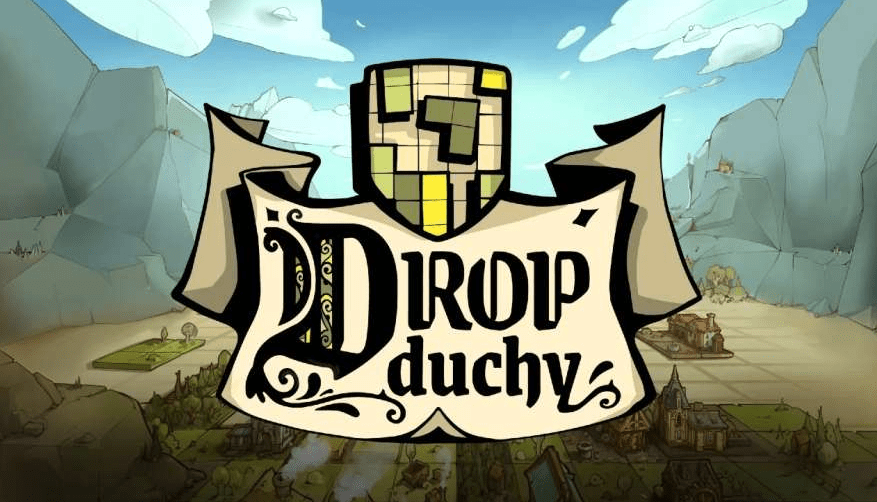
I forgot to cover Drop Duchy. Oops! I’ve been playing Drop Duchy off and on ever since it first released on Steam a few months ago. I believe Drop Duchy is also available on mobile. And I highly recommend it. Drop Duchy gives the classic Tetris formula a much-needed twist. Players build their village–or duchy–by playing Tetris, matching terrain to buildings that can make use of the terrain. But beware, you’ll also place Tetris pieces for your opponent. Ultimately, you’re trying to build up your defenses, while keeping your opponent weak. Tetris is already a thinky puzzle. Drop Duchy cranks up the puzzle several notches. If you’re tired of classic Tetris, give Drop Duchy a try.
And my last entry for video games is a remaster of an old favorite: Plants Vs. Zombies Replanted. The gameplay still holds up. I can’t tell what Replanted adds to the most recent mobile version of the original Plants Vs. Zombies. The graphics might be slightly better than before, but then the ending (if you know, you know) gets screwy because we’re watching the end credits on an old screen with Crazy Dave sitting on the couch. Okay. That was a choice. Regardless, it was fun going down memory lane, and Plants Vs. Zombies Replanted gets more right than it gets wrong.
Kyra’s Board Games
I’ve played New York Slice far more often than I thought I would over the past month. I like the game a lot. But I also stink at New York Slice. New York Slice uses a game mechanism that I wish more board games used: I cut, You choose. Pizza slices can earn players points. Whoever has the most of a specific pizza type will score those points. Players gain slices by one player cutting the pizza into sections for all players. Then, starting with the player to the cutter’s left, players choose which slices of pizza they want.
New York Slice takes a simple concept and makes it sing. I also like the production value. The scorecard is a server’s check. Excellent! I just wish I were good at the game. LOL
I have a few other board games I played this past month, but I may save my discussion about them in a future Whatcha. Let’s see what Skye has been playing.
Skye’s Video Games
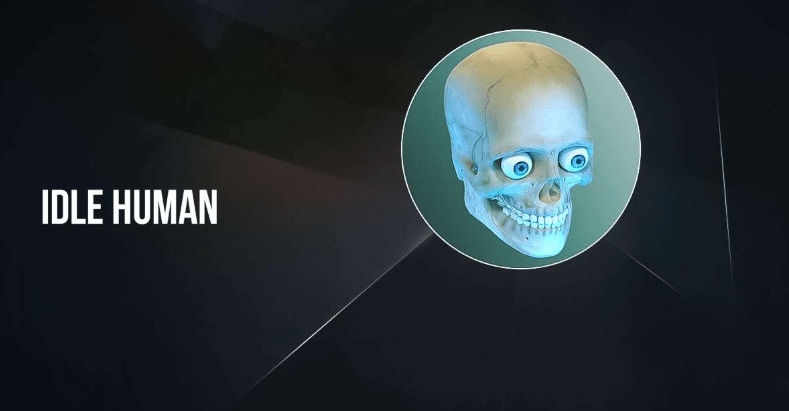
Since I’m still in the process of obtaining the platinum trophies for previous games on this list, I have few new games to discuss. Except for mobile games. Idle Human allows you to create your own human using trillions, quadrillions, and even quintillions of cells. And not just humans, but aliens, cyborgs, and yetis? Sure. Gamers accumulate cells and build a human. Hopefully, you’re not squeamish, because this game has surprisingly detailed depictions of internal organs.
I frequently get ads for “satisfying” puzzle games. One of those games was Pixel Flow. Pixel Flow is a simple game that requires you to destroy a colored pixel image by shooting colored pixels with a pig cannon of the same color. I promise it makes sense when you see it. Images can range from simple to incredibly complex, which makes levels easier or harder. At the end of the day, Pixel Flow is kinda dumb, but wait until you see that pig cannon. I rest my case.
I didn’t need another coloring app, but Happy Color is unique enough to justify having it on my phone. Happy Color is easily the most popular color-by-number app in the App Store, so it needs little introduction. I like Happy Color’s significantly larger number of coloring categories and unique styles. My special pixel coloring app, Pixel Art, allows me to upload my own custom images to color from my gallery, which is its primary use, but I still enjoy variety in my artwork. Unlike Pixel Art, Happy Color allows me to explore those different styles. And it’s okay to have two coloring apps on one’s phone.
Hey, hey! Kyra Kyle here again. Those are all the board games and video games our writers played this previous month. Let us know what you’ve been playing. Thank you for reading, and wherever you are, I hope you’re having a great day.
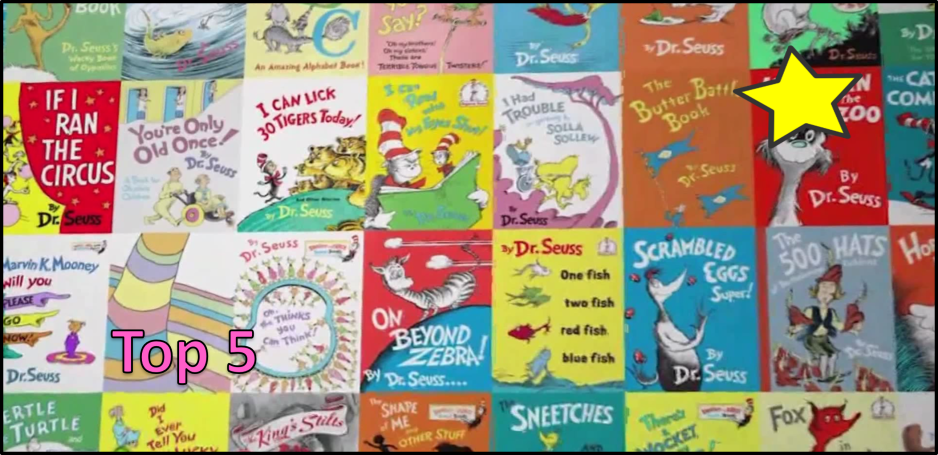
Happy Monday, Geekly Gang! Kyra Kyle here. Today, March 2nd, is Dr. Seuss’s birthday. We’re celebrating by listing our Top 5 Dr. Seuss Stories, and that’s not just me, Kyra, saying that. I asked all the Geekly writers for their favorite Dr. Seuss stories; the higher on someone’s list a story goes, the more points it earns. I weighted the results, and the following is our Geekly Writers Top 5 Dr. Seuss Stories.
And yes. We legitimately had a three-way tie for fifth place. So, this ended up more like a Top 7 Dr. Seuss Stories.
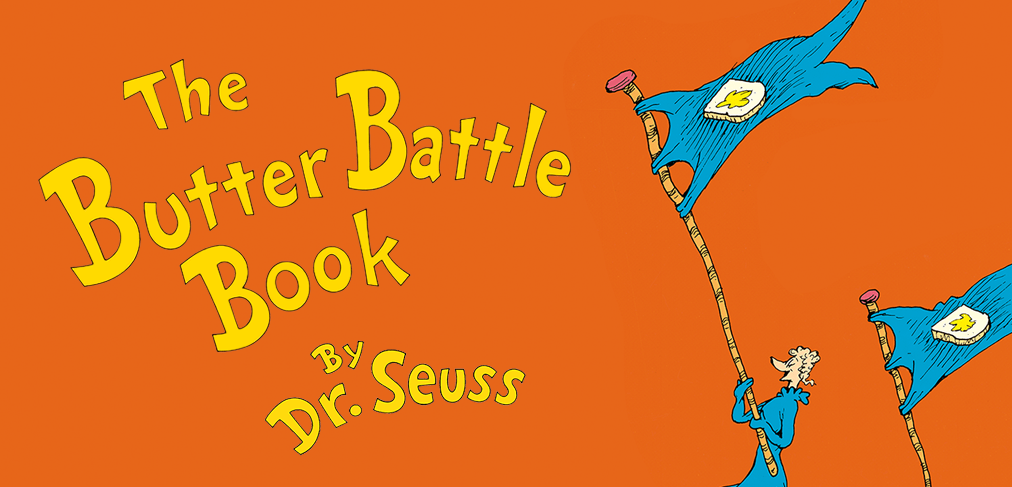
Tied 5) The Butter Battle Book
The Butter Battle Book is an anti-war story. It chronicles the battle between the Yooks and Zooks. One butters their toast on one side, while the other butters their toast on the other. The two groups war, amassing weapons that can destroy the world. The Butter Battle Book is a fun way to just say no to war. And it points out the idiotic reasons why some wars begin.
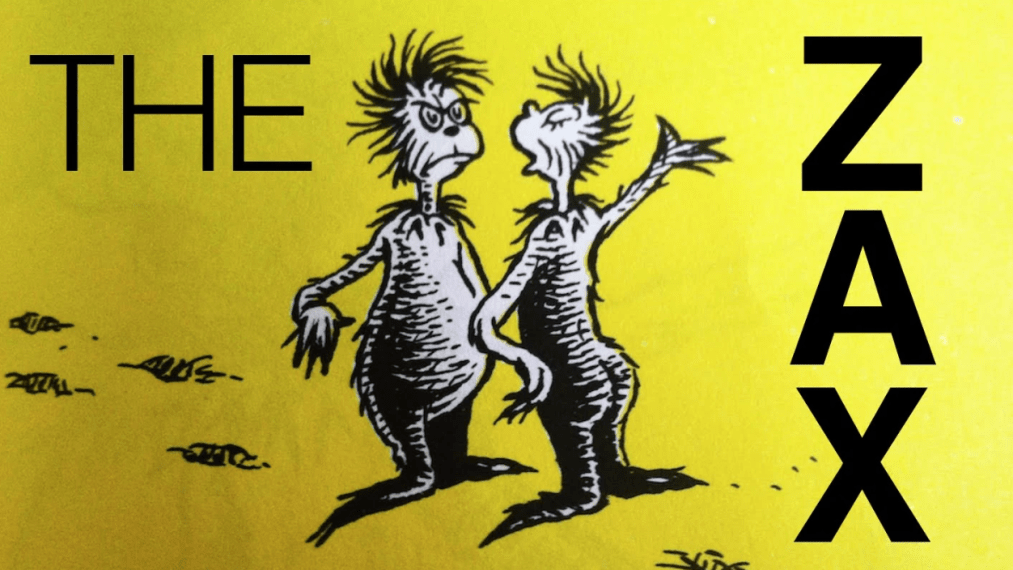
Tied 5) The Zax
Take away the war angle, and The Zax has a similar message to The Butter Battle Book: stubbornness and how it destroys lives. The Zax live in the Prairie of Prax. Two varieties exist, North-Going Zaxes and South-Going Zaxes. When the two meet, their stubbornness causes them to refuse going in any other direction. Eventually, the world passes them by.
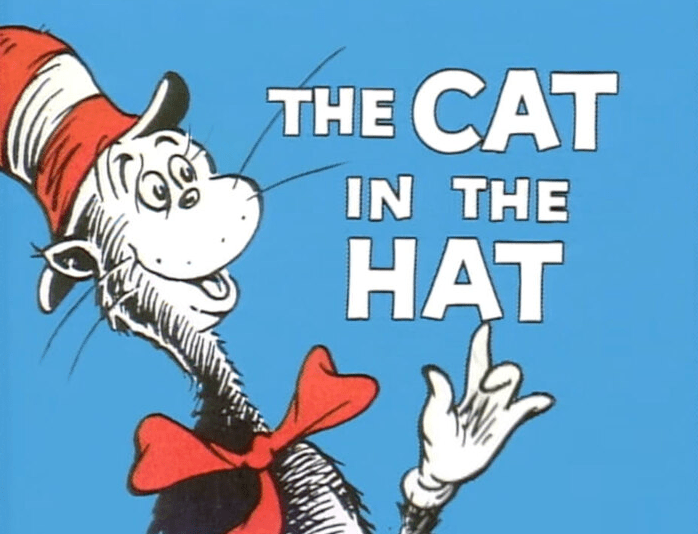
Tied 5) The Cat in the Hat
To say The Cat in the Hat is iconic would be an understatement. The Cat in the Hat is so iconic that it’s become an icon for Random House Books. Despite that, The Cat in the Hat lands in a three-way tie for fifth on this list. While The Cat in the Hat may be one of the first books most of us read (the book was kept to 225 unique words so new readers could learn them), we preferred the messages behind other Dr. Seuss stories more.
4) Oh! The Places You’ll Go!
The great thing about a list like this is that some of you are thinking, Oh! The Places You’ll Go! is way too far down this list, while others are rolling their eyes. Surely, some of you heard excerpts from Oh! The Places You’ll Go! in a graduation or two or twenty. Yes. Oh! The Places You’ll Go! leans into sappiness, but it’s also the final story published during Dr. Seuss’s lifetime. I like thinking of this book as Oh! The Places You’ve Taken Us!
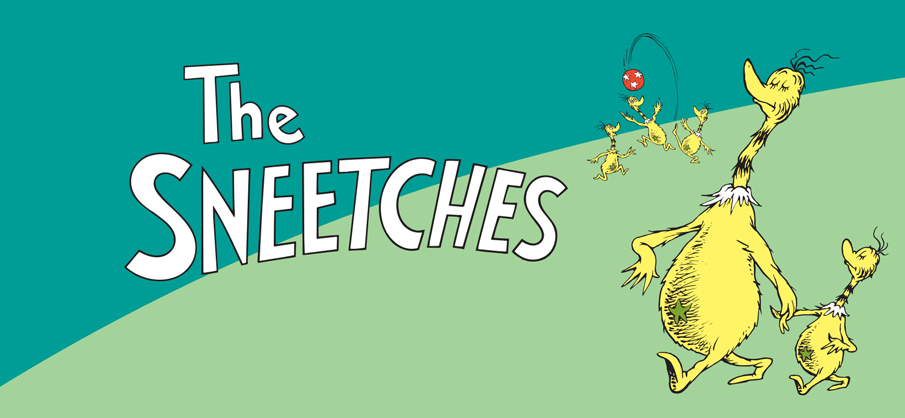
3) The Sneetches
While The Sneetches holds a great message of discrimination and acceptance, we may be biased toward The Sneetches because I portrayed Sylvester McMonkey McBean (The Fix-it-up Chappie) in a Children’s Theater rendition of The Sneetches. Does McBean teach the Sneetches (a race of alien creatures where some have stars on their bellies and others don’t) a lesson? Or did my former character want to make a quick buck erasing and adding stars to gullible Sneetches? You decide.
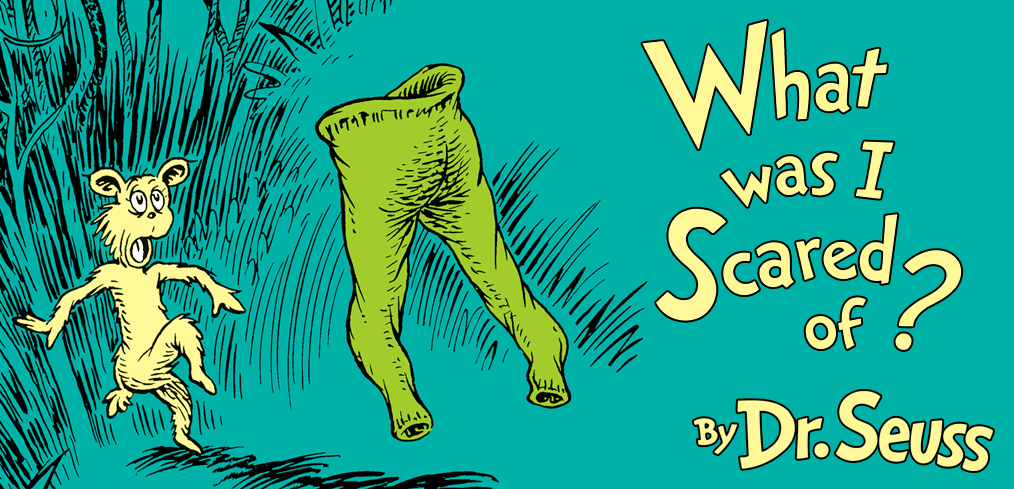
2) What Was I Scared Of
What Was I Scared Of? is the strangest inclusion on this list. Some of our writers rated What Was I Scared Of? as their number one Dr. Seuss story, while other writers (myself included) didn’t even include the story on their list. Oddly enough, What Was I Scared Of?’s message works with The Sneetches’ (that’s maybe why they were included in the same collection). What Was I Scared Of? centers on the fear of something one doesn’t know. That fear can lead to discrimination. I like how the pale green pants with nobody inside them only want to be friends.
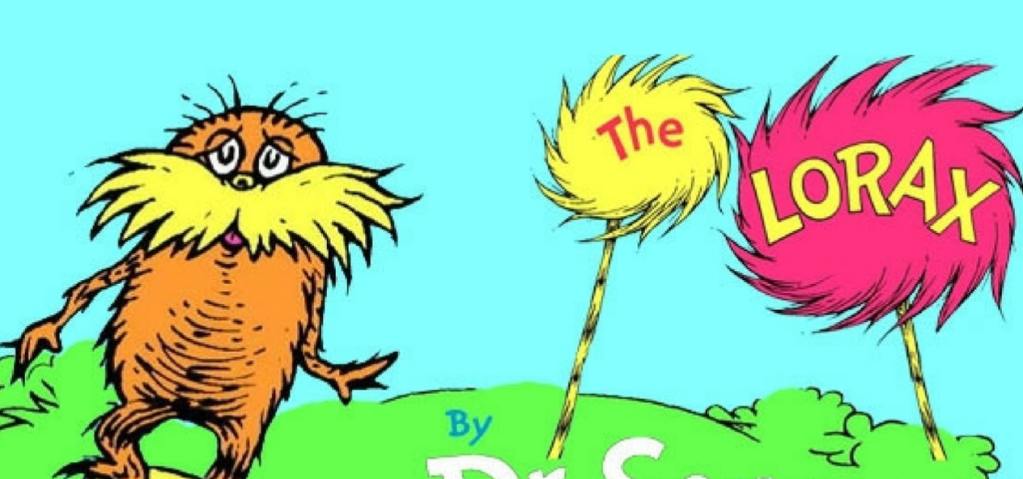
1) The Lorax
Who doesn’t love Truffula Trees, Brown Bar-ba-loots in their Bar-ba-loot suits, Swomee-Swans, and Humming-Fishes? We sure do. The Lorax didn’t quite claim the top spot on every one of our writers’ lists, but it came close. This classic tale of environmentalism warns of what will happen if we don’t take care of our planet. But The Lorax offers hope and an actionable request. The Once-ler gives the unnamed, young child a Truffula seed. He asks the child to plant the Truffula seed and treat the land better than the Once-ler. Hopefully, there’s still time for us to plant Truffula Trees before we no longer have Brown Bar-ba-loots in their Bar-ba-loot suits.
That’s our list of the Top 5 Dr. Seuss Stories. This is by no means an exhaustive list. Plenty of stories made our lists (including mine) that didn’t manage to crack the Top 5. Wait! I just checked. I had the most stories on my list to not make the cut. I demand a recount. Let us know your favorite Dr. Seuss Stories in the comments. Thank you for reading, and wherever you are, I hope you’re having a great day.
Happy Sunday, Geekly Gang! Kyra Kyle here with another week of Geek News. We have another weekly round-up of new game (board games and video games) releases, but before we get into those, we have some headlines to discuss. We missed last week, because I was on a romantic getaway with my spouse, so some of these headlines may come from the previous week, and we begin with a doozy. Xbox Gaming CEO Phil Spencer retires, and Spencer’s mentee Sarah Bond resigns. Woah! What is happening at Xbox? Let’s find out.
Xbox Gaming Changes Leadership
After nearly 40 years with Microsoft Gaming, Xbox CEO Phil Spencer retires. While Spencer will stay on in an advisory capacity later this year (2026), advisory roles are more symbolic. I don’t imagine Spencer having much input into Xbox’s future–if Xbox even has a future, but more on that in a little while. What muddies the water further is that Sarah Bond, who Spencer prepared to take over as CEO in the event of his leaving Xbox, resigned her position. Undoubtedly, Spencer and Bond are subject to a non-disclosure agreement, so we may need to wait numerous years before they share why they left the company, and Xbox/Microsoft hasn’t expanded on why the pair left. Talk about chaos.
But we’re not done yet. Microsoft Gaming/Xbox has named Spencer’s replacement: Asha Sharma. Prior to joining Microsoft in 2024, Sharma was chief operating officer of Instacart and previously vice president of product at Meta. Her role within Microsoft was within its CoreAI division. Uh, oh! Artificial Intelligence. Sharma immediately addressed gamer concerns with Microsoft/Xbox potentially leaning further into AI. She made the following statement: “Xbox will commit to the ‘future of play,’ and that Xbox would not focus on ‘soulless AI slop.'” There’s a lot to unpack with Sharma’s brief statement.
What does “Future of Play” mean? Sharma is saying the right things. She wants to return Xbox to its early days. She wants to focus on games. I’m all for better games. And Xbox has acquired a ton of developers. Fingers crossed that many of the better ones survive a potential reorganization or that the developers who do get let go can re-establish themselves as independent publishers. We’ve heard rumblings that Xbox could be disbanded. “A focus on games” could mean Microsoft has no interest in consoles, and to be fair, consoles don’t always garner huge revenue. And then, there was the bombshell dropped by Xbox co-founder Seamus Blackley during a Gamesbeat interview earlier this week. “I expect that [Sharma’s] job is going to be as a palliative care doctor who slides Xbox gently into the night.”
If the Xbox Series S/X is Microsoft’s final console, it may be a fate Xbox has been heading toward for years. I never bought Phil Spencer’s claim that a tablet can be an Xbox. Your phone can be an Xbox. I can be an Xbox. If anything can be an Xbox, doesn’t that mean that nothing is an Xbox? Microsoft Gaming could’ve been heading toward becoming a game developer/publisher and dropping the console producer for years, and it may not even be Sharma’s doing. Spencer’s past comments may have hinted at this shift.
But Sharma’s background in AI makes the “Future of Play” comment sound ominous for a different reason. While I like Sharma addressing the issue of soulless AI slop, this may be corporate speak. Gamers received their first impression of Sharma as head of Xbox this past week. Again, she’s saying the right things, but she has an extensive history with AI development. There are levels to AI integration. Most people don’t want AI slop, and Sharma may make good on her promise of not including AI slop, but I wouldn’t discount Xbox leaning heavier into higher levels of AI integration. Could we see AI voice acting, AI graphics for background assets (or even foreground graphical assets, because building character models is hard), or AI writing for side quests? Time will tell. This is a developing story.
Paramount Increases Its Offer for Warner Bros.
Guess who’s back. We’ve been following the Warner Bros. Sale for several months, and we may have several more months before the final deal goes through. Paramount offered $108 billion That would’ve been about $30 per share, but Warner Bros. declined, deciding to go with Netflix’s offer, but that was only for HBO Max and the Warner Bros. movie studio. Last week, Paramount upped its offer to $31 per share. Paramount wants all of Warner Bros. Discovery, which includes CNN, TNT, TBS, and other assets.
I had written this piece before Netflix responded to Paramount’s offer. I thought Netflix might increase its offer. Earlier in the week, there was a chance Warner Bros. could still accept Netflix’s offer. If Warner Bros. sold its two assets to Netflix, it would still have enough remaining assets to sell to another buyer, like Paramount. But Paramount’s offer was too tempting. The streaming giant Netflix has rescinded its offer. Paramount has acquired all of Warner Bros. Discovery. Even though both sides have agreed to the deal, it must go through regulatory agencies before being approved. We’ll see what the future holds.
This deal makes me wonder about CNN. Last year, Paramount appointed Bari Weiss as CBS News’ Editor in Chief. The hire was questionable at best, in large part because Weiss seldom fact-checks. That doesn’t work so well for a news network. Big changes may be on the horizon. We’ll keep you posted.
AI-Fueled Memory Chip Crisis May Delay Next Gen Consoles
It’s no secret that the current generation of gaming consoles has suffered setbacks due to the pandemic and unfair tariffs. We’ve discussed the tariffs, and let’s not relive the pandemic, but the rise of AI has also impacted the PS5 and Xbox Series S/X. And AI may just impact the next generation of gaming consoles, too.
We haven’t heard official word that Sony or Microsoft plans to delay their next consoles. We haven’t even heard definitively if Nintendo plans to raise the price of the Switch 2. But there are rumors. These rumors began late last year in various articles by Reuters and Forbes. The AI boom has led to tech companies (specializing in AI) gobbling up memory chips. One also needs memory chips to produce gaming consoles. With AI’s demand for memory chips rising, there may not be enough memory chips for gaming consoles. This raises the price of memory chips. More expensive memory chips raise the price of gaming consoles. And new consoles like the PlayStation 6 and whatever Microsoft plans to name their next console–if they even make another console–get delayed by years. The industry’s current guess is 2028 or even 2029.
Again, Sony, Microsoft, and Nintendo have made no formal plans to delay console releases and/or increase console prices, but all of those outcomes are on the table if the AI-fueled memory chip crisis continues. This is yet another developing story. We’ll keep you posted.
Perch: Birds of Play Launches on Kickstarter
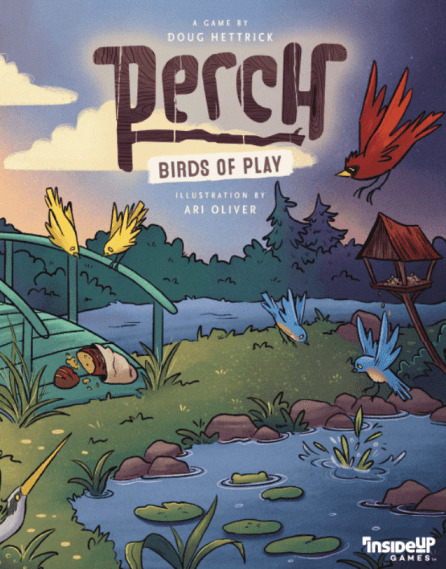
In Perch, players fight for control of locations by commanding birds of their own and other players’ flocks. Earn points and command woodland creatures by having the most birds on a location, pushing your foes off the perch, and breaking ties to take the lead.
Each round, players add their birds into a shared bag. Players then draw birds of their own, and other players take turns stacking birds on location tiles. Each location tile will award variable points for majorities and sometimes grant players a unique ability. The game ends after five rounds, and the player who has earned the most points wins.
With a modular tile configuration and a variety of woodland creatures to control, each game will present a new tactical challenge.
Thank you for the stellar description, Inside Up Games. Perch: Birds of Play is the first major expansion to Perch. If you don’t have the base game, don’t worry. Perch: Birds of Play offers multiple pledge levels to accommodate those who are new to Perch. I would be one of those Perch newcomers. I’ve heard plenty of great things about this title, Perch: Birds of Play intends to add to Perch’s winning formula.
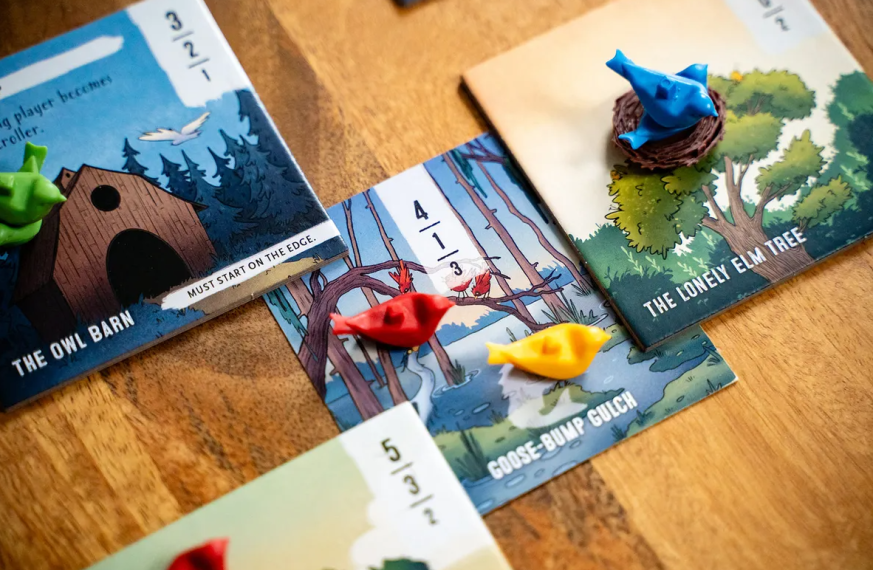
From what I’ve heard, Perch can get intense. Players fight each other for control of tiles. In short, Perch may share a theme with Wingspan (birds), but it feels more like a fist fight. If you have the base game, players can pick up Perch: Birds of Play for $24. If you’d like the base game and the expansion, the pledge level is $58. And there are other options for upgraded bits like the 3D birds pictured above. If you’re interested in Perch: Birds of Play, check out its KickStarter page.
The Old King’s Crown’s 2nd Printing and New Songs of Home Expansion Launches on GameFound
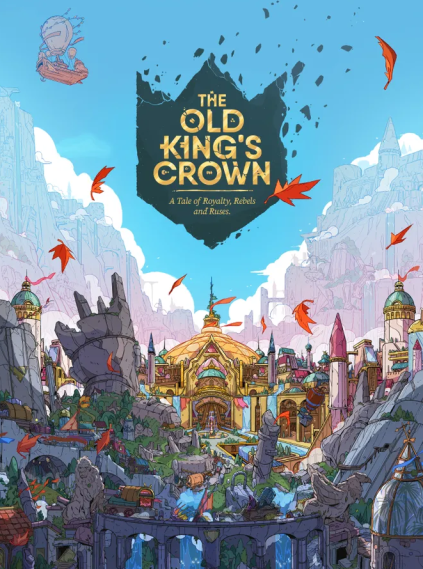
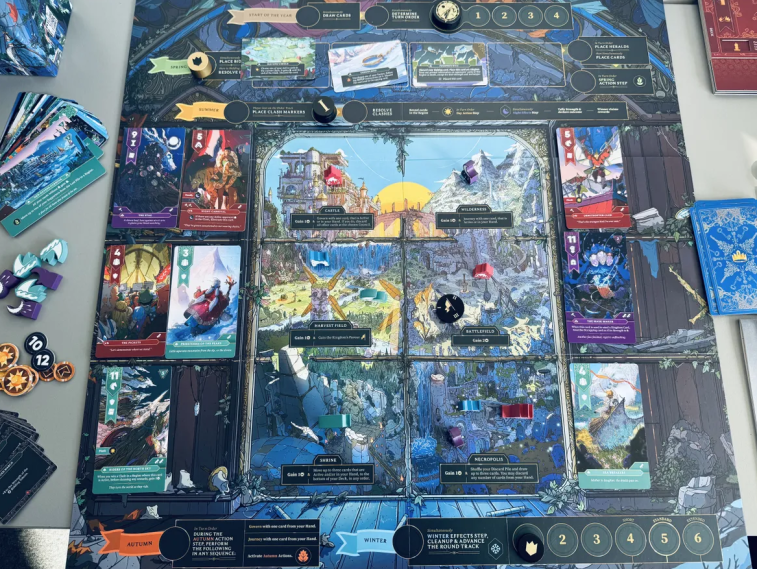
The Old King’s Crown is a game of card-driven conquest, where you play as heirs to a vacant throne, vying for control of an ancient, overgrown kingdom. Wield unique abilities and leverage your followers’ traits to best outwit your opponents across a map that stretches from the teetering heights of the castle to the dappled light of the necropolis.
As leader of your faction you will be staking claims with Heralds openly as well as positioning your forces in secret, hoping to claim the locations that fit your designs. However, keep an eye on your rivals, as they too have agents and agendas, poised to undo your best laid plans.
Royalty, rebels or ruses. What crown will you wear?
Another great description by the publisher. Thank you, Eerie Idol Games. Love the company name. The Old King’s Crown is yet another game I’ve heard great things about. It has a solid rating on BoardGameGeek, but it does skew toward the heavier side. One look at the game above cues one in about The Old King’s Crown’s complexity. But it looks as if it has plenty of iconography, and the board has a pleasant layout. This gives me the impression of a game that has a lot of moving parts, but it’s easy enough to understand once you get the flow.
The New Songs of Home expansion adds two new factions. Each faction has its own asymmetric gameplay, so two new factions are welcome news. The expansion also expands on The Old King’s Crown’s world. Another plus. The Old King’s Crown can be played competitively, cooperatively, or solo. That’s always a plus. As of this writing, we don’t have details of The Old King’s Crown’s pledge level costs, but if you’re interested in The Old King’s Crown, check out its GameFound page.
Hair Band Launches on KickStarter
Rock the stage and Rule the Strip!
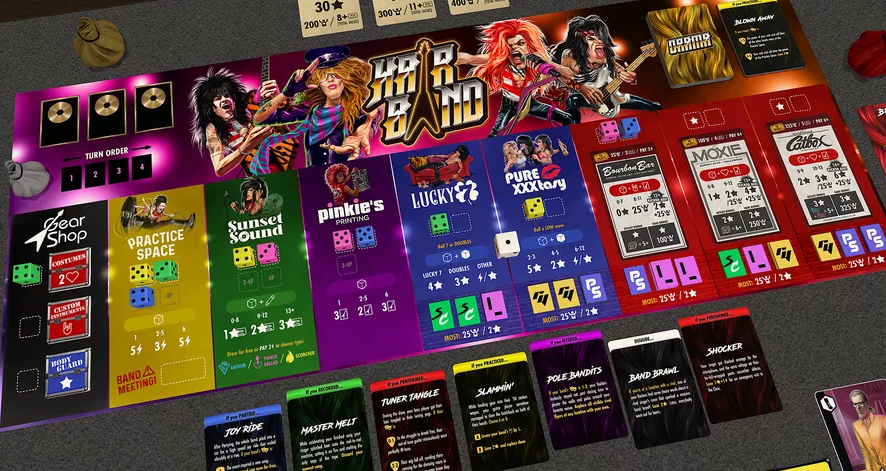
In Hair Band, you’re an upstart 80’s glam metal band vying for Hollywood’s next record deal. But to get it, you’ll need to convince the label you’re the next big thing – get awesome, get fans, perfect your show, and complete your demo to sign on the dotted line.
Each round, you’ll place your dice-as-rockers around Hollywood to write, rehearse, promote, gig, and party all night. But watch out! Musicians can be a reckless and unruly bunch. So, you’ll need to choose wisely to steer clear of drama that can derail your ambitions. The first band to complete 3 of the 4 record label requirements gets the deal and wins the game.
Rock on, Frown Clowns Games with that fun write-up for Hair Band. We’ve seen a few rock-inspired board games over the past year or two, but I’m a sucker for any dice-placement game. And the act of rolling makes sense for a rock-inspired game. Rock and “Roll.” Hair Band appears to capture the glam band vibe. The art above may come from Board Game Arena or Tabletop Simulator (a virtual board game), but the final product looks great. I chose to use a virtual board game picture to show more of the game. Vector graphics are more likely to maintain their crispness. But look at the dice. I choose pink.
I have yet to play Hair Band, but I’ll quote Alex Wolf (of Spielcraft Games, the publisher of the superb Cretaceous Rails), “(Hair Band) is a light, thematic strategy game where you lead your hair metal band to practice, play shows, and complete albums, and of course navigate the challenges that come with a rock and roll lifestyle.” Yep. I may have to try Hair Band. If you’re interested in Hair Band, check out its KickStarter page.
Sky Empire Launches on GameFound
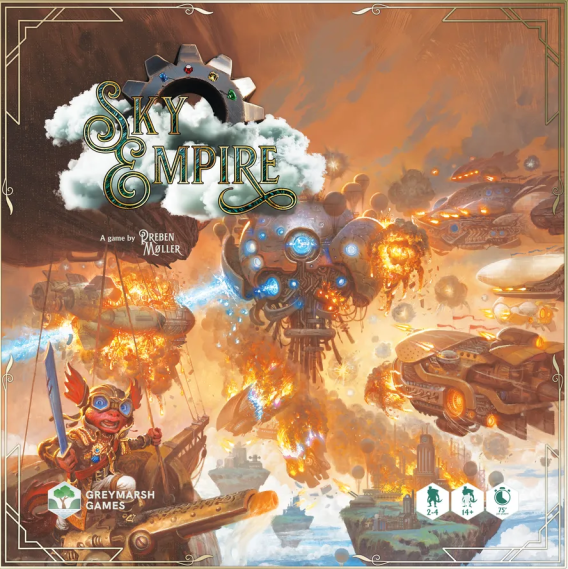
In the skies over planet Dopheus, players will take on the role of a Doppler, a salamander-like creature with one mind and two bodies, in a quest to find the crystals and reactivate the monolith defense to thwart the invasion from the evil sentinels! Take part in this epic adventure, in more than 40 different airships, to find the crystals and stop the invasion – and become Emperor over all of Dopheus!
Sky Empire takes place over several game rounds, where players place their Dopplers either in the Council to take Council actions, or on the board for character unique abilites. Or both! You have two bodies! To take actions on the map you activate the tiles with an initiative token, and that allows you to move to this tile, explore, produce, construct and/or battle opponents!
To win the game, you must collect the four crystals, activate a monolith, and ascend to the position of the Emperor of Dopheus!
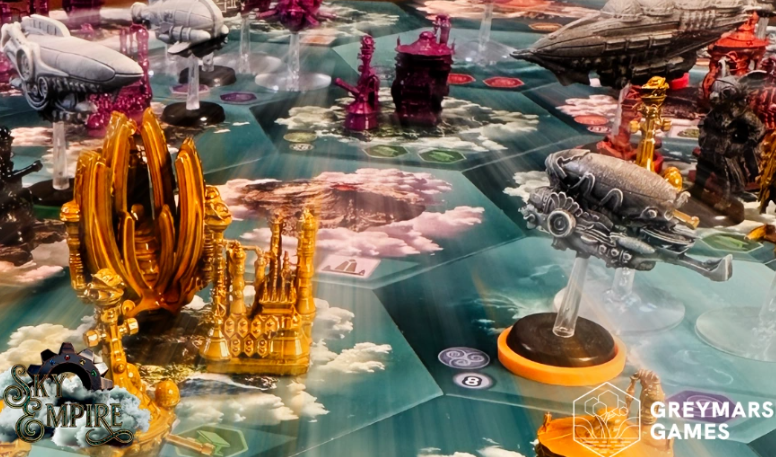
Yet another great description. Thank you, Greymarsh Games. I said it before, but publishers know their game a lot better than I do with these write-ups. I love it when a publisher provides a good description. That leaves me the opportunity to go into how great those miniatures look. Minis aren’t everything, but great-looking minis can enhance a theme. And a 4X Steampunk board game is one heck of a theme. Sky Empire is another complex board game–we got a couple of them on the list this week–and it plays over two and a half to six hours. Yowza! Sky Empire may just be the steampunk equivalent of Twilight Imperium.
While I’m not the biggest fan of six-hour-plus board games, I’d be willing to try Sky Empire. It looks stunning. I love the theme. And Sky Empire offers a solo mode. What? I can’t imagine purchasing a game as well-produced as Sky Empire for only the solo mode, but a solo option is great for a game I may struggle to find others willing play. That’s always something to consider. At the time of writing this post, we don’t have any details about Sky Empire’s pledge levels, but if you’re interested in Sky Empire, check out its GameFound page.
Resident Evil: Requiem Releases
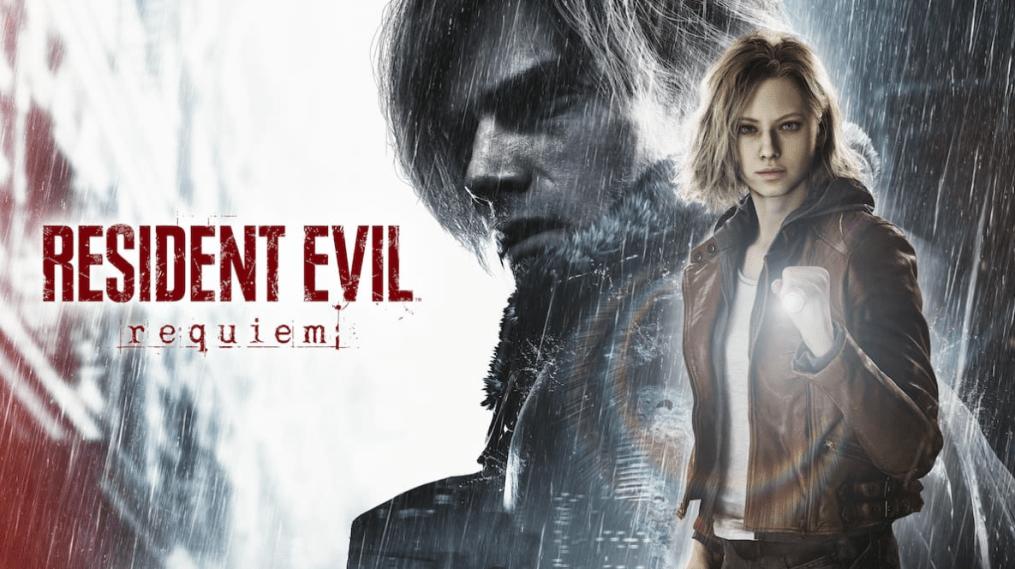
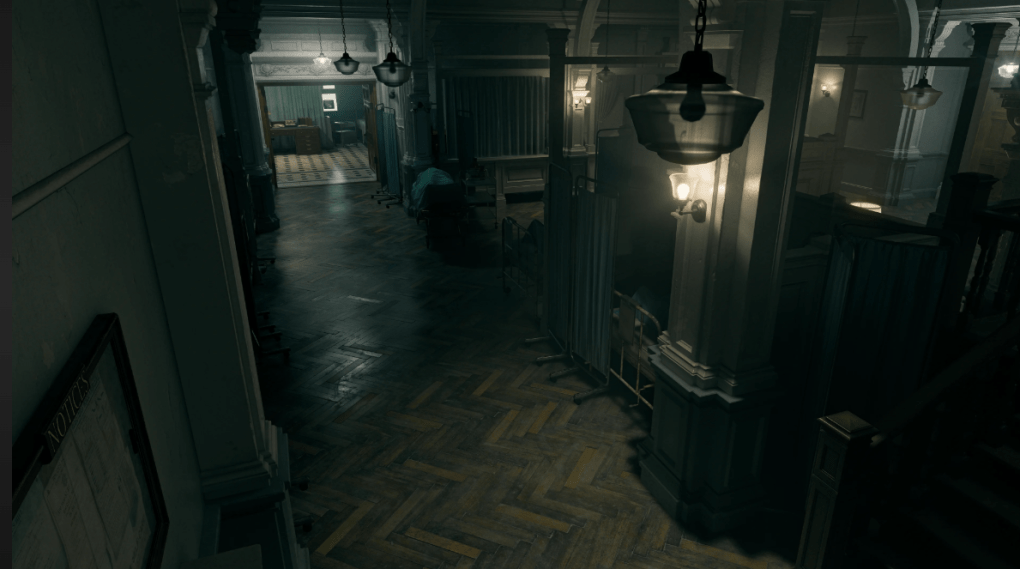
Resident Evil: Requiem may be the perfect way to celebrate the horror survival franchise’s 30th anniversary. Acclaimed Resident Evil 7: Biohazard’s director Koshi Nakanishi returns in this title, and Resident Evil: Requiem’s narrative centers on the Raccoon City incident and the Umbrella Corp’s activities. Sure. Resident Evil: Requiem introduces a new protagonist, FBI analyst Grace Ashcroft, but fan-favorite federal agent Leon S. Kennedy returns. Yes!
And players can shift from first-person to third-person. I love Resident Evil: Requiem’s customization. Does the game live up to the hype? We aren’t sure. I started writing this post early in the week, and reviews weren’t available. But Nakanishi’s return to the series, the focused story, and the ability to shift points of view make Resident Evil: Requiem a game to keep on one’s radar. Resident Evil: Requiem is available on PC, PlayStation 5, Xbox Series S/X, and Nintendo Switch 2.
Tales of Berseria Remastered Releases
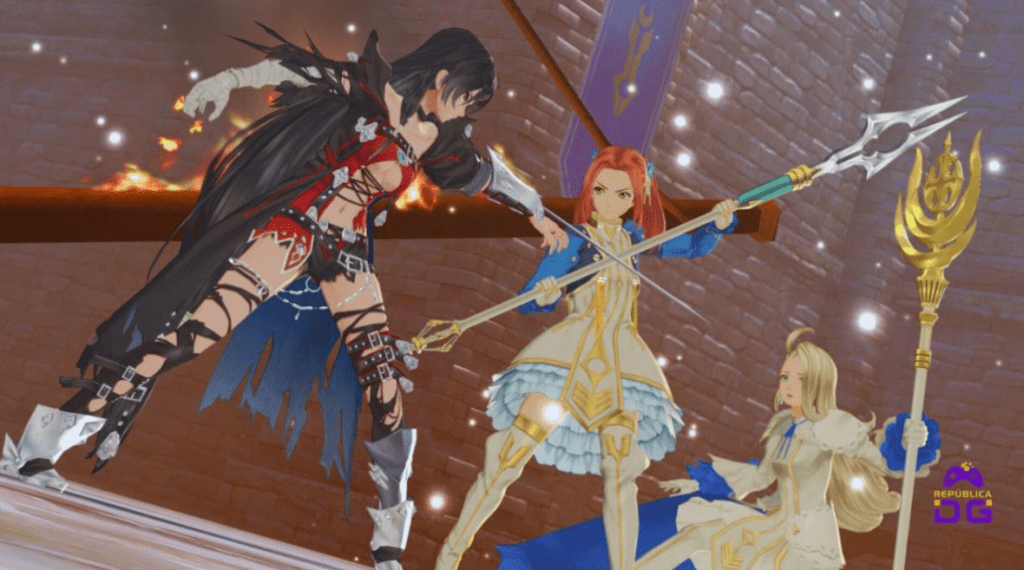
I have yet to play a title in the long-running Tales series. Honestly, I don’t know where to begin. Tales of Berseria is the sixteenth title in the series, and it was released almost ten years ago. Smaller gaps exist between original releases and video game remasters. Is ten years long enough to warrant a Tales of Berseria remaster? Again, I’m unsure. I’ve heard great things about this title, but I’ve also heard that, in terms of story, Tales of Berseria ventures from the mainline Tales series. Perhaps this tale of revenge is the Tales game I should try first.
Tales of Berseria Remastered looks stunning, but so did the original. For context, the original Tales of Berseria was a launch title for the PlayStation 4. Tales of Berseria features unique combat, and the remaster looks to retain this stellar combat and perhaps build upon it. Tales of Berseria is available on PC, PlayStation 5, Xbox Series S/X, and Nintendo Switch.
That’s all of the geek news we have for this week. Which game are you the most excited to play? Let us know in the comments. Thank you for reading, and wherever you are, I hope you’re having a great day.
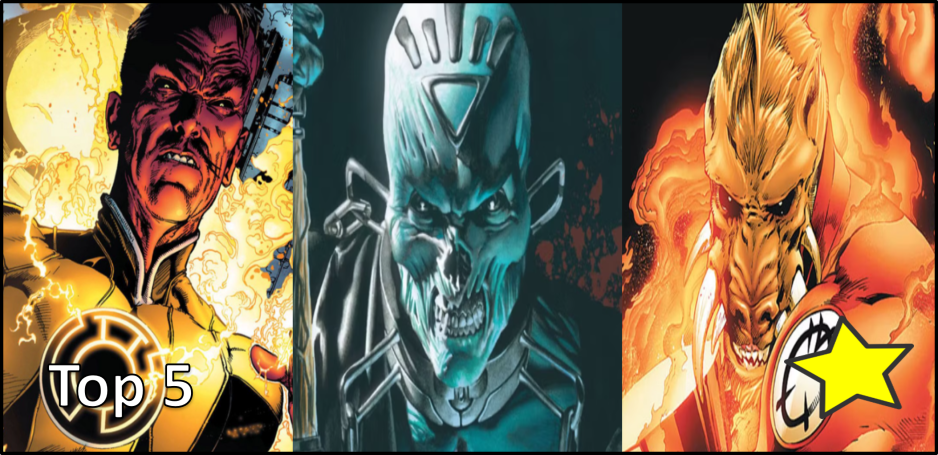
Happy Saturday, Geekly Gang! We haven’t done a Top 5 Villains list for a superhero or superhero group since Black Panther late August of last year. Looks like we’re overdue for another list, and since Lanterns is releasing on HBO Max, let’s count down the Top 5 Green Lantern Villains. Green Lantern is almost on Superman’s level in his number of overpowered villains. Heck, some of these Green Lantern villains have their own Corps of Henchmen ready to take down the Emerald Knight. Let’s see who made our list of Top 5 Green Lantern Villains.
5) Larfleeze
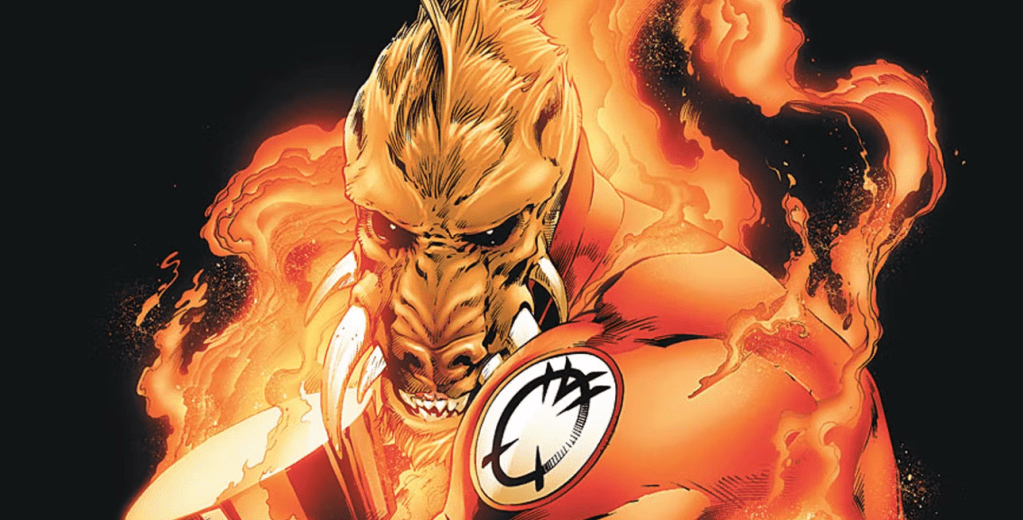
Larfleeze might not make a lot of people’s lists of Top 5 Green Lantern Villains because he’s often depicted as comic relief, but Larfleeze’s origin is anything but comical. Deep within the Vega System, Larfleeze of Okaara protects the DC Universe’s only Orange Lantern Power Battery. Fueled by greed, Larfleeze has a desire to take as much power as he can. Larfleeze would kill anyone he believed was trying to steal his Power Batter, and then copy his victims’ image, stealing their identities and have them join his Orange Corps as construct ghosts.
Larfleeze is the embodiment of greed, the emotional power that feeds orange. Under the Orange Light of Greed’s sway, Larfleeze is driven to possess everything.
4) Atrocitus
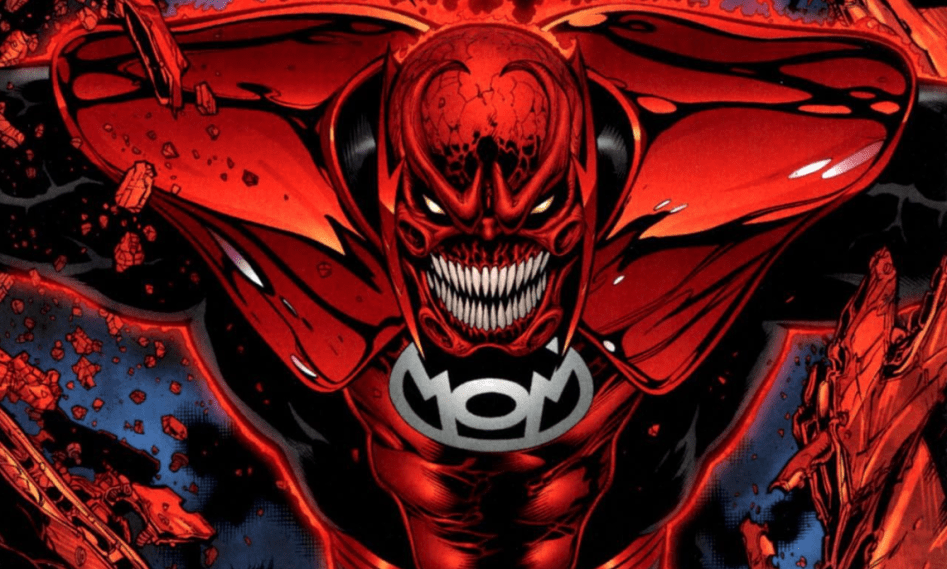
Another one of Geoff Johns’s creations, Atrocitus represents a different Lantern Corps Spectrum: Red’s Wrath. The murderous Atrocitus and his Red Lantern Corps may be the most feared force in the known, extraterrestrial DC Universe.
The Manhunters killed everyone Atrocitus knew. He became an intergalactic terrorist, wanting to kill the Guardians of the Universe. After numerous bloodthirsty missions, Atrocitus formed his Red Lantern Corps to go toe to toe with the Green Lantern Corps. At his core, Atrocitus executes an extreme form of justice. Too bad his form of justice comes with enough blood to paint the universe.
3) Nekron
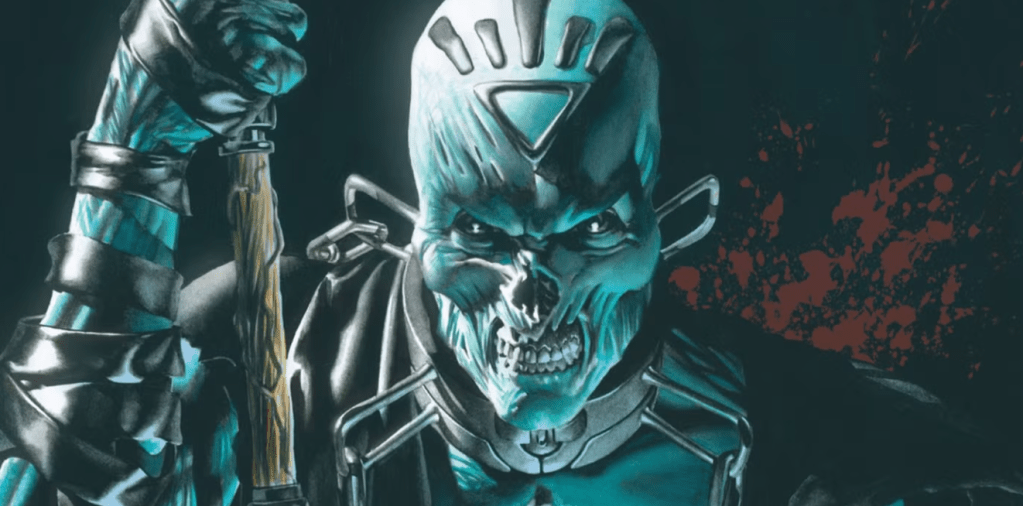
Nekron is a demon who is DC Comic’s embodiment of Death. Nekron has power over the souls of everyone who has ever died. He uses these souls to perform godlike abilities like strength, durability, and energy projection. Never content with his deathly realm, Nekron seeks control over the rest of the DC Universe.
Nekron’s right-hand agent, Black Hand, almost made this list, too. Consider Black an honorable mention for Green Lantern’s Top 5 Villains. The two of them concocted the events of “Blackest Night.” They co-created the Black Lantern Corps of death. Using the bodies of formerly dead heroes like Superman and Wonder Woman, Nekron attempted to eliminate all life.
2) Parallax
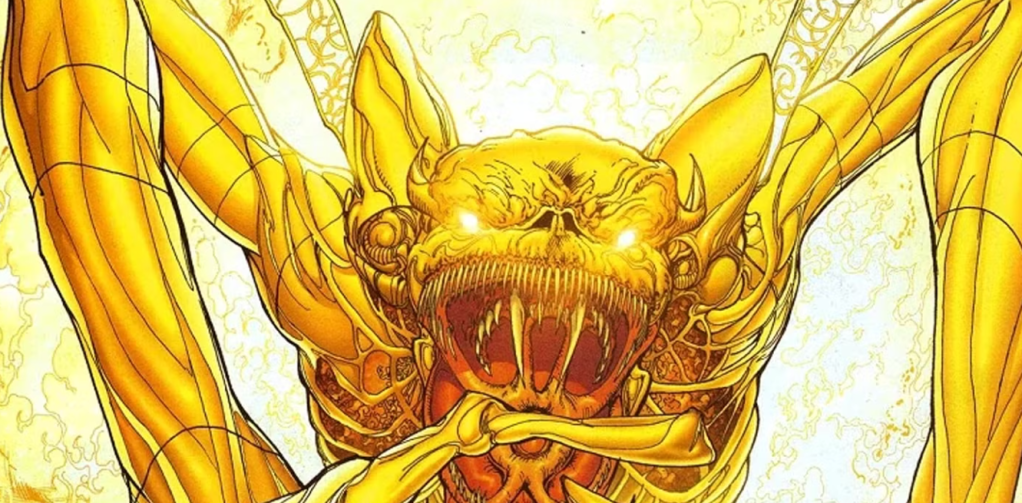
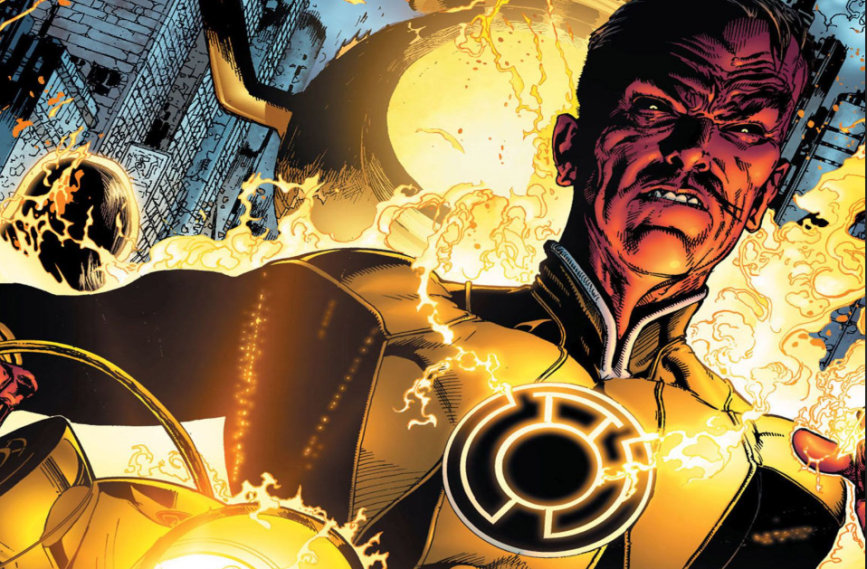
Yellow’s fear runs counter to Green’s will, so spoiler alert, our top two spots belong to Yellow’s portion of the Emotional Spectrum. Parallax is the embodiment of terror. It derives its power from the yellow light of fear, typically presenting itself as a serpentine creature that acts as a parasite in a host’s mind. The most famous instance of a Parallax infection was Hal Jordan.
That’s right. Parallax turned Hal Jordan into a villain. Jordan adopted Parallax as his villainous persona. While under Parallax’s control, Hal Jordan massacred the rest of the Green Lantern Corps and destroyed his home, Coast City. But Jordan is far from Parallax’s only vessels. It’s taken possession of heroes like Kyle Rayner and The Flash. Whenever Parallax takes control of a hero, its malevolent spirit and power turn the poor soul into one of the DC Universe’s most powerful villains.
1) Sinestro
While Parallax takes temporary control over its host, Sinestro shows how the yellow light of fear can corrupt even the greatest Green Lanterns, completely and forever. When Hal Jordan first joined the Green Lantern Corps, Thaal Sinestro was his mentor. The two developed a bond, but that bond was shattered when Hal discovered Sinestro kept his sector (of the universe) in line through tyranny.
Jordan got Sinestro booted from the Green Lantern, and the Korugarian never forgave Hal, the Green Lantern Corps, or the Guardians of the Universe. Since his dismissal, Sinestro has been one of the DC Universe’s most enduring antagonists. He’s a card-carrying member of the Legion of Doom and the founder of the Sinestro Corps, who also harnesses the yellow light of fear. While he may occasionally commit acts of valor, Sinestro’s hatred, anger, and desire for power define him. We had to go with Sinestro for the top spot. Sometimes one of a character’s original villains are the best.
There are plenty of other Green Lantern Villains we could’ve added to this list. Who would you include? Let us know in the comments. Thank you for reading, and wherever you are, I hope you’re having a great day.
Happy Wednesday, Geekly Gang! Kyra Kyle here, and today, our writers share what they’ve been listening to over the past month. Feel free to share what you’ve been listening to over the past month in the comments, because we’re all all part of the Geekly Gang. I’ll get things started with what I’ve been listening to over the past month.
Kyra’s Tunes
Fiona Apple was never afraid to be herself. Her first album had a placeholder name she thought was funny to switch from Title to Tidal. Get it? But the title–or tidal–fit. From tracks like “Criminal” to “Shadowboxer,” Tidal was a snapshot of someone finding their way in a world never created for them. Decades later, and the groove on “Criminal” still gets me. Many of the tracks are peak RnB. The industry marketed Apple as alternative rock or art pop. But her sound held way more jazz. Apple refused to be categorized. During her acceptance speech for Best Female Rock Performance at the 39th Grammy Awards, some may say she threw away her career. She dared to speak out against the industry and false image it created.
*Sexual Abuse Trigger Warner for the next paragraph*
At the time, what the public didn’t know was that Apple struggled with her self-image, especially after the “Criminal” music video. That’d be the same “Criminal” that earned her first Grammy. In the video, she was young, suggestive, and waif thin. The press wasn’t kind. They equated the character Apple portrayed in the video to her private self. During her acceptance speech, Apple spoke out against the music industry’s false images because she didn’t want someone to think of her as sexy when she suffered from an eating disorder. In interviews, Apple shared that she developed the eating disorder to look as thin as she could so she wouldn’t be attractive. So she wouldn’t be “bait” for the same type of man who raped her outside her Harlem apartment at age twelve.
*End trigger warning*
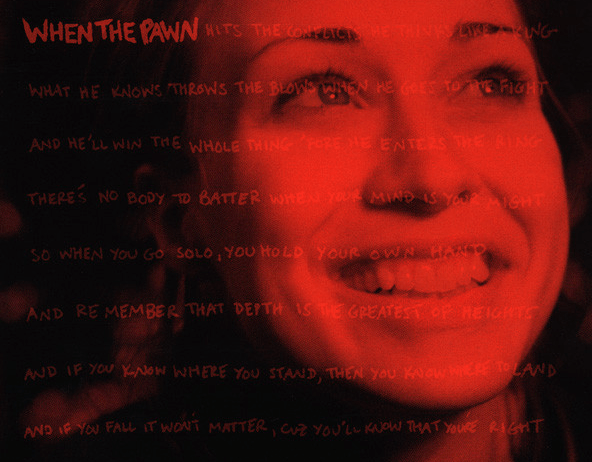
That subject is unpleasant, but unfortunately, it factors into Apple’s art. How could it not? After the media backlash, Apple remained defiant. She released her second album with a title that’s a literal 444-character poem, often shortened to When the Pawn…. She wasn’t going to be anyone’s pawn. The two singles “Paper Bag” and “Fast as You Can” are two of my favorite tracks. “Fast as You Can” features plenty of key and tempo shifts. It’s so, so good, and a shot of adrenaline. And the images within the lyrics echo what happened to a younger Fiona Apple. “Paper Bag” slows things down with cabaret flare. Seriously, I half expect Sally Bowles to belt the lyrics. And Rolling Stone must agree with me. When the Pawn… was listed as 108 of their 500 Greatest Albums List.
Fiona Apple would release an album every five or six years; her albums never lost their artistry. In fact, her fourth album The Idler Wheel earned Apple yet another Grammy Award and another spot on Rolling Stone’s 500 Greatest Albums Lists. But I’m skipping to her fifth (and as of writing this post) most recent album, 2020’s Fetch the Bolt Cutters. Bolt Cutters is a hint of what to expect. Expect nothing. Expect anything. Apple brandishes anything that can make music, even if the object is a pair of bolt cutters or her pounding a hand against her living room wall. Most of the songs on Fetch the Bolt Cutters delve deep into experimentation. The first two tracks, “I Want You to Love Me” and “Shameika” function as a great handshake to get into Fetch the Bolt Cutters. If you want something a little more dancy, start with the lead single “Shameika.” Each track proves Apple was never afraid of being herself.
One last thing about Fiona Apple before I turn the post over to Season and Skye: I love Fiona Apple’s cover of The Beatles’ “Across the Universe.” On first listen, you won’t notice too much of a difference between the two artists, but the song’s writer, John Lennon, may have something to say about that. Lennon lamented that The Beatles rushed through their recording(s) of “Across the Universe.” He wanted to rerecord the track, giving it the attention it deserved, but Lennon passed away before he ever did. Apple did the song justice.
I had another artist I wanted to share here, but I went longer with Fiona Apple than I expected. I’ll save my other artist for next month.
Well, it looks as if I’m flying solo this month with Geekly Tunes. Our other writers didn’t share any of their tunes. Hopefully, we’ll hear from them next month, but I’ll turn the conversation over to you, Geekly Gang. What have you been listening to over the past month? Let us know in the comments. Thank you for reading, and wherever you are, I hope you’re having a great day.
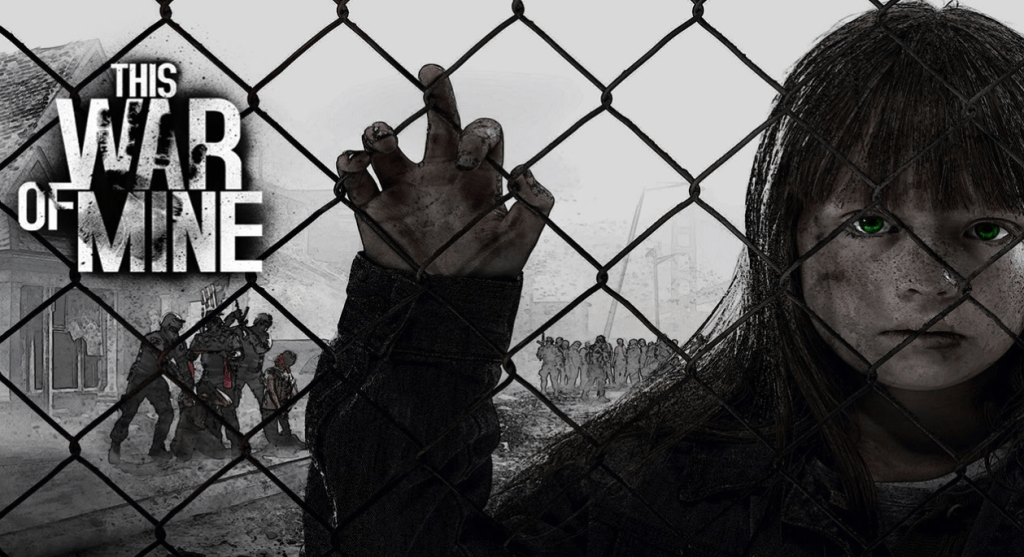
Happy Monday, Geekly Gang! We’re back with another video game review, one that’s overdue. I’ve talked about This War of Mine in various forums, even The Pixels, a few years ago, so it was only a matter of time before we, JK Geekly, would cover the video game in a review.
I love this game. This War of Mine harkens back to my days as an imagery analyst/targeteer. Typically, I’ve seen the world of This World of Mine from a top-down view. This video game made me see the people I affected from a ground level, and I love it for it. But how does This World of Mine rate against JK Geekly’s video game review criteria? Let’s find out.
Mechanisms: 8/10
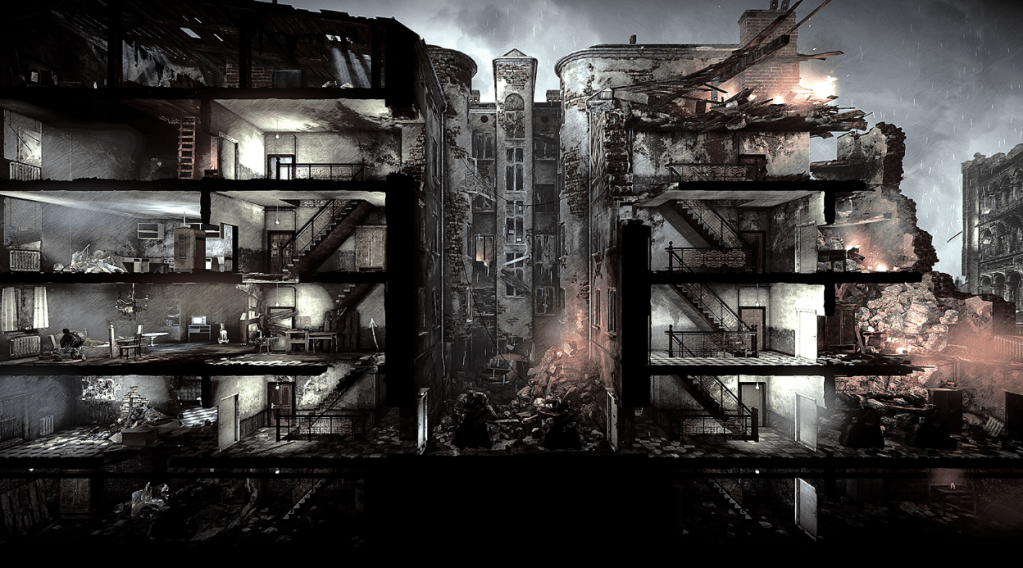
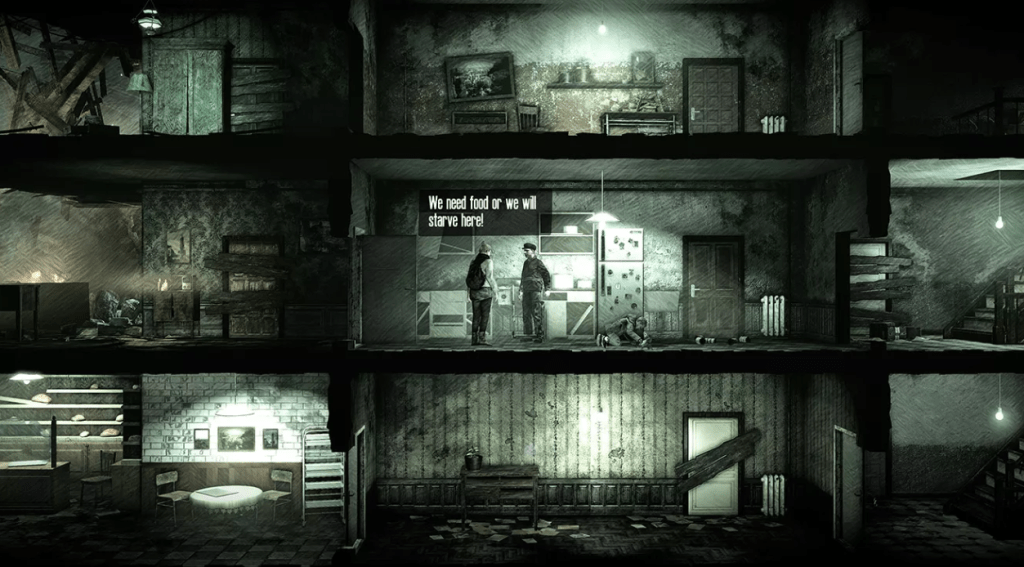
This War of Mine does a great job of balancing the various things you need to survive. Yes. This War of Mine is, first and foremost, a survival game. The denizens of your building attempt to survive the duration of a war, ripping apart this undisclosed Eastern European nation, although with hindsight, we could assign This War of Mine’s setting as Ukraine, circa 2025.
This War of Mine’s game mechanisms are a difficult category to rate. On one hand, This War of Mine offers a singular experience of rummaging through a war-torn nation, while gathering supplies. On the other hand, it uses pre-established game mechanisms to express its subject matter. I’m giving This War of Mine an eight out of ten because it does enough to subvert the typical game mechanisms of acquiring resources. This may play into This War of Mine’s story/narrative, but while the specific mechanisms one can find in this game can be found in other video games, the narrative weight these choices offer makes This War of Mine unique.
Above Image from GameDesigning.Org
Gameplay Loop: 9/10
This War of Mine is addictive. I don’t care if you’re looking through a survival game like Ark: Survival Evolved or The Survivalists, This War of Mine equals or bests these survival games, only with the experience of someone who may have to experience war overseas. Even though you could find a similar gaming experience with any number of survival games, none of them put you in the shoes of someone having to fight for their lives in a real-world scenario.
Few survival games balance the day-to-day survival with the greater good like This War of Mine. I don’t know how many times I’ve had to choose how much I intend to “steal” from an elderly couple, while gathering enough to keep my survivors alive. This War of Mine offers an odd balancing act unseen by most video games. No two plays of This War of Mine will turn out the same. That’s a strength.
Add in the Little Ones expansion, and that adds an extra layer of complexity. Few games have me replaying its core game through a different lens than This War of Mine. This game blends a tasty survival game with an empathy game. I’ve found myself making choices in This War of Mine that I think I’d never make until presented with the scenarios this game includes. This is the This War of Mines’ greatest strength.
Narrative and Storytelling: 9/10
This War of Mine offers a branching narrative that changes each time you play it. I’ve lost count many times I’ve replayed this title and see where the story takes me. This adds to This War of Mine’s narrative and storytelling. It’s a glorified “Choose Your Own Adventure” story with so many branching arcs that it’ll take multiple playthroughs to unearth each one.
Add in expansions that further explore this unnamed Eastern European nation, and This War of Mine has narratives so deep, you can spend months exploring them. But you don’t even need expansions. If you play the game on Steam, This War of Mine is host to a plethora of mods. Any one of them can shake up the gameplay, and sometimes, the story. This War of Mine offers a fertile ground to tell any number of interesting stories set against the backdrop of war.
User Interface: 7/10
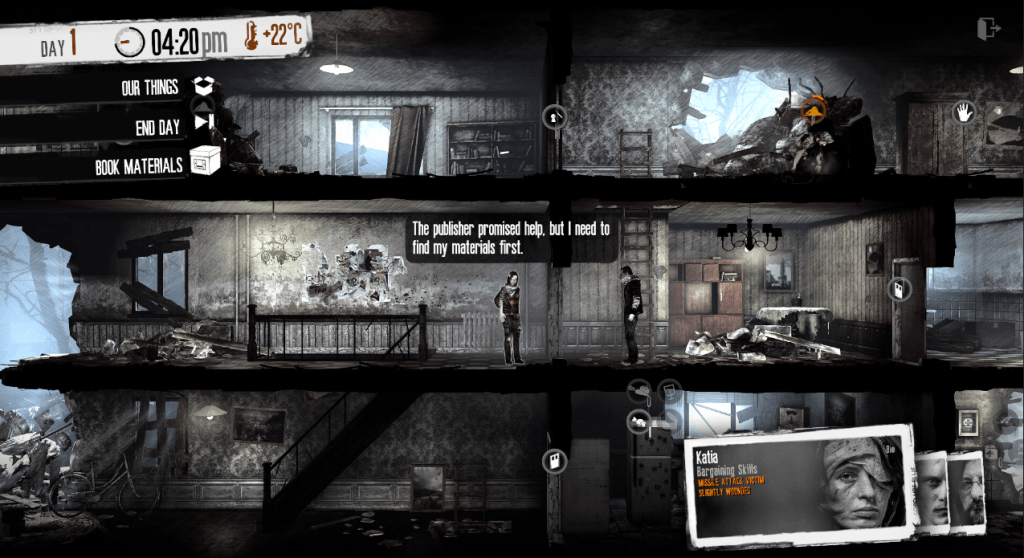
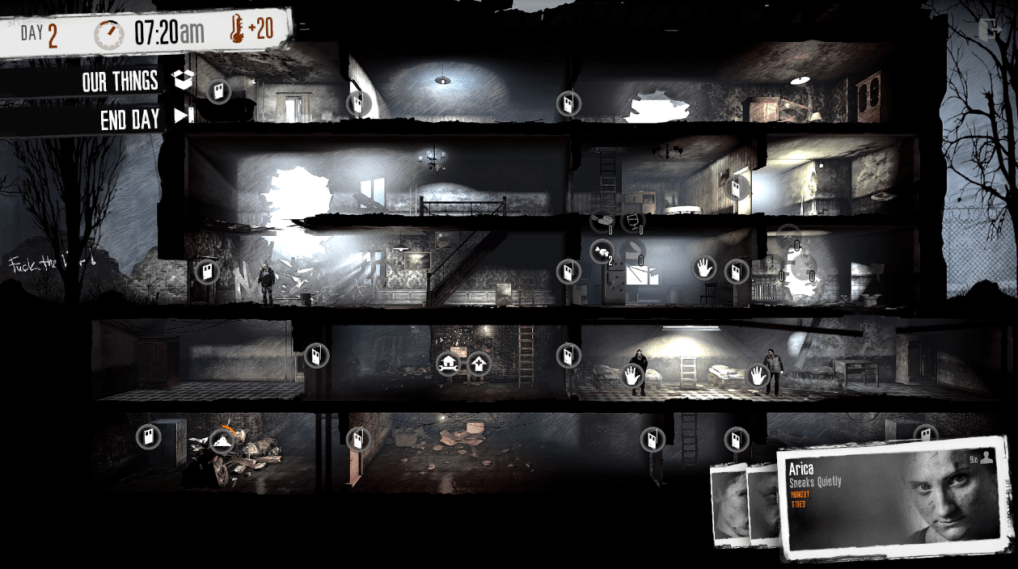
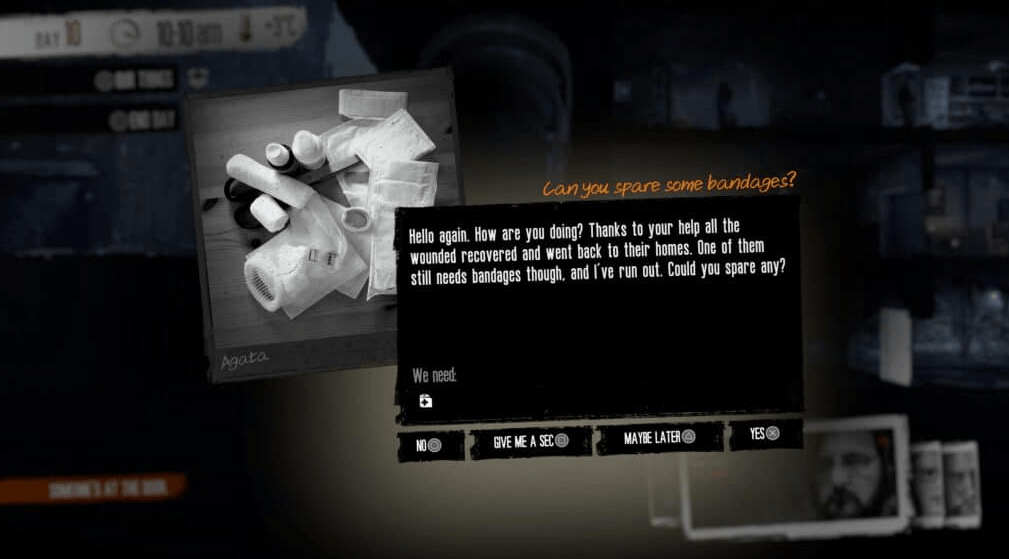
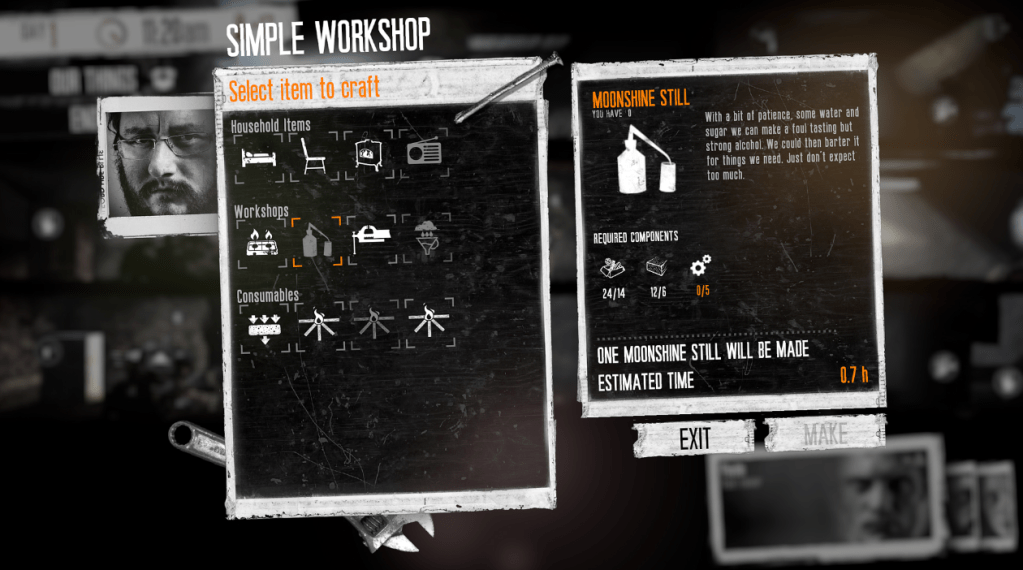
This War of Mine has plenty of menus, and for the most part, it does a great job of presenting these menus to its players. But the sheer volume makes it easy to get confused. Honestly, I’ve had to play portions of This War of Mine a second time because I didn’t understand the ramifications of my actions or choose something I didn’t want to choose from one of the game’s multiple menus and selections within selections of head’s up displays.
To be fair, it’s easy to get lost in This War of Mine’s multiple workshop (or production area) menus or dialogue exchanges or even its basic movement and interaction with the world around you. This War of Mine includes a steep learning curve, even if the game tries its best to handhold you through the early stages of that steep learning curve. Without these handholding efforts, I would give This War of Mine a below-average rating. Since the game goes out of its way to try and teach you these menus, it gains a well above average rating.
Graphics: 7/10
This War of Mine offers above-average graphics, but grading this game’s graphics does it a disservice. Even though the game is over a decade old, This War of Mine is timeless. Even during its 2014 release, This War of Mine harkened back to the past. And oddly enough, the future. Ultimately, it doesn’t matter which war This War of Mine is supposed to represent. By extension, it doesn’t matter how dated This War of Mine’s graphics become. It matters the vibe This War of Mine captures. And if we consider the vibe, This War of Mine may score above a ten.
Audio: 8/10
If you know me, you know I seldom play video games with the sound on, but I make an exception with This War of Mine. This game’s soundtrack does enough to carry me to a war-torn Eastern European nation. I challenge anyone playing this game to listen to This War of Mine’s desolation. It’s haunting.
Replay Factor: 8/10
This War of Mine has so many expansions and mods (from Steam users) that you can play and replay This War of Mine for countless hours. The only reason why I put a damper on This War of Mine’s replay factor is its subject matter. I don’t know how long gamers can play a game meant to show the horrors of war. Each person’s mileage will vary. If you’re sensitive to war, you may not play This War of Mine very long. If you’re interested in putting yourself in the shoes of someone struggling to stay alive in a war-torn nation, This War of Mine will offer thousands of hours of gameplay. This War of Mine won’t be for everyone, but I don’t think that’s the point. Step into the darker, more personal corners of war if you dare.
Aggregated Score: 8
This War of Mine may not be for everyone, and that’s okay. For those who want to explore what they might do if confronted with living in a war-torn Eastern European nation, This War of Mine offers numerous morally gray options.























 jkgeekly.com