Unpopular Opinion: Short Runs

You can never have too much of a good thing. Well, Uncle Geekly begs to differ. I haven’t done an unpopular opinion in several months and this one may sound like an idea a lot of people share, but when one breaks down what it means, it doesn’t take long to see why it’s difficult to put into practice.

Part of what makes Firefly special is the fact that it only lasted one season. It never had the opportunity to run its characters and world into the ground, or finish it’s story (I’m not so happy about that aspect), so in a round about way, I like that Fox unceremoniously dumped it after 14 episodes. To be fair, I love Firefly and wished it ended the way Breaking Bad did; tell a tight story with a defined, planned ending.

Breaking Bad knew when to call it quits and did a great job with an ending in mind years before it had a chance to lose its way. Arrow wasn’t spared this fate. The first two seasons were some of the best superhero television I’ve seen, but the next five or six seasons never could capture that magic. The only thing that stays constant for the creative process is that at some point the creative team will lose interest or run out of ideas.

It’s a balancing act of figuring out how long a television show, or other medium, this isn’t specific to just television, can remain relevant and leaving the audience wanting more, and that’s where I’ll get to some current, sacred flamingos. How many seasons does Rick and Morty have before it becomes The Simpsons or Family Guy? When will Westworld and Black Mirror lose their integrity? Have either of them already done so? Would another Souls or The Witcher video game or two cheapen the series? Okay. I believe The Witcher won’t have another entry and if it did, another one would–most likely–cheapen the series.

It’s easy to see when a series loses its way after the fact, but most Rick and Morty fans will be watching the series when it jumps the proverbial great white some time during its next eight seasons. Cartoon Network renewed Rick and Morty for eight seasons and if the show makes it that long, which I don’t think it will, there’s a greater than 86 percent chance Rick and Morty will be a shell of itself. (Note: 86 percent of all made up statistics use the number 86.) The scarcity of something can add value and the projects that know when to call it quits, or at least when to hit the pause button, can be some of the best.

What made Star Wars fans hungry for more content after Return of the Jedi was that they had to wait 16 years for The Phantom Menace. With Disney increasing the production schedule to a Star Wars movie being released every twelve to eighteen months, few people have time to anticipate the next entry of the series. The same can be said of Marvel movies. To be fair, Marvel’s production schedule is like Star Wars on steroids: three to four movies a year. Yikes! Having said all this, I wonder if I’ve done too much with this site.

Eh. Uncle Geekly isn’t that talented anyway, so there isn’t that much quality to be lost with more frequent content. What are your thoughts on this subject? The idea of short runs adding to a project, not the quality of this blog. I may pass all blog complaints to Standard Issue Star Trek Geek Jim, so he can yell at me via yodeling telegram. Let us know your thoughts in the comments.

Getting into Shōjo Anime: Some Good Starters

It sounds as if Anime Season will take a break for the foreseeable future but before she leaves for an extended Otaku O’clock, she agreed to share her list of some good starter Shōjo anime. For those of you not in the know, Shōjo roughly translates to girl and Shōnen means boy, so we’ll be trading some ninjas wielding oversized swords for romance and slice of life stories with this list. Take it away, Anime Season.

My other write ups tend to explore Shōnen anime more than Shōjo anime. Shōjo isn’t a genre I watch as frequently but the following series are accessible in most legal streaming services (because, you know, Japan is cracking the whip on those illegal services, man).

FruitsBasket01

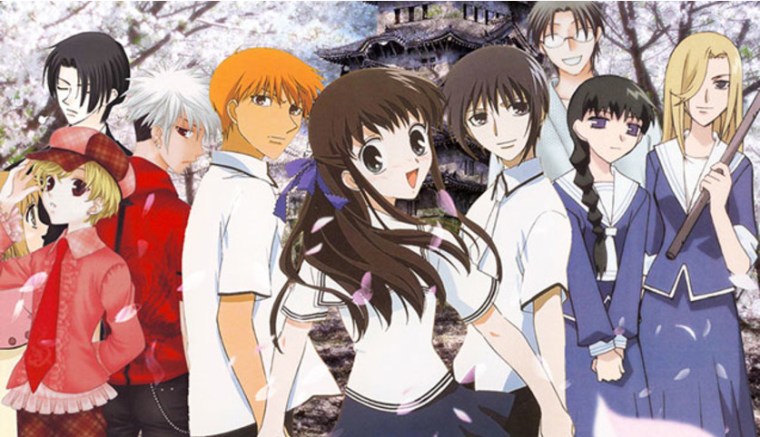
Fruits Basket (2001-2003)

When it comes to starter Shōjo anime, Fruits Basket was one of the first ones I thought of. It has the basic Shōjo structure: Girl must live with—or near—a bunch of guys for plot related reasons, girl befriends the guys and doesn’t want to leave them, and a love triangle ensues. This structure sets up romance that most Shōjo series are known for.

However, in the case of Fruits Basket, there is a strange element that sets it apart from other Shōjo anime. I’ll spare the details since it’s included in every synopsis one can find about Fruits Basket. Since a lot of Shōjo have that romance structure there are some that added in an extra element to make themselves more unique. Fruits Basket incorporates the Chinese Zodiac, teaching viewers what each Zodiac is and encouraging them to learn more about it. It’s also pretty accessible and can be found through multiple streaming services. It’s easy to get into and helps one get accustomed to the Shōjo genre.

Fruits Basket has a straightforward story and continuity. For those who are just getting into anime and want to explore the Shōjo genre, Fruits Basket is one I’d recommend.

MyLoveStory

My Love Story!!/Ore Monogatari!! (2015)

If one is interested in cute plots featuring role reversal, My Love Story!! is a good start. It has an easy-to-follow storyline featuring the stereotypical best friend character in Shōjo anime as the lead. The main character Takeo wants focuses on getting a girlfriend, but none of the girls like him. His best friend Makoto has zero interest in girls, but every girl falls for him. Forget girls. Makoto has zero interest in anything. I don’t know how many times I’ve wanted to smack that bored look off his face.

Eventually, Gōda finds a girlfriend, Rinko Yamato, and a series of events follow. Gōda performs chivalrous acts and Rinko’s friends don’t approve of him because of his looks. The story is full of cute character moments (such as Rinko baking sweets for Gōda and him gushing over her baking) and takes the time developing each character. I’d recommend it for those looking for something that has a simplistic structure and good storyline.

RevolutionaryGirlUtena

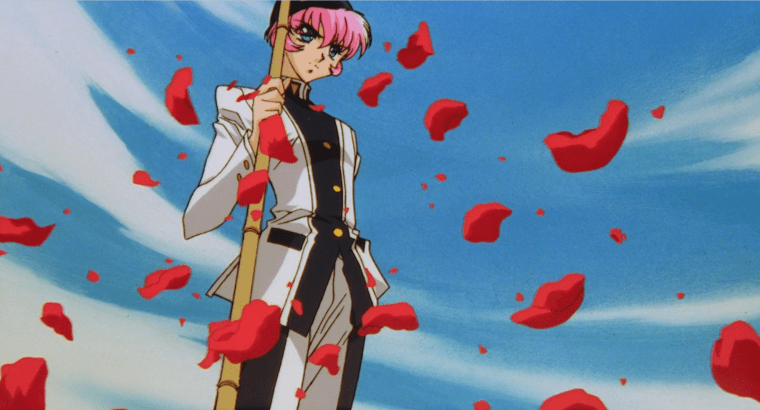
Revolutionary Girl Utena/Shojo kakumei Utena (1997)

Who wants to be a prince? In the case of Utena Tenjō, that’s all she’s dreamed about since she was rescued by a prince at age eight. Eventually, she joins Ohtori Academy where she gets into the Dueling Game (challenges to possess the Rose Bride—Anthy—to “revolutionize the world”). Throughout the series Utena duels to protect Anthy while making friends along the way.

This series is a blend of Shōjo and Shōnen elements (such as the action scenes and the protagonist rising to be the strongest character). The series focuses on Utena’s nobility and features her aiding other characters. It has good character development and isn’t too long, spanning thirty-nine episodes. If nothing else, Revolutionary Girl Utena is worth the watch since it features a strong female protagonist who beats all the guys. I’d recommend it not only for those looking into the Shōjo genre but for those who enjoy strong female progatonists.


Final Thoughts

Not only are Fruits Basket, My Love Story!!, and Revolutionary Girl Utena great for those who are just getting into the Shōjo genre, but they’re rewatchable. I’ve found myself turning on Fruits Basket in the background on my tube TV I had mounted on a metal folding chair while doing my freshman science homework. Maybe that was more than you needed to know about my high school life.

Know of any other good Shōjo starter anime? Let us know in the comments.

3 Lists of 3 Anime: Take 1

Your uncle Geekly may not be Anime Season, but he’s spent some time watching anime over the years and it may be time to share some anime for people who don’t watch anime and want to know where to begin. This may become a series of 3 Lists of 3, but it’ll differ somewhat from our typical For Starters series. A) I won’t go into too much detail, but I may break this rule on more than one occasion. B) I also want to take genres that people may be familiar with and share a few titles that could match one’s interests. Anime has a massive range of genres and subgenres and one can get lost trying to find something one likes. Think of this series of lists as if you like “fill-in-the-blank,” you may also like this title.

Disclaimer: Uncle Geekly refuses to take responsibility if you don’t like a series on one of these lists, even if you like the genre. Direct all complaints to the comments.

Superheroes

Superhero TV shows and movies dominate. Superhero novels—not graphic novels or comic books, but actual novels—infiltrate book stores, so this is a good place to start with this 3 List of 3.
MyHeroAcademia

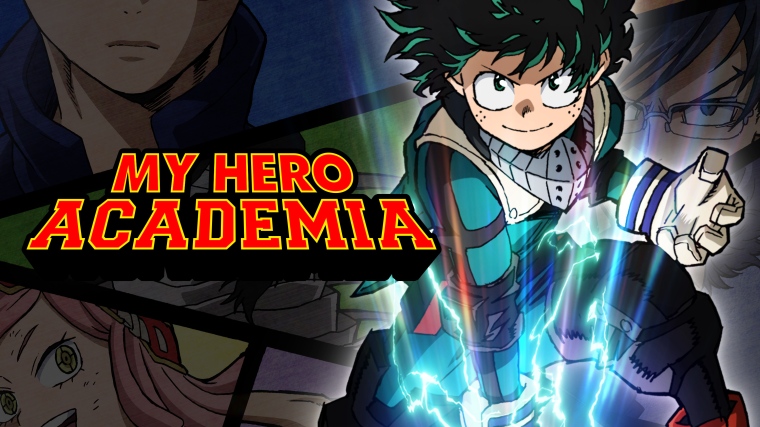
My Hero Academia

On the surface My Hero Academia looks like standard superhero fare, but it takes an interesting turn or two and it holds a special cultural significance that few anime in any of these lists possess (more on that in a bit).

The superheroes of My Hero Academia have government and/or corporate sponsors. While I’ve seen government sponsored hero work in western superhero stories, I haven’t seen as many corporations backing superhero work. The inclusion of a capitalistic view on superheroes results in different motivations for each character. Some detest the commercialization of superhero work and push back, while others are only in it for the money. Viewers are sure to find a character, or two, they can relate to. There are even some heroes who only go into the business because of a family legacy or their families force them into the business.

The cultural significance comes in the form of taking risks or overcoming risk aversion. A lot of Japan is risk averse. For every great quote like Miyamoto’s “A delayed game is eventually good, a rushed game is bad forever” there are ones like the anonymous Nintendo executive’s “I only like to take risks if I know I’ll succeed.” If you know you’ll succeed, you’re not taking a risk. My Hero Academia’s main character Midoriya is the least likely superhero and must take risks. This series shows that it’s okay to take risks. It’s even okay to take a risk and fail; it’s what you do after a failure that defines who you are. Midoriya always gets back up—eventually—and younger Japanese generations are taking this lesson to heart.
OnePunchMan

One Punch Man

I struggled with putting One Punch Man on this list. It toes the line between parody and satire. On one hand, it’s the anime equivalent of the 1990s animated Tick. There are so many references to anime tropes and inside jokes that new anime viewers may not catch half of them. On the other hand, it takes a critical look at the all-powerful superhero and how lonely and boring their life must be if they’re never challenged—kind of an earthlier version of Watchmen’s Dr. Manhattan. Does a lack of a struggle lead to apathy?

As the title implies main character Saitama can beat anyone with one punch. The superheroes in this title are government sponsored—yay, that again—and they obtain rank through a government program. Despite being able to beat enemies with one punch, Saitama is a lower rank than most other heroes. Effort goes a long way and Saitama views fighting as a bore.

No one can beat Saitama, and how did he obtain this power? A daily routine of 100 push-ups, 100 sit-ups, 100 squats, and a 10KM run (which is a little under six and a quarter miles). That’s a good to great daily workout, but it hardly explains why he can beat people with a single punch. It’s hilarious and it does little to explain his hair loss (I’d like to know how to avoid that, asking for a friend), but it also shows how little Saitama exerts himself to achieve his goal of becoming a superhero. He possesses natural ability and it begs the question if one doesn’t have to struggle to obtain a goal, is the goal worthwhile?

But hey, One Punch Man is hilarious. Having a supervillain monologue for five minutes only to have Saitama take him down with one punch is great to watch, even if he can do it every time.

Claymore

Claymore

Claymore is the one title in this list of 3 that won’t be for everyone. To be fair, most if not all the anime on these lists won’t be for everyone, but Claymore caters to a very specific comic book fan. Here’s looking at you, Buffy, Blade, and Morbius the Living Vampire fan boys and girls.

The titular claymores fight yoma, who are shape-shifting beings akin to ogres that feed on human flesh and blood. Claymores are only female and are created by cutting open these young women and implanting them with the flesh of another claymore or the flesh of a yoma. This horrifying process conjures a lot of images and can lead to plenty of interpretations. I won’t share mine here, but after you’ve seen the process of making a claymore, you’ll have a reaction.

The Claymore series follows Clare, the newest and lowest member of the group, as she travels from town to town fighting yoma. As she uncovers more of the mysteries surrounding the Organization (the ones behind the claymores), she becomes less inclined to follow this path. Of all the main characters from the anime in this list, Clare is the most reluctant hero. If that’s something that interests you, you should give Claymore a try. Claymore also does a great job of depicting a hero who partly becomes that which they hate and in turn, how that choice causes them to question with their own humanity.

Heroman_StanLee

Heroman

I’m cheating here a little bit, but I had to include Heroman as an honorable mention in this list because it was co-created by the late, great Stan Lee and features Stan Lee in anime form. We need more anime Stan Lee.

Firefly Fans

I’m amazed by how many anime could fill the void left by Firefly. In fact, Firefly borrows more than a little from some of these anime. Firefly can trace some of its influences back to at least a couple of the anime on this upcoming list—particularly the first two that came out five to seven years prior—so if a single season, one movie, and a few comic book series aren’t enough Firefly for you, you should try one or two of the following anime.

CowboyBebop01

Cowboy Bebop

Cowboy Bebop had to make this list. Spike and company avoid the inner planets’ predominant government and travel the edge of the universe, collecting bounties. Along the way they befriend fugitives with hearts of gold and build their own makeshift family. Yep. That’s pretty much the Firefly formula, and Cowboy Bebop doesn’t take itself too seriously to boot.

Cowboy Bebop is one of the most respected anime of all time and a lot of that comes from series director and creator Shinichirō Watanabe beginning his writing process with the characters. Watanabe wanted the series to be character-driven and he had a definitive ending for Cowboy Bebop early on, citing that he didn’t want Cowboy Bebop to be like Star Trek, something he’d be tied with doing for the rest of his life.

Sometimes the best things in life are finite. The rarer something is the more valuable it becomes and speaking of rare, Cowboy Bebop is in rarified air. Each episode plays like its own mini-movie and that was another concept adopted by Joss Whedon’s Firefly.

OutlawStar01

Outlaw Star

Outlaw Star never received the critical or commercial success of Cowboy Bebop because it didn’t do enough to break away from a few clichés, but it’s still a series with some excellent moments and a good fit for folks who can’t get enough Firefly.

Again, we have a ship of misfits traveling the edges of the universe and avoiding the chaotic law of four governments, but this time the governments are weak, at best, and at war. Captain Gene and company must take on odd jobs to fund the ridiculous maintenance costs of the titular Outlaw Star spaceship. This, again, tracks with Firefly.

A bio-android Melfina is the only being capable of interfacing with the ship, but her past is shrouded in mystery, she doesn’t know why she exists, besides to pilot the Outlaw Star, and she has fragmented memories that reveal that she does have a higher purpose and greater abilities. Melfina’s character is like River Tam’s as she looks as if she’s 18, acts like she’s a young child, and the first Outlaw Star captain steals her away from one of the governments—that had bigger plans for her—in an oversized suitcase. Yep. That is, for the most part, River’s backstory, except she’s not an android—or is she?.

But that may be where the similarities end. Captain Gene resembles Captain Kirk if Kirk suffered from space sickness. Seriously, he sleeps with any alien with appropriate parts, but he must use a barf bag each time the Outlaw Star launches. That must be one of my favorite Outlaw Star ongoing gags, but Outlaw Star succumbs to these gags and that may be the chief reason it doesn’t get as much love. It’s not a long series and worth a try.

SpaceDandy01

Space Dandy

The anime in this list have gone from serious with a touch of comedy to comedy with few serious themes. Space Dandy is first and foremost a parody of Firefly and other sci-fi shows. The titular Dandy, an alien bounty hunter who is “a dandy guy in space” explores the universe for rare aliens, so Space Dandy shares a lot with Star Trek if the crew of the USS Enterprise were imbeciles. Dandy and his crew (his robot assistant QT and feline-like friend Meow) have the best intentions, but they’re dimwitted and often make situations worse.

Space Dandy has loose continuity at best, since many episodes will feature Dandy, QT, and Meow getting trapped in another dimension or turned into zombies, only to see them back to normal the next episode with little to no explanation. There are plenty of references to older science fiction properties as well as ones for internet culture. Be ready for some dank Space Dandy memes, dudes.

Cyberpunk

Cyberpunk dominated the small and big screens in the 80s and 90s with Total Recall, Blade Runner, and 12 Monkeys to name a few. The subgenre slithered its way to Japan, resulting in cyberpunk as one of anime’s favorite subgenres. Me thinks there will be more than three to this list.

GhostInTheShell01

Ghost in the Shell

I had to start with this one. Major is the face of anime cyberpunk. Set in the future and blessed with high technology where cybernetic bodies (shells) become the norm the world of Ghost in the Shell still suffers from rising crime rates, and a new type of crime—cyber warfare—is given birth. Yes. Ghost in the Shell warned against cyber warfare before it was cool. Elusive hacktivist Puppet Master leads the Security Police Section 9 (the unit Major works for) into a corrupt political and corporate underbelly.

Stunning animation aside, Ghost in the Shell explores self-identity and procreation by means of mechanical replication. It shines a light on a society that prioritizes technological advancement without considering social issues. Some of these issues haunt Japan today. In Japan, there is a growing concern that some would rather reproduce by means of androids or pleasure themselves with robots instead of propagating the species. Japan’s recent population decline further fuels these concerns.

Ghost in the Shell is not only one of the greatest anime of all time, it’s a great science fiction experience and a great place to start for cyberpunk fans. Even though the series are great, I’d start with the original film.

Akira01

Akira

Akira is another quintessential cyberpunk anime. Based in a 2019 dystopian Neo-Tokyo, Akira follows a teenage biker Tetsuo and his biker gang leader Shotaro Kaneda. Tetsuo’s psychic abilities may flirt with fantasy, but Akira’s setting and themes scream cyberpunk. Gang warfare and social inequality based on technological advancement abound.

Even non-anime fans know of Akira. This 90s anime phenomena raised the West’s awareness of the artform, and Akira has influenced a lot of live action movies outside of Japan that include The Matrix and Stranger Things. Tetsuo does have killer psychic abilities after all.

BubblegumCrisis01

The Bubblegum Universe

The Bubblegum Universe (Bubblegum Crisis, A.D. Police Files, Bubblegum Crisis Tokyo 2040, and Parasite Dolls) ran off and on between 1987 and 2003, so it predates the other two entries—so far—on the cyberpunk anime list. Bubblegum Crisis is perhaps the best and most well-known of this bunch and it tells the story of an all-female group of mercenaries the Knight Sabers powered by exoskeletons. They fight rogue robots and if Iron Man is the Elvis of high-tech exoskeletons, the ladies of Bubblegum Crisis are the Ramones. Hey. Ho. Let’s go.

Bubblegum Crisis blends cyberpunk with a crime drama and even adds a splash of superheroes for good measure. It’s also one of the most visually stunning anime of the 80s. While cyberpunk tends to lean toward the dark and grim, the Knight Sabers and AD Police give it a positive spin.

Psycho-Pass01

Psycho-Pass

I told you that I’d sneak in another one on this list. Psycho-Pass is essentially Minority Report if the police used brain scans to determine whether someone will commit a crime or not instead of precognition. That said, Japan becomes one of the safest countries, but they give up some personal liberties in order to institute the Sybil system (the same system that determines if you can commit a crime), but the Sybil system can be manipulated and often is. Psycho-Pass shows a society where the needs of the many outweigh the needs of the individual and presents a world where people are more likely to die from stress than criminal activity.

I know that I said I would stop with three, but there are too many great anime out there, especially cyberpunk anime, and at least I didn’t mention Battle Angel Alita—except that I just did and you should watch Battle Angel Alita before thinking about watching the Alita movie. The anime only ran for two episodes and it’s another great example of how society breaks down as a consequence of technological advances. A future where the have-nots must rummage through the refuse of the haves. Okay. I’m done; I promise.

BattleAngelAlita01

I hope there are plenty of anime in these lists for you try out. If Uncle Geekly got something wrong, I’m sure you’ll let me know in the comments.

Death Note: The Anime is Better Than the Manga

Is there snow in forecast or is it Anime Season? I’m sure our resident anime/manga geek Season appreciates the joke at her name’s expense. She’s going to break down why the Death Note anime is better than the manga. Take it away, Anime Season.

Usually, it’s the other way around, right? The manga typically doesn’t include huge filler arcs and has a more consistent flow than the anime. Typically. In the case of Death Note, not only does the format in which it’s presented in the anime suit it better, the ending has a more accurate depiction of a certain character in the anime than the manga. Spoiler alert. Let’s get started.

The first issue with the Death Note manga is the type of storytelling Ohba is presenting. Death Note is a detective story with supernatural elements and is dialogue heavy. I mean very dialogue heavy. Page after page of the Death Note manga contains blocks of text as each of the characters expresses their thoughts. This doesn’t allow for good flow in the manga since it’s easy to zone out in the sea of text. I had to go back on several occasions just to appreciate the artwork (which Obata did an amazing job of). In Death Note 13: How to Read, Ohba states that he cut down on a lot of the text. Dude, what did you originally have? Never mind. I don’t want to know.

DeathNote03

As far as the anime goes with the dialogue, that much of it is fine. As a viewer, one doesn’t have to read the text (unless you’re watching it subbed) and can just listen and watch the characters’ reactions. Since it’s animated in this format, even if the characters talk a lot, they’re also moving and doing other things. For instance, L is always stacking or making something out of, say, coffee creamer pods, while he talks. This keeps the viewer engaged while progressing the story. The manga does show this, but since it’s depicted in a panel and the reader is focused on what L is saying, it gets lost. There is a segment in the manga (I believe it’s in volume 11—don’t quote me on that) that has several panels of pictures, showing what each of the characters is doing. More of that should have been included.

My second point contains major spoilers. Read at your own discretion. The ending in the anime made way more sense than the ending in the manga. For those who have seen Death Note in both formats and disagree with me, hear me out. In the anime, Light runs away, wounded, and collapses on a staircase in a warehouse, with Ryuk writing Light’s name down in his Death Note, killing him. In the manga, Light has a panic attack after getting shot several times and begs Ryuk to save him. Ryuk still writes Light’s name down in his Death Note and kills him. Ryuk killing Light was foreshadowed in both the manga and anime versions, so that was fine. Light freaking out in the manga and begging Ryuk for his life was not. That isn’t Light’s character. In Death Note 13: How to Read, Obata states that he wanted to express all of Light’s pent up emotions in one huge psychological breakdown. Basically, he wanted to draw Light in anguish just because he could. Again. That isn’t Light’s character.

DeathNote02

A cult dedicated to Light (Kira) was also shown at the tail end of the manga. Why? I can understand that people still worship his ideals, but this makes it look like there’s going to be a part two to the story. I don’t think there will be twelve years after the final volume was published, but this is unnecessary. This is something the reader can infer based on the general public’s reception to Light throughout the series.

I’d recommend the Death Note anime over the manga, but that doesn’t mean the manga is horrible. I don’t think the Death Note concept suits the manga as well as it does the anime. For those who have seen the anime and are looking for something to read the manga will definitely keep you occupied for a while.

Did we miss anything? Do you agree with our arguments? Do you prefer the Death Note anime or the manga? Let us know in the comments.
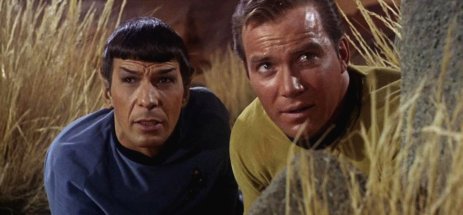
The Orville, Discovery, Neither, or Both?

Standard Issue Star Trek Geek Jim came back with another Trek article, but he insists it isn’t a Trek article. The Orville isn’t exactly Star Trek—or it is. I may have to watch these shows and find out what he means. Fortunately for those of us who haven’t purchased the CBS App, Jim has consumed these shows and is willing to share his thoughts. Enjoy.

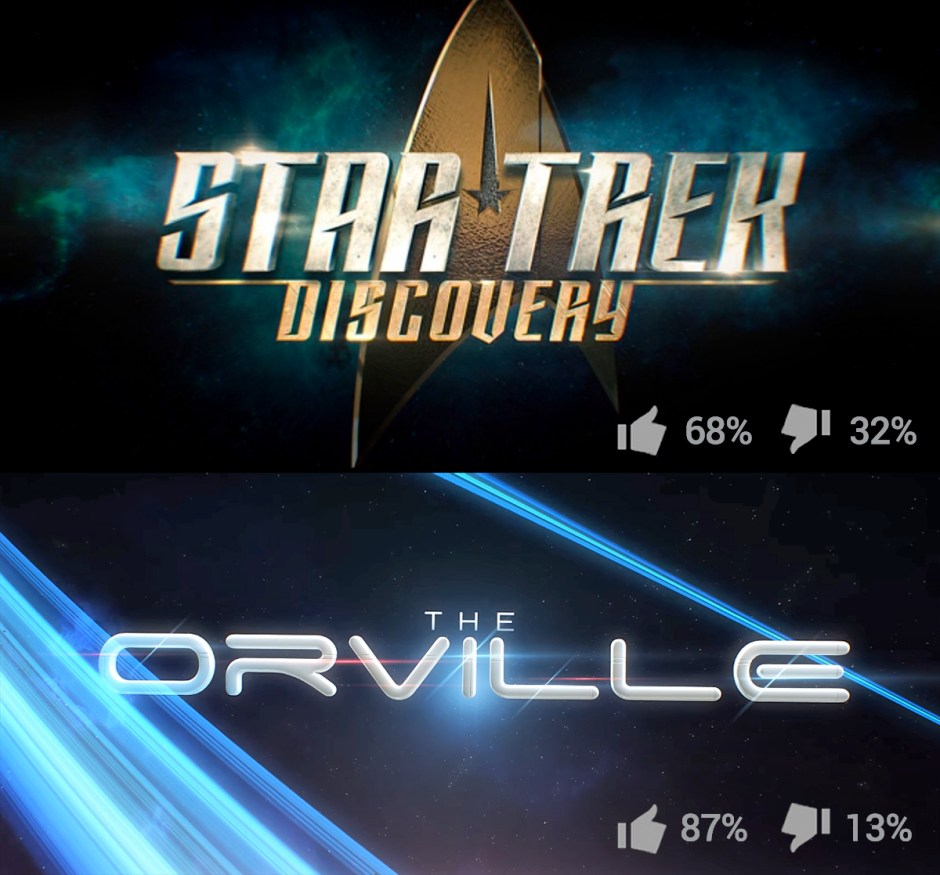
If the headline drew you in, then you must have seen it, the Keyboard Commandos arguing that The Orville is the only “real Trek” on TV today, or Star Trek: Discovery’s backers denouncing The Orville as frat-boy humor for bitter Trek fans who never understood Gene Roddenberry’s vision to begin with. Both shows are well into their second seasons by now, and I’ve recently caught up with both, so I wanted to take a moment to stop and look at each show, get into what’s working and what’s not.

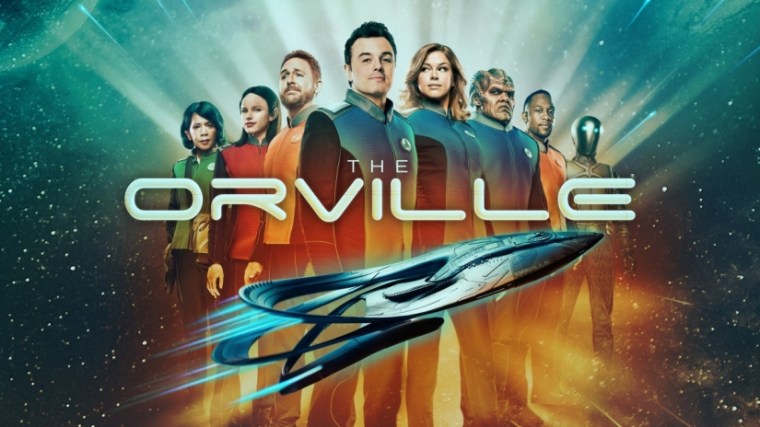
TheOrville.jpg

The Orville: What’s Going Wrong?

Any show, in fact, any story, is about its characters. What happens is never as important as who it’s supposed to be happening to. The Orville offers some quality characters, and in the spirit of Star Trek, it puts them in not just physical jeopardy, but in ethical dilemmas that are sometimes hard for the viewer to reconcile. This, in and of itself, is a good thing, but legitimate criticism is due when those dilemmas don’t result in any noticeable changes to the characters involved. For example, not nearly as much has been made of the decision to change an infant’s gender at birth, in compliance with alien cultural practices, as the fact that Captain Mercer still pines for his ex-wife. This makes understanding the stakes on a week to week basis rather difficult and can be disengaging for an audience.

TheOrville02

The Orville: What’s Going Right?

Contrary to what I’d expected, this show is not a Star Trek spoof. I say that because it isn’t a show that makes fun of itself. They don’t mock the thought of an idealized future for humanity. They don’t poke fun at the concept of an interplanetary alliance. The jokes in the show tend to be situational, as in snarky comments about given situations. Failing that, the humor comes from the quirky personalities of ship’s crew. The charge that The Orville showcases “frat boy” humor is, I think, more the result of an unfair comparison. Star Trek is a franchise that takes itself quite seriously. Jokes in the original series were almost completely limited to nothing more than a wry quip that might earn a moment’s side-eye under the arched brow of a stoic vulcan. In later Trek, Data offered some light-hearted moments as he read poetry or pet his cat, but the show never aimed too hard at making anyone laugh. Next to these, it’s not hard for anything meant to be funny to look juvenile. In this way, McFarlane’s show writes a love letter Star Trek without trying to be Star Trek.

Let’s talk about the other one, shall we?

ZacharyQuintoSpock_StarTrekDiscovery

Star Trek: Discovery: What’s Going Wrong?

I’m going to get some obvious points out the way. These are my primary objections to the show, and they’re far more about decisions made at the outset than anything any one episode has chosen to do. First, and I’ve said this before, having a show that depicts a utopian humanity that has conquered poverty and scarcity set behind a pay-wall is horrible. CBS should be airing this series on its network, and they’re insulting the material, and hurting its ratings by not doing so. Second, I am bored to death and beyond with prequels. Trek fans have been pining for a look at the post-Dominion War federation for years now. We’ve already gone back to Starfleet’s humble origins with Star Trek: Enterprise, and I believe audiences may well feel that anything that hasn’t been mentioned in fifty years of Trek before now, must not be all that interesting a part of the story. How can it be? It needs to either fit neatly into established canon, or ignore established canon.  The season-one premise of offering audiences a look at the Federation in wartime is nothing new. Remember what I just said about The Dominion War? We’ve seen Starfleet at war. It was in Deep Space Nine, and those were some of the best episodes the franchise has ever produced, but it’s done. Lastly, making Michael Burnham Spock’s foster sister and dragging Sarek into the story undermines the show even more. It’s one thing for Captain Janeway to namedrop Picard, or for Torres to namedrop Data. It’s fine that Deep Space Nine begins with an uncomfortable meeting between Picard and Sisko in the aftermath of the battle at Wolf 359. None of those characters, Janeway or Sisko, leaned on Picard to make them interesting. Likewise, Picard was interesting before he met Kirk in the Nexus. There’s nothing about Burnham that means she can’t be an interesting character who can carry a show on her own, but by making Sarek (and now also Spock) recurring figures so early in the series, she’s not being given a chance to forge her own identity. She’s borrowing one from them. I could redouble this argument with a criticism about making Captain Pike the new captain of the U.S.S. Discovery, but it’s something that bothers me for a lot of the reasons I’ve already mentioned.

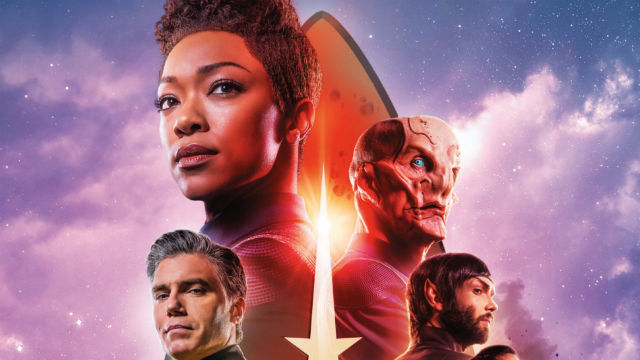
StarTrekDiscovery2

Star Trek: Discovery: What’s Going Right?

The “What’s Going Wrong” section of this write-up looks disproportionately long. I realize that, but when you discount the fact that the paywall and the setting as a prequel were always going to be points against it for me, the damage really isn’t all that bad. One of the common internet gripes about this show is its heavy-handed agenda, but let’s be honest. Star Trek has always had a heavy-handed agenda. In the interest of fairness, some people may be reacting to the feeling that politics are permeating everything nowadays. It’s become inescapable, and I find it exhausting in so much other media, but Star Trek has never been a place to go to escape social, ethical, or philosophical discussion. The fact that Discovery engages in this is probably the way in which it is truest to the spirit of the franchise. If you were to strip any Trek series of its social, political, and philosophical agendas, you’d be left with phaser battles and ship explosions to carry the series, which interestingly enough, leads to another complaint people make about Discovery. It’s too action-focused. I don’t agree here either. As I said, any Trek series features combat (which makes their claim of Starfleet not being a military outfit silly), but in the past, the limitations of television budget and special effects have hindered their ability to make the battle scenes impressive. With Netflix footing the bill for Discovery’s first season, the producers were able to add a lot of polish that fans of the franchise just aren’t used to seeing. That doesn’t mean the violence underneath that polish is anything new. So if you have a problem with agendas, and action sequences, why watch any Star Trek series? Without both of those, you don’t have much more than William Shatner or Jonathan Frakes making bedroom eyes at women in bodypaint and forehead prosthetics.

TheOrville_And_StarTrekDiscovery

So Which One Works?

They both work. I truly enjoy both shows so far. Neither is perfect, and I hope to see each improve, but as is the case with so much media in Geekdom these days, I wish people could enjoy these for what they are. Neither needs to be bad for the other to be good. You don’t have to like each for the same reasons, because they don’t offer the same things. They aren’t trying to. If The Orville took itself too seriously, it would be a shameless ripoff. If it didn’t pick a demographic to target, it would fail because nothing is all that funny to everyone. If Discovery didn’t deviate from past series, it would have no chance to add something new to the franchise. Because it’s playing to a modern crowd, it stands to draw new fans who may end up deciding to go back and watch what came before it, gaining new attention for the older shows and ensuring what Kirk, Picard, Sisko, Janeway, and Archer had to say won’t dissolve into obscurity as their audiences age out. We’re fans of science fiction. New shows keep science fiction thriving. Let’s be glad about that.

3 Lists of 3 Star Trek: The Original Series

Jim handed me two Star Trek 3 Lists of 3 last month and somehow I only posted one of them. My bad. I don’t have a whip on hand, so I may have to flagellate myself with my back scratcher.

Thanks for the Trek article, Standard Issue Star Trek Geek Jim.

In my last Star Trek article, I listed The Next Generation and Deep Space Nine ahead of The Original Series. Lest some of our readers take that as a knock on The Original Series, I want now to give credit where it’s due and explore some of what makes TOS special.

Things to Love about Star Trek: The Original Series

startrek_optimism

Optimism

Each Star Trek series reflects its time in a certain way. Now, with everything happening in our twenty-four-hour-news world, it seems the product of that is post-apocalyptic and dystopian fiction. In the 1960s, we faces race riots, the Vietnam War, and the threat of mutually assured destruction with the USSR. Somehow, Star Trek managed to imagine a future that had taken all of that and persevered onto better things. I know, in Trek canon, there is an apocalyptic war, but we survive it and we prosper.

startrek_uhura

Diversity

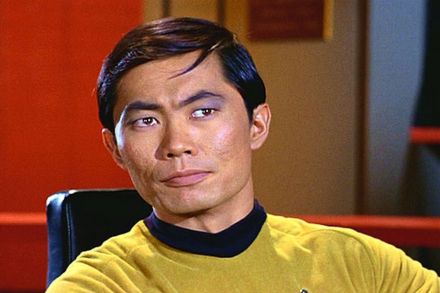
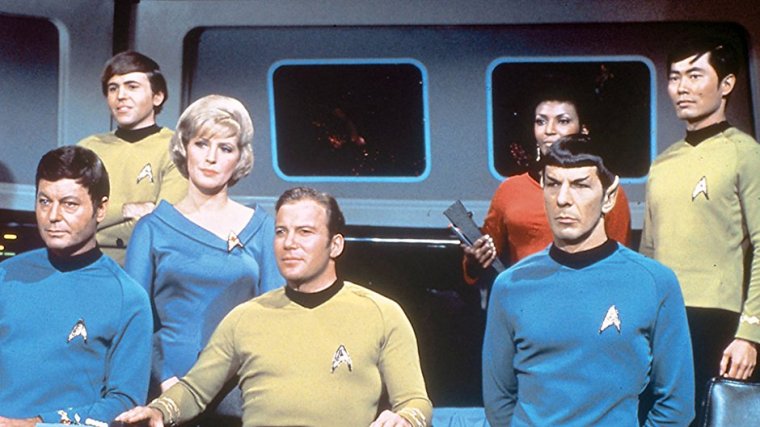
In a time when Americans feared a communist takeover of the world, we see Chekov, a Russian, on the bridge of the Enterprise. Twenty years after the bombings of Hiroshima and Nagasaki, we see a show put a person of Japanese ancestry, Sulu, on the bridge with Chekov. An African American woman, Uhura, is a bridge officer herself. This is the world we’re still striving for today.

startrek_philosophy

Philosophy

Star Trek has always had episodes that posed philosophical questions, but it all began with The Original Series. Yes, there were plenty of episodes that focused on seducing green women, but TOS questioned its viewers with what we might do in a situation where we found ourselves the inferior life form, and how we might respond should a superior life form treat us as indifferently as we, at times, treat our own planet’s less evolved animals.

Best Characters

startrek_captainkirk

Captain Kirk

You knew he’d have to be here, so let’s skip the how and get into why he’s a special character without having to compare him to other Trek captains. James Kirk is the prototypical romantic idea of a starship captain. He’s young to hold such a high rank, he’s handsome and charismatic, but he’s also evolved in a way that fits with the idea of our future the show sets out. Yes, we can get into his sexual proclivity and criticize the character for that, but episodes like Balance of Terror and The Enemy Within do a great job of complicating Kirk as a character and showing an appreciation for his gentler nature, his respect for life, and the effects of the strain of command.

startrek_spock

Spock

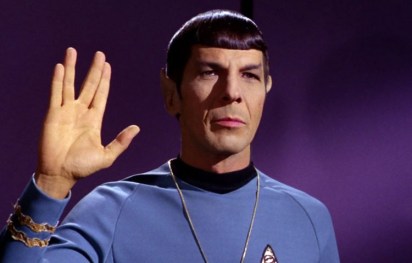
Another one you knew would have to make the cut, but let’s talk about why. Spock introduces us to Vulcans on the show, but he’s only half Vulcan. In that way, he’s a surrogate for the audience in understanding the differences between the races, but in another, very progressive way, he represents the joining of worlds the show hopes for, and what is mirrored in the civil rights movement of that time.

startrek_drmccoy_bones

Bones

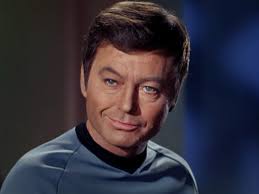
Doctor McCoy is gruff, old fashioned and at times, even a little backward in his thinking by comparison to the other characters aboard Enterprise. Somehow, however, there’s still a place for him. He’s still a part of that world, still thrives in it, and the crew is better for having him there. Maybe this is Roddenberry’s way of acknowledging there will always be holdouts where progress is concerned, and maybe that’s okay.

Things We Can Forgive

pollyanna

It’s Pollyanna

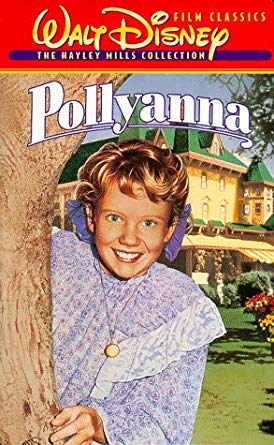
I love the optimism in Star Trek. It’s probably my favorite things about the franchise, but there are some things that get a little too sugar-coated. One thing that comes to mind is Gene Roddenberry’s insistence that currency does not exist in the Federation, despite references to “credits” in the show. Who would volunteer to scrub plasma conduits, or wear a red shirt in a landing party if they weren’t being paid? What does the Federation do if not enough people aspire to mine dilithium on colony worlds? Do they force them? That’s suddenly a much darker world, isn’t it? Even so, I’ll take a little wishful thinking over mindless pessimism. The issue of currency rarely comes up in the show anyway.

startrek_retconnedklingons

Retcons

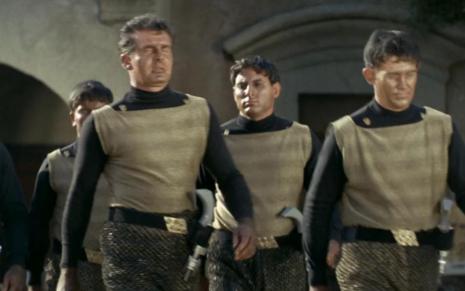
For those who don’t know the term, “retcon” means retroactive continuity. In essence, it’s what happens when a story contradicts itself and needs to be explained away. The Klingons’ appearance, and the changing color scheme of crew members’ jerseys are examples of this in the show. Gene Roddenberry described himself as a notorious revisionist, and told fans whatever the most recent instance laid out should be taken as canon. Given that Star Trek boasts improvement and evolution as some of its major themes, can’t we accept a little revising now and then?

StarTrek_Sulu.jpg

It didn’t do more

Simon Pegg, in promoting Star Trek: Beyond, expressed disappointment in the fact that some fans bristled at Sulu’s portrayal as homosexual in the movie. This was meant as an homage to George Takei, who originally portrayed the character, and is homosexual himself, but I think this portrayal may have undercut Roddenberry. We may feel discouraged by the intolerance we see in our daily lives today, but there’s no denying that whatever bigotry exists in our world, it isn’t the same as the institutionalized intolerance of the past. Some have said Gene Roddenberry would have loved to portray a gay character, but we have to remember he was facing bans in the south for having an interracial kiss on screen (Kirk and Uhura). Roddenberry may have wished he could push the envelope further. Today, an interracial kiss on screen isn’t even noteworthy, so before addressing the social issues Star Trek didn’t tackle, it’s only fair to acknowledge that we today aren’t up against the same things Roddenberry was in the 1960s.

Hopefully giving a little love to The Original Series assuages some of the perceived shade my last Trek article may have thrown in that direction. If you’re a die-hard fan of TOS, and you still feel I’ve wronged the classics, just remember that all I’ve really said is Star Trek is a franchise that has improved on itself. Would Gene Roddenberry have wanted it any other way?

Good Anime Filler

Your uncle Geekly dabbles with anime. It’s not my forte, like it is Season’s, but I’ve watched enough to find some good examples of anime filler. Wait. There may be some of you who don’t know what anime filler is. Okay, here goes some background and a quick definition for the uninitiated.

Anime has rapid production schedules and usually an anime that’s based on a manga (Japanese comic) gets far ahead of the source material. It’s the same issue Game of Thrones has with George R. R. Martin’s A Song of Ice and Fire if Game of Thrones was on 49 weeks out of 52. Like I said, anime has a rapid—crazy!—production schedule.

To combat this, most of these anime add episodes into the storyline to mark time until the source material can get ahead. These extra episodes are “filler.” A lot of filler stinks, because they’re marking time for the source material to get caught up, but some good episodes have graced the small screen as a result too. This quick list will show some of those moments.

myheroacademiaeveryonesinternships

My Hero Academia (Everyone’s Internships)

I’m going to be honest. I watched My Hero Academia before reading any of the manga, and I’m glad I did. The way the My Hero Academia anime integrates the cast’s internships was so seamless that I didn’t know it was filler.

Full disclosure: this is My Hero Academia’s only episode of filler to date, but these internships fill the audience in on what every other classmate of UA Highschool (My Hero Academia has a massive cast) is doing while Midoriya, Todoroki, and Iida are facing Stain. Many fans call this episode their favorite. With so much character development going on, it’s easy to see why.

cowboybeboptoysintheattic

Cowboy Bebop (Toys in the Attic)

For a 26-episode anime, Cowboy Bebop has a shocking amount of filler, but a lot of that filler is great. Wait a minute. Cowboy Bebop and the show it inspired Firefly only have a runtime of just over 10 hours. What’s with 10 hours and shows of this type?

Anyway, “Toys in the Attic” is one of the best Cowboy Bebop episodes and it happens to be filler. An unknown poisonous creature terrorizes the crew, and they spend the bulk of the episode running from it and formulating plans to rid themselves of the creature, only to find that the creature is attracted to a fridge filled with moldy food.

Crap. I should’ve said spoilers before saying any of that because viewers fear for the crew’s safety and that’s in stark contrast with the moment they chuck the fridge out of the space station. For added levity, the episode ends with Ed eating the creature. Oh darn. Spoilers!

naruto

Naruto (Lesser characters during the filler between the two series)

Yeah, this one may be controversial because most Naruto fans hate the five or six seasons of filler between childhood Naruto and company and their young adulthood. But Naruto also happens to be a show where few people cite the title character as their favorite and so many characters, who are most likely viewers’ favorites, receive much needed airtime.

We’re talking the characters who weren’t a part of the main cast. Unfortunately, most of the filler involving the title character Naruto was unwatchable. Three words: Curry of Life.

dragonballz_gokusordeal

Dragon Ball Z (Goku’s Ordeal)
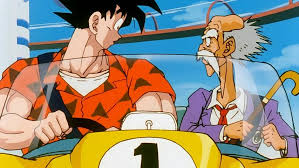
Many fans would argue that Goku is anime’s answer for Superman. His power level is over 9000, and usually, he can do no wrong. Those powers don’t mean a thing in Goku’s Ordeal.

ChiChi asks Goku to do things around the house and that means that he needs to get a driver’s license—that lazy bum. This episode does a lot to humanize Goku as he struggles to complete day-to-day chores and fails during driving lessons. It also doesn’t hurt to have so much comedic mayhem.

souleaterexcalibur

Soul Eater (Excalibur)

This one is less a single episode and more of a character. Depending on who you ask, Excalibur is the best or worst part of Soul Eater.

While the legendary sentient blade who dubs himself the “Elder God of Madness Born from Rage,” appears in the manga, his character is more fleshed out in the anime. Fool! Excalibur says that a lot. Fool!

That might be why he’s polarizing. Oh, well. The Soul Eater anime wouldn’t get into nearly as many shenanigans if it wasn’t for Excalibur. A fight with King Arthur? Check. Screw around with Sherlock Holmes? Yep, that’s Excalibur’s doing. I could go on, but half the fun is not knowing what to expect.

Buffoon!

What’s your favorite anime filler? You can yell out your window, but make sure you punctuate each sentence with “Fool!”. Or you could leave a comment, and I may respond with an idiotic reply.

Star Trek Series 3 Lists of 3

Jim walked into the Geekly office, and it looks like he has a new 3 Lists of 3. You have the floor, man.

Who thinks it’s time for a 3 Lists of 3 on Star Trek? No one? Well, we’re doing one anyway. Firs thing I should admit is that Star Trek Discovery isn’t even up for consideration here, because I haven’t watched it. I don’t want to support that business model of endless streaming services, and also I’m cheap. Without further stalling for word count, here are the three best episodes of the three best series in all of Trek-dom.

StarTrekNextGeneration

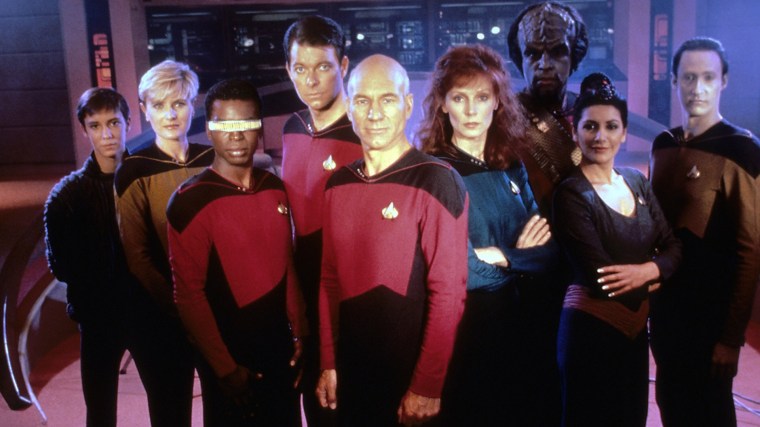
Star Trek: The Next Generation

I said it, so fight me. I’m a TNG guy. You think you’re mad now? Keep reading. The Original Series isn’t even #2 on my list. Here are the three best episodes of The Next Generation.

The Best of Both Worlds

Okay. This is a cheat, since it’s a two-parter, but I’m going to count it. This/these episode(s) saw Captain Picard assimilated by The Borg and turned against the Federation .The experience changes Picard, and also feeds into a couple other crucial plot points in Star Trek lore.

Chain of Command

Now I’m doubling down on two-parters. Hey, the series did this quite a bit, and more often than not, when they did it, they did it for a good reason. This story is another great bit of character development for Picard as he’s tortured in the captivity of the Cardassians. You may have seen the gif of a traumatized Patrick Stewart shouting, “There are four lights!” This is from this episode. It addresses the psychology, efficacy, and morality of torture, and also puts Deanna Troi in a proper Starfleet uniform, so there’s that.

The Measure of a Man

Starfleet decides to study Data and orders him to submit  trial is held to determine if Data is a living being, and has the right to refuse. It’s Star Trek at its best, an examination of philosophy and ethics applied to characters we love.

StarTrekDeepSpaceNine

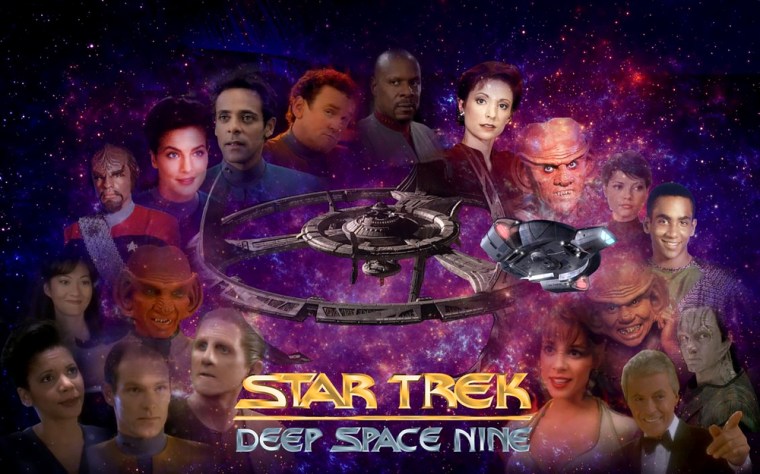
Star Trek: Deep Space Nine

Did you think I was bluffing about the TOS not being #2? Well, I wasn’t. Truth be told, ask me to do this list again tomorrow and I might put DS9 ahead of TNG. DS9 shows the Federation at war, challenging so much of the doctrine Gene Roddenberry laid out for this franchise, but doing it thoughtfully. It’s not just great Trek, it’s great storytelling.

In the Pale Moonlight

Remember what I said about DS9 complicating the morality of the franchise? No episode in all of Star Trek does this better. It also features Garak, one of the most complex and interesting supporting characters the franchise has ever seen. Here, Captain Sisko manipulates the Romulans to get them to enter the war on the side of the Federation. We’ve seen Starfleet officers compromise their ethics before, but these are depicted as traitors to the uniform, or at best, men who’ve lost their way. This episode makes no such judgment, and it’s truly refreshing.

The Siege of AR-558

This episode shows us a side of Starfleet we haven’t seen often. Sure, we’ve seen ships explode, and even some shootouts on the ground, but this episode depicts a long, ugly battle in the trenches. Here we see the cost of the Dominion War in action, and it’s made personal when Nog is wounded in combat. This is also an important episode for adding depth to the Ferengi, who have too often been given the one dimensional alien monoculture treatment.

Duet

Kira was a great second in command in this series. She’s smart, capable, and continues this series’ legacy of complicating moral questions. In this episode, we get glimpses into Kira’s past as a member of the Bajoran resistance, as well as her experiences under Cardassian occupation. Here we see her come face to face with a man she remembers as the commandant of an infamous forced labor camp. Her relationship with Sisko is challenged, as is her willingness to operate under Federation protocol.

StarTrekOriginalSeries

Star Trek: The Original Series

Okay, so The Original Series does make the list. It has to, really. Without the original, nothing that came after would have been possible, and that’s a debt always owed to what came first. This show had plenty of misfires, but also some truly classic moments.

Balance of Terror

Star Trek was, like all art, a product of its time. In this case, the cold war left its mark in an exceptionally clear manner. We have the neutral zone enforcing a delicate peace, and two groups who can’t even see one another prepared to destroy one another. It parallels the story of the film, The Enemy Below, and gave us the famous Trek quote, “…I might have called you friend.”

Space Seed

This episode explores the history of The Eugenics War, a critical point in the fictionalized version of Earth’s past within the Star Trek universe. It addresses the consequences of genetic engineering and, most importantly, it introduces us to Khan. Without this episode, Wrath of Khan, the best of the Star Trek films, would not exist.

The City on the Edge of Forever

What I like about Star Trek is that it takes an optimistic look at humanity’s future. Yes, things get bad. They’ll get even worse still, but someday we will get things right. That feels rare in science fiction. This episode has Kirk and Spock chasing a delirious Dr. McCoy into the past to preserve their future. There, amid rampant crime and poverty, Kirk meets a woman who is an almost insufferable optimist. She predicts eventual harmony and prosperity for mankind. In short, this episode functions as a sort of metafictional look at itself, at the sort of hopeful person who creates a better future by believing in it.

There you have it. There’s Jim’s take on the three best episodes of the three best series in Star Trek history. Do you disagree? Throw on a red shirt and we’ll fight about it.


3 Lists of 3 Anime

Hi, everyone. It’s been a while since this anime geek has gone on a tangent about anime and she’s raring to dive in with a three lists of three. This week’s three lists of three will look at various anime. All three lists of three will have similar themes, but look at different aspects of that theme.

Spoiler alert: some endings may be revealed. Ready to geek out over anime?

Overlooked anime

ParanoiaAgent01.png

Paranoia Agent (2005)

Paranoia Agent may be a bit of a mixed bag since most of the reviews online are fan-made. That being said, Satoshi Kon is better known for his movie, Paprika. Paranoia Agent may seem nonsensical and weird for the sake of being weird at first, but as the series progresses, the audience learns that everything happens for a reason. Each occurrence in Paranoia Agent bears significance to future events, and eventually, the end of the series. The continuity in this series is detailed. If this one doesn’t sound appealing, the “happy” opening theme is certainly memorable.

Ranma1_2

Ranma ½ (1989)

Rumiko Takahashi is best known for her series Inuyasha. While Inuyasha isn’t a bad series, it contains a lot of tropes, and, wrap me in a straitjacket, but I don’t remember much of the story. Ranma ½ uses some of these tropes while taking a comedic spin on them (such as Akane being a tsundere (kind-hearted but beats up the object of her affection) and Ryoga constantly getting lost). Since Ranma switches between male and female, the series puts traditional gender roles to the forefront. The characters find themselves in hilarious situations and I think the series deserves more credit.

MushiShi

Mushi-Shi (2005)

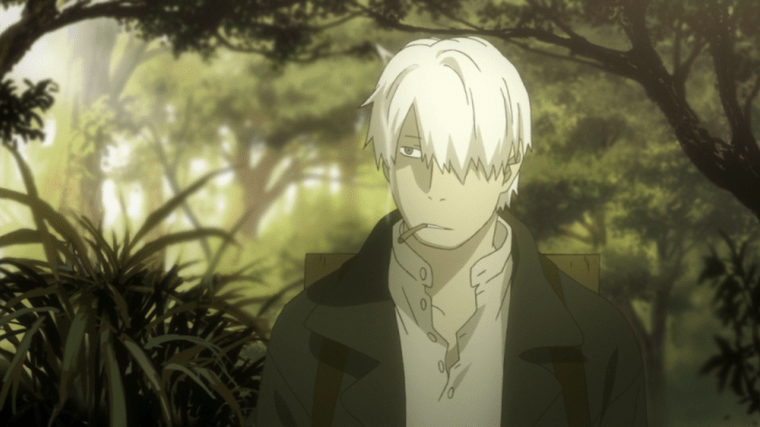
Mushi-Shi is one of the stranger series out there. The main character, Ginko, travels from town to town, dispelling supernatural/fantastical occurrences that are causing problems. Mushi-Shi is easy to get lost in with its unique stories and visuals, and calming sound effects. This series is a good escape from reality and doesn’t receive a lot of attention.

Overrated anime

SwordArtOnline.jpg

Sword Art Online (2012)

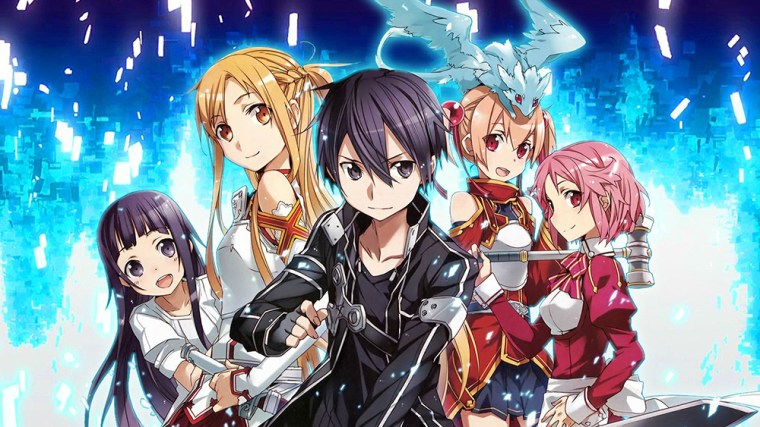
This one seems like it should be obvious, right? Depending on who you ask, Sword Art Online is either their favorite anime or their least favorite. I’ve heard someone say they like the light novels (books that have manga images but read like chapter books) as opposed to the anime, which I’m willing to give a go, since I’ve heard the original source material has better writing. Regardless, Sword Art Online has an inconsistent storyline that had an unnecessary number of episodes in the beginning. They should have condensed most of Season 1 into a couple of episodes as opposed to nine or ten. There are some things Sword Art Online does well, such as having the characters grow attached to an AI, which questions values. On the other hand, it doesn’t show the psychological effects of being trapped in an artificial world, not knowing who your true allies are. An anime that does a better job of this is Btooom!, which one of the characters has a mental breakdown.

AssassinationClassroom.jpg

Assassination Classroom (Ansatsu Kyoushitsu) (2015)

I’m going to be honest. I love Assassination Classroom. I even have a Nagisa hat and tee shirt of the gang. The reason Assassination Classroom made this list is primarily because of Koro-Sensei. He says he wants to educate the kids and asks them to kill him while simultaneously saying they’ll never be able to kill them and dampening their self-esteem, which is contradictory. Why would he build their confidence and smother it at the same time? On top of that he’s threatening to blow up the world. It isn’t clear throughout most of the series whether he cares about these kids and wants them to aspire to something, or if he’s busying himself with being a teacher so he won’t get bored. Granted, they explain his motivation toward the end of the series, but it isn’t timed well. This is right before—spoilers—Koro-Sensei dies. Despite this, they do an excellent job of giving each of the characters an adequate amount of screen time, which is difficult to do with twenty plus characters.

OuranHighSchoolHostClub.jpg

Ouran High School Host Club (2006)

Chances are if you’re into Shojo anime, there’s a good chance that this series has either been trafficked to you from streaming services or is one of the top results from an online search. It certainly was one of my favorite Shojo anime for several years. I watched the series five or six times, listened to the soundtrack, and looked up fanart. Yeah, I went a little crazy. The point of it was to break down Shojo tropes and make fun of them. This didn’t get across well in the anime and it ended up fortifying those tropes. The manga did a better job of deconstructing the Shojo genre, but not by much. It had a lot of editor’s notes to explain what was going on. Anyway, back to the anime, which did have some good episodes, one example being episode fifteen: “The Refreshing Battle of Karuizawa!” This episode gives the audience some much needed character development, but the series is already more than halfway over by this point. Most of the other episodes stuck to character stereotypes and overused themes. We don’t need another Alice in Wonderland parody.

Anime that were popular when they came out but haven’t withstood the test of time

HetaliaAxisPowers.jpg

Hetalia: Axis Powers (2009)

Remember that time when Hetalia: Axis Powers had a slew of fanart and doujins being published on a daily basis? What happened between the early to mid-2010s that sent this series downhill? So, what happened? Maybe the gimmick got old. Maybe people started to realize what they thought was cute was actually offensive to a lot of people. Whatever the reason, Hetalia: Axis Powers isn’t nearly as popular as it once was.

FreeAnime.jpg

Free! (2013)

When Free! came out it was hyped by gals and made fun of by guys due to the main characters being sexy high school boys in Speedos. I’m not joking. Its popularity lasted for a few years, even spawning another season, titled Free! Eternal Summer. The series itself was okay and didn’t have as much fanservice as I’d anticipated. They took the time to develop the characters to some degree. However, Free! dropped off the map a couple of years ago.

BleachAnime.jpg

Bleach (2004)

I know. Bleach is still a popular series, but it isn’t nearly as popular as it used to be. Neither is Naruto for that matter. In fact, Naruto was originally going to make this list due to its poorly placed filler, but after looking at several polls, Naruto was the clear winner in the vast majority of them. Bleach had a lot of filler too, but the timing of the filler was better than Naruto, so it was easier to watch. The writing got progressively worse after the Arrancar arc and ended up being an endless cycle of Ichigo losing and regaining his powers. If they decided to end the series after the Arrancar arc, I think Bleach would have left a better legacy.

There are a lot of anime out there that could make these lists. Do you agree with the ones chosen? Which anime do you think should be included in these lists? Let us know in the comments.
Saturday Morning Cartoons That Should Return

A petition helped to bring back Saturday morning cartoons to broadcast stations in 2017, so that got your uncle Geekly thinking about Saturday morning cartoons that should make a return on ABC, CBS, Fox, or NBC. Bring back our crudely drawn cartoons.

This list is a little difficult as many cartoons that aired on Saturday mornings originally have been relaunched on several streaming services and premium networks. I’m also unsure about any plans to bring back these shows. One never knows what’ll happen.

darkwing duck

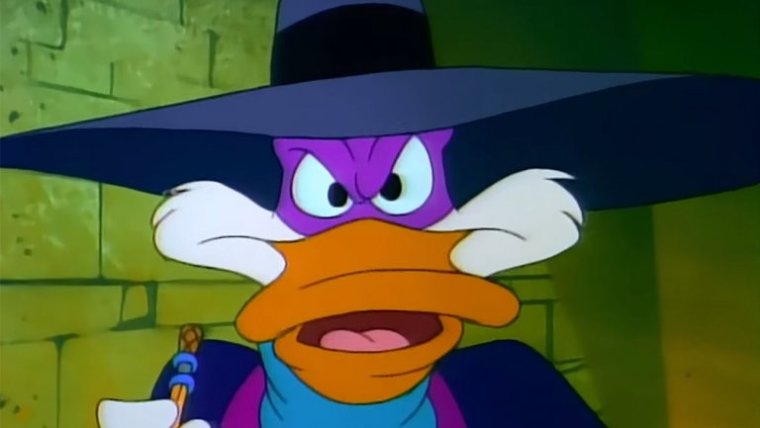
Darkwing Duck

Darkwing Duck split its time as an after-school cartoon and a Saturday morning cartoon, but I’m including it because it was fun and one of the few Disney cartoons that didn’t use preexisting characters. And these original characters became so popular that one can find many of DW’s greatest foes on the 2017 DuckTales relaunch.

These cameos led to unfounded rumors of a Darkwing Duck reboot in 2018. The outcry that the rumors were false may lead to a reboot after all. Until then, DW fans will have to read the new comic book series.

TheTickSpoon

The Tick

Okay. This is the second comic book spoof cartoon show on this list, but The Tick’s just as good, if not better, than Darkwing Duck. Yes. There’s an interesting live action show available on Amazon Video, so I guess The Tick has gotten a reboot, but there’s something special about the original cartoon.

I’m not sure if a reboot could ever capture the magic of the original, probably not, but someone should make this happen. Amazon’s The Tick, while good in many ways, isn’t as funny or down-right silly as Fox’s cartoon Tick.

Sym-Bionic_Titan

Sym-Bionic Titan

Sym-Bionic Titan aired between 2010-2011. It’s by far the newest cartoon on this list, and your uncle Geekly has little reason to watch a cartoon when he was this age but screw it. This show was excellent. Judge me all you want. It’s a hybrid of Voltron and high school antics brought together by Genndy Tartakovsky, the mind behind Samurai Jack.

While I think certain shows benefit from a short run, Sym-Bionic Titan’s one season wasn’t enough, and if Tartakovsky’s previous gem’s timeline holds for Sym-Bionic Titan, there may be a second season any day now.

XMen_AnimatedSeries

X-Men

Batman the Animated Series is a far better series and more influential than the X-Men Animated Series, but some cartoon Batman has been on the air continuously since the last episode of Batman TAS aired. X-Men hasn’t received an animated series since 2009 and even that was a spin-off, Wolverine and the X-Men.

Like many other cartoons on this list, I’m uncertain if a new X-Men cartoon could capture half the magic of the original, but nine years (as of this write-up) is a long time between cartoons.

I’m not including the X-Men anime (2011) or The Super Hero Squad Show (2009) as they either took very different approaches with the characters.

Histeria

Histeria!

Have you ever wondered what would happen if someone combined School House Rock with a kid-friendly Saturday Night Life? Histeria! might be the outcome. The show’s creator Tom Ruegger was a writer for Batman: The Animated Series and a key developer for Animaniacs (which is getting its own reboot), and the cast included original SNL member and writer Laraine Newman and the incomparable voice actor Billy West (Futurama). The show was fun and informative.

Histeria! deserves a reboot or at least, a means for viewers to see the original. I haven’t seen a DVD collection for it, and In2TV took down streaming episodes in 2009.

This list was so difficult. I’d look up Where in the World is Carmen Sandiego? and find that there’s a reboot scheduled for 2019. Then I’d think of Rocky and Bullwinkle, but that’s been rebooted too. So many of the better Saturday morning shows never went away, or they’d find life in some other way. Even so, I’m sure I missed a fair share of shows. Pound the table and curse the names of the ones I missed, or you could pound the keys of your keyboard and let me know in comments.