Getting Into Comics: Black Panther Starter Stories

Black Panther has existed since the mid-Sixties, but Marvel produced some of the best Black Panther stories after 2000. Which Black Panther stories should you read first?

Hey, hey! Kyra Kyle here. As you can guess, we’re talking about Black Panther starter stories today. Like we’ve been doing for the past few entries in this series, we’ll split these stories into single issues and story arcs. Today, we’ll begin with single comic book issues. Enjoy!

Single Issues
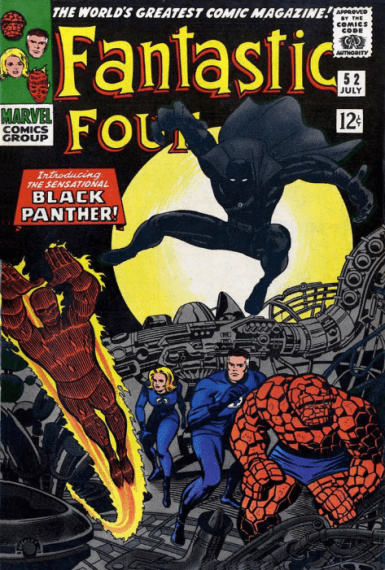
“Introducing The Sensational Black Panther” (Fantastic Four #52; written by Stan Lee/art by Jack Kirby; 1966)

I considered including this issue and a few others as part of a story arc. The next issue would include vibranium’s first mention and sets the stage for Ulysses Klaw to make his first appearance, but I chose to stick with Black Panther’s first appearance. “Introducing The Sensational Black Panther” centers around the Fantastic Four being invited to Wakanda. The enigmatic leader sends a hover car to take Marvel’s family to his homeland. The Fantastic Four agree, and when they arrive in Wakanda, they must survive a robotic jungle and the Black Panther himself. By themselves, the Fantastic Four are no match for Black Panther, but the team joins forces and unmask their assailant.

It turns out that T’Challa (Wakanda’s leader who invited the Fantastic Four to Wakanda) and Black Panther are the same. Black Panther says he only wanted to test the fours’ abilities and meant no harm by his attack. “Introducing The Sensational Black Panther” does a good job of showing Black Panther as formidable. Like I said, many key Black Panther elements are revealed in future issues, but “Introducing The Sensational Black Panther” is a great place to start reading.

“Death Calls for the Arch-Heroes” (Avengers #52; written by Roy Thomas/art by John Buscema; 1968)

“Death Calls for the Arch-Heroes” is another issue that sets up Black Panther; this time, it’s Black Panther’s first appearance as an Avenger. Until this issue, Black Panther served as an occasional Avengers ally. “Death Calls for the Arch-Heroes” begins with Black Panther visiting Avengers HQ to find the Avengers dead. They aren’t actually dead; they’re in a coma. Since Black Panther is an outsider, he gets blamed and taken into custody. Black Panther breaks out of jail, learns that the Grim Reaper (who wants revenge for the death of his brother, Wonder Man) is behind the plot. The two fight, Black Panther wins, reverses the effects of Reaper’s coma weapon, and then becomes a full-fledged member of the Avengers.

“Death Calls for the Arch-Heroes” marks an important milestone in Black Panther’s development. Prior to this issue, Black Panther seldom left Wakanda for long. This issue turned Black Panther into a global figure, and it put Wakanda on the map.

Story Arcs
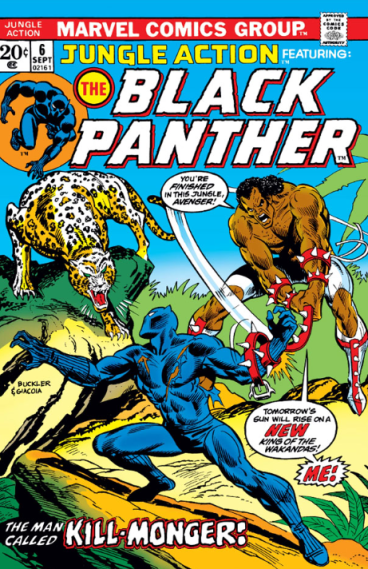
Panther’s Rage (Jungle Action #6-18; written by Don McGregor/art by Rich Buckler, Billy Graham, and various others 1973-1974)

It took a while for Marvel Comics to see potential in Black Panther. Sure, Black Panther showed up in plenty of Fantastic Four comic books. He was even a card-carrying member of the Avengers for half a decade by this point, but he was relegated to the edges of comic book stories and didn’t have his own title. At the same time, there was another Marvel comic book named Jungle Action that rubbed proofreader (at the time) Don McGregor the wrong way. Jungle Action featured white people saving Africans or white African people being threatened by black African people. McGregor demanded that Marvel feature a black African hero. He turned to the seldom-used Black Panther.

McGregor’s initial run on Jungle Action #6-18 (Panther’s Rage) is the birth of who we know as Black Panther. T’Challa returns to Wakanda to find his homeland torn by civil war. A revolutionary leader and terrorist named Erik Killmonger had returned to Wakanda and threatened T’Challa’s claim to the throne. Yes! Panther’s Rage is the first appearance of Killmonger. To say Panther’s Rage was groundbreaking is an understatement.

More than a decade before Watchmen, Panther’s Rage was the first graphic novel. It’s been collected and reprinted numerous times, and it’s worth the read. Writer Don McGregor was no stranger to pushing boundaries. Years before Panther’s Rage, he wrote a story that featured comic books’ first interracial kiss. If you want to know Black Panther better, Panther’s Rage is a great place to start.

Panther’s Quest (Marvel Comics Presents #13-37; written by Don McGregor/art by Gene Colan, and various others 1988-1989)

After his legendary run on Jungle Action, McGregor left Black Panther for over a decade. He returned to the character with Marvel Comics Presents. The Marvel Comics Presents title was an odd throw-back to early Marvel titles. Anthology series like Tales of Suspense (which featured Iron Man’s first appearance) and Journey into Mystery (which included Thor’s first appearance) had fallen out of favor. Marvel Comics Presents featured stories for multiple characters. We’re interested in the Black Panther storyline, Panther’s Quest.

Panther’s Quest is another McGregor epic. Following rumors that his mother (whom he had never known) may still be alive, T’Challa conducts a stealth mission in South Africa. What unfolds is a harrowing tale of social injustice mixed with intrigue and plenty of action. Always willing to broaden comic books’ horizons, McGregor tackled story elements like Apartheid and the discrimination someone who looks like Black Panther faces. In short, Panther’s Quest is another Black Panther must-read.

The Client (Black Panther vol 3 #1-5; written by Christopher Priest/art by Mark Texeira 1998)

The Client marks the first entry for Christopher Priest on this list. Priest is another writer synonymous with Black Panther. Priest is also the first black writer and editor in mainstream comics. He’ll show up time and time again on this list. We couldn’t include all of Priest’s works. The two series of his that didn’t quite make our list are both named Enemy of the State. You should give them a read as well. Getting back to our entry, The Client makes this list because it introduces several key Black Panther figures like Okoye, Zuri, and Nakia. And the story does a great job of balancing the odd space Black Panther occupies.

Black Panther sets up refugee camps and offers political asylum for people fleeing ethnic wars, but at the same time, he pushes for systematic change and battles street crime. T’Challa is a man attempting to do it all. But that’s why a lot of Black Panther’s key support system (like Okoye) are introduced. Within The Client’s pages, Priest develops what it means to be Wakandan.
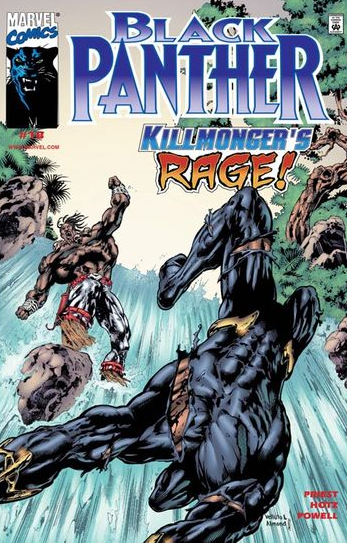
Killmonger’s Rage (Black Panther vol 3 #16-20; written by Christopher Priest/art by Sal Velluto and Bob Almond 2000)

Christopher Priest pushed the Black Panther forward, but he also paid homage to what came before. Killmonger’s Rage is a fitting spiritual successor to Panther’s Rage. Priest honors McGregor’s story by exploring T’Challa and Killmonger’s relationship. Priest’s Killmonger is a Wakandan corrupted by Western values. He’s the antithesis of T’Challa and Wakanda. Black Panther must face an intriguing mirror version of himself. Killmonger’s Rage shows what would happen if T’Challa rejected his Wakandan roots. 2018’s Black Panther uses a storyline or two from Killmonger’s Rage.
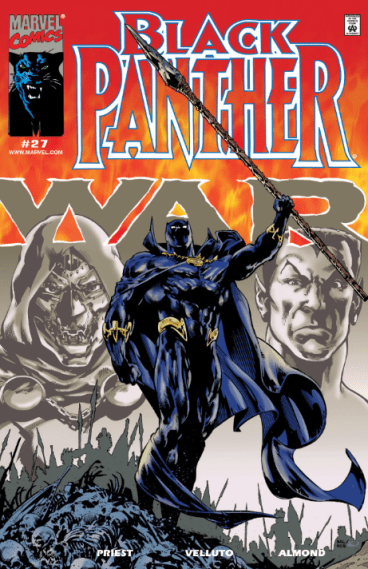
Sturm Und Drang (Black Panther vol 3 #26-29; written by Christopher Priest/art by Sal Velluto 2000-2001)

The world is on the verge of World War III, and Black Panther serves as mediator. Sturm Und Drang shows why T’Challa is different from most superheroes. He’s the leader of a country. Tension exists between the underwater nation of Lemuria and the surface world. Klaw works behind the scenes to stir up tensions among various nations; his machinations unnecessarily draw other countries into the mix. Black Panther advocates for peace, but at the same time, he refuses to back down or show any signs of weakness.

Sturm Und Drang explores Black Panther’s leadership during wartime. He must deal with group leaders like Namor, Magneto, and Doctor Doom. Sturm Und Drang is also the final Priest story arc on this list. He had an amazing run on Black Panther. You can’t go wrong if you see Black Panther and Christopher Priest. If you’re interested in reading Black Panther, Priest did more than anyone in shaping this character and showing his many facets. Priest’s run is chef’s kiss good.
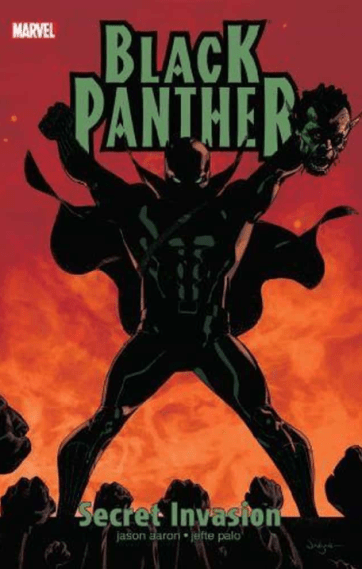
See Wakanda And Die (Black Panther vol 4 #39-41; written by Jason Aaron/art by Jefte Palo 2008)

See Wakanda And Die might be a slight understatement of a title. This story acts as a standalone story and a tie-in for Marvel’s 2008 event, Secret Invasion. I know. I know. The Secret Invasion television series almost ruined the MCU. Believe me, the comic book story was handled with more care. But we’re talking about See Wakanda and Die. An army of Skrulls has come to Wakanda to claim all the country’s vibranium. But Wakanda won’t go without a fight.

This action-packed story shows two complementary sides of the Black Panther. First, he’s a leader, shown through tactical decisions and care for his people. Second, he’s a hero, placing himself on the frontlines. These two sides merge to make a satisfying read with excellent pacing.
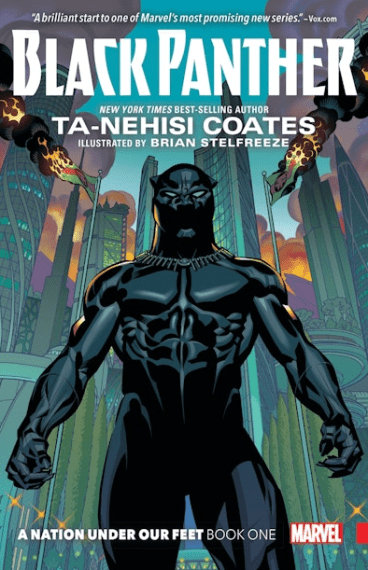
A Nation Under Our Feet (Black Panther vol 6 #1-12; written by Ta-Nehisi Coates/art by Brian Stelfreeze, Chris Sprouse, and Karl Story 2016-2017)

A Nation Under Our Feet is the most philosophical story on this list. It explores Wakanda’s identity, tensions, traditions, and where they fit in modern society while looking toward the future. This examination extends to the monarchy. Does Wakanda still need the Black Panther?

These topics make sense, considering A Nation Under Our Feet’s writer Ta-Nehisi Coates. Coates is an American journalist and activist who often writes about cultural, social, and political issues, specifically African Americans and white supremacy. Coates authored “The Case for Reparations,” so Wakandan story that examines its past while looking at how to move forward is something that Coates has immense experience.

But A Nation Under Our Feet also features the art of Stelfreeze and Sprouse, who present a brilliant Afrofuturism that has a touch of science fiction but is steeped in African art and culture. The result is A Nation Under Our Feet becoming a comic you can lose yourself in as you explore the different parts of Wakanda.

Those are the stories that made our list. Like I said, I could’ve included many more Priest Black Panther stories, and anything by Coates is a great read. Let us know which Black Panther stories you’d add to this list in the comments. Thank you for reading, and wherever you are, I hope you’re having a great day.

Geekly News: August 3, 2025, Unnamed MCU Film Set for Release

Happy Sunday, Geekly Gang! Kyra Kyle here with another week of Geek News. GenCon is this week. Several board game companies announce titles at GenCon and/or launch board game crowdfunding campaigns during GenCon, cashing in on the hype caused by demos this weekend. So, our board game releases will see an uptick in the next two weeks. Woo hoo! Not only that, but this week saw a lot of high-profile video game releases. Yes! Before we get into those new game releases, we’ll kick off this post with some intriguing MCU news.

X-Men Cast Update and Unnamed MCU Film Set for Release between Doomsday and Secret Wars

Several sources (including Variety and ScreenRant) have cited the MCU casting a younger group of actors for The X-Men. This makes a lot of sense. Ever since the pandemic, movie-going behavior has changed. Fewer people physically watch movies in the theater (they wait for the movie’s digital release), and superhero movies seldom break the $1 billion mark. This new reality has led film studios to change their tactics. The MCU casting lesser-known actors to portray The X-Men should save the production money. We’re seeing this more with other larger movies with budgets earmarked for special effects (films like the upcoming Legend of Zelda). While I don’t care for the reasoning, I’ve always liked the idea of giving lesser-known actors a chance at playing iconic roles.

In other MCU news, Marvel Film Executive Kevin Feige made an announcement that the MCU has an unnamed MCU film set for release between Avengers: Doomsday and Avengers: Secret Wars. There is a chance the MCU keeps the date, July 23, 2027, available for an MCU movie (between Doomsday and Secret Wars) and chooses not to use the time slot, but there’s a better chance Marvel Studios will fit in a movie between these two Universe-wide and Universe-altering movies. To date, Captain Marvel is one of the MCU’s most financially successful films (at the box office), and it was released between Avengers: Infinity War and Avengers: Endgame. Captain Marvel benefited from the hype generated by the two Avengers films. The MCU will most likely want to capitalize on the window between Doomsday and Secret Wars.

By my estimation, four films could fill this July 23, 2027, time slot: Deadpool 4, Black Panther 3, Blade, and Doctor Strange 3. I listed these films in the likelihood of their being released, starting from least to most likely.

Even though Ryan Reynolds says he’s not interested in another Deadpool film, Marvel Studios could coax him to do another movie with enough cash. Deadpool 4 will most likely happen, but not right away. Besides, Deadpool is one of the few Marvel film franchises that doesn’t need a Doomsday-Secret Wars boost.

Black Panther is another Marvel film franchise that doesn’t need the boost. Everything Ryan Coogler touches turns to gold. I loved Sinners, Ironheart was better than I expected, and I can’t wait to see his take on The X-Files. Throw in Denzel Washington to Black Panther 3’s cast, and you can see why Black Panther 3 doesn’t need the hype train. It is the hype train. The only reason I place Black Panther 3 ahead of Deadpool 4 in order of likelihood of being released is that it’s further along in its development.

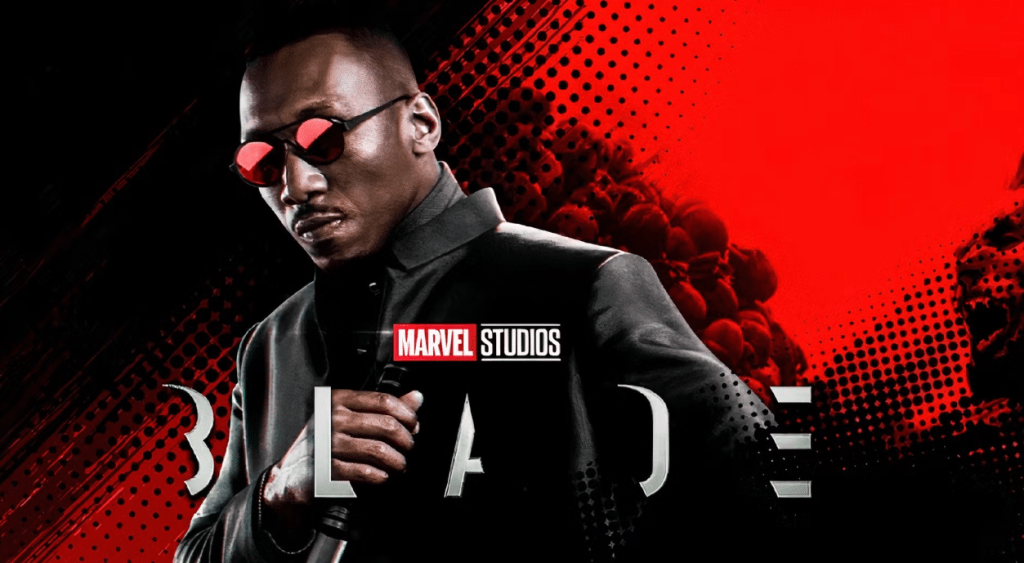
Kevin Feige insists Blade is years away, but he may protest too much. Mahershala Ali has been waiting for his chance to play Blade in an MCU movie. While Blade has been a successful franchise in the past, the upcoming Blade movie will be the first in the MCU. Blade isn’t established within the MCU, so the character can exist outside the universal crossover event. And a Blade film would follow in Captain Marvel’s footsteps of introducing a new MCU character and banking on the hype generated by two connected Avengers films.

But I chose Doctor Strange 3 as the most likely film for a July 23, 2027, release because it’s been in production for a while and doesn’t yet have a release date. At the end of The Multiverse of Madness, Doctor Strange entered a different plane of existence with Clea, so Doctor Strange 3 could explain why he might not be in Doomsday and could tie into his inclusion in Secret Wars. Doctor Strange 3 could also exist outside both movies, or at least the first one, and not screw up the two Avengers films’ storyline.

But what do you think? Do you think the MCU will pass on using the placeholder July 23, 2027, release date? If the MCU uses the date, which film do you think will fill that date? It could be a fifth film I didn’t mention. Let us know in the comments.

Echoes of the Sundering Lands on KickStarter

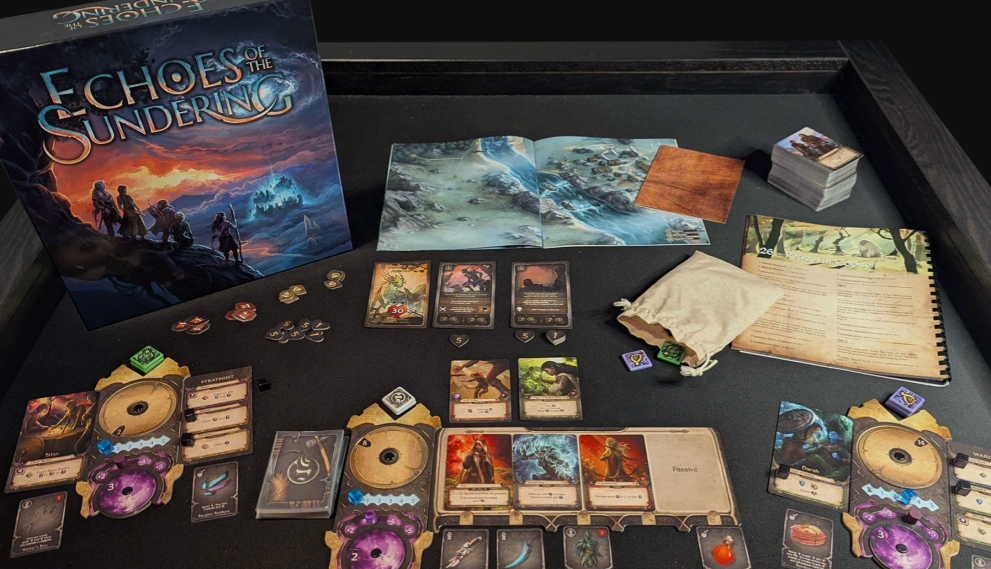
So much of Echoes of the Sundering’s description interests me. Echoes of the Sundering is a 1-5 player cooperative, open-world, deck-construction adventure. It features simultaneous play and a strong narrative. Cooperative with deck-construction and simultaneous play with a strong story to boot. Count me in. Supposedly, player choices affect what happens in the world. Gamers can customize their characters to suit their playstyle. All of this sounds amazing.

I’m uncertain how players will be able to play their turns simultaneously, but I’m here for it. The game also includes drop-in/out companions. I’ve seen this play out in various other games, but each board game accomplishes this differently. Players can level up their characters like they would in a video game RPG, and while you can play a rogue-lite version, which offers extended replayability, Echoes of the Sundering features a 40-hour campaign.

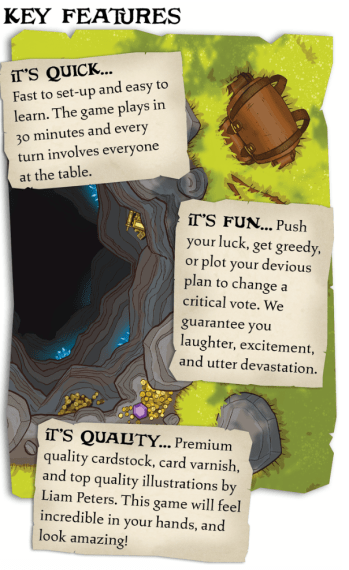
Build your own unique character and get exploring in Echoes of the Sundering. From the sound of it, Echoes of the Sundering is a more story and character-driven version of Gloomhaven. The above image lists publisher The Wilderforger’s vision board. If this sounds interesting, check out Echoes of the Sundering’s KickStarter page.

Compania Launches on KickStarter

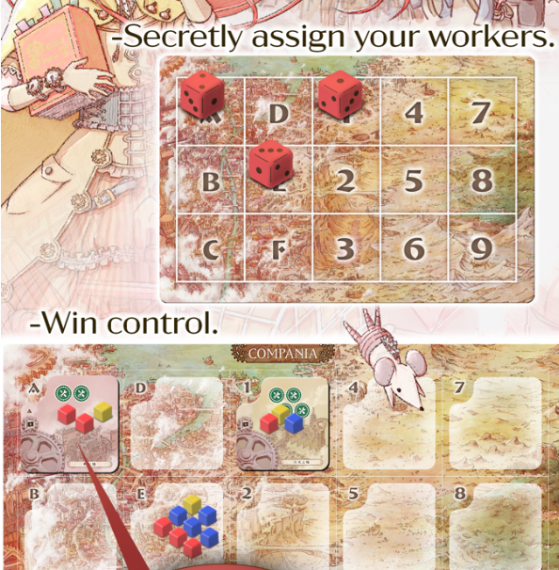
Publisher Level 99 is known for its anime/manga aesthetic. Compania continues this trend, but don’t let the art style fool you. Compania is a clever engine-building worker placement game. I love Compania’s worker placement twist. Players secretly assign their workers to spaces on the board. Each player simultaneously uses six-sided dice to show how many workers they plan to send to each space. Whoever chooses the most workers for each space that turn, claims that space (and its ability) for the turn. Brilliant!

Compania lists its play time as 1 hour, and I believe it. Any time a design includes simultaneous play as one of its mechanisms, play doesn’t take as long because you don’t need to wait for players to take their turn. Everyone takes their turn at the same time. Compania’s auction system has me interested, but I’ve always liked Level 99’s art style; I always know when a game is a Level 99 game. You can back the standard-edition Compania for $50 or go for the deluxe version at $90. Check out Compania’s KickStarter page.

Flip Voyage Emerges on KickStarter

I love flip and write games. I’ve covered a few flip and write games like Draft & Write Records and On Tour. Fliptown, by Write Stuff Games is a fantastic flip and write, and Flip Voyage is the Fliptown’s sequel. It looks just as good. In fact, Flip Voyage’s KickStarter campaign features an expansion to Fliptown. You can pick a pledge that includes the expansion and Flip Voyage.

Flip Voyage’s gameplay looks straightforward and offers plenty of player choice. I have yet to demo Flip Voyage, but the game’s mechanisms make it look as if no two games will ever play out the same way twice. And Flip Voyage’s deck is a modified, standard playing card deck. There’s enough familiarity for newer players to understand the game, while offering something new and exciting. Flip Voyage offers several pledge levels. Most are cost-effective. Check out Flip Voyage’s KickStarter page.

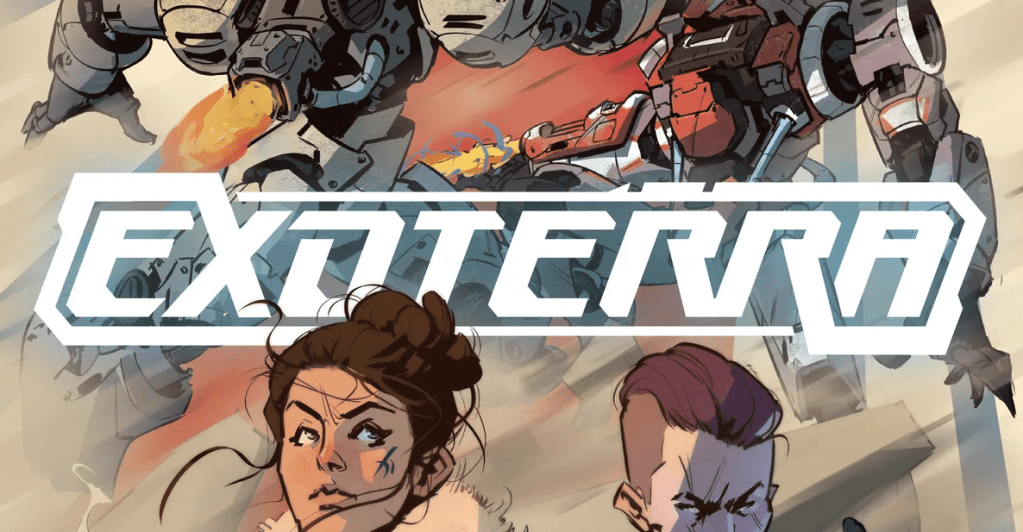
ExoTerra Powers Up on KickStarter

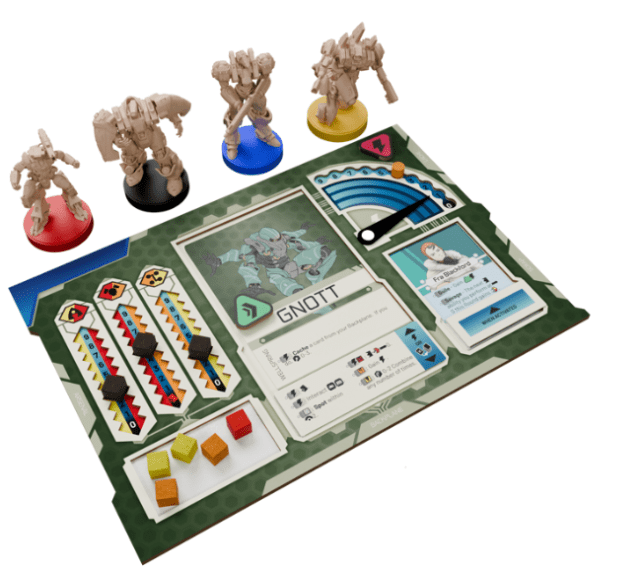
I’ve seen advertisements for ExoTerra for a while, and it looks like something that would interest me. ExoTerra is another cooperative game. This time, you build your own custom mech, a large robot typically found in anime/manga. Player boards are customizable, and the way each one is set up reminds me of Sky Team in a good way.

Of course, ExoTerra features detailed miniatures, but my favorite feature must be the triple campaign map books. Each campaign map includes 30 pages of battle stages. This makes setting up ExoTerra a snap. Just turn to the pages you need and place the three books together. ExoTerra includes several paths to victory. You could replay a scenario, using a different tactic (perhaps a non-combat option), and see if you can win. ExoTerra’s pledges range from $150-260. If you’re interested, check out ExoTerra’s KickStarter page.

Tekken: The Board Game Launches on GameFound

Publisher Go On Board lends their knack for adapting video games to tabletop games to the Tekken franchise. The combat space looks tight, and that’s a good thing. Many combat games provide too many options to run and hide, or allow some characters an unfair advantage to keep their distance and attack from afar. Tekken: The Board Game keeps the fight close. Tekken boasts a short playtime (20-60 minutes). A fighting game of this nature demands a shorter play time.

Tekken: The Board Game features numerous iconic characters from the franchise. While writing this post, the campaign hasn’t yet launched, but by the time you’re reading this, Tekken: The Board Game should be available on GameFound. Check out Tekken: The Board Game’s page.

Grounded 2 Releases in Early Access on Steam

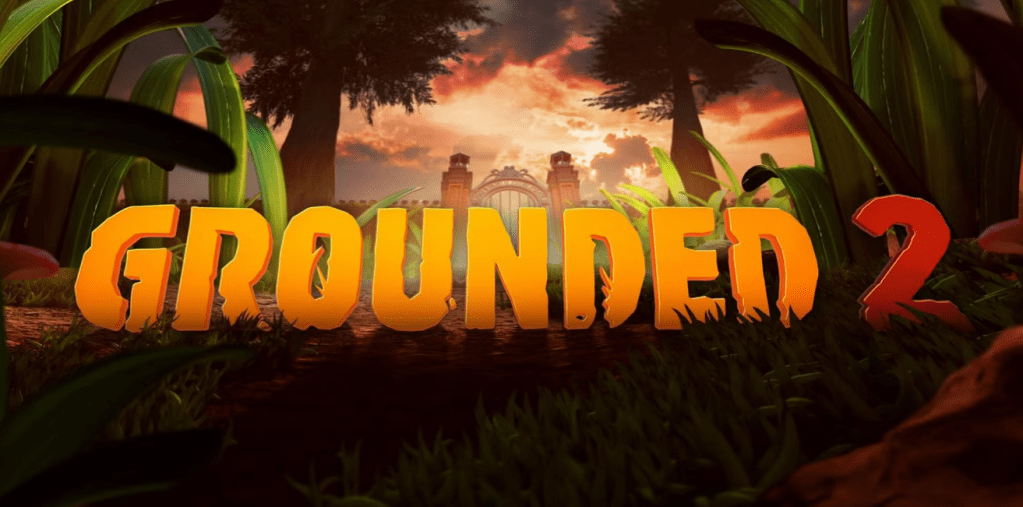
Obsidian’s Honey, I Shrunk the Kids inspired survival game received a sequel this week. Grounded 2 enters early access on Steam. Everything in Grounded 2 is bigger and better than the original, but fear not, fans of the original Grounded, Grounded 2 keeps everything that made the first game fun. The first Grounded was one of the best survival video games on the market. Grounded 2 looks poised to fill those shoes.

I can’t wait to befriend some helpful ants. Check out Grounded 2’s page on Steam.

Tales of the Shire Enters Early Access on Steam

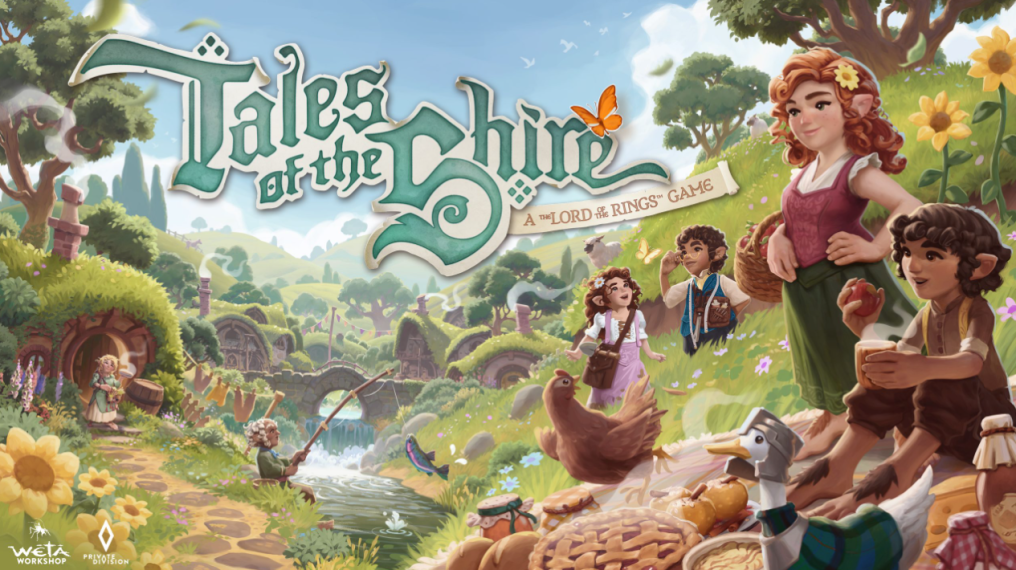
Have you ever wondered what Stardew Valley would look like if it were set in the Shire? Tales of the Shire has you covered. Live your life as a hobbit. Create your own Hobbit as you set forth in Bywater. Though not yet established as an official village in Hobbiton, you will play a big part in helping the quaint town flourish.

Tales of the Shire offers a unique gaming experience. Based on the image above, it looks like we’re getting ready for Elevenses. I’m all for that. For the next ten days, Steam is offering a 10% discount on Tales of the Shire.

Gloomhaven Sequel Frosthaven Releases on Steam

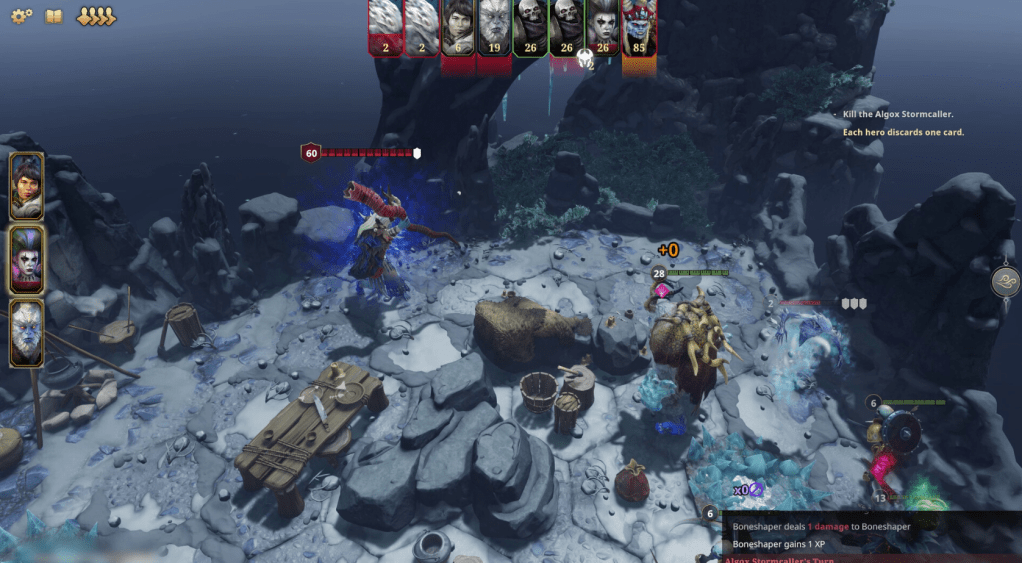
I enjoyed the original Gloomhaven video game. Gloomhaven’s sequel Frosthaven, lands on Steam this week. If you’re like me, you either don’t want to shelve Gloomhaven’s massive box or go through the twenty minutes or more to set up the game. The video game adaptation does a great job of translating the board game into a video game. Frosthaven received the same treatment, and the video game looks great.

Similar to Tales of the Shire, Steam is offering a 10% discount on Frosthaven for one week. Check out Frosthaven’s Steam page.

That’s all the Geek News we have for this week. Thank you for reading, and wherever you are, I hope you’re having a great day.
Fantastic Four: First Steps Review

Happy Friday, Geekly Gang! Kyra Kyle here with a Fantastic Four: First Steps review. Right off the bat, I must say 2025 is a banner year for superhero films and shows. The DCEU had been flailing for years; Superman (2025) gives the franchise new hope. The MCU has been a shell of itself in previous years, but Thunderbolts* and Fantastic Four: First Steps have been a return to form. I love that little MCU homework is needed for Fantastic Four: First Steps. Spider-Man: Homecoming aside, Fantastic Four: First Steps is the closest the MCU has felt to a Phase One movie in almost a decade. Fantastic!

I’ll try to avoid spoilers in this review. If you’ve read the Fantastic Four comic book, you should know the basis for a Galactus story. Fantastic Four: First Steps is the most comic book accurate Fantastic Four film. I mentioned in a previous Geekly News post that Shalla-Bal does have a basis in the comics; she’s Norrin Radd’s longtime romantic interest and has powers comparable to the Silver Surfer. In alternate universes, Shalla-Bal becomes Galactus’s herald in Radd’s stead, so if Earth 828 (nice tribute to Jack Kirby’s birthday, August 28th) is an alternate universe, it makes sense if she becomes Galactus’s herald. This allows Radd to become the Silver Surfer in Earth 616 (or some other Marvel universe). And Galactus is terrifying.

Galactus reminds me of the Reapers in Mass Effect: part living being and part machine. This visual effects decision makes sense. It allows for Galactus to look like his comic book counterpart. I cheered when I saw him onscreen. Galactus’s look is another great comic book accurate element. Johnny Storm figuring out Shalla-Bal’s history and pleading with her to save Earth was another classic comic book moment. Both Radd and Shalla-Bal sacrificed themselves to save their planet (Zenn-La) from Galactus, only to become Galactus’s pawns and destroy other planets.

I even liked the montage at the beginning of Fantastic Four: First Steps. It shows the team has been in the superhero/explorer/adventuring business for years, while not bogging down the film with extra runtime. While I would’ve liked to have seen John Malkovich’s Red Ghost, it made sense for Fantastic Four: First Steps to cut his scenes from the movie. Fantastic Four: First Steps had a tight 114-minute runtime. Just under two hours. That’s unheard of with modern blockbusters. Rumors swirled a few months ago that Fantastic Four: First Steps had a runtime of over two and a half hours, which would’ve made it one of the longest MCU films before edits. Fantastic Four went from being one of the longest MCU films to the fifth shortest. The audience got what it needed in that runtime. Kudos to Fantastic Four for cutting unneeded scenes.

Fantastic Four: First Steps is just what the MCU needed. Just like Superman (2025) got me excited for DC Comics movies again, Fantastic Four: First Steps got me excited for the MCU again. And like Superman, I have some notes for Fantastic Four: First Steps. The biggest is Galactus’s timeline. While Galactus does lumber through the universe on his never-ending quest for sustenance, it doesn’t make sense that Earth prepares for the titan’s visit when he’s already in our solar system. Galactus passes Jupiter by the time the Fantastic Four share their plan with the world, a plan that would take months to prepare. When the team’s first plan fails, they don’t switch to their second plan until Galactus is passing the moon. What? That timeline makes little sense.

Galactus entering our galaxy when the Fantastic Four share their first plan, and then reaching Jupiter when the Fantastic Four pivot to another plan, would make more sense. This is a nitpick, but I chuckled at this timeline’s absurdity. Invisible Woman giving birth in space with no bodily fluids is another one of my silly nitpicks. I get why Fantastic Four: First Steps chose not to include a zero-gravity placenta, but I figured I’d mention the lack of bodily fluids. Don’t get me wrong, I just finished a jumbo-sized popcorn and pretzel bites before the birth scene. My stomach appreciated the lack of floating bodily fluids. Still, Franklin Richards’s birth was the most sterile birth I’ve ever seen.

I could mention another nitpick or two, but those are smaller nitpicks, and they didn’t detract from Fantastic Four: First Steps. This is the Fantastic Four film I’ve waited for decades, and I’m so glad I got to review it on Geekly. I watched the 2015 Fantastic Four in the theater and reviewed it. Fantastic Four: First Steps was a huge upgrade. This film features the most comic book accurate Fantastic Four. And I hope Fantastic Four: First Steps begins a new trend for the MCU: less MCU homework for each project and cutting out unnecessary scenes for tighter runtimes. Fantastic Four: First Steps continues the MCU’s upward trajectory. Thank you for reading, and wherever you are, I hope you’re having a great day.

Geekly News: July 27, 2025, MCU Ready to “Reset”

Happy Sunday, Geekly Gang! Kyra Kyle here. It’s the beginning of a new week, and it’s time for us to break down the geek news from the previous week. A lot happened over the past week, but we’ll begin with some fun MCU news.

MCU Will “Reset” After Avengers: Secret Wars

“Reboot is a scary word,” President of Marvel Studios Kevin Feige said during a media bonanza this past weekend. Instead of a “reboot,” Feige claims the MCU will “reset” after the Multiverse Saga concludes with Avengers: Secret Wars. This MCU reset will include Marvel Studios recasting The X-Men. Geekly may have jumped the gun with this recasting. We did our own X-Men Geekly Casting a couple of months ago, and personally, I thought Deadpool and Wolverine was the Fox X-Men’s swansong, but we only saw a handful of mutants in Deadpool and Wolverine, and I’m okay with one final sendoff.

The X-Men may not be the only ones getting recast. Feige suggested that the MCU will recast several of its characters after Avengers: Secret Wars. While Feige cited Superman (2025) as a great show and didn’t expand on the statement more than that, Superman’s success could have pushed Marvel Studios to make this decision. The MCU was always going to do something after several box office failures; the young DCU’s success shows that the MCU could find success by “resetting.”

The MCU has already shifted to projects (like Fantastic Four: First Steps) that require less homework before viewing. I’m all for less MCU homework. And while Thunderbolts* was one of the MCU’s best recent films (here’s a link to Geekly’s Thunderbolts* review), Feige made another statement last week that Thunderbolts*’ poor box office sales could be attributed to the film having too many characters who originated on Disney+ shows. Feige has a point. I count at least five members of the main cast who came from Black Widow (released exclusively on Disney+ due to the pandemic) and Falcon and Winter Soldier.

The combination of the MCU organizing their releases on Disney+ and theaters to certain character types (Disney+ shows are for street-level heroes, while MCU films are for larger-than-life characters) and an MCU “reset” should result in more cohesive storytelling. And the MCU would mirror its source material. Every decade or so, the major comic book publishers “reset” their universes. Now, we only need to see Thor crying over Deadpool’s death.

GameFound Buys IndieGoGo

For five years, GameFound competed directly in the board game industry with crowdfunding giant, KickStarter. On July 20, 2025, the Polish-based crowdfunding giant GameFound acquired the tech-centric crowdfunding website, IndieGoGo. This merger opens GameFound to other avenues of innovation.

IndieGoGo has raised billions of dollars since its inception in 2008 (note: IndieGoGo was the first crowdfunding site), while GameFound has revolutionized the board game industry over the past five years, offering flex spending (allowing donors to pay over time) and insurance for online pledges. GameFound raised over $165 million in 2024 for board games alone. Think of how much business GameFound can do by absorbing tech giant IndieGoGo.

GameFound not only protects backers, but it also offers a lower cost of entry for creators on its site. IndieGoGo has struggled with campaign costs in the past. The GameFound-IndieGoGo merger may cause a seismic shift in the crowdfunding landscape.

Pixie Trails Prepares to Launch on GameFound

Speaking of GameFound, Pixie Trails will launch in the next two days on the crowdfunding site. Pixie Trails is a light strategy game. Pixie Trails uses a simultaneous selection game mechanism. Each player simultaneously picks the direction their Pixie (denoted by a standee) will move on a three-by-three tile grid. After everyone reveals their direction (card), they take the actions pictured on their tile, gaining extra instances of the action for each other pixie on the tile. I love this trend in modern board games. Your choices can improve if others choose the same action. And Pixie Trails sounds like it has a lot of meaningful choices in a small game.

You win the game if you’ve eaten the most food at the end of four rounds, or you can alternatively win the game if you reach seven (the max level) on the Friendship Track. I don’t yet know how the Friendship Track works, but I wonder if this has something to do with landing on the same tile as another player. A twist like that could pour gasoline on the fire of each player’s choices. Color me intrigued.

Since Pixie Trails has yet to launch, we don’t have information on the various pledge levels. Pixie Trails also marks publisher Mystic Circus Game’s first release, so we also don’t have previous campaigns for comparison, but Pixie Trails should have a few pledge options in a day or two. Feel free to follow Pixie Trails’ GameFound page.

Scratch Island Sets a Course for GameFound

Publisher Garlock Games is another relatively new board game company, but they have a stellar reputation with 2023’s deckbuilding game, Dorian. The company’s follow-up title is Scratch Island, a treasure-hunting game. Scratch Island has an exciting new game mechanism of scratching the board to play.

As of the time of this write-up, little is known about Scratch Island’s gameplay aside from scratching various locations on the game pad and the tagline of “Kingdoms Rise and Fall,” which is similar to Garlock Games’ first title, Dorian. Scratch Island may be set in the same world. Either way, a scratchable board is good enough of a hook. If you’re interested in Garlock Games’ latest title, check out Scratch Island’s GameFound page.

Goats & Goblins Emerges on KickStarter

Full Disclosure: I may have played a very early version of Goats & Goblins at a Lincoln or Omaha, Nebraska, game designer meet-up. I may be a little biased.

Goats & Goblins is a great twist on the push-your-luck mechanism. Each round, one player is the expedition leader. They choose how deep into a cave they intend to go (how many facedown cave cards they will draw). Everyone else chooses if they’re “in” or they’re “out.” The expedition leader flips over the number of cards from the cave deck that they chose, and then players can play cards to help or hinder the expedition. If the expedition succeeds, the players who were “in,” including the leader, split the gold. If the expedition fails, the players who were “out” split the gold. Whoever has the most gold at the end of the game wins.

Goats & Goblins offers a couple of pledge options and some add-ons. The base pledge is $20, while the “All-In” runs $38. You can also pick up a copy of B. A. Games’ other titles, Cult of the Deep for $35 or Forges of Ravenshire for $65. Goats & Goblins is a phenomenal gateway game that’s sure to pack a lot of giggles. Check out Goats & Goblins’ KickStarter page.

Melancholy Happy Trails

This past week saw the passing of a lot of geek culture icons. Typically, we don’t include too much about celebrity deaths, but this past week was brutal.

Malcolm-Jamal Warner

Malcolm-Jamal Warner, best known for his role as Theodor Huxtable in the 1980s sitcom The Cosby Show, died Sunday, July 20, 2025, in an apparent drowning off the coast of Costa Rica. He was 54. A preliminary investigation found Warner allegedly swept away by a current while in the Caribbean Sea. I always liked Warner in The Cosby Show. Warner was also known for his role as Malcolm McGee in the 1990s UPN sitcom Malcolm & Eddie and as Dr. AJ Austin on the Fox medical drama The Resident (2018-2023). Thank you for the memories, Malcolm-Jamal Warner. Rest in peace.

Julian LeFay

Father of The Elder Scrolls Julian LeFay passed away Tuesday, July 22, 2025, after years of battling cancer. He was the chief engineer behind The Elder Scrolls: Arena and Daggerfall. In 2019, he cofounded game studio OnceLost Games and began work on the spiritual successor to the original Elder Scrolls, The Wayward Realms. LeFay’s visionary design continues to inspire open-world RPG development. Thank you for your guiding light, Julian LeFay. Rest in peace.

Chuck Mangione

Legendary composer and jazz musician Chuck Mangione passed away on Tuesday, July 22, 2025. He was 84. A virtuoso flugelhorn and trumpet player, Mangione began taking music lessons at age 8 and played in a jazz combo with his pianist brother, Gap, during his high school years. Mangione made jazz cool again in the 1970s with hits like “Feels So Good.” “Children of Sanchez” is still one of my favorites, and don’t be surprised if Mangione’s album An Evening of Magic, Live at the Hollywood Bowl makes my Geekly Tunes post for August 2025. Thank you for the good vibes, Chuck Mangione. Rest in peace.

Ozzy Osbourne

Heavy metal legend Ozzy Osbourne, the Prince of Darkness, passed away Tuesday, July 22, 2025, in Birmingham, England, at age 76. Osbourne died weeks after reuniting with Black Sabbath for a final concert. Osbourne, born John Michael Osbourne, found rock ‘n roll stardom as a member of Black Sabbath before branching out on a solo career. Osbourne found success later in life as a reality television star with his wife and children. I’ll piggyback on Smashing Pumpkins frontman Billy Corgan’s idea, and add that I’d love to see Ozzfest return as an annual tribute concert to Ozzy Osbourne. I always liked how Ozzy did things on his own terms. The next life got a lot more interesting with Ozzy. Rest in peace.

Hulk Hogan

Hulk Hogan passed away Thursday, July 24, 2025, in Clearwater Beach, Florida, at age 71. Hogan (born Terry Bollea) died from a reported cardiac arrest. Hogan rose to prominence as a wrestler in the 1970s but attained superstardom in the 1980s as part of the World Wrestling Federation (now the WWE). I’ve never been a huge pro wrestling fan, and Hogan had some problematic political and ideological views, but our thoughts go out to his family.

That’s all the geek news we have for this week. Thank you for reading and wherever you are, I hope you’re having a great day.

Top 5 Fantastic Four Villains

Last month Geekly discussed the X-Men’s top 5 villains. Marvel’s first family, the Fantastic Four, has as many contenders for their top five as Marvel’s merry mutants. Hey, hey! Kyra Kyle here. We’re back with another Top 5 Villains List. With Fantastic Four: First Steps releasing later this week, let’s discuss the Fantastic Four’s top five villains. We know one that one of these villains will make an appearance in Fantastic Four: Four Steps. Who knows? More than one of these villains will make their MCU debut soon.

Honorable Mention: The Frightful Four

The Frightful Four is a cheat; they’re a supervillain group. Supervillain groups began with Spider-Man’s Sinister Six in 1964. The Frightful Four debuted the following year. Members of the Frightful Four have also served in the Masters of Evil (who made the Avengers Top 5 Villains list) and the Sinister Six. In fact, Sandman is an original member of the Frightful Four and the Sinister Six. The Frightful Four have had a rotating roster, but Wizard (the team’s founder) has stayed the team’s one constant.

The Frightful Four takes its lead from its founder, the Wizard. Dr. Bentley Wittman is a twisted version of Reed Richards. But while Doctor Doom (another twisted version of Reed Richards) combines arcane knowledge with technology, the Wizard combines technology with smoke and mirrors. Think of the Wizard as a beefed-up Mysterio.

5: Maker

Our first Fantastic Four villain is another twisted version of Reed Richards. Maker is the Mr. Fantastic of the Marvel Ultimate Universe. In this universe, Reed proposes to Sue after Sue’s father dies. This universe’s Sue rejects Reed. While somewhat sympathetic (the Ultimate Universe’s Reed Richards witnesses the family he and Sue could’ve had while visiting the main Marvel timeline), Reed gives in fully to his selfish tendencies. He turns his anger on his would-be family by torturing Sue. Subsequently, the Human Torch attacked Reed with his hottest flame, which permanently scarred Reed’s face. After a brief exile in the Negative Zone, Reed emerged as the Maker.

Maker vows to mold the world in his image of perfection. The helmet he wears isn’t just for show. It adjusts to his head. Maker will stretch his brain, learning as much as he can of the universe’s secrets. Maker serves as a warning to Reed Richards. He must not give in fully to his self-centered nature.

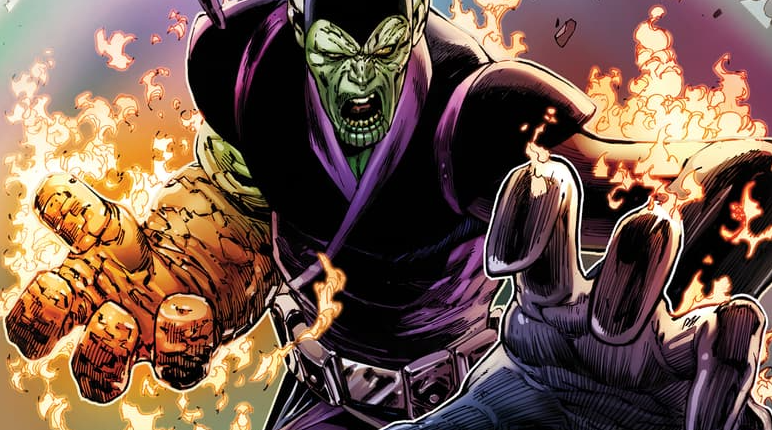
4: Super-Skrull

Super-Skrull is an alias used by multiple Marvel comics characters. Essentially, Super-Skrull can refer to any enhanced member of the Skrull race. But when comic book fans refer to “Super-Skrull,” they typically mean Kl’rt, who appeared in Fantastic Four #18, and Kl’rt is the “Super-Skrull” who takes this spot. The Skrulls imbued Kl’rt with the Fantastic Four’s powers. Kl’rt possesses all the Fantastic Four’s powers. He’s an obvious threat.

But Kl’rt’s dominance runs deeper. Typically, he has better control over his powers, and his powers are improved versions of the Fantastic Four’s. Since he’s a Skrull, Kl’rt has natural shapeshifting abilities. Throw in hypnosis, and one can see why Super-Skrull Kl’rt was chosen to pave the way for a new Skrull Empire invasion. While Super-Skrull poses a threat to the Marvel universe as a whole, Kl’rt was designed to take on the Fantastic Four and has been a constant thorn in the side of Marvel’s first family.

3: Annihilus

Annihilus is another villain who poses a threat to the entire Marvel universe. Spoiler alert: The same can be said of the remaining villains on this list. Annihilus is an interdimensional insectoid conqueror and tyrant hailing from the Negative Zone, a pocket dimension located within Marvel’s main timeline. He attempted to take over the Negative Zone by wielding the Cosmic Control Rod. In classic Reed Richards fashion, he postulated that he needed the Cosmic Control Rod to treat Susan Richards during her pregnancy, and instead of asking for the rod, he stole it from Annihilus. The team intended to return the rod when they were done using it, but Annihilus took exception to the theft. Leave it to Reed to kick a hornet’s nest.

Since their first meeting, Annihilus and the Fantastic Four have been uneasy allies and foes on various occasions. Annihilus works best as an irritant to the Fantastic Four. The animosity has led to some stellar storylines that get personal.

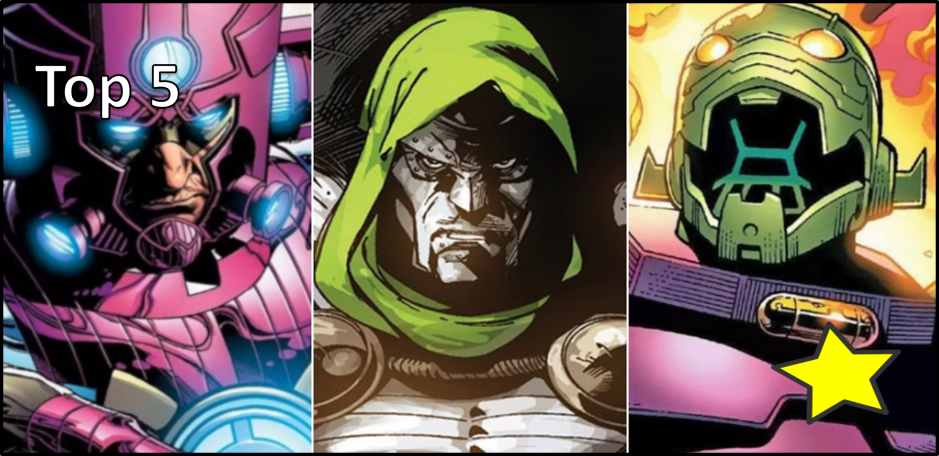
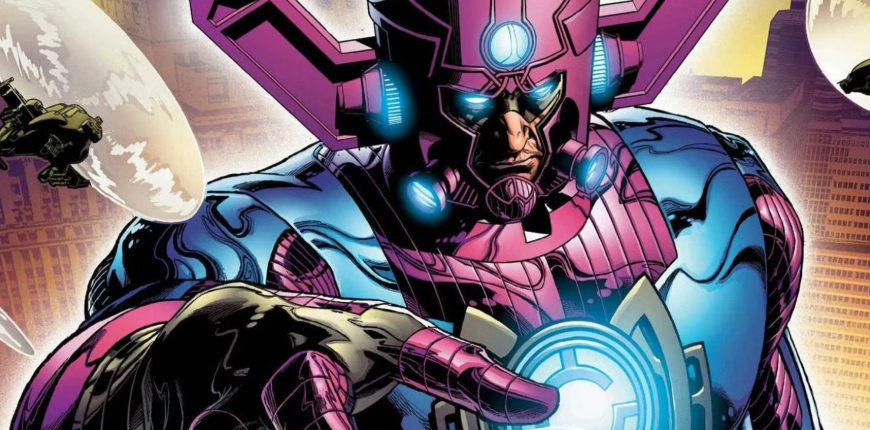
2: Galactus

Galactus needs little introduction. He’s the big guy in blue and purple. Even if Galactus needed an introduction, he has countless heralds to do that for him. Galactus is more of a force of nature. He needs to feed on a planet’s essence to survive. Earth and Galactus happen to collide, and when they do, the Fantastic Four serve as Earth’s guardians.

But Galactus’s link to the Fantastic Four (and the Marvel universe) runs deeper than the surface. Galactus wields the power cosmic; the Fantastic Four were transformed by cosmic rays, originating from the power cosmic. Galactus also happens to be the last surviving member of the previous multiverse, the Sixth Cosmos. Due to a plague named the Black Winter, the universe began dying, and Galan (Galactus before he became Galactus) searched the cosmos to find a cure. He failed. Galan proposed to the remaining survivors that they die with glory by piloting one of their starships into the heart of the Cosmic Egg. Everyone aboard the vessel died, except for Galan. He fused with the Sentience of the Sixth Cosmos to become Galactus, the Devourer of Worlds.

I love Galactus’s origin. It humanizes him. He’d easily take the top spot if it weren’t for one Fantastic Four villain.

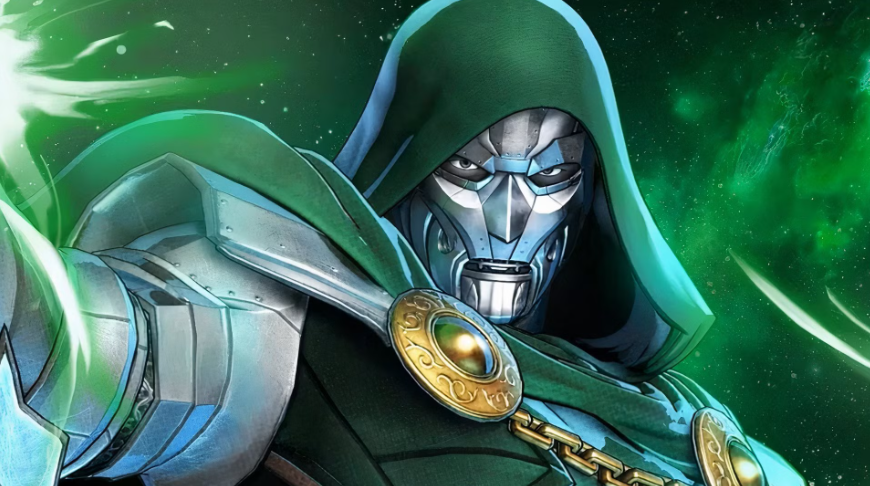
1: Doctor Doom

Obviously, Doctor Doom takes the top spot. As mentioned before, Victor von Doom blends magic and science to become one of the Marvel universe’s greatest threats. He rules Latveria with a literal and figurative iron fist and intends to do the same with the rest of the world. Doom believes the world/universe needs a ruler smart and cunning enough to lead. He happens to be the best person for the job.

Even though Doctor Doom threatens the universe, he’s the perfect Fantastic Four villain because of his ties to Reed Richards. The two were college rivals. Doom blames Reed for the accident that cost him his face and drove him to the far reaches of the earth, where he studied magic to coincide with his brilliant scientific mind. Doctor Doom is forever linked to the Fantastic Four. He’s iconic. He’s a threat as big—if not bigger—than Thanos, and I can’t wait to see what the MCU has in store for this character.

Did we get the list right? Let us know who your favorite Fantastic Four villains are in the comments. Thank you for reading, and wherever you are, I hope you’re having a great day.

Geekly News: July 6, 2025, Far Far Out and Others Launch of Crowdfunding Sites

Happy Sunday, Geekly Gang! Kyra Kyle here with another week of geek news. This week is a little quiet due to the United States Holiday, the Fourth of July, and the upcoming DCU and MCU movies: Superman and Fantastic Four: First Steps, respectively. So, we don’t have any major news to report. Instead, let’s discuss some board game releases for the upcoming week.

Mafia Blitz Launches on KickStarter

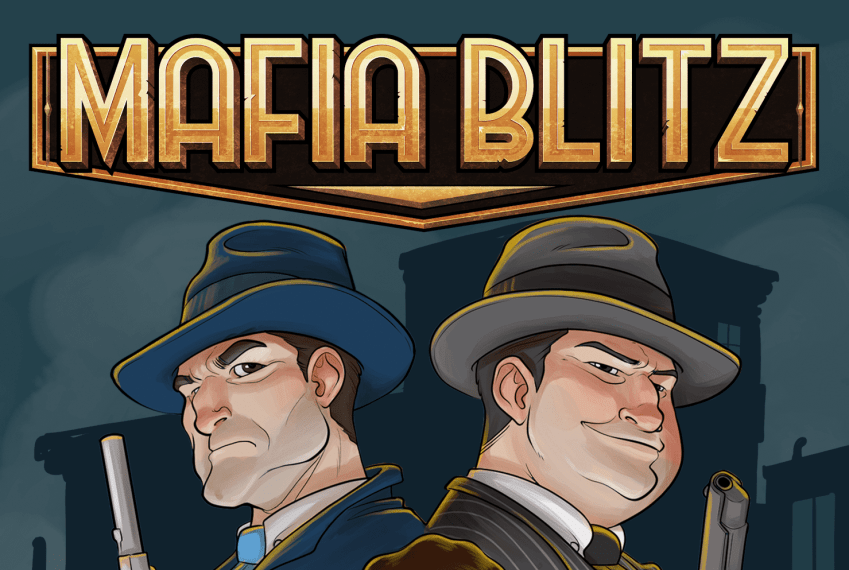
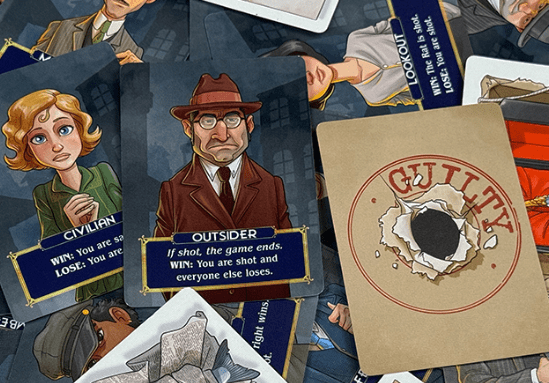
Honestly, I’ve never cared for social deduction games, but fast-paced social deduction games that don’t include player elimination (like One Night: Ultimate Werewolf), I can get behind. That is the premise of Mafia Blitz. Mafia pioneered the social deduction game. Mafia Blitz, designed by frequent Meeple Mountain contributor Mark Iradian, aims to do the same for quick social deduction games. Each role has unique win conditions, with many roles having overlapping win conditions. There are even some roles that include end-game triggers.

I like Mafia Blitz’s approach of having one price point: $20. Too often, crowdfunding projects include multiple add-ons, which can lead to a different gaming experience from one copy of the same game to the next. Mafia Blitz doesn’t have that issue. If you’re interested in Mafia Blitz, check out their KickStarter page.

Paradise: A Wastepunk Boardgame Launches on GameFound

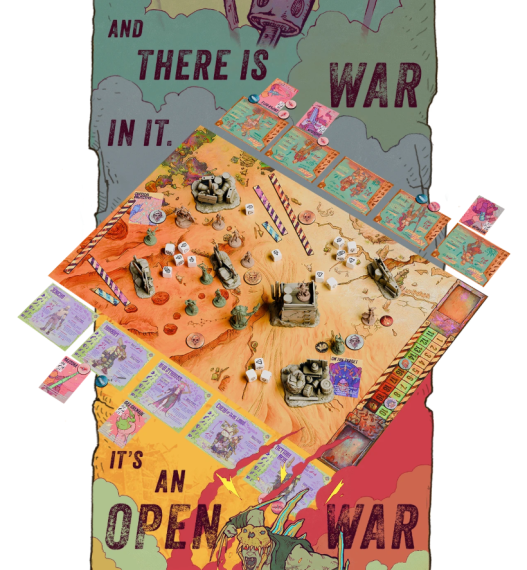
Paradise: A Wastepunk Boardgame is another board game type I don’t typically care for (a skirmisher combat game), but it’s another one that has me intrigued. Its setup reminds me of a Memoir ’44 that has character abilities. Coincidentally, Memoir ’44 is one of the few skirmisher games I enjoy.

Throw in some quick dice combat, what appears to be gear cards, and detailed terrain pieces, and Paradise: A Wastepunk Boardgame has my attention. I also love the colorful palette Mindwork Games uses. Paradise: A Wastepunk Boardgame is Italian board game design studio Mindwork Games’ first design. They give me strong early CMON vibes. Both companies began as purveyors of awesome miniatures. That fact should let you know the level of detail this game’s miniatures will have. I wonder what the quality difference is between the PVC and resin miniatures. The resin minis are more expensive, and resin minis tend to break more easily than PVC minis. It’s something to consider.

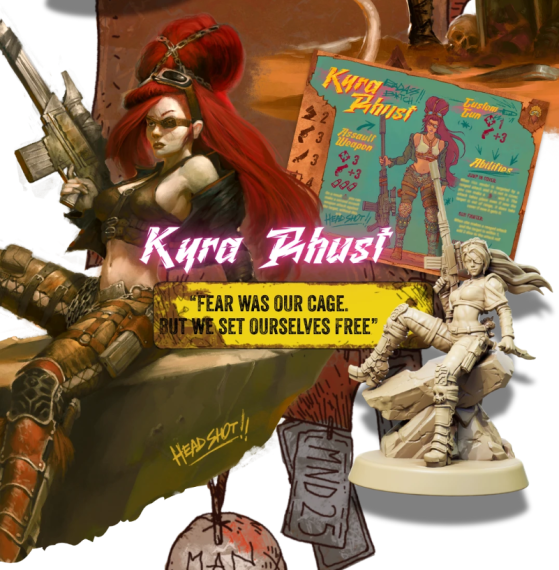
On a personal note, I’m considering backing Paradise: A Wastepunk Boardgame because of the character named Kyra Rhust. We’re both Kyra. And this Kyra looks like she may be a healing sniper like Ana from Overwatch (Ana was one of my mains–yay!). If you’re interested in Paradise: A Wastepunk Boardgame, give its GameFound page a look.

Far Far Out Lands on GameFound

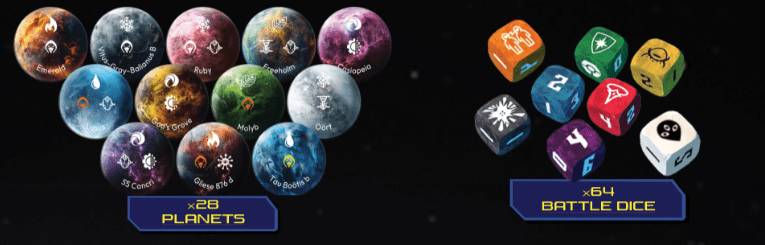
Far Far Out looks fantastic. The Netherlands-based game design group Studio Inifinitus offers multiple ways to win in this Civilization-like board game. The system tiles look amazing. These system tiles interlock and contain planets.

Players then place planets on top of the system tiles. I’m unsure if the planets always spawn on specific systems or if it differs each game. My guess is that players can change up which systems a planet can be placed. Far Far Out is stunning.

The game lists three ways to win. Far Far Out’s inclusion of 64 battle dice–64!–suggests that one method for victory is military/combat, but Far Far Out insists these battle dice serve multiple purposes. Far Far Out features a lot of exploration. I like that in a game set in outer space. We don’t know too much about the game’s mechanisms, but they have us intrigued.

Far Far Out’s more expensive pledge (around $175) includes intricate miniatures, while its less expensive pledge (around $117) includes detailed standees. The only difference I’ve found between the two versions is the unpainted miniatures (pictured above), but Far Far Out leaves the description of its more expensive pledge as “all deluxe content.” The campaign could add more deluxe content, so keep an eye out. The price tag is a bit high because Far Far Out includes a lot of bits. This is a premium game with a premium price. If you’re interested in Far Far Out, zoom to its GameFound page.

Rest in Peace, Jim Shooter

Former Marvel Comics Editor-In-Chief and comic book visionary Jim Shooter passed away on June 30, 2025. Shooter has a complicated comic book history. On one hand, he “rescued” the comic book industry. By the mid-1970s to early 1980s, comic books had gone stale. A 13-year-old Shooter would get his start with DC Comics and proceed to pull comic books out of its slump. During his time as Marvel Comics Editor-In-Chief, Shooter orchestrated the massive crossover event, Secret Wars, which is the major event the MCU is currently building toward. But Shooter wasn’t without his share of controversy.

Shooter’s Marvel Comics was openly homophobic, refusing to feature queer stories. Writer/artist John Byrne was forced to conceal Northstar’s sexual orientation for years before the character became the first openly gay comic book character. Instead of letting Northstar out of the closet, Shooter penned the first comic book that featured a queer storyline: two gay men attempt to r*pe Bruce Banner and this caused Banner to transform into The Hulk. Shooter had a “Don’t Say Gay” Policy with Marvel Comics. This restriction prevented positive queer representation in Marvel Comics for over a decade.

Still, Jim Shooter (during his teen years) wrote the first race between Superman and The Flash. This race between titans has become a tradition for DC Comics, and he solidified much of the Legion of Super-Heroes lore during his early tenure. Shooter even created one of my favorite Superman villains, Parasite. And Shooter’s jump to Marvel Comics ended the revolving door of editors after Stan Lee had transitioned to Marvel Films. Shooter was the editor who oversaw the growth of Chris Claremont and John Byrne’s classic run of The Uncanny X-Men, which led to the team becoming a global phenomenon. The Uncanny X-Men also saw the inclusion of many BIPOC stories.

Shooter has an impressive comic book history and a checkered past with queer inclusion. His contributions to comic books, and especially Marvel Comics, will not be forgotten. As a member of the LGBT community, I wish Shooter had done more for LGBT inclusion in Marvel comics. Even so, my thoughts go out to Shooter’s family. Rest in Peace.

That’s all the geek news we have for this week. Thank you for reading, and wherever you are, I hope you’re having a great day.