Geekly News: August 31, 2025, MCU X-Men

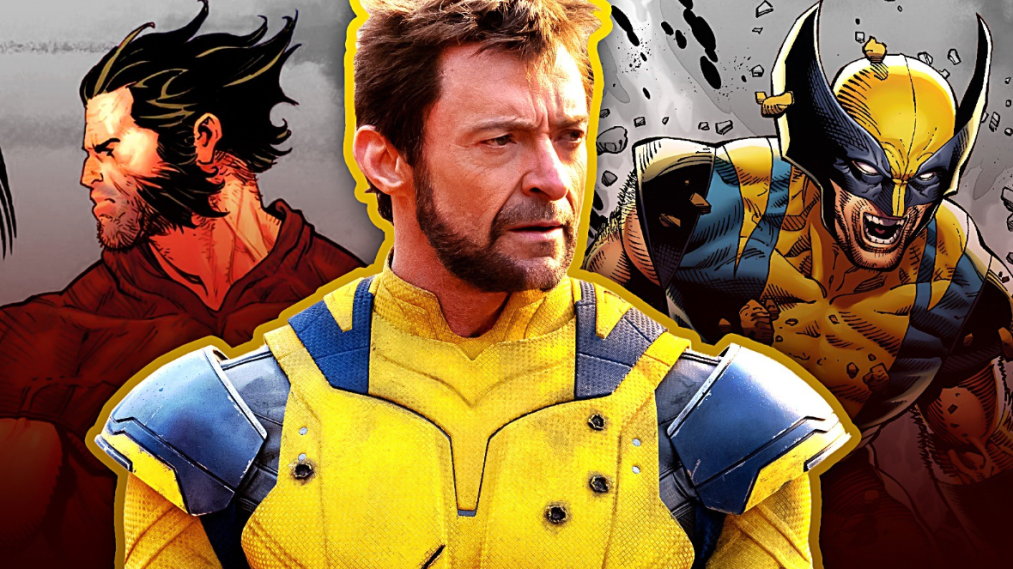
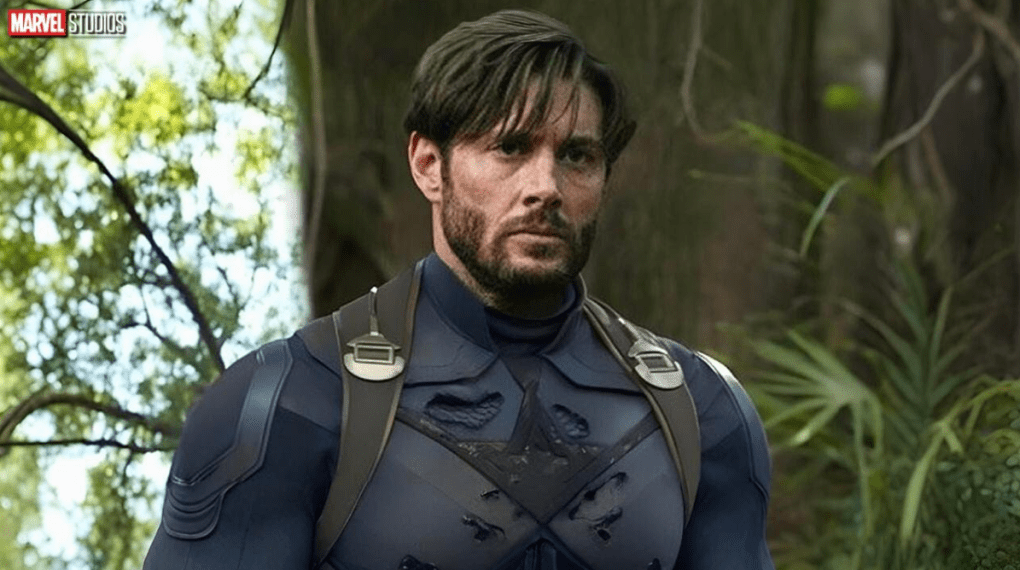
Happy Sunday, Geekly Gang! Kyra Kyle here with another week of Geek News. We have several new releases for video games and board games, but before we get to those, the MCU made a somewhat major announcement: they’ve started work on their version of the X-Men. Okay. The MCU was going to begin work on the X-Men within the next year, so this may not be the biggest of headlines, but this could lead to future headlines.

The MCU Begins Work on X-Men

Thunderbolts* may not have done as well at the box office as the MCU had hoped, but it was a great recent entry for the MCU. The Thunderbolts*’s director, Jake Schreier, proved he could handle the quirky and dysfunctional family dynamics of the New Avengers. He even explored the team’s mutual trauma and had them bond. Marvel agrees with me. Early this year, Marvel Studios gave Jake Schreier the nod as the upcoming X-Men movie’s director, meaning Marvel’s mutants are in good hands. In a recent interview with Empire Magazine (via Deadline), X-Men director Jake Schreier confirmed he’s already working on X-Men.

Schreier doesn’t elaborate on his statement, so we don’t have much to glean from what he said. He literally said work on X-Men has begun. Okay. Looks like we may need to extrapolate. That’s right. Buckle up, because we’re flooring the gas pedal into MCU speculation territory.

Early this month, we mentioned an unnamed MCU movie scheduled between the two upcoming Avengers movies (Doomsday and Secret Wars). I stand by our reasons for the MCU films we thought could be released between Doomsday and Secret Wars: Deadpool 4, Black Panther 3, Blade, and Doctor Strange 3. Schreier mentioned X-Men would begin filming next year. Taking recent MCU production practices into advisement, this could add X-Men to the list of possible movies to fill the “unnamed MCU” film slot. But I’m reluctant to add X-Men.

The X-Men will need more build-up than a standard MCU film production. While I’m excited for an X-Men MCU film, my enthusiasm rises with the thought that X-Men will receive an additional year of filming, ensuring the film is the best it can be. X-Men will have too much going on for a quick year-and-a-half turnaround. That production schedule may work for Thunderbolts*, not X-Men. Asking the MCU to squeeze in an X-Men movie between Avengers: Doomsday and Secret Wars is a huge ask.

However, we should expect X-Men casting news to heat up in 2026. Until now, we’ve had mostly speculation. Geekly even did our own fan casting for the MCU’s X-Men. But that’s what most “X-Men Casting” has been to this point, fan casting. With Scheier’s announcement, X-Men will begin filming in 2026, and casting rumors will be more than speculation. I’ll be on the lookout for trusted industry insiders (like Daniel RPK, who has a great track record with MCU casting news) to report on potential X-Men cast members. In short, if we see someone consistently cast in a role for months by a trusted industry insider, there’s a great chance the actor has been cast for the role. This is the time for X-Men rumors to boil.

Stay tuned. 😉

Transecopia Emerges on GameFound

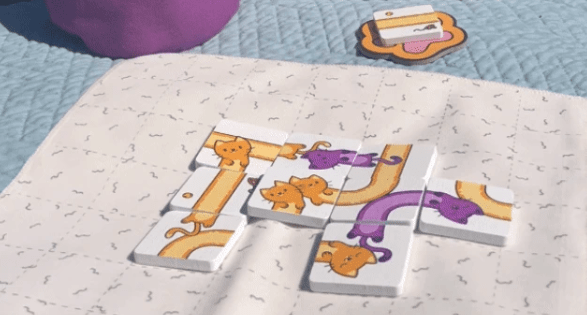
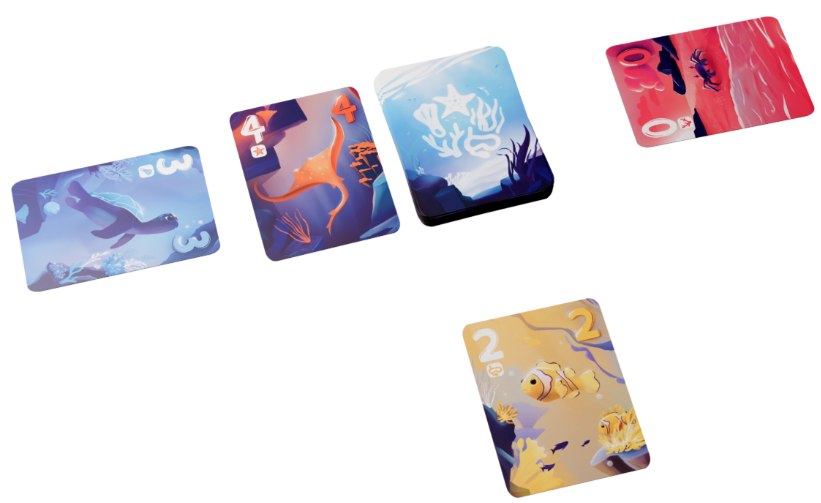
Transecopia adds hidden placement to the dice placement mechanism. Turns go quick with simultaneous play, and multiple win conditions keep the game fresh and exciting. I’m unsure of Transecopia’s theme, but I imagine it has to do with underwater exploration, based on the game’s artwork. Since I’m unsure exactly what you’re doing, I’ll be focusing on the gameplay, which looks fantastic. Transecopia has a relatively simple concept. Players simultaneously roll dice so everyone can see. Then, everyone places screens in front of their player boards and begins placing dice.

Player boards are resolved in areas, positioned top to bottom and left to right. Whoever has the highest value of dice located in each area, earns the resources from that area. Like I said, Transecopia has a simple concept, but you’ll need to outthink your opponents. Armed with the knowledge of what everyone rolled during the round, you can take educated guesses to where you think your opponents will place their dice. The big reveal is a blast and bound to yield audible responses.

Since Transecopia is releasing on GameFound, we have little information on how much pledges will be at this time. If you’re interested in Transecopia, check out its GameFound page.

The Gilded Realms Marches onto GameFound

Harness the unique strengths and skills of your people in the robust kingdom builder, The Gilded Realms. Armed with their own factions, players compete to defend and fortify the crucial region, The Pristine Mountains. The Gilded Realms offers a lot of customization to each game. Faction upgrades come in handy as you try to build the best empire.

The Gilded Realms offers a ton in its box. This second printing, offered on GameFound, features a new expansion for an extra wrinkle. The Gilded Realms has received great reviews. It offers an intriguing hybrid of simultaneous and turn-based gameplay. Again, The Gilded Realms is on GameFound, so we have little information on how much a pledge will cost. My guess would be in the triple figures, over a $100. You’d be getting a lot of game at that price. If you’re interested in The Gilded Realms, check out its GameFound page.

Airport Empire Lands on KickStarter

Who hasn’t wanted to run their own airport? Airport Empire puts you in charge of a small airstrip and tasks you with building it into an airport empire. Events occur to keep you on your toes. You can buy upgrades to expand your tiny airstrip to an airport. The airport pieces look great. But watch out. You must meet your needs to upkeep your growing business.

You score points in three categories: customer satisfaction, profits, and efficiencies. I love Airport Empire’s example of “an air traffic control tower is great to improve efficiency, but does little to improve your bottom line, where as maintenance hangars brings in revenue but go unnoticed by passengers.” I’m wondering if you don’t “need” these structures to run your airport. That’ll be fun. The player with the most points at the end of the game wins.

I like that Airport Empire keeps each version the same. Too many board game campaigns offer varied game experiences with deluxe versions of the same game. And Airport Empire offers plenty of pledge options, ranging from $49-95. That’s a good range for what appears to be a middle-weight game. If you’re interested in Airport Empire, you can check out its KickStarter page.

Kirby and the Forgotten Land – Star-Crossed World Expansion and Switch 2 Upgrade Released

Kirby and the Forgotten Land was–and still is–a great three-year-old platformer. Kirby gets his time for a Switch 2 upgrade, but this upgrade comes with an expansion, Star-Crossed World. The 12 new levels add some interesting twists to the fun formula. Hilarious Mouthful Mode transformations and the levels themselves make Star-Crossed World a worthy addition. I am a little worried by the Switch 2 upgrades. Switch 2 upgrades should be free if players already purchased the game for the Nintendo Switch, but this upgrade does come with an expansion. Upgrading Kirby and the Forgotten Land from Switch to Switch 2 does give you the Star-Crossed World expansion. This may be an adequate middle ground.

That’s all the geek news we have for you this week. Thank you for reading, and wherever you are, I hope you’re having a great day.

Top 5 Black Panther Villains

Eyes of Wakanda continues its run this month, so we’re celebrating by recounting the greatest Black Panther villains. Hey, hey! Kyra Kyle here. We’ve done the Top 5 villain treatment to several Marvel and DC Comics heroes. It’s only fitting that Black Panther receives his Top 5 Villains.

Honorable Mention: Ulysses Klaw

I feel like we have an honorable mention a lot in these lists, but Ulysses Klaw makes this list in this manner for a reason. He’s a Marvel Universe villain more than just a Black Panther villain. Sure, his origin has Wakandan roots, but Klaw has often battled the Fantastic Four and Avengers. Everyone should fear the man with a body of pure sound.

5: Achebe

Achebe is the Joker to Black Panther’s Batman. Little is known about Achebe, only rumors. The most persistent of these rumors is that Achebe was once a Ghudazan farmer who helped rebel guerrillas from the neighboring country of Ujanka. He helped nurse the fighters back to health, but his wife fell in love with the rebel leader, and the rebels repaid his kindness by stabbing him 32 times, razing his farm, and taking his wife. What is known is that Achebe made a deal with Mephisto and serves as an emissary of Marvel’s version of the Devil. Achebe is ruthless, unpredictable, and a constant thorn in Black Panther’s side.

4: T’Channa

T’Channa is T’Challa’s sister in an alternate universe (Earth-2301). She and her siblings were beaten (she implies brutally) by T’Challa in a contest for Wakanda’s throne. As a result, she left Wakanda for Latveria, where she joined forces with Victor von Doom, until she became strong enough to overtake him as the new Doctor Doom. Honestly, I wouldn’t mind seeing T’Channa’s Doom in an upcoming Marvel project. She blends Wakanda’s technology with the magic she learned from Victor von Doom to become a menace, not just to T’Challa, but to the entire world.

3: White Wolf

Hunter is T’Challa’s adopted brother. The two were close as children. They even competed in childish games like footraces. But Hunter was born a foreigner from the African nation Mohannda. He was the sole survivor of a plane crash before T’Chaka, T’Challa’s father, adopted him. Hunter doesn’t look like other Wakandans. He has light skin. When he was young, Hunter was the Wakandan envoy to European nations because he looked like them. This othered Hunter from his fellow Wakandans. Eventually, Ulysses Klaw killed T’Chaka and Ramonda (Hunter’s adoptive parents), and he was orphaned again. Hunter blamed T’Challa for his problems and sought revenge against Klaw. He strives to make the country of his birth, Mohannda, as technologically advanced as Wakanda. Hunter’s nationalism often puts him at odds with T’Challa.

The Winter Soldier has been nicknamed White Wolf in the MCU, so it’s unknown if a White Wolf will make an appearance. Fingers crossed that he will.

2: Erik Killmonger

Born N’Jadaka, Killmonger needs little introduction. Portrayed by Michael B. Jordan, he exploded on the screen in the original Black Panther movie. Killmonger is a Wakandan exile and vows to take the Black Panther mantle. He often challenges T’Challa to ritual combat. Even when he dies, he finds ways to return. One of his most recent reanimations came in the form of an alien symbiote (like Venom). N’Jadaka will never rest until he’s taken his rightful place on Wakanda’s throne. Death can’t even stop him.

1: M’Baku/Man-Ape

M’Baku’s alias Man-Ape has gone out of favor for obvious reasons. It’s problematic. While the MCU has mostly shown M’Baku as one of T’Challa’s allies, he rarely ends up on the same side as the Black Panther. While T’Challa controls the Panther cult, M’Baku is head of the Gorilla cult (hence his alias Man-Ape). In the comics, M’Baku detests Wakanda’s technological revitalization. He seeks to outlaw technology and return the nation to its mystical roots. Often, M’Baku will use greater conflicts to undermine Wakandan leadership. He’s cunning and willing to ally himself with anyone he thinks will grow his standing within Wakanda. Occasionally, that will be Black Panther. But often, he’ll choose Black Panther’s opposition.

I’d love to see Winston Duke’s M’Baku receive more shine in the MCU. I also like how the MCU changed his alias to Great Gorilla. That works.

Did we get the list right? Let us know who you would add or remove in the comments. And wherever you are, I hope you’re having a great day.

Eyes of Wakanda Review

Happy Friday, Geekly Gang! Marvel Studios Animation released its fifth project in its short four years of existence with Eyes of Wakanda. This series looks amazing. The premise of time-hopping through history, showing Wakanda’s secret spies, the Hatut Zaraze (War Dogs), retrieving Wakanda’s advanced technology, sounds exciting. And Eyes of Wakanda is fun, I can see where storyboard artist Todd Harris wanted to go with Eyes of Wakanda’s story, but the reduced episode run makes it difficult for the Eyes of Wakanda to find its stride.

The War Dogs’ mission is to sneak into outside countries and recover lost Vibranium artifacts that, if they fall into the wrong hands, could expose or bring harm to Wakanda. The Hatut Zaraze do their best to keep Wakanda hidden from the outside world. This idea dovetails into the first Black Panther film; Killmonger found a Wakandan artifact on display in a museum. More on this moment later. Eyes of Wakanda’s first season features four key moments in Wakandan history: the Bronze Age, the Trojan War, the beginning of China’s Ming dynasty, and the First Italo-Ethiopian War. Each episode leans into the region’s cultural aesthetics. Eyes of Wakanda shows accurate depictions of the people who lived in each location during that time. I can’t say it enough, the art style is fabulous.

I also like how these four episodes are stand-alone stories. You don’t need to watch either of the Black Panther movies or do any other MCU homework. Everything you need to know is contained in four half-hour episodes. The first and final episodes of Eyes of Wakanda’s first season stand out above the middle two. I like the idea of reintroducing Iron Fist in the third episode–there’s hope we’ll have another Iron Fist sighting in the MCU–but the middle two episodes don’t do as much to explore Wakanda. The first episode shows how far advanced Wakanda is from the rest of a Bronze Age society. The fourth directly ties into Black Panther and Killmonger (this is the artifact, the axe, Killmonger steals from the museum). I have mixed feelings about forcing Eyes of Wakanda to connect with Black Panther, but the MCU is going to MCU. The bookend episodes also delve further into their protagonists.

In the first episode, we follow failed Dora Milaje candidate Noni, while the fourth episode centers on eager Wakandan Prince Tafari. I didn’t see the same character development in the middle two episodes. Or at least, the middle two didn’t stand out as much.

Eyes of Wakanda’s short run works against it. A couple more episodes like the first and fourth could’ve allowed Eyes of Wakanda to find its footing. Several television shows need at least two or three episodes to “really get going,” and I got that vibe from Eyes of Wakanda. With a larger episode order, Marvel Studios Animations could’ve shown more sides of Wakanda.

Still, what’s here is fun, and two hours isn’t a long investment for an animated series. And I can’t stress how amazing Eyes of Wakanda’s animation is. To this point, What If? was Marvel Studios Animations’ crowning achievement for art style and direction. Eyes of Wakanda gives What If? a run for its money. Thank you for reading, and wherever you are, I hope you’re having a great day.
Getting Into Comics: Black Panther Starter Stories

Black Panther has existed since the mid-Sixties, but Marvel produced some of the best Black Panther stories after 2000. Which Black Panther stories should you read first?

Hey, hey! Kyra Kyle here. As you can guess, we’re talking about Black Panther starter stories today. Like we’ve been doing for the past few entries in this series, we’ll split these stories into single issues and story arcs. Today, we’ll begin with single comic book issues. Enjoy!

Single Issues

“Introducing The Sensational Black Panther” (Fantastic Four #52; written by Stan Lee/art by Jack Kirby; 1966)

I considered including this issue and a few others as part of a story arc. The next issue would include vibranium’s first mention and sets the stage for Ulysses Klaw to make his first appearance, but I chose to stick with Black Panther’s first appearance. “Introducing The Sensational Black Panther” centers around the Fantastic Four being invited to Wakanda. The enigmatic leader sends a hover car to take Marvel’s family to his homeland. The Fantastic Four agree, and when they arrive in Wakanda, they must survive a robotic jungle and the Black Panther himself. By themselves, the Fantastic Four are no match for Black Panther, but the team joins forces and unmask their assailant.

It turns out that T’Challa (Wakanda’s leader who invited the Fantastic Four to Wakanda) and Black Panther are the same. Black Panther says he only wanted to test the fours’ abilities and meant no harm by his attack. “Introducing The Sensational Black Panther” does a good job of showing Black Panther as formidable. Like I said, many key Black Panther elements are revealed in future issues, but “Introducing The Sensational Black Panther” is a great place to start reading.

“Death Calls for the Arch-Heroes” (Avengers #52; written by Roy Thomas/art by John Buscema; 1968)

“Death Calls for the Arch-Heroes” is another issue that sets up Black Panther; this time, it’s Black Panther’s first appearance as an Avenger. Until this issue, Black Panther served as an occasional Avengers ally. “Death Calls for the Arch-Heroes” begins with Black Panther visiting Avengers HQ to find the Avengers dead. They aren’t actually dead; they’re in a coma. Since Black Panther is an outsider, he gets blamed and taken into custody. Black Panther breaks out of jail, learns that the Grim Reaper (who wants revenge for the death of his brother, Wonder Man) is behind the plot. The two fight, Black Panther wins, reverses the effects of Reaper’s coma weapon, and then becomes a full-fledged member of the Avengers.

“Death Calls for the Arch-Heroes” marks an important milestone in Black Panther’s development. Prior to this issue, Black Panther seldom left Wakanda for long. This issue turned Black Panther into a global figure, and it put Wakanda on the map.

Story Arcs

Panther’s Rage (Jungle Action #6-18; written by Don McGregor/art by Rich Buckler, Billy Graham, and various others 1973-1974)

It took a while for Marvel Comics to see potential in Black Panther. Sure, Black Panther showed up in plenty of Fantastic Four comic books. He was even a card-carrying member of the Avengers for half a decade by this point, but he was relegated to the edges of comic book stories and didn’t have his own title. At the same time, there was another Marvel comic book named Jungle Action that rubbed proofreader (at the time) Don McGregor the wrong way. Jungle Action featured white people saving Africans or white African people being threatened by black African people. McGregor demanded that Marvel feature a black African hero. He turned to the seldom-used Black Panther.

McGregor’s initial run on Jungle Action #6-18 (Panther’s Rage) is the birth of who we know as Black Panther. T’Challa returns to Wakanda to find his homeland torn by civil war. A revolutionary leader and terrorist named Erik Killmonger had returned to Wakanda and threatened T’Challa’s claim to the throne. Yes! Panther’s Rage is the first appearance of Killmonger. To say Panther’s Rage was groundbreaking is an understatement.

More than a decade before Watchmen, Panther’s Rage was the first graphic novel. It’s been collected and reprinted numerous times, and it’s worth the read. Writer Don McGregor was no stranger to pushing boundaries. Years before Panther’s Rage, he wrote a story that featured comic books’ first interracial kiss. If you want to know Black Panther better, Panther’s Rage is a great place to start.

Panther’s Quest (Marvel Comics Presents #13-37; written by Don McGregor/art by Gene Colan, and various others 1988-1989)

After his legendary run on Jungle Action, McGregor left Black Panther for over a decade. He returned to the character with Marvel Comics Presents. The Marvel Comics Presents title was an odd throw-back to early Marvel titles. Anthology series like Tales of Suspense (which featured Iron Man’s first appearance) and Journey into Mystery (which included Thor’s first appearance) had fallen out of favor. Marvel Comics Presents featured stories for multiple characters. We’re interested in the Black Panther storyline, Panther’s Quest.

Panther’s Quest is another McGregor epic. Following rumors that his mother (whom he had never known) may still be alive, T’Challa conducts a stealth mission in South Africa. What unfolds is a harrowing tale of social injustice mixed with intrigue and plenty of action. Always willing to broaden comic books’ horizons, McGregor tackled story elements like Apartheid and the discrimination someone who looks like Black Panther faces. In short, Panther’s Quest is another Black Panther must-read.

The Client (Black Panther vol 3 #1-5; written by Christopher Priest/art by Mark Texeira 1998)

The Client marks the first entry for Christopher Priest on this list. Priest is another writer synonymous with Black Panther. Priest is also the first black writer and editor in mainstream comics. He’ll show up time and time again on this list. We couldn’t include all of Priest’s works. The two series of his that didn’t quite make our list are both named Enemy of the State. You should give them a read as well. Getting back to our entry, The Client makes this list because it introduces several key Black Panther figures like Okoye, Zuri, and Nakia. And the story does a great job of balancing the odd space Black Panther occupies.

Black Panther sets up refugee camps and offers political asylum for people fleeing ethnic wars, but at the same time, he pushes for systematic change and battles street crime. T’Challa is a man attempting to do it all. But that’s why a lot of Black Panther’s key support system (like Okoye) are introduced. Within The Client’s pages, Priest develops what it means to be Wakandan.

Killmonger’s Rage (Black Panther vol 3 #16-20; written by Christopher Priest/art by Sal Velluto and Bob Almond 2000)

Christopher Priest pushed the Black Panther forward, but he also paid homage to what came before. Killmonger’s Rage is a fitting spiritual successor to Panther’s Rage. Priest honors McGregor’s story by exploring T’Challa and Killmonger’s relationship. Priest’s Killmonger is a Wakandan corrupted by Western values. He’s the antithesis of T’Challa and Wakanda. Black Panther must face an intriguing mirror version of himself. Killmonger’s Rage shows what would happen if T’Challa rejected his Wakandan roots. 2018’s Black Panther uses a storyline or two from Killmonger’s Rage.

Sturm Und Drang (Black Panther vol 3 #26-29; written by Christopher Priest/art by Sal Velluto 2000-2001)

The world is on the verge of World War III, and Black Panther serves as mediator. Sturm Und Drang shows why T’Challa is different from most superheroes. He’s the leader of a country. Tension exists between the underwater nation of Lemuria and the surface world. Klaw works behind the scenes to stir up tensions among various nations; his machinations unnecessarily draw other countries into the mix. Black Panther advocates for peace, but at the same time, he refuses to back down or show any signs of weakness.

Sturm Und Drang explores Black Panther’s leadership during wartime. He must deal with group leaders like Namor, Magneto, and Doctor Doom. Sturm Und Drang is also the final Priest story arc on this list. He had an amazing run on Black Panther. You can’t go wrong if you see Black Panther and Christopher Priest. If you’re interested in reading Black Panther, Priest did more than anyone in shaping this character and showing his many facets. Priest’s run is chef’s kiss good.

See Wakanda And Die (Black Panther vol 4 #39-41; written by Jason Aaron/art by Jefte Palo 2008)

See Wakanda And Die might be a slight understatement of a title. This story acts as a standalone story and a tie-in for Marvel’s 2008 event, Secret Invasion. I know. I know. The Secret Invasion television series almost ruined the MCU. Believe me, the comic book story was handled with more care. But we’re talking about See Wakanda and Die. An army of Skrulls has come to Wakanda to claim all the country’s vibranium. But Wakanda won’t go without a fight.
This action-packed story shows two complementary sides of the Black Panther. First, he’s a leader, shown through tactical decisions and care for his people. Second, he’s a hero, placing himself on the frontlines. These two sides merge to make a satisfying read with excellent pacing.

A Nation Under Our Feet (Black Panther vol 6 #1-12; written by Ta-Nehisi Coates/art by Brian Stelfreeze, Chris Sprouse, and Karl Story 2016-2017)

A Nation Under Our Feet is the most philosophical story on this list. It explores Wakanda’s identity, tensions, traditions, and where they fit in modern society while looking toward the future. This examination extends to the monarchy. Does Wakanda still need the Black Panther?

These topics make sense, considering A Nation Under Our Feet’s writer Ta-Nehisi Coates. Coates is an American journalist and activist who often writes about cultural, social, and political issues, specifically African Americans and white supremacy. Coates authored “The Case for Reparations,” so Wakandan story that examines its past while looking at how to move forward is something that Coates has immense experience.

But A Nation Under Our Feet also features the art of Stelfreeze and Sprouse, who present a brilliant Afrofuturism that has a touch of science fiction but is steeped in African art and culture. The result is A Nation Under Our Feet becoming a comic you can lose yourself in as you explore the different parts of Wakanda.

Those are the stories that made our list. Like I said, I could’ve included many more Priest Black Panther stories, and anything by Coates is a great read. Let us know which Black Panther stories you’d add to this list in the comments. Thank you for reading, and wherever you are, I hope you’re having a great day.

Fantastic Four: First Steps Review

Happy Friday, Geekly Gang! Kyra Kyle here with a Fantastic Four: First Steps review. Right off the bat, I must say 2025 is a banner year for superhero films and shows. The DCEU had been flailing for years; Superman (2025) gives the franchise new hope. The MCU has been a shell of itself in previous years, but Thunderbolts* and Fantastic Four: First Steps have been a return to form. I love that little MCU homework is needed for Fantastic Four: First Steps. Spider-Man: Homecoming aside, Fantastic Four: First Steps is the closest the MCU has felt to a Phase One movie in almost a decade. Fantastic!

I’ll try to avoid spoilers in this review. If you’ve read the Fantastic Four comic book, you should know the basis for a Galactus story. Fantastic Four: First Steps is the most comic book accurate Fantastic Four film. I mentioned in a previous Geekly News post that Shalla-Bal does have a basis in the comics; she’s Norrin Radd’s longtime romantic interest and has powers comparable to the Silver Surfer. In alternate universes, Shalla-Bal becomes Galactus’s herald in Radd’s stead, so if Earth 828 (nice tribute to Jack Kirby’s birthday, August 28th) is an alternate universe, it makes sense if she becomes Galactus’s herald. This allows Radd to become the Silver Surfer in Earth 616 (or some other Marvel universe). And Galactus is terrifying.

Galactus reminds me of the Reapers in Mass Effect: part living being and part machine. This visual effects decision makes sense. It allows for Galactus to look like his comic book counterpart. I cheered when I saw him onscreen. Galactus’s look is another great comic book accurate element. Johnny Storm figuring out Shalla-Bal’s history and pleading with her to save Earth was another classic comic book moment. Both Radd and Shalla-Bal sacrificed themselves to save their planet (Zenn-La) from Galactus, only to become Galactus’s pawns and destroy other planets.

I even liked the montage at the beginning of Fantastic Four: First Steps. It shows the team has been in the superhero/explorer/adventuring business for years, while not bogging down the film with extra runtime. While I would’ve liked to have seen John Malkovich’s Red Ghost, it made sense for Fantastic Four: First Steps to cut his scenes from the movie. Fantastic Four: First Steps had a tight 114-minute runtime. Just under two hours. That’s unheard of with modern blockbusters. Rumors swirled a few months ago that Fantastic Four: First Steps had a runtime of over two and a half hours, which would’ve made it one of the longest MCU films before edits. Fantastic Four went from being one of the longest MCU films to the fifth shortest. The audience got what it needed in that runtime. Kudos to Fantastic Four for cutting unneeded scenes.

Fantastic Four: First Steps is just what the MCU needed. Just like Superman (2025) got me excited for DC Comics movies again, Fantastic Four: First Steps got me excited for the MCU again. And like Superman, I have some notes for Fantastic Four: First Steps. The biggest is Galactus’s timeline. While Galactus does lumber through the universe on his never-ending quest for sustenance, it doesn’t make sense that Earth prepares for the titan’s visit when he’s already in our solar system. Galactus passes Jupiter by the time the Fantastic Four share their plan with the world, a plan that would take months to prepare. When the team’s first plan fails, they don’t switch to their second plan until Galactus is passing the moon. What? That timeline makes little sense.
Galactus entering our galaxy when the Fantastic Four share their first plan, and then reaching Jupiter when the Fantastic Four pivot to another plan, would make more sense. This is a nitpick, but I chuckled at this timeline’s absurdity. Invisible Woman giving birth in space with no bodily fluids is another one of my silly nitpicks. I get why Fantastic Four: First Steps chose not to include a zero-gravity placenta, but I figured I’d mention the lack of bodily fluids. Don’t get me wrong, I just finished a jumbo-sized popcorn and pretzel bites before the birth scene. My stomach appreciated the lack of floating bodily fluids. Still, Franklin Richards’s birth was the most sterile birth I’ve ever seen.
I could mention another nitpick or two, but those are smaller nitpicks, and they didn’t detract from Fantastic Four: First Steps. This is the Fantastic Four film I’ve waited for decades, and I’m so glad I got to review it on Geekly. I watched the 2015 Fantastic Four in the theater and reviewed it. Fantastic Four: First Steps was a huge upgrade. This film features the most comic book accurate Fantastic Four. And I hope Fantastic Four: First Steps begins a new trend for the MCU: less MCU homework for each project and cutting out unnecessary scenes for tighter runtimes. Fantastic Four: First Steps continues the MCU’s upward trajectory. Thank you for reading, and wherever you are, I hope you’re having a great day.