Getting Started with Area Control or Influence Games

Uncle Geekly ran a search on a popular game type, area control, and found more results than he thought. These games range from simple who controls the most regions to more complex games where area control is an aspect of the game. We’re talking starting area control or the similar mechanism area influence games, so we’ll keep it simple and easy to learn, but most of all, an area control game at its core.

Most area control or influence games employ a great build to the game, where players begin with small gains that they hope to build upon through game play. These games, more than many others, have a natural progression to them, and gamers can see why someone won. Usually, this is a game type for players who like to see the wheels turn or have a little more agency in a game’s outcome.

As usual, good old Geekly has some starter games for someone interested in this gaming genre. Let’s get to some of these smaller games and work our way up to one’s that are more complex.

Hanamikoji

Hanamikoji

We’re starting with an odd choice: Hanamikoji. It’s classified as more area influence as players compete for the attention of geishas. Hanamikoji also happens to be a two-player game, which is a little unusual as well. A group of seven geishas is placed between both players and they range in point value from 2 to 5. The first player to gain the favor of 4 or more geishas or has 11 points or more of geishas wins. This is what makes Hanamikoji area influence instead of area control. One must gain the attention of the most geishas. The game play is fast—a typical game lasts ten to fifteen minutes which is lightning quick for an area control or influence game—and it’s intriguing.

Each player is dealt cards that correspond with each geisha (for example, green twos are used to gain the attention of the green two geisha). They’ll use these cards to gain favor. The players also have four action tokens, and this is where things get interesting. Both players alternate turns using all their actions tokens. One action locks down one card from a player’s hand. A second action removes three cards from play that turn from a player’s hand. The third and fourth actions have some combination of handing your opponent some of your cards and they choose one or two of the cards handed them, and the player using these actions keep the rest. This is an excellent way of mitigating a bad draw. It also makes for a surprising amount of choices for a short and simple game.

Carcasonne

Carcassonne

Sometimes the oldies are the goodies. 2000’s Carcassonne—along with El Grande—all but popularized area control games. The two wrinkles Carcassonne adds are tile placement and worker placement. Bear with me as a quickly discuss tile placement; it does factor into area control. Each turn a player draws a land tile and places it adjacent to a tile already in the play area. These tiles will have roads, farms, cities, and/or cloisters depicted on them. When placing a tile, it must match the pre-existing tiles in the play area. Sides of tiles that show a farm can only be placed next to another tile side with a farm. So, random tiles dictate what constitutes an area. This was revolutionary at the time.

Once a tile is placed, the player may place a follower—or worker. Players gain control of areas by placing their workers on these spaces, and these workers can perform several jobs, depending on where they’re placed. Farmers work farms, monks live in cloisters, and so forth. The player with the most followers in an area when it scores gains the most points for that area. The game ends when the last land tile is played, and the player with the most points wins.

This combination of game mechanisms works well. So many other designers have used some combination of worker placement, tile placement, and area control because of how accessible Carcassonne is and these mechanisms’ inherent strategic flexibility. Carcassonne works as a great introductory game for all three game types. I’ll try not to add it to another list. No promises.
smallworldgame

Small World

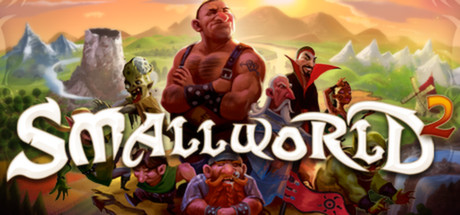
Sometimes gamers just want to conquer things. Small World takes place in a small world, where zany fantasy characters vie for control. There a lot of bells and whistles added to Small World. Each fantasy race like elves, trolls, and skeletons have their own race power, but each of these fantasy races are given one of 20 unique special powers like flying or ghostly that will make each playthrough different.

The concept is simple enough. When placing creature tokens, players start on the edge of the map. To conquer a land, they must use as many tokens as tokens in an area. If a player has enough tokens, they may conquer an adjacent land using the same method, so it’s likely that players will gain more than one area in a turn. In future turns, a player may choose to put their active race in decline (flipping their tokens upside down) and choose a new race. Players score points each turn for every area their races occupy; that’s for their active race and the race they have in decline.

At the end of the game, the player with the most points wins. That’s a common thread these games and a lot of other area control games share.

Small World does a great job of simulating combat without getting too in the weeds with it. It’s an area control game at its core with some nice window dressing, especially the use of variable player powers. Those race and special powers can be fun. Small World can also be the meanest game on this list. Players must know when to bail on a race and when to keep one. There will be a lot of hostile takeovers. It’s a small world after all.

Final Thoughts

So many of the best games on the market today use area control or area influence: Twilight Struggle, Star Wars: Rebellion, Scythe, Terra Mystica, Blood Rage, Twilight Imperium, and countless others. The games I just mentioned didn’t make this list because they get a little too complicated or they add more elements to the game than just area control.


The games I did include in this list will get new board game hobbyists the background they need to take on more complex games. Which games do you like to use as beginner area control games? You could place a worker to claim influence or it might make more sense to leave a comment.

3 Lists of 3 Unfortunate Comic Book Characters

There are several reasons a superhero or supervillain could be lame or unfortunate. Usually, it’s their name or their superpower. Some folks like to refer to these characters as morts; they aren’t long for this mortal coil. Someone take them out of their misery. Let’s take a walk on the sad side with this week’s three lists of three.

Poor Unfortunate Names

Doctor Hormone

Doctor Hormone

Yeah, Doctor Hormone was a short-lived 1940s comic, and it doesn’t hold up today to say the least. First, his name is Doctor Hormone. At best that’s the name of a product someone might sell on a late-night informercial. Second, he wears a pencil moustache and tends to sport a smarmy vibe. The good doctor of hormones doesn’t look like someone you’d leave your kids alone with on a sleepover.

But enough of those nasty thoughts. Hormone is the guy’s actual last name, because it’s a normal surname you’d find anywhere. I know of about three Phil Hormones from Hastings, Nebraska. The hormones this particular Mr. Hormone uses are “youth hormones.” These are the ones everyone knows about that keep someone young and that’s what happened to the good doctor. He was eighty-something, took a youth hormone, and became a twenty-something again. Like a high school senior, he always stays the same age.

Ebony White The Spirit

Ebony White

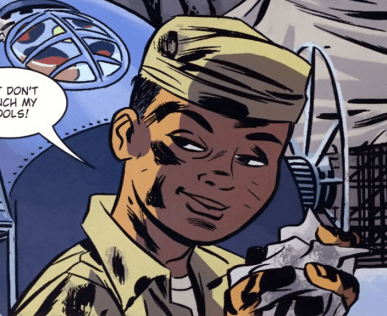
To be fair, Ebony White was also created in the 1940s. He played a major role in The Spirit comic books, but that role was as a less-than-intelligent buddy for the real hero to explain the story to. He also happened to chauffeur other characters.

His look was many stereotypes rolled into one. Dark skin and big lipped, his creator Will Eisner liked him so much that Ebony White would get his own solo storylines. Unfortunately, he became a vehicle for comedy and little else. I understand that he’s a product of his time and environment, but it’s hard to watch.

Pieface_DCComics

Pieface

Thomas Kalmaku is one of Hal Jordan’s closest friends. He knows the Green Lantern’s secret identity and keeps a journal of his deeds. When he finally receives superpowers, he improves those around him. He’s intelligent and hard working. He doesn’t deserve the nickname Pieface.

One fan theory suggests that Hal named him Pieface because he’s Inuit, and it’s a reference to Eskimo Pies. While that’s bad enough, the real reason behind the name is far worse. Pieface is a racial slur used for anyone with a round, flat face, specifically people of Asian descent and occasionally Inuits.

For decades Thomas accepts the Pieface nickname without batting an eye, and it’s only been recent incarnations of the character that have him rebel against an offensive name.

Poor Unfortunate Origins or Motives

Codpiece Comics

Codpiece

This one could be filed as lame for his powers as well as his name. It’s the whole package.

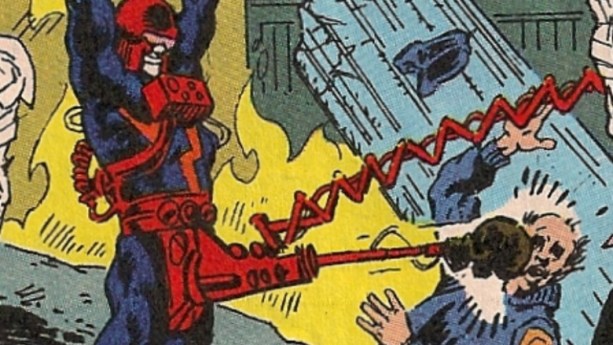
Thank goodness this guy only made one appearance in Doom Patrol #70. He lamented the size of his manhood and believed bigger was better when it came to impressing women. He never felt tall enough. It’s like Randy Newman once said, “Short people got no reason to live.”

He could’ve worn stilts and compensated for his height but apparently, he felt small in other ways and attached a codpiece outfitted with a rocket cannon (pun intended, I assume), a drill (another pun I’m sure), scissors, and a spring-loaded boxing glove (because why wouldn’t you).

His codpiece doesn’t last long (again, I assume the pun is intended) and he’s thwarted by the Doom Patrol, but let’s be honest, he was doomed from the start. One of the creators had to have been going through something. Either that or they need to share what they’re smoking.

BeardHunterDCComics

Beard Hunter

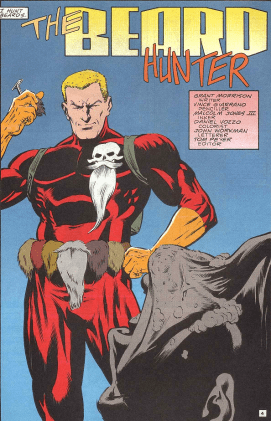
Ernest Franklin’s hatred of beards started the moment he realized that he lacked the male hormones required to grow his own beard. Again, with hormones. He began his war against beards by killing his stepdad and continued to kill other bearded men he met. He became the Beard Hunter.

Man, the writers at Doom Patrol can come up with some odd stories. The Beard Hunter is another villain, Jim and I wouldn’t want to run into. Sorry, Ernie. I don’t mean to offend you, but my hair migrated from the top of my head to my jawline.

Arm Fall Off Boy

Arm-Fall-Off-Boy

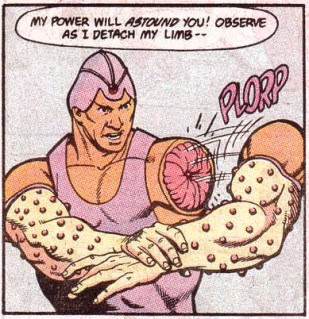
Have you ever wanted to be able to rip off your own arm, so you’d have something to bludgeon someone with? That’s idea behind Arm-Fall-Off-Boy. He can detach his arms and use them as weapons.

He makes this list because the only explanation for his power comes from Matter-Eater Lad—another “great” name—who claimed Arm-Fall-Off-Boy was careless when holding anti-gravity metal Element 152. He may have been kidding, but having your arms pop off by grabbing a strange metal makes about as much sense as any other reason your arm may have for spontaneously detaching.

Poor Unfortunate Powers

ZeitgeistMarvelComics

Zeitgeist

Zeitgeist made it into the X-Force roster in Deadpool 2 and died in a woodchipper. Oddly enough, he died quickly in another mission during the X-Statix run of X-Force, but not before he had one of the worst dates in comic history.

Zeitgeist’s power is super stomach acid; he barfs caustic acid. He discovers he has this power after he drunkenly vomits on his then-girlfriend, burning off her face. That’s one way to end a relationship.

LongneckMarvelComics

Longneck

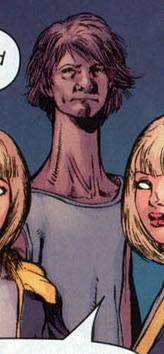
Jonah van Helsing has a 6-foot long neck and can wrap it around people and throw them. Yeah, he’s a human giraffe.

What’s worse is that Marvel’s “Decimation” event that aimed to reduce the universe’s number of mutants had Longneck lose his powers. His neck tried to revert to normal but snapped in the process. Ouch!

Goldballs_MarvelComics

Goldballs

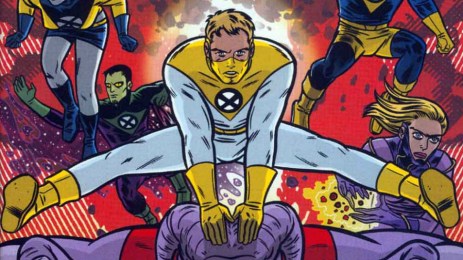
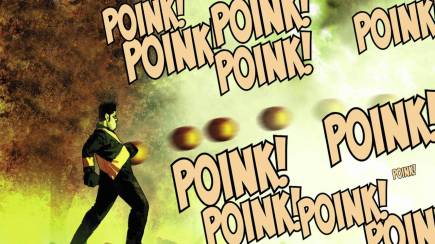
Fabio Medina is another student at Xavier’s School for the Gifted. His gift is to project gold-colored balls made of an unknown substance and of different sizes from any part of his body at high speeds.

He uses these balls as concussive weapons. He can also reabsorb the balls into his body. So. Many. Jokes.

There are plenty more unfortunate comic book characters; these nine are only the beginning. Guess what, your uncle Geekly poops cat nip. That explains the stoned cats in our neighborhood. Do you know of a hero or villain with a worse power? Let us know in the comments.

Great Anime Available on Hulu

It’s been a little while since your uncle Geekly talked anime, so let’s start by dishing about some great anime available on one of the big three streaming services: Hulu.

In terms of anime, Hulu has a huge head start on the other three streaming services. It has the rights to some of the greatest movies and series in anime history—or at least the ones that put anime on the map for westerners. It’s also done a good job of gaining the rights of some of the newer stuff that anime fans won’t stop talking about. Sure, you could buy Crunchyroll and there are other services that can be add-ons for Amazon, but Hulu has more than enough anime to have a fan covered.

There is so many anime to get through, so I’ll stick to short blurbs, but here are some anime highlights. They are by no means the only ones you can find on Hulu.

MyHeroAcademia

My Hero Academia

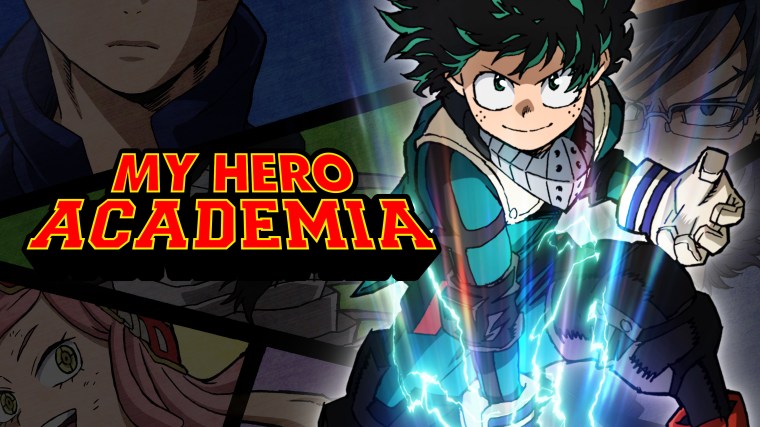
Stop me if this sounds familiar. A once-powerless boy gives his all to follow the path of his idol. The government monitors superhero activity and regulates it. Okay. The concept won’t sound new to anime and superhero fans, but My Hero Academia has earned its place as one of the biggest new anime series. It’s also more culturally relevant than a lot of other anime.

A famous Japanese CEO once said that he takes risks if he knows he won’t lose. If someone knows they can’t lose something, then that’s not a risk. Several generations of Japanese have followed a similar path and refuse to take real risks. My Hero Academia challenges that pervasive line of thinking. It empowers a younger generation to take risks, even if it means you may lose.

YuYuHakusho

Yu Yu Hakusho

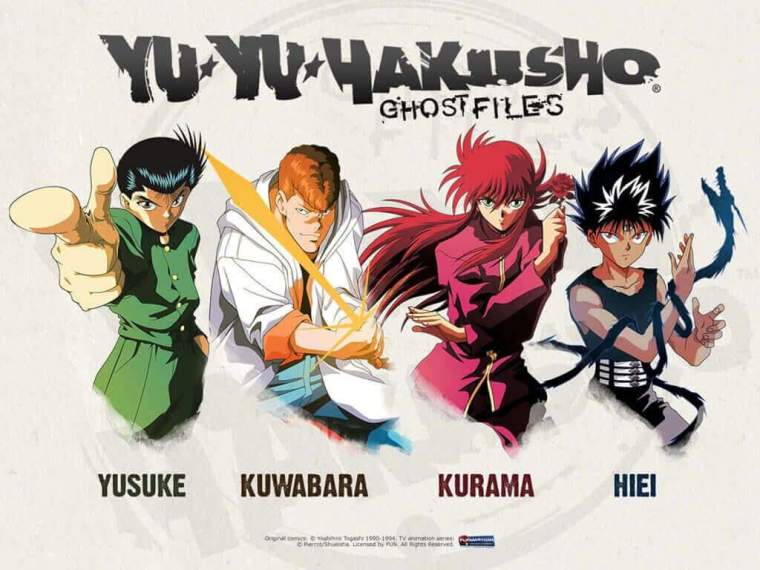
One action can change someone’s fate. That’s at least what Yu Yu Hakusho seems to suggest. This fun series tackles ethical issues without getting preachy. It’s a character-driven series centered on a 14-year-old street-brawling delinquent Yusuke who died as he saves a young boy from being run over by a car. He’s met by the pilot of the River Styx who informs him that there isn’t yet a place made for him in either heaven or hell. Yusuke’s tasks toward redemption are many. His world is hellish and varied.

AttackOnTitan

Attack on Titan

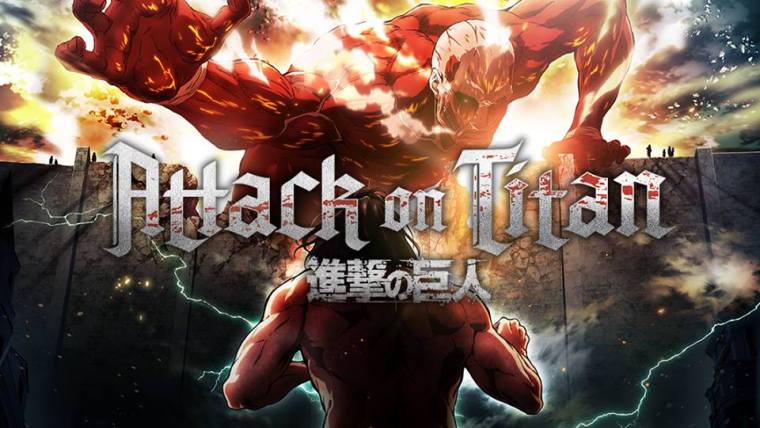
Attack on Titan is a blockbuster the likes anime has seldom seen. Large humanoids called titans terrorize a dwindling human populous. The stories play out like a fusion of The Walking Dead tension for survival and the blood-pumping action and espionage of Mission Impossible. Throw in some Spider-man like powers with the Survey Corps’ vertical equipment, and it’s easy to see why this series has so many fans.

One-Punch Man

One-Punch Man

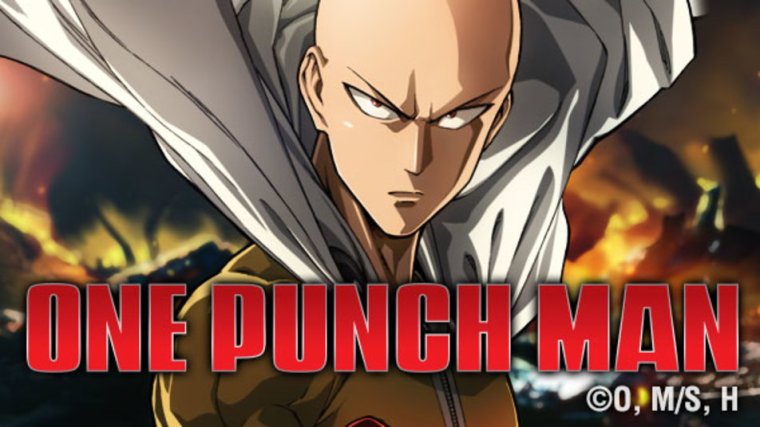
Sometimes you need something light. One-Punch Man is to anime and manga what The Tick is to comic books. Its humor is off-center. Everything in the show has some relevance to the genre as a whole, but the best thing it introduces is that idea that someone who has as much power as Saitama can grow bored with his strength. The series doesn’t navel gaze for too long as it’s a parody and a lot of fun.

CowboyBebop

Cowboy Bebop

Decades after its release Cowboy Bebop is still a lot of people’s default recommendation for anime newbies. It blends westerns, sci-fi, and noir and has some of the most diverse episodic adventures. It’s an unmistakable gateway anime that has one of the most iconic soundtracks—and not just for anime. It also doesn’t hurt that Orson Scott Card (Ender’s Game) called it “better than most sci-fi films.” Cowboy Bebop inspired Joss Whedon’s Firefly. It’s a must watch.

Akira

Akira

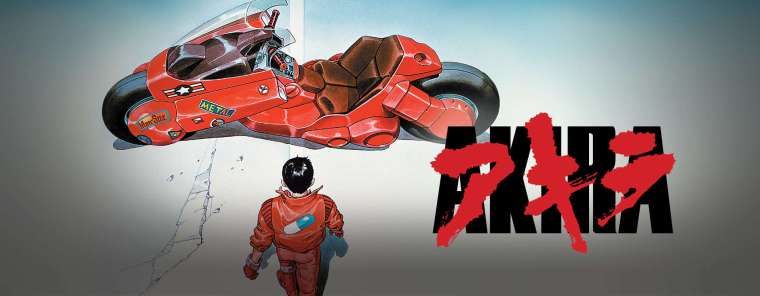
From one classic anime to another, Akira is set in the post-apocalyptic Neo-Tokyo of 2019. Akira, like Cowboy Bebop, introduced Western audiences to anime as a medium and showed that the genre could cater to more adult viewers. It’s influenced so many anime that came after it that the list would be too long to state here. Even though it came out in 1988, the animation holds up today and the world is a wonder.

GraveOfTheFireflies

Grave of the Fireflies

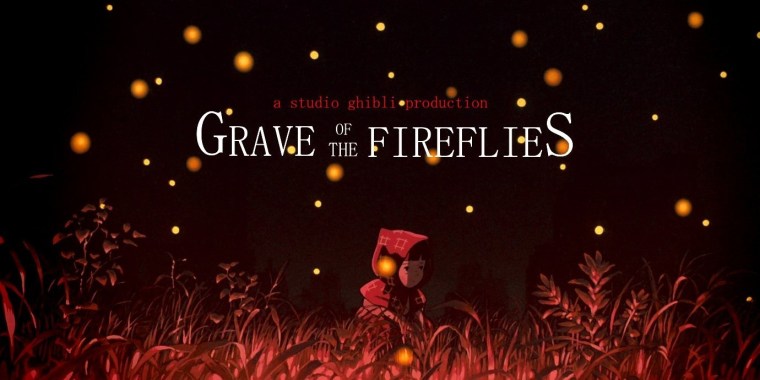
I’m sticking with the year 1988 and another anime masterpiece Grave of the Fireflies. A lot has been said of Miyazaki and Studio Ghibli, but this classic comes from the director who many say influenced Miyazaki, Isao Takahata. I don’t want to say too much about this one, lest I give too much away, but this film is set in the city of Kobe, Japan in the final months of the Second World War. It focuses on two siblings struggling to survive. It’s difficult to keep a dry eye with this one.

PrincessTutu

Princess Tutu

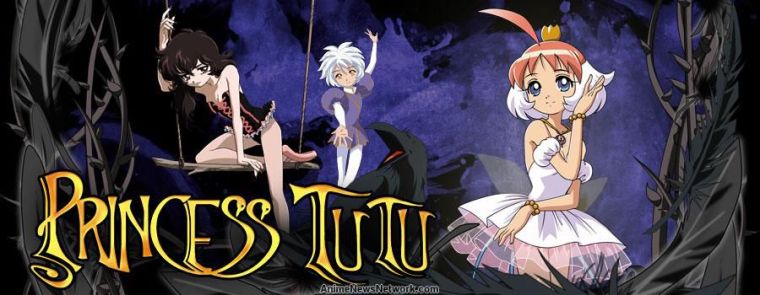
I like my anime to get a little weird. Most anime that do get weird tend to go a psychedelic route, but Princess Tutu combines fairy tale and ballet to make a magical girl anime that’s surprisingly grounded. I won’t reveal too much, but trust me, the themes are familiar and blended in a way that’s new and interesting. Princess Tutu is that rare non-standard anime that can be shared with younger audiences, but there’s plenty to unpack for adults.

That’s it for my list at this point. I may be making another one of these soon. There are so many other series I could put here. Heck, shonen anime like Bleach and Naruto could dominate this list, and I didn’t even mention Death Note. How could I have not mention Death Note? You can belly ache about Death Note or any other anime I didn’t mention by leaving a message on my answering machine—or by leaving a comment.


My Favorite Game Mechanic: Castles of Mad King Ludwig

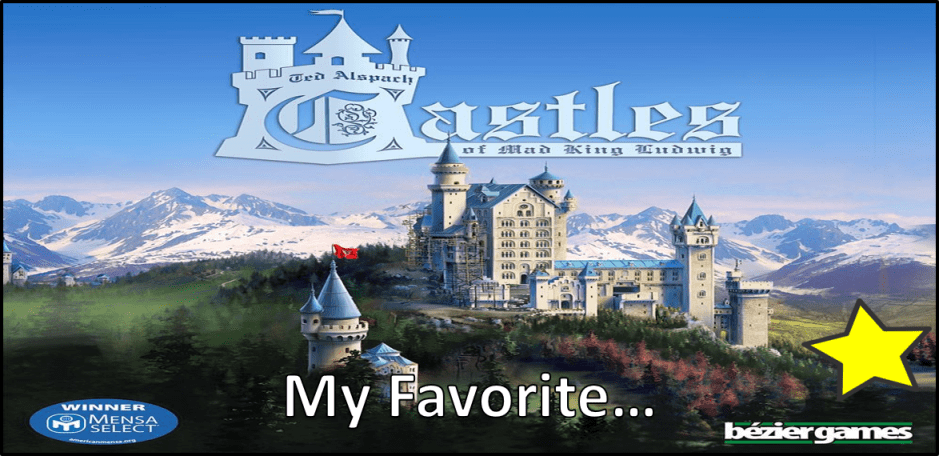
Your uncle Geekly has talked about Castles of Mad King Ludwig before, so if you want to see our review of it and Suburbia, check it out here, but this week we’ll talk about the one game mechanism I like the most from Castles of Mad King Ludwig: I cut, you choose.

I’ll try not to repeat my review of Castles, but I can’t promise to cover some familiar ground. Most games that use an I cut, you choose mechanism play out like the pizza game New York Slice. The starting player groups things together (depending on the game type) and then the player to the starting player’s left picks which group they want first and play continues to their left, meaning that the player who decided which stack of things went together gets whatever’s left over. It’s a nice little game of cat and mouse. Do I want to group things I know another player would want together, giving them points, or risk something I’m playing for? Most often, players will split the difference and hope for the best. This system gives players more agency in games. To be honest, not enough games use I cut, you choose.

CastlesOfMadKingLudwig

But Castles of Mad King Ludwig takes a different approach to this mechanism. Each turn there’s a different master builder and the master builder determines how expensive tiles (with which to construct player castles) cost each turn. When a player selects a tile from the supply, they pay the cost to acquire a tile to the turn’s master builder. That’s coconuts.

Not only does a master builder set the market price each turn, there’s an added level to I cut, you choose in that the master builder places an item for sale at the highest price they think another player would be willing to pay for the tile to get the most money they can get during their turn as the master builder. Flushed with master builder cash allows for more purchases and builds at the end of a turn (master builders still take their build turns at the end of the round like most other I cut, you choose games), and to date, I haven’t seen a tabletop game empower players at this level. This adds so many new strategies and questions.

MadKingLudwigSupply.jpg

Do I price the tile I want that turn as the most expensive? If I do, will other players buy enough of the cheaper tiles for me to buy the one I really want? Would another player pay top dollar for the tile I want most? Are other players even interested in the tile I want most? Can I price it lower or will someone buy it just to spite me? Even though the titular Mad King Ludwig wasn’t mad, this game can drive players mad with its number of choices.

Each game changes how players score, so a tile that mattered in a previous game might not matter as much in a future one. That gives Castles of Mad King Ludwig a lot of replay value.

I like Suburbia a lot too. It’s a similar game about building suburbs of a city by the same design team and publisher, but Castles of Mad King Ludwig’s take on the I cut, you choose mechanism makes it a much better game.

If you disagree, you can send me to the stocks or you can leave a comment. If you’d like to tell me I’m wrong every day, feel free to subscribe.

Flash Starter Stories

Let’s face it. Many new fans of The Flash were most likely introduced to the character with the CW show. Even if you weren’t, the concepts presented in the television show—at least the first two or three season—are a good place to get to know The Flash and more specifically Barry Allen.

Your uncle Geekly may have grown up leaning more Marvel than DC, but he dabbles with DC Comics. This week I hope to show you where to beginning reading The Flash comic books, starting with an emphasis on stories that may look and sound familiar for CW fans and moving toward other great tales of the Scarlet Speedster.

FlashRebirth

Flash Rebirth (written by Geoff Johns/art by Ethan Van Sciver; 2009)

Barry Allen returned to the DC Universe after years of being thought dead with Flash Rebirth. Readers are treated to an updated origin story, the history of the Speedforce, and Professor Zoom’s backstory.

It also happens to be the chief inspiration of the CW show as writer Geoff Johns is also one of the show’s producers. Rebirth is a great place to start for any new Flash reader and fantastic for The Flash TV fans.

The_Flash_The_Dastardly_Death_of_the_Rogues

Flash: The Dastardly Death of the Rogues (written by Geoff Johns/art by Various; 2010)

This entry is a little off when compared to the rest of the ones on this list. Bear with me, and I promise that it makes sense as a starter Flash story.

The Dastardly Death of the Rogues gives new readers a crash-course on the time-jumping nature of The Flash. Yes, characters often go back and forth through time to varying effect and this time it’s a future rogue warning Barry of another rogue’s plans for domination. And this is the first way the story turns odd.

Barry is also accused of killing rogues in the future and may have to answer for his future crimes—I smell a Minority Report—but it’s the focus of Barry as a CSI that has this story make the list. Previous Flash tales cast Barry Allen as a forensic scientist or cop but few capture Barry’s job aside superheroing like this one.

FlashFlashpoint

Flashpoint (written by Geoff Johns/art by Andy Kubert; 2011)

If you haven’t noticed, you’re going to see a lot of Geoff Johns’ work here because he defined The Flash of the 2000s and continues to do so with the TV show. Like the title before it on this list, Flashpoint has a character time travel. This time it’s Barry Allen going back in time to save his mother from being murdered.

The consequences are dire as the DC Universe is flipped upside down. It’d take a lot of time to explain everything that happened, but her are some highlights: Bruce Wayne dies instead of his parents and his parents become Batman and The Joker, Captain Cold is Central City’s greatest hero, the Justice League was never established, and Superman doesn’t exist. All this because Barry wanted to save his mom. Flashpoint does a great job of showing why a hero can’t be selfish. It’s also one of the watershed crossover events in recent DC Comics history and reshaped the comic giant’s status quo for the publisher’s 2011 relaunch, the New 52.

TheFlashNew52.jpg

Flash New 52 Volumes 1-3 (story and art by Francis Manapul and Brian Buccellato; 2011-2014)

The artwork here is amazing. No other artist captures the feel and look of The Flash running at top speed than Manapul. Barry Allen gets reintroduced here—so it’s another good place to get started for fans of the TV show—and most of his greatest enemies make an appearance in the first few volumes. You’ll meet plenty of the rogues and get to know Gorilla Grodd, too.

FlashCrisisOnInfiniteEarths

Crisis on Infinite Earths (written by Marv Wolfman/art by George Perez; 1985-1986)

This one’s a big one. The Flash isn’t the main character, but he factors into this crossover event and the odd thing is that Crisis on Infinite Earths was conceived to get rid of the multiverse, which is something The Flash instigated.

It’s a must read for anyone who wants to know more about Barry Allen as a character, because he makes the ultimate sacrifice. In an iconic scene, he literally runs himself to death and becomes one with the Speedforce. New readers could say spoilers were in order, but even being armed with that knowledge won’t prepare you for watching happen. This is Barry showing how and why he’s a hero.

FlashChroniclesVolume1

The Flash Chronicles Volume 1 (written by various/art by various; 1956-1959)

I’m going with a collection of older comics here because it’s nice to see where everything began. Barry Allen’s Flash harkened comic book’s Silver Age. If it wasn’t for Barry streaking across the page, DC may not have ever brought back other great heroes from its Golden Age and Marvel may have never gotten back into the superhero business. These stories had to make the list and fortunately, the first several years are collected in a single volume of The Flash Chronicles.

All these stories hold a special place in comic history, but here are some highlights:

Showcase #4 marks Barry Allen’s first appearance and the first instance of the ongoing gag where Iris complains that Barry is always late because he moves so slowly.

Flash #110 Iris’s nephew Wally West happens to be The Flash’s biggest fan, and this happens to be his first appearance.

Flash #123 is where the multiverse is first introduced when Barry inadvertently travels to a parallel Earth and teams up with his Golden Age counterpart Jay Garrick. It’s a simple team-up story here, but the multiverse is an essential part of many Flash stories.

Flash #139 showcases The Flash’s greatest foe Eobard Thawne (aka Professor Zoom/Reverse Flash). Thawne goes down quickly in this story, but he’ll be a thorn in Barry’s side for many decades.

TheFlashMarkWaidBookOne

The Flash by Mark Waid Book One (written by Mark Waid/art by Greg LaRocque; 1987)

I’ve focused primarily on Barry Allen up to this point, so it’s time to talk about Wally West as The Flash. Waid does an excellent job of showing how the two Flashes differ. Wally doesn’t take to the Speedforce like his predecessor. He’s as scared of his powers as he is the enemies he fights. This book reads like The Flash: Year One.

Readers will also see Barry as he trains his protégé—much like he does in the TV show—and catch a glimpse of one of DC’s greatest friendships.

TheFlashTheReturnOfBarryAllen.png

The Flash: The Return of Barry Allen (written by Mark Waid/art by Greg LaRocque; 1996)

Oddly enough, Waid does more to establish Wally as the Flash by having Barry Allen return from the dead. Comic book characters return from the dead more often than my dog poops on the floor—which is to say every other day—but Waid finds a way to turn this trope on its ear. I won’t explain how he does it here, but it’s well worth the read and an excellent case study on how to subvert a reader’s expectation.

TheFlashDeadHeat

The Flash: Dead Heat (written by Mark Waid/art by Oscar Jimenez; 2000)

No Flash story tackles the Speedforce, delves into the Flash’s sci-fi roots and explores the numerous characters who have ever had super speed than Dead Heat. A “God of Speed,” “Speed Ninjas” and all other manner of speedsters make their way in this story. It does a lot to set up the Flash’s mythos. It’s also a lot of fun.

Flash_Blitz

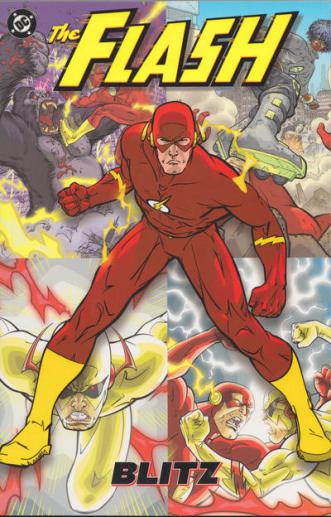
The Flash: Blitz (written by Geoff Johns/art by Scott Kolins; 2003)

Even though several of the Flash’s rogues make an appearance, Blitz is the definitive Professor Zoom story. Wally is completely outclassed, but Zoom’s speed isn’t his greatest threat. Zoom doesn’t hesitate to put Wally’s family and friends in danger to get to him. If fans of The Flash TV show liked the twisted and menacing nature of the main antagonists in seasons 1 and 2, you owe it to yourself to read Blitz.

I think that covers it for Barry and Wally as The Flash. There are other versions of the character—not the least of which is the Golden Age’s Jay Garrick—but that may have to wait for another time. If you don’t agree with any of my selections, feel free to challenge me to a race or you could leave a comment.

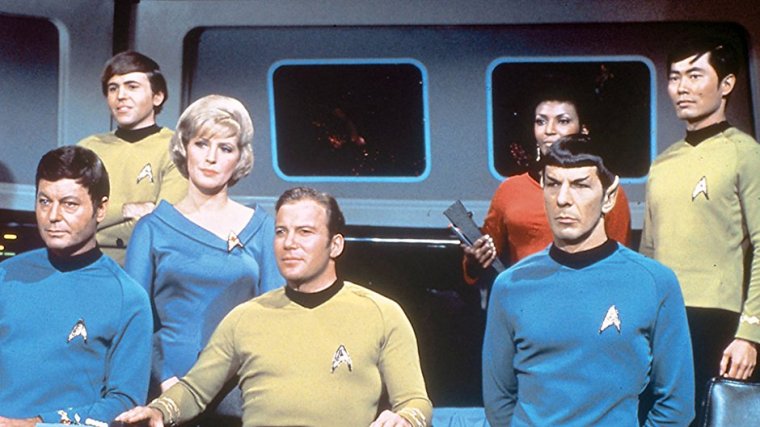
Star Trek Series 3 Lists of 3

Jim walked into the Geekly office, and it looks like he has a new 3 Lists of 3. You have the floor, man.

Who thinks it’s time for a 3 Lists of 3 on Star Trek? No one? Well, we’re doing one anyway. Firs thing I should admit is that Star Trek Discovery isn’t even up for consideration here, because I haven’t watched it. I don’t want to support that business model of endless streaming services, and also I’m cheap. Without further stalling for word count, here are the three best episodes of the three best series in all of Trek-dom.

StarTrekNextGeneration

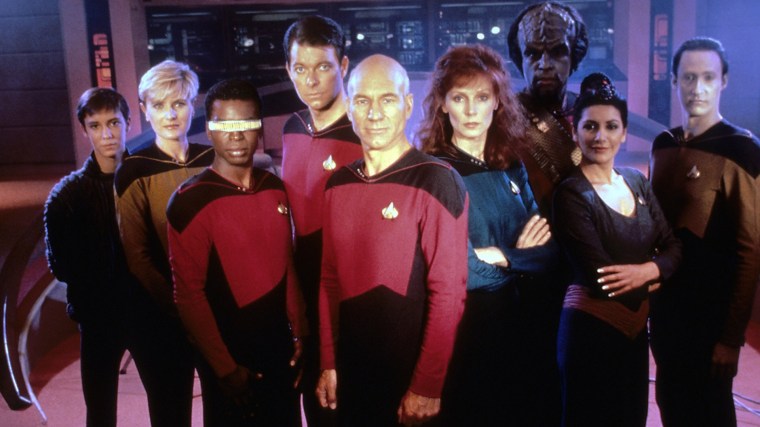
Star Trek: The Next Generation

I said it, so fight me. I’m a TNG guy. You think you’re mad now? Keep reading. The Original Series isn’t even #2 on my list. Here are the three best episodes of The Next Generation.

The Best of Both Worlds

Okay. This is a cheat, since it’s a two-parter, but I’m going to count it. This/these episode(s) saw Captain Picard assimilated by The Borg and turned against the Federation .The experience changes Picard, and also feeds into a couple other crucial plot points in Star Trek lore.

Chain of Command

Now I’m doubling down on two-parters. Hey, the series did this quite a bit, and more often than not, when they did it, they did it for a good reason. This story is another great bit of character development for Picard as he’s tortured in the captivity of the Cardassians. You may have seen the gif of a traumatized Patrick Stewart shouting, “There are four lights!” This is from this episode. It addresses the psychology, efficacy, and morality of torture, and also puts Deanna Troi in a proper Starfleet uniform, so there’s that.

The Measure of a Man

Starfleet decides to study Data and orders him to submit  trial is held to determine if Data is a living being, and has the right to refuse. It’s Star Trek at its best, an examination of philosophy and ethics applied to characters we love.

StarTrekDeepSpaceNine

Star Trek: Deep Space Nine

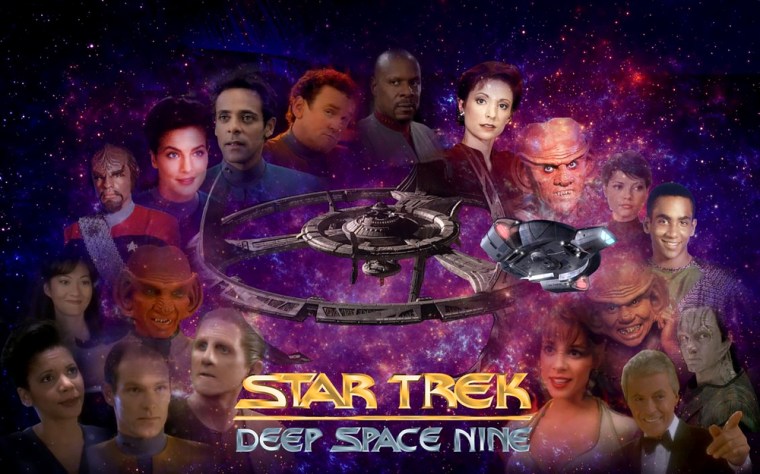
Did you think I was bluffing about the TOS not being #2? Well, I wasn’t. Truth be told, ask me to do this list again tomorrow and I might put DS9 ahead of TNG. DS9 shows the Federation at war, challenging so much of the doctrine Gene Roddenberry laid out for this franchise, but doing it thoughtfully. It’s not just great Trek, it’s great storytelling.

In the Pale Moonlight

Remember what I said about DS9 complicating the morality of the franchise? No episode in all of Star Trek does this better. It also features Garak, one of the most complex and interesting supporting characters the franchise has ever seen. Here, Captain Sisko manipulates the Romulans to get them to enter the war on the side of the Federation. We’ve seen Starfleet officers compromise their ethics before, but these are depicted as traitors to the uniform, or at best, men who’ve lost their way. This episode makes no such judgment, and it’s truly refreshing.

The Siege of AR-558

This episode shows us a side of Starfleet we haven’t seen often. Sure, we’ve seen ships explode, and even some shootouts on the ground, but this episode depicts a long, ugly battle in the trenches. Here we see the cost of the Dominion War in action, and it’s made personal when Nog is wounded in combat. This is also an important episode for adding depth to the Ferengi, who have too often been given the one dimensional alien monoculture treatment.

Duet

Kira was a great second in command in this series. She’s smart, capable, and continues this series’ legacy of complicating moral questions. In this episode, we get glimpses into Kira’s past as a member of the Bajoran resistance, as well as her experiences under Cardassian occupation. Here we see her come face to face with a man she remembers as the commandant of an infamous forced labor camp. Her relationship with Sisko is challenged, as is her willingness to operate under Federation protocol.

StarTrekOriginalSeries

Star Trek: The Original Series

Okay, so The Original Series does make the list. It has to, really. Without the original, nothing that came after would have been possible, and that’s a debt always owed to what came first. This show had plenty of misfires, but also some truly classic moments.

Balance of Terror

Star Trek was, like all art, a product of its time. In this case, the cold war left its mark in an exceptionally clear manner. We have the neutral zone enforcing a delicate peace, and two groups who can’t even see one another prepared to destroy one another. It parallels the story of the film, The Enemy Below, and gave us the famous Trek quote, “…I might have called you friend.”

Space Seed

This episode explores the history of The Eugenics War, a critical point in the fictionalized version of Earth’s past within the Star Trek universe. It addresses the consequences of genetic engineering and, most importantly, it introduces us to Khan. Without this episode, Wrath of Khan, the best of the Star Trek films, would not exist.

The City on the Edge of Forever

What I like about Star Trek is that it takes an optimistic look at humanity’s future. Yes, things get bad. They’ll get even worse still, but someday we will get things right. That feels rare in science fiction. This episode has Kirk and Spock chasing a delirious Dr. McCoy into the past to preserve their future. There, amid rampant crime and poverty, Kirk meets a woman who is an almost insufferable optimist. She predicts eventual harmony and prosperity for mankind. In short, this episode functions as a sort of metafictional look at itself, at the sort of hopeful person who creates a better future by believing in it.

There you have it. There’s Jim’s take on the three best episodes of the three best series in Star Trek history. Do you disagree? Throw on a red shirt and we’ll fight about it.


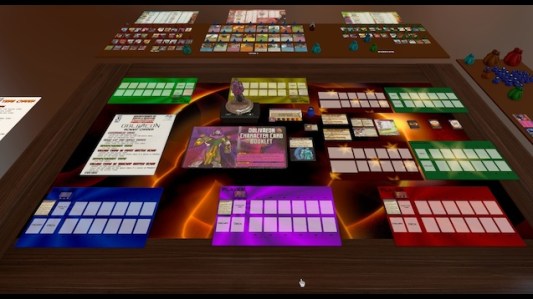
Sentinels of the Multiverse Critique and Learning Moments

Your uncle Geekly mentioned before that Sentinels of the Multiverse ranks highly on his superhero games list. I’ve even talked about how well of a job it does with character and world building, but that doesn’t mean it’s flawless. Far from it. Sentinels has some rather significant flaws. The flaws a game, or any creative endeavor, has can inform how to create something of its ilk. I like Sentinels a lot, but in this write-up, I’ll try to dig deeper and show some issues the game has.

The biggest issue Sentinels of the Multiverse has is a lack of scaling. Scaling in board games refers to a game playing well at all player counts. If a 2-5 player game plays well with 2, 3, 4, and 5 players, it’s considered to scale well, regardless of player count. Sentinels doesn’t scale well.

But scaling is an issue present in a lot of cooperative board games. Some co-op games do a far better job than others—Matt Leacock’s designs come to mind—but too often cooperative games overcompensate for more players or don’t compensate at all for smaller player counts. Unfortunately, Sentinels is the norm.

Sentinels_Unity

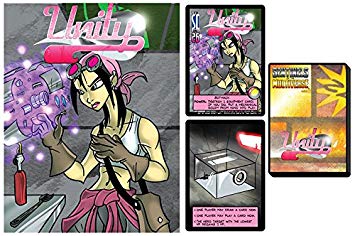
At 2 players, gamers don’t have enough options to defeat villains and can get overrun. My suggestion is that the players must run two heroes apiece so that they’re playing a 4-player game, but that’s not exactly scaling the game for 2 players. 5-player games result in too many options for heroes and villains become too easy. The number of heroes rule does its best to scale the difficulty, but it can only do so much against 5 hero awesomeness.

The game’s greatest strength can also be its undoing: variation. Some games of Sentinels can last 10-15 minutes because the hero combinations are too good and the villain too weak, while other games of Sentinels can last the same 10-15 minutes due to a deadly villain-environment combo, and the heroes never stood a chance. These occurrences don’t happen that often, but they happen enough to leave players with a bad taste.

Sentinels_RookCity

Sentinels tries to address this by assigning difficulty/complexity ratings to heroes, villains, and environments. It’s an admirable attempt and something that can make the game accessible to new players. We’ve got newbies on our team. How about we play an easy villain-environment combo and give them a less complex hero? Yeah, but how many of us use these ratings when we play a random game?

No, really. Show of hands. How many of us concern ourselves with complexity and difficulty ratings?

Sentinels_ComplexityRatings.jpg

Okay. Using the Sentinels sidekick app can help setting the difficulty just right, but most of the time I just click on any difficulty or complexity.

The last major issue comes from Sentinels’ longevity. Longevity isn’t necessarily a bad thing; Sentinel fans having an aversion of play the base game is an issue. There are too many characters to keep track of (the recent OblivAeon expansion should be the final one), but there are also a lot of ways to play the game. Like so many other games, veteran players try to force more complicated versions of the game—with all the expansions included—on newer players.

Sentinels_OblivAeon

The tendency of gamers inflicting overcomplicated games of a certain type on newbies led me to begin the starter game series. Don’t play Vengeance (supervillain teams) or Oblivaen (Sentinels’ version of Thanos) with brand new players. Start with the base game and maybe a smaller expansion or two. Larger and newer Sentinel expansions don’t just add complexity, they also add minutes, if not an hour or more, to the base game’s runtime and that’s a tough pill for some new players to swallow. Ultimately, make sure they’re a fan and then expand.

I could expand on this list of shortcomings, but I like Sentinels. The world and character building are better than most other tabletop games on the market. I’m sure there are things I missed—either or purpose or by accident—and if you see one, two, or five of them, climb up to your roof and shout it out loud, or you could leave a comment.

Unpopular Opinion: Raiden Was the Right Choice for Metal Gear Solid 2

Metal Gear fans saw years’ worth of trailers and demos and previews that featured their favorite stealth, badass Solid Snake in Metal Gear Solid 2. The graphics improved. The framerate looked amazing. Metal Gear Solid 2: Sons of Liberty was the reason many people purchased a Playstation 2. Gamers smiled when they got to play Snake again for the first time in three years. It was two or three hours of gaming bliss, and then the game baited and switched Snake for Raiden. Gamers started off puzzled. After another eight or so hours of Bleach Blonde Ray-Ray, they became pissed. But despite the hate, Hideo Kojima’s choice of Raiden was for the best.

I’m not saying that I enjoyed Raiden’s incompetence or how he whined so much I wanted to reach into my television and choke him. He was insufferable. I wanted to play as Snake as much as any fan, but Raiden’s foibles are what made him the best choice.

MGS2_Raiden.jpg

Snake was a badass by the end of the first Metal Gear Solid. He was a badass during Metal Gear Solid 2, and he was going to be one at the end of the game. There’s nowhere for the Snake character to go. Raiden had a character arc.

He had to learn to be a special ops agent. He watched Snake in awe during one scene, and I’m sure gamers experienced that same awe. Raiden put gamers in a perspective that they would’ve never seen had they played as Snake. Heck, that moment of awe is one that I haven’t seen in any other video game before or since. It was an earned moment. It was brilliant.
Hideo’s choice of Raiden was a bold one, and it wasn’t just a bold choice for a video game. It was a bold writing and character choice. If anyone questions whether video game writers are concerned about character building, show them Metal Gear Solid 2. Very few writers of any kind would’ve taken this big a risk.

Even though I felt deceived by Kojima at the time, he made the best writing choice. He picked what was best for the story, the characters, and the world of Metal Gear Solid instead of catering to fans.

Do you think Kojima made the right choice with Bleach Blonde Ray-Ray? You can leave a comment or complaint below, but I may be in my cardboard box hiding.

Getting Started with Deck Building Games

I enjoy deck building games a lot. Deck builders are games with simple, identical, starter decks for each player, and players must build and customize their decks over the course of the game.

Deck builders can get convoluted fast and many of them are text heavy—we’re talking levels of text just below War and Peace. There are so many types of deck building games, so many that there are games that fall under pool building (not included here) that use dice and cubes instead of cards, that it can be overwhelming in terms of where to start.

Fortunately, your good old uncle Geekly is here to point you in the direction of less complicated deck builders to get going.

starrealms

Star Realms

I’ve talked about Star Realms in the past—for a full review check it out here—but it’s still one of the better, beginner games for a traditional deck builder. I could’ve gone with the base Dominion game, but I like the theme better with Star Realms, even though the space theme is barely there, and Dominion fans tend to want to add as many expansions as possible. Trust me. There are more expansions for Dominion than leaves on the ground.

Star Realms is balanced. If I’d have one major gripe, it may be that Star Realms is too balanced (the cost of cards are spot on, just buy the most expensive one you can afford each turn), but key elements like buying cards from the supply by paying specific costs for each card, culling (removing weak cards from your deck), forcing another player to discard a card from a future hand, and the concept of building a full deck and drawing a new hand from said deck instead of building a hand are all present in Star Realms.

It also doesn’t hurt that Star Realms has a free to download app.

Steam

Android

iOS

All someone would have to do to learn the basics for a deck building game is to download and play the tutorial. It doesn’t get much easier to learn than that.

CenturySpiceRoad

Century Spice Road

The hottest, newest game on this list may just be one of the least complicated deck building games and has the least text. Century Spice Road also has a couple of stand-alone expansions—games that can be played on their own as full games or that can be added to the original to make different combinations—so look out for Golem Edition and Eastern Wonders. Golems don’t get enough play in games. I may have to drive to the nearest adventurer’s pub and pick up a golem or two.

The base game’s theme isn’t that interesting—tabletop gamers have seen hundreds of spice trading games—but Century Spice Road not only boils down the deck builder to the point where it’s a bit of a hand builder, it adds elements like resource and space management to the genre. It also includes an interesting approach to one of my other favorite mechanisms: card drafting.

Cards in the supply are laid out from left to right, and players add action cards to their hand, starting with the card on the far left. If a player wants to skip a card in the supply, they must place a spice (or cube) on the card(s) skipped. Any player who picks up a card with a spice on it adds that spice to their supply. This simple addition adds so much strategy. Do I want to give my opponent a free spice by skipping a card? An action card I might not otherwise want may have spices I do want. Do those free spices make it worth adding the card to my hand?

All of these elements come together in a satisfying way. No wonder Century Spice Road earned the 2017 Golden Geek for best card game. Note: don’t play with real spices. That gets messy.

PaperbackCardGame

Paperback

I had to include Paperback because it has a great combination: deck building and word game. It’s a game combination that people wouldn’t think would work, but it does. A player can be adept at one of the two game types, and not the other, and still excel.

The same concepts one can find in Star Realms can be found in Paperback. There are more variants to Paperback so replay value is increased, but it’s the combination of deck builder and word game that makes this game sing.

The theme of struggling writers getting their paperback books published—to be fair, this theme may hit closer to home than I’d like to admit—also comes through. Paperback is easily the most thematic game on this list, but it’s not for everyone. If someone is dead set against word games, this game might rub them the wrong way. If someone likes word games or is willing to give a word game a shot, Paperback is excellent.
Final Thoughts

The above games are all great if you’re just getting into tabletop games and wondering how to play deck building games. Star Realms, Century Spice Road, and Paperback have a lot of replay value too.

Know of any other great starter deck builders? Let us know in the comments.

3 Lists of 3 Movie Marathons

It’s Friday night, and you have no plans—or your plan options are limited. Why not try a movie marathon? But which movie marathon should you choose? Old uncle Geekly doesn’t know for sure, I don’t know what type of movies you like, but the following three lists of three could help narrow the search.

Short and Sweet Marathons Most People Could Finish

three-flavours-cornetto-trilogy.jpg

Three Flavours Cornetto Trilogy (5 Hours and 29 Minutes)

The shortest of the movie marathons on this list is the one named after the various flavors of Cornetto ice cream treats featured in each film: Shaun of the Dead, Hot Fuzz, and The World’s End. Edgar Wright and Simon Pegg make a dynamic duo in these three comedies. The different themes and characters also make the Cornetto Trilogy feel like it isn’t a trilogy and perhaps, the easiest one to watch.

I may not be The World’s End’s biggest fan, but it’s still a good movie and the trilogy doesn’t come close to overstaying its welcome.

TheDarkKnightTrilogy

The Dark Knight Trilogy (7 Hours and 37 Minutes)

Jim might slap the back of my wrist with a classroom ruler for including Christopher Nolan’s Dark Knight Trilogy: it’s overrated. To be fair, I agree with him, but it’s still a quick watch, and the films have their moments—Heath Ledger’s Joker alone is worth the price of admission. While Kevin Conroy will always be my Batman, Christian Bale does a good job, despite hyperventilating through half the movies, and many of the villains are satisfyingly menaces.

BackToTheFutureTrilogy

Back to the Future (5 Hours and 42 Minutes)

I had to go with the film series that has pervaded pop culture so much that there was a Back to Future Day on October 21, 2015. Universal Pictures created a trailer for Jaws 19, Mattel manufactured a hoverboard as seen in the film, Pepsi produced a limited run of “Pepsi Perfect,” Nintendo released the Wild Gunman game Marty played in the Café ‘80s scene, and many more including Nike recreating the Nike Mag shoes Michael J. Fox wore. The Back to the Future franchise begets Rick and Morty. ‘Nuff said.

Ridiculously Long Marathons I Might Be Crazy Enough to Try One Day

JamesBondMovieMarathon

James Bond (2 Days, 4 Hours, and 56 Minutes)

He’s the world’s best/worst secret agent—he’s given his real name to how many people?—and along with Sherlock Holmes, one of the most successful and recognizable fictional characters of all time. James Bond also has 26 movies (before the one that’s due in 2019) with six actors portraying the titular character. Sure, the early films are dated. Daniel Craig’s turn is a modern retelling of Connery’s and if one is looking for a more relatable Bond, one should turn there. I also wouldn’t blame you for not wanting to blow an entire long weekend. We’re talking days. Days!

MarvelMovieMarathon

The Marvel Cinematic Universe (1 Day, 18 Hours, and 44 Minutes—and counting)

While DC continues to flounder (I hope that changes soon), Marvel consistently produces strong movie-going experiences. The trick was to start with solid individual movies before expanding and crossing the various franchises. The only problem is that there are too many Marvel movies. This marathon only includes the films, not the Netflix originals and other TV shows. I’m crazy; I’m not that crazy.

You may not be able to finish every film over a standard weekend. You may have to call in sick from work. If I’m being honest, I’d have to be a little sick to attempt this movie marathon that gets longer every other month. So, I wouldn’t be lying. I am sick. Cough. Cough.

MiyazakiMarathon

Miyazaki Marathon (1 Day and 10 Minutes)

Miyazaki’s marathon is the shortest of the full day ones, and it happens to be the most likely one I’ll try to make happen. Season squeed after hearing that. I’ll have to track down his shorts (that make up about an hour of this runtime) and make sure we have all the animated features he’s ever written and directed. We’ve got to do this right.
To date Miyazaki is the only anime director to have ever won an Academy award. It’s shocking that he’s only won one. He’s a director who I’m always on the lookout for his next release.

Classic Geekly Movie Marathons

Lord-of-the-rings-Hobbit-Movie-Marathons

The Middle-Earth Anthology (20 Hours, 13 Minutes)

You could be forgiven if you wanted to cut the showtime in half and watch only The Lord of the Rings trilogy, Uncle Geekly won’t judge, but even at 10 hours or so, The Lord of the Rings will occupy a large portion of your day. No regrets. Miss Geekly has me beat as she’s seen it at least five or six times with all the bonus features.

Any way you slice it, the Middle-Earth Anthology is cinematic magic and worth your time. Peter Jackson and company do a phenomenal job of bringing to life the series that birthed epic fantasy.

StarWarsMovieMarathon.png

Star Wars (22 Hours, 27 Minutes)

This runtime includes the anthology films (Solo and Rogue One) and that may turn off several fans. It also doesn’t include the upcoming ninth main film, but I had to include Star Wars somewhere on this list. It’s too good. It transformed people’s lives. Some other fill-in-the-blank hyperbolic statement that somehow doesn’t seem like enough.

There are so many ways to watch the films: in order of release, chronological order, and many, many others. I won’t go into the virtues of how to watch these films, you do you, but with a runtime of just under a day one could watch a Star Wars marathon on a day like May the Fourth.

StarTrekMovieMarathon

Star Trek (1 Day, 1 Hour, and 17 Minutes)

Okay. This one may be the other more than a day marathon I’ll have to try at some point and that’s why it’s on the lists of classics. Star Trek may not get the same recognition as the other two titles on this list of three, but it’s every bit as iconic. I’m also required to say something like “iconic” because Jim would put me in a sleeper hold if I didn’t. Zzzz.

Where was I? Yes. Some of Sci-Fi films’ greatest moments have come from Star Trek movies, and it deserves to be on our classic Geekly movie marathons.

That’s my list. I’m sure you guys have more marathons you’d like to add. Tell me how wrong I am in the comments.