Tabletop Game Review: Marvel United: X-Men Core Set

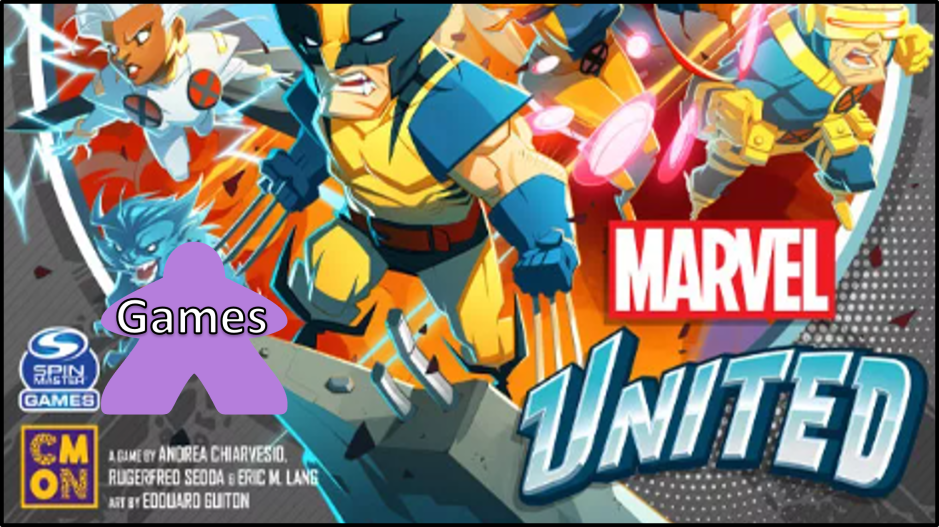
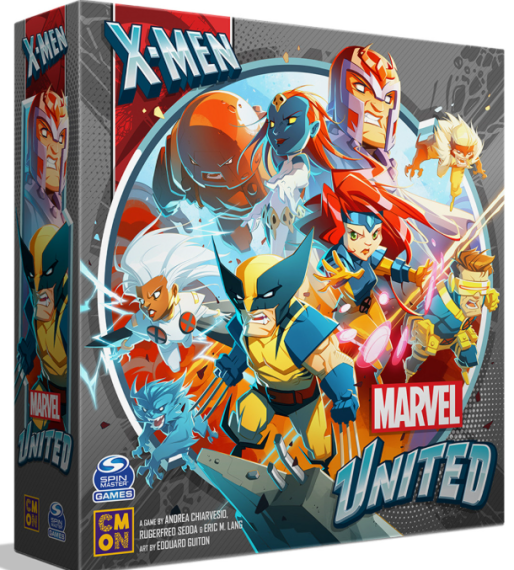
We’ve discussed many Marvel United expansions from the game’s initial set; it’s time to talk about Marvel United: X-Men. This version of Marvel United adds team play and a one versus many option, where one player controls the villain while the others play the heroes. This increases gameplay options and allows for a fifth player to join in on the fun.

Hey, hey! Kyra Kyle here. In Marvel United: X-Men, players act as iconic X-Men heroes who work together to stop the master plan of a powerful villain controlled by the game and in some cases another player. Each villain has a unique master plan, cards that trigger various effects, and threats that make clearing locations difficult. Heroes clear missions, making the villain vulnerable, and finally take on the big bad villain before they complete their master plan. Can you save the day in time? Marvel United: X-Men adds Marvel’s merry mutants to the fray.

Before we get any further, we’ll take a side quest and discuss Marvel United: X-Men’s less heroic details.

The Fiddly Bits

Designer: Andrea Chiarvesio, Eric M. Lang, and Francesco Rugerfred Sedda
Publisher: CMON Global Limited and Spin Master Ltd.
Date Released: 2021
Number of Players: 1-5
Age Range: 8 and up
Setup Time: 5-10 minutes
Play Time: 30-40 minutes

Game Mechanisms

Cooperative Play
Hand Management
Modular Board
Solo / Solitaire Game

Team-Based Game
Variable Player Powers

Game Setup

We already covered the Game Setup and Game Flow in our original Marvel United review (here’s a link to that review), so we’ll go over the basics in the following two sections. Let’s cover an abbreviated review of the game setup and rules.

Marvel United: X-Men’s setup can change depending on which Villain(s) and Heroes you choose to play. Each game consists of six locations. Eight locations are included because Marvel United: X-Men is a core set. You may choose your locations or shuffle them and choose six at random. Each Location card has spaces at the top for civilians and thugs and a rectangle with a block of text that will state “End of Turn” at the top of the box.

Place civilian/thug tokens on their matching spaces. Shuffle the Villain’s Threat deck and deal out each Threat face-up so that it covers the rectangle at the bottom of each location. You must clear this threat before gaining the “End of Turn” effect printed on a Location. Place health tokens where signified on threat cards and on the Villain dashboard. Place the three mission cards (Defeat Thugs, Rescue Civilians, and Clear Threats) face up under the villain dashboard where the text reads “Unlocked.”

Each player shuffles their hero decks and then draws three cards to form their hands. Shuffle the Villain’s Master Plan deck. Leave the Master Plan deck face down. This will be the villain’s draw pile.

Players place their miniatures on one of the six location cards, usually the centralmost location for each player (easy access). Then, they place the villain on the location card opposing the heroes. If one player chooses to play as the villain, hand the Super Villain cards to them, and the Heroes gain access to Super Hero cards. These new card times can be played if the game state triggers their use (for example, “You play a Master Plan card” or “Any Hero has 4 or more cards in their hand at the end of the Hero Turn.” Timing is key.

Game Flow

The villain(s) play first. Draw the top card of their master plan deck. The villain moves the number of spaces indicated. Resolve any BAM! Effects and these effects will be printed on a space within the villain’s dashboard. Then, place the civilian/thug tokens (if any) indicated at the bottom of the card. If a player has taken the role of the villain, they get a hand of cards and can choose which card they play. The heroes get their turn after all the villain’s effects are resolved.

Heroes pick who goes first, and hero turns will continue around the table clockwise. At the beginning of each game, Heroes will get three turns before the villain receives another turn. During their turn, heroes play one card from their hand.

Marvel United Sample Hero Turns Gacha Game Review

Resolve actions and the symbols printed at the bottom of the hero’s card in any order. The symbols at the bottom of a hero’s card will be shared with the next player, but any printed action will not be shared. Heroes will use these actions to complete missions. The game begins with three missions in play: Defeat Thugs, Rescue Civilians, and Clear Threats. Each mission card will have spaces for the tokens they require to complete. As soon as these spaces are filled, the card is discarded, and the mission is considered complete. Mission cards can be completed in any order.

After the heroes complete the first mission, the villain panics and will act (play a card) every two hero cards instead of every three hero cards. After the heroes complete the second mission, the villain becomes vulnerable to damage. The heroes can complete the third mission, but it isn’t necessary. If the heroes do complete the third mission, each hero immediately draws 1 card, increasing each player’s hand size by one.

Play continues back and forth until either the villain wins (by completing their unique master plan or anyone, heroes or villains, runs out of cards) or the heroes win by dealing enough damage to the villain after the villain becomes vulnerable to damage.

Review

Marvel United: X-Men features many new game concepts for the United game system. Having one player take on the role of the villain is the most obvious. I like that Spin Master and CMON games include a chart that allows gamers to play villains from the previous set. Since X-Men characters have a knack for flip-flopping their allegiance, it makes sense that Marvel United: X-Men began the trend of purple miniatures (anti-heroes who can be played as heroes or villains). This feature is crucial to the game design, as I forgot it began with Marvel United’s second wave (X-Men). Marvel United: X-Men also adds a team element with its Blue and Gold Team expansions. That doesn’t factor in too much with the core set. We’ll talk more about the X-Men Blue and Gold Teams in the future.

Power creep is a real thing in Marvel United: X-Men. In the original set, players were lucky if they had three unique abilities and anything more than three cards in their deck with special abilities. Marvel United: X-Men heroes have a minimum of four cards in their deck with special abilities and at least two unique special effects, but there are plenty of heroes with way more than four special ability cards. Marvel United: X-Men also includes plenty of powers that deal with crisis tokens. The original set had a few ways to deal with crisis tokens; most of the methods came in the form of Location “End of Turn” abilities. I like the inclusion of heroes with crisis token abilities. The heroes in Marvel United’s second way had plenty of new ways to affect the game state.

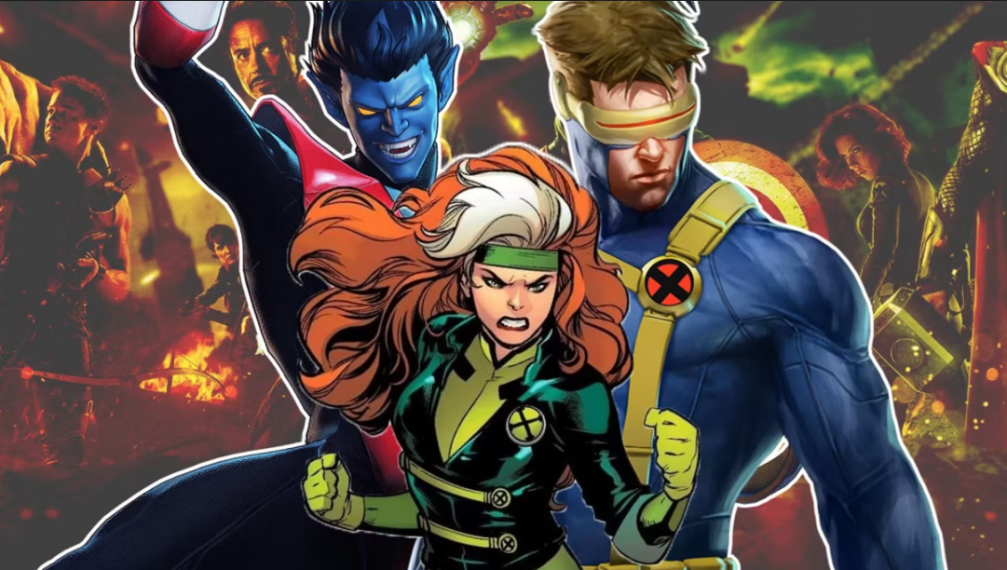
Beginning with the anti-heroes (the purple miniatures who can be heroes or villains), let’s get into specific heroes you can find in the Marvel United: X-Men Core Set. Mystique features few Heroics but plenty of Move and Attack. Her two special abilities (two copies of each card) allow her to prevent new tokens (Thugs or Civilians) from being added by the next Master Plan card, and she can redirect damage from herself to Henchmen or Thugs. This plays into Mystique’s ability as an infiltrator. Typically, Marvel United: X-Men does a good job of showing each anti-hero as their heroic and villainous selves. Magneto is the other anti-hero included in the Core Set. Like Mystique, he has little Heroics but can zoom around the board and deal copious amounts of damage. I like Magneto’s ability to convert symbols into Wild symbols. This makes him versatile.

Perhaps because of the increased number of powers within hero decks, Marvel United: X-Men does an even better job of capturing its heroes. Wolverine begins the game with a healing factor. Cyclops uses Leadership, while Beast also has a regenerating factor (not as persistent as Wolverines) and he specializes in heroics and movement. So far, far thematic, but I really like Storm, Jean Grey, and Professor X. Storm can reposition the entire team, Jean Grey can manipulate the Storyline with Telekinesis, and Professor X may be the most powerful hero in the X-Men Core Set. He’s surprisingly mobile with a penchant for heroics. He can also use Telepathy to manipulate the Storyline, give tokens with Leadership, turn symbols into Wilds, and even turn Thugs into Civilians.

In short, the heroes of Marvel United: X-Men have more personality than the previous set. Professor X may be overly powerful. Half of the cards in his deck possess special abilities, and two of the other six cards feature wild symbols. The villains in the X-Men Core Set provide plenty of twists for gameplay, but that’s to be expected from Marvel United villains. The villains have always represented this game’s most intriguing design space. Sabretooth hunts heroes, while Juggernaut charges from one location to the next, damaging everyone in his way. Magneto is especially difficult to stop. He can nullify all Hero effects and hand out crisis tokens to heroes, damaging them for each crisis token the hero possesses. But Mystique may be the most interesting villain from this lot. She targets Senator Kelly, and the heroes lose if she carries out her assassination.

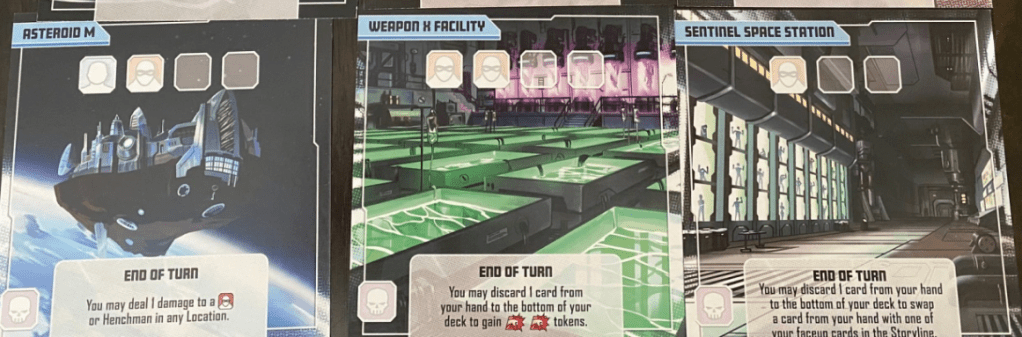
Marvel United: X-Men’s Locations have varied “End of Turn” abilities. Token draw, healing, moving to another location, rescuing a Civilian, and dealing damage to a Thug/Henchman are standard fare by this point, but Marvel United: X-Men’s Locations gives these mechanisms a few twists. But my favorite “End of Turn” ability may be Sentinel Space Station’s. You may discard 1 card from your hand to the bottom of your deck to swap a card from your hand with one of your face-up cards in the Storyline. This ability is a hint of what one can expect in other Marvel United: X-Men expansions. The Marvel United: X-Men Core Set does enough to show what the second United wave of games offers. It does a great job of building on a solid foundation.

Too Long; Didn’t Read

Marvel United: X-Men adds numerous wrinkles to the United Series’ gameplay. A player can take the role of the villain, team play is possible, and antihero characters can be either heroes or villains. The heroes within Marvel United’s second wave have more personality, while the villains remain stellar. Mystique’s mission of assassinating Senator Kelly is fantastic.

Thank you for reading, and wherever you are, I hope you’re having a great day.
Geekly News: September 14, 2025, Two Captain Americas at Once

Happy Sunday, Geekly Gang! Today’s another good day for Geek News over the past week. We begin with some quotes from Marvel CEO Kevin Feige and the latest gossip from Marvel Studios and the MCU.

Two Captain Americas in the MCU

Marvel CEO Kevin Feige opted for a Marvel HQ sit-down instead of a massive Comic-Con Announcement this year. During this sit-down, Feige answered several reporters’ questions. One of his most notable responses was Eventually, we will have to recast Tony Stark and Steve Rogers. The way Feige phrased his response made it sound as if the recast of the MCU’s original Avengers would occur years into the future, but one industry insider (a relatively new one named James Mack WL) believes a Tony Stark and Steve Rogers recast could occur much sooner than we think. According to this source, they believe the MCU will commit to two Captain Americas (a new Steve Rogers and Sam Wilson) post Avengers: Secret Wars.

There’s a lot to unpack here. Feige has stated that he believes this year’s Captain America: Brave New World flopped because it didn’t feature Steve Rogers (or Chris Evans). This could sound like a knock against Anthony Mackie. Honestly, Mackie was by no means the main reason why Captain America: Brave New World underperformed. I don’t think Feige even meant to imply that. He may have been lamenting his letting Robert Downey Jr. and Chris Evans go prematurely from the MCU. Downey leaped at the opportunity to rejoin the MCU, and Chris Evans might not be too far behind.

But what does this mean for the Captain America character? The comics have had two simultaneous Captain Americas, and it worked. Having a second Cap shouldn’t detract from Mackie’s Sam Wilson. Heck, it could be interesting to see two heroes compete for the throne of best Cap. My guess is that Mackie and another actor could portray the Star Spangled Hero. The MCU could recast Steve Rogers while Mackie’s still in the Sam Wilson role, but it doesn’t make a lot of sense to have a different actor portray the character opposite Mackie’s Sam Wilson, because Mackie’s Sam has such a long history with Evans’s Steve. My guess is that Evans could return to the Steve Rogers role.

No matter who portrays Steve Rogers, we should be seeing the character return to the MCU. And sooner than we think.

Robo Rescue Lifts Off on KickStarter

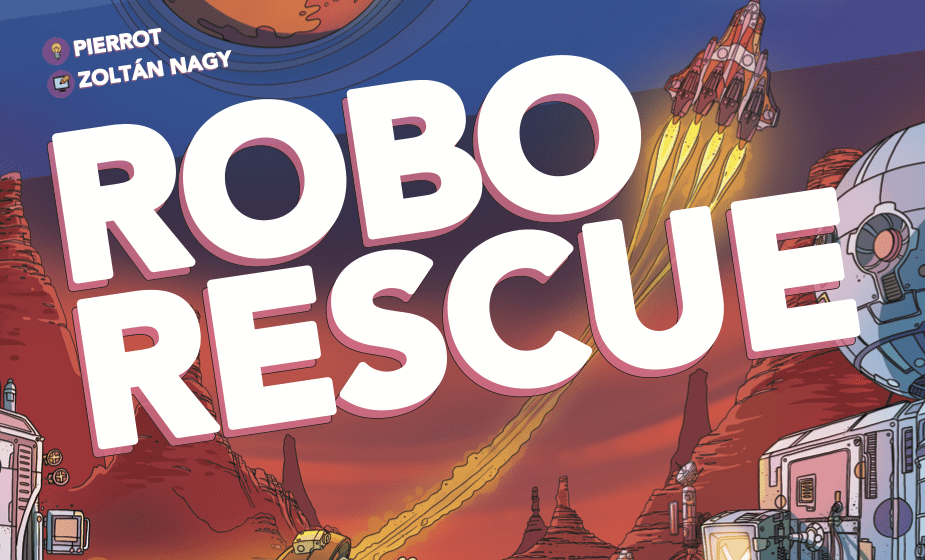
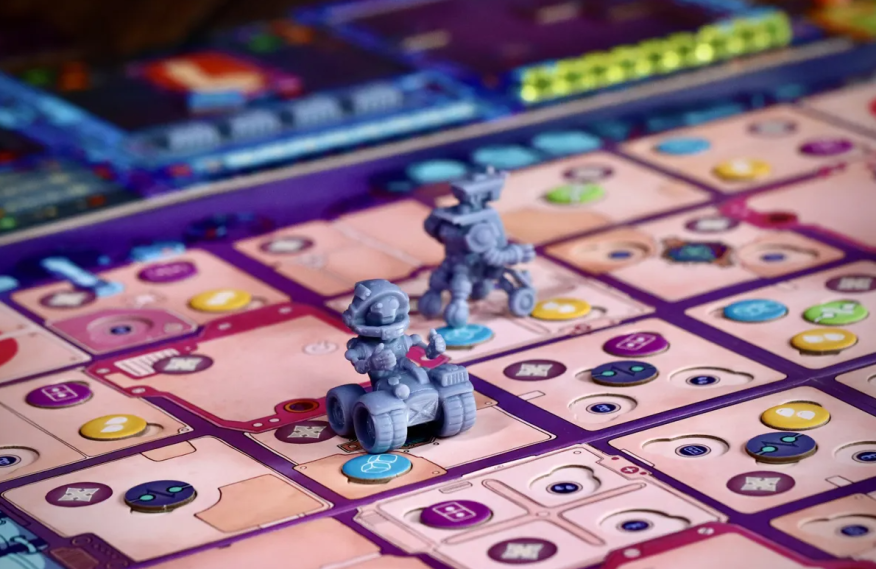
Years after humans left a Martian Research Facility, four abandoned robots embark on an adventure to reunite with their human creators on Earth. Robo Rescue puts gamers in the roles of one of these robots. Program and move your robot pal, collect resources with board actions (in an ever-changing warehouse), convert resources to essential parts, and repair all rocket engines, so you can return home.

Robo Rescue uses a unique programmable movement mechanism. Its ever-changing board looks amazing and should facilitate multiple play-throughs. The pictures we see above are from Robo Rescue’s prototype. The final product should look even better. Pledges range from $56 to $99. If you’re interested in Robo Rescue, check out its KickStarter page.

Zairoo Launches on KickStarter

Tabletop roleplaying game Zairoo showcases a Pan-African Fantasy world. Five vibrant kingdoms rise from the ruins of a cataclysmic past. In this alternate 17th-18th century, where African and New Afrikan Myths come alive, players step into a land where science, spirituality, and the supernatural intertwine.

I learned about Zairoo several months ago and have been waiting for its release. The game looks amazing. The concept has me intrigued. Zairoo blends classic African and New Afrikan myths. It offers a fantasy world seldom and desperately needed to be explored. Pledges range from $20 to $300 (many of the larger pledges include charitable donations). If Zairoo interests you, check out its KickStarter page.

Gamusinos Skitters onto GameFound

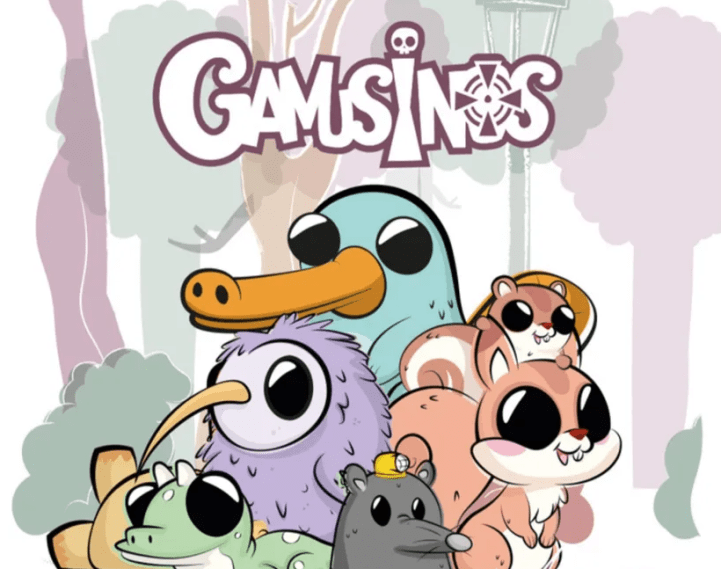
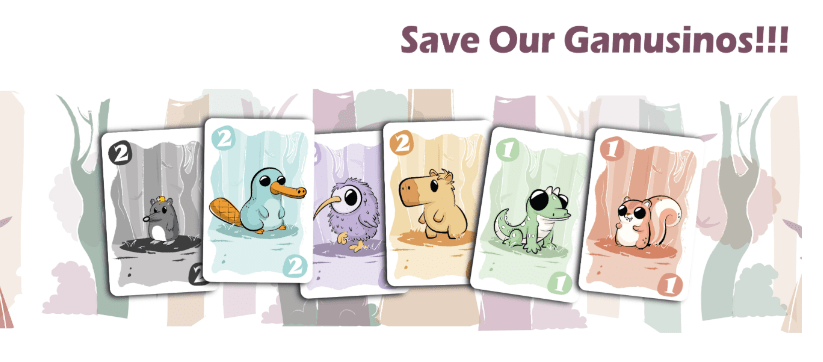
In Gamusinos, players take on the role of unique animals, trying to find their way to a sanctuary. Players attempt to score the most points by playing experts for their animal, but you’ll also need to discover which hunter freed the animals to prevent them from taking the precious chamois.

Gamusinos features adorable art and hidden roles. Can you deduce which animal is which? If Gamusinos sounds interesting, check out its GameFound page.

Snorkeling Launches on GameFound

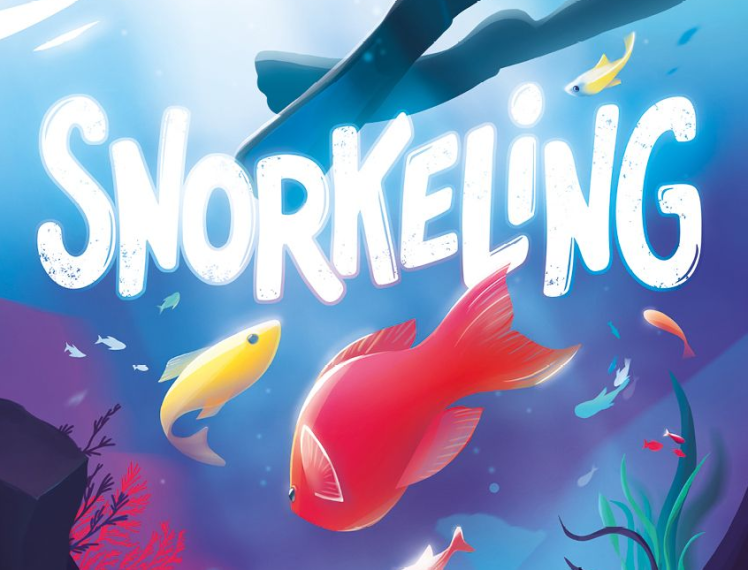
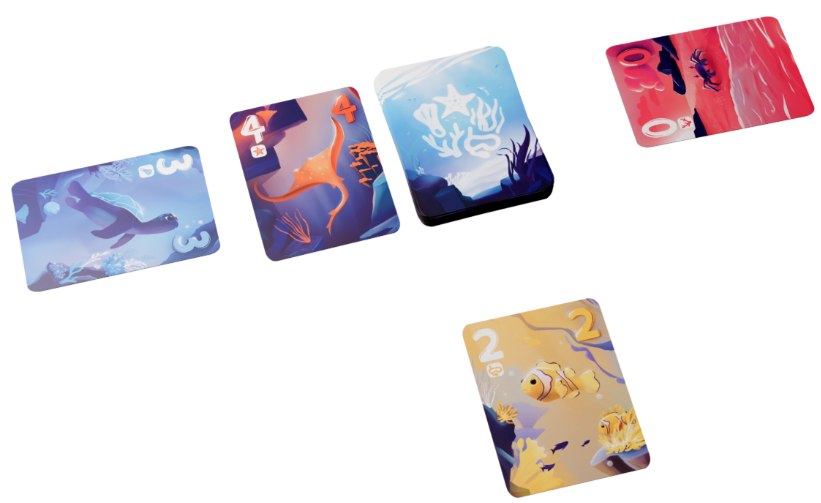
Featuring stunning art, Snorkeling pits gamers against each other in an underwater, fast-paced, card-shedding game. During a turn in Snorkeling, players can play as many cards as they want from their hand that are exactly one value (numerically) higher than the top card of the center pile and the same color as the top card in the center. Then, you may strike your rivals by placing a card exactly one value lower than the top card in their personal pile, forcing them closer to the dreaded surface.

A round ends when one player receives a 0 value “Beach” card in front of them. Everyone scores points based on the card on top of their pile. The first to reach 12 points wins the game. Snorkeling has a simple concept and should be easy for gamers new to the hobby. We don’t yet know much about Snorkeling’s price point–although I can’t see it being too much–but if you’re interested in Snorkeling, check out its GameFound page.

No More Dead: New York Shambles Onto GameFound

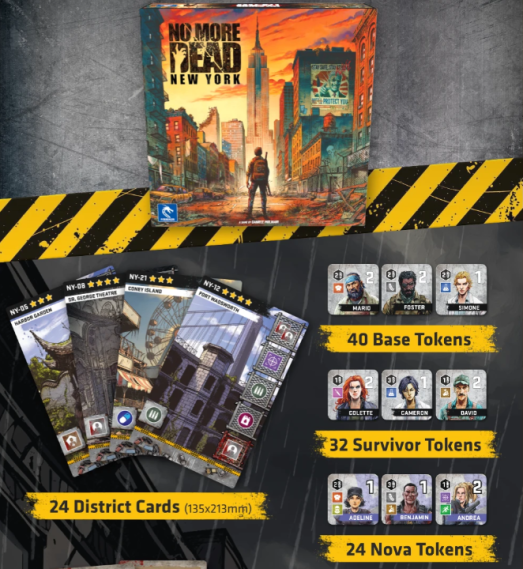
No More Dead: New York puts players in the driver’s seat to either lead the rebirth of civilization or watch its downfall. Blending area control, resource management, and tactical decision-making, No More Dead: New York has players traverse NYC’s iconic neighborhoods in their vans, strategically deploy their team to gather resources, or conquer and restore key locations by eliminating threats.

No More Dead: New York offers plenty of replay value. Each survivor has their own unique capabilities. Can you build the perfect team to survive the Zombie Apocalypse? If you’re interested in No More Dead: New York, check out its GameFound page.

Borderlands 4 Released

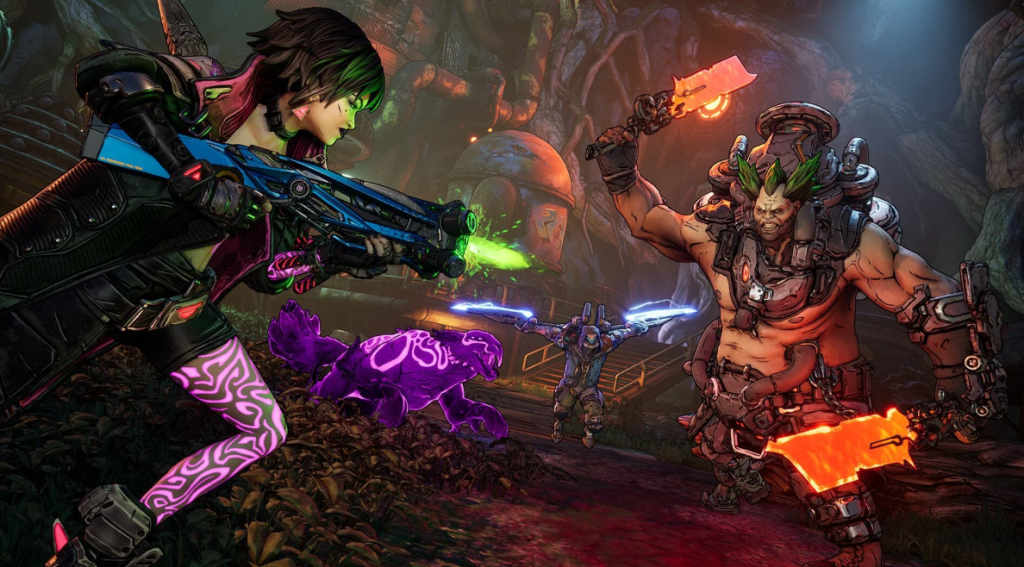
The next installment in Gearbox and 2K’s fan-favorite co-op looter shooter Borderlands launched this past week. Borderlands 4 is the largest and most important video game launch from this past week, so we’ll break down all we know about the crossplay capabilities, because let’s face it, you’re going to want to play a co-op looter shooter like Borderlands 4 with friends.

Borderlands 4 was released on PlayStation 5, PC, and Xbox Series X/S and will be released on the Nintendo Switch 2 early next month. Borderlands 4 will support crossplay, but this gets a little tricky. If you and your friend are on Xbox and PC, you can play together easily, provided you both have free Gearbox Shift accounts. Unfortunately, neither cross-save nor cross-progression will be available on day one. But there’s hope these will be added at a future date. In classic Sony PlayStation fashion, Borderlands 4 may not support crossplay on PlayStation 5 on day one, but like cross-save and cross-progression, players may gain this capability in the future.

The future looks bright. Borderlands 4 has received above-average reviews. We may have to open the Kairos Vault. See you soon.

Those are all the new releases we had for video games and board games from the previous week. Thank you for reading, and wherever you are, I hope you’re having a great day.
Tabletop Game Review: Roll Camera!: The Filmmaking Board Game

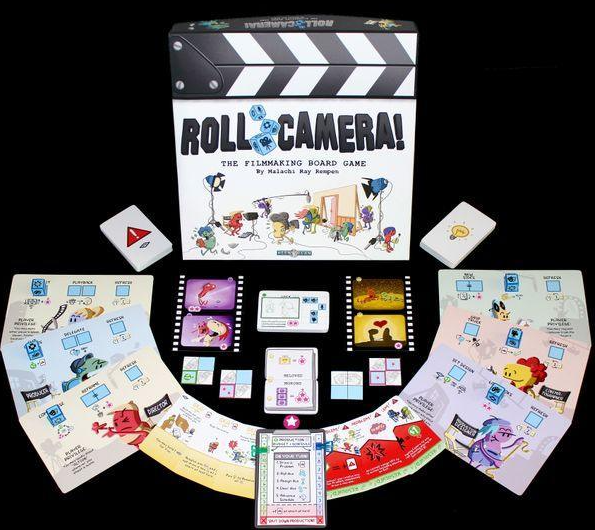
Get ready to make a cinematic masterpiece by rolling dice and placing them in Roll Camera!. Players work for a struggling film production company. The company’s on the verge of bankruptcy and one successful film can turn around the company’s fortunes. It’s up to you to make the best movie you possibly can before time—and money—run out. We’ll get into Roll Camera! in just a bit, but let’s cover some of Roll Camera!’s details.

The Fiddly Bits

Designer: Malachi Ray Rempen
Publisher: Keen Bean Studio
Date Released: 2021
Number of Players: 1-6
Age Range: 10 and up
Setup Time: 5-10 minutes
Play Time: 45-90 minutes

Game Mechanisms

Cooperative Game
Dice Placement
Events
Open Drafting
Pattern Building
Set Collection
Solo/Solitaire Game
Variable Player Powers

Game Setup

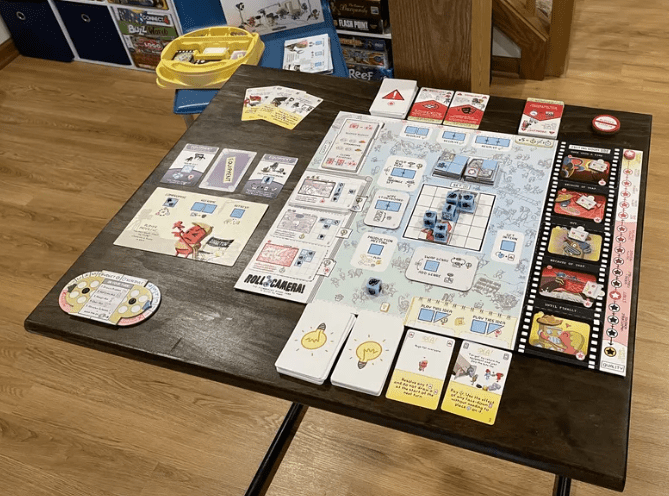
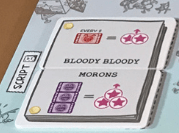
Roll Camera! doesn’t have the best rulebook; it’s a little cluttered. I’ll mention this again in the review section. Fortunately, the game board is easy to navigate, and the company (Keen Bean Studio) produced How-to-play and Turn-by-Turn Walkthrough videos. These videos help a lot. I’ll do my best to convey the information contained within the rulebook.

1) Place the main game board in the middle of the table.

2) Choose or randomly assign one player board to each player. You may use either side. Give each player the Player Aid card that corresponds to their player board.

3) Shuffle the top and bottom script cards separately, then randomly select five of each to form two Script decks. Place each deck face-up in the corresponding spots on the board. Return the remaining Script cards to the box; they will not be needed.

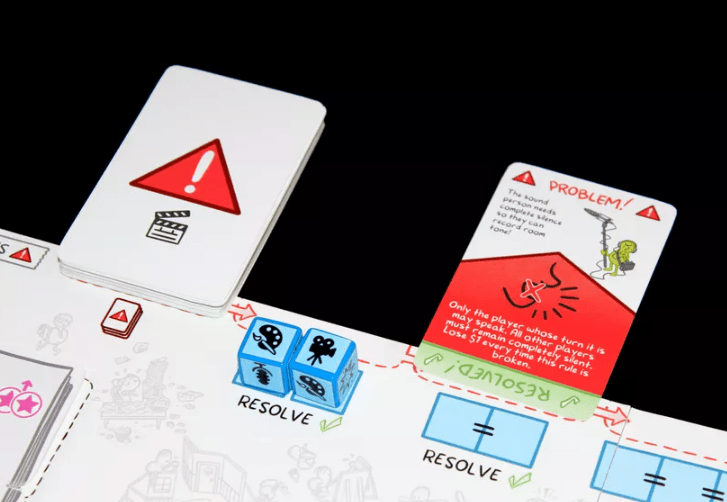
4) Shuffle the Problem deck and then place it in its space above the board (the space marked with a red triangle and exclamation point).

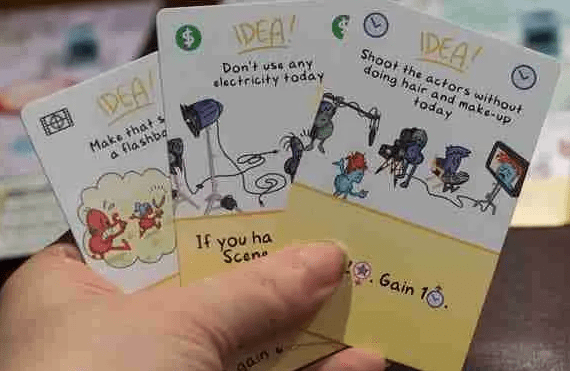
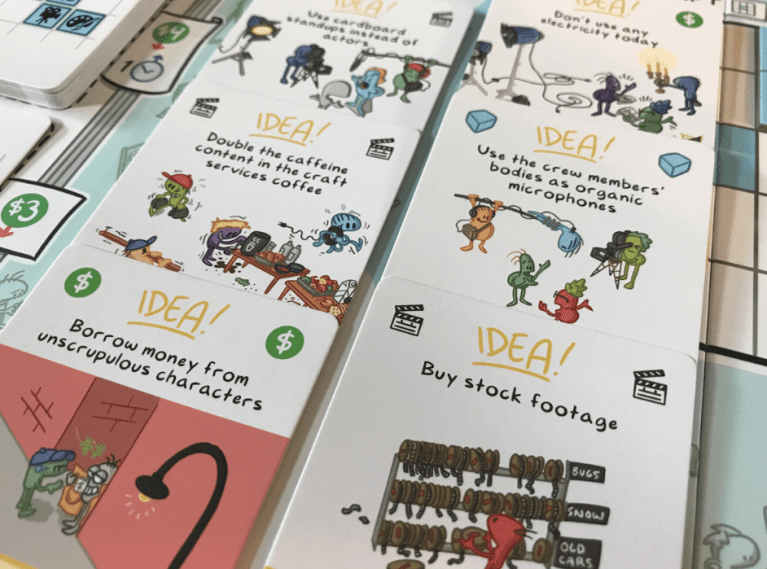
5) Shuffle the Idea deck and then place it in its space below the board (the space marked with a yellow lightbulb).

6) Shuffle the Scene deck and then place it on the topmost Storyboard space on the board with the “sketch” side up. Draw two Scenes from the top of this deck and place them in the two empty Storyboard slots below the Scene deck.

7) Deal each player three Idea cards. Even though Roll Camera! is a cooperative game, keep these cards hidden. You will always have three Idea cards in your hand.

8) Mix up the Set Piece titles and place them face-up in two even stacks on their designated grey spaces on the main board, above the Set.

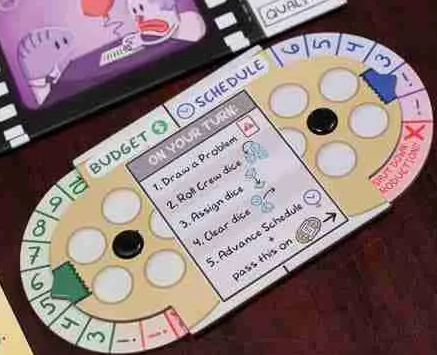
9) Adjust the Budget and Schedule dials according to the difficulty setting and number of players. The Difficulty settings are printed on the reverse side of the dials.

10) Place the pink Quality marker on the START space on the Quality track.

11) Place the “Blocked” tokens next to the Problem deck within reach. 12) Choose someone to be the starting player, giving them the six Crew dice and the Budget/Schedule dials.

Game Flow

Player turns in Roll Camera! consists of five simple steps:

1) Draw a Problem Card
2) Roll the Crew dice
3) Assign the Crew dice and take actions
4) Clear the Crew dice
5) Advance the Schedule and pass the dials

1) Draw a Problem Card

Draw one card from the Problem deck and put it in the slot immediately to the right of the Problem deck.

The Problem Queue has three slots. New Problems are added to the leftmost slot. Any existing Problems are pushed to the right. Problems never move back to the left, even if others are resolved to create a gap in the left or middle space.

If the Problem queue is filled with three problems, you don’t need to draw another one at the start of the next turn. However, you also cannot take actions, play Idea cards or gain bonuses that require drawing a Problem card if the queue is full.

2) Roll the Crew dice

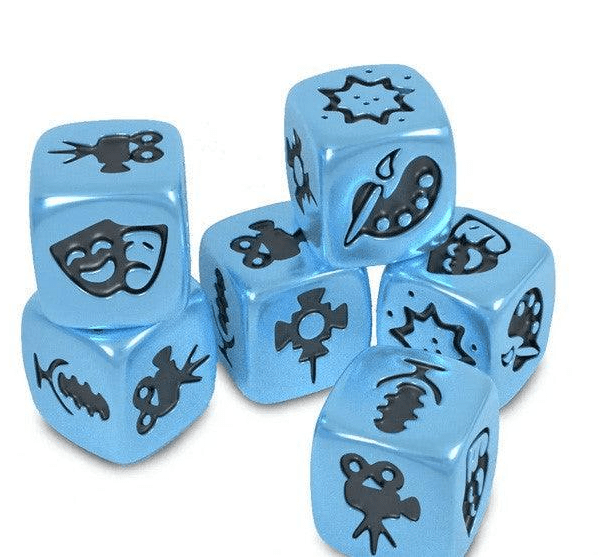
Roll the Crew dice, which determine what cast and crew you’ll have available this turn.

Usually, you’ll roll all six Crew dice, but it is possible that some Crew dice have been “locked in” onto a Set Piece during a previous player’s turn. If so, you’ll roll fewer dice. At any point, you may choose to re-roll and reassign dice that were locked in on a previous turn.

Each Crew die has six faces: Camera, Light, Sound, Actors, Art Department, and Visual Effects (or VFX, whose symbols are white to denote that it’s considered a “Wild” die face).

3) Assign the Crew dice and take actions

Take as many actions as you have dice to assign for available spaces. You can use the blue action spaces on the main board, on Set Pieces (tiles), and on your player board. You cannot use the actions on another player’s board, nor can you use an action again if its space(s) are already filled with dice.

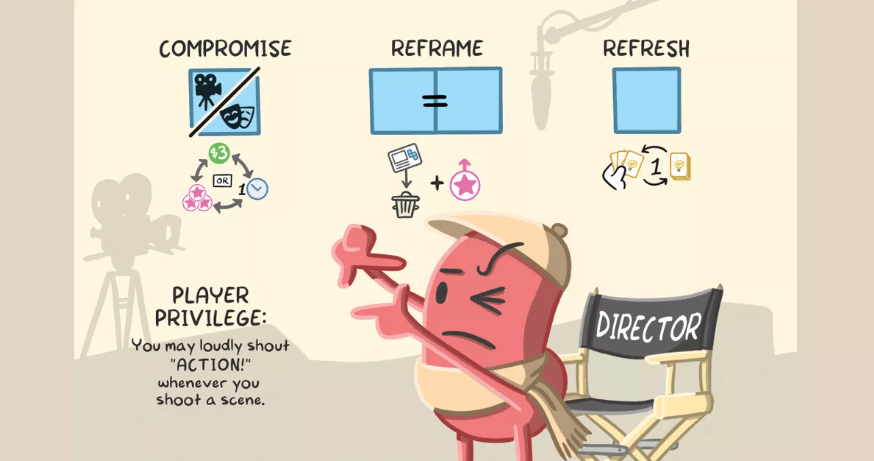
Actions will require specific dice. Refer to the following pictures, keeping in mind that the VFX die face is wild and can be used as any die face.

You don’t have to use all the Crew dice on your turn if you can’t or don’t want to; however, the next player will still re-roll any unused dice on their turn.

Locking In Dice)
You may also choose to “Lock in” any of the dice you place if you aren’t able to complete an action’s requirements. Another player could then complete those requirements on a future turn.

If you do this, the next player will roll fewer dice.

4) Clear the Crew dice

Once you’ve taken all the actions you want, clear the dice, leaving any locked-in dice on their spaces, and hand the dice to the next player.

5) Advance the Schedule and pass the dials

Turn the Schedule dial to lower your remaining time by one and hand the dials to the player to your left. Your turn is over; it’s now the next player’s turn, and they begin with Step 1).

Ending the Game

Play continues as above until players finish five scenes in the Editing Rooms and the movie is in one of the white sections on the Quality track. It is possible to create a “So Bad, It’s Good” movie. The game can also end if you run out of time on the dial. If this happens, you don’t get to finish your movie. Sad times.

Review

I’ll begin by reiterating that Roll Camera!’s rulebook is—at best—confusing. Thank goodness there are multiple videos explaining how to play the game. I recommend watching the rules video at least before attempting to play the game or even reading the rules as written.

The cluttered rulebook runs counter to Roll Camera!’s game board. One could almost figure out how to play by the symbols on the board.  That’s the mark of great graphic design. I’m shocked this didn’t carry over to the rulebook. I get it. Writing a rulebook is my least favorite part of designing and developing a board game, but Roll Camera!’s rulebook is borderline unreadable.

That’s a lot of text for a few images. Yikes!

There are a lot of individual mechanisms contained within Roll Camera!’s gameplay, but they all work together toward a cohesive whole. Player boards (with their unique abilities) make sense for player roles. Production design can improve the movie’s quality by expending an art department die face, the editor can move scenes around after they’re shot to meet requirements set by the script, and the producer can cut corners, generating money and an extra problem. Since the player abilities are tied neatly within Roll Camera!’s theme, it makes the abilities intuitive.

The requirements for placing dice are similar to those used in numerous dice placement games (like Alien Frontiers). That’s a strength. Similar symbols added with me learning how to play Roll Camera!. The Set Pieces made for an interesting puzzle the group must solve. Do we build a Set Piece with more blue, but specific blue spaces (like only actors can be placed on a space), or do we go for limited spaces with which to place dice, but when we do place dice on those spaces, you gain a bonus (like more money or more time)? These may seem like small choices, but these small choices add up to plenty of variables.

Roll Camera! even includes bad die roll mitigation. A player may choose the “Get Intern” action, setting a die to any die face but gaining a problem. Ah! The dangers of hiring interns. Roll Camera! uses its theme with most—if not every—design decision.

The most interesting action a player can choose during a turn may be “Production Meeting.” Players (including the active player) donate one idea card each to the active player. The active player will then choose which idea card to play, which one to save for later (you can replace another saved idea card if needed), and which idea card to discard. This is an interesting way to keep players engaged even when it’s not their turn as the active player. I may have to steal this game mechanism for a future game. Lol. Technically, the active player could play more than one idea card in a single turn. Saved idea cards can be played by placing dice on the spaces above their save space. The concept that you can play one die at a penalty versus playing an idea card for no penalty if you place two dice is brilliant.

Idea and problem cards uphold the theme. I don’t know how many times I chuckled when an editing-specific problem occurred while I played as the Editor or a directing-specific problem happened during the Director’s turn. Roll Camera! does what it sets out to do. It takes the world of cinematography and applies it to a fast-paced dice placement game.

I don’t even mind when my team and I fail, and we make a “So Bad, It’s Good” movie. In fact, those may be the best games of Roll Camera!.

Too Long; Didn’t Read

Dreadful rulebook aside (watch the how-to-play video instead), Roll Camera! takes the world of movies and turns it into a fast-paced dice placement game. Roll Camera! incorporates a lot of mechanisms, but each one works to form a cohesive whole that captures the essence of the game’s theme. Roll Camera! may be one of the few games I don’t mind losing. Heck! I like making a movie that’s “So Bad, It’s Good.”

Top 5 Tabletop Games from 1997

1997 was another stellar year for tabletop games. There were so many games to choose from that we have an honorable mention for the first time in a couple of yearly lists. Hey, hey, Geekly Gang! Kyra Kyle here. We’re back with another Top 5 Tabletop Games throughout the years; today’s list is the top five board games of 1997. We’ll talk about 1997’s board game list soon, but let’s review the ground rules for which games make these lists before we begin.

1: Cultural relevance plays as much of a factor as overall quality. A game might make a list that doesn’t hold up to others of its type, but you must admit the game is everywhere.

2: Only one game from a franchise makes the list. This will become more of an issue the closer we get to games with expansions.

3: Longevity plays a role, too. A game doesn’t have to fly off the shelves today, but it had to have some widespread appeal for a decent time.

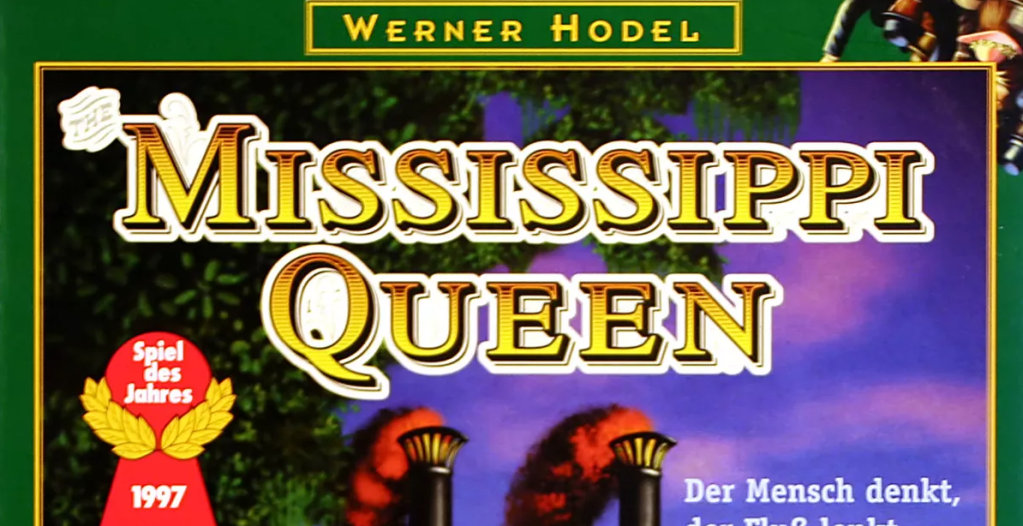
Honorable Mention: Mississippi Queen (1997)

Yep. 1997’s winner of the Spiel des Jahres (German Game of the Year) just misses our list. Mississippi Queen puts gamers in the role of a paddlewheeler captain in a race down the Mississippi River in 1871. Mississippi Queen won numerous awards, not just the Spiel, and it’s a stellar game, but the other games that made this list have had longer staying power. Still, Mississippi Queen is a satisfying racing game.

5: Tigris and Euphrates (1997)

The incomparable Reiner Knizia makes another one of these lists with Tigris and Euphrates. Many gamers may balk at this game being this low. Tigris and Euphrates is often dubbed a “gamer’s game.” It centers on a clash between neighboring dynasties along the Tigris and Euphrates Rivers. Funny, both of the first games we’re talking about are named after famous rivers. Anyway, Tigris and Euphrates offers tactical and strategic objectives, where immediate (tactical) goals are more realistic at larger but smaller player counts allow for long-term planning.

Tigris and Euphrates features drawing tiles from a bag. Players may redraw tiles if they don’t like the ones they drew by spending an action point (players have two action points per turn). After drawing tiles, players will place tiles and leaders onto the board, creating and expanding regions and kingdoms. During the game, players collect points in each of the four tile colors, prompting players to balance the tile types they play. Tigris and Euphrates has a lot more conflict than most German games during this time. It’s a classic.

4: For Sale (1997)

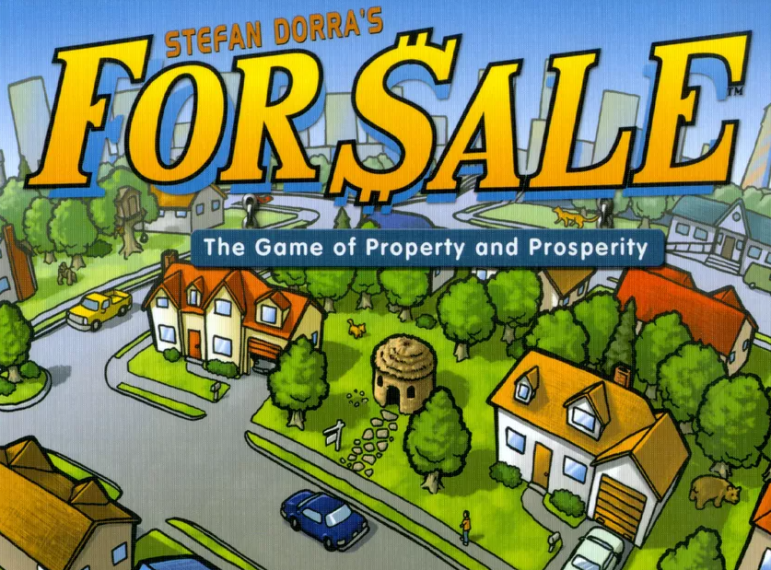
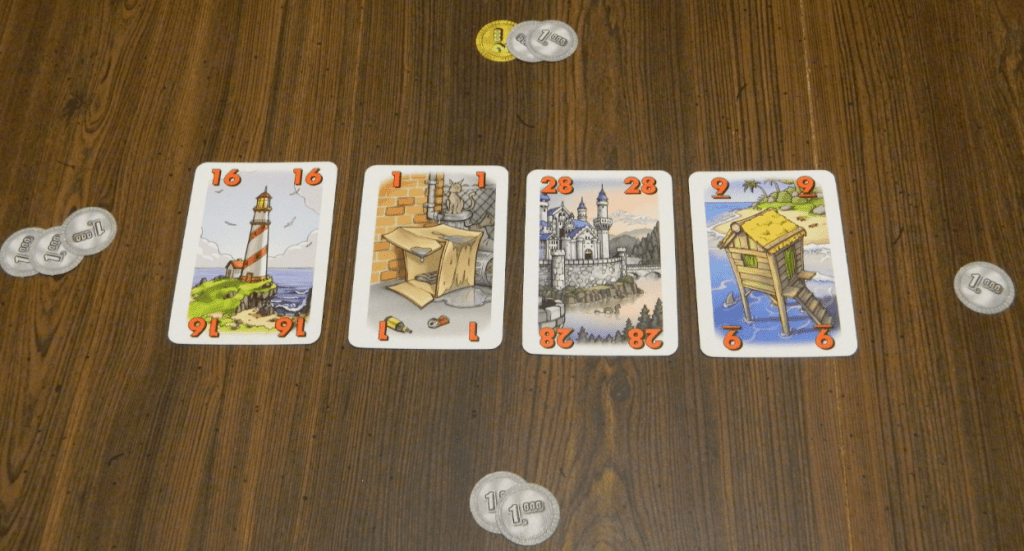
For Sale is a fast-paced auction card game about real estate. It’s played in two phases. During the first phase, players bid for several buildings. After all the properties are purchased, the second phase begins, and players sell their buildings for the highest profit. For Sale is one of those easy-to-teach, easy-to-learn, and difficult-to-master card games.

In short, For Sale may be the opposite of Tigris and Euphrates. Both are stellar games, but I’m giving For Sale the slight nod for its accessibility.

3: GIPF (1997)

GIPF is the first abstract strategy game to make one of these lists in several posts. GIPF was recommended for the Spiel des Jahres in 1998. It has plenty of accolades, but GIPF makes this list because it began a series of abstract strategy board games by designer Kris Burm named the GIPF Project. TZAAR, ZERTZ, DVONN, YINSH, PUNCT, LYNGK, and MATRX GIPF are great games that use various game mechanisms. But we’re talking about GIPF, the game of pushing.

GIPF takes a board that looks like it could belong in Chinese Checkers. Players introduce a new piece (disc) on the hexagonal game board and push their piece in a straight line. GIPF involves no luck. It’s a straight-up brain burner, and it reintroduced the gaming community to abstract strategy games akin to Go or Othello.

2: Bohnanza (1997)

Uwe Rosenberg makes his first appearance on one of these lists with Bohnanza. The game’s title is a pun on the German word Bohne (for bean) and the English word bonanza (for an exceptionally large and rich mineral deposit). Players plant bean cards and then harvest them to earn coins. Each player begins with a random hand of bean cards, and each card has a number on it corresponding to the number of that type of beans in the deck. Modern card game darling, Flip 7, may have borrowed that idea from Bohnanza. Cards with fewer copies in the deck are more difficult to collect, but players don’t need as many copies of the cards to harvest (or make a set).

Bohnanza features trading and can get political. Get ready to make your case. More so than any other game on this list—so far—I’ve seen Bohnanza played in game shops and board game cafés.

1: Twilight Imperium (1997)

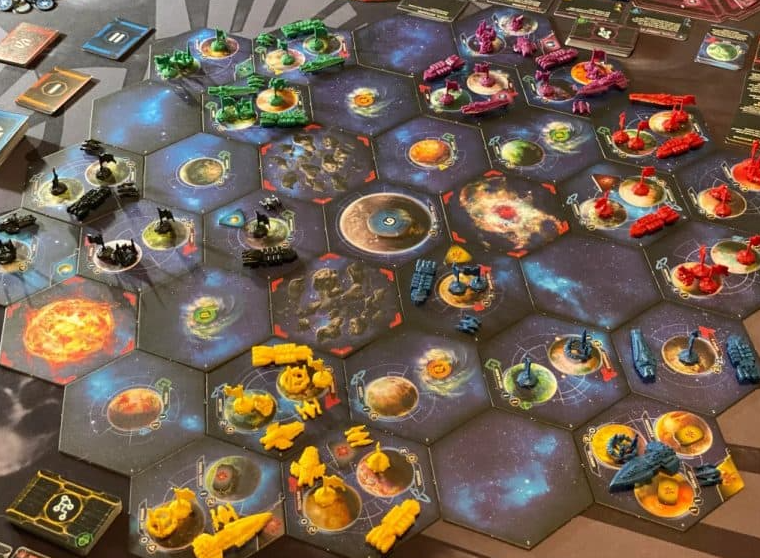
Twilight Imperium is a board game space opera. Twilight Imperium is the closest thing to a board game version of Star Wars. Twilight Imperium is a classic 4X board game: explore, expand, exploit, and exterminate. You choose how your civilization will settle the cosmos. Twilight Imperium is not for the faint of heart. Games run a minimum of five hours. This is one of the reasons why I’ve only observed games of Twilight Imperium. There’s a lot going on, but if you want to control every move of an intergalactic kingdom, few games do as good a job of capturing that vibe as Twilight Imperium.

You can even dive into Twilight Imperium’s world with its novel series published by Aconyte Books or play the tabletop role-playing game spinoff. Twilight Imperium is a game that some board gamers play exclusively. And there may be a good reason for that. As recently as last year (2024), Nerdist and Polygon dubbed Twilight Imperium as one of the greatest board games ever made. Twilight Imperium easily tops our 1997 list of tabletop games.

Did we get the list mostly correct? Let us know which games you’d add in the comments. Thank you for reading, and wherever you are, I hope you’re having a great day.
Check out the other lists in this series:
Top 5 Tabletop Games Prior to the 1930s
Top 5 Tabletop Games of the 1930s
Top 5 Tabletop Games of the 1940s-50s
Top 5 Tabletop Games from the Early 1960s
Top 5 Tabletop Games from the Late 1960s
Top 5 Tabletop Games from the Early 1970s
Top 5 Tabletop Games from 1980-1981
Top 5 Tabletop Games from 1982-1983
Top 5 Tabletop Games from 1984-1985
Top 5 Tabletop Games from 1986-1987
Top 5 Tabletop Games from 1988-1989
Top 5 Tabletop Games from 1990-1991
Top 5 Tabletop Games from 1992
Top 5 Tabletop Games from 1993
Top 5 Tabletop Games from 1994
Top 5 Tabletop Games from 1995
Top 5 Tabletop Games from 1996

Whatcha Playing, Geekly? September 2025

Happy Wednesday, Geekly Gang! Kyra Kyle here. For this week’s Whatcha, our Geekly writers will be sharing which games they’ve been playing over the past month. Let us know what games you’ve been playing, because we’re all part of the Geekly Gang. I’ll start by sharing the games I’ve been playing.

Kyra’s Games

Kyra’s Board Games

Phil Walker-Harding is known for Bärenpark, Gizmos, and Sushi Go!, and Super Mega Lucky Box is Walker-Harding’s twist on Bingo. Like many of Walker-Harding’s games, Super Mega Lucky Box is easy to learn but may take a few play-throughs to figure out the best strategy.

A deck of cards, containing two copies of numbers 1-9, is used to determine which box players may check off one of their multiple Bingo cards. (You begin the game with three.) As soon as you fill a column or row, you immediately claim the reward (if any), shown at the end of that column or row. Lightning bolts allow you to change the number on the card, so typically, you’re not stuck with a number you can’t use. Stars grant you victory points. Super Mega Lucky Box rewards players who can manage their resources (lightning bolts and rewards) and who know when to manipulate their Bingo cards and rewards to great effect.

A Mensa 2022 Select recipient, Super Mega Lucky Box encourages creative thinking. The game’s variability ensures no two games play the same.

Wazabi spelled with a “Z,” not an “S,” is–essentially–a dice version of Uno. Players begin the game with four dice, and they attempt to rid themselves of their dice. Each die has three possible results, give a die to another player, draw a card, and a W (more sides have W than the other two), which is the currency needed to play a card from your hand. During a turn, a player rolls the dice, follows the directions on the dice, and can play one card that they can afford. Cards cost 1, 2, or 3 W.

Wazabi can be fun, but it suffers from the same shortcomings as Uno, only you’re adding dice (another variation of luck) to the mix. Games of Wazabi can–and should–end in less than ten minutes, but typically, you’ll end up with a stalemate with players trading dice and cards back and forth for about twenty to thirty minutes. Still, I can see the appeal of Wazabi. It adds a little spice to Uno’s gameplay.

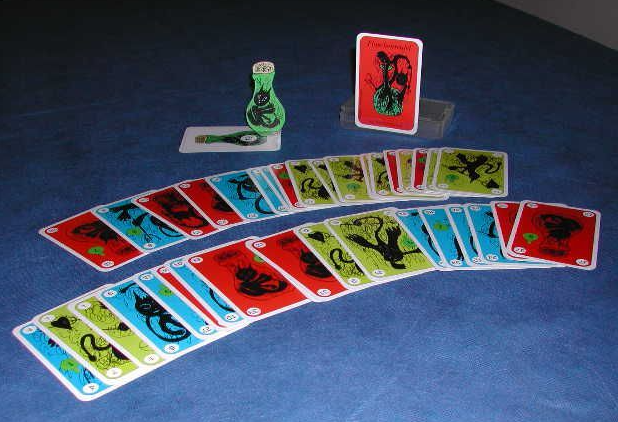
One of my game group members hates trick-taking games. He shall remain nameless. Anyway, this trick-taking game hater hasn’t shown up to meetings over the past month, so we’ve been playing a ton of trick-taking games: Little Devils, The Bottle Imp, Cat in the Box, and Squeeze.

I won’t go over all of these games, but I enjoyed each one. I like having a theme for game night. Quick. So-and-so isn’t here, let’s play games they hate playing. Each of these trick-taking games are nasty in their own way. The Bottle Imp requires the most replays to wrap your brain around what’s happening, although Cat in the Box isn’t too far off in that regard. Little Devils is the easiest to explain (we’ll have a review of that game in a couple of months), and it happens to be the meanest of the three non-traditional card games. But Squeeze (played with a traditional deck of cards) may be the most mean-spirited.

Players begin Squeeze with ten cards. The top card of the deck denotes which suit is trump for the round. The person to the dealer’s left makes their bid, and then everyone else makes a bid. When the bidding makes its way to the dealer, the dealer can only choose a number that doesn’t equal the total number of cards in hand.

For example, during the first round of a three-player game, if the first player says “3” and the second player says “4,” the dealer can say any number other than “3,” which would equal ten (3+4+3 = 10).

At least one person is guaranteed to miss their bid each round, hence the name Squeeze. “Zero” is a legal bid, so long as it wouldn’t equal the number of cards in play. Players earn ten points plus their bid if they achieve their bid, and get nothing for missing their bid. Play continues like this until a dealer deals only one card during a round. You don’t want to be the dealer during the final round. You may not have a choice of bid. Yikes!

My favorite thing about Squeeze is that you get less knowledge of what’s in players’ hands the longer you play. I may be the only one with trump for the round, but my trump cards are two and three. I’ve bid one and ended up getting a lot more tricks than one. Lol

Kyra’s Video Games

I won’t go into too much detail with Tiny Bookshop; this game will definitely make Season’s list, too. Geekly covered Tiny Bookshop during one of our Geekly News posts. In short, Tiny Bookshop is an excellent, cozy game and will probably receive a game review sometime in early 2026. I love making book suggestions for customers. Tiny Bookshop is one of the few video games that offer reading recommendations. What’s not to love?

I like auto battlers. My favorite is the now-defunct Fate Arena, so I’ve been looking for a worthy replacement. I’ve put in a handful of hours with Mirror Throne, and it’s most likely not going to be my Fate Arena replacement. Mirror Throne doesn’t appear to have balanced abilities for its characters. I could be wrong. But I did run the table with one or two overly strong units during the game’s campaign. Mirror Throne only offers two factions (technically, a third that’s a mix of the other two), so gameplay styles are limited. But Mirror Throne has room for improvement.

While I’d like a more robust campaign mode, Mirror Throne needs to fix its competitive (Arena) mode. I dislike how I don’t know who I’m in a lobby with, and that I have no idea what kind of teams they’re building. That’s something Fate Arena handled beautifully. I want to know my competition. Instead, I’m given randos who may be bots.

Fate Arena also had bots, but you’d get an idea of who the bots were, and they didn’t dominate lobbies. I also wonder about leavers. Fate Arena would backfill leavers with bots; leavers were the main reason for bots in Fate Arena. Mirror Throne may suffer from leavers who only purchase one unit and duck the game. I can easily roll them.

I’ve played Mirror Throne after its first major update, and I still don’t know what’s going on during Arena mode. Hope is the currency needed to stay in the game (you begin a game with 100), and sometimes when I lose, I’ll lose 5 or 10 Hope, but other times it’s a whopping 25. What determines the amount of lost Hope? Mirror Throne is needlessly opaque.

Mirror Throne also matches me against opponents I may never see again in the lobby. I’m unable to build up a rivalry with any opponent. Mirror Throne has just been released, but it needs to iron out a lot of kinks. Fingers crossed.

That’s all I have for games this past month. Let’s see what Season and Skye have been playing.

Season’s Games

season’s board games

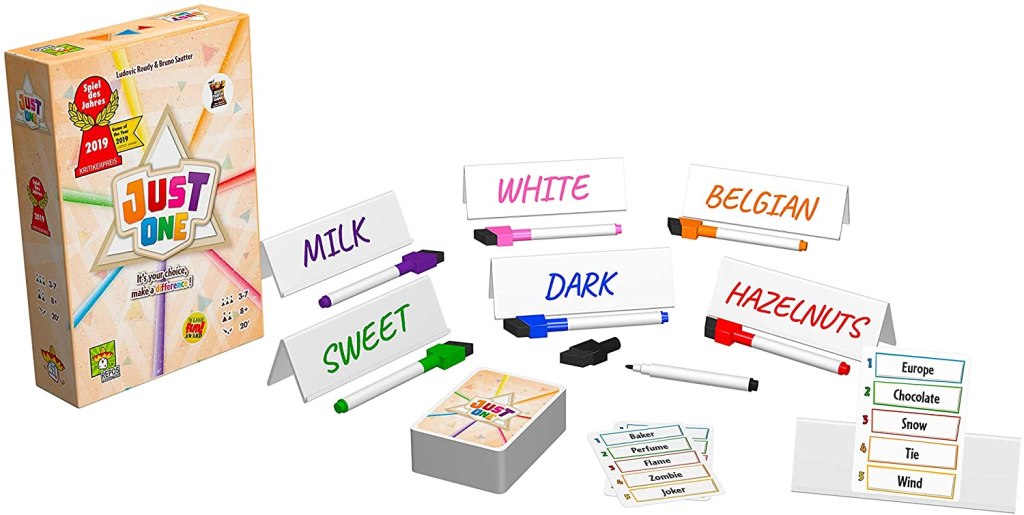
It’s been a minute since I last included a board game on this list. I originally played Just One at a going-away party with a former coworker years ago, but it’s recently hit the table again. Just One is a simple game that has the active player draw a card (without looking at the underside) and select a number (1 through 5). Each number has a word next to it. The rest of the players use their whiteboard standees to write one word that describes the word from the list the active player chose. Players reveal the descriptive words they chose to each other (without the active player looking), and if any words match, the players with matching words have to erase their whiteboards. The active player gets one chance to guess the word they picked.

I don’t remember how many rounds are supposed to be played. Whenever I play, my group plays until we burn out on guessing words.

Travel-sized Scattergories makes a comeback. We’ve covered SiXeS before, so I won’t go into too much detail. The gist of SiXeS is writing thirty-six words over six rounds in six minutes. Each round has a different category (or categories for Lightning rounds that occur every third round), which players either try to match words with each other or be unique. In rounds one and four, players are trying to match every word. In rounds two and five, players are trying to have different words. In rounds three and six, players are trying to match in six different categories with one word per category (Lightning rounds). Each round is timed for a minute, and players read their lists aloud once the timer is up.

I love games that let me flex useless knowledge. I always have a good time whenever SiXeS hits the table.

season’s video games

I’ve gone with another tabletop game in video game form with this month’s Inscryption. Inscryption is a rogue-like deck-building game that combines role-playing with escape room elements. You can get up from the table and explore the room around you for clues. Some of the puzzles offer the player cards to help them progress through the game. Not much is explained about your character (player piece) in the game, other than animals randomly start following you as you trek through the woods.

Your starting deck has three cards and a squirrel deck (which players may use as sacrifices). You collect cards and build your deck as you progress across the map. Every time you fail, you must start over with the same starting deck and build your deck from the ground up. You’ll start to notice something peculiar about one of the cards in your starting deck. I won’t go into further detail.

Inscryption incorporates an ARG (Alternate Reality Game) through some of its Easter eggs. An ARG is a code, link, or something else within a piece of content that connects the consumer to go into the real world to discover more lore. In Inscryption, several binary codes are scattered throughout the game, connecting players to external sources and providing context on fictional entities within the game. It’s fun for those who like a bit of sleuthing.

That’s all I’ve for this week. What have you been playing, Skye?

Skye’s Games

I made an important realization this month. If I get into a game, I really get into it. Case in point: Horizon: Zero Dawn. I hadn’t played Horizon: Zero Dawn before, and I was looking for another RPG. After finishing Ghost of Tsushima months ago, Horizon: Zero Dawn has filled that void. My favorite aspect of Horizon is exploration. I always love running around to the farthest reaches of an open-world game’s map and stretching the limits of what I can do. You can’t tell me what to do, game! I do what I want!

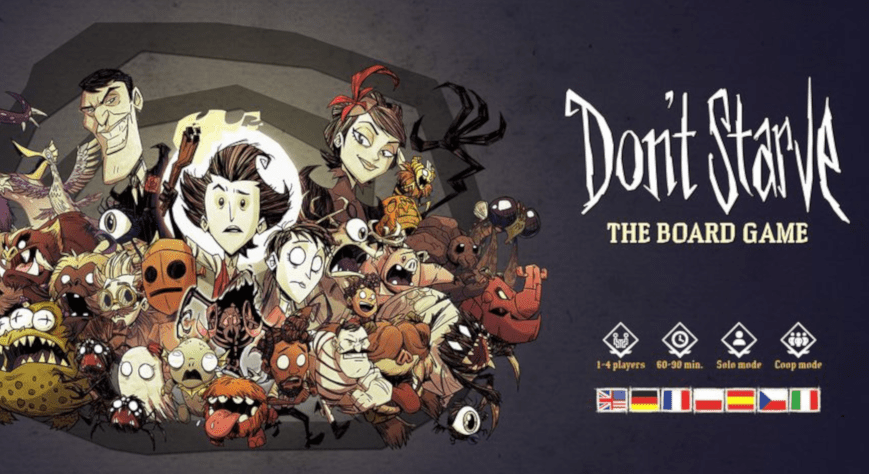
I got the random urge to play Don’t Starve again. What sets Don’t Starve apart from most other survival games is its tendency to throw random things at you without warning. You suddenly come across a new biome you’ve never seen and get killed by a subterranean tentacle. You’re barely managing to scrape by when a pack of wild dogs comes out of nowhere and mauls you to death. I still don’t have an ideal strategy, but Don’t Starve is an enigma I’m willing to spend my time. I forgot how much I love Don’t Starve.

Kyra Kyle again. Those are all the games our writers have played this past month. Let us know which games you’ve played over the past month, Geekly Gang. Thank you for reading, and wherever you are, I hope you’re having a great day.

Geekly News: August 31, 2025, MCU X-Men

Happy Sunday, Geekly Gang! Kyra Kyle here with another week of Geek News. We have several new releases for video games and board games, but before we get to those, the MCU made a somewhat major announcement: they’ve started work on their version of the X-Men. Okay. The MCU was going to begin work on the X-Men within the next year, so this may not be the biggest of headlines, but this could lead to future headlines.

The MCU Begins Work on X-Men

Thunderbolts* may not have done as well at the box office as the MCU had hoped, but it was a great recent entry for the MCU. The Thunderbolts*’s director, Jake Schreier, proved he could handle the quirky and dysfunctional family dynamics of the New Avengers. He even explored the team’s mutual trauma and had them bond. Marvel agrees with me. Early this year, Marvel Studios gave Jake Schreier the nod as the upcoming X-Men movie’s director, meaning Marvel’s mutants are in good hands. In a recent interview with Empire Magazine (via Deadline), X-Men director Jake Schreier confirmed he’s already working on X-Men.

Schreier doesn’t elaborate on his statement, so we don’t have much to glean from what he said. He literally said work on X-Men has begun. Okay. Looks like we may need to extrapolate. That’s right. Buckle up, because we’re flooring the gas pedal into MCU speculation territory.

Early this month, we mentioned an unnamed MCU movie scheduled between the two upcoming Avengers movies (Doomsday and Secret Wars). I stand by our reasons for the MCU films we thought could be released between Doomsday and Secret Wars: Deadpool 4, Black Panther 3, Blade, and Doctor Strange 3. Schreier mentioned X-Men would begin filming next year. Taking recent MCU production practices into advisement, this could add X-Men to the list of possible movies to fill the “unnamed MCU” film slot. But I’m reluctant to add X-Men.

The X-Men will need more build-up than a standard MCU film production. While I’m excited for an X-Men MCU film, my enthusiasm rises with the thought that X-Men will receive an additional year of filming, ensuring the film is the best it can be. X-Men will have too much going on for a quick year-and-a-half turnaround. That production schedule may work for Thunderbolts*, not X-Men. Asking the MCU to squeeze in an X-Men movie between Avengers: Doomsday and Secret Wars is a huge ask.

However, we should expect X-Men casting news to heat up in 2026. Until now, we’ve had mostly speculation. Geekly even did our own fan casting for the MCU’s X-Men. But that’s what most “X-Men Casting” has been to this point, fan casting. With Scheier’s announcement, X-Men will begin filming in 2026, and casting rumors will be more than speculation. I’ll be on the lookout for trusted industry insiders (like Daniel RPK, who has a great track record with MCU casting news) to report on potential X-Men cast members. In short, if we see someone consistently cast in a role for months by a trusted industry insider, there’s a great chance the actor has been cast for the role. This is the time for X-Men rumors to boil.

Stay tuned. 😉

Transecopia Emerges on GameFound

Transecopia adds hidden placement to the dice placement mechanism. Turns go quick with simultaneous play, and multiple win conditions keep the game fresh and exciting. I’m unsure of Transecopia’s theme, but I imagine it has to do with underwater exploration, based on the game’s artwork. Since I’m unsure exactly what you’re doing, I’ll be focusing on the gameplay, which looks fantastic. Transecopia has a relatively simple concept. Players simultaneously roll dice so everyone can see. Then, everyone places screens in front of their player boards and begins placing dice.

Player boards are resolved in areas, positioned top to bottom and left to right. Whoever has the highest value of dice located in each area, earns the resources from that area. Like I said, Transecopia has a simple concept, but you’ll need to outthink your opponents. Armed with the knowledge of what everyone rolled during the round, you can take educated guesses to where you think your opponents will place their dice. The big reveal is a blast and bound to yield audible responses.

Since Transecopia is releasing on GameFound, we have little information on how much pledges will be at this time. If you’re interested in Transecopia, check out its GameFound page.

The Gilded Realms Marches onto GameFound

Harness the unique strengths and skills of your people in the robust kingdom builder, The Gilded Realms. Armed with their own factions, players compete to defend and fortify the crucial region, The Pristine Mountains. The Gilded Realms offers a lot of customization to each game. Faction upgrades come in handy as you try to build the best empire.

The Gilded Realms offers a ton in its box. This second printing, offered on GameFound, features a new expansion for an extra wrinkle. The Gilded Realms has received great reviews. It offers an intriguing hybrid of simultaneous and turn-based gameplay. Again, The Gilded Realms is on GameFound, so we have little information on how much a pledge will cost. My guess would be in the triple figures, over a $100. You’d be getting a lot of game at that price. If you’re interested in The Gilded Realms, check out its GameFound page.

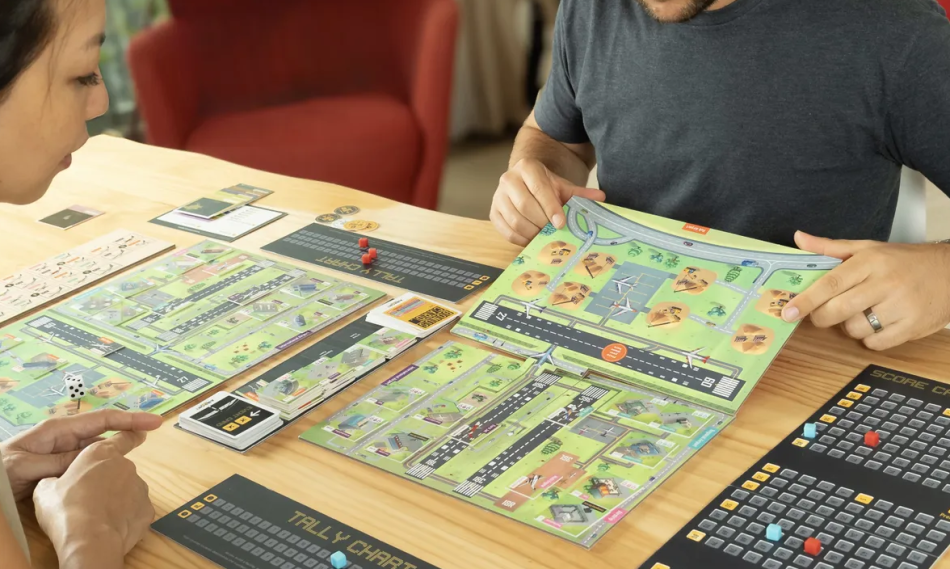
Airport Empire Lands on KickStarter

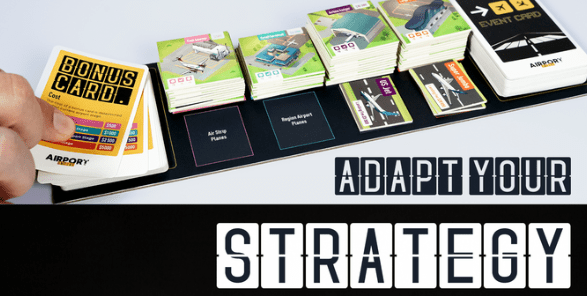
Who hasn’t wanted to run their own airport? Airport Empire puts you in charge of a small airstrip and tasks you with building it into an airport empire. Events occur to keep you on your toes. You can buy upgrades to expand your tiny airstrip to an airport. The airport pieces look great. But watch out. You must meet your needs to upkeep your growing business.

You score points in three categories: customer satisfaction, profits, and efficiencies. I love Airport Empire’s example of “an air traffic control tower is great to improve efficiency, but does little to improve your bottom line, where as maintenance hangars brings in revenue but go unnoticed by passengers.” I’m wondering if you don’t “need” these structures to run your airport. That’ll be fun. The player with the most points at the end of the game wins.

I like that Airport Empire keeps each version the same. Too many board game campaigns offer varied game experiences with deluxe versions of the same game. And Airport Empire offers plenty of pledge options, ranging from $49-95. That’s a good range for what appears to be a middle-weight game. If you’re interested in Airport Empire, you can check out its KickStarter page.

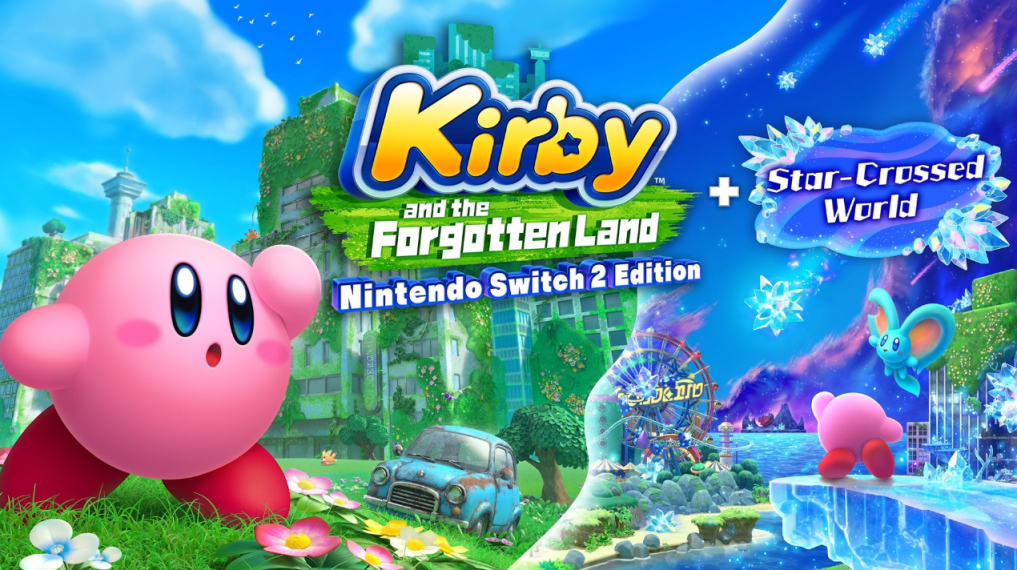
Kirby and the Forgotten Land – Star-Crossed World Expansion and Switch 2 Upgrade Released

Kirby and the Forgotten Land was–and still is–a great three-year-old platformer. Kirby gets his time for a Switch 2 upgrade, but this upgrade comes with an expansion, Star-Crossed World. The 12 new levels add some interesting twists to the fun formula. Hilarious Mouthful Mode transformations and the levels themselves make Star-Crossed World a worthy addition. I am a little worried by the Switch 2 upgrades. Switch 2 upgrades should be free if players already purchased the game for the Nintendo Switch, but this upgrade does come with an expansion. Upgrading Kirby and the Forgotten Land from Switch to Switch 2 does give you the Star-Crossed World expansion. This may be an adequate middle ground.

That’s all the geek news we have for you this week. Thank you for reading, and wherever you are, I hope you’re having a great day.

Geekly News; August 24, 2025,

Happy Sunday, Geekly Gang! Kyra Kyle here with another week of Geek News. We don’t have much in the way of major headlines this week, but as usual, we’ll break down the board game and video game new releases. Let’s start with board games.

Storybook Saga Opens on GameFound

We’ve been covering every Solo Game of the Month release on GameFound ever since January of this year, because these games, even if they don’t look like ones I’d be interested in, are designed by established board game designers, and this company never fails to deliver. This month’s game, Storybook Saga, continues this tradition. Per usual (for GameFound), we don’t have an idea of pledge costs or Storybook Saga’s game mechanisms. But it looks amazing.

Players assemble a team of classic storybook characters and attempt to survive scenarios. Each card will be tarot-sized–you don’t see much of that. the art looks stunning. Storybook Saga is yet another Solo Game of the Month title that uses top-notch components. And even though we don’t know how the game is played, you know Storybook Saga will be a solo game, and the pledge should land in a reasonable price range. My guess would be $20-35. If you’re interested in Storybook Saga, check out its GameFound page.

Reiner Knizia’s Hanami Launches on KickStarter

As Hanami’s subtitle says, Hanami is an update to the Reiner Knizia classic board game Samurai, and when I say Samurai is a classic board game, believe it. The game still holds an impressive 7.5 rating BoardGameGeek. Yeah. 7.5 on BGG means the game is great.

Hanami celebrates a different side of Japanese culture, but one that’s still steeped in Samurai tradition. Who doesn’t love sakura blossoms? Hanami offers a lot of free add-ons for a standard pledge of $40. If you’re interested in Hanami, check out its KickStarter page.

Restless Spirits Emerges on KickStarter

Restless Spirits puts players in the role of a spirit guide, trying to collect magical totems and release spirits. Restless Spirits’ rules are easy to pick up. Choose a spirit guide, attract spirits to your board, find and play matching totems, use spirit abilities to gain an advantage, and release the most spirits. This game gets really combo-tastic.

Restless Spirits is another game that features tarot-sized cards. I’m always down for that. The art looks amazing, but my favorite feature for Restless Spirits is its story mode. Tales of the Spirit Realm is a collection of 12 short folktales about the Spirits in the game. Before playing, draw a Tale card (either at random or in order), turn to the associated page in the Tales booklet, and read the story. Each Tale has an accompanying gameplay modifier, so you get to learn more about the specific spirit you’re playing, which comes with a fun gameplay twist.

Restless Spirits offers a couple of pledge levels. The standard edition costs about $47 (the prices are in Pounds), while the deluxe version that adds some extra swag runs about $74. If you’re interested in Restless Spirits, check out its KickStarter page.

Herdling Video Game Releases

This past week was a big one for indie video game releases. Herdling is a brand new adventure from Okomotive, who also created the atmospheric and acclaimed FAR games and Firewatch.

Herdling looks stunning. If it follows previous Okomotive releases, Herdling should have more of a focus on immersing gamers in the world it’s crafting. I never thought herding livestock would appeal to me, but Herdling has me second-guessing that opinion. Herdling released on PC, Nintendo Switch, Playstation5, Xbox.

Discounty Lands on Steam

Newcomer developer Crinkle Cut Games released its first video game, Discounty, on Steam. Discounty takes some concepts of games like Stardew Valley and applies them to a discount supermarket. You’ll be managing a local supermarket and getting caught up in small-town drama. Organize and plan your shop’s layout and strike lucrative trade deals as you expand your business empire.

Discounty scratches that resource management itch that I often get. The quirky town looks fun and inviting. And at the time of writing this post, there’s a bundle for Tiny Book Shop (which we covered in a previous Geekly News post and is an amazing video game) and Discounty. If you’re interested in Discounty, check out its Steam store page.

Sword of the Sea Sails onto Systems

I’ve always liked developer Giant Squid’s aesthetic. Giant Squid are the ones behind Abzû and The Pathless, but their art director also worked on Journey and Flower. You can see those influences in Sword of the Sea. Players control a Wraith, who explores abandoned and desolate worlds, hoping to bring life back to them. The Wraith explores the world with a hoversword, which is part snowboard, skateboard, and hoverboard. Needless to say, this world is stunning.

Sword of the Sea plays like an eco-fantasy. In a world as desolate as the one made by the Once-ler in The Lorax, Sword of the Sea has players soar through barren lands, seeding them with life in an art style reminiscent of Journey or Flower. Sword of the Sea’s premise has me intrigued. Giant Squid delivers the graphics we know them for, and that makes for a title on my short list of 2025 video games that I need to try. Sword of the Sea is available on PC and Playstation5.

That’s all the geek news we have for this week. Thank you for reading, and wherever you are, I hope you’re having a great day.

Top 5 Tabletop Games from 1996

1996 was a weaker year for board games than the past handful of years, but a banner year for collectible card games. As a result, we’re lifting the CCG embargo for the 1996 list. There will be more than one CCG entry for the top 5 tabletop games from 1996, and it’s a doozy of a collectible card game. Woo hoo!

Hey, hey! Kyra Kyle here. We’re back with another Top 5 Tabletop Games. We’ll talk about 1996’s board game list soon, but let’s recap the ground rules for which games make these lists before we start.

1: Cultural relevance plays as much of a factor as overall quality. A game might make a list that doesn’t hold up to others of its type, but you must admit the game is everywhere.

2: Only one game from a franchise makes the list. This will become more of an issue the closer we get to games with expansions.

3: Longevity plays a role, too. A game doesn’t have to fly off the shelves today, but it had to have some widespread appeal for a decent time.

5: Mythos Collectible Card Game (1996)

We begin this list with an interesting collectible card game, Mythos. Based on the Cthulhu Mythos stories of horror author H.P. Lovecraft, Mythos is also an adaptation of the Call of Cthulhu role-playing game. Mythos combines elements of some traditional card games like Rummy and borrows other concepts from previous CCGs. While the game is playable by two players, the intent is for Mythos to be played by a larger number of players. The main objective of Mythos is to collect points by completing adventures. Adventures are cards that include keywords derived from different card names and types. Once the required cards are in the player’s story deck or on the table, the player can play the adventure and receive its points.

Mythos differs from many collectible card games because of its lack of a combat focus. This is a CCG that attempts to tell a story. Unfortunately, Mythos faltered after its initial release. Later expansions, most notably the non-collectible Standard Game Set, confused consumers and forced the publisher Chaosium to discontinue Mythos only one year after the game’s original release. Still, Mythos shows what collectible card games can achieve. It earned its distinction as one of Pyramid magazine’s The Millennium’s Best Card Games.

4: Mad Gab (1996)

Lately, we haven’t included too many mass-market board games in these lists. Mad Gab bucks this trend. It does so, not just because 1996 was a weaker year for board games like I mentioned, but because it was a cultural cornerstone. Mad Gab uses puzzles known as mondegreens (misheard words that could mean something else) and contain small words that, when put together, make a word or a phrase. For example, “These If Hill Wore” when pronounced quickly sounds like “The Civil War.” Mad Gab had two levels, easy and hard. The faster players solve the puzzles, the more points they score.

Mad Gab uses phonetics. It tests players’ ability to process sounds based on simpler English-written sounds into a meaningful word or phrase. Players must read the words aloud. Reading the phrases silently won’t allow someone to decode the puzzles’ meaning because the sounds need to be decoded.

3: Kill Doctor Lucky (1996)

We covered Mystery of the Abbey on our last week, and that game revamped Cluedo (or Clue for the United States). Kill Doctor Lucky flips the idea of Clue on its head. Kill Doctor Lucky features a sprawling mansion filled with a variety of dangerous weapons. Cluedo begins after the murder has been committed, and players compete to solve it; Kill Doctor Lucky ends with the murder, and players attempt to kill the titular character, Doctor Lucky.

Players must find a secluded room before slaying Doctor Lucky. You can even gain extra points if you pair a weapon with a specific room. For example, if you kill Doctor Lucky in the wine cellar with a trowel, you’ll gain extra points, alluding to Poe’s short story “The Cask of Amontillado.” As soon as I heard that Clue: The Movie could receive a remake, I wondered why Hollywood didn’t choose to go with a Kill Doctor Lucky movie. Why not lean into the silliness?

2: Netrunner (1996)

We have yet another Richard Garfield collectible card games that make one of these lists. Garfield has a knack for stretching the boundaries of collectible card games. That makes sense. He did create this form of game. Like Mythos, Netrunner doesn’t have a focus on combat. It takes place in the Cyberpunk 2020 role-playing game universe (which is also the basis for Cyberpunk 2077) and pits players against each other in asymmetric roles. One player assumes the role of a runner, who tries to break through and steal hidden plans (hacking) of the mega-corporations (the Corp) that run the world. The other player assumes the role of the Corp and attempts to catch the runner.

Beyond its focus on non-combat, Netrunner was unique because most collectible card games are framed as a battle between peers. Netrunner has two very different sides facing off against each other. While the collectible card game only ran for a few years, in 2012, Fantasy Flight Games adapted Netrunner into Android: Netrunner, which is a living card game that ran until 2019. Netrunner has a long and storied history. Its fans are fierce. But it doesn’t claim our top spot on this list. A different collectible card game has that honor.

1: Pokémon Trading Card Game (1996)

Pokémon had to claim the top spot for 1996. It’s the second-longest-running collectible card game in history. When Pokémon first released, it sold out so fast that all the trading card manufacturers in the world postponed their other orders (like baseball, football, and basketball cards) to fill the demand for new Pokémon cards. Releasing later the same year as Pokémon Red, Blue, and Yellow (the original Pokémon video games on the Game Boy) helped catapult Pokémon to legendary status.

Play alternates between players who take several actions during their turn, including playing Basic Pokémon, evolving Pokémon, attaching an Energy card, playing Trainer cards, and using Pokémon abilities and attacks. The first Pokémon Trading Card Game sets played like simplified Magic: The Gathering decks. This helped Pokémon and built a pipeline for Magic. Wizards of the Coast, the producer of Magic: The Gathering, didn’t mind because the Pokémon Company licensed the Pokémon Trading Card Game to Wizards of the Coast, who published eight expansion sets between 1998 and 2003, after which the licensing transferred back to The Pokémon Company. The Pokémon Trading Card Game is one of the few games of this type from the original trading card boom that has stayed in continuous production. I haven’t played Pokémon in years, but I have fond memories. This game’s legacy demands that it takes our top spot.

Did we get the list mostly correct? Let us know which games you’d add in the comments. Thank you for reading, and wherever you are, I hope you’re having a great day.

Check out the other lists in this series:
Top 5 Tabletop Games Prior to the 1930s
Top 5 Tabletop Games of the 1930s
Top 5 Tabletop Games of the 1940s-50s
Top 5 Tabletop Games from the Early 1960s
Top 5 Tabletop Games from the Late 1960s
Top 5 Tabletop Games from the Early 1970s
Top 5 Tabletop Games from 1980-1981
Top 5 Tabletop Games from 1982-1983
Top 5 Tabletop Games from 1984-1985
Top 5 Tabletop Games from 1986-1987
Top 5 Tabletop Games from 1988-1989
Top 5 Tabletop Games from 1990-1991
Top 5 Tabletop Games from 1992
Top 5 Tabletop Games from 1993
Top 5 Tabletop Games from 1994
Top 5 Tabletop Games from 1995

Geekly News: August 17, 2025, Board Game Industry Drama

Hey, hey, Geekly Gang! Kyra Kyle here. It’s another Sunday, and we have another week of Geek News. I mentioned in last week’s post that the board game industry has seen a lot of drama over the past several weeks. I had a week to collect my thoughts and figured I would try to make some sense out of the chaos.

Board Game Industry Drama

Two major incidents occurred over the past month: one involving Devir Games and the other CGE (Czech Games Edition). CGE’s drama will need a little more context and has more layers. Devir’s is more straightforward, so we’ll begin with Devir Games.

Devir Games Ace of Spades

Devir Games’ recent release Ace of Spades includes depictions of white slave owners and (as Devir mentioned in a press release last week) a black person in a state of enslavement. According to Devir Games (in the same press release), their intent was to reference the film Django Unchained. While this can explain the inclusion of these images, the terminology Devir used in Ace of Spades, and the cards’ effects, it doesn’t excuse the behavior. To Devir Games’ credit, they issued an apology and took immediate action.

Ace of Spades is being recalled, the offensive cards swapped out with new art and terminology, and the new cards will be available for anyone who purchased Ace of Spades before this change. The original game will not be available for purchase.

I first heard about Ace of Spades‘ misstep several days before this apology. I hadn’t yet seen the images. Several of the board game communities I’m a part of discussed Ace of Spades in detail. In a post that has since been taken down, one community member posted the offensive pictures and said they didn’t see anything wrong with them. Personally, seeing the images was worse. I figured they were bad. They sounded bad. But they were worse than I imagined. The one titled “Fugitive” looks like it was taken from Birth of a Nation. Wow! Hopefully, board game publishers will hire cultural consultants or community representatives (of the ones depicted) in the future.

Czech Games Edition Codenames: Back to Hogwarts

The Ace of Spades fiasco is straightforward and found a swift conclusion. Czech Games Edition’s (CGE) Codenames: Back to Hogwarts gets a lot messier. While Ace of Spades displayed obviously disturbing images, Codenames: Back to Hogwarts upset a large percentage of the board game community because of Harry Potter writer J.K. Rowling’s politics and her hateful actions against a marginalized community.

Quick Thoughts on Themed Versions of Codenames

I likely won’t review the newly released Codenames: Back to Hogwarts because I don’t care for themed versions of Codenames. I’ve read a lot of Marvel Comics, and if you’ve read JK Geekly, you’ll know I keep up with the MCU, and yet, I find little enjoyment in Codenames: Marvel. People who know the intellectual property well will stomp on people who don’t. The same will be true of Codenames: Back to Hogwarts because of the game’s trivia-like nature, but this new version could give the standard Codenames’ formula a new twist.

Full Disclosure: I also won’t purchase Codenames: Back to Hogwarts because I’m non-binary, I have a trans daughter, and J.K. Rowling intends to use her royalties to target the trans community. In fact, I don’t care for Rowling’s moniker sounding too close to JK Geekly, so I’ll refer to her from this point forward as Joanne Rowling.

Quick Note on JK Geekly’s Name Origin

We named ourselves JK Geekly for Jim and Kyra Geek-Weekly (Geekly) or (Just Kidding) Geekly. JK Geekly is in no way affiliated with Joanne Rowling. We’re the jolly, queer, and effeminate JK.

Czech Games Edition’s Response

CGE’s response took longer than Devir’s because the issue is nuanced. Codenames: Back to Hogwarts is the first Harry Potter-themed board game in years. Honestly, it’s the first Harry Potter-themed board game since Joanne Rowling began her hate campaign against trans people. CGE made the decision (to go forward with the game initially) because many of the people in CGE’s staff enjoy the world of Harry Potter, but CGE came to the determination that they can no longer support Harry Potter’s writer, Joanne Rowling.

CGE had gone too far with the production process with Codenames: Back to Hogwarts and couldn’t back out of releasing the game. With Joanne Rowling’s intent clear (per LGBTQ Nation, she’s a billionaire and will donate most or all royalties to anti-trans causes), CGE chose to donate 100% of Codenames: Back to Hogwarts profits to trans charitable organizations. CGE promises its charitable donations will at least equal Joanne Rowling’s royalties.

I like CGE’s response if they were stuck with having to publish the game. I love the board game community who stood up for trans rights and spoke out against Codenames: Back to Hogwarts when it was first announced. You made my daughter and me feel accepted at the gaming table. And while I respect CGE’s decision, this situation is as messy as my toilet bowl after my colonoscopy prep. There weren’t enough disinfecting wipes.

Unlike Devir’s Ace of Spades where no hate group (or person who associates with a hate group) benefited from the sale of their game, Joanne Rowling, a member of several trans hate groups, stands to gain from Codenames: Back to Hogwarts.

Many people grew up reading Harry Potter. I’m not one of them, but this situation reminds me of when I stopped watching American Football, a sport I grew up watching, and more specifically, the NFL, because the NFL lied and covered up CTE (Chronic Traumatic Encephalopathy) findings. Quitting something you love consuming is difficult. If you still love Harry Potter, you don’t need to give it up entirely. Enjoy it. But perhaps you can find a way to avoid lining the pockets of a billionaire hell-bent on destroying a marginalized minority. You could try buying Harry Potter swag second-hand.

Alright, let’s get to some happy topics.

Skyscratchers Pounces on KickStarter

Every month–sometimes every week–another awesome cat-themed board game launches on KickStarter or GameFound, and I’m here for it. Keep them coming. Skyscratchers is the latest fantastic-looking cat-themed board game. Players compete by having their cats climb to the top of a skyscraper. Skyscratchers is a 3D game where magnetic kittens climb on the side of a skyscraper.

You can coax your cat to climb a level by using cat toys. Typically, you’re “safe” when your kitten sits on one of their matching color windows, but staying exclusively on your color is a slower path to the top. Calculated risks are needed to win the day.

Skyscratchers looks amazing. It’s easy to teach, and the toy factor alone has me interested. Pledges range from $30-75. If you’re interested in Skyscratchers, check out its KickStarter page.

Risk of Rain: The Board Game Crashes Onto KickStarter

Risk of Rain adapts the indie roguelike platform game into a replayable, progression-based board game. Your spaceship crashes. Players pick a survivor to guide through the alien planet Petrichor V. Risk of Rain is a truly cooperative game, because players must communicate every step of the way, and the game features some interesting game mechanisms.

I like Risk of Rain’s inclusion of a “Row.” Survivors play cards facedown to the row. While you can’t say exactly which card you played during a turn, you can hint at what you played. Monster cards are also added facedown to “The Row.” When all the cards for the turn are chosen, they all are revealed and then rearranged based on speed. This is a cleaver adaptation to Gloomhaven’s initiative system.

Publisher Nerdvana Games is a relative newcomer, but I’m impressed by their catalogue so far. If you get a chance, you should also check out Nerdvana’s previous game, Everbloom. I like that Risk of Rain plays out swiftly. Most scenarios last about an hour, and Risk of Rain offers a campaign if that’s more your thing. Risk of Rain’s pledges range from $125-235. If Risk of Rain sounds like fun, check out its KickStarter page.

Ducks in a Row Waddles Onto KickStarter

Ducks in a Row takes the idea of Mastermind (one player creates a code and the other attempts to crack it) and turns it into a multiplayer experience. One player (the Conducktor) hides the 7 Ducks of Legend behind their screen in a secret order. The other players use guessing to figure out where these Ducks are. Whenever someone draws the Goose card, everyone gets one final turn. Players score points for the highest uninterrupted row of ducks.

Ducks in a Row has a simple premise that I’m sure will go over well with families and younger gamers. Ducks in a Row pledges include a $25 standard edition and $40 deluxe edition. But you could spring for one of ten $999 pledges and turn yourself (or your character) into one of the 7 Ducks of Legend. If you’re interested in Ducks in a Row, check out its KickStarter page.

Ark Nova 3rd Edition Releases on GameFound

Ark Nova should need little introduction. As of the writing of this post, Ark Nova is the third-ranked board game on BoardGameGeek. Players build the best possible zoo in Ark Nova. And since Ark Nova is launching its 3rd edition on GameFound, game piece upgrades abound.

We don’t know much about the Ark Nova project yet because it has yet to launch, but the third edition should look amazing. If you’ve been waiting to pick up a copy of Ark Nova, you may want to consider backing Ark Nova 3rd Edition on GameFound. But I’ve found more people are willing to unload their current copy of a game at a reduced price when they back the next edition. Hmm. If you can’t tell, I’m making my scheming face on the other side of the computer screen.

Ascension 15th Anniversary Edition Lands on GameFound

I always enjoyed Ascension, but I never owned a physical copy of the game; I played the video game adaptation for Ascension, which I highly recommend. Ascension builds on Dominion’s framework. Ascension managed to add enough to separate itself from Dominion, but not add too much to bog down the gameplay. I may finally break down and purchase the 15th Anniversary Edition of Ascension because the game offers all of the previous expansions.

Ascension has consistently earned awards over its 15 years. The Ascension 15th Anniversary Edition gathers all of the award-winning game into a single package. We don’t yet have Ascension’s pledge details, but you can follow the campaign when it releases on GameFound later this week.

That’s all the Geekly News we have for this past week. Thank you for reading, and wherever you are, I hope you’re having a great day.

Geekly News: August 10, 2025, Spider-Man: Brand New Day Update

Happy Sunday, Geekly Gang! Kyra Kyle here with another week of Geek News. A lot has been happening in the tabletop/board game industry this past week, but I may take another week to gather some thoughts. Something to look forward to for next week. XD Instead, we have a couple of MCU updates this past week, and of course, we’ll discuss this past week’s new releases. There were some good ones. But first, let’s discuss the rumors and leaks for Spider-Man: Brand New Day.

Several Spider-Man: Brand New Day Rumors and Leaks

We already received word from Michael Mando that he will return in Spider-Man: Brand New Day as Matt Gargan, Scorpion. Mando even teased that he will be sporting a comic book accurate Scorpion costume, he’ll be involved in the alien symbiote story teased during a post-credit scene for Spider-Man: No Way Home. While Tom Hardy may be done with the Venom character, the alien symbiote does exist in Earth-616 (the MCU). The alien symbiote that is Venom has bonded with more characters than Eddie Brock and Peter Parker in Marvel comics. One of those other characters is Matt Gargan, so Mando saying his character will be involved with the alien symbiote makes sense. And Peter bonding with the alien symbiote aligns with the original 1980s Secret Wars, which will be a future MCU movie.

Spider-Man: Brand New Day’s director, Destin Daniel Cretton, and his camp have already shared multiple leaks about the upcoming Spider-Man movie. They plan to bring two comic books to life: Amazing Spider-Man #134 and Amazing Spider-Man #345.

Amazing Spider-Man #134 has Tarantula on the cover, and Tarantula was confirmed to be in Spider-Man: Brand New Day months ago by Marvel’s merchandising firm. Scorpion was also featured in this comic book, and we’ve received word from Michael Mando, who plays Scorpion in the MCU, that he will be in the next Spider-Man movie, so the leak is accurate, but this brings us to the second comic book.

Amazing Spider-Man #345 has Boomerang on the cover, and he was also leaked in a similar fashion to Tarantula and Scorpion. But look at the top of this issue (pictured above). Venom returns. It looks as though Cretton intends to include Venom, or at least the alien symbiote, in Spider-Man: Brand New Day.

Spider-Man’s next cinematic outing looks like it’ll be packed with villains. Earlier this year, a savage Hulk was leaked to appear in the film, and Shang-Chi (the protagonist of director Cretton’s first MCU film) is also set to return. We’ll keep you posted if we find out any more about Spider-Man: Brand New Day.

Chris Hemsworth Clarifies Recent Thor Video

Chris Hemsworth will reprise his role as Thor for Avengers: Doomsday, and the actor recently shared a video titled “Thank You! The Legacy of Thor,” which ignited speculation that he might be preparing to hang up the hammer for good, after Avengers: Doomsday. Heck, I’ve seen speculation that Thor could be one of the MCU heroes Doctor Doom slays in the upcoming crossover movie.

But Chris Hemsworth clarified that he will return in Thor 5, which will most likely be set in Valhalla. Valhalla is the Asgardian version of heaven, so there’s a chance Thor could perish in Avengers: Doomsday and then star in a fifth Thor installment. Rumors suggest that Natalie Portman will also star in Thor 5, and since her character Jane Foster perished at the end of Thor: Love and Thunder, this furthers speculation that Thor 5 will take place in Valhalla. We’ll have to wait and see.

Gradius Releases on Multiple Platforms

Konami partnered up with M2 to deliver the perfect 40th Anniversary celebration for Gradius. Gradius Origins compiles most entries of the series into a single title. Gradius Origins chronicles Gradius from its arcade roots in the mid-80s all the way to the brand-new spin-off, Salamander 3. The game features over a dozen different game variations. It includes numerous quality of life additions and historical artwork.

Gradius Origins is available on PC, Xbox Series X, Nintendo Switch, and PlayStation 5.

Tiny Bookshop Releases on Steam

Tiny Bookshop looks like it’ll be right up my alley. I love books and cozy video games. I even like resource management games. Tiny Bookshop includes all three of those things. Leave everything behind and open a tiny bookshop by the sea. Stock your Tiny Bookshop with different books (some of them are real-world classics) and items. Take in scenic locations and run your cozy second-hand bookshop while getting to know the locals.

And what would a second-hand bookshop be without the occasional cat? Yes! Tiny Bookshop gives you the experience of running your own bookstore. If Tiny Bookshop sounds like something you’d be interested in, the game has a playable demo on Steam. Meow!

Prequel Game Mafia: The Old Country Releases

The upcoming Xbox Series X game, Mafia: The Old Country is a prequel to the original Mafia trilogy. It explores the origins of mob life in the United States, transporting players back to the birthplace of one particular crime family.
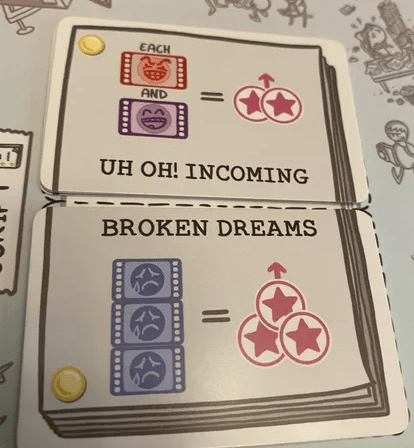
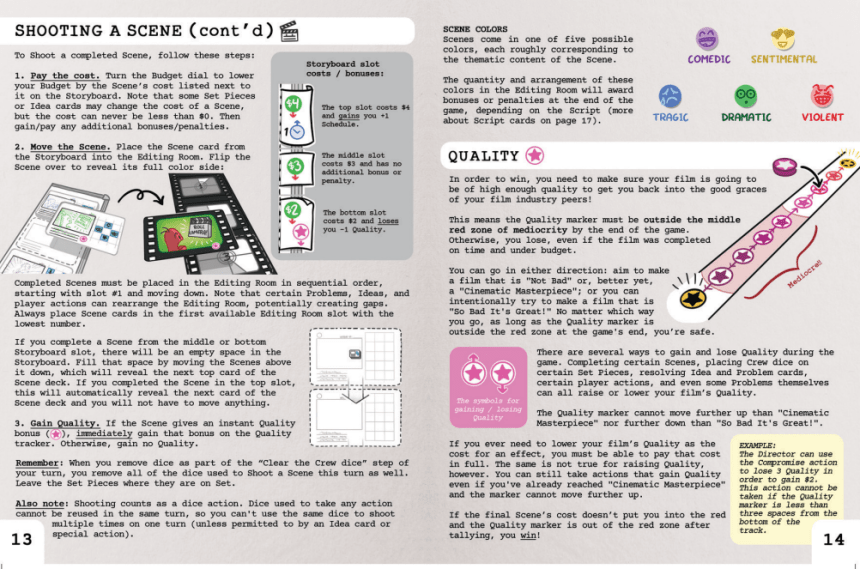
Set in 1900s Sicily and following one man’s ascent from an underling to a mafioso, Mafia: The Old Country offers a new angle to the Mafia formula. Narrative-driven, Mafia: The Old Country provides a singular Mafia experience. While not Grand Theft Auto 6 (which got pushed back to May 2026), Mafia: The Old Country scratches a similar itch. It’s available on PC, Xbox Series X, and PlayStation 5.

Care Bears: Unlock the Magic Deck Builder Game Launches on KickStarter

Care Bears receive the deck-building game treatment. Care Bears: Unlock the Magic Deck Builder Game has players spread caring and compassion while facing off against unpredictable weather, wild creatures, and the mischievous Bluster and his Bad Crowd. The game features multiple difficulty settings, perfect for younger players and gamers who want more of a challenge.

Like most deck builders, each player begins with a basic deck in Care Bears. You can purchase new cards with Wish (stars), and prevent Bluster and his Bad Crowd from spreading uncaring with Care (hearts). Care Bears hasn’t received a major tabletop game since the Eighties (there have been some reskinned games like Monopoly and an odd Chutes & Ladders-like game a couple of years ago), so Care Bears: Unlock the Magic Deck Builder Game is great for Care Bears fans who’ve been waiting for a deeper Care Bears board game experience.

Care Bears: Unlock the Magic Deck Builder Game has multiple pledge levels that range from $34 (for the base game, plus shipping) to the massive All-In Pledge of $400. But the best bang for your buck may be the popular Care-a-Lot Expansion Edition ($119) that includes all base Care Bears (to include Grumpy and Tenderheart Bear) and a neoprene playmat. If you’re interested in Care Bears: Unlock the Magic Deck Builder Game, check out its KickStarter page.

Vines and Flowers: Blooming Harmony Sprouts on KickStarter

Vines and Flowers: Blooming Harmony offers 3d tile placement. What? Players take turns taking tiles from the offering and then collectively building a pergola. Watch your vines and flowers climb and trigger effects, scoring you points, on your way to victory.

I love how Vines and Flowers: Blooming Harmony turns tile placement on its head by simply adding a vertical axis. The game has stunning table presence. Tell me you wouldn’t gravitate toward this game. You’d have to know what the players were doing.

Newcomer, Whales Entertainment, has done a great job with Vines and Flowers: Blooming Harmony’s production value. While you can enjoy Vines and Flowers with cardboard pieces ($35 pledge), this Kickstarter campaign includes an exclusive wooden pieces upgrade for a $45 pledge. I’m watching this campaign closely. If you’re interested in Vines and Flowers: Blooming Harmony, check out its KickStarter page.

The Voynich Puzzle Set to Launch on GameFound

Publisher Salt and Pepper has been releasing some fantastic games on GameFound this year. We covered The Battle of the Divas, and The Voynich Puzzle looks like it’ll be another amazing game with an interesting theme.

In The Voynich Puzzle, players reconstruct the mysterious Voynich Manuscript. All the art is inspired by this ancient text, and I love that The Voynich Puzzle includes actual puzzle pieces. We don’t know much about the game’s mechanisms yet (it’s set to launch on Monday or Tuesday), but the production value looks fantastic and thematic, and Salt and Pepper has been on a roll. They’re a well-respected board game publisher with titles like Resist! and Witchcraft! to their credit.

I may have to pick up a copy of The Voynich Puzzle for the artwork alone. We don’t yet know what pledge levels The Voynich Puzzle will have, but if you’re interested in this title, too, you can follow The Voynich Puzzle’s GameFound page.

That’s all the Geek News we have for this week. Thank you for reading, and wherever you are, I hope you’re having a great day, Geekly Gang.