Quiz Answers: Card Games

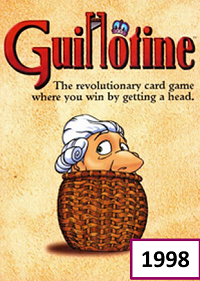
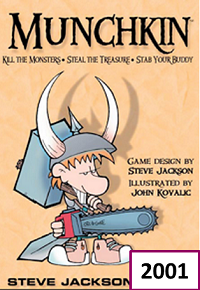
Fluxx02  Guillotine02  Munchkin02

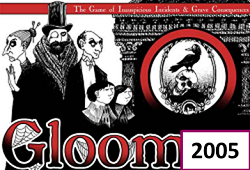
Gloom02  Dominion02  Sentinels02

Did you know when to hold ’em, know when to fold ’em? Wrong game. Hopefully, no money exchanged hands. Let’s see how we did.

All 6 correct) Victory is yours. Your meeple surfs bow to your every whim.

4-5 correct) You were level 9 going on 10, when your buddy stabbed you in the back. So close.

2-3 correct) You got added to the end of the execution line. Try not to lose your head.

0-1 correct) You’re having a no good, very bad day. But isn’t that the point of this game?

Takenoko

Designer: Antoine Bauza
Publisher: Bombyx
Date Released: 2011

Number of Players: 2-4
Age Range: 8 and up
Setup Time: less than 10 minutes
Play Time: about 45 minutes

Game Mechanics:
Action Point Allowance System
Dice Rolling
Grid Movement
Modular Board
Pattern Building
Set Collection
Tile Placement

Game flow:

Long ago the Chinese emperor offered a giant panda to the Japanese emperor as a symbol of peace. Your job as a member of the Japanese imperial court is to make sure that the panda’s well fed, and that its bamboo garden flourishes.

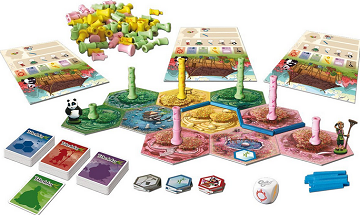
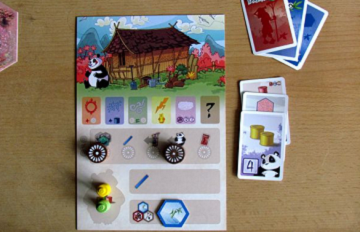
Takenoko01Takenoko—that’s bamboo shoot in kanji—may look like a cute game, but it hides a mean strategy game streak and nuanced gameplay we’ve come to expect from Antoine Bauza games. You start the game with a player sheet, two action chips, and three cards (one from each deck). The objective cards represent what you need to accomplish in order to have the best bamboo garden ever. As soon as one player finishes eight objective cards, they earn the emperor card (as they gained the emperor’s favor for being so awesome), and every other player gets one final turn. But how do you complete objective cards? You perform actions. The player sheet keeps track of your supplies and what type of actions you have at your disposal.

Takenoko03You get two actions a turn—denoted by your action chips—and you can choose from five actions: drawing plot (of land) tiles, picking up an irrigation stick, moving the gardener, moving the panda, and drawing another objective card.

You start with the pond tile (the only blue tile). Every plot tile you place adjacent to the pond tile is considered irrigated. An irrigated plot tile spawns one bamboo shoot (unless it’s fertilized, and then it gets two bamboo shoots). You can use irrigation sticks to irrigate plot tiles that don’t get placed next to the pond. You don’t get charged an action for placing an irrigation stick—you only get charged an action for taking an irrigation stick—so it’s a good idea to grab as many of them as you can. When you choose to draw plot tiles, you draw the top three tiles, play one of them, and then put the other two on the bottom of the pile. Tiles come in three colors: pink, yellow, and green. The bamboo matches the tiles. Now let’s talk more bamboo shoots or takenoko.

Takenoko02When you move the gardener, you can only move him in a straight line—but you can move him any number of tiles in a straight line. Bamboo shoots grow where ever you place the gardener—the same rules for irrigation apply: the plot must be irrigated, a regular tile gets one shoot, while a fertilized tile gets two shoots—and every adjacent tile that shares the same color as the tile the gardener rests on grows bamboo, too. So if you have a yellow plot tile surrounded by six other yellow plot tiles, the gardener grows bamboo on all seven yellow plot tiles. That’s a lot of bamboo.

And you’ll need plenty of bamboo. The panda moves the same way as the gardener, but he doesn’t behave the same way. Where ever you move the panda, he eats the top most shoot of bamboo. Whenever he does this, you place the bamboo shoot in his belly, located on your player sheet. Now you’re ready to win by completing objective cards.

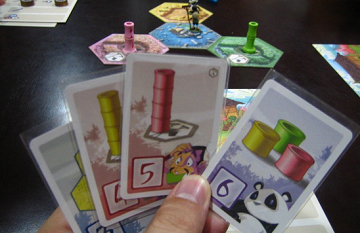
Takenoko04There are three card types: panda cards (purple), gardener cards (red), and tile cards (blue). Each card has a number in the lower left-hand corner, indicating the number of points you earn for completing the card’s objective. You have to move the panda and have him eat a certain color of bamboo to complete a panda card. Gardener cards necessitate a certain number, color, and height of bamboo shoot (you have to match what’s shown on the card exactly). Tile cards require you to match the pattern indicated on the card—again, this has to be exact—and each tile needs to be irrigated. You don’t have to complete these requirements on your turn. If you draw into a tile card or gardener card and the conditions are met, you get credit for the objective.

Takenoko06

Review:

Sounds easy? It isn’t. My wife had a gardener card that showed four green bamboo shoots of a height of three. There were four green bamboo shoots at a height of four when she drew into the gardener card. But she needed four at a height of three, so she had to move the panda to each green tile and have him gobble one shoot off the top. And if the base rules aren’t enough, after the first turn, players roll the weather die.

Takenoko07The weather die adds yet another wrinkle to the gameplay. Each player rolls the die at the beginning of their turn, and they gain an ability based on what they roll. The Sun gives the player an extra action. Rain grows bamboo on one tile. Wind allows a player to take the same action twice—when you usually take two different actions per turn. The Storm scares the panda, and you get a free panda movement that doesn’t follow normal movement rules. And then the player can pick up an improvement chip—indicating automatic irrigation, panda don’t eat (this bamboo), or fertilized—for plot tiles whenever they roll The Clouds.

Takenoko05There’s enough variety to Takenoko that makes each game unique, and you get plenty of strategy. I suggest starting with panda cards in the early game and then switching to either gardener cards or tile cards, depending on how much bamboo exists on the board. If you have a lot of bamboo, choose gardener cards. If you don’t have that much bamboo, choose tile cards. That’s my personal preference, but there are many ways to win with this deceptively deep game.

Verdict: Don’t be fooled by the cute aesthetic. This game delivers the strategy game goods while still offering a fun experience.

Forbidden Desert

Designer: Matt Leacock
Publisher: Gamewright
Date Released: 2013

Number of Players: 2-5 (best with four)
Age Range: 10 and up
Setup Time: less than 10 minutes
Play Time: about 45 minutes

Game Mechanics:
Action Point Allowance System
Cooperative Play
Grid Movement
Modular Board
Set Collection
Variable Player Powers

Game flow and Review:
What makes a great competitive game is having multiple ways to win. What makes a great cooperative game is having multiple ways to lose. Forbidden Desert is a great cooperative game.

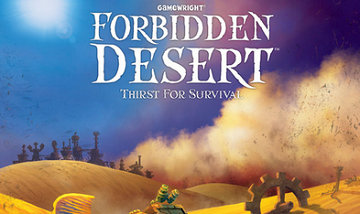
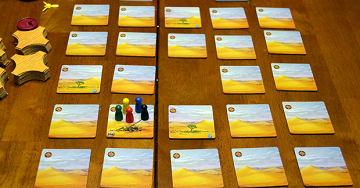
ForbiddenDesert01You and your team are stranded in a vast desert. You have to find the parts to a flying contraption—circa Jules Verne—and escape before the sandstorm gets too great, or you or one of your teammates runs out of water, or a sand dune buries you alive.

The gameplay is straightforward and easy to learn, but Forbidden Desert’s complexity lends itself to multiple plays. You can play the game many times and never get the same result twice. Each player has their own ability (variable player power). The water bearer can fetch and carry more water than anyone else and can share it without taking an action, the explorer can move multiple tiles per action (instead of the customary one) if they bring a teammate, and the archeologist can remove more sand per action than anyone else to name a few. Then, there’s the Action Point system that guarantees fluidity.

ForbiddenDesert02Each player is given four actions per turn and you can use these actions for any of the following: movement (1 adjacent tile), fetching water, trading water or gear, excavating a tile (to see what’s beneath the sand), removing excess sand (sand tiles), pick up a part to the flying contraption, and even some special player abilities. Depending on the game’s circumstances, you could use all your action points on the same action four times, or you could mix and match. Keep in mind that you’re playing against the desert.

ForbiddenDesert07The desert has a deck of cards. After a player spends all their action points, they have to draw cards from the desert deck, and the number of cards they draw from the desert deck is indicated on the storm thermometer. You start by drawing two cards a turn, but you can draw as many as six desert cards in one turn. There are three types of cards in the desert deck: tile movement cards, “The Sun Beats Down,” and “The Storm Picks Up.”

ForbiddenDesert06Every game of Forbidden Desert starts with the desert tiles arranged in a five across, five down pattern with one tile missing in the middle—kind of like those sliding tile puzzles with one tile missing so you can move the other tiles around to solve the puzzle. The one missing tile in Forbidden Desert functions like the missing tile in a sliding tile puzzle. Whenever you draw a movement card, you’ll see one, two, or three tiles and a direction. You have to move the number of tiles indicated on the card in the direction shown if possible—you need to keep the five by five tile shape. If a desert tile is moved, you add a sand token on top of it. If you run out of sand tokens, the desert buries you and you lose, so you’ll want to remove sand tokens from desert tiles before you run out of tokens.

ForbiddenDesert04You also lose if you or any member of your team runs out of water. Each time you draw into “The Sun Beats Down” card in the desert deck, every team member not protected by a tunnel or a sun dome card (gear) loses one water level.

But that’s not the only level you keep track of. The storm thermometer tells you how many desert cards you draw at the end of a player’s turn, and the “Storm Picks Up” cards have you increase the storm’s level. If you reach the top of the storm thermometer, your team loses. So every game has a timer. Eventually, you’ll draw into enough “Storm Picks Up” cards to lose the game. Speed is crucial.

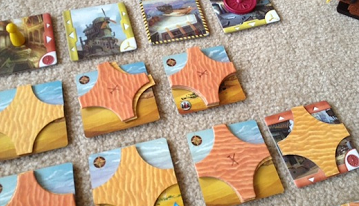
ForbiddenDesert03Let’s talk about winning. You have to excavate in order to win, and when you choose to excavate on your turn, you have to have no sand tokens on the desert tile you want to flip over. The reverse side of each tile can have gear, a well, a mirage, the landing pad (for the flying contraption), or one of two locator tiles for the four items used to construct the flying contraption. It’s the last part that impresses me. Each part (for the contraption) has two tiles that indicate horizontal or vertical location of the part. You have to find both to locate the part. As soon as the second locator tile is revealed, you place the part on the space where the two arrows the locator tiles are pointing to intersect.

ForbiddenDesert05Keep in mind that these parts can shift with the desert sands, and that’s the beauty of Forbidden Desert. A path you thought existed at the end of one turn may change or even disappear by the time your turn comes around. The game does a perfect job of simulating an untamed desert. The game’s difficulty makes it feel like an accomplishment when you win.

Verdict: A tough but fair cooperative game that challenges its players. Deserving of the Mensa Game of the Year, Forbidden Desert has you coming back for more until you win, and you then you set it down for a while because you’ve won, and you rock.

Geekly TV: November 10, 2014

Grimm

Grimm

Kyle’s Review

After last week’s “Octopus Head,” I thought that Nick would see his loss of Grimm powers as a bane not a blessing given what happened at the end of the episode: Trubel gets kidnapped by an unknown group of Wesen.

We find out that there is indeed a third major Wesen faction—perhaps—or it could be another set of royals looking for a pet Grimm. These Wesen want Trubel on their side, and it looks like she’s ready to play ball, since they threatened Nick. Nick on the other hand does find that his lack of Grimm duties puts him, Hank, Trubel, and Juliette in danger even if Juliette doesn’t see it that way. It looks like the rest of the Grimm crew shares the same sentiment as multiple groups—Monroe and Rosalee, and Renard and his mother—team up to find a cure for Nick’s ailment. And watching Nick deal with his loss of Grimm powers was a strong point.

He knows Wesen are real and has encountered his fair share of them, too, so when he sees a boxer taking out his frustration on a dumpster and the dumpster takes a series of dents, he knows something’s not right. It’s the not knowing for sure that kills him. I love that aspect of this season and didn’t know if I would or not.

After a shaky start, the latest episode of Grimm “Last Fight” shows what made the series so entertaining the first couple of seasons. Trubel infiltrates a boxing gym where a strange death occurred. She catches a couple of Wesen—one’s a boxing promoter and the other’s a boxing trainer—in their Volga state (the state that has them show their animal nature) and assumes that these are the guys behind the strange death.

We know that the boxing promoter has something to do with the murder but we aren’t sure of the trainer’s involvement. We learn quickly that the trainer had little to do with the previous murder as the promoter kills the trainer. No one stops this promoter from exploiting another younger bull-type Wesen, Clay.

And it’s Clay’s story that shows Grimm’s human side. He doesn’t want to fight and when the promoter gets found out, we find that he wasn’t the only one using Clay. Spoiler: Clay’s mother abused him and forced him to fight in a gasp worthy reveal. Moments like that are what make Grimm a joy to watch.

I’m still not sold on the convoluted story arcs where the resistance and multiple sects of royals try to outwit each other. Renard’s mother isn’t as annoying as I thought she would be but she still isn’t my favorite. And don’t get me started with Adalind.

Okay. I will. She gets a jail break from someone who looks too much like Rumpelstiltskin for it to be a coincidence, and as always she doesn’t have complete command of her spells. That’s actually something I like about her, a nice flaw. She shoots first and second and then forgets to ask what the consequences are.

A couple more quick notes/questions:

1) Nick has cones in his eyes that (probably) let him see Wesen. Not quite as dumb as midichlorians but in the same ball park.

2) When Trubel was chilling in the Wesen-infested gym, why didn’t any of the Wesen notice her?

I’m warming to this season of Grimm but I’m not completely on board with the Grimm-less Nick. I’m glad that we’ve fast forward to the thought that Nick not being a Grimm is a very bad thing because I think he’ll need his powers back by the mid-season break—or at least have him on the long road to recovery by then.

Verdict: Less of the continuing drama and more of a self-contained story, this episode showcases what makes Grimm enjoyable: don’t make snap judgments of a Wesen with a fleeting glance and make fantastic creatures human.
Constantine

Constantine

Kyle’s Review

The first episode of Constantine has done the most delving into John Constantine’s past. These last two episodes have done less focusing on him and more adding of characters and plot to the mix.

New characters are to be expected—especially with a wealth of source material with which to pull from—but I’d like to see more of the titular character’s checkered past. We get a taste of him with his mate dying at the hands of the demon of the week. I liked how Constantine answered Zed’s question (in regards to Constantine bringing back his friend from the dead in a gruesome way in order to see what happened to him) of “What’s the price for the spell you just cast” with a nonchalant “A couple days of my life.” It’s keeping with the feel of Hellblazer. But how much of Hellblazer are we actually getting?

The show fells scrubbed down. You can’t help but wonder if HBO, TMC, or some other premium channel would’ve given us a more faithful portrayal. And there’s a blizzard of a plot storm going on in this episode. It’s as if the creators thought that the more we throw at people, the more will stick. I’ll break down the plot—as quickly and best as I can—just to illustrate how convoluted it is.

We take a whirlwind ride to the 1930s where a dude sells his soul to the devil so he can rock the blues, and then the devil comes to the recording studio for what’s his. The recording equipment captured the voice of the devil in addition to what little of the song the dude was able to play. Fast forward to present day where the condemned dude’s producer on his deathbed tells Jasmine Fell—who works in the music industry herself—where he hid the cursed record hence the title “The Devil’s Vinyl.”

Anyone who hears the record dies, but everyone around the record wants to hear it and share the record with as many people as they can. Sort of an “I’m going to kill myself and take as many people as I can with me” deal. So far, so good. But I did say that there’s a lot of plot going on, so we just barely scratched the surface. Let’s get back to Jasmine.

Jasmine Fell wants to use the damned—we’re talking damnation damned—record as a bargaining chip with the soul broker she sold her soul to. (The Devil uses human soul brokers because they’re cheap, expendable and he can keep up with his Twitter feed.) Jasmine sold her soul in exchange for her husband’s life as he underwent cancer treatment. The deal worked, but now she doesn’t have a lot of time left before she turns out like the dude in the thirties’ recording studio, and her broker has a new deal involving the cursed record. But it’s not really the soul broker’s idea; it’s a plot by a voodoo priest so pompous he won’t stand up to great his guests: Papa Midnite.

Papa Midnite wants the record so he can wield more demonic powers, but before Midnite can get his hands on the record his henchmen catch the woogie from the vinyl and feel compelled to play the album at a night club. A mass death occurs—but it happens off camera—and we see Constantine case the scene in one minute or less—any longer and you’re investigation’s free—and then track the henchmen to a local radio station.

The henchmen mortally wound Constantine as Constantine barrels into the sound booth, but Midnite saves him, and as a thank you Constantine condemns Midnite’s henchmen and the record to hell. We literally see a fiery pit form in the radio station’s sound booth, but this only resolves the record. Jasmine’s soul is still up for grabs. So Constantine and Chas apprehend Jasmine’s soul broker and force him to eat the contract—as in a literal representation of the saying because the saying has to come from somewhere. This restores Jasmine’s soul and her husband’s cancer. The end. We think.

That’s a lot of things going on for forty-five minutes or so. So much so that Constantine can’t cultivate any ambiance or develop characters. We still don’t know how Chas got resurrected back in the pilot. Manny as the angel of death—instead of the angel of exposition—would’ve been good to know two episodes ago. Zed’s glances and Constantine’s distrust of Zed—that he voices through expository dialogue—are the only reasons we have to believe that Zed plans to betray Constantine. Zed does backstab him in the comics, but she’s a complex character who Constantine counts as one of his friends, too. Her actions in the show thus far scream ally. She’s the one who saves Constantine after he gets shot, stabbed, poisoned, and strung up by Papa Midnite.

Papa Midnite is a great foil for Constantine. I trust we’ll see more of him, but we barely see any of Chicago and just a splash of New Orleans jazz. Then, we have to question why Jasmine would store a damned record on a shelf at home, and why she’d keep it after her daughter listens to it and gets possessed. That minor plot thread never gets resolved.

Still, with all these flaws, Constantine has plenty to work with. The problem will be picking and choosing which path to take.

Verdict: An entertaining show—for the most part—that confuses plottiness for complexity. It could use a dash or two of character development and spend a little time in space, so we can get a feel for where in the world Constantine spends the episode.

Lame Super Villains Quiz 1

Heroes aren’t the only lame-ohs. Here are some pathetic villains. We give you a group of powers and you have to guess which one’s the real power.

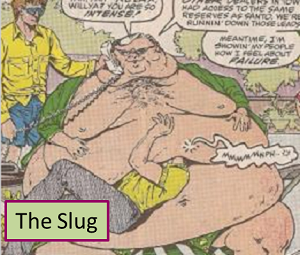
1) The Slug
a) Moves really slow, so The Flash runs past him without noticing.
b) Suffocates lackeys who fail him in his fat rolls—obesity is a silent killer.
c) Spews toxic ooze from his nipples—that milkshake chases boys from the yard.
d) If you shake salt on him, his body dissolves.

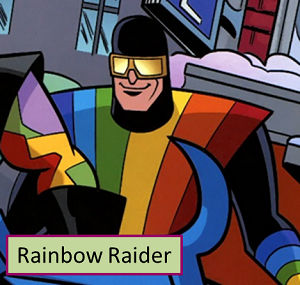
2) Rainbow Raider
a) Shoots color beams from his goggles which alter the mood of his victims.
b) Rainbows act as bridges for his crime waves.
c) Disorients his victims by changing the color of their skin.
d) Changes the color of traffic lights, causing mass hysteria in cities—that two hour commute just got longer.

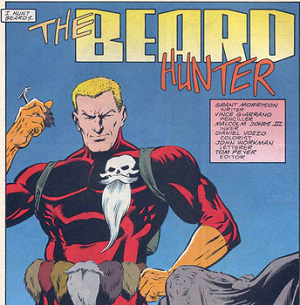
3) Beard Hunter
a) After his father never came home after his shift as a barber, Beard Hunter hunts every shaggy haired and faced man until he finds revenge.
b) Beard Hunter searches the world over for a man with the perfect Abraham Lincoln beard.

c) Asks his mirror every day “Who has the best beard” and kills anyone with a better beard than him.
d) Never able to grow facial hair, Beard Hunter attacks all bearded men.

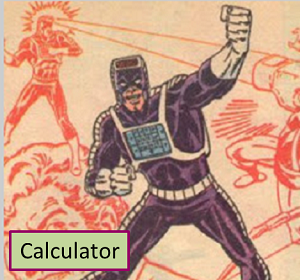
4) Calculator
a) Conducts millions of mathematical equations in his head to determine what his foes will do next—That’s cool, but can I get him to do my taxes?
b) As an IRS agent, Calculator skims money off the top of every one’s income taxes.
c) With the help of a super-sized calculator strapped to his body, Calculator can determine his foes’ next move—otherwise known as Radio Shack chic.
d) Confounds police and super heroes alike with his numbers-based crimes.

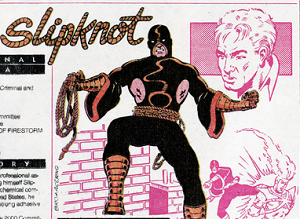
5) Slipknot
a) Dons a nightmarish Halloween mask, plays loud music and robs people as they cover their ears.
b) Deploying his mad Boy Scout skills, Slipknot kills people by tying them up—unfortunately, most of his enemies can fly.
c) Ties the neckties and bowties of every mobster in Kingpin’s army—someone has to do it, and Kingpin’s fingers are too fat.
d) Always sure footed, Slipknot’s name should actually be Slipnot.

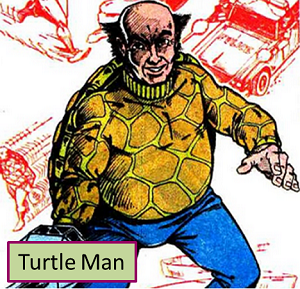
6) Turtle Man
a) Has a human sized turtle shell and he knows how to use it.
b) Looks good in any turtleneck—hey, turtlenecks are making a comeback.
c) Has bulletproof scales all over his body and a beak for a mouth.
d) Moves really slow, so The Flash runs past him without noticing.

GeeklyAnswers

Quiz Answers: Lame Super Villains 1

1) The Slug: B; 2) Rainbow Raider: A; 3) Beard Hunter: D; 4) Calculator: C; 5) Slipknot: B; 6) Turtle Man: D

Suffocates lackeys who fail him in his fat rolls.

TheSlug01

Shoots color beams from his goggles which alter the mood of his victims.

RainbowRaider01

Never able to grow facial hair, Beard Hunter attacks all bearded men.

BeardHunter01

With the help of a super-sized calculator strapped to his body, Calculator can determine his foes’ next move.

Calculator01

Deploying his mad Boy Scout skills, Slipknot kills people by tying them up.

Slipknot01

Moves really slow, so The Flash runs past him without noticing.

TurtleMan01

Spotlight: Wagner Mars Base

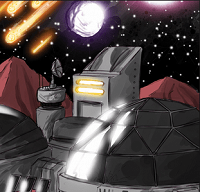
WagnerMarsBase01First Appearance: Sentinels of the Multiverse: Base Game
Where it is: It’s a science base in space—Mars to be exact.
Primary Damage Type: Fire
Secondary Damage Type: Toxic


Deck Concept: Another foreign environment, Wagner Mars Base has a lot of global effects, but these effects seem geared against the heroes much more than The Ruins of Atlantis.
Biggest Global Effect: Self-Destruct Sequence: Put the top 3 cards of the environment deck face down next to this card. That pile is the countdown pile. If the countdown pile is ever empty, everyone dies. Game over. At the end of the environment turn, put 1 card from the countdown pile into the environment trash. At the start of their turn, a player may skip the rest of their turn to add 1 card from the top of the environment deck to the countdown pile. If the countdown pile ever contains 5 cards, the sequence is aborted, destroying this card and the countdown pile.

WagnerMarsBase02Worst Card (for the Heroes): Pervasive Red Dust: At the end of the environment turn, destroy all equipment cards. At the start of the environment turn, all players may discard 1 card to destroy this card. When this card is destroyed, each player may put 1 equipment card from their trash into play.
Oddest Way to Win (Achievement Time): Fire in the Biosphere: At the end of the environment turn, this card deals all targets 2 fire damage. Each hero must either destroy 1 of their ongoing cards or take 2 more fire damage. At the start of the environment turn, 1 player may discard 2 cards to destroy this card.
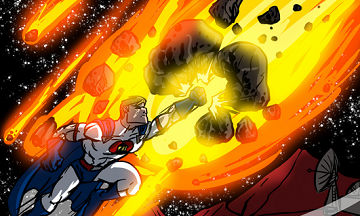
How to Escape: Stop the Self-Destruct Sequence as soon as you can. Heal as best you can and discard cards to get rid of nasty anti-hero effects. Meteor Storm could be your best friend—“Hero and villain cards and powers cannot deal damage”—so you may want to hold off skipping a turn and catch your breath by healing and/or drawing cards.

Spotlight: Ruins of Atlantis

RuinsOfAtlantis01First Appearance: Sentinels of the Multiverse: Base Game
Where it is: It’s the lost ruins of Atlantis, so it’s the Multiverse’s underwater themed environment.
Primary Damage Type: Melee
Secondary Damage Type: Energy and Toxic


Deck Concept: Ruins of Atlantis is a very alien environment, so neither the heroes nor the villains are left unscathed. This leads to global effects. Lots of them. Expect a lot of increases of power, damage to the field, and extra abilities (both beneficial and detrimental).
Biggest Global Effect: Atlantean Font of Power: At the end of the environment turn, play the top card of the villain deck. Play the top card of each of the hero decks in turn order. If the played card is a limited card already in play, discard that card and play the next card. At the start of the environment turn, destroy this card.

RuinsOfAtlantis02Worst Card (for the Heroes): Toxic Seaweed: Whenever a hero uses a power, this card deals that hero 3 toxic damage. At the end of the environment turn, 1 player may discard their hand to destroy this card.
Oddest Way to Win (Achievement Time): Mystical Defenses (15 HP): At the end of the environment turn, this card deals each non-environment target 2 energy damage.
Bonus Odd Way to Win: The Kraken (15 HP): At the end of the environment turn, deal the non-environment target with the lowest HP 5 melee damage.
Bonus, Bonus Odd Way to Win: Hallway Collapse: At the end of the environment turn, this card deals each target 3 melee damage. At the start of the environment turn, destroy this card.
How to Escape: Healing. No, not sexual healing, Marvin Gaye, healing of hit points, and damage mitigation doesn’t hurt either.

Rock-Paper-Scissors

While this mechanic could literally mean rock-paper-scissors, a game that uses this game mechanic has a circular hierarchy for which pieces win against or capture others. For example, while A might beat B, and B beats C, C beats A. The name of this mechanic derives from the children’s game where Scissors cuts Paper, Paper covers Rock, and Rock crushes Scissors. But this mechanic can be used for any game with non-transitive mechanics.

Many of the more involved games that use this mechanic add several more variables like The Big Bang Theory adds more to Rock-Paper-Scissors. In addition to the original game mechanics of Rock-Paper-Scissors, Rock-Paper-Scissors-Lizard-Spock adds Spock smashes Scissors and vaporizes Rock, Lizard poisons Spock and eats Paper, but Rock crushes Lizard and Scissors decapitates Lizard, and Paper disproves Spock.