Geek Out

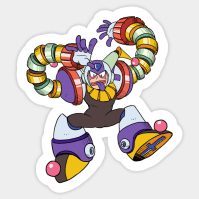
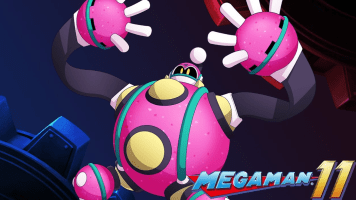
5 Great Mega Man Bosses

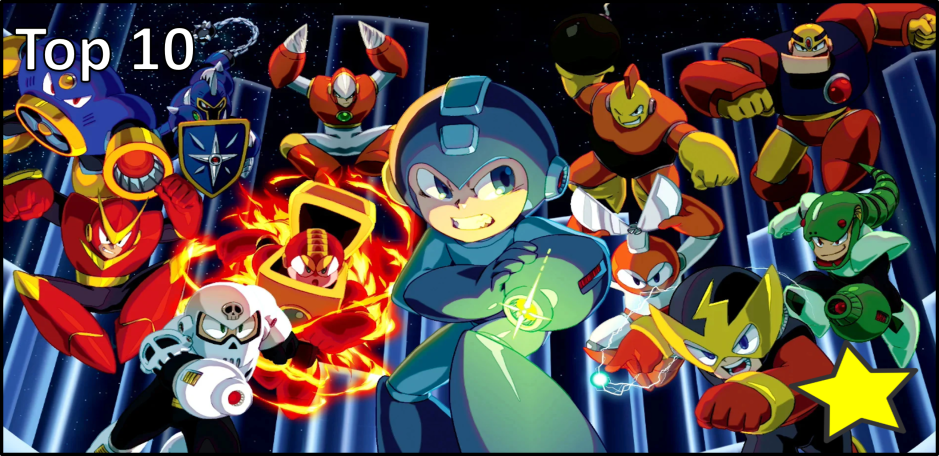
Mega Man doesn’t get as much love as other classic video game characters. Mario, Sonic, Link and even Samus have enjoyed more publicity and fame. Maybe this is due to the games being too difficult. I don’t know how many hours I wasted trying to time one jump. Perhaps it’s the character design or the fact that Capcom couldn’t decide on how to spell Mega Man (MegaMan or Megaman). It could even be that Mega Man’s enemies are more popular than the original character.

To celebrate the first new Mega Man game in over a decade good old Uncle Geekly will break down five of the best Mega Man bosses from the previous 10 numbered games. These are personal preferences and they’re not even in any kind of order. Seriously, not even in chronological order. Let’s get to these robot Highlanders.


Fire Man (Mega Man 1)

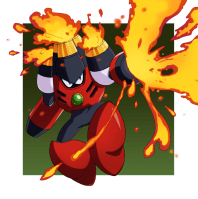
Fire Man’s theme music captures the frantic nature of a player jumping and dashing through a hazardous work zone and the industrial robots helping to defend his stage. Fire Man’s look is classic. He almost looks like a robot version of Firestorm. He even thinks he’s the hero, which gives him even more character. The “Flame of Justice” makes for a good Mega Man foil.

Metal Man (Mega Man 2)

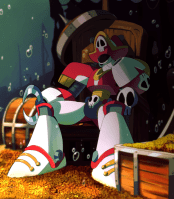
I always liked the look of Metal Man’s circular blades cutting through the air. He’s another classic design, but what separates him from many Mega Man villains is his sardonic wit. I don’t know of many Mega Man villains who love tearing down fellow robots. “Sorry. Were you expecting some kind of formal intro first? I’m Metal Man, the robot that Cut Man should’ve been.” Oh! Take that, Cut Man.

Skull Man (Mega Man 4)

His name says it all: Skull Man. He has a skull or ghost motif and happens to have one of the most diverse strategies. While most Mega Man bosses will initiate an attack as soon as Mega Man enters their realm, Skull Man waits for the Blue Bomber to make the first move. His is one of the most difficult boss battles and that makes sense. Skull Man is one of a few robots with combat as their only function. This lack of a life outside combat plays into his character.

Elec Man (Mega Man 1)

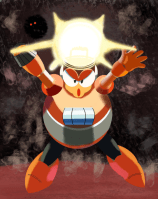
I could’ve gone with Quick Man because speed kills in Mega Man, but I had to go with the robot who inspired Quick Man’s design: Elec Man. He’s the original speed demon and electricity boss. As the robot built to control the voltage of nuclear power plants, he was considered Dr. Light’s greatest creation. With that being the case Elec Man is an egomaniac. But in the most sadistic way.

Knight Man (Mega Man 6)

Sometimes you want a robot dressed up like a knight. Knight Man doesn’t have much in the way of backstory, but he’s one of the most unique robot designs in the series and the counterattacks players must time (he’s only vulnerable when he attacks) make his battle one of the series most memorable.

These are your uncle Geekly’s favorite Mega Man bosses. If you don’t like the robots I chose, I’ll challenge you to a duel with some of your favorite Mega Man bosses, or you can let us know in comments.

Geekly News: October 12, 2018

There aren’t as many big headlines this week in Geekly News, so we’ll go with some short news blurbs followed by new releases. Let’s kickoff this ball game with a New York Comic Con panel and a trailer.

Good Omens

Principal photography on the upcoming Amazon series Good Omens (based on the collaborative novel by Terry Pratchett and Neil Gaiman) began over a year ago, but audiences didn’t catch a glimpse of any video until a panel at last week’s New York Comic Con. This series should be another solid one for Amazon who has slowly garnered a fine collection of native programming.

With American Gods and an upcoming Sandman movie, Neil Gaiman has been on a role with his creations finding their way on the silver and small screens. Is a Books of Magic or a Black Orchid movie far behind?


Batwoman Costume Revealed

The CW’s annual crossover event won’t occur until December 9th, but that didn’t stop the network from leaking its first glimpse of Ruby Rose as Batwoman. Like many other heroes in the Arrowverse, Batwoman will make her first appearance this year during the crossover event, but she’s scheduled to have her own series beginning next season.

The Arrowverse has dabbled with an LGBT superhero, Mr. Terrific, in the past, but Batwoman will mark the first take that an LGBT superhero will take center stage.

Batwoman_Costume

Video Games

Friday, October 12, 2018

Call of Duty: Black Ops 4 (PS4, Xbox One, PC)

The latest Call of Duty has picked up a few tricks from the popular Fortnite. Previous installments of Call of Duty had player respawn (or have players’ characters revive) shortly after dying. This led to gun combat being fast paced and devalued long-distance shooting or snippers. We’ll have to see how this latest Call of Duty fares.

Starlink_Starfox.jpg

Tuesday, October 16, 2018

Starlink: Battle for Atlas (Switch, PS4, Xbox One)

This is another wait and see title. Starlink takes the failing “toys-to-life” video game genre (games like Skylanders that have players buy real-life toys and use them in video games) and makes it new and exciting by adding an open-world—or open-universe—element. The toy spaceships and pilots look interesting, but I prefer the Switch copy for this game, as characters from Nintendo’s Star Fox series will make an appearance. Heck, with Star Fox as part of the cast, I’d do a barrel roll.

FirstMan.jpg

Movies

First Man

This film has received critical acclaim for Ryan Gosling’s performance of the first man on the moon Neil Armstrong and Clair Foy’s as his wife Janet Shearon. It’s also been at the center of an American flag controversy. First Man looks to be a lightning rod of buzz.

That was bad. First Man does intrigue me, and I’ll probably watch it at some point.

Bad Times at the El Royale

The premise may sound familiar (seven strangers who each hide dark secrets manage to stay at the same shady hotel), but the cast make this neo-noir mystery thriller sound like it’ll be fun if nothing else. Bad Times at the El Royale is another one I wouldn’t mind seeing.

Goosebumps 2: Haunted Halloween

I never watched the first Goosebumps movie, but I heard it was a modest success. Jack Black makes another appearance as R. L. Stine. That’s something, I guess.

crazy-ex-girlfriend.png

TV

Friday, October 12, 2018

Crazy Ex-Girlfriend (CW)

The fourth and final season of this stellar comedy musical begins tonight. Don’t try to text, message, or call me. I’ll be washing my hair—which is code for watching Crazy Ex-Girlfriend.

The Haunting of Hill House (Netflix)

Shirley Jackson knew how to write horror of all kinds. The short story that first garnered her attention and put her on the map was “The Lottery” and it’s a great psychological horror story. “The Haunting of Hill House” is a supernatural horror classic that Stephen King cited as the best horror story written in the 20th century. I’ll go with that and I’ll definitely see if this Netflix offering measures up.

The Romanoffs (Amazon)

I’ve talked about The Romanoffs last week in our 3 Lists of 3. The stellar cast and odd premise (several people believe they’re part of the Russian royal family) has piques my interest.

Titans (DCU)

Titans, as in the adult versions of Teen Titans, was supposed to air on various cable networks before landing on the DCU’s new streaming service. Every company wanting their own streaming service burns my corn, but if DCU streaming can make enough quality programming, I may consider it. I’m most likely to download the app for a free trial and binge everything in a weekend.

charmedreboot.jpg

Sunday, October 14, 2018

Charmed (CW)

Truth time: I watched the original. I even watched the original Charmed not that long ago and got embarrassed for ever having watched it. Charmed was a CW (then WB) mainstay and a lot of the tropes and clichés one can find in CW shows today pretty much originated with Charmed. I may watch an episode or two and catch a glimpse of this trio of witchy sisters.

Constantine The Legend Continues.jpg

Monday, October 15, 2018

Arrow (CW)

Yep, the Arrowverse is still at it. I lost interest in these shows for some time, but like Charmed, I may tune in once or twice for old times’ sake.

Constantine: The Legend Continues (CW Seed)

It feels like yesterday when I lamented NBC cancelling the live-action TV show Constantine. Did it have its issues? Sure, but the series picked up steam and got canned before reaching full strength. Fans of the series were ticked, and the CW has brought back Matt Ryan (who played John Constantine) for this upcoming animated series. I think the CW Seed app offers free streaming for certain episodes. I’ll have to check on Monday or Tuesday. Or I could always wait for another free trial period.

Board Games

Solenia

Solenia

Belgian publisher Pearl Games originally intended to release this game as Sun-Moon but settled on the name Solenia. The game consists of 16 rounds where players play cards with holes in the middle of them onto a modular board. The holes reveal a resource that players are trying to pick up or deliver and players gain points for delivering goods.

All of this is fairly standard for gamers, specifically Euro-style gamers, but the most interesting aspect of Solenia—besides the see-through cards—is its modular board. The tiles are double-sided with day and night scenes. These tiles cycle between day and night throughout the game, so players must plan their moves based on when they can perform actions. I’ll try to demo this game before long.

That’s all we have for this week. Be kind to each other and stay geeky.

Unpopular Opinion: Women Only Board Game Design Contests Are Good for the Hobby

When Alderac Entertainment Group (AEG) listed a women’s only board game design contest in July 2018 (here’s the link), the contest was shared by multiple websites and game design forums. I’m a member of several of these forums, and the backlash was eye-opening.

Heated discussions on social media can turn ugly. Many of the people who shared this contest—not expressing that they supported it or why, even though sharing the contest was a form of support—had to delete their posts within hours. Some reshared and disabled comments so internet trolls couldn’t respond. A lot of what these trolls said isn’t repeatable, but there were some sentiments—that weren’t overtly sexist—that occurred frequently and here are two of the most prominent.

1) Women should challenge themselves and submit to board game design contests that are open to everyone.

2) Contest or Design Group “Fill-in-the-blank” is better because it’s truly inclusive.

Let’s start with the first comment. Who says that women aren’t participating in other board game design contests? There aren’t as many women game designers as men board game designers, it’s a male dominated field, but I’ve heard of at least a handful of women board game designers who submit to plenty of other design challenges and contests. There have been several women who’ve won. There have been a few female designers who were part of blockbuster tabletop games like T.I.M.E. Stories. These voices are unique in part because they have different life experiences, and the board game community could and should do more to give these voices a platform to be heard.

I don’t just design board games. I also write fiction, non-fiction, and poetry and submit to various literary journals. Many of these journals will have calls for submissions from minorities, and a similar backlash can occur. I’m not sure why. There are countless journals to submit to that will accept entries from anyone. If I see a listing for one that doesn’t apply to me, I skip it or if I know someone that the listing would apply to, I let them know about it. It costs me nothing. But the opportunity for someone else, especially someone who belongs to a minority, could be invaluable.

I know of hundreds of board game design contests. AEG’s Women Game Designers Wanted listing is the first time I’ve seen a woman specific challenge. It costs nothing to support this contest, but a lot can be gained.

The second comment type is more insidious. It accuses the contest of not being inclusive and devalues it, but the people who made this type of comment never have to worry that Design Group “Fill-in-the-blank” has no one else at the table who looks like them. Sure, everyone is welcome in Design Group “Fill-in-the-blank,” but some people feel more welcome than others. There’s a reason contests that encourage minorities to participate exist. They’re needed.

Most people in the board game community would agree that more women designers are needed, but despite what the backlash would suggest, a contest like AEG’s might bring more women to the table and make the hobby more inclusive. It helps to normalize women tabletop game designers. The more women who join the table, the less contests like AEG’s needs to exist. But even if minority contests persist, what does it cost someone to ignore the contest if it doesn’t apply to them or send the listing to a friend?

That second type of comment might do more damage to distance women game designers from the hobby. The writer of that type of comment doesn’t understand the obstacles for a woman designer or doesn’t care. If one doesn’t have someone like one’s self at Design Group “Fill-in-the-blank,” one is less likely to join. It’s intimidating. Having a minority specific design contest is more inclusive. It leads to a minority being less of a minority by positive normalization.

As of this write-up, AEG’s Women Game Designers Wanted is still open (until the end of November 2018). I encourage everyone who can apply to apply. And if the listing doesn’t apply to you, share it with a friend.

Worker Placement Starter Games

Good old uncle Geekly likes to put little pawns to work with worker placement games. These games tend to get strategic as players place their pawns on spaces to claim an action during a turn and prevent other players from taking that action for a turn. That’s where the fun of most worker placement games derives. The tension of not wanting someone to take the action you need can get intense, and the ability to choose something you need before someone can block you is a great feeling.

But worker placement games can get nasty as some folks will take actions to keep someone else from taking them, not because they need to take them. These games can get convoluted too when more elements are added.

Fortunately, your good old uncle Geekly has some worker placement games that aren’t as cutthroat–for the most part–and are easy to learn. These are some great starter worker placement games.

StoneAge.jpg

Stone Age

Caylus may be the first game to use worker placement, but Stone Age is by far, more approachable. Players control cave people who are trying to build a rudimentary village in three phases. During the first phase, player’s pawns (or workers) are sent out to various areas to collect stone or wood or make new workers in the local hut. Brown chicken, brown cow.

The second phase has players roll dice equal to the number of workers they placed in areas to see how many of that resource they collected. The more workers in the area, the more dice a player gets to roll. In the third phase, players must have enough food to feed their population or they lose resources or points. Gamers will find feeding workers as a common thread in worker placement games. These designers must be hungry when they’re making these games.

Stone Age does a good job of introducing new gamers to a lot of the core concepts of worker placement—even the use of dice, because dice placement is a thing that we’ll see real soon. The theme is easy to get into and the mechanisms make sense for what the players are doing in the game. I don’t know how many games have me go to a quarry to make bread. Really? How many bread-making quarries do you know?

DoughnutDrive-Thru

Doughnut Drive-Thru

Stone Age may be obsessed with feeding people, but Doughnut Drive-Thru has food as its theme. Yeah, give me a Coated Baby. That’s a glazed doughnut, sicko.

Doughnut Drive-Thru also happens to be the smallest game by far on this list and calling it a worker placement game is a little bit of a misnomer. It’s more of an action selection game, but the challenge of taking an action so your opponent can’t is still at the heart of any worker placement game, and that’s the center of Doughnut Drive-Thru.

On their turn, players are trying to learn new doughnut recipes, preparing a donut, or serving a donut. To take any of these actions a player places one of two wooden doughnut pieces they begin the game with on one of these actions. The trick is to time when you want to take these actions because when an action has no further spaces with which to place a wooden doughnut, players can’t take that action. You’re left with the choice of taking a different one of the two actions or taking all the wooden doughnuts—or taking enough doughnuts so their total doughnuts equal two—and waiting until next turn to take the action they want.

Doughnut Drive-Thru is fast-paced. Very fast-paced. It may even be the better game to begin with for a simple worker placement game. But it is a bit of a cheat. Don’t worry. Uncle Geekly eats plenty of doughnuts on his cheat day.
FabledFruit.jpg

Fabled Fruit

Ah. This is another more recent game. I like Friedemann Friese’s style and not just his love of green and his wanting to use the letter F in as many game titles as he can. Fable Fruit keeps things light and simple but also adds legacy and dual-purpose cards to the genre. Players only have one worker in Fabled Fruit, an animeeple (a wooden animal pawn) to place on a group of six action cards. These action cards serve two purposes—they’re dual-purpose after all—and players either complete the juice action located on the bottom of the card (by turning in the fruit required, pictured) or they can claim the action on the top of the card like “draw two fruit.”

Man, what is with all the food in worker placement games?

Players go through a deck of 60 or so unique action cards (four of each action) and as soon as an action card is claimed in any game, it’s taken out of the deck. You’ll have to play the game a second time to ever see that card again and that’s where the legacy aspect comes into play. Prior games affect what happens in future games. Don’t use the “draw two fruit” action as a juice card too many times, or you won’t be able to draw two fruit again.

Fabled Fruit is clever and adds a splash of other popular game types and mechanisms, but also happens to be the easiest game on this list to learn. In short, it’s a tasty blend.

Great. Now I’m thirsty.

Final Thoughts

It’s difficult to come up with easy to learn worker placement games with depth. I had to go with slightly more complicated games than usual, but they still have some wide appeal. Stone Age, Doughnut Drive-Thru, and Fable Fruit explore different aspects of worker placement. I just wished they didn’t focus on food so much.

Know of any other great beginner worker placement games? Hold a rally and tell it to the workers, or you could let us know in the comments.

Tabletop Games for Fall 2018

As you may know, good old uncle Geekly likes tabletop games, so we couldn’t go too long without making a three list of three for board games.

We’ll get the game rolling with Worker Placement games.

The first list of these lists of three took the most time. I started from the bottom of boardgamegeek (BGG) and searched for a game that I liked. It took about an hour to find my first one, so here it goes.

DoughnutDrive-Thru.jpg

Underrated Tabletop Games

 Doughnut Drive-Thru (6.25 out of 10 on BGG)

I couldn’t believe Doughnut Drive-Thru was as low as 6096 on BGG. Okay, I can believe it. Die rolls to determine whether you can prepare a specialty doughnut or serve one doesn’t sit well with many modern board gamers, but despite the rampant use of luck, there’s plenty of tactical choices with Doughnut Drive-Thru, and it’s a great, simple game to introduce new gamers to the worker placement mechanism. Plus, I like the fun art. Kawaii!

Starfall (6.36 out of 10 on BGG)

Starfall is most likely 5464 on BGG because it’s less about star gazing and more about finding constellations and somehow purchasing them with stardust. Finally, I have some way of unloading my spare stardust.

The game makes little to no sense with its subject matter, but it’s a solid game. I like it a lot and there may be other games in the overrated list that get away with not holding their theme as closely as they should. Starfall is also another pretty game and at $20-$25, it goes for a nice price. Unless that’s 25 stardust. I’m not sure of the stardust to US dollar exchange rate.

Batman: Gotham City Strategy Game (6.08 out of 10 on BGG)

Yep, there’s a trend. Batman: Gotham City Strategy Game is much lower at 4066 on BGG than it should be because it has a misleading title. Players don’t take on the guise of Batman, they’re members of Batman’s rogues gallery like the Joker, Penguin, and Two Face. That’s not a bad thing. I can do the Joker.

If you listen real closely, you can almost hear Harley Quinn outside my window.

The game can also become too much of a brain burner as the “strategy” in the game’s title alludes to, and some elements in the game step a little bit away from the source material. If a player gets too strong, Batman—who is a non-player-controlled element of the game—will target the leader. It gives the game balance, but players may feel a little less super. Still, Batman: Gotham City Strategy Game is solid, and being evil can put a smile on your face.

Gloomhaven

Overrated Tabletop Games

Gloomhaven (8.97 out of 10 on BGG)

It’s easy to pick the top-rated game on BGG as overrated, but it doesn’t mean that Gloomhaven isn’t at least a bit overrated. It’s certainly not for everyone. It destroys any other dungeon crawl—Descent can hardly be found on many people’s top 10 lists since Gloomhaven’s release—but the hype around Gloomhaven colored the game as having more of a story and being more character-driven than it ended up being. So, I guess I’d blame the hype, even though any game could use a hype man.

Agricola (8.02 out of 10 on BGG)

I liked Agricola when it first came out, but there have been countless games—including Uwe Rosenberg’s follow-up Caverna: The Cave Farmers—that do a better job than Agricola at scratching a worker placement/farming game itch and yet, Agricola is still well in the top 20 of all tabletop games on BGG. My biggest pet peeve is that Agricola insists that everyone play the game the same way and do everything that’s in the game. So what if I want to be the best pig farmer in the game? That’s my prerogative and don’t ask questions about my pig fetish. Squee!

Eclipse (7.97 out of 10 on BGG)

Eclipse is another case of hype and mistaken identity. Many folks claimed it was a short Twilight Imperium, but it’s too much of a Euro game—games that are obsessed with balance and don’t have enough of a “this is awesome” vibe—to be a quick TI. Further still, the game can get needlessly fiddly. There are too many rules for a game that isn’t supposed to take as long as TI. I don’t care what Appendix IX, Paragraph 12, Line 31 says. Help!

Gen7ACrossroadsGame

Anticipated Upcoming Tabletop Games

Gen7: A Crossroads Game (TBD)

There isn’t a release date for Gen7: A Crossroads Game yet, but the inclusion of the words “A Crossroads Game” got me excited in a special place—of my heart, you sickos. Plaid Hat Games promised years ago of a gaming series featuring the Crossroads story-based system that originated in Dead of Winter (2014). All they’ve done so far has been pumping expansions for the tabletop juggernaut, but it looks as if there will be a true sequel no later than early 2019. Gen7 is a lost in space game, which could be interesting, and a lot different from Dead of Winter’s zombie theme. Another Crossroads Game would be far out.

KeyForge (Holidays 2018)

While Gen7 is part of a series I like, KeyForge is the latest game by a designer I like Richard Garfield (of Magic: the Gathering fame). Recently, I’ve had a chance to pre-game release demo KeyForge, so this write up will change as a result. I’m still interested in this game, so it qualifies for this list. KeyForge hits many of the same notes as Magic, but players are forging keys, hence in the name, instead of defeating their opponents. The game is also sold by the deck, not by boosters, and each deck is unique.

 KeyForge does its best to streamline Magic game mechanisms as players draw cards and ready (or untap) at the end of their turns. This does enough to make this game difficult for a Magic veteran to wrap their brain around—I had issues keeping things straight—and it cleans up some of Magic’s timing.

KeyForge won’t be for everyone. Preconstructed decks mean that players won’t have the option of building their own decks, but I’m sure the community will push back on this and there may be a way for players to merge decks. And I love the game’s price point. I tend to buy Magic starter decks and a few boosters per set. KeyForge’s business model mirrors this type of consumption. It’s a more cost-effective Magic.

Guardians Chronicles (October 2018)

Ah, we come to one of my favorite game types: shuffle building (combining small decks or pods to form a large one). Come to think of it, I have a lot of favorite game types. Anyway, Guardians Chronicles is another Plaid Hat Games release and I may be just as excited for it as I am for Gen7. I also like the superhero theme—there aren’t enough games with this theme—but I’m a little considered about the game being competitive. So long as the superheroes attack villains, I’m okay, but if the superheroes attack each other, that may defeat the purpose of superheroes. We’ll have to see how Guardians Chronicles plays out, but I’m definitely playing a game or two.

Are there any tabletop games you think are overrated or underrated? Which tabletop games do you look forward to in the coming months? And which ones of those games would you like to lose to your uncle Geekly? Mwah-ha-ha! Let us know in the comments.

Progress?

Kyle: Writing

It may not look it, but I write more than JK Geekly articles. I continue to work on trios of flash fictions (triplets) that are told from three different viewpoints or different manner of storytelling. I wrote two this week and edited another three. I’m even pitching a collection of these stories to various publishers. I’m expecting my rejections any day now.

I’m also gaining ground on a novel that uses a similar approach to the triplets. It’s trippy, but hopefully it’ll make sense. I’m sure Jim will let me know one way or the other after I finish modeling this clay.

Kyle: Games

Play test. Play test. Play test. I play tested a lot of the Blackjack deck builder “No Jack” and I finished a first draft of the rule book.


“Wildflowers,” a tile placement game where players make one flower the most dominant, will be off for some more blind play testing soon. Thanks in advance, Drew. A blind play test is where gamers play by reading the rule book; most early play tests have the designer teach the game to players.

Wildflowers01.jpg

“Wildflowers” is also out to a couple of agents and game companies, and we’ll see what that’ll bring. Again, I’m expecting my rejections at any time.

That’s all I have for today. We’ll be back tomorrow and the rest of the tomorrows this week with some brand-new content. Be kind to one another and stay geeky.
Scaffolding Approach to Learning Tabletop Games

Many video games do a great job of easing their players into how to play. Look left, look right. Now, walk forward. Over time, video games introduce more complicated actions until the player knows everything they need to know to play the game. I prefer to call this style of teaching games scaffolding.
The game builds larger concepts atop of smaller concepts, instructing how to play little by little. Video games have a leg up on tabletop games in this regard. Few tabletop games besides Fluxx (which starts with two rules, draw a card and play a card, and grows to multiple rules) and Krosmaster Arena (that uses a system of small missions like a video game) use a scaffolding approach. And more should. I don’t know how many minutes or hours are wasted by teaching and learning tabletop games. To be good at a tabletop game, you must know everything about it before playing.

So, it’s up to the people who introduce others to the tabletop game hobby to do what board games are incapable or unwilling to do: ease people into learning complicated mechanisms by having them play. When I teach tabletop games to people who are new to the hobby, I tend to pick simple, fast games of a gaming type and build on the principles set by those games.

Scaffolding

It’s a scaffolding approach to teaching tabletop games. It’ll also be an ongoing series for various starter board games, so keep your eyes open for starter games in the future. And have an awesome Saturday.

Next Saturday’s miscellaneous post will be a little more involved, I think. You’ll just have to complain to Jim about me until then or leave a comment with how you like to teach people new games. Dealer’s choice.

Geekly News: October 5, 2018

Another day and another new content type. We’re trying our hat at Geekly News today. Even though your uncle Geekly could scour the internet for any type of Geek News, most weeks this post type will list new releases for the coming week. We’re lucky this first week features a major movie announcement and a leak at Bethesda’s parent company ZeniMax.

ElderScrollsVI

Elder Scrolls VI

People have been debating for years which Tamriel province will host the sixth entry in the Elder Scrolls main series, and ZeniMax may have given players their first concrete evidence. Sure, some internet sleuths found evidence in the short teaser trailer, but that’s more in the realm of speculation.

And this new information could be filed as that too, but there’s a more compelling argument to be made. The attorney who registered a copyright for Morrowind, Oblivion, and Skyrim years before each game’s release just registered a copyright for a single-player game set in the Elder Scrolls universe entitled Redfall.

This development suggests that Elder Scrolls VI will be set in part or entirely in Hammerfell (home of the Redguards) and will feature a questline involving Redguards.

Why not call it Hammerfell? Many Elder Scrolls games aren’t named by the province in which they occur, Morrowind and Skyrim are the exception, not the rule, they’re named based on the game’s storyline. Sure, Redfall could pertain to something other than Redguards and the contested Hammerfell/High Rock border, but it’s likely that Redguards and Hammerfell will factor into this latest installment.

There’s still no release date for Elder Scrolls VI. If your uncle Geekly were to place a bet for when Redfall will be released, he’d go with a post Playstation 5, X-Box 2 (who knows if Microsoft will stick with this naming convention, but to the best of my knowledge it’ll be X-Box 2) release.

It could also be that ZeniMax wants fans to talk about Elder Scrolls VI more. If so, mission accomplished.

Megaman Live Action Movie Announced.jpg

Mega Man Live Action Movie

Capcom has announced that its Mega Man franchise is going to get the live-action Hollywood treatment. The press release came one day after Mega Man 11’s release and the movie celebrates the franchise’s 30th anniversary.

The film is tentatively titled MEGA MAN (in all caps) and has writer/directors Henry Joost and Ariel Schulman (Catfish, Paranormal Activity 3) attached to the project. Capcom says it aims to “appeal to a diverse audience, including not only game players but action movie fans as well, with an adaptation that maintains the world of the Mega Man games, while incorporating the grand production and entertainment value that Hollywood movies are known for.”

Video game movies don’t have the best track record, but I’ll be keeping my fingers crossed with this title. It’s a safe bet that your uncle Geekly will be watching this film on opening weekend. There’s no release date set for this project as of this write-up.

And now for some new releases for the upcoming Week.

Video Games

AssassinsCreedOdyssey

Friday, October 5, 2018

Assassin’s Creed Odyssey (PS4, Xbox One, PC)

This is the latest of the Assassin’s Creed games and it’s set in ancient Greece. Be ready for a lot of “This…Is…Sparta!.”

Super Mario Party (Switch)

My family and I have had some fun with this title in the past. It blends roll, spin and move (roll dice to see how far you can go in a turn: for example, Monopoly) of tabletop games with minigames one might find in other Mario titles.

Venom-Movie-Symbiote.jpg

Movies

Venom

This one troubles me. Based on the trailers, the special effects are dated and that’s not a good thing for a comic book movie. I’m also concerned with how they pronounced symbiote.

A Star is Born

Lady Gaga (first major acting role) and Bradley Cooper (first time director) recreate this Barbara Streisand classic. I may not see this one in theaters, but I’ll probably see it when it’s out on video or streaming.

ManInTheHighCastleSeason3.jpg

TV

Friday, October 5, 2018

Big Mouth (Netflix)

I’ve heard good things about this one. It’s a raunchy cartoon series centered around puberty. I haven’t gotten around to watching it because there are a lot of raunchy cartoon series to choose from.

Into the Dark (Hulu)

This one confused me a bit. Netflix recently released a movie entitled Hold the Dark. Hulu’s Into the Dark is an American horror anthology series for those who think American Horror Story isn’t enough. I’ll give it a chance.

The Man in the High Castle (Amazon)

I’ll have to finish the second season before starting the upcoming third. The Man in the High Castle is easily one of Amazon Prime’s best series.

DoctorWho11

Sunday, October 7, 2018

Doctor Who (BBC America)

The adventures of the first female Doctor Who begins today. Yes! Bring it on.

Star Wars Resistance (Disney)

There have been several successful Star Wars cartoons. The franchise almost redeemed the prequels with all the work Star Wars animated series put in. Resistance is set in the sequel’s timeline. It’ll interesting to see how this series builds Poe Dameron’s character.

The Walking Dead (AMC)

I wonder how long people can survive in a world with zombies. The Walking Dead endeavors to answer that question with nine years and counting. This year has the distinction of Andrew Lincoln (Rick Grimes) leaving the series.

Arrowverse

Tuesday, October 9, 2018

The Flash (CW)

Ah, the Arrowverse. I might watch an episode or two just for old time’s sake. These shows are no longer appointment television for me, but it can be fun to watch certain DC comics characters grace the small screen.

Black Lightning (CW)

I never got into Black Lightning because I had all but given up on the Arrowverse by the time it was released, but Black Lightning is one of the first live-action superhero TV shows to feature an African-American protagonist (Netflix’s Luke Cage beat it by a half year), and from what I’ve seen, it doesn’t intertwine as much with the rest of the Arrowverse. I’ll probably give it a shot. Looks like I have some binging to do.

Wednesday, October 10, 2018

Riverdale (CW)

I never got into Riverdale, but I know that many folks think of it as something more than a fusion of Dawson’s Creek and Archie Comics. This may be one of those series I watch well into the show’s run.

Thursday, October 11, 2018

Supernatural (CW)

This CW standard enters its 14th season today. Talk about your long-running television shows.

That’s all we have for Geekly News this week. May the geek with you and be kind to one another.


My Favorite Game Mechanics TMNT: Shadows of the Past and Batman: Gotham City Chronicles

It might be time for a new series of articles: my favorite “fill in the blank.” We’ll talk about something in a game or show or movie or comic book that we like and dig into why we like that one thing. Good old Uncle Geekly will get things started with some board game mechanisms, or for the tabletop game newbie, the elements that make up a tabletop game. This week we’ll cover Teenage Mutant Ninja Turtles: Shadows of the Past and Batman: Gotham City Chronicles and their asymmetric one versus many game mechanism.

TMNT_ShadowsOfThePast01

Teenage Mutant Ninja Turtles: Shadows of the Past

Both of this week’s games can be classified as “one versus many,” meaning that one player plays one side of the characters (usually villains) and two or more players assume the role of the other (usually heroes).

First off, I like how these games make the player who assumes the villains (the one) asymmetric to the gameplay style of the heroes (the many). TMNT: Shadows of the Past has the Turtle players rolling dice and performing actions based on what they roll, while the player who assumes The Foot Clan, Shredder, and the rest uses a deck of cards.

The individual turtles also play like their personalities and that gets to another mechanism I enjoy in Shadows of the Past: sharing dice. The turtles can share what they roll with their teammates. Dice placement makes all the difference. Each turtle player places their dice in front of them in a row and other turtles can only borrow a die that’s the closest to them. The player on your right can only borrow the die that’s the farthest on the right of the row.

Leonardo gets a bonus whenever someone borrows his dice. He’s the leader and that makes sense. Raphael gets extra dice but can’t borrow anything because he’s a loner. This is such a great touch because the players who’re playing Leo and Raph tend to sit as far away from each other as possible and those are the turtles who tend to butt heads the most.

Playing as either side can be fun, but also different, and that adds replay value. It also helps that TMNT: Shadows of the Past has a scenario system that works like playing through classic turtle stories.

Ah. It’s almost like reading the original comics.

Batman-Gotham-City-Chronicles-1

Batman: Gotham City Chronicles

Monolith Board Games uses a similar gaming system with Batman: Gotham City Chronicles. Like TMNT: Shadows of the Past, the two sides use asymmetric gameplay, but both sides use gems that serve as their energy pool. The heroes have a set number of actions, depicted on their character cards. They use their gems to activate any of the actions they have at their disposal.

The villain (or Overlord) has a group of enemy tiles on a track that begins with smaller enemies on the left and larger ones on the right.

In a sample Batman game for instance, it’d be henchmen on the far left, Harley Quinn on the spot just left of the Joker, and of course the Joker would be on the far right.

Somewhat like the heroes, the Overlord activates their enemy tiles by using energy gems equal to the spot on the track that the enemy tile they want to activate is on. So, if you want to activate the first set of villains, pay one gem. If you want to activate the second set of villains, pay two, and so forth. As soon as a villain is activated, it goes to the end of the track (far right), and the other tiles slide one spot to the left.

This is so clever because the Overlord could activate the small fry for cheap or they could pay a little extra if the villain to the right has more strategic value. They wouldn’t spend all their gems to activate the Joker, would they? But it is the player’s choice.

But the heroes are also satisfying because they each have unique abilities based in their character’s lore—so Catwoman may be more useful than Red Robin in a game requires theft, but Red Robin is more useful in another that needs more detective work—and each scenario has very different objectives. The heroes win if they meet their objectives. The villains win if the heroes don’t.

Perhaps the best thing is that Batman GCC recreates dozens of classic Batman comic book tales. Not the movies or TV shows, the original comics. And from what I’ve seen, they may be using Capullo’s art as the basis for the miniatures. What!?

Is there anything you like about these games that we didn’t mention? Maybe you like TMNT better than Batman, and I’m too much of a Batman fanboy. You could have them challenge each other to a duel or you can let us know your thoughts in comments.

X-Men Starter Stories

Comic book movies have flooded Hollywood and that’s led to new comic book readers, but there’s too much history for a lot of these characters that newbies to the hobby can get lost. Not to worry your uncle Geekly and Big Bad Jim have you covered. We’ll make recommendations for newcomers to various aspects of geekery.

Keep in mind that these are recommendations. You can read our list and disagreeing with it. We won’t hold that against you, but we may have to challenge you to a leg wrestling match.

We’ll start this ballgame with one of the largest superhero teams in comics: The X-Men.

The X-Men have had plenty of various lineups, eras, and variants, so they prove difficult to follow, especially if you’re new to the comic books.

Over the course of its history the X-Men have grown and expanded more than any other Marvel property. Time travel, group dynamic changes, and characters losing their minds don’t help matters much.

Hi, everyone. This is good, old uncle Geekly with a group of starter stories that feature everyone’s favorite Marvel mutants the X-Men.

250px-X-Men_First_Class_01

X-Men: First Class (written by Jeff Parker/art by Roger Cruz; 2006-2007)

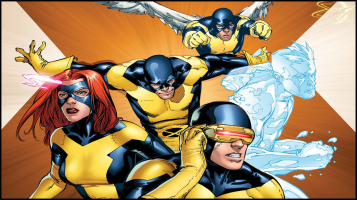
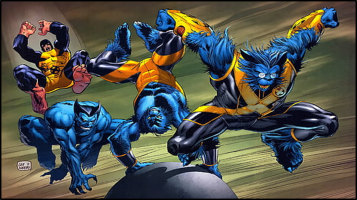
No. This story doesn’t mirror the movie by the same name; it’s a reimagining of the original class of students to don the uniform: Scott Summers (Cyclops), Jean Grey (Marvel Girl), Robert Drake (Iceman), Warren Worthington III (Angel), and Hank McCoy (Beast).

The X-Men can get overly convoluted. X-Men: First Class strips down the original characters to their teenage roots. It’s a light-hearted and fun series, and the one quality that puts it on this list is that the reader doesn’t need to know much about the series find enjoyment. It’s a great jumping off point.

Giant-Size X-Men

Giant-Size X-Men #1 (written by Len Wein/art by Dave Cockrum; May 1975)

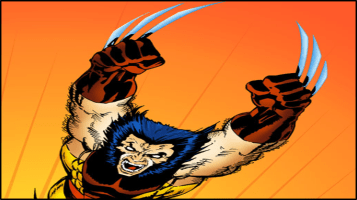
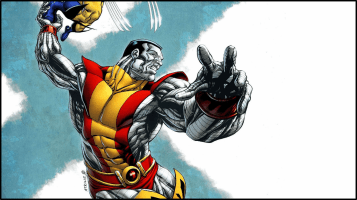
This one predates Chris Claremont’s fabled run on Uncanny X-Men (1975-1991) and introduces readers to the second wave of X-Men: Storm, Colossus, Nightcrawler, and Wolverine. It opens in medias res with Professor X recruiting this new team to rescue the original X-Men, and it’s this group of mutants who defined the group for a generation. It’s also arguably the most diverse team roster, something in which the X-Men prides itself.

X-Men_Vol_1_135

X-Men: Dark Phoenix Saga (written by Chris Claremont and John Byrne/art by John Byrne; 1980)

This one is iconic. Jean Grey had been reborn as the Phoenix after becoming a being of pure thought. This new persona made her a target for Mastermind (of the Hellfire Club) and what follows is a long descent into madness. One could liken it to a superhero version of The Exorcist.

The Dark Phoenix Saga is required reading for anyone wanting to get into X-Men comics. Readers get a good look at the Hellfire Club, the Shi-ar, and even throws in the Kree and Skrull empires. The Dark Phoenix Saga is a who’s who of Marvel aliens.

This story was adapted for the X-Men Animated Series. X-Men: The Last Stand contained story elements, and the upcoming Dark Phoenix film should be a direct, live-action adaptation of the story that has been inducted into Columbia University’s library. Yeah, Xavier’s school isn’t the only one that views The Dark Phoenix Saga highly.

220px-X-Men_v1_141

X-Men: Days of Future Past (written by Chris Claremont and John Byrne/art by John Byrne; 1981)

This story marked the end of Claremont and Byrne’s run on the X-Men, and this is also where the X-Men’s time travel stories begin. While the series may have done time travel to death, in Days of Future Past it was refreshing, novel, and easy to follow.

The story alternates between the present year of 1980 and the future year of 2013. Wow. We’ve already lived beyond the fictional year for this story. The story’s 2013 paints a bleak existence for mutants. They’re killed one by one and must send one of their own back in time to stop the dystopia.

Kitty Pride, the one who’s chosen to go back in time, becomes a full-fledged member of the team, and this story is the first one to promote Mystique to the Brotherhood of Evil Mutants’ leader. Both characters come into their own here, so this classic is a must read.

X-Men_GodLovesManKills

X-Men: God Loves, Man Kills (written by Chris Claremont/art by Brent Anderson; 1982)

So many X-fans would call God Loves, Man Kills the defining X-Men arc, and they may be right. The main antagonist doesn’t wear tights or have powers. Humanity is at war with itself.

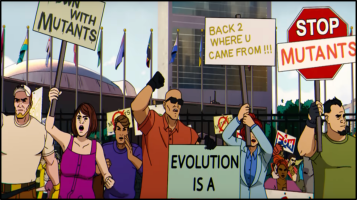
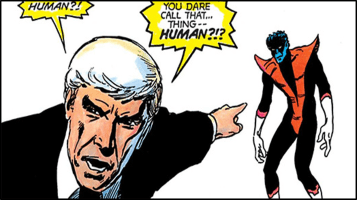
This is a realistic portrayal of how the world may react to the dawn of mutants and how those mutants would react to that world. It’s an analogy of bigotry and small mindedness. It also showcases how tenuous allegiances can be in the series as Magneto joins forces with the X-Men to rescue Professor X, who is forced to mentally kill all mutants on Earth.

Some fans may notice elements of this story in X2: X-Men United.

X-Men_FatalAttractions

Fatal Attractions (written by Fabian Nicieza and Scott Lobdell/art by various; 1993)

It’s difficult to pick an X-story from the 1990s and beyond without listing a bunch of other stories one would have to read to get most of the references. Fatal Attractions requires very little background info. It recasts Magento as the X-Men’s chief antagonist. This crossover event also features Cable’s return to X-Force (good for Deadpool 2 fans) and one of the most desperate fights between Magneto and Professor Xavier.

There’s even an iconic battle between Wolverine and Magneto that left some fans squeamish.

That’s my list for readers new to X-Men. Did I miss any stories or include some that I shouldn’t? You could send me a message via telepathy, but I’m telepathetic. Leaving a comment would be more effective.