Geek Out

My Favorite Game Mechanic: Mansions of Madness

Have I mentioned that the Geekly household likes cooperative games? I have? We’re a family of sore losers and think the other people at the table are cheating. I mentioned that too? Well, we’re also fans of puzzles and like the occasional Lovecraftian horror game. Ha! That’s new.

When I think of those criteria, I think of Mansions of Madness 2nd Edition, but there’s a specific mechanism that brings out the best in that game: integrating an app.

You know what they say about not being able to beat them. Many games use apps as game night assistants, but Mansions of Madness 2nd Edition uses the medium to create ambiance with mood-setting background music. It adds character to the game. Not just with the music, but with the variety in each area’s setup and whatever algorithm that tells the app that the players of this game have done specific puzzles in the past, it’s time to mix it up. It even randomizes the solution of each scenario, so someone can play the game more than once and get a different outcome.

Okay. Some of these features aren’t executed as well as they could be, but Mansions of Madness 2nd Edition harkens a new age in tabletop games. I don’t think we’ll get too many of these type games at once, but there’s enough in Mansions of Madness to make someone excited for a third edition or how other games will incorporate apps in the future.

There’s plenty more to like of Mansions of Madness besides its app integration. The exploration, discovery, and puzzle-solving are well done. The Geekly household likes to rotate who takes the role of narrator each turn so that everyone gets a turn. If there’s another gripe I’d have with Mansions of Madness’s app it’d be that they could’ve included more voice acting (as in various actors or more of it so that a player at the table wouldn’t have to roleplay)—but more roleplaying isn’t a bad thing. Ham on, Hammy.


The Mansions of Madness’s app works well overall. I’m encouraged by what I’ve seen in this game and other games like Beasts of Balance, the One Night Ultimate series, Alchemists, and World of Yo-Ho. This is a trend I don’t see going away soon and if Mansions of Madness is the start of a new wave of games, I’m okay with that as a change-up, but I still like my classic analog games.

That’s what I have as my favorite game mechanism for Mansions of Madness 2nd Edition. There are plenty more that I could include. What are some of yours? Maybe there’s another tabletop game that uses a companion app better. You can challenge me to a leg wrestle or tell me about it in comments.

Card Drafting Starter Games

Your uncle Geekly likes card drafting games; they’re one of his favorite game types. I admit that I say this a lot, but I do like a good card drafting game. Card drafting can take many forms and some of the games that use this mechanism can get involved and not very new player friendly.

Fortunately, old Uncle Geekly is here with another group of starter games: card drafting edition.

Okay. I thought that would’ve sounded better than it did. Oh, well. These are the best games to teach someone who’s never played a card drafting game before.

Azul

Azul

Azul is a bit of a cheat. Players aren’t drafting cards, they’re drafting tiles, and that makes sense because the game’s theme is tile laying a Portuguese wall. Oddly enough, Azul has tile laying as a theme, but the tile laying or placement mechanism is downplayed. Anyway, various colored tiles are drawn from a bag and four of them are placed on 7 cardboard discs that are accessible to each player. Players take turns claiming similar tiles on each disc and adding them to their player boards. Each board has the same wall pattern and the player to finish a row of tiles initiates the end of game.

The scoring can get a little fiddly at times, but Azul is a quick game that’s easy to learn, and you’ll see plenty of set collection and chain effects (of which Azul has plenty) crop up in other games on this list and other card drafting games not on this list.

Jaipur

Jaipur

I could’ve gone with Splendor here and most of what I say about Jaipur could apply to Splendor, but Splendor gets too much press and Jaipur doesn’t get enough. Jaipur has a supply or market place with five cards. Players take turns taking cards from the market or swapping 2 to 5 cards between the market and their hand. One can also sell every card of a specific commodity (each card has a different commodity depicted on it) and when they do, they take point chips of the commodity from the bank. As soon as four pools of point chips are depleted, the game ends and the player with the most points wins.

Like Azul and Splendor, Jaipur is a quick play. It’s my representative game for the rapid market place games that use card drafting. Unlike Splendor, Jaipur doesn’t have as much of a runaway leader problem and is a little more forgiving on new players. Plus, I really like the camel card addition.

SushiGo

Sushi Go

In many respects, Sushi Go is a simplified 7 Wonders. It’s a simple game of deal so many cards to the players around the table and each player simultaneously picks the card the want to draft. They place the card they want face down on the table and pass their hand to the next player at the table. Once everyone has picked a card, everyone reveals the card they picked, and it adds it to their tableau (or scoring area). The cards have various scoring methods and picking the right combination of scoring method leads to victory.

Sushi Go’s theme is silly, the gameplay is lightning fast, and the rules are easy enough that a 7 or 8-year-old would have no issues playing. If you’re new to tableau building, simultaneous card drafting (and there’s a lot of games that fit this bill besides 7 Wonders), learn Sushi Go before tackling something more complex.

Final Thoughts

Card drafting is one of your uncle Geekly’s favorite gaming types. There are plenty more introductory card drafting games I could’ve included. If you have an issue with any of the games on my list, say JK Geekly twenty-seven times in a mirror and there’s a chance I might appear. Or you could let me know in the comments.

3 Lists of 3 Video Games

Good old, uncle Geekly may be more into tabletop games, but he still plays the occasional video game. For all you video game fans, here’s a three lists of three. Hold your anger for the end.

Underrated or Overlooked Video Games or Video Game Franchises

Persona5.jpg

Persona/Shin Megami Tensei

Persona may gain some traction in the States after 2017’s Persona 5, but this series has been cranking out old-school RPG hits for some time. Each game is a standalone experience that centers around a group of students battling otherworldly evils from another dimension in between class periods. With turn-based gameplay, unique monster designs, and Eastern humor the Persona series is one of the reasons I don’t mind other classic RPGs like Final Fantasy have shifted away from their roots. Persona does a great job of keeping the tradition alive.

WorldOfGoo.jpg

World of Goo

World of Goo is an indie, puzzle game that didn’t set the world on fire like Angry Birds, but its physics engine may be just as good. Honestly, I prefer World of Goo. Players control the flow of goo to an exit point and the quicker a player can do that, the more points they earn. A minimum score is required to finish a level, of course, and like most puzzle games, World of Goo’s levels start easy and grow in difficulty. You also get new versions of goo. You can never have enough goo.

This game has been ported to plenty of newer systems, so it shouldn’t be too difficult to find. It was even a Nintendo Switch launch title.

DragonQuestXI_02.jpg

Dragon Quest

If you can’t tell, I’m a huge RPG fan and since I live in the states, Final Fantasy dominated the genre. But Dragon Quest is every bit the classic RPG franchise. Heck, if you lived on the other side of the planet, Dragon Quest would’ve been bigger than Final Fantasy. Yeah, it’s that huge.

The art design comes courtesy of Dragon Ball Z’s Akira Toriyama, so the worlds are gorgeous and character designs quirky, fun, and familiar. Turn-based battles? Yep. Random battles? Usually. Dragon Quest knows who their core audience is and does a great job of catering to it. If you get the chance, play Dragon Quest VIII: Journey of the Cursed King—by far one of the series’ best—and look out for Dragon Quest XI which should be out this holiday season.

Overrated Video Games or Video Game Franchises

AssassinsCreedOdyssey

Assassin’s Creed

The concept of someone going back in time and inhabiting the body of an assassin sounds neat. Assassin’s Creed does a great job of putting players in a certain timeline. But the story gets too convoluted for its own good and guest appearances by Da Vinci, Machiavelli, and the occasional pope doesn’t do enough to make the story or the characters interesting.

What’s left are some great set pieces, but “Cool, this game has sabres” and “I can kill someone with a bayonet in this one” and “Tomahawks! What?” can only make a game fun for so long.

Sims4.jpg

The Sims

How has this one lasted this long? I’m fine with the life simulation, but after a while, a player must realize that The Sims is a life simulation. Oh, crap. I almost crapped myself. My sim got too tired and fell asleep on the kitchen floor. Hey, they’re getting frisky under those sheets. I guess that’s entertaining for a little while, but my enjoyment with the series has waned over the years.

Maybe I’m just bitter because I can no longer trick my sim into a swimming pool, remove the ladder so they can’t get out, and allow them to drown. Yeah, I may have issues.

Warcraft3

Warcraft

No, not World of Warcraft, the original real-time strategy game Warcraft. Now, the first three games are classics—well, at least the third one—but one must admit that Warcraft III enjoys most of its continued success due to the mods the modding community has done in the years since its release. Heck, the multiplayer online battle arena (MOBA) genre may never have come to fruition without Warcraft III.

But Warcraft’s story began with some solid character development and with the juggernaut that was World of Warcraft and the subsequent Warcraft relaunch, Blizzard put more attention on character customization instead of development. A craptacular Warcraft movie had gamers flock to Warcraft III, but the story leading up to the third installment was canned, and the third one hasn’t aged well—in terms of story as well as graphics.

Upcoming Video Games to Look Out For

Starfield

Starfield (2019?)

Not much is known about Bethesda’s big space game, except that it’s a big space game that may be in the mold of Elder Scrolls or Fallout. We don’t even have a release date. All I know is that I’m okay with a slightly longer wait for the Elder Scrolls VI if Starfield can live up to Bethesda’s high standards.

Hold on. Did I just say that I’m okay with a longer Elder Scrolls wait? Yep. I’d rather Bethesda not pull a BioWare with Mass Effect: Andromeda.

WolfensteinYoungblood

Wolfenstein: Youngblood (2019)

Wolfenstein II: The New Colossus flew under the radar in 2017 and that’s a shame. Bethesda did a bang-up job with that one. Wolfenstein: Youngblood will be a cooperative game set in the 1980s. I’m not sure what more to expect, but it looks as if Bethesda plans to stretch their creative muscles.

Huh. That’s two Bethesda games in a row. I couldn’t possibly go for a third.

KingdomHeartsIII.jpg

Kingdom Hearts III (2019)

I like RPGs, but Kingdom Hearts III is on this list for Season’s sake. She—like thousands of fans—has been waiting 13 years for the next numbered title of this Final Fantasy meets Disney game series. Square-Enix and Disney have leaked some of the worlds and characters. Frozen, The Little Mermaid, Monsters Inc., Toy Story, Pirates of the Caribbean, Tangled, and Sleeping Beauty are some of the Disney properties that’ll make an appearance.

I didn’t want to like Kingdom Hearts because I have a complicated relationship with Disney, but the series works. That many fans can’t be wrong. Right?

Are there any video game series we missed with our lists? Which upcoming games do you look forward to the most? Let us know in the comments.

Running to Stand Still

Kyle: Writing

Rewrite. Rewrite. Rewrite. While I finished another trio of flash fictions told from different perspectives (what I call a triplet) to add to my book-length collection, most of this week had me editing prior work. I’m hoping the axiom that rewriting is writing holds true. If it does, I did a lot of work this past week. If not, I’ll have to do better this upcoming week.

I also focused more on submitting. There are a few stories I have yet to submit to journals and some of them I think will find a home quickly—but I tend to be shocked as to which stories get picked up quickly and which ones don’t. I never said I was a good judge of my work.

Kyle: Games

Wow. I didn’t do a lot with my tabletop games this week. Mostly I polished a bunch of games that I’m preparing to submit early next year. I’d like to get some more blind play tests in (sending games out and having players learn the game by reading what I hope a clearly written rules) and finish Nuclear Harvest—or at least get it close to done sometime before the end of the year.

That’s all I have for this week. We’ll be back tomorrow and the rest of the tomorrows this week with some new writeups. Be kind to one another and stay geeky.

5 Strange or Head Scratching Tabletop Game Mechanisms

Your uncle Geekly had an issue staying on task with this write-up—perhaps he needs a mind recalibration. When thinking of some of the oddest game mechanisms in tabletop, the first four came to mind right away as unique at this point, but the fifth mechanism has made its way in plenty of games and it always made me scratch my head. So here are 5 game mechanisms that are strange or head scratchers.

Terra

We’re not talking about Bezier Games trivia game Terra, this is Days of Wonder’s Terra that’s a semi-cooperative game where players try to save the world. A self-destruct button available to all players rests within reach of everyone at the table. While the main goal is to earn a collective win by saving the planet in Terra, the player with the most points gets a solo win. What’s keeping someone with no chance of winning from pressing that button? Good old, uncle Geekly comes from a long line of sore losers. I don’t suspect we’d ever win a game.

Mamma Mia!

While Terra has a questionable game mechanism, Mamma Mia’s is just off. Gamers play cards face up from their hands to a discard pile. Once all the cards in the deck have been played, the deck is flipped over and players gain the points indicated on the cards. It’s a simple twist to a common game mechanism, but it’s difficult to wrap your head around it or come up with a good strategy. It almost makes you want to say, Mamma Mia, here I go again.

Filthy Rich

Ah! It wouldn’t be a strange tabletop game mechanism list without including Richard Garfield. Filthy Rich may be the oddest game in Garfield’s repertoire. It’s played with a binder and 4 pages of Ultra Pro card protector pages (the kind you use to showcase collectible cards). Players add cards that represent billboards in their binder and score points if the numbers on their cards get rolled. I don’t know if I’ve ever heard of another billboard game, let alone one that uses a binder. I’m half tempted to use my Magic cards.

Graphic Novel Adventures

It’s too bad this one’s only available on Kickstarter and the campaign finished several months ago. Van Ryder Games’ five graphic novel series combines elements of escape rooms and choose your own adventure stories with comics. These books could start a new trend, and there’s also no way that comic book and gaming stores won’t carry them in the next six months or so. Be on the lookout.

Witch of Salem

Witch of Salem represents a game mechanism that doesn’t make sense in any game: keeping information to yourself in a cooperative game. In Witch of Salem, players deal with forces of evil coming through gates and if I find out whether the evil originates from a specific gate, I can’t tell you that it’s coming from that gate, even though we may be on the same space and I can save my teammate the trip. Why wouldn’t I tell them? We’re working together.

Shadows Over Camelot does a similar thing with cards and the values on them. The cards range from 1-5, but players can’t say what’s in their hand and this leads to people saying things like “I have a big card in my hand.” That would be a 5. “I have a middle card.” That’s a 3. “I have a below middle card.” Two. That’s a two. Why not just say, two?

I could’ve added more than these five, but your uncle Geekly wants to hear your thoughts. Are there any other mechanisms that make you scratch your head? Let us know in comments.

Geekly News: October 19, 2018

Doctor Strange 2

A couple of Marvel Cinematic Universe teasers occurred during conventions last weekend. The first was Director Benedict Wong stating that he started “film stuff” for Doctor Strange sequel and hopes to start filming by the end of the year.

That’s a bit odd because Disney/Marvel hasn’t officially announced Doctor Strange 2. From the sound of it, it’s in at least the pre-production stage. Mr. Wong didn’t specify if “filming by the end of the year” meant 2018 or 2019. That will play into Doctor Strange 2’s release date. If it’s 2018, it may be released around the same time as the third Guardians of the Galaxy installment.

Is Loki Dead?

The second bit of rumor came from Comic Con in Chicago. I won’t get into too many spoilers with Avengers: Infinity War on the off chance that the three or four people who haven’t seen it yet read this, but the way Loki meets his end at the beginning of the film has led to some speculation.

One fan theory calls attention to Loki trying to stab Thanos with a blade in his left hand, instead of his right and that leads to some believing that he was using a projection of himself. Tom Hiddleston must not have heard the theory, because according to Screen Rant, Hiddleston looked visibly surprised when someone asked him about it. Hiddleston’s said, “Your guess is as good as mine.”

That isn’t confirmation one way or the other. In fact, Hiddleston could be getting into the trickster character one last time.

OrangeIsTheNewBlack.png

Season 7 will be Orange is the New Black’s Final One

Netflix announced that the seventh season of Orange is the New Black will be the last.

This doesn’t come as a surprise as the hit show was renewed for three seasons in 2016, and the creative team has always hinted at a seven-season run, but Netflix confirmed it this week. Creator Jenji Kohan told Deadline, “After seven seasons, it’s time to be released from prison. I will miss all the badass ladies of Litchfield and the incredible crew we’ve worked with. My heart is orange but fade to black.”

SoulCalibur 6.jpg

Video Games

Soulcalibur 6 (PS4, Xbox One, PC)

The Soulcalibur series returns today with a reboot of sorts. A lot of classic characters will join the fray with newcomers Grøh, Azwel, and Geralt of Rivia (of The Witcher fame). The other big addition will be the new mechanic known as the Reversal Edge. Soulcalibur has finally joined the trend in modern fighting games with emphasizing defense.

Halloween2018

Movies

Mid90s

Jonah Hill is another actor making his directorial debut with this coming of age comedy. He also penned Mid90s and if nothing else, this movie will have a great 90s soundtrack.

Halloween

What is with comedic actors branching out into other avenues of film? I’m liking it. Danny McBride cowrote the script to the latest installment of Halloween. Most critics have given the film positive reviews, stating that it’s the best Halloween sequel and marks a return to form for the franchise. It follows the classic slasher formula; I may give it a chance.

Can You Ever Forgive Me?

If the last two entries didn’t clinch this week as the week of comedians spreading their wings, this last one does. Melissa McCarthy stars in this dark biographical comedy about a failing writer who forges letters of famous people to make ends meet. The premise alone makes me interested.

TV

LoreTVShow.jpg

Friday, October 19, 2018

Lore (Amazon)

I watched the first season of Lore and if you can get past the cadence of the narrator’s voice, it’s a joy. Seriously, the narrator sounds like a cross between an automated voice and William Shatner hamming it up. Lore shows the history of popular myths, fables, and urban legends. It gets into the weeds to find the basis of these tales and sometimes, it shows us why they persist today. I’ll definitely watch this one, but I’ll have to take it in waves as I get reacclimated to the narrator.

Wanderlust (Netflix)

The BBC was treated to this Toni Collette vehicle last month and Netflix is airing it for folks outside the UK today. The main characters struggle with a fading sex life, so Collette (who plays a therapist) and her husband (played by Steven Mackintosh) decide to start dating other people.

LegendsOfTomorrowSeason4.jpg

Monday, October 22, 2018

DC’s Legends of Tomorrow (CW)

Another week, yet another Arrowverse TV show. I was never into Legends of Tomorrow. The show acted as a depository of characters the series killed off but wanted to keep the actors employed. I’m also not a huge fan of time-travel and the plot issues it creates.

Native-America

Tuesday, October 23, 2018

Native America (PBS)

If watching documentaries makes me a nerd, then I’m a nerd. PBS begins its four-part mini-series about the indigenous people of the United States. Native America travels back 15,000 years to show how Native Americans designed cities aligned to stars. It explores their unique systems of science and spirituality, and that’s just the beginning. Yes! I just set my DVR.

LegaciesCW.jpeg

Thursday, October 25, 2018

Legacies (CW)

Legacies is a spin-off show of The Originals, which was itself a spin-off show of The Vampire Diaries. Something tells me that Legacies will feature werewolves and vampires. This franchise has a lot of fans, but I may have to start with The Vampire Diaries if I’m able the chain of events that led the series to Legacies. But maybe not.

UnderwaterCities.jpg

Board Games

Impact: Battle of Elements

With Strike off the market, Impact hopes to fill the void. The idea is simple. Players start with so many dice. They chuck their dice into a battle arena (the box) and if other people’s dice match the symbol they rolled, they claim those dice. If none of the dice match what they rolled, they lose all their dice. Last player rolling wins. There’s a little more to it than that, but very little. Still, a lot of people love this game and it lives on with a different skin with Impact: Battle of Elements.

Underwater Cities

This last entry is an odd but intriguing one. With land coming at a premium, the people of Underwater Cities starting building under the sea. Players try their best to compensate for their citizens adapting to this new lifestyle. I could talk about the worker placement aspect and action point allotment, but the fun in Underwater Cities derives from this near-future sci-fi concept.

That’s all we have for news this week. Be kind to one another and have a geeky week.

My Favorite Game Mechanics: Fallout Shelter

Old Uncle Geekly is trying a new trick. This week’s favorite game mechanic comes from video games, Fallout Shelter in particular.

On the surface Fallout Shelter shares a lot of commonalities with other free-to-play games/apps like Clash of Clans. Players download it for free and it offers in game purchases for players to get better at the game faster than they would by investing only time. But the one thing that separates this game from other free-to-play games is also the one thing that makes it uniquely Bethesda. The player competes against the game, not other players.

When one logs off of Clash of Clans or a Clash of Clans clone, logging back in allows them to see what other players did to their defenses while they were offline. This sometimes leads to players paying for repairs (tying up a worker to repair counts as “paying”) and regrouping. There’s usually a tournament included in games of this ilk and only the best players—or the ones willing to pay to win—fair well in these tournaments. There’s a reason people scoff at these games as “pay to win.” The only way to get ahead in a game like that is to pay something. Fallout Shelter eliminates that style of play.

Sure, you could pay to get better things faster in the game, but the only player you can see is yourself. Fallout Shelter allows players to do things at their own pace. It doesn’t apply the pressure of a tournament.

Now I’m not saying that I don’t enjoy the occasional competitive free-to-play game, but Fallout Shelter’s brand of leveling up your vault dwellers how you see fit and sending them out on missions or exploring the wastes fit with Bethesda’s gaming catalogue. This isn’t just a free-to-play game. This is a Bethesda free-to-play game.

Is it for everyone? No. Did some gamers download it because they saw the word Fallout? Of course. Am I a Bethesda fanboy? You know it. But it’s the Bethesda open-world RPG flavor of Fallout Shelter that makes me interested in the game, and I hope other free-to-play games follow suit.

Player versus environment may be my favorite game mechanic, but I promised at least one more mechanism and here it goes. When Fallout Shelter first hit the app store, it bragged about players not having to wait for construction. Again, games like Clash of Clans have players build items and then they must wait real-world minutes or even hours for those items to be constructed. It’s a time waster. Well, you could pay gems (which end up being real-world money) to instantly build an item, but that ruins the idea of “free-to-play.” Fallout Shelter doesn’t have players wait for construction. If you have the resources, you build the room within your vault immediately.

FalloutShelter_Diner.jpg

While immediate construction was a huge selling point for the game, it opened new game mechanisms: push your luck and managing vault dwellers. Players didn’t wait on construction, they waited on their rooms to produce resources like food and water that their people needed.

The more dwellers one sent to a room, the faster that room produced the resource. This is a clever way of adding yet another resource (workers) to the game system. One could also “push their luck” by rushing production in a room. If one succeeds, the game gives them more resources. If the rush fails, the game generates some crisis (radroaches, a room fire, or deathclaws) the player must resolve.

It’s subtle, but the push your luck and managing vault dwellers mechanisms are excellent additions. Come to think of it, they may be just as important as making Fallout Shelter player versus environment.

I guess I had more than one favorite mechanism for Fallout Shelter after all. I’m sure I got lost somewhere while I searched the wastes. If I did, slap upside the head with a radscorpion barb. Or you could always say something in the comments.

Batman Starter Stories

With wave after wave of comic book movies hitting theatres, interest in superhero characters has probably never been higher in the mainstream. Some people who’ve familiarized themselves with the big screen versions of the Avengers or the Justice League may be tempted to delve into the comics, but that can be intimidating. Most of the iconic superheroes in the industry have decades of stories behind them, so new readers may have no idea where to begin. With that in mind, Kyle and I have decided to publish recommendations for new comics readers, jumping-off points, so-to-speak, for understanding the basics of the characters in question.

This week, we’ll cover Batman. With three-quarters of a century’s worth of history, there’s a lot to know about the character, but the good news is most of the truly important moments in Bat-canon aren’t that old, comparatively speaking. Here’s my list of graphic novels and/or story arcs you can read to get all you need to about Batman and the world of Gotham.

BatmanYearOne.jpg

Year One (written by Frank Miller/illustrated by David Mazzucchelli)

Year One is pretty much what you’d expect from the title. It’s the story of Bruce Wayne’s beginnings as Batman, his first year. It covers his struggle with the crime families that predate the arrival of the supervillains, as well as his conflict with a corrupt Gotham Police Department. Parts of it aren’t really considered canon anymore, or never were, but modern canon never seems to stray too far from what Frank Miller established here. This is also a great story for understanding the dynamic between Batman and commissioner Gordon.

BatmanTheKillingJoke

The Killing Joke (written by Alan Moore/Illustrated by Brian Bolland)

This is one of the most famous Batman stories ever told. It’s a window into The Joker, and a brief insight into the dynamic between hero and villain. This one comes with a warning to readers who are sensitive to the topic of sexual abuse, as Barbara Gordon, Jim’s daughter and alter ego of Batgirl, is shot and photographed in various stages of undress by The Joker. Do you remember Christopher Nolan’s film, The Dark Knight? The Joker wanted to prove that Harvey could be corrupted, made as insane as he is. That concept is straight out of The Killing Joke, only the target isn’t Harvey. It’s Jim Gordon, and he uses his daughter to achieve that. The Killing Joke also is the jumping off point to Barbara’s time as the character called Oracle, which is often referenced in Batman comics.

BMHUSH.Cv.r8.qx

Hush (written by Jeph Loeb/illustrated by Jim Lee)

This one is a solid read, and good for beginners for a couple of reasons. First, because as Jeph Loeb is wont to do, it runs through just about the entire Batman Rogues Gallery in the course of the story. You’ll get a little bit of pretty much everyone here. Second, because this book also has an appearance by Superman, and the dynamic between Batman and Superman is one of the more fun things to consider in modern DC comics.

 BatmanTheLongHalloween

The Long Halloween (written by Jeph Loeb/illustrated by Tim Sale)

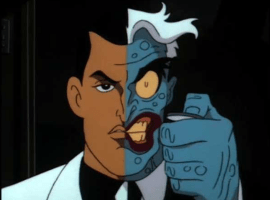
This is just a great Batman book in general, but it’s also a good introduction to another one of Batman’s iconic rogues, Two-Face (Harvey Dent). This is also a great read for anyone looking to explore Catwoman as a character.

 BatmanKnightfall

Knightfall (written and illustrated by various)

This one is a bit of cheat as it refers to a long arc within the comics, but one that is often called upon in modern Batman storytelling. Remember when I referenced the Christopher Nolan movies? Well, this one is what The Dark Knight Rises draws from most. It’s the story of Batman having his back broken by Bane, his recovery, and his reclamation of the Batman mantle. It’s actually not one of my favorites, but it’s worth reading to get a bigger picture of the network that is The Bat Family, and why Bane holds a special place among Bruce Wayne’s enemies.

BatmanADeathInTheFamily

Death in the Family (written by Jim Starlin/illustrated by Jim Aparo)

This one isn’t to be confused with Death of the Family (Snyder/Capullo). Don’t get me wrong, Death OF the Family is terrific, but it’s not for this list. Death IN the Family is an important arc for Batman because it covers the death of Robin. If you’re new to Batman Comics, you may not realize there have been many Robins. In Death in the Family, Batman’s second Robin, Jason Todd, is murdered by the Joker. In later comics, Jason Todd’s death is undone, and the character exists today as Red Hood, but understanding the history established in Death in the Family is key to understanding that dynamic within the Bat Family.

That’s my list for new readers of Batman. How do some of our seasoned Batman readers feel about it? Did I miss any? Did I include some you don’t agree with? Challenge me to a duel, or maybe just tell us in the comments.

3 Lists of 3 Video Game Enemies Made of Weak Sauce

Video game villains or enemies can’t all be made of the finer things like Final Fantasy VI’s Kefka, Shadow of the Colossus’ Dormin or even Bowser. This week your uncle Geekly’s three list of three will cover the video game enemies who bleed weak sauce.

These are the guys you can bludgeon with one strike of your foam hammer, and they’ll pass out. We’ll start with ones you can find in many different video game franchises.

ESO_Rat.png

Pathetic Generic Enemies

Rats

Why does it always have to be rats? These little rodents don’t put up much of a fight unless they swarm the field. To be fair, that’s what a lot of games do with rats to make them more of a menace, but rats still don’t strike fear in the hearts of virtual heroes. My eyes get wide when I see them in an Elder Scrolls game. Heck, I picked the Fighter’s Guild quest line first in Morrowind, because of the rats.

A couple of well-placed swings will send the hoards to rat heaven where the streets are made of Cheez-Its, and it rains cheese fondue.

Skeletons

While you’ll see another undead come up next, skeletons are a classic video game enemy. I’m not exactly sure what holds them together, especially since they can’t take a licking. Super Mario Bros’ Dry Bones fall apart and somehow get back together after taking a couple of breaths(?).

Skeletons aren’t that sneaky either because you can hear their bones rattling across an empty tomb, and that’s where one would normally find one. At least the player has to look down at their feet—or non-existent feet if you’re playing Elder Scrolls—to see a rat after hearing it squeak.

There’s a reason why Undertale’s Sans came out of nowhere: skeletons aren’t supposed to be tough.

Zombies

Zombies are the undead version of rats. A single zombie doesn’t scare the typical gamer, one shot to the head usually does the trick, but that’s not what makes zombies formidable. It’s the throng of zombies—or is it the herd or hoard?—that makes people drop soft serve in their Underoos.

Still, zombies are overdone. They may be more overdone than rats and skeletons at this point, especially since many video games change what they call zombies. Draugr. Feral ghouls. Clickers. Infected. They’re still zombies.

Goomba.png

Pitiful Unique Enemies

Slimes (Dragon Quest)

Slimes are one of the first things fans of Dragon Quest think of. They’re iconic. They also consist of nothing but weak sauce in the shape of a poop emoji. There’s a reason slimes are often your first enemy when starting a Dragon Quest game. They’re easy.

Keep smiling though. You’re the poop.

Goombas (Super Mario Brothers)

Yep. The mushroom shaped goombas are another example of an iconic video game enemy that’s too easy to kill. All Mario has to do is jump on them, and that’s a good thing because that’s all Mario can do at the beginning of most Super Mario Brothers games. One word: squish.

Mudcrabs (Elder Scrolls)

If an Elder Scrolls entry doesn’t start a player with rats, it’ll start them with mudcrabs. Let’s mix it up and start the player character in a half-flooded dungeon and pit them against half rats and half mudcrabs.

Mudcrabs are just crabs who live in mud. Despite their shell, they’re easy to defeat. The only thing that would scare me is if my character somehow contracted mudcrabs. That would scare me a lot more than Ataxia.

HumanReaper.jpg

Ridiculously Easy Boss Enemies

Alduin (Elder Scrolls)

Man, I’m beating up on Elder Scrolls with these lists. I’m sorry, Bethesda. I promise that I like your games. I’m a huge Bethesda fanboy, but they’ve made some stinker enemies. The build-up to Alduin in Skyrim was fantastic, but Alduin himself must’ve read the word of weakness right before the main storyline’s final battle.

I’ve had tougher battles getting rid of mudcrabs.

Human Reaper Larva (Mass Effect 2)

Mass Effect is another series I love, but it’s another case of the final villain of the game (Mass Effect 2 to be specific) not living up to its billing. Cast as the most powerful and terrifying race, the vision gamers built of reapers in the minds was shattered when fighting this simplistic enemy. It wasn’t terrifying. It took no time at all to beat. I’m thinking human DNA wasn’t the best one to choose from. Countless hours of making reapers sound awesome wasted.

343 Guilty Spark (Halo 3)

He’s a tiny AI that’s cast as comic relief in the final installment of the Halo trilogy. This game is what the entire series built up toward, and guess who the ultimate boss turned out to be? The tiny AI that was supposed to be comic relief and takes three hits to take out. His name is even 343 Guilty Spark. Bungie is guilty of making a lame villain.

There’s plenty of weak sauce to go around. I spread a little on my hot dogs every game night. Which villains do you think are weak sauce? Let us know in comments, and if you like more daily, weak write-ups, subscribe for updates.

Is this progress?

Kyle: Writing

Another week and another three trios of flash fictions (triplets) that are told from three different viewpoints. I edited another five, and I have enough for a book length work of these short stories. I hear rejection bells in the not-so-distant future.

Since I was focused on these triplets this past week, I didn’t get as much work done on my novel that uses this form and I’m sure Jim will have some form of discipline. I thought I heard the crack of a bull whip coming from my front yard.

Kyle: Games

More play testing this week. It can get boring but like editing one’s writing, it’s important to the craft. “No Jack” is close to blind play testing, and “Wildflowers” should be in Drew’s hands by now.

Thanks again, Drew. Feel free to tell me how confusing the rule book is and that the game’s tiles make great coasters.

That’s all I have for this week. We’ll be back tomorrow and the rest of the tomorrows this week with some brand-new content. Be kind to one another and stay geeky.