Geek Out

Getting Started with Pick-Up and Delivery Games

Howdy, folks, Uncle Geekly’s back with another group of starter board games. For those of you who are new to the site, our starter game series takes a common or popular game mechanism and picks some good games that feature that mechanism but are easy to learn. Many of these games on these lists will start easy and work their way to greater complexity.

In today’s list we’ll cover pick-up and delivery games, and this mechanism works like its name suggests: players will pick up items from one place and deliver them to another. It’s a simple mechanism that finds its way to several great games, but there are two issues that came up when compiling this list of starter games.

First, many designers don’t believe in having a straight pick-up and delivery game (it’s too boring), so you won’t find too many games with pick-up and delivery as the only mechanism and only a handful more that will include pick-up and delivery in a group of two or three mechanisms.

The second is that by adding extra game mechanisms, designers make many pick-up and delivery games more complicated, so there will be games like Firefly and Freedom: The Underground Railroad that are excellent pick-up and delivery games (a couple of my favorites) but slightly more complex than a starter game should be for newcomers.

Enough about the games that won’t be on this list. Let’s talk about the ones that made the cut.
DeepSeaAdventure01

Deep Sea Adventure

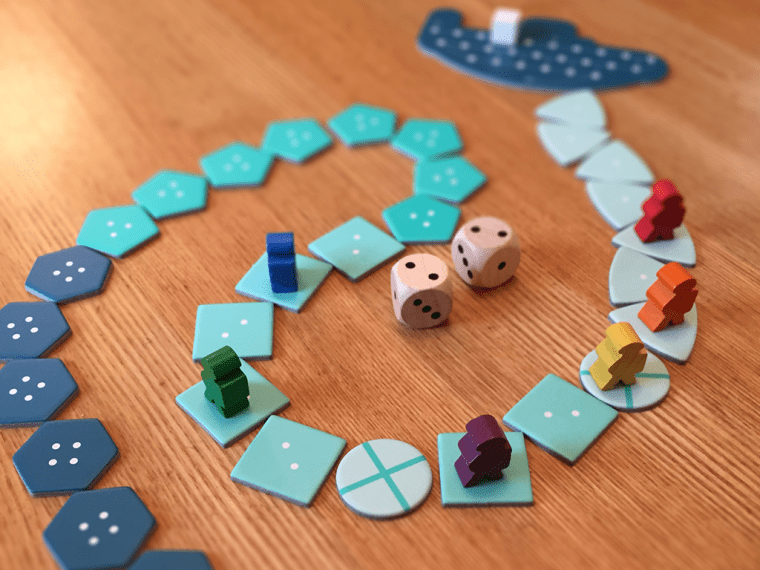
We start with the simplest game of the lot, Deep Sea Adventure. Sure, this game has a push your luck element and uses roll/spin and move, but it’s the closest game to pure pick-up and delivery. Players assume the roles of deep-sea divers. There are four levels of treasure (tokens) with a number (points one can score) printed on the front and the level denoted in dots on the back. The tokens get shuffled and placed in a wavy line protruding from the submarine (where the players pawns start), going from level 1 to level 4.

Players take turns diving into the sea (by rolling two specialty dice numbered from 1-3) and try to go as far as they can, but beware. All players share the same oxygen tank and when the oxygen level reaches zero, the round is over and only those who returned to the submarine with treasure in hand score points that round.

Deep Sea Adventure is charming. It doesn’t look like it would have much strategy, but it’s a lot deeper (pun intended) than first glance. Do you push your luck and go deeper, or do you turn back around with the treasure or two you picked up early on, so you know you’re scoring that round? There’s even a built-in catch-up mechanism where the higher scoring tiles are easier to get to in future rounds, so players who are behind early in the game can score a heap of points in round two or three. I’ve even considered picking up as many level one and two treasures as I can in the first round and since those lost treasure tokens get added to the end of the treasure path in stacks of three, I can claim them later in the game for big points.

Like I said, there are plenty of play styles and stratagems for this easy-to-learn game. Deep Sea Adventure may be marketed toward kids (if you don’t believe me, check out this adorable how to play video by Oink Games) but there’s enough going on to interest adults. You can find Deep Sea Adventure at most Barnes and Nobles but be on the look out for a small package. Oink Games come in small boxes and while I haven’t played all the Oink Game titles, most of the ones I’ve played are at least baseline good.
MyLittleScythe

My Little Scythe

I know that I said this before, but pick-up and delivery games have a knack of being very complicated. Case in point, My Little Scythe is a simplified, or child-friendly, version of Scythe, which happens to be on a lot of people’s best games of all time, but the original Scythe is far too complex for a starter pick-up and delivery game list. Heck. My Little Scythe makes the list by a skosh.

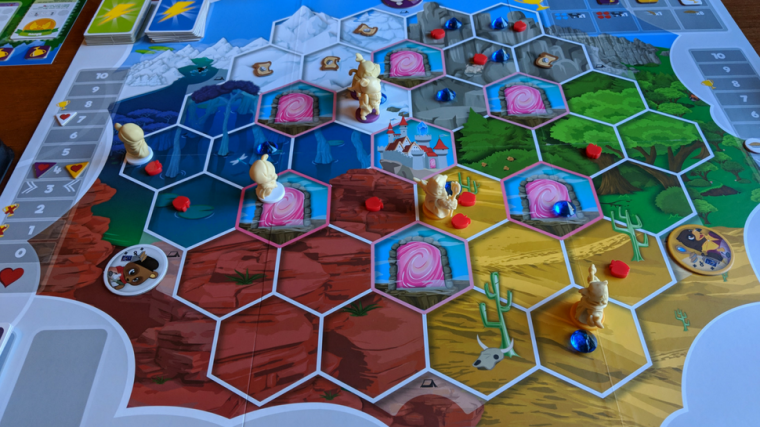
My Little Scythe was designed by a father and daughter, so that the father could play his favorite game with his young daughter, and it follows various animals of the animal kingdom as they prepare for the harvest festival. Players take turns earning trophies by earning specific accomplishments. There’s a lot going on in this game, but no single game mechanism is that complex. That said, I won’t spend too much time with how to play My Little Scythe because this isn’t a “how to play” write-up, it’s a starter game write-up. If you’d like detailed rules explanations, check out Rodney Smith’s video at Watch It Played; Rodney does excellent work. For now, let’s focus on what makes My Little Scythe a good pick-up and delivery starter game.

My Little Scythe takes an interesting look at pick-up and delivery. There’s a strong worker placement element to it—so it would make a nice addition to starter worker placement games—but two of the four trophies needed to trigger the end game (the harvest festival) requires players to pick up four of one kind of resource and drop them off at the castle (centrally located on the board). At least four of the remaining possible six trophies players can earn can be achieved by picking up resources and controlling them. In My Little Scythe, players are considered to have control of resources if their pawns occupy the same space as a resource. If the player controls the resource, they may spend it for other items. That’s a clever distinction that doesn’t show up in any of the other games on this list. So, I guess one could consider My Little Scythe a pick-up and control game.

There are so many other elements going on with My Little Scythe that I won’t mention the rest of them here, but each element works well and the whole is an easy game to learn and teach others. I wanted to include it here because of the interesting twist My Little Scythe makes with the pick-up and delivery mechanism. I know that it’s following Scythe’s lead, but we need more games that add wrinkles to well-established game mechanisms.

ForbiddenDesert08

Forbidden Desert

Forbidden Desert seems to make it on a lot of these lists, but it does fit the pick-up and delivery mechanism requirement and it’s a darn good game, perhaps the best of the Forbidden series, but that’s because I haven’t had the chance of playing Forbidden Sky as of this write-up. In Forbidden Desert players are stranded in an inhospitable desert. They must find and collect (or pick-up) the parts to a flying contraption and deliver the completed machine to the launch pad, so they can escape.

It’s been six years since Forbidden Desert’s initial release, and I still marvel at the way shifting sand is represented by drawing desert cards, shifting land tiles in the direction the cards command, and placing sand tokens atop the land tiles that moved that turn. It feels right. It plays like an unpredictable desert storm.

The way players must uncover both a vertical and horizontal tile for each object to reveal which tile one of the parts resides is brilliant; no game plays the same way twice. This also adds to the storm’s unpredictable nature and the fact that players can get buried in sand adds to the atmosphere of being lost. If the tile your pawn stands on moves, your pawn moves too, and board’s state may be far different from the end of one of your turns to the beginning of your next. Again, this adds to the players’ feeling of hopelessness—at times—or they may find the board moves in their favor and that’s wonderful.

I’ve said it before, but it remains true, Forbidden Desert is an excellent game. It also happens to be an excellent pick-up and delivery starter game. Pick-up and delivery may not play as big of a role in the turn to turn aspects of Forbidden Desert, but the only way players can win this game is by picking up and delivering the flying contraption to the launch pad.

Final Thoughts

Hopefully, we’ve covered some games you either haven’t played or haven’t considered pick-up and delivery games. Uncle Geekly tried to go with a mix of games that use predominantly pick-up and delivery (Deep Sea Adventure), implement pick-up and delivery as the only way to win but doesn’t include it with the turn to turn action (Forbidden Desert), and found one that provides a twist to a popular mechanism (My Little Scythe).

Know of any other great beginner pick-up and delivery games? You can deliver your questions, complaints, and suggestions in the comments.
3 Lists of 3 Anime: Take 2

No. It’s not Anime Season (our resident anime geek). Uncle Geekly’s back with another anime 3 Lists of 3. If you didn’t catch Take 1, this series hopes to provide a starting place for people new to anime. It differs from our typical For Starters series because I won’t go into too much detail with each series—for the most part—and it’ll act more like if you like this genre or subgenre, you may like this title.

Truth time. I’m breaking that mold with the group of lists this week. Uncle Geekly will focus on some of the more popular anime subgenres that aren’t as prevalent in the West. With that said it’s time for 3 Lists of 3 Anime: Take Two.

Psychological Anime

I won’t go into too much detail with how to spot a psychological anime because Arthifis of Anime Shelter does a great job of breaking down the genre with his writeup. For those of you who want to take a deeper dive into what makes an anime psychological you can check out Arthifis’s article. To save time, I’ll skip to a paraphrased bullet point definition that Arthifis unearths:

1) The anime puts its characters in high amounts of psychological distress. We’re talking multiple levels of psychological tension.

2) The anime includes mind games, meaning that the characters win by lying or manipulating others.

3) It focuses on psychological illness.

4) It messes with your psyche by showing the viewer a perspective that greatly differs from the norm.

Few of the following anime use all these four points, but they’ll use at least a couple. Here we go.

DeathNote03

Death Note

The characters of Death Note play mind games. Lots and lots of mind games. A death note, a notebook that allows its owner to kill someone they think of by writing their name in the book while thinking of their face, drops in the lap of precocious high school student Light Yagami. Like most people who receive a gift like this, Light brands himself the god Kira and starts killing criminals worldwide. An enigmatic and equally intelligent detective known as L hunts Kira and so begins the chess match.

There’s a lot to unpack with Death Note. It’s one part murder mystery (in the vein of Columbo because the viewer knows who the killer is, it’s just a matter of how and if they’ll be caught), cosmic fantasy, and philosophical—as well as psychological—thriller. Kira or Light wants to be a bastion of justice and decency, but he has flawed judgement. At one point, L questions Kira’s logic: if all the world’s criminals disappear, then the only murderer left in the world is Kira.

So many moral questions are posed with Death Note, no wonder it’s one of the most popular psychological anime.

ParanoiaAgent01

Paranoia Agent

I went back and forth between two Satoshi Kon titles with this second pick: Paprika and Paranoia Agent. Kon was the grand master of psychological anime and it’s shame we lost him so young. One could pick any number of Kon’s work, but I went with Paranoia Agent because it’s not as familiar to the western world—and it happens to be excellent.

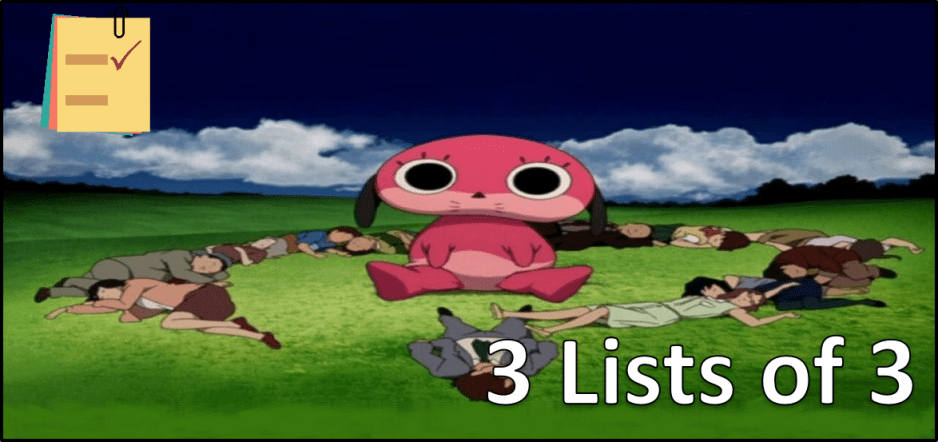
Paranoia Agent centers on a serial killer—or serial baseball bat basher—little slugger and how he terrorizes the town. Well. That’s Paranoia Agent’s hook. The story goes on and off the rails from there, forcing citizens to face their inner demons. I don’t want to say too much, but there’s plenty of trauma and psychological stress/tension in Paranoia Agent and it deserves a little more love.

MarchComesInLikeALion

March Comes in Like a Lion

Some don’t like March Comes in Like a Lion because it may not have as much of a story as they would like, but that’s due—in part—to the fact that it’s character-driven. The series follows the everyday life of a 17-year-old Shogi player Rei who lives by himself after his parents and sister die in an accident.

Rei shuts himself off from his foster family and doesn’t have many friends. His only interactions—at first—are out of obligation. March Comes in Like a Lion deals with psychological trauma, loss, and mental illness in a way few other anime attempt.

Isekai

Isekai loosely translates to stranger in a strange land and like the Robert Heinlein novel of that name (Stranger in a Strange Land), main characters in Isekai are foreigners in a strange land. Sometimes the characters are humans exploring new worlds, but it can be flipped with a fantasy character thrust in the mundane modern world. This may seem like a niche genre but for anime, it’s more prevalent.

SpiritedAway

Spirited Away

I had to include this one. To date, Spirited Away is the only anime to receive an Academy Award and it happens to be an Isekai. Ten-year-old Chihiro Ogino (later renamed Sen) is trapped in the spirit world, and the spirit world is nothing like our own—to put it mildly. Sen faces discrimination because she’s still alive and not a spirit. She gets lost in this world, but ultimately finds her place in it.

Spirited Away is anime that must be experienced. I could break down each moment, of which there are several classic one, but the journey makes this bildungsroman (coming-of-age story) work.

TheDevilIsAPart-Timer

The Devil is a Part-Timer

The title The Devil is a Part-Timer is odd, but it works. The Devil is forced into a human suit and he must work a part-time job to sustain himself. Yeah. This is the oddest show on this list—maybe—and the most over-the-top. If the Devil flipping burgers is your brand of comedy, The Devil is a Part-Timer has you covered. You’re bound to find a few chuckles.

NoGameNoLife

No Game No Life

No Game No Life could qualify for the next list of anime too (Game), but I included here because sending famous online gamers to a world in which all they do is play gambling games is more of an Isekai concept. Sora and Shiro are two of the best gamers in the world and when a god from another reality Tet challenges them to a game of Chess and they win, they’re sent to a reality known as Disboard.

No Game No Life is another strange entry, but it wouldn’t be a stranger in a strange land without a little strange.

Game

Yep. I had to include the game anime genre because I’m the tabletop game geek of the group, but game anime are really common as well. Game anime involve a game being played. We’re talking board game, video game, or the most dangerous game. Not joking about that last one. Anything that sends the main characters into a game or follows characters who happen to be a part of a game fits this genre. Let’s get our game on.

SwordArtOnline

Sword Art Online

I’m not the biggest Sword Art Online fan. The premise is okay, virtual reality video game players are stuck in their favorite online game and must win back their freedom, but the story is uneven (the story should’ve started later in the series—around episode nine or ten). Still, Sword Art Online ushered in a wave of game anime.

Sword Art Online instituted a lot of the tropes viewers will see in other game anime, so it’s a great place to start for the genre.

Btooom

Btooom!

If you like Sword Art Online, you may like Btooom!. This time players of a violent video game (one in which players bomb other players) are put on a deserted island where they play the game in real life.

Btooom! explores the difference between video game violence and real-world violence. It asks if video games beget real-world violence. Either that or it’s a blast. Main character Ryota Sakamoto doesn’t want to hurt anyone and wonders why someone would want to make a live-action Btooom! game. Btooom! traverses Truman Show waters to show that all is not what it seems.

IsItWrongToTryToPickUpGirlsInADungeon

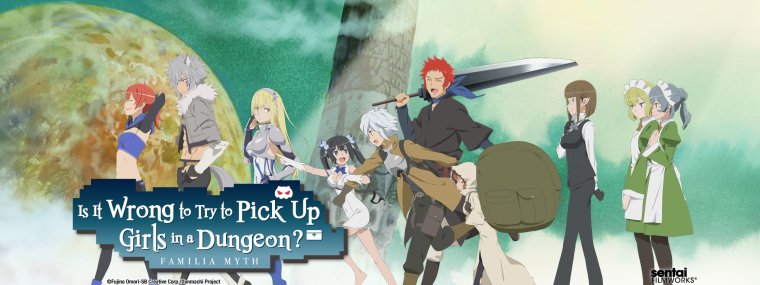
Is It Wrong to Try to Pick Up Girls in a Dungeon?

This list has gotten too serious. Let’s go with a series that features a tabletop RPG (like Dungeons and Dragons). Is It Wrong to Try to Pick Up Girls in a Dungeon? Features self-aware RPG characters. Not only do these characters know they’re in an RPG, they know what they’re stats are; their stats are tattooed on their backs. So, it’s not uncommon to see someone read another person’s back to see if they can pull off a feat before asking them to do it.

Can you leap that gorge? No, your dexterity isn’t high enough. Is It Wrong to Try to Pick Up Girls in a Dungeon? may be the least reverent of titles in any of these lists and that’s saying something. I included The Devil is a Part-Timer. Yikes!

I hope there are plenty of anime in these lists for you try out. I’m sure Uncle Geekly got something wrong. Please direct all complaints to Anime Season; she reads the comments—I think.

Going for a Platinum Trophy or All the Trophies

Your uncle Geekly trophy hunts from time to time, but most of my PS4 trophies must meet certain criteria for me to pursue it. For those of you who don’t know, a PS4 platinum trophy is usually handed out when the player earns every other trophy (or accomplishment if you’re an X-Box player) the game has to offer. Not all games offer a platinum trophy—I’m looking at you, Apex Legends—and for those games I’ll collect all the trophies I can. Also, there are plenty of games that hand out a platinum after an hour or two or in the case of My Name is Mayo thirty minutes, but countless PS4 platinum trophies require work. Lots and lots of hours of grinding.

Like I said, I do trophy hunt at times, so you may see the My Name is Mayo platinum buried in my profile. I’m not proud of it. I sold out to gain a few Playstation levels and make my stats look good. But most of platinum trophies are legit. I promise.

If you’re wondering what My Name is Mayo is, it’s a game where one clicks on a jar of mayonnaise wearing provocative clothing. The jar even dons a leopard print bikini. Again, this isn’t the high point of my gaming trophies, but other game trophies are better. Honest. The following is a list for the more difficult games in which I choose to earn a platinum.

Persona5

I Have to Like the Game

Okay, this is a duh moment, but if I’m going to invest over a hundred hours to get every trophy a video game needs for a platinum trophy or get all the trophies the game has in its catalogue, I’d better like it. Heck. I better love the game. Skyrim? Sure. Persona 5? Of course. Final Fantasy XV? Yes—I liked it enough to earn the platinum, but it could’ve been better. Fallout 4? Why did I get that one? Nubla? It’s a very good puzzle game with an easy to get platinum, so this may have been another trophy hunter moment—but I don’t care. Where was I? Yes. I must like the game to even think about earning the game’s platinum. Earning a platinum trophy shows your love of the game to the world.

GoldeneyeN64

No Online Multiplayer Trophies Needed

I like playing online video games every once and while, but I’m not any good at them and I won’t be able to unlock any online trophies—or at least most of them. As soon as I see that a game that can be played solo has an online component to its platinum trophy, I know I’m not getting the ultimate prize.

I liked the Magic: The Gathering video games from the PS3 but knew I would never get every trophy because I saw that I had to win X number of online matches and place in the top ten during an event. That’s not for me. I unlocked every other ridiculous trophy for those games except for the online ones, and the old Magic games aren’t even the most difficult of the bunch. Anything ultra-competitive like Fortnite, Overwatch, or Apex Legends will yield gold for me at best.

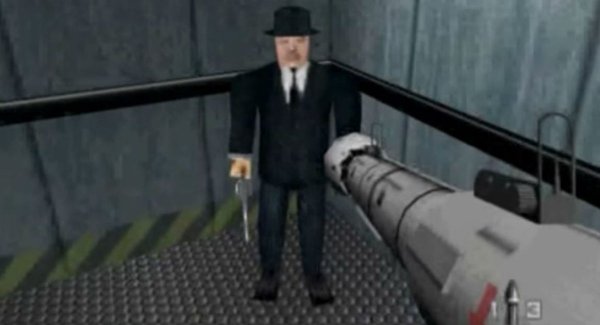
Speaking of gold, I stunk at the N64’s Goldeneye. I like the game. It deserves all the accolades it receives, but you know I’m no good at multiplayer games if I can’t win Goldeneye multiplayer while playing as Oddjob. Sure, Kyle, you can cheat by picking Oddjob. He starts with armor and a weapon (his hat) when no one else begins the game with either and must scrounge the map for both. I still lost consistently.

Uncharted4

No Hard Mode Required

There are people in the world who like to be challenged with video games. It’s great if you’re one of them. I’m not—most of the time. I may play a hard mode if a game offers one, but it’s a turnoff for me earning a platinum trophy if I must beat the game on the game’s most difficult setting to unlock it. Did I play PS4’s Spider-Man? Yes. I even played it on the unlockable ultimate difficulty setting, but I don’t like being told to play a certain way in order to earn a platinum trophy.

The Uncharted series is one of my favorites, but as soon as I see that I must finish the game on the most difficult setting, I know I’m not getting the game’s best trophy. Life is hard enough. Why must I play Nightmare Mode or Are You Kidding Me Mode or Ludicrous Mode or Geekly Must Die Mode? I’ll try the more difficult modes, but don’t expect me to do anything.

FinalFantasy7

No Speed Playthroughs

If you’re one of those people who can finish Super Mario Brothers in 2 minutes flat, good for you. You’re awesome and your reflexes are second to none. I’m not one of these people. But my lack of speed playthroughs goes beyond this. I don’t believe Final Fantasy VII has a speed playthrough trophy, but I’ve seen games of its ilk (other JRPGs and western RPGs) offering one for beating the game in under 20-25 hours. If I beat Final Fantasy VII or any game of that type that fast, I feel cheated.

I like to take my time. Give me a world and characters I can lose myself in and I’ll do just that.

A Maximum of 3 Playthroughs

If I can’t get all the trophies in three playthroughs, I’m out. Usually, I don’t like playing a game a third time. Persona 5 took me almost three playthroughs because I missed a minor something during my second play and I considered abandoning the game’s platinum since it would take me a third. After several grunts and groans, I fired up the game for another play and cursed at myself during the next twenty or so hours. I like earning the platinum in a single play whenever possible.

TellTaleGamesTheWalkingDead

2 Shiny Platinum Trophies for Every Embarrassment

Yes. I own some embarrassing platinums in my PS4 case, but your uncle Geekly strives for 2 platinums I don’t mind displaying for each one I hide behind the rest. I mentioned My Name is Mayo earlier, but I include Telltale Games platinum trophies in this group as well. All one must do to get most Telltale Game platinums is finish the game. That’s too easy. I’ll do it, but your trophy goes in the back row. I want trophies I don’t mind polishing in the front.

After taking a moment of silence for Telltale Games closing their doors late last year—I liked their games despite how easy it was to get their platinum trophies—let us know what criteria you look for when going for a game’s platinum in the comments. Do you even care if you ever earn a platinum? Which platinum trophies do you own?

My Favorite Game Mechanics: Gloomhaven and Assault on Doomrock

There are so many things I could pick as my favorite mechanisms for Gloomhaven and Assault on Doomrock, but I’ll try to stay on task with the one I chose for this article: artificial intelligence.

Cooperative games pit the players against the game itself so almost any cooperative game has some version of artificial intelligence. Gloomhaven and Assault on Doomrock just happen to be two of my favorites in terms of AI.

Gloomhaven01.jpg

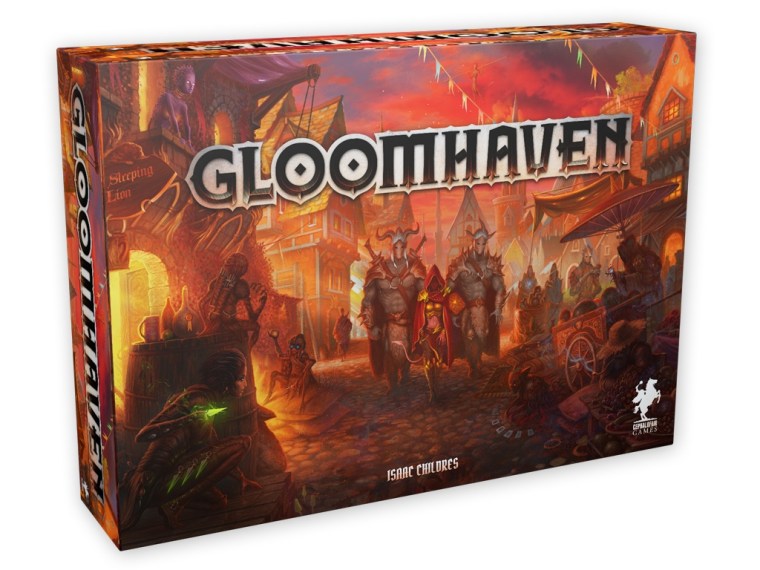
Gloomhaven has a leveled system for its creatures, so players can adjust the difficulty to match their tastes, and each creature type has its own action deck. The action cards within these decks dictate how quickly each creature moves, how or if they attack that turn, and who they target when they do. It’s a simple but elegant way of making each creature unique. Players won’t know what the creature will do from turn to turn, but if they’ve faced a similar creature, they may know its habits and that does a lot for characterization.

I also like Gloomhaven’s card-based combat. Usually I don’t like it when a player gets knocked out when they run out of cards in their deck, but this game is so balanced that it works. Okay. I promise that’s the only time I’ll get off topic—with Gloomhaven.

AssaultOnDoomrock

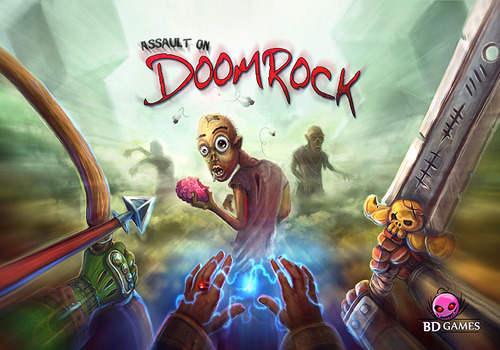
Assault on Doomrock has a similar system for its creatures, but it adds a threat level for each player’s character (or hero). Typically, the hero with the highest threat level will draw more monsters and that allows for a mechanism in the game that functions a lot like a tank in MMORPGs—a tank is a player with a lot of health that serves as a punching bag for monsters to attack, while their teammates wail on the distracted monsters.

There are more things that may affect a creature’s aggression in Assault on Doomrock, but the inclusion of a threat system gives the game more depth. I also like Assault on Doomrock’s addition of time as commodity. T.I.M.E. Stories has a time system too, but Assault on Doomrock’s use of time made me more concerned about wasting the time I had and that increased tension. Alright. I won’t discuss Assault on Doomrock—that much.

SentinelsOfTheMultiverse

I’d be remiss to not give a quick mention to Sentinels of the Multiverse. The villain decks behave differently, giving each character personality. Pandemic almost made this list for artificial intelligence and how the viruses behave, especially how the epidemic cards function with location cards that had been played (currently in the discard pile) go back on top of the draw deck, so diseases can get worse in cities already affected.

Like I said, most cooperative games have some form of artificial intelligence, and there are many other great examples. I could go on for another five or six games at least, but good old Uncle Geekly would like to hear from you.

What do you like most about Gloomhaven and Assault on Doomrock? Is there another game that uses AI in a great way? Error Code 220: Service ready for new user. Let us know in comments.

Shazam! Starter Stories

Solomon, Hercules, Atlas, Zeus, Achilles and Mercury: Shazam!. Billy Batson, or rather his alter ego Captain Marvel, donned the famous—or not so famous—red, gold and white costume. Shazam! wasn’t always a DC Comics property and the history of his rites and identity is a strange one. Uncle Geekly will take a hot minute to recap it for those of you who care to know.

Captain Marvel got his start with Fawcett Comics in the late 1930s and ironically, Fawcett had to stop publishing Captain Marvel and his Marvel family of comics (there were other superheroes in the Marvel line like Captain Marvel Jr. and Mary Marvel) due to a 1953 lawsuit won by DC Comics that claimed he was too similar to Superman. Hmm.

So, Captain Marvel faded into obscurity for a couple of decades until DC licensed the characters from Fawcett (in 1972)—Why bother with just licensing the characters from a defunct publishing house?—and eventually bought them outright in 1991—I guess it takes two more decades for a buyout. DC Comics wanted to reboot the character as Captain Marvel, but by that time another Captain Marvel (Mar-Vell, Marvel Comics rendition of Captain Marvel) already existed and Captain Marvel had to change his name to Shazam. You know, the acronym of the six “immortal elders” who grant Billy his powers.

Wow. I could go on with more domino copyright infringement cases that led to other famous comic book characters changing their name (as a result of the Captain Marvel ruling for Marvel Comics) like Marvelman to Miracleman, but this starter story writeup is for the 14-year-old boy with the body of a jacked Zachary Levi. That’s another odd phrase I never thought I’d say: a jacked Zachary Levi. Shazam! indeed.

ThePowerOfShazamVol1

The Power of Shazam! Vol. 1 (written by Jerry Ordway/art by Jerry Ordway; 1994)

I’ll skip the Fawcett years because DC Comics retconned (changed the origin and details) of the character so many times after Shazam became a DC Comics property and I’ll hop over some of those other abandoned versions of the character(s) to get to a version of Shazam that had a little more staying power, so I’m landing on The Power of Shazam!. While you could pick up the second volume of this series (which was an ongoing title that introduced the rest of the Marvel Family members), the first volume includes an updated retelling of Shazam’s origin with a minor tweak that gives Black Adam and Billy Batson a personal tie. Honestly, it makes them more natural enemies.

Ordway’s story is the closest to the original Fawcett origin story; it also happens to be easy to understand, straightforward and if I was to bet on a story that the upcoming Shazam! movie will pull the most inspiration from, it’d be The Power of Shazam!. All the major players are here.

ShazamTheMonsterSocietyOfEvil

Shazam! The Monster Society of Evil (written by Jeff Smith/art by Jeff Smith; 2007)

I’m not sticking with one Shazam origin story, you can’t make me. Jeff Smith (of Bone fame) retold the story again about a decade later. In this telling, Smith used far less space to show Batson’s origin and focused more on the character dealing with the repercussions of magic on the unsuspecting people of Fawcett City (DC tipping their hat to the original creators). There’re also aspects of government untrustworthiness; it’s subtle, but Dr. Sivana (mad scientist and archnemesis of Shazam) is the Attorney General of the United States. Of course Sivana is secretly behind the horrors of Fawcett City, but it’s a nice twist for the character and Shazam! The Monster Society of Evil does more to develop Billy’s sister Mary (as in Mary Marvel) as a character.

ShazamPowerOfHope

Shazam! Power of Hope (written by Paul Dini and Alex Ross/art by Alex Ross; 2005)

I included Wonder Woman: Spirit of Truth in my “Wonder Woman Starter Stories” write-up a few weeks ago and here’s another selection from the DC oversized graphic novel series that featured Alex Ross’s artwork. Like most of the other stories in this line, Dini and Ross focus more on real world and human issues.

In Shazam! Power of Hope, Billy visits children in a hospital. He gets the impression that one kid in a wheelchair is being beaten by his father and being a kid and knowing how children can feel powerless around adults, Billy attempts to the threaten the kid’s father. By the end, Billy realizes that he’s part of the cycle and learns that he can help just by visiting these children and giving them hope.

Yes. It’s sappy, but Shazam! Power of Hope has some nice character moments. It also reminds readers that Billy is still a kid, even if he looks like Superman. It also shows the character as the inspiring superhero he is.

SupermanShazamFirstThunder.jpg

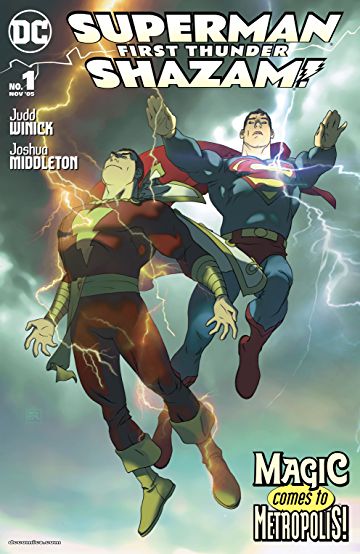
Superman/Shazam: First Thunder (written by Judd Winick/art by Joshua Middleton; 2006)

There’s only one thing to take away from Superman/Shazam: First Thunder and it’s an important one: how Superman and Shazam interact. DC Comics likes to show how these two iconic and most powerful men in their universe differ and this retelling of Superman and Shazam’s first encounter shows what makes these two characters unique and why DC would pay to have two characters with similar—and yet dissimilar—superpowers.

ShazamTheNew52

Shazam! The New 52 (written by Geoff Johns/art by Gary Frank; 2012-2014)

Okay. This is yet another telling of Shazam’s origin story; this character changes origins more frequently than I change underwear. But of course, he’d have another origin story, Uncle Geekly, what would you expect from the alternate Earth of the New 52?

In this tale, Billy Batson is more obnoxious and angsty than his previous incarnations as this is a more reality-based take on a 15-year-old orphan who was stuck in the foster care system for many years and lacks the trust of the adults in his life that the other versions of Billy share. This is also a more modern version of Billy. Don’t expect any “aw shucks” moments.

Shazam! The New 52 delivers on an epic showdown between Shazam and his archnemesis Black Adam (who will be played by The Rock in upcoming DCEU films), and if the DCEU continues its line of edgier superhero films, this may be the film version of Billy Batson.

I thought I’d add a few more stories to this list, but there are too many interpretations of Billy Batson/Captain Marvel/Shazam!/The Other Superman that it could muddy the waters further than I believe is necessary.

Judd Winick’s The Trials of Shazam! is another excellent story, but it casts Billy as the wizard who gave him his powers and Captain Marvel Jr. must assume the role as the new Shazam. There are the original stories and those other DC versions of the character throughout the 70s and 80s and there were some good stories there too, but I think the above stories do the most to ground readers in who this character is.

I’m sure I may have missed a story or two. Let me know of any ones you’d add to this list in the comments.

3 Lists of 3 Cosmic Horror

Uncle Geekly’s trying something a little different with this week’s 3 List of 3. Let’s break down what makes a certain subgenre what it is and then list a few forms of media that do a good to great job of representing the subgenre.

We’ll start with cosmic horror, or Lovecraftian horror, or Cthulhu horror. I prefer the term cosmic horror because it’s not specific to the writer H. P. Lovecraft (who popularized the mode in the early 20th century) or his creation Cthulhu and focuses more on the concept of something larger or greater than mankind. Something that reaches beyond the stars and shows us how small man is and that mankind’s role in the universe is minor one.

There have been many waves of cosmic horror, several that predate Lovecraft, so we’ll cover what makes the horror cosmic.

What is Cosmic Horror?

TheUnnamable

An Unnamable Horror

 I know that I just said that I prefer the term cosmic horror to Lovecraftian horror, but he did write in the mode a lot, and his work has laid the groundwork for future writers and other storytellers, so I’m starting with a quote from one of his short stories.

 From H. P. Lovecraft’s “The Unnamable”

“No—it wasn’t that way at all. It was everywhere—a gelatin—a slime—yet it had shapes, a thousand shapes of horror beyond all memory. There were eyes—and a blemish. It was the pit—the maelstrom—the ultimate abomination. Carter, it was the unnamable.”

This description goes in several directions. It starts with some explainable forms “a gelatin, a slime, eyes, and a blemish,” but even these bounce from one aspect to another, never settling on anything for long. Then it shifts to something less tangible. “A thousand shapes of horror beyond all memory. It was the pit—the maelstrom—the ultimate abomination.” And finally, it becomes a concept: the unnamable.

Readers aren’t supposed to know what the being is or what it looks like because the speaker can’t comprehend the being. The unnamable may as well be “the unknowable.” It’s far above humans and could crush them by stepping on them—that is if it had feet—and this feeds into man’s fear of the unknown.

It also feeds into the literary idea of the sublime, or the awe inspiring, and that’s probably why one could place the birth of cosmic horror in the Enlightenment. The Enlightenment is when humanity reordered its place in the cosmos (with its thinking, for example Immanuel Kant); it gave birth to Romantic poetry and Mary Wollstonecraft Shelley’s Frankenstein.

The sublime often ventures into the grotesque and in Frankenstein “The Creature’s” horrific outward appearance gets dwarfed only by how grotesque people treat the outsider. Man is trapped, unable to perceive something other or greater than himself, but at the same time, Dr. Frankenstein plays with things he’s not supposed to, and that’s another tenet of good cosmic horror: explore what man isn’t supposed to know.

Phew. Enough of that. Let’s get back to post 18th century.

IT

Horror, not Fantasy

Horror versus fantasy rests at the center of why I don’t like using the term Lovecraftian horror. Most people use the term Lovecraftian fiction and that ignores a different subgenre branch: cosmic fantasy.

Sure. Cosmic fantasy dabbles with horror elements—the unknowable and powerful is innately scary—but while cosmic fantasy beings like the Endless from Neil Gailman’s Sandman could and may kill you if they wanted, the evil entity that sometimes appears as Pennywise the Dancing Clown from Stephen King’s IT will kill you with a smile on its face.

It’s an issue of malevolence versus benevolence or at least malevolence versus ambiguous or ambivalent. Come to think of it, I may have to do a writeup of cosmic fantasy too. Hmm.

Why Visual Mediums Struggle with Cosmic Horror

Okay. I cheated and included a why instead of a what, but it’s an important why. Movies, comics, and other visual mediums struggle at times depicting cosmic horror because the power of these beings come from the fact that they’re unknowable or unnamable.

As soon as a movie shows what the monster or creature looks like, they lose some—or all—of their power. There are a few modern examples of visual mediums getting it right and I’ll showcase some of them in the coming lists.

Movies

Birdbox

Birdbox

The Netflix original movie Birdbox sidesteps revealing its otherworldly beings by showing what they make people do. When people gaze upon the creatures in this film, they want to commit suicide in the fastest, most brutal way possible. If someone had mental issues before the creatures arrived, they’ll want to show people their true beauty, the awe inspiring, the sublime.

The most viewers see of the creatures in Birdbox comes from drawings by some of the people who want to show others their beauty. Not only does this eschew large production costs, it allows these creatures to retain their power. It’s effective, but not the only way to make this point.

TheThing

The Thing

John Carpenter’s The Thing shows movie goers its monster throughout most of its run time, but this being retains its power because it can assume any form: animals, humans, even inanimate objects. If something can have any form, it has no form. This adds to the film’s tension. Is a character talking to their friend, or The Thing?

The practical special effects may bring The Thing to life in gory detail, but the uncertainty it brings gives it its power.

EventHorizon

Event Horizon

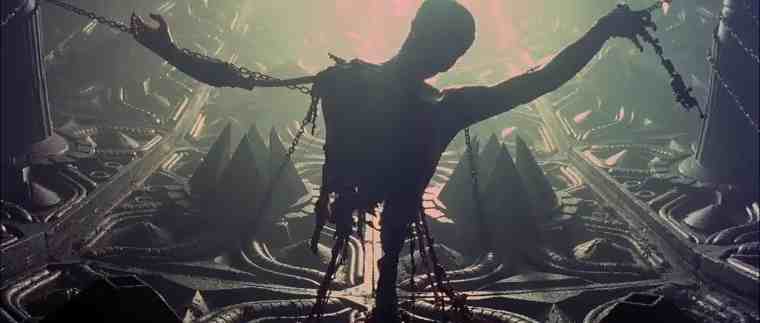
Event Horizon may look out of place with the rest of the entries here because its characters don’t face an unknown as much as being thrust into hell. But is the black hole in this movie a scientific anomaly or a gateway to pure evil?

Regardless, the characters can’t understand what’s happening to them or comprehend their fate and they fear the unknown, which again, is at the heart of any good cosmic horror. They suffer their greatest pain and fear and that causes the evil in Event Horizon to take many shapes and forms.

Print Media

TheShining

The Shining

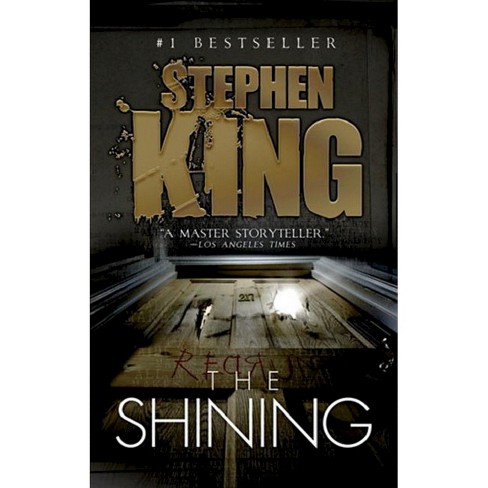
I could go with the aforementioned IT, but I prefer Stephen King’s The Shining. Yes. This story could also be classified as psychological horror, a ghost story, or a Gothic novel, but it also makes a compelling cosmic horror tale. The spirits and what drive them go beyond the mortal plane, even if Jack’s alcoholism and anger feed into his homicidal tendencies. The Shining doesn’t attempt to answer why the Overlook wants to relive past trauma.

King is perhaps the best-known writer of this group and several of his novels and short stories could be classified as cosmic horror.

Uzumaki

Uzumaki

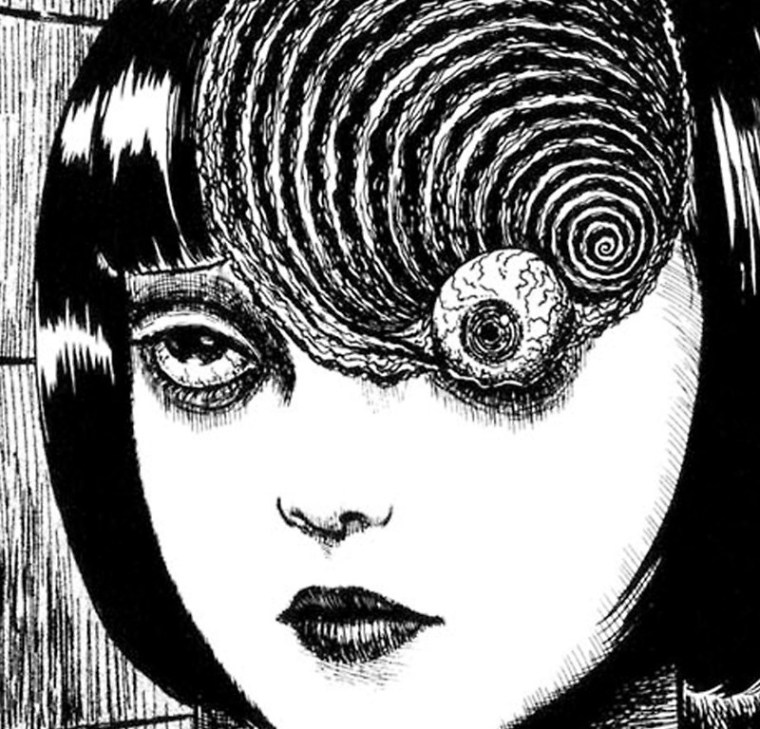
I’ll admit that I’m not the biggest Junji Ito fan, but Uzumaki—as does most of his other work—meets all the criteria of a cosmic horror story. An unforeseen force (similar to a curse) infects the people of Kurōzu-cho (or Black Vortex Town). They become obsessed with spirals or paranoid of them. One citizen even kills himself by bending his body into a spiral. Uzumaki has a knack for the grotesque and many people focus on Ito’s sublime and haunting images, but the pattern that makes it a cosmic horror story is the one where the people of Kurōzu-cho are doomed to repeat a cycle of the town collapsing under the spiral curse, only to be reborn.

It’s fascinating when one thinks of how important and positive many of the images and symbols that Uzumaki (Japanese for spiral) subverts. Spirals appear in comedies and represent warmth in manga. The same cannot be said of Uzumaki.

SongsOfADeadDreamerAndGrimscribe

Songs of a Dead Dreamer and Grimscribe

Oh. It’s time to go further down the weird spiral. Some literary critics classify Thomas Ligotti’s work as weird fiction, but his 1986 short story collection Songs of a Dead Dreamer and 1991’s Grimscribe: His Lives and Works are some of the closest we’ll get to true, modern cosmic horror. Penguin books republished these stories as one tome Songs of a Dead Dreamer and Grimscribe and that’s what I’ve included in this list. They’re must reads for people interested in this subgenre.

The force that contaminates a town in “The Shadow at the Bottom of the World” would make Cthulhu smile—if he could smile—and Ligotti references Lovecraft by name in “The Sect of the Idiot.” Unlike many other creative forces on this list, there’s a sense of authority to Ligotti’s work. While others play in a cosmic horror sandbox, he lives it and shares what he finds.

Like so many others of these lists I could keep going. One of our commenters Levi mentioned Jeff VanderMeer’s The Southern Reach Trilogy (which is the basis for the movie Annihilation) and that in part, triggered this 3 List of 3. I have yet to read The Southern Reach Trilogy or watch Annihilation, but a lot of VanderMeer’s other work could qualify as weird fiction (like Ligotti’s work) or cosmic horror. I’m in the middle of reading VanderMeer’s Wonderbook (a writer’s guide); it looks like I may have some more reading in my future and that’s not a bad thing.

What are some of your favorite cosmic horror writers, directors, or artists? I’m okay with you mentioning them in comments but try not to invoke their name more than twice. I don’t want a portal to open on my computer; my ethernet cable isn’t fully insulated.

Video Game Players Only Want Multiplayer Games

I’m not sure if this has come up or not in the past several years Uncle Geekly’s been doing this blog, but your uncle dislikes absolutes, so I’m being facetious with this writeup’s title. Okay. Maybe video games and what players want isn’t serious enough of a topic to warrant me calling it facetious, but it’s an important topic for geeks.

Anyway. Any absolute like this title is inherently flawed. One can’t make a blanket statement about a large group of people or things, because there are many exceptions to the norm. The title derives from video game publisher Electronic Arts (EA) insisting that video game fans only want multiplayer experiences, but they’re doing so by saying that players don’t want games with a linear story, and if one looks at their recent track record, EA seldom publishes single-player games with linear stories.

Electronic Arts has been making games for decades. They’ve seen the video game climate change over the course of those years, and the comment EA makes every time they cancel a Star Wars game with a linear story or character driven game in the past decade or so is that players don’t want a single-player experience.

EA’s Patrick Soderlund illustrates the company’s attitude by stating in his blog “Our Visceral Studio has been developing an action-adventure title set in the Star Wars universe. In its current form, it was shaping up to be a story-based, linear adventure game. Throughout the development process, we have been testing the game concept with players, listening to the feedback about what and how they want to play, and closely tracking fundamental shifts in the marketplace. It has become clear that to deliver an experience that players will want to come back to and enjoy for a long time to come. We needed to pivot the design.”

VisceralGames

Let’s look beyond the fact that some Visceral Studio employees lost their jobs—Soderlund also stated that EA would shift as many Visceral Studio employees over to other projects as they could, which means that they didn’t do that for all their employees—and get to what Soderlund, speaking for EA, is saying. On the surface, it may sound to players as if EA wants to make games that resonate with players and grant players years of replay value but consider the source. Soderlund is a video game executive. He’s talking about monetization and making games that run like a service.

Do you think that I’m making a little bit of a leap there? Maybe, but EA has a long history of making great single-player, linear story games (Mass Effect, Dragon Age, and Deep Space). They even have a long history of producing great linear story Star Wars games that are single-player like Knights of the Old Republic and the Jedi Knight series, so EA has plenty of research to suggest the contrary to what Soderlund said. Players do want linear story, character-driven games, especially ones set in the Star Wars universe.

AWayOutVideoGame.jpg

EA’s 2018 release A Way Out reinforces that players want single-player, linear story, character-driven games. A Way Out sold as many copies (200,000 for about $1 million) in one week as EA thought it would sell in the entire fiscal year. The truth is that EA wants players to only want multiplayer games. A single-player linear story game needs to have a finite ending to be satisfying. If that’s the case, players won’t purchase skins or weapons for a character when they’ve already beaten the game, unless they plan to play the game a second time.

I get it on some level. AAA games cost a lot of money to make, so publishers want to watch their bottom line and produce games that can bring in consistent money over a long period of time, games like the ones Soderlund mentioned in his blog “experiences that players will want to come back to and enjoy for a long time to come.” But let’s cut EA a break—sort of—and say that they don’t understand that there is more than one video game audience.

ApexLegends

If EA knew there was more than one video game audience, they may not have released Apex Legends at the beginning of February 2019 when Anthem was scheduled for release later the same month. They’re both solely online games that will attract a similar audience. Video game companies can’t predict what another studio will do, but they can space out similar releases from their own stable of games. That’s why video game companies need single-player games as much as they do multiplayer games.

Some players like multiplayer games, almost exclusively; others prefer single-player games. I dig both game types, but I lean toward single-player experiences. Variety is paramount. EA can, and should, offer great multiplayer and single-player games. I’d hate to see the publisher behind classics like Mass Effect and Star Wars: Knight of the Old Republic never make another single-player, linear story, character-driven game. It’s single-player games like the ones EA has produced in the past that lead some to accept video games as art, or at the very least, examples of incredible storytelling.

Do you agree or disagree that gamers still want single-player experiences with linear stories? Do you think EA and other companies like it are off-base with their assessment of the video game market? Let us know in the comments.

My Favorite Game Mechanisms: Dinosaur Island

Yes. Uncle Geekly picked up Dinosaur Island this past Christmas, and I’ve had some time to get in several plays. For the uninitiated or the ones who don’t remember what I said about Dinosaur Island in the past, it’s a tabletop game where players compete for visitors by building their own Jurassic Park. The premise is solid gold.

Each individual game mechanism has been seen in other games, but Dinosaur Island does a fantastic job of combining mechanisms that mimic what they’re supposed to mimic. The research and development section functions like the players exploring which dinosaurs they can recreate. Players can take a risk—increasing the dinosaur threat level—by taking a die that yields larger research results or they could take a safer route and set a foundation for gaining research points over time. It’s slower, but more reliable. The building of dinosaur pins and dinosaur husbandry—is that a thing?—functions the way one would think they would. Does one build the pins and reproduce dinos to get more visitors in one’s park before building adequate security? Players can, but is it wise?

DinosaurIsland_DinosaurFigures.jpg

The dinosaur figures don’t hurt the fun factor, but the resource management of where to place workers to get the best effect and where to place visitors so they yield the highest reward are other moments where Dinosaur Island shines. There’s just enough luck introduced so there’s a chance for players to catch a runaway winner, but Dinosaur Island is first and foremost a strategy game. A player who deploys a better strategy tends to win more often than those who don’t.

Each game mechanism—worker placement, tile placement, set collection, and an action point allowance system—behaves like its own mini game. Dinosaur Island could even be viewed as a series of mini games. But Dinosaur Island’s whole is far greater than any single part. That makes describing the game difficult or zeroing in on any specific part as a favorite tough. I like how Jonathan Gilmour and Brian Lewis combine these elements, so they make a tasty blend.

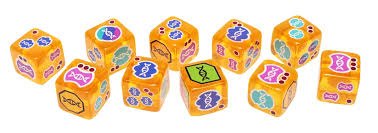
DinosaurIsland_Dice

There are plenty of other games that throw in a lot of mechanisms (First Martians comes to mind), but the individual pieces feel like a board game version of doing your taxes. Dinosaur Island doesn’t feel that way. The elements make sense for what the players are doing and the strategy, while difficult to master, is easy to see. Players will know why they won or lost and how they may be able to improve. Plenty of games offer hodgepodges of gaming mechanisms, but few of those games deliver a great experience like Dinosaur Island.

What are your favorite elements of Dinosaur Island? Have you ever played a game without humming the Jurassic Park theme? Uncle Geekly hasn’t, even when I play a solo game. Let us know your thoughts in the comments.

Wonder Woman Starter Stories

The first lady of comic books Wonder Woman has had an odd history, both in terms of how she came to be and with the path, or more exactly, the paths she’s taken. Hi. Uncle Geekly here and while I could address Wonder Woman’s creation story, we’ll spend today covering some of the greatest Wonder Woman stories for readers new to comic books.

Believe me. There are so many origin stories for Wonder Woman that Greg Rucka in his latest Wonder Woman run addressed them in DC Rebirth (2016-2017). That story just missed the cut, but it’d be a great honorable mention for this list, and I recommend reading that one too if you have the time. Let’s get to the ones that did make the list.

WonderWomanChroniclesVol1

Wonder Woman Chronicles Vol 1. (written by Dr. William Martson/art by Harry G. Peter; 1941-1942)

The writing is dated but Wonder Woman Chronicles Vol. 1 collects the original appearances of Wonder Woman in chronological order, so Steve Trevor makes an appearance–perhaps too much of one. Despite a shaky beginning, this volume shows how Wonder Woman promoted female empowerment long before it became commonplace. Heck. Wonder Woman was the first female superhero and while her origins may be humble (Diana takes on the name Wonder Woman because her mother gives it to her and she does a lot of what she does for Steve, a man she just met), these stories laid the ground work for an icon.

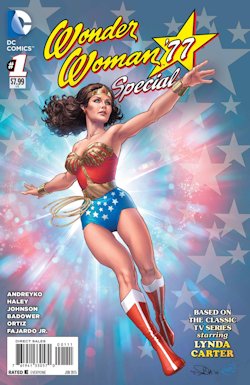
WonderWoman77

Wonder Woman ‘77 (written by various/art by various; 2015-2016)

Following the success of the Batman ’66 series that chronicled the continuing story of the 1966-68 television series starring Adam West and Burt Ward, DC Comics did the same for the 1975-79 Wonder Woman television series that starred Lynda Carter with Wonder Woman ’77.

Initial writer Marc Andreyko wanted to use “under-appreciated” Wonder Woman rogues and include them in the series, since the television series’ limited budget didn’t allow from them. As a result, classic Wonder Woman villains like Cheetah, Silver Swan, and Doctor Psycho received the Wonder Woman TV treatment they never had and Andreyko does such a great job including them that folks won’t remember that they were never in the original series—or maybe they will.

Anyway, Wonder Woman ’77 is a great series for fans of the Lynda Carter TV show or for people who may have missed the original show and don’t want to sit through the dated special effects and again, dated writing. This series does a great job of cleaning up some of the television show’s shortcomings.

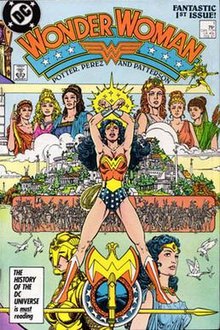
WonderWomanGodsAndMortals

Gods and Mortals (written by George Perez and Len Wien/art by George Perez; 1987)

Gods and Mortals is a quintessential Wonder Woman story. After Marston’s Golden Age run and Crisis on Infinite Earths, the quality of Wonder Woman was—how to do I put this kindly—a mixed bag. George Perez relaunched the Wonder Woman title and he abandoned Diana as a marginalized member of the JLA’s boy’s club. He took Diana back to her feminist roots and made Steve Trevor and Etta Candy (one of Wonder Woman’s closest friends) rich and layered characters. Perez deployed a sense of fatalistic realism as the Amazons put themselves in a self-imposed exile after Queen Hippolyta (Diana’s mother) was put into bondage and raped by Hercules.

As you can see, Gods and Mortals took risks that many in the comics world would’ve taken at the time, but the end result was Diana standing on her own, apart from the Justice Society and Justice League. She didn’t need the male pantheon for support, and it was Gods and Mortals that made Greek gods regular characters in Wonder Woman stories.

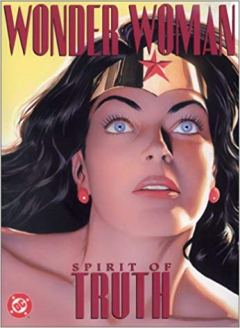
WonderWomanSpiritOfTruth

Wonder Woman: Spirit of Truth (written by Paul Dini/art by Alex Ross; 2001)

Paul Dini of Batman: The Animated Series fame crafts an understated moment between Diana and Clark Kent having coffee and swapping tales. Artist Alex Ross does a great job rendering these moments of Clark and Diana enjoying each other’s company one instant and the Amazonian Warrior lifting tanks, taking on armies, and fighting for women’s rights the next. Spirit of Truth may only come in at 64 pages, but it captures what makes Wonder Woman an endearing character.

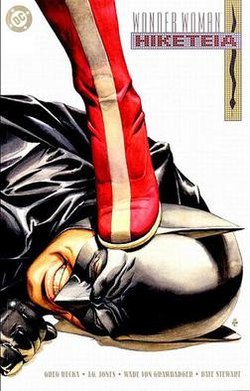
WonderWomanTheHiketeia

Wonder Woman: The Hiketeia (written by Greg Rucka/art by Drew Johnson, Eric Shanower, and Brian Stelfreeze; 2003)

The Hiketeia takes an intriguing look at the ancient idea of justice in the modern world. When Diana meets Danielle Wellys, Danielle evokes the ancient rite of Hiketeia and bonds herself to Diana as Diana’s supplicant. In return, Diana must ensure Danielle’s protection, but little does Diana know that Danielle has been on a murder spree to avenge her slain sister. Danielle’s actions attract the attention of the Furies of Greek myth, seeking vengeance for the victims, and Batman.

Batman and Wonder Woman’s views on justice differ as Diana marries fairness with justice. The Hiketeia does a great job showing how two thirds of DC’s trinity interact as they have a respectful but adversarial relationship.

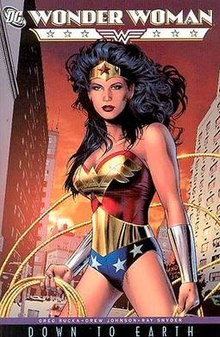
WonderWomanDownToEarth

Wonder Woman: Down to Earth (written by Greg Rucka/art by Drew Johnson, Eric Shanower, and Brian Stelfreeze; 2004)

Down to Earth is an unconventional superhero story as Wonder Woman doesn’t stop villains or save the world; she shares her ideals in a book of essays and others try to tear down her philosophies. A lot of this backlash originates with the mysterious Veronica Cale—who functions like a female Lex Luthor—and she pulls all kinds of strings that make Diana’s life difficult. The book even creates tension in Mount Olympus with the gods, which doesn’t end well for Wonder Woman in the long run.

Down to Earth is another great story by Greg Rucka, and it does a lot to set up many of the events in his excellent four year run of Wonder Woman.

WonderWomanTheNew52

Wonder Woman: The New 52 (written by Brian Azzarello/art by Cliff Chiang; 2012-2015)

Brian Azzarello’s run on Wonder Woman: The New 52 was amazing. It embraces Diana’s Greek mythological roots and bends these same classic Greek myths, turning them into something new and exciting. Every step of the way you’ll stop and think that’s so Hades or that’s so Poseidon and Diana the daughter of Hippolyta and Zeus fits right in. The ending doesn’t disappoint. I won’t ruin it here, but Azzarello does a great job of pacing and taking what makes these characters who they are—both Greek myth and comic book characters—and blends them together seamlessly.

That’s my list for readers who are new to Wonder Woman comics. There are so many to choose from—decades after decades in fact—and I’m sure I missed more than one, two, or five hundred. Be sure to list some in comments. I’m sure Jim will prefer your picks to mine.

3 Lists of 3 Anime: Take 1

Your uncle Geekly may not be Anime Season, but he’s spent some time watching anime over the years and it may be time to share some anime for people who don’t watch anime and want to know where to begin. This may become a series of 3 Lists of 3, but it’ll differ somewhat from our typical For Starters series. A) I won’t go into too much detail, but I may break this rule on more than one occasion. B) I also want to take genres that people may be familiar with and share a few titles that could match one’s interests. Anime has a massive range of genres and subgenres and one can get lost trying to find something one likes. Think of this series of lists as if you like “fill-in-the-blank,” you may also like this title.

Disclaimer: Uncle Geekly refuses to take responsibility if you don’t like a series on one of these lists, even if you like the genre. Direct all complaints to the comments.

Superheroes

Superhero TV shows and movies dominate. Superhero novels—not graphic novels or comic books, but actual novels—infiltrate book stores, so this is a good place to start with this 3 List of 3.

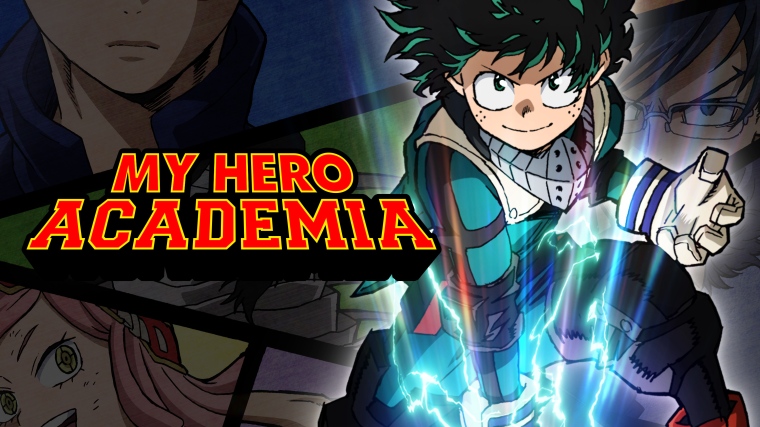
MyHeroAcademia

My Hero Academia

On the surface My Hero Academia looks like standard superhero fare, but it takes an interesting turn or two and it holds a special cultural significance that few anime in any of these lists possess (more on that in a bit).

The superheroes of My Hero Academia have government and/or corporate sponsors. While I’ve seen government sponsored hero work in western superhero stories, I haven’t seen as many corporations backing superhero work. The inclusion of a capitalistic view on superheroes results in different motivations for each character. Some detest the commercialization of superhero work and push back, while others are only in it for the money. Viewers are sure to find a character, or two, they can relate to. There are even some heroes who only go into the business because of a family legacy or their families force them into the business.
The cultural significance comes in the form of taking risks or overcoming risk aversion. A lot of Japan is risk averse. For every great quote like Miyamoto’s “A delayed game is eventually good, a rushed game is bad forever” there are ones like the anonymous Nintendo executive’s “I only like to take risks if I know I’ll succeed.” If you know you’ll succeed, you’re not taking a risk. My Hero Academia’s main character Midoriya is the least likely superhero and must take risks. This series shows that it’s okay to take risks. It’s even okay to take a risk and fail; it’s what you do after a failure that defines who you are. Midoriya always gets back up—eventually—and younger Japanese generations are taking this lesson to heart.

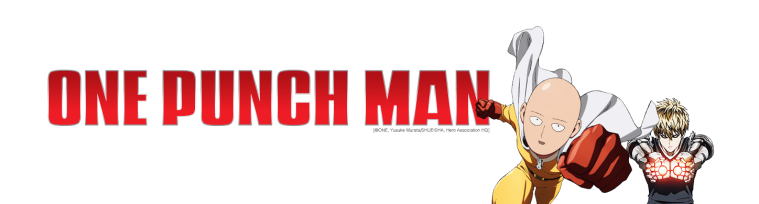
OnePunchMan

One Punch Man

I struggled with putting One Punch Man on this list. It toes the line between parody and satire. On one hand, it’s the anime equivalent of the 1990s animated Tick. There are so many references to anime tropes and inside jokes that new anime viewers may not catch half of them. On the other hand, it takes a critical look at the all-powerful superhero and how lonely and boring their life must be if they’re never challenged—kind of an earthlier version of Watchmen’s Dr. Manhattan. Does a lack of a struggle lead to apathy?

As the title implies main character Saitama can beat anyone with one punch. The superheroes in this title are government sponsored—yay, that again—and they obtain rank through a government program. Despite being able to beat enemies with one punch, Saitama is a lower rank than most other heroes. Effort goes a long way and Saitama views fighting as a bore.

No one can beat Saitama, and how did he obtain this power? A daily routine of 100 push-ups, 100 sit-ups, 100 squats, and a 10KM run (which is a little under six and a quarter miles). That’s a good to great daily workout, but it hardly explains why he can beat people with a single punch. It’s hilarious and it does little to explain his hair loss (I’d like to know how to avoid that, asking for a friend), but it also shows how little Saitama exerts himself to achieve his goal of becoming a superhero. He possesses natural ability and it begs the question if one doesn’t have to struggle to obtain a goal, is the goal worthwhile?

But hey, One Punch Man is hilarious. Having a supervillain monologue for five minutes only to have Saitama take him down with one punch is great to watch, even if he can do it every time.

Claymore

Claymore

Claymore is the one title in this list of 3 that won’t be for everyone. To be fair, most if not all the anime on these lists won’t be for everyone, but Claymore caters to a very specific comic book fan. Here’s looking at you, Buffy, Blade, and Morbius the Living Vampire fan boys and girls.

The titular claymores fight yoma, who are shape-shifting beings akin to ogres that feed on human flesh and blood. Claymores are only female and are created by cutting open these young women and implanting them with the flesh of another claymore or the flesh of a yoma. This horrifying process conjures a lot of images and can lead to plenty of interpretations. I won’t share mine here, but after you’ve seen the process of making a claymore, you’ll have a reaction.

The Claymore series follows Clare, the newest and lowest member of the group, as she travels from town to town fighting yoma. As she uncovers more of the mysteries surrounding the Organization (the ones behind the claymores), she becomes less inclined to follow this path. Of all the main characters from the anime in this list, Clare is the most reluctant hero. If that’s something that interests you, you should give Claymore a try. Claymore also does a great job of depicting a hero who partly becomes that which they hate and in turn, how that choice causes them to question with their own humanity.

Heroman_StanLee

Heroman

I’m cheating here a little bit, but I had to include Heroman as an honorable mention in this list because it was co-created by the late, great Stan Lee and features Stan Lee in anime form. We need more anime Stan Lee.

Firefly Fans

I’m amazed by how many anime could fill the void left by Firefly. In fact, Firefly borrows more than a little from some of these anime. Firefly can trace some of its influences back to at least a couple of the anime on this upcoming list—particularly the first two that came out five to seven years prior—so if a single season, one movie, and a few comic book series aren’t enough Firefly for you, you should try one or two of the following anime.

CowboyBebop01

Cowboy Bebop

Cowboy Bebop had to make this list. Spike and company avoid the inner planets’ predominant government and travel the edge of the universe, collecting bounties. Along the way they befriend fugitives with hearts of gold and build their own makeshift family. Yep. That’s pretty much the Firefly formula, and Cowboy Bebop doesn’t take itself too seriously to boot.

Cowboy Bebop is one of the most respected anime of all time and a lot of that comes from series director and creator Shinichirō Watanabe beginning his writing process with the characters. Watanabe wanted the series to be character-driven and he had a definitive ending for Cowboy Bebop early on, citing that he didn’t want Cowboy Bebop to be like Star Trek, something he’d be tied with doing for the rest of his life.

Sometimes the best things in life are finite. The rarer something is the more valuable it becomes and speaking of rare, Cowboy Bebop is in rarified air. Each episode plays like its own mini-movie and that was another concept adopted by Joss Whedon’s Firefly.

OutlawStar01

Outlaw Star

Outlaw Star never received the critical or commercial success of Cowboy Bebop because it didn’t do enough to break away from a few clichés, but it’s still a series with some excellent moments and a good fit for folks who can’t get enough Firefly.

Again, we have a ship of misfits traveling the edges of the universe and avoiding the chaotic law of four governments, but this time the governments are weak, at best, and at war. Captain Gene and company must take on odd jobs to fund the ridiculous maintenance costs of the titular Outlaw Star spaceship. This, again, tracks with Firefly.

A bio-android Melfina is the only being capable of interfacing with the ship, but her past is shrouded in mystery, she doesn’t know why she exists, besides to pilot the Outlaw Star, and she has fragmented memories that reveal that she does have a higher purpose and greater abilities. Melfina’s character is like River Tam’s as she looks as if she’s 18, acts like she’s a young child, and the first Outlaw Star captain steals her away from one of the governments—that had bigger plans for her—in an oversized suitcase. Yep. That is, for the most part, River’s backstory, except she’s not an android—or is she?.

But that may be where the similarities end. Captain Gene resembles Captain Kirk if Kirk suffered from space sickness. Seriously, he sleeps with any alien with appropriate parts, but he must use a barf bag each time the Outlaw Star launches. That must be one of my favorite Outlaw Star ongoing gags, but Outlaw Star succumbs to these gags and that may be the chief reason it doesn’t get as much love. It’s not a long series and worth a try.

SpaceDandy01

Space Dandy

The anime in this list have gone from serious with a touch of comedy to comedy with few serious themes. Space Dandy is first and foremost a parody of Firefly and other sci-fi shows. The titular Dandy, an alien bounty hunter who is “a dandy guy in space” explores the universe for rare aliens, so Space Dandy shares a lot with Star Trek if the crew of the USS Enterprise were imbeciles. Dandy and his crew (his robot assistant QT and feline-like friend Meow) have the best intentions, but they’re dimwitted and often make situations worse.

Space Dandy has loose continuity at best, since many episodes will feature Dandy, QT, and Meow getting trapped in another dimension or turned into zombies, only to see them back to normal the next episode with little to no explanation. There are plenty of references to older science fiction properties as well as ones for internet culture. Be ready for some dank Space Dandy memes, dudes.

Cyberpunk

Cyberpunk dominated the small and big screens in the 80s and 90s with Total Recall, Blade Runner, and 12 Monkeys to name a few. The subgenre slithered its way to Japan, resulting in cyberpunk as one of anime’s favorite subgenres. Me thinks there will be more than three to this list.

GhostInTheShell01

Ghost in the Shell

I had to start with this one. Major is the face of anime cyberpunk. Set in the future and blessed with high technology where cybernetic bodies (shells) become the norm the world of Ghost in the Shell still suffers from rising crime rates, and a new type of crime—cyber warfare—is given birth. Yes. Ghost in the Shell warned against cyber warfare before it was cool. Elusive hacktivist Puppet Master leads the Security Police Section 9 (the unit Major works for) into a corrupt political and corporate underbelly.

Stunning animation aside, Ghost in the Shell explores self-identity and procreation by means of mechanical replication. It shines a light on a society that prioritizes technological advancement without considering social issues. Some of these issues haunt Japan today. In Japan, there is a growing concern that some would rather reproduce by means of androids or pleasure themselves with robots instead of propagating the species. Japan’s recent population decline further fuels these concerns.

Ghost in the Shell is not only one of the greatest anime of all time, it’s a great science fiction experience and a great place to start for cyberpunk fans. Even though the series are great, I’d start with the original film.

Akira01

Akira

Akira is another quintessential cyberpunk anime. Based in a 2019 dystopian Neo-Tokyo, Akira follows a teenage biker Tetsuo and his biker gang leader Shotaro Kaneda. Tetsuo’s psychic abilities may flirt with fantasy, but Akira’s setting and themes scream cyberpunk. Gang warfare and social inequality based on technological advancement abound.

Even non-anime fans know of Akira. This 90s anime phenomena raised the West’s awareness of the artform, and Akira has influenced a lot of live action movies outside of Japan that include The Matrix and Stranger Things. Tetsuo does have killer psychic abilities after all.

BubblegumCrisis01

The Bubblegum Universe

The Bubblegum Universe (Bubblegum Crisis, A.D. Police Files, Bubblegum Crisis Tokyo 2040, and Parasite Dolls) ran off and on between 1987 and 2003, so it predates the other two entries—so far—on the cyberpunk anime list. Bubblegum Crisis is perhaps the best and most well-known of this bunch and it tells the story of an all-female group of mercenaries the Knight Sabers powered by exoskeletons. They fight rogue robots and if Iron Man is the Elvis of high-tech exoskeletons, the ladies of Bubblegum Crisis are the Ramones. Hey. Ho. Let’s go.

Bubblegum Crisis blends cyberpunk with a crime drama and even adds a splash of superheroes for good measure. It’s also one of the most visually stunning anime of the 80s. While cyberpunk tends to lean toward the dark and grim, the Knight Sabers and AD Police give it a positive spin.

Psycho-Pass01

Psycho-Pass

I told you that I’d sneak in another one on this list. Psycho-Pass is essentially Minority Report if the police used brain scans to determine whether someone will commit a crime or not instead of precognition. That said, Japan becomes one of the safest countries, but they give up some personal liberties in order to institute the Sybil system (the same system that determines if you can commit a crime), but the Sybil system can be manipulated and often is. Psycho-Pass shows a society where the needs of the many outweigh the needs of the individual and presents a world where people are more likely to die from stress than criminal activity.

I know that I said I would stop with three, but there are too many great anime out there, especially cyberpunk anime, and at least I didn’t mention Battle Angel Alita—except that I just did and you should watch Battle Angel Alita before thinking about watching the Alita movie. The anime only ran for two episodes and it’s another great example of how society breaks down as a consequence of technological advances. A future where the have-nots must rummage through the refuse of the haves. Okay. I’m done; I promise.

BattleAngelAlita01

I hope there are plenty of anime in these lists for you try out. If Uncle Geekly got something wrong, I’m sure you’ll let me know in the comments.