Hey, hey, Geekly Gang! Kyra Kyle back again with another review/reaction of an X-Men ’97 episode. If you’re looking for last week’s episode “Strange Land, Savage Heart,” here’s a link to our review/reaction to that episode. Today, we’ll be discussing X-Men ’97 season two’s penultimate episode, “The Dead Man’s Hand.” Things begin to click into place as X-Men ’97 season two reaches its finale. I’ll kick off this post by sharing my thoughts on X-Men ’97 “The Dead Man’s Hand.”
Kyra’s Take
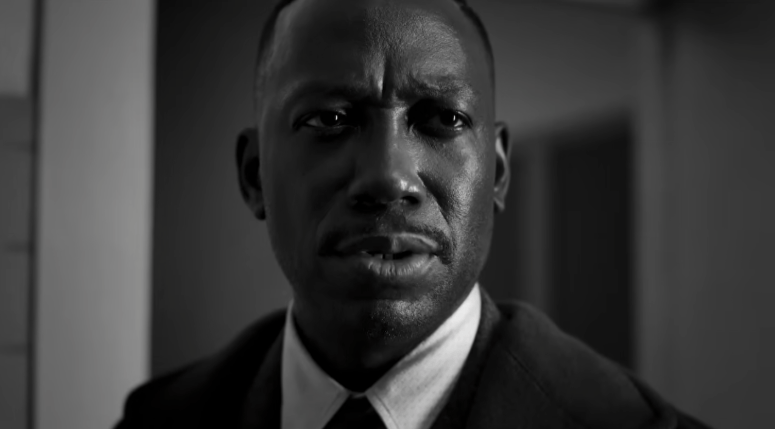
I’m torn with this week’s episode of X-Men ’97. “The Dead Man’s Hand” does everything you would want a penultimate episode for a season to do. It wraps up just enough threads to keep viewers interested. It brings the disparate groups of X-Men and other entities together for what should be a fantastic final confrontation. And it even manages to bring back a fan favorite. Not to mention that Nightcrawler gets to show off his moves in “The Dead Man’s Hand.” The scene where Nightcrawler got to work made me jump from my chair. Bamf! But I’m confused by the big bad’s motivation and scheme.
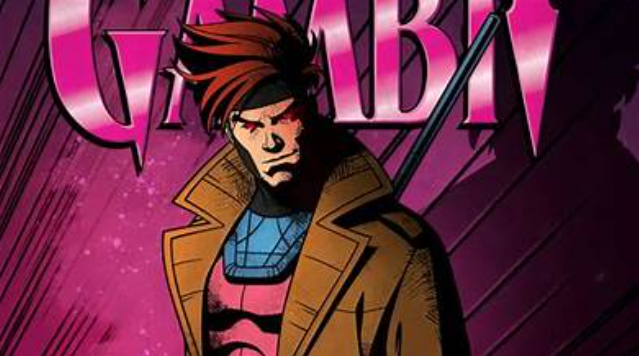
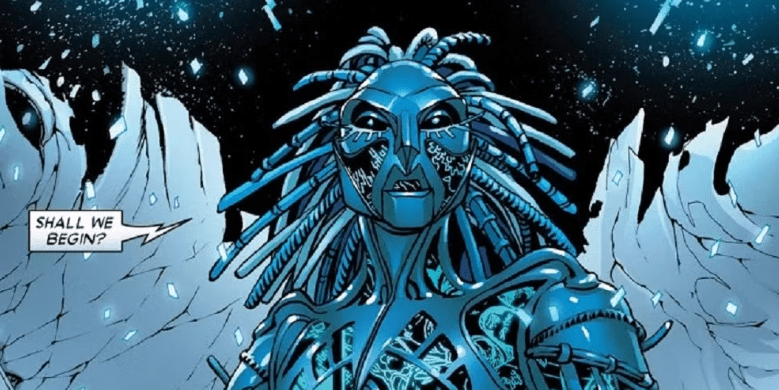
This review/reaction will have spoilers. Consider yourself warned. Apocalypse brought Gambit back to life and as a result, became a desiccated corpse. While it looks like Apocalypse wanted Gambit as his new personification of Death (one of his horsemen), the transformation backfired. I still hold out hope that X-Men ’97 plans to introduce The Huntsman or Weapon XII, but the events in “The Dead Man’s Hand” show Apocalypse behind this plot. Did he intend for Gambit to absorb his consciousness? Unclear. Apocalypse’s feud with Candra (External) fell a little flat. Sure, the seeds of this conflict go back to episode four from this season (“Rise of Apocalypse: Part II”), but I would’ve liked more lead up to this moment. Perhaps a quick nod to what happened earlier this season.
Despite what appears to be a half-baked plan by Apocalypse (for now), “The Dead Man’s Hand” has plenty of stand up and cheer moments. The Nightcrawler fight I mentioned before is one. Holy poop! Any scene where Rogue and Gambit try to reconnect manages to pull at the heartstrings. Cable playing his parents to get close to Gambit so he can kill Apocalypse inside Remy’s body was cold, on-brand for Cable, and twists the knife, reminding Cyclops that he wasn’t there for his son’s coming of age. The Summers family has a messed up history, and I’m here for it. I even liked the hinted at team up of X-Force and X-Factor. Half of X-Force defected to the X-Men (Jubilee and Sunspot), and the prospect of Cable, Psylocke, and Archangel working with X-Factor is juicy.
X-Men stories have always featured characters hopping from one faction to the next. This doesn’t bother me. In fact, I like it when X-Men stories present two compelling sides to the same argument. I don’t know where X-Men ’97 intends to take its season two finale. Typically, I’d say this was a good thing. But I’m less confident with Apocalypse’s goal, and Gambit’s return lacked a little something. I think that something was knowing what Apocalypse planned to do with Remy’s body. Did Apocalypse’s plan backfire? Does he intend to skinwalk in others’ skin for the rest of his existence? That would track with what we saw in “Days of Past Future” (the first episode of this season). A disembodied Apocalypse planned to insert himself within Cable.
“The Dead Man’s Hand” is one of those episodes that needs context. We’ll have to wait for next week’s episode to find that context. Those are my thoughts on X-Men ’97 “The Dead Man’s Hand.” Let’s check in with Season.
Season’s Take
I’m ecstatic that Gambit made his return, but the execution felt lackluster. I’m not sure what I was expecting outside of Apocalypse resurrecting Gambit to control him, but I didn’t think he would inhabit Gambit’s body. While that tracks for Apocalypse, I was hoping he wouldn’t be the big bad of season two. It would’ve been so cool if Marvel threw in a twist villain. External made an appearance, but I thought she would play more of a role. She basically went poof.
I loved the moments between Gambit and Rogue. They did an amazing job of portraying Rogue’s conflicted feelings. It was animated beautifully. I’m not sure what to expect, but I hope season two has an amazing ending.
Hey, hey! Kyra Kyle here again. Thank you for reading, and wherever you are, I hope you’re having a great day.
Hey, hey, Geekly Gang! Kyra Kyle here and today we’re reviewing this week’s episode of X-Men ’97, “Strange Land, Savage Heart.” If you want to read our review of last week’s X-Men ’97 episode, here’s a link. This week’s episode saw the return of one popular X-Man, the introduction of another great villain (who had not be on screen prior to this episode), and a focus on Nightcrawler. Let’s talk about it.
Kyra’s Take
I left out Graydon Creed in that intro. He’s one of those X-Men villains you love to hate. As you can tell, “Strange Land, Savage Heart” packs a lot into a thirty-minute X-Men ’97 episode. The second season of X-Men ’97 has had a focus on family. It began with Cyclops, Jean Grey, and Cable (the Summers family) and even managed to throw in Havok (Cyclops’s brother) into the mix. Magneto and Polaris were explored last episode. This episode reintroduced Colossus and his sister Magik, while adding in the craziness that is the Nightcrawler, Rogue, Mystique, Sabretooth, and Graydon Creed family tree. Yikes!
Honestly, I prefer the Nightcrawler-Rogue family drama more than the Summers family saga. I appreciate last season’s episodes that showed the Cable/Madeline Pryor backstory. That has never been portrayed onscreen before. The Summers family is important, but they see a lot of play in X-Men shows and movies. The Nightcrawler-Rogue-Mystique connection doesn’t get nearly as much airtime. While the Summers family has some messed up revelations (with some more to come, I’m sure), The Nightcrawler-Rogue-Mystique family has some brutal trauma. Mystique abandons Nightcrawler because he can’t pass as a normal human. I love any X-Men episode/movie that pays Nightcrawler respect. And “Strange Land, Savage Heart” centers its story on Nightcrawler. The audience sees the events unfold through Nightcrawler’s eyes.
This was the best choice for point of view character. “Strange Land, Savage Heart” features Magneto’s acolytes. Again, this is another first appearance for a mutant group in an X-Men property. With Magneto gone, his acolytes, lead by Exodus, carry on his legacy. They construct a safe haven in the Savage Land, something Magneto had once done in the original X-Men: Animated Series. Exodus is the perfect foil for Nightcrawler. “Strange Land, Savage Heart” hint at Exodus’s past. After encountering Apocalypse in the 12th century, Exodus was given immortality. Exodus’s costume echoes his past as a crusader. Exodus calls his mission his “crusade.” Nightcrawler calls Exodus a “Templar.” Nightcrawler is willing to give people second, third, and fifteenth chances. Exodus has little patience. Graydon Creed needed to be punished.
And watching Nightcrawler defend his hateful brother while Exodus lays out every reason Nightcrawler should lose hope in his brother was fantastic. Colossus as the judge showed his alignment (friend of both sides), and it was great to see Colossus reintroduced. He’s a fan favorite, and I hope Colossus continues to make appearances in this series. X-Men ’97 does give us hope of that. Polaris’s character was developed quickly in last week’s episode. I like that X-Men ’97 didn’t drop her. I also like her blooming romance with Bishop. X-Men ’97 features villains and characters the original X-Men: Animated Series didn’t portray or in Nightcrawler and Colossus’s case, got put on the backburner.
Exodus can’t be dead. Graydon Creed shoots Exodus near the end of this episode, but as I said, Exodus is immortal. He’s too good of a foil for Nightcrawler to be a one and done villain. Nightcrawler chastising Graydon at the end was perfect. “You may not be a mutant,” Nightcrawler said, “but you are very much your parents’ son.” Ouch! That’s so good. This is why you’ve gotta love Nightcrawler. Thank goodness he’s a main cast member in X-Men ’97.
And we get to “Strange Land, Savage Heart’s” final moments, the pre-credits scene that sets up the following episode, and it’s a doozy. X-Force–that’d be the one with Cable, Jubilee, and Psylocke–discover an Apocalypse drained of his lifeforce and burnt playing card. I’ve been predicting that X-Men ’97 is building up to Apocalypse and the Age of Apocalypse storyline by the end of this season, but it could be developing something far more interesting. Don’t get me wrong. I’d love to see Age of Apocalypse adapted to the screen, but we’ve seen Magneto, Apocalypse, and Mr. Sinister on this show. What if the show went in a different direction?
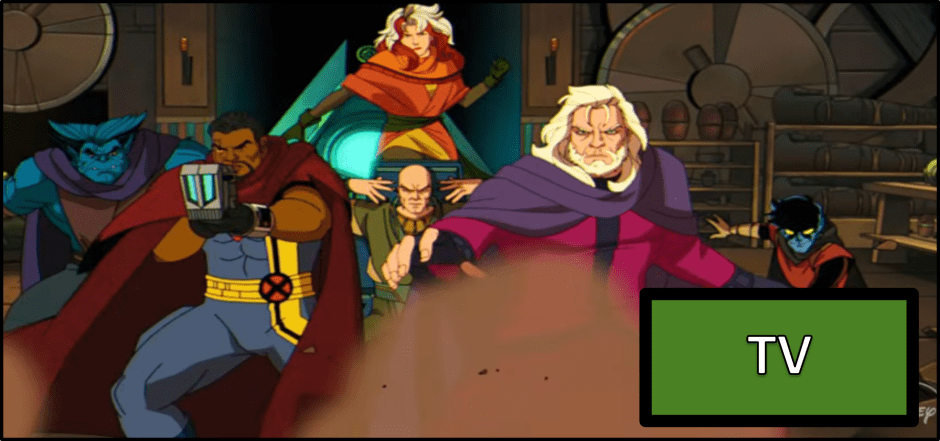
X-Men ’97 could be building up to the Huntsman (Weapon XII). This villain seems more in line for next season’s big bad. X-Men ’97 introduced X-Corp last episode. The X-Men’s new outfits (pictured in the image above) reflect this change. The Huntsman represents a threat the X-Men have never faced on any screen. It consumes its host’s identity. Weapon XII is an alien being with a hive mind. Think the Borg from Star Trek. I hope X-Men ’97 goes in this direction. A Huntsman story would also push X-Men stories into the 2000s. This also makes sense for X-Men ’97’s third season. We’re headed to a new millennium.
Those are my thoughts on X-Men ’97 “Strange Land, Savage Heart.” Let’s see what Season thinks.
Season’s Thoughts
As a Nightcrawler fangirl, I loved seeing Kurt as the main protagonist of “Strange Land, Savage Heart.” The dynamic between Nightcrawler and Graydon Creed was so tense I’m surprised Graydon’s neck didn’t snap from tension alone. Nightcrawler’s defense of Graydon was almost believable. Almost. I understood where he was coming from, but I’m siding with Colossus on this one.
I liked the pacing for “Strange Land, Savage Heart.” Each character got enough screen time for what was necessary, despite “Strange Land, Savage Heart” being one of the shorter episodes of X-Men ’97. I’ve never seen Weapon XII before, so I’m hoping they get some screen time. I was not expecting a withered Apocalypse at the end of “Strange Land, Savage Heart.” Also, will there be a Bishop and Polaris romance on the horizon? Yes, please.
Hey, hey! Kyra Kyle here again. Those are our thoughts on X-Men ’97 “Strange Land, Savage Heart.” Thank you for reading, and wherever you are, I hope you’re having a great day.
Hey, hey, Geekly Gang! Kyra Kyle here with another review/reaction of an X-Men ’97 season two episodes. Today’s topic is “Danger.exe.” If you want to see our writers’ thoughts about the previous episode, “Weapon X, Lies, and DVDs,” check out this link. We saw some great developments in “Danger.exe.” I don’t know if Season will have time to share her thoughts this week. We’ll see. Regardless, I’ll get things started with my thoughts on this week’s episode of X-Men ’97.
Kyra’s Take
“Danger.exe” does a great job of showing Professor X dealing with the loss of his friend (Magneto) and links this loss with Polaris, Magneto’s third child (aside from Quicksilver and Scarlet Witch, which is sometimes debated depending on the world). While I would’ve liked to have seen Polaris in more episodes before “Danger.exe,” X-Men ’97 has woven her into the post-X-Men reality created at the end of last season. Honestly, I can’t remember much of Polaris from X-Men ’97 season one; it’s been a couple of years since I last watched those episodes. I believe Polaris did show up in the previous season, primarily in the Genosha episodes, but I could be wrong. I know for certain that Polaris shared a moment with Jubilee in this season’s episode, “A Force to Be Reckoned With.” Polaris freed Jubilee, allowing her to free the rest of the entrapped mutants.
So, it doesn’t come as a shock when Polaris rages against her current employer, the government-sanctioned X-Factor. She had one foot out the door when we last saw her. Polaris has a mean streak. She has that in the comic book as well. This is nature over nurture. We learn that Professor X raised her; she gets her temper from her father, Magneto. And I love the moment she and Professor X share after this week’s threat, more on Danger in a minute. Professor X tells Polaris that he felt Magneto when Polaris let loose her rage; Polaris tells Professor X the same. It’s a tender moment.
And I like how X-Men ’97, following in the original X-Men: Animated Series’s footsteps, allows a character to vanish for some time. Yes. X-Men ’97 is an animated series based on a comic book, so death doesn’t always mean the end. But X-Men ’97 retires characters long enough for other characters (and fans) to miss them before bringing them back. More on another previously “dead” X-Men later. I don’t expect Magneto to stay dead. But I do expect Professor X, Polaris, and the rest to explore what it means to live in a world without Magneto. Watching them cope and deal with the loss yielded some powerful moments in “Danger.exe.”
I knew from this episode’s title, “Danger.exe,” that the X-Men would tussle with Danger. I squeed. Not gonna lie. Danger is yet another villain I didn’t think would ever make a television or movie appearance. And she’s one of the X-Men’s deadliest enemies. Danger is the Danger Room’s artificial intelligence (AI) run amok. This is a perfect villain for the modern world. Most people distrust AI. Danger plays into this distrust. The X-Men put too much of themselves into the Danger Room’s programming. When the AI malfunctioned, becoming Danger, it knew which pressure points to exploit.
I wish we had more buildup with Danger. She’s too good an X-Men adversary to be a villain-of-the-week. While I believe the Danger Room never saw Polaris’s full power (she was worried she’d turn into her father), Danger’s defeat was too quick and tidy for my liking. It felt like X-Men ’97 used Danger to introduce Polaris to the team. I’ve always liked Polaris as a character. I even liked Emma Dumont’s portrayal of Polaris in The Gifted. Polaris is such a great, conflicted character. Perfect for X-Men ’97. I’m happy Polaris is a permanent member of the X-Men. But I’m also disappointed we won’t see more of Danger in the near future. The X-Men will monitor the Danger Room’s programming like a hawk. In short, I would’ve liked Danger’s story to be a two-parter, but I’m happy with X-Men ’97 season two’s finale setup.
During another mid-credit scene, Apocalypse resurrects Gambit. It’s on. I don’t think we’ll see Gambit (as Death) in the next episode, but X-Men ’97 has done a fabulous job setting up this season’s finale. According to the leaks, X-Men season two’s finale will be titled “Survival of the Fittest.” This season began with Apocalypse, and it will end with Apocalypse. My money is still on X-Men ’97 building up the classic alternate reality story Age of Apocalypse for the following season. I didn’t think a movie or television show would ever adapt Age of Apocalypse from the comics, but I also said that about Danger. There’s hope. I’m stoked.
“Danger.exe” could’ve built up Danger. X-Men ’97 could’ve explored one of the X-Men’s most powerful enemies–and that’s saying something because the X-Men have one of the most powerful rogues’ galleries in comics. But I’m glad that Danger made an appearance and Polaris joined the X-Men in earnest. Something tells me the X-Men will need Polaris in the coming battles.
Those are all my thoughts on X-Men ’97 “Danger.exe.” Let’s see what Season thinks.
Season’s Take
I also would have liked more buildup to Danger. I don’t recall X-Men ’97 foreshadowing her as a villain in previous episodes. I thought Danger would have exploited more weaknesses of the X-Men in “Danger.exe.” She let Jean Grey and Cyclops off way too easily. I hope she makes a comeback, but we’ll see.
Polaris is such a cool character. She’ll probably be with the X-Men for a while, but I can also see her deciding to join a different group or go solo for a bit if she gets the urge to. I would have liked to see more of her struggle with figuring herself out. We saw hints of it in previous episodes, but it felt a little too quick. It was touching that she got to see more of Magneto through Charles, but that interaction felt like it was more for Charles than Polaris. It was still heartwarming.
I’m excited to see the next installment of the Apocalypse saga. “Death” is sure to be a treat.
Happy Saturday, Geekly Gang! Kyra Kyle here with another review/reaction to an X-Men ’97 season two episode. This week’s episode is “Weapon X, Lies, and DVDs.” If you’re looking for last week’s X-Men ’97 episode, “Rise of Apocalypse: Part 2,” here’s the link. Yes! Wolverine is going back to his roots: The Weapon X Program. I’ll start this post with my thoughts on “Weapon X, Lies, and DVDs.”
Kyra’s Take
The previous episode’s mid-credit scene perfectly set up “Weapon X, Lies, and DVDs.” We knew Wolverine intended to take on the Weapon X Program and that he had assembled a team tied to the program. I scratched my head when I saw Wolverine’s team. Maverick and Garrison Kane were great choices. Real deep cuts. You love to see it. Morph tagging along made sense. They’ve been tied with Wolverine since the previous season, and a lot of their relationship with Wolverine gets explored in “Weapon X, Lies, and DVDs.” More on Morph in a little while. But it’s the final two members that confused me. I had to suspend disbelief with Sabretooth and Lady Deathstrike’s inclusion. How did Wolverine manage to convince those two to join his team? That could’ve been an episode all on its own, and “Weapon X, Lies and DVDs” handwaved the backstory. Okay.
Not explaining how Wolverine convinced Sabretooth and Lady Deathstrike to join him is my only small gripe. Sure, one can handwave the backstory by saying Sabretooth and Lady Deathstrike hated The Weapon X Program more than they hated Wolverine. Moving on. “Weapon X, Lies, and DVDs” features the first time the actual Brood take center stage in an X-Men show or movie. Sure, an altered version of The Brood, called the Colony, made an appearance in the original X-Men: Animated Series, and the real Brood made a cameo in “Mojovision,” but we got a great introduction to the Brood in “Weapon X, Lies, and DVDs.” The tension rises whenever Wolverine and company explore Weapon X storylines. Add in the Brood, and you have a party.
Morph steals this episode. Their complicated relationship with Logan drives “Weapon X, Lies, and DVDs’s” story. Maverick and Kane are old war buddies. I’m still unsure why Sabretooth and Lady Deathstrike joined Wolverine. The only one on this team who truly cares for Wolverine is Morph, and J.P. Karliak (Morph’s voice actor) always brings a much-needed sense of levity to Wolvie. “Weapon X, Lies, and DVDs” is clearly an allusion to the classic Eighties film Sex, Lies, and Videotape. The episode is set at a Weapon X facility. The staff uses DVDs to chronicle their experiments with The Brood. But the “Lies” come from Wolverine. He wants his adamantium back. While he may not mind betraying Sabretooth, Lady Deathstrike, Maverick, and Kane, pulling the wool over Morph’s eyes cuts deep.
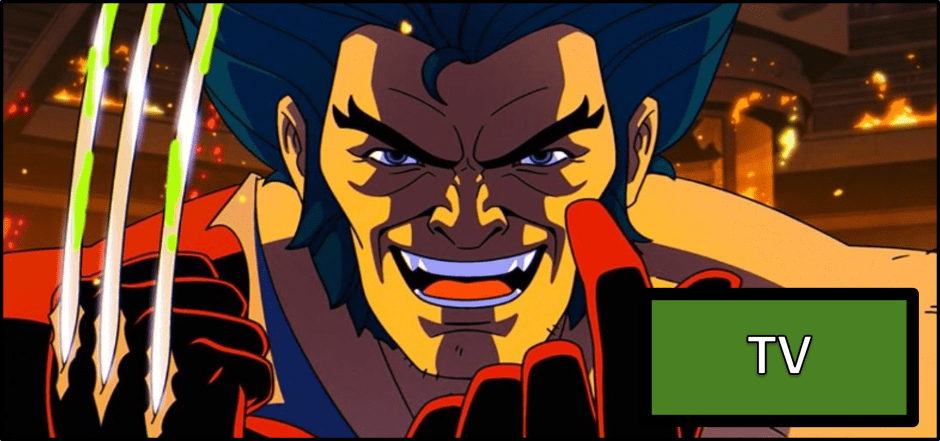
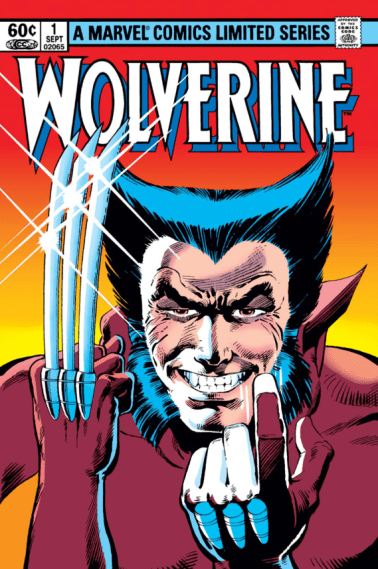
While “Weapon X, Lies, and DVDs” doesn’t quite reach last week’s episode–how could it?–it does a good job at delivering an action-packed episode. Wolverine wasn’t going to keep his bone claws for long. X-Men ’97 has a way of incorporating classic comic book covers in its episodes. Wolverine #1’s (1982) cover makes an appearance, and just in the nick of time. So good. X-Men ’97 is a love letter to the X-Men. You love to see it. And I’d be remiss if I didn’t mention Omega Red’s appearance. Pitting Omega Red against The Brood was a great touch. Even better, Omega Red intended to join forces with The Brood. “Weapon X, Lies, and DVDs” managed to raise the stakes (both personal and global) throughout its runtime. I can’t believe this episode packed so much into thirty minutes.
And I can’t wait to see the fallout from “Weapon X, Lies, and DVDs.” Morph and Wolverine’s relationship may never be the same. They certainly weren’t on the best of terms. I will cite another small concern, or perhaps it’s a wish. Wolverine got his adamantium back far too soon. I would’ve liked to have seen him struggle with bone claws for most–if not all–of this season. X-Men ’97 could’ve done more with exploring a depowered Wolverine. This might have made Wolverine’s regaining of his adamantium more powerful at the end. Getting back to that ending, Morph was fantastic. Even though “Weapon X, Lies, and DVDs” was a Wolverine-centric story, Wolverine spent half the episode infected by The Brood. Morph carried the emotional weight of this episode. I’d like to see X-Men ’97 pull at the threads it introduced at the end of this episode.
Season’s Take
Hey, Alphas! Morph really was the highlight of “Weapon X, Lies, and DVDs.” Their emotional struggle throughout the episode was gold. You can see them convince themselves in real time that they have to help Wolverine regardless of his intentions behind the mission. Something tells me Morph is going to pull away from Wolvie and join Team Jubilee. Or something.
I’m also unsure why Lady Deathstrike and Sabretooth were there. They did try to dip out after they saw Cornelius transform into a Brood. I guess Cornelius is the main reason they showed up. I’m hoping Wolverine takes the events of “Weapon X, Lies, and DVDs” and tries to better himself. Then again, it’s Wolverine. He’s a mixed bag. Omega Red’s inclusion was a nice touch. Something tells me he’ll be making another appearance in X-Men ‘97.
Hey, hey! Kyra Kyle here again. Those are our thoughts on X-Men ’97 “Weapon X, Lies, and DVDs.” I also forgot to mention the last time the original X-Men: Animated Series visited the Weapon X Program in “Weapon X, Lies, and Videotape.” Ah! Guess we no longer use videotape. The next Weapon X story must be called “Weapon X, Lies, and Streaming.” LOL
What are your thoughts on X-Men ’97 “Weapon X, Lies, and DVDs?” Let us know in the comments. Thank you for reading, and wherever you are, I hope you’re having a great day.
Hey, hey, Geekly Gang! This post is our fourth post of the day. Fourth! That’s coconuts. We’ve watched the first four episodes of X-Men ’97 season 2 and have shared our thoughts on each episode. This post will only cover “Rise of Apocalypse: Part 2.” If you’re interested in reading what we had to say about the previous episode, “Rise of Apocalypse: Part 1,” check out that post here. Let’s get into the climax of Apocalypse’s story: “Rise of Apocalypse: Part 2.”
X-Men ’97 is officially the best X-Men adaptation. I don’t think it’s up for debate. Sure. One may like any number of the Fox X-Men movies. Logan may still be the greatest Wolverine story told on camera. The original X-Men: Animated Series also did a great job of bringing Marvel’s mutants to the small screen. But “Rise of Apocalypse: Part 2” is the moment X-Men ’97 leaves no doubt that it is the definitive X-Men adaptation, like the entire X-Men team. I held off saying this for a few episodes, but this entire season (and the one before it) does a great job of articulating each mutant’s desire and viewpoint of life. And that’s the crux of X-Men. Numerous mutants have similar goals, but they pursue those goals in different ways, causing friction.
By this point, Magneto has joined Xavier’s non-violent vision wholesale, but he remembers a time when he tried to solve conflicts with violence and can empathize with En Sabah Nur. Rogue, who has some amazing scenes in this episode, envisions a world where the Genosha attack (from Season 1) didn’t occur, and Remi (Gambit) won’t die, so her end goal of turning En Sabah Nur peaceful aligns with Magneto’s. And this is just one strand of the web X-Men ’97 weaves. Most characters have similar goals but different means or similar means but different goals. “Rise of Apocalypse: Part 2” is a master class in character development.
But wait, there’s more. Yes. I deliberately wanted to sound like a salesperson there. We’re entering spoiler territory here. You’ve been warned. X-Men ’97 also managed to throw in some fan service. The mid-credit scene shows Wolverine reuniting with Captain America and Black Widow, reimagining the classic Uncanny X-Men #268 cover. Wait! Comic books only cost a $1 in 1990. Ah! I wish that were still the case. Weapon X intrigue is sure to ensue. I can’t wait. Before then, “Rise of Apocalypse: Part 2” reveals who Rama-Tut really is. Kang. Yes! I knew this twist would come, and I’m glad X-Men ’97 stayed true to the source material. We haven’t seen much in the way of Marvel Animated Universe (MAU) shows crossing over, but there’s a chance Kang could return in a different MAU series. The Marvel Cinematic Universe failed to deliver on Kang’s promise. Fingers crossed that Kang will get a better adaptation. And there’s Candra.
Candra is the Egyptian woman Rama-Tut speaks to as he makes his escape to the future he’s molding in his image. Candra has ties to Gambit. When Rama-Tut says, “Fear not, your destiny starts today, for his power can only be challenged by a force that is external.” Ah. John de Lancie is a treasure. He’s going to make a great MAU Kang. Anyway, Candra is an External, an immortal subset of mutants. She becomes the God of Thieves, so a clear tie with Gambit. X-Men ’97 is pitch perfect.
The show continues in the footsteps of the original X-Men: Animated Series by not being afraid to sideline or kill fan-favorite characters. Alright, the next bit is a huge spoiler. If you haven’t yet watched “Rise of Apocalypse: Part 2,” you should skip to the next paragraph. Apocalypse atomizes Magneto. X-Men ’97 shows as much as it can, mostly through the horrified look on Charles’s face and the reflection in his eyes. Brilliant!
X-Men ’97 hasn’t spared viewers of classic and potentially gory details of the X-Men’s past. Last season, viewers were treated to Magneto stripping the adamantium from Wolverine’s skeleton. This show goes as far as it can with its visuals, while remaining true to the original X-Men: Animated Series. I can’t wait to see where the show goes next. I mentioned season two building up toward the Age of Apocalypse storyline. I had my doubts if X-Men ’97 would do the storyline justice. I no longer have those doubts. X-Men ’97 and Your Friendly Neighborhood Spider-Man serve as excellent cornerstones of the Marvel Animated Universe. The MAU is on a roll.
Those are my thoughts on X-Men ’97 “Rise of Apocalypse: Part 2.” Let’s hear Season’s thoughts.
Season’s Take
Wow. Just wow. “Rise of Apocalypse: Part 2” is an emotionally mixed cliffhanger to leave on until next week. I loved “Rise of Apocalypse: Part 2.” En Sabah Nur becoming Apocalypse was inevitable. I know. I’m stating the obvious. I loved the way X-Men ’97 handled Apocalypse’s origin story. Brilliant.
I won’t rehash the details, but the pacing in “Rise of Apocalypse: Part 2” was amazing. It did a great job of picking up where “Rise of Apocalypse: Part 1” left off. If this is the definitive storyline of the MAU, that’s cool with me. I haven’t read the comic Rise of Apocalypse, but I’m unsure what kind of outcome I’m hoping for this storyline. I really want to see Kang again. He is pure evil personified.
Hey, hey! Kyra Kyle here again. Those are our thoughts on X-Men ’97: Rise of Apocalypse: Part 2.” What are your thoughts on “Rise of Apocalypse: Part 2?” Let us know in the comments. Thank you for reading, and wherever you are, I hope you’re having a great day.
Hey, hey, Geekly Gang! Kyra Kyle here again with a third post. We’re back for a third installment of X-Men ’97. This post will cover the third episode of X-Men ’97’s second season, “Rise of Apocalypse: Part 1.” If you’d like to see Geekly’s thoughts on X-Men ’97 season two’s previous episodes, you can find them here: “Days of Past Future” and “A Force to Be Reckoned With.” I’ll kick off this post with my thoughts on X-Men ’97 season two, “Rise of Apocalypse: Part 1.”
Kyra’s Take
Oh my! I can see why X-Men ’97 released three episodes during its opening event. Each episode showed what our three sets of intrepid mutants are up to since the end of season one. “Days of Past Future” took us to the future, where Cyclops and Jean Grey reunite with their son, Nathan (Cable). “A Force to Be Reckoned With” brought us back to the present day (the Nineties) and what’s occurred since the X-Men disappeared. But the third episode (“Rise of Apocalypse: Part 1”) delivers on season one’s cliffhanger. And it also ends with yet another cliffhanger, but we’ll get to that in a minute. When I saw X-Men ’97’s release schedule, I originally thought Marvel wanted to drop as many episodes before Spider-Man: Brand New Day’s release date. Spider-Man’s next cinematic installment could’ve played a factor, but X-Men ’97 made the right decision to release the first three episodes of season two. Anything less would’ve felt incomplete.
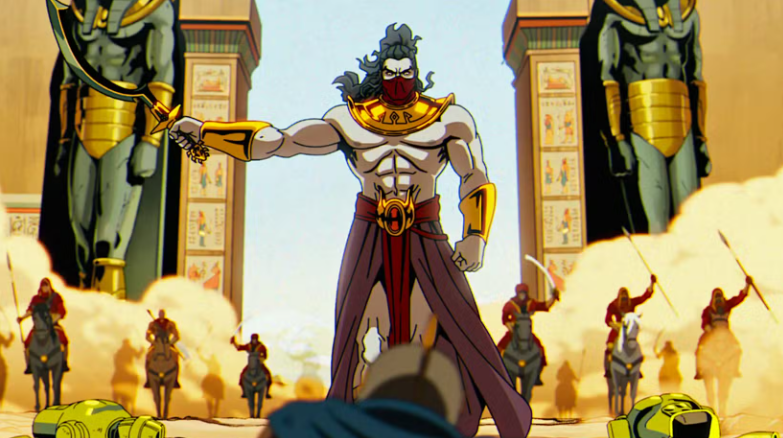
I’m sure some viewers waited for X-Men ’97 to show the goods, revealing Apocalypse’s origin, and X-Men ’97 sure does deliver. “Rise of Apocalypse” gets its story from the comic book mini-series of the same name. We’re going to Ancient Egypt. I like how Magneto tries to rewrite mutant history by guiding En Sabah Nur (Apocalypse’s original name) toward a path of peace. This continues the dynamic between Magneto and Charles Xavier from the previous season. The two have a tenuous truce. They may both want the same thing (peace between humans and mutants), but they have very different means to accomplish this goal. Classic.
X-Men ’97’s showrunners know their characters. I had my doubts when the show was first announced several years ago, but X-Men ’97 has exceeded my most optimistic expectations. The new series maintains everything the original X-Men: Animated Series built, while working toward something new and exciting. The show has built up characters like Cable and Jubilee. “Rise of Apocalypse: Part 1” does the same for Apocalypse. He was already one of the X-Men’s most impressive foes. X-Men ’97 season two looks to humanize him. And watching Magneto try and teach Apocalypse a path to non-violence showed how much he’s grown. His actions end the way one might think they would (he fails), but I love how Magneto tries to reach Apocalypse. He notices they aren’t that different.
I don’t want to get into too many spoilers with these posts. Needless to say, the X-Men attempt multiple times to find their way to their timeline and fail. Tensions rise. And we’re left with another cliffhanger. Since “Part 1” is included in the episode’s title, “Rise of Apocalypse: Part 1” sets up the following episode, which we’ll cover later today. I’ve been writing these reviews/reactions as soon as I finish one episode. I haven’t yet watched “Rise of Apocalypse: Part 2,” but X-Men ’97 has my full confidence. I love the direction the Marvel Animated Universe has taken. I’ve been more excited about X-Men ’97 and Your Friendly Neighborhood Spider-Man’s second seasons than most of the Marvel Cinematic Universe’s offerings this year. I can’t wait to watch the next episode.
Those are my thoughts on X-Men ’97 “Rise of Apocalypse: Part 1.” Let’s see what Season thinks.
Season’s Take
As soon as En Sabah Nur said, “He was not fit to live,” I shouted, “You are not worthy.” I really hope En Sabah Nur says that in “Rise of Apocalypse: Part 2.” He has to finish the quote. It’s a requirement. Side note: Apocalypse looks good with long, wavy hair. He should bring that back.
I appreciated the tender moments between Magnus and Charles in “Rise of Apocalypse: Part 1.” Magnus wanting to try things Charles’ way was endearing. Something tells me it won’t last when they inevitably part ways, but I hope we get to see more of these moments in X-Men ’97. “Rise of Apocalypse: Part 1” was very human.
Hey, hey! Kyra Kyle here again. Those were our thoughts on X-Men ’97: “Rise of Apocalypse: Part 1.” What are yours? Let us know in the comments. Thank you for reading, and wherever you are, I hope you’re having a great day.
Hey, hey, Geekly Gang! This is our second of four planned posts today. Four posts in one day? Yikes! X-Men ’97 graced us with three episodes last week–we’re still catching up on those episodes–and a fourth episode dropped this week. If you want to read our review of the previous episode, “Days of Past Future,” you can check that out here. In this post, we’ll only discuss the events of “A Force to Be Reckoned With.” I’ll kick things off with my thoughts.
Kyra’s Take
“A Force to Be Reckoned With” may have done the near impossible. It made Jubilee cool. Seriously. Her breakout scene, near the end of the episode, catapulted her into one of X-Men ’97 season two’s better characters. And that’s saying something. But I’m getting ahead of myself. X-Men ’97: A Force to Be Reckoned With” didn’t need as much setup as the previous episode. The episode’s title originates from X-Force, which is famously Cable’s team from the Nineties, and how they fight for mutant freedom against X-Factor, a government-sanctioned team of mutants. The power struggle between these two teams is comic book accurate and excellent.
Neither team embodies the X-Men. X-Factor is a government lapdog; they’re an extension of the mutant registration program. And Cable assembled X-Force to take down Apocalypse by any means necessary. He doesn’t care as much about human-mutant relations and mutant freedom, and this gets me back to Jubilee. She joins Cable’s side of the aisle because it’s closer to the X-Men’s ideals.
When she has a chance, Jubilee frees mutant children held captive by X-Factor. I want to take a moment and take note of the volume of various lesser-known mutants held captive in X-Factor’s helicarrier and/or shown during “A Force to Be Reckoned With.” Here are a few: M, Mark, Kid Omega, Chamber, Penance, and the Stepford Cuckoos. The Stepford Cuckoos may be the best example of how callous X-Factor treats these mutants. Each one of the Stepford Cuckoos has a power dampener around their necks, and X-Factor still placed one of the triplet sisters in a different cell. Sure. The Stepford Cuckoos use their powers as a trio, but they have power dampeners. Separating them was cruel.
Through her act of freeing the captive mutants, Jubilee did the most to live up to Charles Xavier’s example. She reminded the rest of X-Force what they’re fighting for. Cable’s mission to take down Apocalypse is a noble one, but he often gets blinded by this goal. Again, all of this is mostly comic book accurate. The original X-Men: Animated Series made sure to stay as close to the source material as possible, and X-Men ’97 continues that tradition.
There’s little else to discuss with “A Force to Be Reckoned With.” This episode feels tighter than “Days of Past Future,” not that the previous episode meandered too much. I just wanted to note “A Force to Be Reckoned With’s” great pacing. Maybe that’s the trick with making Jubilee cool. Leave the audience wanting more. The original X-Men: Animated Series used Jubilee as a surrogate, so Jubes showed up in most scenes. We physically see less of Jubilee during “A Force to Be Reckoned With,” but the episode does a lot to show her true character. And shout out to Polaris and Havok. I love Jubilee’s snide remark of Havok being “Knock-Off Cyclops.” LOL
Those are my thoughts on X-Men ’97 “A Force to Be Reckoned With.” Let’s see what Season has to say.
Season’s Take
I can’t believe I was actually rooting for Jubilee. Outside of being cool and sticking to her guns, her cheeky moments were cute, too. The scene of her jumping off the roof was iconic.
I appreciated the lack of exposition in “A Force to Be Reckoned With.” “Days of Past Future” was good and had a lot of emotionally charged moments, but there was a lot of repetition with Jean Grey’s and Cyclops’ dialogue. Their feelings about leaving Nathan behind were sad, but they lost some impact each time they expressed themselves. The emotional moments in “A Force to Be Reckoned With” combine punchy dialogue with action. It feels like each moment doesn’t linger.
Also, kudos to the alternate intro. X-Force ’97 has a nice ring.
Hey, hey! Kyra Kyle again. Those are our thoughts on X-Men ’97: “A Force to Be Reckoned With.” What are yours? Let us know in the comments. Thank you for reading, and wherever you are, I hope you’re having a great day.
Happy Saturday, Geekly Gang! Kyra Kyle here. X-Men ’97 returned with the first few episodes of season two last week. We didn’t cover the animated series when it first launched because we were in the middle of writing our Supergirl review. We’ve had time to watch each of these episodes. I may be joined by Season in this post. Woo hoo! I can’t wait to talk about X-Men ’97 Season Two’s first few episodes. We’ll be releasing separate posts for each of the released episodes (four in total), so let’s begin with “Days of Past Future.”
Kyra’s Take
Geekly hadn’t returned when X-Men ’97’s first season originally aired, so I may take a quick moment to discuss the series as a whole. X-Men ’97 is a joy. I love how they brought back most of the cast and the creative team behind the scenes of the original Nineties X-Men Animated Series. This show mainlines Nineties nostalgia. With the exception of a few modifications, like a new voice actor for Rogue, who took some getting used to, X-Men ’97 captured the original’s charm. X-Men’s animation hadn’t aged the best, and while X-Men ’97 updated the animation style, it kept most of the visuals intact. Fantastic.
I also liked how X-Men ’97’s first season picked up right where the original X-Men Animated Series ended. This makes X-Men ’97 a continuation of the original. This is not a reboot. Sort of. And I liked how the showrunners decided to incorporate characters who were introduced (in the comics) during the original show’s run. Mild spoiler ahead. The first season’s main villain, Bastion, wouldn’t have been in the original X-Men Animated Series run because he was too new a character. Still, he fits into the animated series because the X-Men comic book was wildly popular in the early to mid-Nineties. Say what you will about X-Men #1’s role in the comic book collection market’s collapse, but X-Men had the it factor. Including characters and story arcs from the Nineties run of X-Men is a great choice.
Okay. Now, let’s talk about “Days of Past Future.” X-Men ’97 picks up immediately where the first season concludes. Apocalypse returns. Yay! X-Men ’97 continues to include characters from that Nineties run of X-Men comics. Brilliant! We’re going to go into more minor spoilers for “Days of Past Future.” You’ve been warned. Mother Askani (1993-1994) has a deceptive name. She’s actually Rachel Summers, Jean Grey and Cyclops’s daughter, from a different timeline. In fact, she is able to manipulate the timestream, so X-Men ’97’s reveal that Mother Askani was the one who sent the two X-Men teams into the past and future to stop Apocalypse makes sense with the original comic book. The show takes liberties. This isn’t a one-to-one, but I like Mother Askani’s inclusion.
Mother Askani harkens to a 1994 mini-series (The Adventures of Cyclops and Phoenix), where Jean and Cyclops bond with a young Nathan Summers (Cable). Even better, the tail end of X-Men ’97 season one foreshadowed that Jean and Cyclops’s relationship with their son would be explored. X-Men ’97 kept its promise in “Days of Past Future.” I can’t say enough great things about this series. I squeed. I did, and we get another season of episodes after this one airs. Yay!
Most of “Days of Past Future” focuses on the X-Men team sent into the future. I’m reviewing these episodes as I watch them, so there may be a few things I don’t notice in one episode that will become more important in the next. I love the direction X-Men ’97 is taking Cyclops, Jean Grey, and Cable (Nathan). X-Men ’97 has done a lot with fleshing out Cable’s backstory. The original X-Men Animated Series showed Cable as a random guy trying to save his future. Heck, Deadpool 2 portrayed Nathan Summers in a similar light. I liked both depictions of Cable. But X-Men ’97 has given Cable depth.
Supposition time: X-Men ’97 season two will build toward the classic X-Men Event, Age of Apocalypse. Sure, X-Men ’97 season two is borrowing elements from Age of Apocalypse, but I believe the animated series will fully embrace Age of Apocalypse with its following season. The post-apocalyptic world where Mother Askani exists paved the way for Age of Apocalypse. Fans and the writers enjoyed a world in the distant future without the X-Men and controlled by Apocalypse, so they wanted a world with the X-Men and controlled by Apocalypse (Age of Apocalypse). We’re only getting a taste of Age of Apocalypse this season. We’ll have to wait until the tail end of season two or next season to meet Sugar Man.
Those are my thoughts on X-Men ’97 “Days of Past Future.” Let’s see what Season thinks.
Season’s Take
I’m also watching these episodes one at a time before reviewing them, so we’ll see what I pick up on in future episodes. I’m a sucker for familial relationships being explored, and “Days of Past Future” did that more than I thought it would. A lot of characters were featured in “Days of Past Future,” but they each got adequate screen time. Actually, it’s more like each character was given plenty of depth despite the episode only being thirty-three minutes. I’ve never read Age of Apocalypse, so I’m unfamiliar with the plot. I know. I need to up my comic book game.
I’m excited to see where X-Men ’97 takes us next. I’m a huge fan of Rogue, so any chance I get to see her in action is amazing. I’m not the biggest fan of her voice in X-Men ’97, though. Girl, cough. Or, like, clear your throat.
Hey, hey! Kyra Kyle again. Those are our thoughts on X-Men ’97: Days of Past Future.” Feel free to share yours in the comments. Thank you for reading, and wherever you are, I hope you’re having a great day.
Happy Monday, Geekly Gang! Kyra Kyle here with another addition to our Autism Representation series. As you may already know, I was diagnosed later in life with AuDHD–that’s autism shaken up with ADHD. The focus of today’s autism representation is the dramedy (more emphasis on the drama than the comedy), Everything’s Gonna Be Okay. Per usual, it’ll be difficult to cover this show without spoilers, so consider yourself warned of spoilers. Each one of the shows and films we cover in this series presents different issues in terms of covering autism representation. I’ll do my best with Everything’s Gonna Be Okay.
(Note: I’m also going to include more citations and supporting documentation going forward.)
We’ll begin with an overview of Everything’s Gonna Be Okay’s cast, and then go into detail with each of the show’s major neurodivergent characters. Buckle up for some authentic autistic representation.
Hiring Autistic Actors
We’re off to a fantastic start with Everything’s Gonna Be Okay. Many–if not most–of the people who portray a neurodivergent character in this series are neurodivergent actors. Simply put, a neurodivergent actor can pull from life experience to better portray a character who is neurodivergent. I’m not saying a neurotypical (someone who isn’t neurodivergent) actor can’t portray a neurodivergent character, but when you hire a neurotypical actor to portray a neurodivergent character, you’re more likely to end up with something like Sia’s Music. Yikes!
Josh Thomas/Nicholas Moss, Kayla Cromer/Matilda Moss, Lillian Carrier/Drea, and Carsen Warner/Jeremy are all neurodivergent actors playing the role of someone who is neurodivergent. This lends them authenticity in their portrayals. And I love to see it. Hollywood often takes the easy route and hires neurotypical actors to “play autistic.” That’s demeaning, especially when we can see in a show like Everything’s Gonna Be Okay that autistic actors are up to the task of portraying autistic characters. Autistic actors need to work, too.
It helps that the show creator, Josh Thomas, is a fellow AuDHDer. Samesies! Thomas made it a point to hire autistic actors, and Everything’s Gonna Be Okay is the better for it.
Josh Thomas as Nicholas Moss
Nicholas Moss’s storyline may be the only real spoiler I’ll share in this post, but sharing this spoiler shouldn’t ruin the experience of Everything’s Gonna Be Okay. At the beginning of this series, Nicholas was diagnosed with ADHD. By the end of the series, Nicholas discovers he, like his half-sister Matilda (who we’ll discuss later), is also autistic. This character journey mirrors actor/show creator Josh Thomas’s real-life journey. Thomas was diagnosed with ADHD at age 28, but found out he had autism later in life. Thomas shared this in an Instagram post.
But we see hints of Nicholas’s autism as early as Everything’s Gonna Be Okay’s opening moments. Literally, the opening seconds of the first episode. Nicholas spills his guts to his date, Alex. When we later learn that Nicholas has ADHD, this moment makes sense, but what’s subtle is Nicholas doesn’t do a good job of reading Alex’s social cues. We catch a glimpse of the two’s conversation in medias res (in the middle), but Alex suggests that he wanted to contribute to the topic, but Nicholas didn’t give him an opening. Nicholas was too busy info-dumping.
While I typically don’t care for info-dumping in stories, it works in Everything’s Gonna Be Okay’s first episode because it shows us who Nicholas is, warts and all. Medical News Today lists many of the traits Nicholas exhibits as signs of autism in adults. Despite being Australian, Nicholas doesn’t have a typical Australian accent. This is another subtle sign of autism in adults. I grew up in the Deep South and have little to no accent.
Nicholas also displays a special interest: bugs. Sure, he’s a would-be entomologist. Nicholas hasn’t finished a degree because he struggles in a school setting. While Nicholas never outright says why he never finished a degree, there are huge hints that he may struggle with executive dysfunction (this is a condition that can affect people with ADHD, ASD, and AuDHD).
(In short, executive dysfunction is a difficulty with accessing executive functions like organization, planning ahead, and self-monitoring.)
Even though Nicholas hasn’t yet completed a degree, he has an aptitude for bugs. Heck, most people would think he had an advanced degree. Nicholas’s special interest in insects features in Everything’s Gonna Be Okay’s marketing (the above image is from a Season One promotional image) and in each episode title. Every episode is named after a specific insect that may or may not be included in that episode. These are subtle nods to Nicholas’s autism.
Nicholas doesn’t learn he has autism until after he discovers autism is hereditary (his sister Matilda has it, so he may have it, too) and another character prompts him to get tested. At first, a positive test result doesn’t convince Nicholas. Matilda is less than thrilled. That’s another great moment (or reminder) in Everything’s Gonna Be Okay, but one that must wait until we get to Matilda’s segment. While we don’t know everything about Josh Thomas’s life experience (how could we?), it’s clear Thomas pulls a lot from his personal experience with his portrayal of Nicholas Moss. And based on interviews and his work on this show, Josh Thomas is a strong neurodivergent advocate.
Quick Rainbow Break
Before we move on to Matilda Moss, I needed to take a moment to commend Everything’s Gonna Be Okay’s LGBT representation. We get a variety of LGBT representation that it almost reads like the entire LGBT alphabet. Everything’s Gonna Be Okay shows us there are many iterations of how people express their sexuality. I will say there is a lack of trans representation. So close. If Everything’s Gonna Be Okay included a trans character, we would’ve broken down its trans representation as well. Despite that, Everything’s Gonna Be Okay showcases numerous colors of the rainbow.
Kayla Cromer as Matilda Moss
Kayla Cromer is another AuDHD actor. She shared her diagnosis during a Variety article. Since Cromer was out publicly as autistic (Thomas revealed his diagnosis after Everything’s Gonna Be Okay began airing), Cromer is the first known actor on the autism spectrum to play an autistic main character in a television series. Congratulations to Kayla Cromer. It does concern me that it took until 2020 for an autistic actor to portray an autistic main character in a television series. As we’ve seen in this short series, there have been numerous autistic and autistic-coded characters in Hollywood history. 2020 is a long time to wait.
Matilda exhibits more overtly autistic characteristics. According to the same Medical News Today article, Matilda displays different symptoms from her half-brother Nicholas. She has little inflection in her voice to the point where she explains her joke about vaccinations during her father’s eulogy. I chuckled because Matilda reminded me of an Elcor from Mass Effect in that moment. I’ve felt like I’ve had to do the same thing at times. She has difficulty reading emotions or others’ intentions. When Matilda announces her crush on Luke, her sister Genevieve claims everyone’s “in love” with Luke, she’s even in love with Luke. Matilda doesn’t grasp her sister’s hyperbole. She insists she won’t pursue a relationship with Luke if that would drive a wedge between them. These are over-the-top scenes, but they’re endearing.
Matilda also happens to be a gifted classical composer. She’s so talented that Juilliard accepts her. While I believe the autistic savant trope is overdone, I appreciate Matilda’s struggles with navigating New York City’s subways. The beginning of Everything’s Gonna Be Okay’s second season has the family in NYC, helping Matilda settle into a routine (a must for Matilda). Matilda knows which trains she needs to take and in which order to go from her would-be New York apartment to Juilliard, but she experiences sensory overload while on the subway. I love how Everything’s Gonna Be Okay narrows in on the stressors that make navigating the subway impossible for Matilda. This isn’t a generic autistic person. These are sensory inputs (sounds, touch, and the like) that uniquely trigger Matilda. No two autistic people are the same. They can have different triggers.
And I love how Everything’s Gonna Be Okay allows Matilda to express her sexuality. She isn’t an autistic angel. She’s an autistic woman. She’s the one who initiates a sexual encounter with Zane at a party, and when everyone around her (even her half-brother Nicholas and her younger sister Genevieve) baby her, Matilda lets them know she was a willing sexual partner. That’ll bring us to Matilda’s autistic, asexual wife, Drea, but she’ll be the subject of our next large segment.
Before we get to Drea, we need to discuss Matilda’s reaction to finding out Nicholas also has autism. She doesn’t take the news well. Matilda even accuses Nicholas of stealing her identity as an autistic person. She makes mention how she and Nicholas act nothing alike, so he can’t possibly be autistic.
Unfortunately, this sentiment has legs in the autistic community. Many people subscribe to the idea of “You’re autism doesn’t match my (or my child’s or my nephew twice removed’s) autism, so you can’t possibly be autistic.” I’m glad Everything’s Gonna Be Okay included it.
In the DSM-5, PDD-NOS (pervasive developmental disorder not otherwise specified) and Asperger’s Syndrome were folded into Autism Spectrum Disorder (ASD) (here’s a Child’s Mind Institute article explaining why this was done). In short, PDD-NOS and Asperger’s were diagnosed on socio-economic lines. When you hear someone like Elon Musk claim he has Asperger’s (instead of Autism), he’s saying he has money. We know, Elon. We know you have all the world’s money. You don’t need to remind us.
One distinction may be needed with ASD: level of need. Many autistic people have low to medium needs, which means we can function in the world with limited to moderate accommodations. And as an aside, accommodations–and Autistic people like Matilda affording themselves those accommodations–is something else Everything’s Gonna Be Okay does well. Matilda will put on her headphones if the noise gets to be too much. Drea, whom we will get to, has an emotional support dog. But there are members of the autistic community who require more help. This level of autism needs intensive, ongoing support and is sometimes referred to as Profound Autism.
According to a CDC report (that an Autism Science Foundation article cites), there is a reported 26.7% of people with ASD who also have Profound Autism. This is a significant percentage of people who have ASD. But just because someone has lower needs or can “mask” (a person with ASD pretending they’re neurotypical; here’s the National Autistic Society’s definition), doesn’t negate their ASD diagnosis. Heck, self-diagnosis shouldn’t be as looked down on as it tends to be. It costs a lot to get an official diagnosis. I have insurance, and it still costs a lot. Getting back to Everything’s Gonna Be Okay, Matilda has her moment of doubt with Nicholas’s diagnosis and eventually accepts the news. And it’s great to see that, too.
Lillian Carrier as Drea
Lillian Carrier is yet another autistic actor portraying an autistic character. (Carrier shares her story with Rival in this interview.) Drea is another diverse depiction of autism in Everything’s Gonna Be Okay. This show does a fantastic job of showing several autistic symptoms and things that can trigger an autistic person. Typically, Drea wears layers with one layer pressed tight against her. She does this because she’s hyposensitive, specifically with touch, which means she has decreased sensitivity to sensory input.
While we see a great example of Matilda being triggered by auditory hypersensitivity on the subway (she retreats from loud, repetitive noises), Drea repeatedly exhibits touch hyposensitivity. She seeks out tight hugs. That first layer of clothing needs to cling to her tightly, so she knows it’s there, and it soothes her. Her service dog will lie on her chest to calm her. At times, Matilda will offer to do the same. Drea is a phenomenal example of how an autistic person can advocate for themselves. She knows what she wants, even when her parents think they know better, and she asks for what she wants and needs.
Quick Shout Out to Maria Bamford
Mental health advocate Maria Bamford portrays Drea’s mother, and that makes sense. Bamford has tackled issues of depression and anxiety for years. She’s a powerful ally.
Closing Thoughts
Everything’s Gonna Be Okay won’t be for everyone, and that may be the point. It puts autism representation to the forefront. Everything’s Gonna Be Okay shows how autistic people can advocate for themselves, and how just because you have a diagnosis, you are capable. By the show’s end, Matilda and Drea marry and move out. With the accommodations–many of them simple–they can thrive on their own.
Even though we leave Everything’s Gonna Be Okay with Nicholas just finding out he’s autistic, too, I’m certain he’ll find what works for him. He’s on the road to accepting all parts of himself. Getting an autism diagnosis later in life can shake your sense of self. Most likely, this means you became adept at masking.
I found that I felt like I regressed when I unmasked. It was scary. If you read that definition of masking I shared earlier in this post, you’ll find that masking is often done unconsciously. My spouse didn’t see my funky walk (pacing and odd body movements) until after two or three years. I hid it for that long. Everything’s Gonna Be Okay does just what the title says. You can be you, without masking, and everything is gonna be okay.
If you have another television or film you’d like us to cover in this series, let us know. Thank you for reading, and wherever you are, I hope you’re having a great day.
Happy Saturday, Geekly Gang! Kyra Kyle here with another reaction/review of a Marvel-themed television show. A live-action show of Spider-Man Noir wouldn’t have made my Bingo card for 2026, but I’m glad Spider-Noir exists. I had little to no expectations going into this show. Full disclosure: I’ve never read the Spider-Man Noir comic book series, and I only watched Spider-Noir one and a half times before writing this reaction (it’s more of a reaction than a review) because I don’t have an ad-free Amazon Video Account. Pay walls. Yay! I enjoyed my time with Spider-Noir. If I had an ad-free option for this show, I would’ve watched it another time or two. It held my interest. We have another caveat to discuss before getting into Geekly’s Reaction/Review of Spider-Noir.
Ben Reilly instead of Peter Parker
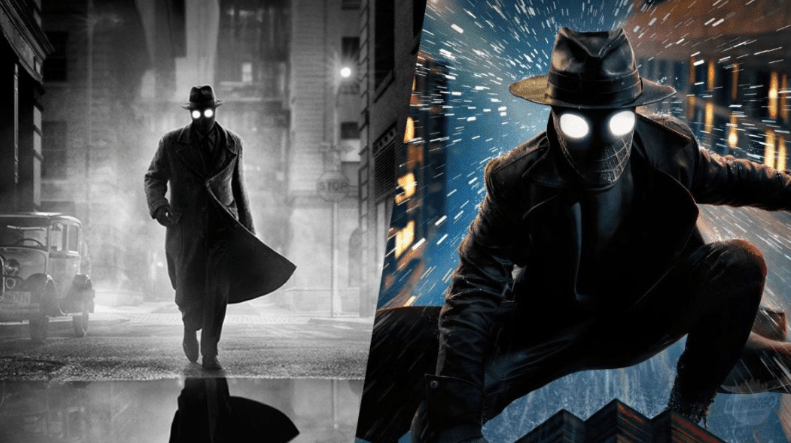
You may have noticed that Spider-Noir is Spider-Man Noir in the comic books. That’s a name change. The title character refers to himself as The Spider, and so does every other character, but that isn’t the only name change. Canonically, Spider-Man Noir is an alternate reality version of Peter Parker. Spider-Man Noir is even Peter Parker in the Spider-Verse Series of films. Spider-Noir refers to its lead as Ben Reilly. Ben Reilly does come from the comics. He’s the Peter Parker clone during the Clone Saga. But why did Spider-Noir change its main character’s name?
I don’t know for sure. Several factors could weigh into Spider-Noir changing Spider-Man Noir’s character name from Peter Parker to Ben Reilly. The leading cause could be Spider-Noir’s darker tone (Spider-Noir kills others and uses a gun) and Ben Reilly’s use of alcohol and smoking. Marvel and Sony (with its Spider-Verse movies) may want to retain Peter Parker’s clean image. Spider-Noir can get really dark. And only a lawyer could understand the deal between Marvel and Sony with Spider-Man. I’m not even going to try to unpack all that legalese. I just needed to draw your attention to Spider-Man Noir’s multiple name changes.
Authentic Black and White Versus True-Hue Color
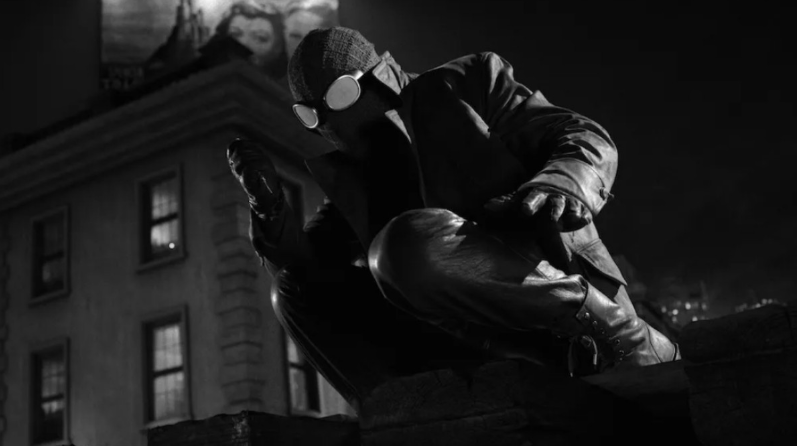
Spider-Noir offered two viewing experiences: authentic black and white, and true-hue color. I chose to watch Spider-Noir in authentic black and white, but my device has an option–and many smart devices have this option–to switch between the two versions. I accidentally clicked on “Switch Versions,” and True-Hue Color looked great from what I saw. But I have to be upfront about which version I watched.
Wow! Spider-Noir really is a different kind of television show. So many exceptions.
Accents
The accents in Spider-Noir can get difficult to decipher. Silvermane’s accent is over-the-top in the best possible way. I’m glad I had subtitles on while I watched, but kudos for the commitment to Silverman’s Irish brogue. Nicolas Cage’s accent often came and went. Typically, I enjoyed Cage’s performance, but his accent could get distracting. I couldn’t place Cage’s accent.
The majority of Spider-Noir’s cast does a good job of approximating 1930’s American speech. I’d even say Cage does a good job, but he goes a little over the top in classic Nicolas Cage fashion. We’ll get to Cage’s performance in a minute, but I enjoyed him as Ben Reilly.
Nicolas Cage as Ben Reilly/The Spider
Nicolas Cage gave his best ham-tastic performance with Ben Reilly and The Spider, and it was hilarious hearing Lamorne Morris (more on him in a minute) do his best Cage as The Spider impersonation. Cage is having fun. His brand of overacting worked so well with this character. From his lying down like a dead spider to his odd accent, Nicolas Cage gave his all in this performance. It was equal parts hardboiled detective and Universal Monster movie. I can’t wait to see more of Spider-Noir. I don’t care what the form a new Cage performance takes: video game, animated movie or show, or another season of Spider-Noir. Like Robert Downey Jr as Iron Man or Ryan Reynolds as Deadpool, Nicolas Cage was born to play this role.
Lamorne Morris as Robbie Robertson
Since his appearance on a beer commercial where he complimented his girlfriend on her teef, I’ve always been a Lamorne Morris fan. The man has charisma. He’s a great fit for Robbie. His chemistry with Nicholas Cage and the rest of Spider-Noir’s cast is fantastic. Heck, the entire cast has great chemistry. In other Spider-Man properties, Robbie tends to get overlooked. He takes center stage in Spider-Noir. Excellent.
Robbie needs to be featured in more Spider-Man movies and shows. And I’ll always take more Lamorne Morris.
The Rest of the Cast
Li Jun Li’s Cat Hardy shares some fantastic banter with Nicolas Cage’s Ben Reilly, but she does a great job with her love interest, Flint Marko, played by Jack Huston. Huston also nails his 30s speech. The entire cast does. Brendan Gleeson makes for a fabulous Silvermane. He’s the kind of guy you love to hate. Abraham Popoola’s Lonnie Lincoln shares some heartfelt moments with Robbie Robertson. I even liked to hate Andrew Lewis Caldwell’s Dirk Leyden. Oh. And Amy Aquino (Dr. Faber) and Andrew Robinson (Ogden Faber) share some excellent scenes with Nicolas Cage and Silvermane with his goons. Oh! Oh! Karen Rodriguez made a sensational secretary/investigator, Janet Ruiz. Ruiz has some of the funniest moments.
I enjoyed almost every minute of Spider-Noir; the commercials were my main gripe. I’m not paying to go ad-free, Amazon.
The Writing
Sure, Spider-Noir plays out pretty much as I expected, but that isn’t always a bad thing. The show follows tropes. At times, it subverts them, but this may be a function of Spider-Noir’s status as a superhero story. When you genre blend and find ways to honor each inspiration, you’ll end up with some tropes, but hopefully, done in a manner that has yet to be seen. Spider-Noir knew what it wanted to build toward and did it. It was a hardboiled detective/superhero mini-series with a dollop of gory monsters. More, please.
Should There Be a Second Season
I know I just asked for more Spider-Noir. I said that on more than one occasion, but I kind of like that it remains a mini series. The cast is fabulous, and the writing is well-done. I wouldn’t say no to another season of Spider-Noir, but the story also wrapped up neatly. Are there any more huge stories to tell? Maybe. I didn’t expect Spider-Noir on the 2026 schedule. I didn’t expect to enjoy it as much as I did. I don’t expect another season. Does that mean that we will see another season?
Those are my thoughts on Spider-Noir. I may rewatch the series in True-Hue to see which version I prefer. I’ve heard this is a hot-button topic. Which version do you like? Let us know in the comments. And let us know if you’d like to see another season of Spider-Noir. Thank you for reading, and wherever you are, I hope you’re having a great day.