

Hey, hey, Geekly Gang! Kyra Kyle here. A couple of our writers watched the DCU’s second movie entry, Supergirl, this past week. Sure. We’ve only watched the movie once, so this may be more of a reaction than a review. Typically, I like to watch a movie at least twice before dubbing my thoughts a “review.” But I do have some thoughts, and I may be joined by another of our writers for Geekly’s Review/Reaction of Supergirl.
Kyra’s Thoughts
Supergirl is a good movie. I don’t know where all the hate for the movie originates. I’d even say Supergirl is on par with last year’s Superman, with one significant flaw holding it back: “the brides.” The brides represent an even larger issue of Supergirl attempting to cater to a wider audience. We’ll return to the brides and the rest in a minute, but back to Supergirl as a whole. The acting is on point. Eve Ridley gives a great performance as Ruthye. Milly Alcock is perfect as a Supergirl: Woman of Tomorrow (the movie’s source material) version of Supergirl. And Jason Momoa was more believable as Lobo in three seconds than he was as Aquaman through three DCEU films.
However, Lobo is also the reason why Supergirl isn’t as good as it could be–Lobo was a ploy to get other demographics interested in the movie, but we’ll talk more about that later, too. Again, I love Momoa in the role, but the character disrupted this movie. Other critics claim that Supergirl’s plot is scattered. Lobo is the main reason the movie’s plot goes off course. The writers shoehorned a character who didn’t exist in the source material: Supergirl: Woman of Tomorrow. While a scattered plot may be a fair criticism of Supergirl, last year’s Superman had a far more scattered narrative. I didn’t look at some of these critics’ reviews for Superman, but I venture to guess they didn’t dock Superman nearly as much as Supergirl for the same flaw. And Superman was worse in that regard.
My biggest gripe with Supergirl also stems from Lobo’s presence: the brides. I told you we would return to this topic. In the source material, the main villain, Krem, is a mercenary who really loves killing people. Lobo is also a mercenary who really loves killing people. How do we differentiate between them? Make Krem a sex trafficker. No. Just no. The brides (girls around 13) gave me the ick while I was watching Supergirl. It took me a minute to figure out why the brides made me cringe. I can see why this could be a dealbreaker for some. Supergirl could’ve omitted Momoa’s Lobo (or given him a cameo, seriously, three seconds was all Momoa needed to show he embodied the character) and replaced his scenes with a hopeful scene or two from the source material. This could’ve brightened the movie. Possibly even allowed for more comedic moments, which brings me to my next point.
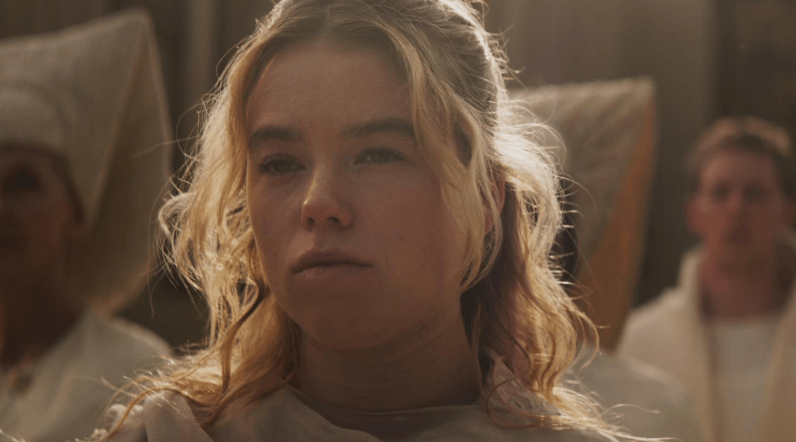
Supergirl’s darker tone could also be a dealbreaker for others. Supergirl is a very different character from Superman. And that’s a fantastic thing. Corenswet’s Superman never knew Krypton. Alcock’s Supergirl watched her family, her home, and her people die. I love how Supergirl showed the difference between these two characters when they shared screentime. If anything, Supergirl upstaged the DCEU’s Superman. Cavill’s Superman had PTSD for unspecified reasons. Alcock’s Supergirl has PTSD for a very concrete reason: she watched the last of Krypton die. This is the equivalent of Cavill’s Superman as a CIS man trying a menstrual cramp simulator and screaming at the first setting. Alcock’s Supergirl would claim that setting tickles.
I could even see some people disliking Supergirl’s use of trauma to propel the narrative. Sometimes, you just want a dumb, fun movie. Heck, 2025’s Superman could be categorized as a dumb, fun movie, so the DCU conditioned audiences (through one movie) that the new DCU will be bright and fun. Despite its tonal differences, Supergirl fits within the DCU. And I’d argue that Kara overcomes her trauma, and that should be lauded. Supergirl’s trauma makes her interesting. Kara possesses numerous conflicting emotions. At one point, Supergirl was a red (rage) lantern in DC Comics. The fact that she chooses hope makes her a hero. While Supergirl is dark for a PG-13 movie, it’s nowhere near as dark as 2008’s The Dark Knight. So those critics need to stop clutching their pearls or throw that same vitriol at The Dark Knight.
The final negative I’ve seen from most Supergirl critics is the movie’s sepia-toned world. Supergirl: Woman of Tomorrow features vibrant colors. The Supergirl movie doesn’t. And this is where I’m bringing back the idea that Supergirl included certain things in the hopes of appeasing different demographics. Supergirl’s sepia-toned worlds resemble the Snyderverse films. News flash, DCU. Snyderverse fans only want the DCEU to return. Nothing you can do can change that, so why not go with more vibrant colors? And we return to Lobo. Yes. Lobo was that problematic of an addition to this story. At first, I thought the DCU wanted another marketable character in the Supergirl cast (sell some toys or a variant popcorn bucket), but the more I thought about it, Lobo’s presence was meant to appeal to testosteroni males. After all, Lobo is the Main Man.
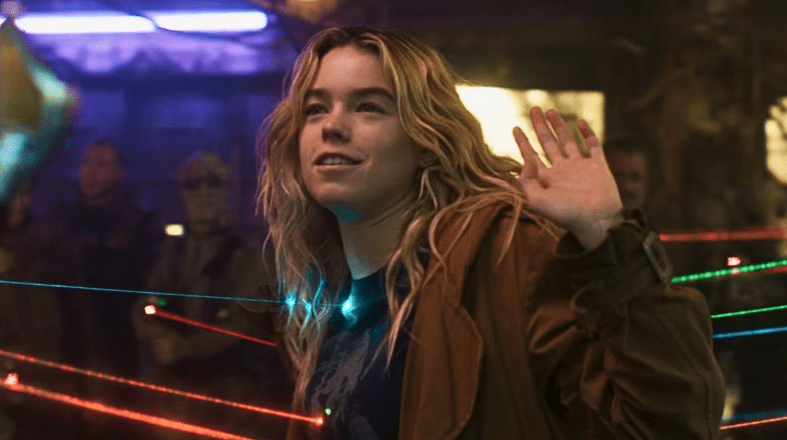
Supergirl works as a worthy follow-up to 2025’s Superman. I’d like to see where the DCU takes the Superman family. Yes, there are more members of the Superman family the DCU could explore. Supergirl suffers from appealing to a lot of different demographics that it had no hope of winning over. Synderverse fans are a lost cause. And despite Lobo’s inclusion, many of the testosteroni boys whom Lobo was meant to win over still dubbed Supergirl “woke” because it’s a movie about a super-powered woman. Supergirl has the bones of a fantastic movie. The performances are phenomenal. Too bad the DCU tried to cater to certain demographics.
Those are my thoughts on Supergirl. Let’s see what Season thinks about the film.
Season’s Thoughts
I also think Supergirl got too much hate from critics. If you isolate Supergirl from Supergirl: Woman of Tomorrow, it’s an enjoyable movie. It’s fun to watch regardless, but I couldn’t help myself from comparing it to the source material. I’ll get to the source material later.
Supergirl showed Kara overcoming adversity, but that got overshadowed by Lobo and the sex trafficking of young girls. The reason the movie gave for the sex trafficking of young girls was because the Brigands were an all-male race. Okay. I suppose you can argue that reason, but the sex trafficking was so unnecessary and ham-fisted into the plot. It was plain gross for the sake of being gross. Krem also killed one of the girls for sport. If the Brigands really needed these girls to continue their race, why kill one of them instead of capturing them?
Speaking of Krem, an interesting design choice was made for him in Supergirl that doesn’t match with Supergirl: Woman of Tomorrow. My guess is it goes back to Lobo’s inclusion. Lobo is already an interesting looking character with extreme expressions and mannerisms. In Supergirl: Woman of Tomorrow, Krem looks like a red-headed barbarian with crazy eyes. Supergirl made Krem out crazy-fie Lobo with several piercings across his face, leather clothes, and a rat tail turned into a braid. They also gave him red eyes. You know, to match Lobo. Since Krem was the more evil between himself and Lobo in Supergirl, he had to have a more extreme appearance. I see you, Craig Gillespie.

I’m sorry to all the Lobo fans out there, but he was a distraction. Spoiler alert: Lobo stole Comet’s scene in Supergirl. In Supergirl: Woman of Tomorrow, Comet is the one who saves Supergirl from the onslaught of Brigands, losing his life in the process. This is a very dark and emotional moment in the source material. I cried when I read it. In Supergirl, Lobo rescues Supergirl from the Brigands and turns it into a slapstick comedy moment. Supergirl explained Lobo’s reason for being present was that he was after the bounty of one of the Brigands. That makes sense for Lobo’s character, but Supergirl is only one-hundred and seven minutes. All of Lobo’s screentime is distracting from the main story.
On to the positives. Supergirl was fun to watch. Milly Alcock did an amazing job of capturing Supergirl as a character. Eve Ridley also did a good job of portraying Ruthye. Ruthye’s internal monologue wasn’t included in Supergirl, but I didn’t mind. The movie could have easily been lengthened to over two hours if Ruthye narrated the movie.
I didn’t think Supergirl would include the green sun. I was pleasantly surprised. Not only was it included, but it cut out the extra exposition in Supergirl: Woman of Tomorrow, which was much appreciated. Supergirl: Woman of Tomorrow dragged a bit on the extent of Supergirl’s affliction to the green sun. In Supergirl, Ruthye’s strength was portrayed through her restraint and perseverance. We didn’t need to watch her slay monsters.
That’s my take on Supergirl. Geekly Gang.
Hey, hey, Geekly Gang. Kyra Kyle here again. Did you agree with our takes? What do you think of Supergirl? Let us know in the comments. Thank you for reading, and wherever you are, I hope you’re having a great day.


2 thoughts on “Supergirl Movie Review”