3 Lists of 3 Collectible Card Games

And we’re back from our scheduled holiday break. Hope you had a great and geeky couple of weeks. Your uncle Geekly sure did. Let’s get this Monday started with a new 3 Lists of 3.

Ah. Collectible card games represented a very specific time in tabletop gaming history. When Magic: The Gathering came out in 1993, a deluge of similar games came out in its wake. Every gaming company wanted to throw their hat into the CCG ring. Several of these games were good, but few of them lasted.

Old Uncle Geekly has played several of these games, so get your booster packs ready.

Overlooked, Long-running CCGs

VampireTheEternalStruggle.jpg

Vampire: The Eternal Struggle

Let’s start with Richard Garfield’s follow up to Magic, Vampire: The Eternal Struggle. This game is deeper than people might first think. It’s based off White Wolf’s Vampire: The Masquerade RPG, so there’s plenty of political intrigue as well as combat and hunting for food. You know, the stuff you’d think vampires would be up to at night.

The series may come and go, but fan support for Vampire: The Eternal Struggle persists, and it remains in production (as of this write-up). What truly separates Vampire from Magic is that Vampire insists on a higher player count. It’s best played with more players, so gamers can form alliances and potentially betray those alliances.

battlespirits

Battle Spirits

Battle Spirits is a Mike Elliot design—you’ll see Mike Elliot’s name again on this list—that never really took off in the States due to inaccurate translations from Japanese to English, but it has interesting resource management component. Like a simplified Vampire: The Eternal Struggle, Battle Spirits players use their core crystals (also their life) to summon creatures.

The push-pull of when to summon these creatures is magnified in Battle Spirits as there are fewer crystals with which to summon creatures. If you run out of core crystals, you lose. It’s a fun, brisk tight-rope walk. Battle Spirits was first released in 2009, and as of this write-up, it’s still in print.

legendofthefiverings

Legend of the Five Rings

Legend of the Five Rings (L5R) makes this list on its character development and lore. It was in print from 1995-2015 and has since become a living card game, but while it was in print as a collectible card game, players affected the world in which they played.

If a certain faction won a tournament, that faction would assume power in the world of Rokugan. L5R’s actual card play centers on building one’s stronghold. Dynasty and fate cards may alter a stronghold’s future or the surrounding land. The personality cards are based on characters of L5R, and they change and grow during each match as well as the stories after major tournaments.

CCGs with Unique Game Mechanisms

doomtownreloaded

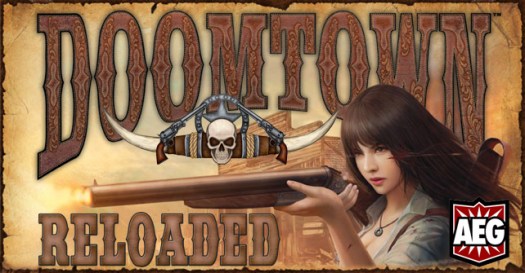
Doomtown: Reloaded

Doomtown combines Poker with a collectible card game, and the Poker aspect to the game is the one that determines a player’s combat power. Each card has an ability but also a card suit and value. This leads to a very interesting push-pull. While most collectible card games require a gamer to think of only a card’s ability, one may choose one card over another because it works better for playing the Poker side of things.

It also doesn’t hurt that Doomtown is more of an area control game. Movement is just as important as combat as players go back and forth, building up the town and trying to control as much of the town as they can throughout the game. The currency may be called “victory points,” but it functions as money. One must consider the ebb and flow of their actions to be successful and that makes for an interesting puzzle.

hecatomb

Hecatomb

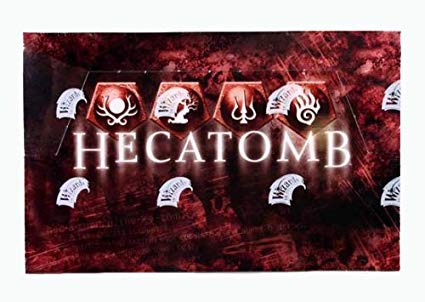
I never realized how many collectible games Mike Elliot has made in his career, but Hecatomb is another good one. It’s essentially Magic with pentagon cards that players can play on top of each other. The edges of the pentagram can hold extra play text and that’s how each player upgrades the creatures they summon.

It doesn’t surprise me that Hecatomb is no longer in print. The production value was through the roof and unsustainable, but it’s an excellent game and if you find it in a sale rack or garage sale, it’s worth a shot.

darkagefeudallords

Dark Age: Feudal Lords

I hope Dark Age: Feudal Lords gets reprinted as a self-contained game or living card game because the combat system in it is unique. It borrows more from miniatures games and RPGs than it does from typical collectible card games. The characters have a range of numbers (on a die) that can hit your opponents and power up cards add to that range. It’s a simple, elegant combat system that’s a lot of fun.

I could take or leave the actual theme (dystopia) so a rebranding of this combat system would be welcome as well. Still, if you can find Dark Age on the cheap, I’d highly recommend it.

Collectible Card Games that Became Living Card Games

I’ll preface this section by clarifying what a living card game is. The term living card game (LCG) can only be used by Fantasy Flight Games because they trademarked the term, but many other card games qualify as LCGs.

LCGs work differently than CCGs. While CCGs have random packs that players may purchase, and players must purchase a lot of packs—and I mean a lot of packs—to gain a copy of each card in a set, LCGs have everything available from a set in one box or series of boxes. Both game types encourage—or better yet require—deck building.

androidnetrunner

Android: Netrunner

A lot of people’s favorite LCG Android: Netrunner started as a CCG, and it was a very good CCG, but it works just as well as an LCG. The two players have asymmetric decks. One side plays as a futuristic corporation while the other plays as a hacker trying to break into the corporation’s defenses.

I always liked the concept behind Netrunner, but it’s a game that has a lot of barriers for entry. While the two sides have similarities in the card types they play, the game renames these cards. It’s almost like learning two new games for each side, and there are plenty of Netrunner fans who know how to play your deck better than you if you’re a beginner.

Still, it’s a solid game that deserves its community. Each side feels different and thematic.

starwarsthecardgame

Star Wars: The Card Game

The Star Wars Customizable Card Game was fun to play, but the unruly card sets made it difficult to balance the game. It may have followed the movies a little closely too. If the rebel player built a deck centered around destroying the Death Star (and they’d win the game by blowing up the Death Star), the empire player would only have to not play the Death Star to prevent the rebel player from winning.

Star Wars: The Card Game LCG does a better job of balancing these discrepancies while still giving the players the flavor they want. The various objective cards a based on the specific decks each player constructs, so one side can’t play keep away. Players will want to use as many of the various expansions as each one invokes a sense of place. The Hoth expansion feels like Hoth.

vssystem2pcg

Vs. System 2PCG

The Versus system was a relatively short-lived CCG from the early 2000s. It did a decent job of depicting all manner of comic book characters. You could even pit one comic book world against another—Marvel versus DC anyone?—and that wouldn’t happen again until Dice Masters.

Vs. System 2PCG takes elements from the popular Versus system and turns it into an LCG. Of course, it’s not named an LCG because it’s published by Upper Deck, but it functions the same way. Vs. System 2PCG streamlines the original gameplay and while that may turn off some Versus purists, the game had gotten bloated. The new LCG does a better job of introducing new players to the system. Marvel, Alien, and Predator have gotten their own LCG releases. We’re still waiting on DC.

That’s what I have for CCGs. I’m sure I didn’t collect them all. If you have any suggestions or complaints, leave a message with my answering service or just leave a comment.

Games I Hope Are Under the Tree

A certain holiday is right around the corner, and JK Geekly plans to take a break, but before we do your uncle Geekly will give into greed and list some of the games he hopes are under the tree. United States day of avarice, here I come.

I kept the term “games” vague because I’ll have some video and tabletop games on this list. No. I’m not changing beyond all recognition. Uncle Geekly may have a love of tabletop games, but there are plenty of video games coming out this year that can’t be ignored.

BatmanGothamCityChronicles

Batman: Gotham City Chronicles (Monolith Board Games)

Yeah, I’m all in with Batman: Gotham City Chronicles. I’m also at the mercy of when the game will be available in retail stores (Conan also made it into gaming stores), so this may be a pipe dream. There’s a reason Gotham City Chronicles surpassed its Kickstarter goal in less than a day. It’s excellent.

I’m not sure if I need to clarify more than that. Okay. The asymmetric villains (one) versus heroes (many) gameplay creates some great moments. Those moments happen to be classic Batman tales from the comics, not TV or movies. And there are miniatures. Lots and lots of high-quality miniatures of classic comic book characters.

spider-man ps4

Spider-Man (Sony)

I’m hoping the PS4’s Spider-Man does for the wallcrawler what Rocksteady’s Arkham series did for Batman. The web head hasn’t had a good video game in some time, and I wouldn’t mind taking on Green Goblin, Scorpion, or whoever the game has to throw at me. Plenty of reviews have been written about the game, but I’m trying to avoid them as much as possible. It’s gotten great reviews; that’s good enough for me.

the7thcontinent

The 7th Continent (Serious Poulp)

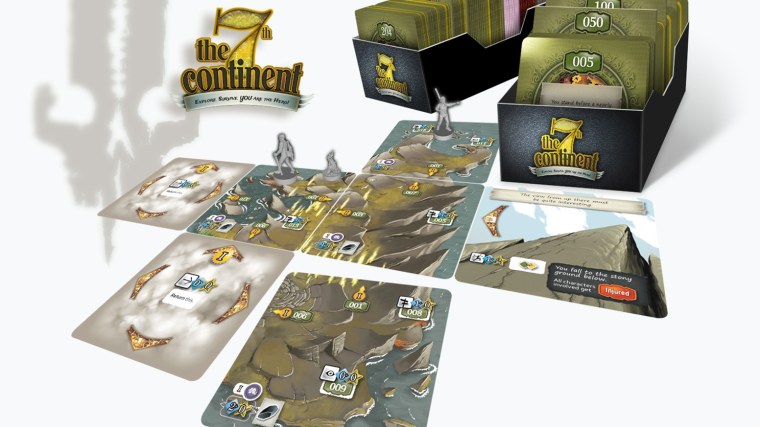
The 7th Continent is another Kickstarter board game, but unlike Batman: Gotham City Chronicles, this one most likely won’t see mass retail appeal. Players are stranded on an island and must find ways to survive. The features exploration and has great storytelling moments. It’s an event game. It’s also one that makes you talk about it well after game night.

Megaman11

Mega Man 11 (Capcom)

I don’t care if it receives good, great, indifferent, or poor reviews. I’ll probably look for Mega Man 11. It’s the first numbered entry for the Blue Bomber in over a decade, and it’s long overdue. Bring on Block Man, Fuse Man, Blast Man, Torch Man, and Impact Man.

Dinosaur Island

Dinosaur Island (Pandasaurus)

This one may be the most likely tabletop game to find its way under the tree, and I’m happy if does. Dinosaur Island is the board game version of Jurassic Park. The game mechanisms, of which there are numerous, blend together to make a great gaming experience. There are very few games that pack a lot of strategy in a small time frame (like Dinosaur Island), and Jonathan Gilmour is one of my favorite new game designers.

Your uncle Geekly could’ve added a few dozen more games, both board and video. If you disagree with a pick or two of mine, direct your anger at Jim. He likes hate mail that isn’t his hate mail. Or you could leave a comment.

Things Kyle Does When He First Opens a Tabletop Game

This little list may give you too much insight into what happens at the Geekly household when a board game is first opened. We’re talking about a rabbit hole that you may not want to go down. Consider yourself warned.

MagicMarker

Smell the box…mmm New Game Smell

I like the smell of a new board game. Nothing beats tearing off the shrink wrap, hearing the box fart for the first time as you open it, and having the smell of fresh tabletop game goodness waft over your face.

To be fair, I do this with a lot of things: books, cars, video games, the occasional magic marker. Mmm, magic markers.

I may have brain damage.

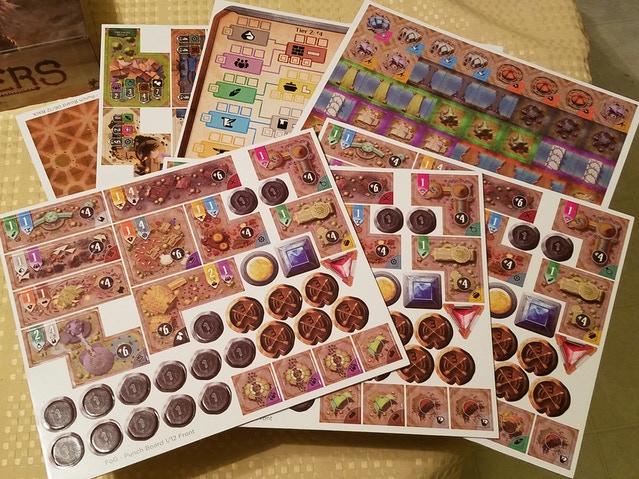
GloomhavenPunchBoards

Punch out all the bits, put them in piles, and make towers and other things out of them

I love it when I find a lot of punch boards with a heap of little bits I have to poke out. Gloomhaven had somewhere around 30 of these boards, and I was as happy as a kitten playing in gift paper.

I don’t care about the game at this point. I just want to make a fort out of cardboard discs, dice, and wooden pieces shaped like Whistler’s Mother.

Wait. Whistler’s Mother? What game did I just unbox? I don’t care. If you need me, I’ll be in space.

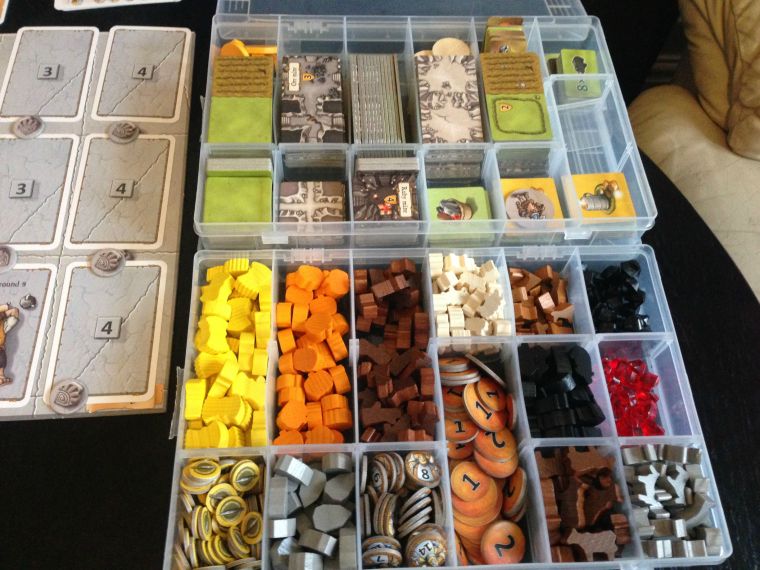
BoardGameOrganization

Organize things despite not knowing where they should go

Who needs to read the rules to figure out which things go together in a little baggy or small tackle box? I follow my gut, and it’s almost always wrong. Never trust a gut that suffers from GERD.

At least an hour will be wasted figuring whether the color or shape of an object should dictate where it should go. Eventually, I’ll say, screw it and check YouTube.

RodneySmithWatchItPlayed  GamingRulesPaulGrogan.jpg

See if Rodney Smith (Watch it Played) or Paul Grogan (Gaming Rules!) posted a video on how to play

Who needs to read the rules to figure out how to play a board game when Rodney and Paul will tell me in a short video with time stamps directing me to specific rules? Sure, I’ll follow along in my rule book if I can, but rule books aren’t the best reading material. So many of them have too many Appendices and use terminology I can’t understand. With few exceptions most of these designers expect you to already know how to play.

Help me, Rodney. Help, help me, Rodney.

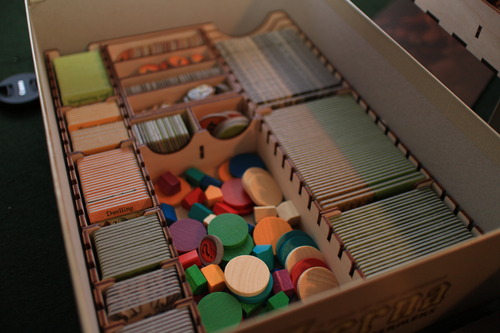
ReorganizeBoardGame

Reorganize things after watching the video

I’ll remind myself that I should never trust a gut that suffers from GERD. If Rodney or Paul were in my house, they’d shake their heads and say, again, Kyle. What are we going to do with you?

I’ll spend another half-hour putting things where they should go and take another hour calming down before asking my friends and family if they want to play. You’d think I’d learn, but most game unboxings end the same way.

You probably know too much about your uncle Geekly’s unboxing habits at this point. What are the things you do when you first open a tabletop game for the first time? Let us know in comments.

Getting Started with Area Control or Influence Games

Uncle Geekly ran a search on a popular game type, area control, and found more results than he thought. These games range from simple who controls the most regions to more complex games where area control is an aspect of the game. We’re talking starting area control or the similar mechanism area influence games, so we’ll keep it simple and easy to learn, but most of all, an area control game at its core.

Most area control or influence games employ a great build to the game, where players begin with small gains that they hope to build upon through game play. These games, more than many others, have a natural progression to them, and gamers can see why someone won. Usually, this is a game type for players who like to see the wheels turn or have a little more agency in a game’s outcome.

As usual, good old Geekly has some starter games for someone interested in this gaming genre. Let’s get to some of these smaller games and work our way up to one’s that are more complex.

Hanamikoji

Hanamikoji

We’re starting with an odd choice: Hanamikoji. It’s classified as more area influence as players compete for the attention of geishas. Hanamikoji also happens to be a two-player game, which is a little unusual as well. A group of seven geishas is placed between both players and they range in point value from 2 to 5. The first player to gain the favor of 4 or more geishas or has 11 points or more of geishas wins. This is what makes Hanamikoji area influence instead of area control. One must gain the attention of the most geishas. The game play is fast—a typical game lasts ten to fifteen minutes which is lightning quick for an area control or influence game—and it’s intriguing.

Each player is dealt cards that correspond with each geisha (for example, green twos are used to gain the attention of the green two geisha). They’ll use these cards to gain favor. The players also have four action tokens, and this is where things get interesting. Both players alternate turns using all their actions tokens. One action locks down one card from a player’s hand. A second action removes three cards from play that turn from a player’s hand. The third and fourth actions have some combination of handing your opponent some of your cards and they choose one or two of the cards handed them, and the player using these actions keep the rest. This is an excellent way of mitigating a bad draw. It also makes for a surprising amount of choices for a short and simple game.

Carcasonne

Carcassonne

Sometimes the oldies are the goodies. 2000’s Carcassonne—along with El Grande—all but popularized area control games. The two wrinkles Carcassonne adds are tile placement and worker placement. Bear with me as a quickly discuss tile placement; it does factor into area control. Each turn a player draws a land tile and places it adjacent to a tile already in the play area. These tiles will have roads, farms, cities, and/or cloisters depicted on them. When placing a tile, it must match the pre-existing tiles in the play area. Sides of tiles that show a farm can only be placed next to another tile side with a farm. So, random tiles dictate what constitutes an area. This was revolutionary at the time.

Once a tile is placed, the player may place a follower—or worker. Players gain control of areas by placing their workers on these spaces, and these workers can perform several jobs, depending on where they’re placed. Farmers work farms, monks live in cloisters, and so forth. The player with the most followers in an area when it scores gains the most points for that area. The game ends when the last land tile is played, and the player with the most points wins.

This combination of game mechanisms works well. So many other designers have used some combination of worker placement, tile placement, and area control because of how accessible Carcassonne is and these mechanisms’ inherent strategic flexibility. Carcassonne works as a great introductory game for all three game types. I’ll try not to add it to another list. No promises.

smallworldgame

Small World

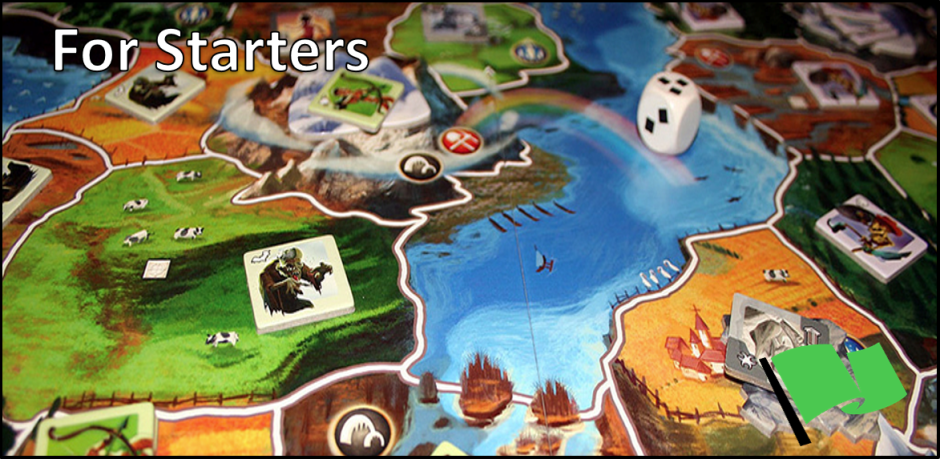
Sometimes gamers just want to conquer things. Small World takes place in a small world, where zany fantasy characters vie for control. There a lot of bells and whistles added to Small World. Each fantasy race like elves, trolls, and skeletons have their own race power, but each of these fantasy races are given one of 20 unique special powers like flying or ghostly that will make each playthrough different.

The concept is simple enough. When placing creature tokens, players start on the edge of the map. To conquer a land, they must use as many tokens as tokens in an area. If a player has enough tokens, they may conquer an adjacent land using the same method, so it’s likely that players will gain more than one area in a turn. In future turns, a player may choose to put their active race in decline (flipping their tokens upside down) and choose a new race. Players score points each turn for every area their races occupy; that’s for their active race and the race they have in decline.

At the end of the game, the player with the most points wins. That’s a common thread these games and a lot of other area control games share.

Small World does a great job of simulating combat without getting too in the weeds with it. It’s an area control game at its core with some nice window dressing, especially the use of variable player powers. Those race and special powers can be fun. Small World can also be the meanest game on this list. Players must know when to bail on a race and when to keep one. There will be a lot of hostile takeovers. It’s a small world after all.

Final Thoughts

So many of the best games on the market today use area control or area influence: Twilight Struggle, Star Wars: Rebellion, Scythe, Terra Mystica, Blood Rage, Twilight Imperium, and countless others. The games I just mentioned didn’t make this list because they get a little too complicated or they add more elements to the game than just area control.


The games I did include in this list will get new board game hobbyists the background they need to take on more complex games. Which games do you like to use as beginner area control games? You could place a worker to claim influence or it might make more sense to leave a comment.

My Favorite Game Mechanic: Castles of Mad King Ludwig

Your uncle Geekly has talked about Castles of Mad King Ludwig before, so if you want to see our review of it and Suburbia, check it out here, but this week we’ll talk about the one game mechanism I like the most from Castles of Mad King Ludwig: I cut, you choose.

I’ll try not to repeat my review of Castles, but I can’t promise to cover some familiar ground. Most games that use an I cut, you choose mechanism play out like the pizza game New York Slice. The starting player groups things together (depending on the game type) and then the player to the starting player’s left picks which group they want first and play continues to their left, meaning that the player who decided which stack of things went together gets whatever’s left over. It’s a nice little game of cat and mouse. Do I want to group things I know another player would want together, giving them points, or risk something I’m playing for? Most often, players will split the difference and hope for the best. This system gives players more agency in games. To be honest, not enough games use I cut, you choose.

CastlesOfMadKingLudwig

But Castles of Mad King Ludwig takes a different approach to this mechanism. Each turn there’s a different master builder and the master builder determines how expensive tiles (with which to construct player castles) cost each turn. When a player selects a tile from the supply, they pay the cost to acquire a tile to the turn’s master builder. That’s coconuts.

Not only does a master builder set the market price each turn, there’s an added level to I cut, you choose in that the master builder places an item for sale at the highest price they think another player would be willing to pay for the tile to get the most money they can get during their turn as the master builder. Flushed with master builder cash allows for more purchases and builds at the end of a turn (master builders still take their build turns at the end of the round like most other I cut, you choose games), and to date, I haven’t seen a tabletop game empower players at this level. This adds so many new strategies and questions.

MadKingLudwigSupply.jpg

Do I price the tile I want that turn as the most expensive? If I do, will other players buy enough of the cheaper tiles for me to buy the one I really want? Would another player pay top dollar for the tile I want most? Are other players even interested in the tile I want most? Can I price it lower or will someone buy it just to spite me? Even though the titular Mad King Ludwig wasn’t mad, this game can drive players mad with its number of choices.

Each game changes how players score, so a tile that mattered in a previous game might not matter as much in a future one. That gives Castles of Mad King Ludwig a lot of replay value.

I like Suburbia a lot too. It’s a similar game about building suburbs of a city by the same design team and publisher, but Castles of Mad King Ludwig’s take on the I cut, you choose mechanism makes it a much better game.

If you disagree, you can send me to the stocks or you can leave a comment. If you’d like to tell me I’m wrong every day, feel free to subscribe.

Sentinels of the Multiverse Critique and Learning Moments

Your uncle Geekly mentioned before that Sentinels of the Multiverse ranks highly on his superhero games list. I’ve even talked about how well of a job it does with character and world building, but that doesn’t mean it’s flawless. Far from it. Sentinels has some rather significant flaws. The flaws a game, or any creative endeavor, has can inform how to create something of its ilk. I like Sentinels a lot, but in this write-up, I’ll try to dig deeper and show some issues the game has.

The biggest issue Sentinels of the Multiverse has is a lack of scaling. Scaling in board games refers to a game playing well at all player counts. If a 2-5 player game plays well with 2, 3, 4, and 5 players, it’s considered to scale well, regardless of player count. Sentinels doesn’t scale well.

But scaling is an issue present in a lot of cooperative board games. Some co-op games do a far better job than others—Matt Leacock’s designs come to mind—but too often cooperative games overcompensate for more players or don’t compensate at all for smaller player counts. Unfortunately, Sentinels is the norm.

Sentinels_Unity

At 2 players, gamers don’t have enough options to defeat villains and can get overrun. My suggestion is that the players must run two heroes apiece so that they’re playing a 4-player game, but that’s not exactly scaling the game for 2 players. 5-player games result in too many options for heroes and villains become too easy. The number of heroes rule does its best to scale the difficulty, but it can only do so much against 5 hero awesomeness.

The game’s greatest strength can also be its undoing: variation. Some games of Sentinels can last 10-15 minutes because the hero combinations are too good and the villain too weak, while other games of Sentinels can last the same 10-15 minutes due to a deadly villain-environment combo, and the heroes never stood a chance. These occurrences don’t happen that often, but they happen enough to leave players with a bad taste.

Sentinels_RookCity

Sentinels tries to address this by assigning difficulty/complexity ratings to heroes, villains, and environments. It’s an admirable attempt and something that can make the game accessible to new players. We’ve got newbies on our team. How about we play an easy villain-environment combo and give them a less complex hero? Yeah, but how many of us use these ratings when we play a random game?

No, really. Show of hands. How many of us concern ourselves with complexity and difficulty ratings?

Sentinels_ComplexityRatings.jpg

Okay. Using the Sentinels sidekick app can help setting the difficulty just right, but most of the time I just click on any difficulty or complexity.

The last major issue comes from Sentinels’ longevity. Longevity isn’t necessarily a bad thing; Sentinel fans having an aversion of play the base game is an issue. There are too many characters to keep track of (the recent OblivAeon expansion should be the final one), but there are also a lot of ways to play the game. Like so many other games, veteran players try to force more complicated versions of the game—with all the expansions included—on newer players.

Sentinels_OblivAeon

The tendency of gamers inflicting overcomplicated games of a certain type on newbies led me to begin the starter game series. Don’t play Vengeance (supervillain teams) or Oblivaen (Sentinels’ version of Thanos) with brand new players. Start with the base game and maybe a smaller expansion or two. Larger and newer Sentinel expansions don’t just add complexity, they also add minutes, if not an hour or more, to the base game’s runtime and that’s a tough pill for some new players to swallow. Ultimately, make sure they’re a fan and then expand.

I could expand on this list of shortcomings, but I like Sentinels. The world and character building are better than most other tabletop games on the market. I’m sure there are things I missed—either or purpose or by accident—and if you see one, two, or five of them, climb up to your roof and shout it out loud, or you could leave a comment.

Getting Started with Deck Building Games

I enjoy deck building games a lot. Deck builders are games with simple, identical, starter decks for each player, and players must build and customize their decks over the course of the game.

Deck builders can get convoluted fast and many of them are text heavy—we’re talking levels of text just below War and Peace. There are so many types of deck building games, so many that there are games that fall under pool building (not included here) that use dice and cubes instead of cards, that it can be overwhelming in terms of where to start.

Fortunately, your good old uncle Geekly is here to point you in the direction of less complicated deck builders to get going.

starrealms

Star Realms

I’ve talked about Star Realms in the past—for a full review check it out here—but it’s still one of the better, beginner games for a traditional deck builder. I could’ve gone with the base Dominion game, but I like the theme better with Star Realms, even though the space theme is barely there, and Dominion fans tend to want to add as many expansions as possible. Trust me. There are more expansions for Dominion than leaves on the ground.

Star Realms is balanced. If I’d have one major gripe, it may be that Star Realms is too balanced (the cost of cards are spot on, just buy the most expensive one you can afford each turn), but key elements like buying cards from the supply by paying specific costs for each card, culling (removing weak cards from your deck), forcing another player to discard a card from a future hand, and the concept of building a full deck and drawing a new hand from said deck instead of building a hand are all present in Star Realms.

It also doesn’t hurt that Star Realms has a free to download app.

Steam

Android

iOS

All someone would have to do to learn the basics for a deck building game is to download and play the tutorial. It doesn’t get much easier to learn than that.

CenturySpiceRoad

Century Spice Road

The hottest, newest game on this list may just be one of the least complicated deck building games and has the least text. Century Spice Road also has a couple of stand-alone expansions—games that can be played on their own as full games or that can be added to the original to make different combinations—so look out for Golem Edition and Eastern Wonders. Golems don’t get enough play in games. I may have to drive to the nearest adventurer’s pub and pick up a golem or two.

The base game’s theme isn’t that interesting—tabletop gamers have seen hundreds of spice trading games—but Century Spice Road not only boils down the deck builder to the point where it’s a bit of a hand builder, it adds elements like resource and space management to the genre. It also includes an interesting approach to one of my other favorite mechanisms: card drafting.

Cards in the supply are laid out from left to right, and players add action cards to their hand, starting with the card on the far left. If a player wants to skip a card in the supply, they must place a spice (or cube) on the card(s) skipped. Any player who picks up a card with a spice on it adds that spice to their supply. This simple addition adds so much strategy. Do I want to give my opponent a free spice by skipping a card? An action card I might not otherwise want may have spices I do want. Do those free spices make it worth adding the card to my hand?

All of these elements come together in a satisfying way. No wonder Century Spice Road earned the 2017 Golden Geek for best card game. Note: don’t play with real spices. That gets messy.

PaperbackCardGame

Paperback

I had to include Paperback because it has a great combination: deck building and word game. It’s a game combination that people wouldn’t think would work, but it does. A player can be adept at one of the two game types, and not the other, and still excel.

The same concepts one can find in Star Realms can be found in Paperback. There are more variants to Paperback so replay value is increased, but it’s the combination of deck builder and word game that makes this game sing.

The theme of struggling writers getting their paperback books published—to be fair, this theme may hit closer to home than I’d like to admit—also comes through. Paperback is easily the most thematic game on this list, but it’s not for everyone. If someone is dead set against word games, this game might rub them the wrong way. If someone likes word games or is willing to give a word game a shot, Paperback is excellent.

Final Thoughts

The above games are all great if you’re just getting into tabletop games and wondering how to play deck building games. Star Realms, Century Spice Road, and Paperback have a lot of replay value too.

Know of any other great starter deck builders? Let us know in the comments.

My Favorite Game Mechanics: Sentinels of the Multiverse

There isn’t just one game mechanic that I like from Sentinels of the Multiverse, there are several, but most of them center around one thing: character building.

Sentinels may not be perfect—your Uncle Geekly will have to write an in-depth analysis about it after a while—but most of the design choices in Sentinels do something to characterize the heroes, the villains, and sometimes the world in which they live. Players feel like they’re heroes. They feel super. And that doesn’t happen as much as it should in board games with superheroes.

Some games like Marvel: Legendary (perhaps a better game than Sentinels overall) puts gamers in the role of someone like Nick Fury. You’re assembling a team of superheroes to deal with a threat. Others put gamers in the role of a superhero, but there isn’t an attachment to the character or the characters are flat. You are a unique hero in Sentinels.

SotM_NightMist

While there may be some misses (in terms of character building), there are more characters like NightMist. She’s reckless. How do we know this? She’s just as likely to hurt her teammates as she is the enemy, and the mechanisms in her deck bring out that flavor. Legacy is the leader of the gang. A lot of his abilities promotes this identity. Visionary has a more hands-off approach and many cards in her deck reflect her personality.

The villains have just as much personality, and Sentinels does one of the best jobs in tabletop gaming of building antagonists. Some villains have no regard for their henchmen and prefer the heroes to squish them, others may care for their righthand man, but have no attachment to anyone else. Still others depend on no one else but themselves. These henchmen, if there are any, also tend to build on the eccentricities of the various villains. Citizen Dawn’s lackeys don’t behave like anyone else’s. Grand Warlord Voss has his own unique cronies. The Matriarch always has a murder of crows in tow.

SotM_Dreamer

There are even some villains like Akash’Bhuta who are more forces of nature than true villains. The Dreamer who is an 8-year-old girl whose dreams come to life, but she suffers from night terrors and therefore, she’s a victim herself. And Wage Master who’s the resident Mister Mxyptlk who turns game play upside down just because it strikes his fancy. The characters in Sentinels have plenty of—well—character.

Even the environment decks (that represent the location the game takes place) have their own sense of character. Certain environments like Wagner Mars Base aren’t so good for specific characters like Bunker (kind of like Ironman) or The Wraith (a female Batman) because it randomly destroys equipment, while other environments like Rook City (a Gotham City type) hates on all heroes because even the cops are crooked. There are even a few environments that handle heroes with kid gloves. I won’t mention them here. Greater Than Games has plenty of forums for that and many of new game copies rates each environment according to difficulty.

It’s easy to fall in love with Sentinels despite any shortcomings. It has personality. And personality is something more superhero games and antagonists in cooperative games need.

What do you like most about Sentinels? Is there another game that handles character building in a fun and interesting way? Let us know in comments.

Getting Started with Auction and Bidding Games

Have you ever been roped into a bad board game like Monopoly? Well, your uncle Geekly may have some auction and bidding tabletop games that don’t cost as many hours or friendships as the Hasbro giant. These games introduce new gamers to the idea of getting properties or items for the best price and in some cases, selling them for more money. Who doesn’t like to make money-money, make money-money?

CloseUpForSale.jpg

For Sale

For Sale is the first game that came to my mind when thinking of an easy to get into auction and bidding game. Gameplay is broken into two phases. During the first phase, players bid money on properties (each player begins with the same amount of money; it’s all about how one uses one’s money). The second phase shifts to players selling the properties they acquired in the first phase.

It’s fast—really fast for an auction/bidding game. For Sale teaches the value of buying low and selling high. It doesn’t always boil down to who bought the best property (the properties range from manors to a cardboard box); one must know when to reach for the high value properties and when not to. It’s a great teaching tool for more complicated games that include auctions and bidding, and the concept of requiring players to outbid other players—not just match a bid—got its start with For Sale.

Prior to this game, one player could bid five coins for something and everyone around the table would have the chance to match it, and the last jerk at the table would. Then you’d have another slow round of bids for six coins. It took forever. Ugh!

Thank you, For Sale.

FistOfDragonstones

Fist of Dragonstones

While For Sale eases players into auction and bidding with a different economic layer each phase, Fist of Dragonstones adds a hidden bid mechanism and multiple economic layers. There’s more going on with Fist of Dragonstones, but if someone is looking for an auction/bidding game with more strategic value and still plays quick and easy (it also has a fun fantasy theme), consider Fist of Dragonstones.

Players bid on character cards (with abilities) by using a closed fist method. No. You’re not allowed to punch someone; you’re just holding out a closed fist, hiding your bid.

Players hide their total money (split between regular gold and fairy gold, which is magical) behind a player shield (a piece of cardboard) and when an auction occurs, every player takes the bid they plan to make (regular gold, fairy gold, or a combination of the two), holds their bid in their closed fist and reveal their bids at the same time. The highest bidder wins the auction, and any money used—whether the player won or lost the bid—is returned to the bank.

FistOfDragonstones01

Each character (the cards players are bidding on) has an ability that can help obtain more money or victory points. The first player to 4 victory points, wins.

The various character cards add replay value, and I don’t know of a single auction/bidding game that uses a fantasy theme. Maybe I should make Dragon Tycoon.

The inclusion of a closed fist bidding system is a great choice. Fist of Dragonstones uses the mechanism well and this a common game mechanism used in other tabletop games of various types—not just games that are predominantly auction or bidding.

There’s a reason this game put the juggernaut game publisher Days of Wonder on the map, and I hear it’s getting a reprint this year (2018). Bonus!

Stockpile

Stockpile

Ever wanted to play the stock market? Stockpile puts players in the shoes of a wolf of Wall Street. Well, maybe not, but the game does a good job of giving each player hidden information (about 1 of the game’s 6 stocks) that the other players don’t have to make decisions on whether to buy or sell a stock.

If a stock is about to plummet, ditch it into one of the stockpiles that players bid for during the round. Each player must place one stock face up in one of the stockpiles and one face down. Since there is one stock that is global knowledge (one of the risers and fallers for the round is known to all players), sneaky devils may want to put a stock of that type, face down so other players won’t know it’s there.

Stockpile01

Stockpile’s bidding system is unique from the rest of the games on this list as each stockpile has a corresponding calculator card above it. The numbers (0, 1, 3, 6, 10, 15, 20, 25) on the calculator buttons represent the bids (in thousands) a player can make, and players take turns placing their markers on an available number on one of the calculators. Players can outbid—but not match—a previous bid. If they do, the owner of the lower bid collects their marker and can bid again. As soon as all players have placed their markers, they collect all the cards in the stockpile that their marker is on.

The bidding in Stockpile doesn’t take that long as there are only eight possible bids one can make for each stockpile during a round. New gamers will see this style of bidding in a lot of games like Cyclades. Due to the streamlined bidding, Stockpile gets players involved with trying to predict stocks that will rise or fall over the course of the game.

Stockpile is great for commodity speculation, but it’s also one that I’ve seen an 8-year-old play and enjoy.

Final Thoughts

These games beat the pants off Monopoly. For Sale, Fist of Dragonstones, and Stockpile serve as great entry-level games with some solid replay value. Just make sure you don’t lose your pants in a shady business deal.

Know of any other great beginner auction and bidding games? Let us know in the comments.

Geekly News: November 2, 2018

Elder Scrolls VI Release Window Announced

This bit of news doesn’t amount to much. It’s a slow news week, so eh. Bethesda announced that the Elder Scrolls VI Redfall will be a PS5 and Xbox (whatever they’ll call it) release. That’s pretty much what I figured. I said as much two or three weeks ago; this is just confirmation.

 Starfield may have a chance of gracing current consoles, but there was little to no chance Redfall would make the PS4 or Xbox One. Fallout 76 counts as one of Bethesda’s flagship releases and the company likes to release one flagship title every three or four years. That means that Starfield should come out around 2021—maybe 2020 because they’ve been working on it for 6 years already and 2020 sounds like an awesome release year. Okay, there’s little chance Starfield will be a current generation console release.

Elder Scrolls VI should be released three to four years after Starfield, so that puts its release year at 2023 through 2025. Oh boy.

Guardians of the Galaxy 3 on Hold (Again)

Okay, maybe this is a pretty busy week of news. The third volume of Guardians of the Galaxy may not survive the firing of James Gunn. Here’s a quick recap of what’s happened. James Gunn posted insensitive tweets and was eventually fired as the director of Guardians Vol. 3. Some of the franchise’s actors back Gunn and Disney/Marvel has had a devil of a time finding another director they like. This has led to a stop-start every week or two.

MCU boss Kevin Feige announced this week that the franchise is on an indefinite hold. If the sides can’t find common ground (Bautista has no contract that covers a third Guardians movie), there’s a good chance that Guardians of the Galaxy 3 may not happen at all. Don’t worry. The gang will make an appearance in Avengers 4.

BobaFett

Boba Fett Movie Cancelled

Kathleen Kennedy confirms that the Boba Fett Star Wars spinoff movie is “100% dead.” While the cancellation of a Boba Fett movie helmed by Logan director James Mangold may upset some, the reason for this move is a shift to the Jon Favreau penned live-action TV series The Mandalorian. I couldn’t see both projects taking off, so a little focus for the Fett man may be in order. Let’s hope The Mandalorian delivers.

AttackOnTitan

Andy Muschietti to Direct Attack On Titan

It director Andy Muschietti has just signed on to make a new Attack On Titan live-action film adaptation. The first one didn’t land well with manga readers. Why must every movie have a love story—especially when there isn’t a love story in the original work? Muschietti is a big fan of the original manga and if his work on It is any indication, the new Attack On Titan film will get the blockbuster treatment with plenty of chills.

PlayStation Classic

PlayStation Classic Games List Confirmed

PlayStation announced that it’d join Nintendo with its line of diminutive classic systems with 20 preloaded games several months ago, but this week they announced the full list of games that’ll come with the system. They are as follows:

  • Battle Arena Toshinden
  • Cool Boarders 2
  • Destruction Derby
  • Final Fantasy VII
  • Grand Theft Auto
  • Intelligent Qube
  • Jumping Flash
  • Metal Gear Solid
  • Driller
  • Oddworld: Abe’s Oddysee
  • Rayman
  • Resident Evil (Director’s Cut)
  • Revelations: Persona
  • Ridge Racer Type 4
  • Super Puzzle Fighter II Turbo
  • Syphon Filter
  • Tekken 3
  • Tom Clancy’s Rainbow Six
  • Twisted Metal
  • Wild Arms

A lot of these are classic games or the first game in genre defining series. The PlayStation Classic hits shelves on December 5, 2018.

TaikoNoTatsujinDrumNFun

Video Games

Taiko no Tatsujin: Drum ‘n’ Fun! and Drum Session! (Switch, PS4)

Drum ‘n’ Fun (Switch) and Drum Session (PS4) mark the first time that a Taiko no Tatsujin game made it to the West. This series is a huge arcade/rhythm game in the East and it’s only a matter of time to see if the States and other countries will take to its catchy beats.

Movies

BohemianRhapsody.jpg

Bohemian Rhapsody

This is the big one this week for me. I’m a sucker for biopics and I like Queen. I don’t watch too many biopics in theaters, but I may make an exception for Bohemian Rhapsody, the biopic for Queen front man Freddie Mercury.

Nutcracker and the four realms

The Nutcracker and the Four Realms

Could this film be so bad that it’s good? I’m not sure. A lot of critics have called it “soulless” and “incoherent,” but the visual effects are good. It sounds like an impressive cast that includes Keira Knightley, Helen Mirren, and Morgan Freeman can’t help The Nutcracker and the Four Realms from becoming Disney’s worst reviewed film in history. Yikes!

Suspiria

Suspiria

This one won’t be for everyone. If this movie follows the 1977 original, Suspiria tackles some heady material, and its trailer depicts vampires who let the blood flow even more. This lends itself to multiple watches, once to get over the gore and the second to dig deeper into what the film is about, but a run time of two and a half hours may be a little long.

Nobody's Fool

Nobody’s Fool

This is the latest Tyler Perry comedy. In this one, Tanya (Tiffany Haddish) is released from prison and is reunited with her family. The family learns that she’s in an online relationship with a mystery man who may be “catfishing” her. It’s a fun premise, so I may watch it. It also doesn’t hurt that Whoopi Goldberg, Amber Riley (Glee), and Mehcad Brooks (Jimmy Olsen from Supergirl) are in the cast.

Bodied

Bodied

Eminem produces this odd fusion of comedy, battle rap. Eminem has a knack for the theatrical and it looks to continue here. Bodied has received a lot of praise and high marks, so it may be worth a watch.

The Front Runner
Hugh Jackman stars in Columbia Pictures’ THE FRONT RUNNER.

The Front Runner

This one starts early next week. It’s another biopic, this time based on Matt Bai’s All the Truth Is Out: The Week Politics Went Tabloid. In short, it’s Hugh Jackman portraying Senator Gary Hart during his 1988 presidential campaign where he’s caught up in an extramarital affair with Donna Rice.

TV

TheOtherSideOfTheWind

Friday, November 2, 2018

Homecoming (Amazon)

I’ve talked about this one in the past. Julia Roberts stars as a caseworker who helps military members transition to civilian life. Years after she starts a new life as a waitress when a Department of Defense auditor questions why she left the program. There may be more to her being placed as a former caseworker than she realizes.

House of Cards (Netflix)

Today marks House of Cards’ final season. I lost interest a long time ago, and the Kevin Spacey scandal didn’t help, but hopefully Netflix’s first original series ends on a high note.

The Other Side of the Wind (Netflix)

This film may be the biggest thing Netflix has ever produced; it’s one of Orson Welles’s lost films. Being locked away in a Paris vault (due to legal issues) for decades didn’t prevent The Other Side of the Wind from influencing other films that came after it. It all but created the Mockumentary. What’s even better is that Netflix plans to release a follow up documentary on the film’s history which may be just as interesting.

Watergate (History)

History beats The Front Runner (Gary Hart) to the punch with this series about Watergate. This scandal may have marked the United States’ loss of innocence; it definitely gave birth to scandal journalism.

Mickey's 90th Spectacular

Sunday, November 4, 2018

Mickey’s 90th Spectacular (ABC)

Mickey Mouse made his first appearance on May 15, 1928 (Plane Crazy), and Steamboat Willie was released around Thanksgiving of the same year. Mickey’s 90th Spectacular is a special that celebrates Mickey throughout the decades.

Outlander (Starz)

Based on the historical time travel book series of the same name, Outlander returns for a fourth season on Starz. The premise sounds interesting and it’s received good ratings, so I may give it a try.

Betrayal Legacy

Board Games

Betrayal Legacy

I may be a little late with this one, because tabletop games are difficult to track down with their new releases. Betrayal Legacy holds my interest with a death grip. Rob Daviau was involved with the original Betrayal at House on the Hill (think of a Joss Whedon’s Cabin in the Woods in board game form) and he adds his patented legacy game mechanism to the mix. For the uninitiated, legacy games are games that change the board through multiple plays, so Betrayal Legacy should play out more like a movie and the choices players make will have lasting consequences.

I may pour a little cold water on this writeup with saying that legacy games aren’t always executed as well as they could be. Gamers may want to wait and read a review (a spoiler-free review as this board game will play like a movie) before purchasing it.

That’s all we have for Geekly news this week. Be kind to one another and stay geeky.