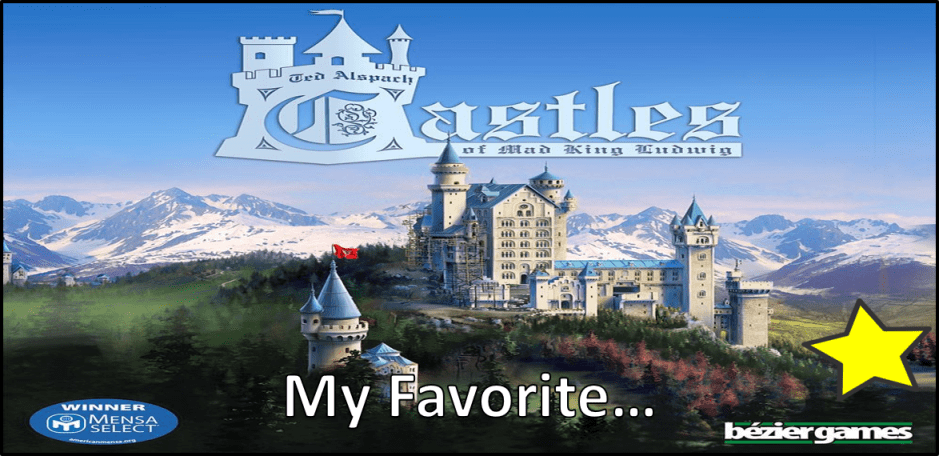
Your uncle Geekly has talked about Castles of Mad King Ludwig before, so if you want to see our review of it and Suburbia, check it out here, but this week we’ll talk about the one game mechanism I like the most from Castles of Mad King Ludwig: I cut, you choose.
I’ll try not to repeat my review of Castles, but I can’t promise to cover some familiar ground. Most games that use an I cut, you choose mechanism play out like the pizza game New York Slice. The starting player groups things together (depending on the game type) and then the player to the starting player’s left picks which group they want first and play continues to their left, meaning that the player who decided which stack of things went together gets whatever’s left over. It’s a nice little game of cat and mouse. Do I want to group things I know another player would want together, giving them points, or risk something I’m playing for? Most often, players will split the difference and hope for the best. This system gives players more agency in games. To be honest, not enough games use I cut, you choose.
But Castles of Mad King Ludwig takes a different approach to this mechanism. Each turn there’s a different master builder and the master builder determines how expensive tiles (with which to construct player castles) cost each turn. When a player selects a tile from the supply, they pay the cost to acquire a tile to the turn’s master builder. That’s coconuts.
Not only does a master builder set the market price each turn, there’s an added level to I cut, you choose in that the master builder places an item for sale at the highest price they think another player would be willing to pay for the tile to get the most money they can get during their turn as the master builder. Flushed with master builder cash allows for more purchases and builds at the end of a turn (master builders still take their build turns at the end of the round like most other I cut, you choose games), and to date, I haven’t seen a tabletop game empower players at this level. This adds so many new strategies and questions.
Do I price the tile I want that turn as the most expensive? If I do, will other players buy enough of the cheaper tiles for me to buy the one I really want? Would another player pay top dollar for the tile I want most? Are other players even interested in the tile I want most? Can I price it lower or will someone buy it just to spite me? Even though the titular Mad King Ludwig wasn’t mad, this game can drive players mad with its number of choices.
Each game changes how players score, so a tile that mattered in a previous game might not matter as much in a future one. That gives Castles of Mad King Ludwig a lot of replay value.
I like Suburbia a lot too. It’s a similar game about building suburbs of a city by the same design team and publisher, but Castles of Mad King Ludwig’s take on the I cut, you choose mechanism makes it a much better game.
If you disagree, you can send me to the stocks or you can leave a comment. If you’d like to tell me I’m wrong every day, feel free to subscribe.
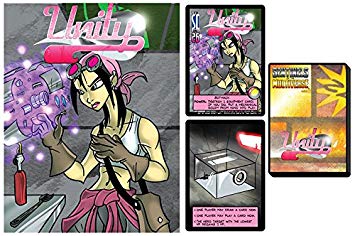
Your uncle Geekly mentioned before that Sentinels of the Multiverse ranks highly on his superhero games list. I’ve even talked about how well of a job it does with character and world building, but that doesn’t mean it’s flawless. Far from it. Sentinels has some rather significant flaws. The flaws a game, or any creative endeavor, has can inform how to create something of its ilk. I like Sentinels a lot, but in this write-up, I’ll try to dig deeper and show some issues the game has.
The biggest issue Sentinels of the Multiverse has is a lack of scaling. Scaling in board games refers to a game playing well at all player counts. If a 2-5 player game plays well with 2, 3, 4, and 5 players, it’s considered to scale well, regardless of player count. Sentinels doesn’t scale well.
But scaling is an issue present in a lot of cooperative board games. Some co-op games do a far better job than others—Matt Leacock’s designs come to mind—but too often cooperative games overcompensate for more players or don’t compensate at all for smaller player counts. Unfortunately, Sentinels is the norm.
At 2 players, gamers don’t have enough options to defeat villains and can get overrun. My suggestion is that the players must run two heroes apiece so that they’re playing a 4-player game, but that’s not exactly scaling the game for 2 players. 5-player games result in too many options for heroes and villains become too easy. The number of heroes rule does its best to scale the difficulty, but it can only do so much against 5 hero awesomeness.
The game’s greatest strength can also be its undoing: variation. Some games of Sentinels can last 10-15 minutes because the hero combinations are too good and the villain too weak, while other games of Sentinels can last the same 10-15 minutes due to a deadly villain-environment combo, and the heroes never stood a chance. These occurrences don’t happen that often, but they happen enough to leave players with a bad taste.
Sentinels tries to address this by assigning difficulty/complexity ratings to heroes, villains, and environments. It’s an admirable attempt and something that can make the game accessible to new players. We’ve got newbies on our team. How about we play an easy villain-environment combo and give them a less complex hero? Yeah, but how many of us use these ratings when we play a random game?
No, really. Show of hands. How many of us concern ourselves with complexity and difficulty ratings?
Okay. Using the Sentinels sidekick app can help setting the difficulty just right, but most of the time I just click on any difficulty or complexity.
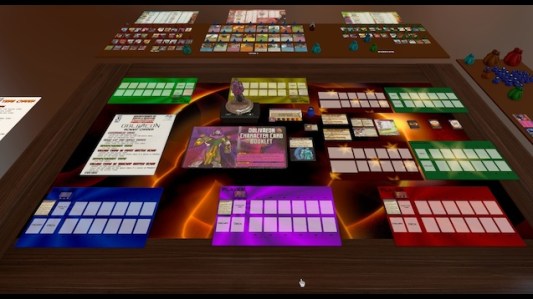
The last major issue comes from Sentinels’ longevity. Longevity isn’t necessarily a bad thing; Sentinel fans having an aversion of play the base game is an issue. There are too many characters to keep track of (the recent OblivAeon expansion should be the final one), but there are also a lot of ways to play the game. Like so many other games, veteran players try to force more complicated versions of the game—with all the expansions included—on newer players.
The tendency of gamers inflicting overcomplicated games of a certain type on newbies led me to begin the starter game series. Don’t play Vengeance (supervillain teams) or Oblivaen (Sentinels’ version of Thanos) with brand new players. Start with the base game and maybe a smaller expansion or two. Larger and newer Sentinel expansions don’t just add complexity, they also add minutes, if not an hour or more, to the base game’s runtime and that’s a tough pill for some new players to swallow. Ultimately, make sure they’re a fan and then expand.
I could expand on this list of shortcomings, but I like Sentinels. The world and character building are better than most other tabletop games on the market. I’m sure there are things I missed—either or purpose or by accident—and if you see one, two, or five of them, climb up to your roof and shout it out loud, or you could leave a comment.
I enjoy deck building games a lot. Deck builders are games with simple, identical, starter decks for each player, and players must build and customize their decks over the course of the game.
Deck builders can get convoluted fast and many of them are text heavy—we’re talking levels of text just below War and Peace. There are so many types of deck building games, so many that there are games that fall under pool building (not included here) that use dice and cubes instead of cards, that it can be overwhelming in terms of where to start.
Fortunately, your good old uncle Geekly is here to point you in the direction of less complicated deck builders to get going.
Star Realms
I’ve talked about Star Realms in the past—for a full review check it out here—but it’s still one of the better, beginner games for a traditional deck builder. I could’ve gone with the base Dominion game, but I like the theme better with Star Realms, even though the space theme is barely there, and Dominion fans tend to want to add as many expansions as possible. Trust me. There are more expansions for Dominion than leaves on the ground.
Star Realms is balanced. If I’d have one major gripe, it may be that Star Realms is too balanced (the cost of cards are spot on, just buy the most expensive one you can afford each turn), but key elements like buying cards from the supply by paying specific costs for each card, culling (removing weak cards from your deck), forcing another player to discard a card from a future hand, and the concept of building a full deck and drawing a new hand from said deck instead of building a hand are all present in Star Realms.
It also doesn’t hurt that Star Realms has a free to download app.
All someone would have to do to learn the basics for a deck building game is to download and play the tutorial. It doesn’t get much easier to learn than that.
Century Spice Road
The hottest, newest game on this list may just be one of the least complicated deck building games and has the least text. Century Spice Road also has a couple of stand-alone expansions—games that can be played on their own as full games or that can be added to the original to make different combinations—so look out for Golem Edition and Eastern Wonders. Golems don’t get enough play in games. I may have to drive to the nearest adventurer’s pub and pick up a golem or two.
The base game’s theme isn’t that interesting—tabletop gamers have seen hundreds of spice trading games—but Century Spice Road not only boils down the deck builder to the point where it’s a bit of a hand builder, it adds elements like resource and space management to the genre. It also includes an interesting approach to one of my other favorite mechanisms: card drafting.
Cards in the supply are laid out from left to right, and players add action cards to their hand, starting with the card on the far left. If a player wants to skip a card in the supply, they must place a spice (or cube) on the card(s) skipped. Any player who picks up a card with a spice on it adds that spice to their supply. This simple addition adds so much strategy. Do I want to give my opponent a free spice by skipping a card? An action card I might not otherwise want may have spices I do want. Do those free spices make it worth adding the card to my hand?
All of these elements come together in a satisfying way. No wonder Century Spice Road earned the 2017 Golden Geek for best card game. Note: don’t play with real spices. That gets messy.
Paperback
I had to include Paperback because it has a great combination: deck building and word game. It’s a game combination that people wouldn’t think would work, but it does. A player can be adept at one of the two game types, and not the other, and still excel.
The same concepts one can find in Star Realms can be found in Paperback. There are more variants to Paperback so replay value is increased, but it’s the combination of deck builder and word game that makes this game sing.
The theme of struggling writers getting their paperback books published—to be fair, this theme may hit closer to home than I’d like to admit—also comes through. Paperback is easily the most thematic game on this list, but it’s not for everyone. If someone is dead set against word games, this game might rub them the wrong way. If someone likes word games or is willing to give a word game a shot, Paperback is excellent.
Final Thoughts
The above games are all great if you’re just getting into tabletop games and wondering how to play deck building games. Star Realms, Century Spice Road, and Paperback have a lot of replay value too.
Know of any other great starter deck builders? Let us know in the comments.
There isn’t just one game mechanic that I like from Sentinels of the Multiverse, there are several, but most of them center around one thing: character building.
Sentinels may not be perfect—your Uncle Geekly will have to write an in-depth analysis about it after a while—but most of the design choices in Sentinels do something to characterize the heroes, the villains, and sometimes the world in which they live. Players feel like they’re heroes. They feel super. And that doesn’t happen as much as it should in board games with superheroes.
Some games like Marvel: Legendary (perhaps a better game than Sentinels overall) puts gamers in the role of someone like Nick Fury. You’re assembling a team of superheroes to deal with a threat. Others put gamers in the role of a superhero, but there isn’t an attachment to the character or the characters are flat. You are a unique hero in Sentinels.
While there may be some misses (in terms of character building), there are more characters like NightMist. She’s reckless. How do we know this? She’s just as likely to hurt her teammates as she is the enemy, and the mechanisms in her deck bring out that flavor. Legacy is the leader of the gang. A lot of his abilities promotes this identity. Visionary has a more hands-off approach and many cards in her deck reflect her personality.
The villains have just as much personality, and Sentinels does one of the best jobs in tabletop gaming of building antagonists. Some villains have no regard for their henchmen and prefer the heroes to squish them, others may care for their righthand man, but have no attachment to anyone else. Still others depend on no one else but themselves. These henchmen, if there are any, also tend to build on the eccentricities of the various villains. Citizen Dawn’s lackeys don’t behave like anyone else’s. Grand Warlord Voss has his own unique cronies. The Matriarch always has a murder of crows in tow.
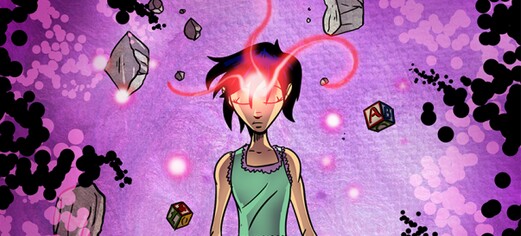
There are even some villains like Akash’Bhuta who are more forces of nature than true villains. The Dreamer who is an 8-year-old girl whose dreams come to life, but she suffers from night terrors and therefore, she’s a victim herself. And Wage Master who’s the resident Mister Mxyptlk who turns game play upside down just because it strikes his fancy. The characters in Sentinels have plenty of—well—character.
Even the environment decks (that represent the location the game takes place) have their own sense of character. Certain environments like Wagner Mars Base aren’t so good for specific characters like Bunker (kind of like Ironman) or The Wraith (a female Batman) because it randomly destroys equipment, while other environments like Rook City (a Gotham City type) hates on all heroes because even the cops are crooked. There are even a few environments that handle heroes with kid gloves. I won’t mention them here. Greater Than Games has plenty of forums for that and many of new game copies rates each environment according to difficulty.
It’s easy to fall in love with Sentinels despite any shortcomings. It has personality. And personality is something more superhero games and antagonists in cooperative games need.
What do you like most about Sentinels? Is there another game that handles character building in a fun and interesting way? Let us know in comments.
Have you ever been roped into a bad board game like Monopoly? Well, your uncle Geekly may have some auction and bidding tabletop games that don’t cost as many hours or friendships as the Hasbro giant. These games introduce new gamers to the idea of getting properties or items for the best price and in some cases, selling them for more money. Who doesn’t like to make money-money, make money-money?
For Sale
For Sale is the first game that came to my mind when thinking of an easy to get into auction and bidding game. Gameplay is broken into two phases. During the first phase, players bid money on properties (each player begins with the same amount of money; it’s all about how one uses one’s money). The second phase shifts to players selling the properties they acquired in the first phase.
It’s fast—really fast for an auction/bidding game. For Sale teaches the value of buying low and selling high. It doesn’t always boil down to who bought the best property (the properties range from manors to a cardboard box); one must know when to reach for the high value properties and when not to. It’s a great teaching tool for more complicated games that include auctions and bidding, and the concept of requiring players to outbid other players—not just match a bid—got its start with For Sale.
Prior to this game, one player could bid five coins for something and everyone around the table would have the chance to match it, and the last jerk at the table would. Then you’d have another slow round of bids for six coins. It took forever. Ugh!
Thank you, For Sale.
Fist of Dragonstones
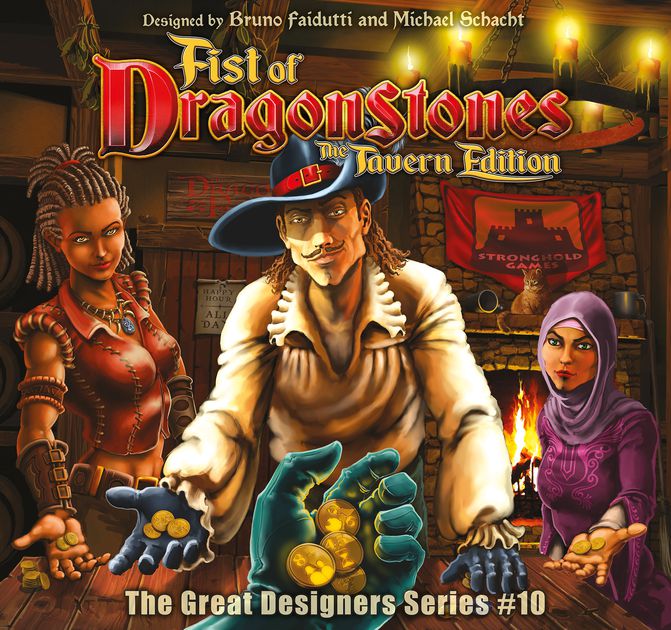
While For Sale eases players into auction and bidding with a different economic layer each phase, Fist of Dragonstones adds a hidden bid mechanism and multiple economic layers. There’s more going on with Fist of Dragonstones, but if someone is looking for an auction/bidding game with more strategic value and still plays quick and easy (it also has a fun fantasy theme), consider Fist of Dragonstones.
Players bid on character cards (with abilities) by using a closed fist method. No. You’re not allowed to punch someone; you’re just holding out a closed fist, hiding your bid.
Players hide their total money (split between regular gold and fairy gold, which is magical) behind a player shield (a piece of cardboard) and when an auction occurs, every player takes the bid they plan to make (regular gold, fairy gold, or a combination of the two), holds their bid in their closed fist and reveal their bids at the same time. The highest bidder wins the auction, and any money used—whether the player won or lost the bid—is returned to the bank.
Each character (the cards players are bidding on) has an ability that can help obtain more money or victory points. The first player to 4 victory points, wins.
The various character cards add replay value, and I don’t know of a single auction/bidding game that uses a fantasy theme. Maybe I should make Dragon Tycoon.
The inclusion of a closed fist bidding system is a great choice. Fist of Dragonstones uses the mechanism well and this a common game mechanism used in other tabletop games of various types—not just games that are predominantly auction or bidding.
There’s a reason this game put the juggernaut game publisher Days of Wonder on the map, and I hear it’s getting a reprint this year (2018). Bonus!
Stockpile
Ever wanted to play the stock market? Stockpile puts players in the shoes of a wolf of Wall Street. Well, maybe not, but the game does a good job of giving each player hidden information (about 1 of the game’s 6 stocks) that the other players don’t have to make decisions on whether to buy or sell a stock.
If a stock is about to plummet, ditch it into one of the stockpiles that players bid for during the round. Each player must place one stock face up in one of the stockpiles and one face down. Since there is one stock that is global knowledge (one of the risers and fallers for the round is known to all players), sneaky devils may want to put a stock of that type, face down so other players won’t know it’s there.
Stockpile’s bidding system is unique from the rest of the games on this list as each stockpile has a corresponding calculator card above it. The numbers (0, 1, 3, 6, 10, 15, 20, 25) on the calculator buttons represent the bids (in thousands) a player can make, and players take turns placing their markers on an available number on one of the calculators. Players can outbid—but not match—a previous bid. If they do, the owner of the lower bid collects their marker and can bid again. As soon as all players have placed their markers, they collect all the cards in the stockpile that their marker is on.
The bidding in Stockpile doesn’t take that long as there are only eight possible bids one can make for each stockpile during a round. New gamers will see this style of bidding in a lot of games like Cyclades. Due to the streamlined bidding, Stockpile gets players involved with trying to predict stocks that will rise or fall over the course of the game.
Stockpile is great for commodity speculation, but it’s also one that I’ve seen an 8-year-old play and enjoy.
Final Thoughts
These games beat the pants off Monopoly. For Sale, Fist of Dragonstones, and Stockpile serve as great entry-level games with some solid replay value. Just make sure you don’t lose your pants in a shady business deal.
Know of any other great beginner auction and bidding games? Let us know in the comments.
This bit of news doesn’t amount to much. It’s a slow news week, so eh. Bethesda announced that the Elder Scrolls VI Redfall will be a PS5 and Xbox (whatever they’ll call it) release. That’s pretty much what I figured. I said as much two or three weeks ago; this is just confirmation.
Starfield may have a chance of gracing current consoles, but there was little to no chance Redfall would make the PS4 or Xbox One. Fallout 76 counts as one of Bethesda’s flagship releases and the company likes to release one flagship title every three or four years. That means that Starfield should come out around 2021—maybe 2020 because they’ve been working on it for 6 years already and 2020 sounds like an awesome release year. Okay, there’s little chance Starfield will be a current generation console release.
Elder Scrolls VI should be released three to four years after Starfield, so that puts its release year at 2023 through 2025. Oh boy.
Guardians of the Galaxy 3 on Hold (Again)
Okay, maybe this is a pretty busy week of news. The third volume of Guardians of the Galaxy may not survive the firing of James Gunn. Here’s a quick recap of what’s happened. James Gunn posted insensitive tweets and was eventually fired as the director of Guardians Vol. 3. Some of the franchise’s actors back Gunn and Disney/Marvel has had a devil of a time finding another director they like. This has led to a stop-start every week or two.
MCU boss Kevin Feige announced this week that the franchise is on an indefinite hold. If the sides can’t find common ground (Bautista has no contract that covers a third Guardians movie), there’s a good chance that Guardians of the Galaxy 3 may not happen at all. Don’t worry. The gang will make an appearance in Avengers 4.
Boba Fett Movie Cancelled
Kathleen Kennedy confirms that the Boba Fett Star Wars spinoff movie is “100% dead.” While the cancellation of a Boba Fett movie helmed by Logan director James Mangold may upset some, the reason for this move is a shift to the Jon Favreau penned live-action TV series The Mandalorian. I couldn’t see both projects taking off, so a little focus for the Fett man may be in order. Let’s hope The Mandalorian delivers.
Andy Muschietti to Direct Attack On Titan
It director Andy Muschietti has just signed on to make a new Attack On Titan live-action film adaptation. The first one didn’t land well with manga readers. Why must every movie have a love story—especially when there isn’t a love story in the original work? Muschietti is a big fan of the original manga and if his work on It is any indication, the new Attack On Titan film will get the blockbuster treatment with plenty of chills.
PlayStation Classic Games List Confirmed
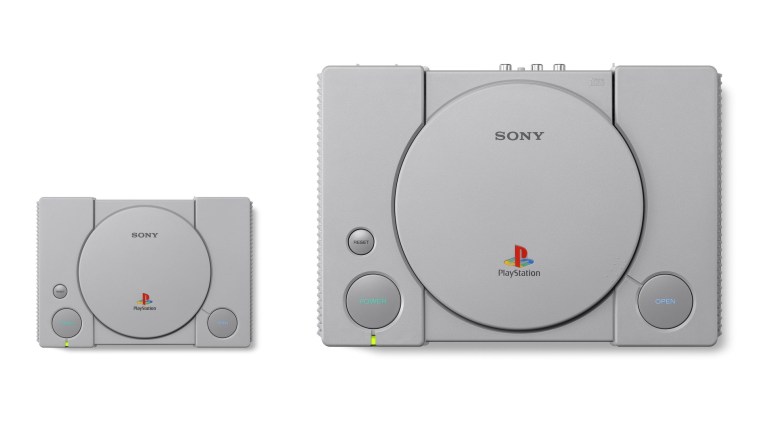
PlayStation announced that it’d join Nintendo with its line of diminutive classic systems with 20 preloaded games several months ago, but this week they announced the full list of games that’ll come with the system. They are as follows:
Battle Arena Toshinden
Cool Boarders 2
Destruction Derby
Final Fantasy VII
Grand Theft Auto
Intelligent Qube
Jumping Flash
Metal Gear Solid
Driller
Oddworld: Abe’s Oddysee
Rayman
Resident Evil (Director’s Cut)
Revelations: Persona
Ridge Racer Type 4
Super Puzzle Fighter II Turbo
Syphon Filter
Tekken 3
Tom Clancy’s Rainbow Six
Twisted Metal
Wild Arms
A lot of these are classic games or the first game in genre defining series. The PlayStation Classic hits shelves on December 5, 2018.
Video Games
Taiko no Tatsujin: Drum ‘n’ Fun! and Drum Session! (Switch, PS4)
Drum ‘n’ Fun (Switch) and Drum Session (PS4) mark the first time that a Taiko no Tatsujin game made it to the West. This series is a huge arcade/rhythm game in the East and it’s only a matter of time to see if the States and other countries will take to its catchy beats.
Movies
Bohemian Rhapsody
This is the big one this week for me. I’m a sucker for biopics and I like Queen. I don’t watch too many biopics in theaters, but I may make an exception for Bohemian Rhapsody, the biopic for Queen front man Freddie Mercury.
The Nutcracker and the Four Realms
Could this film be so bad that it’s good? I’m not sure. A lot of critics have called it “soulless” and “incoherent,” but the visual effects are good. It sounds like an impressive cast that includes Keira Knightley, Helen Mirren, and Morgan Freeman can’t help The Nutcracker and the Four Realms from becoming Disney’s worst reviewed film in history. Yikes!
Suspiria
This one won’t be for everyone. If this movie follows the 1977 original, Suspiria tackles some heady material, and its trailer depicts vampires who let the blood flow even more. This lends itself to multiple watches, once to get over the gore and the second to dig deeper into what the film is about, but a run time of two and a half hours may be a little long.
Nobody’s Fool
This is the latest Tyler Perry comedy. In this one, Tanya (Tiffany Haddish) is released from prison and is reunited with her family. The family learns that she’s in an online relationship with a mystery man who may be “catfishing” her. It’s a fun premise, so I may watch it. It also doesn’t hurt that Whoopi Goldberg, Amber Riley (Glee), and Mehcad Brooks (Jimmy Olsen from Supergirl) are in the cast.
Bodied
Eminem produces this odd fusion of comedy, battle rap. Eminem has a knack for the theatrical and it looks to continue here. Bodied has received a lot of praise and high marks, so it may be worth a watch.
Hugh Jackman stars in Columbia Pictures’ THE FRONT RUNNER.
The Front Runner
This one starts early next week. It’s another biopic, this time based on Matt Bai’s All the Truth Is Out: The Week Politics Went Tabloid. In short, it’s Hugh Jackman portraying Senator Gary Hart during his 1988 presidential campaign where he’s caught up in an extramarital affair with Donna Rice.
TV
Friday, November 2, 2018
Homecoming (Amazon)
I’ve talked about this one in the past. Julia Roberts stars as a caseworker who helps military members transition to civilian life. Years after she starts a new life as a waitress when a Department of Defense auditor questions why she left the program. There may be more to her being placed as a former caseworker than she realizes.
House of Cards (Netflix)
Today marks House of Cards’ final season. I lost interest a long time ago, and the Kevin Spacey scandal didn’t help, but hopefully Netflix’s first original series ends on a high note.
The Other Side of the Wind (Netflix)
This film may be the biggest thing Netflix has ever produced; it’s one of Orson Welles’s lost films. Being locked away in a Paris vault (due to legal issues) for decades didn’t prevent The Other Side of the Wind from influencing other films that came after it. It all but created the Mockumentary. What’s even better is that Netflix plans to release a follow up documentary on the film’s history which may be just as interesting.
Watergate (History)
History beats The Front Runner (Gary Hart) to the punch with this series about Watergate. This scandal may have marked the United States’ loss of innocence; it definitely gave birth to scandal journalism.
Sunday, November 4, 2018
Mickey’s 90th Spectacular (ABC)
Mickey Mouse made his first appearance on May 15, 1928 (Plane Crazy), and Steamboat Willie was released around Thanksgiving of the same year. Mickey’s 90th Spectacular is a special that celebrates Mickey throughout the decades.
Outlander (Starz)
Based on the historical time travel book series of the same name, Outlander returns for a fourth season on Starz. The premise sounds interesting and it’s received good ratings, so I may give it a try.
Board Games
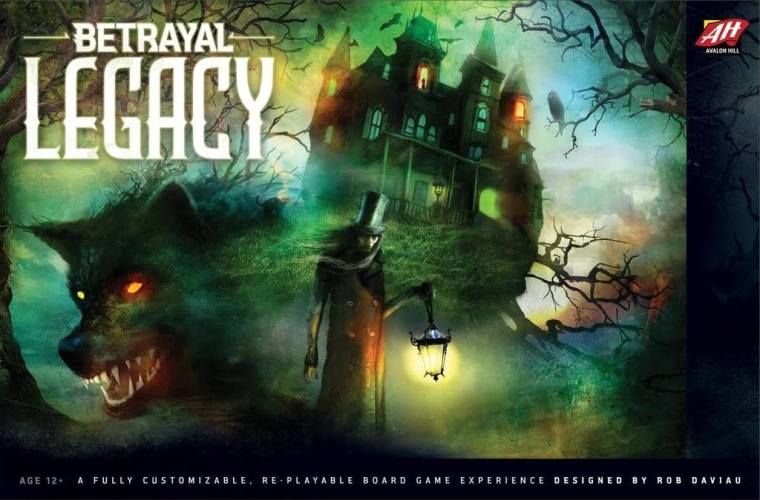
Betrayal Legacy
I may be a little late with this one, because tabletop games are difficult to track down with their new releases. Betrayal Legacy holds my interest with a death grip. Rob Daviau was involved with the original Betrayal at House on the Hill (think of a Joss Whedon’s Cabin in the Woods in board game form) and he adds his patented legacy game mechanism to the mix. For the uninitiated, legacy games are games that change the board through multiple plays, so Betrayal Legacy should play out more like a movie and the choices players make will have lasting consequences.
I may pour a little cold water on this writeup with saying that legacy games aren’t always executed as well as they could be. Gamers may want to wait and read a review (a spoiler-free review as this board game will play like a movie) before purchasing it.
That’s all we have for Geekly news this week. Be kind to one another and stay geeky.
For the tabletop uninitiated Monopoly hate may sound like lunacy, it’s the bestselling game of all time, but in the board game community, saying that Monopoly is a good game is akin to claiming that one prefers the prequels to the original Star Wars trilogy.
Monopoly’s average score on Board Game Geek hovers around 4.3 out of a possible 10. It’s rated 15,760 out of a qualifying, as in enough reviews, 15,763 games. Tic-Tac-Toe may be the most famous game rated below Monopoly. Tic-Tac-Toe! Many true analog gamers hate Monopoly. Hate may not be a strong enough word. They loathe the game.
Keep in mind that a 4.3 rating tallies up several people who gave the game a perfect 10 and still, there are plenty of people giving it a 1 or a 0 to bring the overall score to below average, but the hate may have gone too far.
Yes. Monopoly shows its age. It takes a fair amount of time to play. 80-85% of modern games play in a fraction of the time it takes to play Monopoly and the games that take as long as, or longer than, Monopoly create a world, a story, characters, or all three for players to latch onto. Yes, modern gamers have—for the most part—moved beyond simple roll and move. They want more choices and not leave huge decisions to a simple roll of the dice. And yes, Monopoly is one of the hardest and therefore worst games to teach someone as their first board game and countless people are introduced to board games with Monopoly—more on that in a minute—and the game does a good job of ruining friendships and familial bonds. How many games of Monopoly end with someone getting upset and quitting? But it doesn’t deserve to be in the bottom four rated games. There’s a reason, beyond licensing, that Monopoly is a classic.
Monopoly is a balanced game. If you look beyond the roll and move mechanism, it has deep strategy. It teaches math and introduces people to a market place. Countless designers have been inspired by Monopoly. Yes, plenty of modern game designers avoid making a game like Monopoly, some of them may actively make a game that isn’t Monopoly, but one can’t ignore the cultural significance of the evergreen game. I wonder how many game designers today began with a Monopoly clone or tweaked the game with their own house rules, and for those of you who may question Monopoly’s balance it’s a house rule that disrupts the game’s balance the most. The worst house rule of all time is one that’s included with the base game today: money on Free Parking.
Little good can come from playing the game with money under Free Parking. If the leader lands on the space, they get further ahead of the other players, creating a runaway leader. If someone trailing by a lot lands on the space, they’re given the equivalent of a meaningless run during a 10-run baseball game, right before the mercy rule to end the game would occur, and now they have to keep playing a game they know they’re going to lose. That isn’t fun. It definitely isn’t fun when “I’m smarter than you” cousin Justin won’t let you call the game early. I don’t care if I landed on Free Parking, Justin. You own the blue, yellow, and green monopolies and they all have hotels. I’m just going to give you all my money the next turn. I quit!
Never play Monopoly with money on Free Parking, but one can’t hold the sins of Free Parking against the original Monopoly.
Other house rules and new game variants do more to modernize this older game. Holding an auction before the roll of dice adds strategy and can speed things up; you don’t have to wait for someone to land on each space for each property to be owned and money exchanges hands quickly. Some newer versions of Monopoly have express dies that shake up things a bit. If you can find 2007’s Monopoly: Tropical Tycoon DVD Game, I’d highly recommend playing it. Besides the inclusion of a DVD, players have jobs and individual powers that give them unique advantages. It’s a game that shows that there’s a lot of design space with Monopoly because of its universal theme.
So, why all the hate? There are countless games ahead of Monopoly that are broken and unbalanced. Plenty of older games hold a higher rating than Monopoly too. True. The hate may come from Monopoly tearing friends and family apart. Player elimination in a longer game is a tough pill to swallow. Just ask Risk. One hates being eliminated early from a long game and being forced to watch, but I’d wager the hate comes from Monopoly’s place as one of the first games people play.
Monopoly is a tough game to learn. How many kids under the age of ten would know how to calculate 10% of their total assets for Luxury Tax? How many people can add up what they owe for maintenance in their head? Even if you can, would you want to? There are few modern games that require players to use a calculator or tax their brain with needless math, and it’s this barrier to entry that turns off a lot of would-be board game enthusiasts from the hobby.
I’ve lost count of the many people who don’t play board games who’ve said that they’ve only played Monopoly and board games aren’t their thing. If you played Monopoly as your first or only board game, I could see someone not liking board games. Tabletop gamers resent Monopoly because it has single-handedly prevented them from sharing their hobby.
Monopoly isn’t a beginner board game, but that doesn’t mean that it’s a game that’s so below average that it gets rated beneath unbalanced and broken games.
Is there another board game that gets too much hate? Does Monopoly deserve all the hate it gets? Let us know in comments.
It’s that time of year where gamers want to be spooked or maybe fight back against the things that go bump in the night. Happy Halloween, folks. Your uncle Geekly gets a little ahead of himself sometimes, but Halloween must be around the corner.
Since it’s the time for ghosts and goblins, let’s do a three lists of three for board games that use a horror, ghost, or spooky theme. Don’t worry. Uncle Geekly ain’t afraid of no ghosts.
Exploration and Investigation Games
Mansions of Madness 2nd Edition
Of the three games in this list, no one game combines exploration and investigation as well as Mansions of Madness 2nd Edition. This app-assisted Cthulhu game (you’ll see a lot more of Cthulhu on this list) can set the right mood for Halloween, but beware that Mansions takes a long time to play. Even short scenarios can take hours. Any time spent with Mansions of Madness is time well spent.
There are plenty of other, shorter games on this list. Mansions of Madness is the main course.
Betrayal at House on the Hill
My family and I play Betrayal at House on the Hill at least once every Halloween. It has a nice blend of horror and suspense genres in its various scenarios. The game can get unbalanced at times, but exploring the house is a lot of fun and perfect for a little spook time.
The Widow’s Walk expansion isn’t necessary, but some famous game designers like Christopher Badell (Sentinels of the Multiverse), Rob Daviau (grand master of all Legacy games), and Jonathan Gilmour (Dead of Winter) chip in with some new haunts. Betrayal at Baldur’s Gate is a standalone Dungeon and Dragons variant to the classic Betrayal, so if D&D is more your thing, it does a great job of combining the two genres.
T.I.M.E. Stories
This one’s a little of a cheat. T.I.M.E. Stories isn’t necessarily a horror game, but it does exploration and investigation better than most games on this list, and the first scenario occurs in an asylum, so that gets a little spooky.
If you’re not familiar with T.I.M.E. Stories, think of it as a mash up of Assassin’s Creed and Quantum Leap. Players get sent a specific time/space by a secret organization and they have finite time to fix something or right a wrong. This setup allows for a lot of various themes and that makes T.I.M.E. Stories more diverse than many other games on this list.
Bust Some Ghosts or Goblins or Zombies Games
Dead of Winter
The goal of a most Dead of Winter scenarios may not revolve around busting zombies, but zombies will be busted along the way. To be fair, the zombies have an easy time overrunning the players, so players don’t usually feel that empowered, but when they do, it’s a great feeling.
Characterization and a good story—thanks to the Crossroads game system—do a lot to separate Dead of Winter from a lot of other horror or spooky games. It’s worth the play, especially if it’s cold outside.
Ghost Stories
Plenty of gamers get frustrated with Ghost Stories. It’s easily the most difficult game on any of these lists—in terms of how brutal it is to the players—and what’s worse is that players are typically lulled into a false sense of security. But Ghost Stories is one of the best ghost themed games on the market.
It almost works like a tower defense game with nightmare fuel bombarding the players each turn. The players assume the roles of Kung-Fu masters. It’s the power these masters possess that gives players that false sense of security I mentioned earlier, but the variable powers work well in this title. I’m glad Ghost Stories is back in print. Just in time for Halloween.
Elder Sign
Sometimes you just want to chuck some dice. There will be other dice games in the third list, but those dice games are quick and don’t offer much in the way of brain burning. Elder Sign combines dice rolling with high strategy.
As the name implies, Elder Sign is another Cthulhu title—I may have to come up with a third one of these for the last list, so I’ll have one Cthulhu game in each list—but Elder Sign feels like the players are going head-to-head against an elder god more than most other games of its type. That’s why it’s on our “Bust some ghosts or goblins or zombies” list. I like to kick Cthulhu’s butt, but to be fair, he usually kicks mine.
Quick, Fun, and Light Games
Zombie Dice
I’ve talked about Zombie Dice before, but it’s a great, quick game where players push their luck as zombies trying to eat brains. Mmm…brains.
Zombie Dice also has a small footprint—it doesn’t take up much space on the table—so you could play it while going Trick or Treating. But not in the street. Never play dice games in the middle of the street.
Don’t Mess with Cthulhu
Yes! I completed the Cthulhu trio. Don’t Mess with Cthulhu is a quick, social deduction game where some players are trying to figure out who’s summoning Cthulhu and other players are trying to summon the elder god.
Luck plays a huge factor in this game, but it’s so silly and fast that you won’t mind. When Don’t Mess with Cthulhu hits the table, my family rarely plays just one game.
King of Tokyo
I had to go a little off-topic again with King of Tokyo. Players control large monsters or kaiju. The gameplay resembles Yahtzee if Yahtzee had a King of the Hill aspect added to it—hence the title King of Tokyo. Sure, the game includes player elimination, but at fifteen to twenty minutes a game, one doesn’t have to wait long before exacting their revenge.
King of Tokyo is another fun party game that’s hard to play just one game of.
There are so many Halloween ready tabletop games I could’ve included. What are some of yours? Are there any categories your uncle Geekly left out of these three lists of three? I won’t answer the loud knock on my door, but you could let me know in comments.
I just missed Iron Fist’s cancellation last week, and Luke Cage joins it this week. This may or may not be a sign of things to come with Marvel-Netflix’s shows. Several factors led into the decision to cancel the Heroes for Hire (Luke and Danny). I’ll try to keep this brief.
Disney still intends on beginning its own streaming service soon and is looking to reclaim the licenses of many of their characters; this also incited the proposed Fox buy-out. Netflix ordered fewer episodes of future Luke Cage and Iron Fist seasons as an effort to lower costs (fewer episodes mean less money for the license), but lowering costs means that they would give Disney less money and that makes Disney less interested in maintaining the agreement. But the chief reason may be that Netflix has matured (as a television network of sorts) to a point where they don’t overpay for licenses they don’t need or want, and they’re less likely to continue shows that don’t earn them new subscribers or downloads. Early Marvel shows like Daredevil and Jessica Jones brought in new subscribers, but Luke Cage and Iron Fist struggled.
Netflix still has the license to use Luke Cage and Iron Fist in their shows, so the cancellation of their individual series doesn’t mean that fans won’t see them on other Marvel-Netflix shows. Of course, things could change if Disney insists on reclaiming as many Marvel licenses as possible. The Mouse House could rescind their Netflix licenses or make the premiums for keeping any licenses untenable for Netflix.
Marvel Game Universe (MGU) Announced
And now for some lighter news. Spider-Man for the PS4 (released last month) is the official launch of an interconnected series of games that will feature Marvel Universe characters. The Marvel Game Universe, or MGU, will function in many ways like the Marvel Cinematic Universe with Spider-Man acting as 2008’s Iron Man.
Rumors swirl with numerous game developers attached to various Marvel properties. Sony’s Insomniac will continue with future Spider-Man games, but they’ll take on at least another character or two, Square Enix (of Final Fantasy and Dragon Quest fame) will produce Marvel titles (and Sony hinted that they may be involved with the larger project), and Rock Steady (Batman Arkham series) has been mentioned as well. I’m not sure who’ll be in the final production line as far as developers, but the main Avengers and stars of future Marvel films are a safe bet for getting their own games, and if the results of future Marvel games are as good as Spider-Man, it’ll be a fun ride.
Video Games
Red Dead Redemption 2 (PS4, Xbox One)
The long wait for Red Dead Redemption 2 is now over. This game is a prequel to the first Red Dead Redemption (2010) and follows the story of outlaw Arthur Morgan of the Dutch Van der Linde gang. Let’s hope this Western ends in a more positive light.
My Hero: One’s Justice (Switch, PS4, Xbox One, PC)
My Hero Academia gets the fighting game treatment. There’s a strong possibility that I’ll pick this one up on the secondary market. Plus Ultra!
Call of Cthulhu (PS4, Xbox One, PC)
This game will share more with the 1981 pen and paper role-playing game than the H. P. Lovecraft short story of the same name. What makes me interested is that Cyanide game studio contacted the original writers of the 1981 RPG, so this survival horror/role-playing game has some serious roots.
Movies
Hunter Killer
This one sounds like a good old-fashioned action adventure and that’s okay sometimes. The Russian president is captured and a U. S. submarine must rescue him while avoiding World War III.
TV
Friday, October 26, 2018
Castlevania (Netflix)
The first season of this Netflix original anime followed the source material closely, but it dragged in a few places. I’m hoping the second season will build on a promising cliffhanger.
Chilling Adventures of Sabrina (Netflix)
Sabrina the teenage witch has largely been a comedic character and in 2014, Archie Comics gave her a grittier reboot. I can’t wait to see how Kiernan Shipka and the rest bring this reimagining of the character to life.
Wednesday, October 31, 2018
Stan Against Evil (IFC)
This series is still on? I kid—sort of—because this series can scratch the itch left by a dearth of new Evil Dead material. I’ve always liked John C. McGinley (“Scrubs”), so I may give this comedy-horror series another shot.
Tell Me a Story (CBS App)
I like the premise of Tell Me a Story. This series takes the world’s most beloved fairy tales and reimagines them as dark and twisted psychological thrillers. Unfortunately, CBS is at it again with making some of its content only available on its streaming service. Ugh!
Board Games
5 Colors
This is an understated card game. The game is played with a deck of 100 cards, 20 cards of each of the titular 5 Colors. Players simultaneously play a card from their hand. The most played color gets scored and each player that played the most commonly played color gains points on the card they played. It’s simple to understand, but once players catch on with how to play, the strategy begins.
Atlandice
Atlandice has a lot more going on than 5 Colors. This game’s main feature is a rondel (a circular device that changes throughout a game) and in the center of the rondel is a doom clock. Players draft dice and items during their turn, trying to get the most points before rooms get swallowed by a flood and the doom clock ends the game.
It’s an interesting game with a lot going on. I can’t wait to get my hands on it and get a closer look.
That’s all we have for Geekly news this week. Be kind to one another and stay geeky.
Have I mentioned that the Geekly household likes cooperative games? I have? We’re a family of sore losers and think the other people at the table are cheating. I mentioned that too? Well, we’re also fans of puzzles and like the occasional Lovecraftian horror game. Ha! That’s new.
When I think of those criteria, I think of Mansions of Madness 2nd Edition, but there’s a specific mechanism that brings out the best in that game: integrating an app.
You know what they say about not being able to beat them. Many games use apps as game night assistants, but Mansions of Madness 2nd Edition uses the medium to create ambiance with mood-setting background music. It adds character to the game. Not just with the music, but with the variety in each area’s setup and whatever algorithm that tells the app that the players of this game have done specific puzzles in the past, it’s time to mix it up. It even randomizes the solution of each scenario, so someone can play the game more than once and get a different outcome.
Okay. Some of these features aren’t executed as well as they could be, but Mansions of Madness 2nd Edition harkens a new age in tabletop games. I don’t think we’ll get too many of these type games at once, but there’s enough in Mansions of Madness to make someone excited for a third edition or how other games will incorporate apps in the future.
There’s plenty more to like of Mansions of Madness besides its app integration. The exploration, discovery, and puzzle-solving are well done. The Geekly household likes to rotate who takes the role of narrator each turn so that everyone gets a turn. If there’s another gripe I’d have with Mansions of Madness’s app it’d be that they could’ve included more voice acting (as in various actors or more of it so that a player at the table wouldn’t have to roleplay)—but more roleplaying isn’t a bad thing. Ham on, Hammy.
The Mansions of Madness’s app works well overall. I’m encouraged by what I’ve seen in this game and other games like Beasts of Balance, the One Night Ultimate series, Alchemists, and World of Yo-Ho. This is a trend I don’t see going away soon and if Mansions of Madness is the start of a new wave of games, I’m okay with that as a change-up, but I still like my classic analog games.
That’s what I have as my favorite game mechanism for Mansions of Madness 2nd Edition. There are plenty more that I could include. What are some of yours? Maybe there’s another tabletop game that uses a companion app better. You can challenge me to a leg wrestle or tell me about it in comments.





































 jkgeekly.com