Marvel One-Shots Ranked

Hey, hey, Geekly Gang! Kyra Kyle here. The MCU has a history of making short films (One-Shots) that would tie into feature-length films. These One-Shots differ from Marvel Specials like Werewolf By Night. Typically, One-Shots last between five and fifteen minutes, so one could watch all the Marvel One-Shots in the time it would take to watch Werewolf By Night. Originally airing from 2011-2014, Marvel One-Shots were included as bonus features on MCU Blu-ray and DVDs. A couple of these One-Shots would inspire television shows. Geekly has never ranked MCU One-Shots. Let’s change that.

6-8) Team Thor Parts One & Two and Team Darryl (2016-2017)

There’s some debate as to whether Team Thor Parts One and Two and Team Darryl qualify as Marvel One-Shots. All three shorts were released after 2014, two years after the MCU officially said Marvel One-Shots aired, so I’m guessing they don’t count, which works for me. All three of these One-Shots are five-minute comedy routines with Thor or the Grandmaster adapting to life on Earth with a human named Darryl. People’s mileage with these jokes may vary, but all three are okay at best and groan worthy at worst.

I prefer the first one (Team Thor Part One) because it came first, and all three shorts use the same type of jokes, so they get progressively less funny. Should we call these three One-Shots honorable mentions?

5) The Consultant (September 13, 2011)

The Consultant is a strong Marvel One-Shot. While seated at a diner, Agents Coulson and Sitwell discuss how they intend to prevent General Ross from freeing his friend, Emil Blonsky (The Abomination from The Incredible Hulk). Sitwell suggests that he could be a patsy and sabotage General Ross’s plot to free Blonsky, and then Coulson counters by sending in someone to irritate Ross so much that he’ll flub the assignment. Sitwell suggests the titular “Consultant” (or Tony Stark), and eventually, Ross and Stark share an uncomfortable exchange. Mission accomplished.

Interesting tidbit: Coulson and Sitwell subtly hint at a future MCU plot point. When Coulson first talks about “the mission,” he doesn’t reveal everything he knows about the situation. Sitwell states he has Level Six Clearance and that there is no such thing as Level Seven Clearance. When Coulson returns after the events of The Avengers and sets up the Agents of S.H.I.E.L.D. television series, he reveals that he’s alive again and says, “Welcome to Level Seven Clearance.”

4) A Funny Thing Happened on the Way to Thor’s Hammer (October 25, 2011)

A Funny Thing Happened on the Way to Thor’s Hammer edges out The Consultant because it uses straightforward storytelling. Set before the events of Thor, A Funny Thing Happened on the Way to Thor’s Hammer begins with Agent Coulson stopping for gas. A stick-up takes place, and Agent Coulson defuses the situation. Actually, he turns into full-on John Wick and knocks out the armed robbers. Afterwards, he pays for his snacks and advises the store clerk not to tell the police he was there. A Funny Thing Happened on the Way to Thor’s Hammer shows Agent Coulson in a different light. He’s more than a pencil pusher at S.H.I.E.L.D., and this sequence was a sign of things to come.

3) All Hail The King (February 4, 2014)

Before making this list, I thought All Hail The King would land at number one, but there are two other Marvel One-Shots that edge out this much-needed retcon for Iron Man’s nemesis, The Mandarin. Ben Kingsley reprises his role as Trevor Slattery. Because of his role in Iron Man 3, Slattery is locked up in Seagate Prison. But it turns out that Slattery has a fan club and a butler named Herman, so Trevor isn’t exactly doing hard time.

Documentary filmmaker Jackson Norriss chronicles Slattery’s life, but he’s not all he appears to be. During his interview, Norriss takes out a hidden gun (from his camera), shoots all the guards, and Slattery’s butler. In classic Slattery fashion, he begs Norriss not to kill him. Norriss reveals that he’s breaking Slattery out of prison. The one whose name Slattery stole (the Mandarin) will have the honor of killing the cheesy actor.

I like that All Hail The King improves the Mandarin’s origin from Iron Man 3. All Hail The King has more than one call-back from the Iron Man franchise. During a mid-credits scene, Justin Hammer scoffs at Slattery’s performance in the prison cafeteria. Hammer wonders what makes Slattery so special. What indeed, Hammer. What indeed.

2) Item 47 (September 25, 2012)

Item 47 centers on a couple just scraping by, Bennie and Claire, who find a functional Chitauri gun. Using the alien technology, the pair go on a bank-robbing spree until Agent Sitwell of S.H.I.E.L.D. tracks them down. Instead of pressing charges, Sitwell recruits the pair into S.H.I.E.L.D. Item 47 features another straightforward plot, but where this One-Shot shines is its character development. You get a sense of who Bennie and Claire are and a seldom-seen glimpse at what “normal people” experience in a world dominated by superheroes and supervillains.

Item 47’s story arc laid the foundation for the Vulture in Spider-Man: Homecoming, and it indirectly began the television series Agents of S.H.I.E.L.D.. I knew Item 47 would rank high on this list. I had forgotten how influential Item 47 was to the MCU. It may take the top spot for most influential Marvel One-Shot, but one short just narrowly beats it for number one.

1) Agent Carter (September 3, 2013)

Hayley Atwell reprises her role as Peggy Carter (Steve Rogers’ love interest in the original Captain America) in Agent Carter. This is another Marvel One-Shot that started a television show, this time of the same name. To be fair, Marvel had intended to produce an Agent Carter television show. The Agent Carter One-Shot’s popularity sealed the deal.

I’ll be honest. I forgot the Agent Carter One-Shot existed. It does a great job of showing Peggy Carter navigating the loss of Steve Rogers and a hostile work environment filled with misogynists. S.H.I.E.L.D.’s early days were no picnic for a woman secret agent. Peggy single-handedly takes on an important, time-sensitive mission that S.H.I.E.L.D. believes is a 3-5 agent job. At first, the job seems routine, but things take a turn for the worse when she encounters Zodiac.

By Agent Carter’s end, Peggy is one of the few running S.H.I.E.L.D. with Howard Stark. Agent Carter features over-the-top action and campy set designs. It reminds me of a comic strip from the 1940s or 50s. It claims our top spot because it allows Peggy Carter to escape Captain America’s shadow. And it’s fun.

So, that’s our list. How would you rank the Marvel One-Shots? Let us know in the comments. Thank you for reading, and wherever you are, I hope you’re having a great day.

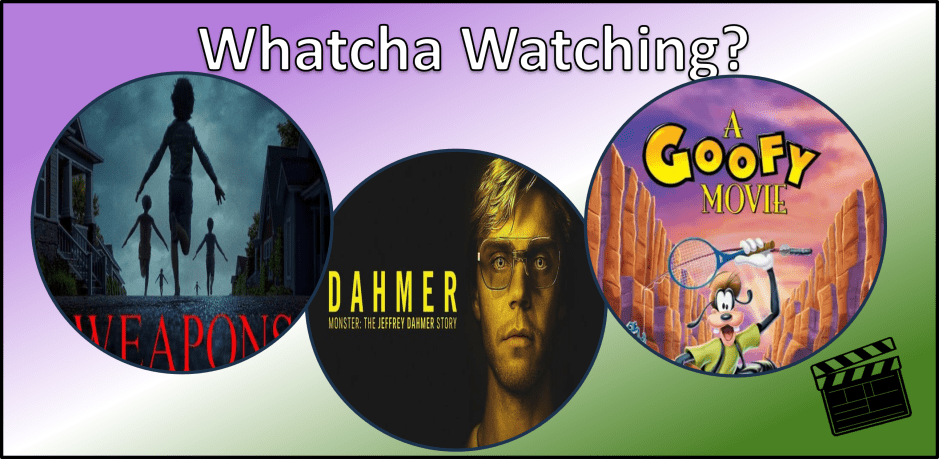
Whatcha Watching, Geekly? September 2025

Happy Wednesday, Geekly Gang! Kyra Kyle here with another Whatcha post. Today, our Geekly writers share which television shows and movies they’ve watched over the past month. Feel free to share what you’ve been watching. We’re all part of the Geekly Gang. I’ll get us started.

Kyra’s Shows

Yes! It’s a Whatcha Wednesday, and I’m mentioning the show, Wednesday. I watched Wednesday for the first time this month, so I’m late to the party. I enjoyed the first season. I may even need to do a deep dive for the Wednesday Addams character as she’s had an intriguing transformation through the decades (I even have some of the original comic strips). So good. I liked the nods Tim Burton makes to the original Addams Family television show throughout Wednesday while allowing the show to forge its own path.

Wednesday isn’t just a retelling of the Addams Family. It’s a reimagining. And I appreciate how Wednesday has created this new boarding school environment. With Joanne Rowling showing her colors as a transphobe, Wednesday offers a great alternative for an LGBT community left disenchanted with Hogwarts. Of course, Enid and Wednesday’s budding friendship drives Wednesday’s first season. While a little predictable, the first season’s murder mystery was fun.

Wednesday’s second season may have a more complex mystery, but it suffers from bloat. The first season weaved in small callbacks to the original series; the second season pumps in more callbacks to the original series, the Nineties movies, and Wednesday’s first season. This season also pivots away from Enid and Wednesday’s relationship, which makes sense for the story (I won’t spoil it here), but the lack of this pair’s chemistry hurts.

This may be an unfair assessment for season two. I’m trying to stay ahead of weekly Geekly posts so I’ll have more time to work on my novel (something I’m sure Wednesday would approve of), and I’m writing this entry a week before the second half of Wednesday’s second season releases. I’m sure there will be some great payoff during Wednesday’s second half. You may get a second post for Wednesday next month.

I’m enjoying Wednesday’s second season and can’t wait for this season’s conclusion.

I also binged Netflix’s Trainwreck series. This series (of about hour-long mini documentaries) varies in its watchability. Each episode of Trainwreck has excellent production, don’t get me wrong. It’s the subject matter for each Trainwreck episode that makes or breaks the show’s watchability. I couldn’t stand the Storm Area 51 documentary. I wanted to reach through my screen a slap the kid who started that trend. But I felt for the Balloon Boy’s parents. It seemed like an honest mistake, and it was clear Balloon Boy Falcon’s mother wasn’t fluent in English. P.I. Moms was eye-opening. While I don’t care for reality TV, it’s a shame this show fell apart. And the Poop Cruise made me second-guess going on a cruise ship. Yikes!

That’s all I have for Whatcha Watching this month. Let’s check in with Season and Skye.

Season’s Shows

I got nostalgic last month, Geekly Gang. I remember watching the original Fruits Basket anime (2001) on my CRT TV from a folding chair in the basement, using my Nintendo Wii, while taking notes for my ninth-grade physical science class. Good times. I was upset that the 2001 anime never finished the Fruits Basket manga, which continued way after the anime ended. Being stunned when the 2019 anime came out, a few years after I graduated from high school, doesn’t begin to describe what I felt at the time.

Nostalgia aside, there are aspects of the story that haven’t aged well. The premise is goofy enough on its own–people turning into animals of the Chinese Zodiac when hugged by a member of a different gender (male and female in this story). Many of the characters in Fruits Basket adhere to ideas of masculinity and femininity. The men suck at housework while the women are expected to do it. At least, as far as Tohru Honda (the female lead) goes. There is a character in the show who enjoys wearing women’s kimonos because he feels more at ease wearing them, but gets made fun of for it by some of the characters. If you’re willing to look past these things, Fruits Basket (2019) is an enjoyable watch that lets you turn off your brain.

Fruits Basket (2019) doesn’t take itself seriously in the beginning. Things ramp up toward the end, but there are still many comedic moments. Most of the characters have a lot of depth. Even the side characters who were around for, like, two episodes.

Fun fact: The original English cast of Fruits Basket (2001) reprised their roles for Fruits Basket (2019). I’m not sure about the Japanese cast.

That’s all from me. What have you been watching this week, Skye?

Skye’s Movies

I’ve never been a huge fan of The Conjuring franchise. While I enjoyed the first film when I saw it 5 years ago, it didn’t make me eager to watch the rest. Only after the recent release of The Conjuring: The Last Rites did I think, “It might be time to watch The Conjuring movies.” Over the past month, I watched 9 Conjuring movies. This includes the Annabelle spinoff trilogy, the 2 Nun films, and The Curse of La Llorona. What did I learn? Hollywood loves doing the same thing.

Are all the Conjuring movies the same? No, but they have striking similarities. Typically, there’s a cursed object, haunted house, or tormented family. Spooky stuff happens, experts show up, the spirits freak out, and the power of Christ compels them. I must admit, of The Conjuring films I watched, the ones bearing the “Conjuring” title were my favorites. These movies owe their watchability to the star power of paranormal investigators Ed and Lorraine Warren (played by Patrick Wilson and Vera Farmiga). Every time they were on screen, they shared an unrivaled chemistry that made their relationship much more real and adorable.

Do I recommend The Conjuring series? It depends on what you’re into, but if you like spooky films involving ghosts, demon possessions, and haunted dolls, I’m sure you’ll like the Conjuring franchise. Also, I gotta admit that I have a soft spot for Annabelle Comes Home. It’s just a fun romp through a carnival of horrors.

Skye’s Show

Watching the Netflix Ranma ½ remake came as an accident last month. I hadn’t intended to watch it anytime soon, until I woke up one day and decided to binge the whole first season. Overall, I feel like Ranma ½ (2024) did the original series justice while reintroducing it to a new generation. As a fan of the original, the main thing I noticed was a lack of alterations. The Ranma 1/2 (2024) team made changes like modernizing the animation, changing voice actors, and adjusting the pacing of the story. The show’s story remains untouched.

Because of that, I can’t help but ask, “Then why remake it at all?” I have 4 seasons of the original series on DVD box set, so why wouldn’t I just watch that? I know modern film and TV culture has shifted media consumption to online streaming, but Netflix could’ve just as easily put the original series in their library. I still enjoyed Ranma ½ (2024), but that’s essentially the same thing as saying I enjoyed Ranma ½ (1989). Take that as you will, and feel free to watch Ranma ½ (2024) if you don’t have access to the original. Otherwise, just watch the original.

Hey, hey! Kyra Kyle again. Those are all the shows and movies our writers watched over the past month. What’ve you been watching, Geekly Gang? Let us know in the comments. Thank you for reading, and wherever you are, I hope you’re having a great day.
Tabletop Game Review: Roll Camera!: The Filmmaking Board Game

Get ready to make a cinematic masterpiece by rolling dice and placing them in Roll Camera!. Players work for a struggling film production company. The company’s on the verge of bankruptcy and one successful film can turn around the company’s fortunes. It’s up to you to make the best movie you possibly can before time—and money—run out. We’ll get into Roll Camera! in just a bit, but let’s cover some of Roll Camera!’s details.

The Fiddly Bits

Designer: Malachi Ray Rempen
Publisher: Keen Bean Studio
Date Released: 2021
Number of Players: 1-6
Age Range: 10 and up
Setup Time: 5-10 minutes
Play Time: 45-90 minutes

Game Mechanisms

Cooperative Game
Dice Placement
Events
Open Drafting
Pattern Building
Set Collection
Solo/Solitaire Game
Variable Player Powers

Game Setup

Roll Camera! doesn’t have the best rulebook; it’s a little cluttered. I’ll mention this again in the review section. Fortunately, the game board is easy to navigate, and the company (Keen Bean Studio) produced How-to-play and Turn-by-Turn Walkthrough videos. These videos help a lot. I’ll do my best to convey the information contained within the rulebook.

1) Place the main game board in the middle of the table.

2) Choose or randomly assign one player board to each player. You may use either side. Give each player the Player Aid card that corresponds to their player board.

3) Shuffle the top and bottom script cards separately, then randomly select five of each to form two Script decks. Place each deck face-up in the corresponding spots on the board. Return the remaining Script cards to the box; they will not be needed.

4) Shuffle the Problem deck and then place it in its space above the board (the space marked with a red triangle and exclamation point).

5) Shuffle the Idea deck and then place it in its space below the board (the space marked with a yellow lightbulb).

6) Shuffle the Scene deck and then place it on the topmost Storyboard space on the board with the “sketch” side up. Draw two Scenes from the top of this deck and place them in the two empty Storyboard slots below the Scene deck.

7) Deal each player three Idea cards. Even though Roll Camera! is a cooperative game, keep these cards hidden. You will always have three Idea cards in your hand.

8) Mix up the Set Piece titles and place them face-up in two even stacks on their designated grey spaces on the main board, above the Set.

9) Adjust the Budget and Schedule dials according to the difficulty setting and number of players. The Difficulty settings are printed on the reverse side of the dials.

10) Place the pink Quality marker on the START space on the Quality track.

11) Place the “Blocked” tokens next to the Problem deck within reach. 12) Choose someone to be the starting player, giving them the six Crew dice and the Budget/Schedule dials.

Game Flow

Player turns in Roll Camera! consists of five simple steps:

1) Draw a Problem Card
2) Roll the Crew dice
3) Assign the Crew dice and take actions
4) Clear the Crew dice
5) Advance the Schedule and pass the dials

1) Draw a Problem Card

Draw one card from the Problem deck and put it in the slot immediately to the right of the Problem deck.

The Problem Queue has three slots. New Problems are added to the leftmost slot. Any existing Problems are pushed to the right. Problems never move back to the left, even if others are resolved to create a gap in the left or middle space.

If the Problem queue is filled with three problems, you don’t need to draw another one at the start of the next turn. However, you also cannot take actions, play Idea cards or gain bonuses that require drawing a Problem card if the queue is full.

2) Roll the Crew dice

Roll the Crew dice, which determine what cast and crew you’ll have available this turn.

Usually, you’ll roll all six Crew dice, but it is possible that some Crew dice have been “locked in” onto a Set Piece during a previous player’s turn. If so, you’ll roll fewer dice. At any point, you may choose to re-roll and reassign dice that were locked in on a previous turn.

Each Crew die has six faces: Camera, Light, Sound, Actors, Art Department, and Visual Effects (or VFX, whose symbols are white to denote that it’s considered a “Wild” die face).

3) Assign the Crew dice and take actions

Take as many actions as you have dice to assign for available spaces. You can use the blue action spaces on the main board, on Set Pieces (tiles), and on your player board. You cannot use the actions on another player’s board, nor can you use an action again if its space(s) are already filled with dice.

Actions will require specific dice. Refer to the following pictures, keeping in mind that the VFX die face is wild and can be used as any die face.

You don’t have to use all the Crew dice on your turn if you can’t or don’t want to; however, the next player will still re-roll any unused dice on their turn.

Locking In Dice)
You may also choose to “Lock in” any of the dice you place if you aren’t able to complete an action’s requirements. Another player could then complete those requirements on a future turn.

If you do this, the next player will roll fewer dice.

4) Clear the Crew dice

Once you’ve taken all the actions you want, clear the dice, leaving any locked-in dice on their spaces, and hand the dice to the next player.

5) Advance the Schedule and pass the dials

Turn the Schedule dial to lower your remaining time by one and hand the dials to the player to your left. Your turn is over; it’s now the next player’s turn, and they begin with Step 1).

Ending the Game

Play continues as above until players finish five scenes in the Editing Rooms and the movie is in one of the white sections on the Quality track. It is possible to create a “So Bad, It’s Good” movie. The game can also end if you run out of time on the dial. If this happens, you don’t get to finish your movie. Sad times.

Review

I’ll begin by reiterating that Roll Camera!’s rulebook is—at best—confusing. Thank goodness there are multiple videos explaining how to play the game. I recommend watching the rules video at least before attempting to play the game or even reading the rules as written.

The cluttered rulebook runs counter to Roll Camera!’s game board. One could almost figure out how to play by the symbols on the board.  That’s the mark of great graphic design. I’m shocked this didn’t carry over to the rulebook. I get it. Writing a rulebook is my least favorite part of designing and developing a board game, but Roll Camera!’s rulebook is borderline unreadable.

That’s a lot of text for a few images. Yikes!

There are a lot of individual mechanisms contained within Roll Camera!’s gameplay, but they all work together toward a cohesive whole. Player boards (with their unique abilities) make sense for player roles. Production design can improve the movie’s quality by expending an art department die face, the editor can move scenes around after they’re shot to meet requirements set by the script, and the producer can cut corners, generating money and an extra problem. Since the player abilities are tied neatly within Roll Camera!’s theme, it makes the abilities intuitive.

The requirements for placing dice are similar to those used in numerous dice placement games (like Alien Frontiers). That’s a strength. Similar symbols added with me learning how to play Roll Camera!. The Set Pieces made for an interesting puzzle the group must solve. Do we build a Set Piece with more blue, but specific blue spaces (like only actors can be placed on a space), or do we go for limited spaces with which to place dice, but when we do place dice on those spaces, you gain a bonus (like more money or more time)? These may seem like small choices, but these small choices add up to plenty of variables.

Roll Camera! even includes bad die roll mitigation. A player may choose the “Get Intern” action, setting a die to any die face but gaining a problem. Ah! The dangers of hiring interns. Roll Camera! uses its theme with most—if not every—design decision.

The most interesting action a player can choose during a turn may be “Production Meeting.” Players (including the active player) donate one idea card each to the active player. The active player will then choose which idea card to play, which one to save for later (you can replace another saved idea card if needed), and which idea card to discard. This is an interesting way to keep players engaged even when it’s not their turn as the active player. I may have to steal this game mechanism for a future game. Lol. Technically, the active player could play more than one idea card in a single turn. Saved idea cards can be played by placing dice on the spaces above their save space. The concept that you can play one die at a penalty versus playing an idea card for no penalty if you place two dice is brilliant.

Idea and problem cards uphold the theme. I don’t know how many times I chuckled when an editing-specific problem occurred while I played as the Editor or a directing-specific problem happened during the Director’s turn. Roll Camera! does what it sets out to do. It takes the world of cinematography and applies it to a fast-paced dice placement game.

I don’t even mind when my team and I fail, and we make a “So Bad, It’s Good” movie. In fact, those may be the best games of Roll Camera!.

Too Long; Didn’t Read

Dreadful rulebook aside (watch the how-to-play video instead), Roll Camera! takes the world of movies and turns it into a fast-paced dice placement game. Roll Camera! incorporates a lot of mechanisms, but each one works to form a cohesive whole that captures the essence of the game’s theme. Roll Camera! may be one of the few games I don’t mind losing. Heck! I like making a movie that’s “So Bad, It’s Good.”

Top 5 Pixar Movies

Happy August, Geekly Gang! My bi-monthly movie posts are usually based on a holiday or awareness event. With August, I have no clue what would work, so I decided to make August a wildcard. Instead of holiday or “Month of Honor” movies, I’d like to take this time to talk about one of my most beloved animation studios, Pixar.

I’ve mentioned my preference for Pixar films over Disney films on my movie blog (TGIMovies), just not with the Geekly Gang. I still enjoy classic Disney, but if I had to choose which studio has more personal, relatable, and adult themes in their films, it’d be Pixar. To this day, many of Pixar’s films are household names and have raised a generation of film lovers. Me included. I’d like to honor my favorites in the post. I hope you enjoy!

5) Toy Story

It’s hard not to include a Toy Story film. While I enjoyed Toy Story 2 and Toy Story 3, the original has always been my favorite. Despite the now-outdated (yet charming) animation, the magic of childhood is what keeps me coming back to the first Toy Story. When I first saw Toy Story as a kid, it ignited my love for toys and my imagination. The filmmakers knew what it felt like to have a friend you could hold in your hand. Not only that, but the first Toy Story encouraged me to analyze films for deeper meanings.

After countless viewings in my childhood, I started thinking about why I enjoyed Toy Story so much. I broke down the situations, how effective Sid was as an antagonist, and how the toys are really a reflection of their owners. I started doing this with Toy Story at the age of 10. I couldn’t help but include Toy Story on this list. And Pixar wouldn’t be what it is today without Toy Story. Toy Story easily claims the fifth spot, but over time, I’ve grown to love other Pixar films a bit more.

4) WALL-E

I adore WALL-E. The idea, the execution, the visuals, and the experience are unlike anything else in Pixar’s library. Given the lack of dialogue, the characters’ actions and the visuals tell the story. I respect WALL-E for its dedication to visual storytelling while still being a mainstream, big-budget children’s movie. This shows the filmmakers have deep respect for children by letting them draw their own conclusions.

As an adult, my favorite aspect of WALL-E is its message. WALL-E is unequivocally an environmental movie, but it’s unlike any other environmental film. Most others look at the issue from a pessimistic perspective, but WALL-E is (as far as I know) the only optimistic one I’ve seen. WALL-E addresses the issue realistically while urging us to make a change and focusing on the good we can do if we just try. I’ve already reviewed WALL-E at length on my blog; you can check it out here if you’d like to see my more detailed thoughts.

3) The Incredibles

The Incredibles is a movie that pops into my head without warning. I remember watching The Incredibles as a kid, getting engaged in the action, drawing comparisons between the Parrs and my own family, and loving the comedic beats. What sets The Incredibles apart from other superhero films is how it wasn’t based on a comic, and it preceded the comic-book film boom of today. Part of me can’t help but wonder if the success of The Incredibles paved the way for the reintroduction of superhero movies.

Much like other classic Pixar films, The Incredibles is chock-full of things that went over my head as a child. It still appeals to my inner child, but it challenges me in my adulthood by discussing mature topics. I never noticed it before, but The Incredibles deals with concepts like suicide, targeted legal/government actions, civil rights, big business, socio-economic divides, and cultural genocide. When I was young, all I remembered was “No capes,” but now I know what a difficult place the world is. Thanks, Incredibles.

2) Inside Out

Inside Out has a simplistic premise of emotions controlling your actions. I first saw Inside Out when I was approaching my teenage years, and Inside Out managed to put life in perspective. Inside Out’s greatest strength is its realistic depiction of emotions, but my favorite aspect is how it manages to be both one and two stories at the same time. Inside Out is technically a movie about emotions inside the head of Riley Andersen, but it’s really about Riley herself.

We see what Riley’s emotions go through to keep her on track, and the effects of those actions on Riley in the real world. In the process, Inside Out paints a nearly perfect picture of what it feels like as a real-life girl going through a crisis. When I first saw Inside Out, I saw myself in Riley. I felt her inner turmoil. As I’ve gotten older, Inside Out continues to help me work through difficult past experiences while trying to be the best person I can. What a movie.

1) Finding Nemo

A major part of why Finding Nemo claims the top spot is its story and characters. The characters endeared themselves to me, and the situation they found themselves in was engaging. Each character’s distinct personality, relatable goals, and identifiable flaws make them real. I’ve always preferred Marlin’s story over Nemo’s. In fact, Finding Nemo is the movie that taught me how my own parents are more complex than I first thought.

Before I saw Finding Nemo, I thought my parents were benevolent beings who mercifully gave me life and could do no wrong. I was kinda dumb. Finding Nemo showed me how difficult a parent’s life could be. My parents were more like me, and they have significantly more problems. Granted, a not insignificant part of me wanted to put myself in danger so they could “prove” that to me, so I may have originally misunderstood that point in Finding Nemo. This movie holds a special place in my heart. Finding Nemo features fabulous animation, spot-on pacing, timeless characters, and its story is unforgettable. Without a doubt, Finding Nemo is my favorite Pixar movie.

There are plenty of Pixar films that didn’t make this list. This list was difficult to make because there are so many great Pixar films to choose from. Maybe this post can help y’all decide your favorite Pixar films. Do you agree with my picks? What would you change? Are there any Pixar movies you’re excited about? Feel free to leave a comment; we always love hearing from y’all. Also, why not give your parents a hug? I’m sure they miss you. Take care and keep watching movies!

Whatcha Watching, Geekly? August 2025

Happy Wednesday, Geekly Gang! Today’s Whatcha post will be what our writers have been watching, movies and television, over the past month. We won’t be including Fantastic Four: First Steps because we have a full review of the movie. Feel free to share what you’ve been watching this past month, because we’re all part of the Geekly Gang.

Kyra’s Movies

I didn’t know what a vivarium was before watching the Vivarium film. A vivarium is a glass enclosure where someone can examine a living being. This object is a fitting name for this film. The first two films I’m including in this month’s whatcha watching have a common theme: horror films that use liminal space. Vivarium is trippy. It puts protagonists Imogen Poots (Gemma) and Jesse Eisenberg (Tom) in a suburb functioning like a vivarium, but this suburb is more sinister than an observation bowl.

The human-like otherworldly being (behind the odd suburb the humans can’t escape) drops off one of its babies and commands the pair to care for it. During a classroom scene with Gemma during the film’s opening, Vivarium establishes an analogy of a cuckoo bird, a bird that replaces a baby bird with one of its own, tricking the mother bird to care for the cuckoo’s young. The cuckoo bird analogy fits. Vivarium also serves as a cynical version of The Giving Tree, with humans replacing the tree. Quick spoiler: When Gemma asks who she is in relation to the cuckoo humanoid, the cuckoo humanoid answers, You’re here to die. Yeah. Vivarium may be more of a pessimistic version of The Giving Tree.

Overall, Vivarium was a disturbing but enjoyable watch if you’re into films with an uncanny valley aesthetic. And thank you for the nightmares of an odd child screaming at the foot of my bed. I needed that, Vivarium.

I watched Vivarium on YouTube. There’s no telling if Vivarium is still available on YT as you’re reading this. Fingers crossed.

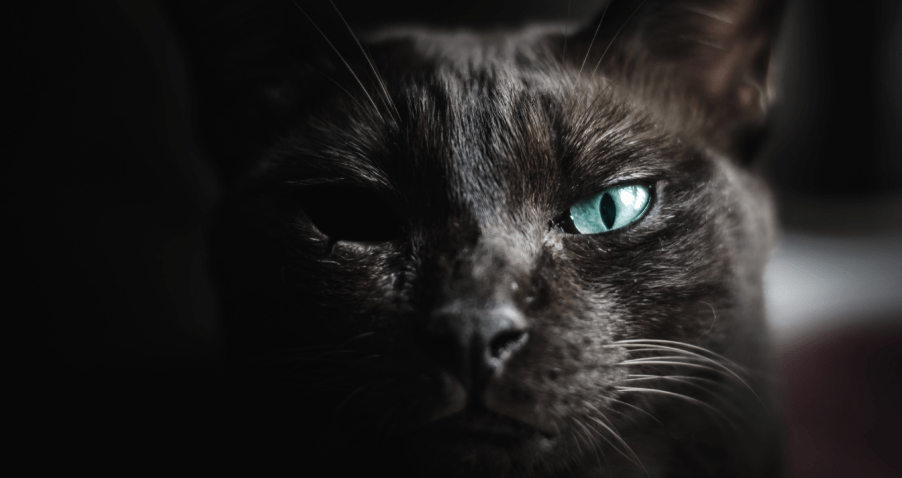
The above image sums up Skinamarink. This horror film follows two young children in the middle of the night. Their parents aren’t at home, the house loses its doors and windows, and an other-worldly presence is in the house with them. The film uses limited lighting. In fact, there are multiple scenes where the only source of light is a television or flashlight flickering on and off. That’s Skinamarink’s premise, but I don’t think the movie upholds this premise.

The doors and windows disappear and then reappear for “reasons.” I don’t know who or what the entity is. The entity has the power to erase the older sister’s mouth and does so because she calls out for her parents, but the same entity does nothing when the four-year-old boy calls 911. While Vivarium has a tight narrative, Skinamarink is all about the vibes.

Skinamarink gave me the impression of Community’s Abed making an atmospheric horror film. The shots lingered on images for too long. The images were often nonsensical. But hey, if you want to get creeped out by some bizarre imagery for an hour and a half, Skinamarink can scratch that itch.

I watched Skinamarink on Hulu. Hopefully, it can still be found on that service.

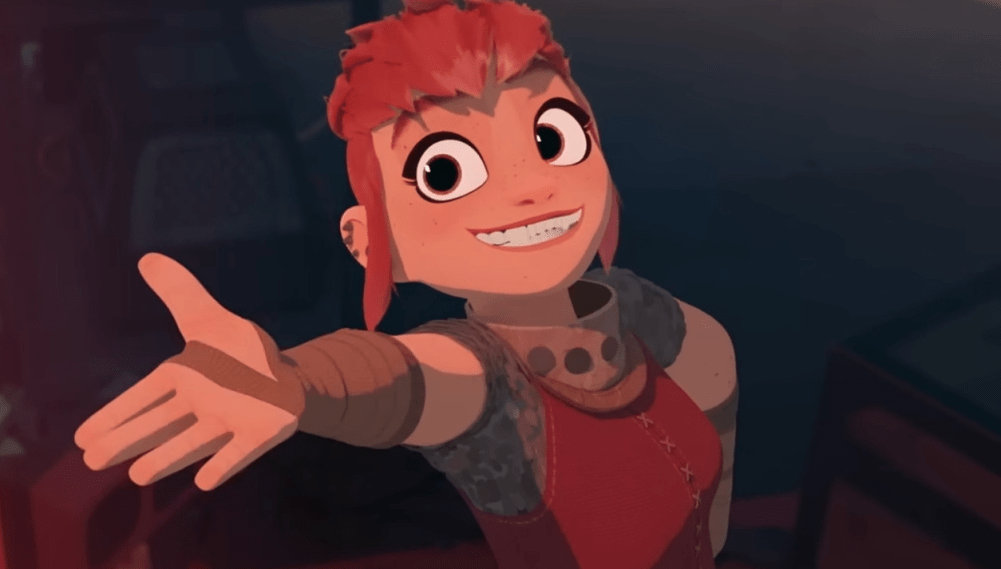
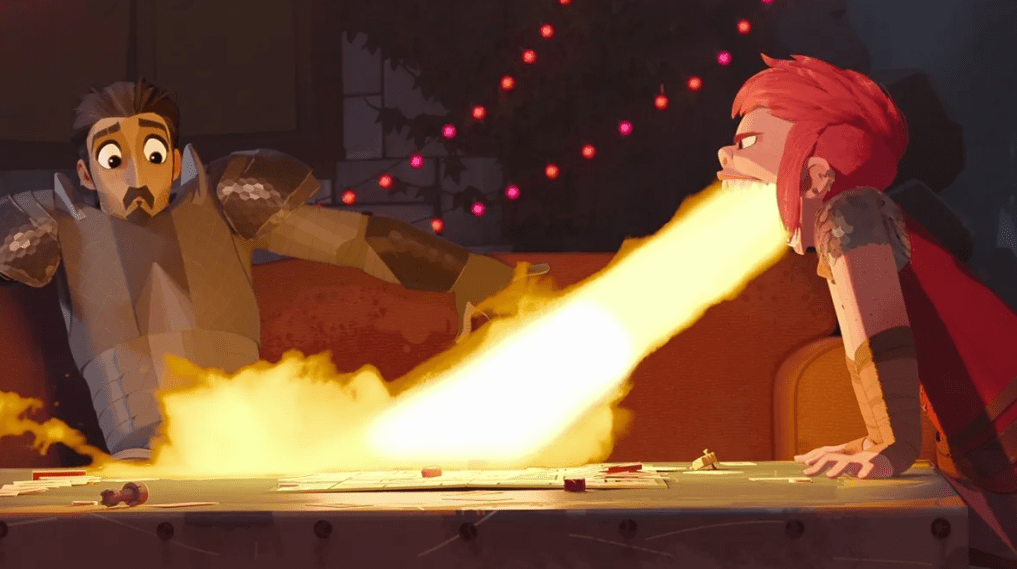
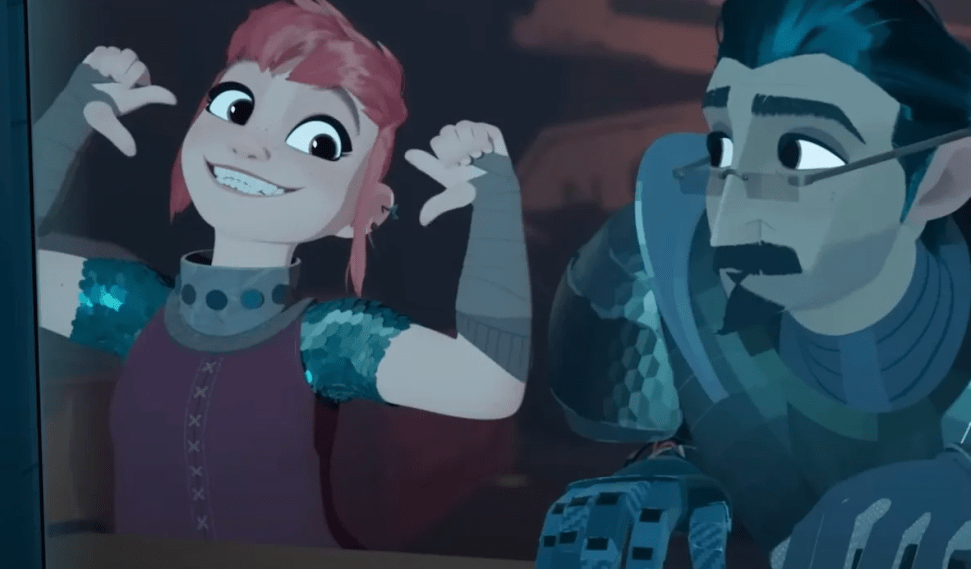
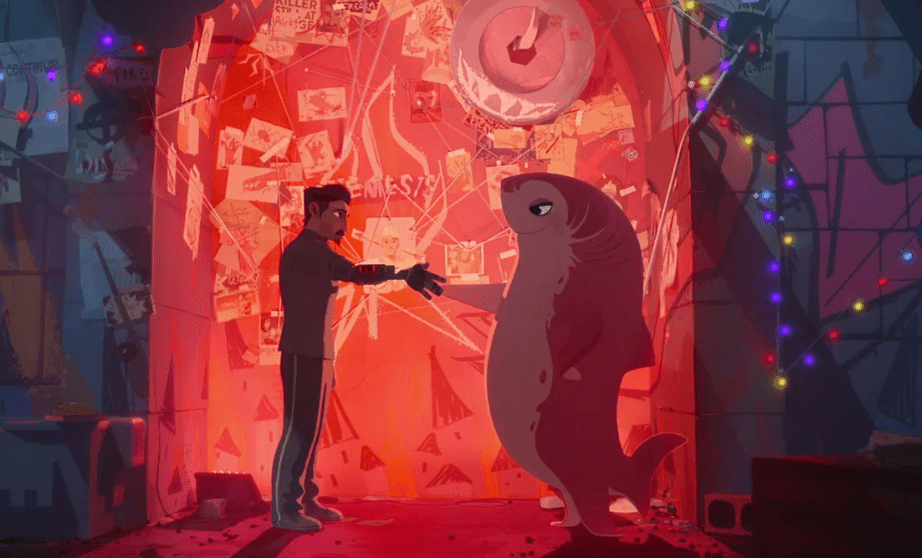
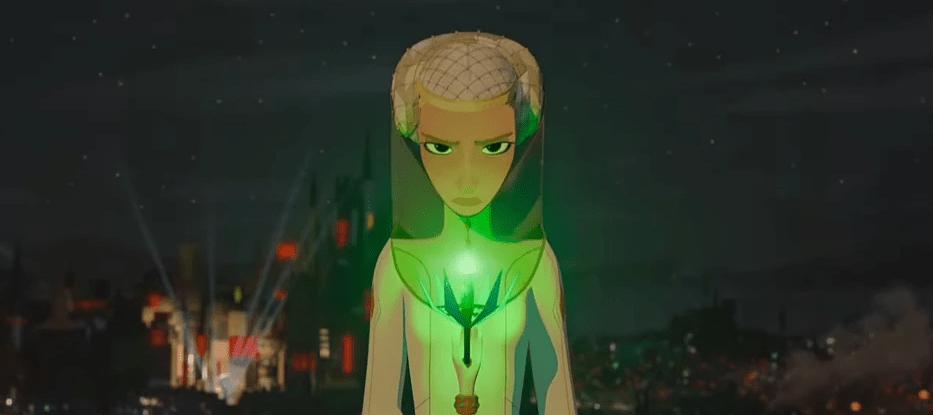
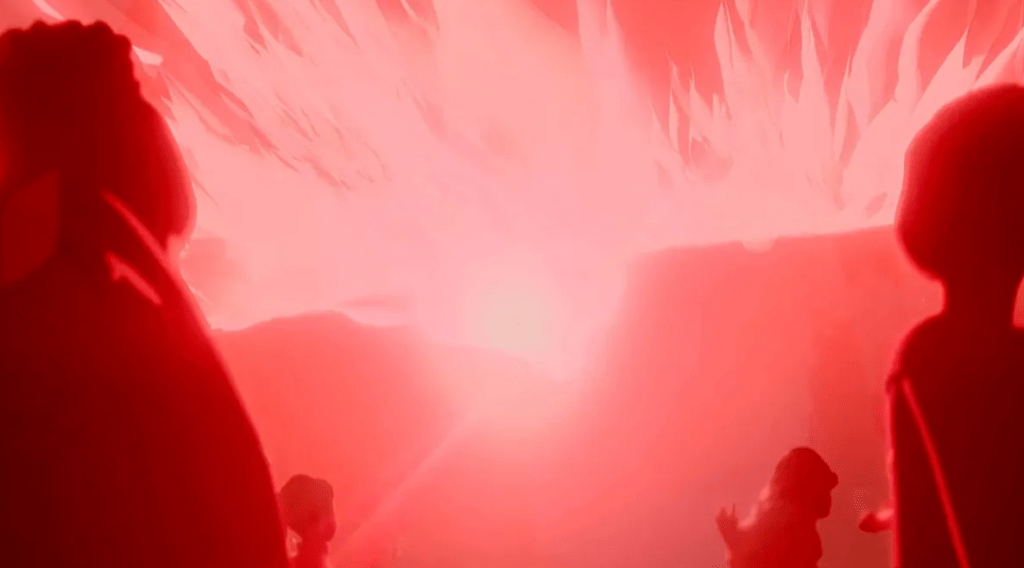
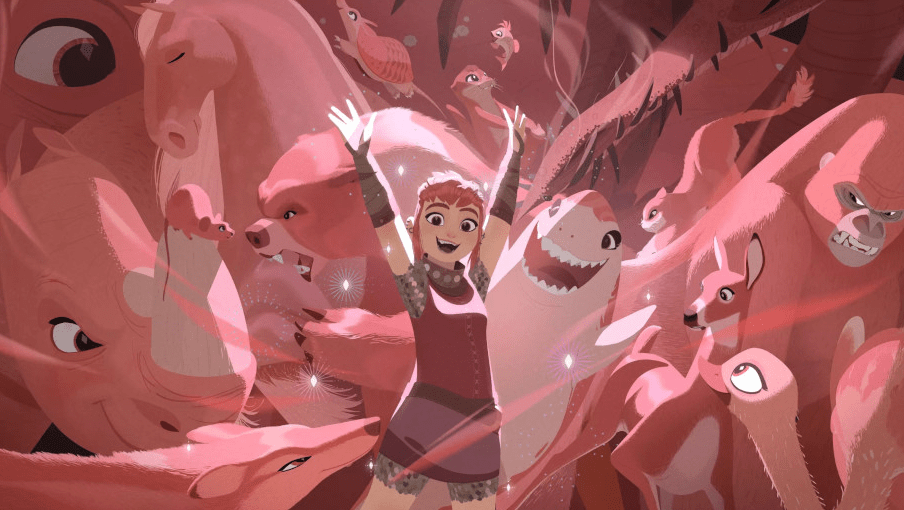
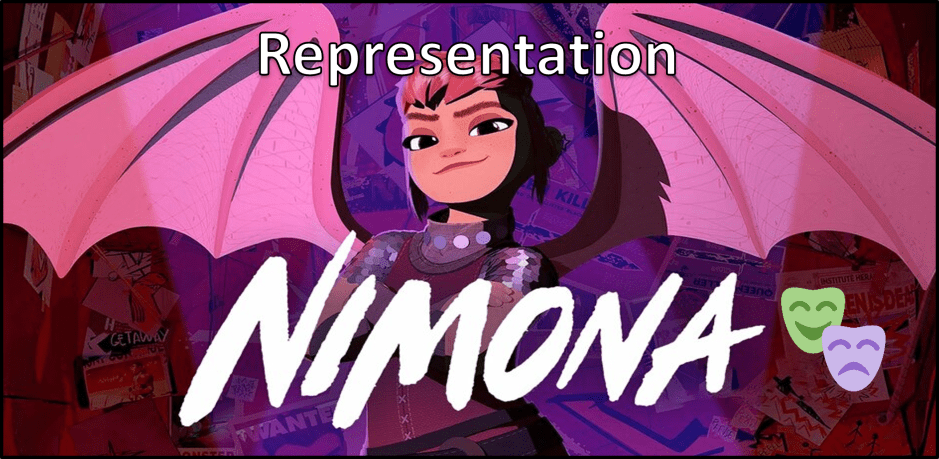
Nimona is a Netflix original film. I won’t go into too much detail. I’m writing a transgender representation deep dive for Nimona set for a December 2025 release. Yeah. Nimona offers some fantastic gender non-conforming representation, and I can’t wait to share that deep dive with you later this year.

Nimona gives me Shrek vibes, as in I haven’t watched an animated feature as refreshing as Nimona since Shrek. Nimona exhibits great storytelling. Its characters go on a roller coaster of personal growth. Good thing it’s infinitely rewatchable because I had to rewatch Nimona a lot for the deep dive. I highly recommend Nimona. In fact, one of the things my family did for Mapa Day (July 27, 2025: Parents Day, which is also for gender non-conforming parents) was watch Nimona. It was metal.

I don’t remember too many of the shows I watched over the past month. I’m certain I watched at least a few. Oh, well. I’m sure I’ll have shows for next month. Until then, let’s see what Season and Skye have been watching.

Season’s Movies

I haven’t been watching as much anime lately, but I had the itch. The Stranger by the Shore (or L’étranger de la Plage) is a short love story about Shun Hashimoto, a gay novelist ostracized by his family, and Mio Chibana, who lost his family at a young age. Both of them struggle to connect with people, which draws them to one another. They end up separated for a few years when Mio moves to Tokyo.

I won’t go into too much detail, but as a romance, The Stranger by the Shore was grounded in reality. Shun has moments of internalized homophobia. He rejects Mio’s advances for most of the movie before accepting himself and Mio. A lot of BL (Boys’ Love) manga and anime tend to shy away from real-world struggles people of the LGBTQ+ community face (outside of trying to not get caught). I found The Stranger by the Shore to be refreshing. And super cute.

The only reason I watched Jurassic World: Rebirth is that I love dinosaurs, and I wanted to see them on the big screen. I don’t care for the hybrids, even though they’re supposed to be the big bads of the movie. Jurassic World: Rebirth followed a similar formula to the original Jurassic Park, even down to the timing of the main theme song. The theme song played when we saw the Titanosaurs in Jurassic World: Rebirth. In the original Jurassic Park, the theme song played when we saw Brachiosaurus. They’re both sauropods. Coincidence?

We also had an evil dude (I forgot his name) run away with the blood samples and got eaten (just like Dennis Nedry). Jurassic World: Rebirth played it safe with the plot. It wasn’t a bad movie. But it wasn’t amazing, either.

Jurassic World: Rebirth claims Quetzalcoatlus was the biggest pterosaur to ever live. Geekly Gang, of these two giant pterosaurs, do you believe Quetzalcoatlus was bigger than Hatzegopteryx? I’d love to read your answers. 😀

Let’s see what Skye has been watching.

Skye’s Movies

In light of the recently released remake (alliteration; you’re welcome), I felt the need to revisit the original The Naked Gun. Simply put, The Naked Gun is still funny all these years later. I can understand why you wouldn’t want to rewatch it. O.J. Simpson’s inclusion in the film as a side character, Officer Nordberg, is off-putting. I tugged at my shirt collar when I saw him on screen. However, Nordberg’s scenes involved him getting injured in a ridiculously over-the-top way. That makes those scenes go down easier.

Chungking Express plays like a slice-of-life film that highlights the complex lives of people we pass by on the street. We don’t know them, we never will, but here’s a movie about them. That may go against the director’s intention, but that was my takeaway. The most notable thing I got from Chungking Express was the fantastic cinematography, namely the masterful one-takes, which made Chungking Express feel so much more like a glimpse into people’s lives.

I hadn’t heard of Night Moves until a couple of months ago. I thought watching Night Moves would be fitting since the recent passing of Gene Hackman. Rest in peace. Put simply, Night Moves was a roller coaster mystery. Most of the film is slow-paced and low-key, but once you get to the final half hour, boy, does Night Moves deliver. Hackman’s Harry Moseby is a private investigator tasked with locating a has-been movie star’s daughter. He’s not John Shaft, but he’s got drive. What will he discover…?

I had never seen Titanic up until this past month. I figured it was about time. Titanic’s focus is the romance between its two leads, but I got more from the side characters. The string quartet that was playing as the ship sank to lift the people’s spirits. The captain and designer of the ship being distraught and mortified at what became of their pride and joy. The heart-breaking moment when the naval officer shot himself after realizing the error of his ways. Those were Titanic’s real emotions.

Hey, hey, Geekly Gang! Kyra Kyle again. That’s all our writers have for this month’s Whatcha Watching. Feel free to share what you’ve been watching; you’re part of the Geekly Gang, too. Thank you for reading, and wherever you are, I hope you’re having a great day.

Fantastic Four: First Steps Review

Happy Friday, Geekly Gang! Kyra Kyle here with a Fantastic Four: First Steps review. Right off the bat, I must say 2025 is a banner year for superhero films and shows. The DCEU had been flailing for years; Superman (2025) gives the franchise new hope. The MCU has been a shell of itself in previous years, but Thunderbolts* and Fantastic Four: First Steps have been a return to form. I love that little MCU homework is needed for Fantastic Four: First Steps. Spider-Man: Homecoming aside, Fantastic Four: First Steps is the closest the MCU has felt to a Phase One movie in almost a decade. Fantastic!

I’ll try to avoid spoilers in this review. If you’ve read the Fantastic Four comic book, you should know the basis for a Galactus story. Fantastic Four: First Steps is the most comic book accurate Fantastic Four film. I mentioned in a previous Geekly News post that Shalla-Bal does have a basis in the comics; she’s Norrin Radd’s longtime romantic interest and has powers comparable to the Silver Surfer. In alternate universes, Shalla-Bal becomes Galactus’s herald in Radd’s stead, so if Earth 828 (nice tribute to Jack Kirby’s birthday, August 28th) is an alternate universe, it makes sense if she becomes Galactus’s herald. This allows Radd to become the Silver Surfer in Earth 616 (or some other Marvel universe). And Galactus is terrifying.

Galactus reminds me of the Reapers in Mass Effect: part living being and part machine. This visual effects decision makes sense. It allows for Galactus to look like his comic book counterpart. I cheered when I saw him onscreen. Galactus’s look is another great comic book accurate element. Johnny Storm figuring out Shalla-Bal’s history and pleading with her to save Earth was another classic comic book moment. Both Radd and Shalla-Bal sacrificed themselves to save their planet (Zenn-La) from Galactus, only to become Galactus’s pawns and destroy other planets.

I even liked the montage at the beginning of Fantastic Four: First Steps. It shows the team has been in the superhero/explorer/adventuring business for years, while not bogging down the film with extra runtime. While I would’ve liked to have seen John Malkovich’s Red Ghost, it made sense for Fantastic Four: First Steps to cut his scenes from the movie. Fantastic Four: First Steps had a tight 114-minute runtime. Just under two hours. That’s unheard of with modern blockbusters. Rumors swirled a few months ago that Fantastic Four: First Steps had a runtime of over two and a half hours, which would’ve made it one of the longest MCU films before edits. Fantastic Four went from being one of the longest MCU films to the fifth shortest. The audience got what it needed in that runtime. Kudos to Fantastic Four for cutting unneeded scenes.

Fantastic Four: First Steps is just what the MCU needed. Just like Superman (2025) got me excited for DC Comics movies again, Fantastic Four: First Steps got me excited for the MCU again. And like Superman, I have some notes for Fantastic Four: First Steps. The biggest is Galactus’s timeline. While Galactus does lumber through the universe on his never-ending quest for sustenance, it doesn’t make sense that Earth prepares for the titan’s visit when he’s already in our solar system. Galactus passes Jupiter by the time the Fantastic Four share their plan with the world, a plan that would take months to prepare. When the team’s first plan fails, they don’t switch to their second plan until Galactus is passing the moon. What? That timeline makes little sense.

Galactus entering our galaxy when the Fantastic Four share their first plan, and then reaching Jupiter when the Fantastic Four pivot to another plan, would make more sense. This is a nitpick, but I chuckled at this timeline’s absurdity. Invisible Woman giving birth in space with no bodily fluids is another one of my silly nitpicks. I get why Fantastic Four: First Steps chose not to include a zero-gravity placenta, but I figured I’d mention the lack of bodily fluids. Don’t get me wrong, I just finished a jumbo-sized popcorn and pretzel bites before the birth scene. My stomach appreciated the lack of floating bodily fluids. Still, Franklin Richards’s birth was the most sterile birth I’ve ever seen.

I could mention another nitpick or two, but those are smaller nitpicks, and they didn’t detract from Fantastic Four: First Steps. This is the Fantastic Four film I’ve waited for decades, and I’m so glad I got to review it on Geekly. I watched the 2015 Fantastic Four in the theater and reviewed it. Fantastic Four: First Steps was a huge upgrade. This film features the most comic book accurate Fantastic Four. And I hope Fantastic Four: First Steps begins a new trend for the MCU: less MCU homework for each project and cutting out unnecessary scenes for tighter runtimes. Fantastic Four: First Steps continues the MCU’s upward trajectory. Thank you for reading, and wherever you are, I hope you’re having a great day.

Skye’s 5 Pride Month Movies

Happy Pride, Geekly Gang! What better way to celebrate Pride Month than with movies? Being a member of the LGBTQ+ Community myself, it was fun to curate this list for y’all. My favorite part was seeing how film evolved in its coverage of LGBTQ+ themes. Sometimes heartwarming. Sometimes depressing. Sometimes downright cringeworthy. But what’re you gonna do? Regardless of content, these movies serve as great time capsules for how far we’ve come with discussing LGBTQ+ concepts. We still have a long way to go, but these movies are still cool.

I’d like to clear one thing up real quick. I don’t mean to imply that, as a member of the LGBTQ+ Community, only I can determine the best LGBTQ+ movies. Not at all. I’m one person, and these are some of my favorites I watched this month. There are also several other movies I saw and didn’t mention. Feel free to mention them in the comments. As always, thanks for your understanding. With that said, these are my picks for 5 LGBTQ+ movies for Pride Month.

The Birdcage

I’ll start with a goofy one. That’s mostly what The Birdcage is: goofy. Even with The Birdcage‘s simple premise, it managed to get some good laughs out of me. If you haven’t seen The Birdcage, here’s the run-down. A young man with gay fathers is getting married to a woman whose parents are deeply conservative. So, the whole movie is trying to convince the girl’s parents that the boy has straight parents. With a star-studded cast including Robin Williams, Nathan Lane, Gene Hackman, and Christine Baranski, how could I not recommend The Birdcage?

Also, I truly underestimated the comedic potential with Hank Azaria in The Birdcage. His role as Agador Spartacus had me rolling on multiple occasions.

The Kids Are All Right

Let’s take it down a bit. We go from off-the-wall humor to a more heartfelt premise in The Kids Are All Right. Two children with lesbian parents discover their sperm-donor father and try to connect with him. Another simple yet effective premise. The Kids Are All Right results in some complicated emotions and difficult relationship questions being raised. The mothers are worried about the sperm donor, Paul, taking their children away from them. Meanwhile, with the kids getting older, they’re already having conflicting feelings about their parents. It’s a cute coming-of-age film wrapped in an LGBT blanket.

If you’re in the mood for something more realistic and personal, I recommend The Kids Are All Right, if for no other reason than to remind yourself that Mia Wasikowska has emotions. I was shocked, too.

The Adventures of Priscilla, Queen of the Desert

Here’s where it gets more complicated. While I really enjoyed The Adventures of Priscilla, it elicited a wide variety of emotions from me. As three drag queens make their way across the Australian Outback, they have several misadventures along the way. That doesn’t seem like much on its face, but it results in all sorts of interactions. The upsides, downsides, and everything else that comes with being a drag queen in the 90s are put on display here, and it’s not always easy to watch. However, y’all may know that movies like that are the kind that attract me.

Sure, The Adventures of Priscilla can be difficult to get through, but I recommend it only for Terence Stamp. Yeah, it’s fun seeing General Zod as a drag queen.

Paris is Burning

Paris is Burning is a classic. While the creation of the film raises some ethical questions, what’s detailed in it is unlike anything else I’ve seen. Paris is Burning outlines the intricacies of Ballroom culture in New York City at the height of the AIDS crisis. This month was my first time watching it, and it raised several difficult emotions. I found myself reflected in each of the folks on-screen and relating to their struggles to an unhealthy degree. We will survive, and Paris is Burning shows us how they do it in “Gay World.”

Paris is Burning also does a fantastic job of highlighting the difficulties of combining LGBTQ+ issues with race issues. This is still an issue today, but if we don’t talk about it, it’ll never change.

Disclosure

Of the movies on this list, the ones I would consider “must-watches” in today’s climate are Paris is Burning and Disclosure. While Paris is Burning has proven to maintain relevance after 35 years, Disclosure was released 5 years ago, and its importance is already striking. Disclosure takes an elaborate and detailed look at the coverage of transgender people in the public eye over the years. From as far back as the 1910s, Disclosure shows us how transgender people have been humiliated from the start. As the world continues to grow and evolve, especially now, we need movies like Disclosure.

Even thinking about Disclosure now, I can’t help but feel emotional. For me, Disclosure hits too close to home, but that’s also why it’s important.

So those are my 5 movies for Pride Month this year. What do y’all think? Are there any movies I mi – Yes. I couldn’t even finish that sentence, but yes, share your favorite LGBTQ+ movies in the comments with us. We always love to hear from you! Now go out there and show the world how you’re not afraid to live your life on your terms. 😉

Whatcha Watching, Geekly: June 2025

Happy Wednesday! Since it’s Wednesday, we have another Whatcha post. Hey, hey, Geekly Gang! Kyra Kyle here. Today, the Geekly writers will share the TV shows and movies they watched over the last month. Feel free to share what you’ve been watching, because you’re part of the Geekly Gang, too.

Kyra’s Shows

I’ve watched a handful of shows, but Good American Family may be the most noteworthy. Good American Family is another true crime documentary, but it doesn’t involve murder like my last month’s picks, just child abuse and neglect. Trigger Warning: If you don’t care to watch a show about child abuse, I would skip Good American Family.

This Hulu exclusive follows a real-world couple (Kristine and Michael Barnett) as they adopt a child with dwarfism (Natalia Grace). Good American Family makes an interesting choice with its narrative structure; it attempts to show both sides of the issue. This idea may work better in theory than in practice. Kristine (portrayed by Ellen Pompeo) and Michael (played by Mark Duplass) tell their story first. In fact, the first two episodes (which originally aired the same day, March 19, 2025) follow the Barnett’s sequence of events.

Kristine champions autistic children. She believed in her autistic son, Jacob, and helped him adjust to his neurodivergence and strives to do the same for other children like Jacob. Good American Family goes out of its way to paint Kristine as an angel of mercy in these first two episodes. The same can’t be said for Natalia (played by Imogen Faith Reid).

Natalia does some horrific things like putting her hands over Kristine’s eyes while she’s driving, decapitating her adoptive brother’s stuffed giraffe, and poisoning Kristine’s coffee. What makes matters worse is that Kristine believes that Natalia Grace is a twenty-two-year-old woman instead of a seven-year-old child. It’s like a scene from the movie Orphan. Natalia is getting close to Kristine’s husband, Michael. The first two episodes do a great job of setting up this conceit. It even appears that Natalia has gone through puberty (she might have a period and has pubic hair), so Kristine Barnett’s hypothesis sounds like it could be true.

But then we get Natalia’s point of view in Good American Family’s third episode. She is clearly a child, not an adult. Her outbursts are those of a troubled child with disabilities. What seemed to be understandable–if extreme–responses by the Barnetts in the first two episodes transform into horrific child abuse in the third episode. By the end of the second episode, the Barnetts legally change Natalia’s age to 22 and dump her in an apartment by herself. So, the Barnetts just abandoned their child. That’s terrible. Things get worse for Natalia as the Barnetts sprinkle in some torment (during the third episode and beyond). Spoiler Alert: Eventually, Natalia finds a supportive family, her life turns around, and she takes the Barnetts to court.

Again, I’m most interested in Good American Family’s narrative structure. While I like the attempt to show both sides of this story, the show’s structure holds it back. Many viewers said things like I can’t believe this 22-year-old duped this couple. Clearly, these viewers didn’t watch Good American Family beyond its opening night (when it released its first two episodes). Perhaps Good American Family should’ve released the third episode on opening day or consolidated the first two episodes. The second episode ventures into some nice psychological horror; I could’ve done without the first episode’s melodrama.

The point of view shifts to Michael Barnett near the end of Good American Family. This episode (or episodes) paints Michael as another potential Kristine victim. I never bought it. Good American Family hammers home the point that Natalia was the only victim in this story during its final episode. Ultimately, Good American Family obscured a heap of details during those first two episodes. It didn’t just show the Barnetts’ point of view; it sanitized the Barnetts’ wrongdoing. And what the Barnetts did gets sick.

Kyra’s Movies

I watched plenty of true crime documentaries. I won’t add another one to the movies I watched this last month. Instead, Captain America: Brave New World was added to Disney+. I didn’t watch it in theaters, so I figured I would give it a quick review.

Captain America: Brave New World wasn’t as bad as I feared, but it wasn’t as good as it could’ve been. The Serpent Society barely played a role. The movie doubled down on traditional Hulk villains, Thaddeus “Thunderbolt” Ross (Red Hulk) and The Leader. While I still think Hulk villains in a Captain America movie makes little sense, I like that Captain America: Brave New World didn’t try to shoehorn more members of the Serpent Society. The movie’s villains could’ve been crowded.

Despite being a more focused story than I originally thought, Captain America: Brave New World requires a lot of MCU homework. Falcon/Winter Soldier, The Incredible Hulk, and Eternals. I could see a lot of people watching Falcon/Winter Soldier. That series did well enough on Disney+, but MCU fans would need to subscribe to Disney+ and watch an eight-hour miniseries.

The Incredible Hulk is eighteen years old by this point. Captain America: Brave New World does a good job of building up Ross and his daughter, Betty, but talk about striking while the iron is ice cold. Fewer moviegoers watched Eternals. I wouldn’t have watched Eternals if it weren’t available on my flight to London. I wasn’t going anywhere for eight hours. Why not watch Eternals?

I like how Captain America: Brave New World introduced adamantium by using Celestial Island (an event from Eternals). But I can’t help but imagine the MCU viewer who saw the massive body in the middle of the Indian Ocean and wondered if that was Galactus. There’s a lot of mandatory MCU homework for Captain America: Brave New World. In fact, this movie may have the most required MCU homework. By my count, one would need to watch about 40 hours. 40 hours? Yikes!

And while I said that Captain America: Brave New World’s story could’ve been far more scattered with additional Serpent Society members, that doesn’t mean that the movie has a tight script. It rambles. I thought the movie could’ve ended a handful of times before it did. And my final note is on Sam Wilson’s Captain America (who didn’t take the super soldier serum). The Wakandans did Sam a solid. His vibranium wings saved him multiple times. While that makes sense for the character and within the confines of the MCU, I didn’t like how little I feared for Sam’s safety.

I didn’t want Sam to get hurt, but he’s the one Captain America who didn’t take the super soldier serum, and he went toe to toe with a Hulk. I didn’t gasp once during his battle. It was as if Sam had taken the super soldier serum. Captain America: Brave New World may be a mixed bag, but I love Tim Black Nelson’s Leader. The Leader may have been worth an eighteen-year wait.

That’s all I have for this month. Let’s see what Season and Skye have been watching.

Skye’s Movies

After watching Goodfellas, I can see what everybody’s talking about. Goodfellas isn’t one of those movies I hear a lot about, but whenever I do hear about it, it’s always good things. I wouldn’t say Goodfellas is the quintessential mob movie (considering we live in a world where The Godfather still exists), but it’s still pretty darn good. Goodfellas does a great job of capturing the feel of organized crime, has gritty violence, is just the right amount of uncomfortable, and I loved it.

While not the whole story, Goodfellas does enough to show us both the glamour and danger of mob life. Also, the piano exit from “Layla” has been stuck in my head for weeks.

Some Like it Hot has been on my watch list for years. After watching it, I can confirm that I enjoyed Some Like it Hot, but not as much as I thought. To be clear, Some Like it Hot is still a very funny movie and got some genuine laughs despite its age, but I was surprised by how slow it could be at times. I was taken aback by the sudden romance that came halfway through. It wasn’t necessarily bad; I just wasn’t expecting it.

Even if Some Like it Hot wasn’t as bombastically funny as I anticipated, I still had a fun time with it. After all, nobody’s perfect.

The Seventh Seal is a classic in every meaning of the word. Even to this day, The Seventh Seal is one of those movies that’s studied in film schools around the world. This was my first time watching The Seventh Seal. Put simply, I wasn’t disappointed. I respected The Seventh Seal’s patient approach to suspense and thrills. Modern horror films overly rely on jump scares to make the movie seem scarier. The Seventh Seal‘s silence scared me the most.

If you haven’t seen The Seventh Seal, I highly recommend you treat yourself to one of cinema’s most revered classics.

Eraserhead is a movie I had already seen before this month, but I felt like I needed to watch it again. If you’ve never seen Eraserhead, you’d best go into this experience blind. This is a cinematic journey you’ll never forget. It’s difficult to go into details about what Eraserhead is because it uses shrouded symbolism, abstract storytelling, and deliberate imagery. Despite having seen Eraserhead three times, I still don’t fully understand it. What I like the most about Eraserhead is how you can watch it several times and always come up with a different explanation. That’s, without a doubt, David Lynch’s intention. Rest in peace, David Lynch.

If you’ve never seen it, make sure you watch Eraserhead on an empty stomach. You’ll thank me later. Also, keep telling yourself: “In Heaven, everything is fine.”

Season’s Movies

I’m not much of a movie watcher, but I did re-watch The Hunger Games: Mockingjay Part 1 & Part 2. No. I didn’t re-watch The Hunger Games and The Hunger Games: Catching Fire. It’s been a while since I read the books, so I can’t remember everything in the books that got left out of the movies. I think Katniss singing “The Hanging Tree” was my favorite part across both movies. I think the movies did a decent job of representing the books from an outside perspective. As a viewer, I wasn’t completely inundated with Katniss’s every thought. The Hunger Games, in general, is definitely a good series to revisit, both in novel and film form.

Season’s Shows

I’ve been binge-watching Dead End: Paranormal Park the past few days, and I’m in love with it. It’s a cute show that combines accepting people for who they are and fantasy. Who doesn’t like fighting demons while having to deal with scary family/people situations in the real world? Dead End: Paranormal Park features LGBTQIA+ and neurodivergent representation. There is one character who got gender binary-coded, which differs from the comic. This aspect of the show irritates me, but other than that, I’d definitely recommend Dead End: Paranormal Park for people who are looking for something fun and in the spirit of Pride.

Kyra Kyle here again. That’s what the Geekly writers have been watching this past month. Let us know what you’ve been watching, Geekly Gang. Thank you for reading, and wherever you are, I hope you’re having a great day.
Thunderbolts* Review

Thunderbolts* takes a familiar MCU formula and adds deep themes, allowing its characters to shine. Yes! The Geekly Gang has had a chance to watch Thunderbolts* on the big screen. Hey, hey! Kyra Kyle here. Happy Friday. Today we’ll be covering Geekly’s thoughts on the latest Marvel film to release, Thunderbolts*.

Thunderbolts* is indeed the sleeper hit I was hoping for at the beginning of the year (during our MCU preview). I’d even say it’s one of the better recent Marvel projects. We’ll get to some of the goodness here after a while, but I wanted to start by saying that I appreciated not needing to do MCU homework for this movie. Because Sentry can tap into others’ past trauma, the audience got a good introduction to most of the characters. No hundreds of hours of viewing necessary.

That alone was a relief. Florence Pugh’s Yelena Belova was an excellent choice for a primary point-of-view character. Thunderbolts* does bounce a little bit, but Yelena is the character the audience shares the most time. Thunderbolts*‘ Yelena isn’t the jovial Yelena from previous projects (like Hawkeye or Black Widow). This is a woman struggling with the loss of her sister (and by extension, her family). She’s lost and trying to find her place in the world. I said this during Geekly’s preview several months ago, and I’ll reiterate here: Yelena is relatable.

So many of the Thunderbolts* are relatable. They’ve fallen short of glory. They’re haunted by their demons. They find a way to endure and persevere. It’ll be difficult not to get preachy with this response, but I’ll try and restrain myself. In short, Thunderbolts* is about mental health.

I’ll try to stay as spoiler-free as I can. It’ll be difficult. I love how Thunderbolts* introduced Sentry. This could’ve handled Sentry’s introduction poorly, but Bob’s inclusion was handled with care. He battles demons of his own, and like I said prior, he can draw people into their past trauma. This will come back to bite the Thunderbolts in the future because every member has trauma. Sentry forces the team to face their past, and eventually, the Thunderbolts help Sentry battle his own self-loathing. Bob views it as an ever-present void. Again, for someone dealing with depression, this is relatable.

I don’t want to get into any further detail; it’ll get too spoilery. How the Thunderbolts assemble has shades of the Guardians of the Galaxy. It worked for the Guardians; it works for the Thunderbolts. There are a few exceptions, but most Thunderbolts are tasked with assassinating one of the other future members. Julia Louis-Dreyfus’s character (Valentina) is in the throes of impeachment trials and uses the various members to cover up her tracks. Her final loose ends are the Thunderbolts. Okay. That was kind of a spoiler. Thunderbolts* may use familiar tactics, but the way the movie executes these tactics feels fresh.
Thunderbolts* even manages to introduce small details earlier in the film that end up mattering more than the audience may have thought. That’s always fun. It’s like watching a puzzle piece fall into place. And Thunderbolts* does a good job of managing those puzzle pieces.

My only gripe is that I wish we had seen more of certain characters. To be fair, that’s a good problem to have. This is a minor spoiler, but one of the Thunderbolts dies early in the movie’s runtime. I see why Marvel did it. Fans didn’t care for this interpretation of the character, and knowing the multiverse, the character could return (even with the same actor) in some other form, hopefully one closer to the comic book.

And I wish we had gotten more screen time with Ghost. Again, I understand why Marvel went this direction. Ghost’s past is similar enough to Yelena’s (suffering from a childhood where she must do bad things). Thunderbolts* had a lot of characters to juggle, so someone had to draw the short stick. Ghost still had plenty of moments.

I don’t want to continue and risk spoiling any more of Thunderbolts*. It’s a great watch, one of the MCU’s better releases in recent years. Just be prepared with a box of tissues. Thunderbolts* covers some heavy topics.

I’m so glad Thunderbolts* was the first MCU movie I watched this year. I can’t wait for Fantastic Four: First Steps to release. Thank you for reading. Like Thunderbolts* tells us, be kind to yourself, and wherever you are, I hope you’re having a great day.