Deadpool Runs the Gauntlet

Happy Sunday, Geekly Gang! Kyra Kyle here with another week of Geek News. We’ve been off for a couple of weeks, and the news stories have piled up. We also have a few new releases (board games and video games), but before we dive into them, let’s talk about our first news topic: Marvel Comics. That’s right. Marvel Comics makes our headline today with the announcement of their first new department head in almost thirty years. Let’s meet the new head of Marvel Comics.

Brad Winderbaum, David Abdo, and Dan Buckley (photo from Marvel Entertainment)
For the first time in a while, we have some major comic book news. After almost 30 years at Marvel, Dan Buckley, longtime head of Comics & Franchise) plans to depart the company. Buckley will remain at Marvel through mid-2027 to support the leadership transition. And who is Marvel Comics’ new lead? Brad Winderbaum. Yes. Already overseeing Marvel Television and Animation, Brad Winderbaum will add Comics & Franchise to his title. Joining Marvel from Disney, David Abdo will serve as General Manager, Comics & Franchise, and will report to Winderbaum. This change could be seismic.
I’m of two or three minds here. On one hand, Brad Winderbaum has done a fantastic job resurrecting Disney+’s Marvel television shows. Daredevil: Born Again, Wonderman, and The Punisher: The Last Kill occurred under his watch. These were very good to great. Winderbaum also kick-started the fun Marvel Animated Universe with titles like X-Men 97 and Your Friendly Neighborhood Spider-Man. Winderbaum has a proven track record. Why couldn’t he similarly steward the comics as he did Marvel’s Disney+ shows? On paper, Winderbaum sounds like an excellent candidate for the job.
On the other hand, Winderbaum already has plenty of responsibilities at Marvel. Sure, David Abdo will function as the general manager for Comics & Franchise, but I still wonder if Winderbaum will get stretched too thin. And then there’s the reality that comic books are not television. How much does Winderbaum or Abdo know about the comic book industry? Abdo may have more hands-on responsibilities with the comics, but he’s moving over from Disney and may also have a limited knowledge base of the medium.
And my final question, will this mean that the Marvel comics will only serve the MCU? If so, is that a bad thing? Up to this point, Marvel Comics has done its own thing. If what they write makes it on the big or small screen, great. If not, the comics are the comics and the movies are the movies. No harm, no foul. Will this change mean that Marvel Comics will serve as a testing ground for stories the MCU plans to introduce later? Will Marvel Comics explore stories that differ from the MCU, ensuring more demographics are represented? Who knows? I do know that this is a seismic shift for Marvel Comics. Dan Buckley has been in charge of Marvel Comics since the late 1990s. This marks a new chapter for the House of Spidey.
Geekly has covered PlayStation a lot during the first half of this year. Honestly, I’m getting tired of it, but PlayStation has been doing a lot of crazy things in short order. First, they raised the price of the PS5. Second, the price for their upcoming PS6 leaked and could be well over $1000 for the pro version. Earlier this month, PlayStation instituted a one-time DRM check but didn’t clarify anything until after a week had passed and fans freaked. Yeah. Sony PlayStation has had a no-good, very bad five months. And it continues this week. Sony announced a price increase for its subscription service, PlayStation Plus.
Here we go again, again. Beginning now, PlayStation Plus prices for new customers will increase in select regions. Effectively, these price hikes will be about $1 per month, give or take, depending on the region where you live. PlayStation cited “Market Conditions” as the reason for this increase; that excuse is as vague as the no-response about the DRM check earlier this month. But we say it’s sort of a price hike because if your PlayStation Plus account was in good standing and active before this price increase, your price will remain the same. As you can imagine, PlayStation fans have reacted negatively to this news. Many point out that Microsoft cut the price of Xbox Game Pass, while others suggest that a paid subscription shouldn’t be required for online play.
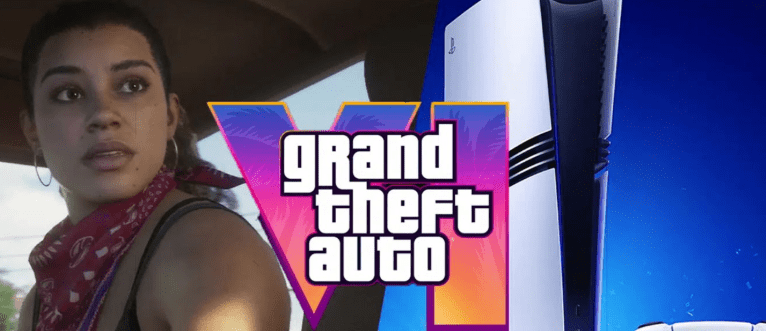
Just a reminder, Grand Theft Auto VI, now a PlayStation-exclusive game, will launch by the end of this year. GTA VI should feature an online mode. Is it a coincidence that the PS5 and the PlayStation Plus subscription received a price hike less than a year before one of the most anticipated, PlayStation-exclusive games in recent memory? I’m not so sure. I also wouldn’t be surprised if the “Market Conditions” change six months or so after GTA VI is released. You know, after PlayStation makes as much money as possible off of GTA VI. That’d be criminal. Downright grand theft.
And speaking of PlayStation-exclusive games, Sony made another announcement that its first-party, predominantly solo player experiences will only be available on PS5. That means Horizon, God of War, The Last of Us, the Marvel video games series (including Spider-Man and the upcoming Wolverine), and potentially Grand Theft Auto VI will only be available on PS5. No PC for you. You know, just in case you needed another reason to spend an extra $100 on a new gaming system.
You are travelers planning and experiencing your own dream vacations to France.
Explore Paris, soaking up art, history, and delicious food through its many tourist attractions and hidden gems. Using over 100 beautifully illustrated cards, you will discover activities and strategically place them to create your six day itinerary. While puzzling out your optimal activities, you will plan your trip to one of four marvelous regions of France. Will you bask in the sun along the French Riviera or explore the historic castles of the Loire valley?
Play competitively or solo, earning victory points by successfully balancing the two halves of your vacation, making the most out of your interests, and managing your time well. The most points wins, but everyone has the chance to create a memorable vacation.
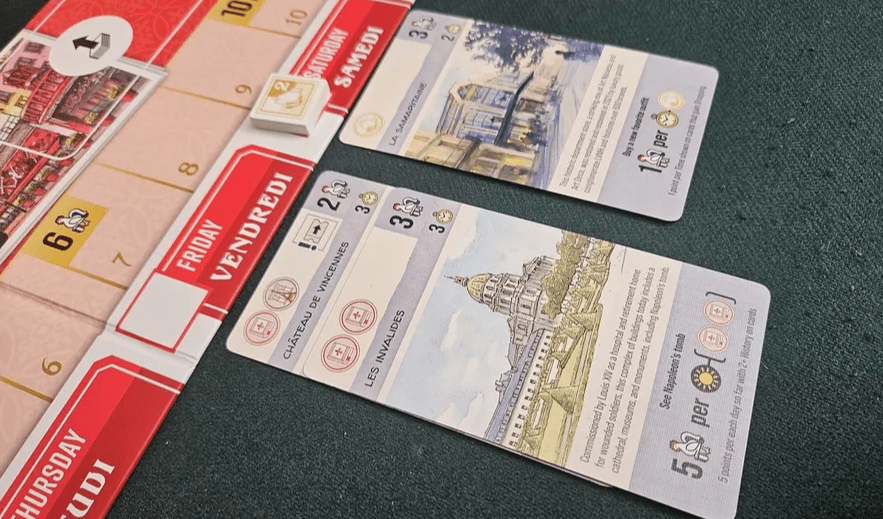
Thank you, Alderac Entertainment Group, for the description. I’ve been meaning to play Let’s Go! To Japan. I had the first game in this series in my to be played list for years. I even had Let’s Go! To Japan on my Christmas list on two occasions, but for whatever reason, we haven’t gotten around to picking up a copy or playing it at a convention. As soon as a saw Let’s Go! To Japan, my family groaned that this would be another game in the series. I agreed. I also hoped that Let’s Go! To France would be the next game in the series. Yes!
I’ve heard the tableau building in Let’s Go! To France exceeds the original. I hope so. I love a good tableau builder. The theme interests me. I may even use these games to plan my upcoming trips to these countries. You never know. Let’s Go! To France offers several pledge levels, ranging from $50-$160. You’re sure to find a version that scratches your wanderlust. If you’re interested in Let’s Go! To France, check out its KickStarter page.
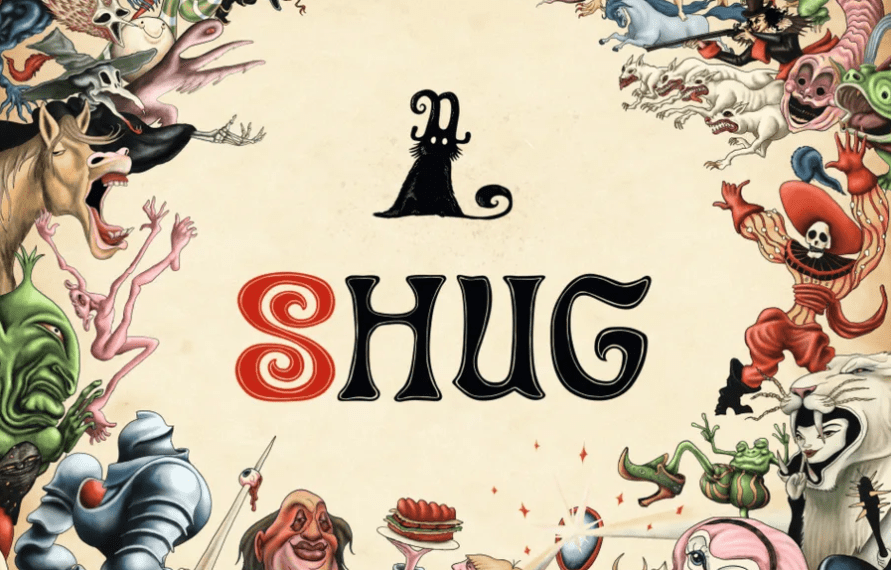
SHUG is set in a mad ol Engoland, where King Charles the Cursed is hellbent on monster-slaying carnage. As a puny peasant, your only chance to spark a revolution is to fulfill a bizarre legend: find the creature Shug, and bring it to the fabled Pub…
A mashup of party game and dungeon-crawler, SHUG is a unique blend of strategy and chaos. Win with clever tactics or by going full fool on ludicrous challenges.
Wander the free roam map. Befriend monsters like Selky with a sea shanty. Slay your friends with Sexy Armour, or killer salsa moves. In SHUG you’ll discover not only a whole world, but also strange sides of yourself.
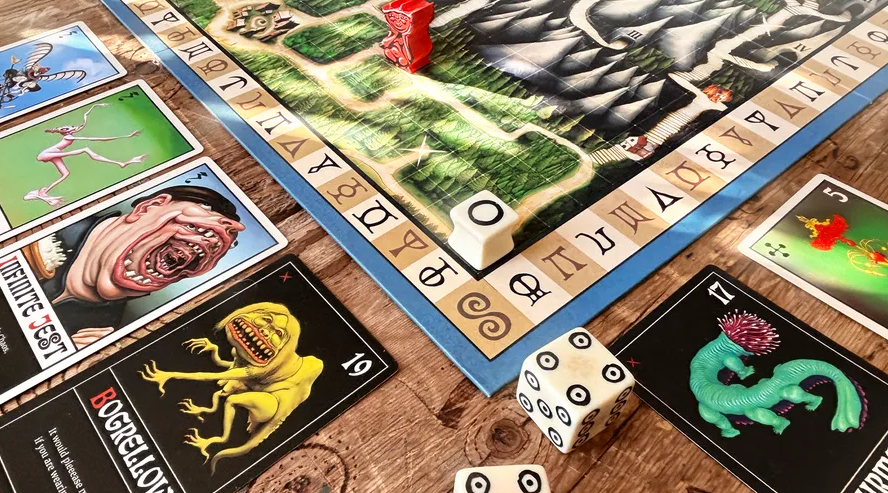
Thank you, Wandering Games, for the description. Oh, my! I love SHUG’s art. I don’t even care if it’s a standard roll/spin and move game, which I don’t think it is; I would gladly add this game to my collection. It doesn’t take itself too seriously. I’m unsure how a game can be both a party game, a dungeon crawler, and a race, but I want to know how. SHUG does list Take That as one of its game mechanisms. I’m not too crazy about a Take That game that could take an hour and a half, but still, the theme, the art. I’m interested. SHUG’s pledge levels range between $50-$135. If you’re interested in SHUG, check out its KickStarter page.
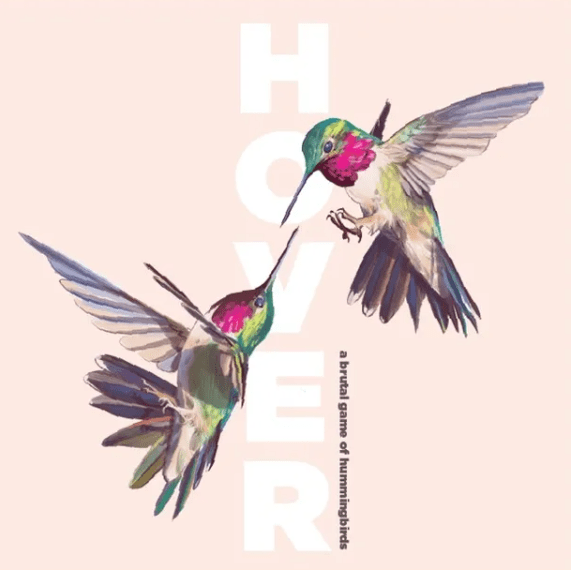
Play as hummingbirds thirsty for nectar… and a mate. The first bird to build a nest and perform a successful courting call wins the game.
Will you bully your way to the top? Bluff your way ahead? Or get clever and sneak in a victory?
But watch out! The chatter, competition, and annoying displays from other hummingbirds can easily distract your potential mate from paying attention as you expend precious energy to win their 1,260 bpm heart.
Based on real hummingbird behaviors, Hover is a strategic game featuring high-player interaction, tight action economy, asymmetric abilities, bidding/bluffing, and area control to create a highly immersive and intuitive game.
Be the hummingbird – beautiful and brutal.
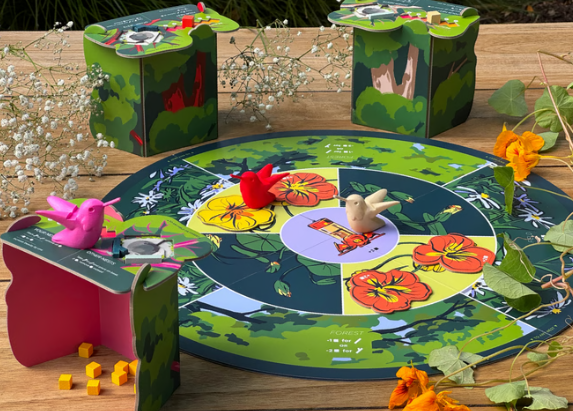
Thank you, Ibis Tea, for the description. Hover looks amazing. The picture above is of a prototype, so the quality could be even better than what’s shown. Bird-themed games have dominated the board game market in recent years–here’s looking at you, Wingspan–but the titles that stand out are the ones that mimic bird behavior. Hover does just that with hummingbirds. I like how one reviewer (Tabletop Vibes) described it: Hover is like hummingbird Chess.
I can see that. While there doesn’t appear to be much happening on the board, looks are deceiving. Hover has depth to spare. Pledges range from $40-$90. If you’re interested in Hover, check out its KickStarter page.
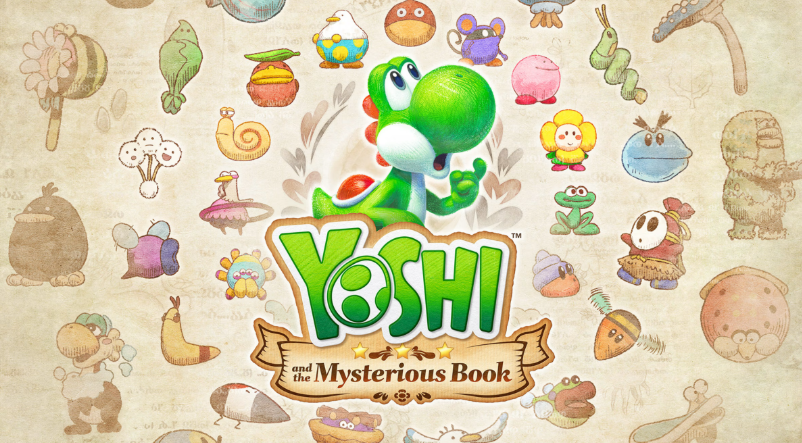
I did a double-take when I found Yoshi and the Mysterious Book as one of this week’s new video game releases. I swore this game was supposed to be a Super Mario Galaxy Movie tie-in. That movie was released well over a month ago. Has it been that long? And I thought Nintendo would’ve released a full-fledged Mario title to support the Super Mario Galaxy Movie release. I digress. Yoshi and the Mysterious Book looks to be a return to form for the series. I haven’t played the game yet. I might pick up a Switch 2 before the price hike in September, and you’d best believe Yoshi and the Mysterious Book (along with Pokopia and the new Donkey Kong) will be some of the first games I purchase.
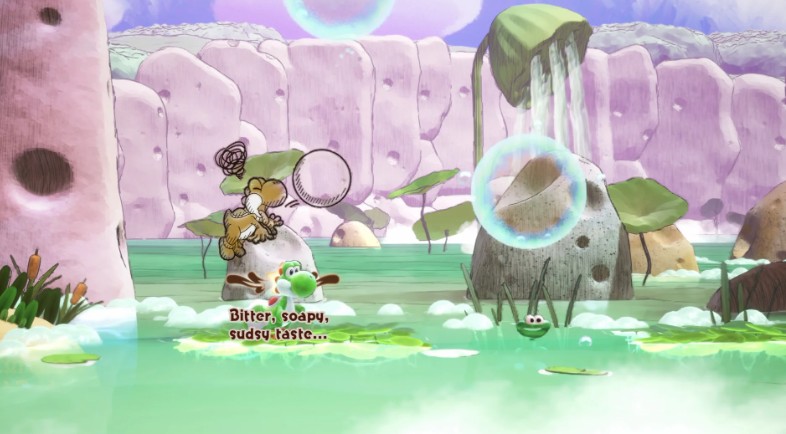
The premise involves Yoshi entering a sentient and mysterious encyclopedia’s (Mr. E’s) pages to search for and interact with various creatures. The gameplay reminds me of Super Mario Odyssey or even A Boy and His Blob. The description of “bitter, soapy, sudsy taste” makes me wonder if Yoshi can eat certain items to gain abilities. At any rate, Yoshi and the Mysterious Book reward exploring ability combos. It has received good to great reviews. And I love the game’s stop-motion animation graphics. Yoshi looks adorable. Squee! Yoshi and the Mysterious Book is available on the Nintendo Switch 2.
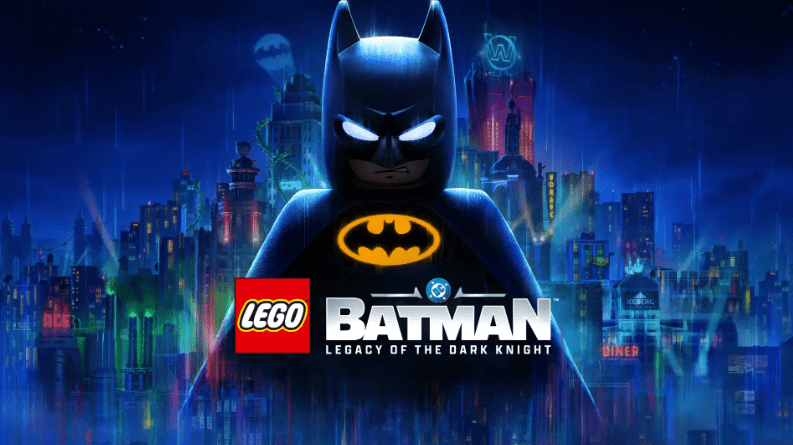
Lego Batman: Legacy of the Dark Knight is the fourth installment in the Lego Batman franchise. The fourth! This installment looks to incorporate more of the television shows and movies into its narrative. And I’m all for that. Batman trains with Ra’s al Ghul, much like he did in Batman Begins. Several skins mimic Batman movie costumes, like Michelle Pfeiffer’s Catwoman, Danny DeVito’s Penguin, and Heath Ledger’s Joker. We don’t know if the game will follow any more of these movies’ plots or if they’re fun skins. The inclusion of Kite Man has me hoping we’ll see some Harley Quinn: The Animated Series representation. Hell, yeah!
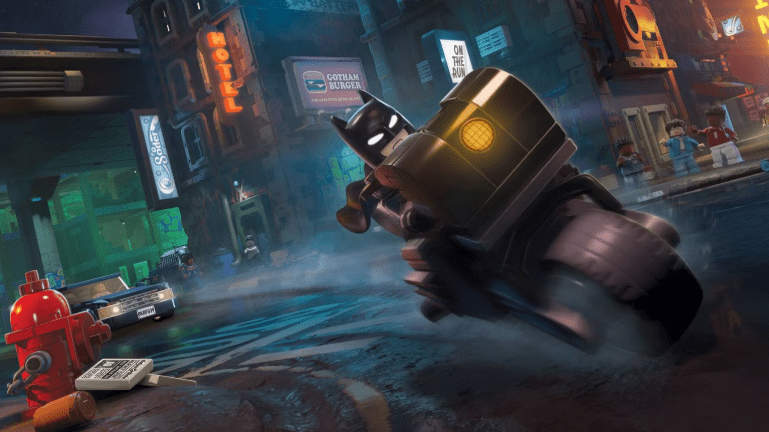
Lego Batman: Legacy of the Dark Knight has received very good to great reviews. While the Lego Batman franchise is hit or miss for me, this title looks promising. Lego Batman: Legacy of the Dark Knight is available on PC, PlayStation 5, and Xbox Series S/X.
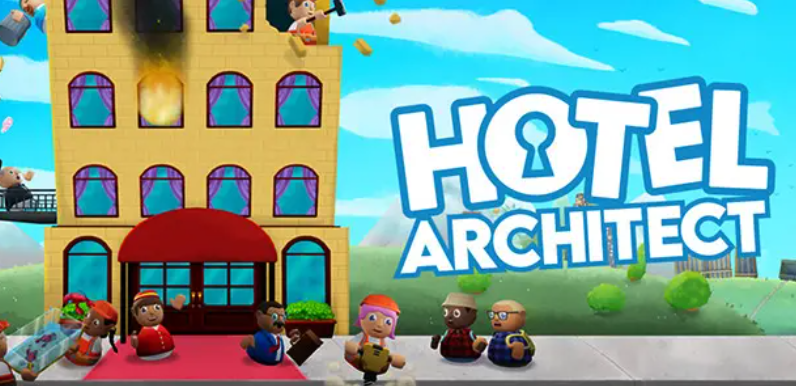
Step into the shoes of a hotel owner as you design, build, and manage grand hotels around the world. Juggle demanding guests, frantic logistics, and plenty of unexpected surprises in Hotel Architect, the ultimate hotel construction and tycoon management game!
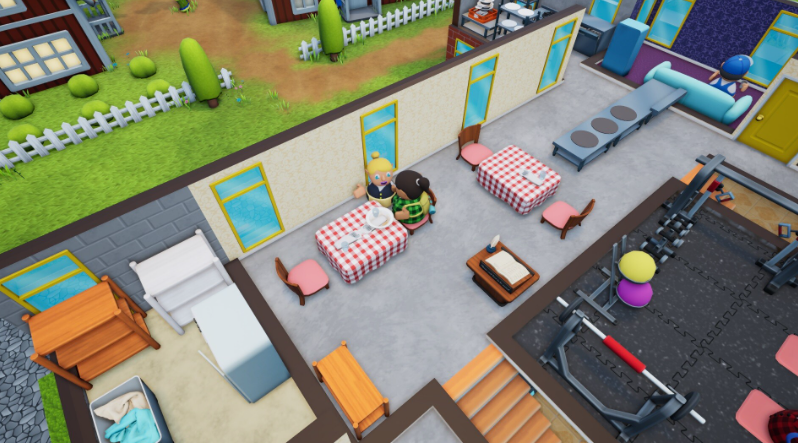
Thank you, Pathos Interactive, for the game description. Hotel Architect has received pretty good Steam reviews. I like the artistic choice to use weeble wooble looking characters. It almost feels like bath time. I had bath time toys that looked much like this game’s animation, and no kidding, I pretended that I was running a restaurant or store on more than one occasion. A hotel is a logical leap. It blends a lot of those aspects and more under one roof. I’ve been tempted to download some mobile games that do a lot of what Hotel Architect sets out to do, so I may give Hotel Architect a shot. Hotel Architect is available on PC.
That’s all the Geek news we have for you this week. Thank you for reading, and wherever you are, I hope you’re having a great day.