Tabletop Game Review: Marvel United: Fantastic Four

We had to discuss the Marvel United: Fantastic Four expansion from the Marvel United: X-Men launch. In fact, we’ll begin our coverage of the Marvel United: X-Men wave with this expansion. Hey, hey, Geekly Gang! Kyra Kyle here. We return once again to Marvel United. This is one of those game systems with a heap of expansions. Too many, if you ask me. But we’ll cover the expansions that will either be fan favorites (plenty of people will be interested in adding them to their collection) or good additions because of their gameplay variants. Fortunately, Marvel United: Fantastic Four fits both criteria.

We’ll get to Marvel’s first family in a minute, but first, let’s take a look at Marvel United: Fantastic Four’s less heroic details.
The Fiddly Bits

Designer: Andrea Chiarvesio, Eric M. Lang, and Francesco Rugerfred Sedda
Publisher: CMON Global Limited and Spin Master Ltd.
Date Released: 2022
Number of Players: 1-5
Age Range: 8 and up
Setup Time: 5-10 minutes
Play Time: 30-40 minutes

Game Mechanisms

Cooperative Play
Hand Management
Modular Board
Solo / Solitaire Game
Variable Player Powers
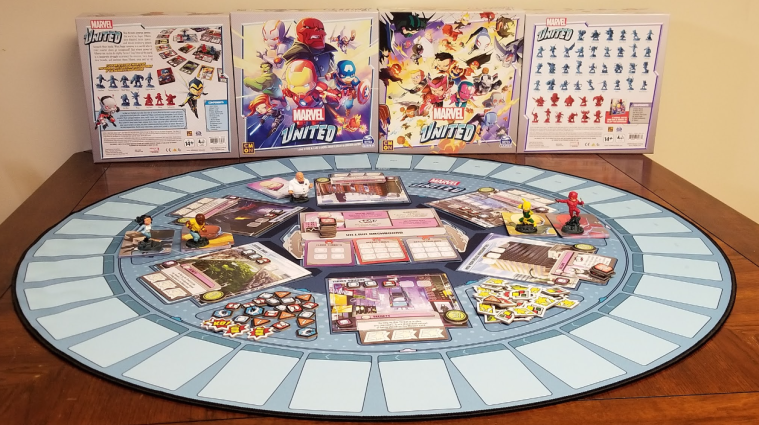
Marvel United Tabletop Game Set Up

Game Setup

We already covered the Game Setup and Game Flow in our original Marvel United review (here’s a link to that review), so we’ll go over the basics in the following two sections. Let’s cover an abbreviated review of the game setup and rules.

Marvel United: Fantastic Four’s setup can change depending on which Villain(s) and Heroes you choose to play. Each game consists of six locations. Since Marvel United: Fantastic Four is an expansion, only includes four locations, and you’ll need a core set in addition to this expansion to play. You may choose your locations or shuffle them and choose six at random. Each Location card has spaces at the top for civilians and thugs, and a rectangle with a block of text that will state “End of Turn” at the top of the box.

Place civilian/thug tokens on their matching spaces. Shuffle the Villain’s Threat deck and deal out each Threat face-up so that it covers the rectangle at the bottom of each location. You must clear this threat before gaining the “End of Turn” effect printed on a Location. Place health tokens where signified on threat cards and on the Villain dashboard. Place the three mission cards (Defeat Thugs, Rescue Civilians, and Clear Threats) face up under the villain dashboard where the text reads “Unlocked.”

Each player shuffles their hero decks and then draws three cards to form their hands. Shuffle the Villain’s Master Plan deck. Leave the Master Plan deck face down. This will be the villain’s draw pile.

Players place their miniatures on one of the six location cards, usually the centralmost location for each player (easy access). Then, they place the villain on the location card opposing the heroes. If one player chooses to play as the villain, hand the Super Villain cards to them, and the Heroes gain access to Super Hero cards. These new card times can be played if the game state triggers their use (for example, “You play a Master Plan card” or “Any Hero has 4 or more cards in their hand at the end of the Hero turn.” Timing is key.

Marvel United Game Flow Board Game Review

Game Flow

The villain(s) play first. Draw the top card of their master plan deck. The villain moves the number of spaces indicated. Resolve any BAM! Effects and these effects will be printed on a space within the villain’s dashboard. Then, place the civilian/thug tokens (if any) indicated at the bottom of the card. If a player has taken the role of the villain, they get a hand of cards and can choose which card they play. The heroes get their turn after all the villain’s effects are resolved.

Heroes pick which player goes first, and hero turns will continue around the table clockwise. At the beginning of each game, Heroes will get three turns before the villain receives another turn. During their turn, heroes play one card from their hand.

Marvel United Sample Hero Turns Gacha Game Review

Resolve actions and the symbols printed at the bottom of the hero’s card in any order. The symbols at the bottom of a hero’s card will be shared with the next player, but any printed action will not be shared. Heroes will use these actions to complete missions. The game begins with three missions in play: Defeat Thugs, Rescue Civilians, and Clear Threats. Each mission card will have spaces for the tokens they require to complete. As soon as these spaces are filled, the card is discarded, and the mission is considered complete. Mission cards can be completed in any order.

After the heroes complete the first mission, the villain panics and will act (play a card) every two hero cards instead of every three hero cards. After the heroes complete the second mission, the villain becomes vulnerable to damage. The heroes can complete the third mission, but it isn’t necessary. If the heroes do complete the third mission, each hero immediately draws 1 card, increasing each player’s hand size by one.

Play continues back and forth until either the villain wins (by completing their unique master plan or anyone, heroes or villains, runs out of cards) or the heroes win by dealing enough damage to the villain after the villain becomes vulnerable to damage.

Review

Marvel United: Fantastic Four has a huge legacy to live up to, and it lives up to the hype. I’m writing this review in June 2025, and Marvel United: Fantastic Four’s BGG score is an 8.5 (out of 10). This makes Fantastic Four the highest-rated Marvel United expansion. Yeah. It’s—pardon the pun—fantastic.

While Marvel United: X-Men Blue and Gold Teams features semi-cooperative play (players compete to clear the most goals), and this gives me strong X-Men: Under Siege vibes (a game I have a soft spot for), Fantastic Four introduces the idea of teamwork, and it does so simply and elegantly. Included in the box is a Fantastic Four team card. Various hero cards (from the members of the Fantastic Four) will add action tokens to the card, and can then use all actions on the Fantastic Four team card with different cards in their deck. This promotes a slow build. It simulates teamwork without using a lot of convoluted rules. I like the Team Cards from Marvel United’s third wave (Multiversus), but the method used in Fantastic Four is easy to follow and makes narrative sense.

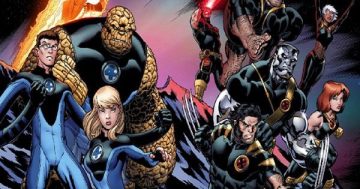
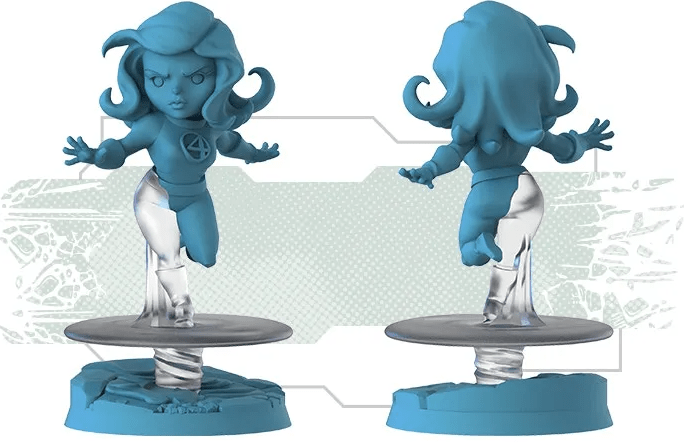
Marvel United: Fantastic Four includes six heroes. One of which is the anti-hero (hero and villain) Doctor Doom. That’s a lot of heroes for one expansion—it’s almost as many as a core box—and each hero illustrates Marvel United’s second wave’s power creep. Granted, to get the most out of the Fantastic Four characters (Mr. Fantastic, Invisible Woman, The Thing, and Human Torch), you’re encouraged to play as the Fantastic Four. The aforementioned Fantastic Four Team Card is amazing, but these characters are still effective outside the team setting.

Each member has a unique flavor. Mr. Fantastic is flexible. Get it? Flexible? Ha…ha. Invisible Woman can avoid damage altogether (using her “Invisiblity” card), but she takes herself out of combat, which makes sense. Human Torch can use Nova Flame and deal 2 damage to everything at his location—super useful. And The Thing deals copious amounts of damage and can ignore 1 damage during each Villain Turn. Very nice.
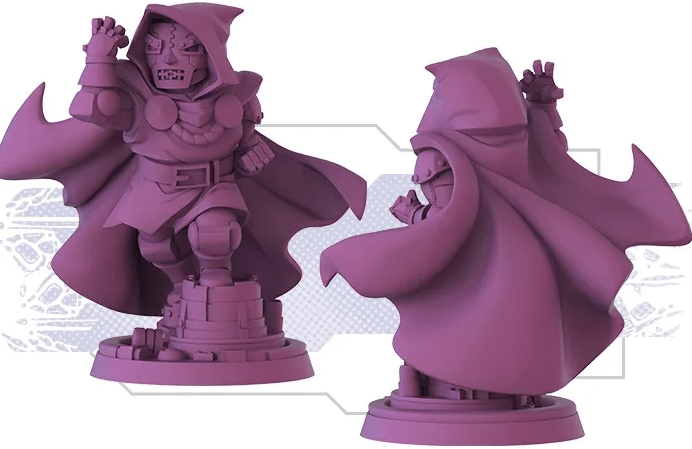
The remaining two heroes, Doctor Doom and Silver Surfer, don’t gain any benefit from the Fantastic Four team card, but they don’t need it. Doom gets tokens for each damage he takes. He can even use the symbols from the 3 previous Hero cards in the Storyline (instead of the previous one). This can generate as many as seven actions on a single turn. Yikes! Silver Surfer has extra card draw, can move anywhere with one of his special abilities, and can exchange a Location in play with one that isn’t in play. What? Silver Surfer can literally yeet any Location for another Location. That’s coconuts.

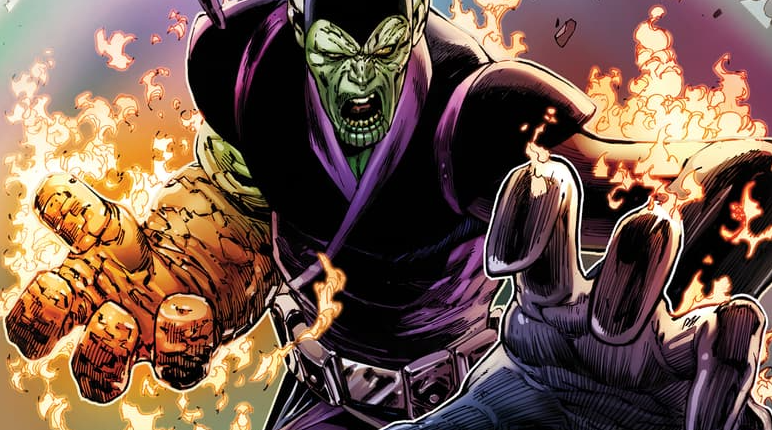
But Marvel United: Fantastic Four’s villains are just as overpowered as their hero counterparts. Even though Doctor Doom is the marquee villain, we’ll begin with Super-Skrull. Don’t overlook Super-Skrull. He has one of the more unique Special Rules in Marvel United. Whenever he BAM!s, he performs actions based on the symbols on the last Hero card in the Storyline. The heroes have some control over what Super-Skrull can do, but that doesn’t matter. None of Super-Skrull’s BAM! actions are things you want to happen. Super-Skrull attempts to knock out (KO) and hand each in-play hero a KO token, but this isn’t the only way he can win. Super-Skrull can’t be damage if any Crisis tokens exist, and he adds cards from his deck facedown in the Storyline, which leads to a shortened clock.

Super-Skrull is a spiffier version of Green Goblin. He does enough things well that you must split your focus on the various ways he can win, and even though he doesn’t have Henchmen (like Green Goblin), he makes up for it with crazy Threat card abilities that make clearing Thugs and Civilians less efficient, and each Threat card requires one of each action type. Super-Skrull covers all bases. But most people purchase Marvel United: Fantastic Four for Doctor Doom, and Doom delivers.

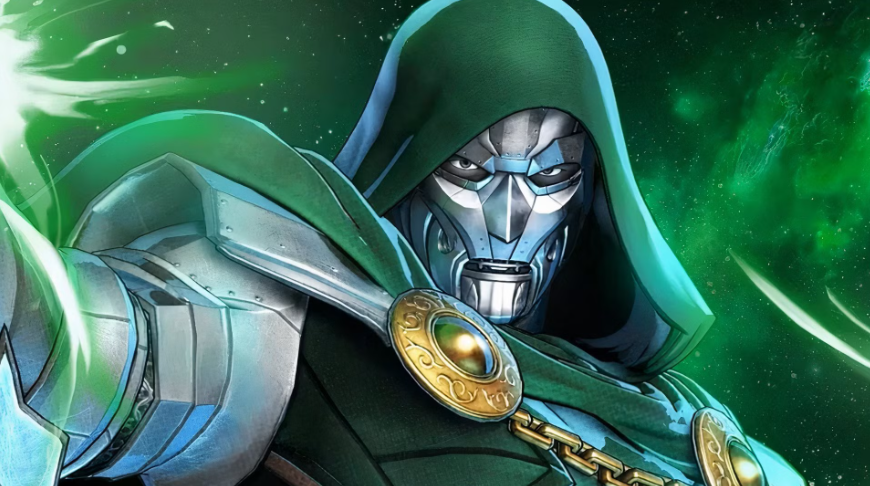
First off, Doom must be played with Latveria—naturally—and Latveria is the first Location card that has a negative “End of Turn” effect. In fact, Doom only has five Threat cards because Latveria begins the game without one. Latveria marks the first time Marvel United has included an “End of Turn” effect that benefits the villain. “You MUST take 1 damage for each Thug or Doombot in this Location.” Ouch! Latveria begins every game with three Doombot tokens, so if you don’t take out all of the Doombots, you’re discarding your entire hand. Double ouch! Doom’s Threat cards add extra Doombots (sometimes not even in the same place as the Threat card’s location) and can deal extra damage to heroes. Triple ouch!

As for his Villainous Plot, Doc Doom plays like Red Skull but way, way worse. He can increase the Doom Track (changed from the Red Skull’s Threat Track) far more often, and he can’t be damaged if a Doombot is at his Location. In short, Doctor Doom is nasty. You’ll need the Fantastic Four with their Team Card to defeat him. It can be done, but it’s a tough go. I find Doctor Doom tuned to the perfect level of difficulty. He may be one of the many reasons Marvel United: Fantastic Four is the highest-rated Marvel United expansion.

We talked about Latveria, but there’s another Location, Mount Wundagore, that has a negative “End of Turn” effect: Each Hero in this Location MUST discard all cards in their hand and draw the same number of cards (this does not KO). Even though this effect doesn’t count as a KO, it’s another way to shorten the clock. If anyone (including Heroes) runs out of cards in their deck, the heroes lose. Yowza! I like Marvel United: Fantastic Four’s inclusion of villain-centric Locations. We’ll see more of this later in the series, but villain-centric Locations do a lot to shake up Marvel United’s status quo. The remaining Locations have unique “End of Turn” abilities as well. The Baxter Building provides token draw if the character you’re playing was ever a member of the Fantastic Four. This is a boon for anyone who knows the comics. I appreciate that.

I also appreciate the Takeover Challenge card included in Marvel United: Fantastic Four. If a Thug, Civilian, or Doombot token can’t be added to a Location, after resolving Overflow, place the excess tokens on the Takeover card. If the card is full, Heroes immediately lose. The Takeover card has two sides with different difficulties (number of spots for tokens). This Challenge card, like the Fantastic Four’s Team Card, is simple and elegant. It adds just enough difficulty if the game has gotten too predictable.

Too Long; Didn’t Read

Marvel United: Fantastic Four is the highest-rated Marvel United expansion on BoardGameGeek and for good reason. This expansion adds more layers of complexity while staying thematic and not burdening the player with too many over-complicated rules. Every element from the Locations, the Challenge Card, the Heroes, and especially the Villains is well thought out and an excellent addition to any Marvel United collection.
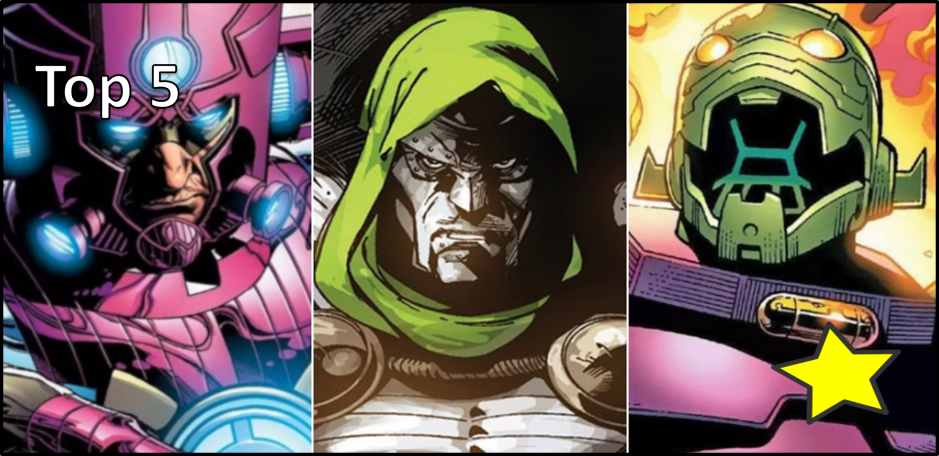
Top 5 Fantastic Four Villains

Last month Geekly discussed the X-Men’s top 5 villains. Marvel’s first family, the Fantastic Four, has as many contenders for their top five as Marvel’s merry mutants. Hey, hey! Kyra Kyle here. We’re back with another Top 5 Villains List. With Fantastic Four: First Steps releasing later this week, let’s discuss the Fantastic Four’s top five villains. We know one that one of these villains will make an appearance in Fantastic Four: Four Steps. Who knows? More than one of these villains will make their MCU debut soon.

Honorable Mention: The Frightful Four

The Frightful Four is a cheat; they’re a supervillain group. Supervillain groups began with Spider-Man’s Sinister Six in 1964. The Frightful Four debuted the following year. Members of the Frightful Four have also served in the Masters of Evil (who made the Avengers Top 5 Villains list) and the Sinister Six. In fact, Sandman is an original member of the Frightful Four and the Sinister Six. The Frightful Four have had a rotating roster, but Wizard (the team’s founder) has stayed the team’s one constant.

The Frightful Four takes its lead from its founder, the Wizard. Dr. Bentley Wittman is a twisted version of Reed Richards. But while Doctor Doom (another twisted version of Reed Richards) combines arcane knowledge with technology, the Wizard combines technology with smoke and mirrors. Think of the Wizard as a beefed-up Mysterio.

5: Maker

Our first Fantastic Four villain is another twisted version of Reed Richards. Maker is the Mr. Fantastic of the Marvel Ultimate Universe. In this universe, Reed proposes to Sue after Sue’s father dies. This universe’s Sue rejects Reed. While somewhat sympathetic (the Ultimate Universe’s Reed Richards witnesses the family he and Sue could’ve had while visiting the main Marvel timeline), Reed gives in fully to his selfish tendencies. He turns his anger on his would-be family by torturing Sue. Subsequently, the Human Torch attacked Reed with his hottest flame, which permanently scarred Reed’s face. After a brief exile in the Negative Zone, Reed emerged as the Maker.

Maker vows to mold the world in his image of perfection. The helmet he wears isn’t just for show. It adjusts to his head. Maker will stretch his brain, learning as much as he can of the universe’s secrets. Maker serves as a warning to Reed Richards. He must not give in fully to his self-centered nature.

4: Super-Skrull

Super-Skrull is an alias used by multiple Marvel comics characters. Essentially, Super-Skrull can refer to any enhanced member of the Skrull race. But when comic book fans refer to “Super-Skrull,” they typically mean Kl’rt, who appeared in Fantastic Four #18, and Kl’rt is the “Super-Skrull” who takes this spot. The Skrulls imbued Kl’rt with the Fantastic Four’s powers. Kl’rt possesses all the Fantastic Four’s powers. He’s an obvious threat.

But Kl’rt’s dominance runs deeper. Typically, he has better control over his powers, and his powers are improved versions of the Fantastic Four’s. Since he’s a Skrull, Kl’rt has natural shapeshifting abilities. Throw in hypnosis, and one can see why Super-Skrull Kl’rt was chosen to pave the way for a new Skrull Empire invasion. While Super-Skrull poses a threat to the Marvel universe as a whole, Kl’rt was designed to take on the Fantastic Four and has been a constant thorn in the side of Marvel’s first family.

3: Annihilus

Annihilus is another villain who poses a threat to the entire Marvel universe. Spoiler alert: The same can be said of the remaining villains on this list. Annihilus is an interdimensional insectoid conqueror and tyrant hailing from the Negative Zone, a pocket dimension located within Marvel’s main timeline. He attempted to take over the Negative Zone by wielding the Cosmic Control Rod. In classic Reed Richards fashion, he postulated that he needed the Cosmic Control Rod to treat Susan Richards during her pregnancy, and instead of asking for the rod, he stole it from Annihilus. The team intended to return the rod when they were done using it, but Annihilus took exception to the theft. Leave it to Reed to kick a hornet’s nest.

Since their first meeting, Annihilus and the Fantastic Four have been uneasy allies and foes on various occasions. Annihilus works best as an irritant to the Fantastic Four. The animosity has led to some stellar storylines that get personal.

2: Galactus

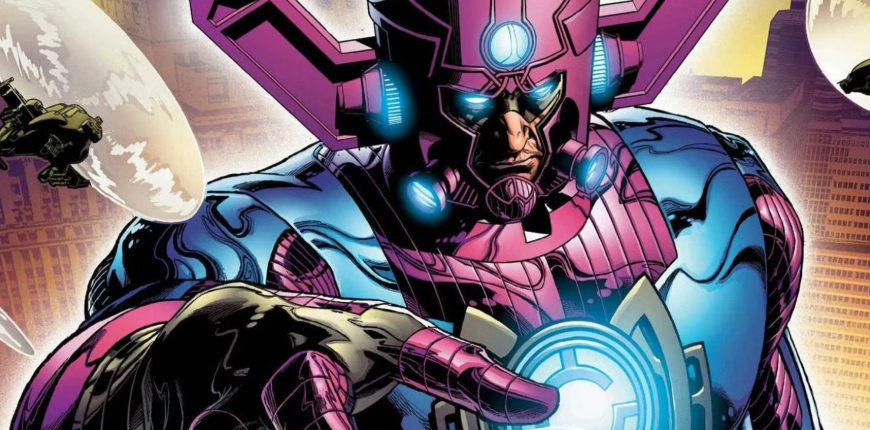
Galactus needs little introduction. He’s the big guy in blue and purple. Even if Galactus needed an introduction, he has countless heralds to do that for him. Galactus is more of a force of nature. He needs to feed on a planet’s essence to survive. Earth and Galactus happen to collide, and when they do, the Fantastic Four serve as Earth’s guardians.
But Galactus’s link to the Fantastic Four (and the Marvel universe) runs deeper than the surface. Galactus wields the power cosmic; the Fantastic Four were transformed by cosmic rays, originating from the power cosmic. Galactus also happens to be the last surviving member of the previous multiverse, the Sixth Cosmos. Due to a plague named the Black Winter, the universe began dying, and Galan (Galactus before he became Galactus) searched the cosmos to find a cure. He failed. Galan proposed to the remaining survivors that they die with glory by piloting one of their starships into the heart of the Cosmic Egg. Everyone aboard the vessel died, except for Galan. He fused with the Sentience of the Sixth Cosmos to become Galactus, the Devourer of Worlds.

I love Galactus’s origin. It humanizes him. He’d easily take the top spot if it weren’t for one Fantastic Four villain.

1: Doctor Doom

Obviously, Doctor Doom takes the top spot. As mentioned before, Victor von Doom blends magic and science to become one of the Marvel universe’s greatest threats. He rules Latveria with a literal and figurative iron fist and intends to do the same with the rest of the world. Doom believes the world/universe needs a ruler smart and cunning enough to lead. He happens to be the best person for the job.

Even though Doctor Doom threatens the universe, he’s the perfect Fantastic Four villain because of his ties to Reed Richards. The two were college rivals. Doom blames Reed for the accident that cost him his face and drove him to the far reaches of the earth, where he studied magic to coincide with his brilliant scientific mind. Doctor Doom is forever linked to the Fantastic Four. He’s iconic. He’s a threat as big—if not bigger—than Thanos, and I can’t wait to see what the MCU has in store for this character.

Did we get the list right? Let us know who your favorite Fantastic Four villains are in the comments. Thank you for reading, and wherever you are, I hope you’re having a great day.

Top 5 Most Powerful Rogues Galleries

Hey, hey! Kyra Kyle here. It’s still Spooky Season, but I’m going in a different direction with this week’s Top 5. What’s more horrifying than a strong series of villains? In this list, we’ll discuss the 5 most powerful rogues galleries in comic books. This differs from the most popular rogues galleries. If we did the most popular rogues galleries, Batman and Spider-Man’s rogues would certainly make the list. But most of Batman and Spider-Man’s rogues are street-level villains. And not as powerful.

So, who made the list? Let’s find out.

5: The Flash

Flash has an underrated rogues gallery. I may be showing my bias here; I don’t know. Flash begins with a lot of great street-level villains or villains slightly above street-level with Captain Cold, Mirror Master, Weather Wizard, and Captain Boomerang. But then you get into Gorilla Grodd who has brains and brawn, and the Thinker who is the most intelligent being in the DC Universe.

And then Flash’s rogues reach a new height with evil speedsters. Speed is a given in a Flash story, but each of these evil speedsters can reverse time and change events. That’s Reverse-Flash’s MO. He went back in time to kill Barry Allen’s mother. Our next hero may be able to claim a more powerful set of rogues, but that level of pettiness raises the Flash’s rogues.

4: Thor

This one’s a cheat. Most of Thor’s rogues are god-tier villains, so they can get powerful. Perhaps too powerful. Mangog is the physical manifestation and sum of the hatred of a billion beings. Mangog is a threat to the entire universe. Then, there’s Surtur, the king of the fire giants. Surtur possesses a sword that can destroy universes. And there’s Gorr the God Butcher. The Marvel Cinematic Universe (MCU) may have done Gorr dirty in Thor: Love and Thunder. He’s far more menacing in the comics; he has killed hundreds of gods with All-Black, his sword that gets more powerful with each god Gorr kills. Oh, wait, I didn’t mention Loki. Yikes!

3: Superman

Most people think of Lex Luthor first when thinking of Superman’s rogues and with good reason. But there are quite a few people who may think Lex is a normal human. He’s not a threat. Lex happens to be DC Comics’ version of Tony Stark/Iron Man. Both Lex and Tony have money to burn, a power suit, and super genius intellects. Lex Luthor is Iron Man if Iron Man decided to break bad.

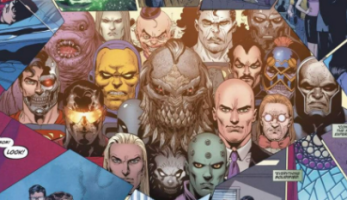
Then you add all the evil Supermen, and there are a lot. Bizzaro, Cyborg Superman, and General Zod lead the charge here. General Zod is Superman with military training. Supes may be in trouble. Brainiac is another universe-level threat. Darkseid who is a DC-wide villain can also be a solo Superman villain, and Darkseid inspired the creation of Thanos. And that’s all before we get to Doomsday who literally killed Superman. Throw in the imp from the fifth dimension, Mister Mxyzptlk, who can warp reality itself, and you can’t deny that Superman’s rogues contain a lot of heavy hitters.

2: Fantastic Four

Galactus. This being literally eats planets like Pac-Man gobbles power pellets. Galactus alone makes the Fantastic Four’s rogues gallery ridiculously powerful. But it doesn’t stop there. Doctor Doom may be one of the deadliest villains in comic book history. He has taken the Beyonder’s powers more than once. The Beyonder is an otherworldly being with universe altering abilities. Kang keeps trophies of the hundreds of heroes he’s killed while time jumping. And there’s Annihilus, ruler of the Negative Zone.

The Fantastic Four are unique in the world of comics. They tend to act than react and bump into many of their enemies on their adventures, and their adventures take them to some crazy locales like the Negative Zone. I can’t wait to see which version of the Fantastic Four the MCU will give us.

1: X-Men

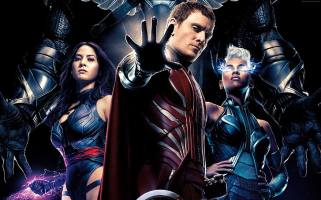
But our number one spot must be the X-Men. The Fantastic Four may have Galactus, and Galactus may be more powerful than any one X-Men villain, but the X-Men have a power classification system. This makes it easy to figure out who can destroy or severely alter the world. The X-Men have at least eight Omega-level evil mutants. Madelyne Pryor (evil clone of Jean Gray), Dark Phoenix, Apocalypse, Exodus, Cassandra Nova, Stryfe, Proteus, and of course Magneto.

That short list doesn’t even include Mr. Sinister who cloned Jean Gray and has caused havoc. Sentinels and the upgrade Nimrod. Or even Bastion who is part mutant-part Sentinel. It doesn’t include Shadow King and the Adversary who can haunt people psychically. I think I forgot to mention the Brood in there. And so, so many more ridiculously powered villains who would be at home facing off against the Fantastic Four or Superman or the Justice League or the Avengers. The X-Men’s rogues gallery tops just about any comic book rogues gallery in terms of sheer power.

Did we get the list right? Let us know who you would add or remove in the comments. And wherever you are, I hope you’re having a great day.

Deadpool and the Future of the MCU

Hey, hey! Kyra here. I’m still figuring out what kind of content a rebooted JK Geekly should include. If you have any suggestions, let me know in the comments. I’m also working my through older content, but we’ll run out of that soon enough. Lastly, I’m late with a reaction to Deadpool and Wolverine. Instead of writing a review (I’d rather not get back into traditional reviews), I’m doing more of a reaction and what I think of the Marvel Cinematic Universe’s future.

Deadpool 3 and Its Place in the MCU

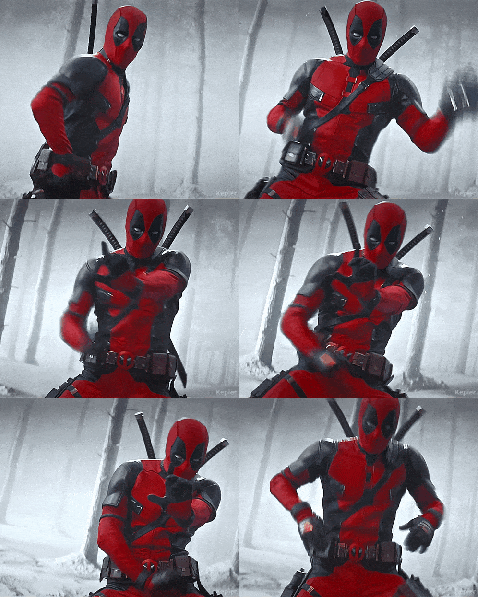
I enjoyed Deadpool and Wolverine. Was it perfect? No. It dragged in parts and that’s something with which the MCU during the Multiverse Saga has struggled, but Deadpool and Wolverine did what a Deadpool movie was meant to do. It made fun of the MCU, particularly the maligned Multiverse Saga. Deadpool and Wolverine served as a good penultimate film for the Multiverse. The Multiverse isn’t yet finished but there aren’t that many movies/TV shows remaining before it wraps. So, I’m calling it a penultimate movie. Deadpool 3 also acted like a Monty Python’s “this is getting too silly” and signaled an abrupt turn that the MCU intends to make: the Mutant Saga.

Right. Before we get too much further, I’m going to try and avoid spoilers. But the nature of posts like this makes that impossible. Consider this a spoiler warning.

Wow! I took this long to say spoiler alert. I am rusty.

Not only was Deadpool and Wolverine the penultimate Multiverse Saga film, it also said farewell to the 20th Century Fox Era X-Men and the Fantastic Four (to a lesser extent). I’ll echo other critics and express concern about Disney/Marvel relying on nostalgia to make a quick buck. I dislike the idea of the MCU using nostalgia as much as it has lately. Disney has worn out their nostalgia button. Did anyone ask for live-action versions of every Disney animated classic?

It’s true that Spider-Man: No Way Home tapped into nostalgia big time, but not necessarily in a bad way. With its proximity to the latest Spider-Man film, one could view Deadpool and Wolverine as nostalgia porn. But Deadpool and Wolverine hits different.

Legally, Disney/Marvel cannot cast their own X-Men actors until 2025. Most of the X-Men, including Hugh Jackman (Wolverine) and Ryan Reynolds (Deadpool) are under contract to play these characters until the end of 2024. It makes sense for Disney/Marvel to say “Bye, Bye, Bye” to these actors before the end of their contracts.

That said, I hope Disney/Marvel does something new with these characters. They had best cast their own actors for these roles after these contracts expire. I’d also like to see the MCU cover different X-Men stories. The world doesn’t need three Dark Phoenix Sagas in two decades. I’d love it if Disney/Marvel puts that storyline to rest for a good decade or more and concentrate on other great X-Men stories. It’s not like the X-Men have decades of great stories.

We’ll get into some of these potential storylines with the Wolverine montage. Oops! We’re heading into definite spoilers for Deadpool and Wolverine. Anyone who hasn’t yet watched the movie should turn away for the next section. You can pick back up in the MCU’s future section.

Wolverine Montage

The Wolverine montage at the beginning of Deadpool and Wolverine was not only fun but showcased the various worlds in which Wolverine/Logan existed. Most of the scenes depicted during this montage could make for a good movie or movie series. Let’s cover each one as quickly as possible and in the order in which they first appeared.

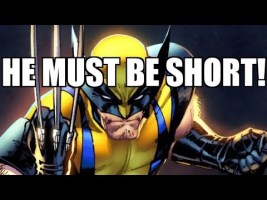
Short Wolvie
This is the 5′ 3″ Hugh Jackman Wolverine. There isn’t much to say except this Wolverine is the most accurate to the comics, and he was the most eager of the bunch to join Deadpool. Too bad Deadpool went in a different direction.
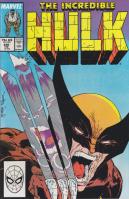
Brown And Tan Wolvie
Deadpool references John Byrne (X-Men artist during the late 70s and early 80s) and Wolverine’s classic brown and tan outfit that Byrne designed. The scene they chose for this one comes from Incredible Hulk #340 (drawn by Seth MacFarlane) where Wolverine and the Hulk throw down. There have been plenty of instances of this happening. In fact, Wolverine was first introduced in an Incredible Hulk comic (#180 in a cameo and #181 in full), where the two fought each other. This may not be the only time the MCU will depict this fight.

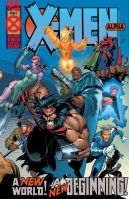
One-Handed Wolvie
The one-handed Wolverine in the dilapidated city comes from Age of Apocalypse. I don’t think the MCU will dive headfirst into this storyline but if they did choose to cover it, I’d like to see Marvel characters not mentioned in this world. The original Age of Apocalypse run mostly affected the X-Men. Other characters were mentioned and a few made appearances, but it could be fun watching alternate versions of The Avengers. But we’ve had enough of the Multiverse and this could be more of the same.

In case you’re wondering, this reality’s Cyclops severed Wolverine’s missing hand.

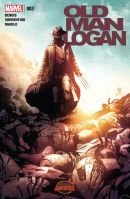
Old Man Logan
The Wolverine who looks like he’s cosplaying as Joe from the Dollars Trilogy comes from the Old Man Logan storyline. This is another post-apocalyptic story, and I doubt the MCU will go in this direction.

Oddly enough, Deadpool and Wolverine borrows a major set piece from Old Man Logan.  Giant Man’s skeletal remains–the ones in which Cassandra Nova has established a lair–makes an appearance in this comic book story. And technically, we’ve already seen a variation of the Old Man Logan story in the movie Logan.

Crucified Wolvie
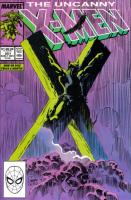
The Uncanny X-Men #251’s famous comic book cover features Wolverine on an X-shaped crucifix. I don’t think the MCU will go in this direction, because the Siege Perilous (a crystal that opens doors to other dimensions) features heavily. The MCU won’t want to go back into the Multiverse too soon. However, this Siege Perilous could be one of the many ways the MCU could “fix” the Multiverse and catapult the MCU into the Mutant Saga.

I won’t go into too much detail because there’s a lot going on, but the people who placed Wolverine on the crucifix were the Reavers. The Reavers were the main antagonists in the movie Logan. Reavers have cybernetic implants but in this universe, most Reavers have them because Wolverine cut off their biological limbs. The Reavers hate all mutants, but especially Wolverine, which is why they placed Wolvie on a crucifix.

Patch
This one could easily happen, and there are two prominent storylines with Patch Wolverine. The above with Hulk’s alternate identity Joe Fixit pits Patch Wolverine as a casino bouncer. This could happen, but it might be a bit silly and would most likely be a cameo like we saw during Deadpool and Wolverine. If Patch Wolverine made an extended appearance in the MCU, the story they’d most likely use would come from the 2022 Patch Wolverine mini series.

This Patch is an alternate Wolverine who hides his mutant identity. He has a knack for gambling and espionage. He even teams up with Nick Fury; two patches for the price of one. This could be another way the MCU could bridge the current timeline with a mutant heavy one. They’d have to change a lot of the story, but that wouldn’t be the first time the MCU did so. Age of Ultron didn’t resemble its comic book counterpart.

The Cavillrine
One might think, this is just Henry Cavill as Wolverine, and one would be correct. It is just Henry Cavill as Wolverine, but let’s add a little context. Cavill portrayed Superman in the DC Extended Universe and Geralt in the Witcher Netflix series. Many comic fans love him. Cavill is the leading fan-casting for the next Wolverine, and many ardent fans of this casting insist that Cavill IS the Wolverine of Earth-199999, also known as Earth-616, which is the world in which the MCU takes place. Who knows? These fans could be right. Deadpool and Wolverine could’ve introduced the next actor to portray Wolverine.

The MCU’s Future

We’ve discussed some of the directions in which the X-Men could go or more specifically Wolverine. The above Wolverine Montage by no means covers all stories for Marvel’s mutants, but it’s a good start.

I’ll reiterate, wherever Disney/Marvel goes with these characters, I hope they go in a direction not yet explored. And they should cast their own actors in these roles. Channing Tatum as Gambit is fine; he never had the chance to portray Gambit in a full-length feature before his cameo, and he’s meme gold. Wesley Snipes as Blade might be fun, but he can’t play the character until he’s 90. Can he?

The next thing the MCU should do is contract the number of shows and movies they release; they’re already doing this to some extent, so that’s good. Additionally, they should reduce the number of characters in their active slate of characters. What do I mean? The Infinity Saga focused on the core six Avengers: Captain America, Iron Man, Thor, Hulk, Black Widow, and Hawkeye. It added a few here and there over time like Falcon, Doctor Strange, Black Panther, Scarlet Witch, Ant-Man, and Vision, but the core six were in most–if not all– the team-up films, and prominent members Captain America, Iron Man, and Thor received a trilogy of films in a short timeframe. Go back to that.

It’s difficult to grow attached to a character when you haven’t seen said character in half a decade. I’m looking at you, Shang-Chi (his first movie released in 2021 and 2026 may be the soonest he’ll get a follow-up–the soonest is 2026, yikes!). There have been issues outside the MCU’s control. The pandemic didn’t help. I still get choked up over Chadwick Bosman’s passing. Jonathan (Kang) Majors’ domestic assault and harassment case derailed the Multiverse’s story. And navigating the Spider-Man license and other licenses haven’t been easy.

A lot has happened outside Disney/Marvel’s control, but the MCU hasn’t helped itself by making some questionable choices. It concerns me that the two highest grossing films during the Multiverse Saga are the two (Spider-Man: No Way Home and Deadpool and Wolverine) that lean heavily on nostalgia. It’s too easy to learn the wrong lesson.

Those two movies succeeded because one didn’t need to do as much homework (watching a gagillion hours of content before watching the movies) and both films were the third part of movie trilogies that took five years (for Spider-Man) and eight years (for Deadpool) to complete. These two factors may have done more for these movies’ success than nostalgia alone. But hey, hit the nostalgia button.

Okay. I’m done ranting about Disney’s overuse of nostalgia. For now. Let’s discuss some other developments, beginning with everyone’s favorite Marvel character trapped in license hell.

Spider-Man and His Villains

There’s a tentative agreement between Sony and Disney/Marvel for Peter Parker Spider-Man . The Spider-Verse films may prevent Disney/Marvel from using Miles Morales. I haven’t read the terms of the contract as it pertains to Sony animation, but another series of talks may need to be had for Miles entering the MCU. I’d imagine that will come to fruition. Eventually. It’s going to take a fleet of Brink’s truck cash.

Spider-Man Noir will not appear in the MCU because Nicholas Cage will portray him in a live-action TV series. I’m okay with that. I’ll be watching the show after it drops on Amazon Prime. Any Spider-Man character who receives a Sony-led live-action movie or TV series is ineligible to be included in the MCU. That’s why we’ve seen a Venom trilogy (that includes characters like Carnage and Rhino), Morbius, Madame Web (with at least a half dozen other Spider-Man characters), and the upcoming Kraven films. Sony is playing keep away from Disney/Marvel.

I don’t blame Sony too much. Disney/Marvel has countless intellectual properties and makes several movies annually. Sony produces far fewer movies and their largest IP is Spider-Man. Spidey and Spidey related films account for over half of Sony’s major film releases each year. They’re forced to make Spider-Man content, even if that content isn’t the best. And with the exception of the Spider-Verse franchise, Sony Spidey content hasn’t been good.

The Incredible Hulk

But Spidey isn’t the only character who’s had licensing issues. Universal’s deal with the Hulk concluded this year (2024 if you happen to be reading this after the new year; happy new year btw). According to the previous deal, the Hulk could be in MCU films but only as a supporting character. Thor: Ragnarok touched on Planet Hulk themes (namely Gladiator Hulk), and She-Hulk: Attorney at Law laid the ground work for a potential full-fledged Planet Hulk movie (Hulk traveled the cosmos and found his son Skaar). I don’t know if we’ll ever see another movie with Hulk as the title character, but it’s a possibility. I wouldn’t mind at least one with Mark Ruffalo.

Robert Downey Jr. as Doctor Doom

Is this casting odd? Yes. But Downey Jr. as Doom could’ve been the plan from the beginning, but only as a cameo. The MCU could easily combine Earth-11029’s Doom (who mind swapped with Tony Stark) and the Doctor Doom from Secret Wars. The MCU was always headed toward Secret Wars, and toward the end of that story, Doom assumed the Beyonder’s powers and ruled Battleworld. The MCU probably intended an homage to the source material with a quick look at an alternate Doom (perhaps Downey), much like the alternate Reed Richards (John Krasinski) in Doctor Strange in the Multiverse of Madness.

Kang was the original big bad for the MCU’s Secret Wars, but Majors’ legal troubles thrusted Doom to the forefront. Will it work? I’m unsure. We’ll have to wait and see. A Downey Doom would’ve worked better as a cameo or teaser for the next leg of the Fantastic Four’s story. But the MCU is trying to salvage what’s left of the Multiverse Saga. I guess it’s worth a shot, but this reeks of desperation and hitting the nostalgia button. Remember when RDJ was in Avengers movies? Here he is again. Wait. We haven’t had an Avengers movie without RDJ yet. He’s got to maintain his Avengers streak.

Fantastic Four and X-Men

The MCU is barreling toward the Fantastic Four and the X-Men. These two teams will feature heavily in the upcoming MCU. That’s a great thing and a bad thing. The MCU already has a bloated roster and now it’s adding two massive teams. These two teams could delay the third film of major MCU characters.

Going back to my point that the MCU should return to a tighter character roster, the three main Avengers during the Infinity Saga had a small window for their film trilogies. Cap’s original trilogy took five years in total. Iron Man’s also took five years. And Thor’s original trilogy took six years. Six years passed between Doctor Strange and Doctor Strange in the Multiverse of Madness. Strange continues to wait for the third movie in his trilogy. That’s way too long. There’s also the aforementioned Shang-Chi and his five year wait for a second film. And is Captain Marvel getting a third movie? Rewatching older films in a film series becomes part of an MCU movie’s homework.

What were talking about? Deadpool. Right.

Deadpool needed eight years to conclude its trilogy. That’s impressive considering that Fox was bought out between the second and third films. A tighter release window for movies in a series and a smaller cast of recurring characters are the lessons Disney/Marvel should take from Deadpool and Wolverine’s success. That and R rated films can rake in money. We’ll have to see which lessons the MCU takes to heart.

That’s all I have for now. Let me know your thoughts on what the MCU should do going forward. See you soon. Bye, bye, bye.

~ Kyra


Fantastic Four Starter Stories

Fantastic Four began the Marvel Age of Comics, but that doesn’t mean that it’s had as much luck with its movies as other Marvel properties. The ugliness brought on by less-than-stellar films and the fallout from contract disputes led to the comic book getting cancelled before 2015’s Fant4stic. The FF’s omission spread to other projects like Marvel: Dice Masters. I’m still waiting for the Fantastic Four set we were supposed to get shortly after launch.

Anyway. With Disney buying out Fox that should all change. Heck, the Fantastic Four comic book was relaunched in August 2018, so positive things have already happened. This is only the beginning.

Your uncle Geekly’s sure Marvel’s first family will make its Marvel Cinematic Universe debut in the not-so-distant future, and it may be a good time to catch up with some of the stories new fans will want to read to get to know Reed, Sue, Ben, and Johnny better. These are good stories for new fans.

fantastic_four_vol_1_49

The Galactus Trilogy Fantastic Four Vol. 1 #48-50 (written by Stan Lee/art by Jack Kirby; 1966)

Uncle Geekly could’ve started with the Fantastic Four’s origin story, and that would be a good enough place to begin, but it’s been covered in film and cartoon a lot. Fantastic Four Vol. 1 #1 is as good as any of the reboots and relaunches, but I talk about origins all the time with these starter stories. Let’s start with something different. Let’s begin with the ultimate in Fantastic Four required reading: Galactus.

First, the Galactus story came out in the middle of Lee and Kirby’s collaboration, so they’re at the height of their storytelling powers. You’ll see more of this in the next entry.

Second, the peerless pair didn’t hit the brakes once after this story got started. Silver Surfer arrives. Uatu warns the family. Galactus looms large above Earth, preparing to eat it. It was loud and bombastic. This story was one of the longest comic book stories at the time. The pacing worked, and it led to comic books adopting longer story arcs.

Finally, the legend of how this story came about is telling of the pair’s storytelling technique and of Galactus. Kirby asked Lee “What if the Fantastic Four met God?” I’m not sure if this conversation ever happened, but presumably Lee responded with a “yes, and.” One would get the ball rolling and the other would always add to original idea, and the original idea of Galactus was an enemy that was above good and evil: a force of nature.

The idea of a villain that was neither good or evil was novel, and “The Galactus Trilogy” remains one of the best Fantastic Four stories.

fantastic_four_this man this monster

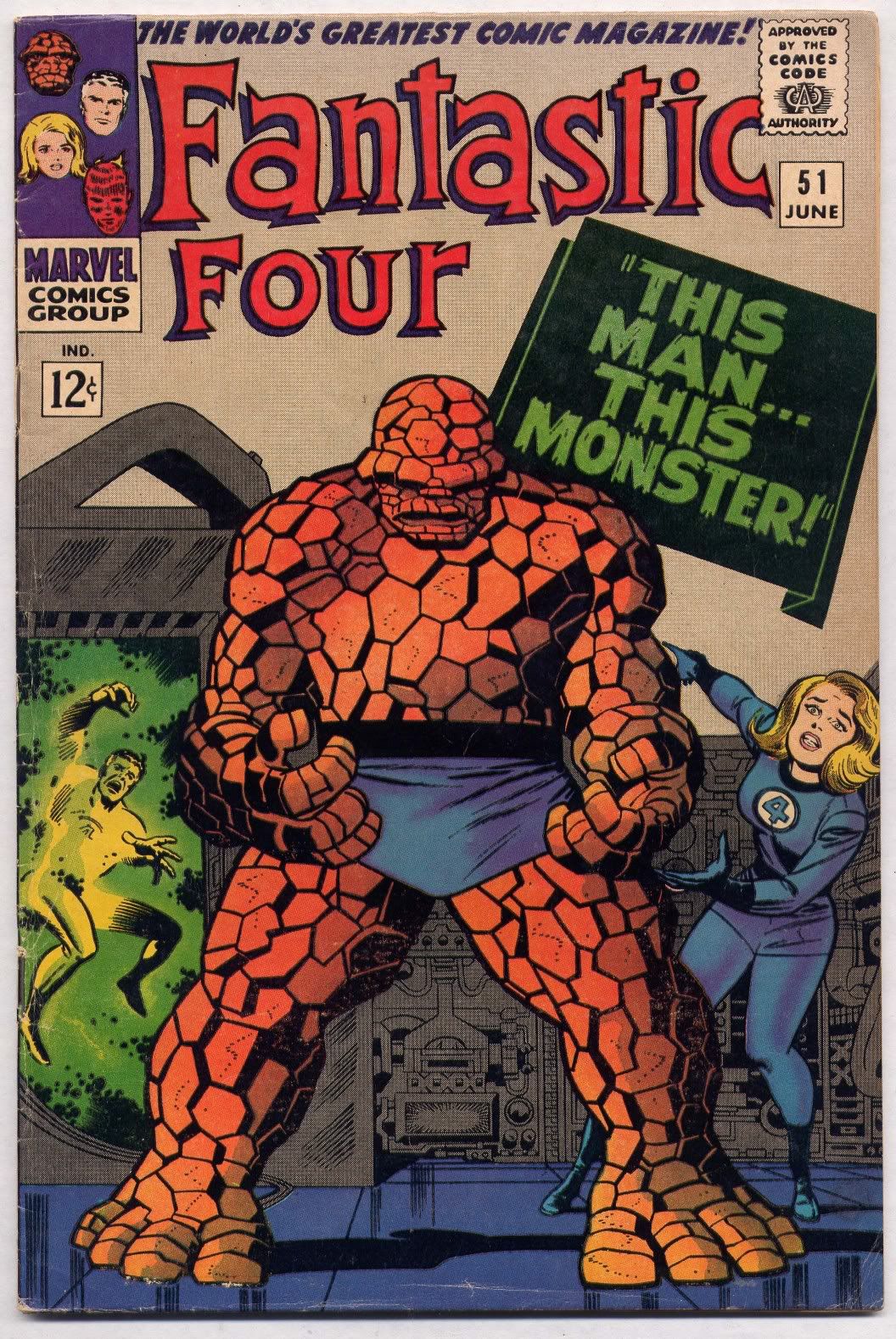
This Man, This Monster! Fantastic Four Vol. 1 #51 (written by Stan Lee/art by Jack Kirby; June 1966)

Just in case you missed the details of the last entry and this one, you’ll notice that Galactus was followed up immediately with “This Man, This Monster!.” Like the story it followed, “This Man, This Monster!” introduced more elements to superhero storytelling: focusing on a character’s humanity and interpersonal relationships.

The Thing’s powers are a blessing and a curse and no story by Lee and Kirby does a better job of illustrating that than this one. It’s a single-issue story that explores what happens when Ben Grimm loses his powers and culminates with him making a tragic personal sacrifice. It’s one of Lee and Kirby’s best and shows the pair’s range.

fantastic_four the trial of reed richards

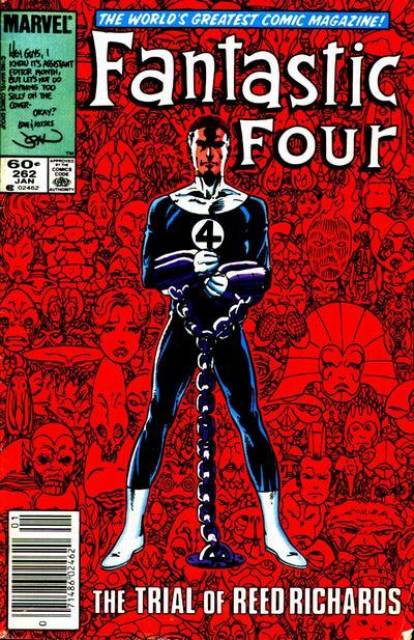
The Trial of Reed Richards Fantastic Four Vol. 1 #262 (story and art by John Byrne; June 1984)

I’m not going to sugar coat this. The 1970s weren’t a good decade for Fantastic Four stories. John Byrne did a lot to reinvent and reinvigorate the team. “The Trial of Reed Richards” represents the best Byrne had to offer.

Reed must stand trial for allowing Galactus to live and devour more planets. This single-issue tale does a great job of exploring morality, catches readers up on what Galactus was doing for the past decade, and questions what the universe would be like without a force of nature that can eat entire planets. Byrne does a great job of defending Galactus’s right to exist.

fantastic_four unthinkable

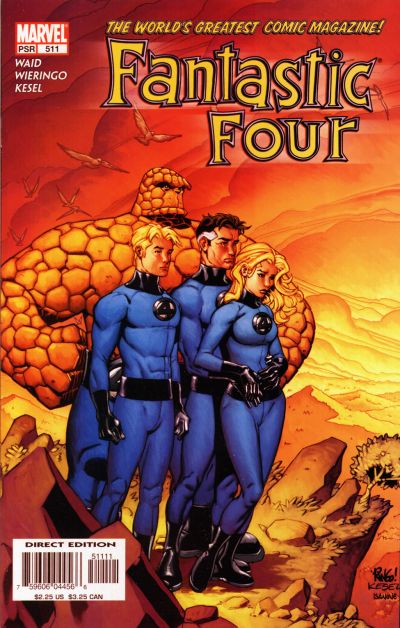
Fantastic Four: Unthinkable (written by Mark Waid/art by Mike Wieringo; 1998)

I’ve gone long enough without a Doctor Doom story, and that’s because I wanted to wait for the best Doctor Doom story “Unthinkable.”

Waid and Wieringo’s run on Fantastic Four captured the boundary pushing adventures of the FF’s past and is considered one of the best runs on the series. “Unthinkable” does a lot to solidify that claim. Unable to beat Reed as a scientist, Doom turns to the one “science” Reed was never able to comprehend: magic.

“Unthinkable” forced the Fantastic Four, and especially Reed, to stretch their capabilities. Doom reached new levels of villainy here that included dark arcane powers, a suit made of flesh. Despite Reed’s efforts, Doom still magically disfigured Reed and set him on a path that would lead to Ben’s death.

If a reader wants to know the depth of Doom’s hatred for Reed and the rest of the FF, look no further than “Unthinkable.”

fantastic_four hereafter

Fantastic Four: Hereafter (written by Mark Waid/art by Mike Wieringo; 2004)

I did it with Lee and Kirby and here I go again—sort of—with Waid and Wieringo. “Hereafter” follows “Authoritative Action” which happened because of “Unthinkable.” Let’s just say that Reed didn’t handle Ben’s death well, and it led to some ugliness in Latvaria. Reed decides to put his trust in something greater than himself in “Hereafter.” The surviving members of the Fantastic Four storm the gates of Heaven to rescue Ben. This story doesn’t question existence as much as exploring one’s consequences.

Reed, Sue, Johnny, and Ben don’t save the world in “Hereafter.” They don’t battle a huge villain or overcome a cosmic threat. This story focuses on love, friendship, and hope.

fantastic_four three

Fantastic Four: Three (written by Jonathan Hickman/art by Steve Epting; 2010-2011)

What is with the Fantastic Four and wanting to be a trio? Hickman had a great run with Fantastic Four in the 2000s, and “Three” might be the best of his stories. Annihilus—an often-overlooked FF villain—poses the threat here, but the crux of the story comes in the form of Ben losing his powers and not being able to help his best friend Johnny during an invasion from the Negative Zone.

Johnny gets overrun by the Annihilation Wave as Ben seals the portal from the outside. Ben gets his wish of being normal, but he struggles with losing Johnny. If readers want to learn more about Johnny and Ben’s unique bond, give “Three” a read.

fantastic_four 1234

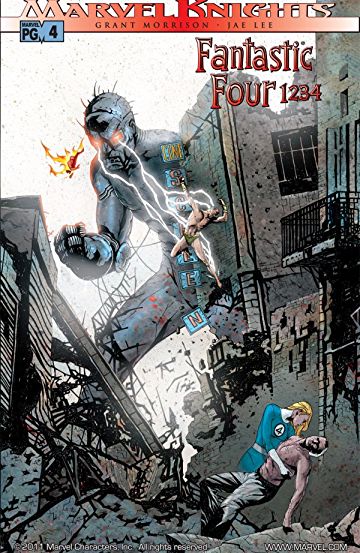
Fantastic Four: 1234 (written by Grant Morrison/art by Jae Lee; 2011)

Grant Morrison likes to bend reality with his stories, so a Fantastic Four mini-series was inevitable. “1234” splits the family with four individual stories. Each member must suffer through a series of personal misfortunes and many of the team’s greatest enemies make appearances.

All the madness in “1234” leads to the team’s greatest adversary Doctor Doom. “1234” is a great showdown between two of the smartest men in the Marvel Universe. This is a battle of will, wits, and intelligence.

fantastic_faux

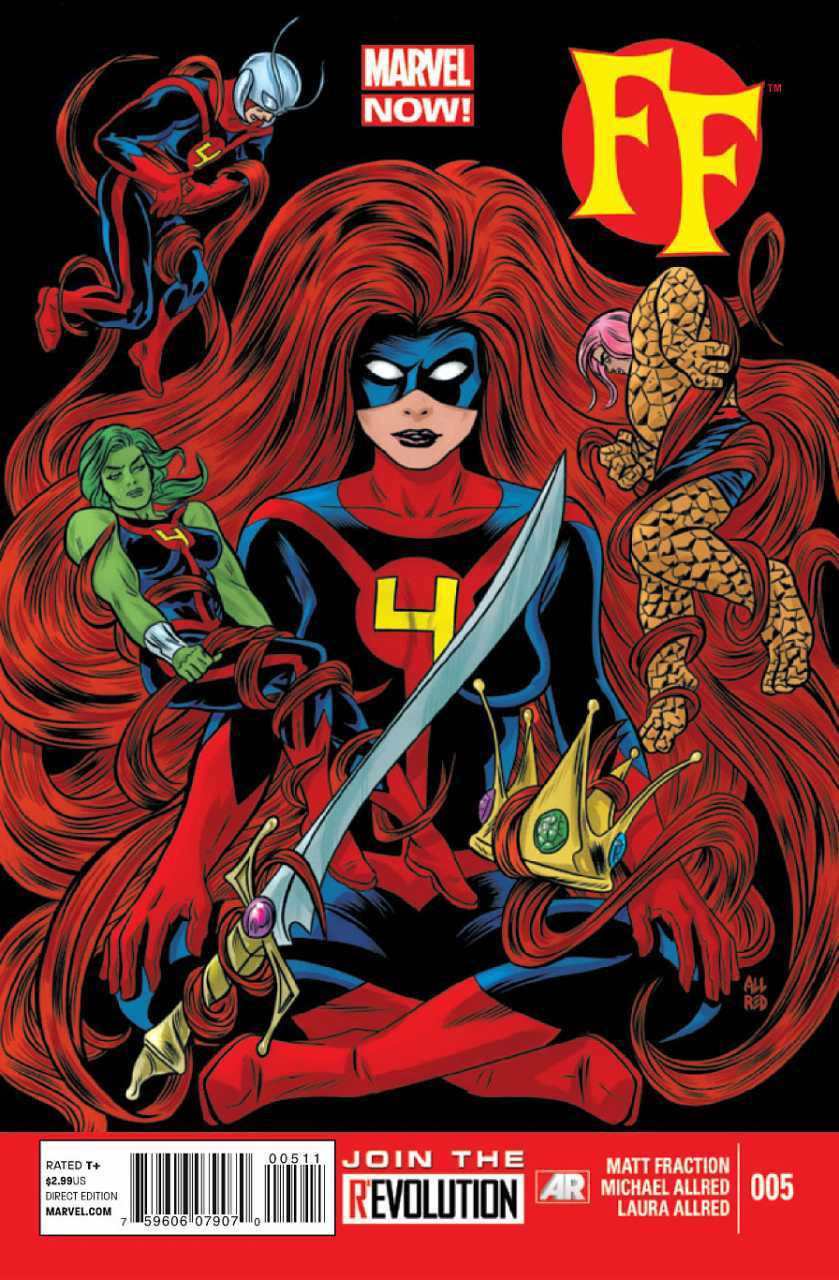
Fantastic Faux (written by Matt Fraction/art by Mike Allred; 2012-2014)

It may not look like it, but many heroes have donned the Fantastic Four uniform. The oddest group to wear Fantastic Four tights must be the team of Fantastic Faux.

Following Jonathan Hickman’s great run on Fantastic Four, Fraction took over both Fantastic Four and its sister title FF. The results were the team being sent through space and time, which left a vacancy in the Baxter Building for a substitute team to fill.

Ant-Man, Medusa, She-Hulk, and the newly introduced Ms. Thing (Johnny’s pop-star girlfriend Darla Deering who wore a mechanical Thing suit) were left in charge of the Future Foundation’s group of advanced science students. As Allred and Fraction are wont to do, they dial the sci-fi bizzarroness up to 50. A Voltron-style Doc Doom/Annihilus/Kang mash-up villain named Kang the Annihilating Conqueror, a one-eyed future Johnny, and the odd alien Foundation’s students graced this 16-issue run.

But like most great FF runs, “Fantastic Faux” challenges the idea of family. Not only are we born into a family, we have family that we choose.

That’s my list for readers who are new to Fantastic Four comics. If I didn’t get the list right, I’m sure it’s right in some alternate reality. I’ll have to ask Reed which one or you could let me know in comments.