Geek Out

Richest Comic Book Characters

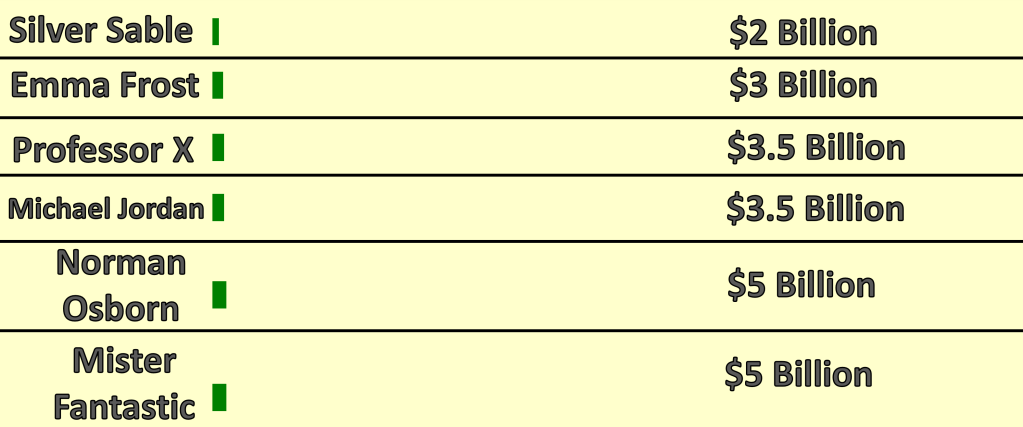
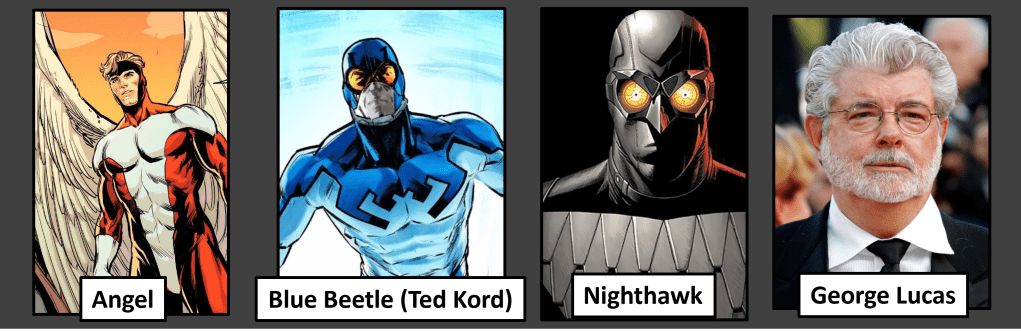
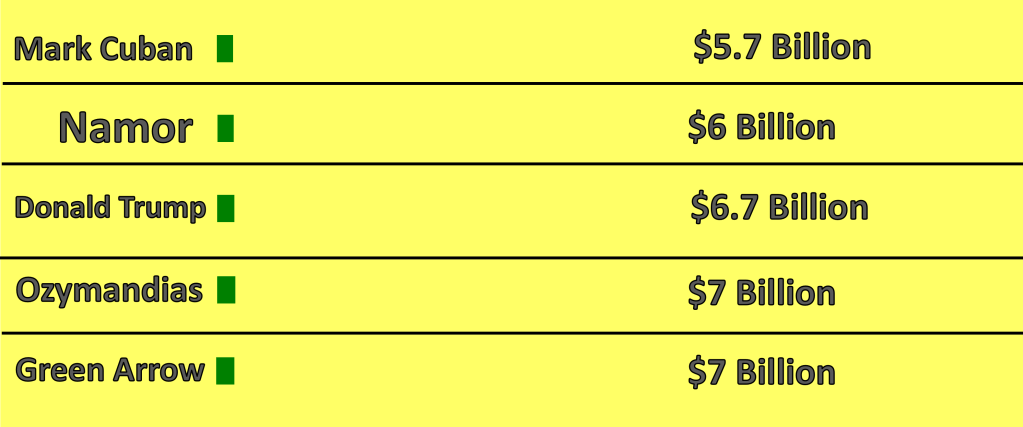
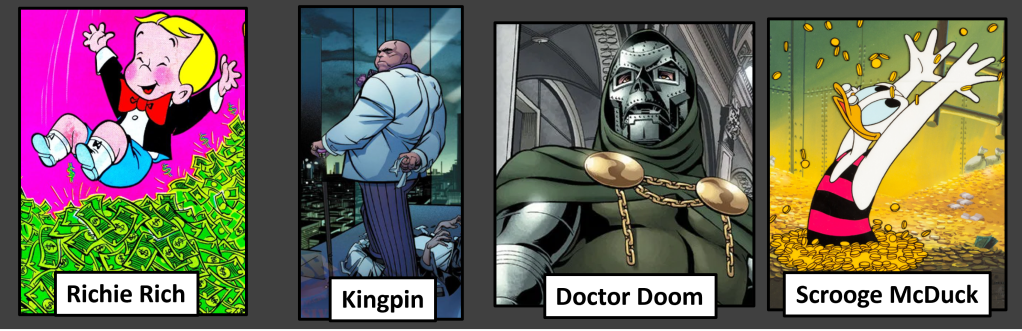
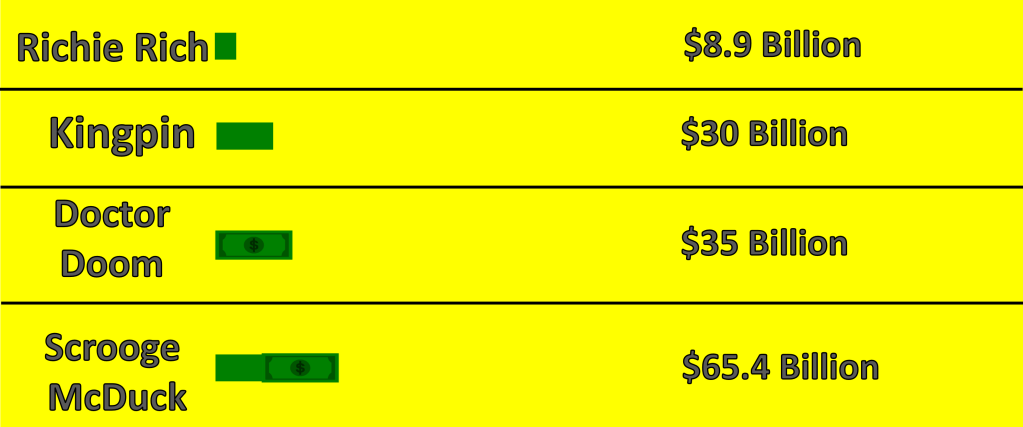
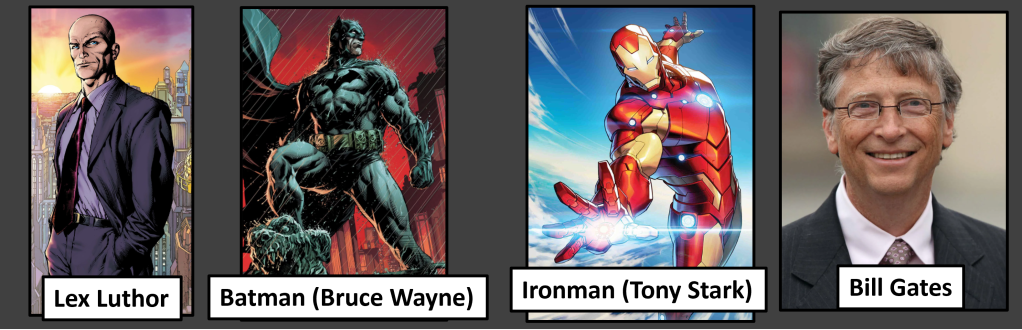
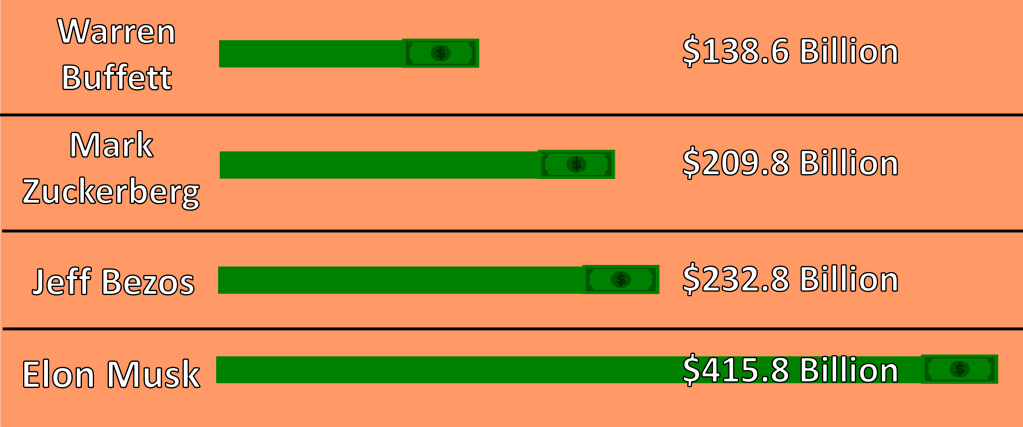
Happy Tuesday! We compiled the following images and statistics to showcase the net worth of comic book characters. We threw in some real world people for reference.

The following statistics for comic book character wealth comes from Wealthy Gorilla, while the wealth of real world people comes from Forbes. These statistics were retrieved on January 13, 2025; they are subject to change.

We’ll begin with the characters/people with a net worth of $2 Billion and work our way up to the richest person or character. Can you guess who tops this list?

We may be one or two stacks short for T’Challa. Nothing beats Vibranium and other-worldly tech.

Wherever you are, we hope you’re having a great day.

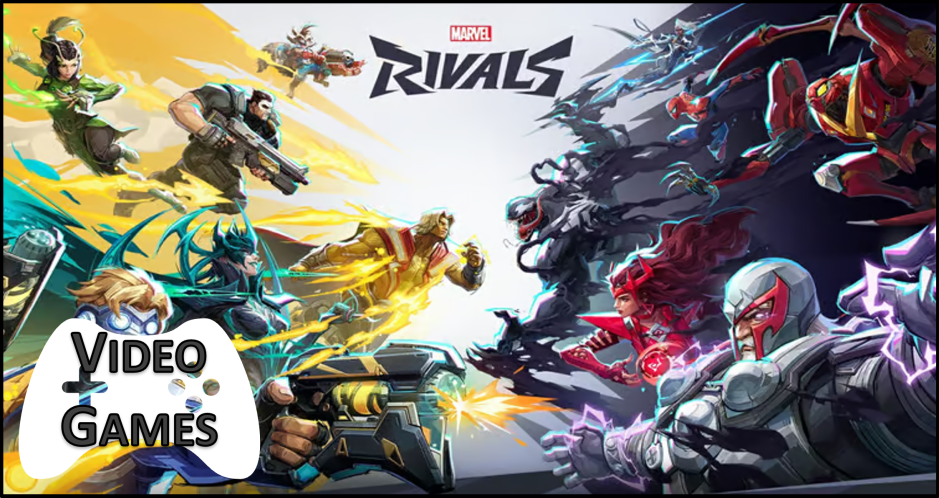
Free-To-Play Video Game Review: Marvel Rivals

Marvel Rivals takes the Overwatch experience and gives it a Marvel coat of paint. Sure, the developers make a few changes, most notably to the battle pass, but the game remains largely the same. It’s a fun experience. It’s a familiar experience. That’s not always a bad thing. I’m just wondering if Marvel Rivals will get sued by Blizzard.

Hey, hey! Kyra Kyle here. We haven’t done a video game review in some time. We’re taking a break from gacha games and reviewing the 6-player hero shooter Marvel Rivals. A Marvel video game is on-brand for Geekly. It takes a while to play enough of a free-to-play game to get an accurate depiction of how much time it takes to finish a ubiquitous battle pass. Marvel Rivals is no different. Unlike the gachas we’ve covered, Marvel Rivals has little to no story, so we’ll be replacing our two story segments (Narrative and Storytelling) with Connectivity and Online Experience. Here we go.

Mechanisms

Mechanisms: 0/10

Originally, I gave Marvel Rivals a four and then a three. Who am I kidding? Marvel Rivals mimics Overwatch in almost every way. Our Mechanisms score measures how much a game pushes the boundaries of a game’s playstyle. In short, have we seen this gameplay before? Yes. Marvel Rivals copies Overwatch’s homework. I settled on a mechanisms score of zero. Even with this poor score, the game’s team-up mechanism single-handedly raises this score. If you choose a character like Thor, Thor can supercharge Captain America’s abilities, and Thor’s powers can also amplify Storm’s. Team-up abilities are not without their drawbacks (more on that in our Online Experience section) but the various team-ups add enough spice to return to Marvel Rivals every so often. It’ll take a long time to play each one. Each character has multiple possible team-up powers.

Marvel Rivals is the first hero shooter to include team-up powers. Many games of this type have synergies between characters but not a direct power. Marvel Rivals adds multiple abilities to each character. I can see this getting overwhelming with a larger roster of characters, but for now, team-up powers are a welcome addition. The rest of the mechanisms are almost exactly like Overwatch.

Hulk—technically named Bruce Banner—plays so similar to D.Va that I already know how to play him. Star-Lord is Soldier 76. Black Widow is Widowmaker; they almost have the same name anyway. Even the hero classifications are the same: Damage (Duelists), Tanks (Vanguards), and Support (Strategists). A well-constructed team will have an even number of all three. I do believe that Overwatch 2 also suggests this team comp, but Marvel Rivals has a higher level of consistency of character roles. Every Support (Strategist) will have the ability to heal. Or at least each Marvel Rivals Strategist has a reliable heal that makes the role easier to play.
Gameplay Loop

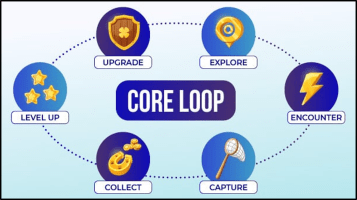
Gameplay Loop: 8/10

Above Image from GameDesigning.Org

Overwatch always had a fun gameplay loop; Marvel Rivals is no different. Drop in and play a few matches. You could try various game modes—I did for the purpose of this review—but you can play several rounds of quick play and then call it a day. Most casual players will most likely only play quick play.

And it’s this catering to casual players that raises this score. I’ve seldom played with a pre-constructed team, and the game can still be enjoyable. There are some issues with doing this that I’ll discuss more in the Online Experience section. I can see people who are disengaged with Overwatch (because of its change in monetization and Blizzard’s about-face with canning Overwatch’s story) switching to the new kid Marvel Rivals, but Marvel Rivals uses a similar monetization scheme as Overwatch 2, and I doubt Marvel Rivals will add a story mode. I do like Marvel Rivals’ references to the Marvel comic characters. The game has more references to comics than the MCU. That’s why I don’t think the game will add a story. You can just read the comics.
Marvel Rivals’ arcade modes mirror Overwatch’s. I don’t know how much mileage Marvel Rivals’ competitive scene will get. The team-up abilities can screw up the game’s balance, and Marvel Rivals’ initial thirty-three characters (yeah, there are a ton of launch characters) are—for the most part—balanced for now, but what will happen when Marvel Rivals adds a character ability not already featured in Overwatch? Seriously, Marvel Rivals may have one or two Overwatch character abilities that it hasn’t yet “borrowed.” The devs knew the character abilities were balanced because the characters’ abilities already existed. We’ll have to see what happens in the future.

The Gameplay Loop’s score depends on how satisfying a game is. Overwatch has an addictive gameplay loop, and so does Marvel Rivals. Eight may be a little low.

Respectful of a Player's Time

Respecting Time: 8/10

Marvel Rivals gets right into the fun. Click play, load into a game in less than five seconds, choose your character, and jump into the action. It’s addictive. From the sound of it, Marvel Rivals should get a ten out of ten for Respecting Time. Marvel Rivals just misses a perfect score for one reason: you can’t choose your map or gameplay type in its quick-play mode. This point dovetails into our next section (Battle Pass) but some of the Battle Pass missions require players to defeat enemies as a specific character on a particular map. Ugh!
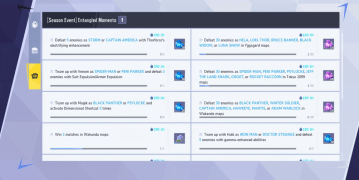
From a game design and development perspective, I understand why choosing a map or game mode in quick-play isn’t an option. It’ll thin the player pool and make load times longer. But why force me to defeat enemies on a specific map? I had one such mission for Wakanda, and I didn’t get a game based in Wakanda for twenty games. Yikes!

Technically, I didn’t need to complete the mission, but one earns in-game currency for beating Battle Pass missions. This currency allows you to unlock things in the Battle Pass and purchase certain bundles if you don’t choose to buy the Battle Pass. Who doesn’t want to unlock things in a game? And if I see a “mission,” something to work toward, I’m going to try and complete the mission. I believe a lot of gamers are the same way. Either eliminate the stipulation of a specific map for these missions or allow players to choose a map. Choosing maps may make load times slightly longer, but I’d accept a few extra seconds.
Battle Pass: 5/10

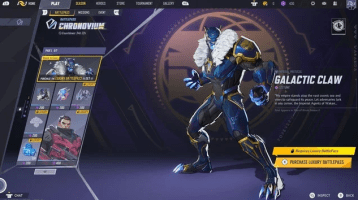
I mentioned before that Marvel Rivals doles out Battle Pass currency and after obtaining this currency, players can purchase rewards within the Battle Pass. This in-game currency is called Chrono Tokens. Chrono Tokens—I’ll interchange this term with “purple stuff” because Chrono Tokens are purple coins—can be earned by completing Battle Pass missions. I mentioned this earlier in the Respecting Time segment. As of Season One, the purple stuff will not carry over from one battle pass to the next. It will reset.

Marvel Rivals’ Battle Pass is set up like a comic book. Very thematic. You unlock the ability to purchase from the next page of the Battle Pass by earning enough of the purple stuff—er, Chrono Tokens. You don’t need to spend any of the purple stuff to unlock each page. This gives Marvel Rivals’ Battle Pass a unique, non-linear path for unlocking Battle Pass rewards. Most Battle Passes divvy out a predetermined reward at each level. Marvel Rivals empowers its players by allowing them to pick and choose which rewards they want. There is one huge caveat. Before unlocking the comic book page’s featured skin, you must unlock every other comic book panel’s reward.
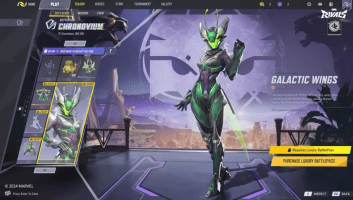
Marvel Rivals saw me, and undoubtedly countless other gamers, coming. I intended to unlock the in-game currency and the skin of each page and skip things like sprays, nameplates, and emotes. But most gamers would choose a skin and in-game currency over sprays, nameplates, and the like. Marvel Rivals put the kibosh on that. That’s a bummer. Even so, Marvel Rivals themes each Battle Pass page. The initial Battle Pass’s first page features the Punisher. I don’t play The Punisher that much, so I can skip that page and go to the next one. You can do this with each page that doesn’t strike your fancy. This is a huge plus.

The only reason why I rate Marvel Rivals’ Battle Pass a seven is that I don’t think the battle pass has enough juice. The rewards are lackluster. But that may just be me. Sprays don’t do much for me. You don’t permanently change the landscape. Who cares? Emotes don’t work in this game. If you use them, you don’t intend to play (you’re throwing the game). Victory poses might work better.

Season One doubled the rewards and duration of Season Zero’s battle pass while increasing the purple stuff needed to unlock pages by a small percentage. I was able to complete all pages of Season Zero in four gameplay hours a week. For Season One this may be increased to five hours a week. But with no carryover for the purple stuff from one season to the next, there’s no reason to play more than five hours or so a week. Marvel Rivals is aiming at that casual audience.

Video Game's True Cost

True Cost: 7/10

I waffled with this score, but Marvel Rivals deserves a high True Cost. I mentioned two other currencies: Lattice and Units. Lattice is the only in-game Marvel Rivals currency that you can buy with real-world money.

The Battle Pass costs 1000 Lattice (100 Lattice costs $1, so that equates to $10). You can earn 600 Lattice (which is the “gold stuff”) per Battle Pass, so if you don’t spend Lattice on any other in-game purchases, you could buy a Battle Pass with the gold stuff you’ve earned but that’s a little better than every other Battle Pass being free. I don’t care for that. I like the idea of buying one’s first Battle Pass and having the option of unlocking your next one for free if you unlock everything and don’t spend the purchasable currency. That’s a ding to Marvel Rivals’ True Cost score.
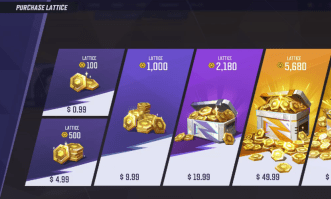
A bigger ding comes from Marvel Rivals’ other in-game currency, Units (or the “blue stuff.”) Players can exchange Lattice for Units at a one-to-one rate. This is where Marvel Rivals makes its money. The game offers plenty of bundles but most of them cost around 2000 Units. You could “earn” the blue stuff but a player’s ability to earn the blue stuff is even worse than a player’s ability to earn the purple stuff; you could be waiting several months to build up enough for 2000 Units. As of this write-up, I have just over 1000, and I unlocked everything that granted Units. That’d be months of waiting for a single bundle. This forces players who want to get a limited-time bundle to invest in the gold stuff. So, you could drop $20 on each of these bundles, and this is Marvel, so there are a ton of bundles.
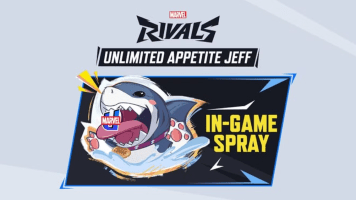
Fortunately, I don’t see much in the way of pay-to-win skins in Marvel Rivals. You can ignore Units or the Lattice to Units conversion, but many players won’t. Children may be the most susceptible. Be careful. Don’t fall down the rabbit hole of “I ‘NEED’ that specialty Spider-Man skin and the Wolverine one and the Hulk one…and the.”

Still, Marvel Rivals receives an above-average True Cost score because you don’t need to buy any cosmetics to be competitive. You don’t even need to purchase any heroes or villains, and that’s rare for a hero shooter. Marvel Rivals may be the only hero shooter to have all its thirty-three launch characters (and two newly released characters, Mr. Fantastic and the Invisible Woman) available to anyone who logs in the first time. That could be why most of the skins are $20; Marvel Rivals doesn’t charge for unlocking characters.

Connectivity: 7/10

I didn’t experience too many issues logging into and staying logged into Marvel Rivals. I don’t know if it matters, but I played primarily on Playstation5. Note: I appreciate the ability to checkmark if I want to be loaded in with PC players or not and I believe the option exists on the other side for PC players not pairing with console players. But even if I didn’t have connectivity issues, I noticed that many of my teammates did. Every third or fourth game, I’d see a notification that a player lost connectivity. So, this is a known issue with Marvel Rivals, even if I didn’t personally experience it. Every third or fourth game is common enough to lower Marvel Rivals’ Connectivity score a tad.

Online Experience: 2/10

Marvel Rivals’ online experience will also mirror Overwatch’s. You’ll have quitters (most people refuse to leave the game because they’ll get penalized, but they stand there doing nothing, so you’re one player short). You’ll have people who insist on playing Wolverine because they just bought a $20 skin for him and refuse to switch characters, even though we already have four other Duelists on the squad, and I can’t play a tank and a healer at the same time. And then if you’re like me and you tend to play support of some persuasion, you’ll get yelled at because you aren’t healing people fast enough and they’ll call you trash if you remind them that healing would go a lot faster with a second healer. So, Marvel Rivals becomes the usual online multiplayer game cesspool.

Marvel Rivals is your usual online multiplayer shooter. These games breed toxic players, and yet the Marvel Rivals devs have learned nothing from previous games. There’s no means (yet) of reporting toxic players. There isn’t an ignore list either, meaning you could block yourself from playing with a certain player in the future. And the devs put way too much trust in their AI. That inactivity that I mentioned (where players will, for the most part stand there) gets tracked by AI. It doesn’t take long for a player to stand perfectly still before receiving a warning and get booted. I received a warning when I grabbed a soda in between rounds once. It’s that fast. But technically, all you must do is move your character a little bit. Players figure this out quickly. AI doesn’t work. There needs to be a reporting system. Nothing beats flesh-and-blood monitoring.

But wait, there’s more. Remember those team-up abilities I mentioned earlier? Yeah. They’re fun in concept but not in practice. Your teammates will demand you play a specific character, even if you’re unfamiliar with the one character they want you to play with from the thirty-three launch characters because they picked another specific character. I don’t know how many times I would pick someone like Mantis, and then someone would yell at me because I picked the wrong healer. Idiot! You should pick Cloak and Dagger as a healer because they have a special ability with Moon Knight, who I picked. I’ll tell them that I’m unfamiliar with Cloak and Dagger’s play style. Then, they refuse to change who they’re playing to match Mantis. I must change. They’re the main character. Yeah, Marvel Rivals can get an extra layer of toxicity.
User Interface: 5/10

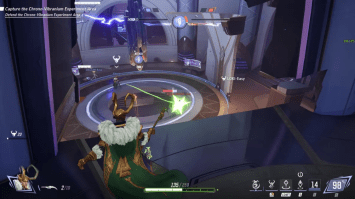
Marvel Rivals’ user interface works well enough in-game. It looks like Overwatch’s. I know I say that a lot, but it’s true. I can’t stress enough that Marvel Rivals is Overwatch with a Marvel coat of paint. I dock Marvel Rivals a few points in the user interface score because the out-of-game menus are difficult to navigate.

Again, like Overwatch, Marvel Rivals has a robust statistics page. These pages are more difficult to find, and the information is more convoluted to parse than Overwatch’s. There’s also a lot going on with the game menus. Because Marvel Rivals “borrows” so much from Overwatch, it integrates a lot of the systems that were developed over what’s almost a decade ago and then adds enough tweaks to throw off anyone who would know Overwatch’s menu system. Players unfamiliar with Overwatch’s menu may need a tutorial of Marvel Rivals’ menus.
Graphics and Audio: 4/10

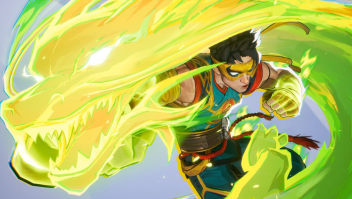
I feel like I’ve been here before. Many of Marvel Rivals’ maps are eerily similar to Overwatch’s. I know. I know. You’ve made a game out of how many times I’ve mentioned Overwatch by now. I lost count. I didn’t know where to mention the maps, so I added them here. Graphics and Audio works because I believe some of the set pieces look identical to Overwatch. At least with some of the other game elements, you may see the occasional difference. The map layouts feel the same.

A Graphics and Audio score isn’t going to fare well when you—let’s say it together—take Overwatch and add a Marvel coat of paint. Overwatch is an eight-year-old game.  While nice enough to look at, Marvel Rivals uses an art style that’s eight years old. The graphics get an average score at best.

And the announcer’s voice (Galacta) is the three-way lovechild of nails on a chalkboard, a yelp, and a yodel. I don’t care for escorting the payload matches in Overwatch, but Galacta wailing, “Better stop that vehicle” makes me want to jam a number two pencil in my ears. The rest of the voice actors work well enough, so this score ends up being average.
Aggregated Score: 5.11

Despite its obvious inspiration—ahem, Overwatch, ahem (got another mention in there)—Marvel Rivals does a lot for the progression of Battle Passes. I like how you can pick and choose which rewards you want from its Battle Pass instead of a Battle Pass’s usual linear progression. The game’s use of the comic history over the MCU is another nice touch. The team-up abilities, while overblown and could lead to future balancing issues, work well and shake up the Overwatch formula.

Marvel Rivals doesn’t force players to buy characters. So much of a hero shooter’s commerce comes from buying characters. Instead, Marvel Rivals milks players if they want a cool skin. And they offer an avalanche of cool skins.

Geekly News: Finspan Board Game Geek Reviews

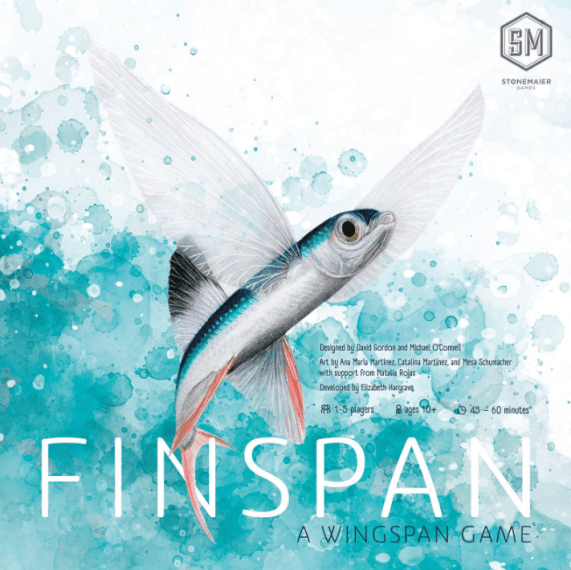
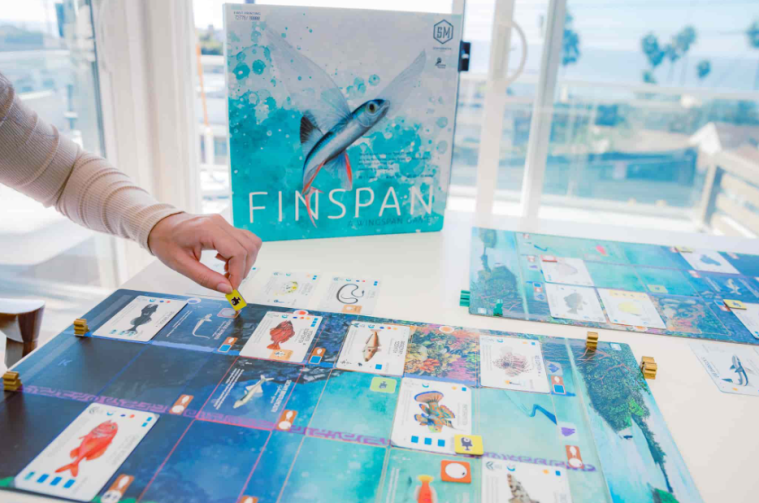
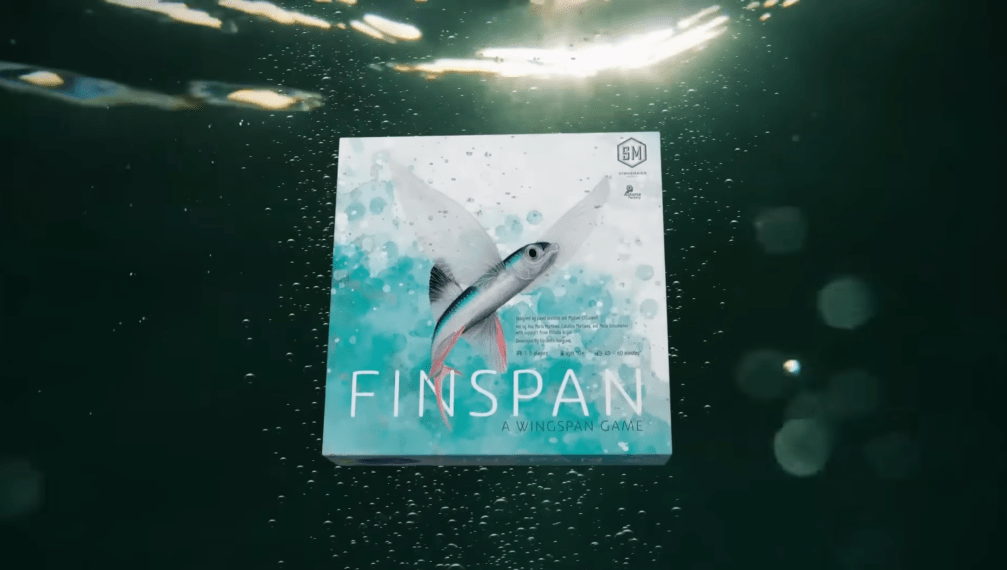
Stonemaier Games announced a new spinoff game from their wildly popular board game series Wingspan. The series is headed to the depths of the ocean with Finspan. Like Wyrmspan before Finspan, Wingspan’s original designer, Elizabeth Hargrave, is involved. And a funny thing tends to happen with Board Game Geek (BGG) and its review system whenever a Wingspan spin-off gets announced. The game gets an equal number of people who review bomb the spin-off (giving the game a 1 out of 10) and people who give the game top marks.

I came late to the party before I took the above screen capture of Finspan’s rating distribution. The numbers were almost perfectly even between 1s and 10s yesterday. Finspan truthers have more than doubled since then. But Finspan hasn’t yet been released. The game is scheduled for a January 22nd release date. This begs the question, should you rate a game that hasn’t been released?

Quick note: Board game companies do give reviewers advanced copies of games, but these numbers pale in comparison to video games (whose companies give out keys for downloads) because postage is involved. There’s a zero percent chance that the above numbers come exclusively from board game reviewers with advanced copies of Finspan.

To answer that previous question, no. You don’t have enough knowledge to rate a game that hasn’t been released unless you are one of the few board game reviewers with an advanced copy. Board game enthusiasts have been arguing about Finspan‘s rating for the past few days. Some argue that it’s too high. Others that it’s too low. Most people suggest that the problem lies with Board Game Geek.

I don’t buy that. Board Game Geek allows board game companies to upload their upcoming games to the site. This allows companies to lock in a name for a board game, so we won’t get a competing Finspan from some other company. BGG also allows people to write reviews for upcoming games because these games are seen before launch. Undoubtedly, Stonemaier Games brought some version of Finspan to a convention or two, and people demoed it. Some of the above scores may be legitimate.

Then, there’s the question of when does a game officially release? Finspan’s release date of January 22nd is more concrete than many other board games because of a lack of crowdfunding. Does a game’s release date coincide with when the first Kickstarter backer receives their copy? Or is it when the game reaches retail? Maybe the game never reaches retail. Does that mean that it will forever be unreleased, even though thousands of people own a copy?

Blaming Board Game Geek for allowing upcoming games on their site isn’t the issue. The issue stems from people who will rate a game unseen.

How often does this happen? Often. Make no mistake. Wyrmspan received the exact same criticism and scores before its release, and it became one of the most highly rated games from last year (2024). So, why do Wingspan spin-offs get all this hate?

Few other game series get the same vitriol as a Wingspan spin-off. Numerous games have introduced “Duel” or “Duet” versions (2-player variants) of popular games: Splendor, 7 Wonders, King of Tokyo, and Cosmic Encounter. No one bats an eye. Many other games have spawned countless spin-offs: Catan, Ticket to Ride, and even Gloomhaven. Review bombs do occur with these titles but not in the sheer number of a Wingspan spin-off. Why is that?

Not going to lie. Finspan looks cool; I’ll have to try it at least once.

Quick note: I’m not one of the board game reviewers who received an advanced copy; most board game reviewers who do receive advanced copies produce video content (note to self: start a YouTube channel or TikTok account).

I used to think that Stonemaier Games got flak for producing spin-off games because they’re a smaller company. If Days of Wonder released spin-offs during their years of producing one game per year, I would get upset about a spin-off for one year. But Stonemaier has a full slate of board games planned (far more than one) for 2025 that don’t include Finspan. Finspan is extra content.

Furthermore, Gloomhaven has received multiple spin-off board games, and most people cheer for those upcoming games. Cephalofair Games is a much smaller company and produces far fewer games per year than Stonemaier Games. So, “small board game company” can’t be the main reason.

I like to think the reason is closer to people respecting Stonemaier Games and wanting the company to innovate with each one of their games. This is the kind reason why Wyrmspan and Finspan received blowback. I mentioned Days of Wonder’s stretch of “one game per year” for a reason. Days of Wonder was the preeminent board game company at that time. When you saw a Days of Wonder title (this would’ve been about the 2000s and into the early 2010s), you knew the game was high quality. I would’ve been a little upset if Days of Wonder only released a spin-off game at that time because I would’ve wanted a different game to play.

Spin-off board games work like movie sequels. They tend to print money. Wyrmspan sure did last year, and I expect Finspan to do the same. While I can see why some may be disappointed with a spin-off game, Stonemaier Games needs to stay afloat financially. Finspan may be a spin-off game, but it affords Stonemaier Games to take other risks with different titles.

Again, Stonemaier Games has a full slate of games for 2025 that don’t include Finspan. If the innovation reason is why someone rated Finspan low, wait for the game’s release. Wyrmspan tweaked Wingspan’s base gameplay. I expect Finspan to do the same.

There is a penultimate group of people who review a board game on BGG before the game’s release. These folks try to affect the scoring’s bell curve. Some folks refuse to give an unreleased game a perfect or high score, so they tank the score to even out the final rating. This mentality can work the other way, and I think it did with people rating Finspan a 10, even though they’ve never played the game. These are Stonemaier Games truthers who believe in the company. To be fair, Stonemaier Games has earned that trust.

This behavior is odd. BGG doesn’t include a game in its ultimate Geek List until many people review the game or have logged plays of it. There used to be–and sometimes there still is–a time component. A game cannot be listed on the final Geek List unless it’s been released for several months. This does compensate for this odd behavior. Regardless of how BGG’s Geek List works, these games typically get aggregated sufficiently in the end.

In short, I wouldn’t worry about a minority of gamers who would rate a game before the game’s release.

Note: There was one person who claimed, “I don’t like Stonemaier Games,” so there are gamers who don’t like Stonemaier, and that’s fair.

Let’s swim into deeper waters here. Some of you may need a trigger warning for the following darkness. Fair warning, I’m not suggesting that most people who rated Finspan a 1 on BGG belong to this camp. Unfortunately, the number isn’t zero.

Elizabeth Hargrave is a woman. She’s even an outspoken woman who designs board games, and she has a megahit with the Wingspan series. Some people are jealous. Others don’t want to give credit to a woman trying to break into a predominantly boys’ club. I hope the number of people who review bombed Finspan belongs to any of the previous camps, but I’m going to be real. Most likely, at least one person review bombed Finspan because it’s a spin-off game from an outspoken woman board game designer.

So, what are our takeaways? BGG isn’t to blame for review bombing or inflating. Listing a game is great for publicity. I guess even bad publicity is publicity. Whatever the reason someone may review bomb a popular board game series release, people need to chill. Stonemaier will produce multiple games not named Finspan this year. BGG scores will even out after Finspan’s release. There’s room for multiple people of all kinds at the gaming table. Diversity makes our hobby great.

And if you’re picking up a copy of Finspan this month, you’re in the greater Omaha area, and you don’t mind teaching me the rules, I wouldn’t mind trying out Finspan. If it’s anything like Wyrmspan, I’ll play it once and then buy it later. And wherever you are, I hope you’re having a great day.

Tabletop Game Review: Sushi Boat

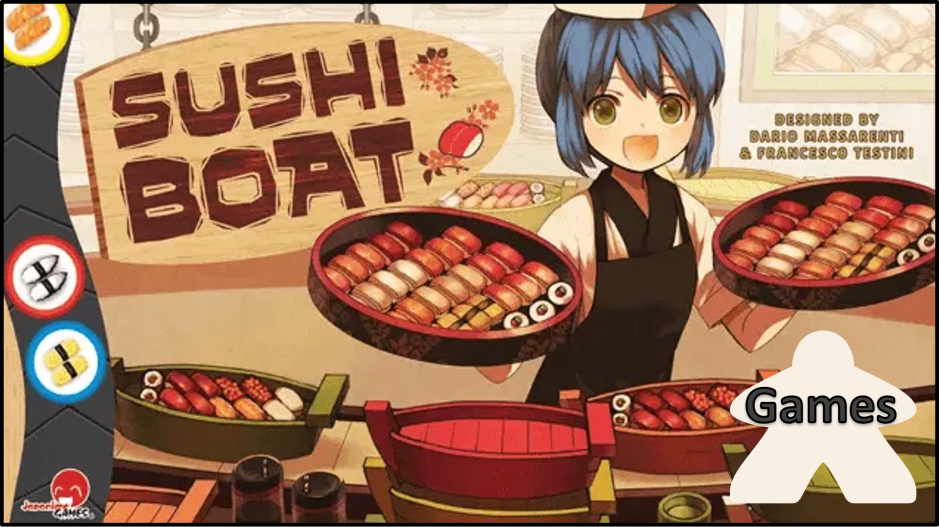
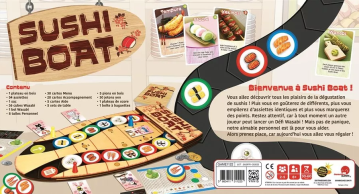
Hey, hey! Kyra Kyle here. It might be a little early for another tabletop game review, but we’re catching up on some of the backlog. Today’s review is one with a high toy factor (a board game with plenty of toy-like features): Sushi Boat.

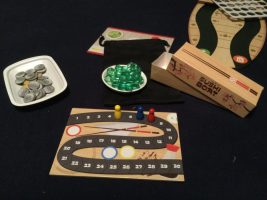
Sushi Boat leans into its theme; the board is a sushi conveyor belt. Each turn, players perform their choice of actions, including taking plates of sushi off the revolving belt on the board, paying staff tiles for special effects, or buying side dishes. As they eat, players stack plates in front of them. Players score points by eating off matching (color) plates and for eating a variety of sushi types (set collection). The Wasabi Challenge shakes things up by adding a memory component that can swing the victory.

Before we get any further, we’ll set the table and discuss Sushi Boat details.

The Fiddly Bits

Designer: Dario Massarenti, Francesco Testini
Publisher: Japanime Games
Date Released: 2023
Number of Players: 2-5
Age Range: 9 and up
Setup Time: 15-20 minutes
Play Time: 30-75 minutes

Game Mechanisms
Memory
Set Collection
Worker Placement

Game Setup

Place the wooden sushi boat board (with a built-in “conveyor belt”); this board is the central visual element and will draw a crowd when placed on the board.

Mix the Staff tiles and randomly place 1 on each Staff space (these are pictured in the rulebook). Place all of the Wasabi cubes in the Wasabi Bowl (Sushi Boat includes ceramic bowls; the production value is insane). Each player chooses a color and takes the matching pawn and player mat. Place all of the Yen in the change tray (again, a ceramic tray), this is the bank. Give each player 2 Yen; players place their Yen on their player mats.

Put all the colored Plates in the bag and mix them well, leaving the white plates to the side for now. Then, randomly draw Plates and add them to the conveyor belt area of the board one at a time until the board is full. Then, draw 3 more plates and add them to the Trash beside the board. After filling the game board, add the white Sushi Plates to the bag and mix them in.

Separate the 4 Wasabi cards from the Side Dish cards and set them aside for the moment. Shuffle the Side cards. Then, depending on the number of players in the game, you will discard cards at random from this deck. Then, set aside a number of Side Dish cards equal to the number of players. Add the Wasabi cards to the Side Dish cards and shuffle them well. Create a face-down draw deck near the game board, and finally, place the Side Dish cards you set aside (not the discarded ones) and add them to the top of the face-down draw deck.

Game Flow

Beginning with the starting player, you’ll take turns going to the left. On your turn, you do the following steps in order:

1) You must turn over the top card of the Side Dish deck and refill the Sushi Boat
2) You must move your pawn to an empty seat
3) You may perform one action (from a selection of 3)
4) You must eat sushi

Let’s talk about the different steps in detail.

1) “You must turn over the top card of the Side Dish deck and refill the Sushi Boat.”

We’ll set the Wasabi card aside for the time being; they’re their own beast. Every other Side Dish card will have a symbol in the top right-hand corner. This will tell you how many sushi plates you’ll need to add to the belt. At the bottom, you’ll find effect text; this will give you a special ability if you choose to purchase the card (in a later step) and then use the card.

Wasabi Challenge:
The game stops temporarily. Each player tries to guess the color of the 2 plates hidden in the tunnel at the back of the Sushi Boat. First, take all of the Plates in the Trash and return them to the bag, mixing them well.

Then, each player takes 2 Wasabi Cubes from the bowl and secretly places them on their player mat to mark the colors they think match the hidden Plates. You may place both Wasabi Cubes on the same color if you think both Plates are that color. Finally, add Plates to the board until the two hidden Plates are fully revealed (this will most likely push some Plates into the Trash).

Each player compares their guess to the 2 Plates that were revealed. For each color you guessed correctly, you keep that Wasabi Cube. Any Wasabi Cubes on incorrect guesses get returned to the Wasabi Bowl.

2) “You must move your pawn to an empty seat”

You must move your pawn every turn. You can move it to any seat on the board that isn’t already occupied. But you could pay another player 1 Yen to return their pawn to their player board, so you can claim their seat.

3) “You may perform one action” (from a selection of 3)

A) Visit the Staff: If you’re on a space with a staff member, you can pay 1 Yen to perform their special ability.
B) Buy the top Side Dish: Pay 1 Yen to buy the top card of the Side Dish deck; this will most likely be the card you revealed at the beginning of your turn. Note: Players cannot buy Wasabi Challenge cards.
C) Take 1 Yen from the bank.

4) “You must eat sushi”

Take the Plate from the conveyor belt space that is next to the seat your pawn is on. Typically, you will add these plates to the top of your stack of Sushi Plates. (Some Side Dish Cards allow you to break this rule.)

Play continues like this until the Side Dish Deck runs out. When this happens, the game ends. Players score points for the number of consecutive-colored plates in a row, minus 1. So, a stack of 4 red plates would be worth 3 points. You may have multiple stacks of colored plates. (White plates don’t count for or against a consecutive-colored plate stack.) Then, you add up the sets of sushi you claimed (the unique sushi dishes depicted on the plate; there are 7 sushi types). After that, players get bonuses for playing the most Side Dish cards and some Side Dish cards add a victory point. Finally, each Wasabi Cube is worth 1 point each.

Whoever has the most points wins.

Review

Sushi Boat is a great game with an immense toy factor. This game’s production value is over the top. It may even be too nice—if there is such a thing. Ceramic bowls? Are you kidding me? My oldest daughter just returned from Japan and had plenty of real Yen to replace the punchboard Yen included with the game. Even without that, Sushi Boat has fantastic components.

Sushi Boat balances its elements well. I didn’t think memory and worker placement would work, but it does. I’ve found that younger players (ahem, children, ahem) have an advantage during Wasabi Challenges. I tend to focus on the mechanical aspects of the game like special abilities (through the staff and Side Dish cards) and forget to keep track of which plates have slid under the tunnel. This is the one aspect I’ve found most children gravitating toward. This typically gives a child player an extra three or four points.

Speaking of the tunnel and the titular sushi boat, the sushi boat looks fantastic. Sliding Sushi Plates across the “conveyor belt” feels great. I’ve even visited a sushi boat restaurant since playing this game. They use colored plates to tally your bill. Ingenious. And that’s what Sushi Boat’s central board is, too. Ingenious.

The one negative I’ve found is the setup and rules explanation. I’m not lying when I cited the setup time in “Fiddly Bits” as “15-20 minutes.” That’s a little long for Sushi Boat’s weight and game length. I almost feel compelled to play more than one game at a time. The rules explanation for new players can also take a little extra time than what I’d like for a game of Sushi Boat’s length, too. But retaining the rules from one play to the next is easy. Barely an inconvenience. The actions that players perform in Sushi Boat are so thematic that it makes it easier to relearn the game, even if you haven’t played in months.

Verdict

Setup and initial rules explanation can be on the long side, but the effort is well worth it for a game this thematic. While an odd combination, the game’s mechanisms work well together and level the playing field for children. And the board. Look at the board!

Top 5 Tabletop Games from 1986-1987

Hey, hey! Kyra Kyle here. Back with another Top 5 Tabletop Games. 1986 and 1987 have a lot more games for us to choose from. These two years may have too many games to talk about. Why couldn’t some of these games be released over the previous two years? Ugh! This is a good problem to have. I may have at least one honorable mention this year. Let’s talk board games.

But first, in case you’ve forgotten our criteria for the Top 5 Tabletop Games, let’s reiterate the ground rules again before we get started.

1: Cultural relevance plays as much of a factor as overall quality. A game might make a list that doesn’t hold up to others of its type, but you must admit the game is everywhere.

2: Only one game from a franchise makes the list. This will become more of an issue the closer we get to games with expansions.
3: Longevity plays a role, too. A game doesn’t have to fly off the shelves today, but it had to have some widespread appeal for a decent time.

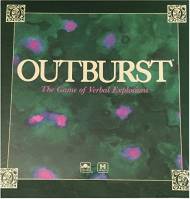
5: Outburst (1986)

Outburst plays a bit like Family Feud. Two teams compete over multiple rounds to reach 60 points by guessing items listed on a Topic Card within a time limit. Outburst’s simple concept puts it firmly in the party game category, and games like this bring people into the hobby of tabletop games. And they can just be fun.
Outburst was featured in Games magazine’s Best Games of 1988. Scott Marley praised Outburst for its clever topics and team-based gameplay. Marley concluded that “Though Outburst is easy to learn, many topics are too hard—and occasionally too spicy—for children.” This may have prompted 1989’s Outburst Junior.

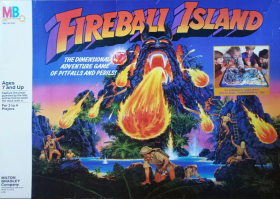
Fireball Island Tabletop Game

4: Fireball Island (1986)

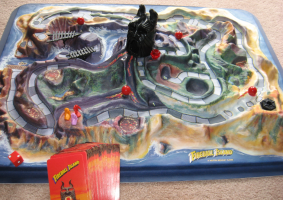
I remember getting the original Fireball Island for Christmas in 1986. The box is ginormous. The plastic game board had undulating paths where the titular fireballs (marbles) would travel down and knock players down, causing the player to lose any items. The object of Fireball Island is to escape the island with the jewel, which players must steal from the top of the Vul-Kar’s mountain. Fireball Island only has one jewel, so once a player grabs it, they become the target of others. And boy, do they become a target.

Fireball Island Tabletop Game Board Close up

Players are incentivized to knock the jewel out of the hands of the player who possesses it. The reimagining of Fireball Island by Restoration Games in 2018 doesn’t place as much emphasis on the jewel. Players can win by other means. Unsponsored quick plug: Restoration Games does great work. They’ve brought back many games on this list and even a couple of honorable mentions like Dark Tower (from the 1980-1981 list) and Thunder Road (which just missed this list).

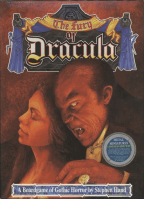
3: The Fury of Dracula (1987)

I mentioned a few lists ago (1983-1984) that Scotland Yard inspired many asymmetric games with hidden movement; The Fury of Dracula is one of the most prominent. I like the theme, but the name “Fury” is a bit of a misnomer. Dracula travels on a hidden board while the hunters move across the game board openly and try to deduce where Dracula is, all the while collecting the means with which to slay Dracula (stakes, garlic, and holy water). The Fury of Dracula ends with an epic showdown.

The Fury of Dracula has been updated multiple times. The second edition changes a lot of the gameplay, while the third edition streamlines the rules to make it easier to play and get into. 2019’s Fourth Edition of The Fury of Dracula gave the game a facelift; it didn’t change much in the way of gameplay. I recommend either the third or fourth editions.

2: Labyrinth (1986)

Not to be confused with the 1946 marble game, Labyrinth, which was originally stylized as THE aMAZEing LABYRINTH, uses a 7×7 grid where tiles get placed on one end of a column or row and displaces the tile on the opposite side of the column or row, hence the German name for the game Das verrückte Labyrinth, which is a pun on the German words errücken” (displace) and “verrückt” (crazy).

Players move their pieces along the ever-shifting path. Many of the tiles will have treasures printed on them. These treasures will match the cards dealt to players at the beginning of the game. The first player to obtain all the treasures in their deck wins. Labyrinth looks simple at first, but it gets puzzlely real fast. It’s a great problem-solving game for children, but when played by adults, the game can become more strategic and cutthroat. Labyrinth’s shifting tiles is one of the most unique game mechanisms from this era.

Returning to the naming, I wonder if Labyrinth avoided calling itself that in 1986 to avoid a lawsuit or confusion with Jim Henson’s Labyrinth movie that was released the same year. I remember a Labyrinth marble game variant tying into the movie that year.

1: Arkham Horror (1987)

I didn’t realize how old Arkham Horror was until I started compiling this list. Designer Richard Launius originally submitted the concept as Call of Cthulhu: The Board Game. This won’t be the first time Launius will make a game based on H.P. Lovecraft. He made a faster-pace, dice version of Arkham Horror in Elder Sign. Launius may be the person most responsible for making H.P. Lovecraft so popular in tabletop gaming. Arkham Horror is an early, thematic cooperative board game. Before Arkham Horror, I don’t recall seeing too many popular cooperative board games.

Because of this, Arkham Horror introduced a lot of staple cooperative board game concepts. Not the least of which is a “Doom Track.” Players work against the clock before the Ancient One breaks through its plane and into Arkham. Come to think of it, a game clock—of one persuasion or another—exists in most cooperative board games. Launius reinvented Arkham Horror into a Living Card Game in 2005.

Did we get the list right, for the most part? I didn’t mention Blood Bowl (1987); I’ll mention it here as another honorable mention. Let us know which games you’d add in the comments. And wherever you are, I hope you’re having a great day.

Check out the other lists in this series:
Top 5 Tabletop Games Prior to the 1930s
Top 5 Tabletop Games of the 1930s
Top 5 Tabletop Games of the 1940s-50s
Top 5 Tabletop Games from the Early 1960s
Top 5 Tabletop Games from the Late 1960s
Top 5 Tabletop Games from the Early 1970s
Top 5 Tabletop Games from 1980-1981
Top 5 Tabletop Games from 1982-1983
Top 5 Tabletop Games from 1984-1985
Top 5 Tabletop Games from 1988-1989
Top 5 Tabletop Games from 1990-1991

DC Universe (DCU) 2025 Preview

Hey, hey! Kyra Kyle here. Geekly hasn’t covered any movies or television series recently and it’s the new year, so let’s talk about the properties being released by DC Comics Studios in 2025. Full disclosure: I haven’t purchased a Max account yet; I’m woefully behind on most DC Comics-related television series. But I plan on signing up for Max soon, and there’s plenty of a back catalog to watch. Yay!

Unfortunately, there doesn’t appear to be as much for the DCU on Max in 2025 as in 2024. Our first property on this list was supposed to be released in late 2024 but was pushed back to January 2025. Let’s see what I’ll be binging as soon as I sign up for Max.

Harley Quinn (Season 5) (On Max Starting January, 16 2025)

Harley Quinn has lasted five seasons? My goodness!

Harley Quinn looks like a show I’d enjoy. It follows Harley’s exploits after she breaks up with The Joker. She discovers who she is without Mr. J and meets a lot of Arkham’s colorful characters along the way. The cast elevates this premise even more. Kaley Cuoco (of The Big Bang Theory) portrays Harley, while long-time voice actor Lake Bell takes on the role of Poison Ivy. Throw in Alan Tudyk as the Joker, Ron (Bunches of) Funches as King Shark, Tony Hale as Doctor Psycho, and Jason Alexander as Sy Borgman, and you’ve got yourself a party.

As I said, Harley Quinn’s Season 5 was supposed to be released in December 2024. The DCU must’ve thought that would make Max’s end-of-year schedule too tight. Creature Commandos began airing on December 5, 2024. I’ll have to add Creature Commandos to my laundry list of shows to binge.

Unlike the MCU, which shows its roadmap of titles for the following five or six years (mild exaggeration), the DCU keeps its schedule a mystery. Max didn’t even announce that Harley Quinn Season 5 was pushed back. It just vanished from Max’s December lineup with no warning. Mid-way through December 2024, it popped back up with a January, 16 2025 release. This will be a recurring issue with the DCU.

Superman: Legacy (In Theaters July 11, 2025)

As of December 14, 2024, Superman: Legacy was the only 2025 DCU release with an official release date of July 11, 2025. I’ve got a second one that I know the exact release date for. XD

The new DC Universe rides on the success of its first entry, Superman: Legacy. No pressure.

Fortunately, Superman: Legacy has a lot going for it. I trust James Gunn as a writer and director of comic book movies. Gunn used All-Star Superman as inspiration for the film. That’s another vote of confidence. (Note: Jim Plath made a Superman Starter Stories post several years ago, and All-Star Superman made his list; see what other stories made his list.) DC Studios cast a relative no-name to portray Superman/Clark Kent; I’m glad they resisted the urge to cast a big name. And the rest of the cast holds plenty of accomplished actors. My favorite may have to be Nathan Fillion as Guy Gardner. This ought to be fun.

Superman: Legacy also precedes any other major DCU release. Man of Steel followed in the footsteps of The Dark Knight (not even the first movie of the Dark Knight Trilogy) and felt as if it had to mimic the Nolanverse’s vibe. The rest of the DCEU kept that same energy for too long. I know that The Dark Knight didn’t officially take part in the DCEU, but the DCEU maintained the Nolanverse grit, whether the characters warranted it or not. Superman: Legacy is a much better choice to anchor the DCU.

I’m excited for Superman: Legacy. I hope it goes well and that the DCU can become more than an afterthought to the MCU. DC Comics has way too many great characters to be overshadowed for long. But I’m also nervous about Superman: Legacy. It needs to be a hit.

Peacemaker (Season 2) (On Max Starting August 2025)

Peacemaker Season was a huge success. Like many other titles on this list, I have yet to watch it. More binging! John Cena returns as the titular Peacemaker. Season one’s premise sounds interesting. Peacemaker joins a black ops squad, “Project Butterfly,” as it identifies and eliminates parasitic butterfly-like creatures who have taken over human bodies around the world.

Peacemaker served as a “soft reboot” for the 2021 DCEU movie Suicide Squad. Showrunner James Gunn postponed the second season because of his involvement in the Superman movie. This time, we have a month for Peacemaker Season 2’s release, and we know that Peacemaker’s second season can’t be released until after Superman in July 2025 because the events in Peacemaker Season 2 directly follow Superman. Think of this season as the bridge between the old DCEU and the new DCU. Fingers are crossed for a great DCU one-two punch.

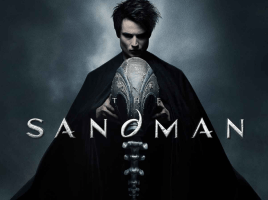
Sandman (Season 2) (On Netflix Sometime in 2025)

We have no idea when Sandman Season 2 will be released, but it will most likely be released sometime in 2025. And there may be a good reason for this delay: Sandman writer Neil Gaiman’s allegations of sexual assault. Gaiman denies any wrongdoing. He’s innocent until he is proven guilty. I don’t want to get into detail about his legal issues here.

I don’t know exactly why Netflix has delayed Sandman Season 2’s release or given it a month for its release, but I wager it’s because Netflix wants to wait and see how Gaiman’s legal battle goes. Netflix canceled Dead Boy Detectives, another show based on a Gaiman-penned DC comic book, shortly after the allegations in July 2024, but that was because Dead Boy Detectives didn’t get enough viewers. Sandman Season 1 received plenty of viewers.

I was looking forward to Sandman Season 2, but that was before these allegations came to light. It’s difficult to separate art from the artist. It’s even more difficult to ignore allegations when (as of this writing) five women have accused Neil Gaiman of sexual assault.

Deep breath.

Let’s get back to Sandman. Despite what some viewers claimed, Sandman’s first season stayed true to the source material. Kirby made an excellent Death, likewise for Mason Alexander Park as Desire. The rest of the cast was fantastic. I didn’t think anyone could effectively pull off Morpheus. Tom Sturridge gives a solid performance. Did the first season take some liberties? Yes. But the heart of the story remained the same. Sandman Season 2 was my most anticipated DC Comics project for this year, and that includes a year with a Superman movie.

Okay. I was stoked about Superman: Legacy, too.

That’s all I have for now. Let me know your thoughts on the upcoming DCU movies and television shows. See you soon. And wherever you are, I hope you’re having a great day.

Happy New Year!

We don’t have a usual post planned for today. Normally, we post on Mondays and Saturdays. We also don’t have New Years Resolutions, but we do have some intentions and announcements for this next calendar year. That’s close enough to a resolution.

New Members

We may have more than one or two new members. It’ll all depend on what happens over the next couple of weeks. Season has returned. She’s signed on to do some much-needed editorial work. She’ll also produce articles during the year. We don’t know if she intends to write about anime or manga or go in a different route.

Skye will continue posting every other month or so. Besides those two additions, we may have a slew of newcomers this upcoming year. If we do, that will be because of a future point on this list: a new series of posts about fantasy and mythological creatures.

Monday and Saturday Posts

We’ll continue with our regularly scheduled posts for the foreseeable future. There may be the occasional rescheduling because of holidays, but for the most part, JK Geekly should continue its weekly Monday and Saturday posts. We’ll try to mix in some more video game coverage as well: at least one video game post a month.

Our top 5 board games throughout the years series will continue with a new post each month. At some point soon, we’ll switch those lists from every two years to each year. That will happen either with the 1992 or 1994 list.

With all future content, we’ll try to theme posts with new cinema and streaming releases. 2025 looks exciting.

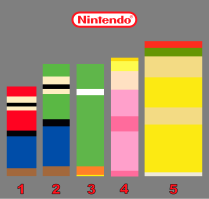
Nintendo Color Palette 01

Color Palette Quizzes

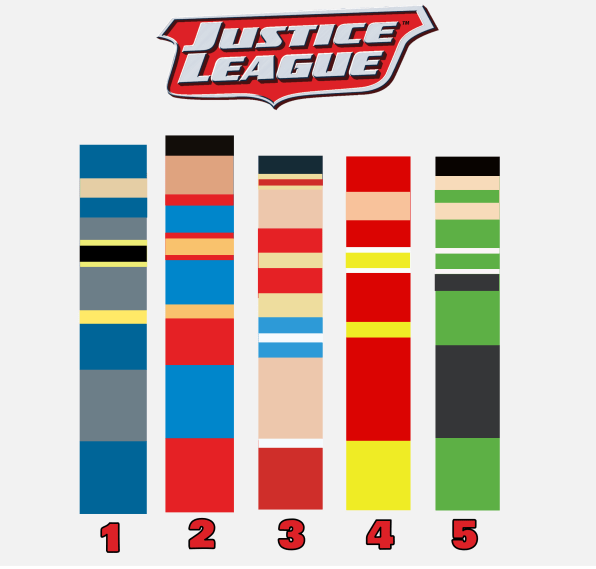
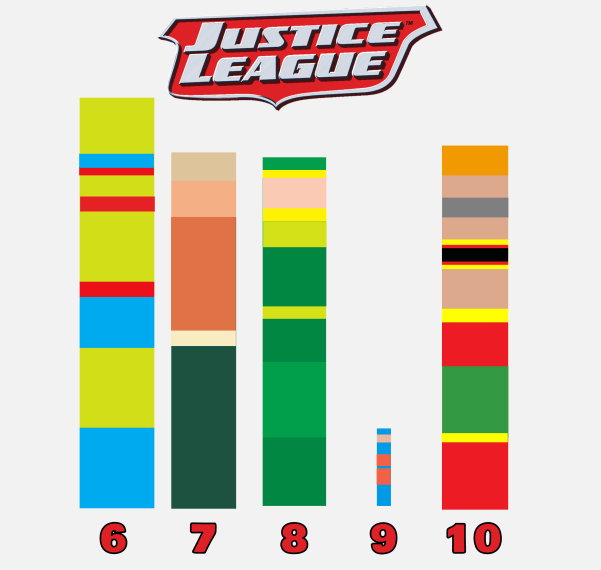
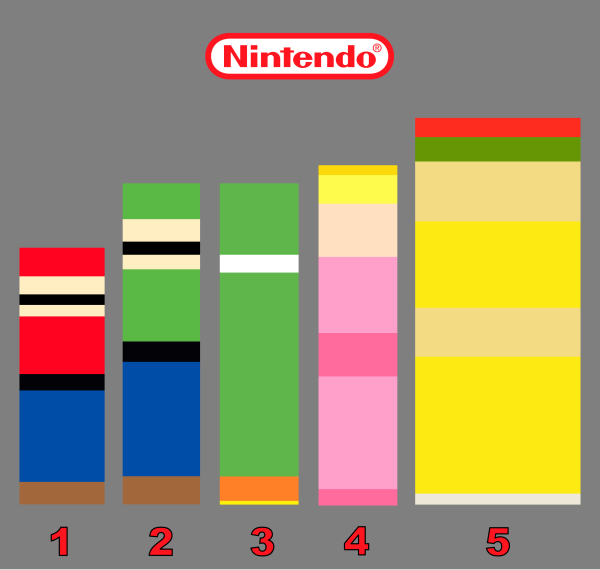
Starting tomorrow, we’re bringing back quizzes. Specifically, color palette quizzes. These will be abstract color palettes of famous characters. See if you can figure out who is whom. Color palette quizzes should continue throughout the year and will release on Thursdays. We hope you enjoy them. We enjoyed producing them.

Return of Reviews?

We scheduled a couple of TV/movie previews for the Marvel Cinematic Universe and the DC Comics Universe in 2025. In addition to weekly Monday and Saturday posts, Geekly will produce reviews of some of these movies and shows and maybe others. We don’t know what that will look like, but Harley Quinn Season 5 begins airing January 16th on Max, and we should have some reviews beginning with that series. Fingers crossed.

Geekly News

We only had a couple of Geekly News posts this past year. Granted, we relaunched in September and there wasn’t that much time remaining in the year. We’ll post more than two Geekly News posts this year. We’re unsure how many will get posted, but it’ll be more than two in a calendar year. Geekly News will also not count toward the weekly posts. They’ll be extra and unscripted like this post. XD

Fantasy and Mythological Creatures

Geekly has crafted a series of fantasy and mythological creatures questionnaires for fellow writers to complete. Our first questionnaire is about dragons. This series should include several new voices on JK Geekly. If you’re a writer and would like to contribute, contact us at jkgeekly@gmail.com.

If you run a blog of your own, let us know and we can include it with your contribution. We may have to cap the number of entries if we receive too many. But don’t worry, there are plenty of fantasy/mythological creatures to go around. If you have a preference for a specific fantasy creature, let us know and we’ll try to accommodate you.

The nature of these posts can mean that this content will most likely be irregular. We intend to begin this series in February. This will give people a chance to fill out their questionnaires. We’ll aim for a monthly release, but this could change, depending on the series’ response.

Closing Thoughts

That’s all we have for now. The only other thing worth mentioning is that we may include quarterly check-ins like this one. The next one of these should show up in April 2025. Or that could be an elaborate and early April Fools’ Joke. We hope you’ve had a fantabulastical New Years, and wherever you are, I hope you’re having a great day.

Getting Into Comics: Magneto Starter Stories

Hey, hey! Kyra Kyle here. Today is my youngest daughter’s birthday. Happy 24th birthday! One more year and you can rent a car. Is that still true? Anyway, I wanted to bring back the comic book starter stories and asked her which character she’d like me to cover this week. She answered Magneto.

You heard the girl. Geekly will be covering its first comic book starter stories for a supervillain. We may have some growing pains with this topic. Villains are a little more difficult to recommend starter stories for, but I’ll do my best. The following list should give you an idea of which stories you should read to get to know Magneto better.

Single Issues

We’re doing this list a little differently than prior starter comic book stories. We’ll start with single issues and then move on to story arcs that consist of multiple comic books.

Uncanny X-Men #1

(written by Stan Lee/art by Jack Kirby; 1963)

This first entry cheats a little bit. Uncanny X-Men #1 is the first appearance of Magneto and the X-Men. Since the issue does double duty and sets up Magneto and the X-Men, there’s less of a focus on him as the main villain, but Uncanny X-Men #1 does a great job of showing Magneto as a formidable foe.

You don’t have to break the bank to read the first X-Men story. Marvel has reprinted it plenty of times. You should even be able to read Uncanny X-Men #1 for free online. If you did want to own a physical copy, Uncanny X-Men #1 would cost you hundreds of thousands of dollars. X-Men didn’t have the warmest of receptions when it first launched. This makes the comic rare and valuable. Ka-ching!

I, Magneto

(Uncanny X-Men #150, written by Chris Claremont/art by Glynis Wein, Dave Cockrum, Dan Crespi, and Tom Orzechowski; 1981)

Magneto started out wanting a world where mutants dominated over inferior homo sapiens, but in “I, Magneto,” Magneto sets out for what he wanted all along, to become everyone’s leader. In this story, Magneto wants no less than the planet making him the world’s leader.

Magneto enlists the help of a series of supercomputers, but when those computers begin to explode, Magneto becomes furious. Kitty Pryde has been blowing up his computers by phasing through them. In a fit of rage, Magneto nearly kills her. Magneto sees a lot of himself in Kitty Pryde, since they have a similar heritage. When Magneto sees himself as the monster he’s turned into, he realizes that he isn’t fit to lead the world.

The Trial of Magneto

(Uncanny X-Men #200, written by Chris Claremont/art John Romita Jr.; 1985)

Claremont does a great job with the Uncanny X-Men’s bicentennial issue. As the name suggests (“The Trial of Magneto”), Magneto is on trial for former acts as a “mutant terrorist.” While he stands trial, unknown terrorists leave behind a calling card, “Free Magneto – X-Men.” Professor X sees this message and suddenly falls ill. Cyclops believes Charles is possibly dying.

The terrorist acts serve as a distraction so the Von Strucker twins can attack the court and exact vengeance against Magneto. This puts everyone in the courtroom in danger. Magneto saves everyone in the building. This shows the judge Magneto’s humanity. The scuffle results in Professor X suffering a heart attack. Magneto saves Charles, but Charles insists that he can no longer care for the X-Men. He asks Magneto to take his place.

If you’ve seen the X-Men ’97 cartoon on Disney+, many of these story elements will sound familiar in “The Trial of Magneto.” This story showcases Magneto’s propensity for being a hero.

Story Arcs

X-Men: Magneto Testament #1-5

(written by Greg Pak/art by Carmine DI Giandomenico 2008-2009)

Magneto Testament fleshes out Magneto’s childhood story. This five-issue miniseries doesn’t pull any punches. It shows us Magneto as a young boy surviving the Nazi death machine. As a result, Magneto Testament is one of the bleakest stories Marvel Comics has ever published. It’s also poignant.

Magneto Testament explores what made Magneto the man he is today. X-Men: First Class may dip its toe into this origin, but Magneto Testament digs deeper. This is one of the best Magneto stories ever written and a must if you want to understand Magneto.

X-Men: God Loves, Man Kills

(written by Chris Claremont/art by Brent Anderson; 1982)

I know this story also made our “X-Men Starter Stories” post years ago (here’s a link to that list if you’re interested), but Magneto is an X-Men villain, so there’s bound to be some crossover.

Many consider God Loves, Man Kills the defining X-Men arc, and they may be right. Humanity is the main villain. Humans, through the machinations of William Stryker, launch a scheme to rid the world of mutants. Magneto learns this while investigating the deaths of two mutant children. Magneto then joins forces with the X-Men.

God Loves, Man Kills establishes Magneto’s willingness to do anything to protect mutantkind, even if that means joining forces with his enemies. Stories like God Loves, Man Kills do a lot to deepen Magneto as a character.

Mutant Genesis

(X-Men #1-7, written by John Byrne and Chris Claremont/art by Jim Lee; 1991)

Before Mutant Genesis, Magneto lost his way. He even ran the X-Men and New Mutants for a time. (See the above write-up for “The Trial of Magneto.”) While these storylines helped to humanize the X-Men’s greatest villain, Mutant Genesis brings Magneto back to his roots. He has returned as a powerful villain. During this arc, we see how Magneto’s powers are slowly driving him insane.

But Magneto isn’t alone in his insanity. Mutant Genesis introduces Magneto’s team of Acolytes. These Acolytes pose a huge threat to humanity and even mutant-kind. It also doesn’t help that long-time X-Men begin questioning their loyalty to Professor X’s cause. Mutant Genesis is the final story seminal X-Men scribe Chris Claremont wrote for the series. Without Claremont, the X-Men would not have become the household names they are today.

Planet X

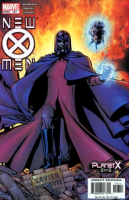
(New X-Men #146-150, written by Grant Morrison/art by Phil Jimenez; 2003-2004)

Magneto disguises himself as Xorn, one of the X-Men’s most trusted members at the time. The X-Men had thought that they had rescued Xorn from a Chinese prison, but it was a ruse. Magneto worked with the Chinese government to infiltrate the X-Men. At the time Magneto was believed dead, making this reveal even more shocking. Planet X shows how clever Magneto can be when putting an elaborate plan into action. This story did a lot for Magneto’s legacy.

As Magneto is the X-Men’s oldest enemy, no one could imagine that he could disguise himself well enough to fool his enemies. In classic mastermind fashion, Magneto didn’t reveal his identity until the time was just right.

There are so many other stories that I could’ve included here. I’m sure I missed one or two, or three hundred. Let me know which Magneto stories you’d choose instead. And wherever you are, I hope you’re having a great day.