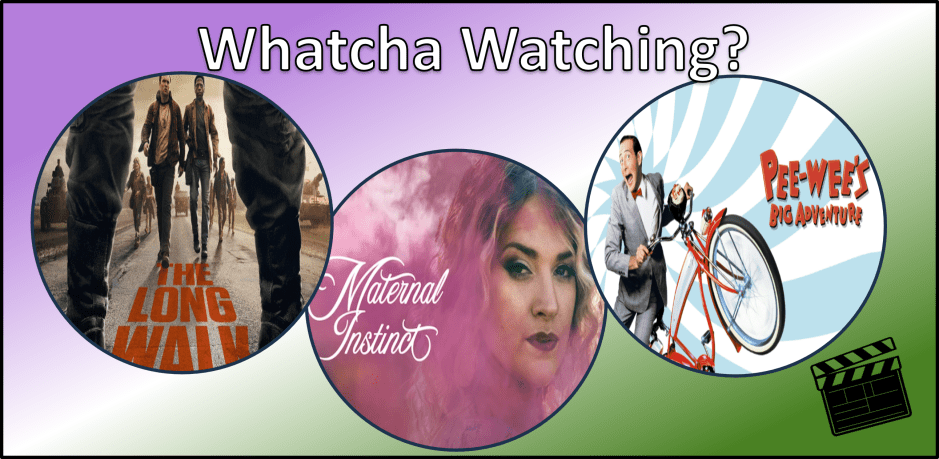
Happy Wednesday, Geekly Gang! Kyra Kyle here, and today, our writers share what they’ve been watching over the past month. Feel free to share what you’ve been watching over the past month because we’re all part of the Geekly Gang. I’ll get the post started with what I’ve been watching over the last month.
Kyra’s Movies
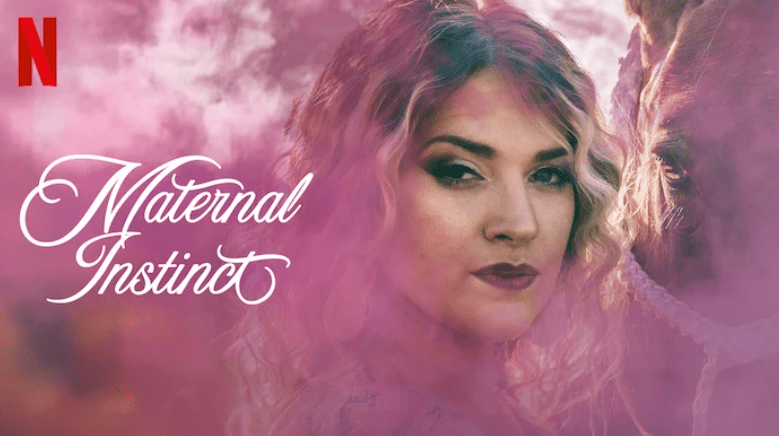
Netflix has some true crime documentaries that are wild, and then there’s Maternal Instinct. This may be the most bizarre true crime doc on the streaming giant. Maternal Instinct follows the actions of Taylor Parker. Before the events of this documentary and Parker’s crimes, Parker had two prior children. She wanted a third. Fun fact: Parker had a hysterectomy. She couldn’t get pregnant, but that didn’t stop her from catfishing her fiancé.
Yeah. Maternal Instinct gets strange. Throughout the documentary, I thought she must have had a mental illness. The doc briefly explained she has frontal lobe dysfunction, frontal lobe syndrome, which can cause cognitive, emotional, and behavioral symptoms. But like I said, Maternal Instinct glosses over this fact. Parker would get caught and go to trial. Her legal team didn’t use the not guilty by means of insanity plea. That makes sense. Most insanity pleas get denied. To date, only two people in the United States have ever received a not guilty verdict by means of insanity: one of them is Ed Gein. And in terms of how over-the-top it gets, Taylor Parker’s story sounds a lot like Gein’s.
So, Parker catfishes her fiancé, making him think she’s pregnant. She orders pregnant belly bumps from Amazon. She even springs for one that simulates a baby kicking. But at some point, she’s going to have to “produce” a baby. Months before she “became pregnant,” Parker served as a photographer at Reagan Simmons Hancock’s wedding. The two formed a bond and hung out every month or two after the wedding. Parker knew Hancock was pregnant soon after her wedding. Hancock’s pregnancy coincided with Parker’s fictitious due date. Well, Parker missed her “due date” by a couple of weeks. So, Parker YouTubed how to perform a C-section, drove to Hancock’s house, killed her, and took the baby still inside her womb.
Yikes! Parker’s case is bizarre. I don’t know if I’ve seen a more upsetting Netflix true crime documentary than Maternal Instinct. It’s up there with the most disturbing. But that makes me wonder. If Parker’s defense team chose to plead not guilty by means of insanity, would she have been the third person in United States history to do so? But Maternal Instinct glosses over Parker’s mental impairment. It didn’t factor into the trial. But I say that Parker’s case reminds me of Gein’s because she did things out in the open, in broad daylight. She pretended she “miscarried” the baby she cut from Hancock’s womb. She had to know a doctor would examine her. Her hysterectomy would be in her medical chart. Yikes! Just yikes.
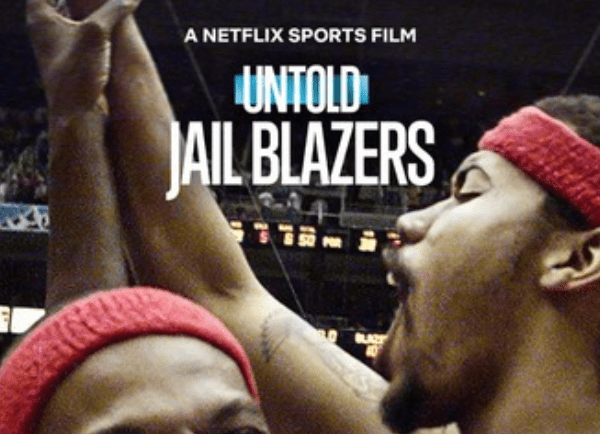
I’m a sucker for small-market professional sports teams, so I follow the Portland Trail Blazers quite a bit. The “Jail Blazers” of the early 2000s were one of the most intriguing teams of that era. They came dangerously close to winning an NBA championship, challenging the Shaq and Kobe-led Lakers. I put the name “Jail Blazers” in quotes because the few members of the team who got in trouble with the law got caught with marijuana possession, which is now legal in Portland. “Jail Blazer” is a harsh term. Even at the time, I wondered if one of Bonzi Wells, Rasheed Wallace, or Damon Stoudemire had done anything worse than getting caught with weed. I did like how Untold: Jail Blazers showed the Dave Chappelle clip lampooning Wallace and Stoudemire getting pulled over by the cops. That clip is iconic.
Untold: Jail Blazers was eye-opening. I had no idea what happened to Damon Stoudemire after his encounter with the police that night. Afterwards, they raided Stoudemire’s house. Stoudemire is from the area, and still, Portland treated him like an outsider. Portland was unkind to the trio of players who brought excitement to the Pacific Northwest. They all but chased them out of town, not in small part because the young basketball stars had houses in predominantly white neighborhoods. Untold: Jail Blazers shows these young Trail Blazers as young. They made mistakes because they were young. Some of those “mistakes” of the early 2000s wouldn’t be mistakes today. And yet, the name “Jail Blazer” persists.
Before watching Untold: Jail Blazers, I used to refer to the early 2000s Portland Trail Blazers by that moniker: “Jail Blazers.” I did so out of affection. I never thought they were “Jail Blazers.” The term was a shorthand for remembering a stellar young team that had all the tools to win an NBA championship but fell just short. After watching Untold: Jail Blazers, I won’t refer to the early 2000’s Portland Trail Blazers by that moniker. Stoudemire, Wells, Wallace, and Zach Randolph deserve better. Fortunately, Portland has celebrated its early 2000s team. I don’t blame Rasheed Wallace for refusing an offer to return.

Kyra’s Show
I won’t go into too much detail with X-Men ’97. Season and I have been reviewing the series as it airs. I will say that X-Men ’97 is the definitive X-Men adaptation. While I liked the first season, X-Men ’97’s second season is stellar. Some of the best storytelling in animation. It’s a love letter to the original X-Men: Animated Series. Whenever Geekly does another Top 10 Animated Shows based on Comic Books List, X-Men ’97 will be near the top. I’m calling it now.
Those are the shows and movies I’ve seen this past month. Let’s see what Skye has been watching.
Skye’s Movies
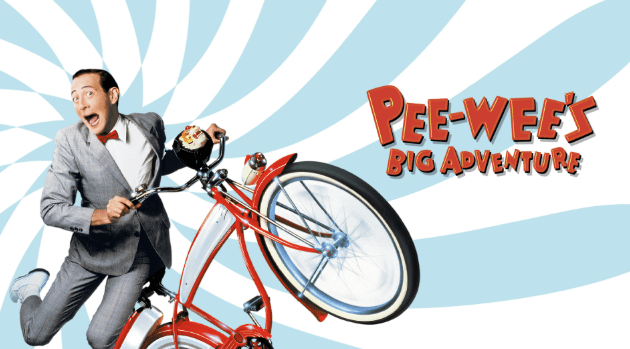
Pee-Wee’s Big Adventure has been on my radar for a while. Recently, I inherited a hefty chunk of time to watch whatever I wanted, so I finally took initiative and watched Pee-Wee’s Big Adventure. Overall, I’d call Pee-Wee’s Big Adventure “lovably goofy.” It’s a nice combination of creative, wacky, sentimental, and mysterious that you don’t find in most other kid’s films. Only once the credits started rolling did I notice I had never stopped smiling, and that’s a sign the movie’s doing something right. While it’s not a film that’ll blow your mind, Pee-Wee’s Big Adventure is still a fun way to spend an hour and a half.
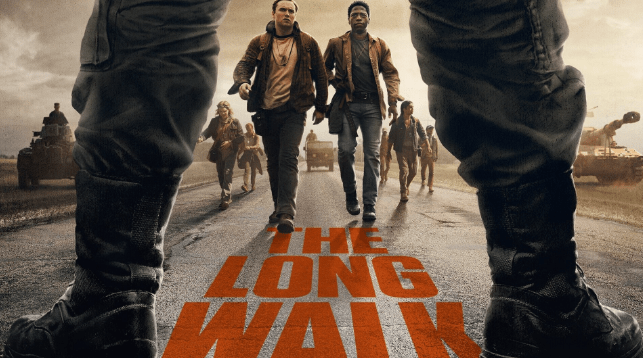
I’ve had my eye on the film adaptation of Stephen King’s The Long Walk. Put simply: every year, 50 young men from all 50 U.S. states are selected to participate in a challenge where they’re forced to walk or die. Setting aside the physical impossibility of being forced to walk nonstop for days on end, I found myself invested in the relationships that formed among the walkers onscreen. While some participants were more competitive, others tried forming bonds with their fellow man and make the most of the situation they were forced into. I’m still hung up on the technicalities of The Long Walk, but the film itself portrays brotherhood and companionship in a special way.
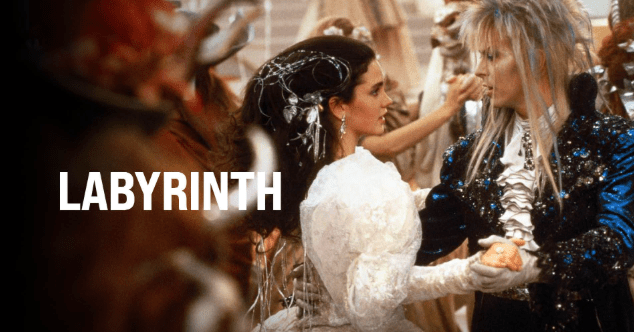
I’ve seen Labyrinth several times, but during my time in surgery recovery I was feeling nostalgic. Luckily, I had films like Labyrinth to scratch that itch. Specifically, an itch for something familiar, creative, and odd. It also helped that I ate peaches when I decided to watch it. If you’ve seen Labyrinth, you know what I mean. Even if many of the details about the film don’t add up, Labyrinth is still a movie that offers children an endless supply of food for their imaginations, classic Jim Henson puppetry, unique scenarios, and David Bowie. That last one is very important. If you haven’t seen Labyrinth in a while, pop it in again to relive those memories; and if you haven’t seen it at all, then you’ve got some homework for this weekend.
Hey, hey! Kyra Kyle here again. Those are the movies and shows our writers have been watching this past month. Let us know what you’ve been watching, Geekly Gang. Thank you for reading, and wherever you are, I hope you’re having a great day.