

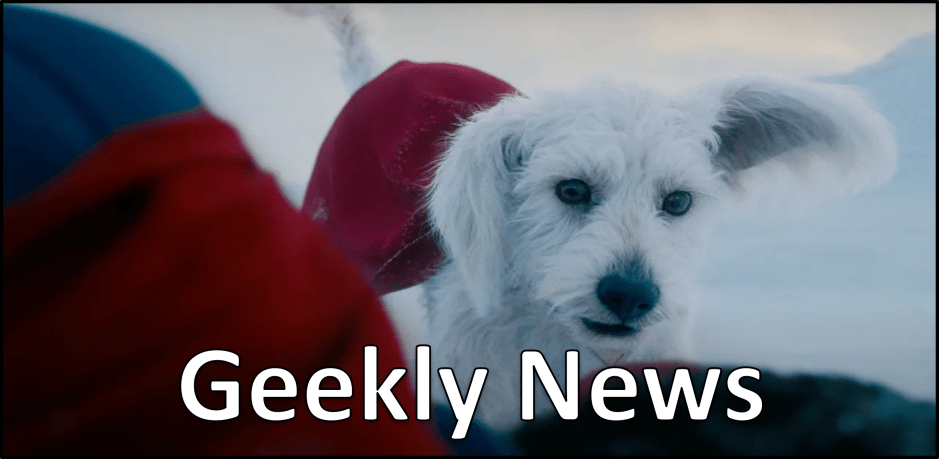
Hey, Geekly Gang! Season here. Since Superman (2025) dropped in theaters a little over a week ago, I thought I’d cover an important character this week: Krypto Plushie. He couldn’t make it on the big screen, so he made his way onto Marcus Theaters’ shelves.

Before we begin, I’ll break down the categories for review. Yes. I have plushie categories. I’ll be looking at size, softness, kid-friendliness, and cuddliness. There won’t be an aggregated score.

Krypto Plushie can easily fit in the crook of your elbow and most moderate-sized bags, making him easy to carry. He’s about the length of the pencil featured in the above picture. Unfortunately, the pencil did not survive the photo shoot. Krypto thought the pencil was a toy.

Not too soft. Not too firm. Just right. 😀 Krypto Plushie is firmly in the middle as far as his stuffing goes. His fur, however, is incredibly soft. He’s made from polyester, but I’ve got to hand it to them. Krypto Plushie’s fur is less wiry than his movie counterpart. This grading is based on the firmness of the stuffing.

When I say kid friendly, I’m referring to the pieces on the plushie. The fewer pieces a plushie has that a kid can swallow, the more kid friendly it is. Krypto Plushie leans more toward the kid friendly side of this grade. However, he does have marble eyes and a plastic nose that a rough kid could potentially pull out. These features make him less than 100% kid friendly.

This is a question I ask myself every time I buy a new plushie: Do I want to cuddle this plushie, or is it going to live on a shelf? To me, Krypto Plushie is in the middle but leans more on the cuddle buddy side. He can stand up on his own (a huge plus for a desk buddy), but his soft fur and ease of carry make him a good cuddle buddy.
I love soft things and enjoy petting them to soothe myself. Krypto Plushie is amazing for that. He’s a good buy for fans of Superman (2025) and kids who want a stuffed dog wearing a cape. He costs $14 plus tax at Marcus Theaters’ concessions stands.
What’s your favorite cinema swag? Do you agree with my assessment of Krypto Plushie? Let us know in the comments. Thank you for reading and have a super day.
Happy Sunday, Geekly Gang! Kyra Kyle here with another week of Geek News on Sunday. We’ll kick off this week’s news with upcoming DCU projects. Let us know if you want something similar for the MCU in the coming weeks.
Giving a quick rundown of upcoming DCU films and series was prompted by watching Superman this past week. Check out Friday’s review of Superman. The DCU has over 25 planned projects. We’ll only cover the ones that have release windows (anything with at least a vague release month, quarter, or year). Let’s get started.
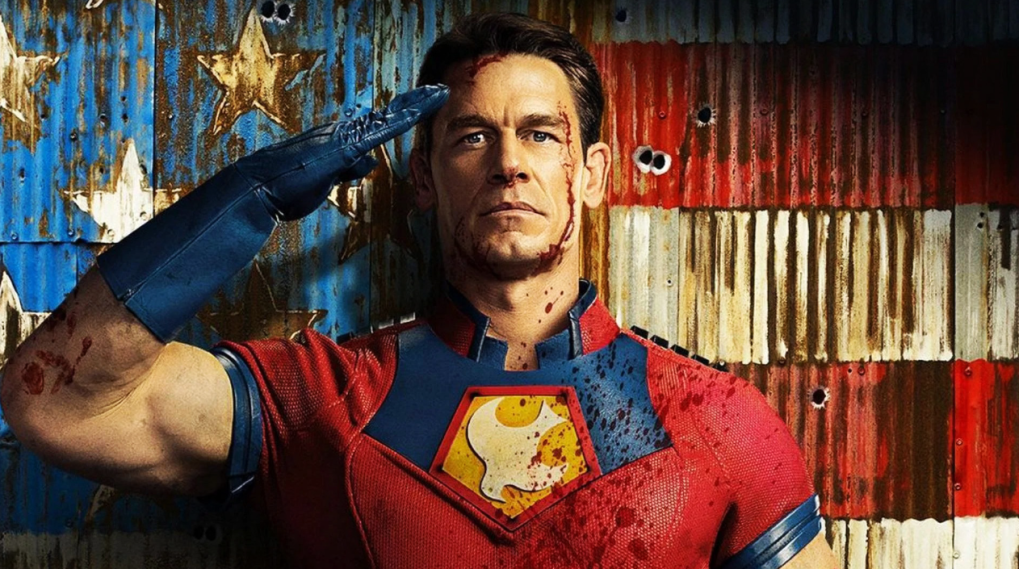
Peacemaker Season 2 is scheduled to return at the end of next month (August 2025), and this season should dovetail into the events of Superman. Frank Grillo (General Flag, who also makes an appearance in Superman) is set to return for Peacemaker Season 2. Oh. And of course, there was that cameo of Peacemaker on the news during Superman.

Krypto will make his return at the end of 2025 (either November or December 2025). The DCU can be tight-lipped about exact release dates, especially when the project is soon to be released. Peacemaker, which will air next month, doesn’t have a specific date (as of when I’m writing this post). Hopefully, these Krypto shorts will be released by the end of this year. Harley Quinn Season Five had a similar release schedule for 2024 and was then postponed until the following year.

Green Lantern characters Hal Jordan and John Stewart will play a key role in the new DCU. Lanterns will be an Earth-based detective story, described as a “huge HBO-quality event” in the style of True Detective. This is music to my ears. I love this concept. Lanterns will have eight episodes with Chris Mundy serving as showrunner. Throw in some cameos of Nathan Fillion as Guy Gardner (don’t lose the hair), and Lanterns sounds like a party. The series is expected to premiere in early 2026.

One of the few future DCU projects with an exact release date, Supergirl: Woman of Tomorrow, is scheduled for a June 26, 2026 release. Milly Alcock made a cameo in Superman (2025), and her brief stint in the movie got me excited for this title. Alcock’s Supergirl will battle with PTSD (while Kal-El was a baby, she watched her family die on Krypton) and struggle with having no purpose in life (she was supposed to protect a now adult Superman). Supergirl: Woman of Tomorrow will show Supergirl claw her way out from rock bottom, and I’m here for it. This is why Superman needs to be the clean-cut hero he is in the DCU (and in DC Comics). There are plenty of other characters, like Supergirl, who can fill in the morally gray spaces.
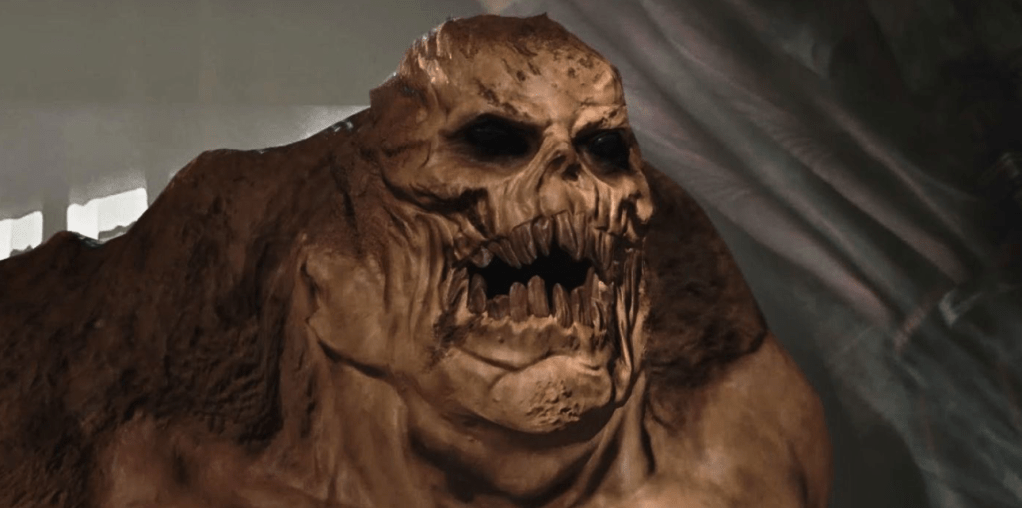
A Clayface movie? What? That was my reaction to the DCU announcing a body-horror style film based on the classic Batman villain. We know little about Clayface. The movie is set for a specific release date, September 11, 2026, and filming began earlier this summer. While I would’ve liked to have seen Clayface in a Batman movie, I’ll take Clayface getting a stand-alone film. I’d like to see the DCU explore other villains. Vandal Savage could be interesting.
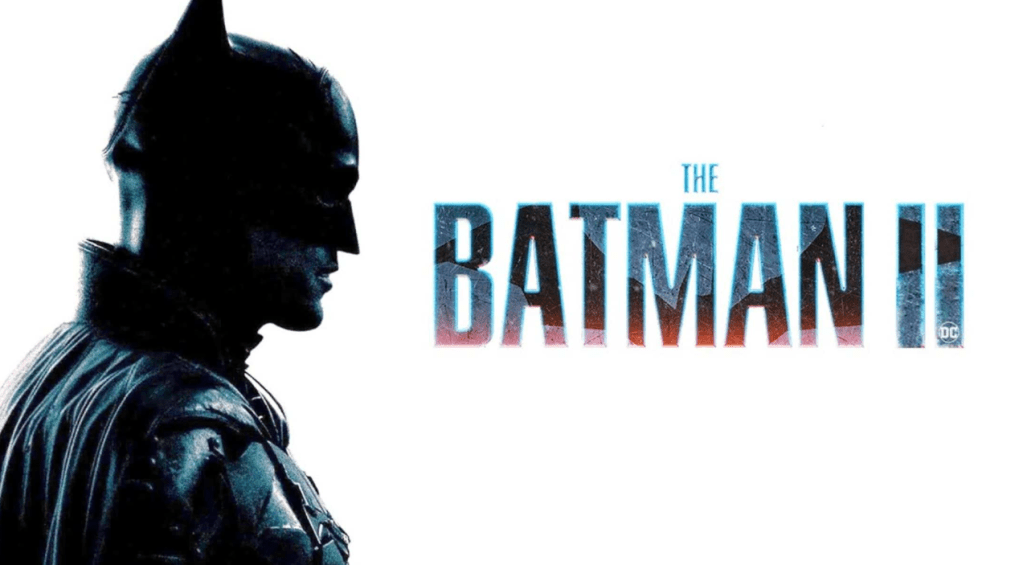
How is it that we have more precise dates the farther out the schedule? The second installment of Matt Reeves’ The Batman series is set for October 1, 2027. Titled The Batman – Part II, the film will feature the return of Robert Pattinson, Jeffrey Wright, Andy Serkis, and Colin Farrell reprising their roles as Batman, Commissioner Gordon, Alfred Pennyworth, and The Penguin. Filming is set to begin in April 2026 at Warner Bros. Studios in Leavesden, England.
Those are all the DCU projects we have tentative dates for, but here’s a list of other DCU projects that are in the works:

Waller (Spinoff series of Viola Davis as Amanda Waller; yes please)
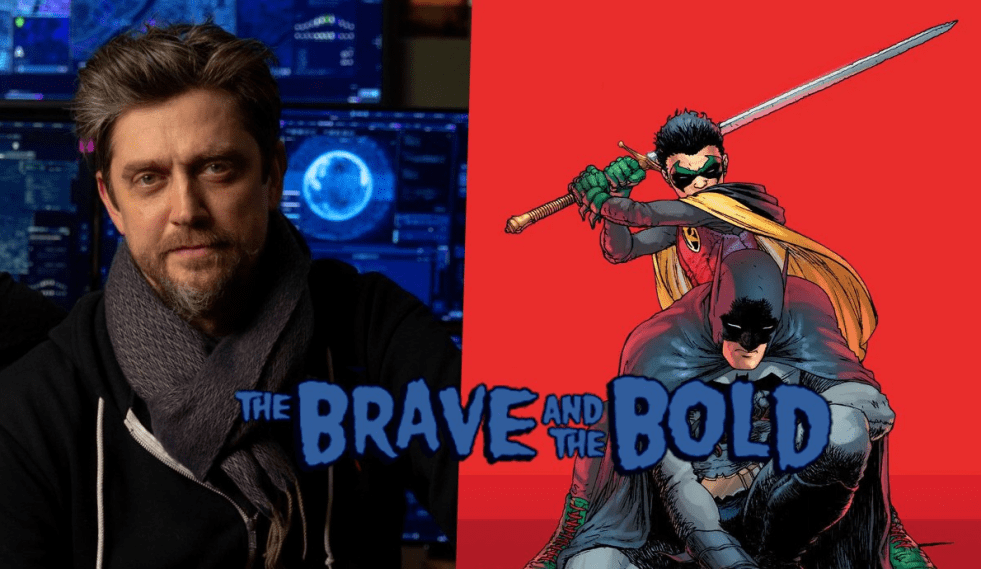
The Brave and The Bold (New live-action series that will introduce the DCU’s Batman and the Bat Family; looks like the DCU isn’t shying away from Robin and the rest)

The Authority (A lesser-known group of anti-heroes brought over from Wildstorm Comics; could be R-rated)

Swamp Thing (Logan Director, James Mangold, revives this amazing supernatural character)
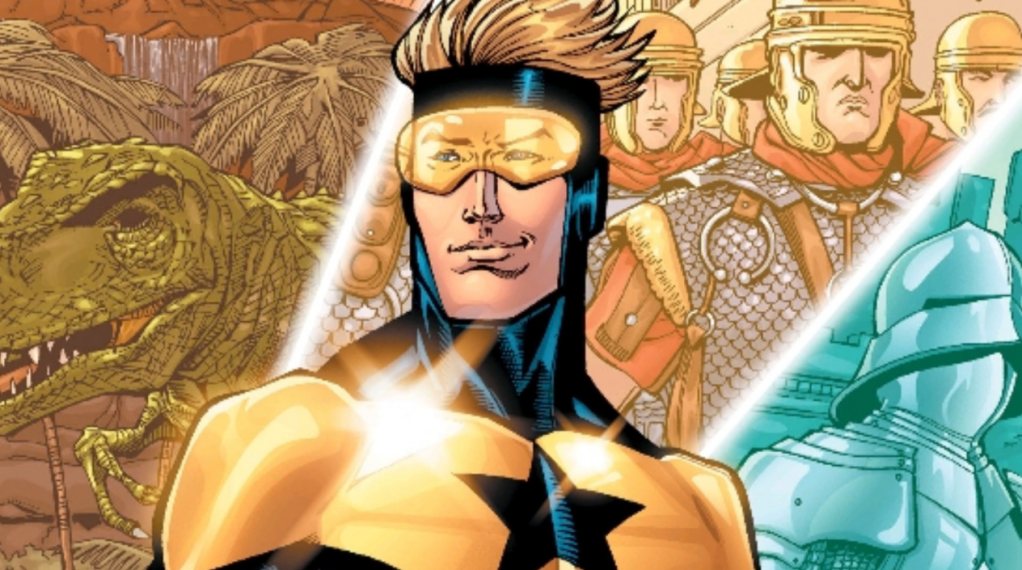
Booster Gold (Failed 25th Century football star, Mike Carter, goes back in time to become a superhero armed with knowledge of the future; a straight-up superhero comedy series–I love Booster Gold in the comics)
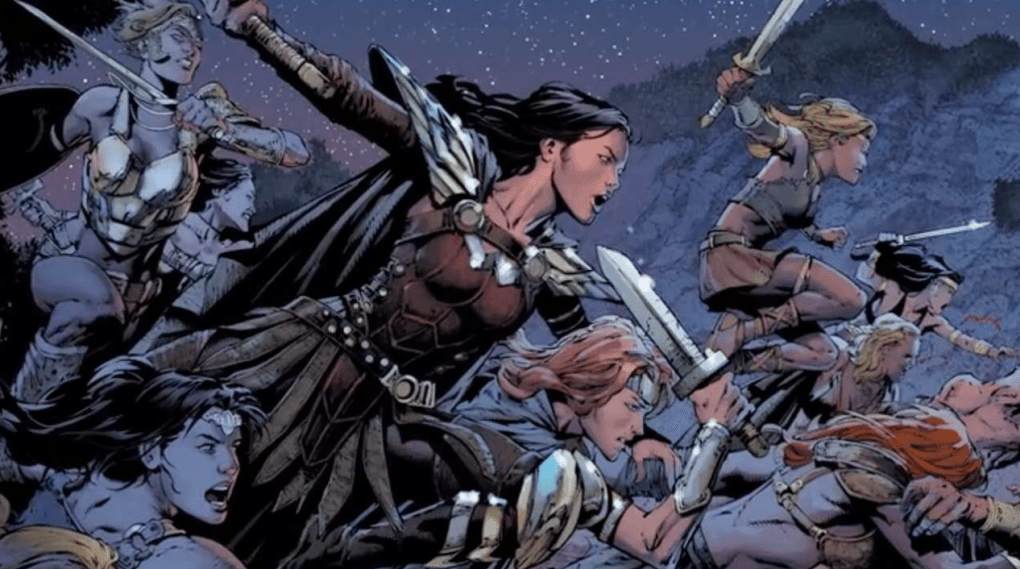
Paradise Lost (A Game Of Thrones-like series that will introduce Wonder Woman into the DCU–oh, yeah!)
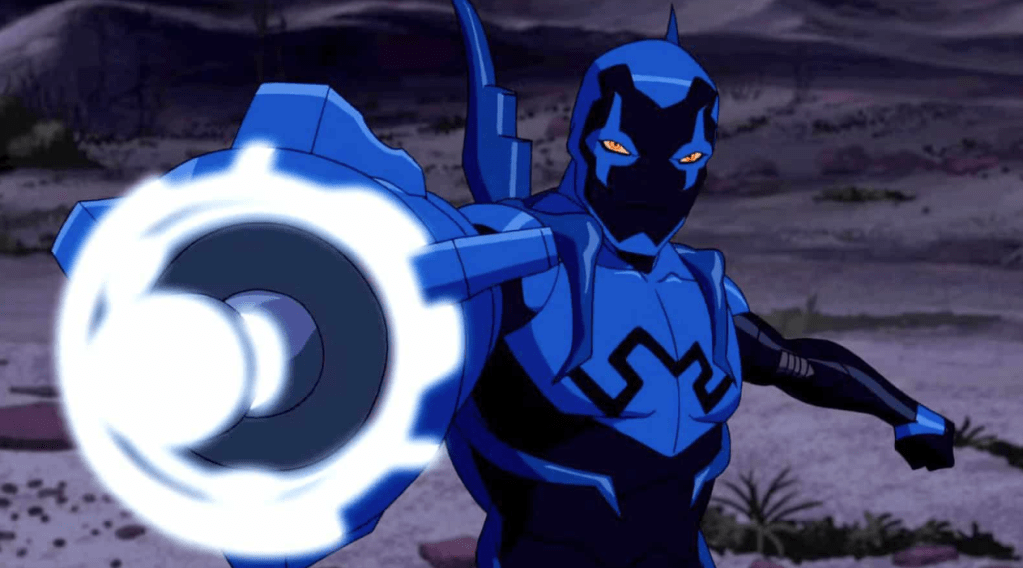
Untitled Blue Beetle Animated Series (I always thought Blue Beetle would work better as an animated series; we’ll see)
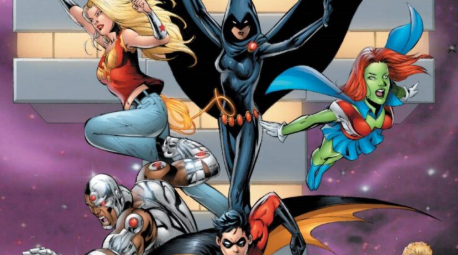
Untitled Teen Titans Film (Ana Nogueira is writing the screenplay; I wish we had more information about this title, but I’m ready for the first Teen Titans film)
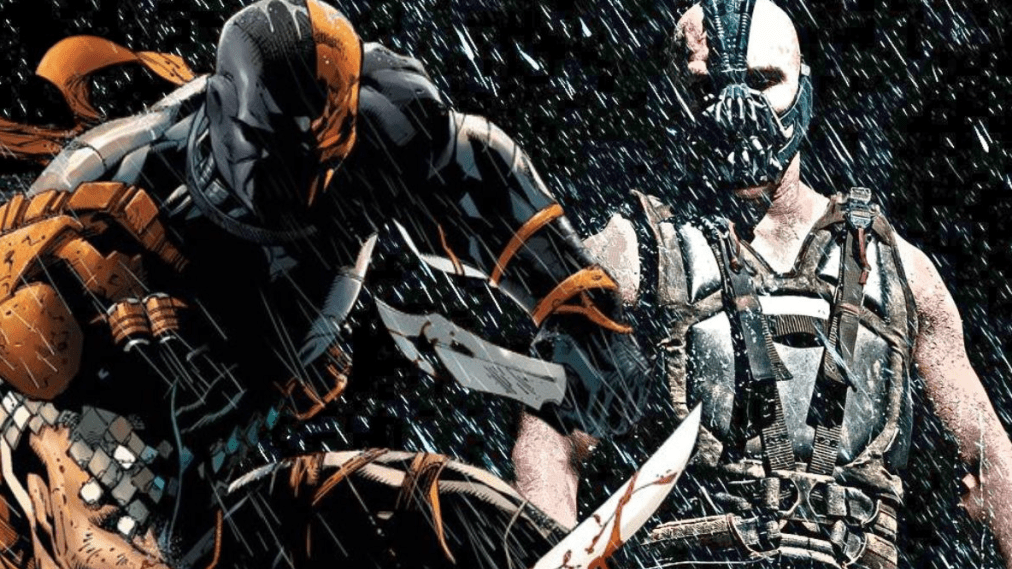
Untitled Bane and Deathstroke Film (Yes! Another movie based on DCU villains; this one’s a team-up)

Black-led Superman Film (Black Panther scribe Ta-Nehisi Coates and director J.J. Abrams are attached to this Elseworlds version of Superman; sounds promising)
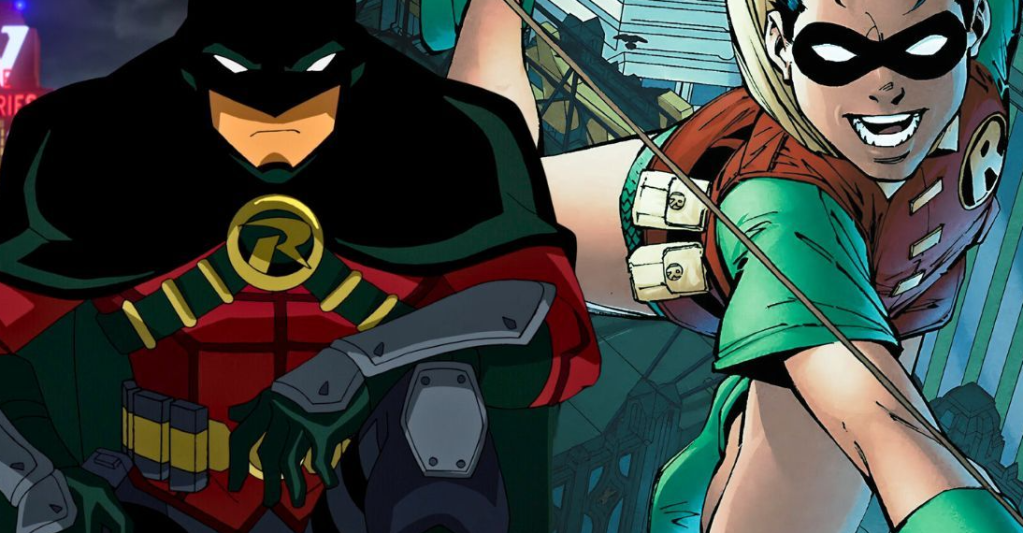
Dynamic Duo (Mixed-animation style, like traditional and stop-motion animation, series that features Dick Grayson and Jason Todd as Robin–the art style interests me)

Starfire (Animated series that aims to explore Teen Titans Starfire’s origin)
My Adventures with Green Lantern (Animated series that features a teenaged Jessica Cruz when she becomes the newest Green Lantern)
DC Super Powers (Animated series set at the Alliance School for Heroes, where new students like Lightning, Flash, Plastic Man, Aquagirl, Green Lantern, and Terra train to become the next generation of crimefighters)

Harley Quinn Season 6 (Yay! We will cover this series’ season six whenever it releases; it looks as though Harley will be space-bound)

My Adventures with Superman Season 3 (We’ll have to catch up with this Adult Swim animated series; I’ve heard great things)
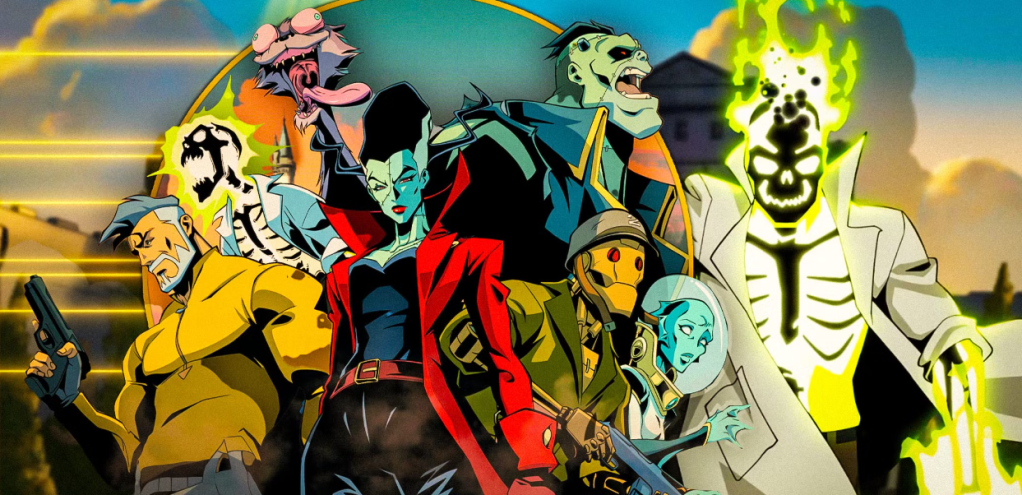
Creature Commandos Season 2 (This series came out of nowhere to become a hit last year; of course, it’s getting a second season)

Constantine Sequel (Keanu Reeves is set to return as John Constantine in this sequel to the 2005 film; better late than never)
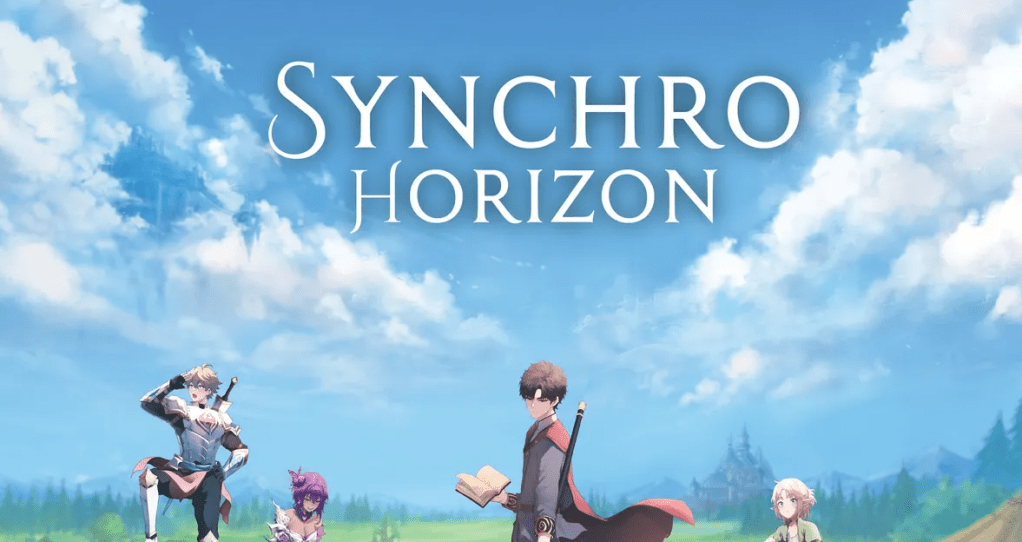
I’m a sucker for JRPG (Japanese Role Playing Games), so Synchro Horizon is right up my alley. From what I’ve seen, players can customize characters to dive into dungeons. The dungeons and characters can change during each play of this cooperative game. If that’s true, Synchro Horizon may have copious amounts of replay value.

Even though Synchro Horizon marks New Game Entertainment’s first board game, the production value looks to be top-notch. Beyond the game’s variability and potential replay value, Synchro Horizon’s custom skills have me intrigued.

Each of the 50 potential character skills appears to have upgraded versions. The artwork claims to be 100% AI-free. I like that Synchro Horizon chose to pay human artists for their work, but it’s sad that the board game industry has made claims like this necessary. Synchro Horizon offers multiple pledge levels, ranging from $80 to close to $400. If you’re interested in customizing your group of heroes and swarming ever-changing dungeons, check out Synchro Horizon’s KickStarter page.
PostCurious offers the next evolution of puzzletales with Emerald Echoes. Written by Lauren Bello (The Morrison Game Factory, Threads of Fate), Emerald Echoes spans four captivating chapters. It can be played as a solo or cooperative adventure. Emerald Echoes serves as a standalone sequel to the award-winning puzzletale, The Emerald Flame.

Gamers play Emerald Echoes across four chapters, consisting of thirteen puzzle folders. Within each chapter envelope, you’ll find a collection of items, along with a series of puzzle folders, labeled in the order they should be solved. Each of the thirteen puzzle folders contains at least one written document to investigate–these documents will contain clues and can be used to piece together which items are needed to solve a puzzle.
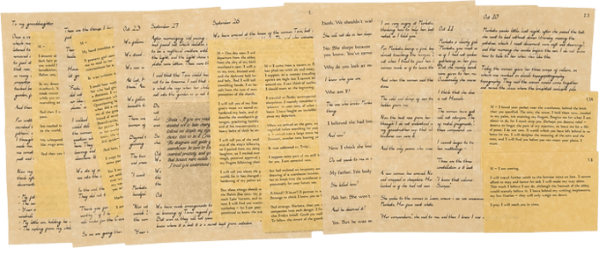
Emerald Echoes gives me strong Sherlock Holmes: Consulting Detective vibes. Emerald Echoes can be played on its own or in conjunction with the original The Emerald Flame. If you haven’t played The Emerald Flame, don’t worry. Emerald Echoes’ KickStarter includes pledges that include The Emerald Flame. Check out Emerald Echoes on KickStarter.

A Pac-Man Metroidvania game wasn’t on my Bingo Card for this year. Shadow Labyrinth shatters the concept of Pac-Man. This side-scrolling 2d platformer looks amazing. Players take the role of “The Swordsman,” traversing through a large “maze,” and fighting against enemies and upgrading their abilities as they progress. Yep. Sounds like a Pac-Man Metroidvania game to me. I chuckled while watching the Shadow Labyrinth’s trailer. The Pac-Man theme was jarring beside a gritty post-apocalyptic world.

I don’t know what’s going on in the image above, but I want to experience it first-hand. Fortunately, Shadow Labyrinth is available for Windows, Xbox Series X/S, PlayStation 5, and the Nintendo Switch and Switch 2. I will give credit to Nintendo for its free Switch 2 upgrade for Shadow Labyrinth. Several weeks ago, Geekly called out Nintendo for charging for a Switch 2 upgrade. We hope this is a sign for Nintendo allowing for free original Switch to Switch 2 upgrades in the future.
Donkey Kong Bananza marks the first new release in the DK Series since 2014’s Donkey Kong Country: Tropical Freeze. Donkey Kong hasn’t had this long of a drought in its over four-decade history. Expectations are high for this title.

Donkey Kong Bananza uses terrain in interesting ways. Donkey Kong can smash certain terrain types, and if the material is sturdy enough, he can fling it at enemies and cause damage. Donkey Kong Bananza could be a game-changer for the DK Series. It’s available for the Nintendo Switch 2. I may have to add Donkey Kong Bananza to my must-buy Switch 2 games whenever I get around to purchasing the new system.
That’s all the Geek News we have for this week. This week’s post was a little longer than normal. We may do a round-up of future MCU projects after Fantastic Four: First Steps releases. Let us know if you’d be interested in that. Thank you for reading, and wherever you are, I hope you’re having a great day.

1995 saw plenty of strong board game releases. It’s a shame we must limit this list to a Top 5, but debate is the benefit of a Top 5 versus a Top 10. A Top 10 could include many games of note from a calendar year. And 1995 had plenty of those. We also limited ourselves to one—just one—collectible card game. CCGs were going strong in 1995, too. One of our just-missed-the-list games is Marvel Overpower. I always liked Overpower’s straightforward gameplay and scalability. Star Wars Customizable Card Game is another CCG that just missed our list. Like its counterpart, the Star Trek Customizable Card Game on our previous list, it continues to be played. I’ve always liked its Dark and Light side of the Force; Star Wars Customizable Card Game is one of the rare collectible card games with a two-sided aspect.
Hey, hey! Kyra Kyle here. We’re back with another Top 5 Tabletop Games. We’ll talk about 1995’s board game list soon, but let’s recap the ground rules for which games make these lists before we start.
1: Cultural relevance plays as much of a factor as overall quality. A game might make a list that doesn’t hold up to others of its type, but you must admit the game is everywhere.
2: Only one game from a franchise makes the list. This will become more of an issue the closer we get to games with expansions.
3: Longevity plays a role, too. A game doesn’t have to fly off the shelves today, but it had to have some widespread appeal for a decent time.
Legend of the Five Rings (L5R) collectible card game lasted for two decades, and even then, it was announced that the game would have a successor in Fantasy Flight Games’ Living Card Game line. So, in a sense, Legend of the Five Rings continues to this day. L5R shares similarities with Magic: The Gathering, but has game mechanisms with flavor and allows “passive” win conditions like the Enlightenment Victory. Games can be very long, with some matches lasting hours.

L5R features a storyline. New fiction pieces (short stories, novels, and comics) would advance the story of Rokugan (the fictional empire where Legend of the Five Rings takes place) every week. After Alderac Entertainment Group (AEG) purchased the rights outright in 2000, they reintroduced an accompanying tabletop role-playing game of the same name. Frequently, AEG would adapt Rokugan’s timeline to reflect who won specific CCG tournaments. The Spider Clan would have its own Emperor take the throne after an L5R world champion won with a Spider Clan deck. This unique and living game element has yet to be duplicated in tabletop games, making Legend of the Five Rings a singular experience.
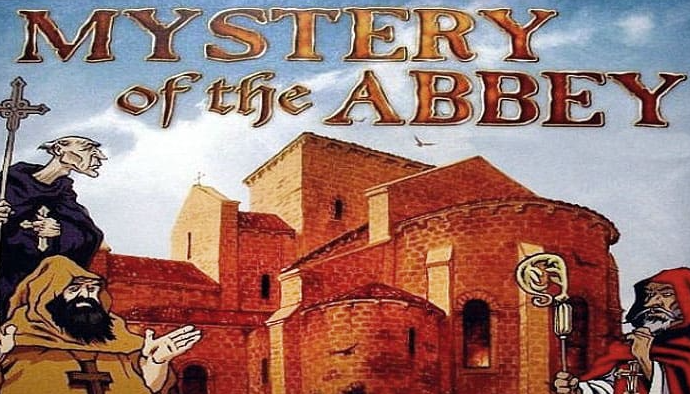
Republished by Days of Wonder during their golden years almost a decade later, Mystery of the Abbey is a sign of what’s to come. Mystery of the Abbey is a clever update to the classic board game Cluedo (or Clue). Based on the novel The Name of the Rose, players assume the identity of a detective, trying to identify a murderer in a monastery by process of elimination, moving from room to room, and asking questions of other players to order them to reveal information that will disqualify potential suspects.
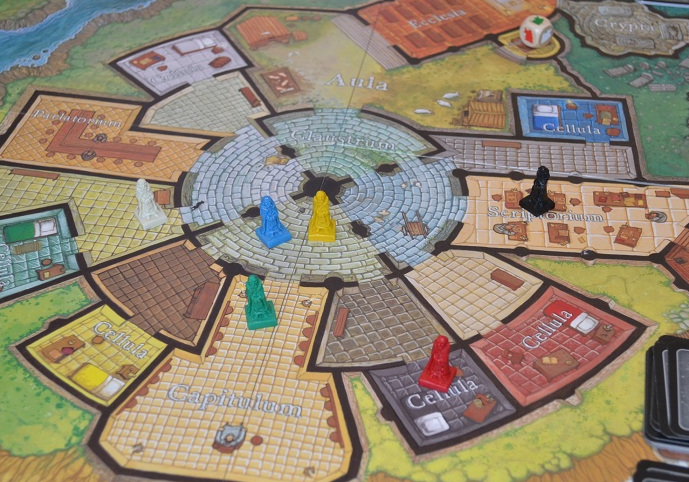
Unlike Cluedo, during their turn, a player can ask any question to any player provided the response wouldn’t include a suspect’s name. The person being asked the question may choose to answer or refuse by placing a finger to their lips (taking a vow of silence). This is so thematic and can be used strategically. All players will see the asked player’s refusal to answer. Why did they do that? If the player elects to answer the question, they then have the right to immediately ask a question of the active player. Mystery of the Abbey was one of the earliest publications for Days of Wonder, which started with interesting twists to classic games.

Dr. Reiner Knizia makes one of these lists again, and Knizia’s former employment as a quantitative analyst (one who manages and attempts to price risk for banks) comes in handy with Medici. Players take on the roles of the House of Medici, who were an Italian banking family and political dynasty. Medici is based on the pricing of risk. Each lot of commodities has an uncertain future based on how cards are drawn from the deck and what other players buy. To play Medici well, players must judge and price the risk attached to each lot of cards. Medici is a classic example of “buy low, sell high.”

I don’t play Medici particularly well, but I enjoy it every time I play. I downloaded it for my tablet and sneak in a few games against an AI opponent. The game takes place over three days (or rounds). Players draw random goods (units of different types and amounts) to make up lots, and then these lots are bid upon. The player who wins the bid then adds these goods to their ship. Each player’s ship can hold five goods. Once each ship has been filled, the round is over, and the ships score points in florins. The player with the most florins at the end of three days is the winner.
Medici is a simple auction game with a ton of open information. It’ll take a few playthroughs to figure out the true value of certain lots, but this clever design by Knizia is well worth the time.

El Grande is Wolfang Kramer’s first entry on one of these lists. 1994’s 6 nimmit! is one of my favorite card games from this period and narrowly missed out on making our previous list, while Auf Achse won the Spiel des Jahres in 1987. It was only a matter of time before Kramer made one of these lists. El Grande combines several simple mechanisms. It’s the interlocking of these mechanisms and how they play off of each other that gives El Grande its depth.

Players begin the game with a hand of identical cards (numbered 1-13). Players bid for turn order using these cards. The person who played the highest card chooses their action card first, but each player may use each card only once during the game. Each turn, players take Caballeros and execute an action card, which includes two actions, a special action, and placing Caballeros. Scoring occurs in three of the nine rounds. Players must keep track of the many factors that determine the balance of power in the regions and the score track. If it wasn’t for another game on this list, El Grande would’ve been the runaway Spiel des Jahres winner this year.

Could it be any other game? Catan (originally Settlers of Catan) revitalized the board game industry. Catan shaped the modern board game. It opened doors and spawned numerous expansions and spin-offs. While many gamers have moved on from Catan, there are still plenty more who swear by Catan. The ideas this game presents are still used to this day.
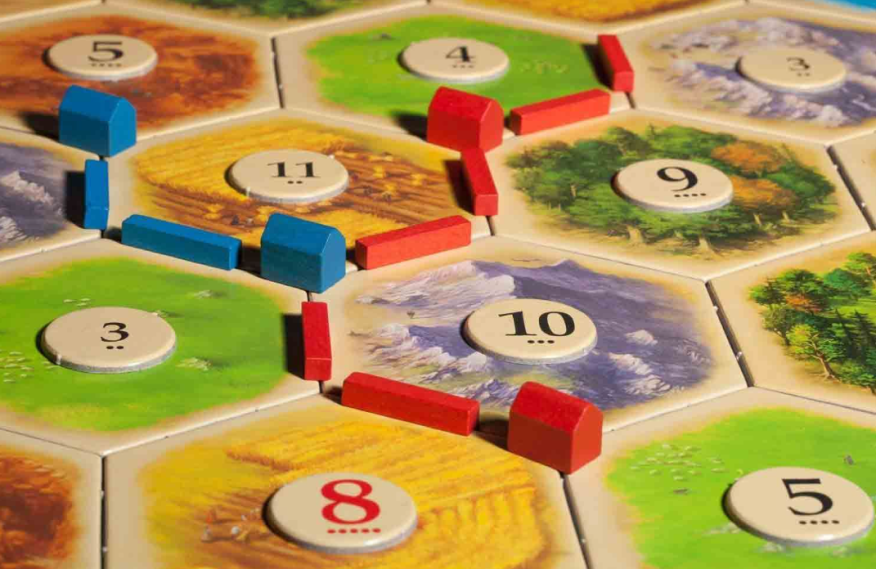
The game board is composed of hexagonal tiles of different land types, which are laid out randomly at the start of each game. Players build settlements on a fictional island of Catan. They connect their settlements with roads placed on the edges of the hexes. Each hex has a number that needs to be rolled (on two standard six-sided dice) for the hex to generate resources. Any player with a settlement touching the hex gains the resource indicated. Players gain victory points as their settlements grow, and the first to reach a set number of victory points (usually 10) wins.
I’ve played countless games of Catan in the late 90s and early 2000s. While many of the mechanisms have been improved on in some way in newer games, I haven’t found a game that scratches the same itch of bartering. Some games get close, but nothing compares to Catan. It’s deserving of the 1995 Spiel des Jahres (German game of the year).
Did we get the list mostly correct? Let us know which games you’d add in the comments. Thank you for reading, and wherever you are, I hope you’re having a great day.
Check out the other lists in this series:
Top 5 Tabletop Games Prior to the 1930s
Top 5 Tabletop Games of the 1930s
Top 5 Tabletop Games of the 1940s-50s
Top 5 Tabletop Games from the Early 1960s
Top 5 Tabletop Games from the Late 1960s
Top 5 Tabletop Games from the Early 1970s
Top 5 Tabletop Games from 1980-1981
Top 5 Tabletop Games from 1982-1983
Top 5 Tabletop Games from 1984-1985
Top 5 Tabletop Games from 1986-1987
Top 5 Tabletop Games from 1988-1989
Top 5 Tabletop Games from 1990-1991
Top 5 Tabletop Games from 1992
Top 5 Tabletop Games from 1993
Top 5 Tabletop Games from 1994
Happy Friday, Geekly Gang! Kyra Kyle here. I watched Superman (2025) this past week, and I’ve had time to gather some thoughts. Truth time. I’ve had conflicting thoughts on Superman. It’s a fun watch, but is it trying to do too much too soon?
I like the idea of skipping Superman’s origin. We don’t need it. If you want to watch a good version of Superman’s origin, you can rewatch 1978’s Superman. Geekly even has an All Superman Movies Ranked post from last week. Superman (2025) does a good job of sprinkling in just enough of Superman’s origin, so rewatching Supes’ origin may not be necessary. David Corenswet’s portrayal of the Man of Steel is comic-book accurate, which is a step up from Henry Cavill’s Superman. I said this before, and I’ll say it again: I don’t blame Cavill for this misstep. The onus belongs to David S. Goyer and Zach Snyder. Those two missed the mark with Superman as a character.
After the Snyder-verse malaise, Superman (2025) is a breath of fresh air. Outside of Corenswet, most of the actors in Superman nail their character portrayals. Rachel Brosnahan behaves like a fusion between a young Margot Kidder Lois Lane and Lois from the comics. Nathan Fillion makes a great Guy Gardner. I can’t wait to see him in Lanterns. Skyler Gisondo is a fantastic Jimmy Olsen. And Edi Gahegi steals numerous scenes as Mister “God-Damned” Terrific. I always thought Mister Terrific was one of DC Comics’ underappreciated and underused heroes before this movie. I’m glad he had some time to shine.

Nicholas Hoult’s Lex Luthor is more of a mixed bag. I love Hoult’s portrayal of Lex during the first half of Superman. Lex’s cold demeanor when Superman bursts into his lair is peak Luthor. But then Hoult’s Lex leans over the top toward the end of the film. While Lex earned this crescendo during the events of Superman, part of me hoped he remained reserved, if only on the surface. I think that’s what made that scene with Lex sipping coffee as Superman bursts into his lair so great. Outwardly, Lex was in control, but you could see him seething underneath the skin. Such a good scene.

Superman even does a great job of setting up the DCU, and this is where the film may be trying to do too much too soon. Early MCU films established the universe’s characters in solo films. Superman uses Miracle-Gro for its universe. While I didn’t expect–or want–an origin story (most of the early MCU films included origin stories), I don’t know if a Captain America: Civil War-type story was the best place to begin the DCU. Civil War was a Phase Three MCU movie. Phase Three! You kinda leapfrogged two phases.
As a result, Lois and Clark’s relationship didn’t get enough time to develop. The most romantic scene between Lois and Clark is undercut by the Justice Gang fighting an interdimensional imp. (Quick note: The interdimensional imp could be none other than Mister Mxyzptlk.) Don’t get me wrong. I chuckled at Guy Gardner beating the imp over the head with a green bat, but I couldn’t tell you what Lois and Clark said during the scene when Clark first tells Lois he loves her. This is like a Rom-Com have one of the characters accidentally profess their love at dinner, but we have someone making silly faces outside the restaurant window and screaming booga-booga. What did he say? Did Superman say something important?
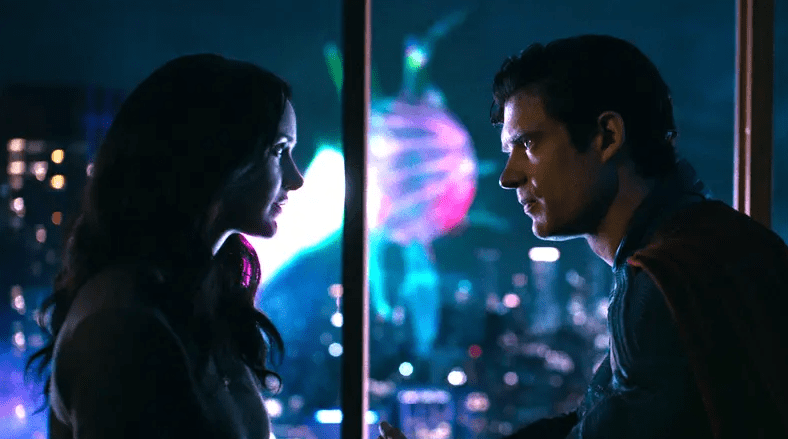
That said, I love how Superman’s world feels lived in. One of the few things I remember Clark telling Lois during the romantic scene is the Justice Gang said they don’t want or need his help against the interdimensional imp. This is why I’m conflicted. How much do you pare from this world to tell a more focused story? Where is the line between telling a great Superman story and setting up too much of the DCU? Honestly, I don’t know the answer to either of these questions.
What I do know is that Superman’s side characters, like Jimmy Olsen and Perry White, didn’t get enough screen time or character development. Olsen fared better than White, and both actors nailed the vibe of their comic book counterparts, but I would’ve liked more Olsen and White. Plotlines were condensed, not because there were more Superman stories to tell, but the DCU needed time to expand in a single film.
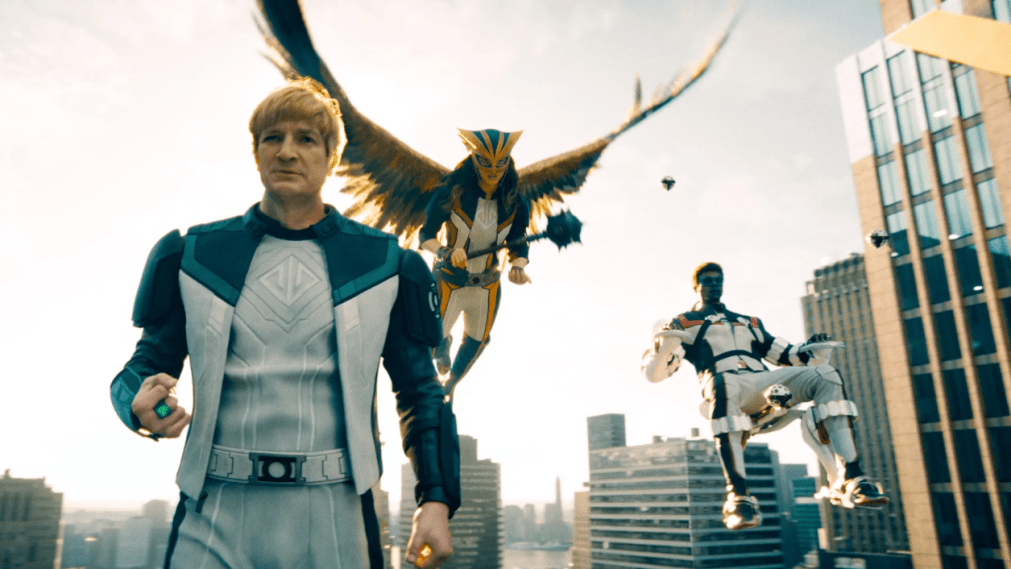
To Guy Gardner, Never change your hairstyle. You’re rocking that bowl cut.
Even though Superman suffers a little under the weight of launching a cinematic universe, this is an issue with most modern superhero films outside the MCU’s first phase, which was almost two decades ago. Yikes! Case in point, Batman (1989) is the last time a Batman film only featured one villain. Batman (1989) was over three and a half decades ago, and we’ve had almost a dozen Batman films since. Superhero movies have the impulse to add more when more isn’t always needed. The result can be an inch-deep ocean of a story, instead of a 700-foot deep river.
Despite any shortcomings, I enjoyed Superman. This film is comic-book accurate. My reservations about setting up too much of the DCU at once aside, Superman got me excited for Lanterns and Supergirl. The Supergirl cameo suggests that this version of Supergirl will borrow heavily from the excellent Supergirl: Woman of Tomorrow comic storyline. I can’t wait to see Kara claw her way back from rock bottom.
Those are my thoughts, for now, about Superman (2025). Let us know what you thought of the film. Thank you for reading, and wherever you are, I hope you’re having a great day.


Happy Wednesday, Geekly Gang! Kyra Kyle here. It’s another day for our Whatcha series. This week is Whatcha Watching. Even though we’ve watched Superman earlier this week, we won’t be including it with any of our write-ups. You’ll have to wait for our review this Friday. With that announcement out of the way, I guess I’ll begin this post with what I’ve been watching this past month.

I finally watched Sinners on HBO Max, back when the streaming service was still called Max (don’t get me started on the name change), and I’m kicking myself for not watching Sinners on the big screen. The scene where Sammy plays at the Juke Joint and summons generations of musicians is a marvel. That would’ve been fantastic to see in the theater. Despite watching on a smaller screen, the scene still slaps.
Sinners is easily one of 2025’s best films. I’d be surprised if it doesn’t take home a few awards. It does a great job of depicting the Mississippi Delta in the 1930s. I like how the twin brothers (a double role for Michael B. Jordan) say that Chicago was like the South, but with taller buildings, and they’d rather dance with the devil they knew. While the South was brutal to black people during this time, the North wasn’t much better. The North was subtler. I live outside of Omaha, Nebraska, which is still one of the most segregated cities in the United States. Sinners shows the United States’ sordid past but manages not to get too preachy.

Horror as allegory for racism and social injustice is in vogue right now, and I’m all for it. Horror is a great vehicle for forcing people to face their fears and their past. Horror allows for reflection. Sinners does this well. But I could see someone viewing Sinners through various lenses, and that’s the mark of a great baseline story.
I’ll try to avoid spoilers here; I highly recommend watching Sinners if you have the chance. Religion plays a large role in plenty of Sinners‘ scenes. One of Sammy’s many nicknames is Preacher’s Son on account that he is a preacher’s son. The film even opens with strong religious overtones, with a bloodied Sammy interrupting his father’s church service. Sammy’s at a crossroads, and we get the vampire backstory that precedes this crossroads scene. Not gonna lie, I thought of Robert Johnson, a blues guitarist and singer who died in the late 1930s while watching Sammy. Robert Johnson, the blues guitarist who met the devil at the crossroads, spoke to generations of musicians he would never know. Sammy’s scene at the Juke Joint was awesome.
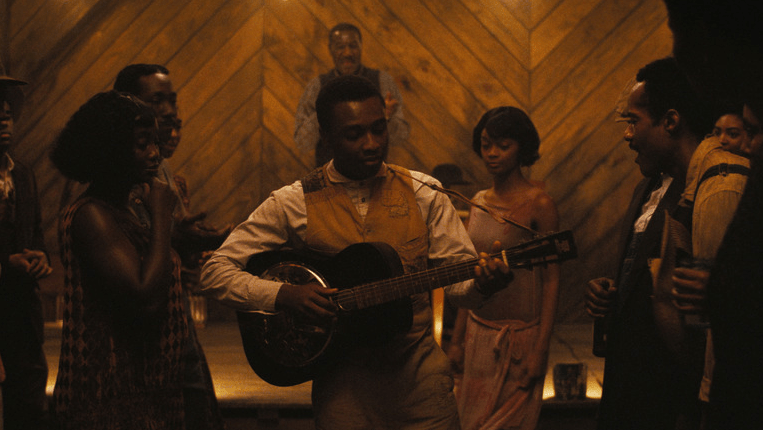
Honestly, one could choose a couple of other themes besides the ones already mentioned, and it would work for Sinners: regret, income inequality, or the loss of innocence. Sinners‘ layers keep it from being another allegory for racism. But I do have one small nitpick. Sinners didn’t leave enough breadcrumbs for the link between the vampire white couple (at the beginning) and the man who sold the twins the old mill. It’s a small nitpick, and I may need to rewatch Sinners to see if I missed something. Like I need an excuse to rewatch Sinners. Outside of that, I like how the Ku Klux Klan’s motives mirror the vampires’. I’ll be rooting for Sinners this award season.

I didn’t watch too many new-to-me shows this past month. One of my rewatched highlights is The Book of Queer. You can also find this series on HBO Max. It’s not very long, but if you’re a member of the LGBT+ community, I challenge you not to feel empowered after watching this series. The Book of Queer proves that all letters of the LGBT+ community existed for millennia. This isn’t a new fad. It isn’t a phase. We’ve always been here. History has a way of sweeping the LGBT+ community into the closet like Sappho and her “friend.” Note: one of The Book of Queer’s episodes features Sappho.
The Book of Queer keeps things light. I appreciate how the series takes what could be a touchy subject and adds enough comedic relief to keep it from getting too overwhelming. But The Book of Queer manages to bring on the waterworks. Some of these historical figures are tragic. Rest assured, each episode of The Book of Queer ends with a fabulous music video. Get ready to “Sashay to the Top.”
That’s all I have for this month. Let’s check in with Season and see what she’s been watching.

I already mentioned K-Pop Demon Hunters in my Whatcha Listening to, and our Superman review is underway, so I won’t be including those. I know. I struggle with watching movies, but I can sit through six-hour-plus episodes of Queen Charlotte: A Bridgerton Story. My own logic doesn’t make sense to me.
Queen Charlotte: A Bridgerton Story is in no way historically accurate. It takes several liberties for the sake of drama, which I was craving when I watched it. There’s no proof that King George III struggled with his mental health when he was younger in real life, as was portrayed in the show. He definitely did in his later life. I didn’t care for this aspect of the story, but I knew what I was getting into.
My main reason for watching Queen Charlotte: A Bridgerton Story is because I fell in love with Golda Rosheuvel’s performance in Bridgerton as Queen Charlotte. Her delivery and facial expressions made her steal each scene she was in. That said, India Amarteifio did an amazing job as young Queen Charlotte and mirrored Golda Rosheuvel’s older Queen Charlotte’s personality to a T. I’m not one for re-watching shows, but I’d re-watch Queen Charlotte: A Bridgerton Story.
Hey, hey! Kyra Kyle here again. That wraps up what our Geekly writers have been watching this past month. Let us know what you’ve been watching, too, because you’re part of the Geekly Gang, too. Thank you for reading, and wherever you are, I hope you’re having a great day.

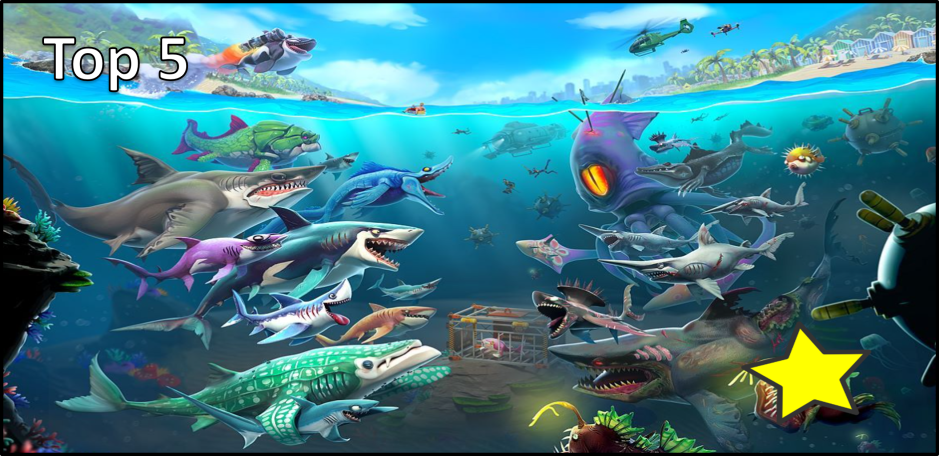
Today is Shark Awareness Day. Geekly’s celebrating by listing the top five sharks that originated in video games. Things are about to get fishy.
Hey, hey! Kyra Kyle here. With today’s list, we won’t include all sharks in video games. These are the sharks that originated in video games. So, we won’t include King Shark, Jeff the Land Shark, or Jaws, because they started in comic books or in the movies and then made their way over into video games. We’re talking straight video game sharks.
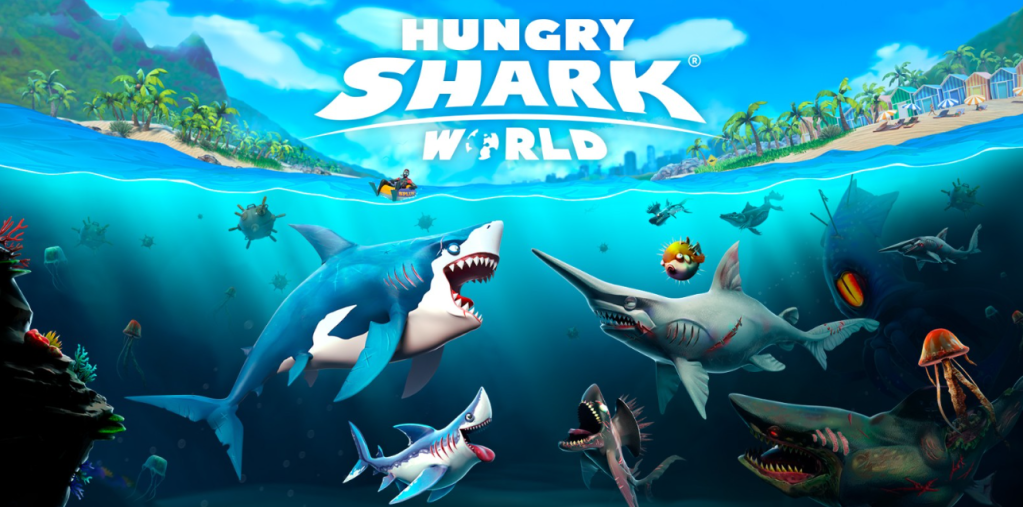
None of the sharks in Hungry Shark World have names, but this game may be one of the highest-rated games where gamers play as sharks. The game features numerous fun maps and 30 species of sharks that players can customize into their own cuddly predator. Hungry Shark World just misses our list because there isn’t one specific shark to feature. Instead, Hungry Shark World pits gamers’ shark creations against unique enemies.
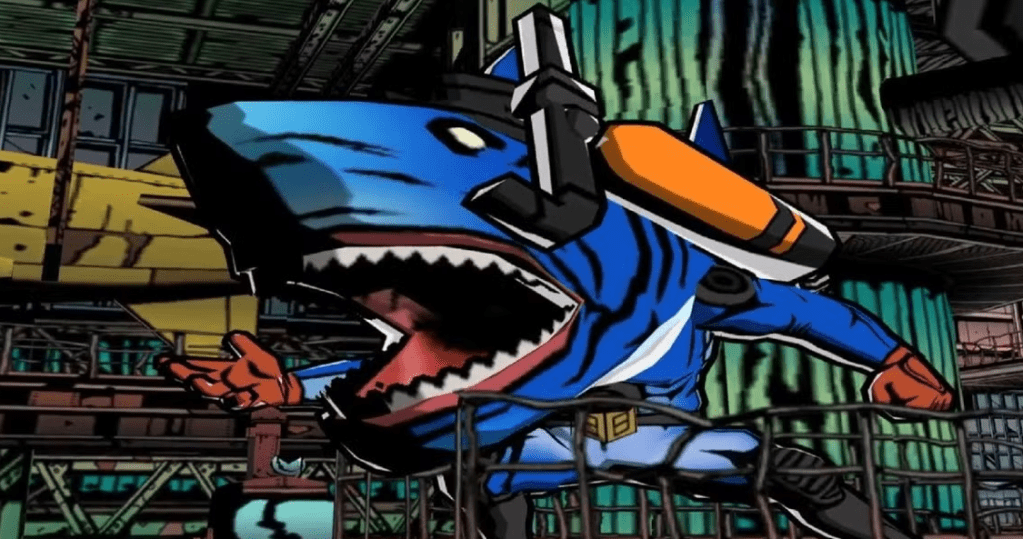
Gran Bruce is one of the many bosses Viewtiful Joe faces. This shark enemy pays homage to the world’s most famous movie shark, Jaws. Steven Spielberg’s crew gave the prop sharks on the set of Jaws the nickname Bruce. Players can even trigger an explosion in Gran Bruce’s mouth, which was how Jaws was defeated at the end of the first film. Gran Bruce may be little more than a dim-witted boss for Joe to slap down in the first game, but he also had a role in the Viewtiful Joe anime, which makes him one of the few gaming sharks to crossover into other media.
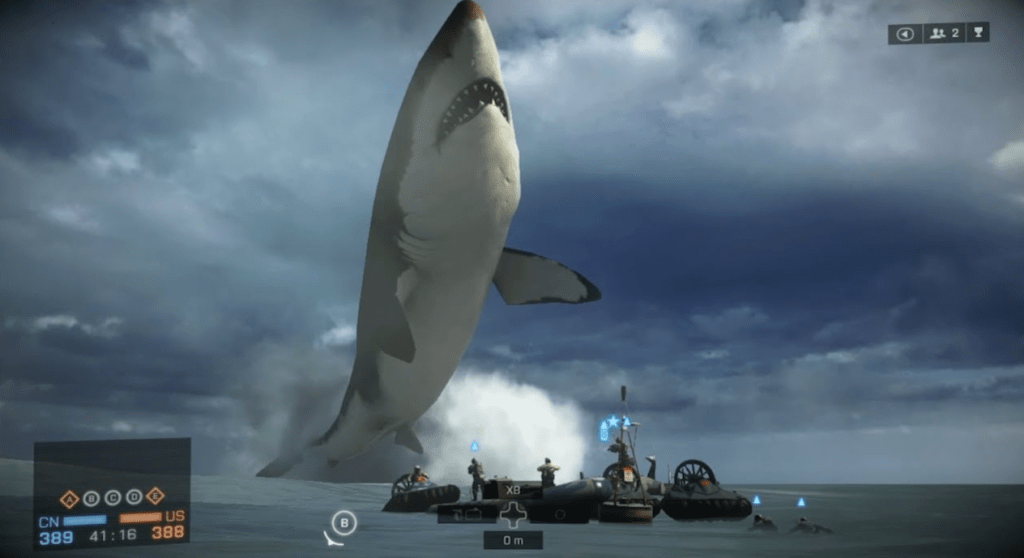
What started as a joke in the Battlefield series became a random appearance of a Megalodon shark in the game. The Megalodon is one of the largest creatures to ever prowl the seas, so of course, this ancient beast lurked in one of Battlefield’s maps. It didn’t help that gamers photoshopped a large shark in some of the gameplay. The gag became reality when Battlefield 1 included a Megalodon in its mission “They Shall Not Pass.” The rest is history. Or prehistory.
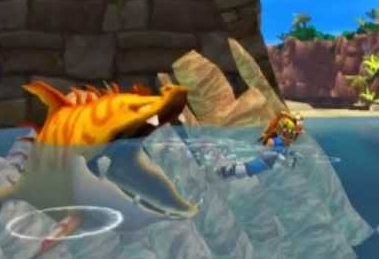
Many video games during the early 2000s would prevent heroes from swimming beyond the limits of the game world with an invisible wall. Jak and Daxter decided to ward off would-be cross-game-world swimmers by having a shark eat them alive. While the Lurker Shark made its biggest impact in the first game of the Jak and Daxter series, it would return in Daxter in a variety of shapes and sizes. It even has a brief cameo in Jak 2.
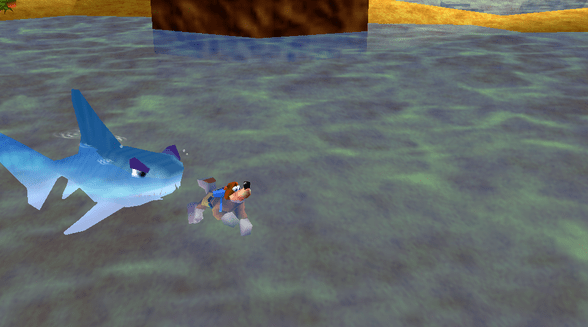
Snacker the Shark serves the same purpose as Lurker Shark in Jak and Daxter. Snacker is a clever way to keep Banjo and Kazooie within the limits of their game world. Snacker makes two appearances in the original Banjo-Kazooie, but he made his debut in the Treasure Trove stage, spouting one-liners and taunting players before he eats them. Like Gran Bruce, Snacker also pays homage to Jaws with his Jaws-inspired theme song. He’s cute even while he devours you.

While investigating the Penguin’s lair, Batman runs into a great white shark ironically named Tiny. This encounter is one of the most blood-pumping moments in Batman: Arkham City. Batman must carefully cross a body of water without being eaten alive by Tiny. Looks like Bats forgot the shark repellent. Never leave home without it. Despite a brief appearance in Batman: Arkham City, Tiny made an impact. The series brought him back with a jump-scare sequence in Batman: Arkham Knight.
I may have listened to the Jaws theme song while putting together this list. Which video game shark is your favorite? Let us know in the comments. Thank you for reading, and wherever you are, I hope you’re having a great day.
 jkgeekly.com