Top 5 Tabletop Games from 2000

Hey, hey, Geekly Gang! Kyra Kyle here with another Top 5 Tabletop Game List throughout the years. Today, we’ve reached the current millennium for tabletop games. The 90s shook up what it meant to be a modern board game; the first decade of the 2000s will give us numerous evergreen titles that dominate the board game landscape today. We should see plenty of familiar designers and familiar titles in these upcoming lists. We’ll get to the games in a bit, but first, let’s review our list’s criteria.

1: Cultural relevance plays as much of a factor as overall quality. A game might make a list that doesn’t hold up to others of its type, but you must admit the game is everywhere.

2: Only one game from a franchise makes the list. This will become more of an issue the closer we get to games with expansions.

3: Longevity plays a role, too. A game doesn’t have to fly off the shelves today, but it had to have some widespread appeal for a decent time.
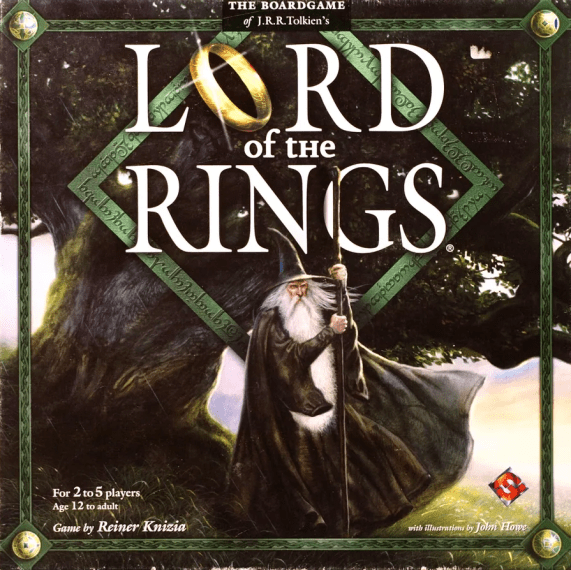
5: Lord of the Rings (2000)

Yes! Yet another Reiner Knizia title makes one of these lists. 2000’s Lord of the Rings is still a lot of people’s go-to board game that uses the Lord of the Rings intellectual property. It’s also one of Knizia’s few cooperative board games and may have inspired a cooperative board game boom that we’ll see in a handful of years.
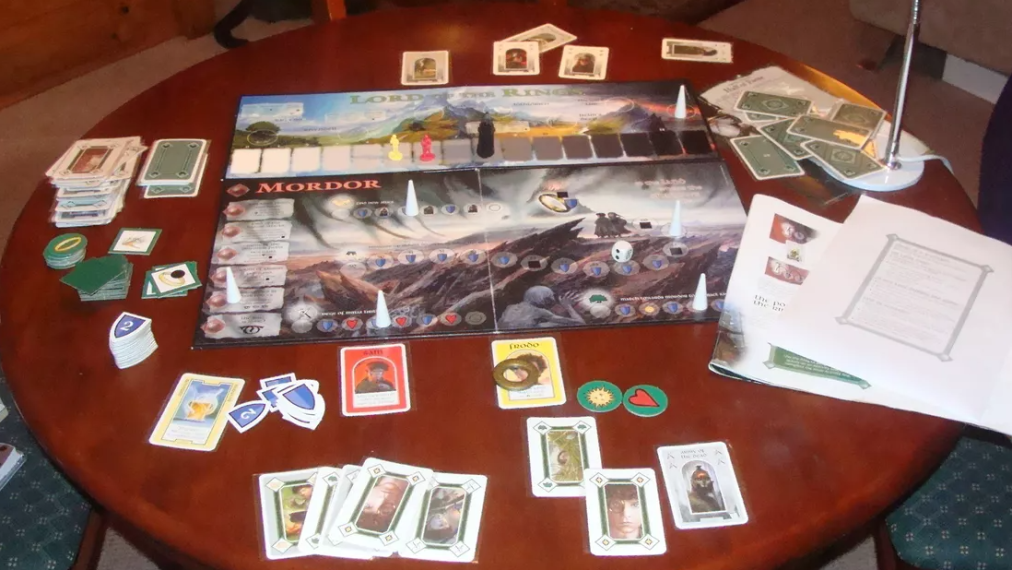
Lord of the Rings follows the events of the novels to a T, which is why some gamers still consider this board game to be the definitive Lord of the Rings board game experience. And it runs fast. Gameplay is centered on advancing through a series of scenarios (that mirror the books). Players turn tiles and play cards to move forward and collect and spend tokens to avoid advancing the Dark Lord Sauron. In dire situations, tokens may be spent to call Gandalf for assistance, or the One Ring may be used to advance toward Sauron. The push-pull is thematic and tense. It’s no wonder Lord of the Rings received a Spiel des Jahres special award.
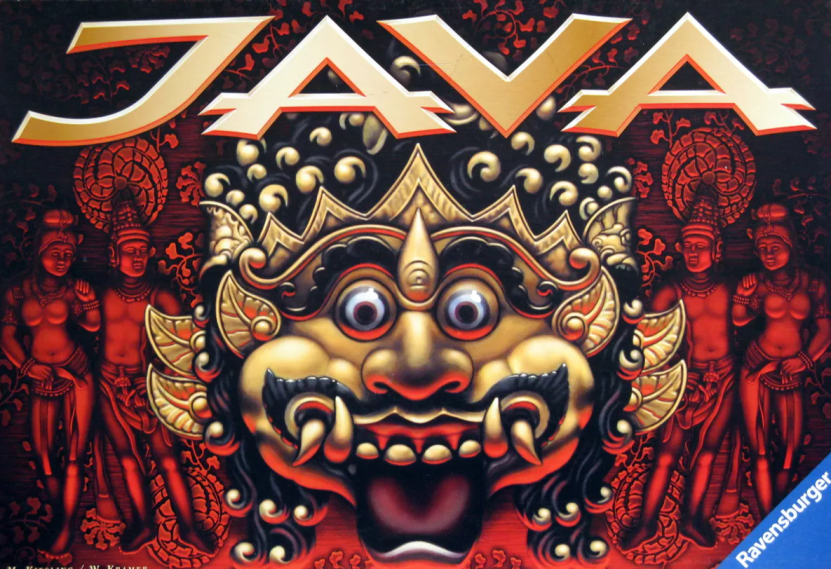
4: Java (2000)

I could’ve gone with Torres, another Wolfgang Kramer and Michael Kiesling collaborative design that won this year’s Spiel des Jahres (German game of the year), but I decided to go with the next game in Kramer and Kiesling’s Mask Series, Java. Tikal made the 1999 list. Java tends to be the forgotten game in the Mask Trilogy of board games, and I don’t know why. I love Java’s exploration.
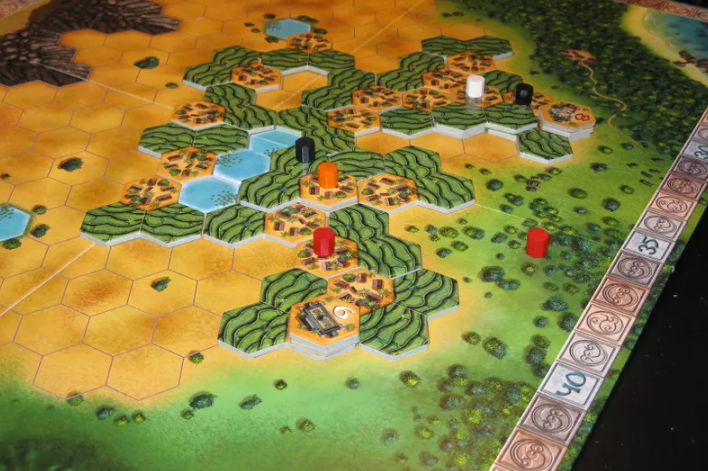
Players take turns building the titular island, scoring victory points by setting up palace festivals at the right moment. Java ends when the players run out of tiles. It’s a simple premise, but Java’s rules may be unforgiving for novice players. Still, Java is a great addition to the Mask Trilogy.
3: Battle Cry (2000)

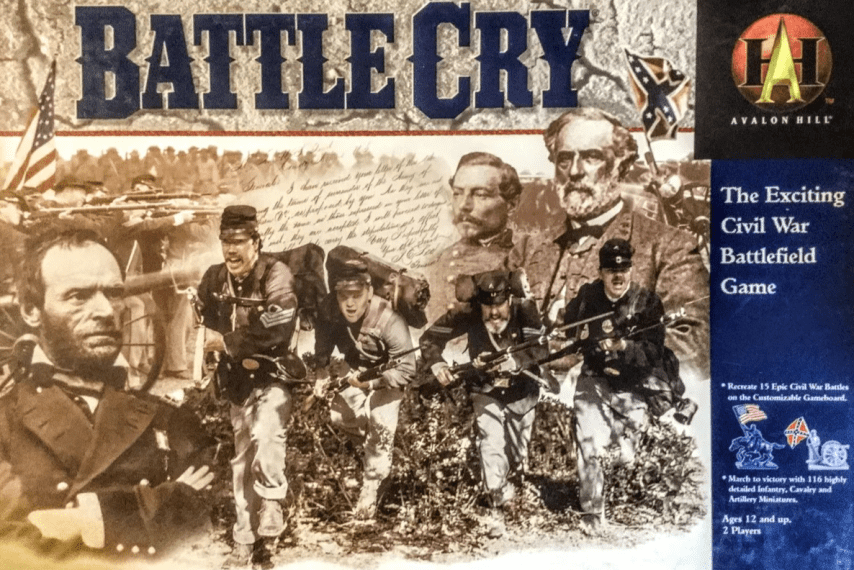
Wargame purists may disagree, but Battle Cry revolutionized wargames. Richard Borg (we’ll see his name again on one of these lists) took elements of wargames, combined them with miniatures, and simplified the rules, and came up with the war game powerhouse that is Battle Cry.
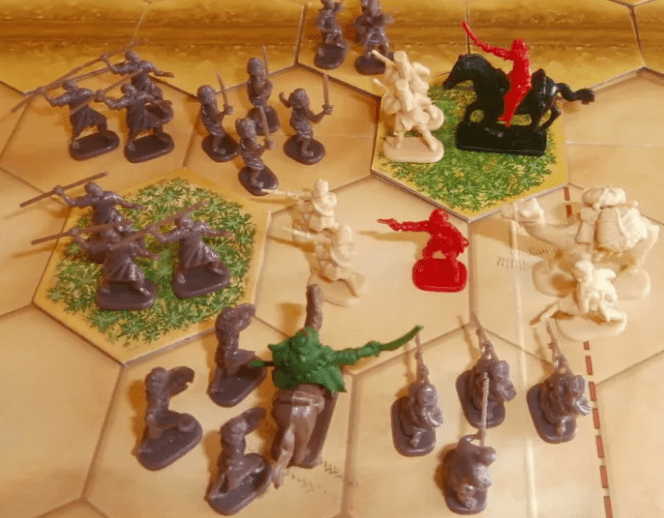
Borg would continue to perfect his system of card and dice combat with future wargame installments, but Battle Cry, set in the American Civil War, marked the first use of this system. Players command a variety of units: infantry, cavalry, and artillery. Scenarios dictate how many of each unit a player (one playing the Union and the other playing the Confederacy) will control. For each opponent’s unit removed from the board, a player receives one victory point. The player who scores the required number of victory points first (determined by the scenario instructions) is the winner. Battle Cry and its spiritual successors continue to divide gamers. Wargame purists, as I mentioned before, may consider Battle Cry too simplistic, but this simplicity makes Battle Cry more accessible.
2: Blokus (2000)

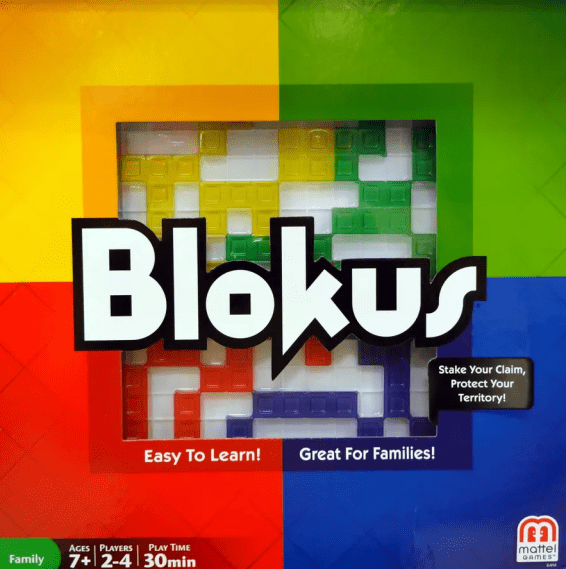
In Blokus, players score points by occupying the board with Tetris-style pieces(named polyominoes because they’re dominoes of irregular shape) in their color. Even today, Blokus is visually arresting. It earned numerous awards, including the Mensa Select award and the 2004 Teacher’s Choice Award. There’s no denying that Blokus has staying power.
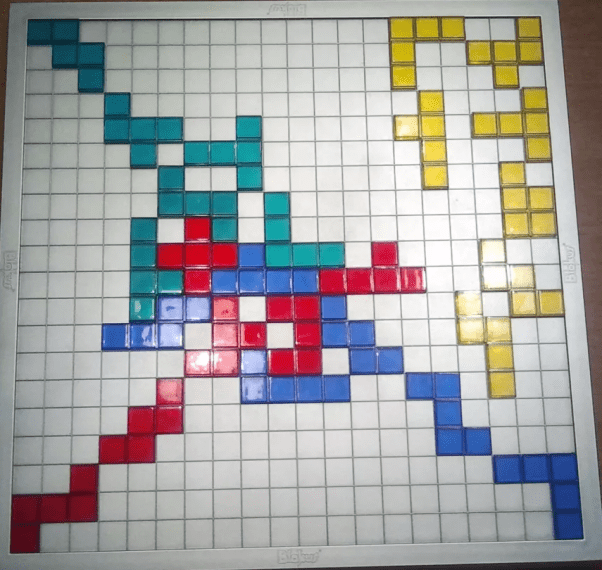
But the reason Blokus is this high on our list is because of its use of polyominoes. While it took a decade or more to catch on, polyominoes have soared in popularity. Patchwork, Barenpark, Isle of Cats, A Feast for Odin, Planet Unknown, and many other board games that use polyominoes owe Blokus a debt of gratitude. Thank you, Blokus, for introducing this amazing board game component.
1: Carcassonne (2000)

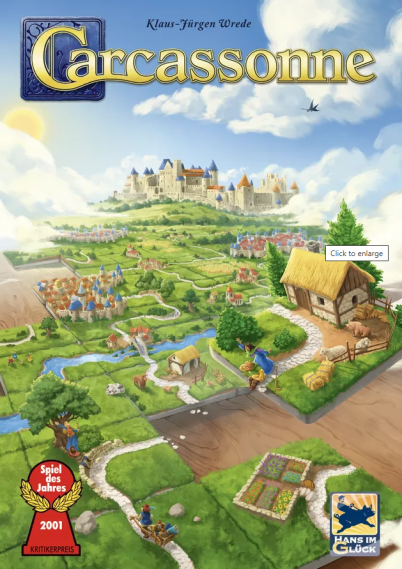
Blokus just misses out on our top spot because the evergreen title, Carcassonne, was released in 2000. Polyominoes took some time to catch on, but tile-laying as found in Carcassonne exploded immediately, and it continues to grow today. Carcassonne has spawned numerous expansions, spin-offs, and imitators.
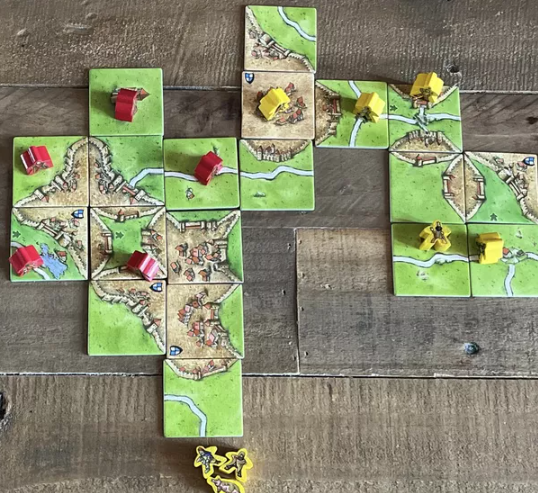
Carcassonne’s gameplay is simple. Draw and place a terrain tile. Station a follower on the newly placed tile (optional), but this shows you claim control of this region. And then score completed feature(s) if relevant. Carcassonne earned the 2001 Spiel des Jahres and Deutscher Spiele Preis award. I don’t know how the Spiel des Jahres committee determines which year a game is eligible. But Carcassonne’s influence can still be felt today. Carcassonne’s core mechanisms inspired 2023’s Spiel des Jahre winner Dorfromantik, and in turn, the award-winning Dorfromantik video game that inspired the board game was also inspired by Carcassonne. Carcassonne is everywhere, people. It even crossed over into video games. And that’s why Carcassonne takes our top spot for 2000.

Did we get the list mostly correct? Let us know which games you’d add in the comments. Thank you for reading, and wherever you are, I hope you’re having a great day.
Geekly Tunes: March 2026

Hey, hey, Geekly Gang! Kyra Kyle here. Today, our writers share what they’ve been listening to over the past month. Feel free to share what you’ve been listening to in the comments. We’re all part of the Geekly Gang. I’ll get things rolling with what I’ve been listening to during the month of March.

Kyra’s Tunes

I’ve been listening to Childish Gambino’s “Lithonia” on repeat. The soulful voice. The vocal harmonies. The fusion between Gospel, Rock, and R&B. Ah! I love it. If you haven’t yet listened to “Lithonia” (named after an Atlanta suburb), do your ears a favor and give the Official Audio Video a play on YouTube. “Lithonia’s” Official Music Video is also great, but you don’t get the full song. I also recommend watching the Music Video after the Audio Video. And after watching “Lithonia’s” Music Video, you’ll learn why there are so many reaction videos to that music video. Yowza!

Bando Stone & the New World (the album in which “Lithonia” originates) is a return to form for Childish Gambino. Some of his more recent albums (Altavista) didn’t hit the same as Awaken, My Love!, which includes the amazing “Redbone.” Brando Stone & the New World shows Childish Gambino (soon to go by Donald Glover as a music artist) at the peak of his powers. And I love how this album serves to set up Glover’s upcoming movie of the same name, Brando Stone & the New World. I can’t wait to watch the film. Until then, I’ll listen to Brando Stone & the New World on repeat.

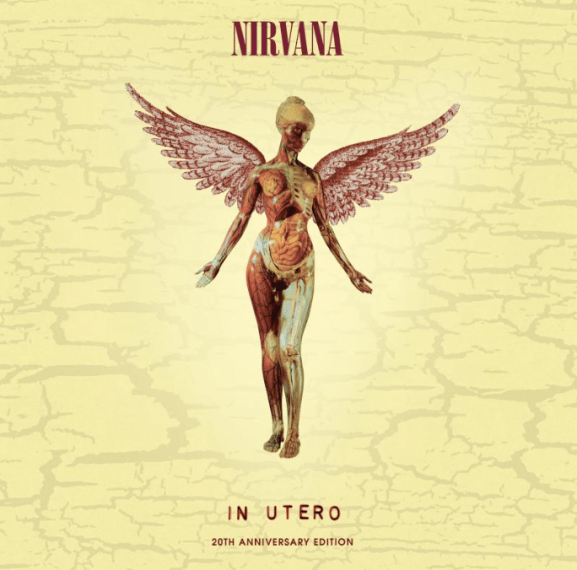
I’ve also been kicking it old school with Nirvana’s In Utero. This album deserves all the praise it receives. Sure, there are the singles “Heart-Shaped Box,” “All Apologies,” and “Pennyroyal Tea,” but the deep cuts set In Utero apart. It may be blasphemous, but I’d say In Utero is slightly better than Nevermind. “Serve the Servants” opens with a bang. The opening lyrics, “Teenage angst has paid off well, now I’m bored and old” let the audience know this is a different Nirvana. “Serve the Servants” does a great job of melding autobiographical lyrics with working-class anthem ones. The track even sounds vaguely like surf rock.

“Serve the Servants” is an excellent opening track, but “Scentless Apprentice” marks the direction Nirvana may have taken had Cobain stuck around for a few more years. “Scentless Apprentice” was Nirvana’s biggest sonic departure on the album. Not bad for a track with an original name of “Chuck Chuck Fo Fuck.” The nickname is a reference to how the rhythm guitar line sounds.

Frances Bean Cobain (Kurt’s daughter) has cited “Dumb” as her favorite Nirvana song. According to Frances Bean, she sees “Dumb” as her father showing his vulnerability. And “Rape Me” was an attempt by Cobain to speak his mind against violence toward women. His previous work in Nevermind fell on deaf ears. Despite dropping all pretenses, “Rape Me” may be one of Cobain’s most misunderstood songs.

All of this and the singles folks know so well make In Utero a fantastic album.

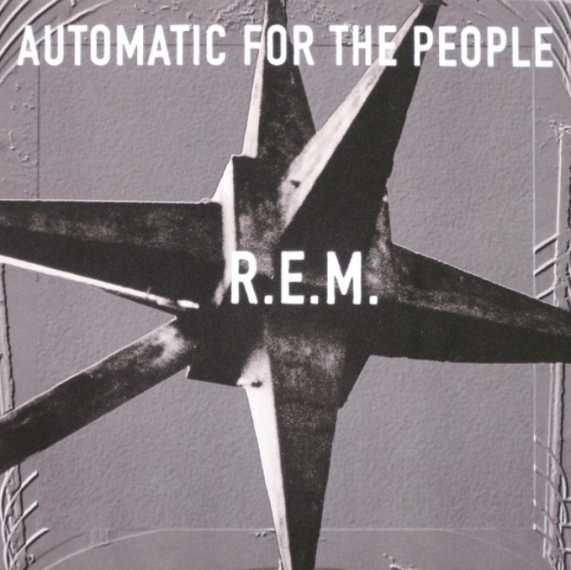
I went from Nirvana to the other band that dominated the early Nineties, R.E.M.. Ironically, R.E.M. was struggling to finish their eighth studio album, Automatic for the People, so lead singer Michael Stipe, who suffered from writer’s block, reached out to Kurt Cobain. Cobain joked with Stipe that people thought Nirvana used too many yeahs in their songs. And Cobain did have a habit of finishing a line with a yeah. Cobain challenged Stipe to write a song with a lot of yeahs. Stipe accepted the challenge and wrote the classic, “Man on the Moon.”

Mott the Hoople and the Game of Life
Yeah, yeah, yeah, yeah
Andy Kaufman and the wrestling match
Yeah, yeah, yeah, yeah
Monopoly, Twenty-One, Checkers, and Chess
Yeah, yeah, yeah, yeah
Mister Fred Blassie in a breakfast mess
Yeah, yeah, yeah, yeah
Let’s play Twister, let’s play Risk
Yeah, yeah, yeah, yeah
I’ll see you in heaven if you make the list
Yeah, yeah, yeah, yeah

The number of “yeahs” in “Man on the Moon” dwarfed the ones Cobain sang with Nirvana, and it went on to become Automatic for the People’s second single. I would say something similar for Automatic for the People as I did with In Utero, that obviously the singles were fantastic, but the deep cuts elevate this album to iconic status. But half of Automatic for the People’s tracks would get released as singles. That’s a lot of singles: “Drive,” “Man on the Moon,” “The Sidewinder Sleeps Tonite,” “Everybody Hurts,” “Nightswimming,” and “Find the River.” Yes. Any two or three of these singles could anchor an album. Automatic for the People had six. Woah!

Despite half of this album being released as singles, I still have at least a couple of deep cuts. “Try Not to Breathe” is haunting. Honestly, I thought it had been released as a single; it’s that good. “Sweetness Follows” is one of my favorite tracks on Automatic for the People. The strings on this track are arranged by none other than John Paul Jones, Led Zeppelin’s bassist. Throw in the awesome instrumental and “Monty Got a Raw Deal,” and you get one of those few albums that don’t have a single skip track. You’ll want to listen to them all. I need to pick up Automatic for the People on vinyl.

I’ll finish my segment by including the other song I’ve had on repeat this past month, “Move Your Feet.” This infectious 2003 dance-punk song by Danish pop duo Junior Senior will get anyone off their feet. While I like “Move Your Feet’s” official music video (with its pixel art pictured above), I’ve watched/listened more to one of Junior Senior’s live performances of the song. I didn’t think the band could pull off a great live performance of a song like this. It sounded too produced. But Junior Senior proves they don’t need a silly little thing like autotune.

The full band adds an extra layer of authenticity. The backup singers make “Move Your Feet” come alive. And I’m talking about the “Oh Yeah” woman singer, providing a Disco-like melody leading into the chorus, and the “From Downtown” man singer, harmonizing with Junior on the chorus. The drummer is mesmerizing whenever he clashes the cymbals. This live version of “Move Your Feet” is near-perfect. I prefer it to the studio version. With everything happening in the world right now, sometimes you just need to “Move your feet and feel united.”

That’s all I have for what I’ve been listening to this past month. Let’s see what tunes Skye picks.

Skye’s Tunes

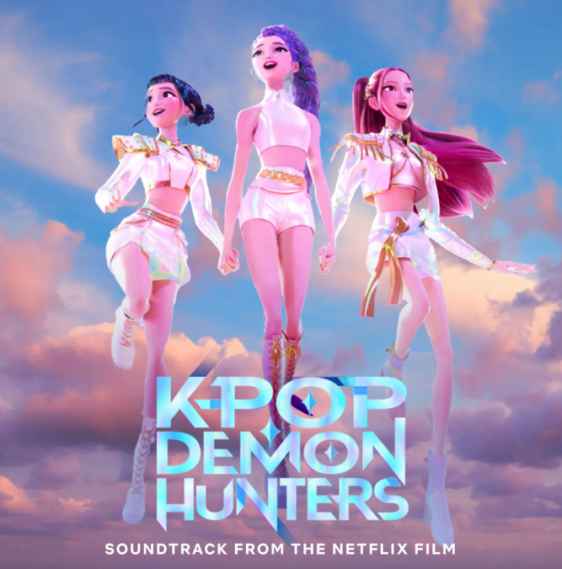
I have succumbed to the K-Pop Demon Hunters hype. I did this a long time ago; I listened to the soundtrack on repeat for the past month. What can I say? K-Pop Demon Hunters is a good movie with a fun soundtrack that’s perfect for dancing. Considering how much I love to dance, you can see why the K-Pop Demon Hunters soundtrack would appeal to me. I’ll keep this entry brief since I know Season has previously discussed this soundtrack, but if y’all would like me to do a breakdown of K-Pop Demon Hunters’ story, themes, and characters, let me know in the comments.

Sometimes you need something to keep you going. “and the day goes on” has been providing me with sufficient energy over the past month. For those who’re unfamiliar, “and the day goes on” is a song uploaded to the YouTube channel Bill Wurtz, which is well-known for the viral video “history of the entire world, i guess.” There isn’t much rhyme or reason to Bill Wurtz’s content, yet they still manage to capture an uplifting tone and a hummable melody while making no sense at all in “and the day goes on.” If you need a little pick-me-up, “and the day goes on” is very good for that. However, I must warn you that it’s gonna be stuck in your head forever.

Hey, hey! Kyra Kyle here again. Those are the tunes our writers have been listening to over the past month. Let us know what you’ve been listening to in the comments, Geekly Gang. Thank you for reading, and wherever you are, I hope you’re having a great day.
Writing Brain Dump: March 20, 2026

Hey, hey, Geekly Gang! Kyra Kyle here. Has it really been about a month since the last Writing Brain Dump? Wow! Time flies. If you follow the board game design brain dump series, today’s topic will sound familiar. I tailored the design post toward board game design, so today’s brain dump will focus on writing. And we’re talking about the writing spectrum.

Most things in life can be expressed through a spectrum. Some people feel most comfortable on one extreme side of the spectrum, while others prefer the other. And then there are the ones like me who live somewhere in between the two extremes. In writing, those extremes are Plotters (or Planners) and Pantsers. Planners (or Plotters) create outlines for their plots and write their stories based on that outline. This may be the way most of us learned how to write. I remember my teachers preaching the importance of outlines. Several famous writers swear by plotting, and some refuse to conform. Rebels. Rebels, I say. You can’t tell them to make an outline. These are your Pantsers, nicknamed from the idiom, flying by the seat of one’s pants. And plenty of writers swear by pantsing.

Both sides make compelling arguments. JK Rowling, a famous Plotter, once suggested that without an outline, one will get lost. You wouldn’t go on a road trip without a map. That makes sense. But Stephen King, a famous Panster, once said never to outline. If you, as the writer, can’t be surprised by your work, you can’t expect your reader to be surprised. This also makes a lot of sense. So, who’s right? Both sides believe their method to be the best. Seriously, there’s a reason I made the above graphic look like a political divide. The writing divide can be just as contentious. Would it bug you if I said neither side is right? Or that both of them are right, given the proper circumstances? You can’t take me off this fence.

But context matters. A novel with numerous intricate plotlines may yearn for an outline. The writer could easily get lost. And pantsing one’s way through a story could help with suspense. Is it a coincidence that Stephen King mentions surprise in his reasoning for pantsing? Horror requires surprise. Of course, the Master of Horror would pants. Rowling’s Harry Potter series began with a school year structure. An outline for that series makes sense because she had to keep to that strict form. Until the final couple of books, where Rowling aged up the characters (to match the aging audience) and ditched the school year structure entirely with The Deathly Hollows. But enough about King and Rowling. Where a writer falls on the writing spectrum depends on the writer.

I’ve tried both of these methods. They work for various projects, like the ones I mentioned for the two famous authors. I’ve spelled out why an author may choose one extreme over the other. Pantsing adds surprise (might be good for Horror and Suspense). Plotting provides structure (great for books that follow a rigid structure). But there are two other main ways a writer can write their books/stories: Lighthousing and Blotting. I told you I live in the middle.

Typically, when I Lighthouse, I know what my initial scene will be, and I have a scene I know the story will progress toward, my Lighthouse Scene. This gives an author guide rails (sounds a little like Plotting), but allows the author to meander on their way toward the Lighthouse Scene (giving the flexibility of Pantsing). I love this method. It helps when I have a good idea of where I want to begin, and when I have a scene I’m dying to write. I’ve done this a lot with short stories. The exception for a short story is that you won’t have as many Lighthouse Scenes. You may even have one Lighthouse. If that’s the case, you may drift a little while before finding the point in the story where you’ll need to make your way to the end.

Lighthousing works best for stories where you have a good idea of how they’ll end (or perhaps a great penultimate scene), but you want some freedom to explore. But Lighthousing can get tricky. I’d begin with short stories first. Not enough writers start with short stories; short stories are a great way to explore one’s craft. Oh. I guess this is less of a writing brain dump and more of a craft talk. Whoops!

Blotting is the other main way writers can craft their stories, outside of plotting and pantsing. I always view Blotting like I’m a painter with an empty canvas. I have a sopping wet paintbrush in my hand, and I’m slinging the brush on the canvas with something I know I want in my story. This can be an element. This could be multiple scenes. The great thing about Blotting is that you can write the scenes in your story in any order, and then write the rest of the scenes that go in between those scenes. In other words, you can write the cool scenes you want to see in your story, and see what parts of the story remain.

Blotting works really well for non-linear storytelling, but that doesn’t mean it can’t work for a linear one. I blot a lot more when I write longer works. It helps me gain momentum, and writers need momentum for longer works. Get there faster.

So, which method is best? None. All. It depends on the writer and the project. Seriously, I’ve tried all of these; I’ve even used all four of these methods in a single calendar year. And just because you pants or lighthouse or blot, doesn’t mean you can’t reverse outline your book. Reverse outlining is when you take what you’ve written and retroactively place it into an outline. While Plotters could benefit from reverse outlining (you never know if you deviated from your original outline), reverse outlining is a godsend for a Panster, Lighthouser, or Blotter. If a scene doesn’t work in your overall story, why bother line editing that scene? Time is precious. Save as much time as you can.

How do you like to write? Do you have a fifth, sixth, or seventh method of getting your story on the page? Let me know in the comments. Thank you for reading, and wherever you are, I hope you’re having a great day.