Geekly News: June 29, 2025, Fantastic Four Final Trailer

Happy Sunday, Geekly Gang. Kyra Kyle here with another week of Geek News. I wrote this post a day or two early because my birthday is this weekend. Yay! I’m leveling up another year. But before I eat my body weight in key lime pie and beef stroganoff, we have some Geek News to cover, starting with the final Fantastic Four: First Steps trailer. I know. I know. We’ve covered every Fantastic Four trailer. Somehow, I keep missing some of the Superman trailers. I’m equally excited for both films.

Marvel Releases Fantastic Four: First Steps Final Trailer

The MCU released the final trailer for Fantastic Four: First Steps. I appreciate that we didn’t get too many new spoilers with this trailer, but that doesn’t mean there aren’t some peppered in. We may venture into spoiler territory.

The trailer begins with the Fantastic Four at the Ted Gilbert Show when an alarm on their watches sounds. The scenes before this moment give us the longest looks we’ve seen of Marvel’s first family using their powers: Mr. Fantastic stretching, Invisible Woman throwing up a force field and manipulating objects, The Human Torch flying past a Coppertone billboard of himself and setting it on fire, and a bystander wanting The Thing to say, It’s Clobbering Time.

I love the running gag of everyone trying to coax The Thing into saying, “It’s Clobbering Time.” This is a trope used in certain Fantastic Four comics, where The Thing may have said Clobbering Time once, or it was used for a television show (in First Steps, it’s a cartoon), and I can’t wait to see the payoff because, undoubtedly, he will say Clobbering Time, perhaps in the scene where Johnny carries The Thing (with a beard–look at his rock beard, that’s awesome).

A few more moments stick out. We get a better look at Shalla-Bal. I’ve talked about how I didn’t like the CGI for this Silver Surfer, and I’m glad to see an improvement with this trailer. We get an extended look at Galactus, but not a straight-on look at the titan. The Fantastic Four fly into a black hole, and it’s implied that Sue may be pregnant with Franklin at the time. Flying into a black hole while Sue is pregnant with Franklin could supercharge Franklin’s powers. Someone in the crowd by the Fantastic Four carries a sign that reads, Earth Believed In You, which implies that the Fantastic Four have already failed in some way.

And there are those three massive devices. One is by the Eiffel Tower. I’m unsure where the other two in the distance are from Paris. Could this be what Reed was working on with his massive blackboard? We’ll have to find out. I’ll paraphrase one of the top comments on this trailer. The marketing team is doing a great job by holding back three things: 1) Galactus’s face, 2) The Thing saying, “Clobbering Time,” and 3) Johnny saying, “Flame On.” I agree. It’s best to see and hear these things when Fantastic Four: First Steps hits theaters on July 25th.

Grail Games Launches The Pixel Series on KickStarter

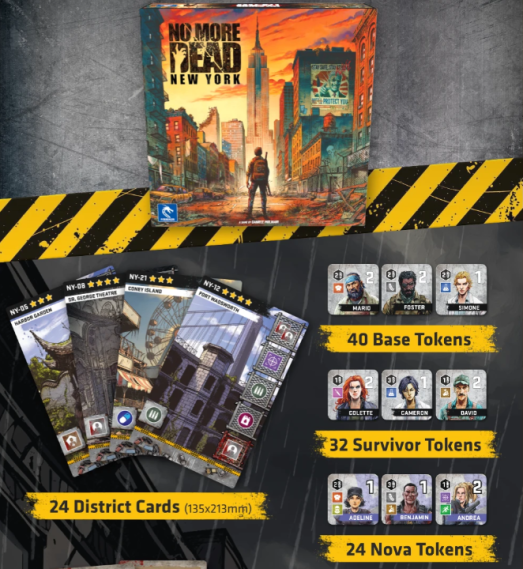
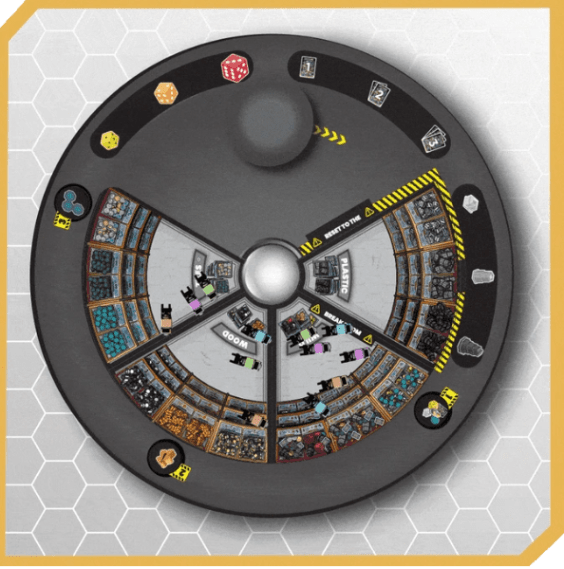
Grail Games returns with a trio of retro-art board games. Even though Aliens Attack!, Ohio Bob, and Harvest Valley use the same 8-bit art style, they couldn’t be more different in gameplay. Aliens Attack! is a tower defense game, Ohio Bob offers a fun adventure, and Harvest Valley is a farming sim. All three games are smaller, easier to store and transportable.

The Pixel Series even features some board game designing giants like Bruno Faidutti and Hisashi Hayashi. You can back this project and receive individual games for $10 or the entire set for $26.You can even throw in a fourth game in the series, Level 10, which is a reprinting of Okey Dokey.

I like Level 10’s retheme of guiding Izzy through a video game level without the character perishing. If you’re interested in Grail Game’s Pixel Series, check out their KickStarter page.

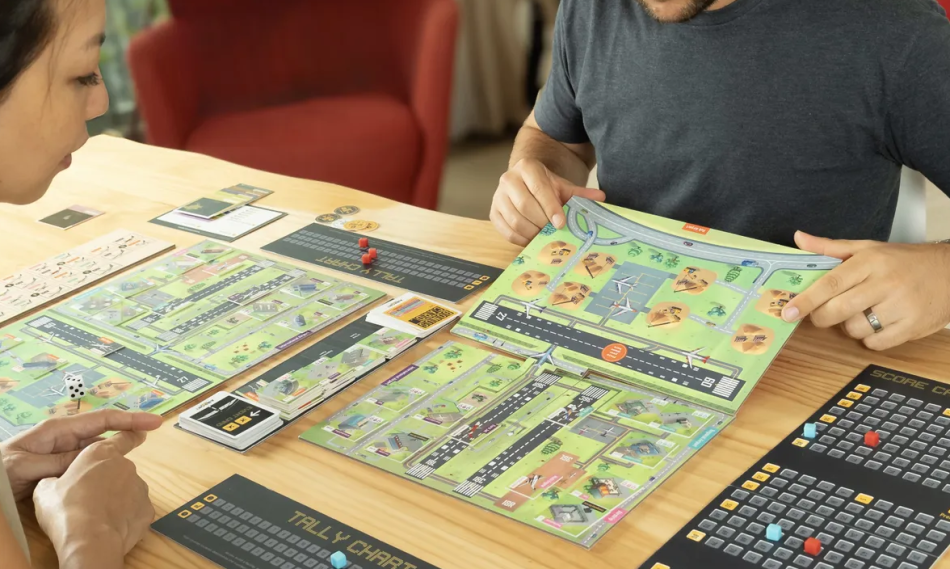
Mesopotamia by Meeple Pug Launches on GameFound

Even though it isn’t the Mesopotamian Royal Game of Ur, the board game Mesopotamia does include knucklebone game pieces, which were game pieces in the classic board game. Meeple Pug’s Mesopotamia puts players in the role of civilization leaders in this stunning 4X game (explore, expand, exploit, and exterminate). Mesopotamia foregoes a tech tree for research tiles that make each player’s civilization unique.

I love Mesopotamia’s customizable player boards. This gaming component could spark a series of games with a similar component. Mesopotamia’s gameplay encourages trading, exploration, and combat. Those knucklebone game pieces come in handy when attacking one of your opponents. Mesopotamia’s game pieces are top-notch. This is a gorgeous game, and that’s before considering the prelaunch Hanging Gardens Miniature.

That miniature looks amazing, and Mesopotamia has plenty of other detailed miniatures. I like the addition of note one, but three solo-player modes: exploration, siege, and castle defense. Mesopotamia offers a lot of gameplay options. It launches early next week, so we don’t yet know how much this campaign costs. If you’re interested in Mesopotamia, follow its GameFound page.

Modern Classic Board Game Colosseum Receives a Glow-Up on GameFound

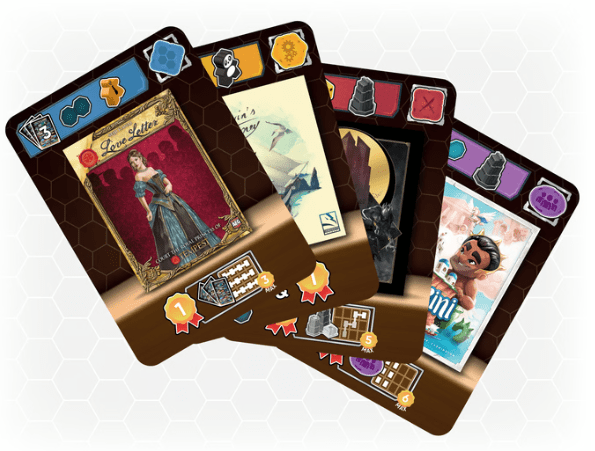
Yes! If you’ve ever been interested in the Wolfgang Kramer and Markus Lubke design Colosseum, The Grand Spectacle may be the edition to add to your collection. Ian O’Toole is one of the best board game graphic designers/artists working today, and Colosseum: The Grand Spectacle is a feast for the eyes.

I’ve always liked Colosseum’s take on the roll/spin and move game mechanism, which is often maligned and hated in the board game community. Colosseum does it right; take some of the chance out of rolling dice. I also agree with the Dice Tower’s Tom Vasel. Colosseum works at 5-players, which is rare in a game of this type.

If you’ve ever wanted to run your own Colosseum, you should check out Fantasia Games’ reprint of this modern board game classic. Colosseum: The Grand Spectacle has a variety of pledges, ranging from $80-140.

Death Stranding 2’s Mysterious Update

Death Stranding 2: On the Beach was released this past week and topped video game sales. In case you haven’t played the original, the first Death Stranding is on sale for most systems. Modern video games have updates during their first week, so Death Stranding 2 adding one a day after its release doesn’t raise any eyebrows. Oddly, we know nothing about this Death Stranding 2 update. The update offers no information about what it’s patching. The Death Stranding 2 team offers no clues. No one seems to know what this patch does. Hopefully, it fixes some of the game’s audio issues. Perhaps Hideo Kojima likes keeping this update a mystery.

Tamagotchi Plaza Releases on the Nintendo Switch 2

Tamagotchi Plaza, a shop simulator, was released for the original Nintendo Switch and Nintendo Switch 2. It looks adorable. I have fond memories of Tamagotchi, and I’m happy if Tamagotchi Plaza popularizes the pet raising sim to a new generation of gamers. Tamagotchi Plaza looks interesting–I may check out this title at some point–but Tamagotchi Plaza continues a disturbing trend for Nintendo Switch 2. If you already own a game for the original Switch, you can play it on the Switch 2 for a small Switch 2 upgrade fee.

While the upgrade fee isn’t the same price as a full-fledged game, it comes off as a shameless cash grab. Why should I have to pay an additional $10 for The Legend of Zelda: Breath of the Wild when I already own the game? Yes. $10 isn’t that much, but if you convert each one of your original Switch titles to the Switch 2, that adds up quickly. And this practice will embolden other console producers to do the same. We already got a Horizon: Zero Dawn remaster for the PlayStation 5 when it was released on the previous console.

Tamagotchi Plaza is a new game, and players would have to buy the Switch 2 upgrade for a game they just bought if they were to pick up a Switch 2 later this year. Okay. I get it. You could play the original version of Tamagotchi Plaza, but the Switch 2 version adds new shop types. Why would you want to play the Switch version if you were to upgrade to a Switch 2 after it becomes available again? I’m concerned about this business model for the video game community. But, hey, many of us–myself included–have purchased Skyrim eleven times. How’s this any different?

That’s all we have for Geek News this week, Geekly Gang. Thank you for reading, and wherever you are, I hope you’re having a great day.

Good Games with Easy, Quick Platinum Trophies

Platinum trophy hunting (or if you play on X-Box or Steam, achievement hunting) doesn’t appeal to every gamer, but it does to me. My goal is to earn as many platinum PlayStation trophies as my age eventually. I have some work to do. More than I’d care to admit. Easy platinums tend to come from bad games, but some exceptions exist. That made me wonder which good video games have easy and quick platinum trophies.

Hey, hey! Kyra Kyle here. This post has been a long time coming. A video game can’t just have an easy-to-earn platinum trophy. We want quick platinum trophies. This eliminates a heap of video games. I just finished The Survivalists, and while it has an easy-to-earn platinum trophy, it’ll take well over thirty hours. Quick feels more like less than twenty hours. This might still be too long for some, but twenty hours is a dedicated weekend of gaming. We must pick a number.

Most gamers can find twenty hours for an enjoyable experience. That leads us to defining an “easy” platinum trophy. The trophy should be attainable through a single play-through or the game should allow players to play little of a second play-through to make this list. Finally, the game needs to be “good,” but gamers desire different things. Let’s split these games into story and gameplay buckets. I’ll do my best to explain why I included each game or game series. And this leads to the final clarification. I’ll include a game series for story and gameplay and then a few single games. Without further ado, let’s jump into the games.

Game Series

Top 5 Video Games For Couples Cat Quest 2

Cat Quest Series

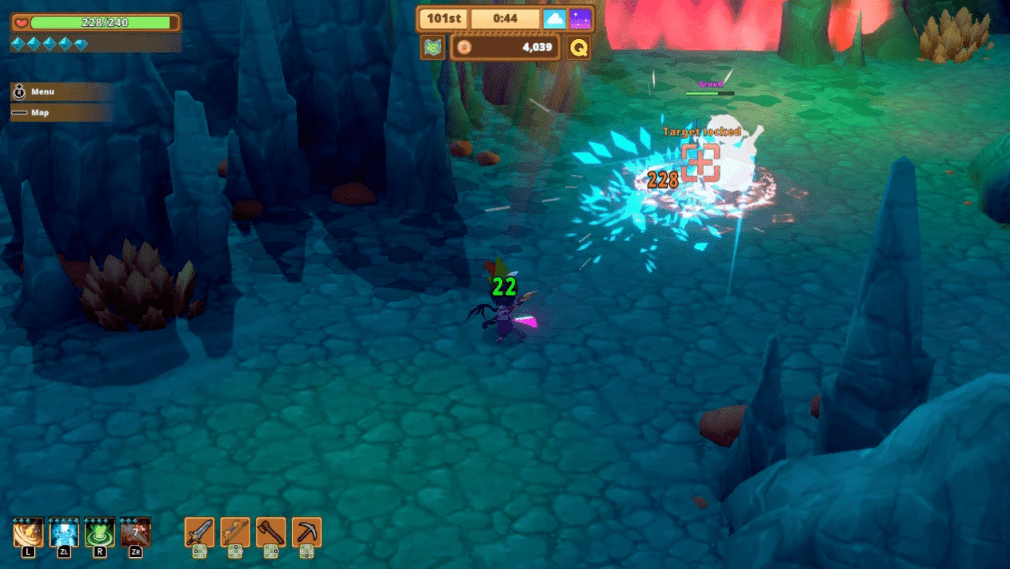
We’ll start with a game series with little story but a fun gameplay loop. Cat Quest doesn’t have much of a story. It’s an excuse to have cute kitties battling beasties in an old-fashioned beat-‘em-up video game. The game has some gameplay alternatives, especially with the sequels, but Cat Quest sticks to a simple but fun formula. Cast magic with magic points. Replenish your magic points by landing weapon attacks.

Cat Quest 2 does a great job of incorporating ranged attacks. The first Cat Quest only offered melee attack weapons. As I’m writing this post, I have yet to play Cat Quest 3. It looks as if it builds off the second game in the series. The first game took me 10 hours to earn the platinum. The second game took around 15 hours. Even if Cat Quest 3 mimics Cat Quest 2 and expands the map and side quests further, it should clock in around 20 hours for the platinum and still be worthy of a spot on this list.

Telltale Games

The Telltale Games studio features story-driven games that take around 15-20 hours to complete. Most of these games were well-received at the time of their release and worth a play if you enjoy the intellectual property the game is set. I have fond memories of 2012’s The Walking Dead. This game announced Telltale Games to the video game community. Many of The Walking Dead’s moments live rent-free in my head. “Did you lick the saltlick, Clementine?” “I don’t know.” Clementine was adorable.

The Wolf Among Us was another hit and well worth a playthrough. This title also illustrates how easy it is to obtain a platinum trophy in a Telltale Game. Most Telltale Games, like The Walking Dead or the Batman series, will grant players a platinum trophy for completing the story. Super easy! Barely an inconvenience. Thank you for that phrase, “Pitch Meeting.” The Wolf Among Us requires players to make a different choice during a chapter to get its platinum trophy, but all you need to do is reload the one chapter in question and pick a different option. Even when Telltale Games makes a platinum trophy more difficult to obtain, they don’t make it that difficult.

Most Telltale Games I’ve played are a good time. I will admit that the company became risk-averse after their hit The Walking Dead. I haven’t played too many of their most recent titles. I may log a few more soon for a platinum or two.

Single Games

Nubla

A child visits an art museum and falls into the paintings. The kid must save the residents of these paintings by solving art-themed puzzles. While dated (Nubla celebrated its tenth-anniversary last year), Nubla has a great aesthetic, above-average graphics for the time, and an intriguing premise. Nubla also happens to be the quickest platinum trophy to obtain on this list, and it’s not even that close. YouTubers have speed-run completing the platinum trophy in twenty minutes. I don’t suggest watching these videos while playing the game. The puzzles aren’t that difficult to solve. I was able to finish the game in under three hours without help. Even so, you could finish Nubla in under an hour if you load a how-to video and all you want is speed.

Nubla 2 was released in late 2022. I have yet to play it. From what I’ve heard, the original cast of characters returns and again, you must rescue citizens of paintings. This may be another game I’ll need to consider, inching me closer to my platinum trophy goal.

Life Is Strange Video Game

Life Is Strange

I like to get lost in Life Is Strange’s world and characters. Set in 1990s Oregon (in the fictional town of Arcadia Bay), Life Is Strange centers on teenagers Max Caulfield and Chloe Price. Life Is Strange has an earnest quality to it that few games have. The two main characters are teenage girls and while the story can dabble in the melodramatic, it works. The world feels lived in. Steeping Arcadia Bay in a nostalgic, autumnal lens is deliberate. Even the story’s supernatural elements are designed as a metaphor for the character’s inner conflicts and there are plenty. The DontNod (design) team consulted experts to tackle difficult subjects like teen suicide.

Like the TellTale Games above, Life Is Strange was released episodically. The story goes astray a little bit toward the end but not enough to tarnish the overall experience. Life Is Strange is worth your time. It takes around 20 hours to complete the game, and you will most likely need to replay a scene or two after you finish to get the platinum trophy, but I can’t recommend the original Life Is Strange enough. And the original Life Is Strange received a remaster a couple of years ago. Yay! I may have another game to replay.

Donut County

Donut County challenges Nubla for the shortest game on this list. Again, you can find YouTube speed-runs that last an hour or two, and again, I suggest you try it on your own first. Donut County is like Katamari Damacy. Players control a hole (or donut) in the world and try to drop things into the hole. With each object that falls inside the hole, the hole gets bigger until nothing remains. Numerous mobile games have copied Donut County after its original 2018 release. It has a fun, addictive gameplay loop, and more importantly for this list, a quick and easy-to-obtain platinum trophy.

If anything, I’m disappointed that Donut County doesn’t have a longer run-time. The trophy was great to achieve, but I wanted more Donut County to play. Perhaps indie game publisher Annapurna Interactive will release a Donut County sequel. Like I need another game to play on this list.

What Remains of Edith Finch

What Remains of Edith Finch

I’ve mentioned What Remains of Edith Finch more than once on Geekly, but until this year, I had only played the demo. What Remains of Edith Finch received a remaster a few years ago and the remastered What Remains of Edith Finch has a platinum trophy. For the most part, you only need to complete the game’s six-hour story to earn the trophy. And What Remains of Edith Finch has an amazing story. What Remains of Edith Finch even manages to weave in unique gameplay elements.

The player character takes a ferry to Orcas Island, Washington carrying the journal of Edith Finch. Edith writes about her experience when she returns to her ancestral home on the island for the first time in seven years. Edith says that she’s the last surviving member of her family. The player then takes the perspective of Edith as she reexplores her family’s home and discovers the circumstances of each relative’s death. I don’t want to spoil anything here, but What Remains of Edith Finch contains innovative gameplay that matches the stories of each Finch family member. What Remains of Edith Finch shows the depth video game storytelling can achieve.

And that’s our list. The games on this list are by no means the only good video games with quick and easy platinum trophies. Let us know which games you’d include. Thank you for reading, and wherever you are, I hope you’re having a great day.

5 Famous LGBT Characters in Video Games

Happy Pride Month, Geekly Gang! Since it’s June, we’ll be celebrating with a list of famous LGBT characters in video games. JK Geekly is about to get a lot more rainbow.

Hey, hey! Kyra Kyle here. We’ll be sticking to our usual format of five items to one of these lists, but make no mistake, countless other LGBT characters from video games could’ve made this list. So let’s take a look at which LGBT video game characters made this colorful list.

5) Alexios and Kassandra (Assassin’s Creed: Odyssey)

Alexios and Kassandra are the two main protagonists of Assassin’s Creed: Odyssey. Alexios is male, while Kassandra is female. Both are siblings, and you can choose to play as either of them. Assassin’s Creed chose to use gender neutral terms for both characters (calling them the Greek word for mercenary), and both characters may romance any of 14 characters (male or female), but Assassin’s Creed: Odyssey goes deeper than that. Players don’t need to romance anyone. You may choose to shoot down all advances and claim that you’re aromantic or asexual, which is rare for video games that include romantic options.

Yep. We’re starting this list off strong with a seldom-represented group within the larger LGBT community. Everyone is valid.

4) Krem (Dragon Age: Inquisition)

Even though Krem was a minor character in Dragon Age: Inquisition, he received significant media coverage from gaming journalists and LGBT-centric media for his positive depiction of a transgender character in a AAA video game, and for good reason. He’s a proud member of Iron Bull’s team, named the Bull’s Chargers. Krem’s teammates accept him for who he is, and Iron Bull himself treats him like an equal.

Dragon Age creator Trick Weekes received repeated requests from fans for a respectful representation of transgender and/or genderqueer characters, without resorting to stereotypes or tokenism. Krem is the best kind of transgender representation. Honest.

3) Bloodhound (Apex Legends)

I bathe in the bloth. That’s the line Bloodhound utters every time they enter “Beast of the Hunt,” tracking down as many enemies and dispatching them as quickly as they can. Bloodhound is one of the first and few non-binary video game characters. Note: Apex Legends characters could overrun this list with Valkyrie (lesbian), Loba (bisexual), Gibraltar (gay), and Catalyst (trans woman), to name a few, so we’ll limit this list to one Apex Legends character. Apex Legends does a great job of giving its characters layers and respecting their identities.

Apex doesn’t miss a beat when referring to Bloodhound in gender neutral terms. The game normalizes it. Even when Bloodhound is young, during one of the trailers, Boone refers to them as “child.” Great representation.

2) Birdo or Birdetta (Super Mario Bros. Series)

Our penultimate entry on this list is none other than the first transgender character in video game history, Birdo. The only concrete link to Birdo’s gender comes from the original Super Mario Bros. 2 guidebook that states “he thinks he’s a girl” and “he’d rather be called ‘Birdetta'” with the implication that Birdo is a mocking term (either dead-naming her or an insult that she isn’t girly enough to pull off the name Birdetta). Let’s do this queen a solid and call her Birdetta.

As you can see, there may have been some confusion as to who Birdetta was. The characters known as Birdo and Ostro became fused into one character well after Super Mario Bros. 2’s original release. After Birdetta’s write-up in the Super Mario Bros. 2 guidebook was rediscovered, she became a trans icon. Put some respect on Birdetta’s name.

1) Ellie Williams (The Last of Us)

Ellie is synonymous with The Last of Us. Whether she’s voiced by Ashley Johnson in the video games or by Bella Ramsey in the television show, Ellie Williams exudes strength against tremendous odds. Slay, queen. Slay!

While other characters on this list may have hit the video game scene far sooner than Ellie, there’s no doubt she’s made an impact. A scene in which Ellie and Riley kiss in Left Behind (The Last of Us’ prequel) drew social commentary and was commended as a leap for LGBT representation in video games. You love to see it. Johnson’s performance in Part II was praised for her vulnerability and suffering. The same can be said of Ramsey’s portrayal in the Max television show. Ellie is a fantastic character. The community needed some great representation, and they got it with Ellie. I can wait to see which barriers this character will shatter.

That’s our list of five famous LGBT characters in video games. There are plenty more that could make their own list. Let us know some of your favorites in the comments. Thank you for reading, and wherever you are, I hope you’re having a great day.
Quirky Video Game Review: Stacklands

Stacklands merges a survival/civilization game with the skeleton of a collectible card game, and the results are interesting. Developed by indie designer Sokpop Collective, Stacklands takes these disparate themes and mechanisms and makes sense of them. Prepare to drag cards on a board and stack them on top of each other for numerous interactions.

Hey, hey! Kyra Kyle here. Today, I’m reviewing a quirky video game I’ve meant to cover for a while. Full disclosure: I’ve played a heap of Stacklands on Steam. I purchased all the DLC–we’ll only touch on some of the bonus content–and spent countless hours watching my card-sharped citizens build an empire. But how does Stacklands stack up against our review criteria? Let’s find out.

Mechanisms

Game Mechanisms: 10/10

Quirky indie video games tend to sport fresh game mechanisms, and Stacklands is no different. Stacklands combines a collectible card game and a civ builder into a cohesive whole. The experience is a great loop of exploration and optimization for your villagers. I’ve never had this much fun stacking one card on top of another card and getting something in return. One chicken on top of another chicken yields an egg. Place that egg card on a campfire and produce a cooked egg. Sounds simple, but a multitude of these actions may occur at once. Players must manage the timers for each interaction and generate enough food at the end of the day to feed their civilians. Any items you don’t use or can’t use may be sold for coins that are used to purchase new card packs. Card packs contain new items and ideas.

The gameplay loop and exploration (of what I can put together to make something exciting and new) are addictive. Earlier versions of Stacklands proved difficult to manage some of these elements, but later patches fixed many of these issues. I have as much fun optimizing my little village as I do discovering new ideas. If you were to construct a hotpot, you could place food into the pot that you wish for your villagers to eat first. This way, you can keep more valuable food items. Small upgrades like this add strategy.

And Stacklands is full of small and large upgrades ready to make your village strong enough to fight off invaders. Yes. There will be invaders who will randomly attack your village, but usually after the first five or six moons (or days). Enemy cards are indicated by red backgrounds. You may choose to fight these enemies unarmed (like the picture below) or upgrade your Villagers with weapons that will change their job title from Villager to something fancier, like Warrior or Swordsman.

Stacklands also has a knack for ramping up the difficulty. Most difficulty spikes happen organically; you won’t face a stronger creature unless you spend money to buy a more expensive pack that may contain the stronger creature. The largest of these difficulty spikes is at the player’s discretion. I don’t know how many times. I’ve accidentally summoned a demon and watched in horror as the demon decimated my villagers.

But I was the one who summoned the Demon. I’ll know for next time not to do the thing that summoned the Demon until after I’m prepared to defeat an enemy with 300 health. Like many survival games, you’ll need to restart your Stacklands village when you have no more living Villagers, but when you do restart your village, you don’t need to relearn skills and ideas. I don’t mind this. It lessens the danger, and often, I’ll have a better item I’ve unlocked and can outfit my villagers with better gear or a more optimized village. Heck. I’ve let a larger enemy torpedo my village, so I could start over.

Gameplay Loop

Above Image from GameDesigning.Org

Gameplay Loop: 10/10

I’ve already mentioned Stacklands’ gameplay loop. Combining collectible card packets with building a civilization of card villagers is fantastic. Stacklands also manages its difficulty spikes well. Players have more control over what they’ll face. Buying more expensive packs could mean stronger enemies appear, but you’ll want to unlock every card in each packet type and as quickly as possible.

Collecting cards like Pokémon mixed with exploration is a potent combination. And since Stacklands has so many hidden tech trees (the game doesn’t spell out its tech trees in a diagram), you’ll find hours of enjoyment reverse engineering a recipe. How do I get a gold bar? I need a smelter and gold ore. How do I make a smelter, and which booster pack contains gold ore? Stacklands has so many rabbit holes to explore.

Story or Narrative

Narrative: 6/10

Stacklands has a few side stories that make up a somewhat larger narrative, but it doesn’t have a traditional storyline. There’s the demon I mentioned earlier. The demon isn’t too difficult to defeat if you have the proper equipment and a large enough army. You’ll also have to challenge a witch who summons monsters from a strange portal. Defeating the witch is the closest thing the base Stacklands game has to a larger story.

Players must construct a stable portal so they can enter the witch’s realm and fight her seemingly endless army of baddies. The army the player sends may choose to return home after each level of witch minions. Defeat the final level and then the witch. Players will receive a “you completed the game” notification, but that’s not the end. You may continue playing Stacklands and its DLC. The only location you can access without buying DLC is the island. This has a “story” similar to the witch on the mainland, but it’s the paid DLC that has fleshed out stories. I’m not including the DLC in this review, but if I did, this score would rise a point or two.

Storytelling

Storytelling: 5/10

Stacklands‘ storytelling is no better than average. I promised I wouldn’t include the paid DLC (which only costs a few dollars) in this score. The base game’s story is okay. The DLC ventures into some interesting territory. I talk briefly about them. One alternate plane deals with waste; you’ll need to optimize your village so you won’t produce too much pollution. Another plane centers around death. A third pivots hard into combat and rage. Stacklands‘ DLC is well worth the price (if you like the base game), but it’s the base game’s storytelling we’re grading here, so it’s average.
User Interface: 9/10

While Stacklands has a lot going on at once, it does a good job of presenting these options to the player. In the top left, you’ll find tabs for Quests and Ideas. The quests are self-explanatory. If you don’t know what to do next, check out your active quests.

Ideas are the recipes you know. Stacklands does a great job of grouping similar recipes into tabs. You may expand these tabs to see individual recipes or collapse them if you’re not looking for that recipe type.

In the far right corner, you’ll find out which day (moon) you’re on, and the symbol on the right of this box lets you dictate how fast time moves. To the left of the moon, you’ll find your village’s vitals (food, coin, and how many cards you may have in your village–booster packs don’t count toward this total). The image above may be from Moon 5, so there aren’t as many cards in play, but Stacklands has so many ways to optimize your village that you can build one that minimizes your number of cards and is almost automatic.

Once you find a consistent source of food, you’ll be able to focus on other things Stacklands offers, and there are plenty of choices. Stacklands rewards trial and error. Don’t be afraid to make mistakes.

Graphics: 6/10

While I enjoy Stacklands‘ graphics, they are minimal. Stacklands chooses legibility over style. Even though that’s the right choice for a game like this, I can’t tell you that Stacklands has amazing graphics. The game’s graphics are crisp, at times adorable, and most importantly, functional.

Audio: 7/10

You like lo-fi chill jams, don’t you? Who am I kidding? Of course you do. Stacklands’ soundtrack makes great background music. To be honest, I hardly notice it while I’m playing. Where this score gets a bump is when considering Stacklands’ sound effects: card shuffling, ripping open a booster pack, the little bloopy combat noises, and adorable animal calls. Sokpop Collective took time and care with Stacklands’ sound effects, and it shows.

Replay Factor: 9/10

Stacklands has plenty of DLC, and that DLC has its own puzzles for you to solve. The DLC adds a good ten to twenty gameplay hours. But the base game has tons of replay value in its own right. Even if you defeat the witch and the demon, you may want to beat the time it took you to defeat the witch and the demon. I’ve also discovered numerous recipes after beating these two, which then prompted another playthrough. Sure, I beat the game, but I figured out how to make a resource magnet. That would optimize my village to the fullest.

Again, I may be biased. I put a heap of time into Stacklands, but it has a fair amount of replay value. Each new play can lead to a different path to success.

Aggregated Score: 6.9